
Name the bug before you spray anything. 3 checks name it: where it sits, what it looks like, and what it damages. A cluster of aphids on a bud, a cottony mealybug mass in a leaf joint, and a row of scale bumps on a stem look alike from the path, and each one needs a different fix. That is how to get rid of bugs on hibiscus trees: identify first, treat second.
I have learned that the hibiscus I check under the leaves each week keeps its buds, while the one I only admire from the path loses them. The rest of this page is the ID table, then one treatment section per bug, then the severity ladder, the ant connection, and prevention.
1. Name the Bug First: Read the ID Table Before You Spray
The ID table is the spine of this article. Find what you see in the first column, then read across for where the bug sits, what it looks like, and what it does. Spray nothing until your bug matches a row.
| Bug | Where It Sits | What It Looks Like | Damage |
|---|---|---|---|
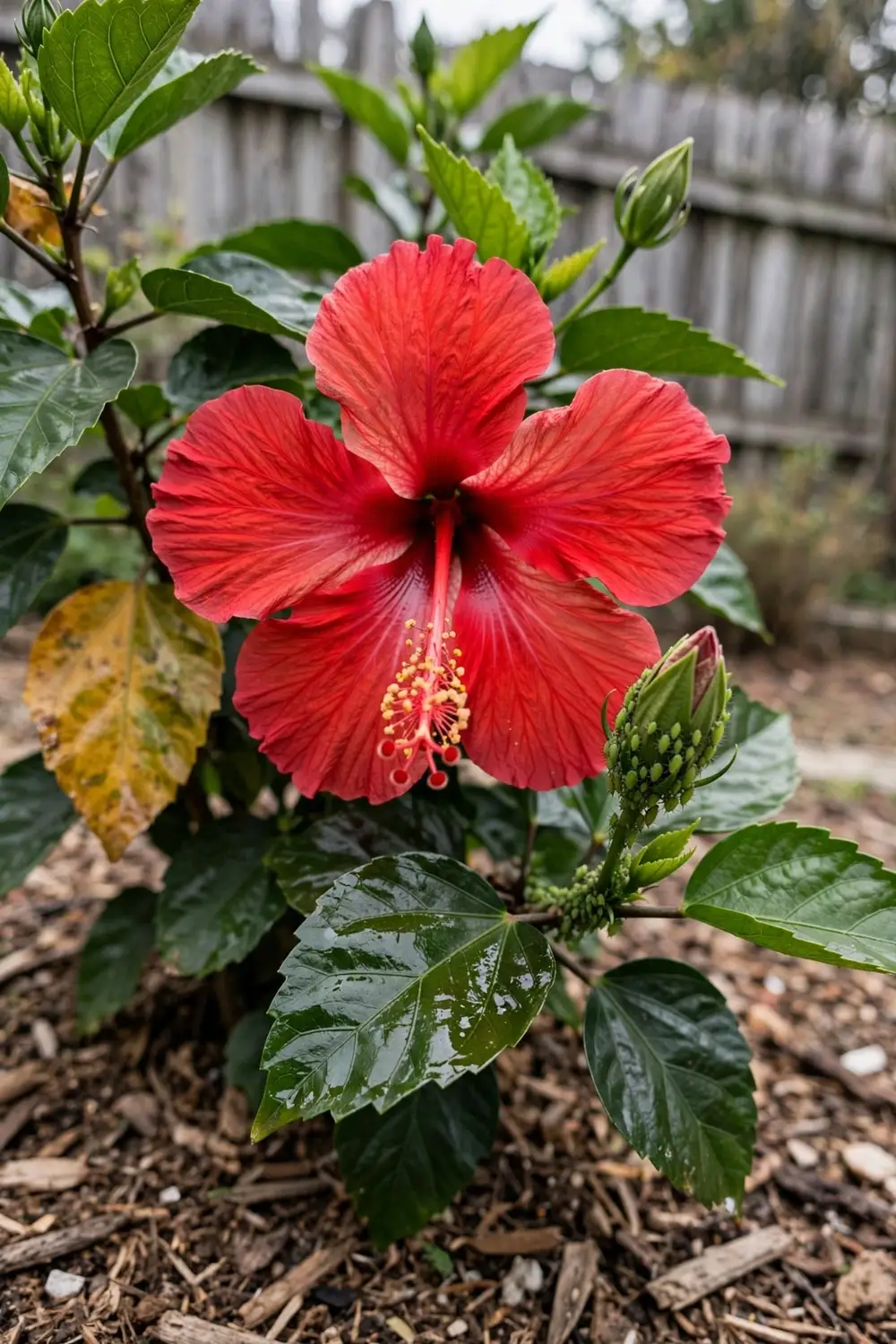
| Aphids | Buds, new shoots, leaf undersides | Soft clusters, green or black, with sticky honeydew | Curled shoots, sticky leaves, sooty mould |
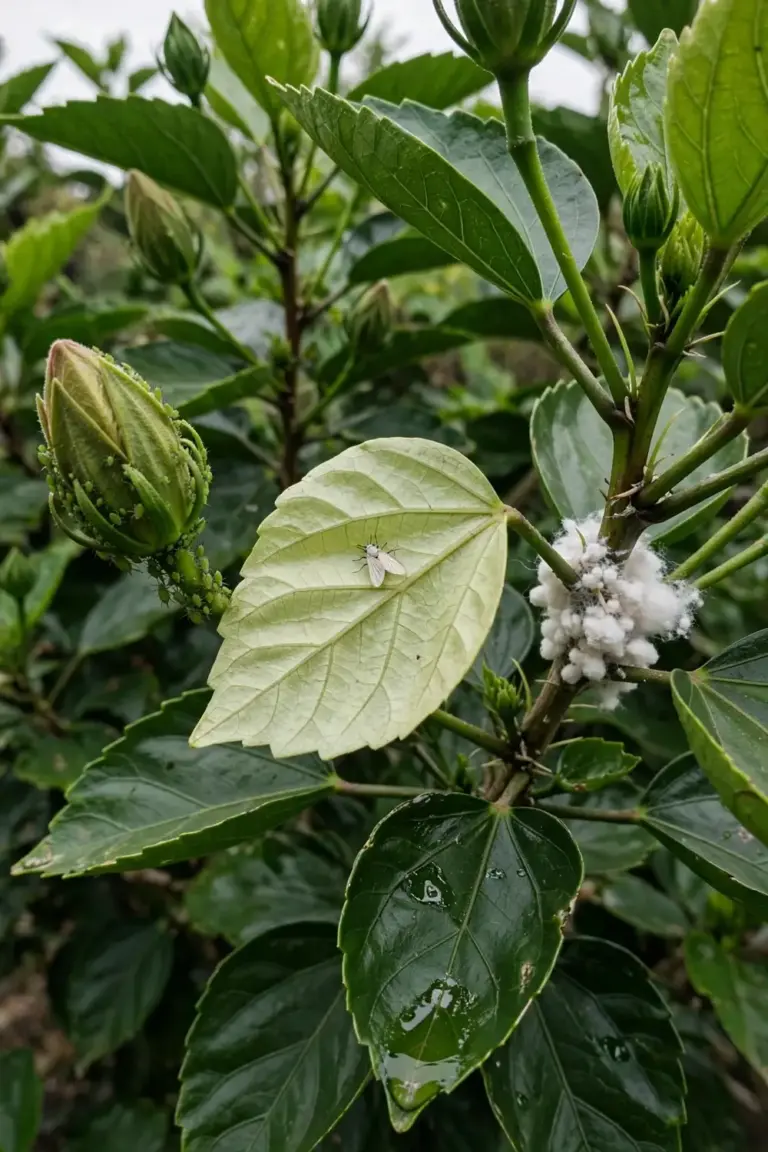
| Mealybugs | Leaf joints, stem tips, under leaves | White cottony masses, pink bodies when crushed | Curled leaves, stunted shoots, sooty mould |
| Scale | Stems, leaf veins, undersides | Immobile bumps, waxy or armoured shells | Yellowing leaves, honeydew, sooty mould |
| Whiteflies | Leaf undersides | Tiny white fliers that lift when disturbed | Yellowing leaves, honeydew, sooty mould |
| Spider mites | Leaf undersides, dry leaves | Fine webbing, stippled pale dots on leaves | Bronzed leaves, leaf drop in dry heat |
| Flower-eating beetles | Flowers, buds, leaves at night | Chewed petals and holes, beetles hiding by day | Ragged flowers, holed leaves |
| Caterpillars | Leaves, buds, shoot tips | Chewed edges, frass pellets, curled leaves | Eaten leaves, damaged buds |
| Thrips | Flowers, buds, young leaves | Silvery streaks, distorted petals | Streaked flowers, deformed buds |
| Harlequin bug | Buds, stems, seed pods | Orange and black shield-shaped bug | Bud drop, distorted growth |
| Gall midge | Buds | Buds that yellow and drop without opening | Bud drop, no flowers |
Two words in this table need plain definitions. Honeydew is the sticky sugary liquid that sap-sucking bugs excrete as they feed. Sooty mould is a black fungus that grows on that honeydew. Sooty mould does not attack the leaf itself. It blocks light on the leaf surface, and it fades once the bugs that made the honeydew are gone.
Run the same three-point inspection every time you check the plant. Look at the buds first, because aphids, gall midge, and harlequin bugs all feed there. Turn three leaves and study the undersides, where whiteflies, spider mites, and young scale settle. Pull a leaf joint apart and look inside, where mealybugs hide. A hand lens helps on the small ones. A hand lens turns a suspicious dot into a named bug, and a named bug into the right treatment. Write down what you find and where. A note from last week turns a new cluster into a trend you can act on.
2. Aphids: Blast the Clusters Off the Buds and New Shoots
Aphids sit in soft clusters on buds, new shoots, and leaf undersides. They feed with straw-like mouthparts and excrete honeydew. Ants farm them, and ladybirds, lacewings, and parasitic wasps eat them.
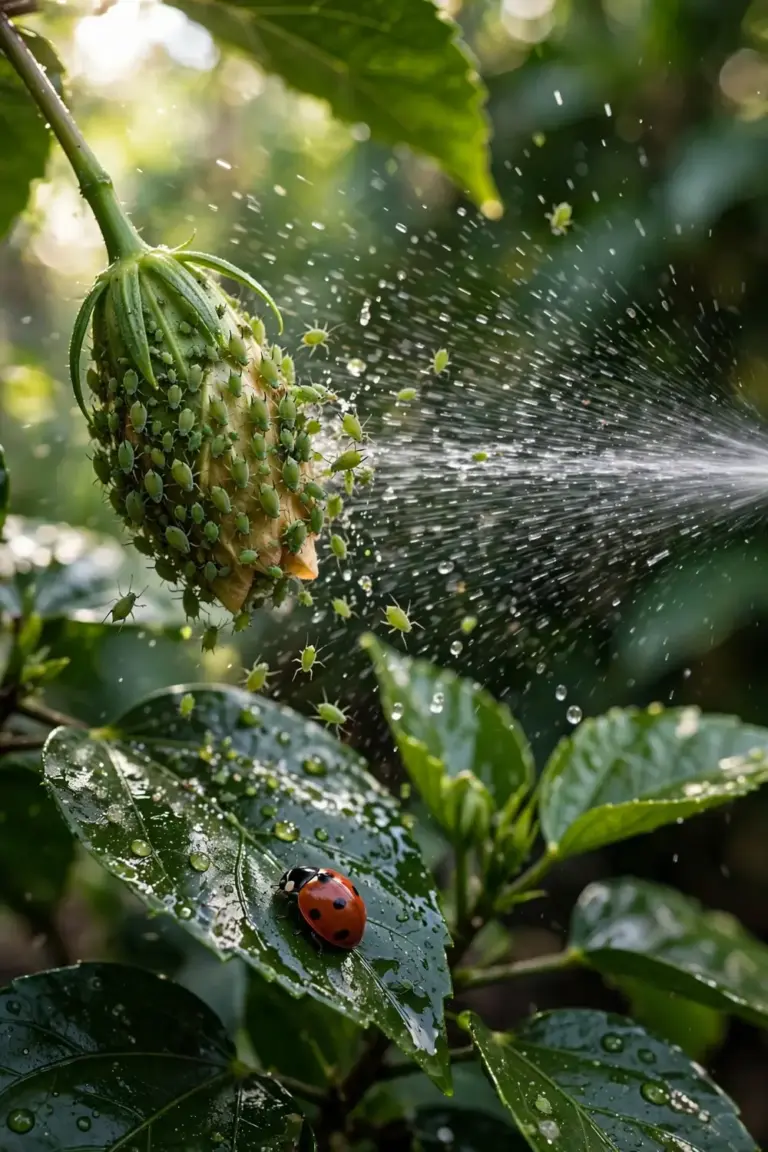
Start with a forceful spray of water. A hard blast from the hose knocks aphids off the plant, and the UC IPM aphid guide lists a forceful water spray as sufficient control in many cases. Blast early in the day so the leaves dry fast in the sun. Repeat the blast every two to three days until the clusters stop returning.
If the clusters persist, spray insecticidal soap or horticultural oil. The UC IPM aphid guide lists soaps and oils as the best choice for most situations, and it gives a 1 to 2 percent oil solution in water as the working mix. Soaps and oils kill by smothering, so thorough coverage matters, including the undersides of leaves. Soaps and oils kill only the aphids present on the day of spraying, so repeat applications follow the label. Do not spray soaps or oils on water-stressed plants, and do not spray when the temperature passes 32 degrees Celsius. The same UC IPM guide sets that heat limit, and it warns that these materials can burn some plants, so test a few leaves first. Follow the label. Keep pets and children off the plant until the spray dries. Never spray in wind or rain. Never spray open flowers.
Hold the broad-spectrum spray. Ladybirds, lacewings, and parasitic wasps eat aphids, and a broad-spectrum spray kills them first. Leave the brown puffy mummies alone. A mummified aphid holds the wasp that kills the colony, and every mummy left standing seeds the next generation of predators. The site’s beneficial insect guide names the predators worth keeping. A hibiscus with a few aphids and visible ladybirds is a hibiscus already under treatment.
3. Mealybugs: Dab the Cottony Masses, Then Oil the Crawlers
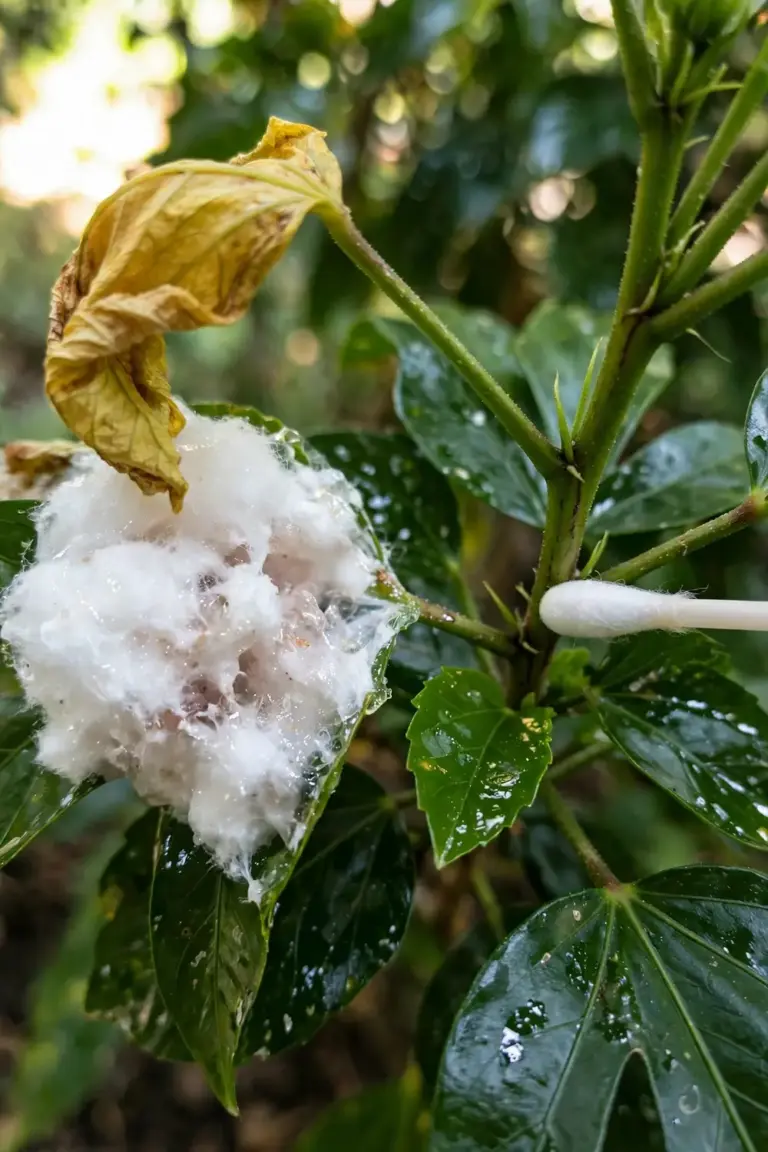
Mealybugs hide in leaf joints, stem tips, and under leaves as white cottony masses. Crush one and the body fluid runs pink. The pink hibiscus mealybug, Maconellicoccus hirsutus, grows about 3 mm long as an adult, and one female can deposit 600 eggs, according to the UF/IFAS pink hibiscus mealybug guide. The same guide puts the life cycle at 23 to 30 days, which explains why a small colony becomes a large one fast. Its saliva carries toxins that curl and deform new growth.
Mealybugs survive winter in hiding. The same UF/IFAS guide notes that eggs overwinter in bark crevices, leaf scars, under bark, in soil, and inside crumpled leaf clusters. A plant that looked clean in autumn can carry eggs into spring. Check bark crevices and old leaf scars when you do your first spring inspection. A colony found in a crevice in spring is a colony you can kill before it spreads.
Small infestations yield to direct removal. Dab each cottony mass with a cotton swab dipped in a 70 percent or weaker solution of isopropyl alcohol in water, per the UC IPM mealybug notes. Test the mix on a few leaves a day or two before treating the whole plant, because alcohol can burn foliage. Repeat weekly until the masses are gone. Prune the worst-infested shoot tips and bin them. Do not compost infested prunings.
Larger infestations need oil or soap. Insecticidal soap, horticultural oil, or neem oil applied directly on mealybugs gives some suppression, especially against younger nymphs with less wax, per the same UC IPM notes. The waxy coating repels most contact sprays, and the bugs gather in hidden spots, so coverage decides the result. Repeat on the hatching cycle, per the label.
One mealybug carries a biosecurity note. Pink hibiscus mealybug occurs in northern Australia, per UF/IFAS, and it is a pest to watch for elsewhere. If you suspect it outside its known range, report the find to the Exotic Plant Pest Hotline on 1800 084 881 before you treat. Do not move infested plant material off your property.
4. Scale: Scrub the Bumps, Time the Oil for the Crawlers
Scale insects sit still. They look like small bumps on stems, leaf veins, and leaf undersides, and many gardeners mistake them for part of the plant. Under the shell, the insect feeds on sap and excretes honeydew. Sooty mould follows.
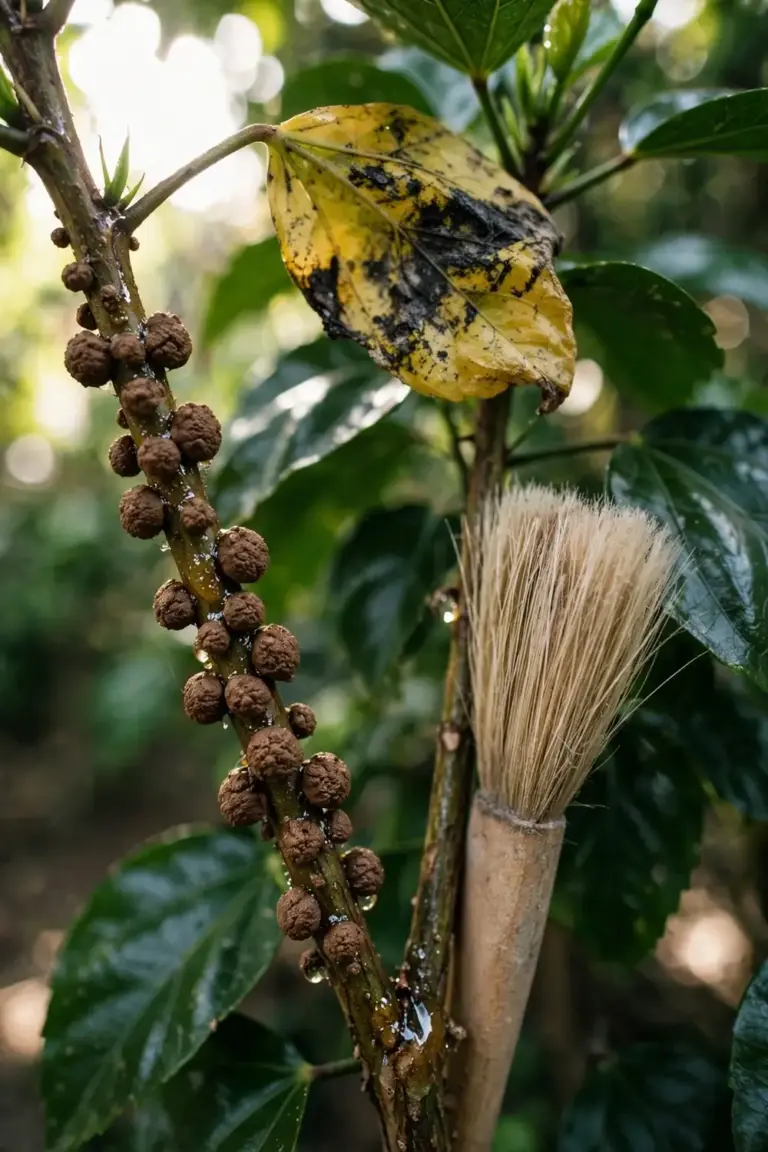
Scrub light infestations off by hand. A soft brush or an old toothbrush lifts the bumps from stems and veins. Prune the worst-infested twigs and bin them. Do not compost them. Scrubbing works because scale insects do not move once settled. The mobile stage is the crawler, a tiny legged nymph that walks to a new feeding spot and then settles for life.
Time oil sprays for the crawlers. The LSU AgCenter scale guide calls horticultural oil the safest effective way to control scale, because the oil coats the insect and blocks its breathing pores. The same guide warns that one or two follow-up applications should follow the first one, because scale is hard to kill. Crawlers appear mostly in spring, and once they settle and build their shells, contact sprays largely fail. Coat every surface, including leaf undersides. Follow the label. Keep pets and children off the plant until the spray dries. Never spray in wind or rain. Never spray open flowers.
Conserve the predators. Tiny parasitic wasps and ladybird species eat scale, and ants protect scale from them, just as ants protect aphids. Control the ants first, and the predators get their chance. Broad-spectrum sprays kill the predators and leave the scale standing.
5. Whiteflies: Hose the Undersides and Hang Yellow Traps
Whiteflies are tiny white insects that lift off the leaf undersides when disturbed. The nymphs do most of the damage. They sit still, oval and legless, on the underside of the leaf, feeding on sap and excreting honeydew.
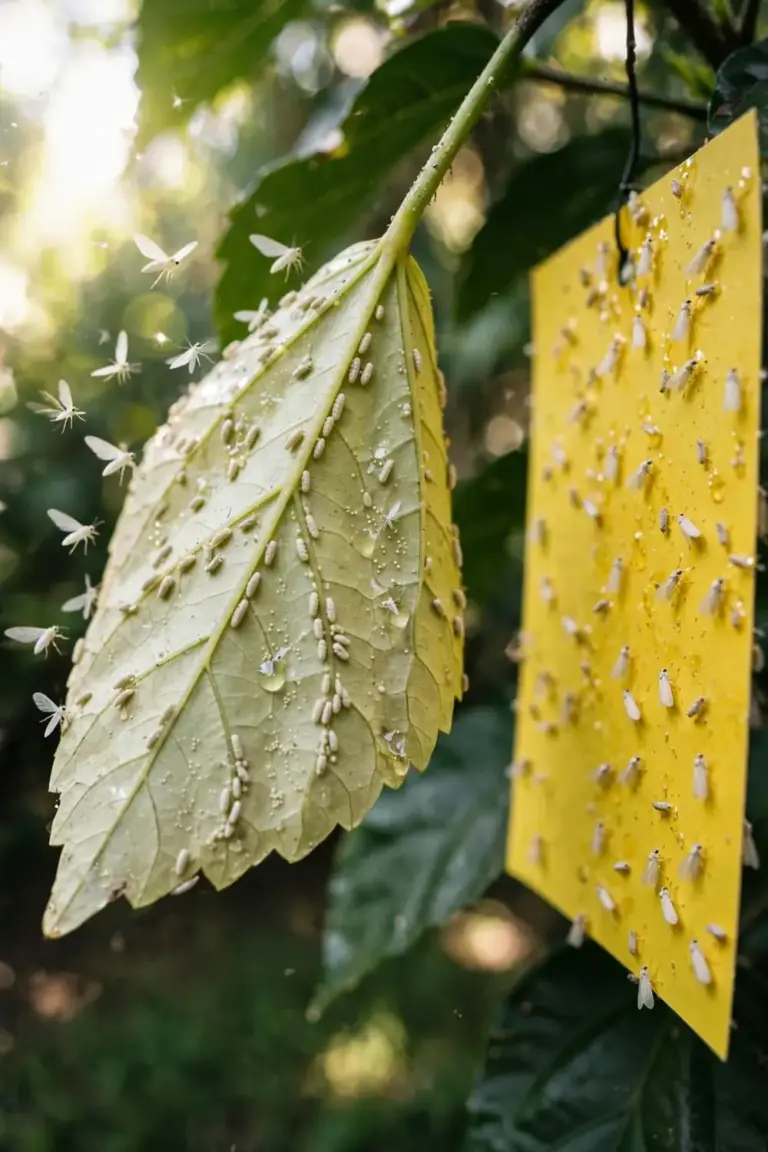
Start with water and traps. The UC IPM whitefly guide lists hosing adults off with a strong stream of water and hanging sticky-coated yellow traps among the first moves. Prune isolated infested leaves when you first spot them. Hang a trap for each plant you are protecting. Inspect new plants for whiteflies before they enter the garden.
Giant whitefly deserves its own note. Its adults are larger than most whiteflies, and its nymphs spin long white waxy filaments that make infested foliage look bearded, per the same UC IPM guide. Hibiscus sits on its host list. The filaments look like fungus, and they are not. They are wax. Wash them off with water and let the predators work.
If water and traps fall short, spray insecticidal soap or horticultural oil. The same UC IPM guide lists soaps and oils among the management options. Cover the leaf undersides, where the nymphs sit. Repeat per the label. Follow the label. Keep pets and children off the plant until the spray dries. Never spray in wind or rain. Never spray open flowers.
6. Spider Mites: Hose the Fine Webbing Off Dry Leaves
Spider mites are not insects. They are mites, and they thrive in hot dry weather. The signs are fine webbing on leaf undersides and stippled pale dots where the mites fed. Leaves bronze and drop when the colony grows.
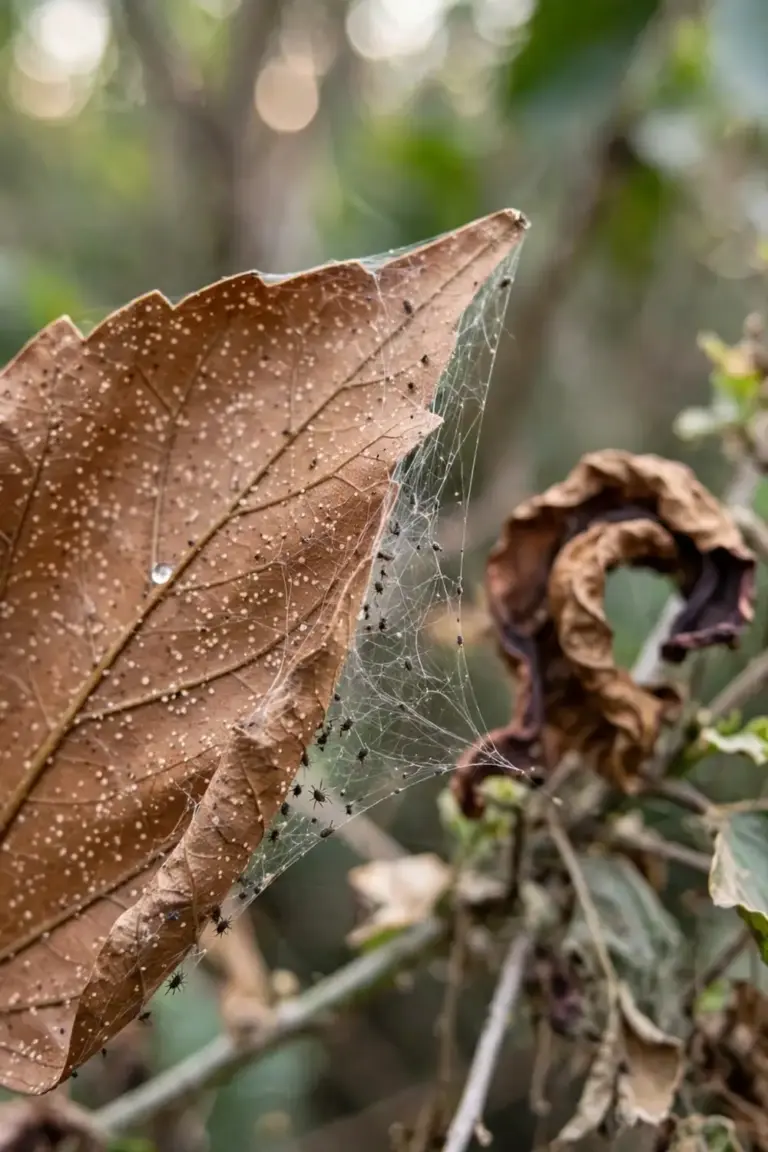
Hose the plant hard. A forceful water blast knocks mites off and breaks the webbing. A hand lens shows the mites moving on the webbing before you spray. Repeat every two to three days in hot weather. Mites return fast in dry heat, so one blast never finishes the job. Prune the worst-bronzed leaves and bin them.
Oil follows water. Horticultural oil smothers mites on contact, and it reaches mites that water missed. Cover leaf undersides. Do not spray on water-stressed plants or in heat above 32 degrees Celsius. Follow the label. Keep pets and children off the plant until the spray dries. Never spray in wind or rain. Never spray open flowers.
Dust feeds the problem. Dusty leaves shelter mites and kill their predators. Hose dusty foliage clean as part of the routine, and skip broad-spectrum sprays that clear the predators and leave the mites standing.
7. Flower-Eating Beetles: Hand-Pick at Night and Prune the Damage
Beetles chew. Ragged petals, holed leaves, and buds eaten overnight point to a chewing beetle rather than a sap-sucker. No honeydew, no sooty mould, no clusters. The damage is the diagnosis.
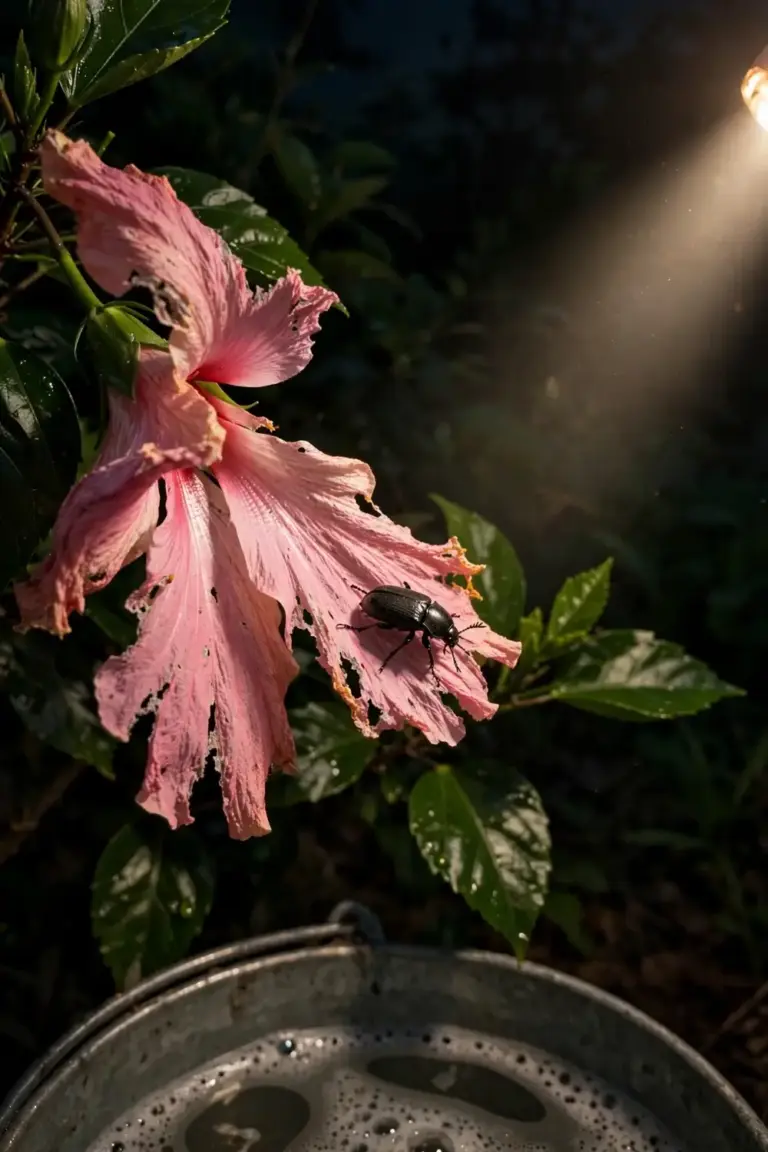
Hand-pick first. Beetles hide by day and feed at night, so inspect after dark with a torch. Work the torch slowly across the flowers and buds. Beetles freeze in the light, and a frozen beetle is an easy catch. Drop the beetles into a bucket of soapy water. Check the same plant two nights running. The second night catches the beetles that hid during the first round. Prune the worst-damaged flowers and bin them. Hand-picking works because the beetle population on one hibiscus is usually small enough to catch.
Cover the plant when beetles persist. Fine insect-exclusion netting over the shrub stops beetles reaching the flowers, and it carries no spray risk to pollinators. Remove the netting once flowering ends. If you spray, follow the label, keep pets and children off the plant until the spray dries, never spray in wind or rain, and never spray open flowers.
8. Caterpillars: Hand-Pick the Chewers and Prune the Worst Leaves
Caterpillars chew leaves, buds, and shoot tips. The signs are eaten leaf edges, small dark frass pellets, and sometimes a curled leaf sheltering the caterpillar. A few caterpillars on a large hibiscus are a minor problem. A heavy colony strips new growth.
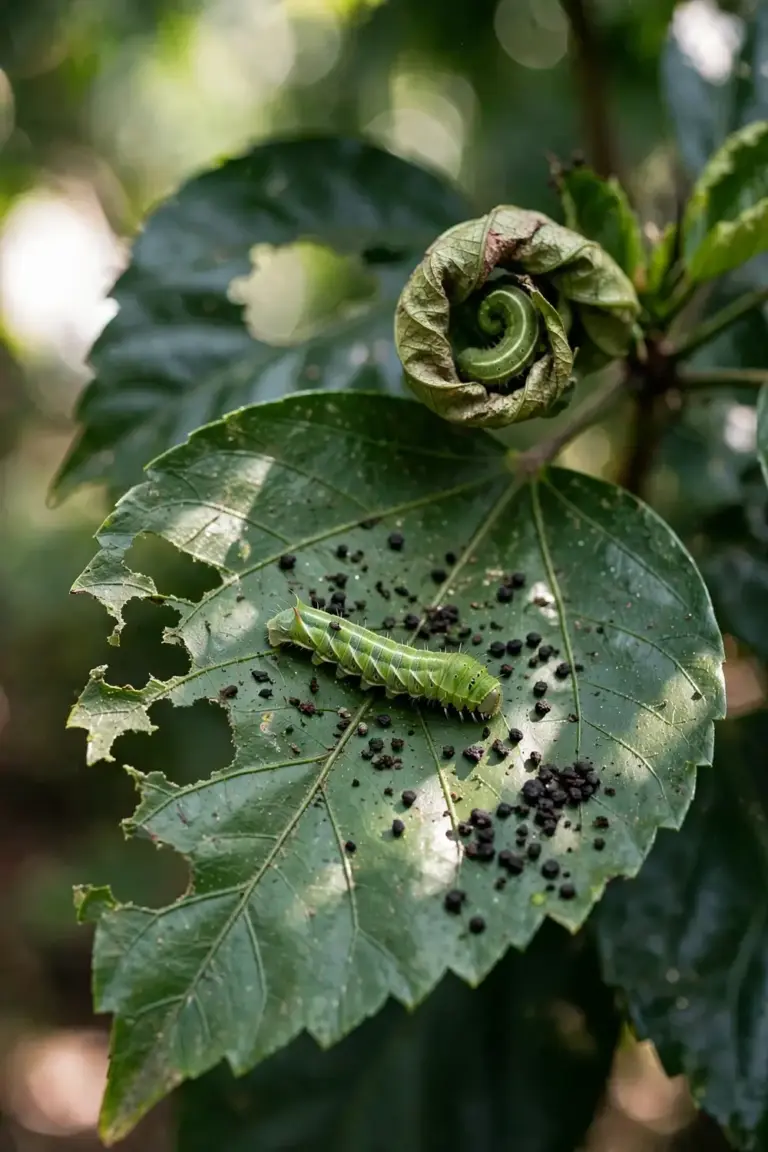
Hand-pick the caterpillars. Check leaf undersides and shoot tips, where they feed. Check the shoot tips last, because caterpillars move there after they finish the outer leaves. Drop them into soapy water. Prune the worst-eaten leaves and bin them. Hand-picking suits caterpillars because they are large enough to see and few enough to catch on one shrub.
Soap or oil follows for heavy colonies. Insecticidal soap or horticultural oil sprayed on the feeding sites smothers young caterpillars. Cover both leaf surfaces. Repeat per the label. Follow the label. Keep pets and children off the plant until the spray dries. Never spray in wind or rain. Never spray open flowers.
9. Thrips: Treat the Silvery Streaks Without Hitting Pollinators
Thrips leave silvery streaks on flowers and young leaves, and petals grow distorted. The insects are tiny and fast, and they hide inside buds and flower folds. Streaked flowers that never open cleanly point to thrips.
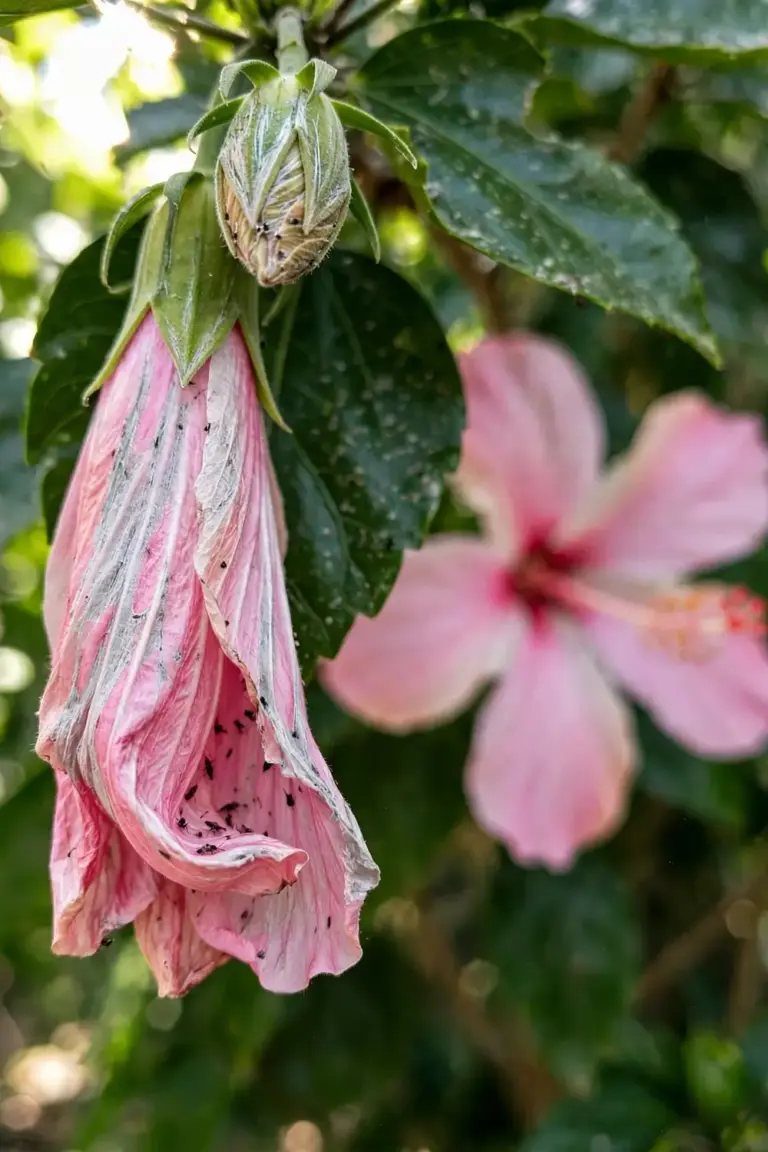
Confirm thrips before you spray. Hold a sheet of white paper under a suspect flower and tap the flower sharply. Thrips fall out as tiny dark specks crawling across the paper. Check inside the buds. Check the undersides of young leaves. A flower that shows streaks but drops no specks may carry a different problem, and the paper test takes seconds. It keeps you from spraying the wrong bug.
Prune the worst flowers first. Bin them. Do not compost them. Pruning removes the thrips hiding inside the buds and cuts the next generation.
Spinosad treats heavy thrips colonies. Spinosad is a targeted insecticide derived from a soil bacterium, and it is the standard targeted option for thrips on ornamentals. Spray in the evening when bees have left the flowers. Cover buds and young leaves, where thrips hide. Repeat per the label. Follow the label. Keep pets and children off the plant until the spray dries. Never spray in wind or rain. Never spray open flowers while bees are working. The site’s pollinator-friendly pest control guide covers the timing rules that keep pollinators safe.
10. Bud-Drop Bugs: Pick Up Fallen Buds and Check for Harlequin Bugs
Buds that yellow and drop without opening have a short suspect list. Gall midge larvae feed inside buds and force them to drop. Harlequin bugs feed on buds, stems, and seed pods and distort the growth around them. Both are bud-drop bugs, and both yield to sanitation first.
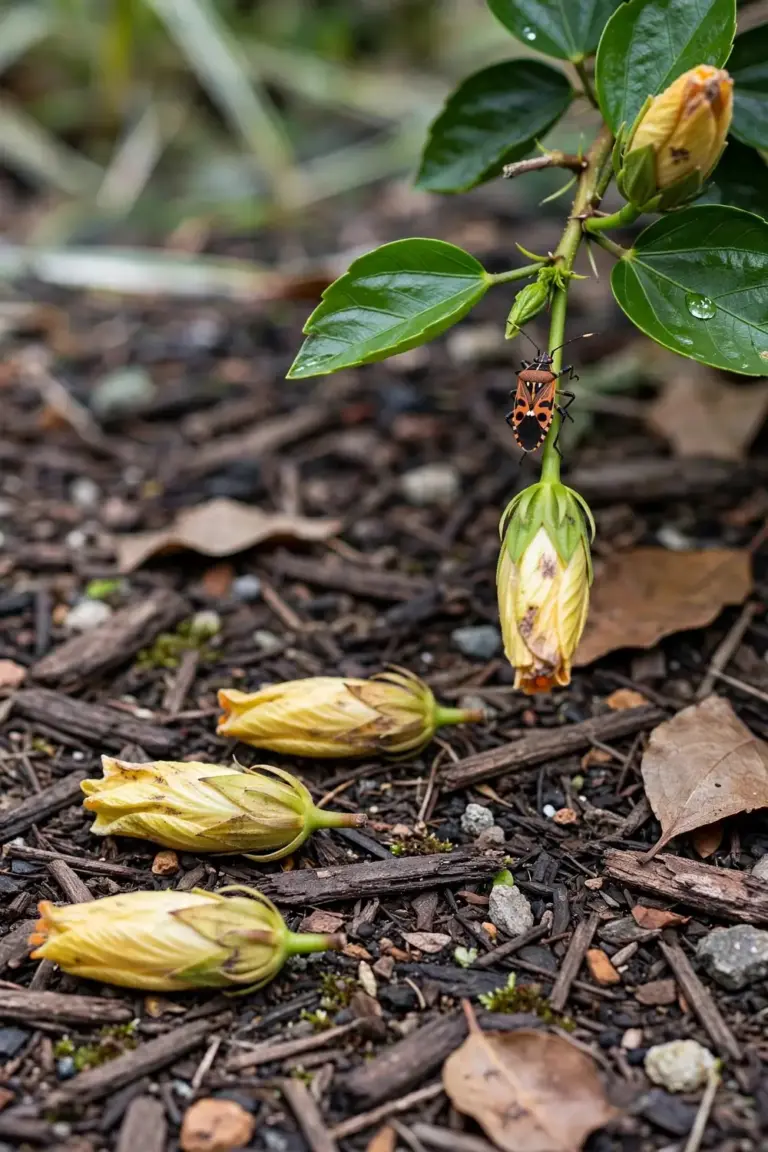
Pick up every fallen bud. Gall midge completes its cycle in the dropped bud, so binning fallen buds breaks the next generation. Do not compost them. Check the remaining buds for swelling and yellowing, and remove any bud that looks swollen or discoloured. A bud that feels soft and never opens is the one to remove. The midge larvae feed inside the bud, so an unopened bud holds the next generation. Removing it removes them.
Harlequin bugs are easy to spot. They are orange and black shield-shaped bugs that cluster on buds and stems. The harlequin bug, Tectocoris diophthalmus, is the Australian native headline pest on hibiscus family plants, per the PestNet Sydney identification record. Hand-pick the bugs and drop them into soapy water. The same record ties harlequin bugs to Norfolk Island hibiscus, Lagunaria patersonii, which is a different genus from true hibiscus and stays outside this article except for this note.
11. Run the Severity Ladder: Hose, Then Soap or Oil, Then a Targeted Product
The severity ladder keeps the mildest fix first and the strongest fix last. Most hibiscus bug problems end on the first two rungs.
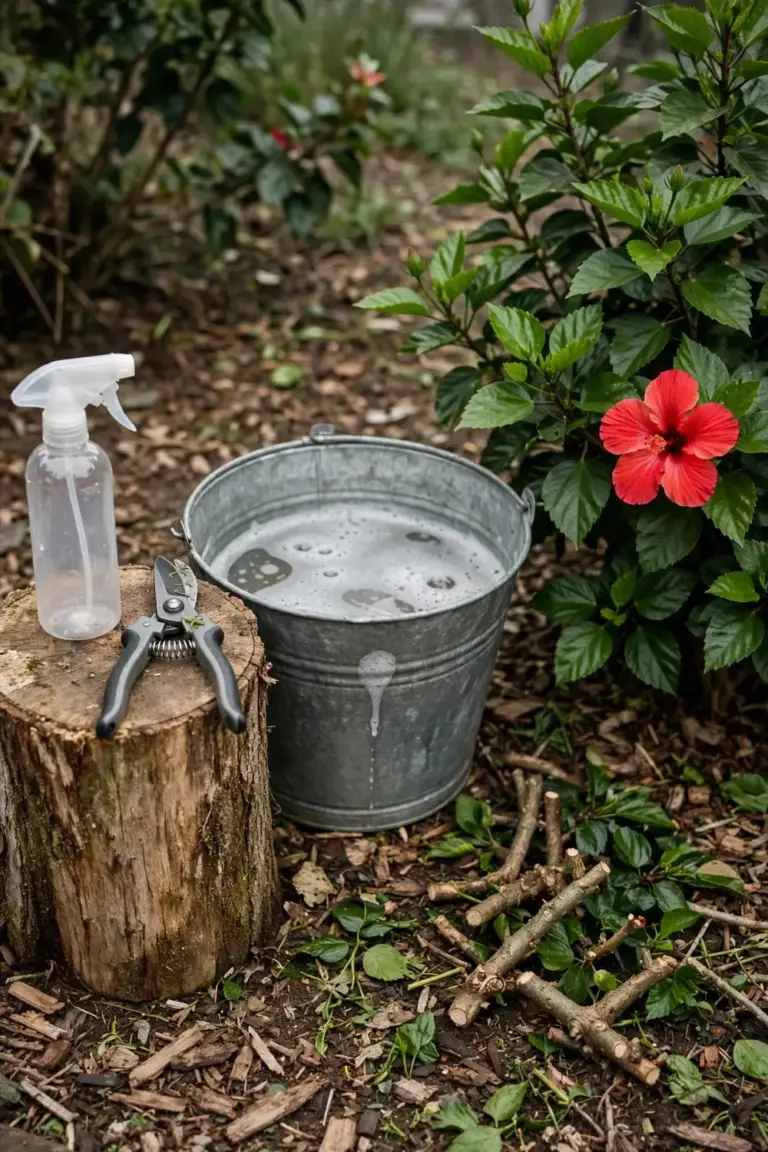
Rung one is water and hands. Hose the plant hard, hand-pick the visible bugs, and prune the worst growth. Bin the prunings. This rung clears aphids, whiteflies, spider mites, caterpillars, and beetles when the colony is small.
Rung two is soap or oil. Insecticidal soap or horticultural oil smothers the bugs that water missed, including mealybugs, scale crawlers, whitefly nymphs, and thrips. Repeat on the hatching cycle, per the label. The site’s organic pest control guide for beginners lays out the same softest-first order.
Rung three is a targeted product. Spinosad for thrips, or a systemic product for severe scale, sits here, and only here. Broad-spectrum sprays sit nowhere on this ladder for a home hibiscus. They kill the ladybirds, lacewings, and parasitic wasps that eat the bugs, and the bugs return faster than the predators. A garden stripped of predators grows the next wave faster than a garden left alone. Follow the label on any product you use. Keep pets and children off the plant until the spray dries. Never spray in wind or rain. Never spray open flowers.
12. Break the Ant Connection: Stop the Ants Farming Your Aphids
Ants farm aphids. They protect aphid colonies from predators, move aphids to fresh shoots, and harvest the honeydew the aphids excrete. A hibiscus with a steady ant trail up the stem has an ant problem wearing an aphid problem.
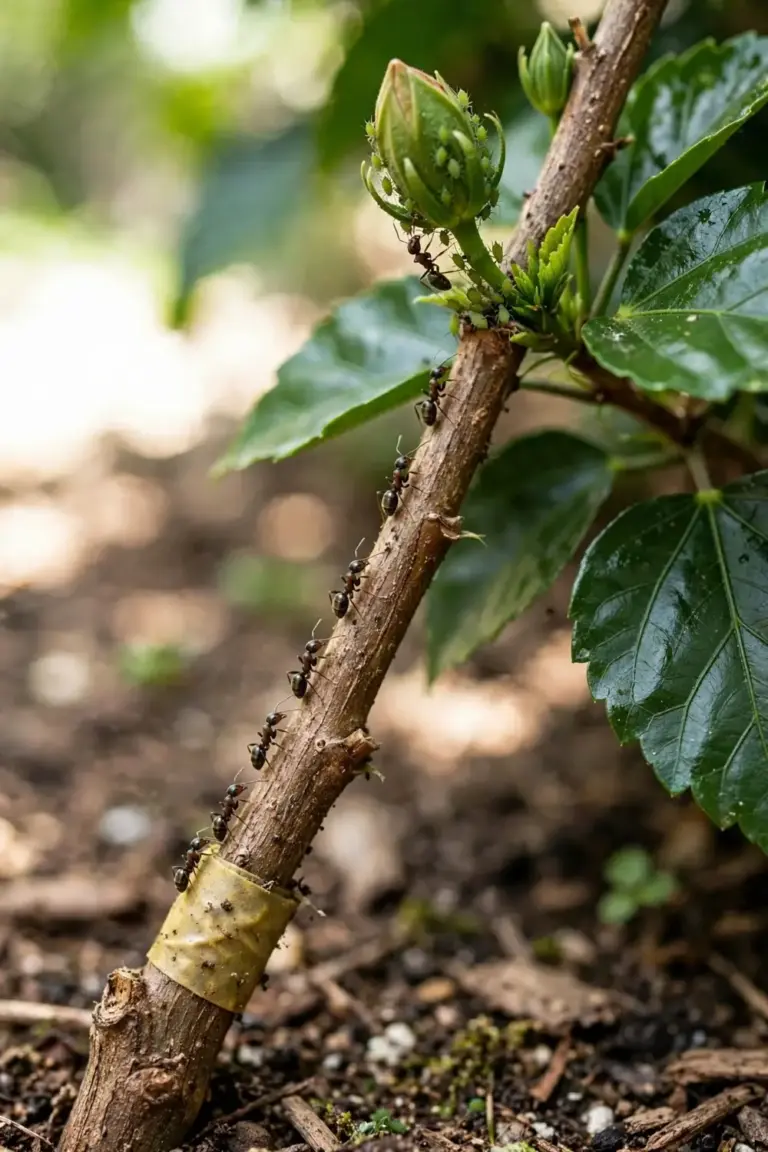
Follow the trail. Ants climb from the ground to the feeding site, and the trail points to the colony. Sticky barriers around the stem block the climb. Ant baits placed at the base cut the colony. Place baits where the trail runs, not scattered across the bed. Baits work slowly. The workers carry the bait back to the nest, and the colony fades over days, not hours. Patience beats a second spray here. Both moves are ant moves, not aphid moves, and both are safer than spraying the canopy.
Treat the aphids after the ants. With the ants gone, ladybirds, lacewings, and parasitic wasps reach the aphid colony and eat it. The same ant-protection pattern covers scale and mealybugs. Control the ants, and the predators finish the job the spray started.
13. Prevent the Next Wave: Check New Growth Every Week
Prevention is inspection, not product. Bugs colonise new growth first, and a weekly check catches them while one hose blast still works. Walk the hibiscus once a week. Turn three leaves. Check the buds. Check the stem joints. The whole round takes minutes, and it is the cheapest pest control you own.
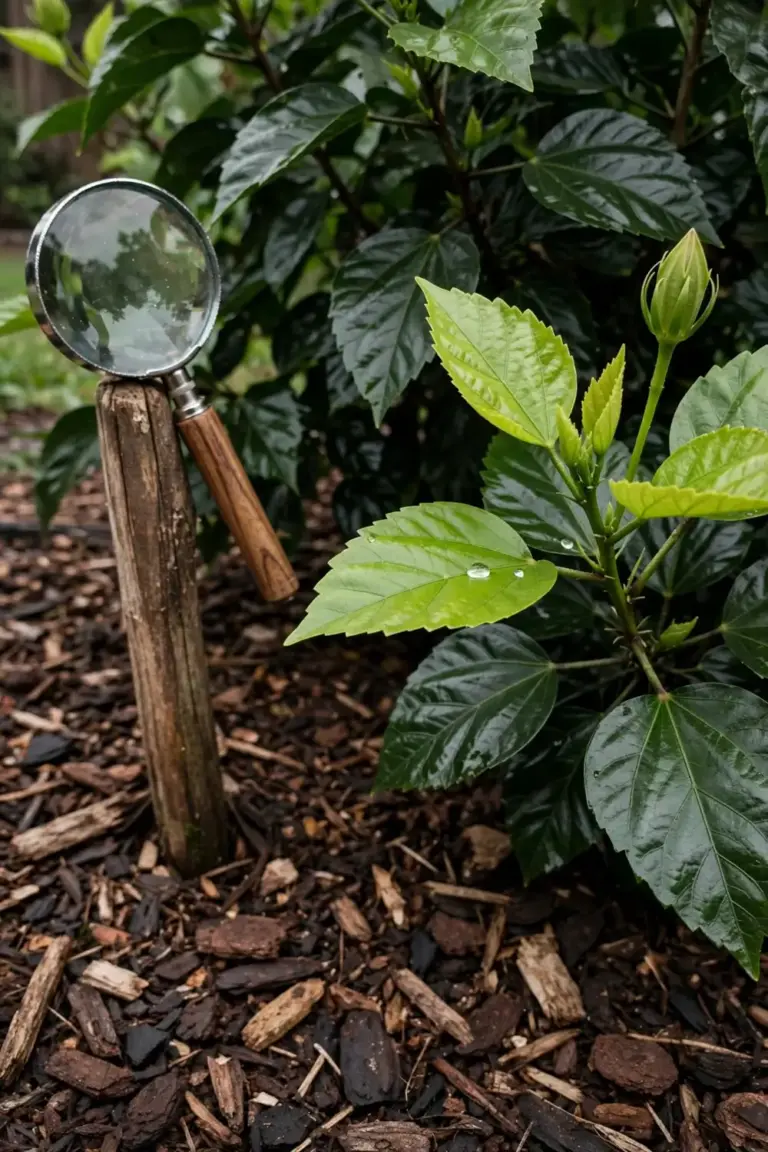
Feed for steady growth, not soft growth. Heavy nitrogen feeding pushes soft sappy shoots that aphids love. A healthy plant with firm growth resists bugs better than a forced plant with soft shoots. Water at the base, keep the canopy open for airflow, and clear fallen buds and leaves from under the shrub. Fallen buds carry gall midge. Fallen leaves carry eggs. A clean bed breaks both cycles.
Quarantine new plants. Inspect every new hibiscus before it joins the garden. Check buds, leaf undersides, and stem joints. Isolate a suspect plant for a week and treat it before it stands beside the healthy shrubs. One infested newcomer seeds the whole bed.
14. Frequently Asked Questions
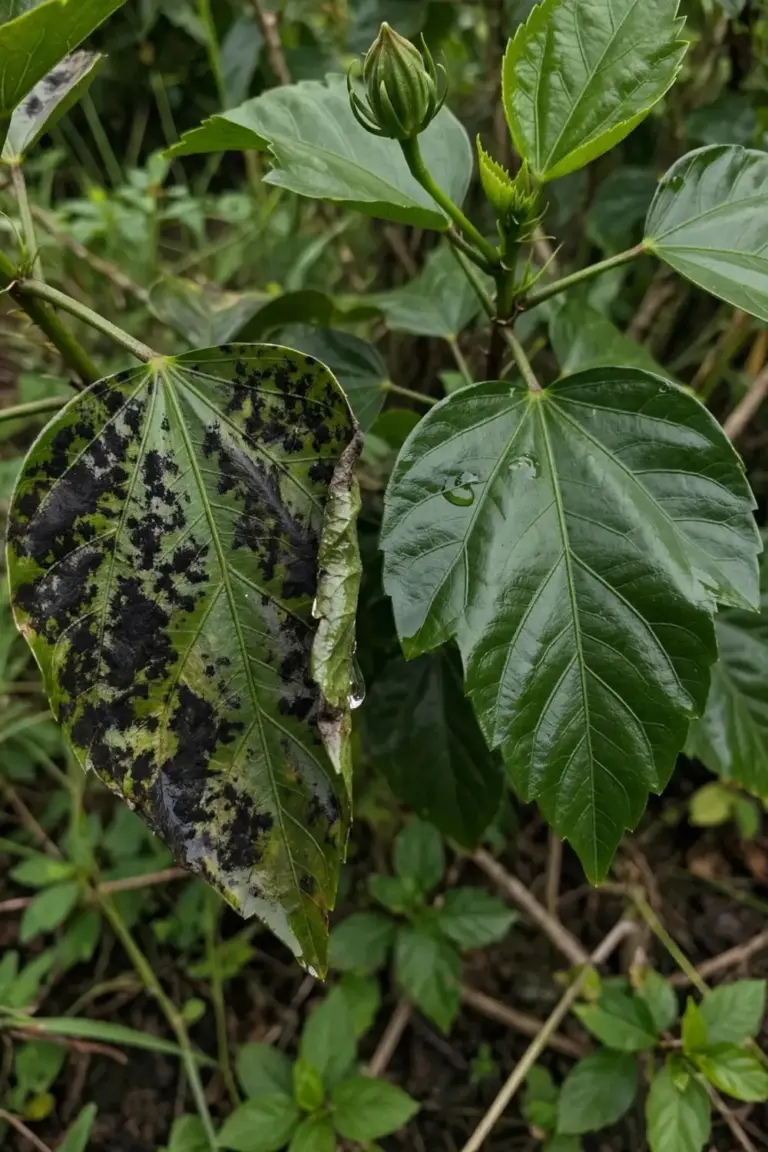
Aphids return within days if the colony survives. A forceful hose blast knocks most aphids off, and repeat blasts every two to three days break the cycle. Ants protect returning colonies, so block the ant trail as well. Ladybirds and parasitic wasps eat the survivors. A colony that keeps returning after two weeks of blasts needs soap or oil.
White cottony masses usually mean mealybugs, and the pink body fluid on crushing confirms them. Giant whitefly nymphs also spin white waxy filaments, and they sit on leaf undersides rather than in joints. Check the location and crush one mass. Mealybugs sit in joints and stem tips. Whitefly wax hangs from leaf undersides. The location settles the call.
Sooty mould is not dangerous by itself: it is a black fungus that grows on honeydew, never on the leaf tissue itself. A heavy coating blocks light and slows growth. Kill the bugs. The honeydew stops, and the old mould fades on its own. Wipe the worst leaves with a damp cloth for a faster cleanup.
Spray water any time. Spray soap or oil only when bees are absent, and never spray open flowers with any insecticide, including spinosad. Bees work the flowers in daylight. Spray in the evening after they leave, and cover buds and leaves, not open blooms. A sprayed open flower poisons the pollinators the garden needs.
Remove the plant when the trunk is girdled by scale, when root rot has killed the crown, or when three rounds of ladder treatment leave the colony growing. A hibiscus that keeps losing every bud to gall midge across a full season is a candidate for replacement. Bin the plant. Do not compost it. Check neighbouring hibiscus plants for the same bug before replanting.
15. Name It, Then Treat It
Bugs on hibiscus trees yield to one rule: name the bug, then treat it. The ID table names it. The bug sections treat it. The ladder keeps the mildest fix first, so the predators survive to eat the next wave. The ant connection stops the colony returning. The weekly check stops the next wave before it starts. A hibiscus checked weekly, sprayed softly, and guarded against ants keeps its buds season after season.