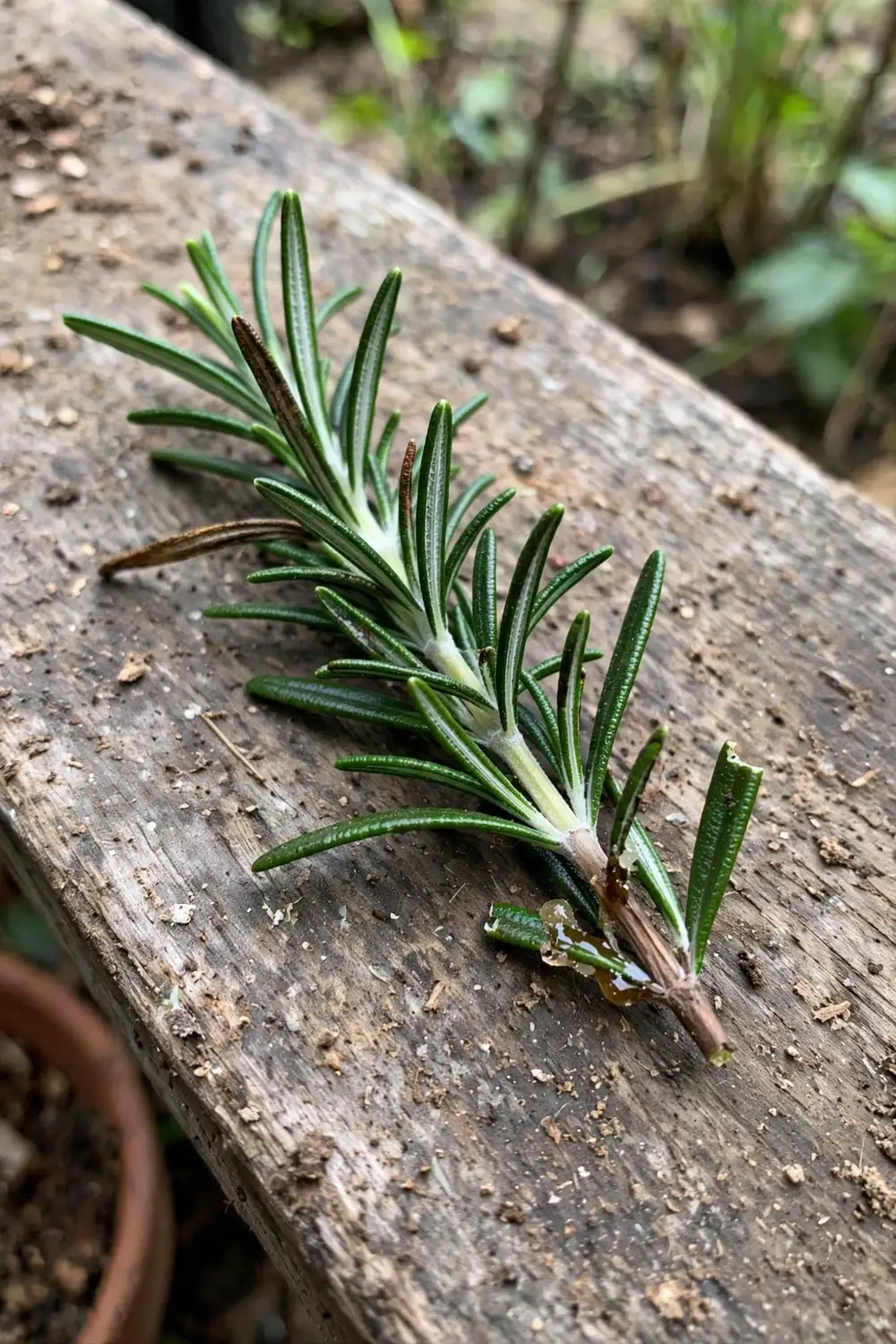

A plant labeled rosemary is true rosemary only when 4 clues line up: needle leaves dark green above and white felted below, a piney camphor scent when crushed, two-lipped flowers in the leaf axils, and square stems. Miss one clue and the plant is something else wearing the name. Rosemary identification in Australia is a name test, not a growing test. I have learned that the rosemary I name from its crushed leaf and its flower together beats the rosemary I name from its label alone.
Four unrelated Australian plants carry rosemary in their common name. Nurseries sell them beside the culinary herb. Gardens hold them side by side. The name on the tag does not prove the plant. The leaf, the scent, the flower, and the habit prove it. Run the 4 clues in order and the name trap closes.
The key below sorts 6 plants. The sections after it walk each row: true rosemary first, then the 4 natives that share the name, then lavender. A cultivar key follows for true rosemary sold in Australian nurseries. A field checklist closes the page. Each section names the plant from the same 4 clues, so the method stays identical from the first plant to the last. That is rosemary identification in Australia: name the plant from evidence, not from the tag.
1. Run the Name Trap Test First: Leaf, Scent, Flower, Habit
Check the leaf first, then the scent, then the flower, then the habit. True rosemary passes all 4 checks. Every plant that shares the name fails at least one.
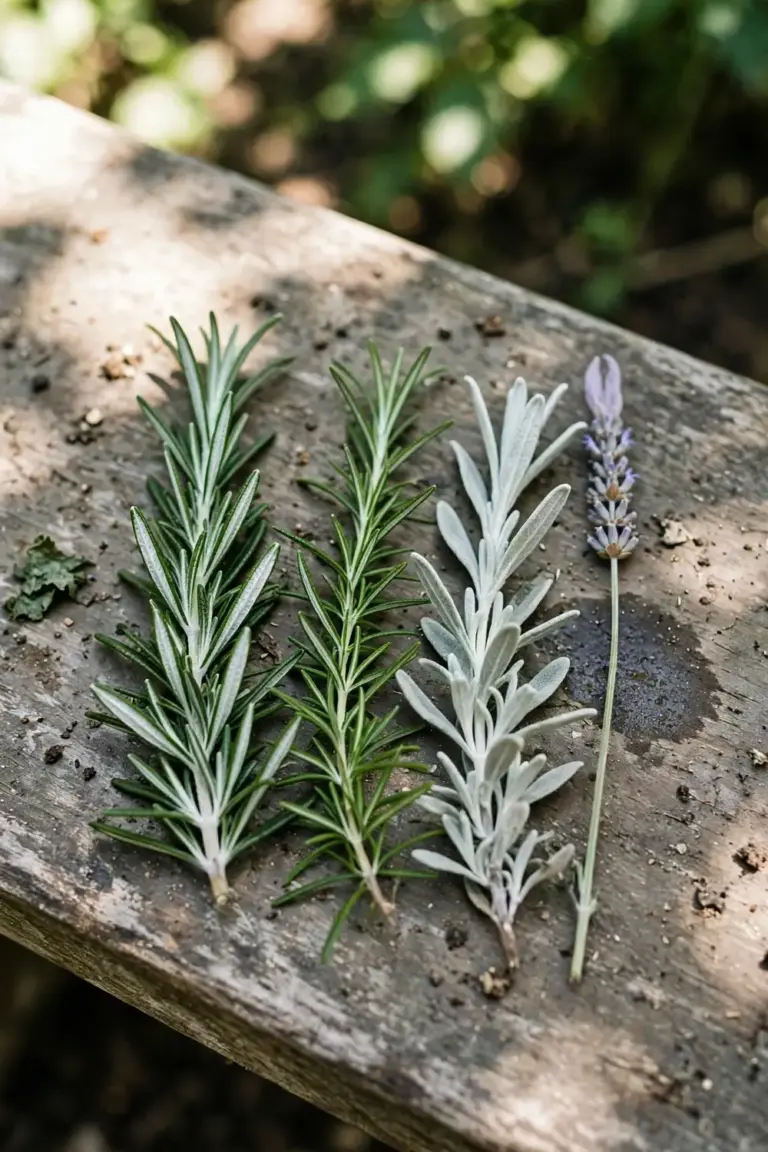
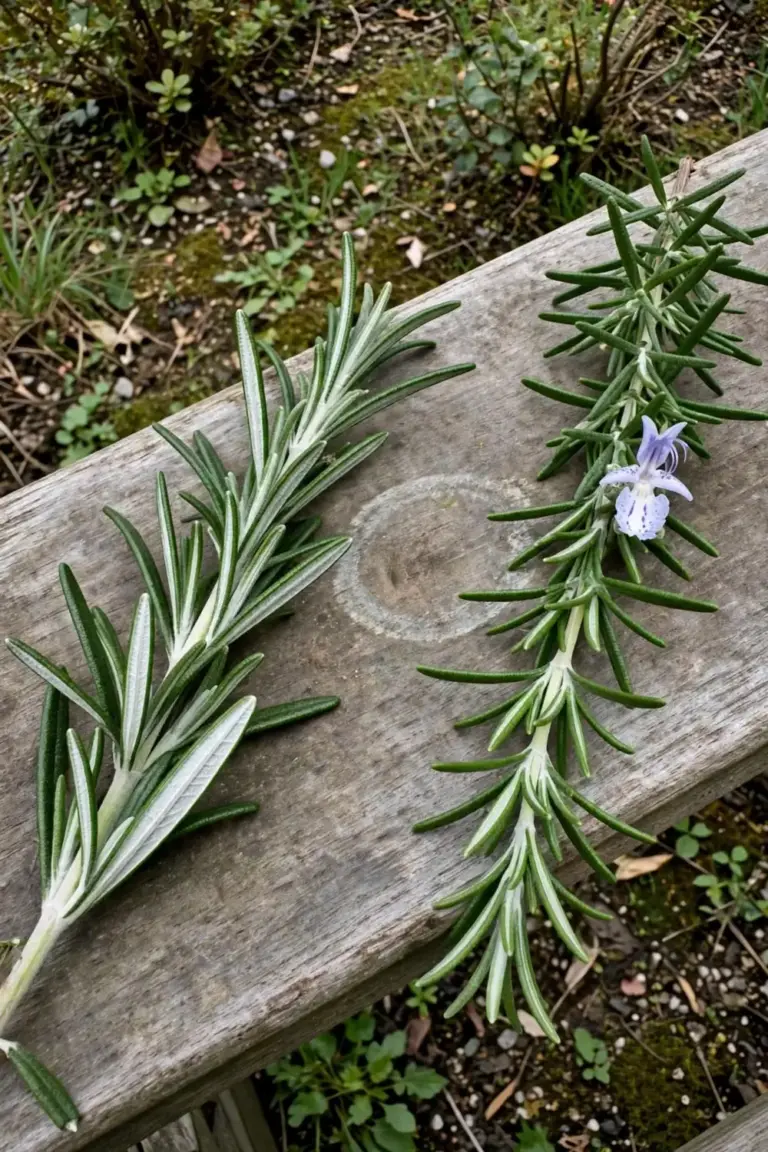
Start with the leaf. True rosemary carries opposite, needle-like leaves with rolled margins. The upper surface is dark green. The underside is white felted. Crush one leaf between your fingers and the scent hits hard: piney, camphor, resinous. No other plant on the rosemary name list smells like that.
Then check the flower. True rosemary flowers sit in the leaf axils in clusters of 2 or 3. The corolla is two-lipped, pale violet-blue and white. Then check the stem. True rosemary stems are square, because rosemary belongs to the mint family. A round stem with rosemary-like leaves is not rosemary.
Read the nursery tag before you run the clues. The tag carries two names. The common name says rosemary. The botanical name says which plant it is. Trust the botanical name. A tag that prints Salvia rosmarinus names true rosemary. A tag that prints Westringia, Olearia, or Cassinia names something else, whatever the common name above it claims. Run the test at the nursery, on a gifted plant, and on an established plant in your own garden. The test takes 2 minutes. A wrong plant in the kitchen lasts longer.
2. Read the Name Trap Key: 6 Plants Called Rosemary
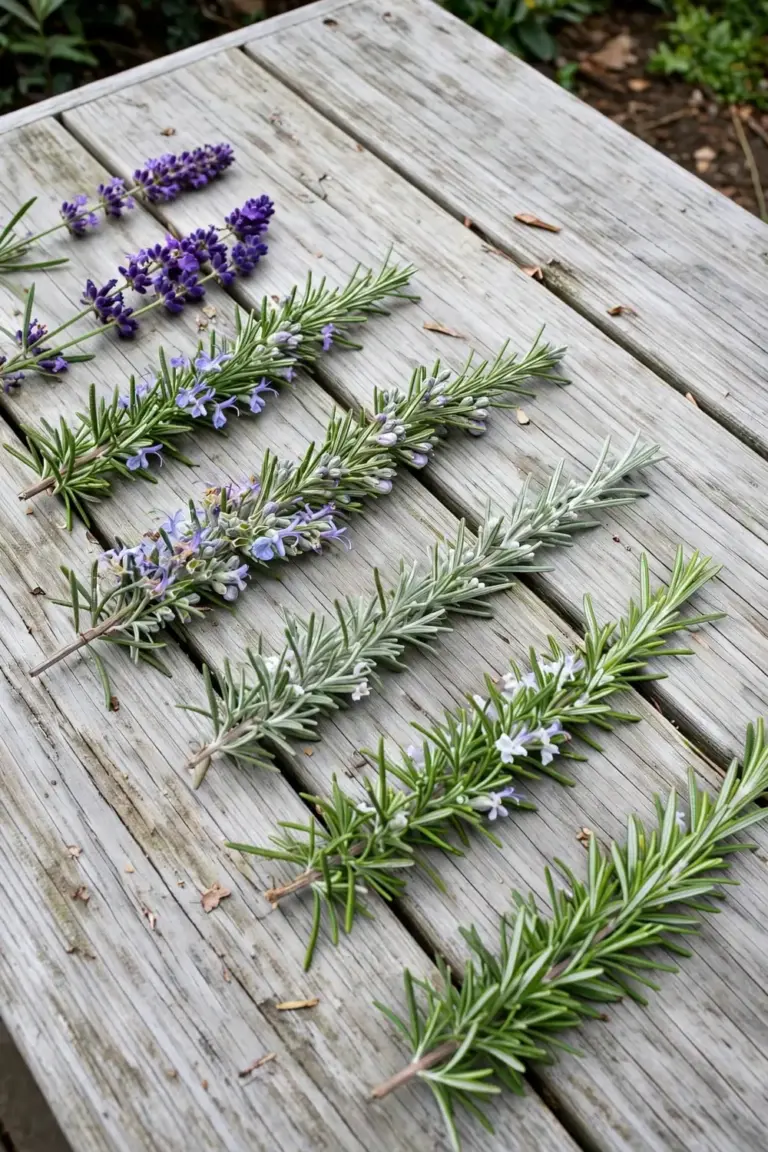
The key below sorts the 6 plants an Australian gardener meets under the rosemary name. Read across one row and the answer lands.
| What It Is Called | True Rosemary? | Leaf | Scent | Flower | What to Do |
|---|---|---|---|---|---|
| True rosemary (Salvia rosmarinus) | Yes | Needle, dark green above, white felted below | Strong piney camphor when crushed | Two-lipped, pale violet-blue and white, in leaf axils | Culinary herb |
| Coastal rosemary (Westringia fruticosa) | No | Narrow, in whorls around the stem | Little to none | White to palest mauve, spotted near the throat | Ornamental shrub, do not eat |
| Native rosemary (Westringia sericea) | No | Lance-shaped, in whorls | Little to none | Pale mauve, orange-brown dots | Ornamental shrub, do not eat |
| Wild rosemary (Olearia axillaris) | No | Silvery, woolly gray hairs below | Warm, grassy, rosemary-like | Cream daisy heads | Bushfood, not culinary rosemary |
| Bushy rosemary (Cassinia subtropica) | No | Lance-shaped to egg-shaped, hairy below | Little to none | Tiny cream heads in panicles | Ornamental shrub, do not eat |
| Lavender (Lavandula) | No | Narrow, silvery, hairy | Floral, sweet | On bare spikes above the leaves | Ornamental herb, not rosemary |
One row carries the culinary herb. Five rows carry other plants. The rest of this page walks each row in turn.
3. Confirm True Rosemary in Australia by Its 4 Clues
True rosemary is Salvia rosmarinus. The older name Rosmarinus officinalis still appears on older Australian sources and nursery tags. Kew Plants of the World Online lists Rosmarinus officinalis as a homotypic synonym of Salvia rosmarinus. Use one name per plant after the first mention. This article uses Salvia rosmarinus throughout.
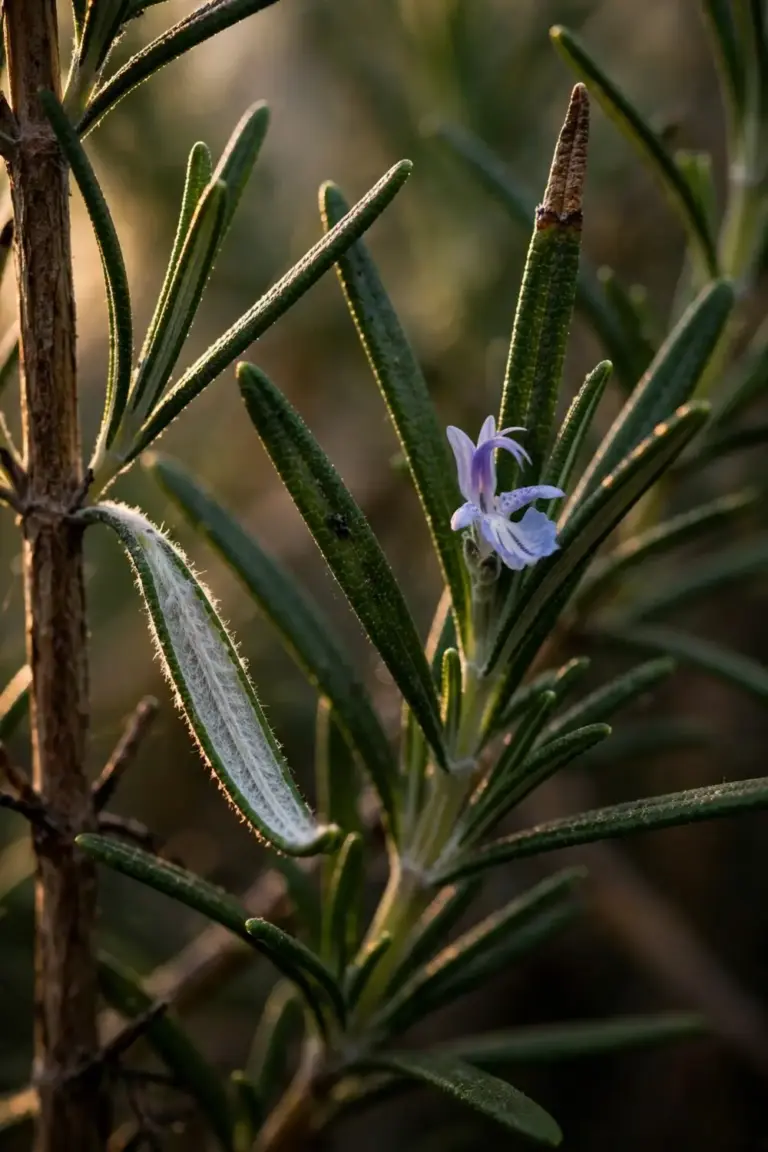
The 4 clues are leaf, scent, flower, and stem. Trees and Shrubs Online describes the leaves as opposite, linear, 1.9 to 5.1 cm long, with recurved margins, dark rather glossy green above and white felted beneath, aromatically fragrant when crushed. The same description puts the flowers in clusters of 2 or 3 in the leaf axils of the previous year’s shoots, with a two-lipped corolla, pale violet-blue and white. The stems are square. The habit is a dense evergreen shrub.
Two details settle close calls, and the first is the leaf underside, which must show white felt. A leaf green on both sides is not rosemary. Second, the flowers must sit in the leaf axils. Flowers carried on a bare spike above the leaves point to lavender, not rosemary.
The name itself changed in 2017. Kew Plants of the World Online follows Drew and colleagues (2017), who placed the three Rosmarinus species inside Salvia on molecular evidence. Older Australian books, tags, and seed packets still print Rosmarinus officinalis. Both names point to the same plant. New references use Salvia rosmarinus. A tag that prints either name, with the 4 clues matching, names true rosemary.
4. Rule Out Coastal Rosemary (Westringia fruticosa)
Coastal rosemary is Westringia fruticosa. It is an Australian native shrub from the east coast. It is not rosemary. The common name refers to the look of the leaves only.
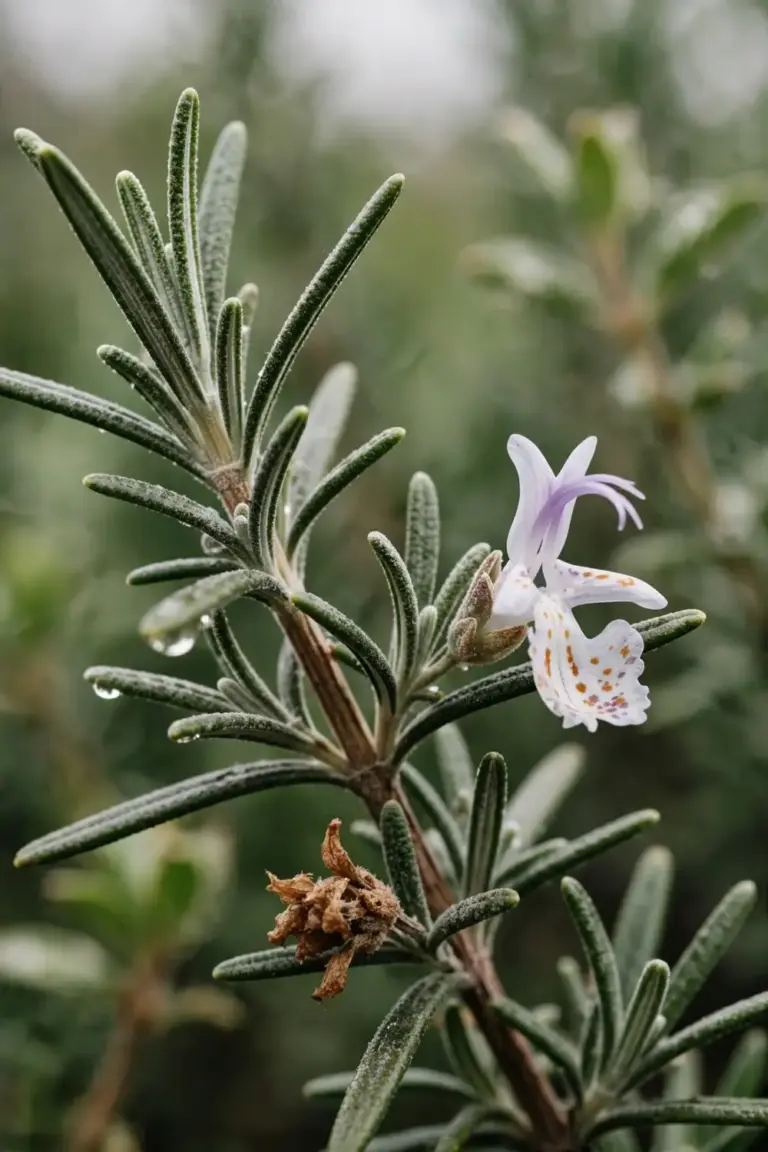
The leaf arrangement gives it away. Coastal rosemary leaves sit in whorls around the stem, several leaves to a ring. True rosemary leaves sit opposite, in pairs. Crush a coastal rosemary leaf and the scent stays faint. Crush true rosemary and the scent fills the air.
The flower seals the split. Coastal rosemary flowers are white to palest mauve, hairy, with the upper petal divided into two lobes and orange-to-purply spots on the lower half. True rosemary flowers are two-lipped, pale violet-blue and white, with no spots. Do not eat coastal rosemary. It is an ornamental shrub. No primary source verifies it as edible, so the safe rule is do not eat.
The genus behind the name is large. Nursery guides count 33 Westringia species, all Australian shrubs in the mint family. Coastal rosemary is one of them. The genus shares the square stems and two-lipped flowers of the mint family with true rosemary, which is why the resemblance runs deep. The whorled leaves and the missing scent separate the genus from rosemary at a glance. Learn the whorl and the whole genus falls into place.
Native plant profiles give the whorl numbers. Coastal rosemary leaves sit in whorls of 4 around the stem, to 2 cm long and 3 to 5 mm wide. New growth carries fine hairs that give the shrub a silvery gray cast. The flowers run to about 2 cm across, white or pale mauve with orange to purplish spots on the lower petals. The upper petal divides into two lobes. True rosemary leaves never sit in whorls of 4. True rosemary flowers never carry spots.
5. Rule Out Native Rosemary and Silky Rosemary (Westringia sericea)
Native rosemary is Westringia sericea, also sold as silky rosemary. It belongs to the same genus as coastal rosemary. It is not rosemary. The genus Westringia holds Australian shrubs only, and every one of them sits outside the culinary herb.
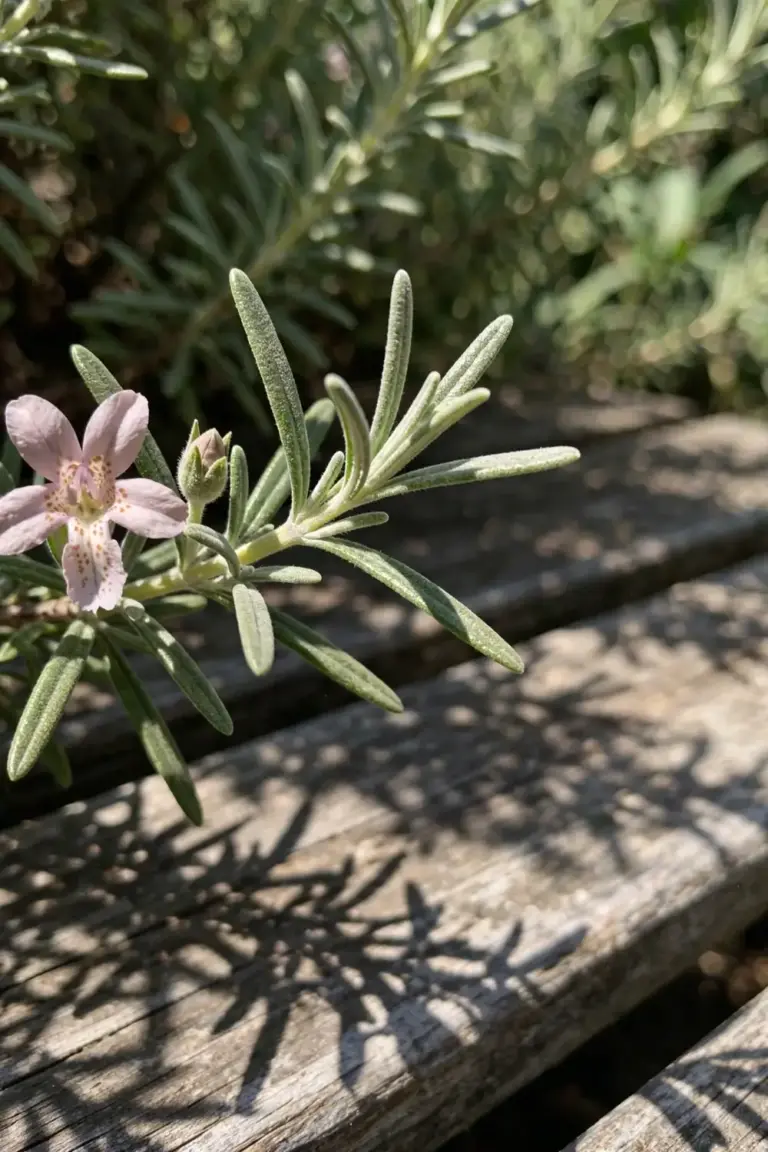
The leaf tells the story. Native rosemary carries lance-shaped leaves in whorls, with a silky surface that gives the plant its common name. True rosemary carries needle leaves in opposite pairs. The flower adds the second clue. Native rosemary flowers are pale mauve with orange-brown dots near the throat. True rosemary flowers carry no dots.
Range adds a third clue. Nursery profiles place native rosemary in Queensland and New South Wales. A plant sold as native rosemary in a Sydney or Brisbane nursery is Westringia sericea until the tag proves otherwise. Read the botanical name on the tag. The common name alone cannot separate the two Westringia species from each other, and it cannot separate either from true rosemary. Do not eat native rosemary. No primary source verifies it as edible, so the safe rule is do not eat.
The two Westringia species split on surface and flower. Coastal rosemary leaves are narrow and dark, with a silvery cast from fine hairs on young growth. Native rosemary leaves are lance-shaped with a silky surface, the trait behind the silky rosemary name. Coastal rosemary flowers run white to palest mauve with reddish and yellow-brown spots near the throat. Native rosemary flowers run pale mauve with orange-brown dots. The two share the whorled leaf and the faint scent. Either one fails the rosemary test the same way.
Ask the nursery for the species name when the tag prints only a common name. A tag that says native rosemary without a botanical name leaves the species open. The words to listen for are fruticosa and sericea. Fruticosa means coastal rosemary. Sericea means native rosemary. Neither means true rosemary. A nursery that cannot give the species name cannot prove the plant. Walk away from an unproven tag and test the plant at home with the 4 clues.
6. Rule Out Wild Rosemary (Olearia axillaris)
Wild rosemary is Olearia axillaris, also called coastal daisy bush, a daisy in the Asteraceae family. Mint kinship does not apply.
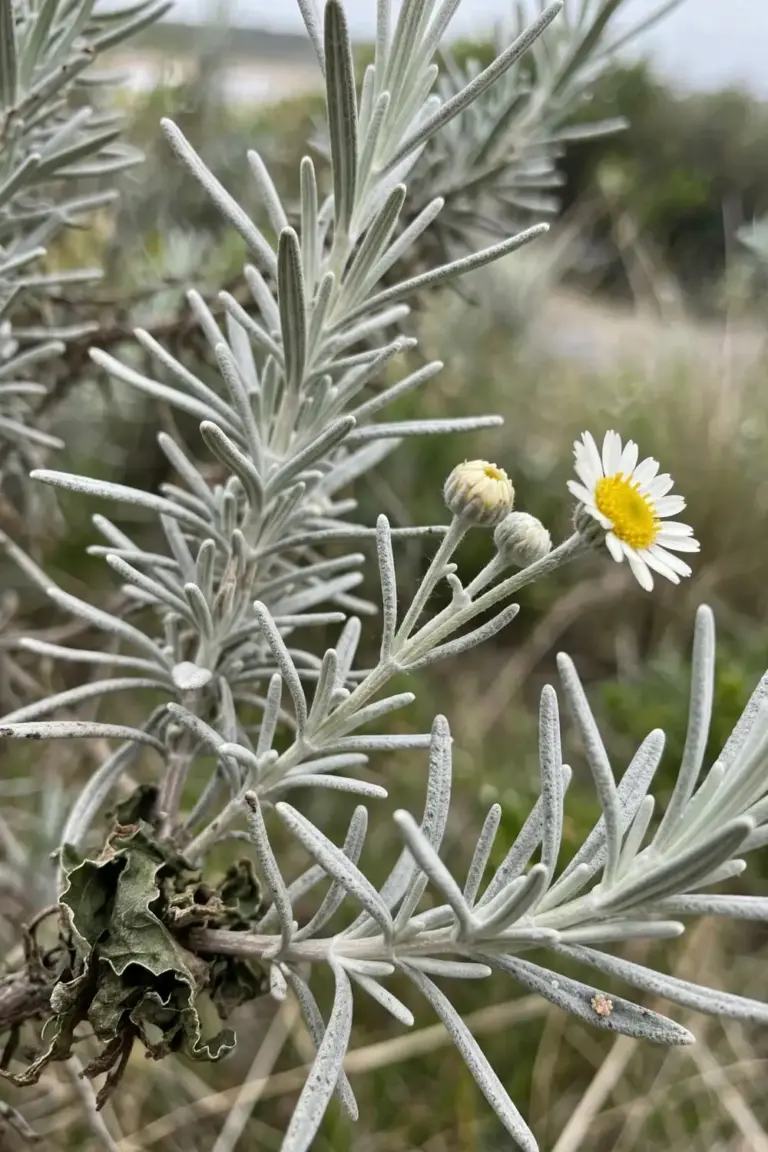
The leaf and flower together expose it. Tucker Bush describes wild rosemary as a bushy foliage plant with attractive silvery foliage that reaches up to 2 metres, with cream-colored flowers that bloom from summer through to late autumn. The leaves are silvery and woolly. The flowers are daisy heads, with ray florets around a disc. True rosemary never carries a daisy head.
The scent is the trap. Wild rosemary foliage smells warm and grassy, close enough to rosemary to fool a quick sniff. The same Tucker Bush page notes that the foliage is fragrant and edible, and that the name came from the resemblance in appearance and taste. Wild rosemary is bushfood, used fresh and dried. It is not culinary rosemary. Keep the two apart in the kitchen. A bushfood plant and a culinary herb are different ingredients, even when the scent overlaps.
The common name came from European colonists who noted the resemblance to English rosemary. Colonists named what they saw. They saw a silvery shrub with a warm scent and called it wild rosemary. The name stuck for 200 years. Botany later placed the plant in Olearia, with the daisies. The colonists’ name survives on nursery tags. The botanical name corrects it.
7. Rule Out Bushy Rosemary (Cassinia subtropica)
Bushy rosemary is Cassinia subtropica. It is a daisy, in the Asteraceae family, endemic to north-eastern Australia. It is not rosemary. The common name is the whole resemblance.
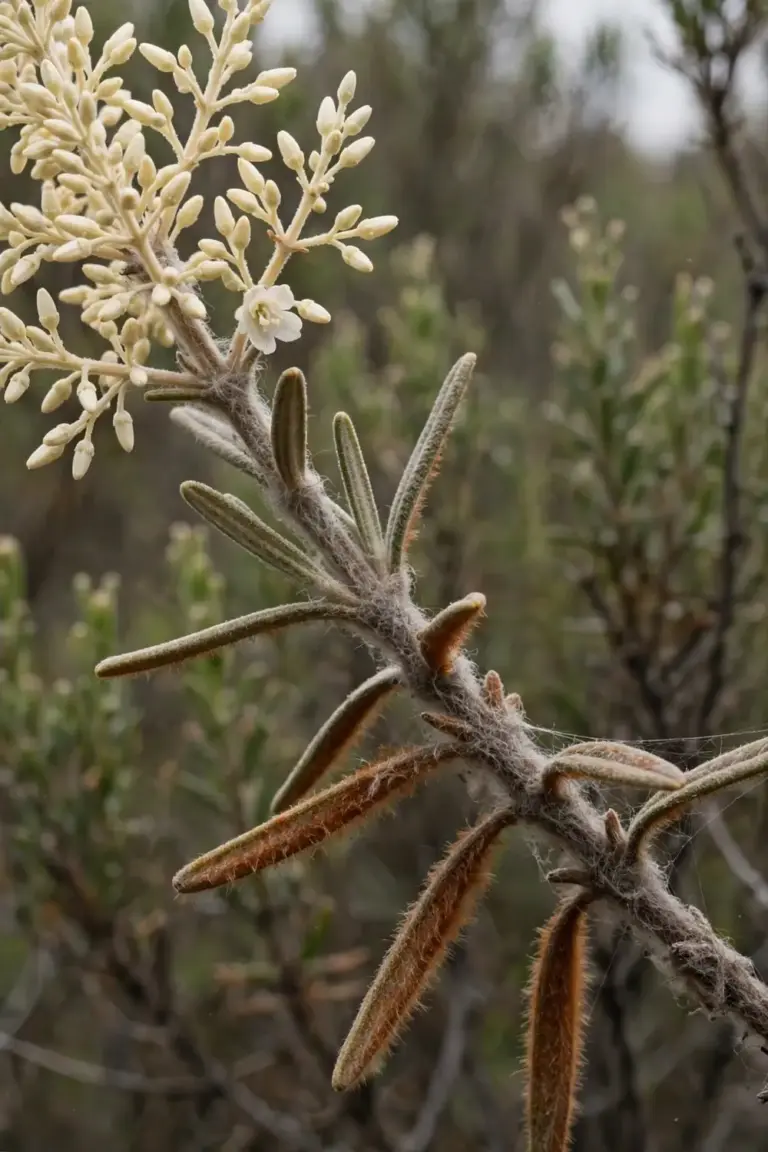
The flower heads give it away at a glance. Flora descriptions give the leaves as lance-shaped to egg-shaped, 10 to 30 mm long and 3 to 7 mm wide, with the lower surface covered in whitish to rust-colored hairs. The flower heads are linear to narrow bell-shaped, 3 to 4 mm long, each with one or two cream-colored to pale brown florets. The heads sit in panicles 100 mm long and 60 mm wide at their largest. True rosemary never carries panicles of tiny heads. True rosemary flowers are two-lipped singles in the leaf axils.
The stem adds a second clue. Bushy rosemary stems are gray or brown, covered with fine woolly hairs. True rosemary stems are square and woody. The habit is a shrub to about 2 metres, which matches rosemary in size and hides the split from a distance. Walk close. Check the flower head. A panicle of tiny cream heads ends the argument. Do not eat bushy rosemary. No primary source verifies it as edible, so the safe rule is do not eat.
A second Cassinia carries the rosemary name. PlantNET lists Cassinia quinquefaria under the common name rosemary cassinia. It is a daisy, not rosemary, and it fails the same tests: tiny heads, no piney scent, no needle leaves. The rosemary name reaches past one species in this genus. Treat every Cassinia as a non-rosemary until the 4 clues prove otherwise. The genus name on the tag settles it faster than any flower comparison.
8. Separate Rosemary From Lavender at a Glance
Lavender is Lavandula, a different genus in the same mint family, and the most common lookalike in herb beds. It shares the square stem and the gray-green needle-like leaf. It fails the flower test and the scent test.
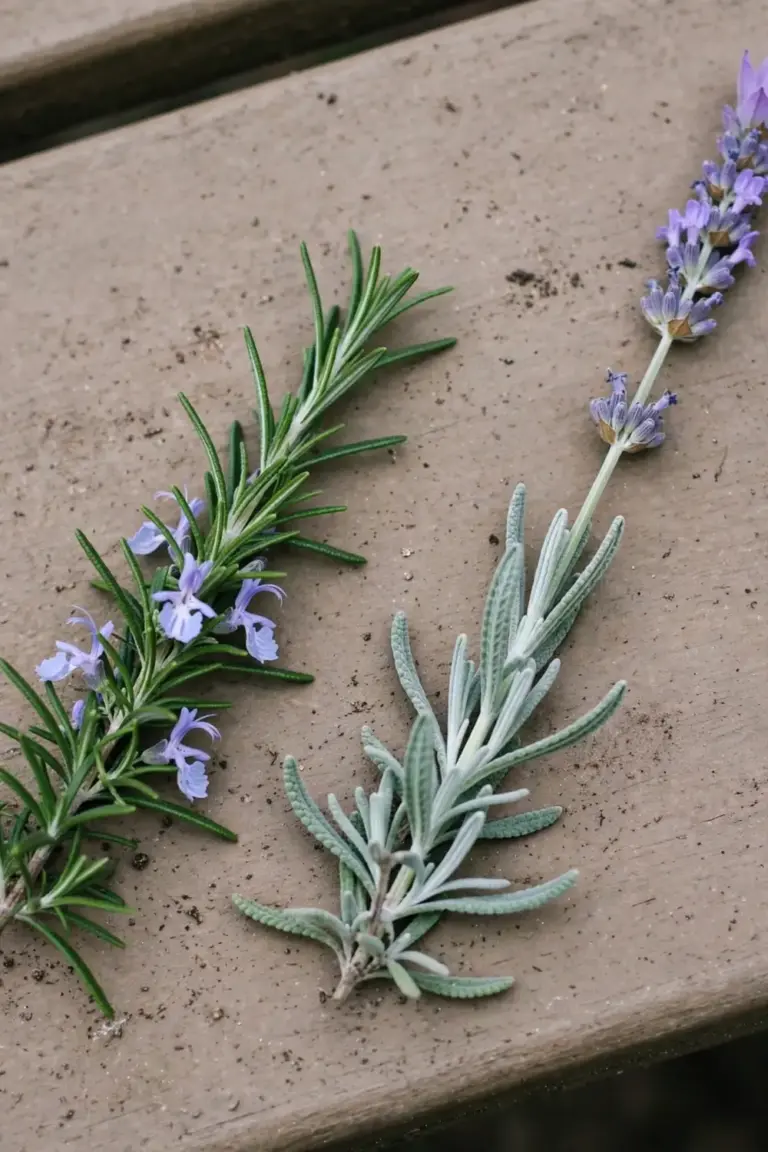
The flower is the fastest split: lavender flowers sit on bare spikes held above the leaves. True rosemary flowers sit in the leaf axils, tucked among the leaves. A bare spike means lavender. Axil clusters mean rosemary. The scent adds the second split. Lavender smells floral and sweet. Rosemary smells piney and camphor, so crush one leaf and the nose decides.
The leaf adds a third split. Lavender leaves are silvery and hairy on both sides. Rosemary leaves are dark green above and white felted below. Two-tone leaves point to rosemary. Uniform silver points to lavender. Check all 3 clues when the plant is out of flower. The leaf and scent tests carry the split alone.
Lavender itself splits into types. English lavender carries slender spikes with a clean floral scent. French lavender carries butterfly-like bracts on top of each spike, showy and unmistakable. Both are lavender. Both fail the rosemary flower test the same way. A spike of any kind rules rosemary out.
9. Separate Rosemary From Thyme and Other Herb Bed Neighbors
Thyme is Thymus, another mint-family herb that shares the bed with rosemary. It fails the leaf test at once. Thyme leaves are tiny, flat, and oval, carried on wiry stems in a low mat. Rosemary leaves are needles, 1.9 to 5.1 cm long, carried on woody upright stems. No thyme leaf looks like a needle.
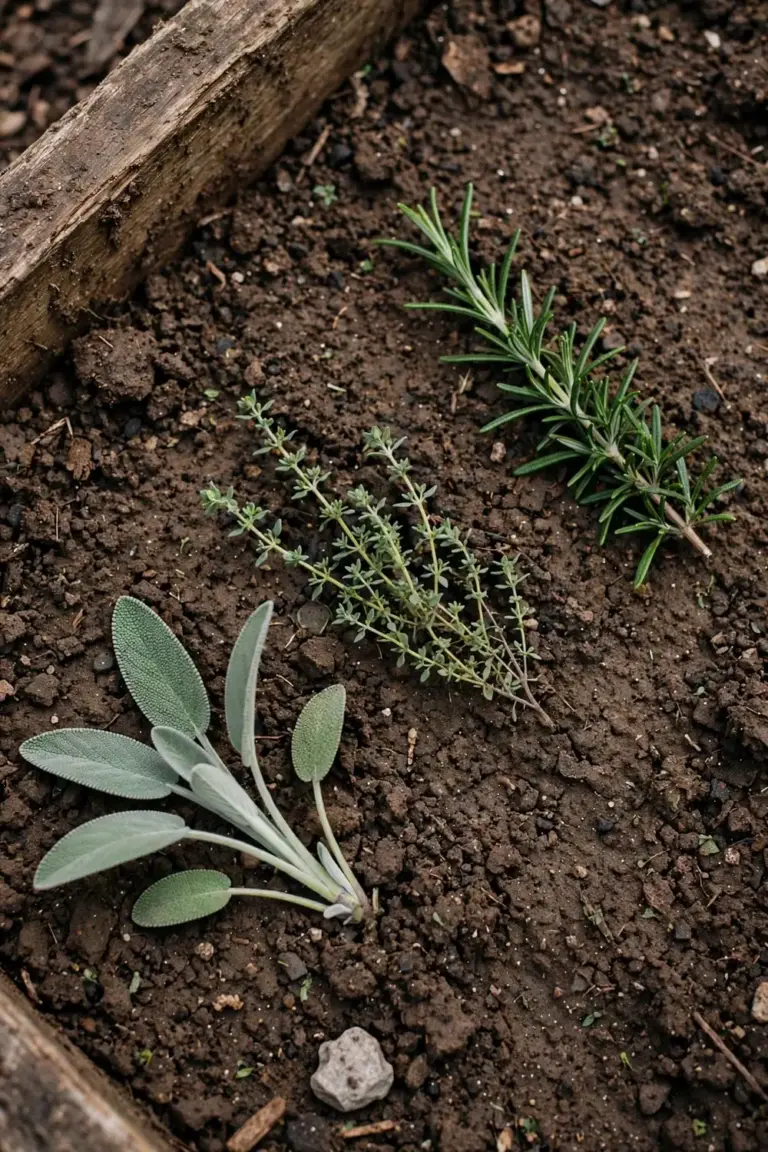
Sage is Salvia officinalis, in the same genus as rosemary. It fails the leaf test too. Sage leaves are broad, pebbled, and gray-green, shaped like a spearhead. Rosemary leaves are needles with rolled margins. A broad leaf means sage. A needle means rosemary.
Westringia as a hedge confuses a third way. A clipped Westringia hedge beside a rosemary hedge looks like two rosemary hedges from the path. Walk close and crush a leaf from each. The rosemary hedge releases piney camphor. The Westringia hedge releases almost nothing. The scent test settles a hedge row faster than any leaf comparison.
Rosemary shares the herb bed with thyme and sage, and the site’s fall herbs to plant list names the bed’s usual occupants. The list helps you expect the neighbors. It does not identify them. Run the 4 clues on each plant in the bed, one at a time. A bed of mixed herbs rewards slow naming.
10. Name the Cultivar: Upright, Prostrate, Flower Color, Leaf Color
Cultivars of true rosemary sort by habit first, then flower color, then leaf color. Habit splits the nursery bench into two groups. Upright cultivars grow as shrubs. Prostrate cultivars trail along the ground.
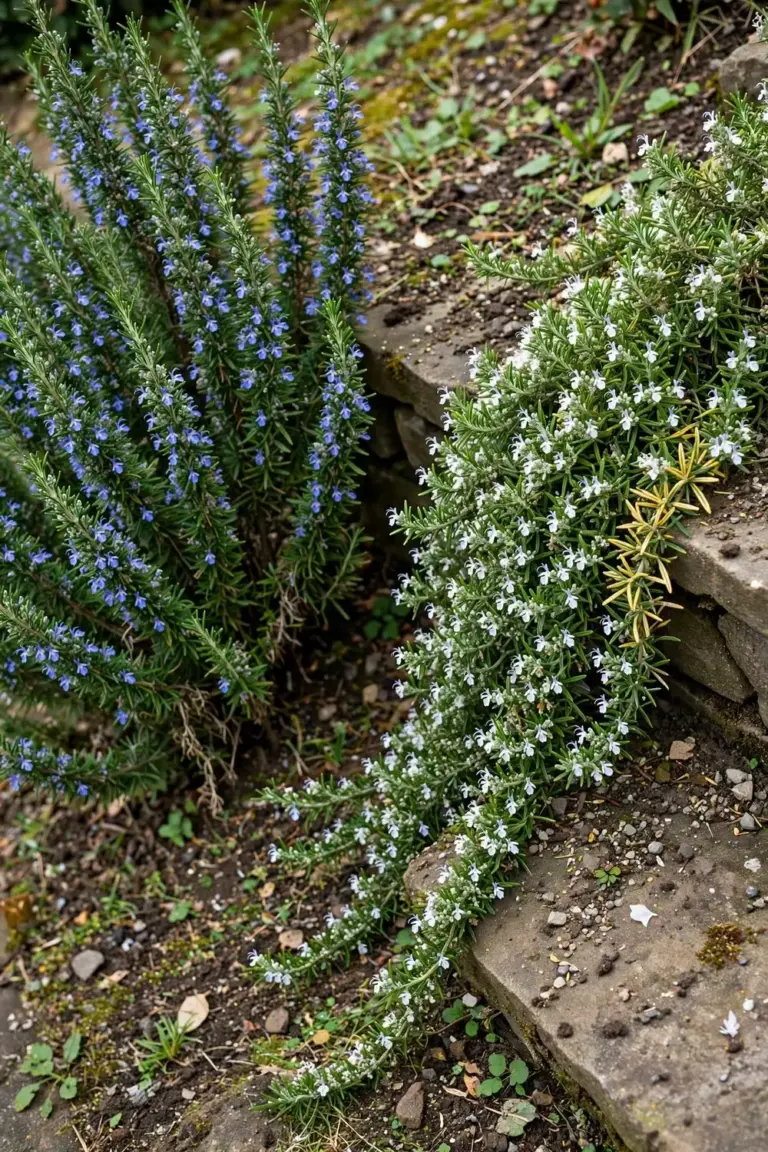
Upright cultivars in Australian nurseries include Tuscan Blue, Miss Jessopp’s Upright, Salem, Blue Lagoon, and Gorza. Prostrate cultivars include Prostratus, Huntingdon Carpet, Jackman’s Prostrate, Irene, and Severn Sea. Prostrate rosemary is the same species as upright rosemary, Salvia rosmarinus, in a trailing form. It is not a separate species. The habit is the cultivar trait, not the species trait.
Flower color sorts within each habit group. White-flowered cultivars include Albus, Lady in White, and Sissinghurst White. Pink-flowered cultivars include Majorica Pink, Pink Remembrance, and Roseus. Most cultivars flower blue to violet-blue, while leaf color sorts a smaller group. Aureus and Golden Rain carry gold-streaked leaves. Wilma’s Gold carries yellow leaves. A gold leaf on a needle-leafed, piney-scented plant is still true rosemary. The 4 clues still govern. The cultivar name refines the identification after the species is settled.
Read the cultivar name on the tag in single quotes. Nursery tags print cultivar names in single quotes after the species name, such as Salvia rosmarinus ‘Tuscan Blue’. The quotes mark the cultivar. A tag with no quoted name sells the straight species. A tag with a quoted name sells one selected form. Either way the species test comes first. Cultivar names never override the 4 clues.
Mislabels happen. A trailing plant sold as an upright cultivar still trails. An upright plant sold as prostrate still stands up. Trust the habit you see, not the habit the tag promises. The 4 clues identify the species. The habit you observe identifies the form. When the tag and the plant disagree, the plant wins. Note the disagreement and name the plant from the evidence in front of you.
11. Settle the Remembrance Question: Gallipoli Is a Cultivar, Not a Species
Remembrance rosemary and Gallipoli rosemary are cultivar names, not species names. They belong to Salvia rosmarinus. The ANZAC association is cultural, not botanical. Rosemary as a remembrance symbol does not change the leaf, the scent, the flower, or the stem.
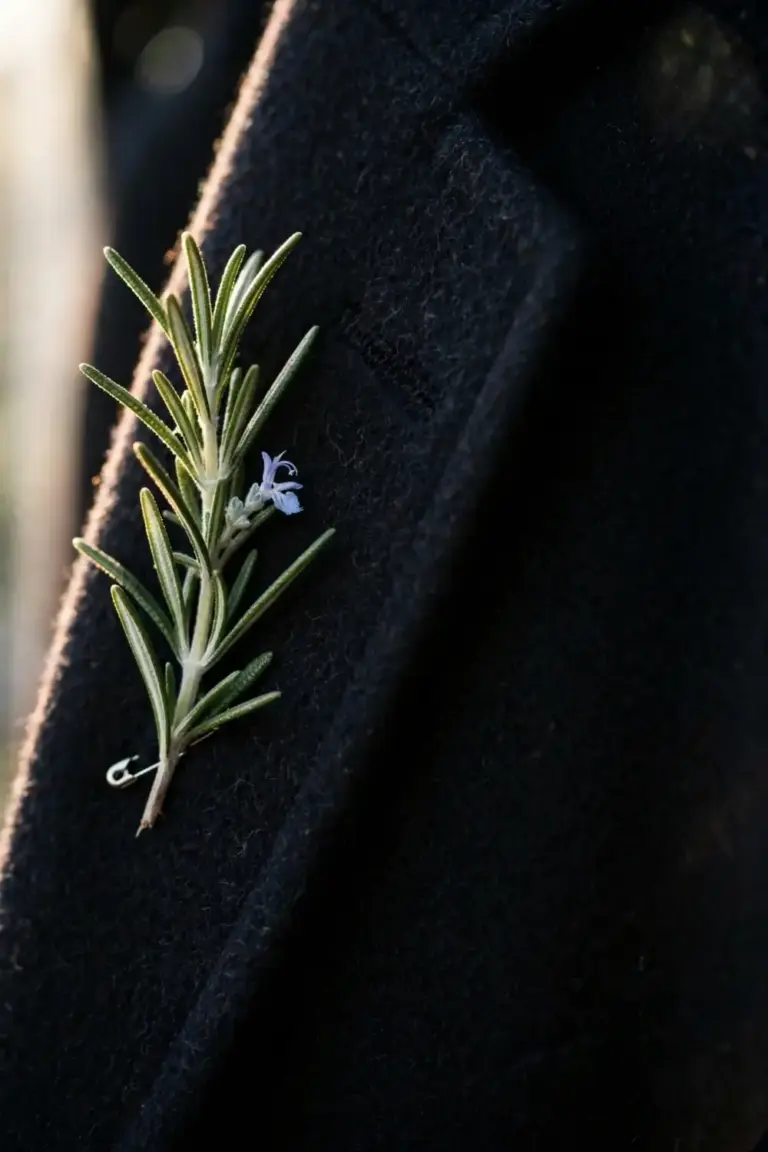
A plant sold as Gallipoli rosemary must still pass the 4 clues. Needle leaves dark green above and white felted below. Piney camphor scent when crushed. Two-lipped flowers in the leaf axils. Square stems. A tag that says Gallipoli and a plant that fails the leaf test is not rosemary, whatever the tag claims.
The same rule covers every commemorative name. The cultivar name tells the story of the plant. The 4 clues tell the identity of the plant. Check the clues first. Read the story second.
Rosemary worn on ANZAC Day carries the remembrance meaning. Sprigs appear on lapels and at services. The sprig still answers to the 4 clues. A remembrance sprig of true rosemary smells piney when crushed, while a remembrance sprig of Westringia does not. The ceremony does not change the botany. Check the sprig the same way you check the plant.
12. Photograph the 4 Clues Before You Name It
Photograph the leaf, the scent test, the flower, and the habit before you name the plant. Memory fades. A photo holds the evidence.
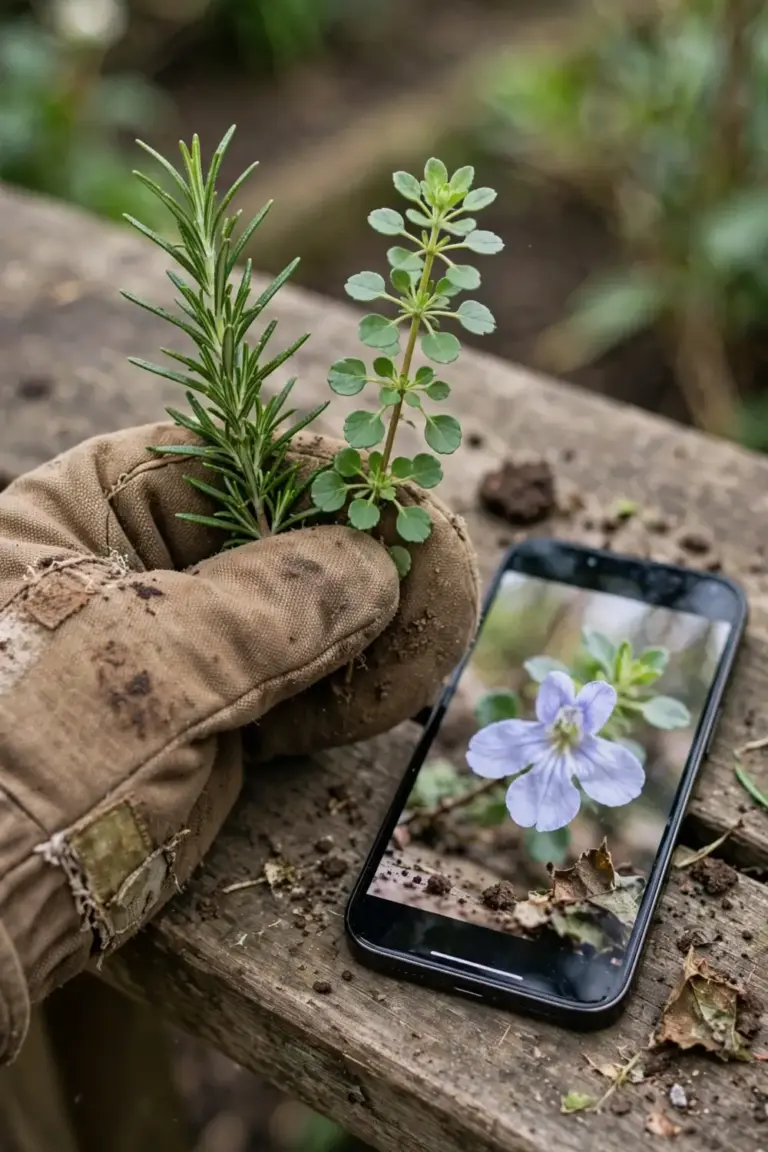
Shoot the leaf first. Hold one sprig flat against a plain background. Capture the dark green upper surface and the white felted underside in two shots. Shoot the flower next. Capture the flower where it sits on the stem, not picked and posed. Axil clusters and bare spikes read plainly in a stem shot. Shoot the habit last. Step back and capture the whole plant with something for scale, a fence post or a boot.
Write the scent down in plain words. Piney, camphor, floral, grassy, faint. Scent fades from memory within minutes. A written word holds it. Compare two plants side by side when both are in doubt. Crush one leaf from each, seconds apart, and the contrast lands. A rosemary leaf beside a Westringia leaf teaches the split faster than any description. Keep the photos and the scent notes together. The set names the plant.
Then read the photos against the key. Leaf whorls point to Westringia, and daisy heads point to Olearia or Cassinia. Bare spikes point to lavender. Needle leaves with white felted undersides, two-lipped axil flowers, and a piney crush scent point to true rosemary. Name the plant from the 4 photos together. One photo of a crown never settles a name trap.
A printed field guide earns its place beside the phone. The site’s field guides collection lists guides that teach the same habit: compare leaf, flower, and habit together, never one trait alone. Photograph the tag too. The botanical name on the tag, the 4 photos, and the key together close the case.
13. Frequently Asked Questions
No. Coastal rosemary is Westringia fruticosa, an Australian native shrub. True rosemary is Salvia rosmarinus, a Mediterranean herb. Coastal rosemary leaves sit in whorls and carry little scent. True rosemary leaves sit in opposite pairs and smell strongly piney when crushed. Do not eat coastal rosemary.
Do not eat it. Native rosemary is Westringia sericea, an ornamental shrub. No primary source verifies it as edible. Wild rosemary (Olearia axillaris) is the one rosemary-named native with an edible-foliage record, and it is bushfood, not culinary rosemary. Keep the two apart in the kitchen.
No. Prostrate rosemary is Salvia rosmarinus in a trailing form. Upright and prostrate cultivars belong to the same species. The habit is a cultivar trait. Cultivars such as Prostratus, Huntingdon Carpet, and Jackman’s Prostrate trail along the ground. They still pass the 4 clues.
Check the flower first. Lavender flowers sit on bare spikes above the leaves. Rosemary flowers sit in the leaf axils. Then crush a leaf. Lavender smells floral and sweet, while rosemary smells piney and camphor. Lavender leaves are silvery on both sides. Rosemary leaves are dark green above and white felted below.
Common names follow resemblance, not botany. Coastal rosemary looks like rosemary. Wild rosemary smells close to rosemary. Bushy rosemary carries a rosemary-like habit. Only the botanical name settles identity, so check Salvia rosmarinus on the tag before trusting any plant sold as rosemary.
14. Start With the Botanical Name, Then Trust the Label
The name trap closes when the botanical name leads. Salvia rosmarinus means true rosemary, and Westringia fruticosa means coastal rosemary. Westringia sericea means native rosemary, and Olearia axillaris means wild rosemary. Cassinia subtropica means bushy rosemary, and Lavandula means lavender.
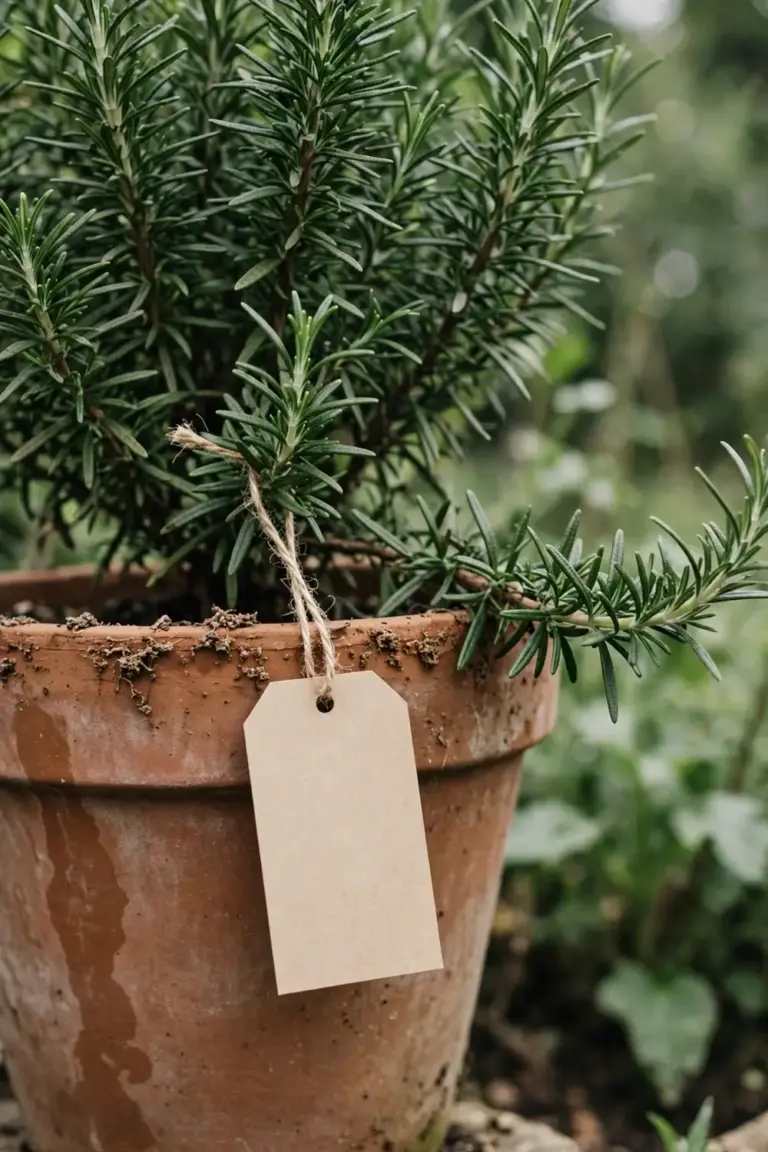
Read the tag. Run the 4 clues. Match the plant to the key. A label that says rosemary proves nothing until the leaf, the scent, the flower, and the habit agree. Name the plant from the evidence, and the kitchen stays safe.
The trap exists because common names follow resemblance. Botany follows structure. Structure wins every time. Leaf, scent, flower, habit. Four checks, one answer.