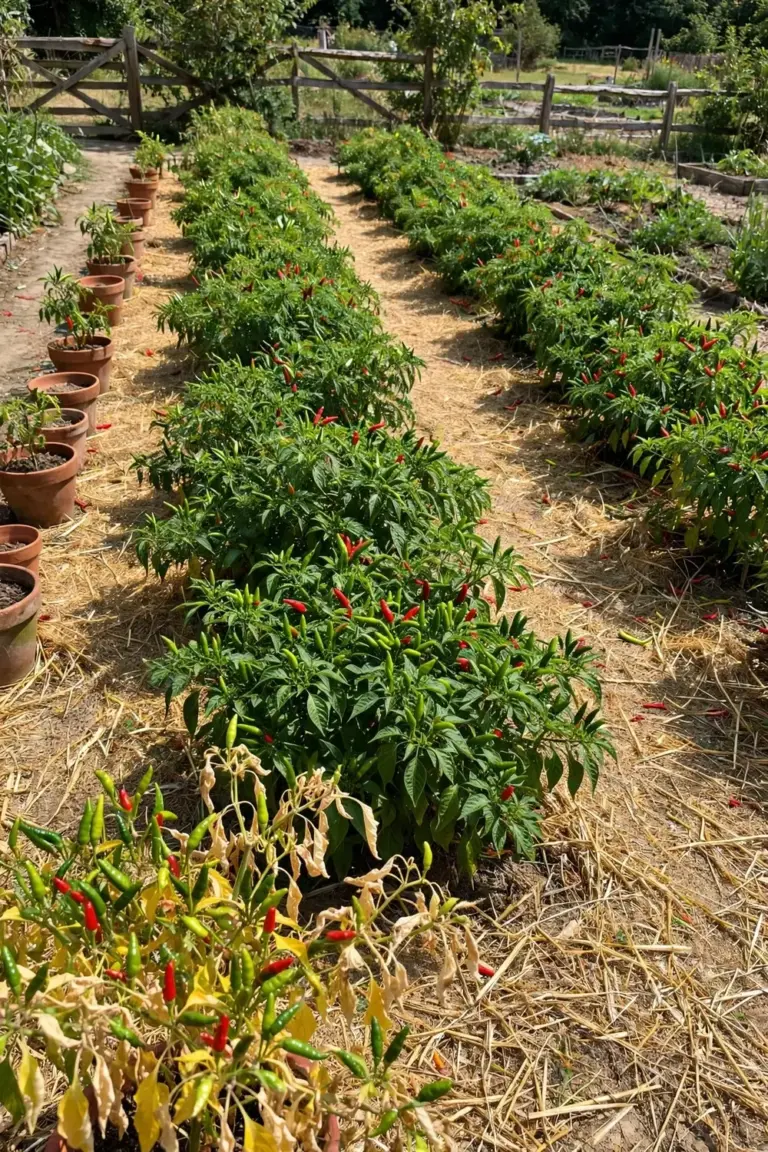

Growing chillies in Australia rewards one habit above all others: give the plant warmth first, and everything else gets easier. Chillies are heat lovers that sulk in cold soil, drop flowers in cold nights, and die at the first frost. Wait until soil reaches 21 degrees C before planting out, start seeds indoors on warmth, and choose varieties by the heat you actually want to eat. This guide covers the full journey for Australian gardens, from variety choice and climate-zone timing to pots, feeding, harvest, and overwintering.
Chillies belong to the genus Capsicum, in the nightshade family Solanaceae, alongside tomato, eggplant, and potato. Botanically, a chilli is a fruit. In the kitchen, it is a vegetable. That family link matters in the garden, because chillies share pests and diseases with their nightshade relatives, so rotation counts. Chillies grow as tender perennials in frost-free climates and as annuals where frost bites, and a potted plant can live 2 to 3 years with winter protection.
1. Chillies Are Heat Lovers: Warmth Comes First
Chillies grow best when warmth leads every decision. Wait until soil temperature reaches 21 degrees C before planting chillies in the garden, and wait until night temperatures stay at 10 degrees C. The University of Georgia Extension gives those two figures as the planting floor for peppers, and they translate directly to Australian gardens. Soil warmth matters more than air warmth, because cold soil stalls roots even on a sunny day.
Frost kills chillies. A single light frost can end a plant that looked healthy the day before, so the last-frost date sets the whole season. In cool zones, that means starting seeds indoors and planting out only when nights hold steady. In tropical zones, warmth is rarely the limit, and drainage through the wet season matters more. Heat also shapes flavor: a chilli grown through a hot, settled summer generally tastes hotter than the same variety grown through a cool, cloudy one.
Measure soil temperature with a cheap soil thermometer before you plant out. If the soil still reads below 21 degrees C, wait. A week of patience beats a month of stalled plants. Pots warm faster than garden beds, which is one reason pots suit cool-climate growers.
2. Choose Varieties by Heat and Use
Pick chillies by heat tier first, then by what you will cook with them. Heat is measured in Scoville Heat Units, or SHU, which record how much capsaicin a chilli carries. The scale starts at zero for a bell pepper, and the University of California notes that a jalapeño measures 2,500 to 8,000 SHU while a habanero ranges from 100,000 to 350,000 SHU. A Carolina Reaper reaches about 2.2 million SHU on the same scale.
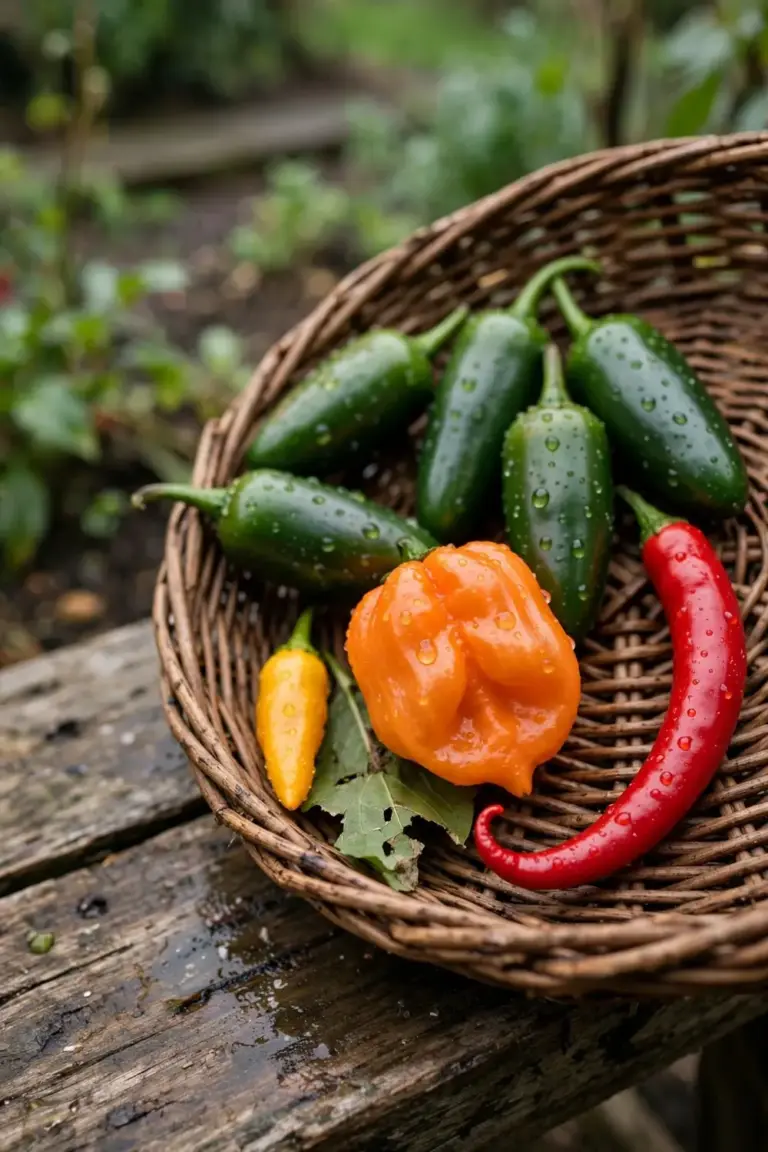
Those figures are ranges, not fixed scores. The same variety can test hotter or cooler in different seasons, because genetics and growing conditions both shift pungency. Treat any single SHU figure on a seed packet as a guide, not a promise. The table below groups common varieties by heat tier so you can match the plant to your cooking.
| Variety | Heat (SHU) | Species | Best For | Notes |
|---|---|---|---|---|
| Anaheim | 500 to 2,500 | Capsicum annuum | Roasting and stuffing | Mild and large-fruited, a gentle entry point |
| Jalapeño | 2,500 to 8,000 | Capsicum annuum | Salsas, pickling, fresh eating | The standard medium-mild chilli; pick green or red |
| Serrano | 10,000 to 25,000 | Capsicum annuum | Fresh salsas | Thinner flesh than jalapeño, sharper bite |
| Cayenne | 30,000 to 50,000 | Capsicum annuum | Drying and sauces | Thin pods dry well; the classic cayenne powder chilli |
| Bird’s Eye / Thai | 50,000 to 100,000 | Capsicum annuum | Asian cooking | Small pods, big heat, heavy crops on compact plants |
| Habanero | 100,000 to 350,000 | Capsicum chinense | Hot sauces | Fruity flavor under the heat; needs a long warm season |
| Scotch Bonnet | 100,000 to 350,000 | Capsicum chinense | Caribbean cooking | Lantern-shaped pods; similar heat to habanero |
| Carolina Reaper | 1,400,000 to 2,200,000 | Capsicum chinense | Extreme heat only | Grow for the challenge, not for everyday cooking |
The SHU figures for Anaheim, serrano, cayenne, and bird’s eye follow the standard Scoville table published across chilli references, while the jalapeño, habanero, and Reaper figures come from the University of California source linked above. Most garden varieties belong to Capsicum annuum, which covers jalapeño, cayenne, serrano, bird’s eye, and Anaheim. The hottest types belong to Capsicum chinense, which covers habanero, Scotch bonnet, ghost pepper, and Carolina Reaper. Capsicum frutescens covers tabasco-type chillies, and Capsicum pubescens covers rocoto, a cool-tolerant species with hairy leaves and black seeds.
Two name traps deserve one line each: black pepper is Piper nigrum, a vine; Sichuan pepper is Zanthoxylum, a shrub; and long pepper is another Piper species. None of them is a chilli, and none belongs in a chilli bed. Bell peppers are the one close relative worth naming: they are the same genus, Capsicum annuum, bred for zero heat, and they need a different growing guide, so this article leaves bell pepper care aside.
3. Climate-Zone Planting Calendar for Australia
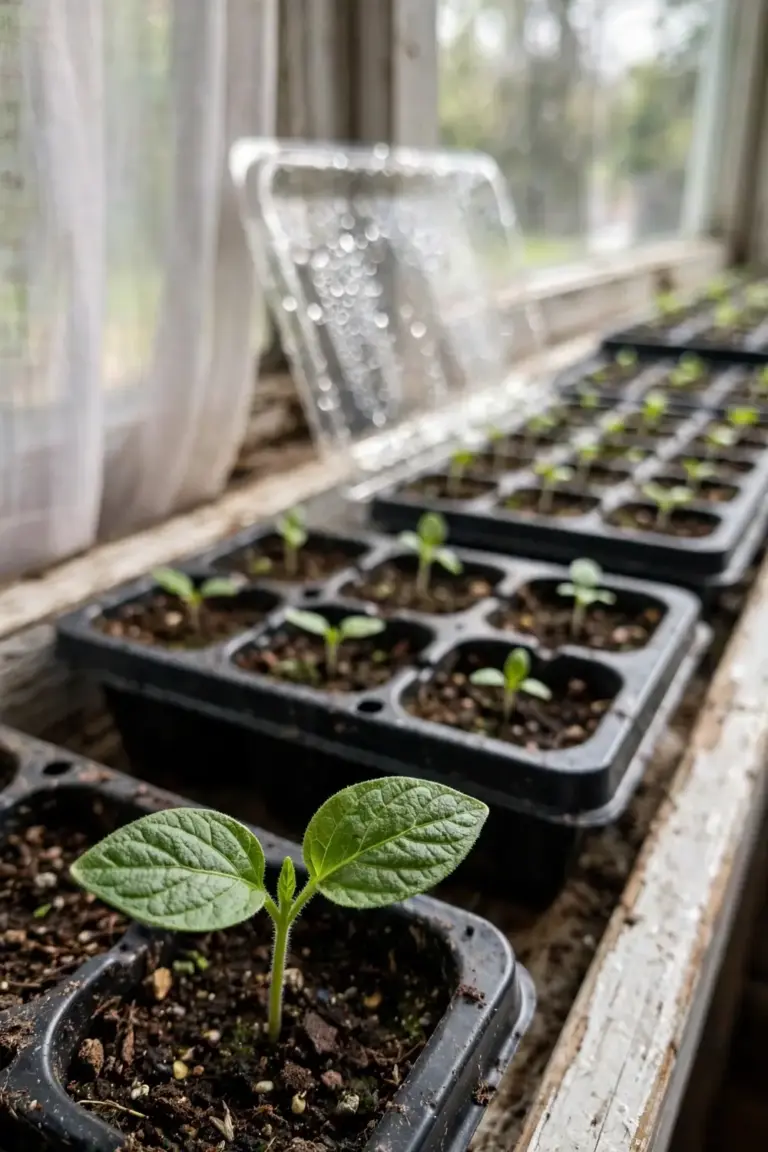
Planting time follows your climate zone, not a single national date. The table below gives the working calendar for each zone. Gardenate’s Australian chilli calendar lists sow-undercover months of August to November and transplant months of October to November for temperate Australia, with soil temperatures of 18 to 35 degrees C for sowing. Use your local last-frost date to pin the transplant week inside those windows.
| Climate Zone | Sow Seeds | Transplant Out | Notes |
|---|---|---|---|
| Tropical | Most of the year | After seedlings harden | Dodge waterlogged soil in the wet season; warmth is rarely the limit |
| Subtropical | August to October | After last frost, spring | Long season; start early for big plants |
| Temperate | August to November, undercover | October to November | Start indoors; plant out after frost risk passes |
| Cool / Mountain | September to October, undercover | After frost risk passes | Pots preferred; move plants under cover in winter |
In temperate zones, sow in August for an early start, and keep seedlings warm until transplant. Gardenate notes that seedlings grow in trays for 4 to 6 weeks before planting out, so an August sowing puts plants in the ground in October. In cool zones, September sowing undercover suits most gardens, with transplant after the frost risk passes. Sydney and Brisbane gardeners sit in the subtropical band, where an August or September start gives plants a long runway. Perth and Adelaide gardeners sit in temperate and Mediterranean bands, where the same August-to-November window applies but afternoon shade helps in heatwaves.
Tropical gardeners can sow for most of the year, but the wet season brings waterlogging and disease pressure, so raised beds or pots help. The subtropical and temperate rows above follow Gardenate’s Australian calendars and the state-by-state timing in Australian guides such as Herb Cottage, Wild West Chilli, and Sustainable Gardening Australia. Frost remains the hard stop in every zone: no chilli survives it, so a late cold snap means covering plants or waiting.
4. Site and Soil: Sun, Drainage, and a Soil Test
Chillies want full sun and free-draining soil. The University of Georgia Extension recommends 8 to 10 hours of sun per day for peppers, and chillies follow the same rule. In very hot districts, afternoon shade helps, and Australian guides such as Herb Cottage and Sustainable Gardening Australia note that a little afternoon shade suits plants in fierce summer sun. Morning sun with light afternoon shade beats all-day shade every time.
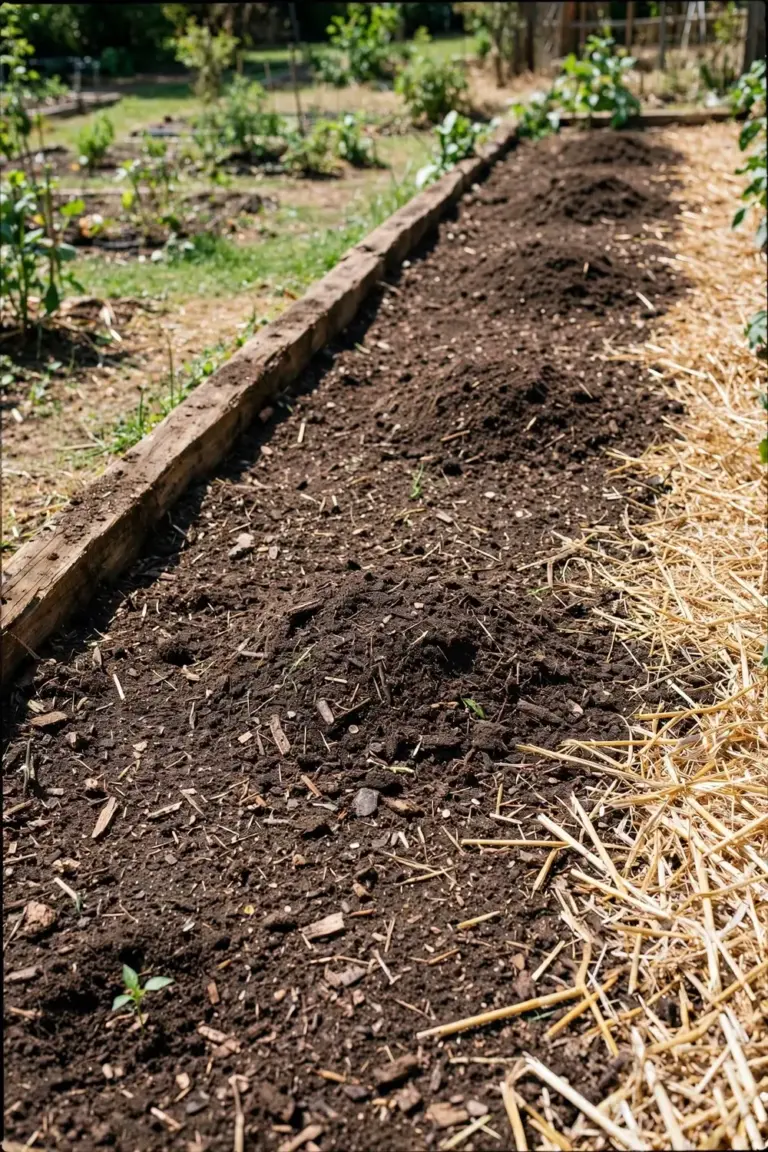
Soil should hold moisture without staying wet. Heavy clay holds too much water and starves roots of air, while pure sand dries too fast. Dig compost through the top 15 to 20 cm before planting, and build raised beds where drainage stays poor. A soil test settles the pH question before you guess: aim for slightly acidic soil, pH 5.5 to 6.5, the range Small Green Things recommends for chillies, which sits inside the University of Georgia Extension range of 6.0 to 6.5. Building soil health with compost and organic matter gives chillies the steady nutrition they prefer.
Rotation protects chillies from soil problems that build up around nightshades. Do not plant chillies where tomato, eggplant, potato, or capsicum grew last season. Sustainable Gardening Australia and Bunnings Australia advise a gap of about 3 years before chillies return to the same patch, and a cover crop in the gap year keeps the bed productive. A cover crops for fall planting plan fills that rotation gap while feeding the soil. Keep chillies away from the spot where last season’s tomatoes stood, and the new plants start clean.
5. Sowing Chillies: Seed Raising and Germination Warmth
Start chillies indoors 6 to 8 weeks before transplant, because the season is too short to sow outdoors in most of Australia. The University of Georgia Extension gives that 6 to 8 week window for peppers, and Gardenate lists 4 to 6 weeks in trays before planting out for chillies in temperate Australia. Pepper seeds take 10 days to germinate in warm soil, though slow varieties and cool soil stretch that wait. Sow one seed per cell in seed-raising mix, and sow each seed at a depth near three times the diameter of the seed, as Gardenate advises.
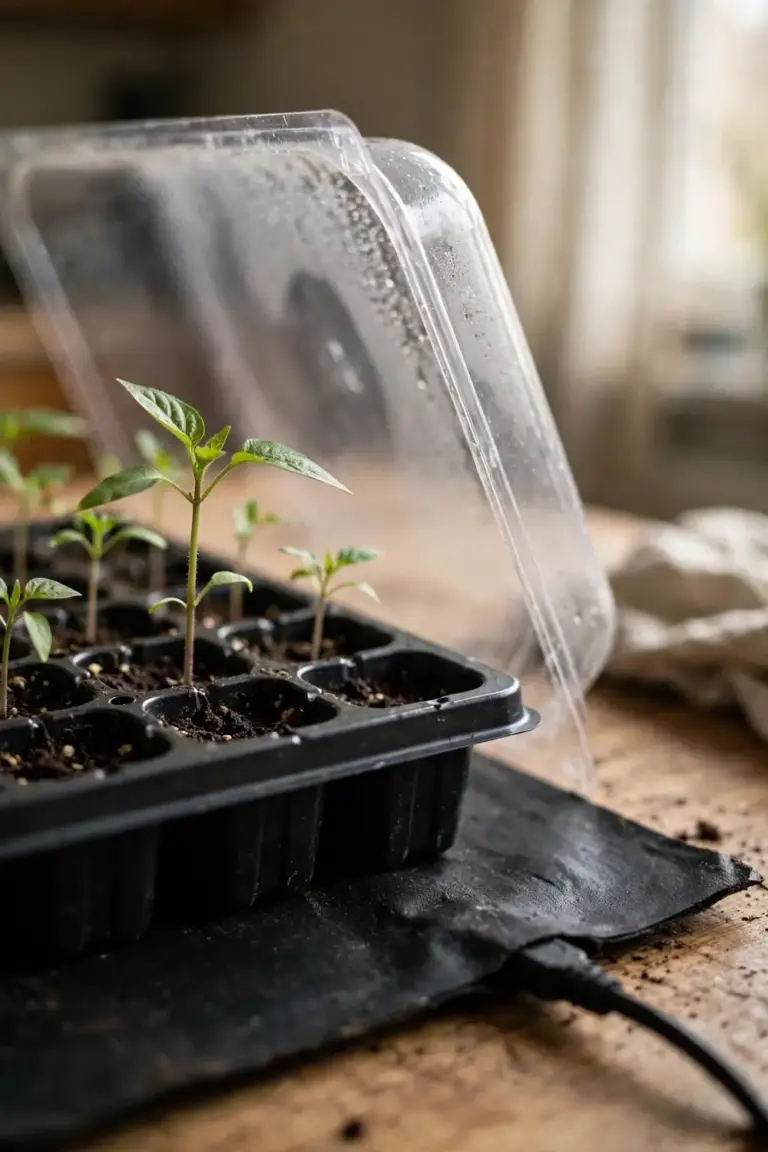
Warmth decides germination more than any other factor. Gardenate lists a soil temperature range of 18 to 35 degrees C for sowing chillies, and the scout-verified Australian guides put reliable germination at 22 to 30 degrees C. A heat mat under the tray holds that warmth on cold nights. I have learned that the chilli I start on a heat mat beats the one I start on a cold windowsill. Cover the tray with a lid or plastic wrap to hold moisture, and lift the cover as soon as seedlings emerge so mold cannot take hold.
Grow seedlings on in bright light. A sunny windowsill works, but leggy, pale seedlings mean too little light, so move them to stronger light or add a grow light. Pot seedlings on into larger pots as roots fill each cell, and do not rush to a large container. ABC Gardening Australia advises potting on gradually rather than jumping to a large container, because a small plant in a big wet pot rots. A seed starting guide covers the tray, label, and watering basics that apply to every seed you raise.
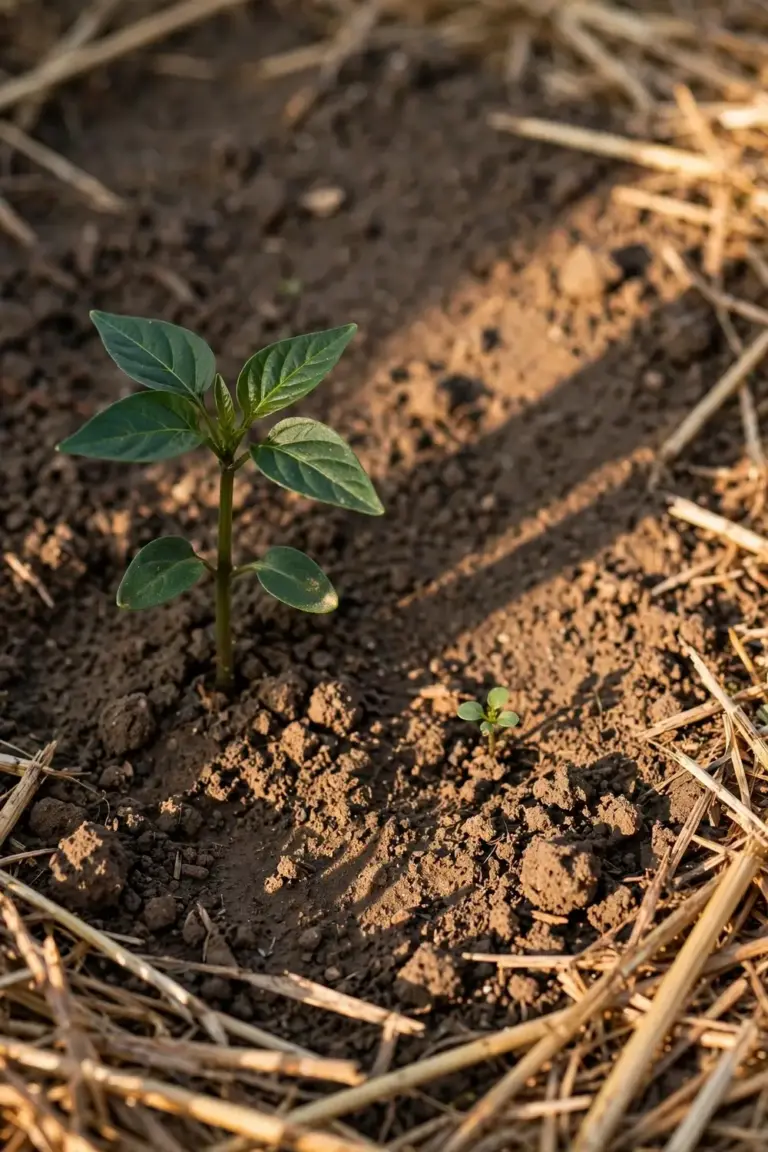
Harden seedlings off before transplant. Set them outside in shelter for a few hours a day for about a week, and bring them in at night while nights stay cold. Plant out only after the last frost, when nights hold at 10 degrees C and soil reads 21 degrees C. Set plants 40 to 50 cm apart, the spacing Gardenate lists for chillies, so air moves between plants and leaves dry fast after rain. Water seedlings in well, and mulch around them while keeping mulch off the stems.
6. Pots vs Ground: Pots Win Where Frost Bites
Pots are the best choice wherever frost bites, because you can move the plant. Aussie Green Thumb lists a minimum pot width near 30 cm for chillies, and a pot that size holds enough mix to carry a plant through a season. Choose a pot with drainage holes, fill it with quality potting mix rather than garden soil, and stand it on pot feet so water drains freely. A saucer helps in hot weather, but empty it after watering so roots never sit in water.
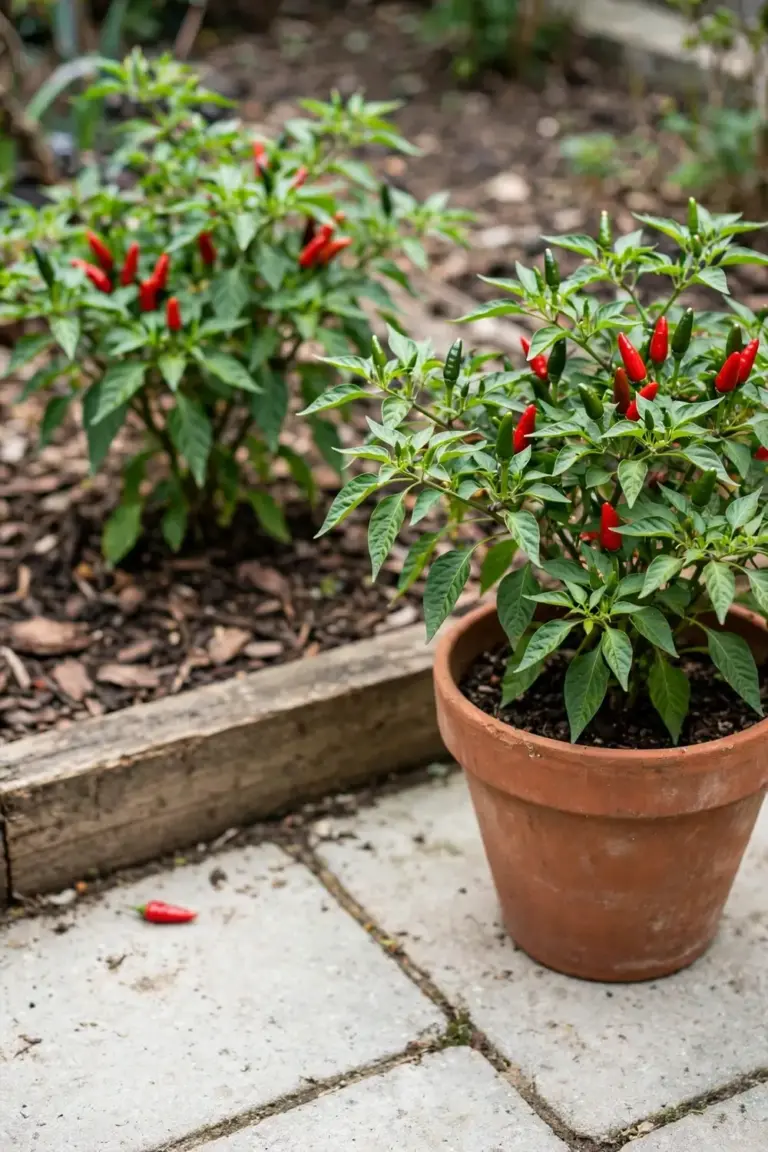
Pots warm faster than garden beds in spring, which suits heat-loving chillies. Australian guide Small Green Things notes that container planting suits frost-prone areas because growers can move plants to shelter during winter. A pot on a sunny patio also suits renters and small gardens, and it keeps the plant away from soil diseases in a tired bed. The trade-off is watering: pots dry faster than ground beds, so check them daily in summer.
Ground planting suits warm, frost-free gardens with good soil. Plants in the ground grow larger and need less watering, and their roots run deeper. Space plants 40 to 50 cm apart in rows, and stake tall varieties so fruit-laden branches do not snap. Mulch the bed to hold moisture and suppress weeds. In the ground, chillies still want the same sun, drainage, and rotation rules as potted plants, and they still die at the first frost.
7. Watering: Steady Moisture, Never Waterlogged
Chillies want steady moisture, not a flood-then-drought cycle. The University of Georgia Extension notes that consistent watering is critical for proper fruit set and development in peppers, and chillies follow the same rule. Keep the root zone moist to a depth near 15 cm, which is the root-zone depth the same guide lists. Water at the base in the morning, so leaves dry fast and the plant drinks before the heat of the day.
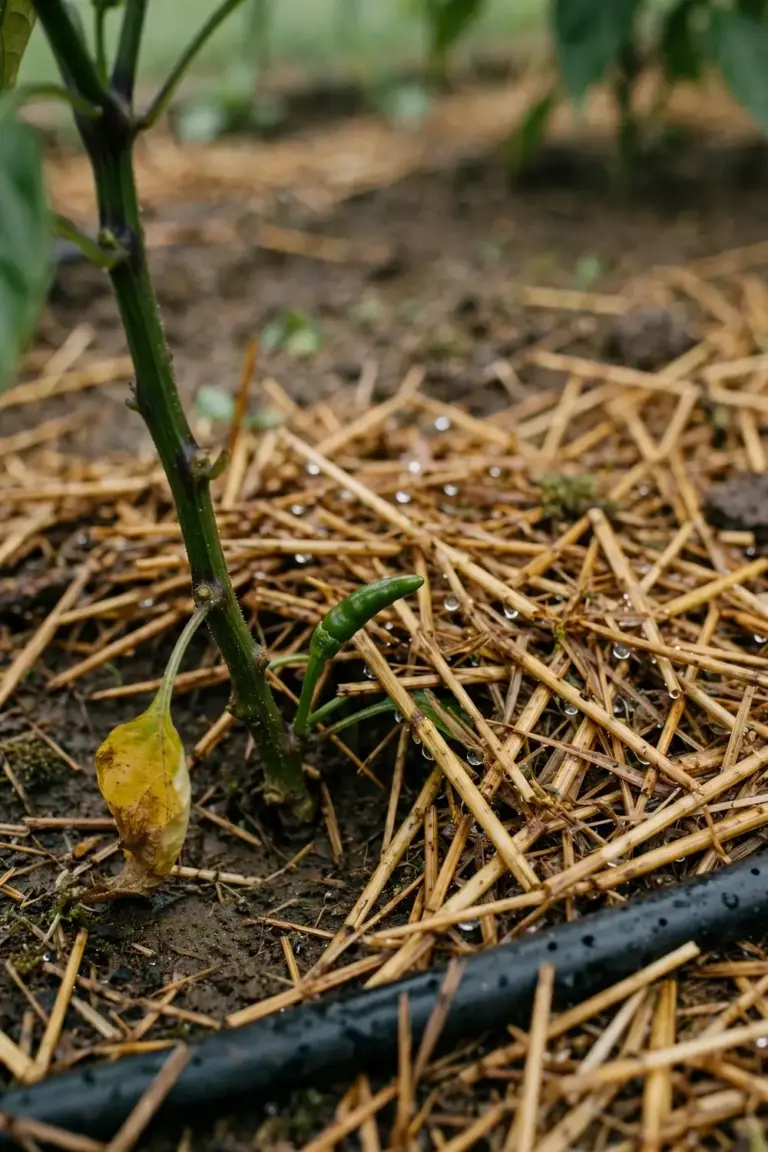
Mulch holds moisture and keeps soil temperature even. A layer of straw, sugar cane mulch, or compost around plants cuts evaporation and stops soil splashing onto lower leaves. Keep mulch off the stems, because wet mulch against a stem invites rot. In pots, water until it runs from the drainage holes, then wait until the top 2 to 3 cm of mix dries before watering again. In the ground, a deep soak twice a week beats a shallow sprinkle every day in most soils.
Uneven watering causes two common problems. Flowers drop when plants dry out in heat, and fruit develops blossom-end rot when calcium uptake stalls during dry spells. Both problems trace back to water, not to a missing spray. A drip line or soaker hose gives the steadiest result, and it keeps leaves dry. In the tropical wet season, the problem flips: drainage matters more than watering, so raise beds and let pots drain freely.
8. Feeding: Balanced Feed, and Calcium for Blossom-End Rot
Chillies are moderate feeders. Start with compost-rich soil, then feed with a balanced complete fertilizer at the label rate once plants are growing strongly. A soil test before planting beats guessing, because it shows whether phosphorus, potassium, or pH needs work. Too much nitrogen grows leafy plants with few fruit, so avoid heavy nitrogen feeds once flowering starts.
Small Green Things advises adding potash and compost at planting, then again about 6 weeks later, and warns that over-fertilizing grows leafy plants at the expense of fruit. A liquid feed every few weeks through summer suits potted plants, because watering washes nutrients from the mix. In the ground, one or two side-dressings of compost through the season usually suffice. Stop heavy feeding in late autumn, so plants harden rather than pushing soft growth into winter.
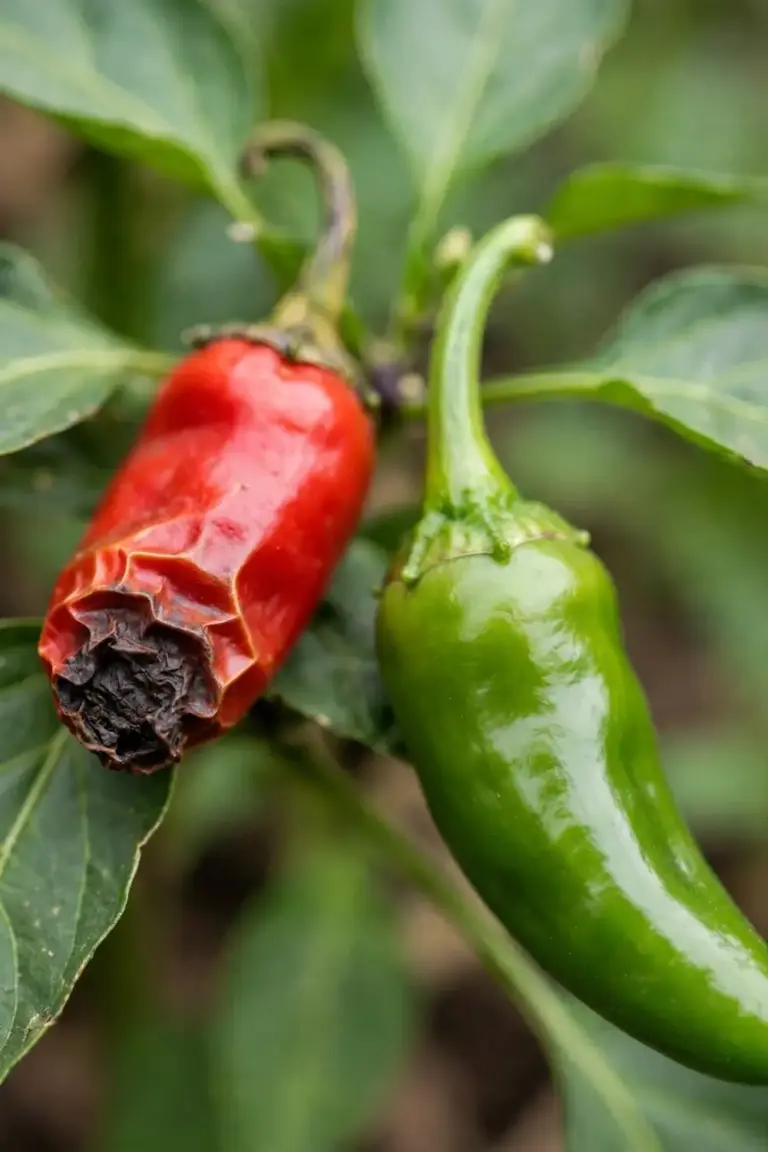
Blossom-end rot shows as a dark, sunken patch on the end of the fruit. The cause is not a disease but a calcium uptake failure, usually triggered by uneven watering. Small Green Things notes that regular watering and adequate calcium prevent blossom-end rot, and that eggshells contain calcium but need fine crushing before plants can use them. Keep watering steady, keep soil calcium available with compost and a balanced feed, and the problem usually fades. Do not chase it with a spray: fix the water first.
9. Pollination: Chillies Pollinate Themselves
Chillies pollinate themselves, so one plant alone still sets fruit. The University of Georgia Extension notes that peppers self-pollinate, and each flower carries both male and female parts. A light breeze or a gentle shake moves pollen inside the flower. You do not need two plants, and you do not need to hand-pollinate.
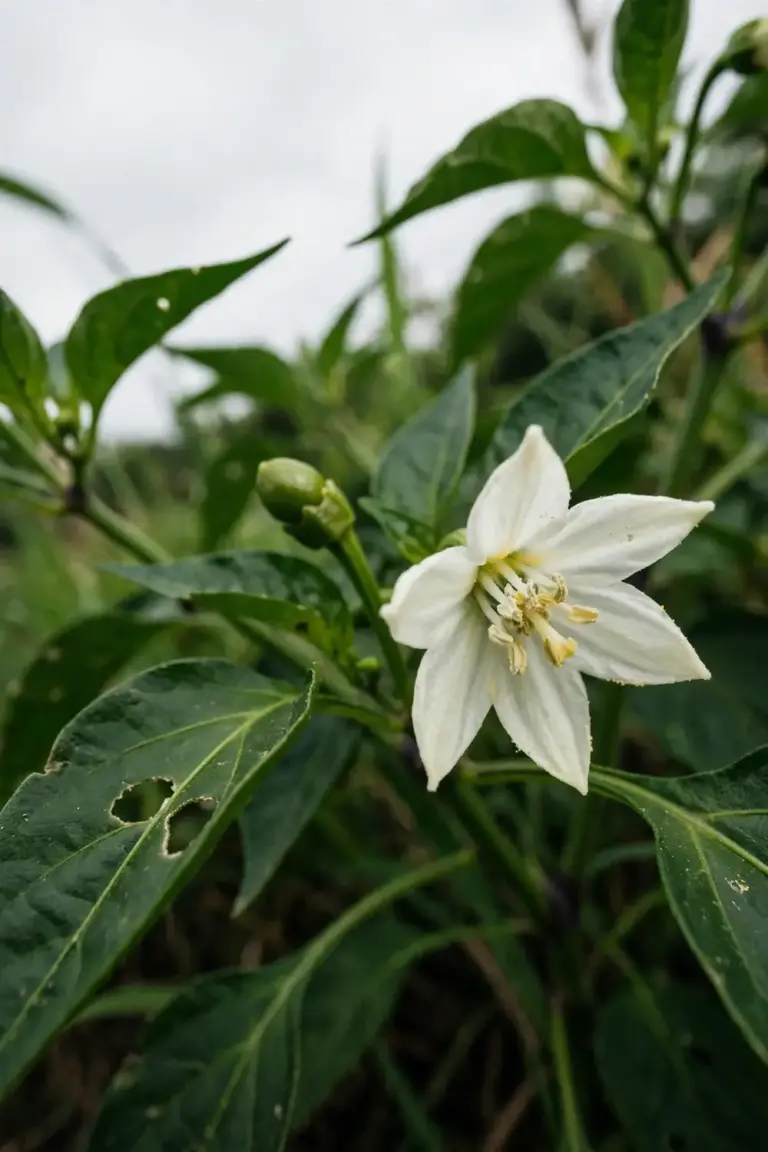
Bees and other insects visit chilli flowers, but fruit set does not depend on them. Indoor plants still fruit if you shake the stems lightly each day while flowers open. Flower drop usually means stress, not a pollination failure. Hot dry wind, cold nights, drought, or a sudden cold snap all drop flowers. Fix the stress, and new flowers set fruit.
Cross-pollination matters only for seed saving. If two varieties flower together, insects can cross them, and saved seed may grow plants unlike either parent. For eating, crossing changes nothing: the fruit on the plant matches the mother plant, and only the seeds inside carry the cross. Grow varieties apart or bag flowers if you plan to save pure seed.
10. Pests and Diseases at a Glance
Chillies attract a small set of pests, and early attention beats any spray. Aphids cluster on new growth and leaf undersides, suck sap, and leave sticky honeydew that grows black sooty mold. The Queensland Department of Primary Industries capsicum guide describes that sooty mold as black mold growing on aphid honeydew. Hose aphids off with a strong jet of water, and check plants weekly so colonies never build up. Ladybirds and other predators eat aphids, so leave them alone when they arrive.
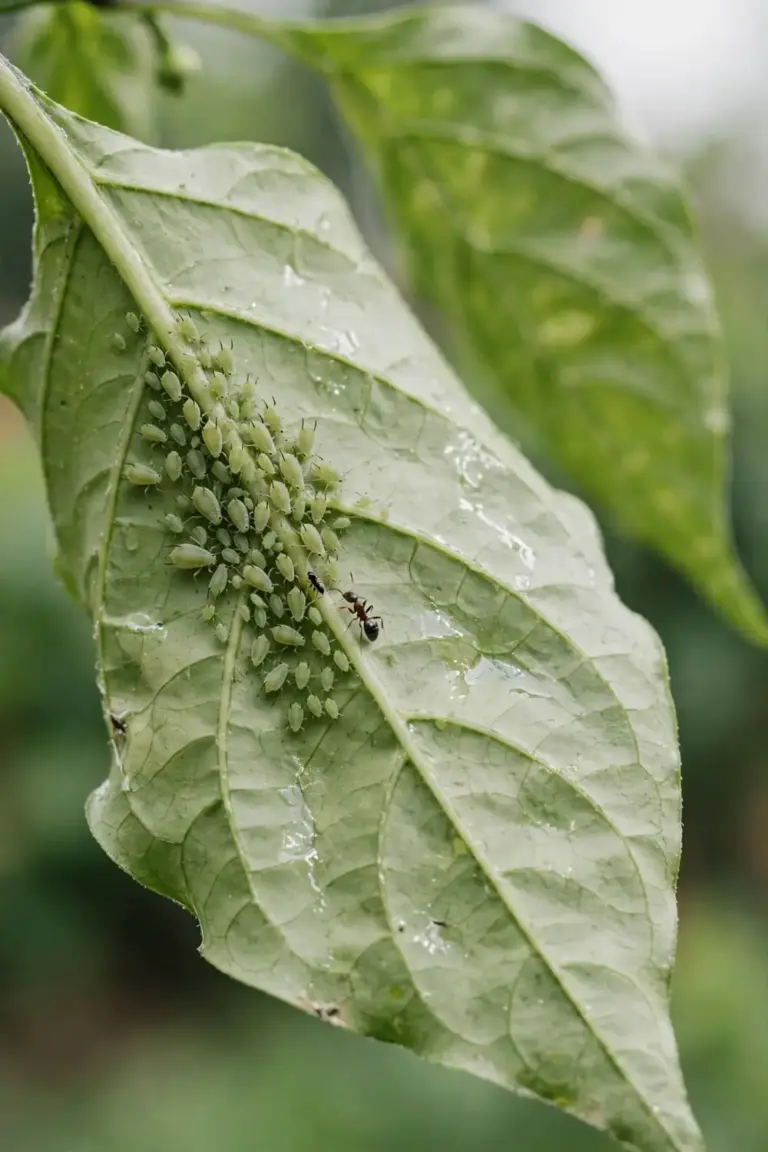
Thrips are the pest to learn by name. Chilli thrips rasp young leaves and buds, leaving distorted, curling growth. Our chilli thrips guide covers identification and control in full, so this article keeps thrips at pointer depth. Whitefly, mites, and fruit-boring caterpillars also attack chillies. Inspect leaf undersides, pick off caterpillars by hand, and remove badly infested leaves rather than spraying the whole plant.
Diseases follow the same pointer rule. Viruses spread by aphids, so aphid control doubles as virus control. Anthracnose rots ripening fruit, and powdery mildew dusts leaves in humid weather. Remove infected fruit promptly, keep air moving with 40 to 50 cm spacing, and avoid wetting leaves. Blossom-end rot is a watering and calcium problem, covered in the feeding section, not a disease. For any spray, read the label and follow it: the label rate, safety interval, and protective gear are the law, not a suggestion.
11. Harvesting: Green vs Ripe, and Gloves for Hot Types
Pick chillies when they reach the size and color you want, and pick often. Gardenate lists harvest at 9 to 11 weeks after transplant for chillies, and Aussie Green Thumb and Suburban Tomato both advise picking often to encourage more fruit. Each picked fruit frees the plant to set the next one, so regular picking lifts the total crop. Small Green Things places the main temperate harvest between December and April.
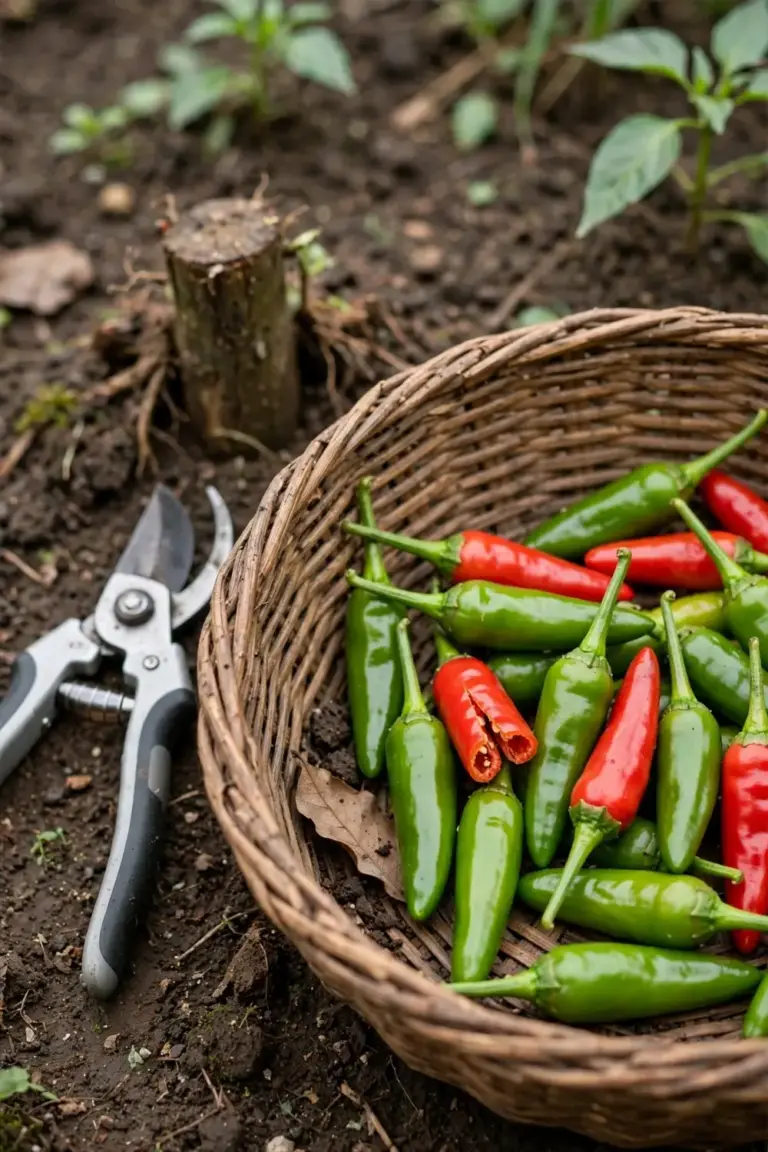
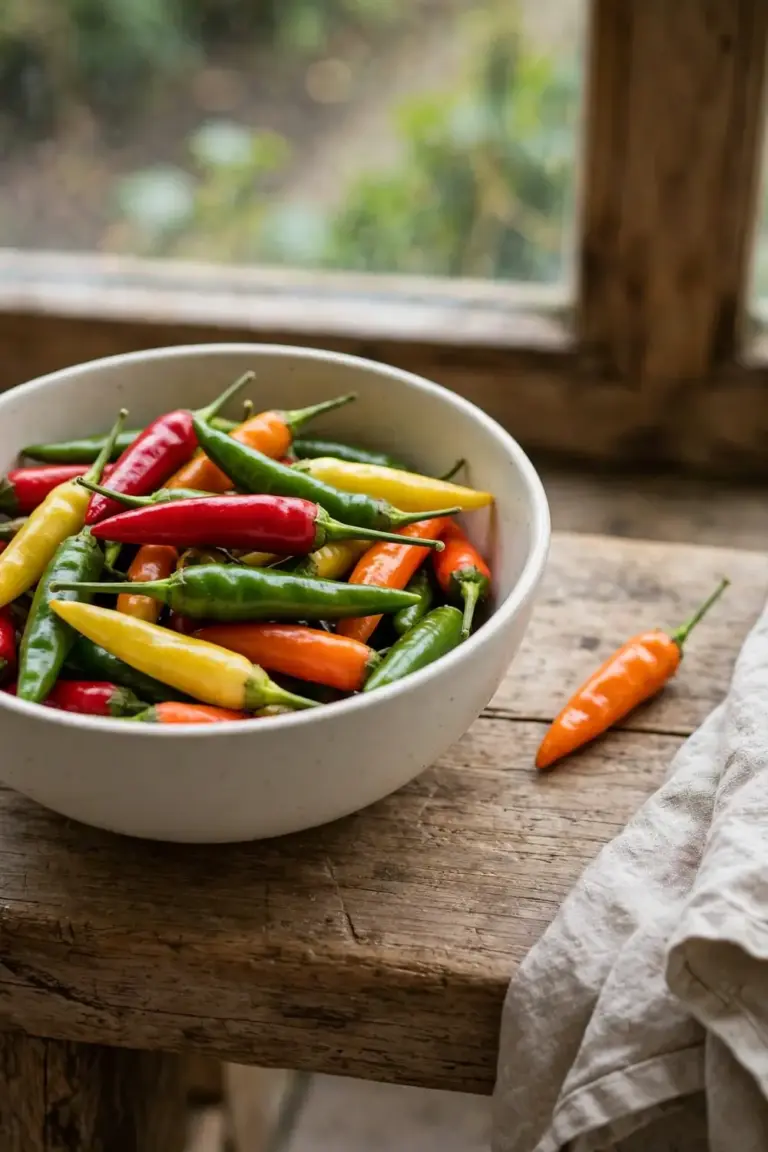
Green chillies are usable at any size once they fill out. Ripe chillies change color to red, yellow, orange, or purple, depending on variety, and full color brings full flavor and heat. Fruit does not always turn red: some varieties ripen yellow, orange, or purple, so check the variety description rather than waiting for red. A ripe chilli also stores longer when dried than a green one, so leave drying chillies to color fully.
Wear gloves when you pick hot varieties. Gardenate advises gloves for picking hot chillies, and Yates warns that capsaicin irritates eyes and skin. Cut each fruit from the plant with scissors or secateurs rather than pulling, because pulling tears stems and breaks branches. Wash hands after handling hot chillies even when you wore gloves, and never touch your eyes while handling them. Keep picked chillies in a basket or bucket, not a sealed plastic bag, so they stay dry.
12. Overwintering: Keep the Plant, Skip the Re-Sow
Chillies are tender perennials, so a plant can fruit again next season where frost never reaches it. Gardenate lists the life cycle as tender perennial. ABC Gardening Australia notes that potted chillies can live 2 to 3 years with winter protection, while cool-zone growers treat them as annuals. In frost-free gardens, leave the plant in the ground, prune lightly after the last harvest, and feed again in spring.
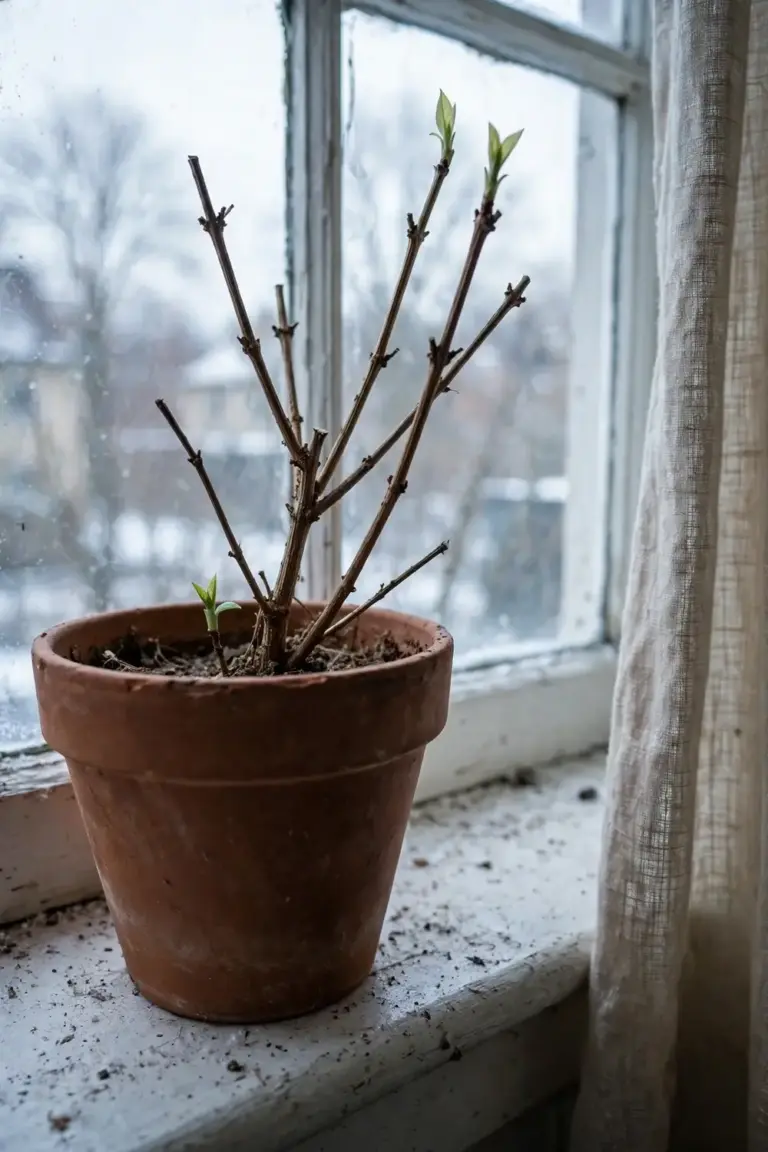
In cool zones, overwintering runs through a pot. Before the first frost, lift the plant into a pot near 30 cm wide, prune it back by about one third, and move it to a sheltered spot. A sunny windowsill, a bright veranda, or a frost-free greenhouse all work. Water sparingly through winter, just enough to keep the mix from drying out, and do not feed while the plant rests. The plant may drop leaves in winter, and that is normal: bare stems can still reshoot in spring.
In spring, bring the plant back into warmth and light, repot into fresh mix if roots fill the pot, and resume feeding once new growth starts. An overwintered plant fruits earlier than a seedling, because its root system and woody stems already exist. If the plant looks weak after winter, sow fresh seed as backup and keep both: the seedling replaces it if the old plant fails, and you lose nothing.
13. Troubleshooting: Why Your Chillies Struggle
Most chilli problems trace back to cold, water, or food, and the fix follows the cause. Seeds that never sprout usually sat in cold soil: warm the tray to 22 to 30 degrees C and wait. Seedlings that stretch tall and pale want more light: move them to a brighter spot. Plants that wilt every afternoon want water or mulch, not a bigger pot. Yellow lower leaves can mean overwatering, underwatering, or hunger, so check soil moisture before you feed.
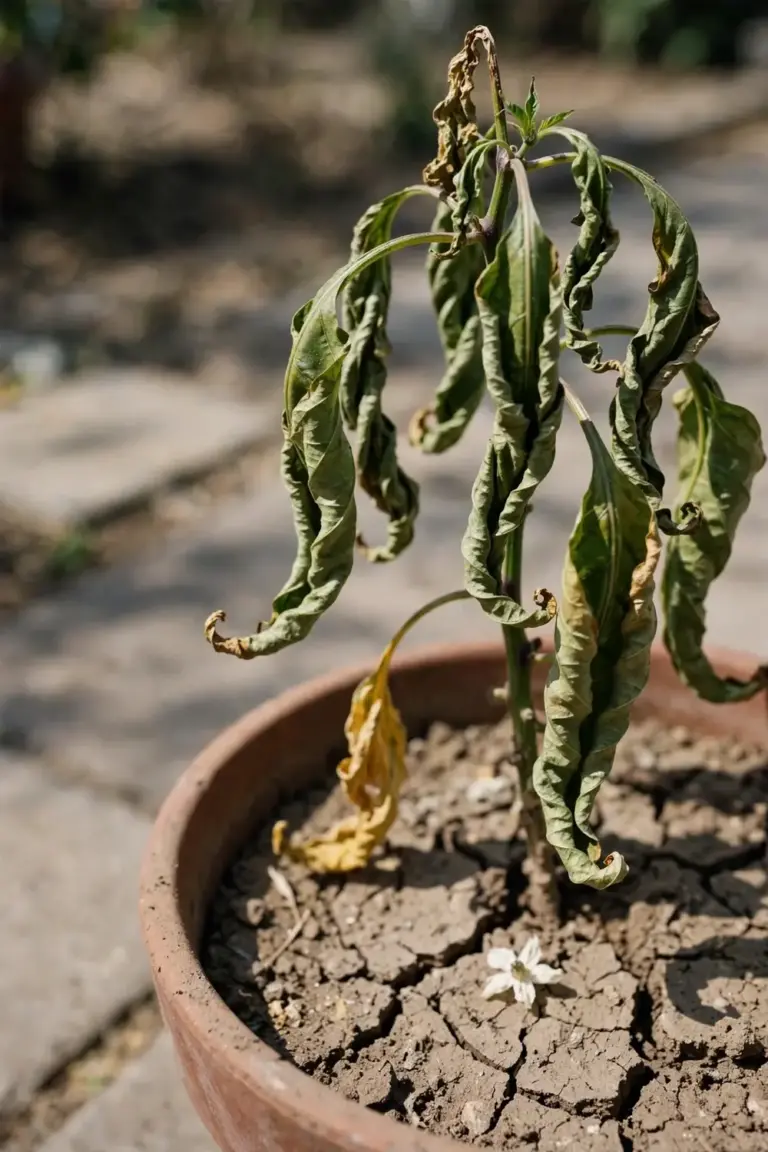
Flowers that drop without setting fruit usually face heat, drought, or cold nights, and steady water, mulch, and a sheltered position fix most flower drop. Plants that grow leaves but no fruit often got too much nitrogen, so switch to a balanced feed and stop heavy nitrogen. Fruit with a dark sunken end signals blossom-end rot: steady the watering and keep calcium available, as the feeding section explains.
Curling, distorted new growth points to thrips or aphids, and the pest section gives the first steps. Sudden wilting after a cold night means frost damage, and the plant rarely recovers. White patches on leaves after moving plants outdoors mean sunscald: harden seedlings off gradually next time, and shade scorched plants for a few days. When a plant fails outright, note the cause and start again: chillies are fast enough that a fresh sowing still crops in the same season in most zones.
Frequently Asked Questions
Sow chillies indoors in August to November in temperate zones, and transplant in October to November after frost risk passes. Subtropical gardeners sow in August to October, and tropical gardeners sow for most of the year while dodging waterlogging. Cool-zone gardeners sow undercover in September to October and transplant after frost risk passes.
Yes, pots suit chillies well, and they are the best choice where frost bites. Use a pot near 30 cm wide with drainage holes and quality potting mix, and move the pot under cover in winter. Potted plants need more frequent watering and feeding than plants in the ground, because watering washes nutrients from the mix.
Flowers drop when the plant faces stress, usually heat, drought, or cold nights. Because chillies pollinate themselves, the cause is rarely missing pollinators. Steady watering, mulch, and a sheltered position fix most flower drop, and new flowers set fruit once the stress passes.
A Carolina Reaper measures about 1,400,000 to 2,200,000 Scoville Heat Units, which puts it far above a habanero at 100,000 to 350,000 SHU. Heat varies by variety and growing conditions, so treat any single figure as a range. Grow Reapers for the challenge, and wear gloves when you handle them.
Chillies are tender perennials, so they come back where frost never reaches them. Potted plants can live 2 to 3 years with winter protection, according to ABC Gardening Australia. In cool zones, move the pot under cover, prune lightly, water sparingly, and bring the plant back into warmth in spring.
Start With Warmth, Pick for Heat, and Keep the Plant Alive
Growing chillies in Australia comes down to three moves: start seeds warm, plant out after frost, and pick varieties by the heat you will actually eat. Pots carry cool-climate growers through winter, steady water prevents most fruit problems, and regular picking keeps plants fruiting. Sow early, protect from frost, and overwinter one good plant, and next season starts ahead.