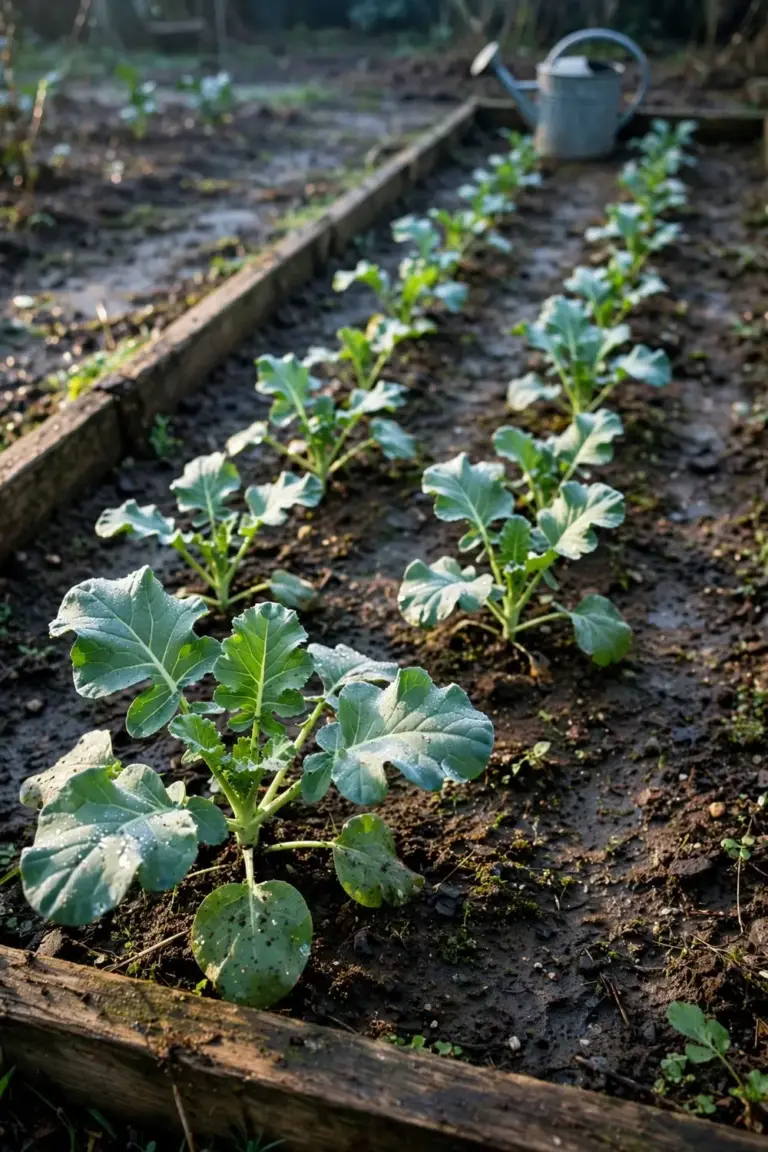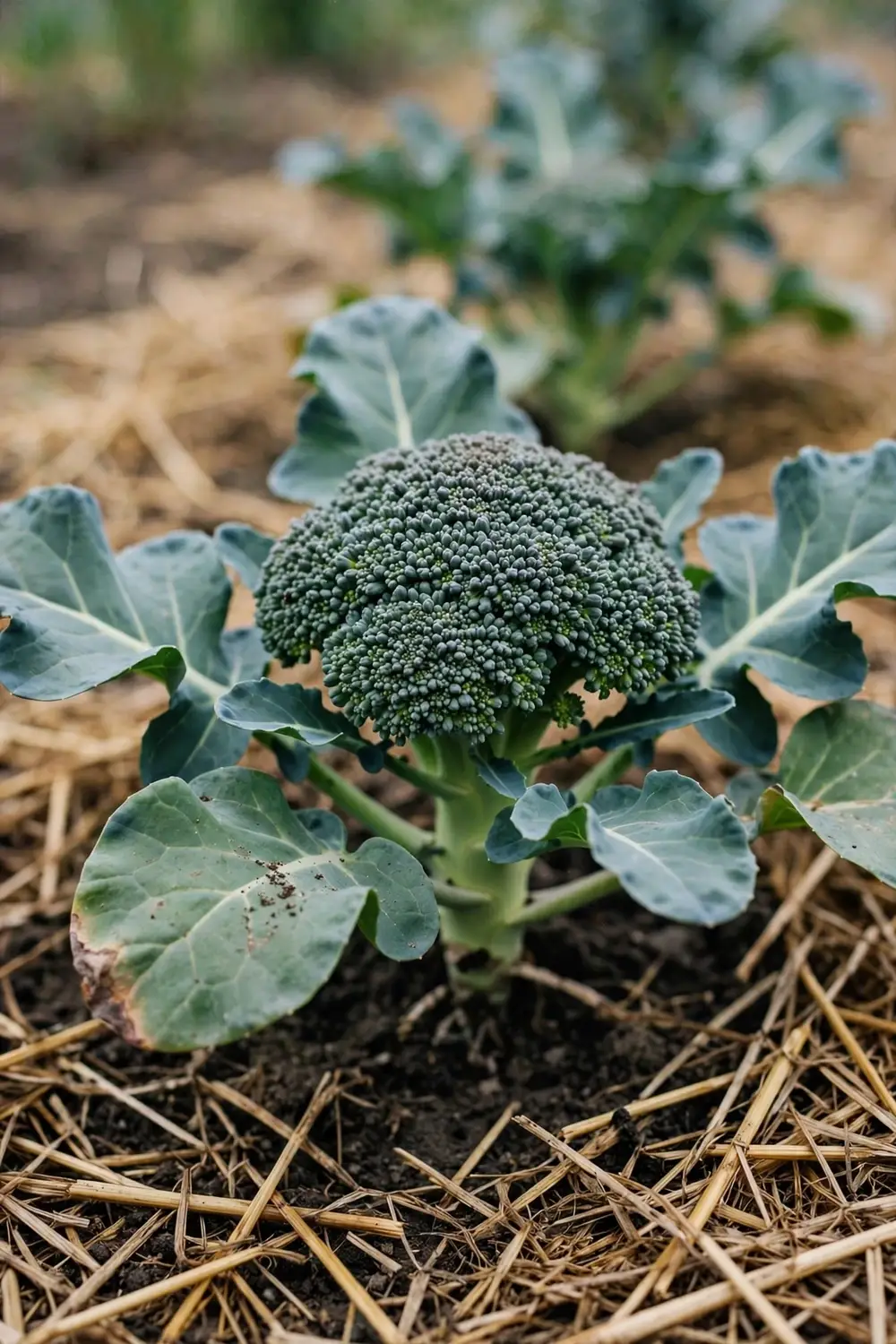

Sow broccoli in the cool months, space plants 35 to 50 cm apart, and cut the main head 10 to 16 weeks after transplanting, before the buds open. Broccoli is a cool-season crop, so the calendar decides the crop more than any feed or spray does. I have learned that the broccoli I net before the butterflies arrive outyields the broccoli I spray after they lay eggs.
Broccoli is Brassica oleracea in the Italica group, a cabbage-family vegetable grown for its tight head of unopened flower buds. The head you eat is a cluster of buds, not a flower. Once those buds open into yellow flowers, the head turns coarse and bitter. That single fact sets every decision below: sow so the head forms in cool weather, and cut it before it flowers.
1. Treat Broccoli as a Cool-Season Crop First
Broccoli grows best when the head forms in cool weather. Heat pushes the plant to flower early, and a flowered head is past eating. Cold stress, pest attack, and poor feeding can also stall head formation, so cool weather alone does not guarantee a head.
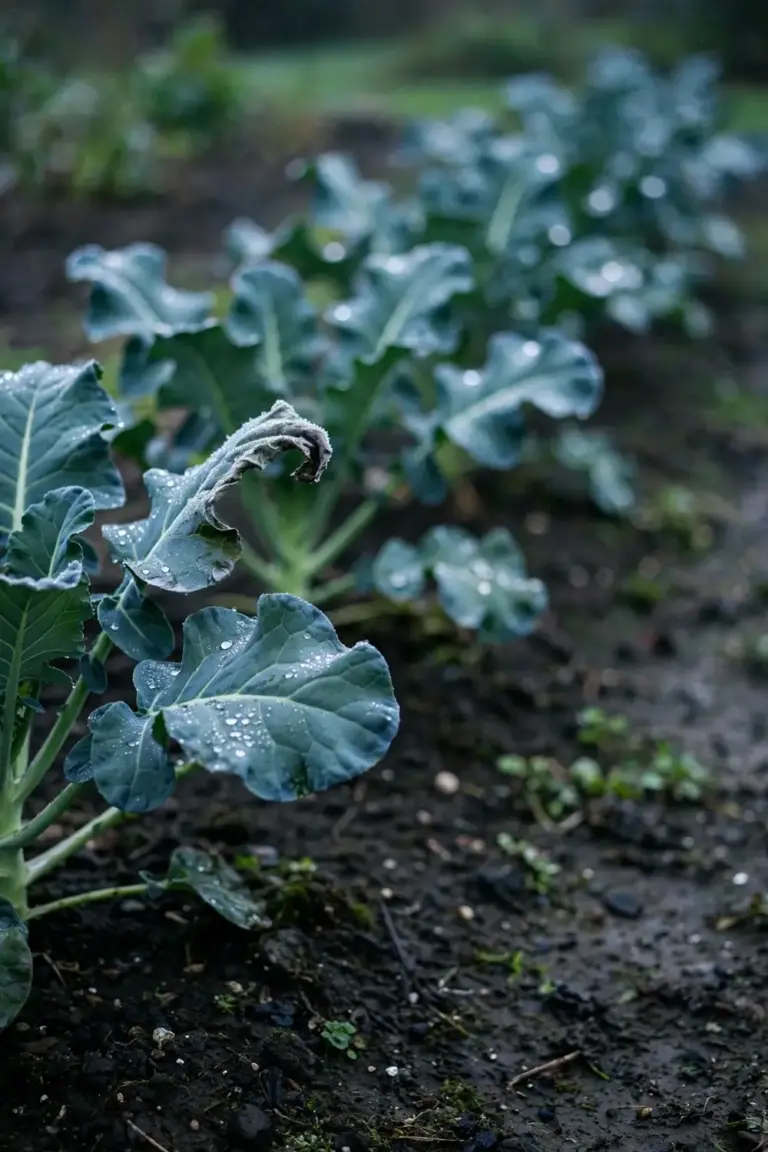
Ohio State University Extension puts the numbers on the window. Broccoli germinates at air temperatures from 40 to 86 degrees Fahrenheit, and growth runs best from 65 to 70 degrees Fahrenheit. High summer heat causes bolting, which is the plant flowering before harvest. Stressed plants can also form buttons, which are small heads no one wants to harvest. The stresses Ohio State names are cold below 50 degrees Fahrenheit, insects or pathogens, and nutrient deficiency.
Read those numbers as a planting rule. In most of Australia, broccoli belongs in the autumn to spring window, not the summer bed. A summer sowing in a temperate garden bolts. A winter sowing in the tropics never gets the cool nights the head needs. The climate-zone calendar in the next section turns this rule into dates.
2. Match Sow Dates to Your Climate Zone
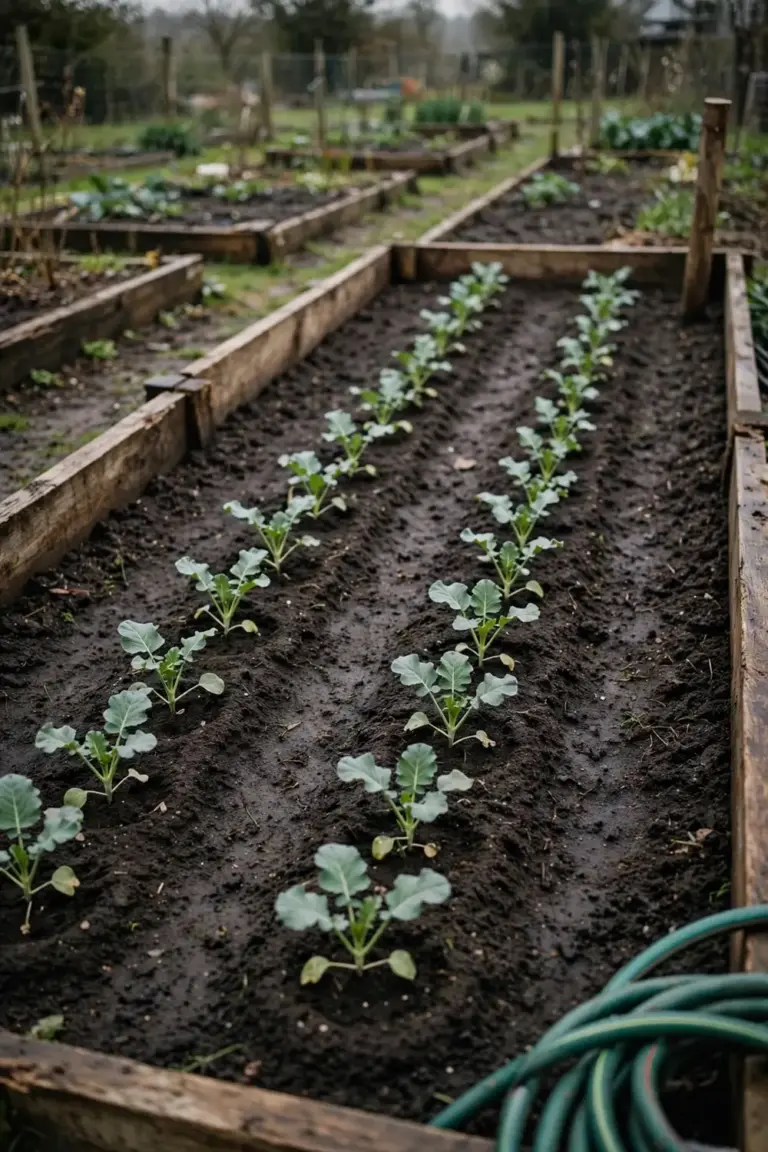
Sow broccoli when your zone cools down, and let the head form before heat returns. The Gardenate calendar for Australia gives the clearest home-garden windows. In tropical regions, sow under cover in April and May, then transplant in May through July. In subtropical regions, sow under cover in February and March, then transplant in March through May. In temperate regions, sow under cover in January through March and again in August through December, then transplant in January through April and again in September through December. Gardenate lists harvest at 10 to 16 weeks after transplanting, and spacing at 35 to 50 cm apart.
The arid inland follows a different clock. The Northern Territory agriculture note for Alice Springs calls broccoli a cool-season crop that can go in early, in December or January, so it matures as the weather cools. Planting can continue until March or April, and quick-maturing types can go in up to August. That note also gives a home-garden spacing of seed clumps 50 to 70 cm apart, thinned to one strong seedling per clump.
| Climate Zone | Sow Under Cover | Transplant | Notes |
|---|---|---|---|
| Tropical | April to May | May to July | Shortest window; the head must form before the wet heat returns |
| Subtropical | February to March | March to May | Autumn sowing; heads form in winter |
| Temperate | January to March, August to December | January to April, September to December | Two windows: late summer and autumn |
| Arid inland | December to January | December to April | Sow early so plants mature as the weather cools; quick types to August |
| Cool mountain | Spring and late summer | After frost risk passes | Use the temperate windows and hold transplants until frost risk passes |
Cool-mountain growers work with the temperate windows and wait out frost. The table gives months, not dates, because a late cold snap or an early heatwave moves the real date by weeks. Soil temperature is the better check. Gardenate lists the best planting soil temperature as 7 to 30 degrees Celsius. A kitchen thermometer pushed 5 cm into the bed tells you more than the calendar does.
3. Pick Heading, Sprouting, or Broccolini
Heading broccoli grows one large central head, then side shoots after you cut it. Sprouting broccoli grows many small heads on branching stems and never forms one big head. Broccolini grows long thin stems with small loose heads. Seed packets sell it beside broccoli. Pick the type that fits your cooking, not the one with the prettiest packet.
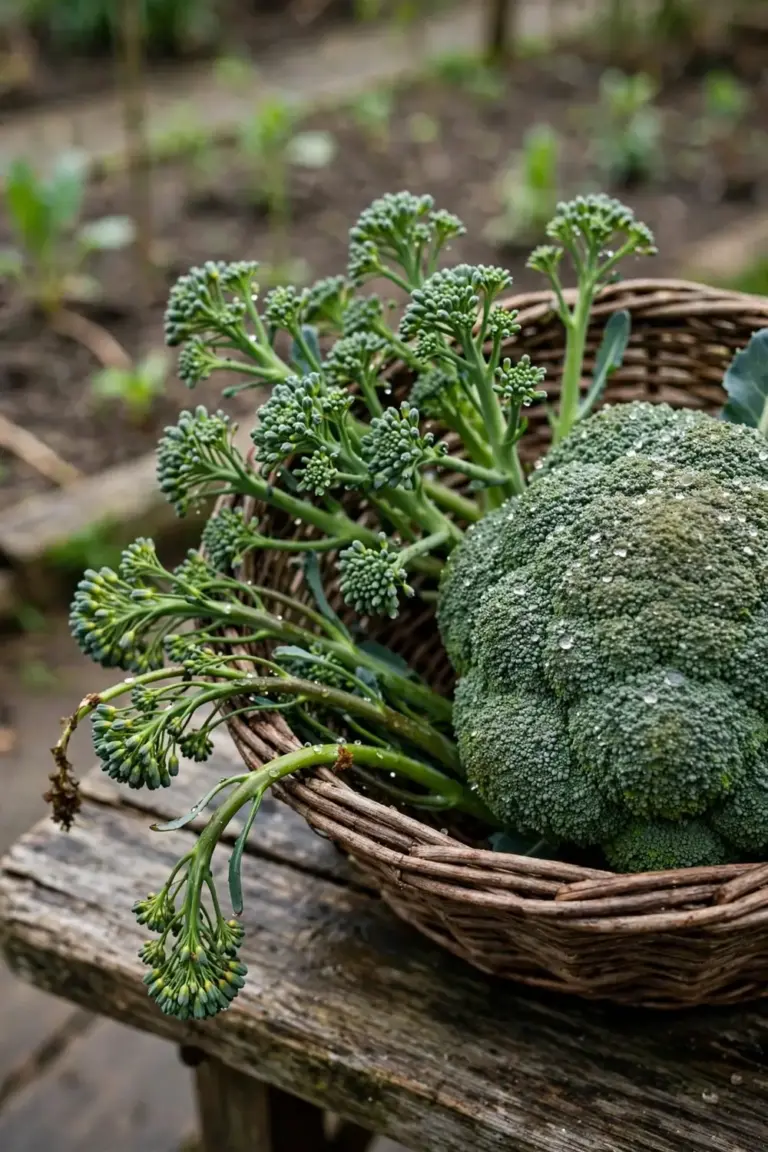
| Type | What You Get | Best For | Notes |
|---|---|---|---|
| Heading | One large central head, then side shoots | Most home gardens | The standard type; cut the main head to trigger side shoots |
| Sprouting | Many small heads on branching stems | Small harvests over weeks | Purple sprouting types color up in cold weather |
| Broccolini | Long thin stems, small loose heads | Stir-fries and quick picking | Pick stems young; the plant keeps producing |
Variety choice sets the days to harvest. West Virginia University Extension lists Green Magic at 57 days, with side shoots, heat tolerance, and smooth well-domed heads. Heat-tolerant types like Green Magic buy you a margin in a warm autumn, but no heading variety tolerates a full summer in a hot zone. Buy seed from a local supplier and read the packet days, because the packet figure fits your supplier’s seed lot better than any guide figure does.
Hybrid varieties give the best yields in the Northern Territory note, with a central head and side shoots after the central head is cut. That matches the home-garden rule: one strong central head, then weeks of side shoots. Open-pollinated types still grow, but hybrids head more evenly. For current varieties, the same note sends growers to local nurseries, and that advice still holds.
4. Build Rich Soil That Drains
Broccoli wants full sun, rich soil, and steady moisture. Ohio State University Extension states the soil target plainly: full sun, well-drained fertile soil, with a pH from 6 to 6.5. West Virginia University Extension gives the same band, pH 6.0 to 6.5, with at least six hours of sun, and warns against sandy soils and soils that hold too much water.
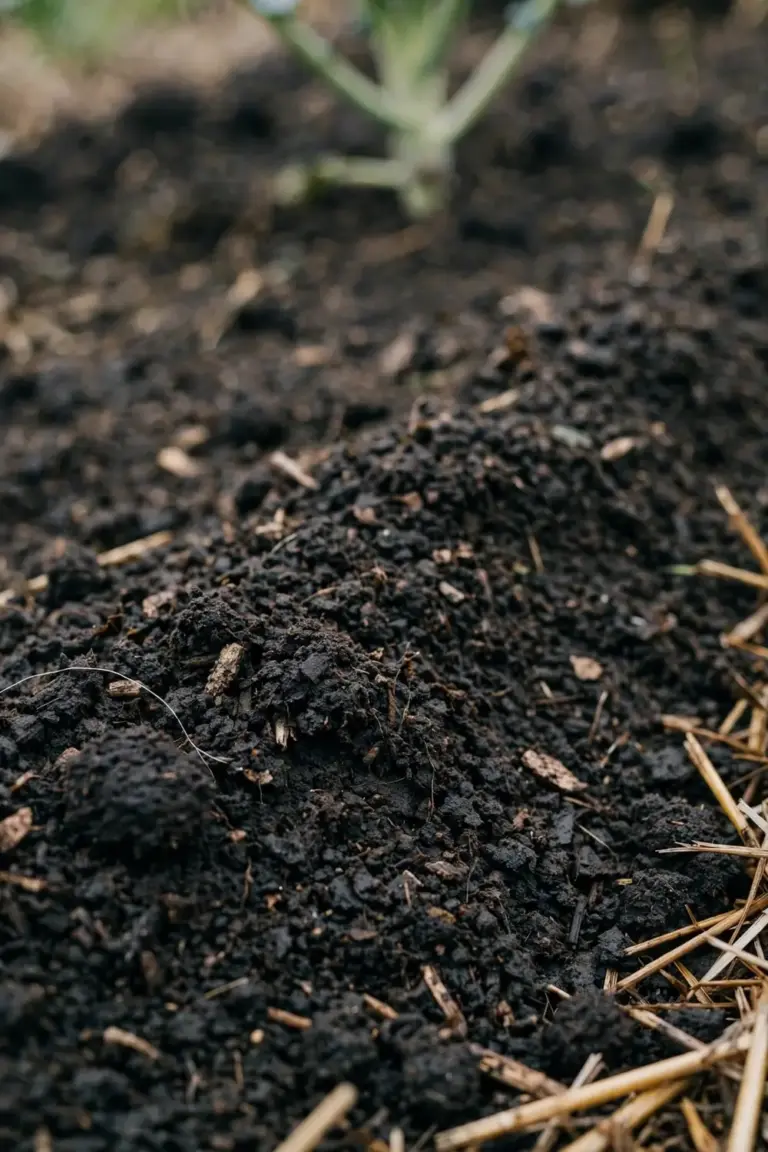
Dig the bed deep and mix in compost or well-rotted manure before planting. The Northern Territory note tells growers to dig as deep as possible, mix in compost or animal manure, rake the bed level, firm it down, and water the bed to 50 mm before sowing or transplanting. Fresh manure burns young plants, so use compost or aged manure only. A bed that holds water after rain grows clubroot, so drainage matters as much as fertility.
Clubroot is the soil disease that ruins brassica beds. The swollen roots cannot feed the plant, and the plant wilts in dry weather even in moist soil. Cornell University notes that where clubroot is a concern, lime can raise soil pH into the 6.8 to 7.2 range. The University of Hawaii states the stronger clubroot rule: adjust soil pH to 7.2 or higher, and rotate away from brassicas for 7 years. Those two figures pull in opposite directions, because broccoli grows best at pH 6 to 6.5. The practical answer is to test first. If your bed has no clubroot history, hold pH near 6.5. If clubroot has struck, raise pH toward 7 and rotate the bed out of brassicas.
Test the soil before you add lime. A pH test kit from the garden center gives a reading in minutes, and a lab test gives pH plus nutrients for a small fee. Lime acts slowly, so apply it weeks before planting, not on planting day. Retest after six weeks. A bed that tests at 6.5 needs no lime at all, and lime added to an already alkaline bed locks up iron and manganese. The test costs less than one bag of lime and saves the bed from a wrong guess. Good soil structure comes first, and the soil health guide covers the building blocks.
5. Raise Seedlings or Sow Direct
Raise broccoli in trays and transplant it, or sow it direct in the bed. Trays win in most gardens. Tray seedlings escape cutworms, birds, and the first dry week, and they let you start the next crop while the bed still holds the old one. Direct sowing works when the soil is warm, moist, and free of slugs.
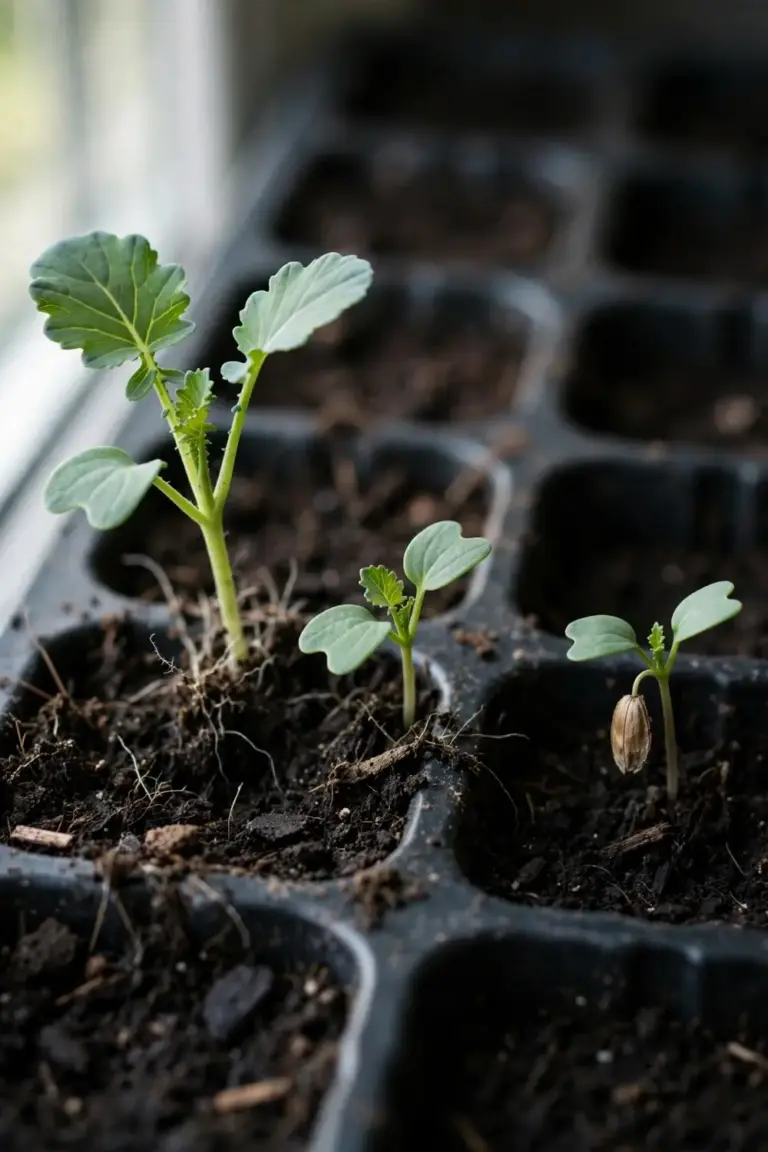
Sow seed at a depth three times the diameter of the seed, per the Gardenate calendar, and keep the mix damp until seedlings appear. Gardenate lists planting out in 4 to 6 weeks. Transplant when seedlings have two sets of leaves or more and stand 10 cm tall. Set each seedling at the depth it grew in the punnet. Leggy seedlings go deeper, buried up to the two lowest leaves.
Harden seedlings off before they meet the open bed. West Virginia University Extension gives the method: one week before planting, place transplants outdoors in a safe spot for a few hours, then increase the outdoor time each day until they spend 24 hours outside. Seedlings that skip hardening wilt in the first wind. Seed starting in trays follows the same steps as any vegetable, and the seed starting guide covers the tray setup.
6. Space Plants 35 to 50 cm Apart
Space broccoli plants 35 to 50 cm apart, per the Gardenate calendar for Australia. That spacing fits a home bed and lets each plant grow a full head. Wider spacing grows larger central heads. Tighter spacing grows smaller heads and invites disease, because leaves stay wet longer.
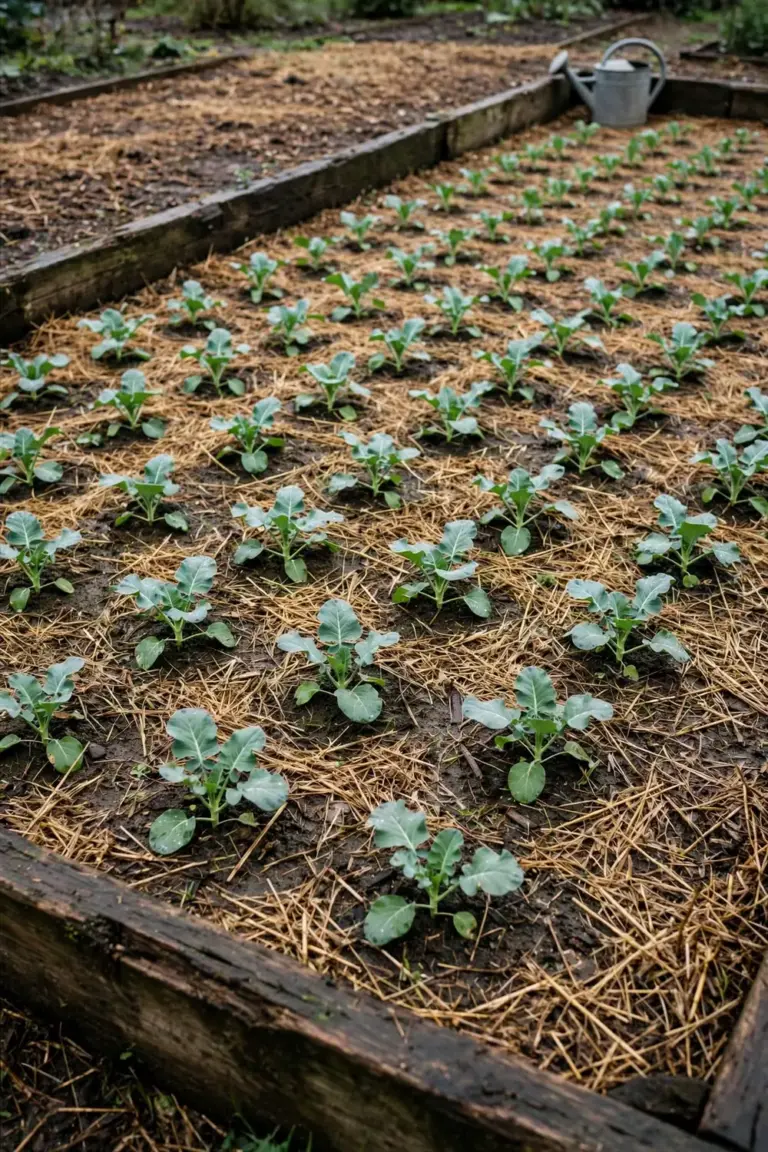
West Virginia University Extension gives the row version: plant broccoli 18 to 24 inches apart in rows spaced 36 inches apart. In metric, that is 46 to 61 cm between plants in rows 91 cm apart. Use the row spacing when you hoe between rows. Use the Gardenate block spacing when you plant in a square bed and reach from the paths.
Set transplants at the depth they grew in the punnet and firm the soil around each stem. Water each plant in at once. The first week decides the crop. West Virginia University Extension tells growers to give plenty of water in the first week to help plants establish. A seedling that dries out in week one never catches up, even with perfect feeding later.
7. Grow Broccoli in Pots on a Sunny Balcony
Broccoli grows in pots when the pot is big enough and the balcony gets sun. One plant needs a pot at least 30 cm wide and deep, with drainage holes and potting mix, not garden soil. Garden soil compacts in a pot and drowns the roots. Potting mix drains and holds air.
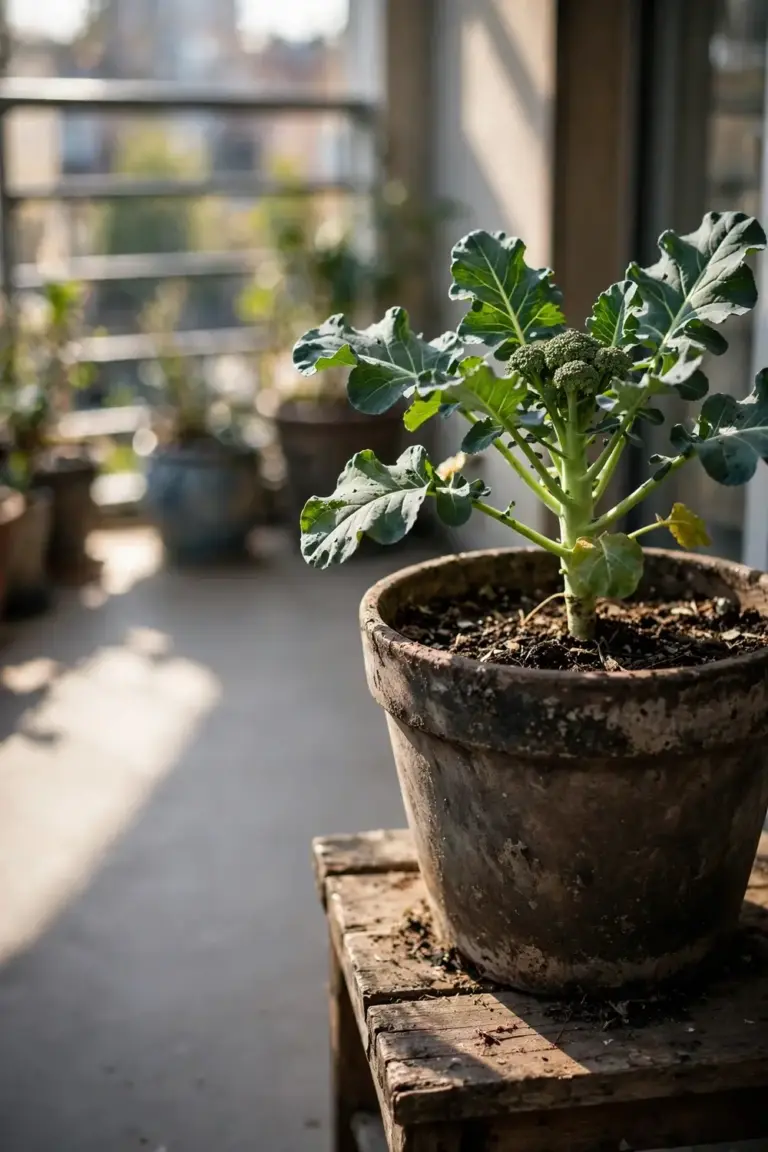
Alabama Extension gives the container rule: one plant per 5 to 7 gallon container. That is roughly 19 to 26 liters. A 30 cm pot holds about that volume. Two plants in one pot fight for water and feed, and both head small. One plant per pot grows a full head.
Pots dry faster than beds, so check the mix daily in warm weather. Feed pots more often than beds, because watering washes feed out of the mix. A liquid feed every week keeps a potted plant heading. Move the pot to catch morning sun and afternoon shade in a heatwave. A potted plant cannot send roots deeper for cool soil, so shade is the only cooling tool you have.
Pick potting mix, not garden soil, and check the bag for slow-release fertilizer. Mix with slow-release feed already in it needs no extra feed for the first month. Mix without feed needs a liquid feed from week two. Top up the mix when it settles, because a pot that loses 3 cm of mix loses that much root room. A saucer under the pot holds overflow in summer, but empty it after watering so the roots never sit in water.
8. Water Deep and Keep Soil Moist
Broccoli needs steady moisture from transplant to harvest. Dry soil in the head-forming weeks grows small, bitter heads. Waterlogged soil grows clubroot. The target is soil that stays damp 10 cm down, never dry and never puddled.
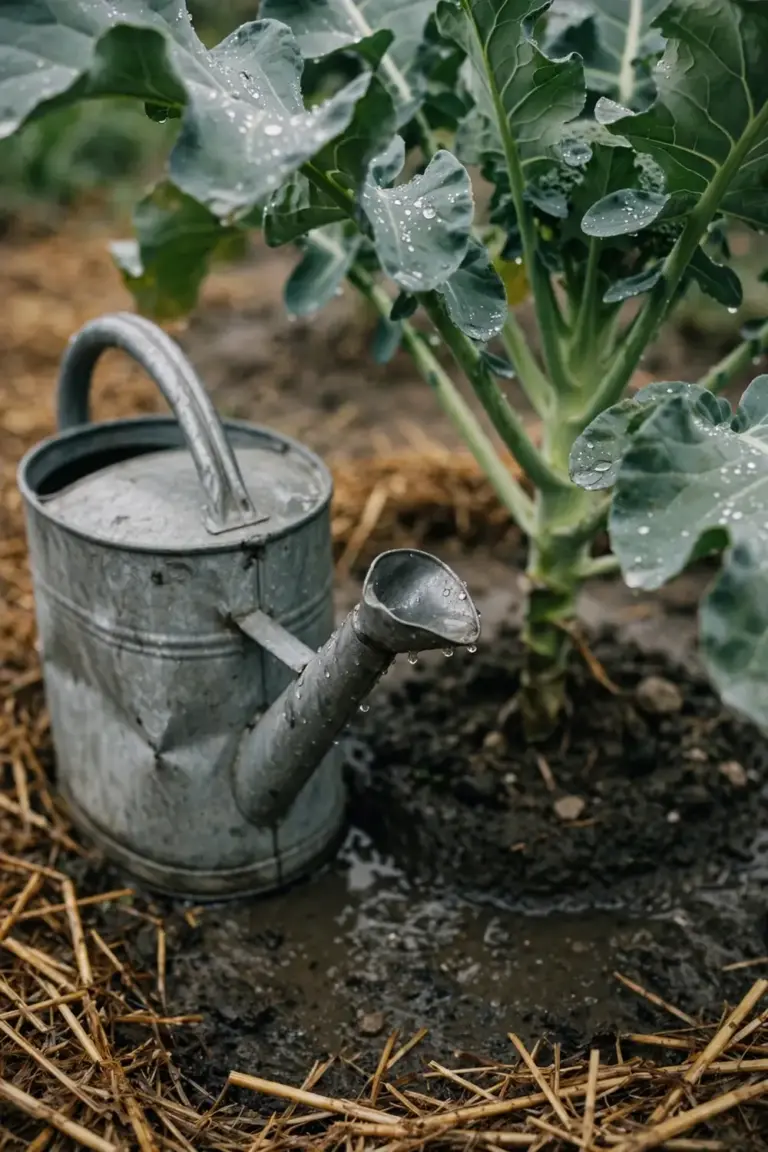
Alabama Extension gives the weekly figure: apply 1 to 2 inches of water each week, and avoid wetting the leaves to prevent fungal disease. In metric, that is 25 to 51 mm per week. A finger pushed into the soil tells you more than a schedule does. Water when the top 5 cm feels dry. Water at the base, in the morning, so leaves dry by nightfall.
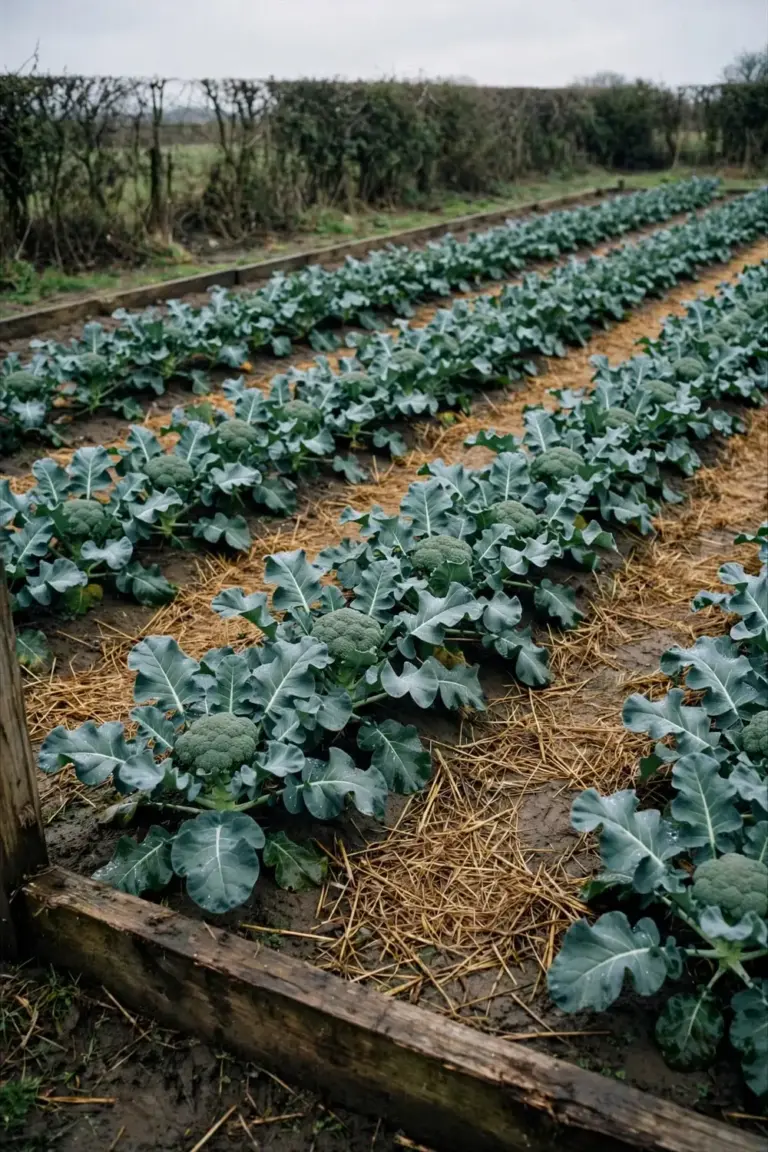
Mulch keeps the soil damp and cool. A 5 cm layer of straw or sugar cane mulch around the plants cuts watering and keeps the soil temperature steady. Keep the mulch clear of the stem, because mulch piled against the stem holds moisture on the bark and invites rot. Drip irrigation beats a sprinkler for broccoli, because it wets the soil without wetting the leaves.
A heatwave week breaks the normal routine. Water in the morning and again in the late afternoon when the top 5 cm dries out. Shade cloth over the bed drops the leaf temperature and slows bolting. Pull the shade cloth off when the heat passes, because broccoli in shade grows soft stems and loose heads. A bed that wilts by midday and recovers by evening is short of water. A bed that stays wilted at dawn has root trouble, not a water shortage.
9. Feed a Heavy Feeder in Two Passes
Broccoli is a heavy feeder. A bed with poor soil grows leafy plants with tiny heads. Feed at planting, then side-dress as the plant grows. Never dump all the feed at once, because a single heavy dose pushes leaves at the expense of heads.
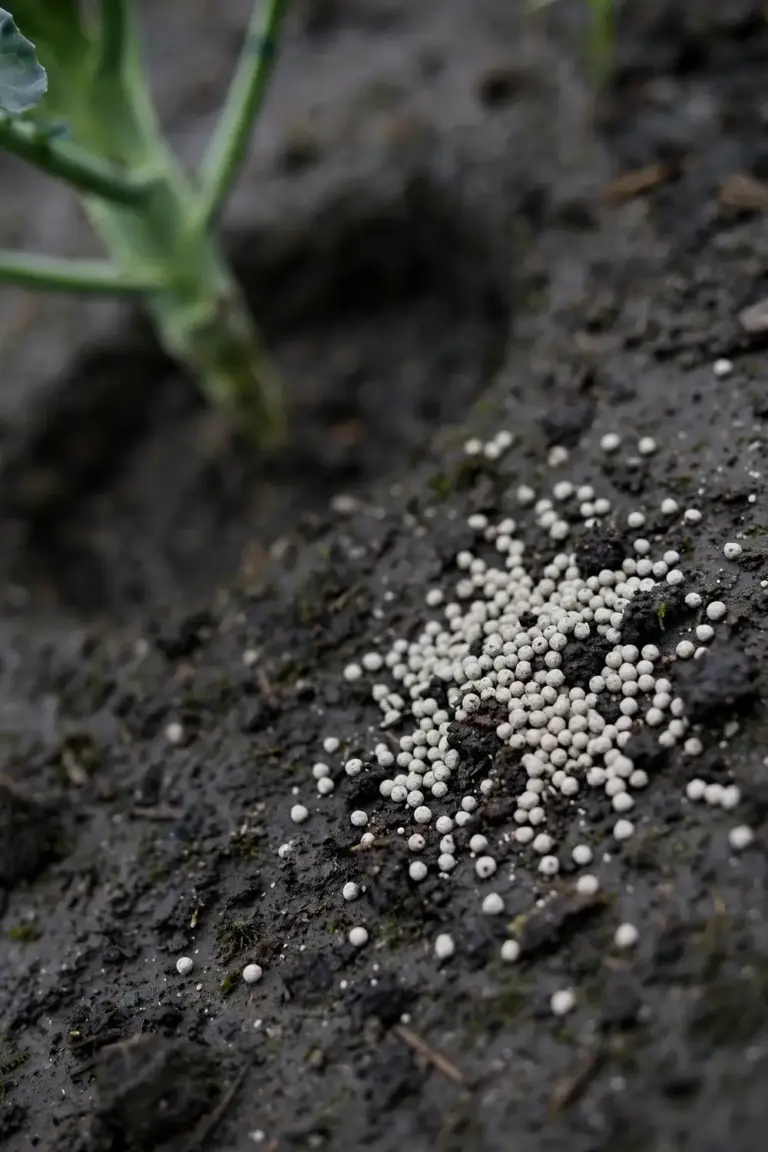
The Northern Territory note gives the home-garden method: apply a complete granular NPK fertilizer at sowing time, either broadcast and dug in lightly, or better in bands 5 cm deep and to one side of the future plants. Then apply three side-dressings of urea during the growing season, in rings around each plant or in a row alongside the plants. Follow the manufacturer rate on the packet, because rates vary by product.
Alabama Extension gives the no-soil-test fallback: apply an all-purpose fertilizer, 8-8-8 or 10-10-10, at planting per the label, then side-dress a small amount of calcium nitrate 10 to 15 cm from the stem 3 to 4 weeks after planting, and apply nitrogen again when heads begin to show. That is two side-dress passes plus the planting feed. The nitrogen at heading feeds the head, not the leaves, because the plant has already built its frame by then.
10. Net Out Cabbage White and Watch for Clubroot
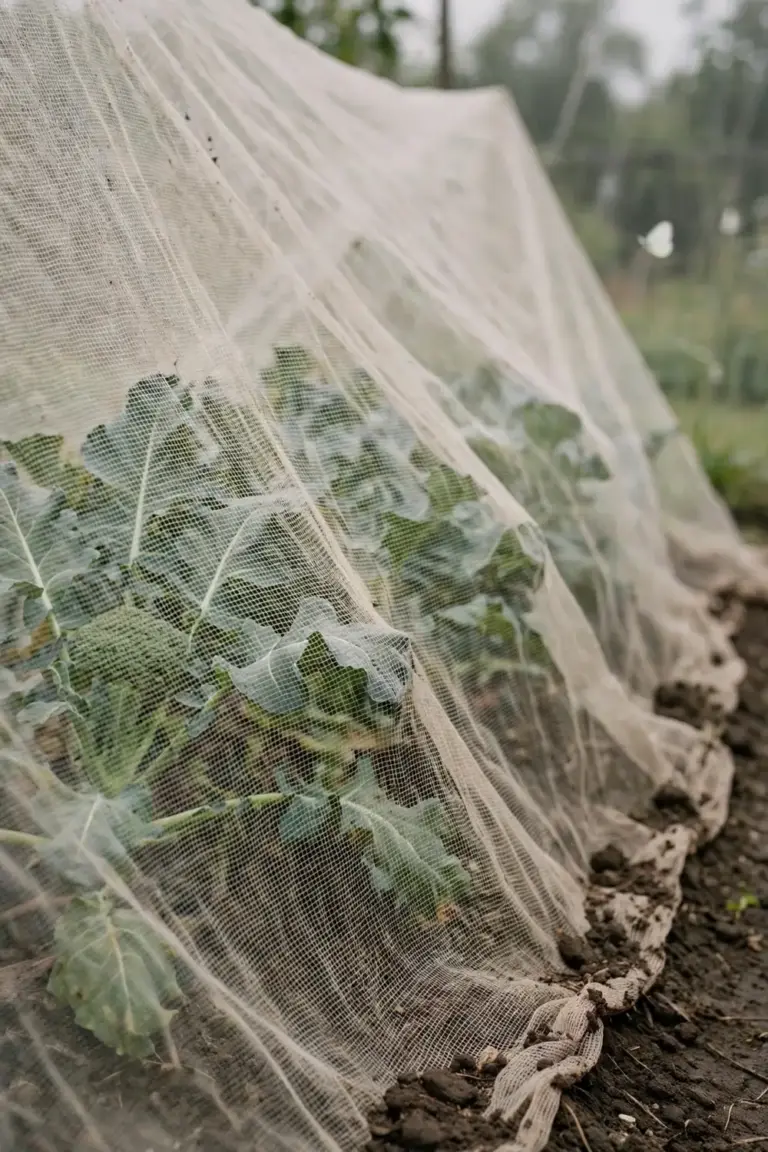
Cabbage white butterflies lay eggs on the undersides of broccoli leaves, and the green caterpillars that hatch can strip a plant in days. Exclusion netting beats spraying. Drape fine mesh over the bed from transplant day, seal the edges with soil or bricks, and keep it on until harvest. Netting stops the butterfly from laying eggs, so no caterpillars hatch.
Alabama Extension names the two sprays that work when caterpillars appear: insecticidal soap for soft-bodied insects, and Bt dust or spray for caterpillars. Bt kills caterpillars and leaves bees and other insects alone. Spray in the evening, when caterpillars feed, and reapply after rain. Pick caterpillars off by hand on a small bed. A daily check of leaf undersides catches eggs before they hatch.
Aphids cluster on growing tips and under leaves. A hard jet of water knocks most off, and insecticidal soap handles the rest. Clubroot needs prevention, not cure, because no spray fixes swollen roots. Rotate brassicas out of the bed, because the University of Hawaii states a 7-year rotation for clubroot control. Delaware Extension calls 5 to 7 years the realistic rotation period. A 3-year rotation is the shortest worth running, and a 4-year rotation suits most home gardens. Cover crops fill the rotation years, and the cover crops guide covers the options.
11. Cut the Main Head, Then Pick Side Shoots
Cut the main head when the buds are tight, dark green, and firm, before any yellow flower shows. Cut with a knife, leaving a good length of stem on the plant. Alabama Extension tells growers to leave as much central stem as possible when harvesting the head, because that stem pushes out smaller lateral heads. The plant keeps feeding you for weeks after the first cut.
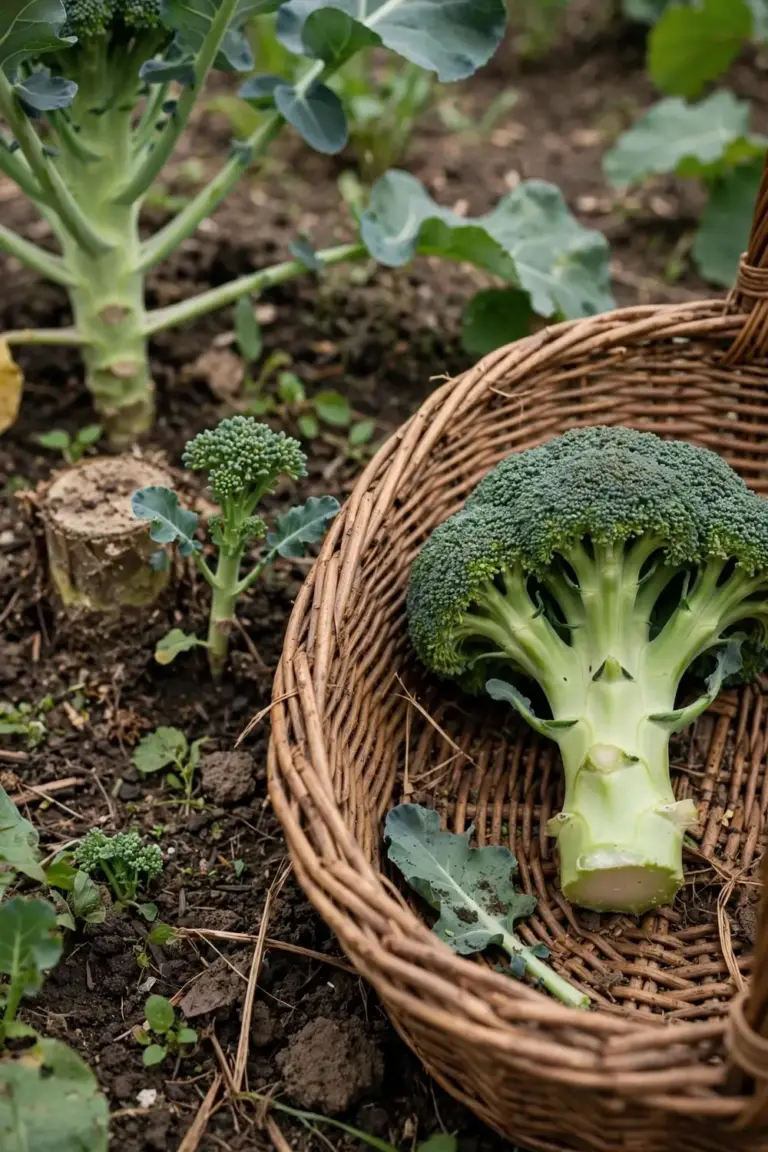
Alabama Extension gives the harvest window: harvest at 55 to 75 days, before flowers open and look yellow, with timing varying by variety. The Gardenate calendar gives 10 to 16 weeks, which is 70 to 112 days from transplanting. The two figures differ because they count from different starts and different climates. Watch the head, not the calendar. A head that loosens or shows yellow buds is past its best, even if the days say otherwise.
Side shoots follow the main cut. Pick them when they reach 10 to 15 cm long and the buds are still tight. Pick every few days in peak season. A side shoot left to flower stops the plant from making more shoots, just as an unpicked main head does. Soak harvested heads in salty water for a few minutes before cooking, because caterpillars hide in the buds and the soak floats them out.
12. Fix Buttoning, Bolting, and Hollow Stem
Buttoning means the plant forms a tiny head and stops. Ohio State University Extension names the causes: cold below 50 degrees Fahrenheit, insects or pathogens, and nutrient deficiency. The fix is prevention. Plant young healthy seedlings, feed on schedule, and keep water steady. A buttoned plant rarely recovers into a full head, so pull it and replant the gap.
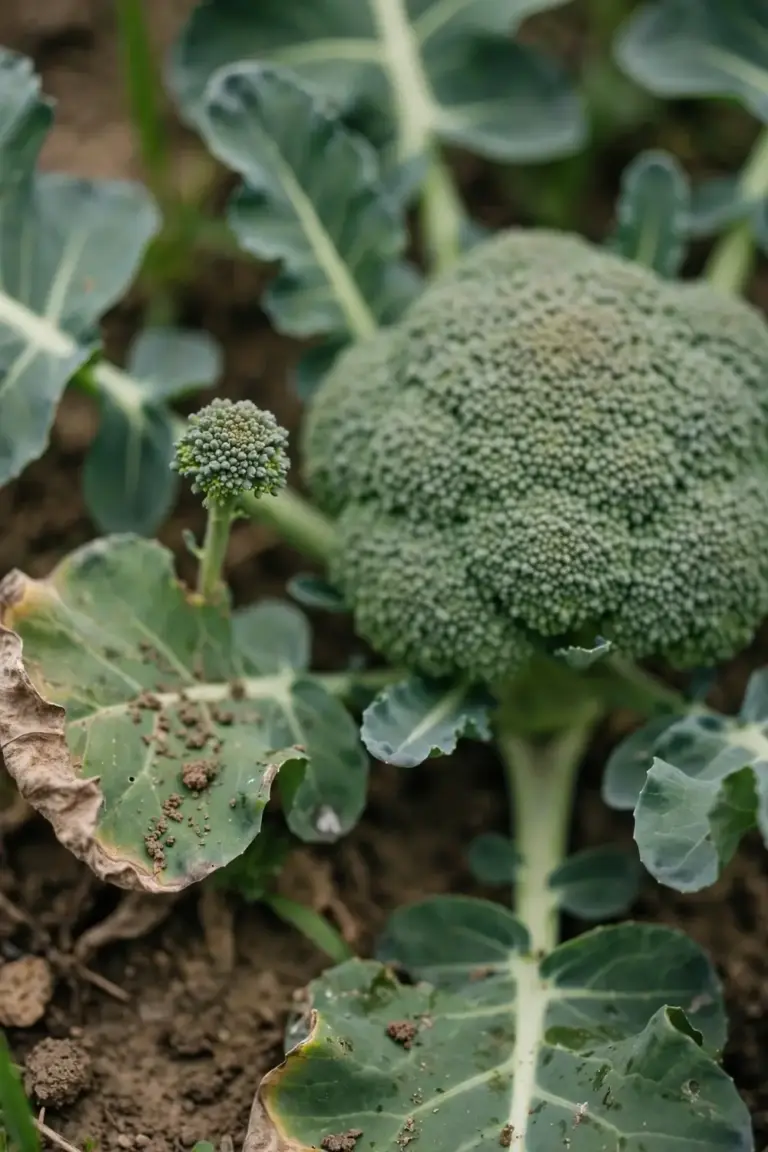
Bolting means the plant flowers before the head fills. Heat is the usual cause. A broccoli bed that heads in a heatwave bolts. The fix is the calendar: sow so the head forms in cool weather, shade the bed in a hot spell, and pick the head at the first sign of loosening. A bolted head goes to the compost. The flowers still feed bees, but the head is past eating.
Hollow stem means the stem cracks open inside. Cornell University notes that hollow stem can result from too little boron or too much nitrogen. The fix is balance: feed per the label, never double the nitrogen dose, and add boron only when a soil test shows a shortage. A hollow stem is still edible if the head is tight, so cut around the hollow part and cook the rest. Yellow heads mean the buds opened. Pick earlier next round.
Yellow lower leaves usually mean the plant is hungry or dry. Feed on schedule and water deep, and the lower leaves green up on the next flush of growth. Yellow leaves with swollen roots mean clubroot, and no feed fixes that. Dig one plant and check the roots before you add more fertilizer. A plant with clubbed roots goes to the bin, not the compost, because compost spreads the spores back into the bed.
Frequently Asked Questions
Broccoli struggles in an Australian summer in most zones. Heat pushes the plant to flower before the head fills, and the head turns bitter. Temperate gardeners can try a heat-tolerant variety in shade with steady water, but the crop stays risky. The safe windows are autumn to spring in warm zones and spring to autumn in cool zones. Sow for cool weather, not for summer.
Broccoli takes 55 to 75 days from transplanting to the main head in the Alabama Extension guide, and 10 to 16 weeks in the Gardenate calendar for Australia. The gap reflects different climates and counting methods. Variety sets the real figure, so read the packet. Green Magic reaches harvest at 57 days in the West Virginia University Extension list. Side shoots follow the main cut for weeks.
Heat, cold stress, pests, and poor feeding all stall head formation. A plant that bolts in heat never heads. A plant hit by cold below 10 degrees Celsius can button instead of heading. Caterpillars and aphids drain the plant. Poor soil starves it. Check water, feed, and pests first, then check the calendar. A plant sown for the wrong season rarely recovers, so replant in the right window.
No, a store-bought head cannot grow a plant. The head is a cluster of flower buds, not a seed or a cutting. It has no roots and no growing point that can form a plant. Grow broccoli from seed or from nursery seedlings. Seed is cheap, and one packet fills a bed. Save the store head for dinner and buy seed for the garden.
Yes, rotate brassicas to a fresh bed each year. Clubroot spores live in soil for years, and the same bed grows weaker brassicas each round. The University of Hawaii states a 7-year rotation for clubroot control, and Delaware Extension calls 5 to 7 years realistic. A 3-year rotation is the shortest worth running. Never follow broccoli with cabbage, cauliflower, kale, or any brassica in the next round.
Start With One Bed in Cool Weather
Sow broccoli when your zone cools, space plants 35 to 50 cm apart, feed twice, net from day one, and cut the main head before the buds open. The side shoots that follow turn one planting into weeks of harvests. Broccoli is a cool-season crop, and the gardener who respects that rule eats broccoli while the summer bed still struggles. The fall vegetables guide covers what else to sow in the same cool window.