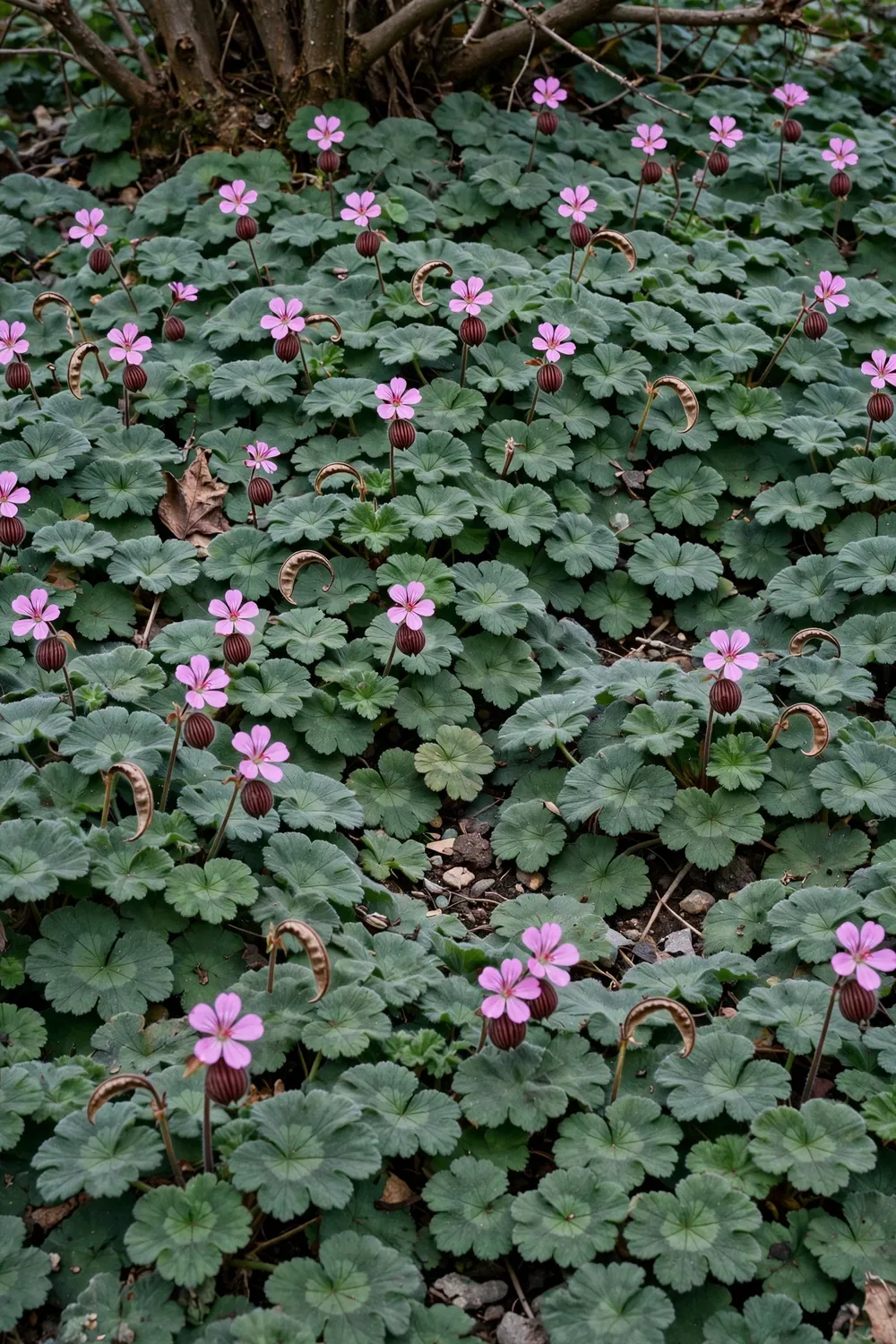

Bigroot geranium (Geranium macrorrhizum) is a rhizomatous, semi-evergreen perennial that builds a thick, weed-resistant carpet 30 to 45 cm tall and up to 61 cm (24 inches) wide per plant, and it takes dry shade beneath trees and shrubs better than other hardy geraniums. Thick rhizomes carry Geranium macrorrhizum through dry spells. In my experience, nothing else keeps the soil under trees green the way this plant does. One naming warning before you plant: bigroot geranium is a true Geranium. The tender bedding plant sold in pots under the name “geranium” is Pelargonium, a different genus entirely.
Bloom arrives in late spring to early summer as long-lasting purple-pink flowers about 2.5 cm wide, held in umbel-like clusters above deeply lobed, strongly aromatic foliage. Those leaves flush red in autumn, so the groundcover keeps working for three seasons. The Missouri Botanical Garden lists hardiness zones 4 to 8, which marks bigroot geranium as a cool-climate plant with a firm honesty boundary this guide respects.
Here is what this guide gives you: the 45 cm spacing rule for a closed carpet, the three named cultivars worth buying, a watering plan that stops after year one, the no-shear maintenance rule, five placements where bigroot geranium solves problems other plants refuse, and a cool-climate check for readers in places like cool-temperate Australia.
1. Identify Bigroot Geranium: 5 Traits of a True Weed-Proof Carpet
Bigroot geranium is Geranium macrorrhizum, a rhizomatous semi-evergreen perennial native to southeastern Europe and Turkey, growing 30 to 45 cm tall and spreading up to 61 cm wide to form a thick, weed-resistant ground cover. The Missouri Botanical Garden’s plant finder entry for Geranium macrorrhizum records exactly that size, along with the traits that let you confirm a plant before you buy.
| Spec | Value |
|---|---|
| Botanical name | Geranium macrorrhizum |
| Type | Rhizomatous semi-evergreen perennial |
| Height | 30 to 45 cm |
| Spread | 30 to 60 cm per plant |
| Hardiness | Zones 4 to 8 |
| Bloom period | Late spring to early summer |
| Light | Full sun to part shade |
| Water | Dry to medium |
| Native range | Southeastern Europe, Turkey |
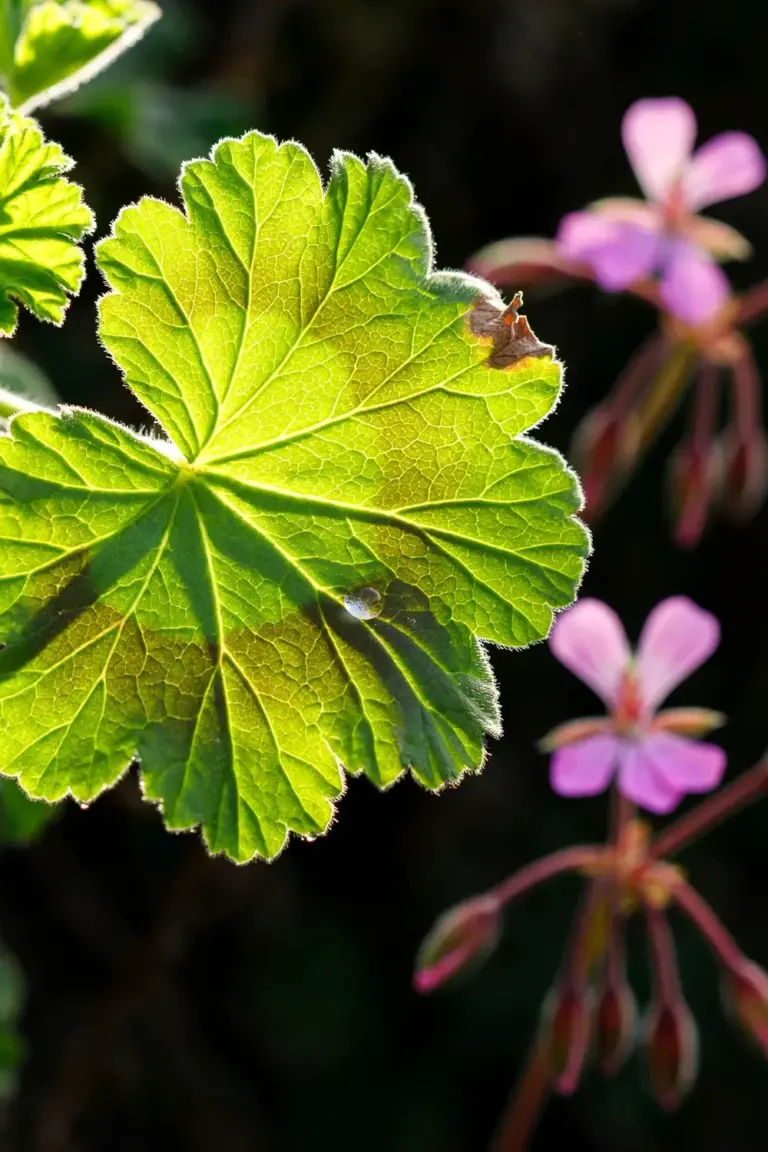
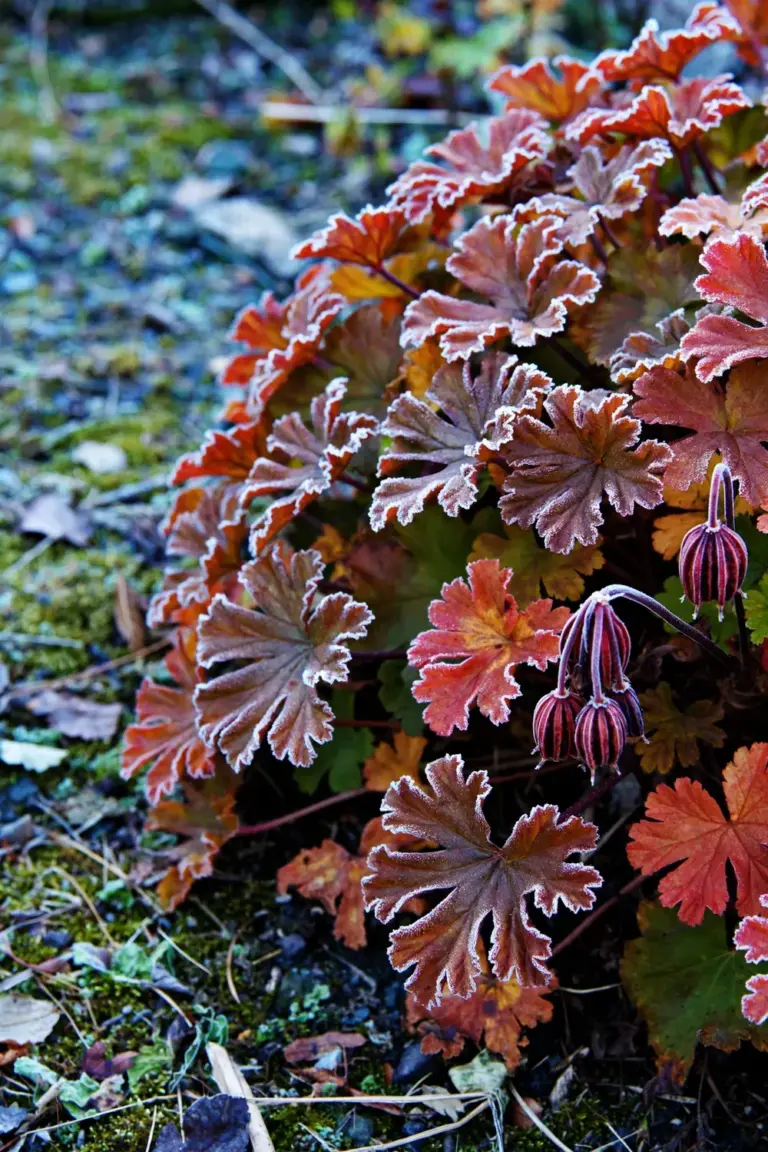
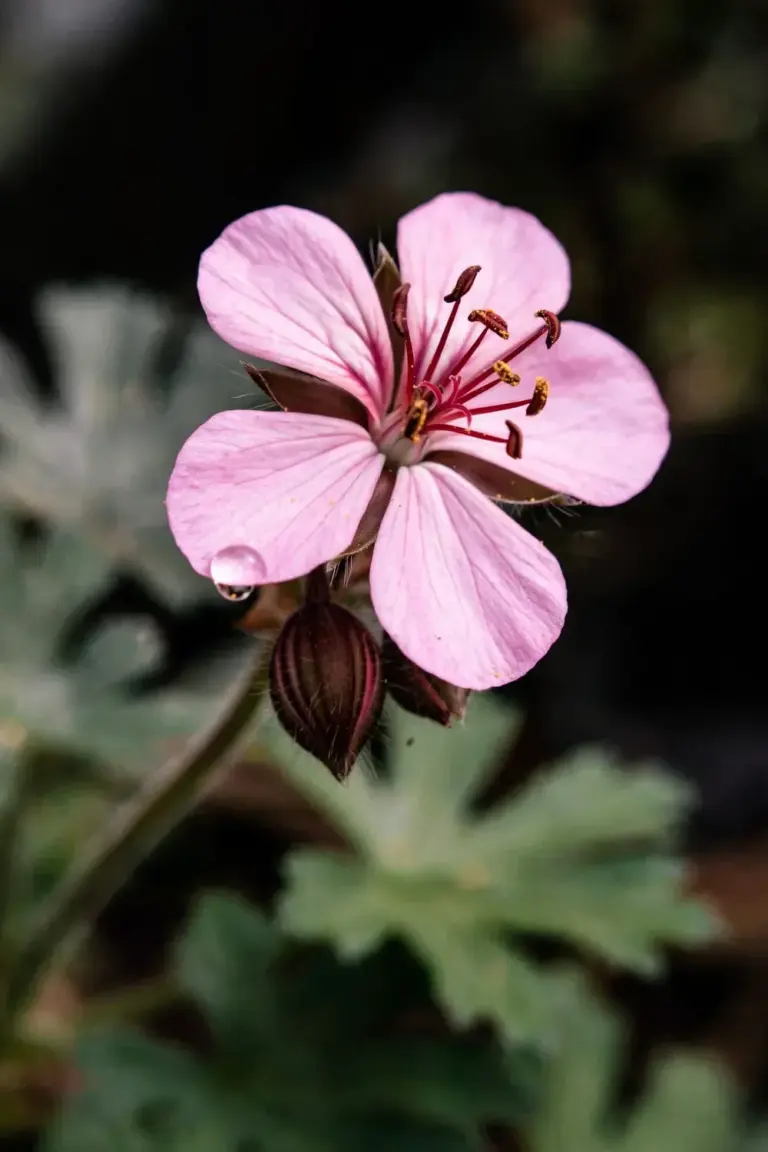
Five traits make the identification certain. First, the foliage. Geranium macrorrhizum carries deeply lobed, rounded, grayish-green leaves 10 to 20 cm long, each with 5 to 7 lobes and 3 to 5 notches at every lobe tip. Second, the scent. The leaves release a strong resinous aroma when crushed, and that aromatic foliage is one reason browsing animals leave it alone: the Missouri Botanical Garden lists deer and rabbit tolerance for the species. Third, the flowers. Long-lasting purple-pink blooms to 2.5 cm wide open above the foliage in umbel-like clusters, each sitting in an inflated dark-red calyx. Fourth, autumn color. The foliage turns red in fall, which extends the plant’s value well past bloom. Fifth, the root system that gives the plant its common name: thick, fleshy rhizomes that store moisture and drive the spread.
Confirm all five on a nursery label and you are not buying Pelargonium by mistake. The label should say Geranium macrorrhizum. That single line on the tag is the entire difference between a permanent carpet and an annual you replace next year.
2. Space Plants 45 cm Apart for a Closed Carpet in 2 to 5 Years
Set plants 46 to 61 cm apart (18 to 24 inches) and the rhizomes knit into a closed carpet within 2 to 5 growing seasons. PlantFiles at Dave’s Garden records the 18-to-24-inch spacing for this species, and the RHS records a 2-to-5-year time to maturity for the ‘Spessart’ cultivar. Planting wider apart saves money now but buys years of open soil, and weeds move into open soil first. That trade defeats the whole purpose.
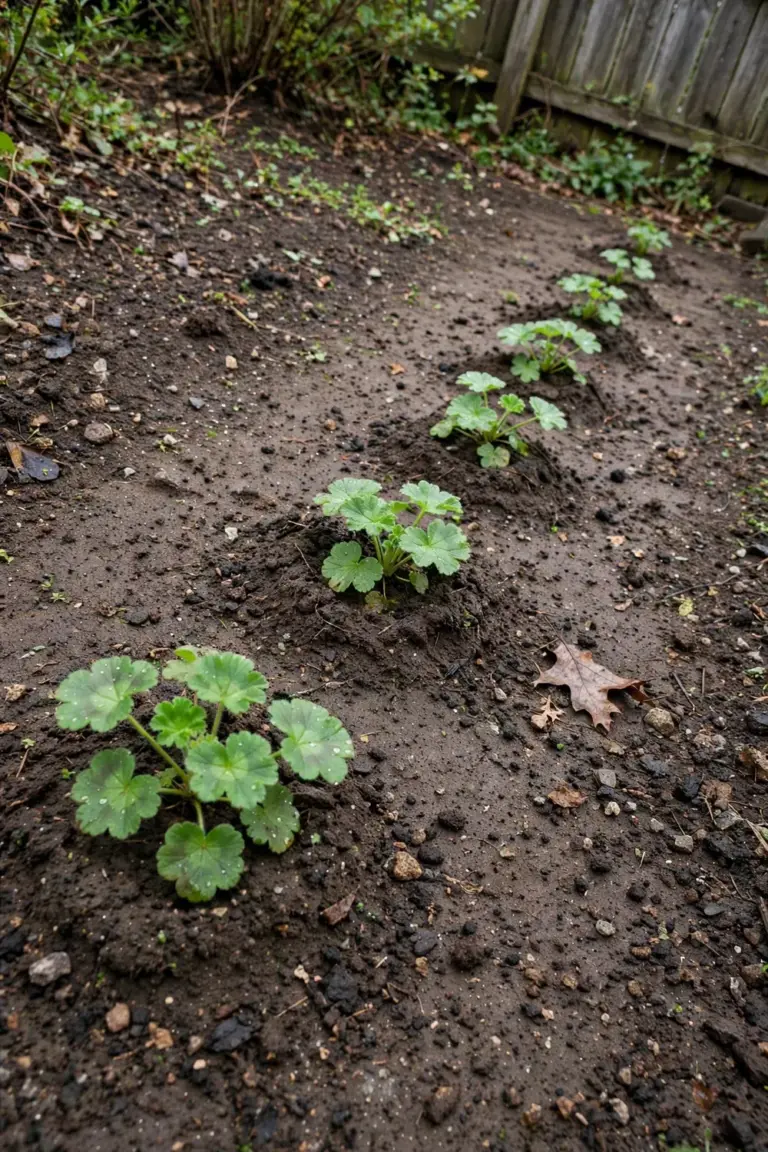
Pick the site first. Geranium macrorrhizum grows in full sun to part shade and appreciates afternoon shade where summers run hot; in cool-summer areas it tolerates full sun. This plant is famous for dry shade under shrubs and trees, but at planting time the soil must be worked and moist so the rhizome sections settle in. Dig a wide, shallow hole rather than a deep narrow one, because rhizome sections spread sideways. Set each section so the top sits level with the soil surface. Backfill, firm gently, and water deeply.
Soil demands stay modest. The plant grows in average, dry-to-medium, well-drained soil and accepts chalk, clay, loam, and sand across a wide pH range. The one soil condition it refuses is waterlogged ground, where the thick fleshy rhizomes rot. If your clay stays saturated through winter, plant on a slight mound or mix in grit before setting the rhizomes. Some work on building healthy soil matters most in the first season; a yearly mulch of compost afterward does the rest. If you plant in fall, a fall planting guide helps time the work to your first hard freeze; roots need several weeks to settle before it arrives.
3. Choose 1 of the 3 Named Cultivars for Flower Color
‘Bevan’s Variety’ flowers deep magenta, ‘Ingwersen’s Variety’ flowers soft pink, and ‘Spessart’ flowers white blushed with pink. All three share the species’ rhizome engine, its dry-shade toughness, and its aromatic foliage, so the honest choice is the color you want to see.
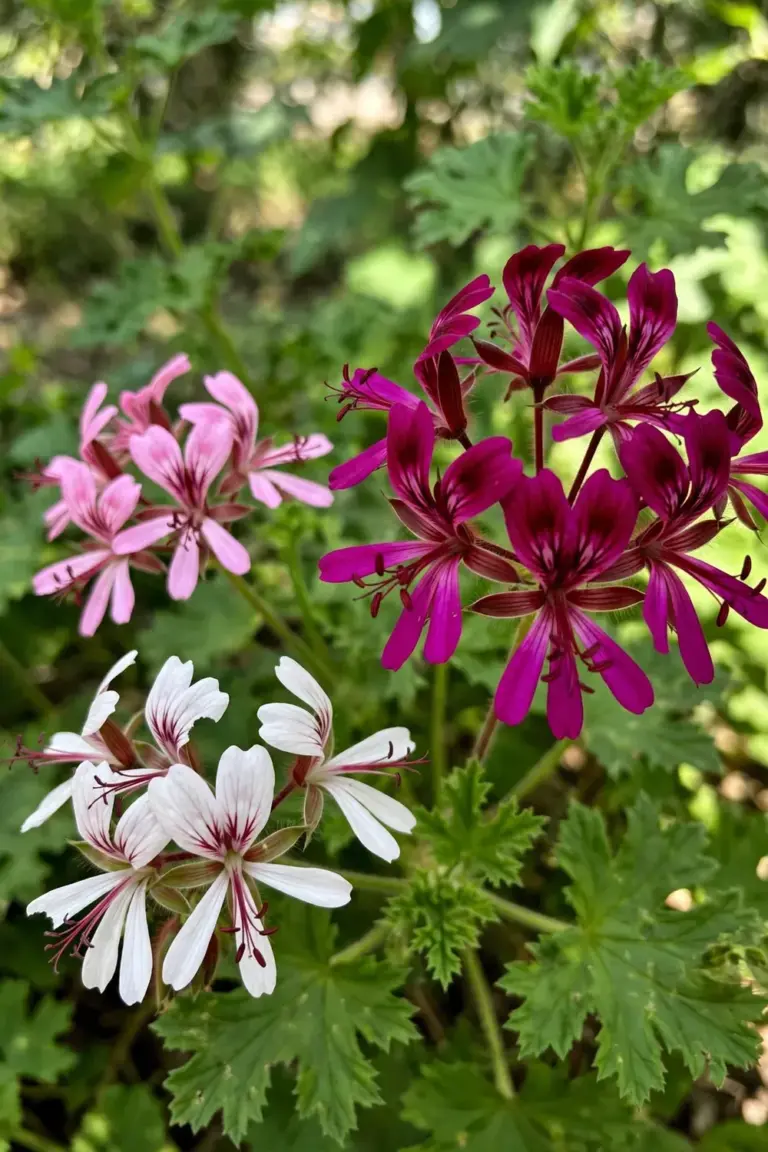
| Cultivar | Flower color | Height × spread | Zones | Bloom |
|---|---|---|---|---|
| ‘Bevan’s Variety’ | Deep magenta with dark-red sepals | 22 to 30 cm × 45 to 60 cm | 3 to 8 | April to July |
| ‘Ingwersen’s Variety’ | Soft pink with deep-pink sepals | 30 to 45 cm × 30 to 45 cm | 4 to 8 | May to June |
| ‘Spessart’ | White blushed with pink | 10 to 50 cm × 50 cm to 1 m | 4 to 8 | Late spring to mid-summer |
‘Bevan’s Variety’ is the toughest option. The Missouri Botanical Garden lists it for zones 3 to 8, deeper cold tolerance than the species, with fragrant foliage and good fall color. ‘Ingwersen’s Variety’ carries the strongest scent and soft pink petals with deep-pink sepals, and its flowers draw butterflies. ‘Spessart’ is the tidy one: white flowers blushed with pink, dark-red calyces, bronze autumn foliage, and a bushy habit that the RHS page for ‘Spessart’ recommends for underplanting roses and shrubs and for full shade to full sun.
One propagation warning matters here. Geranium macrorrhizum self-seeds, but cultivars grown from collected seed do not come true. If you want more of exactly ‘Bevan’s Variety’, divide it instead of sowing it. Division carries the cultivar forward; seed carries whatever the bees mixed.
Pair the foliage with perennials that also peak in autumn. The red tones bigroot geranium shows in fall sit well beside fall-blooming perennials, which extends the border’s color season by weeks without extra work.
4. Water Only Until Established: the Thick-Rhizome Method
Water new plants through their first growing season, then stop. Established plants need no supplemental water. The thick rhizomes store moisture, and that storage is the plant’s drought mechanism: the Missouri Botanical Garden states directly that the species tolerates drought because of its thick rhizomes.
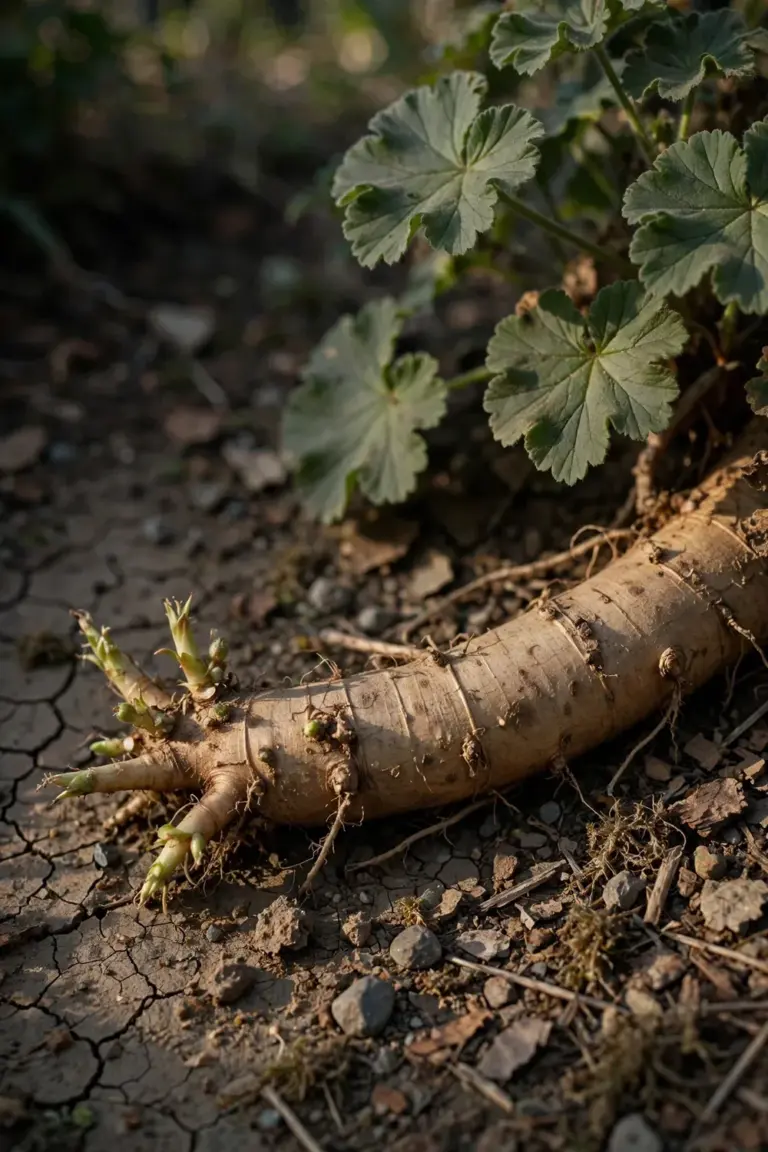
In practice the method is simple. Water at planting, then water whenever the top 5 cm of soil dries out during the first summer. Once the plants knit together, leave them alone. They also handle hot and humid summers better than most other species of geranium, so a muggy July does not demand rescue watering. The only watering mistake that matters is the opposite one: soil that stays waterlogged rots the rhizomes. Geranium macrorrhizum needs drainage, not abundance. A dry soil that drains is the plant’s native habitat; a wet soil that holds water is its one genuine threat.
5. Skip the Shearing: Remove Flower Stems Only
Geranium macrorrhizum needs no shearing after flowering. Removing the spent flower stems is all the maintenance the plant usually needs. The Missouri Botanical Garden is explicit: plants of this species do not need to be cut back, sheared, or otherwise trimmed after flowering.
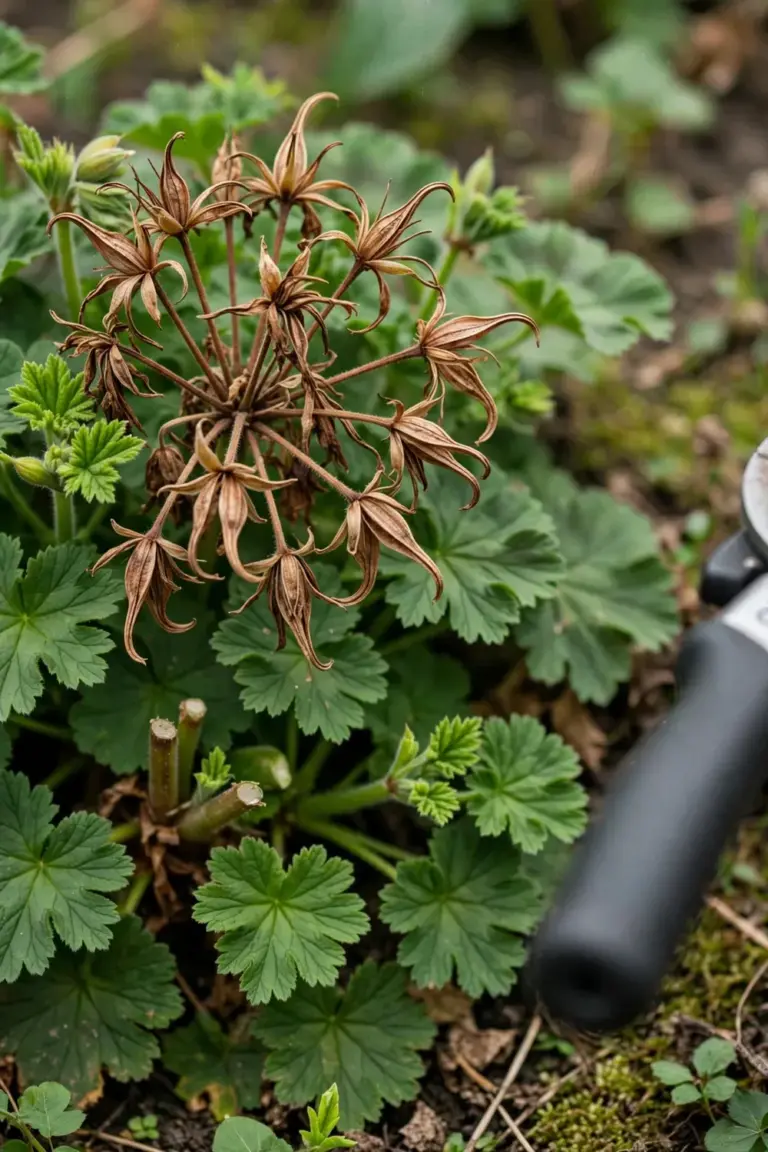
That rule is what separates a genuine low-maintenance groundcover from a maintenance project in disguise. Snip out the spent flower stems and the carpet stays tidy through summer, sometimes with a sporadic rebloom for the trouble. If individual leaves decline in summer heat, pull them off by hand rather than cutting the whole plant. Never mow it. A mower set low shreds the rhizome crowns, and the weeds were waiting for exactly that gap.
6. Divide Spring Rhizomes to Make Free Plants
Divide clumps in spring and every division that carries a growing tip becomes a new plant. The RHS recommends division in spring, with basal cuttings taken in early to mid-spring as the alternative method. No special tools are needed: a sharp spade, a bucket of water, and a shady hour.
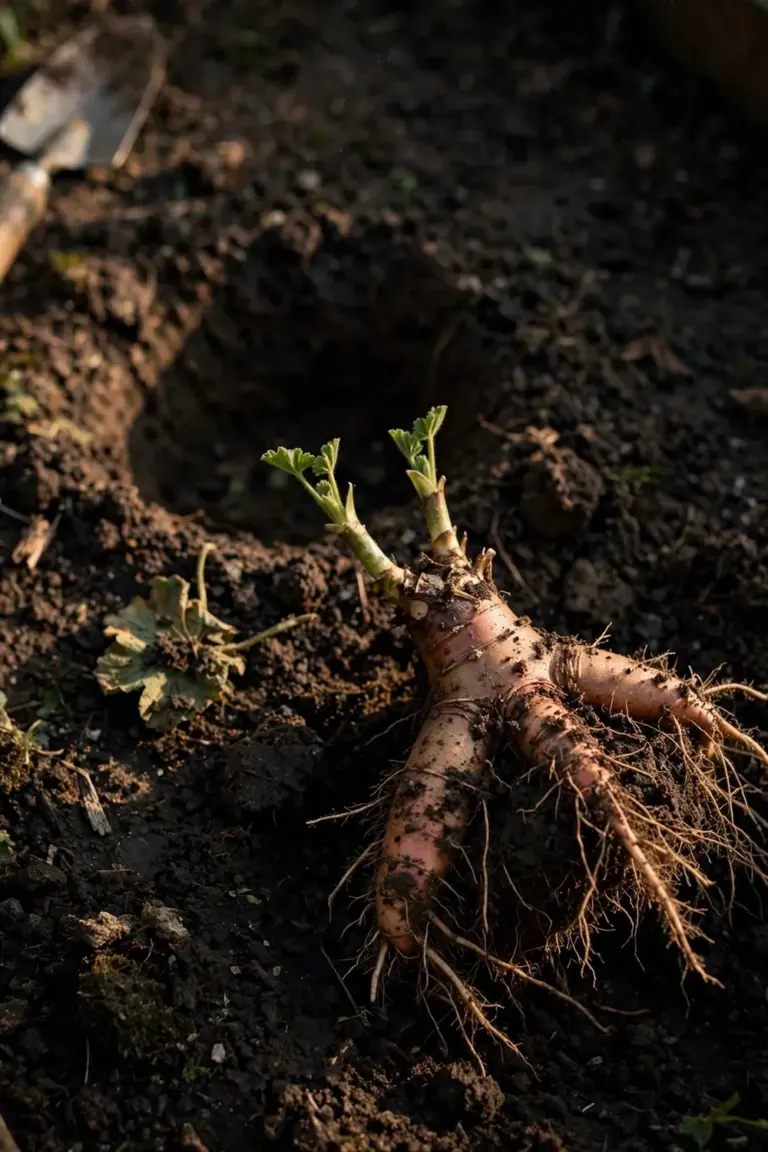
Work at the edge of an established patch, where rhizomes are youngest. Lift a section with a fork, shake off the soil, and cut through the rhizome so each piece holds at least one growing tip and some roots. Replant immediately at the same depth, firm the soil, and water well. The divisions establish fast because the rhizome already holds stored moisture.
Spring division is also how you keep the carpet where you want it. Geranium macrorrhizum spreads outward on its own, and in rich soil it can cover more ground than planned. Lifting edge sections every few springs keeps the boundary where you drew it and gives you free plants for the next bare spot.
7. Cover the 5 Spots Where Other Plants Fail
Bigroot geranium suits dry shade under trees and shrubs, slopes and banks, woodland edges, underplantings beneath roses and shrubs, and path edges. Each placement exploits the same three strengths: rhizome spread that closes gaps, aromatic foliage that resists browsing, and roots that hold soil. A guide to the best hardy geraniums for ground cover names Geranium macrorrhizum its top choice for these problem spots, listing dry shade, under shrubs, and difficult slopes as its best uses.
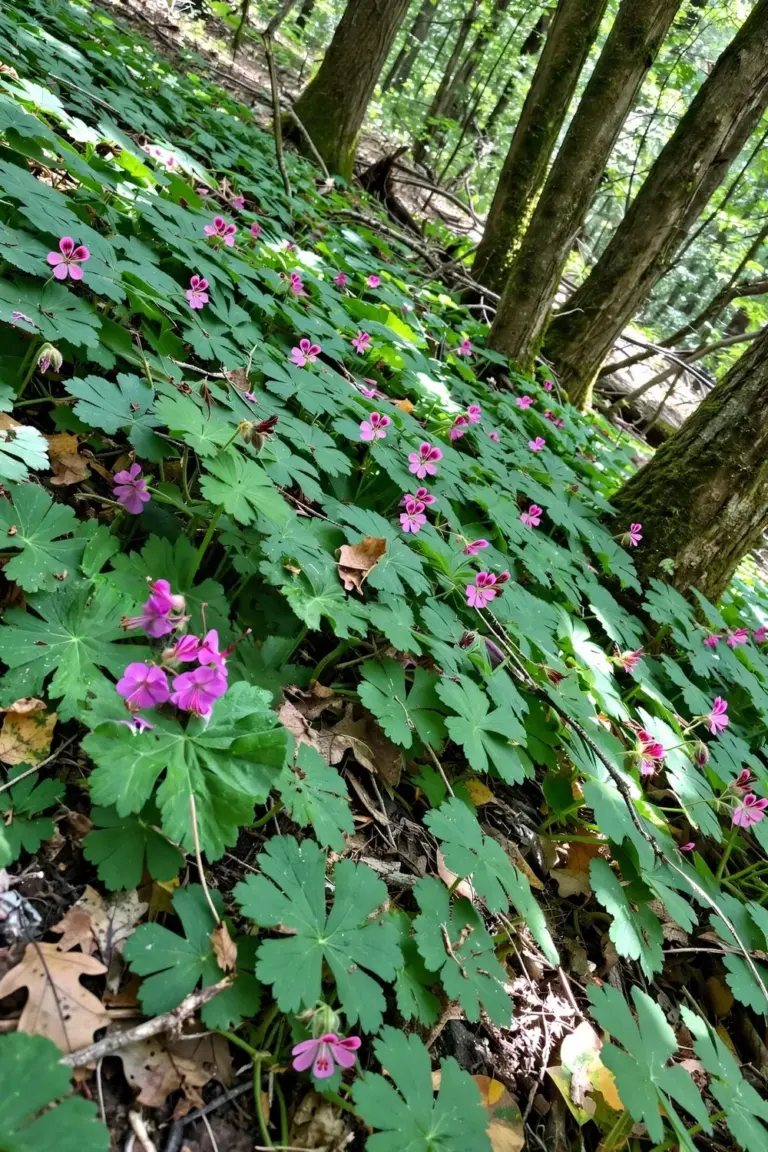
- Dry shade under trees and shrubs. This is the headline placement. Where tree roots steal every drop of water, the thick rhizomes keep the carpet alive. The foliage stays green through the season while shallow-rooted competitors give up by August.
- Slopes and banks. The spreading rhizome mat pins soil in place, and the species tolerates erosion and dry soil. On a bank where mulch washes away in the first storm, a living carpet is the only mulch that stays put.
- Woodland edges. Along the line where lawn meets trees, bigroot geranium bridges the two worlds: neat enough for a border, tough enough for root competition.
- Under roses and shrubs. The RHS lists underplanting of roses and shrubs as a suggested location. The carpet hides bare lower stems and keeps the soil surface covered without fighting the shrub for dominance.
- Path edges and borders. The foliage holds a clean line along paths, and spent flower stems snip out in seconds. Borrow layout ideas from fall flower bed designs and the carpet reads as intentional landscaping, not a weed gone native.
8. Match It to Your Climate: the Cool-Temperate Honesty Check
Bigroot geranium is hardy in zones 4 to 8. That makes it a cool-temperate plant, and no cited source extends it into subtropical or tropical lowlands. The fence is deliberate: databases and nurseries document cold tolerance and heat limits, but none describe the plant thriving in a humid, frost-free climate.
For readers in Australia, the honest map is cool-temperate only. Tasmania, Victoria, the Blue Mountains and high country of New South Wales, and the cooler uplands are the right territory. The plant tolerates hot humid summers better than most other geraniums, so a warm spell in a cool district will not defeat it. Year-round subtropical heat without a winter rest has no supporting evidence in any source consulted. Translate the timing to the southern hemisphere: divide rhizomes in September to November and plant in March to May, giving roots time to settle before the dry or cold stretch arrives.
9. Avoid These 3 Carpet-Killing Mistakes
Most bigroot geranium failures come from three avoidable mistakes. Each one works against the plant’s actual mechanism, and each one is easy to prevent.
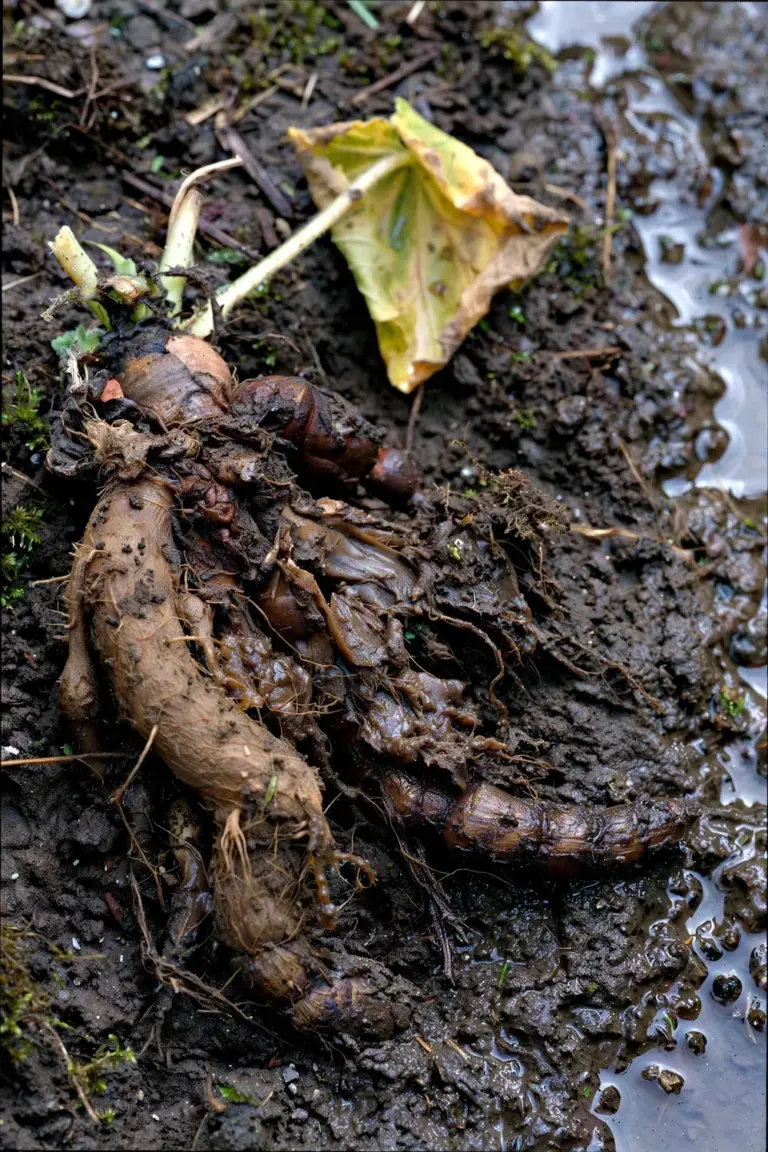
- Planting in waterlogged soil. Thick rhizomes store moisture, but sitting in winter water rots them. The RHS states the cultivation requirement plainly: any moderately fertile soil that is not waterlogged. If your site ponds after rain, fix the drainage or choose a different groundcover. A mound or a grit amendment costs one afternoon and saves the planting.
- Shearing the carpet after bloom. Cutting the whole planting to the ground removes the foliage that powers the rhizomes. The correct method is selective: remove the spent flower stems and any individual yellowed leaves, and leave everything else. Bigroot geranium never asks for a haircut.
- Sowing collected seed to multiply a named cultivar. Seedlings from ‘Bevan’s Variety’ or ‘Ingwersen’s Variety’ do not come true from seed. You will get the species back, not the cultivar. If you want the exact cultivar, divide it in spring. Sowing seed is fine only when the species itself is all you need.
Frequently Asked Questions About Bigroot Geranium
No. Bigroot geranium is Geranium macrorrhizum, a hardy perennial that survives winter outdoors in zones 4 to 8 and spreads by rhizomes. The bedding plant sold in garden-center pots is Pelargonium, a tender genus that cannot survive a frost. Nurseries and labels often use “geranium” for both. Check the botanical name on the tag before you buy; only Geranium macrorrhizum gives you the permanent carpet.
Each plant spreads 30 to 61 cm wide, and plants set 46 to 61 cm apart knit into a closed carpet within 2 to 5 growing seasons. The spread comes from thick rhizomes that creep outward at the soil surface, not from seed. Division in spring speeds the process: lifting edge sections and replanting them immediately gives you free plants that establish within one season.
It is semi-evergreen, so the answer depends on your climate. In milder parts of its range the foliage persists through winter; in colder zones the leaves may thin or drop. Either way the foliage turns red in autumn before winter arrives, which is one of the plant’s three seasons of interest. The rhizomes below ground survive regardless and push new foliage in spring.
It is vigorous, not invasive in the sources consulted. The plant spreads by creeping rhizomes and self-seeds, which is exactly why it suppresses weeds so well, but it stays where gardeners divide and edge it. Lift the outer rhizome sections every few springs to hold your boundary, and remove spent flower stems before seed ripens if you want zero volunteers.
Yes, in cool-summer climates. The species grows in full sun to part shade and tolerates full sun where summers stay cool, while appreciating afternoon shade in hot-summer areas. It also tolerates hot humid summers better than most other geranium species. Full baking sun combined with dry, poor soil in a hot climate is the one full-sun situation worth avoiding; everywhere else, give it drainage and it performs.