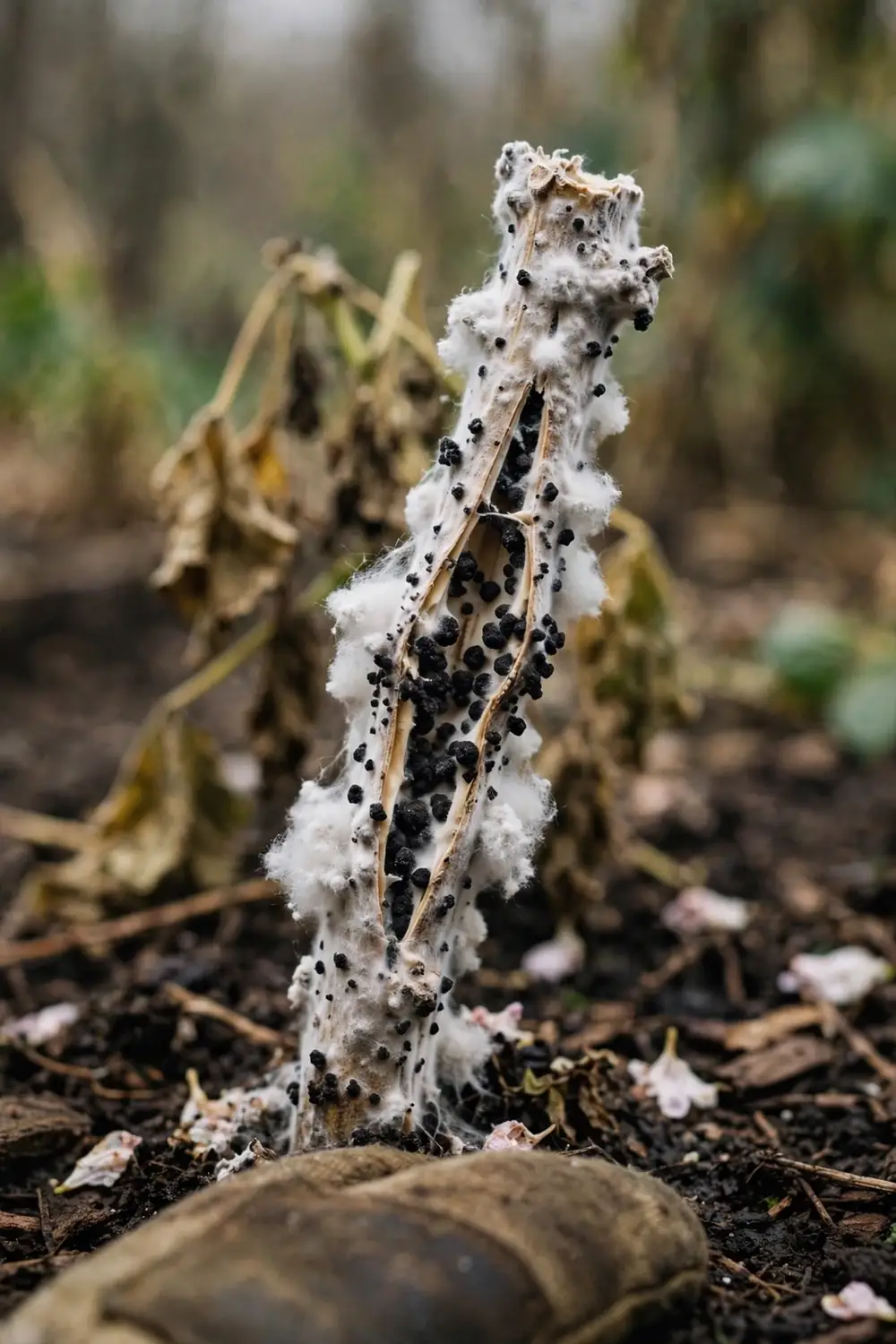

White mold kills from the stem outward. The fungus Sclerotinia sclerotiorum rots stems, girdles them, and leaves cottony white growth studded with hard black sclerotia. The 10 strategies below separate this disease from two harmless look-alikes and keep it from owning the bed.
Three white things get mixed up in gardens, and each one wants a different response. Powdery mildew dusts leaf surfaces and never rots a stem. Harmless soil mold fuzzes across potting mix and never touches the plant. White mold rots the plant from the inside and loads the soil with survival bodies that wait years. Spray the wrong one and you waste a season. Dig out the wrong one and you lose a healthy plant.
The rest of this page is 10 moves, from the triage call to clean starts next season. Read the identification sections first if the plant still stands. Start at Step 1 if the plant already collapsed.
What White Mold Actually Is
White mold is a soilborne disease of vegetables, flowers, and many ornamentals. The pathogen is Sclerotinia sclerotiorum, a true fungus, with the close relative Sclerotinia minor behind many lettuce cases. It lives in soil as sclerotia, infects through flowers and dead tissue, and then spreads into healthy stems, leaves, pods, and fruit.
The host list is enormous. Clemson University vegetable pathologists put it at more than 350 plant species, including beans, lettuce, tomato, cabbage, broccoli, carrot, cucumber, squash, peas, peppers, celery, onions, parsley, and potato. Gardeners meet it under local names. On tomato it is timber rot, on lettuce it is drop, and on bean it is white mold. One fungus, three names, one set of habits.
The fungus travels on ordinary garden traffic. Seed lots can carry sclerotia mixed in with the seed. Transplants carry it. Tools, boots, and soil carry sclerotia into clean beds. University of Illinois Extension notes that seed lots can be contaminated with sclerotia and that seeds themselves can carry infection. Clean stock and clean tools are the first defense, long before any product.
It also rides the wind. Sclerotia near the soil surface sprout tiny trumpet-shaped apothecia, and those cups fire ascospores into the air. The spores land on flowers and dead tissue, feed there, and then push into healthy tissue. A bed that looks clean in spring can carry an infection that started on a single fallen petal.
How to Identify White Mold on Stems and Leaves
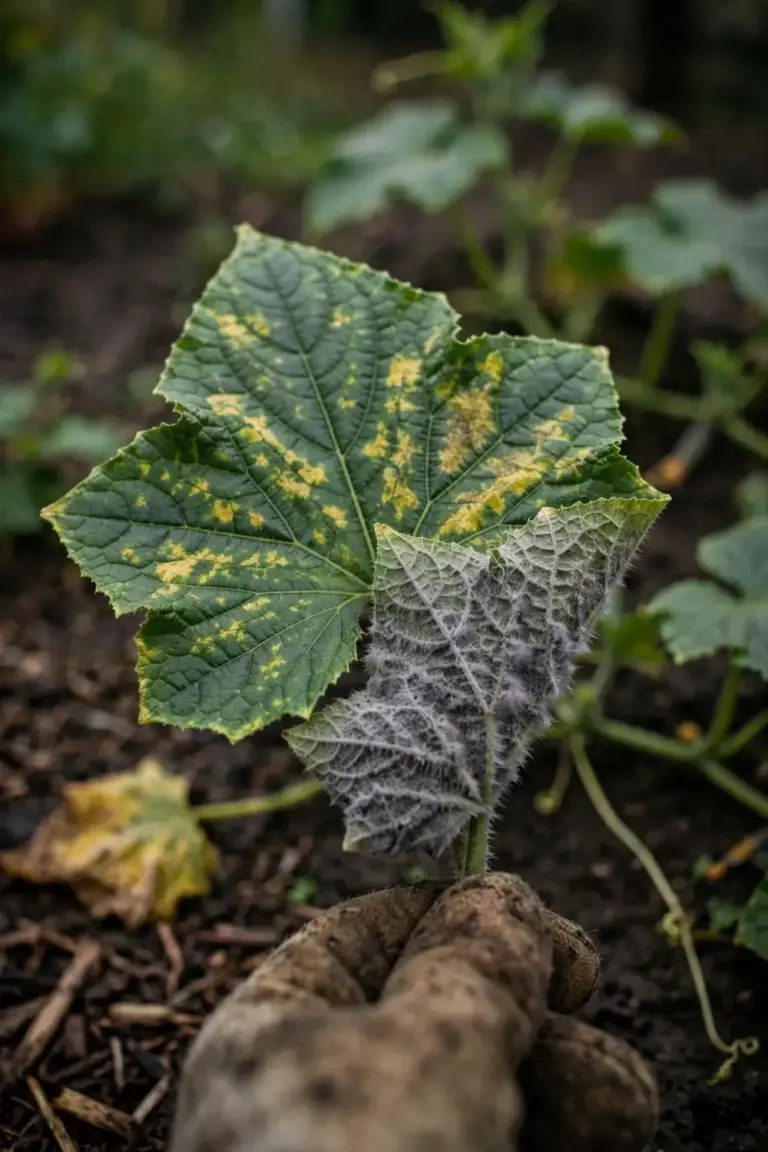
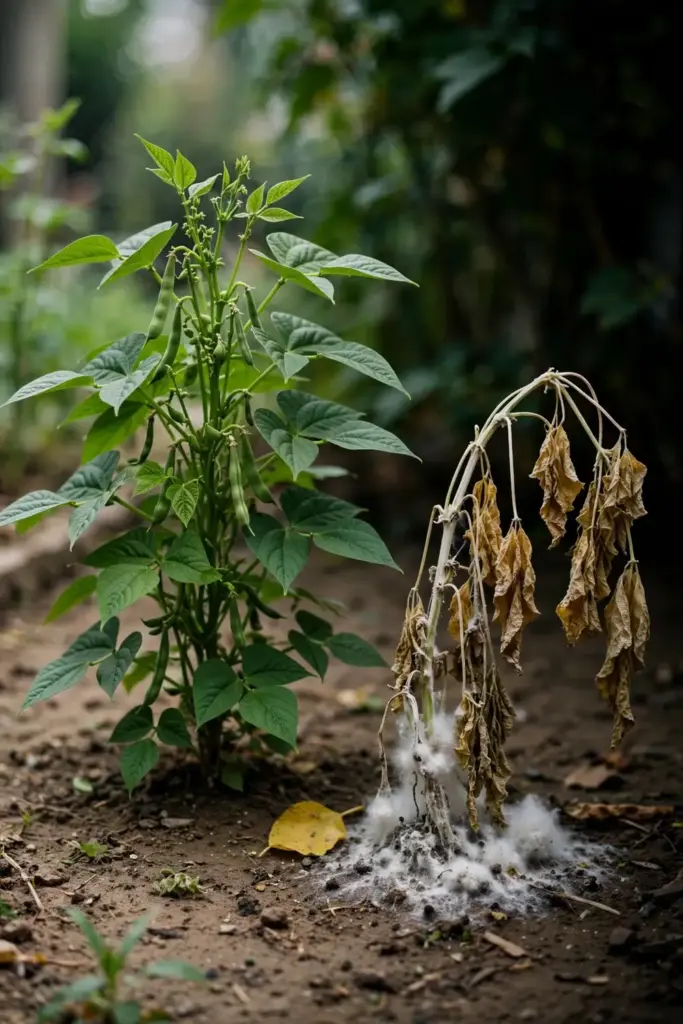
White mold starts soft and wet. Water-soaked lesions appear at stem nodes, at branch crotches, at the soil line, or at any point of injury. The tissue turns pale, then bleached, then straw-colored. In moist air, white cottony mycelium spreads across the lesion like frost. That cottony mat is the first field mark.
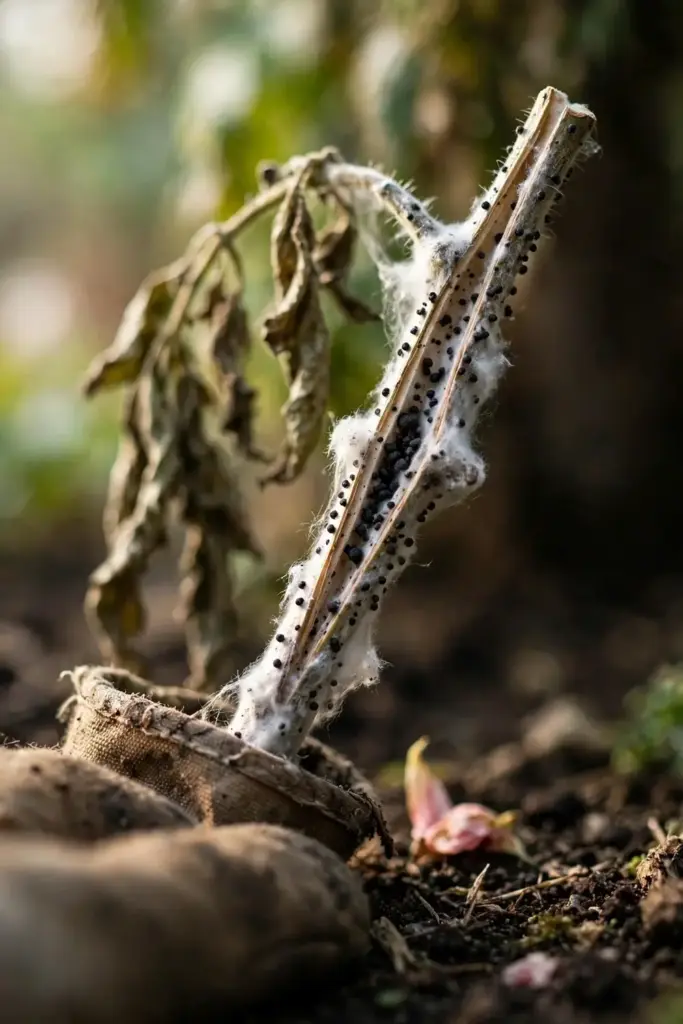
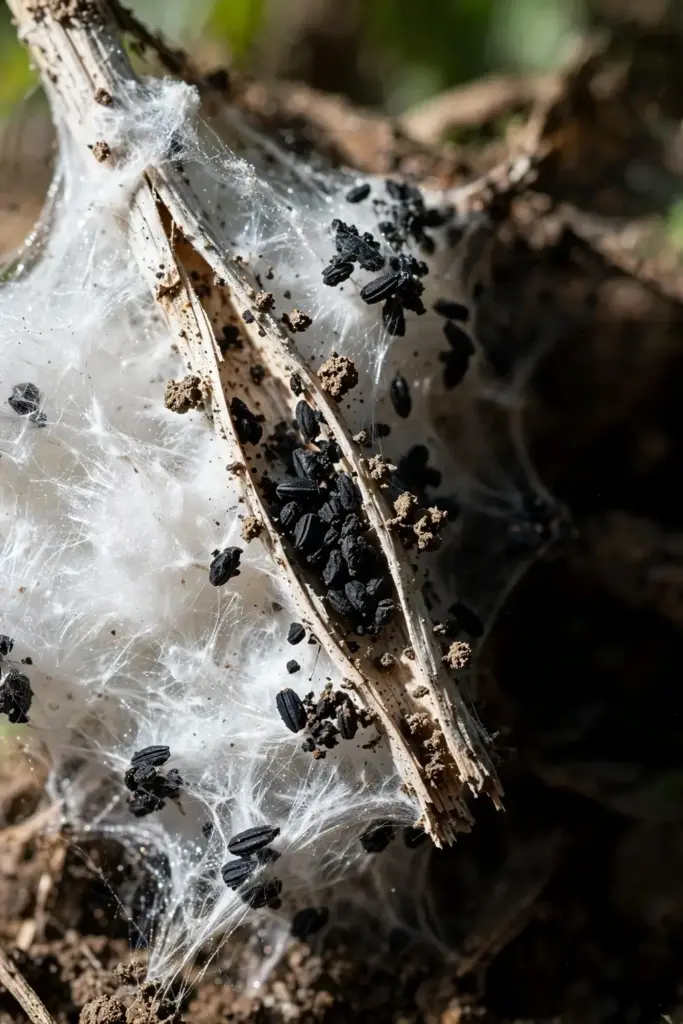
Stems tell the story next. The rot eats inward, and the stem turns brittle and hollow. Black sclerotia form inside the stem and on its surface, white at first and then dark brown or black as they harden. Split a suspect stem lengthwise. Sclerotia packed inside a bleached stem confirm white mold the way no leaf symptom can.
Leaves wilt above the girdle. The stem below the lesion still moves water, and the stem above it starves. A plant that wilts in moist soil with a rotted stem base is not thirsty. It is girdled. University of Kentucky Extension guide to Sclerotinia diseases of vegetables describes the same sequence on greens and cole crops: a soft, wet rot that climbs from the base toward the head and ends in total collapse.
Lettuce shows the fastest version. Outer leaves flag, then the whole head slumps into a wet rot at the base. The disease is called drop for a reason. The plant drops before the grower finds a single spot on a leaf. Check the crown, not the leaf tips. The crown is where the rot starts.
Seedlings show a different face. Infected seedlings damp off at the soil line, slump, and die within days. A seedling that collapses in cool, wet soil after a good start deserves the same stem check as a mature plant. Early infection kills fast in small plants.
How to Identify White Mold on Flowers, Fruit, and Roots
Flowers are the front door. Ascospores need nutrients and a film of water to germinate, and blossoms supply both. Cornell University vegetable pathologists name blossoms as the richest nutrient source for germinating ascospores, with weed flowers such as velvetleaf and common ragweed among the most common sources in production fields. Bean flowers carry the same risk in a home garden. The fungus colonizes the flower, then grows from the dead petal into the healthy pod or stem touching it.
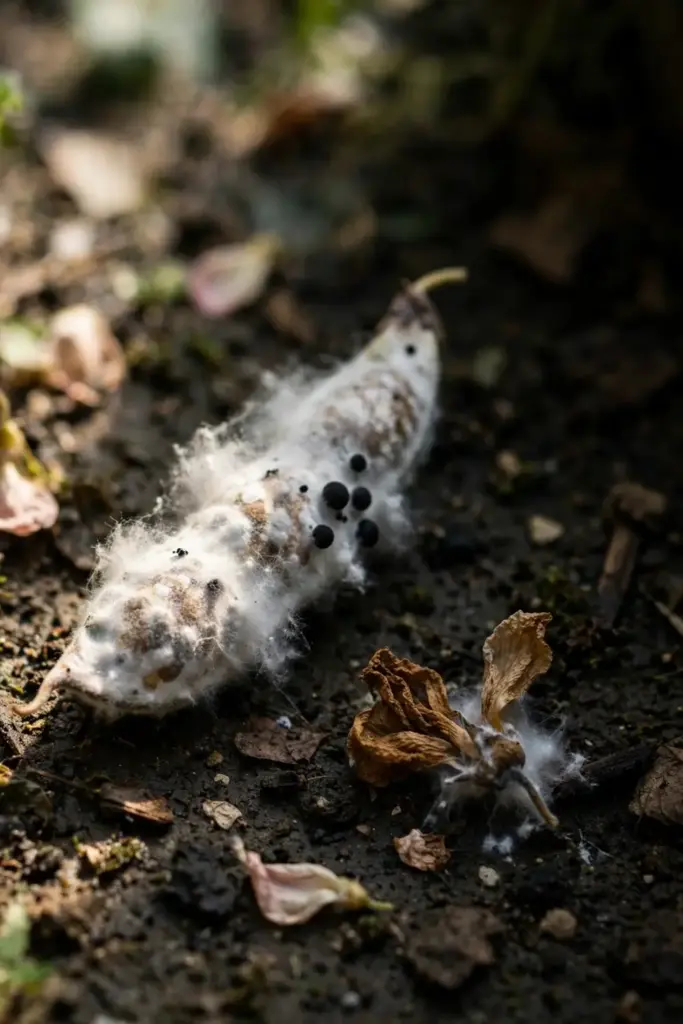
Petals give the early warning. Brown spots appear on petals and buds. Cottony masses follow on stems and nearby soil. Infected flowers drop, and the rot moves into the pod or stem behind them. Pick up fallen petals in a bed with white mold history. Each one is a landing pad with lunch included.
Pods and fruit rot wet. Bean pods develop water-soaked spots that lighten to a bleached color, then grow the white cottony mat. Tomato fruit touching infected stems rots from the contact point. Cabbage heads bruised at harvest rot in storage, and the fungus spreads from a bruised head to healthy heads touching it. Cornell University researchers found that bruises release enough nutrients for ascospores sitting on the leaf surface to infect the wound. Handle heads gently. A bruise is an open door.
Roots rot from the outside in. Root vegetables such as carrot show mycelium across the leaves and stems above ground while the root below develops a soft rot. Stems rot and collapse, and the root follows. Dig a suspect carrot and check the crown. The crown rots first, and the root rots after it.
Fruit tells the story late. Infected plants set little fruit, and the fruit that sets rots early or ripens on a dying plant. Pick fruit that looks sound and wash it as usual. The fungus harms the plant, never the eater, so discard any fruit with mold on it. The loss is yield, not safety.
Which Plants Get Hit Hardest by White Mold
Beans sit at the top of the risk list. Bean flowers feed the spores, dense canopies hold moisture, and pods hang close to the soil. A bean row in cool, wet weather is the classic white mold scene. Snap beans and dry beans share the risk. Flowers open the door, and the canopy keeps it open.
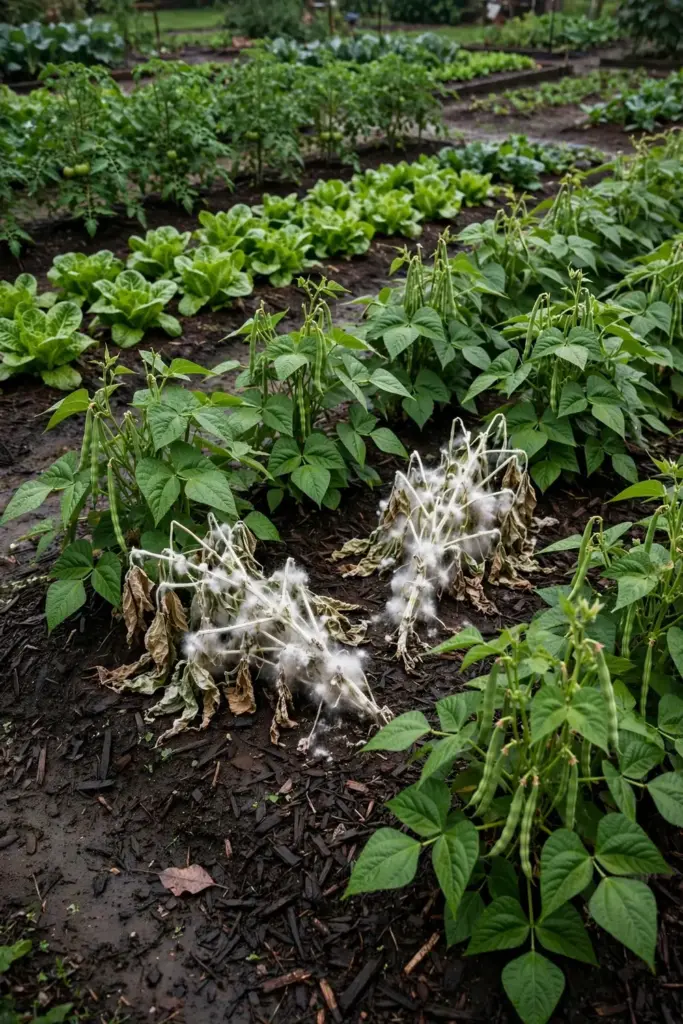
Lettuce and other leafy greens rank next. Lettuce grows low, holds moisture at the crown, and the pathogen Sclerotinia minor specializes in it. Spinach, parsley, and celery sit in the same risk band. Any crop that hugs wet soil with a closed canopy invites the disease.
Tomato ranks high in cool, wet tunnels and spring beds. Timber rot usually waits until flowering, when the canopy closes and shades the soil around the stem. The stem stays moist, the spores land on flowers, and the rot starts at a node or a branch crotch. A tomato in a dry, open bed rarely sees it. A tomato in a damp, crowded tunnel sees it often.
Cole crops and root crops fill the middle rank. Cabbage, broccoli, cauliflower, and kale rot from the base upward. Carrots and parsnips rot at the crown and root, while cucumbers, squash, pumpkins, peppers, and peas all host the fungus. No vegetable family is exempt. The ranking is about exposure, not immunity.
Non-hosts break the cycle. Corn, small grains, and grasses do not host Sclerotinia sclerotiorum, and University of Illinois Extension lists corn and small grains outside the host range. Beets, spinach, onions, and sweet corn also serve as rotation crops, and the Saskatchewan Ministry of Agriculture lists those vegetables as rotation options for two to four years. A bed that grew corn last season starts cleaner than a bed that grew beans.
Weeds keep the bed infectious. Broadleaf weeds host the fungus silently while the bed looks empty. Ragweed, velvetleaf, lambsquarters, pigweed, chickweed, henbit, and Carolina geranium all carry it. Pull broadleaf weeds through the fallow years. A clean-looking bed full of chickweed is not clean.
White Mold vs Powdery Mildew vs Harmless Soil Mold
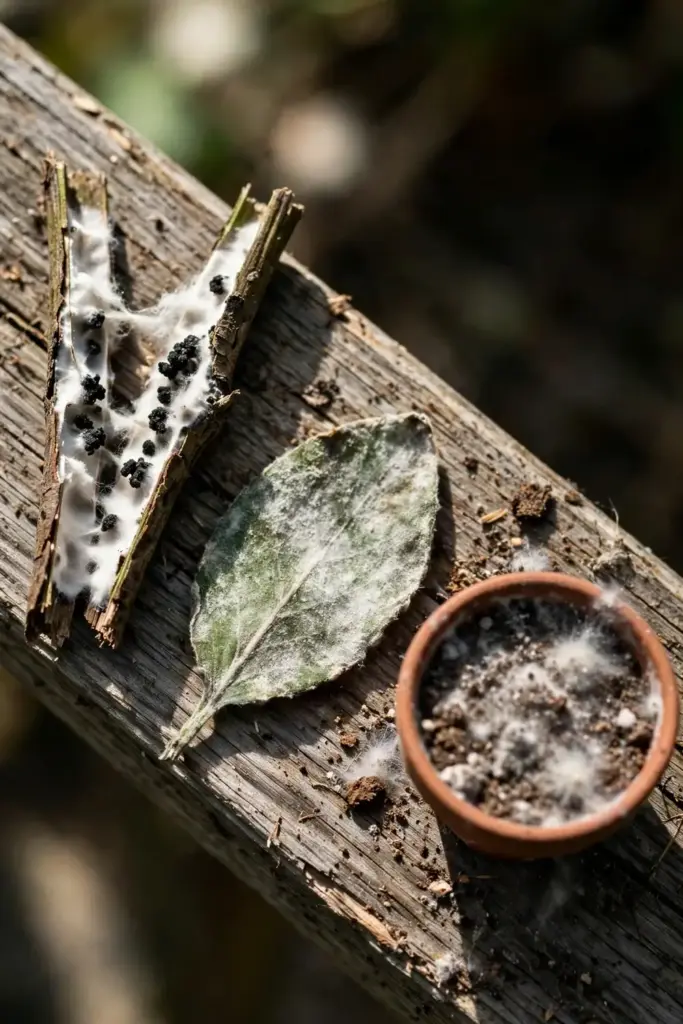
The three white growths answer different questions. White mold rots the plant from the stem outward. Powdery mildew coats the leaf, and soil mold eats dead matter in the mix and leaves the plant alone. The table below splits them by the marks that hold up in the garden.
| Clue | White Mold (Sclerotinia) | Powdery Mildew | Harmless Soil Mold |
|---|---|---|---|
| Pathogen | Sclerotinia sclerotiorum, a soilborne fungus | Powdery mildew fungi, leaf-surface fungi | Saprophytic fungi feeding on dead organic matter |
| Where the white growth sits | On stems, leaves, pods, and fruit, plus the soil near the stem | As a powdery coating on leaf surfaces, shoots, and sometimes flowers and fruit | On the potting mix surface only, never on the plant |
| Damage | Soft wet rot, bleached stems, girdling, plant collapse | Leaf distortion, early leaf drop, weak growth, rarely plant death | None to the plant, a sign of wet mix and still air |
| Hard bodies | Black sclerotia inside and on stems, the size of large rice grains | Tiny black fruiting bodies late in the season, no sclerotia | None, the fuzz stays soft and superficial |
| Weather | Cool and wet, long leaf wetness, closed canopy | Warm days with humid nights, dry leaf surfaces, crowded plants | Damp mix, low light, still air indoors |
| Response | Rogue, sanitize, dry the canopy, rotate | Improve airflow, remove badly coated leaves, treat the leaf surface | Scrape the surface, let the mix dry, improve drainage |
| Field test | Split the stem and find black sclerotia inside | Rub the leaf and the powder smears or wipes off | Check the plant: stems and leaves look healthy |
Gray mold sits one step sideways from this table. Gray mold is Botrytis, a separate fungus that covers dying flowers and fruit with gray-brown dusty spores and never forms black sclerotia. The Botrytis blight control guide covers its gray spore masses and its love of spent blooms. White mold forms white cottony mycelium and black sclerotia on rotting stems. The color of the fuzz and the presence of sclerotia split them.
Two more diseases share the sclerotia trick and need a fence. White rot is an allium disease caused by Sclerotium cepivorum, and it stays on onion, garlic, and leek. Southern blight is caused by Sclerotium rolfsii, and it runs in warm weather with tan, mustard-seed sclerotia and a white mycelium fan at the soil line. Each one is a separate disease with separate hosts. This article stays on white mold.
The rub test settles powdery mildew. Rub a coated leaf between thumb and finger. Powdery mildew smears and partly wipes away, because the growth sits on the surface. White mold never wipes away. It grows into the tissue and rots it. Soil mold wipes away with the top crumbs of mix, and the plant underneath looks fine.
Why Sclerotia Make White Mold So Hard to Erase
Sclerotia are the reason white mold outlasts every spray. A sclerotium is a hard black resting body of packed fungal threads, built to wait. Cornell University vegetable pathologists measure sclerotia at 2 to 20 mm long, and they form inside stems, on stem surfaces, and across infected tissue. Each one is a sealed pantry and a time capsule in one package.
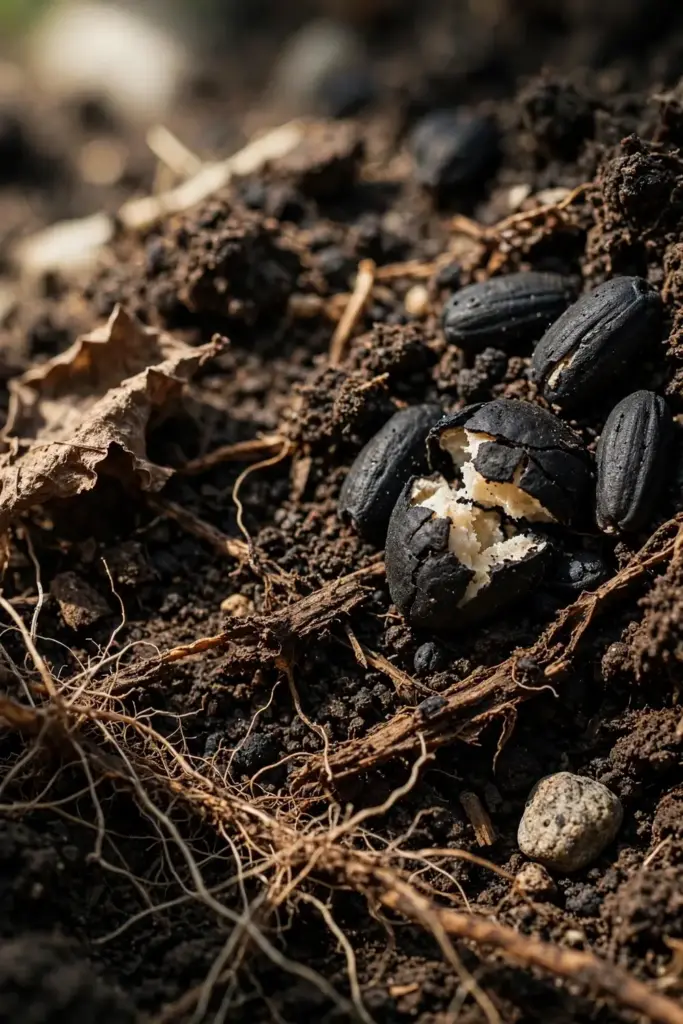
They wait years. The University of Wisconsin Plant Disease Diagnostics Clinic white mold fact sheet puts sclerotia survival at a minimum of 5 years in soil. Kentucky Extension puts viability at the same span. A bed that held white mold once holds it still. One season off host crops does nothing, because the clock runs in years, not months.
They wake up twice. In cool, moist soil, a sclerotium near the surface sprouts apothecia, tiny tan trumpet-shaped cups on thin stalks. Those cups fire ascospores into the air, and the Wisconsin fact sheet notes that apothecia can release millions of spores over several days. Wind carries them to flowers and dead tissue. In warm, wet soil, the same sclerotium can sprout mycelium directly and infect a stem touching the ground. One survival body, two attack routes.
They multiply on the plant they kill. A single infected stem can return dozens of fresh sclerotia to the soil when it collapses. Each new sclerotium waits its own 5 years. Leave one infected plant in the bed and the count rises. Pull it early and the count falls. Sanitation is arithmetic, not tidiness.
They ride everything. Sclerotia move in soil on boots, tools, and tillers. They move in water across a bed and in seed lots mixed with the crop seed. They move in compost that never got hot enough to kill them. A clean bed stays clean only if the traffic into it stays clean.
That is why the plan below leads with removal and rotation, not with sprays. Sprays cannot reach a sclerotium resting in soil. They cannot clear sclerotia already packed inside a stem. The only levers that touch the survival bodies are removal, burial, biocontrol, and time.
What Makes White Mold Worse in a Home Garden
Cool, wet weather is the trigger. Virginia Tech Extension timber rot publication puts the favorable window at high soil moisture for extended periods with air temperature at 70 degrees Fahrenheit or below. Ohio State University vegetable pathologists narrow the germination window further, to 59 to 70 degrees Fahrenheit with 16 to 72 hours of continuous wetness and very high humidity. Cool spring beds and damp fall beds sit squarely in the risk window. Hot, dry summers shut the disease down.
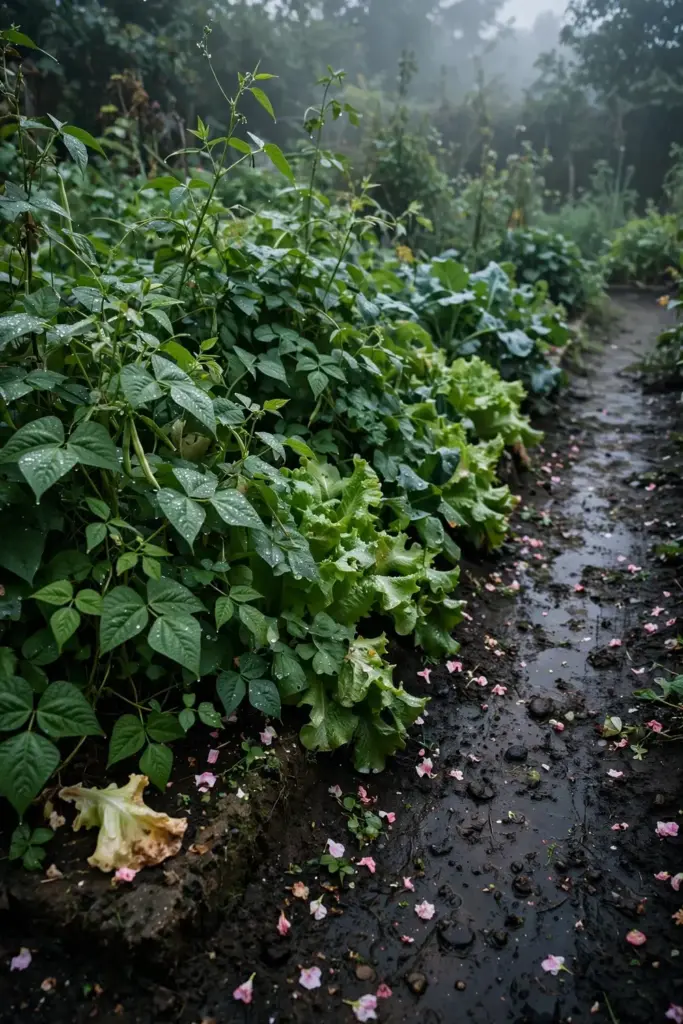
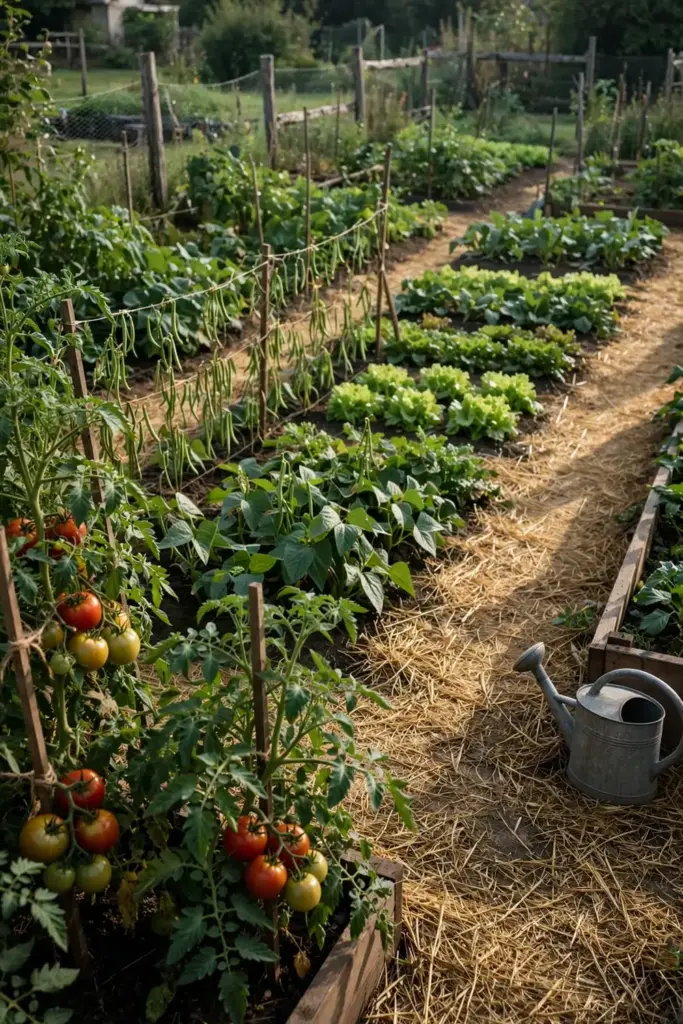
Closed canopy adds risk. A dense canopy shades the soil, blocks airflow, and holds moisture on stems and flowers for hours after rain. The lower canopy is where sclerotia germinate, and a closed canopy is their greenhouse. Wide rows, pruned lower leaves, and staked plants dry that zone. Open canopy is disease work, not decoration.
Flowering is the crunch point. Ascospores need flower nutrients to germinate, and the crop is most exposed when it blooms. Beans at full flower, lettuce heading, tomato setting fruit, all carry peak exposure. Scout hardest at flowering. The disease arrives on schedule with the blooms.
Overhead watering feeds it. Sprinklers wet the canopy, wet the flowers, and wet the soil surface where sclerotia sit. Each overhead session resets the wetness clock. Drip lines and soaker hoses keep water at the root zone and keep stems dry. Morning water dries any incidental wetness during the day.
Excess nitrogen pushes soft growth. Cornell University researchers warn that excess nitrogen grows a dense canopy that traps moisture, and that trapped moisture feeds apothecia, spore release, and infection. A lean, sturdy plant in an open row beats a soft, crowded plant every time. Feed for steady growth, not for bulk.
Wounds and bruises open doors. Mechanical damage, pesticide injury, hail nicks, and harvest bruises all release the nutrients spores need. White mold runs worse in bean plantings with leaf damage. Handle plants gently. Every bruise is a landing pad.
Step 1: Decide Whether This Plant Is Worth Saving
Cut before you spend. Split a suspect stem lengthwise and read the inside. Black sclerotia inside a bleached stem confirm white mold. A plant girdled at the base with a full canopy wilt will not recover. The rot is inside the plumbing, and no spray reaches it.
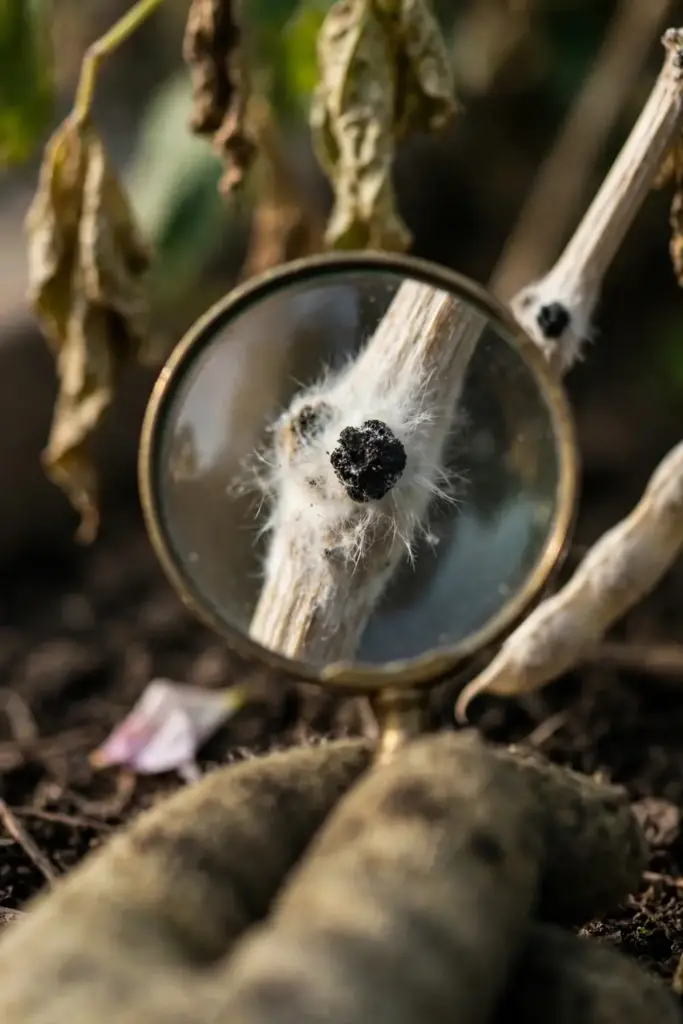
No spray reverses an infected plant. Clemson University Extension states the limit plainly. Once a plant is infected, white mold cannot be stopped. Garden sprays cannot reach fungus inside the stem, and they cannot clear the sclerotia already packed into the tissue. What sprays can do is protect healthy plants before infection. That is a different job, and it starts with clean plants.
Pull the doomed plant and save the season. A bean row costs little to replant, and a season nursing a dead plant costs the whole bed. The exception is a row where only one plant shows symptoms and the rest look clean. Cull the sick one. Watch the rest. Early removal is the cheapest control in the whole plan.
Count the bed before you decide. One infected plant in a row of healthy beans is a salvage job. Half the row infected is a bed problem, and the bed problem needs rotation, not rescue. Write down what you found and where. Memory fades. The sclerotia do not.
Step 2: Rogue the Plant and Bag the Sclerotia With It
Pull infected plants whole, roots and all. Bag them for municipal waste before you carry them across the garden. A plant carried loose drops sclerotia along the path. A plant carried in a closed bag drops nothing. The bag is the tool.
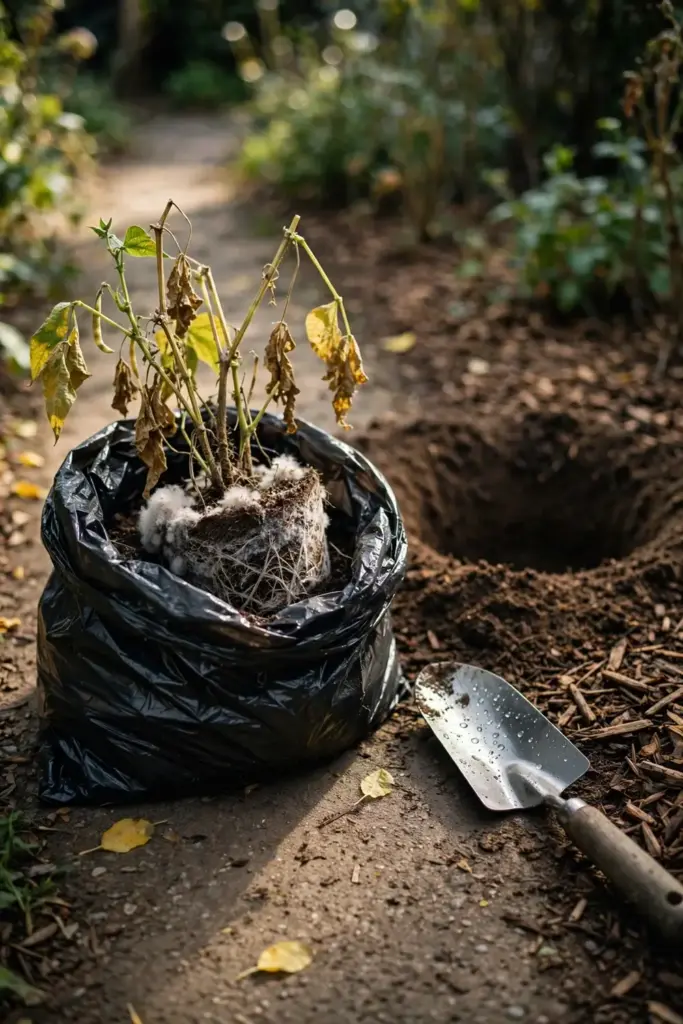
Ohio State University Extension white mold management notes give the cleanup radius: dig up the diseased plant and remove soil in a 4 to 6 inch radius around the base of the stem. That ring holds the sclerotia the plant already shed. Scoop it into the bag with the plant. Bury that soil deeply where non-host crops grow, or send it out with the trash. Never spread it on another bed.
Home compost will not save you. Home compost piles rarely sustain the heat that kills sclerotia, so composting a sick plant seeds next season’s beds with the same fungus. Bag it, bin it, and keep it out of the compost pile. Finished compost from a hot commercial pile is a different product. Your backyard pile is not that product.
Sanitize everything the plant touched. Wash soil off tools, stakes, pots, and boots. Use a 10 percent bleach solution, one part household bleach to nine parts water, then rinse. Clean the tools again before you put them away. Sclerotia ride soil, and soil rides tools.
Work sick beds last. Move through healthy beds first, then the infected bed, so shoes and tools never carry soil from sick to healthy. Change gloves between beds if you wear them. The order of the walk is part of the control.
Step 3: Open the Canopy for Airflow and Dry Leaves
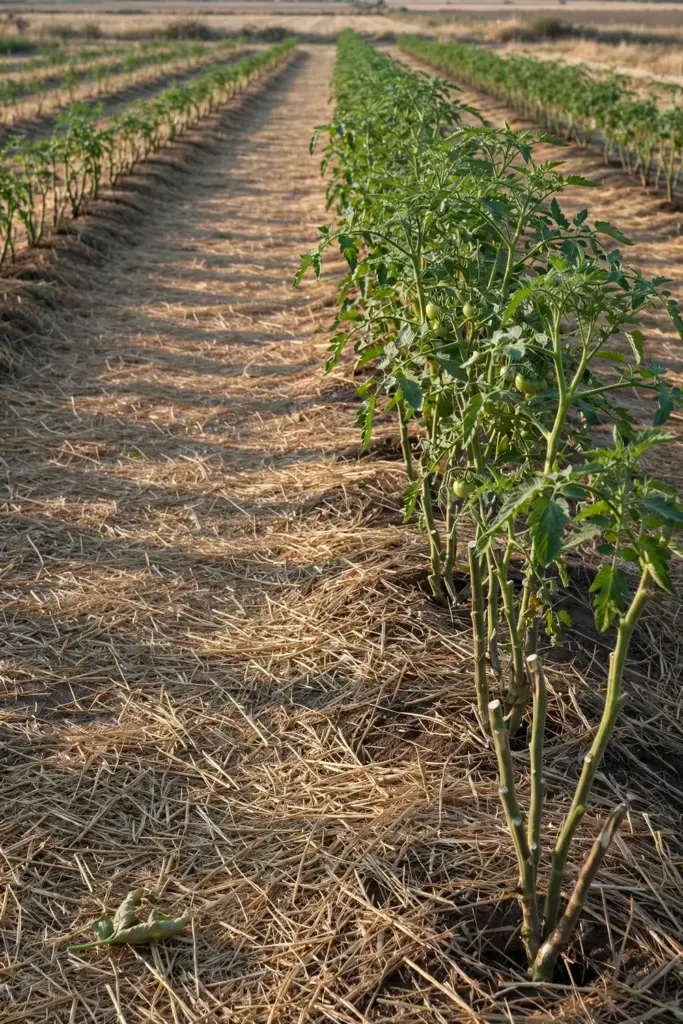
Prune the lower canopy. Strip the lowest leaves from tomato, bean, and cucumber plants so air moves between the soil and the foliage. Keep the zone between soil and foliage wide and dry. That zone is where sclerotia germinate, and a dry zone starves them.
Remove spent flowers and fallen petals. Fallen petals are the spore nurseries of the bed. Ohio State University Extension lists petal removal among its sanitation steps for white mold in protected crops. Pick up dropped blooms from the bed surface and the mulch. Each petal removed is a nursery closed.
Thin crowded rows. A row that closed over the path holds moisture all night. Pull every third plant if the row is packed, or harvest the outer leaves of lettuce early to open gaps. Airflow dries stems. Dry stems resist infection. The harvest you lose to thinning is smaller than the harvest you lose to rot.
Stake what can stand. Trellised tomatoes, staked beans, and caged cucumbers hold their foliage off wet soil and open the canopy from below. A plant on the ground lives in the germination zone. A plant on a trellis lives above it. Height is disease control.
Step 4: Water at the Root Zone in the Morning
Water low and early. Drip lines and soaker hoses beat overhead watering because they keep water where roots drink and keep stems dry. A narrow-spout can aimed at the mulch does the job on a small bed. The goal is wet roots and dry stems.
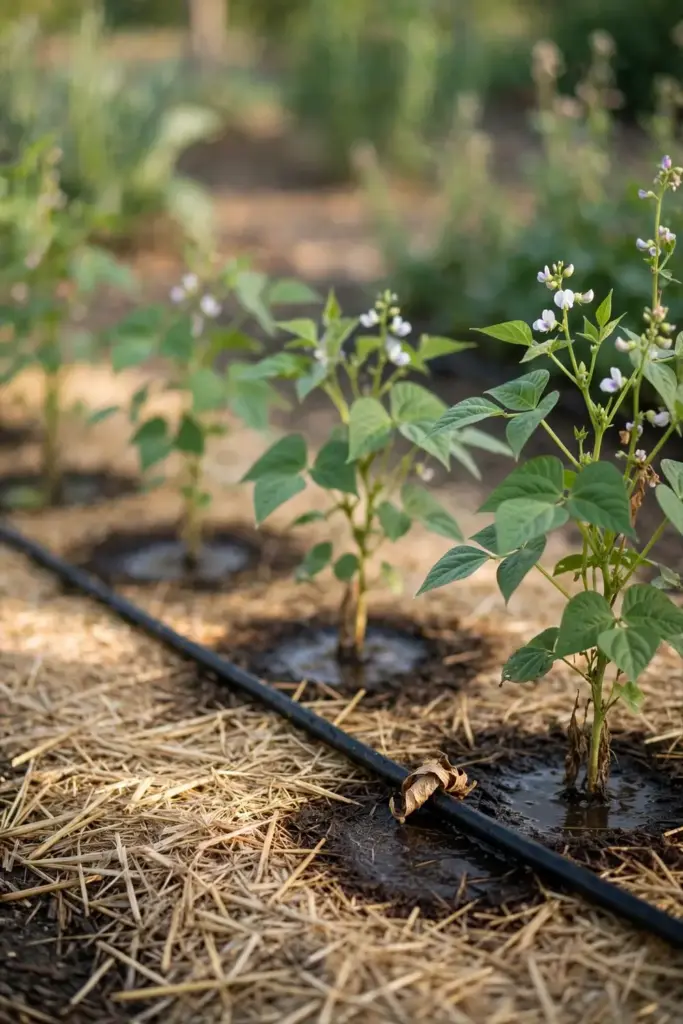
Water in the morning. Morning water dries any incidental wetness during the day. Evening water sits on leaves and stems all night, and the night is when sclerotia germinate. The Saskatchewan Ministry of Agriculture gives the same rule for field crops: irrigate early in the day and let plants dry before evening.
Let the top of the soil dry between waterings. Sclerotia need sustained moisture at the surface to germinate. A surface that dries between waterings breaks that clock. Water deeply, then wait. The deep roots that follow will sit where soil stays cool and moist, and the surface that dries will starve the fungus.
Skip overhead watering in cool, wet spells. Splash lifts soil onto stems and lower leaves, and it wets the flowers the spores want. If rain already soaked the bed, hold the hose for a day. The bed does not need your help staying wet.
Fix drainage before you fix anything else. A bed that holds standing water after rain grows white mold on schedule. Raise the bed, open a drainage channel, or move the crop to higher ground. Drainage is a one-time fix that pays every season.
Step 5: Widen Spacing and Stake for Airflow
Give each plant its own air. Clemson University Extension lists wider in-row spacing among the first controls for white mold, because spacing lets plants and soil dry faster. A row spaced for airflow dries by midday, while a row spaced for maximum yield stays wet until evening. In a bed with white mold history, air beats yield.
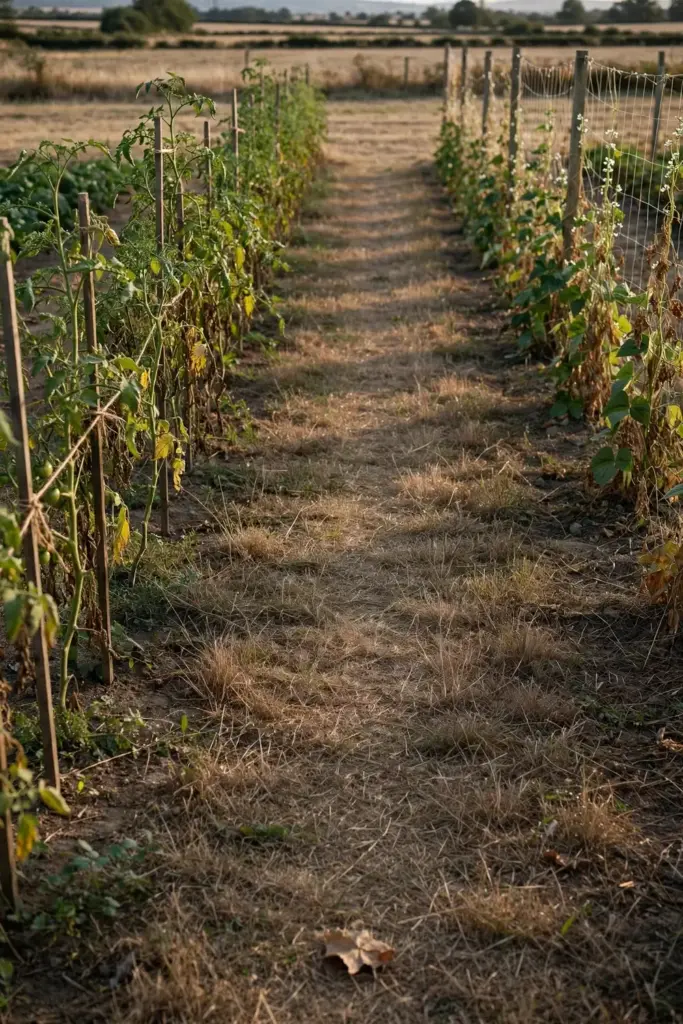
Space beans and lettuce wider than the packet says. Packets assume clean soil and dry weather. A bed with sclerotia needs the wider end of every spacing range. The extra inches buy hours of dry stem time each day. Those hours add up across a season.
Trellis vining crops. Beans on a trellis, cucumbers on a fence, and squash on a sturdy arch all lift foliage off wet soil and open the canopy from below. The trellis also lifts pods and fruit out of the splash zone. Fruit that never touches soil rarely rots from soil.
Prune tomato suckers in a white mold bed. Suckers thicken the canopy and shade the stem zone. Remove them early, while the wounds are small and the plant still seals each cut fast. A single-stem tomato on a stake dries faster than a bushy tomato on the ground. The lost side shoots cost less than the lost plant.
Orient rows to the wind. Rows that run with the prevailing breeze dry faster than rows that block it. The breeze is free airflow. Use it. A windbreak fence that stops the breeze also stops the drying, so keep the crop upwind of solid fences where you can.
Step 6: Bury Sclerotia With a Deep Tillage Pass
Bury the survival bodies. Cornell University researchers found that sclerotia degrade more rapidly when buried in soil than when left on the surface. A deep tillage pass after harvest turns the top layer under and puts the sclerotia where they break down faster. One pass, done right, cuts next season’s inoculum.
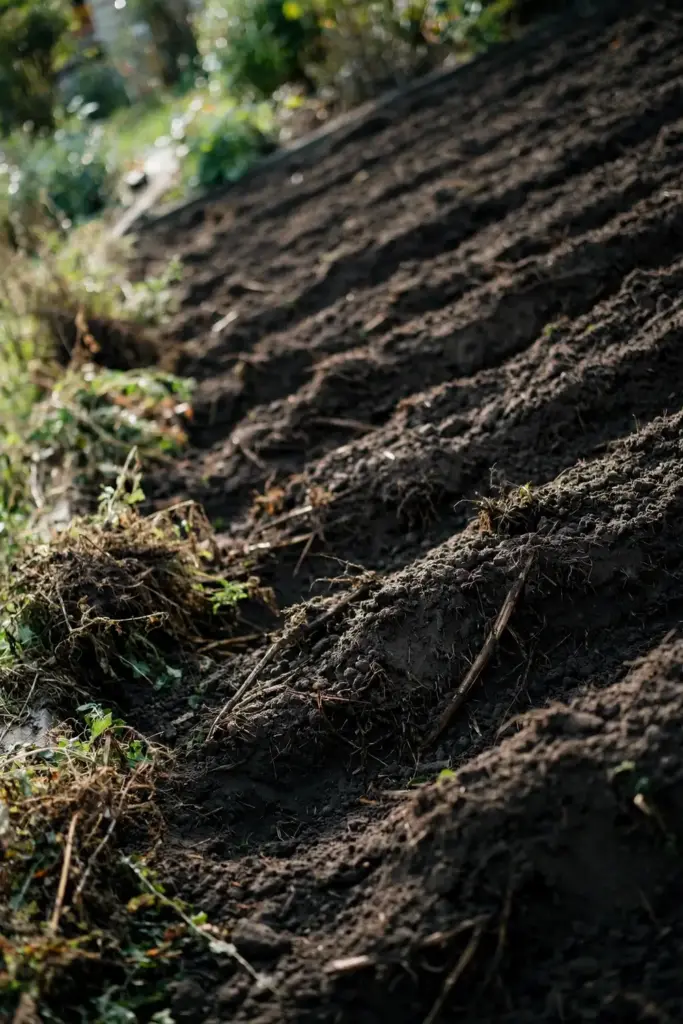
Go deep. Louisiana State University AgCenter notes that deep inversion plowing to a depth of 1 foot can bury sclerotia below the germination zone and reduce disease severity. A shallow scratch pass does nothing. The plow must turn the layer over, not stir it.
Leave the buried layer alone after the pass. Later tillage drags buried sclerotia back to the surface and restarts the clock. Louisiana State University AgCenter gives the same caution: later soil disturbance brings sclerotia back up. Till once, then plant into the undisturbed surface. The bed rests until planting.
Work debris in at the same time. Cornell University Extension recommends incorporating debris promptly after harvest, because plowing affected fields right after harvest cuts sclerotia production and buries the rest. Do not leave infected residue on the surface over winter. The surface is where sclerotia form and wait. Under soil is where they rot.
Skip this step on a no-till bed you plan to keep no-till. Burial only pays if the layer stays buried. A no-till bed manages sclerotia with mulch, biocontrol, and rotation instead. Pick one system and stay with it.
Step 7: Rotate Out of Host Crops for 3 Years or More
Rotate out of host crops for at least 3 years. Cornell University Extension recommends a long rotation of at least 3 years out of susceptible crops, because sclerotia sit dormant in soil for long periods. One season off host crops does nothing. Three seasons starve the count down. Plan the bed on paper so next spring does not repeat this spring.
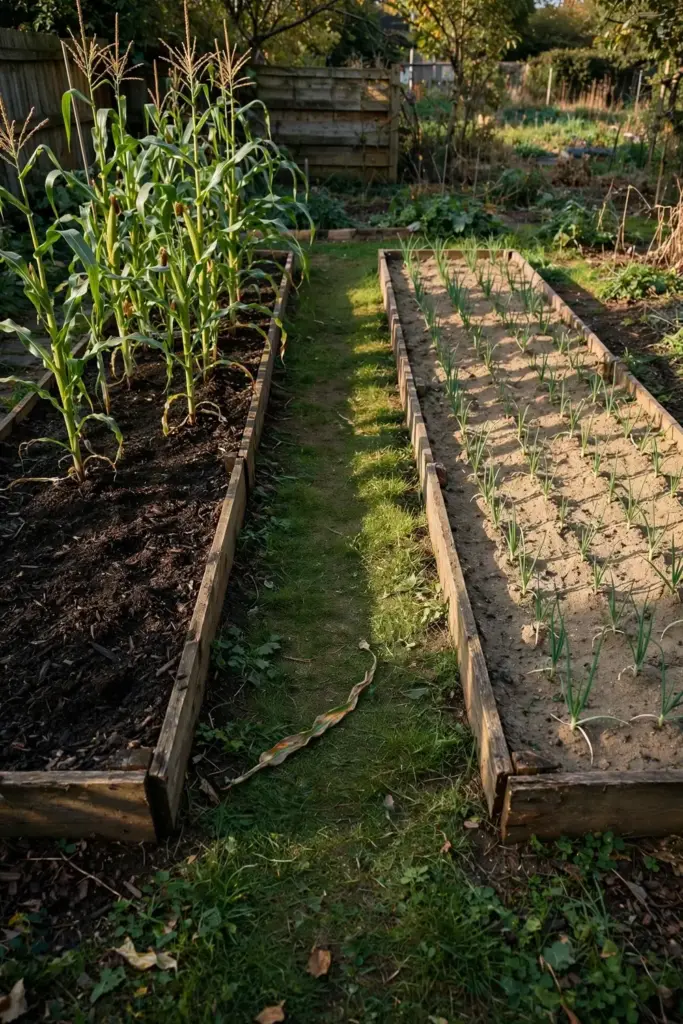
Fill the fallow years with non-hosts. Corn, small grains, and grasses break the cycle, and University of Illinois Extension lists corn and small grains outside the host range. Beets, spinach, onions, and sweet corn also serve as rotation vegetables, and the Saskatchewan Ministry of Agriculture lists those crops as rotation options for two to four years. A bed that grew corn last season starts cleaner than a bed that grew beans.
Never follow one host with another. Beans after lettuce, lettuce after tomato, tomato after cabbage, all keep the count high. Map the bed and the years. The rotation fails the day a host crop sneaks back in a season early.
Pull nightshade and broadleaf weeds through the fallow years. Broadleaf weeds host the fungus silently and keep the bed infectious while it looks empty. A fallow bed full of ragweed is not fallow. It is a nursery.
Keep volunteer plants out of the rotation. Volunteer beans, volunteer lettuce, and volunteer tomato all host the fungus and reset the clock. Pull volunteers the week they appear. A volunteer is a host crop you did not plan.
Step 8: Apply the Sclerotia-Eating Biocontrol Before Planting
Send in a parasite that eats sclerotia. Coniothyrium minitans is a fungus that colonizes and destroys the sclerotia of Sclerotinia sclerotiorum. The commercial product Contans carries it. University of Delaware vegetable pathologists describe Contans as a formulation of Coniothyrium minitans that parasitizes the survival structures of Sclerotinia sclerotiorum. It does not cure infected plants. It cuts the count of survival bodies waiting in the soil.
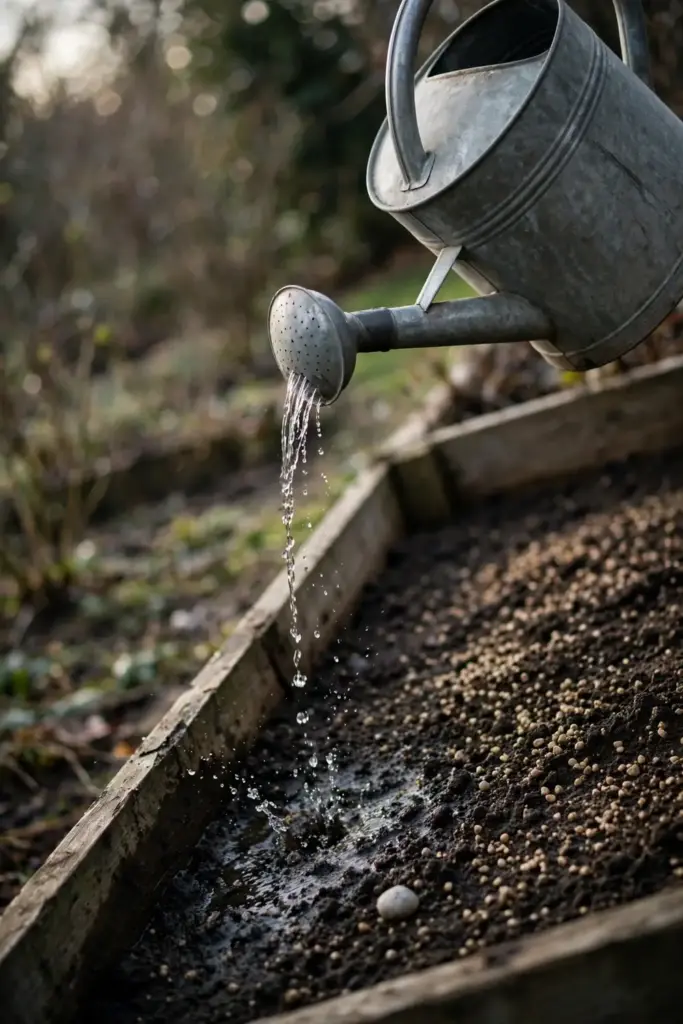
Time it early. Pennsylvania State University Extension notes that Contans needs application 2 to 3 months before the crop goes in to be effective. Apply it to the soil surface in fall cleanup or in the off season, and water it in so it reaches the sclerotia. A spring application days before planting wastes the product. The parasite needs weeks to work.
Apply it twice where pressure runs high. Ohio State University Extension recommends Contans on the soil before or at transplanting, and again after the crop, to cut the viability and number of sclerotia. The second pass catches the sclerotia the season made. The pair of passes compounds across years.
Handle it like a living thing. Contans is a living fungus, and heat, sunlight, and chemical drenches kill it. Store it cool, apply on a cloudy day or in the evening, and skip harsh chemical drenches in the same bed. A dead biocontrol is expensive dust.
Hold honest expectations. University of Delaware pathologists call Contans a good choice for fields used repeatedly for a susceptible crop, and Cornell University researchers note that biocontrol products have shown limited efficacy in some trials. Contans lowers pressure. It does not erase a heavy infestation in one pass. It belongs in the plan as steady background pressure, season after season, alongside rotation and sanitation.
Step 9: Plant Tolerant Varieties and Accept Tomato Has No Resistant One
Read the variety rating before you buy. Some bean and soybean varieties carry tolerance ratings for white mold, and University of Illinois Extension notes that careful variety selection pays because some varieties are more susceptible than others. A tolerant variety still gets infected under heavy pressure. It loses less. That margin is worth the price of the seed.
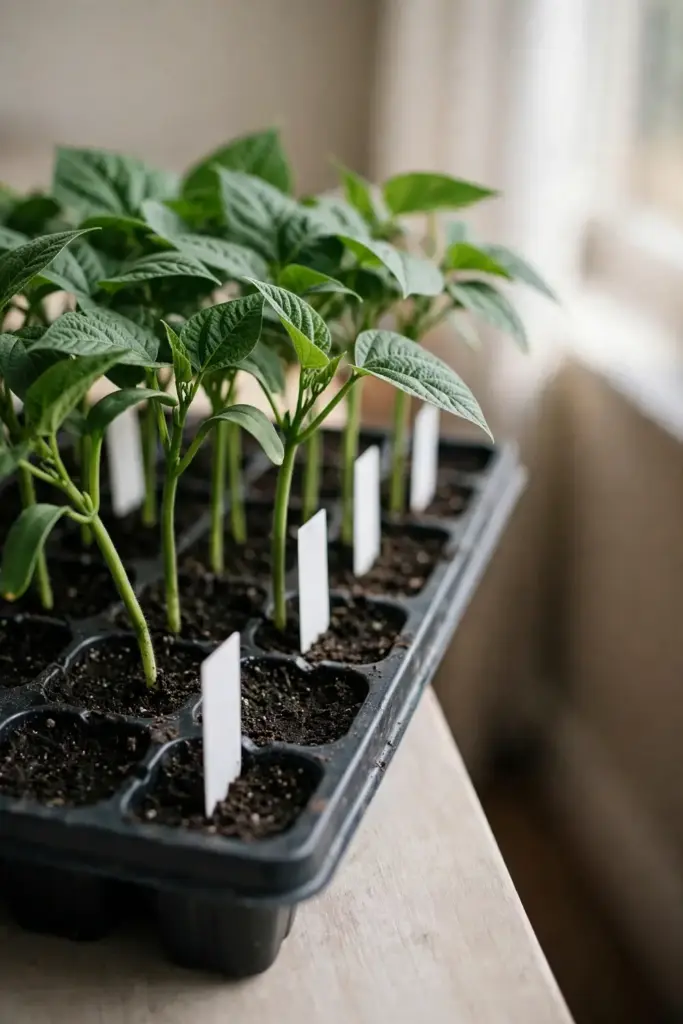
Expect modest gains. Cornell University researchers note that few varieties carry even modest levels of resistance or tolerance to white mold, and that varietal resistance is not widely deployed as a management practice. Tolerance buys time and yield. It does not clean the soil. Pair it with spacing and airflow, never with hope alone.
Accept the tomato limit. Louisiana State University AgCenter states the hard fact for tomato growers: no resistant cultivars of tomato are available against timber rot. No catalog code saves a tomato from white mold. Culture carries the whole plan for tomato. Spacing, staking, dry leaves, and clean starts are the variety defense tomato never got.
Pick structure with the variety. Upright, open-canopy bean types dry faster than bushy, sprawling ones. Determinate tomatoes on stakes dry faster than sprawling indeterminates on the ground. The growth habit is part of the resistance. A variety that stands open beats a variety that sprawls wet.
Save seed only from healthy plants in clean beds. White mold can travel on seed, and seed from a bed with a history of the disease is a gamble. Buy certified seed from a reputable supplier when the bed has a history. One infected seed lot restarts the whole cycle.
Step 10: Start Clean Next Season With Certified Seed and Sterile Mix
Start clean next season. Buy certified seed free of Sclerotinia contamination from a reputable supplier. University of Illinois Extension lists seed free of Sclerotinia contamination and infection among its first disease management steps. Seed lots can carry sclerotia mixed in with the seed, and infected seed carries the fungus straight into a clean bed. The certificate is the control.
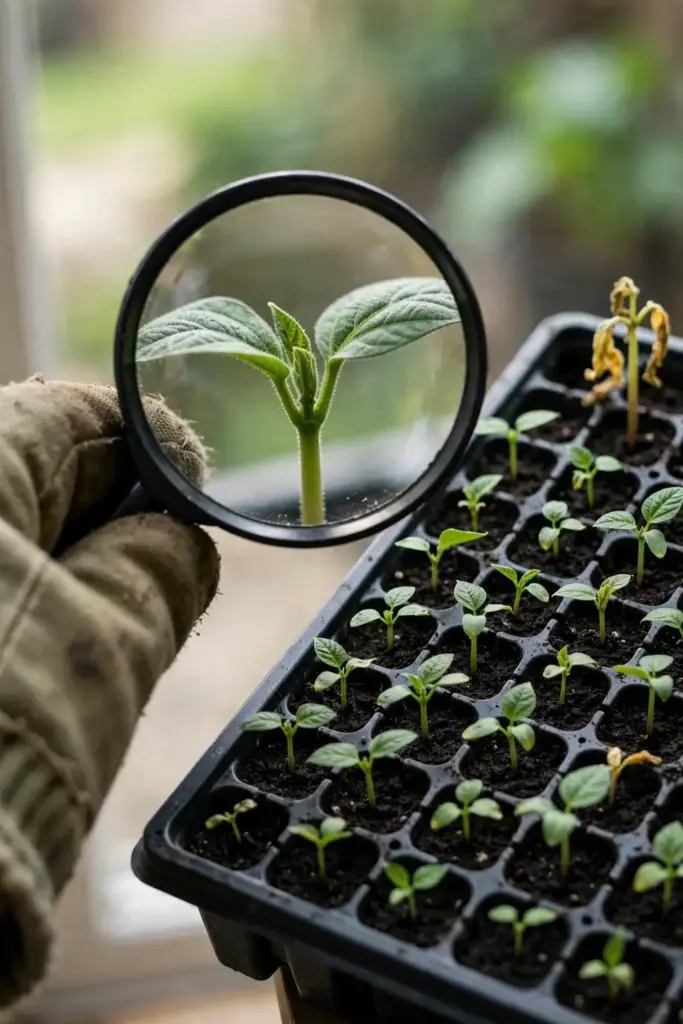
Inspect every transplant before it leaves the store. Louisiana State University AgCenter tells growers to check the base of the stem and the soil surface for white cottony mold or sclerotia when buying transplants. Any transplant with cottony growth at the stem base stays behind. One infected transplant can seed a bed that then punishes vegetables for seasons.
Sterilize the seed-starting setup. Use fresh sterile seed-starting mix, new or disinfected trays, and clean water. The seed starting guide covers clean technique from sowing to transplant. Use the same 10 percent bleach soak from Step 2 for trays, then rinse and dry.
Keep bed soil out of the seed trays. Bed soil from a bed with white mold history carries sclerotia, and one scoop seeds every cell it touches. Fresh sterile mix carries no soil history and no fungus. The bag is cheaper than the bed it protects.
Label every bed and keep a notebook of which bed held white mold, which crop grew there, and which year. Memory fades. The sclerotia do not. The notebook stops next spring from repeating this spring.
Living With White Mold in a Bed You Already Own
A bed with white mold is not a dead bed. It is a managed bed. Plant corn, grains, beets, spinach, onions, or sweet corn there for 3 years. Grow beans, lettuce, and tomato in containers or in a clean bed. Keep the sanitation, watering, and rotation discipline every season, because the sclerotia wait longer than any gardener’s memory.
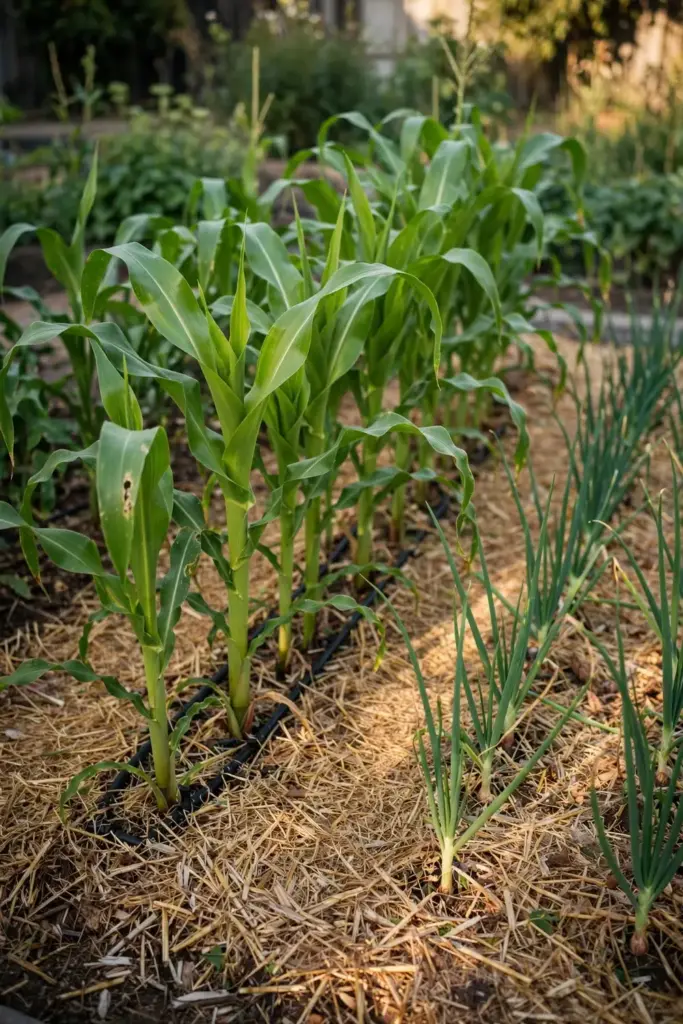
I have learned that a bed with white mold history rewards rotation more than rescue sprays.
Build the soil between host crops. The soil health guide walks through structure, organic matter, and drainage in practical detail. Work finished compost into the top layer between seasons. Compost feeds the microbes that compete with soilborne fungi for root space and food. It does not cure an infected plant, and it does not kill sclerotia. It builds a bed that holds less disease pressure year after year.
Stop three habits. Do not plant beans, lettuce, or tomato in that bed to test it. Do not reuse its soil in seed trays. Do not compost its sick plants. Each habit feeds the count back up and costs a season.
Keep a bed map on paper. Write down which bed held white mold, which crop grew there, and which year. The map stops next spring from repeating this spring. A bed that grew corn in the last 3 years earns host crops back. A bed that grew beans last year does not.
If the decay sits at the roots and stem base with a different fungus behind it, the companion pieces on gray mold and southern blight fit those problems. Gray mold covers dying flowers and fruit with gray-brown spores. Southern blight runs in warm weather with tan mustard-seed sclerotia. Each one is a separate disease with separate controls.
Frequently Asked Questions
No. White mold lives on as sclerotia in the soil, and those survival bodies wait at least 5 years without a host. An infected plant never recovers on its own, and the soil inoculum does not leave because a season passed. What can change is the pressure. Removal, rotation, burial, and biocontrol cut the sclerotia count year after year, and a bed managed that way grows host crops again. The fungus leaves only when its survival bodies run out.
Soil mold is not dangerous. The white fuzz on potting mix is usually a saprophytic fungus that feeds on dead organic matter, and it harms neither the plant nor the people nearby. White mold disease is a different organism that rots stems and kills plants, but it is still a plant disease, not a human one. Scrape soil fuzz off the surface and let the mix dry. Rogue a plant with stem rot and bag it.
No. Garden fungicides cannot reach fungus inside a rotted stem, and they cannot clear the sclerotia already packed into the tissue. Protectant fungicides can shield healthy plants before infection, and field programs time them to flowering, when spores land on blossoms. Ohio State University Extension notes that no fungicides are labeled for use against white mold in greenhouse or high tunnel tomatoes. That is why the plan above leads with culture, not with sprays. Prevention carries the whole plan.
At least 5 years. Sclerotia are hard resting bodies built to wait, and the University of Wisconsin Plant Disease Diagnostics Clinic puts survival at a minimum of 5 years in soil. Some reports run longer under cool, dry conditions. Plan as though the bed never clears on its own. Every other decision in this plan gets easier once you accept that. Rotation, removal, burial, and biocontrol cut the count, but no single season resets it.
Not in a home pile. Home compost piles rarely sustain the heat that kills sclerotia, so composting a sick plant seeds next season’s beds with the same fungus. Bag infected plants for municipal waste instead. Remove the soil in a ring around the stem base and bag that too. Finished compost from a hot commercial pile is a different product, and it is safe to use. Your backyard pile is not that product, and it never will be.
Yes, if the fruit looks sound. White mold is a plant disease, not a human one. Harvest fruit from infected plants and wash it as usual. Discard any pod or fruit with mold, soft rot, or sclerotia on it. The real loss is yield, not safety. A plant that dies early stops feeding fruit, so pick what ripens before the canopy fails. Do not save seed from an infected bed, since seed lots can carry the fungus forward.
Where to Go From Here
White mold rewards fast triage and steady soil work. Confirm the cottony mycelium and the black sclerotia inside a split stem. Make the honest triage call in Step 1. Then work the sequence: rogue, sanitize, open the canopy, water low, space wide, bury, rotate, apply biocontrol, and start clean.
Next season, start clean. Fresh sterile mix, disinfected trays, and morning watering will prevent more white mold than any product treats. The blossom blight guide is a useful companion read if you are building a broader disease-identification habit, since it trains the same look-closely-at-symptoms approach.