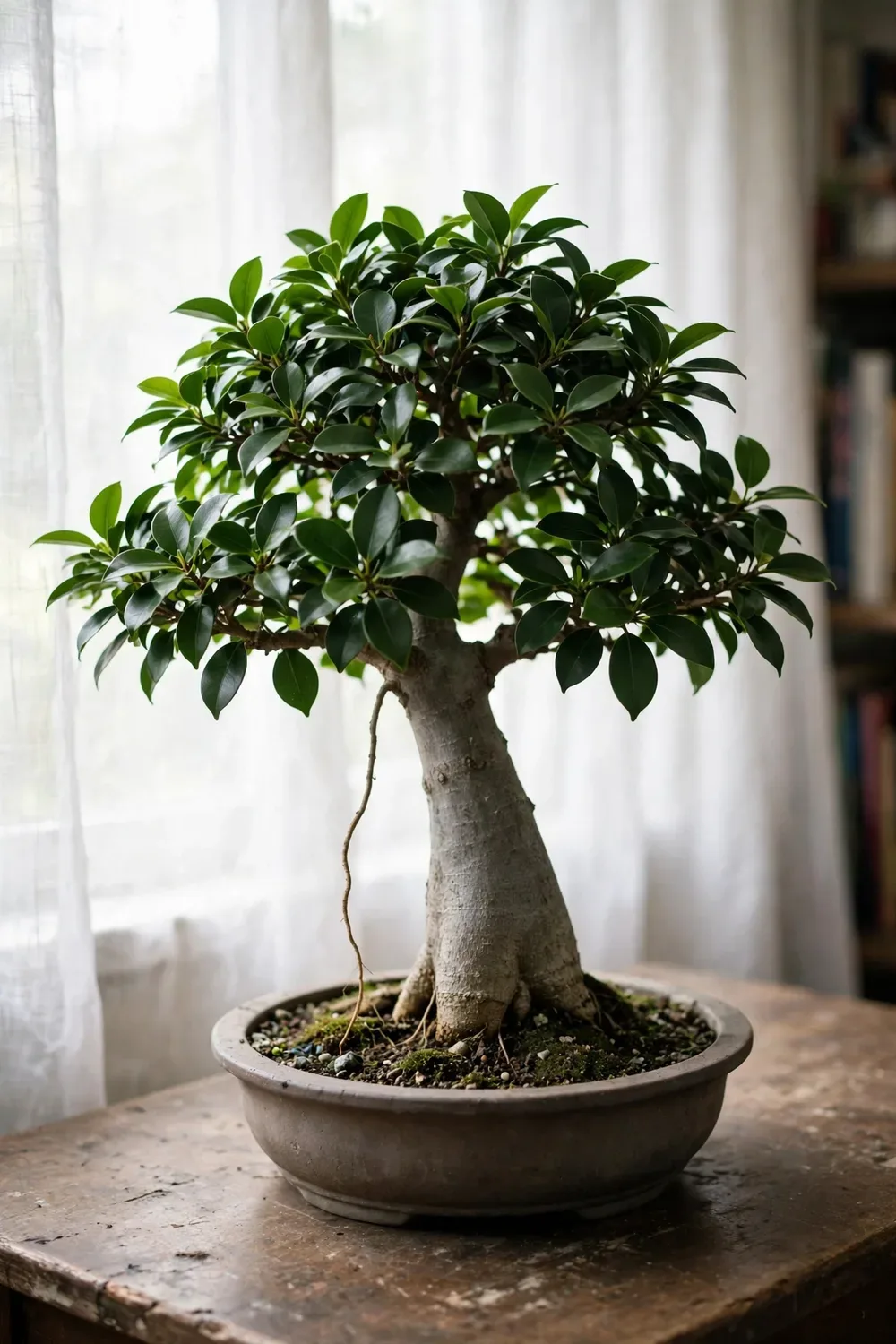

Pick a tropical species and give it 4 to 6 hours of strong light a day. That is how to grow bonsai indoors so the tree lives for decades. The species decides survival; everything after that is routine.
I have learned the hard way that no watering schedule can save the wrong species indoors: every juniper I kept inside faded exactly the way the dormancy warning predicts, while the ficus next to it just kept growing. The species-first rule below explains why.
Bonsai is a technique, not a species. That single fact decides everything indoors. Temperate trees such as junipers and maples demand a cold winter rest to live. Tropical trees never evolved that rest, so a warm apartment is their normal year. Only tropical and subtropical species survive indoors year-round, while temperate trees die without a cold winter dormancy. Pick a tree that treats your living room as its native climate, then learn the five care routines that keep it alive.
Match These 5 Species to Your Home Before You Grow Bonsai Indoors
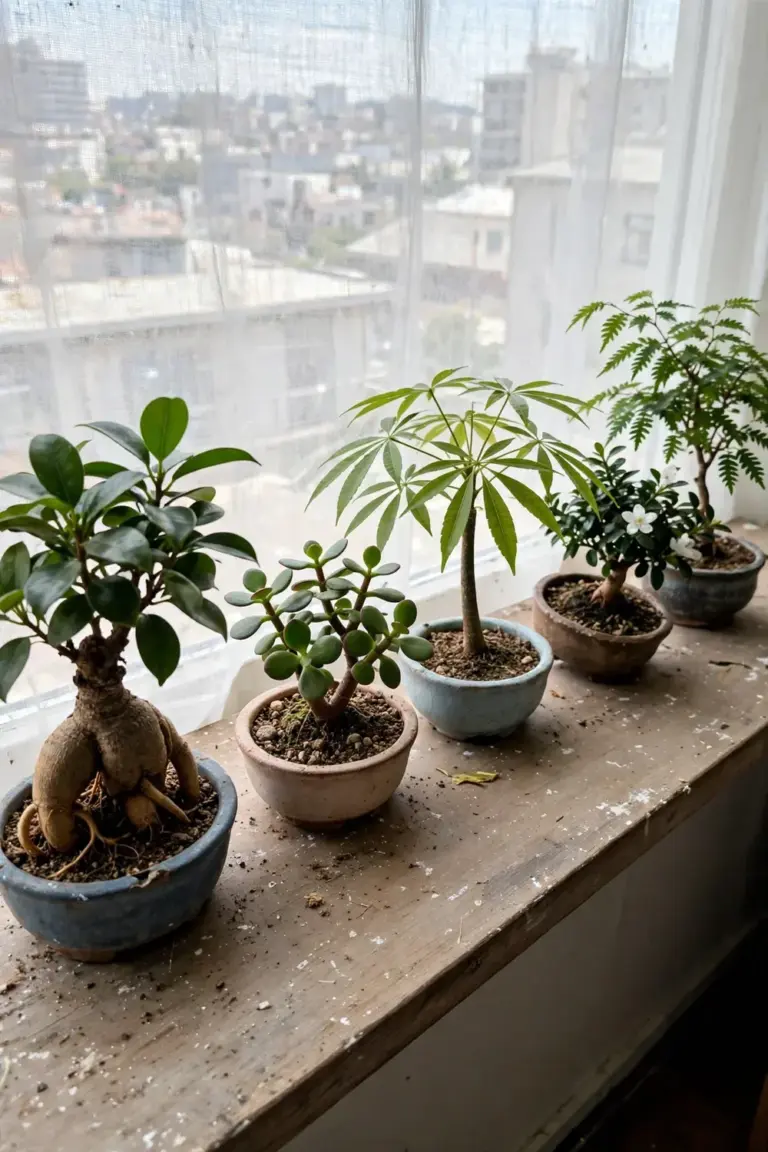
Choose the tree from a comparison, not from the prettiest gift-shelf pot. Every species below survives a heated apartment. None of them needs winter cold. Match your light and your habits to the row that fits your home.
| Species | Light | Watering | Humidity | Difficulty |
|---|---|---|---|---|
| Ficus microcarpa, ginseng ficus | Bright indirect, 4 or more hours daily | Moderate, when the topsoil begins to dry | Low to moderate | Easy |
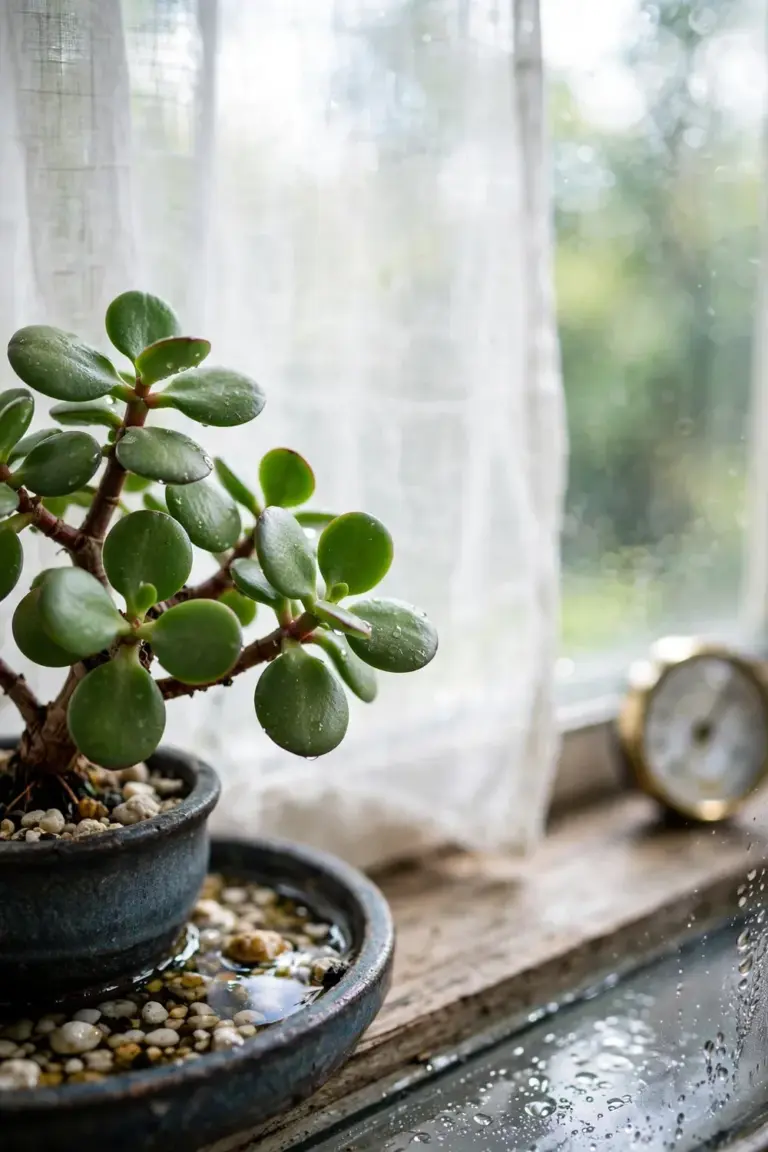
| Portulacaria afra, dwarf jade | Bright indirect to direct | Low, let the mix dry substantially between waterings | Low | Easy |
| Schefflera arboricola, Hawaiian umbrella | Moderate to bright indirect | Moderate | Low to moderate | Easy |
| Carmona retusa, Fukien tea | Bright indirect, consistent | Moderate, never waterlogged | High | Moderate |
| Ulmus parvifolia, Chinese elm | Bright window or strong grow light | Moderate | Moderate | Easy to moderate |
| Serissa japonica, snow rose | Bright indirect | Consistent moisture, never soggy | Moderate to high | Hard |
Read the table as a set of trade-offs. Ficus microcarpa tolerates dim rooms, dry air, and beginner mistakes. That is why it tops the row. Dwarf jade stores water in its fleshy stems and forgives forgetful waterers for weeks. Hawaiian umbrella grows fast and fills a canopy quickly, a good pick when you want visible progress in the first year. Fukien tea rewards consistent care with tiny white flowers and red berries, but it punishes erratic watering with dropped leaves. Chinese elm teaches pruning well because it back-buds readily, though it wants stronger light than the ficus. Snow rose sits at the bottom as the honest warning: it drops leaves at every draft and demands constant moisture, so experienced growers pick it, never first-timers.
Trade labels muddle ficus names. Nursery pots marked Ficus retusa or ginseng ficus are usually the same Ficus microcarpa named in the table, so treat those labels as one tree. Dwarf jade is Portulacaria afra, not the common jade plant Crassula ovata; both tolerate indoor bonsai, but the dwarf jade thickens its trunk faster and reduces leaf size better. When a shop cannot give you a botanical name, walk out. A seller who knows the species knows how to keep it alive, and that advice is worth more than any discount pot. Online sellers ship bare-root or potted ficus trees across most regions; unpack the tree the day it arrives, water it, and give it a week in bright indirect light before any pruning.
Start With Ficus microcarpa, the Most Forgiving First Tree
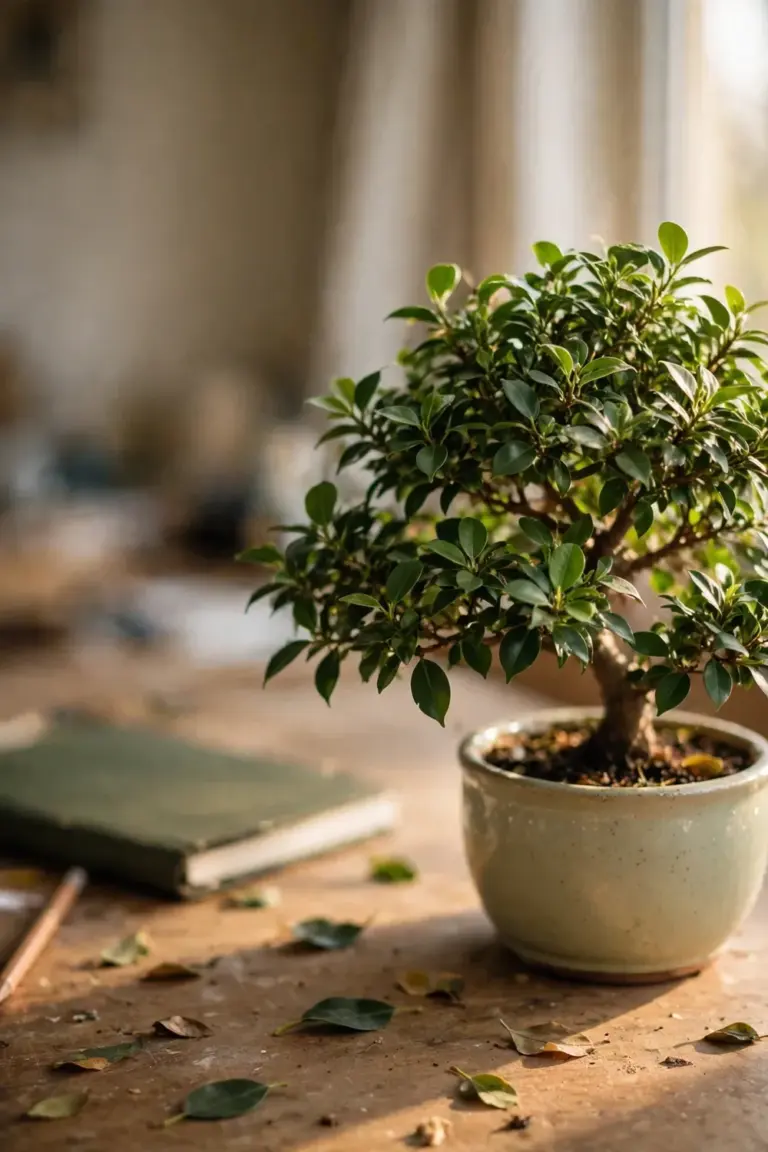
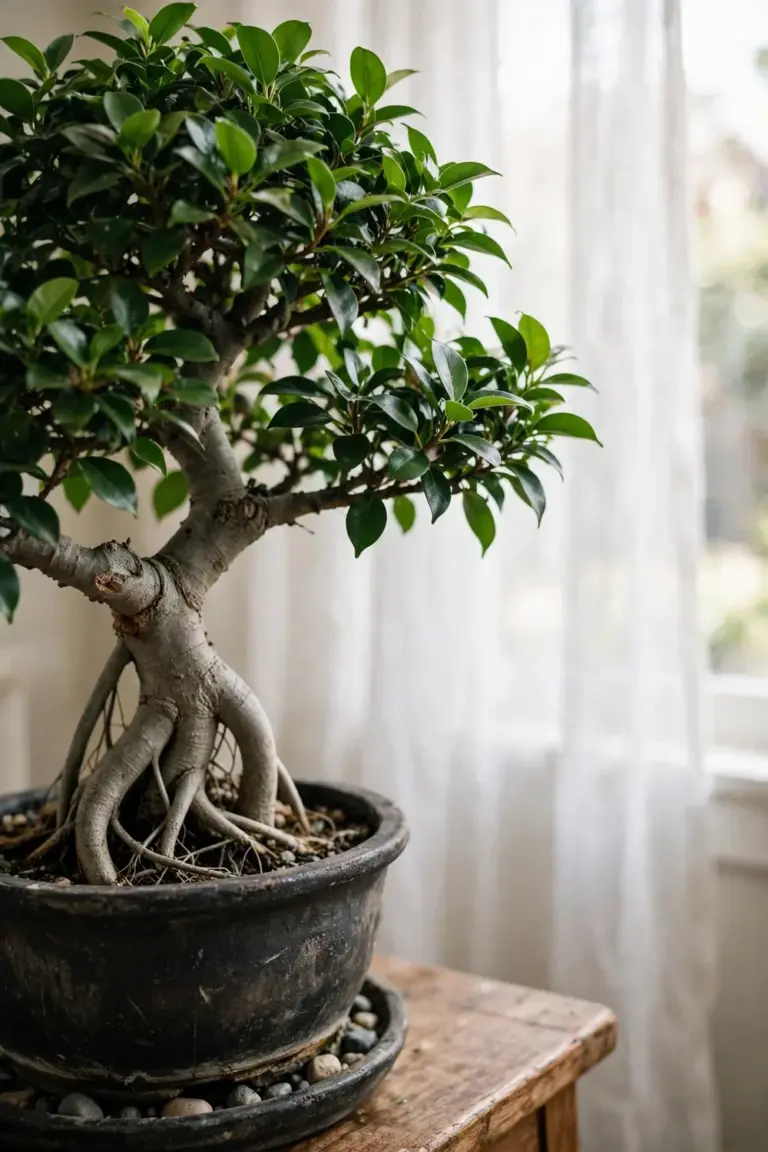
Ficus microcarpa is the safest first indoor bonsai. Beginner guides consistently recommend Ficus or Jade as the first tree for indoor growers, and the ficus earns that spot. The species tolerates lower light, irregular watering, and clumsy first pruning attempts, then recovers quickly. Its waxy leaves resist dry indoor air, and mature trees push aerial roots that add the aged look beginners usually wait decades for.
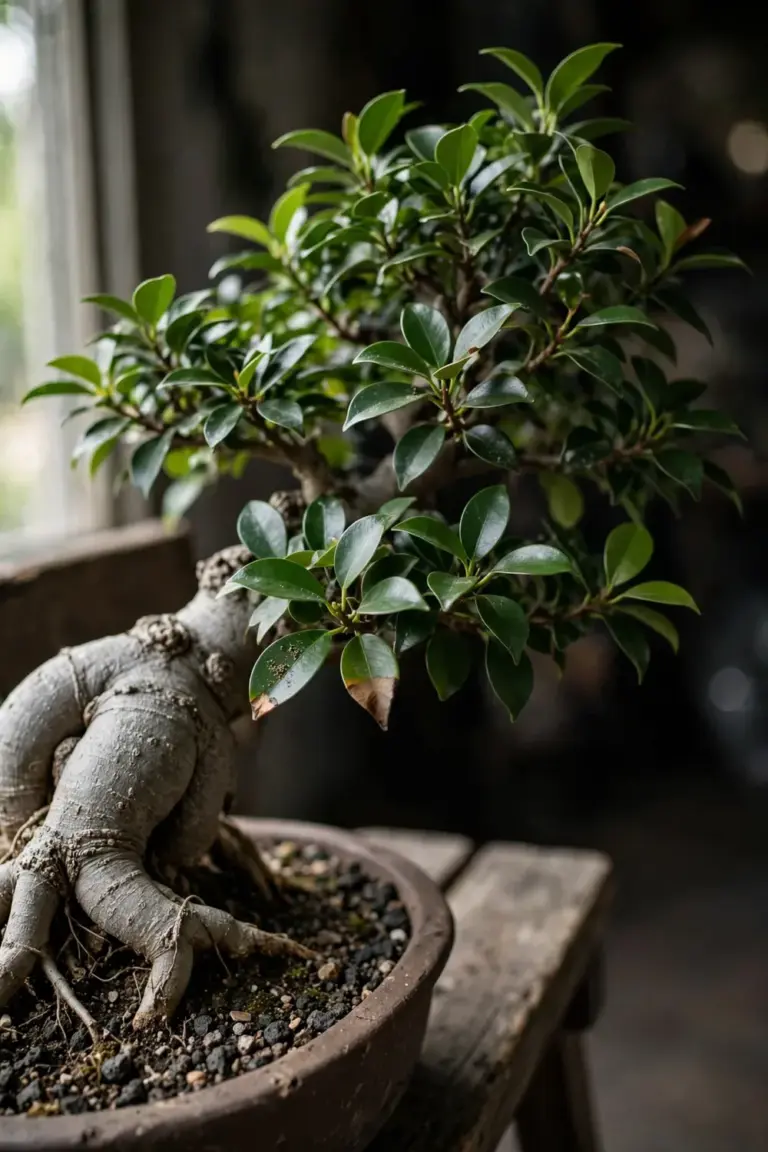
Buy a tree with a thick trunk base and leaves spread evenly around the canopy. Reject trees with yellowing leaves, loose trunks, or soil that smells sour. A healthy ficus carries deep-green leaves that feel firm, and new buds push within weeks of feeding or pruning in the warm months. Ginseng-style ficus trees with swollen exposed roots look dramatic on the shelf, but a cutting-grown ficus with a naturally tapered trunk develops into a better tree over time. Either survives your first year; the tapered one rewards your fifth.
Keep Junipers and Maples Out of the Living Room
Junipers, maples, and pines belong outdoors. Temperate trees need cold winter dormancy to reset their growth cycle, and they die indoors without it. A juniper may survive a display weekend inside, but a permanent living-room spot is a slow death sentence that takes months to show.
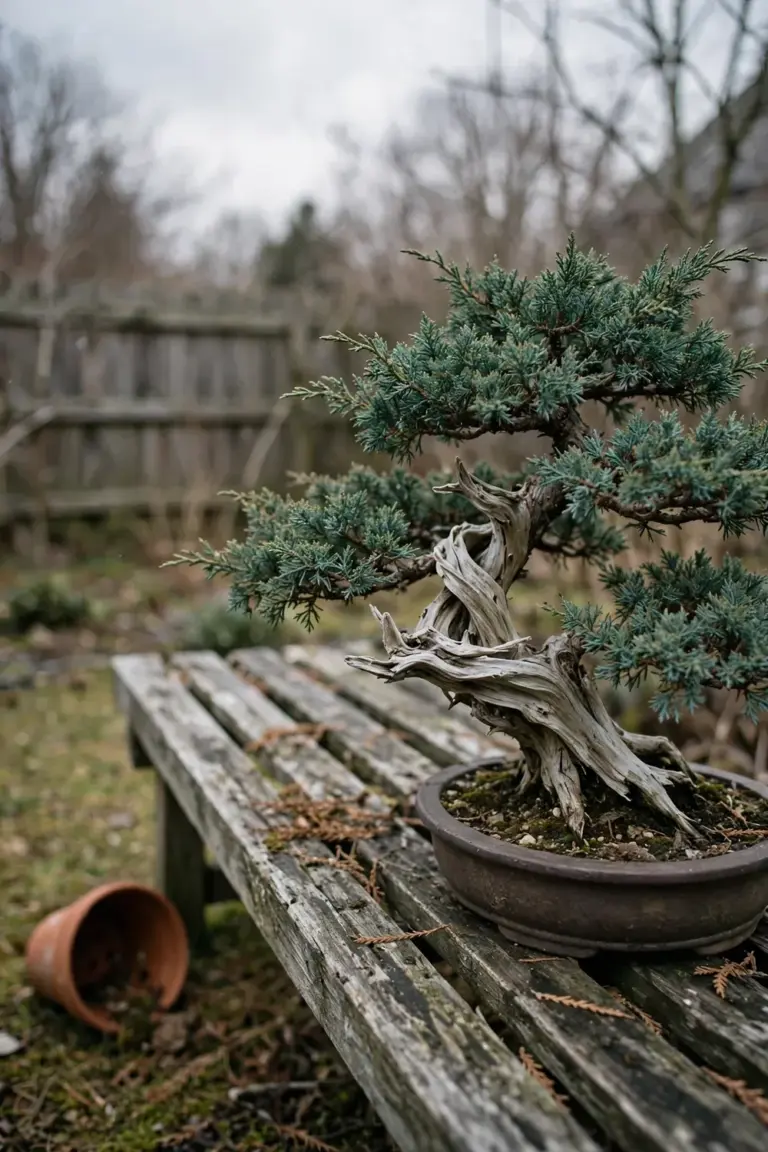
This fence matters because most bonsai sold in malls and gift shops are junipers. The purchase looks right and the label says bonsai, but the species is an outdoor tree. Check the botanical name before you buy. If the label reads Juniperus or Acer palmatum, keep walking. If it reads Ficus microcarpa or Portulacaria afra, you are holding an indoor tree. One line, one habit, and the single most common indoor-bonsai failure never happens to you.
Deliver 4 to 6 Hours of Strong Light Every Day
Indoor bonsai need 4 to 6 hours of direct sunlight or a strong grow light each day to grow dense and keep their leaves. Light drives every process that matters in a miniature tree: photosynthesis, shoot growth, and leaf density. Dim rooms produce long bare internodes and dropped leaves, and no fertilizer compensates for a dark corner.
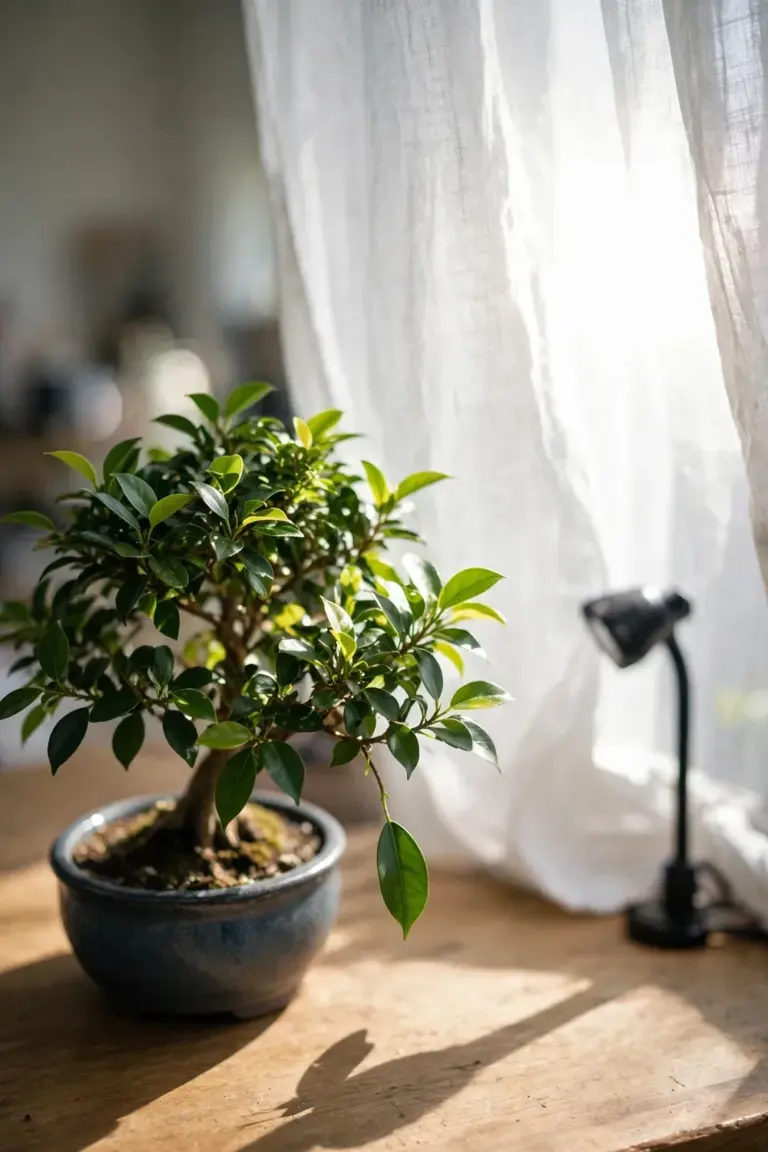
Set the tree at a bright south-facing window with a sheer curtain, and rotate the pot a quarter turn each week so one side does not stretch toward the glass. Judge your window with this quick table before you buy the tree.
| Window direction | What it delivers | Your move |
|---|---|---|
| South, unobstructed | Strong light for most of the day | Best seat in the house, add a sheer curtain at midday in summer |
| East | Gentle morning light, 3 to 4 hours | Works for ficus and dwarf jade; add a lamp for hungrier species |
| West | Strong afternoon light | Good light, watch for leaf scorch on the hottest afternoons |
| North | Dim light all day | Add a grow light or pick a different room |
North-facing rooms and offices with no window need a grow light, full stop. Choose a full-spectrum LED and run it 12 to 16 hours on a timer, because a window plus a light beats a dim room every time. Researching choosing the best grow lights for an indoor garden pays off here, since light is the single variable most beginners underestimate. Hang the lamp 20 to 30 centimetres above the canopy and raise it as the tree grows.
Ficus microcarpa specifically wants 6 to 8 hours of bright indirect light a day for best results. Foliage that turns pale or drops from the inner canopy is the tree asking for more light. Move it closer to the glass or add the lamp before the canopy thins further, because a thinned canopy takes a full growing season to rebuild.
Hold Room Humidity Between 50 and 60 Percent
Tropical indoor bonsai species want 50 to 60 percent humidity. Most heated homes run far drier than that, and winter heating drives humidity down further still. Low humidity slows leaf growth and invites spider mites, which thrive in dry indoor air and attack stressed trees first.
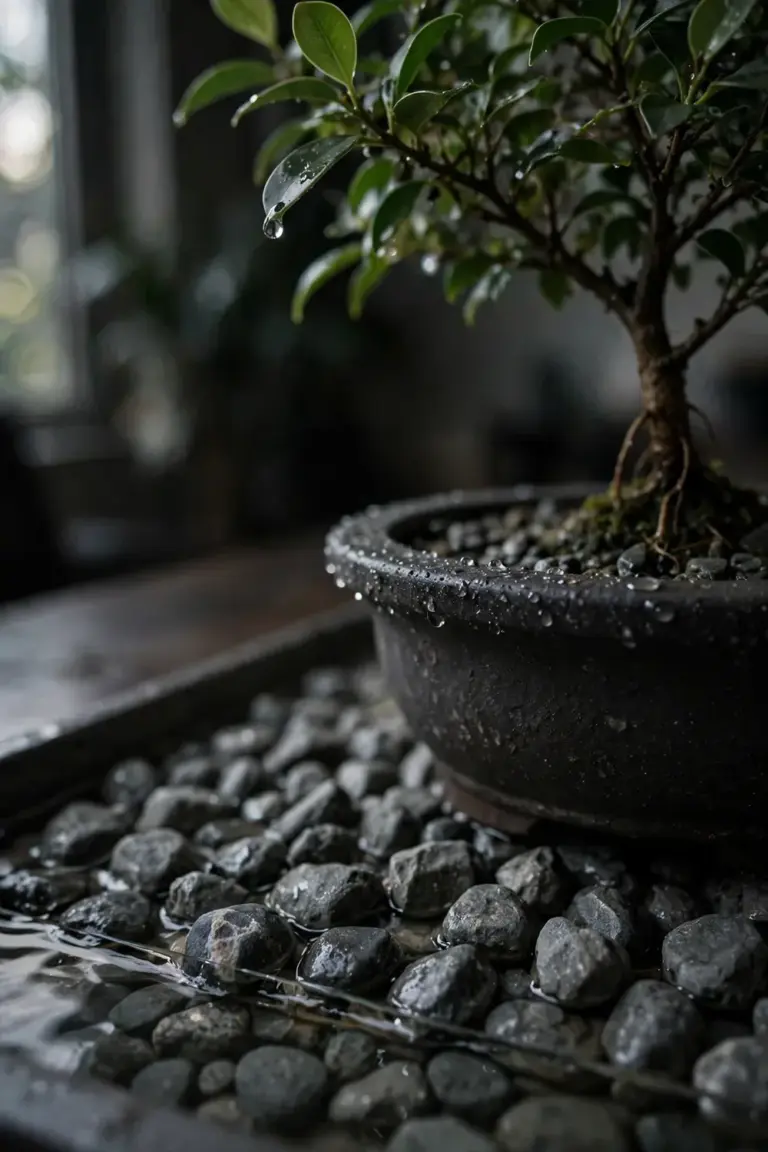
Place the pot on a humidity tray: a shallow tray holding water and pebbles, with the pot standing on the pebbles above the water line, so evaporation humidifies the air around the tree without wetting the roots. Grouping several plants together lifts local humidity the same way, because every leaf transpires. Run a small humidifier near the tree in the driest months. Misting the leaves cleans dust but holds humidity for minutes only, so treat misting as housekeeping, not as a humidity strategy. The same dry-air problem hits your fellow indoor plants, so any humidity fix you build for the bonsai helps the whole room. A cheap hygrometer on the shelf tells you the truth in a glance, and ten dollars of measurement beats a season of guessing.
Mix a 1-1-1 Akadama, Pumice, and Lava Rock Substrate
Pot indoor bonsai in equal parts akadama, pumice, and lava rock. The 1:1:1 mix is the standard beginner formula because each ingredient does one job. Akadama holds water and releases it slowly to the roots. Pumice keeps air channels open so roots can breathe. Lava rock gives the mix structure so it drains fast and never compacts into a brick.
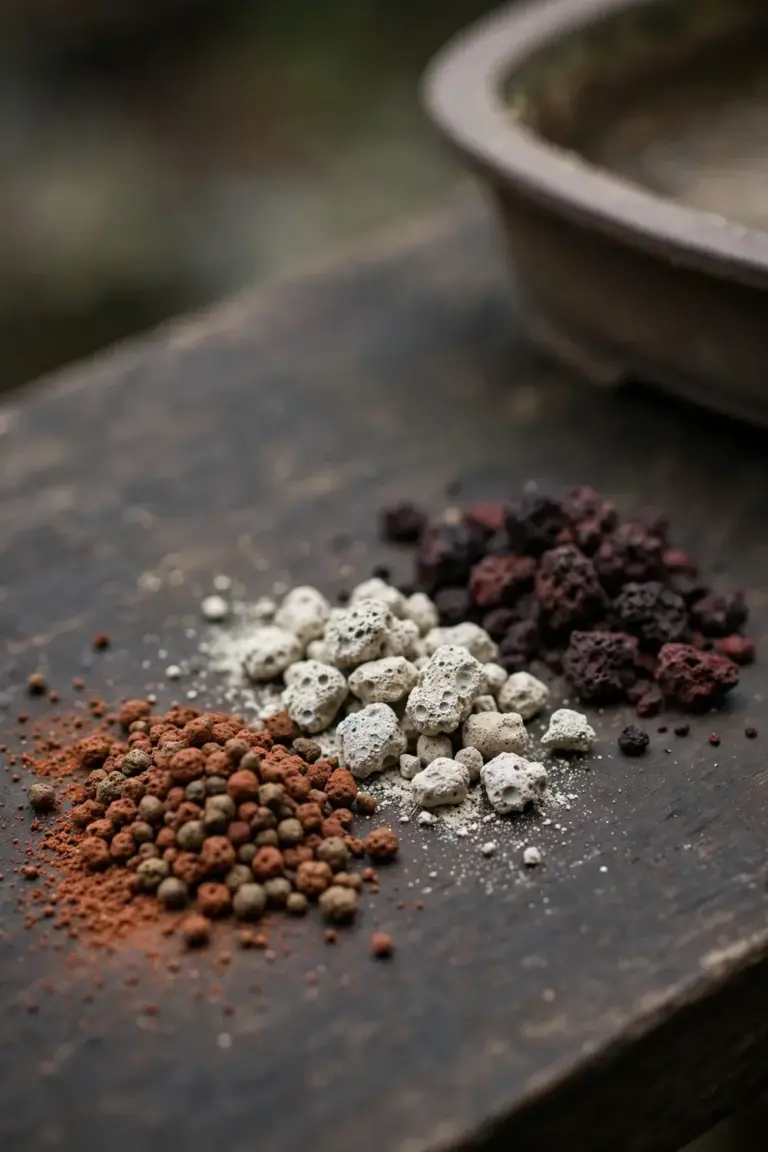
Garden soil kills bonsai in shallow pots. Dense soil holds water against the roots with no air, and root rot follows within weeks. Cheap bagged “bonsai soil” from discount stores is often just dyed potting mix; check that the bag lists real mineral components before you trust it. Pre-mixed bonsai soil works fine for a first tree, but mixing your own costs less and teaches you what the roots actually need. Buy the components in 2 to 4 millimetre particle size for small pots, and sift out the dust before mixing, because fine particles clog the drainage you just built. Where akadama is expensive, calcined clay or crushed granite poultry grit substitutes for the drainage half of the job, though neither holds water the way akadama does. Every pot needs drainage holes, with no exceptions. A pot without drainage is a slow drowning device, whatever the soil.
Water Only When the Top Layer Feels Dry
Water when the top layer of soil feels slightly dry. Press a finger a centimetre into the mix every day. If the surface feels damp, wait. If it feels dry, water thoroughly until water runs clear from the drainage holes, then empty the saucer so the pot never sits in runoff. Shallow bonsai pots dry fast, so check daily in summer and every second day in winter.
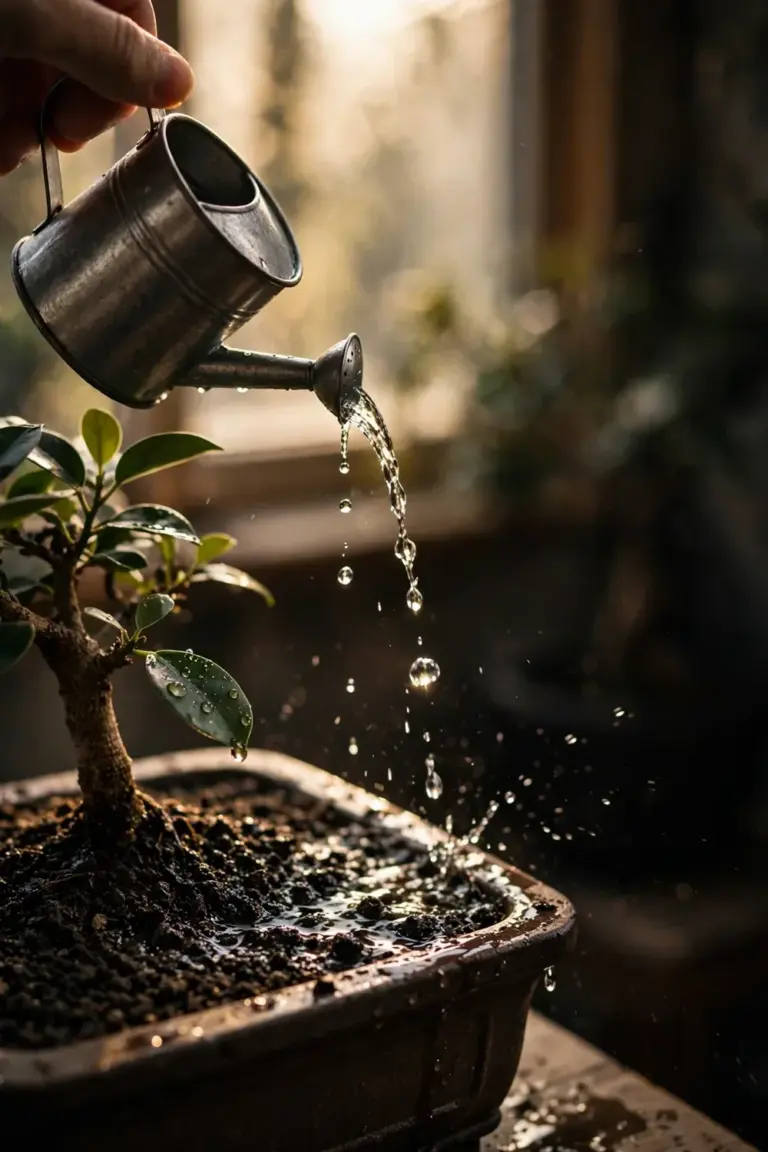
No fixed schedule survives contact with real rooms. A ficus in a bright dry room may need water every few days in summer; the same tree near a north window in winter may go a week. Small pots dry faster than big ones, glazed pots dry slower than unglazed clay, and akadama darkens when wet and lightens when dry, which gives you a visual moisture gauge after a few weeks of looking. Water in the morning so foliage dries by evening. Overwatering rots roots. Underwatering drops leaves. The finger test prevents both, and it takes five seconds.
The wooden chopstick trick backs up the finger test for deep pots. Push a plain wooden chopstick into the soil for five minutes. A darkened damp stick means wait. A clean dry stick means water. Beginners who guess at moisture kill more trees than beginners who check, so pick the checking habit that you will actually do every day.
Feed Every 2 Weeks in Spring and Summer
Feed with a balanced liquid fertilizer every 2 weeks in spring and summer. A bonsai pot holds a spoonful of soil, and that soil runs out of nutrients fast. Regular feeding is what thickens the trunk and pushes the dense branching that makes a bonsai read as a tree instead of a stick. Growth you can see is the reward for feeding on schedule.
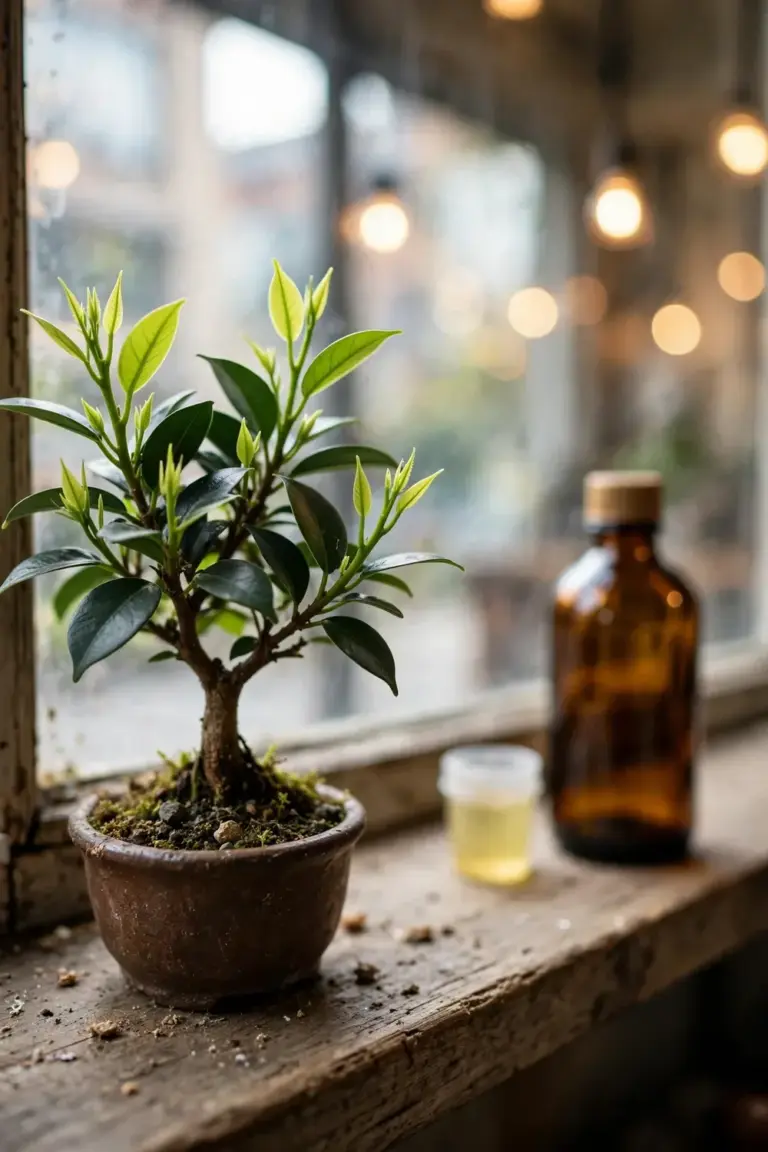
Cut feeding back in autumn and stop in winter for species that slow down. Tropical ficus trees grow all year in warm rooms, so keep a light monthly feed through winter if the tree keeps pushing leaves, and pause if growth stops. Never fertilize a dry tree: water first, feed after, so the salts do not burn the roots. Trees recovering from repotting or heavy pruning wait until new growth resumes before they see fertilizer again. Pale new leaves that stay small point to hunger; brown leaf edges after feeding point to overfeeding, so dial the dose back and flush the soil with plain water.
Prune New Shoots Back to 2 or 3 Leaves
Trim new shoots back to 2 or 3 leaves through the growing season. This single habit builds the dense canopy that defines bonsai. Each cut forces the branch to divide, and division over seasons creates the fine twiggy structure of a mature tree. A tree pruned on schedule looks refined. A tree left alone looks like a bush in a small pot.
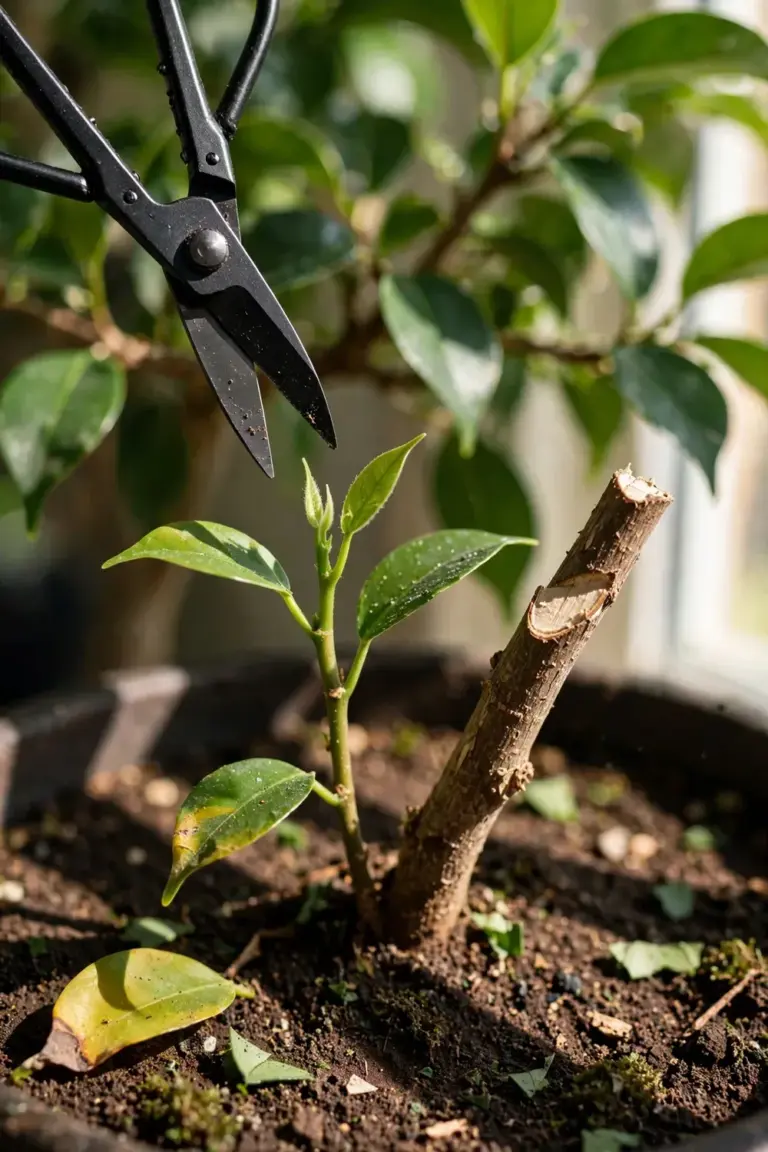
Use sharp bonsai scissors and make clean cuts just above a leaf, angled so water sheds off the wound. Cut back long runners the moment they extend past the silhouette you want. Letting a shoot run long thickens the branch beneath it, which is useful when a young tree needs trunk girth, then cut it back once the thickness is right. Remove crossing branches, inward-growing shoots, and any branch growing straight down, because all three clutter the branch structure you are building. The same clean-cut principles behind good spring pruning techniques apply here, just at miniature scale. Structural pruning of thick branches belongs in early spring before the growth flush; maintenance pinching of soft new shoots runs all season.
Shape Young Branches with Aluminum Wire
Bend young branches into position with aluminum bonsai wire. Wrap the wire at roughly 45 degrees along the branch, anchor it at the trunk or a thicker branch, and bend gently with both hands supporting the wood. Aluminum wire suits beginners because it bends easily and holds soft wood without springing back.
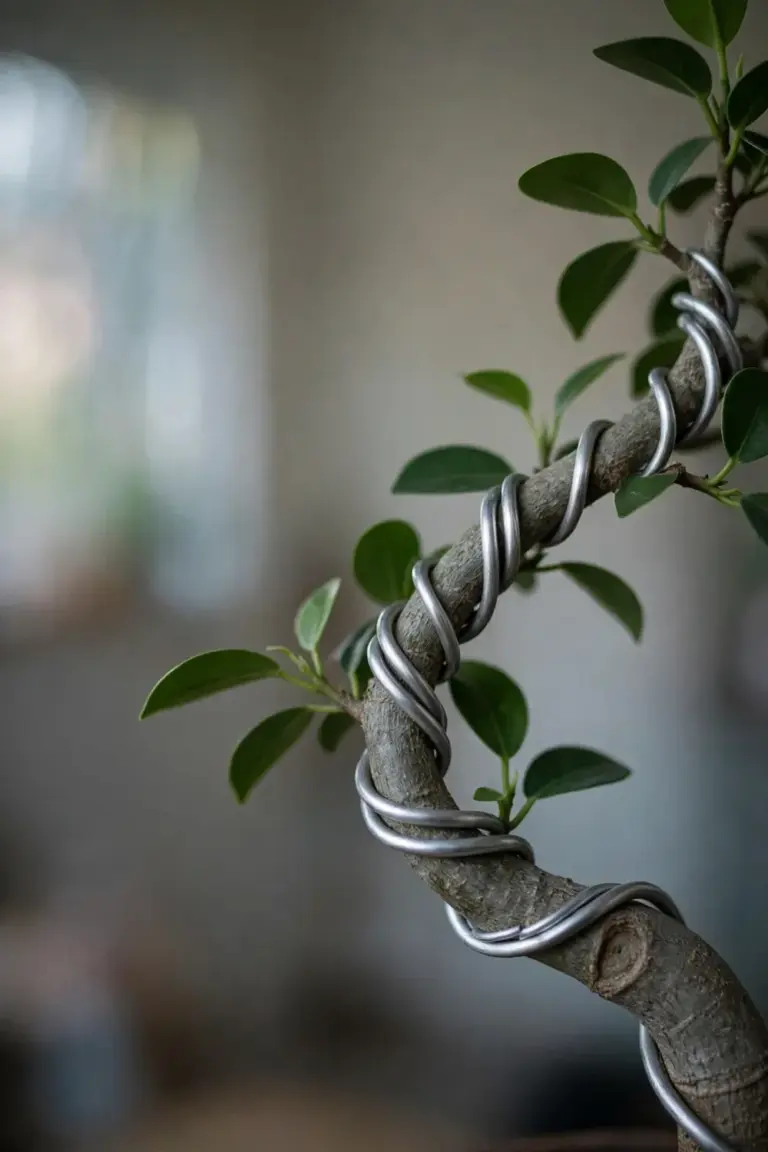
Wire in the growing season when branches are pliable, and skip wiring on species with brittle wood such as dwarf jade, which snaps instead of bending; prune jade into shape with clip-and-grow instead. A gentler alternative for any species is the guy-wire: anchor a wire to the pot and pull the branch down with a loop of raffia or soft string, which shapes without wrapping the bark at all. Guy-wires stay on longer than wrapped wire and suit thick branches that would scar under a tight coil. Check the wire monthly through the growing season. Remove it the moment it starts biting into the bark, usually within two to four months on fast growers, because wire left on scars the branch permanently. Cut the wire off with wire cutters rather than unwinding it, which twists the branch and breaks the buds you shaped. Never wire a sick or freshly repotted tree. Shaping is stress, and stressed trees need rest first.
Repot Every 2 to 3 Years in Spring
Repot every two to three years, preferably in spring, when the tree wakes up and pushes new growth. Repotting replaces exhausted soil and gives the roots room. A tree that drinks its water and dries out within a day, or one with roots circling out of the drainage holes, is asking for it sooner.
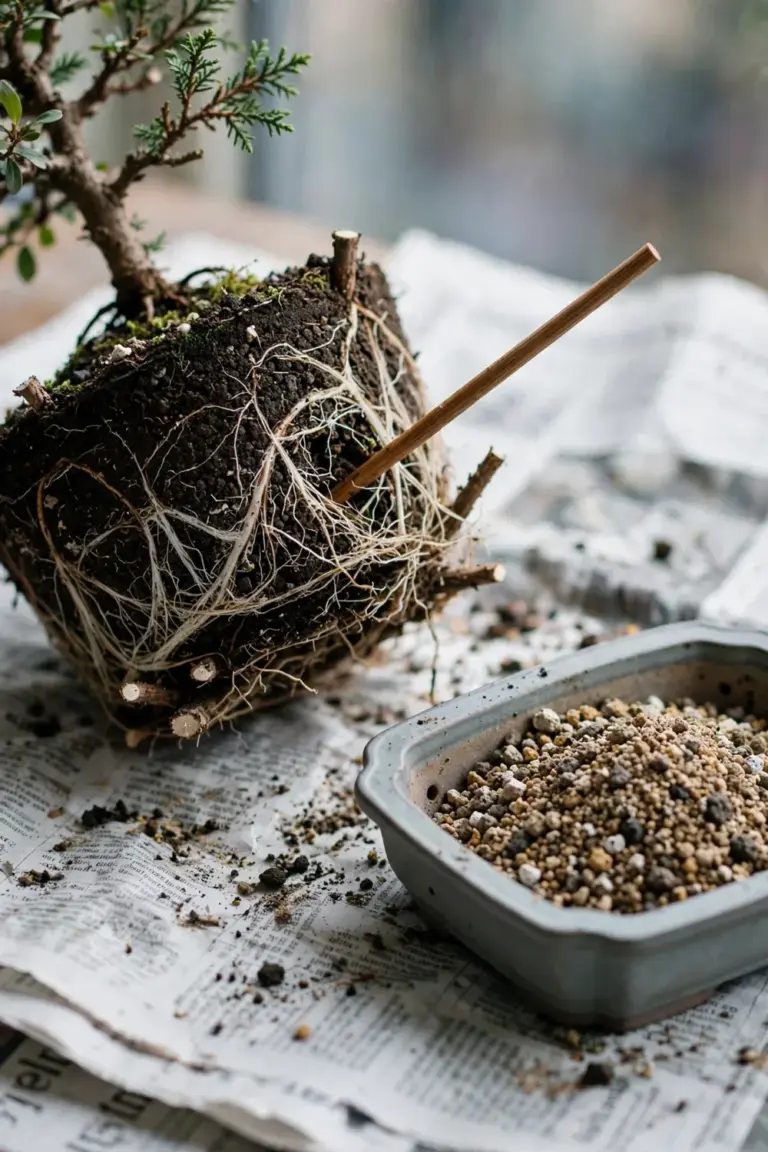
Work through the repot in this order. Water the tree the day before so the root ball holds together. Lift the tree from the pot and comb out the outer third of the root ball with a chopstick. Trim the long circling roots with sharp scissors, removing no more than a third of the root mass. Spread a drainage layer of coarse lava rock over the holes, mound fresh 1:1:1 mix in the center, and set the tree at the same depth it sat before. Work the mix into the roots with the chopstick so no air pockets remain. Water thoroughly until it runs clear, and keep the tree out of harsh midday sun for a week while the roots settle. Young fast-growing ficus trees sit at the short end of the cycle; slow species stretch to the long end.
Adapt This Indoor Routine to Australian Homes
Australian homes run the same indoor bonsai rules with one flipped calendar. The southern hemisphere reverses the light year: June through August is the low-light season, when heating dries indoor air and days shorten. That is when the grow light and the humidity tray earn their keep, not in December. Shift the repotting window to September or October, the southern spring, when the tree wakes up.
In frost-free coastal Queensland and the Northern Territory, tropical species such as ficus and dwarf jade can spend the warm months outdoors on a shaded balcony, which hardens the foliage and speeds growth. Everywhere else, keep them inside near the brightest window. Air-conditioning in summer dries rooms the same way heating does in winter, so run the humidity checks year-round. Reverse-cycle units blowing directly at the tree cause the same damage as a radiator: move the tree out of the draft line and the leaves stop browning at the edges. Ficus microcarpa tolerates the 18 to 30°C range of a normal home easily, so temperature is rarely the problem in Australian houses; light and humidity are. Buy from a specialist bonsai nursery when you can, because the staff will tell you the species, the soil it sits in, and when it was last repotted. Big-box garden centres sell indoor bonsai too, but check the label for the botanical name and lift the tree gently to feel whether the trunk sits firm in the pot.
Spot the 5 Killers of Indoor Bonsai Early
Five mistakes end most indoor bonsai. Each one has a clear fix.
Wrong species. A juniper or maple indoors is dead on arrival, months delayed. Fix: buy only the tropical and subtropical species from the comparison table.
Dark corner. The tree sits metres from the nearest window and slowly starves, stretching pale shoots toward the light. Fix: move it to the bright window or add the grow light within the first week of leggy growth.
Overwatering. Roots rot in soil that never dries, and root rot is the number one killer of indoor bonsai. Fix: the finger test every day, and water only when the top layer feels dry.
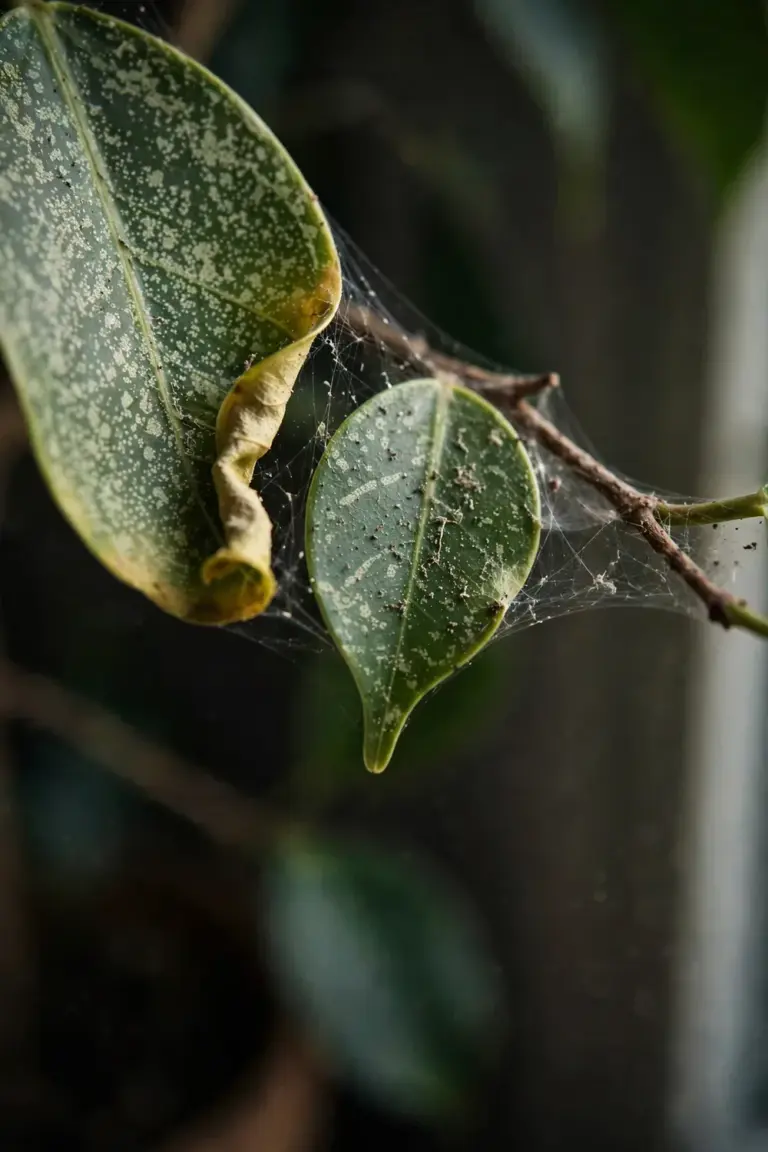
Dry air plus neglect. Spider mites love the dry indoor air of heated rooms and attack stressed trees first, showing as fine webbing and stippled leaves. Fix: hold humidity at 50 to 60 percent and inspect leaf undersides monthly.
Drafts and heat blasts. A tree above a radiator or in the path of an air-conditioner vent swings between hot dry air and cold shocks. Fix: a stable room spot, away from vents and radiators.
Ficus trees drop leaves after any big change: a new home, a repot, a sudden move to a darker room. The tree is protesting the move, not dying. Keep the light, warmth, and watering routine steady and the leaves push back within weeks. Judge the tree by its buds, not its fallen leaves: firm green buds mean recovery is already underway.
Frequently Asked Questions
Yes, when the species is tropical or subtropical. Ficus microcarpa, dwarf jade, and Fukien tea grow through the year indoors because their native climates never freeze. Temperate species such as junipers and maples cannot live indoors permanently, because they need a cold winter dormancy to survive and reset their growth cycle.
Ficus microcarpa is the easiest indoor bonsai for a beginner. The species tolerates lower light, missed waterings, and first pruning attempts, then recovers fast. Dwarf jade runs a close second for forgetful waterers, because its succulent stems store water for weeks. Start with one forgiving tree and learn its rhythm before collecting more.
Leaf drop usually means a recent change: a new home, a darker spot, a repot, or a cold draft. Ficus trees shed after moves and regrow within weeks when light, warmth, and routine return. Persistent drop with yellow leaves points to overwatering, so check that the top layer dries between waterings and that the saucer never holds standing water.
Indoor bonsai need 4 to 6 hours of strong light daily, either direct sun or a good grow light. Ficus microcarpa does best with 6 to 8 hours of bright indirect light. Pale leaves and long bare shoots mean the tree wants more light, so move it closer to the window or add a lamp before the canopy thins further.
Yes, in frost-free weather. Tropical species enjoy warm months on a shaded balcony, and the outdoor air thickens foliage. Move the tree out gradually over a week to avoid sunburn, and bring it back inside before nights turn cold. In frost-free tropical regions the tree can stay outside the whole year with the same watering routine.
Keep Your Indoor Bonsai Alive for Decades
The whole method fits on a card. Pick a tropical species that treats your living room as home. Give it 4 to 6 hours of strong light, 50 to 60 percent humidity, and a gritty 1:1:1 soil mix. Water when the top layer dries, feed every two weeks in the growing season, and prune new shoots back to two or three leaves. Repot every few springs. Skip the juniper.
Start today by choosing one species from the table and matching it to your brightest room. The first year teaches you the tree’s rhythm. The tenth year gives you a miniature tree with a thick trunk, fine branches, and a canopy that looks like it was always meant to be small. Keep a simple log of watering days and pruning dates for that first year. Patterns you cannot see week to week become obvious month to month, and the log turns a beginner into the kind of grower whose trees keep getting better.