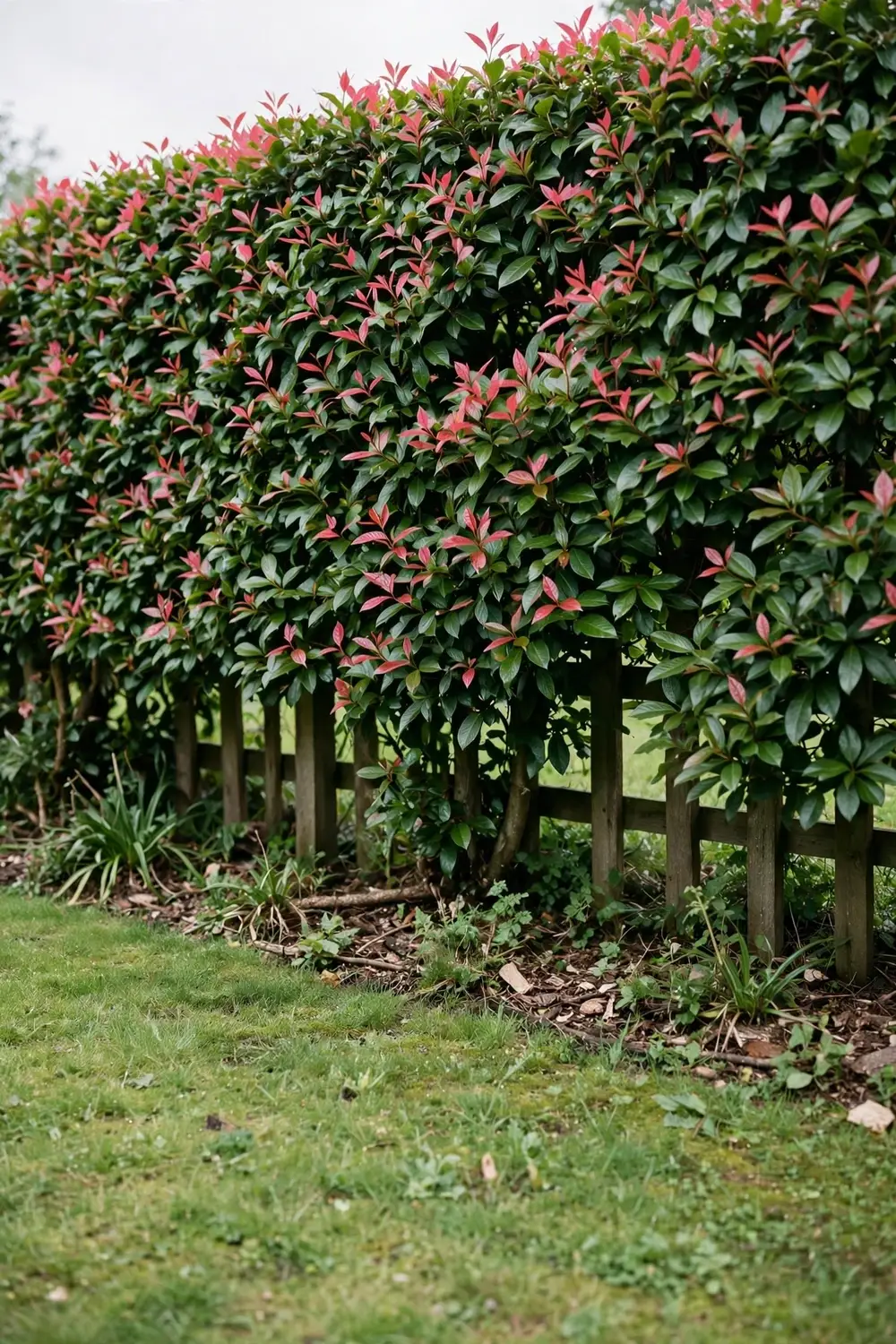

Walk the boundary with a tape measure before you buy a tree. That is the whole job of best trees for privacy screening in Australia: match the tree to the gap, the sun, and the pipes, not to the photo on the tag. The rest of this page is 15 picks, from dense lilly pilly hedges to one narrow columnar conifer, each with mature size, spacing, climate band, and root caution.
I have learned that a screen that fits the gap beats a fast grower that outgrows it.
Test the soil before you plant, because clay, sand, and salt change which tree holds a screen. The site’s guide to choosing and preparing soil for trees covers the dig-and-fill steps. The chooser section below turns your measurements into a short list.
Measure the Gap Before You Pick a Tree
Measure the gap width, the height you need, and the distance to pipes before you buy. Those three numbers cut 15 picks to a short list.
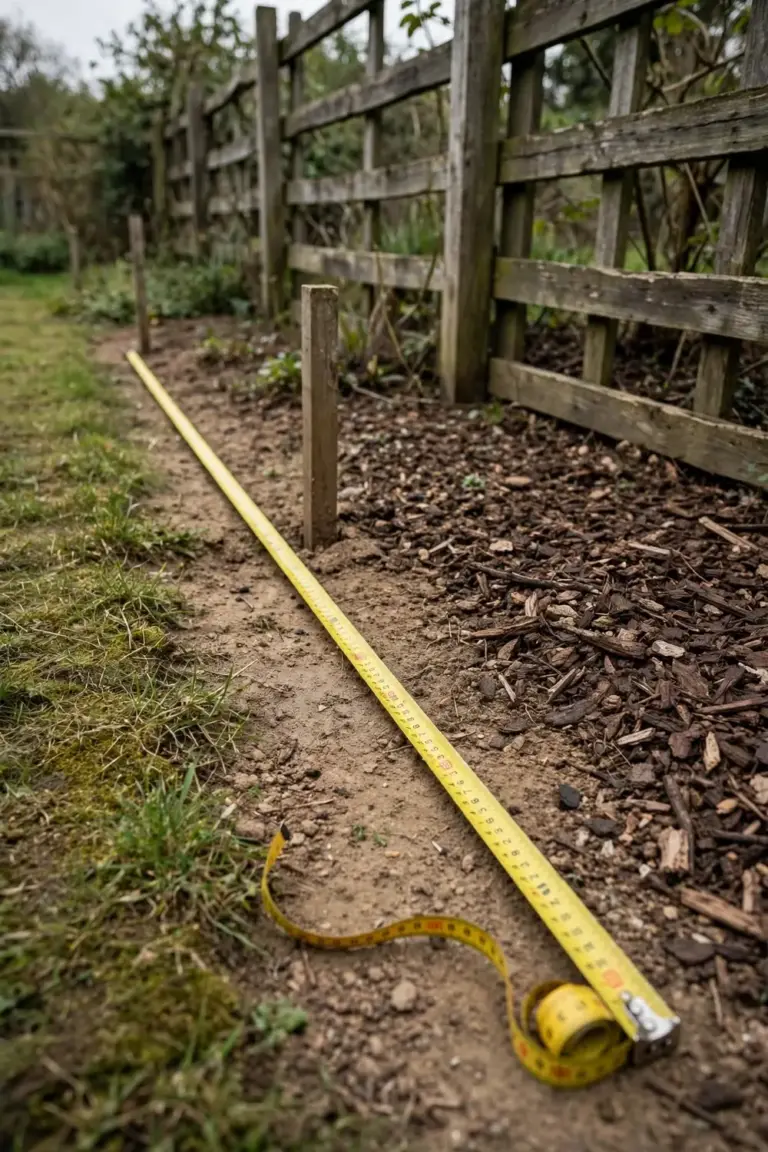
Stand at the boundary and note the width you can fill. A gap under 1.5 m suits only the narrow picks in the table. A gap of 3 m or more takes a spreading native such as Tuckeroo or Native Frangipani. Height matters as much as width. A fence-line screen needs 2 to 3 m of foliage. A two-storey overlook needs 5 m or more, which rules out every low hedge on the list.
Sun shapes the choice too. Watch where shade falls in the morning and in the afternoon. A screen that loses its lower leaves in shade stops screening at eye height, which is the one height that matters. Check the soil as well, because healthy soil holds water through summer and lets roots settle after planting. Clay holds water longer than sand. Salt air near the coast suits Banksia and Tuckeroo better than Murraya.
Spacing figures below come from nursery guides for each tree. Closer spacing closes the screen sooner, and it asks for more water and feeding in the first seasons. Wider spacing saves plants and lets each tree reach its natural width. Keep every screen off the pipe line where you can, and check your water authority’s pipe map before you dig. No tree is risk free near a leaking pipe, because roots follow moisture.
| Tree | Height | Width | Spacing | Climate | Root Safety |
|---|---|---|---|---|---|
| Lilly Pilly | 5 to 6 m | 2 to 3 m | 1 to 1.5 m | Subtropical to cool temperate | Keep off pipe line |
| Water Gum | 8 to 12 m | 3 to 5 m | 1.5 to 2 m | Warm moist, light frost | Keep off pipe line |
| Blueberry Ash | 3 to 15 m | 3 to 5 m | 2 m | East coast, frost free | Non-invasive roots |
| Weeping Lilly Pilly | 8 to 15 m | Up to 8 m | 1 m | Frost free subtropical | Keep off pipe line |
| Bottlebrush | 2 to 4 m | 1.5 to 2 m | 1 to 1.5 m | Warm and cool, light frost | Keep off pipe line |
| Coastal Banksia | 6 m | 4 m | 1 to 1.5 m | Coastal, salt wind, light frost | Keep off pipe line |
| Native Frangipani | 8 m | 4 m | 3 m | Tropical to warm temperate, light frost | Non-invasive roots |
| Tuckeroo | 5 to 8 m | 5 to 7 m | 3 to 5 m | Coastal, drought, light frost | Non-invasive roots |
| She-Oak | 20 m | 6 m | Data not available | Subtropical, wet and saline | Suckers spread |
| Straight and Narrow | 5 to 8 m | 1 to 1.5 m | 60 cm to 1 m | Light frost, protect young | Keep off pipe line |
| Sweet Viburnum | 3 to 5 m | 2 to 3 m | 60 to 80 cm | Most temperate and subtropical | Keep off pipe line |
| Orange Jessamine | 2.5 m | 1.2 m | 1.5 m | Warm, frost tender | Keep off pipe line |
| Pencil Pine | 10 to 15 m | 1 to 2 m | 1 to 1.5 m | Mediterranean and cool, frost hardy | Keep off pipe line |
| Little Gem Magnolia | 4 to 6 m | 2 to 3 m | 1 to 1.5 m | QLD to TAS, frost tolerant | Keep off pipe line |
| Hill’s Fig | 6 to 10 m | Kept clipped 2 to 5 m | 60 to 80 cm | Warm frost free coastal | 4 m from pipes |
1. Plant Lilly Pilly for a Dense Evergreen Screen
Lilly Pilly is the default privacy tree in eastern Australian gardens. It holds dense evergreen foliage from ground level to the top, which is what a screen must do. Evergreen Trees Direct describes Acmena smithii at 5 to 6 m tall and 2 to 3 m wide, growing 40 to 70 cm a year. That size suits a fence-line screen that you clip to 2 or 3 m. It also suits a taller informal screen that you let reach 4 m.
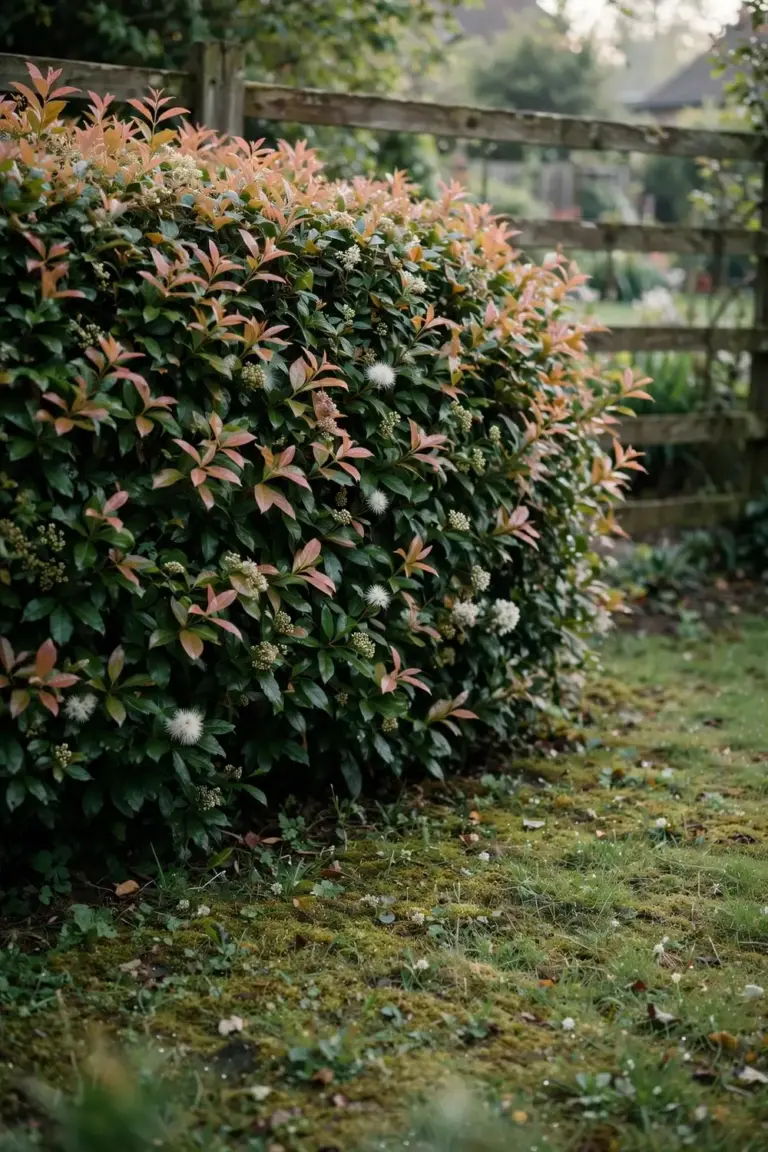
Choose an Acmena selection for psyllid resistance. Acmena smithii resists the psyllid that causes pimple-like galls on older Syzygium hedges. Gardening With Angus lists cultivars such as Hot Flush at around 3 m tall and 1.5 m wide, with climate zones from subtropical through warm temperate and cool temperate to Mediterranean. Plant selections 1 to 1.5 m apart for a dense screen. Full sun gives the densest growth. Part shade still screens, and deep shade thins the lower foliage.
2. Plant Water Gum for a Glossy Tall Screen
Water Gum gives a tall, glossy, evergreen screen for warm, moist gardens. Platypus Plants lists Tristaniopsis laurina Luscious at 8 to 12 m tall and 3 to 5 m wide, with a moderate to fast growth rate. That size suits a boundary that needs 5 m or more of screen. Plant trees 1.5 to 2 m apart for a closed screen. Evergreen Trees Direct gives a similar range at 10 to 15 m tall, with hedging at 1 to 1.5 m apart.
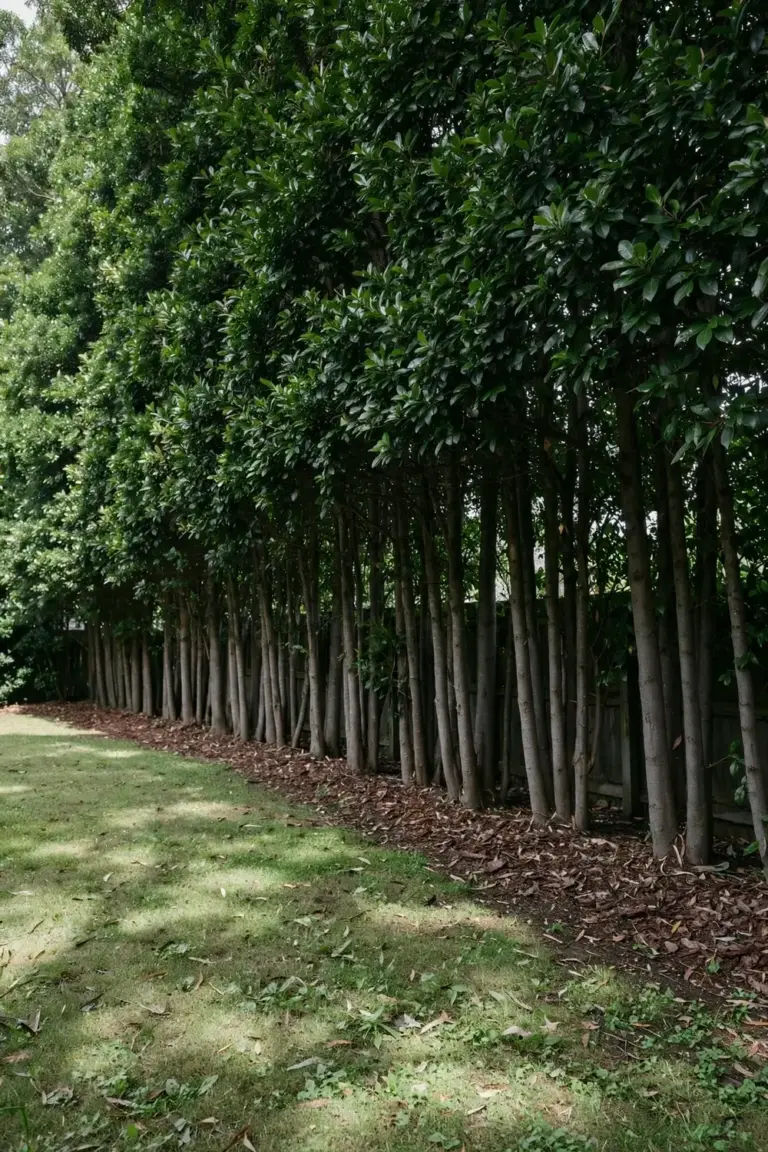
Water Gum prefers full sun to part shade and tolerates light frost once settled. It suits coastal New South Wales and subtropical Queensland best, and it handles heat. Give each tree room to reach its width, because a clipped Water Gum holds a formal line but loses the soft canopy that makes it worth planting. Water new trees deeply through the first dry season, as the site’s guide to how much to water a new tree sets out. A screen of Water Gum suits a large block better than a narrow side passage.
3. Plant Blueberry Ash for a Narrow Upright Screen
Blueberry Ash is a native that stays upright and narrow enough for a suburban boundary. The Australian National Botanic Gardens describes Blueberry Ash at 3 to 15 m tall and 3 to 5 m wide, with pink, fringed flowers in spring and blue fruit through the cooler months. That wide height range means you pick the form that suits the gap. A pruned screen holds 3 to 4 m. An unpruned tree reaches 8 m or more.
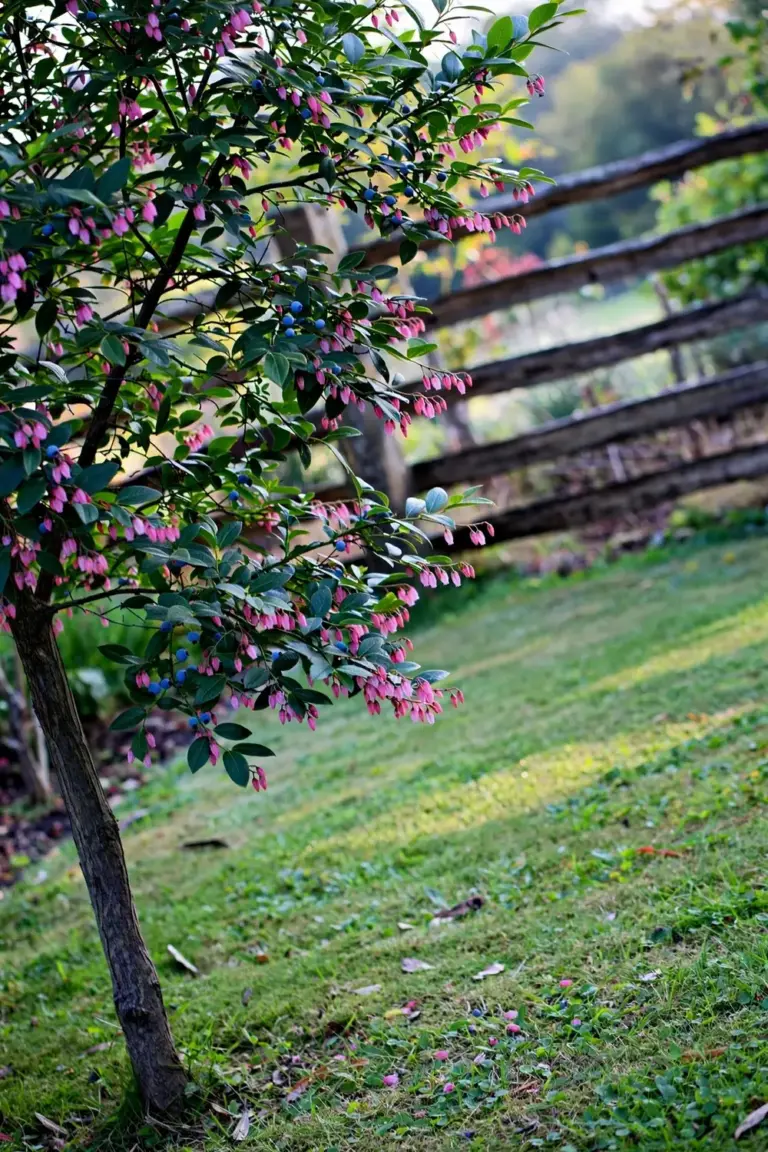
Nursery Near Me lists a compact form at about 6 m tall and 3 m wide, with a screen spacing of 2 m, and describes the roots as non-invasive. Blueberry Ash suits the east coast from Fraser Island in Queensland to Flinders Island in Tasmania. It dislikes frost and cold high-altitude sites. Give it full sun to part shade and moist, well drained soil. Its evergreen canopy holds color through winter, and birds take the fruit.
4. Plant Weeping Lilly Pilly for a Tall Soft Screen
Weeping Lilly Pilly gives height without the bulk of a spreading shade tree. Evergreen Trees Direct lists Waterhousea floribunda at 8 to 15 m tall and up to 8 m wide. Its weeping habit softens a tall boundary. Prune it to 3 to 5 m for a screen, as Lomalagi advises, and it holds a dense curtain of foliage. Plant trees 1 m apart for a fast hedge, as Native Shop recommends.
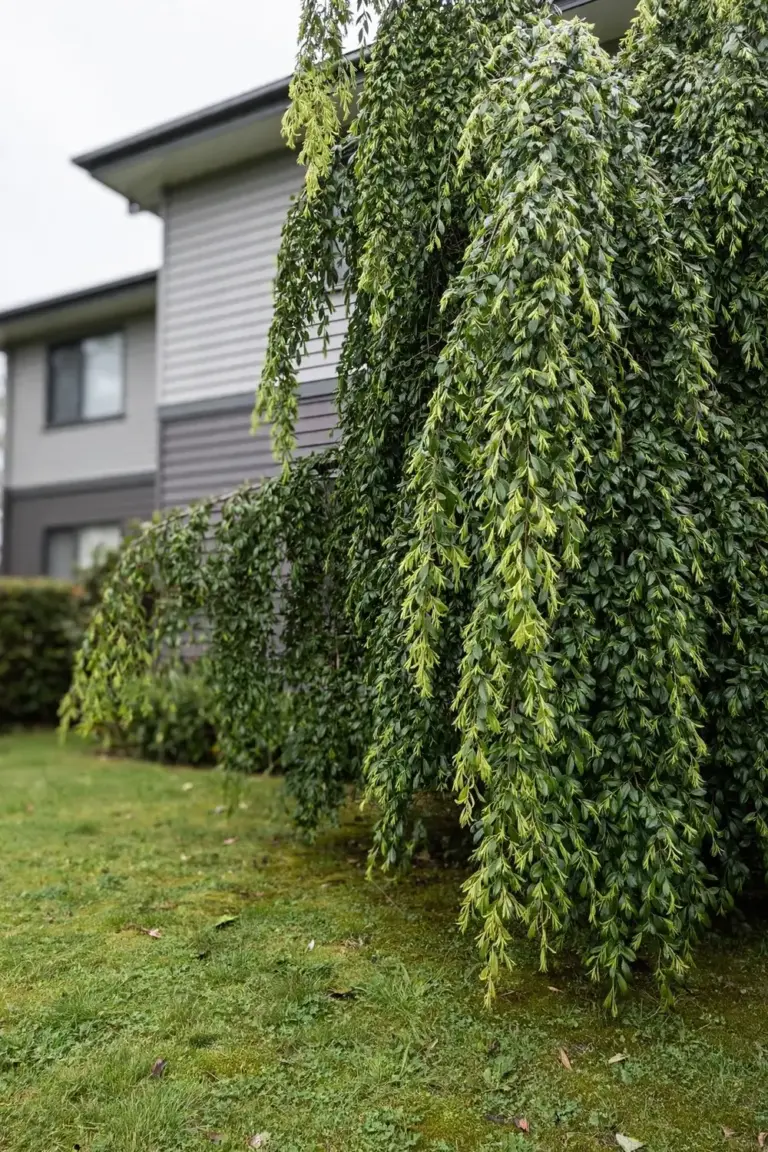
This tree wants frost free, subtropical to warm temperate conditions. It dislikes drought and frost. Give it full sun to part shade and steady water through the first year. A tall Weeping Lilly Pilly screen suits a two-storey overlook, because it reaches above a fence without needing a wide trunk line. Keep it off the pipe line, and leave room for the width it reaches if you stop clipping.
5. Plant Bottlebrush for a Flowering Bird Screen
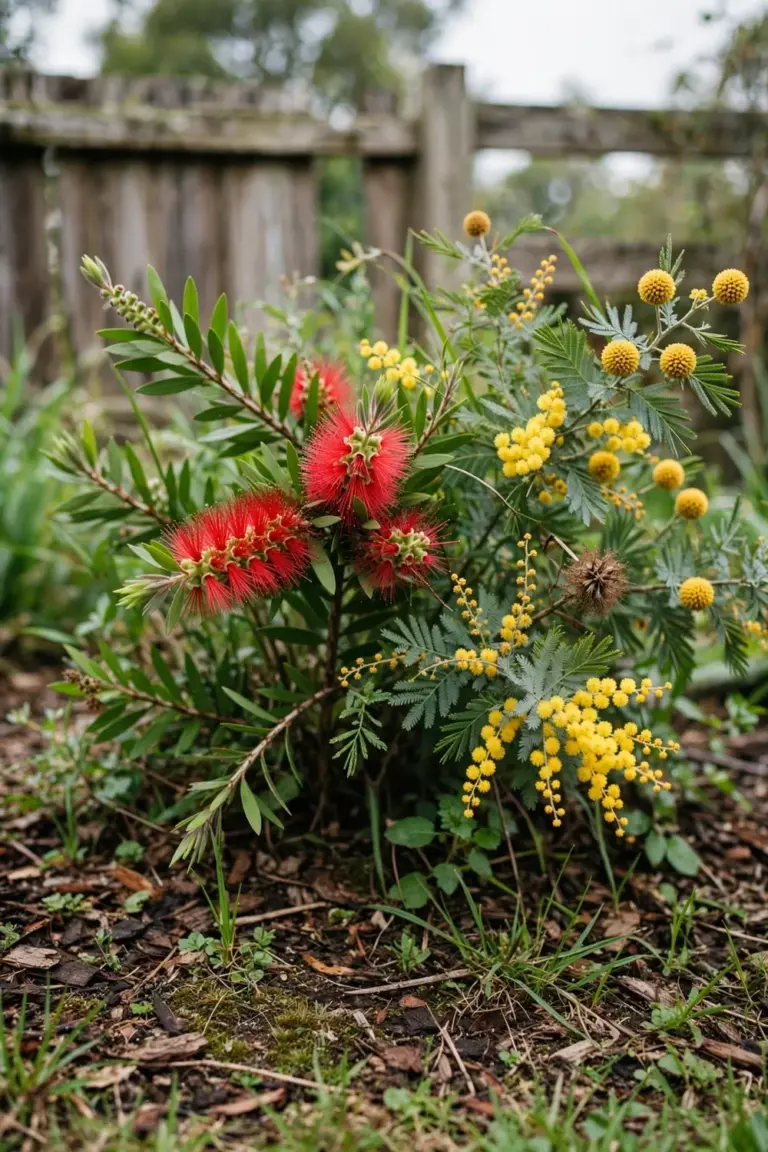
Bottlebrush gives a flowering screen that feeds birds. The Chicago Botanic Garden gives crimson bottlebrush at 12 feet high and 9 feet wide, which converts to about 3.7 m by 2.7 m. Evergreen Trees Direct lists the Harkness form at 2 to 4 m tall and 1.5 to 2 m wide, growing 40 to 60 cm a year. Plant Harkness 1 to 1.5 m apart for a hedge.
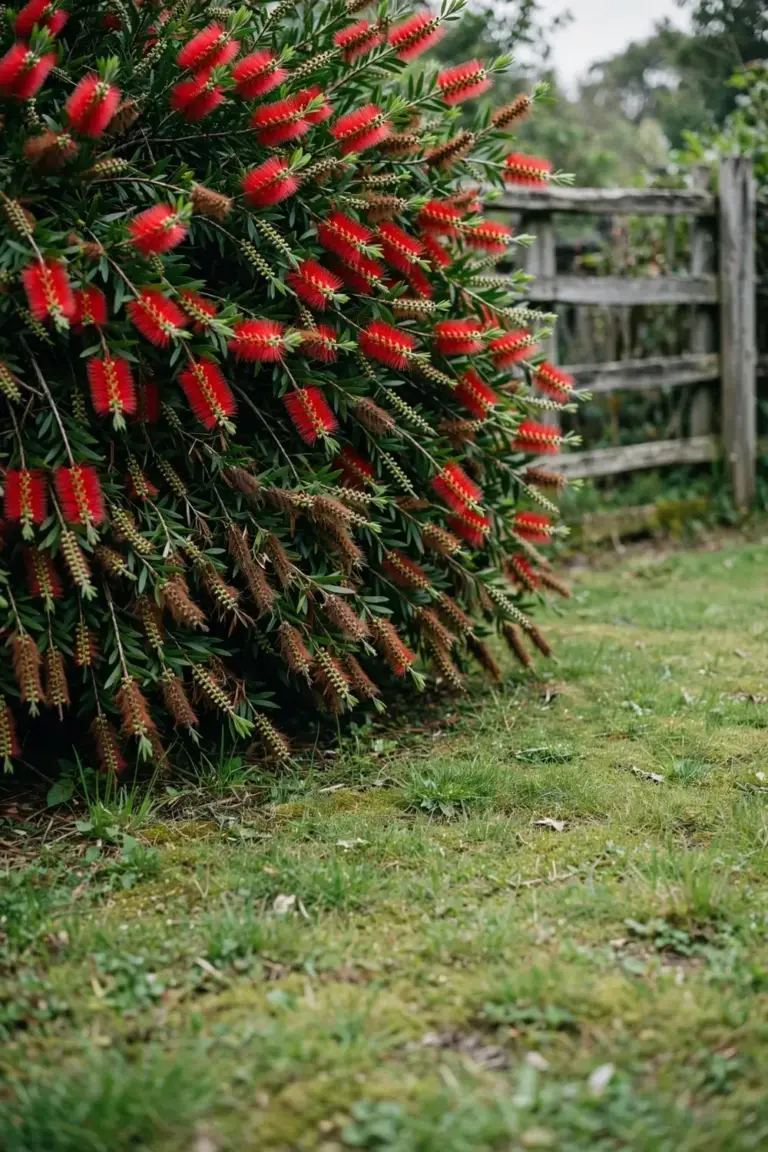
Callistemon citrinus suits warm and cool gardens and tolerates light frost once settled. It flowers best in full sun. Red bottlebrush spikes draw honeyeaters through spring and summer. Bottlebrush suits a 2 to 3 m screen along a fence, and it clips into a formal hedge without losing its lower leaves. Keep the soil moist through the first dry season. A bottlebrush screen stays evergreen and dense at eye height, which is the job.
6. Plant Coastal Banksia for a Salt Wind Screen
Coastal Banksia is the screen for windy, salty blocks where other trees thin out. Mackay Regional Council lists Coastal Banksia at 6 m high with a 4 m spread, with full sun to part shade and drought tolerance once settled. Evergreen Trees Direct gives a wider range at 6 to 15 m tall, with hedging at 1 to 1.5 m apart. That spread of figures reflects how much site changes the tree. A sheltered garden grows a taller tree. An exposed coastal site stays smaller.
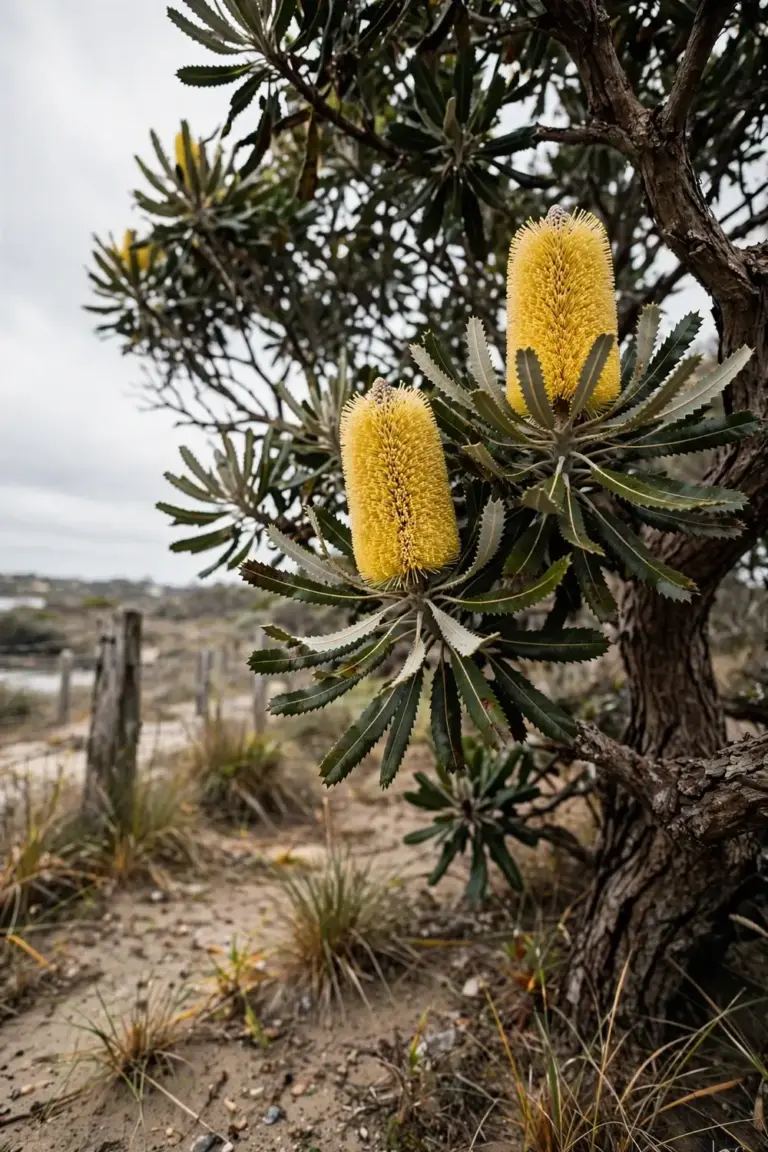
Banksia integrifolia suits the east coast from Queensland to Victoria. It handles salt wind, sand, and light frost. Its dark green leaves carry silver undersides, and its yellow flower spikes feed nectar birds through autumn and winter. Feed Banksia with a low phosphorus fertilizer only, because banksias are phosphorus sensitive. Gardening With Angus warns that fertilizer with a phosphorus ratio above 3 percent harms them. A native fertilizer at the labelled rate is enough.
7. Plant Native Frangipani for Scent at Height
Native Frangipani gives scent and height in one tree. Nursery Near Me lists Hymenosporum flavum at about 8 m tall and 4 m wide, with a screen spacing of 3 m. Its cream flowers carry a strong sweet scent through spring and early summer. The canopy stays evergreen and dense enough to screen a first-floor window.
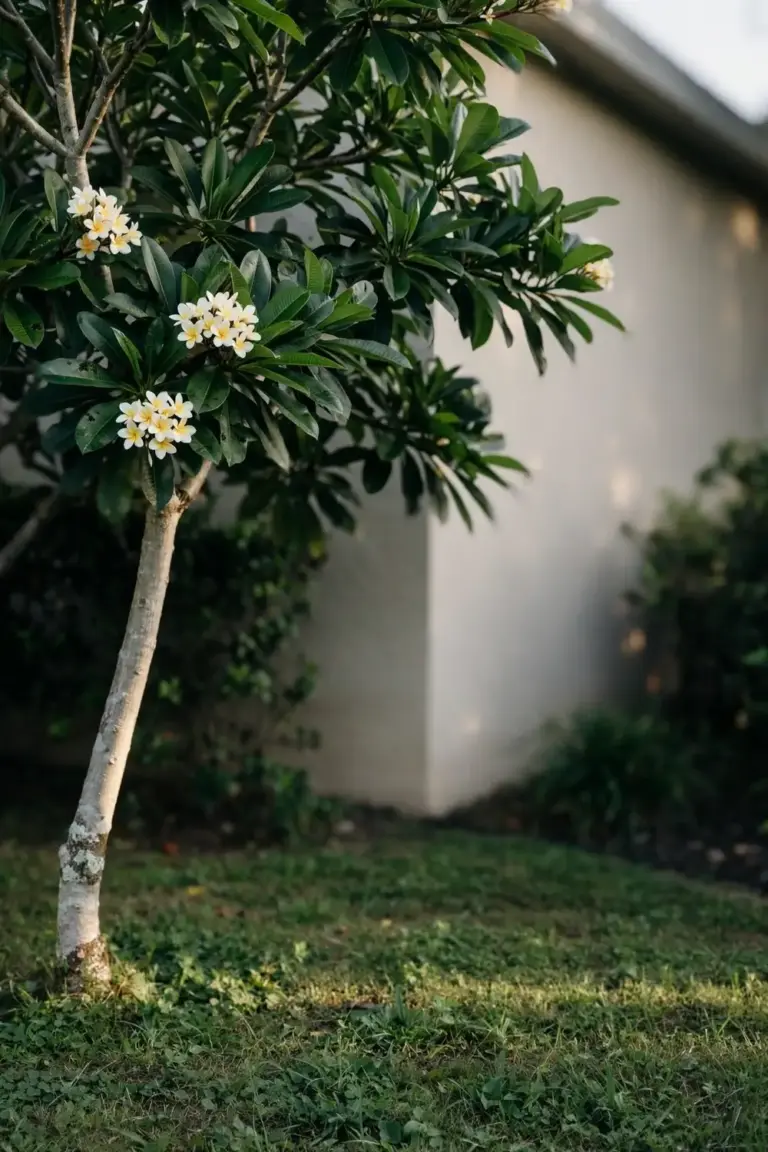
This tree suits tropical to warm temperate gardens and tolerates light frost once settled. Adelaide Plant Co notes it grows 6 to 10 m tall and 3 to 5 m wide, and it wants protection from frost while young. Nursery Warehouse describes the root system as moderately deep and non-invasive, with roots reaching 60 to 100 cm deep. Give it full sun for the best flowering. A Native Frangipani screen suits a boundary that needs 5 m or more of cover, and it works as a single specimen tree that screens one window.
8. Plant Tuckeroo for a Coastal Shade Screen
Tuckeroo is a tough native screen for coastal blocks. Speciality Trees lists Cupaniopsis anacardioides at 5 to 8 m tall and 5 to 7 m wide, with a non-invasive root system. Australian Plants Online gives the same size and notes a lifespan of 50 to 60 years. Go Green Nurseries recommends a spacing of 3 to 5 m. That width makes Tuckeroo a screen for wide boundaries, not for a narrow passage.
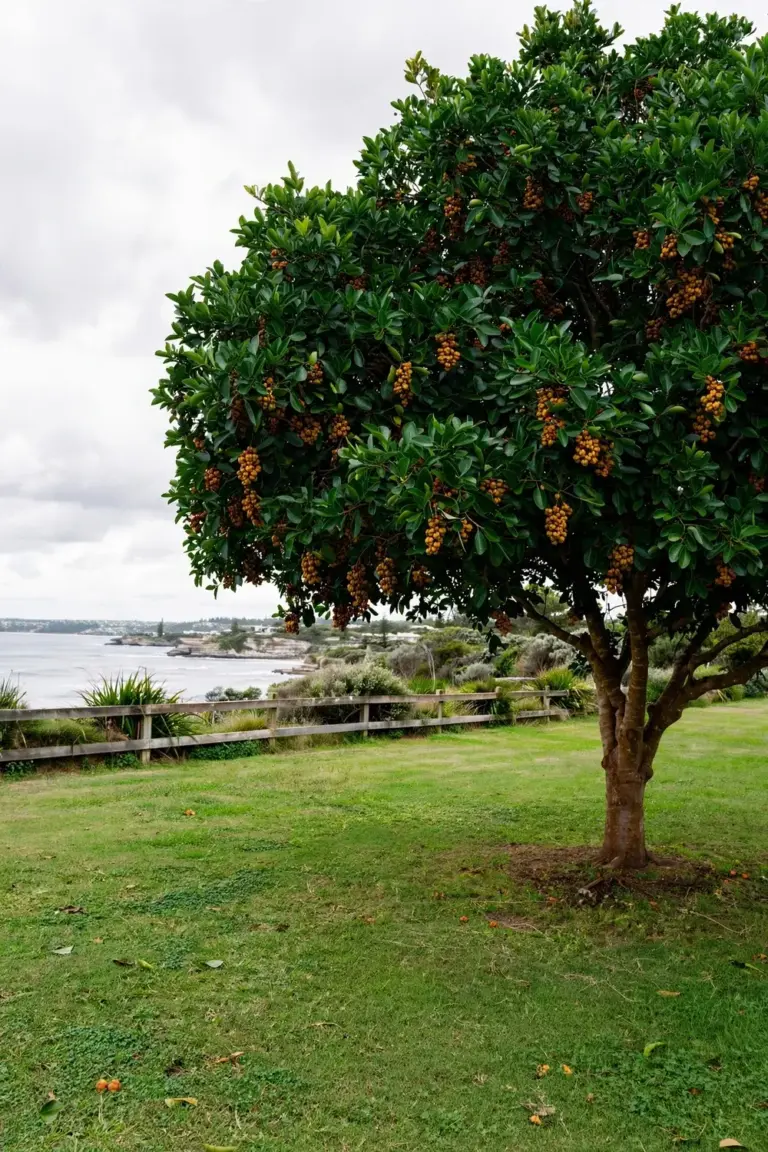
Tuckeroo handles full sun, coastal wind, drought, and light frost once settled. Its dense evergreen canopy gives shade as well as screening, and its orange fruit feeds birds. It suits a front boundary or a long side fence on a wide block. Let it reach its natural width, because a clipped Tuckeroo loses the broad canopy that makes it useful. Keep it off the pipe line as a matter of course, even with the non-invasive root description.
9. Plant She-Oak for a Large Windbreak Screen
She-Oak suits a large block that needs a windbreak more than a clipped hedge. GardensOnline lists Casuarina glauca at 20 m tall and 6 m wide, with fast growth and tolerance of wind and salt. That size is far beyond a suburban fence line. It belongs on a rural boundary, an acreage windbreak, or a large coastal block. Daleys Fruit notes it fixes nitrogen and tolerates frost, which helps poor soils recover under the canopy.
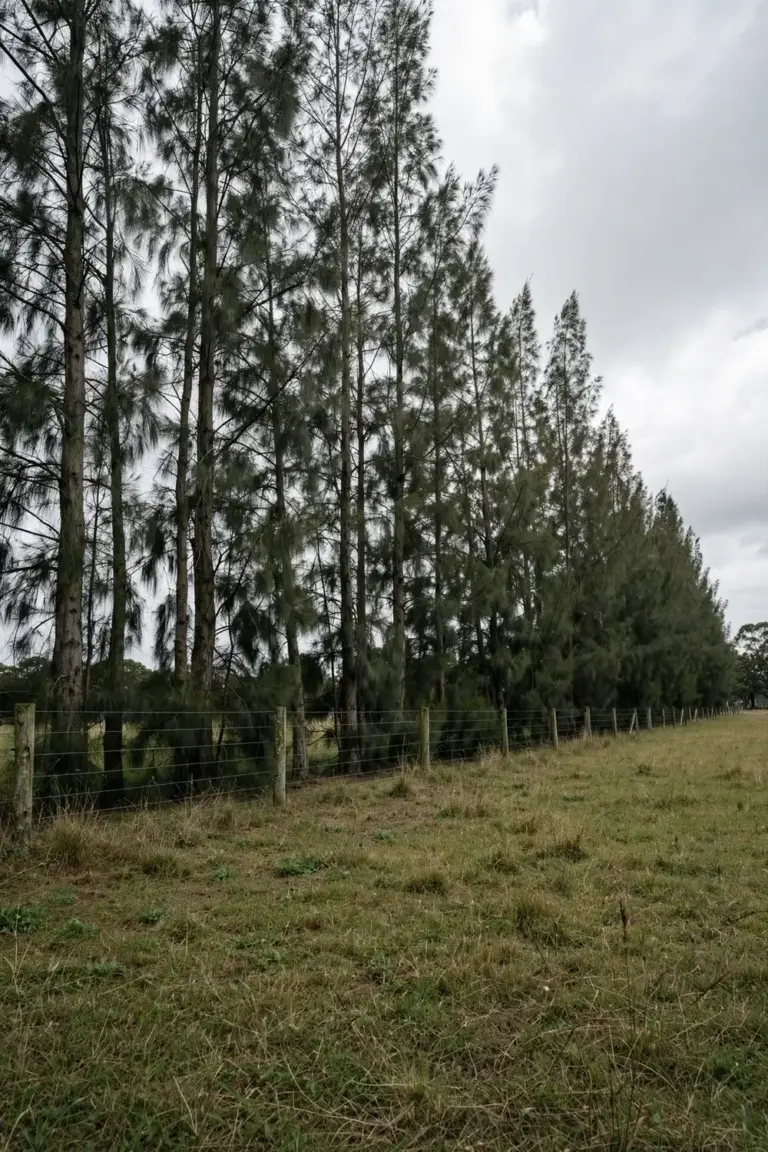
She-Oak spreads by suckers, which is the main caution with this tree. Natural Medicinal Herbs records that Casuarina glauca suckers freely and can spread, and it is planted as a windbreak tree in warmer regions. Keep suckering trees away from garden beds and paths, and cut suckers as they appear. Do not plant She-Oak where a neighbour’s bed sits on the other side of the fence. For a suburban block, pick one of the smaller trees on this list.
10. Plant Straight and Narrow for a 1 Meter Screen
Straight and Narrow is the pick for a side passage or a narrow boundary. Evergreen Trees Direct lists Syzygium australe Straight and Narrow at 5 to 8 m tall and only 1 to 1.5 m wide. That narrow width fits a gap where no other tree on this list works. Platypus Plants recommends planting 60 cm to 1 m apart, with 60 cm of clearance from a fence. Ozbreed notes it can be pruned down to 2 m and planted at 1 to 1.5 trees per linear meter.
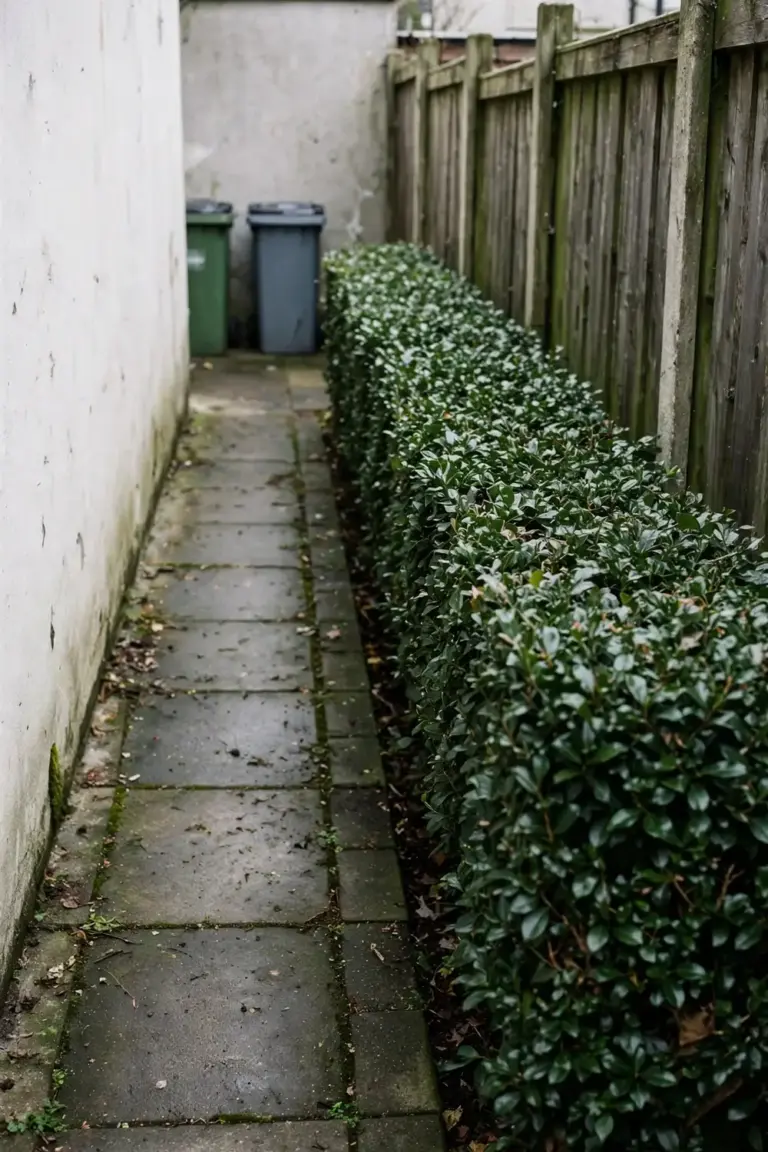
Straight and Narrow is psyllid resistant, which keeps the foliage clean without spraying. It suits full sun to shade and tolerates cold and dry conditions once settled, though Australian Plants Online advises protection from frost while young. Its dense evergreen foliage screens from ground level to the top. Water new plants steadily through the first dry season. A Straight and Narrow screen closes fast at close spacing and needs clipping once or twice a year to hold its line.
11. Plant Sweet Viburnum for a Fast Clipped Hedge
Sweet Viburnum is the fastest way to a clipped evergreen hedge. Evergreen Trees Direct lists Viburnum odoratissimum at 3 to 5 m tall and 2 to 3 m wide, growing 60 cm to 1 m a year. Plant trees 60 to 80 cm apart for a formal hedge, or 1 m apart for a relaxed screen. That growth rate closes a hedge in two to three seasons on good soil with steady water.
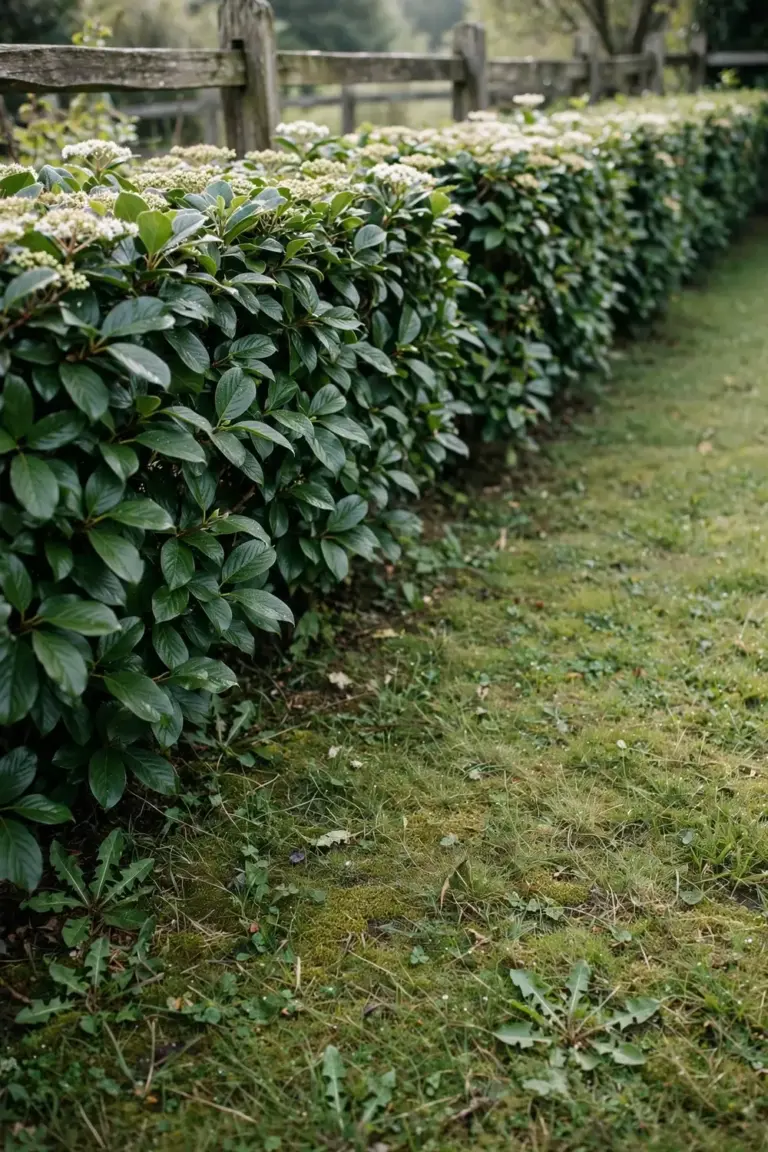
Sweet Viburnum suits most temperate and subtropical gardens across Australia. It grows in full sun to part shade and holds dense evergreen leaves. Its white spring flowers carry a sweet scent, and its foliage stays thick at the base, which is where many hedges fail. Give it water in dry heat, because it dislikes drought and extreme heat. Clip after flowering to keep the shape, following the site’s spring pruning techniques for clean cuts. A Sweet Viburnum hedge suits a fence line that needs 2 to 3 m of screen without a tall tree.
12. Plant Orange Jessamine for a Fragrant Low Screen
Orange Jessamine gives a fragrant low screen for warm gardens. Ian Barker Gardens lists Murraya paniculata at 2.5 m tall and 1.2 m wide, kept to 1 m tall and 80 cm wide with clipping. Southern Plants recommends planting 1.5 m apart. Its white flowers carry a strong orange blossom scent through the warmer months, and its glossy evergreen leaves hold a neat hedge.
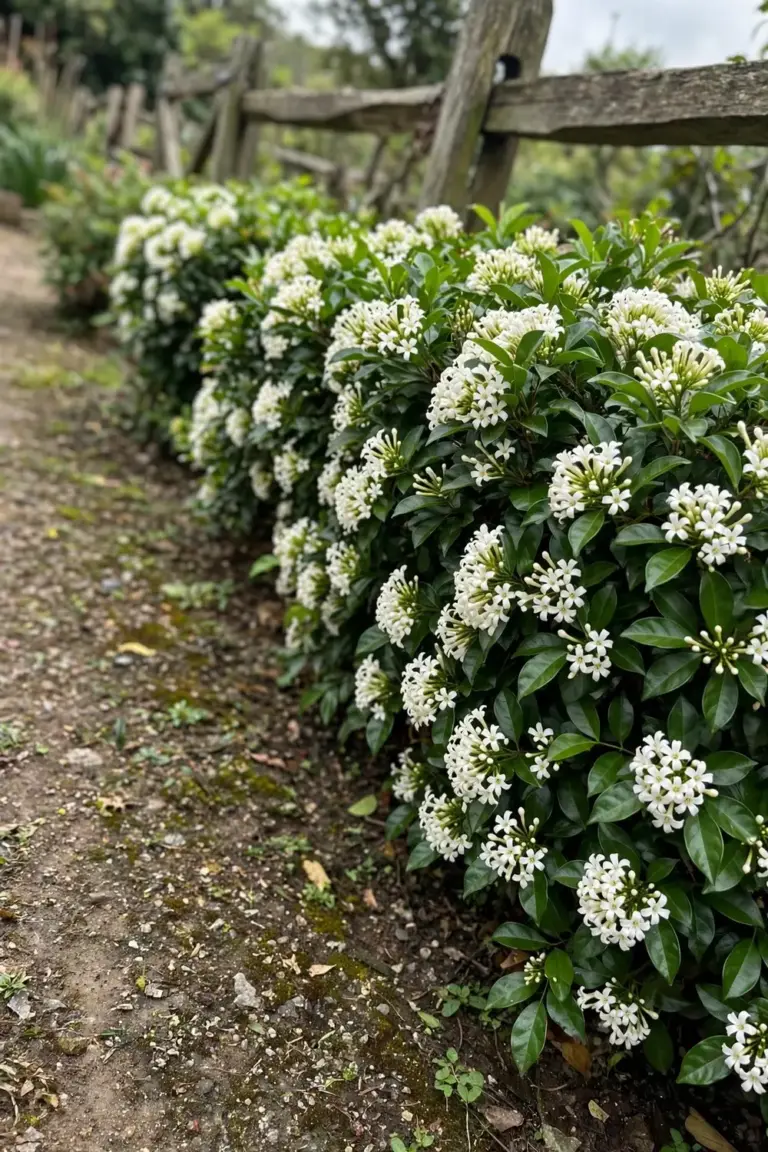
Murraya suits warm, frost free gardens best. Ian Barker Gardens notes it is not frost tolerant. It grows in full sun to part shade and prefers well drained soil. It suits a low screen beside a path, a courtyard, or a front fence where scent matters. Clip two to three times a year to hold the shape. In a cool southern garden, Murraya struggles, and Sweet Viburnum or Lilly Pilly is the better pick.
13. Plant Pencil Pine for a Narrow Formal Screen
Pencil Pine gives the narrowest formal screen on this list. True Green Nursery lists Cupressus sempervirens Glauca at 10 to 15 m tall and 1 to 2 m wide. Evergreen Trees Direct gives 8 to 12 m tall and 0.5 to 1 m wide, with hedging at 1 to 1.5 m apart. That tall, narrow form screens a two-storey overlook from a gap under 2 m wide. Plantmark lists it at 10 to 15 m tall and 80 cm wide.
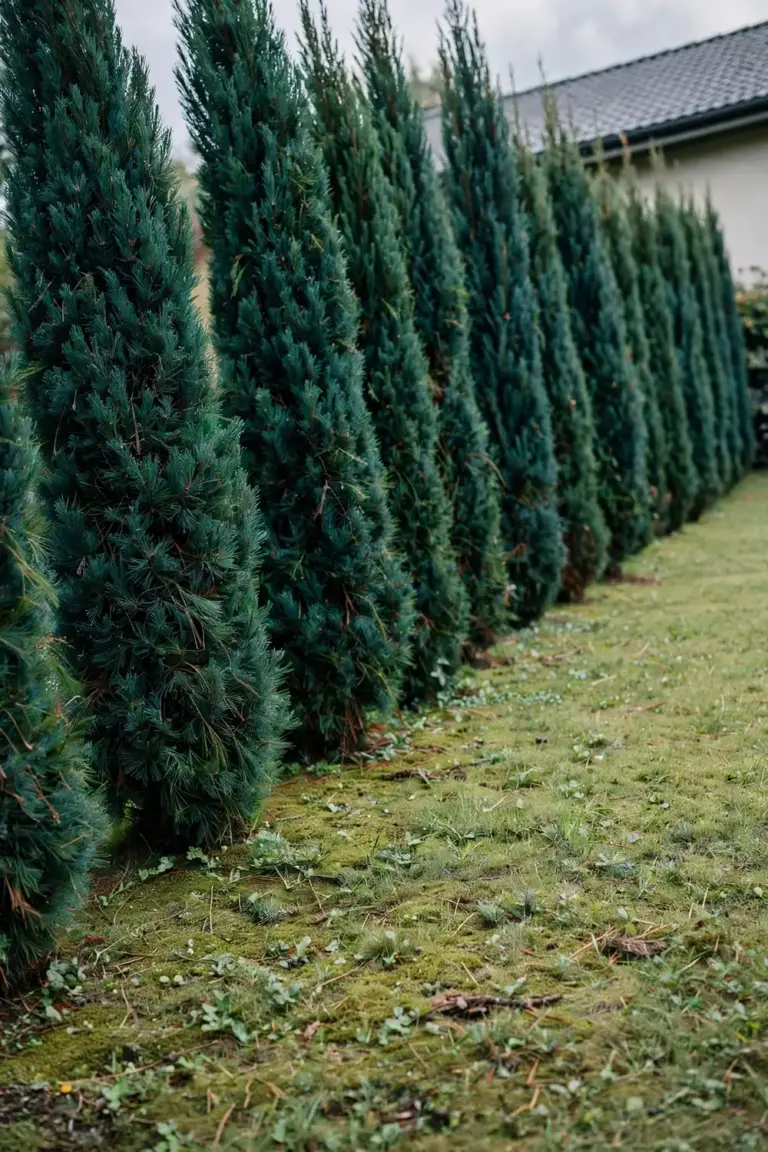
Pencil Pine suits Mediterranean and cool gardens and is frost hardy once settled. Plant Depot notes it is drought tolerant once established. It grows in full sun and needs little clipping, because its natural form is already a column. Give it well drained soil, because wet feet harm it. A row of Pencil Pines suits a formal boundary or a driveway edge. It also suits a narrow side passage where a spreading tree would block the path.
14. Plant Little Gem Magnolia for a Flowering Formal Screen
Little Gem Magnolia gives a flowering evergreen screen in a compact form. NC State Extension records Little Gem at 20 feet high by 10 feet wide in 10 years, which converts to about 6.1 m by 3 m. Evergreen Trees Direct lists it at 4 to 6 m tall and 2 to 3 m wide in Australian gardens, growing 20 to 40 cm a year. Plant trees 1 to 1.5 m apart for a screen.
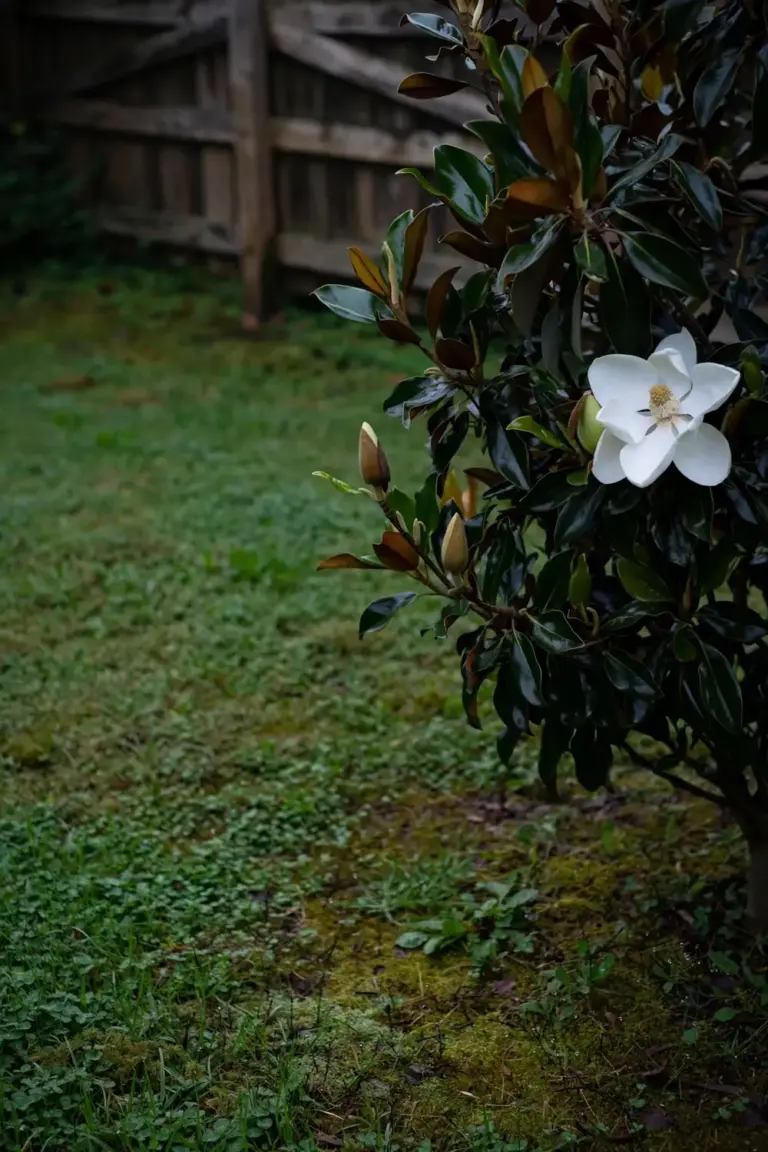
Little Gem suits Queensland to Tasmania and tolerates frost once settled. Its glossy green leaves carry bronze undersides, and its large creamy white flowers open from spring into summer. It grows in full sun to part shade, and full sun gives the best flowering. A Little Gem screen suits a formal front boundary or a courtyard where flowers matter. Water new trees deeply through the first dry season. Its slow to moderate growth means it needs patience, and it rewards that patience with a dense, long lived screen.
15. Plant Hill’s Fig for a Large Fast Screen (With a Root Warning)
Hill’s Fig gives the fastest large screen on this list, and it carries the strongest root warning. Evergreen Trees Direct lists Ficus microcarpa var. hillii Flash at 6 to 10 m, kept clipped to 2 to 5 m, growing up to 1.5 m a year. Plant trees 60 to 80 cm apart for a tight hedge, or 1 m apart for a relaxed screen. That growth rate closes a hedge in one season on warm, moist soil.
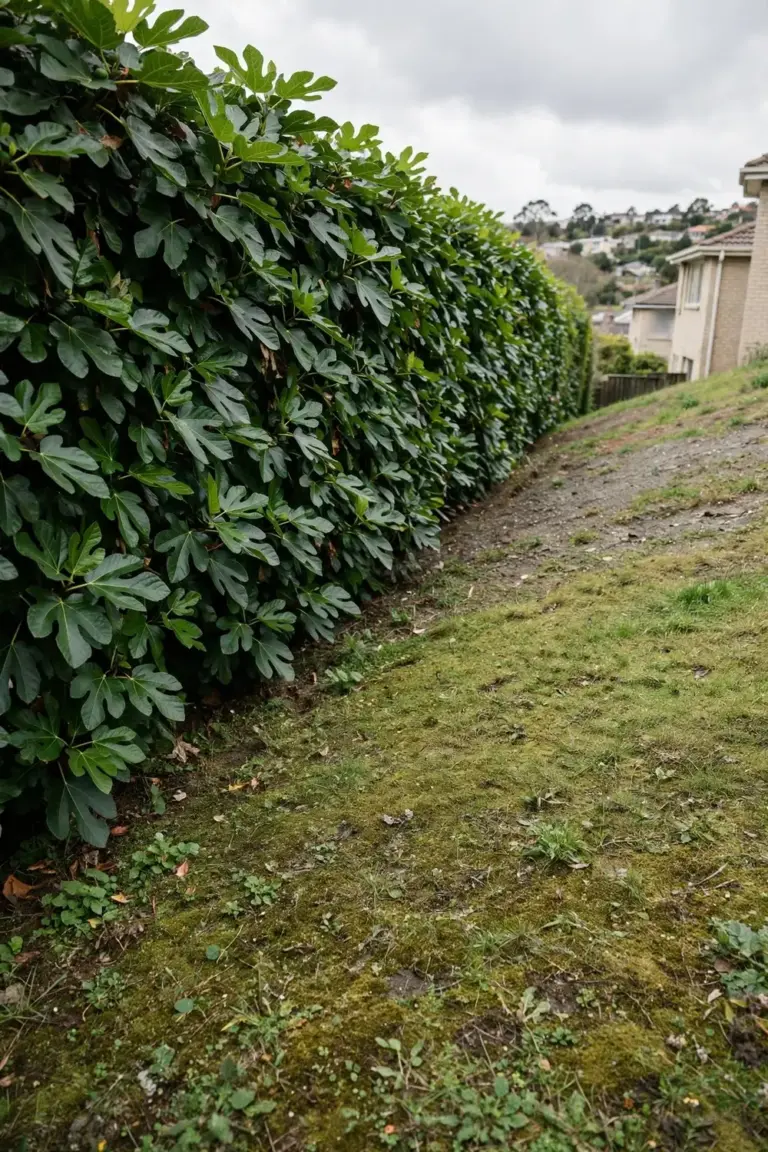
The root warning decides this pick. Evergreen Trees Direct advises planting Hill’s Fig at least 4 m from buildings, paving, and pipes, because its roots are vigorous. Dinsan notes the roots can damage foundations, block drains, and lift paving. That rule excludes Hill’s Fig from a narrow boundary near a house, a driveway, or a sewer line. It suits a large block with open ground, a rural boundary, or an acreage windbreak where 4 m of clearance is easy. Keep it clipped, because an unclipped fig reaches 20 m and outgrows any suburban screen.
Frequently Asked Questions
Hill’s Fig grows fastest, at up to 1.5 m a year, but its vigorous roots exclude it from most suburban blocks. Sweet Viburnum is the safer fast pick, at 60 cm to 1 m a year. It closes a hedge in two to three seasons on good soil with steady water. Speed also depends on water and feeding in the first year. A fast tree on dry soil grows slowly.
Allow half the mature width plus clearance from the fence. Straight and Narrow needs 60 cm of clearance, as Platypus Plants advises. A spreading tree such as Tuckeroo needs several meters, because its canopy reaches 5 to 7 m wide. Hill’s Fig needs 4 m from buildings, paving, and pipes, as Evergreen Trees Direct advises. Check your water authority’s pipe map before you dig, and keep every screen off the pipe line where you can.
No tree is risk free near a leaking pipe, because roots follow moisture. Nursery guides describe Tuckeroo, Blueberry Ash, and Native Frangipani as non-invasive, which lowers the risk. They do not remove it. Keep any screen off the pipe line where you can, and check your water authority’s pipe map before you dig. For a boundary that sits over a sewer line, pick a narrow tree with clearance, or plant in pots.
Yes. Straight and Narrow fits a gap of 1 to 1.5 m, and Pencil Pine fits a gap of 1 to 2 m. Both screen from ground level to the top. Plant Straight and Narrow 60 cm to 1 m apart with 60 cm of fence clearance. Plant Pencil Pine 1 to 1.5 m apart. Both need clipping once or twice a year to hold their line. A spreading tree blocks the path in a narrow passage.
Many natives use less water once settled, and every tree on this list needs deep watering through the first dry season. Banksia and Tuckeroo handle drought once settled. Murraya and Weeping Lilly Pilly want steady water. Feed Banksia with a low phosphorus fertilizer only. Mulch holds moisture through summer, and a drip line beats a hose for a new screen.
Start With the Tape Measure, Then Buy the Tree
Pick the tree that fits the gap, the sun, and the pipes. A narrow passage takes Straight and Narrow or Pencil Pine. A wide coastal block takes Tuckeroo or Coastal Banksia. A fragrant low screen takes Murraya or Sweet Viburnum. A large block with open ground takes Hill’s Fig, with 4 m of clearance from buildings, paving, and pipes.
Measure the gap, check the pipe map, and buy the tree that matches. That order gives a screen that holds for decades, not one that outgrows its gap in three seasons.