
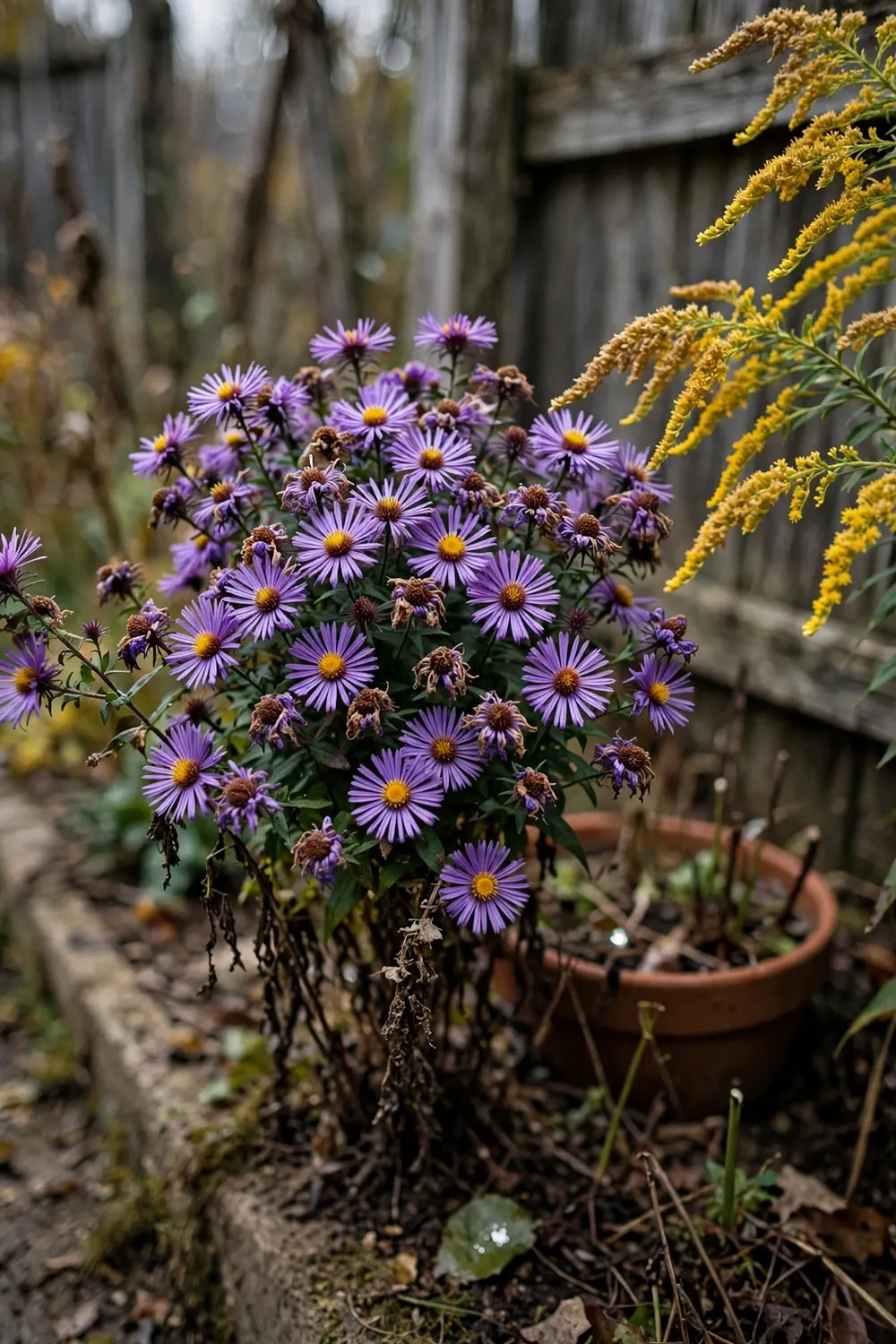

Plant 21 perennials that start blooming in September and you will have flowers long after the last mum goes to the compost. That is fall blooming perennials: asters, goldenrod, anemones, and stonecrop that open in the short days of fall and come back next spring, stronger each year. The rest of this page is 21 picks, from the earliest September aster to the last November toad lily, plus a zone and bloom-window table you can scan in one minute.
Work from the top if October is close. Water every new plant in the first week. Cut nothing back until spring.
The fall planting guide is a different job, and that timing work lives on the site’s fall planting guide. This page stays on the flowers: what blooms, when it starts, and how long it holds. The Pennsylvania Horticultural Society makes the same case against the throwaway mum: a long-lived fall perennial beats a short-lived potted mum, year after year.
Read the Table First: Blooms, Zones, and Which Arc Each Plant Serves
Three arcs run through this list. True fall bloomers wait for short days and open in September or later. Longest bloomers start in summer and hold into October. Shade, pot, and cut-flower picks carry the same bloom windows with a job attached. Scan the row, then read the item.
Twelve of the 21 plants below are native to eastern North America. That is deliberate. Fall is the season when migrating monarchs and late bees need nectar most, and native asters, goldenrods, and Joe-Pye weed evolved to feed exactly those insects. The mum feeds almost nothing by comparison.
Read “frost” in the Blooms column as the first hard freeze, the night the birdbath ices over. In zone 8 that can mean December. In zone 4 it can mean early October. The bloom windows are the plant’s habit, not a promise, and a warm fall stretches every one of them by two weeks.
Fall-blooming bulbs like autumn crocus are a different job. That list lives on bulbs to plant in fall.
| Plant | Arc | Blooms | Zones | Height | Note |
|---|---|---|---|---|---|
| New England Aster | True fall bloomer | Sep to Oct | 4 to 8 | 91 to 183 cm | Native pollinator magnet |
| Aromatic Aster | True fall bloomer | Sep to Nov | 3 to 8 | 30 to 61 cm | Drought tolerant |
| Japanese Anemone | True fall bloomer | Aug to Oct | 4 to 8 | 61 to 122 cm | Part shade |
| Goldenrod ‘Fireworks’ | True fall bloomer | Aug to Oct | 4 to 8 | 91 to 122 cm | Native pollinator magnet |
| Autumn Stonecrop ‘Autumn Joy’ | True fall bloomer | Aug to Oct | 3 to 9 | 46 to 61 cm | Cut flower, dries well |
| Toad Lily | True fall bloomer | Sep to Nov | 4 to 8 | 46 to 91 cm | Shade |
| Montauk Daisy | True fall bloomer | Sep to Nov | 5 to 9 | 61 to 91 cm | The mum alternative |
| Blue Mistflower | True fall bloomer | Aug to Oct | 5 to 10 | 46 to 91 cm | Native, self-sows |
| Black-Eyed Susan ‘Goldsturm’ | Longest bloomer | Jul to Oct | 3 to 9 | 46 to 61 cm | Cut flower |
| Sneezeweed | Longest bloomer | Aug to Oct | 3 to 8 | 91 to 152 cm | Cut flower |
| Russian Sage | Longest bloomer | Aug to frost | 4 to 9 | 91 to 122 cm | Drought tolerant |
| Autumn Sage | Longest bloomer | Sep to frost | 7 to 10 | 61 to 91 cm | Hummingbirds |
| White Wood Aster | Shade | Aug to Oct | 3 to 8 | 30 to 91 cm | Native, dry shade |
| Turtlehead | Shade | Aug to Oct | 3 to 8 | 61 to 122 cm | Wet soil |
| Black Cohosh ‘Brunette’ | Shade | Sep to Oct | 4 to 8 | 122 to 183 cm | Part shade |
| Cardinal Flower | Shade | Jul to Sep | 3 to 9 | 61 to 122 cm | Hummingbirds, moist soil |
| Mexican Bush Sage | Pot | Aug to frost | 8 to 10 | 91 to 152 cm | Tender, overwinters indoors |
| Plumbago | Pot | Aug to Oct | 5 to 9 | 15 to 30 cm | Groundcover, red fall leaves |
| Pineapple Sage | Pot | Sep to frost | 8 to 11 | 91 to 152 cm | Scented leaves |
| Boltonia | Cut flower | Aug to Oct | 3 to 9 | 91 to 152 cm | Native |
| Joe-Pye Weed | Cut flower | Jul to Sep | 3 to 9 | 122 to 213 cm | Native, back of border |
1. Start With New England Aster, the September Workhorse
Set New England aster at the back of the border and it carries September on purple. The plant builds bushy clumps 91 to 183 cm tall and opens its composite flowers from late summer into fall, drawing late-season bees and butterflies, according to NC State Extension’s New England aster notes.
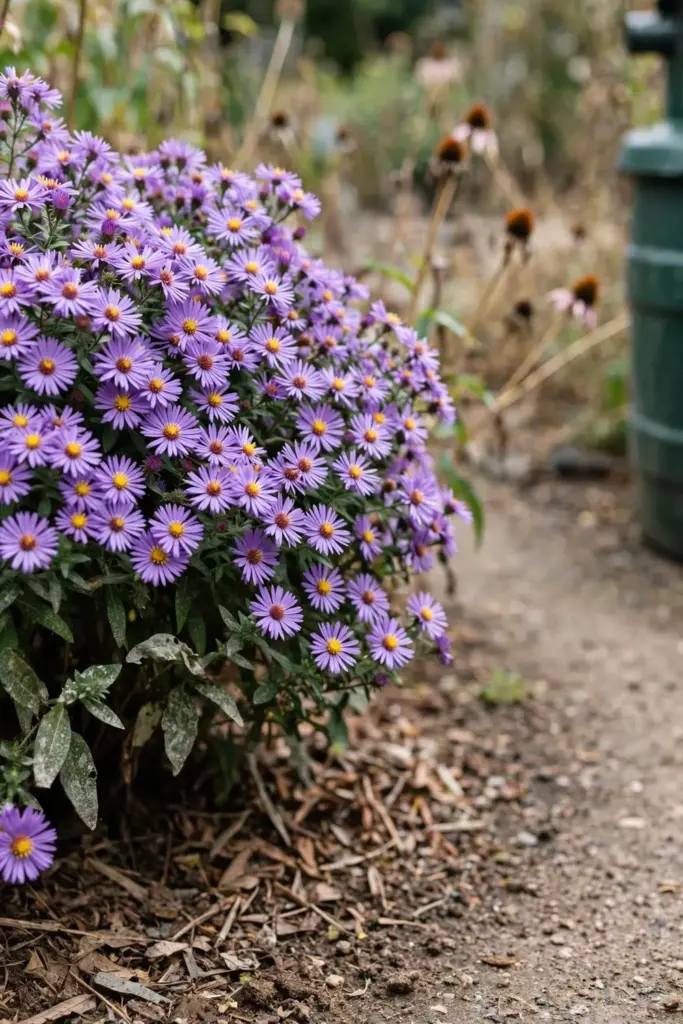
Pinch the stems once in late spring and the plant blooms lower and denser. Give it full sun and moist, fertile soil. Clay loam is acceptable. A mulch ring of shredded leaves holds the moisture the shallow roots want.
Skip the pinch and the clumps flop open by October. Cut the stems back by half in June. The September show stays upright.
‘Purple Dome’ stays 46 to 61 cm for small beds and never needs the pinch. Space plants 46 to 61 cm apart in groups of three or five. One plant looks lonely. Three read as a drift.
2. Plant Aromatic Aster for the Last Blue of October
Aromatic aster opens after the New England aster finishes. The flowers are small and sky-blue, and the plant holds 30 to 61 cm in dry soil where taller asters sulk.
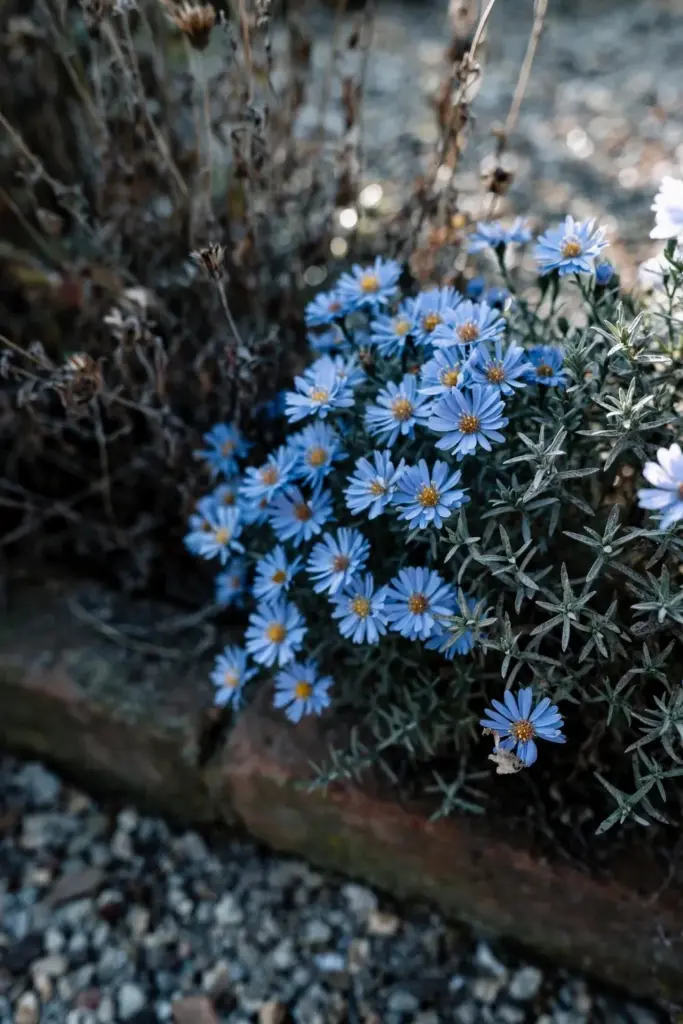
Plant it at the front of a sunny bed. It tolerates poor, dry soil and needs no staking. The foliage carries a balsam scent when brushed.
Do not water it like a thirsty annual. Wet feet in winter rot the crown, so plant high and let the soil dry between rains.
‘October Skies’ is the named cultivar to ask for at the nursery, with deeper blue flowers on a compact frame. It spreads by short rhizomes into a patch 61 cm wide in three years. Cut the old stems to the ground in March.
3. Let Japanese Anemones Open When Roses Quit
Japanese anemones send up branching stems in late August and carry pink or white saucer flowers through October. The clumps reach 61 to 122 cm and spread slowly by underground runners.
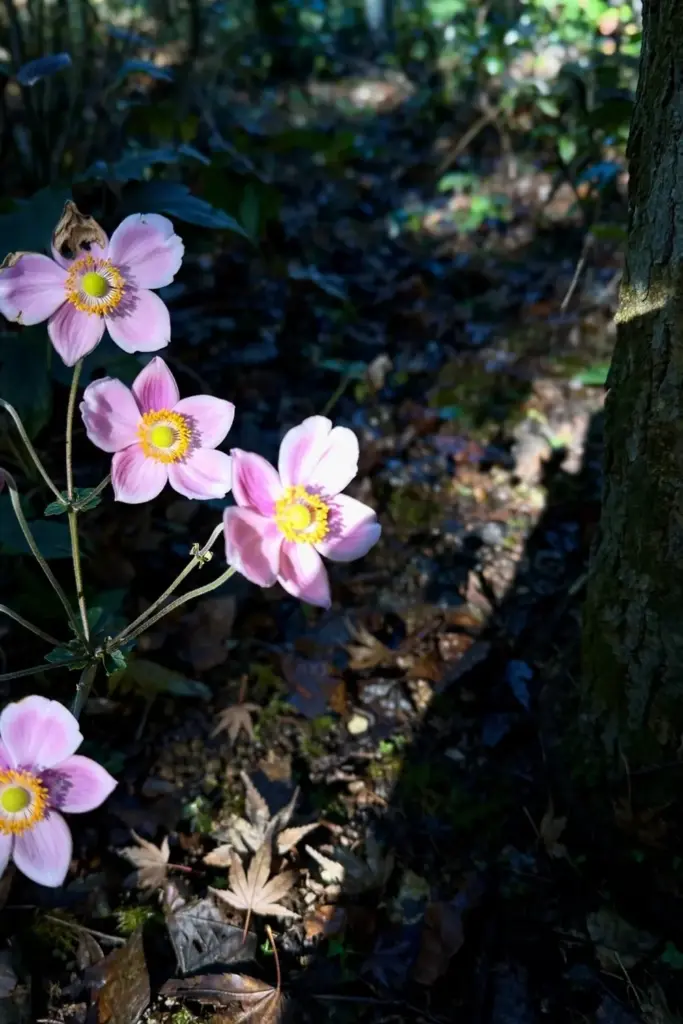
Give them part shade and rich, moist soil. A spot under a deciduous tree works: summer shade, fall sun after leaf drop. Top-dress with compost each spring and the clumps double faster.
Do not move them in the first year. The roots resent disturbance, and the plant sits still for a season before it starts to run. Once established, lift and divide the runners in spring to fill a bare corner.
‘Honorine Jobert’ carries single white flowers on 91 to 122 cm stems and takes part shade without flopping. ‘September Charm’ is the pink one, slightly shorter. Space them 61 cm apart and give each plant room to travel, because travel it will.
4. Grow Goldenrod for the Pollinator Rush
Goldenrod is the backbone of the fall pollinator garden. ‘Fireworks’ throws arching sprays of yellow from August into October on stems 91 to 122 cm tall, and bees work it from the first open flower. The same extension notes that pair New England aster with a fall-blooming Solidago say exactly that: plant the two together for the strongest September display.
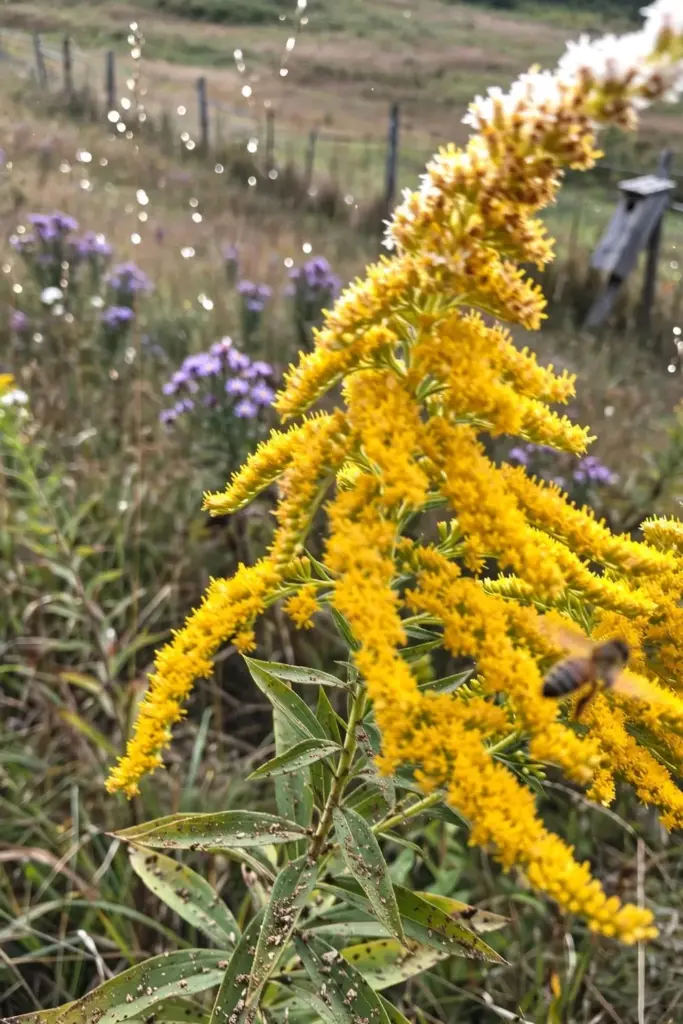
Give it full sun and average soil. Do not fertilize. Rich soil makes it floppy and aggressive.
Cut the stems to the ground in late spring if the clump grows too tall. The regrowth blooms lower and holds upright through wind.
Goldenrod does not cause hay fever. Ragweed blooms at the same time and takes the blame, while goldenrod pollen is heavy and carried by insects, not wind. Plant ‘Fireworks’ with New England aster for the classic purple-and-gold September pairing the extension notes recommend.
5. Keep Autumn Stonecrop Upright With One June Pinch
‘Autumn Joy’ sedum builds broccoli heads in August and turns them dusty rose through October. The clumps hold 46 to 61 cm and stand through frost, then through winter as dried heads. Bees work the flat heads on every warm afternoon in September.
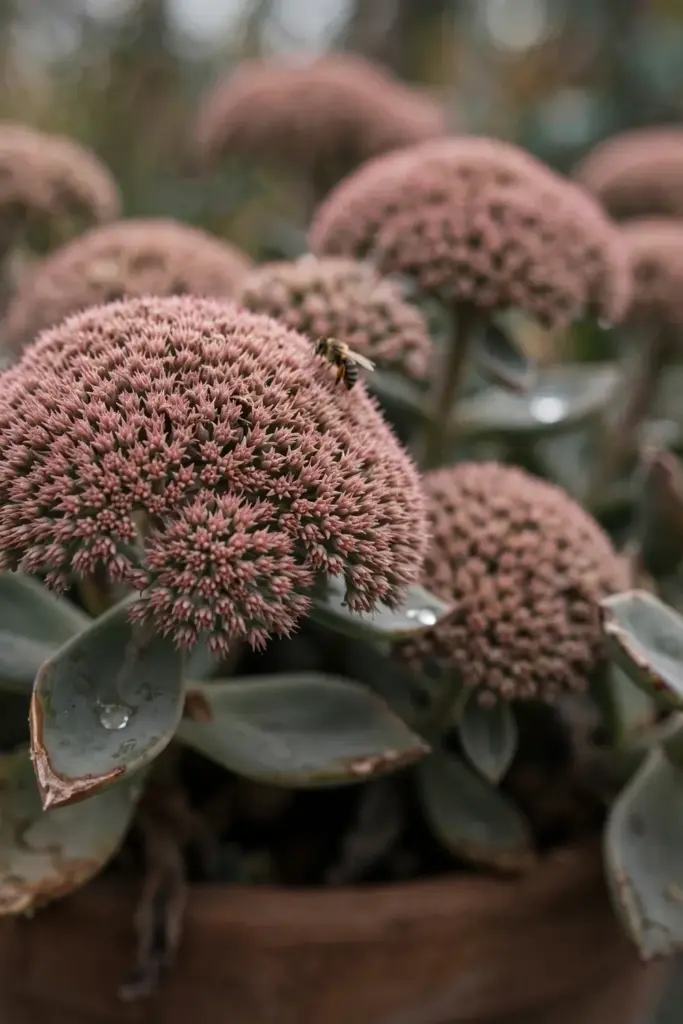
Pinch or cut the stems back by half in early June, and the regrowth stays compact with the flower heads sitting flat instead of splaying.
Skip the pinch and a September rain lays the whole clump open. One June cut decides the season. Leave the dried heads standing for winter birds, then cut everything down in March while the new rosettes are still flat against the soil.
Divide the clumps every three to four years in spring, when the new shoots are 5.1 cm tall. Each division needs a chunk of root and three shoots. Replant at the same depth and water once.
6. Put Toad Lilies Where Nothing Else Blooms in November
Toad lilies flower in deep shade when the rest of the garden is finished. The orchid-like spotted flowers open from September into November on arching stems 46 to 91 cm tall.
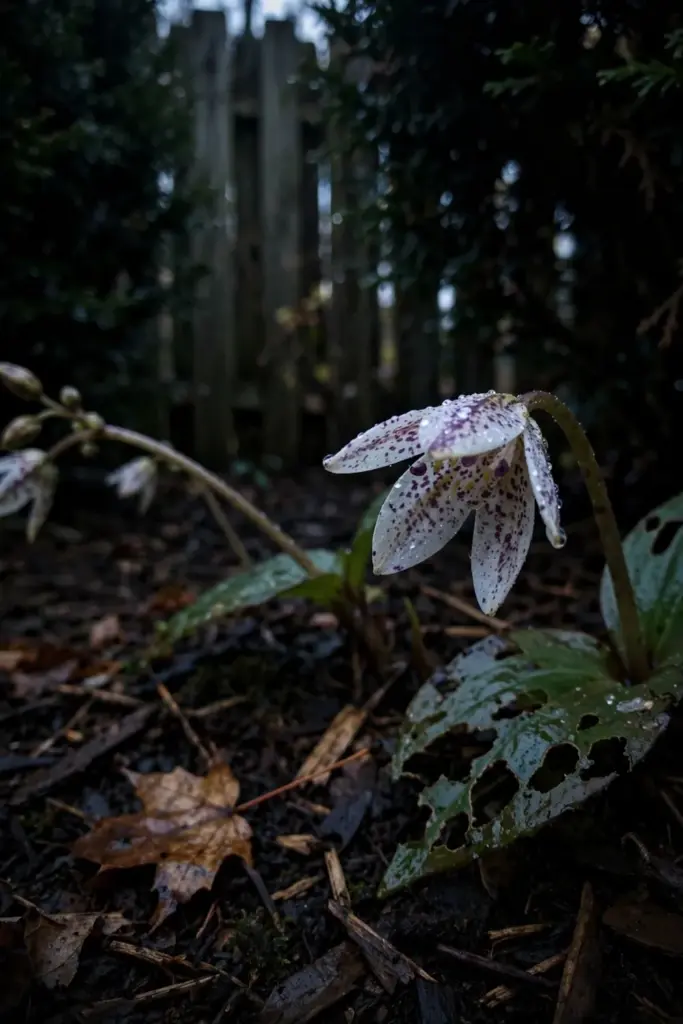
Plant them in moist, humus-rich shade. A north-facing bed under evergreens suits them. Mulch with 5.1 cm of shredded leaves each fall.
Do not plant them in dry shade. The buds abort on dry plants, and the stems stand bare through the one season they should shine. Water the first fall and the colony thickens on its own.
‘Miyazaki’ is the common hybrid with larger, heavily spotted flowers. Slugs chew the low leaves in wet springs, so clear the leaf litter around the crowns in April. The flowers open over six weeks, which makes one plant a long show.
7. Swap One Mum for a Montauk Daisy
Montauk daisy is the anti-mum. It blooms from September into November with clean white daisies on stiff stems 61 to 91 cm tall, and it comes back every year in zones 5 to 9.
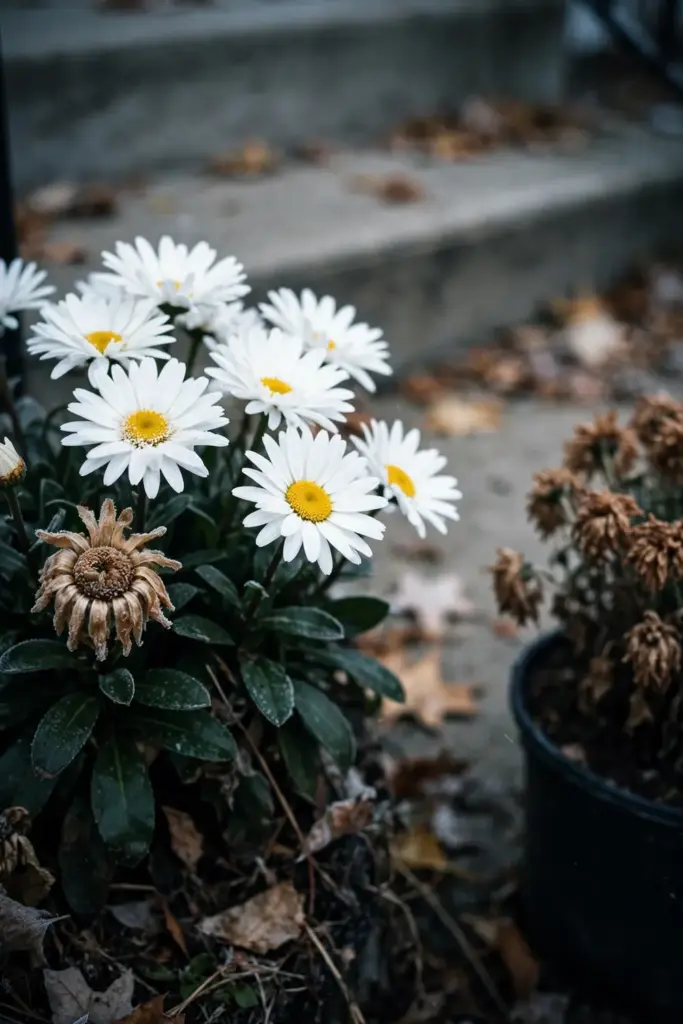
Pinch the stems two or three times before midsummer. Without pinching it grows leggy and splits open. Plant it in full sun and lean soil.
Cut it back hard in late fall after frost kills the top growth. Do not mulch heavily over the crown. Winter wet kills more Montauk daisies than winter cold.
Gardeners at the cold edge of zone 5 should plant in spring, not fall, so the roots get a full season before the first freeze. It also tolerates salt spray, which makes it a working plant for coastal beds where mums give up.
8. Let Blue Mistflower Self-Sow in the Damp Corner
Blue mistflower spreads a haze of powder-blue flowers from August into October. The plant reaches 46 to 91 cm and self-sows freely in moist soil.
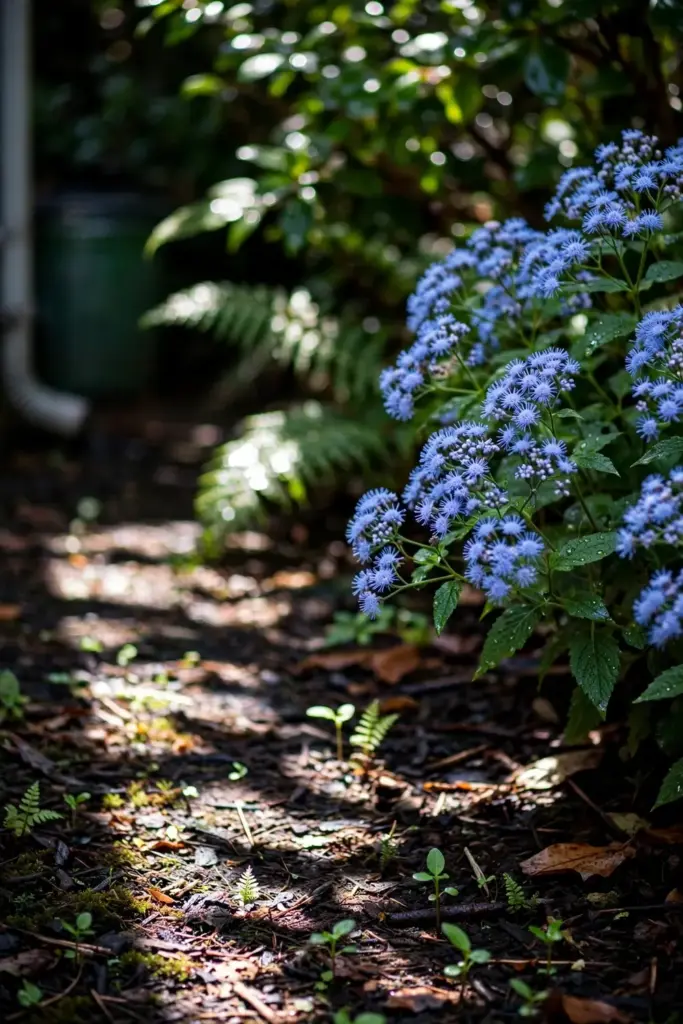
Plant it where it can roam: a rain garden edge, a damp corner, the back of a wild bed. Pull seedlings in spring where you do not want them.
Do not plant it in a tight formal bed. It will outrun the edging in two seasons and seed into the lawn. Give it room and it fills a gap no nursery plant reaches.
Cut the whole plant back by a third in July and it branches into a denser fall mound. Butterflies treat the flat flower clusters like a landing pad. Pull the seedlings you do not want in May, while they are small.
9. Count on Black-Eyed Susan for the Longest Run
‘Goldsturm’ rudbeckia is the longest-blooming perennial on this list. It opens in July and holds into October, which answers the longest-bloom question outright. The golden cones stand 46 to 61 cm over dark green leaves, on stiff stems that never need staking.
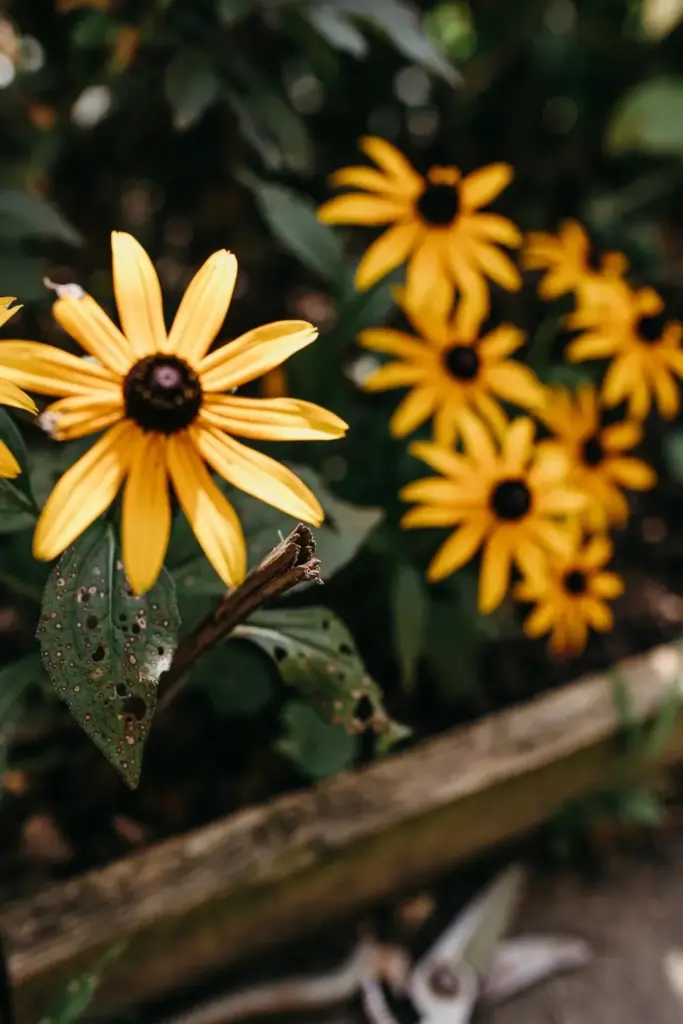
Deadhead the spent cones weekly and the plant keeps pushing new buds. Leave the last flush standing for goldfinches.
Do not let the clumps sit more than four years. The centers thin, the bloom shortens, and the plant loses the long run that earned it a place here. Divide in spring and the run starts over.
Septoria leaf spot freckles the lower leaves in wet summers. Water at the base, space plants 46 cm apart for airflow, and strip the worst leaves. The flowers keep coming above the damage.
10. Deadhead Sneezeweed to Stretch August Into October
Sneezeweed carries copper, rust, and gold daisies from August into October on stems 91 to 152 cm tall. The name is old medicine, not a warning. The flowers do not trigger allergies.
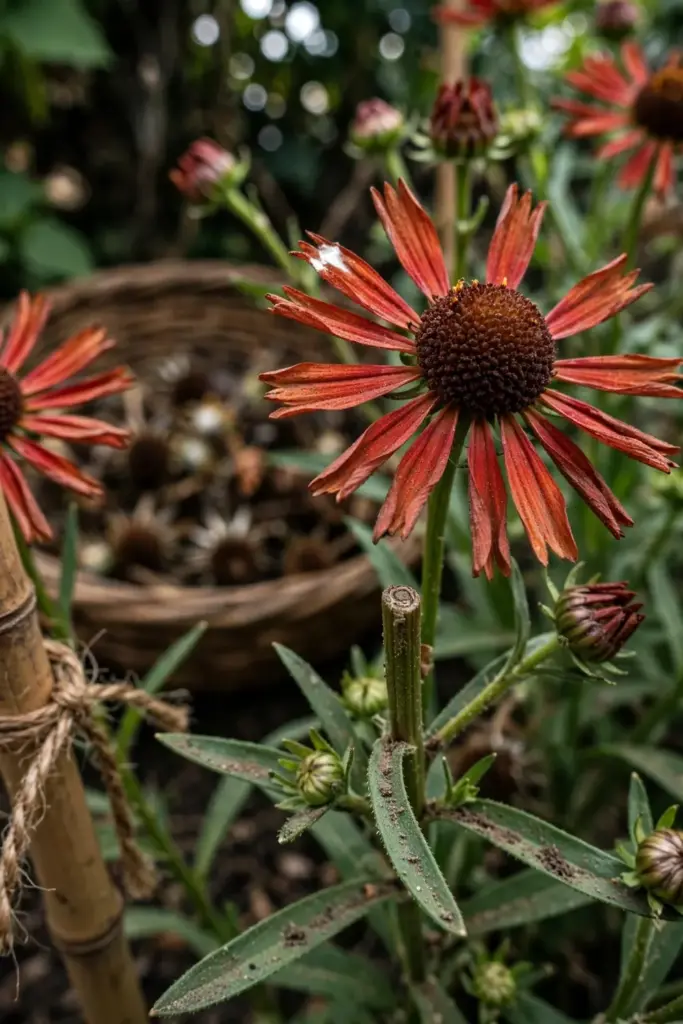
Cut the stems by a third in June for bushier plants. Deadhead through September and new buds keep opening. The seed heads feed birds if you stop in October.
Skip the June cut and the stems tower and lean. One shear sets the height for the whole fall, and the plant stays off the path. Stake only the tallest cultivars in windy sites.
‘Mardi Gras’ carries bicolor petals, red banded with gold, on 91 cm stems. Divide sneezeweed every two to three years in spring. Old clumps bloom themselves tired and the centers die out.
11. Cut Russian Sage Hard in Spring for a Fall Cloud
Russian sage opens lavender spikes in August and holds a silver-blue haze until frost. The plant reaches 91 to 122 cm and shrugs at drought, heat, and poor soil.
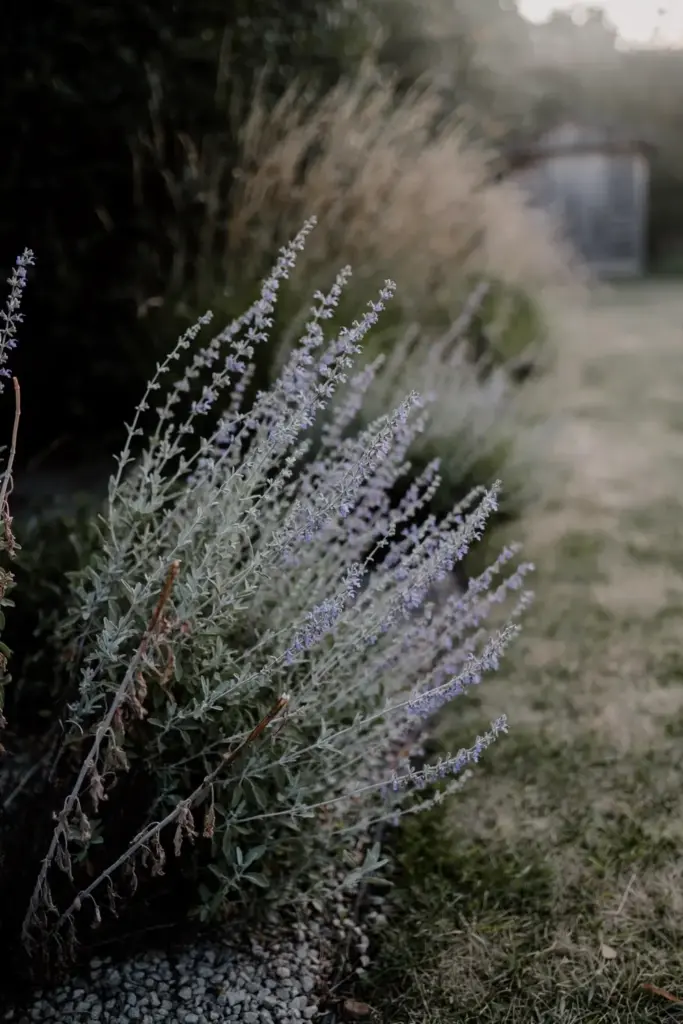
Cut every stem to 15.2 cm in early spring. The regrowth is stiffer and the fall cloud sits upright. Plant it in full sun with sharp drainage. Gravel mulch around the crown keeps winter wet off the roots.
Do not cut it in fall. The hollow stems collect water and the crown rots in a wet winter. Leave the silver skeleton standing and cut in March.
‘Little Spire’ holds 61 to 76 cm for smaller gardens and never needs staking. Pair it with ornamental grasses for the classic silver-and-tan fall combination. One plant anchors a 91 cm circle by its third year.
12. Save Autumn Sage for Zones 7 and Warmer
Autumn sage blooms from September until frost in zones 7 to 10, where most fall perennials are winding down. The tubular flowers come in red, pink, and coral on shrubs 61 to 91 cm tall, and hummingbirds visit daily.
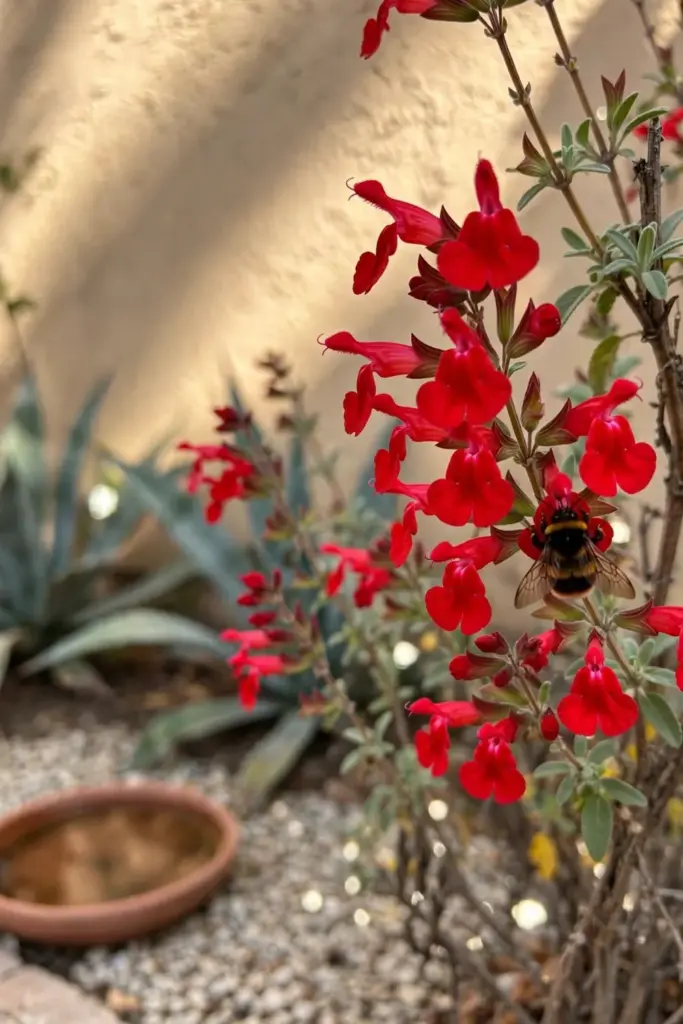
Plant it in full sun and well-drained soil. It tolerates heat and short drought once the roots settle. Shear lightly after the first flush to push a second.
Do not treat it as hardy in zone 6 without protection. A cold, wet winter kills the crown while the same plant sails through zone 7. Gardeners in zone 6 grow it in a pot and overwinter it frost-free.
‘Wild Thing’ is the hot-pink form with the longest bloom of the group. Deadhead the spent spikes and the plant reblooms in three weeks. Keep winter mulch light and pulled back from the stems, because wet mulch packed against the crown is what kills it in a cold January.
13. Fill Dry Shade With White Wood Aster
White wood aster blooms in shade where most fall flowers refuse. The small white stars open from August into October on wiry stems 30 to 91 cm tall, and the plant tolerates the dry shade under maples. The heart-shaped basal leaves stay green through the season and look intentional even before bloom.
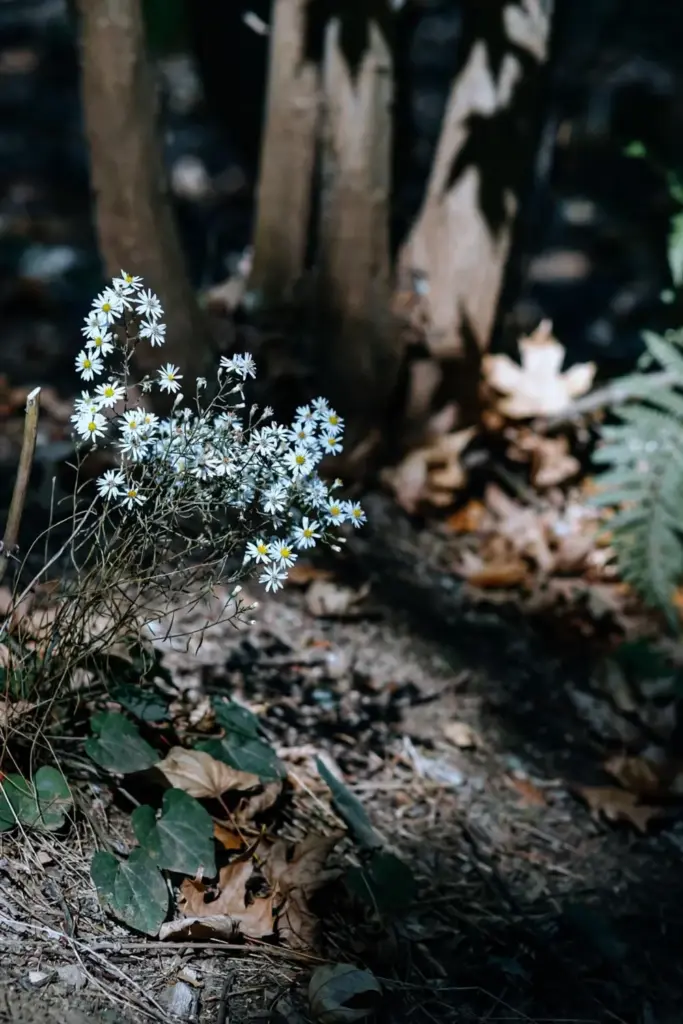
Plant it under deciduous trees and leave the fallen leaves. The leaf litter is its mulch and its seedbed. It self-sows into a colony.
Do not fertilize it. Rich feeding makes soft growth that flops by September, which defeats the one reason to plant it. Lean soil and leaf mold are the whole program.
Plant it in drifts of seven or more, 30 cm apart, and let it knit into a groundcover. It pairs with ferns and hostas, which give it green company through summer before the white stars take over.
14. Stand Turtlehead in the Wet Shade Corner
Turtlehead opens hooded pink flowers from August into October in the wettest corner of the shade garden. The stiff stems hold 61 to 122 cm and never need staking.
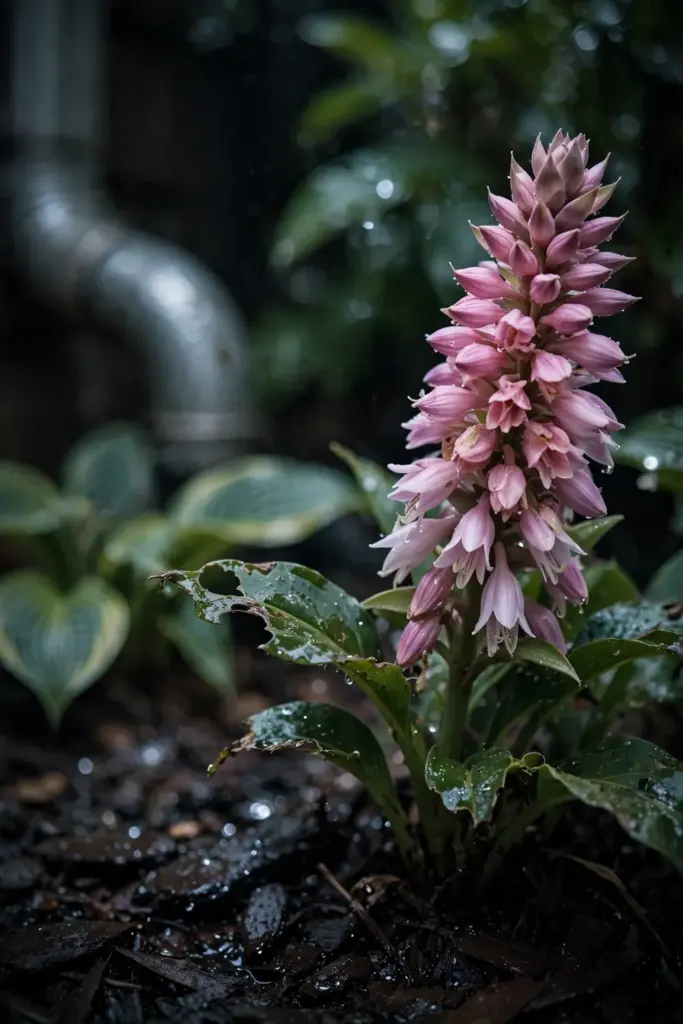
Plant it where the downspout drains or the soil stays damp. Mulch with 5.1 cm of bark to hold the moisture. It tolerates clay that drowns lesser plants.
Do not plant it in dry shade, where the leaves scorch at the edges and the buds never open. Wet feet are the price of admission, and the plant pays it back with the stiffest stems in the shade garden.
Turtlehead is the host plant for the Baltimore checkerspot butterfly, which lays its eggs on the leaves. ‘Hot Lips’ is the bright-pink form. Leave the blackened stems standing through winter for the seed heads.
15. Raise Black Cohosh for Height Behind the Asters
‘Brunette’ black cohosh sends white bottlebrush spikes 122 to 183 cm tall in September and October above dark purple foliage. The vertical line behind asters and goldenrod is the backbone of the fall border.
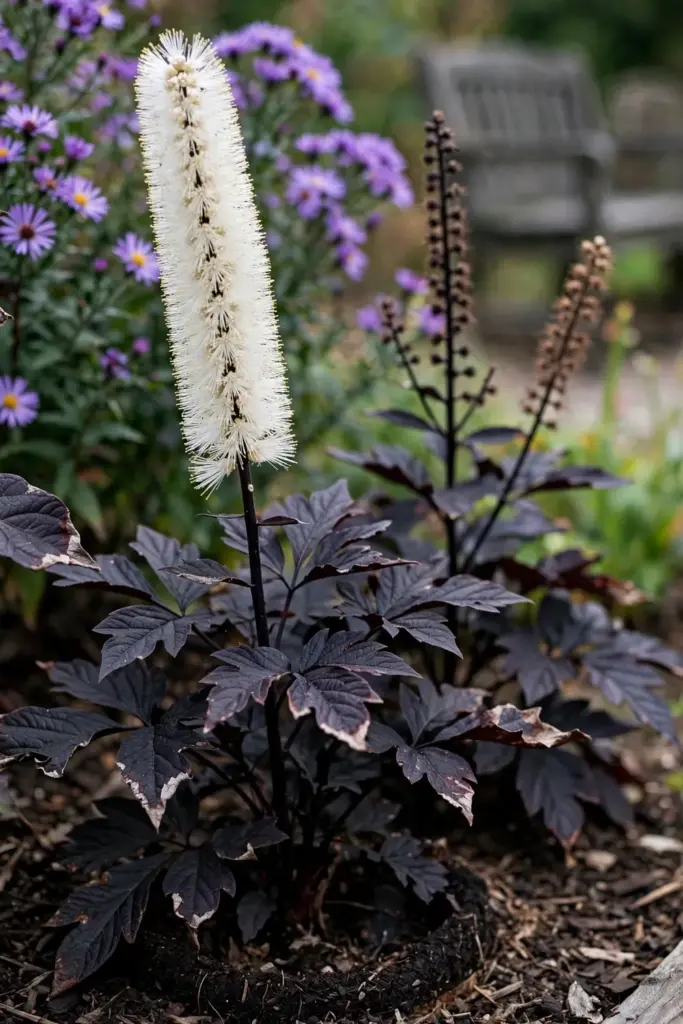
Plant it in part shade with rich, moist soil. The roots run deep and resent moving, so choose the spot once. Water the first summer. A ring of compost each spring replaces the fertilizer it never needs.
Do not cut the spent spikes in fall. The seed heads hold through winter and the birds work them into January. Cut the whole plant down in March before new growth starts.
‘Black Negligee’ has finer, darker foliage than ‘Brunette’ and the same white spikes. Space plants 91 cm apart. The roots run deep and resent moving, so this is a plant you place once and leave alone for a decade.
16. Water Cardinal Flower Like It Means It
Cardinal flower throws scarlet spikes from July into September on stems 61 to 122 cm, and hummingbirds find it within days. It is short-lived as a single plant but self-sows where the soil stays moist.
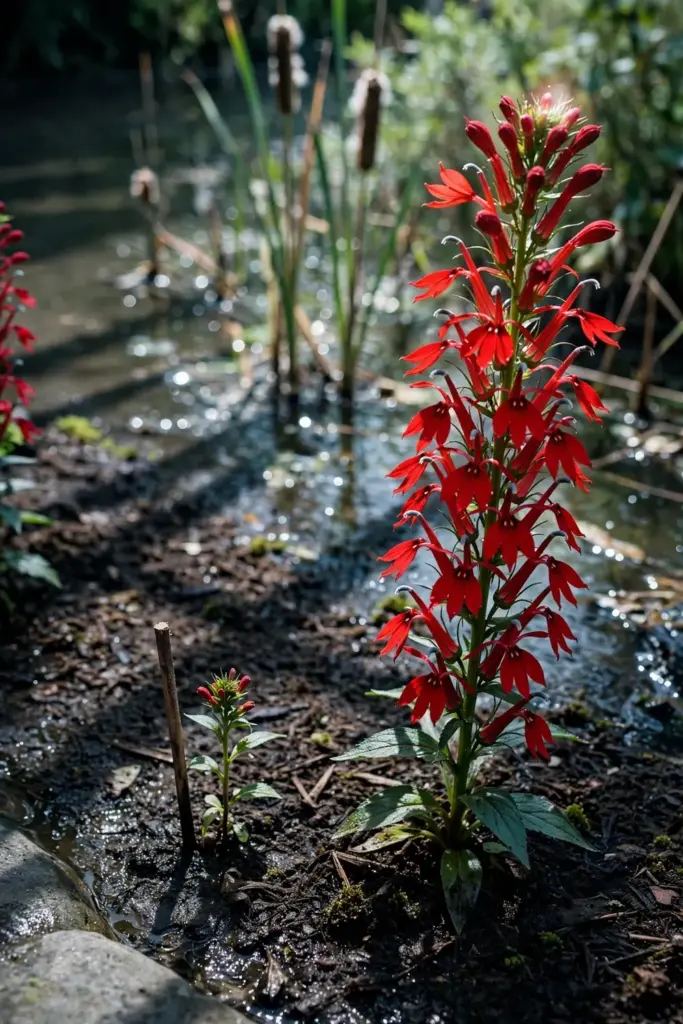
Plant it at the edge of a pond, a rain garden, or a bed you water often. Mulch with 5.1 cm of compost to hold moisture. Let some seedlings stand each year to replace the parent plants.
Do not let the soil dry in August. One dry week aborts the buds and the scarlet show never happens. Wet soil and self-sown seedlings are the whole strategy.
Cardinal flower lives three to four years as a single plant, so let a few seedlings stand each spring to replace the parents. ‘Black Truffle’ carries near-black foliage behind the red flowers. Mark the seedlings with a stick so you do not weed them out.
17. Pot Mexican Bush Sage for Frost-Proof Color
Mexican bush sage is the strongest fall pot plant on this list. The velvet purple spikes open from August until frost on stems 91 to 152 cm, and the silver foliage looks good before a single flower opens.
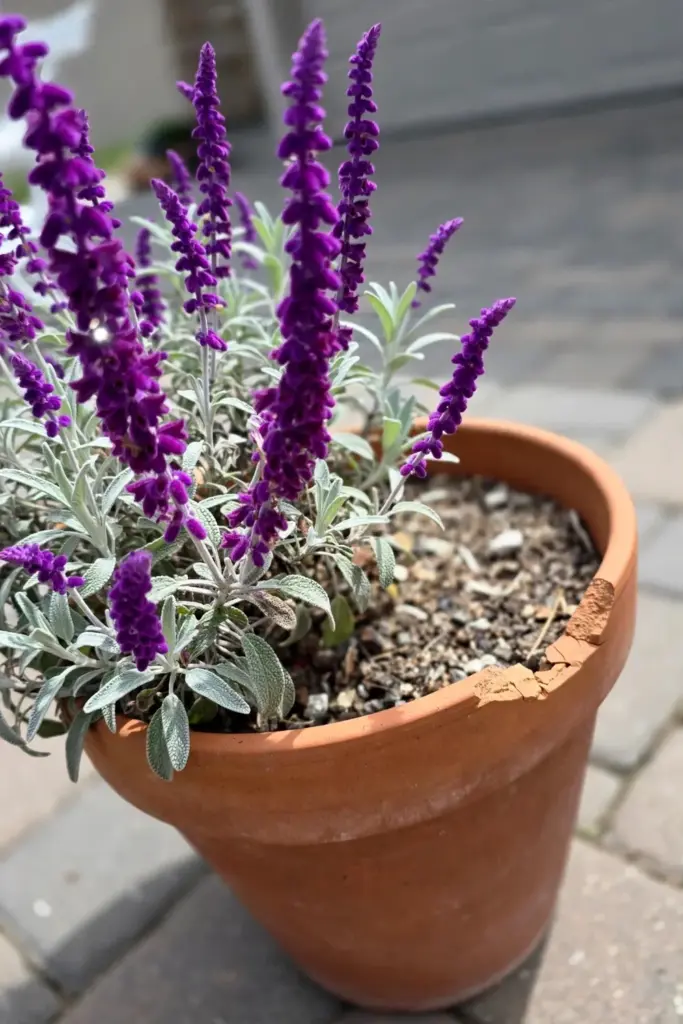
Plant one per 35.6 cm pot in gritty mix. Water when the top 2.5 cm dries. Feed once a month with half-strength liquid fertilizer. Turn the pot a quarter turn each week so the plant grows evenly instead of leaning to the sun.
Move the pot frost-free before the first hard freeze in zones 7 and colder. Cut the stems to 15.2 cm for winter storage. The plant wakes late in spring. Wait for it.
Take 10.2 cm tip cuttings in late summer and root them in a jar of water on a bright windowsill. Pot them up when the roots reach 2.5 cm. One mother plant becomes next year’s pots for free.
18. Edge Paths With Plumbago for Blue and Red Leaves
Plumbago spreads 15 to 30 cm tall along path edges and opens gentian-blue flowers from August into October. The foliage turns deep red after the first cold nights, so the plant gives two shows.
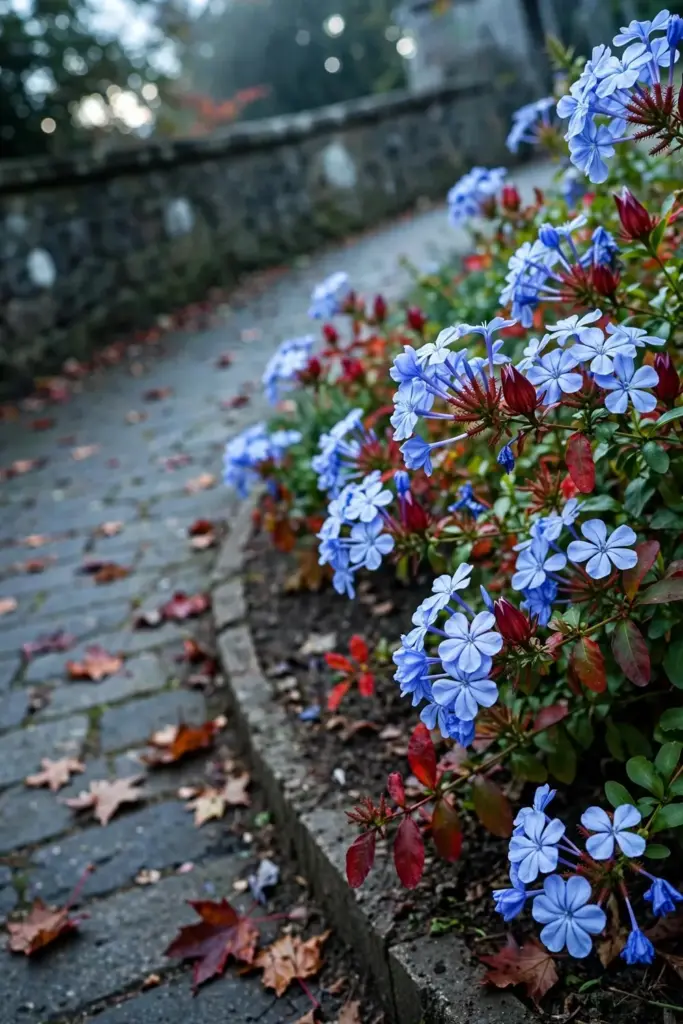
Plant it in sun to part shade and average soil. It spreads by underground stems into a weed-proof mat. Edge the bed with a spade in spring to hold the line.
Do not plant it where you want it to stay small, because it covers ground fast in good soil and swallows slow neighbors. Give it a path to follow and it behaves.
Set plants 30 cm apart for a mat that knits in one season. The blue flowers carry red calyces behind them, so each bloom has two colors. Shear the top lightly after the first flush to push a second round.
19. Grow Pineapple Sage for Scent and Hummingbirds
Pineapple sage opens scarlet trumpets from September until frost, and the crushed leaves smell of pineapple. The plant reaches 91 to 152 cm in one season in zones 8 to 11, and northern gardeners grow it as an annual in pots. The flowers open too late for seed in cold climates, so northern gardeners buy new plants each spring.
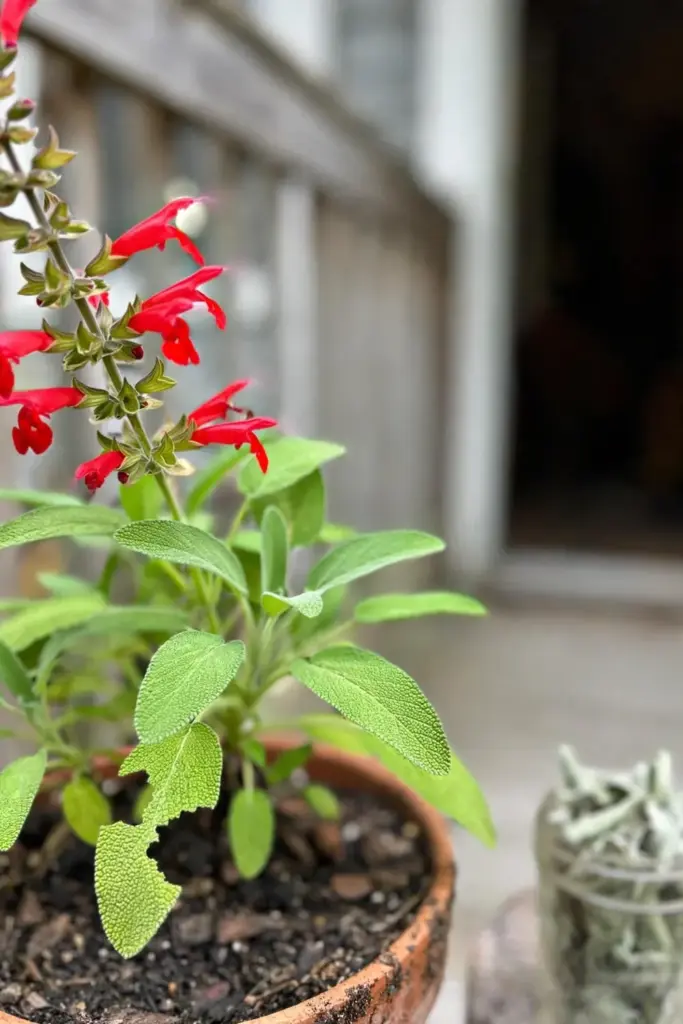
Pinch the tips twice in summer for branching. Bring the pot indoors before frost and it blooms on a sunny windowsill into December.
Strip a few leaves for tea before the frost takes them. Do not wait for a full harvest. The first hard freeze ends the season overnight, and the leaves go with it.
Pinch the growing tips twice in summer and the plant branches into a bush instead of a pole. Hummingbirds visit the red trumpets daily from the first open flower. One plant scents the whole porch on a warm September evening.
20. Cut Boltonia in Bud for the Longest Vase Life
Boltonia throws clouds of small white asters from August into October on stems 91 to 152 cm. Cut the stems when the first buds show color and they open in the vase over ten days.
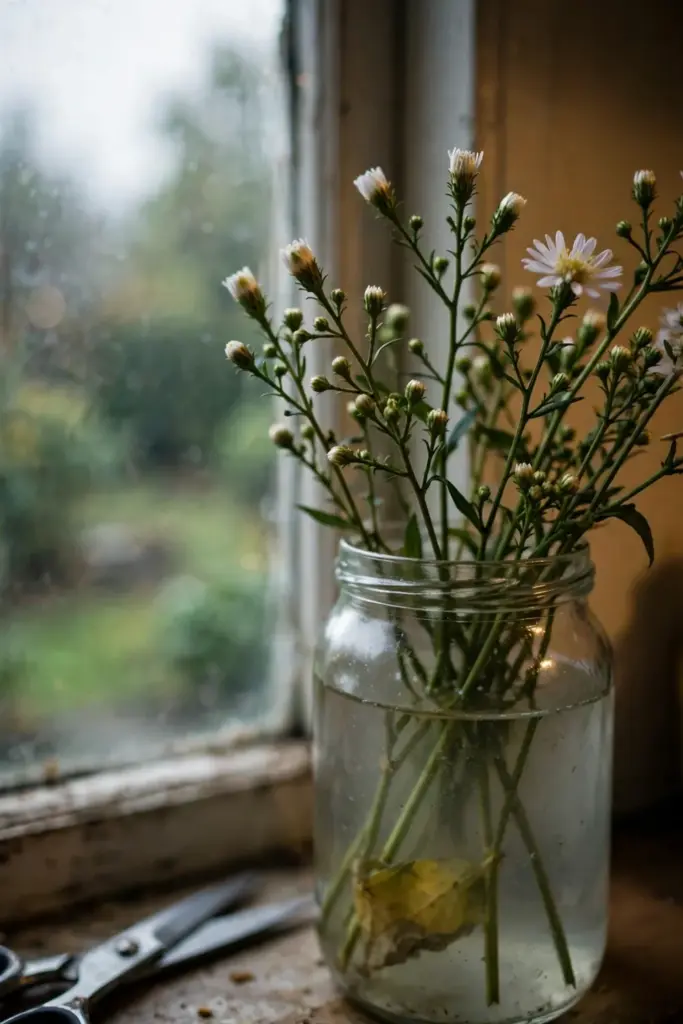
Plant it in full sun and moist soil. Pinch once in June to keep the stems from sprawling. The plant is native to eastern North America and bees work it alongside the goldenrod.
Do not cut fully open flowers for the vase. They shatter in two days. Buds with color are the cut, and they open in the vase over ten days.
‘Snowbank’ is the compact form at 91 to 122 cm, with the same white clouds. Pinch it once in June for denser stems. Divide the clumps in spring every three years, because old centers bloom thin.
21. Back the Border With Joe-Pye Weed
Joe-Pye weed lifts dusty-rose flower heads 122 to 213 cm tall from July into September at the back of the border. Butterflies cover it on warm afternoons. One established clump feeds more butterflies in an afternoon than the rest of the border combined.
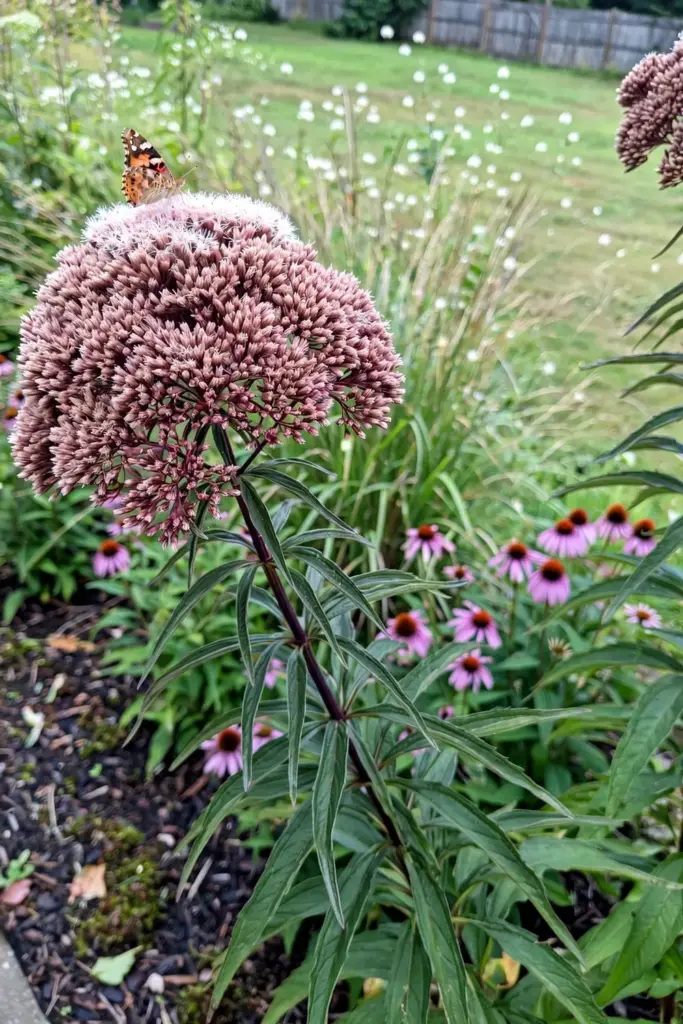
Plant it in full sun and moist, rich soil. The clumps expand slowly and need dividing every five or six years in spring. One plant fills a 91 cm square in three seasons.
Do not plant it in dry soil. The lower leaves brown and drop by August, and the tall stems stand half naked. Moist feet and full sun are the deal.
‘Gateway’ is the named cultivar, slightly shorter at 152 to 183 cm with deeper rose flowers. Divide the clumps in spring every five or six years. Each division needs a fan of shoots and its own roots, replanted at the same depth.
Divide in Fall: Split the Summer Ones, Not These
Fall is a good time to divide perennials, but not the fall bloomers. Divide fall-blooming perennials in the spring, when new growth is emerging and the plant has the whole season to recover, per the University of Minnesota Extension’s dividing guide. Split a blooming aster in October and you drain the energy it needs to finish the season.
Divide the summer bloomers in fall instead: coneflower, daylily, bee balm, and phlox. Time the work four to six weeks before the ground freezes, which is the same guide’s rule for northern climates. Each division needs three to five vigorous shoots and its own roots.
Water the divisions in and mulch with 5.1 to 7.6 cm of shredded leaves. Do not fertilize until spring growth shows.
The fall bloomers on this list stay untouched in fall. Asters, anemones, Montauk daisies, and toad lilies keep every root they have through winter, and you divide them in April when the new shoots are 5.1 to 10.2 cm tall. Mark the clumps now with a stick while you can see them, because the bare ground of March hides everything. A bamboo stake with the plant name written on it survives winter better than a plastic tag. Lift with a fork, not a spade, to keep the root ball intact, and replant at the same depth the crown sat before.
Water the new divisions every three or four days for the first two weeks if rain skips you, then back off. The goal is moist, not soggy. A division set too deep rots at the crown, so keep the crown exactly at soil level. A division drowned in October rots before it roots, which is the most common way a fall division fails in heavy clay.
Seven Mistakes That Cost You Fall Blooms
One, planting in November and expecting roots. The ground freezes before the roots grow, and the plant heaves out by January. October planting works. November planting is a donation to the compost.
Two, deadheading everything. Asters and goldenrod seed heads feed birds through winter, so the shears stay in the shed for those. Deadhead sneezeweed and rudbeckia for rebloom, and leave the rest standing.
Three, skipping the June pinch. Tall asters, sneezeweed, and Montauk daisy flop without it, and no stake fixes a plant that should have been cut in June. One cut in June is cheaper than stakes in October.
Four, dividing fall bloomers in fall. Spring is their season for division, when the new shoots show you where to cut. Fall division belongs to the summer bloomers.
Five, watering pots like summer. Fall pots dry slower than summer ones, so check the top 2.5 cm before you water or the roots rot in cold, wet mix.
Six, cutting everything back in November. Hollow stems shelter overwintering insects, and standing seed heads feed birds through the lean months. Cut in March, when the new growth tells you what survived.
Seven, buying by color alone. Check the zone and the bloom window on the tag first. A zone 8 sage in zone 5 is an annual with a perennial price, and it dies in January no matter how pretty the flowers were.
Late-Fall Care After the Last Bloom
Leave the garden standing. The seed heads of coneflower, black-eyed Susan, and Joe-Pye weed feed goldfinches through December, and the hollow stems of bee balm and aster shelter overwintering beneficial insects.
Rake the fallen leaves onto the beds instead of bagging them. A 5.1 cm layer of shredded leaves insulates the crowns and feeds the soil by spring. Keep the leaves off the evergreen foliage of stonecrop so the rosettes stay dry.
Water evergreen perennials once before the ground freezes if the fall has been dry. Stonecrop rosettes and plumbago mats go into winter with leaves on, and dry roots in frozen soil kill more of them than cold air does. The full task list, from soil to first frost, lives on fall gardening tips.
Move the tender pots before the first hard freeze, not after. Mexican bush sage and pineapple sage take light frost on the leaves, but a night at minus 4 degrees Celsius finishes the roots in a pot. Cut them back, carry them into a frost-free garage or windowsill, and water once a month until March.
October Belongs to the Perennials
The mums peak in the first week of October and fade by the third. The perennials on this list do the opposite. Asters open as the mums fade, toad lilies wait for November, and the seed heads feed birds into January.
Plant three this October and the garden changes next fall. Plant the full 21 over two seasons and September becomes the best month in the border instead of the emptiest. The table at the top is the shopping list. Start there.
Frequently Asked Questions
What Fall Blooming Perennials Last the Longest?
Black-eyed Susan ‘Goldsturm’ runs the longest, from July into October, with weekly deadheading. Russian sage and autumn sage bloom from August until frost without deadheading, while aromatic aster and Montauk daisy hold the single fall window from September into November. Plant one from each group and the border never gaps.
Which Flowers Only Bloom in the Fall?
Toad lily, Montauk daisy, and Japanese anemone wait for short days and open only in fall, with buds that form as the nights lengthen. New England aster and goldenrod start in late August and peak in September. These are the true fall bloomers. Summer carryovers like black-eyed Susan and coneflower started in July and last into October, which is a different job: they extend the summer show rather than starting a fall one.
Are Fall Blooming Perennials Better Than Mums?
A potted garden mum is often grown as a throwaway annual, replaced every October, while a fall perennial returns for years from one planting. Asters, anemones, goldenrod, and stonecrop need one planting and give a decade of September color, plus nectar for late pollinators that mums barely offer. Mums still win for instant October pots. Buy the mum for the porch and plant the perennials for the border.
Which Fall Blooming Perennials Grow in Shade?
Toad lily blooms into November in deep shade. White wood aster takes dry shade under maples. Turtlehead and cardinal flower want wet shade, and black cohosh holds part shade with rich soil. Japanese anemone handles part shade too. None of them need full sun, which makes the north side of the house a fall garden.
When Should I Divide Fall Blooming Perennials?
Divide them in spring, when new growth is emerging and the plant has the full season to recover before the next fall. Dividing a blooming aster in October drains the energy it needs to finish the season and can cost you next year’s flowers too. Fall division belongs to spring and summer bloomers like coneflower and daylily, timed four to six weeks before the ground freezes so the roots settle before winter.
Can I Grow Fall Blooming Perennials in Pots?
Yes. Mexican bush sage and pineapple sage are the best fall pot perennials, blooming until frost in a 35.6 cm pot. Plumbago edges a wide shallow pot with blue flowers and red fall leaves. Remember a pot loses about two hardiness zones, so overwinter tender sages frost-free or treat them as annuals.








