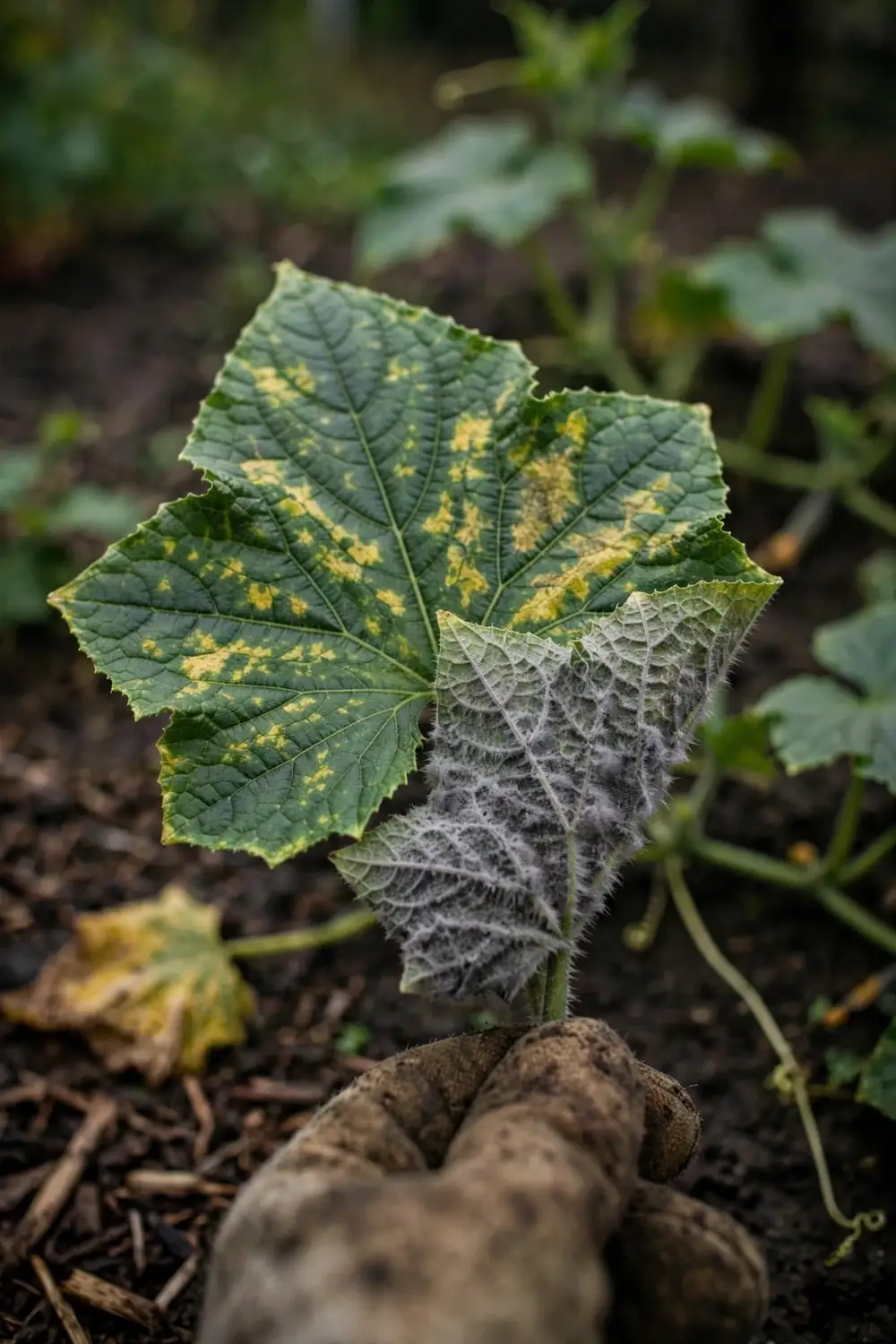

Downy mildew can strip a cucumber vine bare within 10 days of the first yellow patch. The disease starts as pale patches on upper leaf surfaces, then grows a gray to purple fuzz on the undersides overnight. Catch it at the first patch and 10 strategies below hold the line. Miss it for a week and the vine defoliates while the fruit still hangs.
I have learned that the underside of the leaf tells the truth faster than any spray label. Flip a suspect leaf and look for the fuzzy growth. If the fuzz is there, the plan below starts now. If the leaf is clean underneath, the problem is something else.
The rest of this page runs the same order a gardener should follow. Identify it first, then decide whether the plant is worth saving, then work the 10 steps from sanitation to next-season planning.
What Downy Mildew Actually Is
Downy mildew is a disease caused by oomycetes, also called water molds. Downy mildew is not a true fungus. Oomycetes sit closer to algae than to fungi on the tree of life, and that kinship changes which sprays work.
Each downy mildew species attacks a narrow host range. Pseudoperonospora cubensis hits cucurbits, Plasmopara viticola hits grapes, and Bremia lactucae hits lettuce. Peronospora belbahrii hits basil while Peronospora sparsa hits roses. Peronospora effusa hits spinach, and Hyaloperonospora parasitica hits brassicas. A strain that ravages cucumbers will not jump to roses, and a strain that kills basil will not jump to grapes.
Most downy mildew species are obligate parasites. They feed only on living plant tissue. They spread as sporangia on wind and splashing water, and many survive winter as thick-walled oospores in fallen leaves and debris. No living host means no food, and no food means no growth, which is why sanitation and rotation carry real weight against this group.
The oomycete label is the whole management story. Many sprays built for true fungi do nothing to oomycetes. Prevention, dry leaves, and protectants labeled for downy mildew carry the plan. The gardener who treats downy mildew like a fungus buys the wrong product and loses the week that mattered.
The name itself misleads. Gardeners hear mildew and picture one disease with one fix. Downy mildew and powdery mildew share only the word mildew. They differ in pathogen, weather, leaf side, and control, and the differential section below lays out every split.
How to Identify Downy Mildew on Leaves
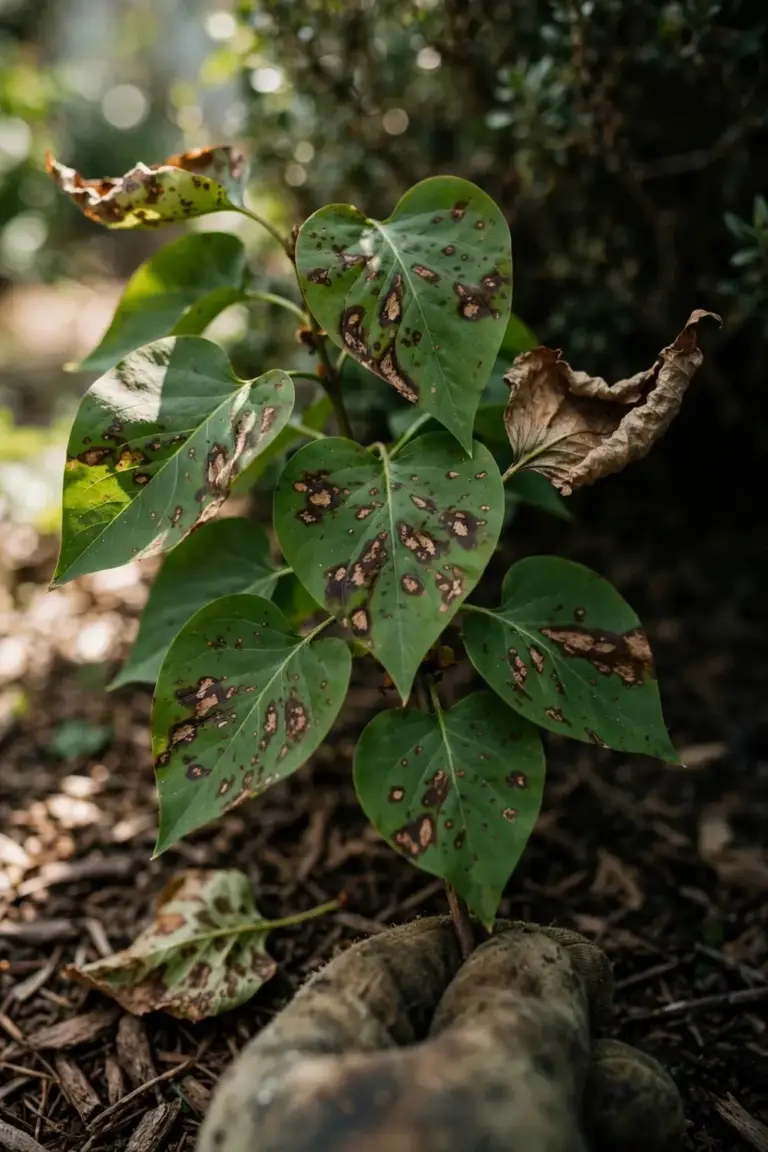
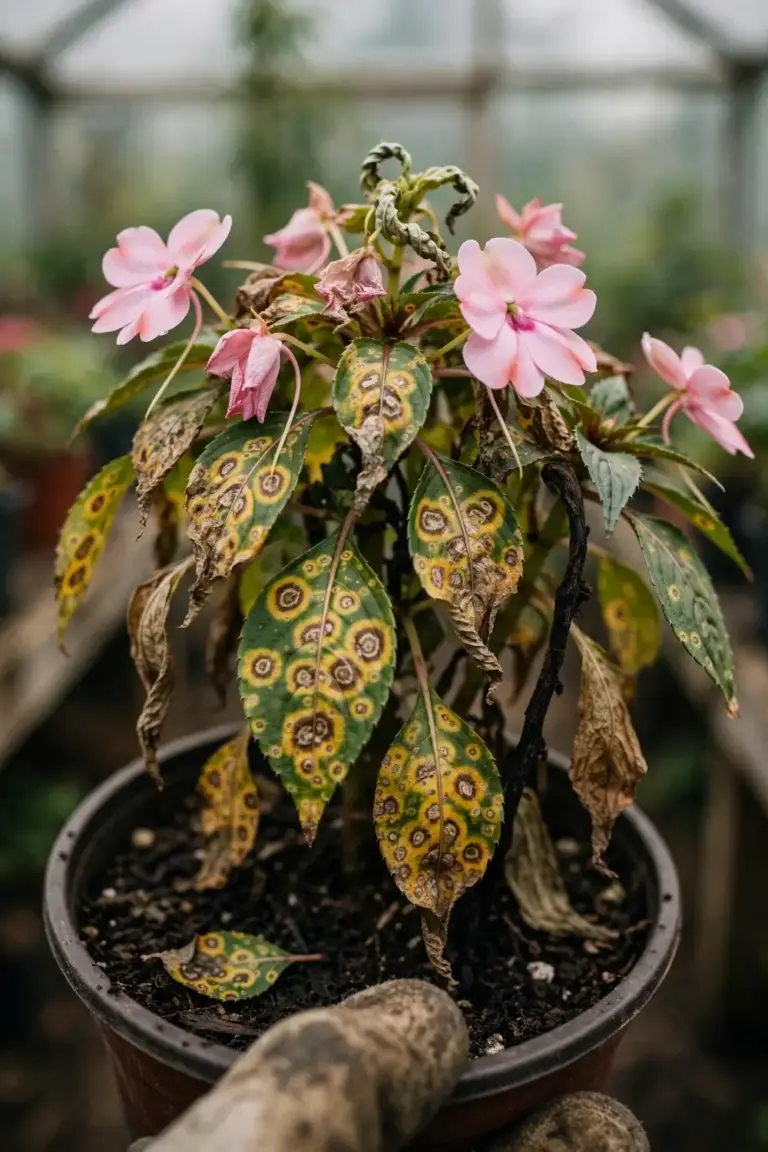
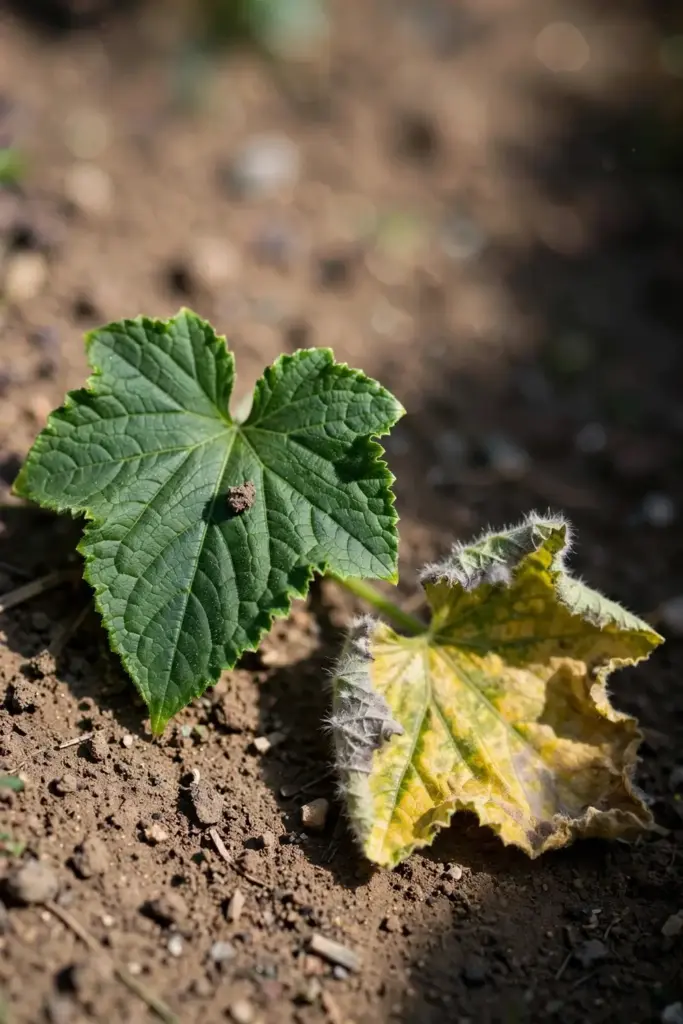
Downy mildew shows on leaves first. Pale yellow to olive patches appear on upper surfaces. The patches follow leaf veins on some hosts and form angular spots on others. On cucumbers the patches often turn blocky, bounded by veins, and on lettuce they start as pale areas near the base of outer leaves.
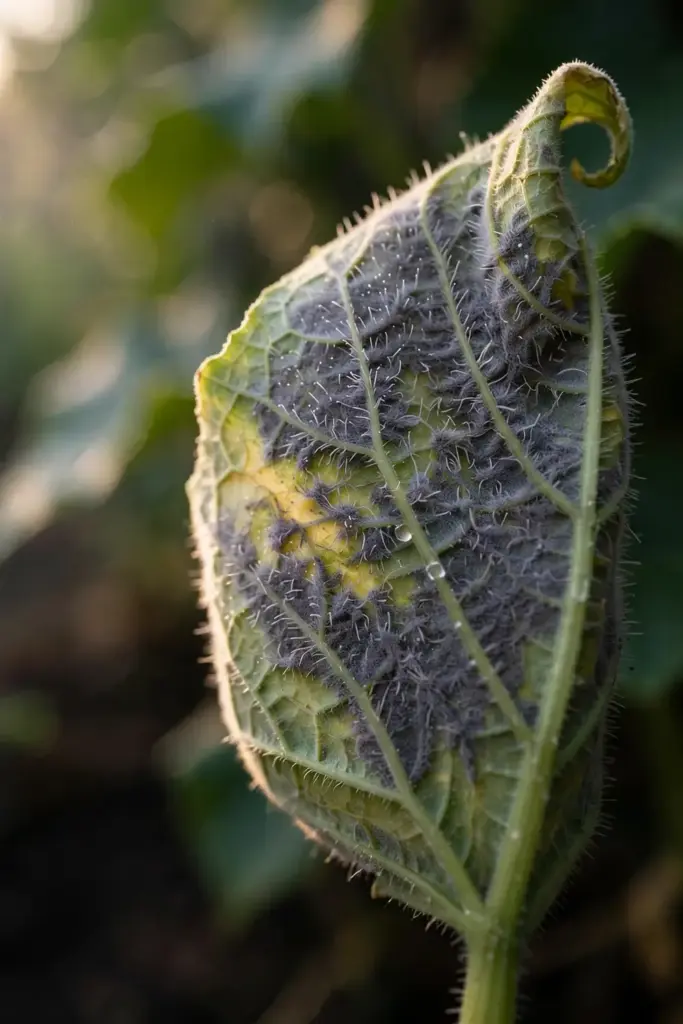
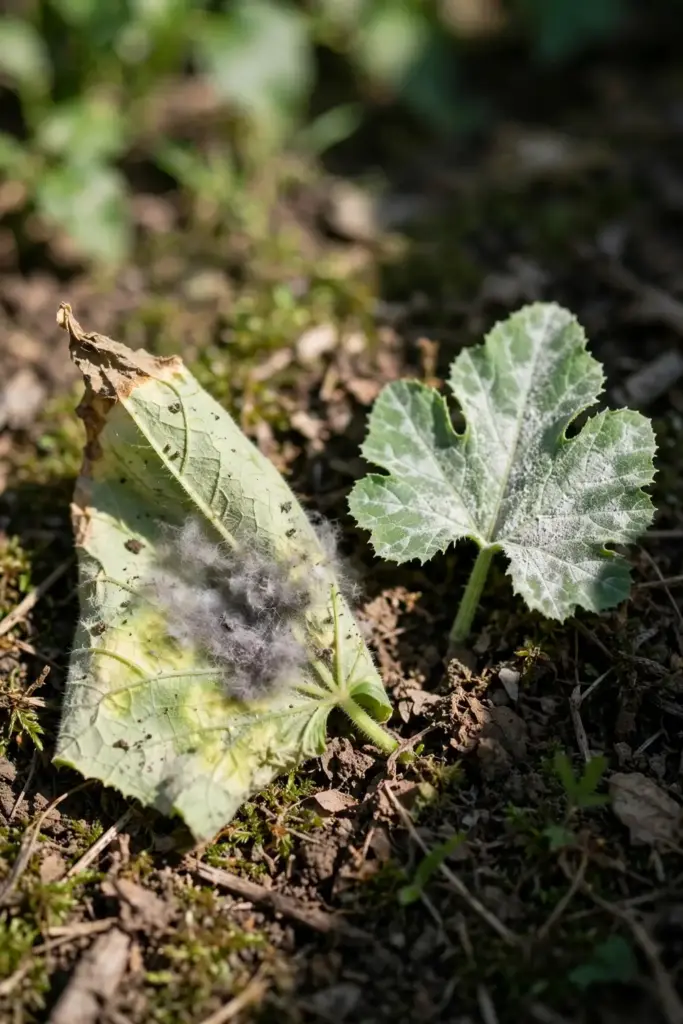
Flip the leaf. The underside carries gray, white, or purplish fuzzy growth over the patch. That fuzz is the sporulation, and it separates downy mildew from most leaf spots at a glance. The fuzz appears overnight in damp weather and may vanish in dry afternoon air, so check in the morning when the evidence is fresh.
Patches merge as the disease advances. Tissue between veins browns and dries. Leaves curl, drop, and the plant loses the canopy that feeds its fruit. Seedlings collapse fast. Older plants defoliate in waves, losing lower leaves first and then the middle canopy as spores splash upward.
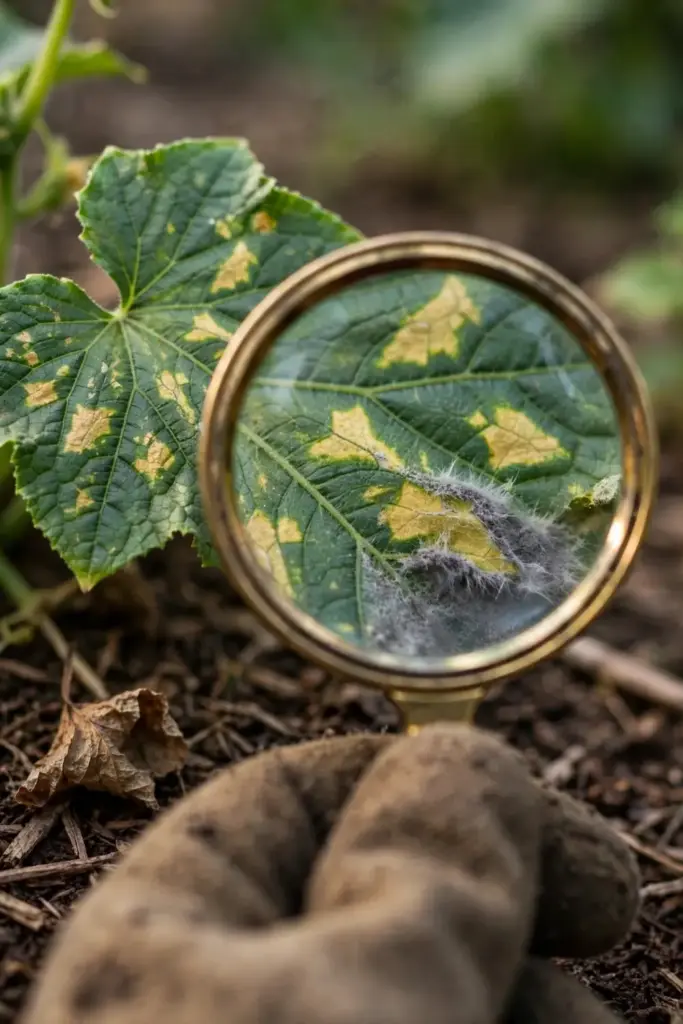
A damp bag test confirms a suspect leaf. Penn State Extension describes placing suspect leaves in a plastic bag with a moist paper towel overnight, then checking the undersides for spores in the morning. A hand lens of at least 10x power helps. Use the test before you spray or pull, because the treatment for downy mildew differs from the treatment for the lookalikes.
The lookalikes deserve a quick pass. Angular leaf spot is bacterial, and it shows no fuzz on the underside. Anthracnose forms sunken lesions with sharper edges. Nutrient deficiency yellows leaves without any fuzz at all. When the underside is clean, the diagnosis is not downy mildew, and the steps below do not apply.
How to Identify Downy Mildew on Stems, Flowers, and Fruit
Downy mildew reaches past leaves on some hosts. Stems, petioles, tendrils, and flower clusters distort, thicken, or curl on grapes. Young shoots may bend and stall. On basil the stems stay green while the leaves drop, which leaves bare stems standing in the bed.
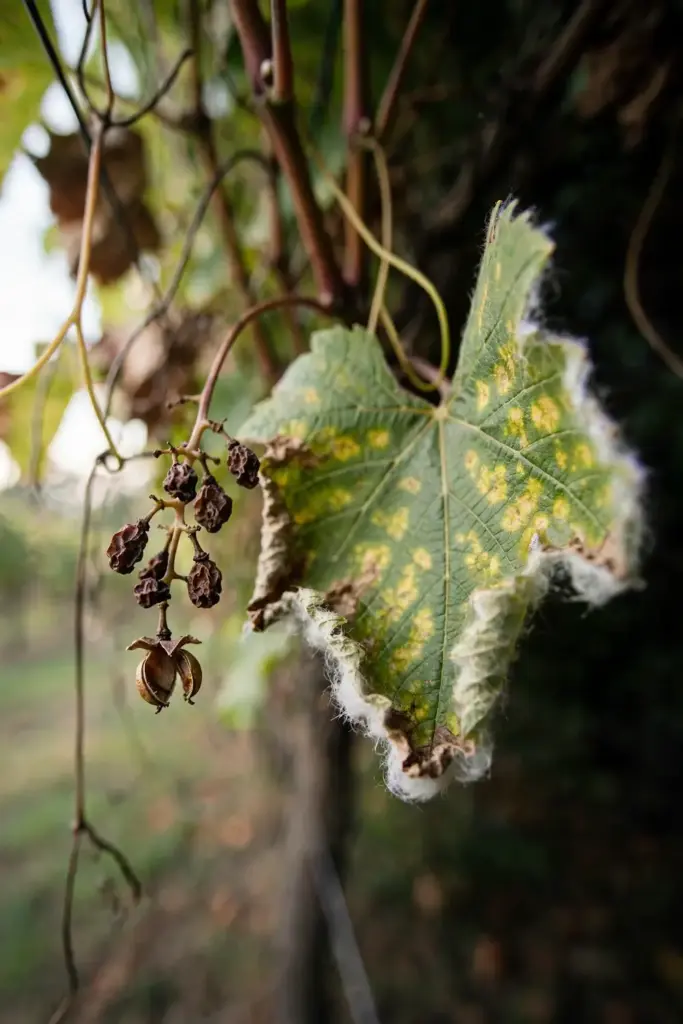
Grape downy mildew shows as yellow lesions with an oily look on upper leaf surfaces, called oil spots. White downy growth follows on the undersides. Berries turn brown, shrivel, and drop. Berries become resistant 3 weeks after bloom, according to the Cornell University grape downy mildew fact sheet, so early-season cluster protection matters most.
Cucumber fruit rarely shows spots, but the vine defoliates and the fruit sunscalds. Lettuce heads rot from the inside when basal leaves collapse. Basil leaves yellow between veins, drop, and the plant stops producing usable leaves. Flower heads on broccoli and cauliflower rot when the disease reaches them, and onion tops yellow and collapse until bulb size follows the lost canopy.
Fruit damage is usually indirect. The pathogen kills leaves, and sun, rot, and weak growth finish the fruit. That is why leaf protection is fruit protection. Save the canopy and the harvest follows. Lose the canopy and no fruit spray recovers it.
Which Plants Get Hit Hardest by Downy Mildew
Downy mildew hits hardest where leaves stay wet and air stays still. Cucurbits sit at the top of the list. Cucumber and cantaloupe collapse first in most home gardens. Squash and pumpkin follow, often later in the season. Melons lose canopy fast once the disease starts, and a melon vine with no leaves ripens nothing.
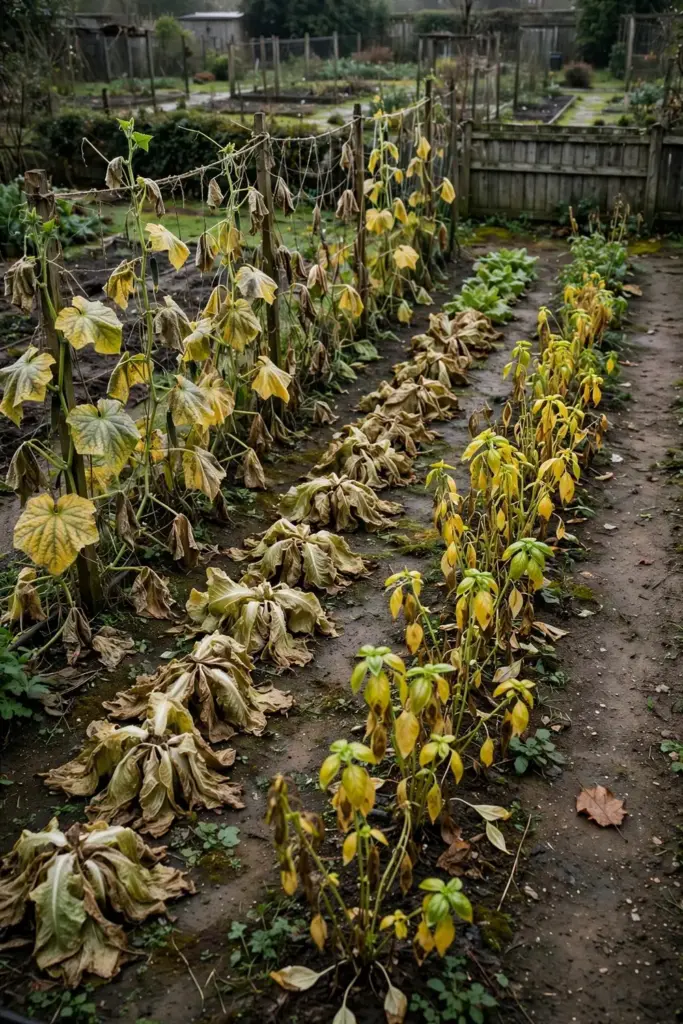
Cucurbit downy mildew generally arrives in North Carolina in May or June and escalates through fall, according to North Carolina State University Extension. Plant early where the season allows, and harvest before fall when disease pressure peaks. Gardeners in cooler regions see the same pattern shifted later, with the worst pressure arriving as nights turn damp.
Grapes lose leaves and fruit in wet summers. Lettuce and spinach lose whole heads to basal rot. Basil loses every usable leaf within days of heavy sporulation. Roses drop leaves and stall. Brassica seedlings damp off in crowded seedbeds. Impatiens beds thin to bare stems. Onions lose tops and bulb size follows. Each host suffers the same way, through lost leaves, and each host recovers the same way, through dry leaves and clean starts.
Young tissue suffers first. New growth, seedlings, and soft leaves invite infection. Older leaves resist longer. That age pattern explains why a bed of seedlings can die while a mature plant beside it only spots. It also explains why suckers and fresh side shoots show symptoms before the rest of the plant.
Greenhouse and high-tunnel growers face a sharper version of the same risk. Enclosed air holds humidity near the leaves for hours after watering. A tunnel that stays closed on a cool night gives the pathogen a long wet window. Vent the tunnel early, water at the soil, and scout the lowest leaves first, because the tunnel floor stays damp longest.
Downy Mildew vs Powdery Mildew
Temperature and moisture split the two mildews first. Downy mildew loves cool, wet leaves. Powdery mildew loves warm, dry air. A white coating in a dry spell points to powdery. A gray-purple fuzz after wet nights points to downy. The Penn State Extension guide to both mildews in the home garden treats prevention as the main defense against either disease.
| Clue | Downy Mildew | Powdery Mildew |
|---|---|---|
| Pathogen | Oomycete, a water mold, not a true fungus | True fungus |
| Growth location | Fuzzy growth on leaf undersides | White powdery coating on upper surfaces |
| Growth color | Gray, white, or purplish fuzz | White to gray powder |
| Weather it loves | Cool, damp, wet leaves, high humidity | Warm, dry air |
| Leaf wetness | Needs wet leaves to infect | Spreads without leaf wetness, and rain can wash it off |
| First sign | Yellow to olive patches on upper surfaces with fuzz below | White powdery spots on upper surfaces |
| Spread | Sporangia on wind and splash, sporulation at night | Spores on wind, visible in dry weather |
| Controls | Dry leaves, airflow, protectants labeled for downy mildew | Dry-leaf care helps less, sulfur and true-fungus products may work |
| Fungicide crossover | Downy mildew products do not control powdery mildew | Powdery mildew products often fail on downy mildew |
The spray lesson matters most. Fungicides built for powdery mildew often fail on downy mildew, and downy mildew products do not control powdery mildew. Penn State Extension warns that fungicides that specifically target downy mildew will not manage powdery mildew. Treat the disease you have, not the mildew you assume.
The companion guide to Powdery Mildew covers that disease on its own terms. Read it when the coating sits on upper surfaces in dry weather. Stay on this page when the fuzz sits on undersides after wet nights.
Why Leaf Wetness Drives Downy Mildew
Downy mildew moves on water. Sporangia land on a wet leaf, release swimming zoospores, and the zoospores swim to stomata and push inside. No leaf wetness means no swim. Dry leaves break the cycle at the first step. Every strategy below is a way to keep leaves dry or to shorten the wet hours that remain.

Sporulation happens at night. The pathogen builds its spore stalks in darkness and releases them before sunrise. Morning dew carries the next infection. A gardener who checks leaves at noon sees yesterday’s damage, not tonight’s spores. Scout in the morning, water in the morning, and let the day dry what the night wetted.
Sporulation runs at 50 to 78 degrees Fahrenheit with relative humidity above 85 percent, according to the University of Massachusetts Amherst basil downy mildew fact sheet, and the pathogen needs at least 7 hours of darkness to produce sporangia. On wet leaves at 41 to 83 degrees Fahrenheit, sporangia germinate within 2 hours and infect tissue within 4 hours, the same fact sheet reports. Symptoms follow 5 to 10 days after infection. Those numbers come from basil, and each downy mildew species carries its own window, but the pattern holds across hosts. Night, wetness, and hours of darkness drive every one of them.
Inside the leaf, the pathogen threads feeding structures into living cells and drains them. The leaf feeds the pathogen while it dies. That is why infected leaves never heal. Sprays cannot unfeed a colonized leaf. They can only protect the leaves still clean. Remove the colonized leaves, protect the clean ones, and the plant keeps enough canopy to finish the season.
Sexual spores carry the disease across winter. Oospores sit in fallen leaves and debris until spring wetness wakes them. Fall cleanup is disease control, not tidiness. A bed that goes into winter clean starts spring with far less inoculum than a bed left littered with infected vines.
What Makes Downy Mildew Worse in a Home Garden
Wet leaves top the risk list. Overhead watering, evening watering, and rain on dense canopies keep leaves wet past dawn. Each wet night is another infection window. A single rainy week can start an outbreak that takes a month to burn out, because each new lesion sporulates and starts the next round.
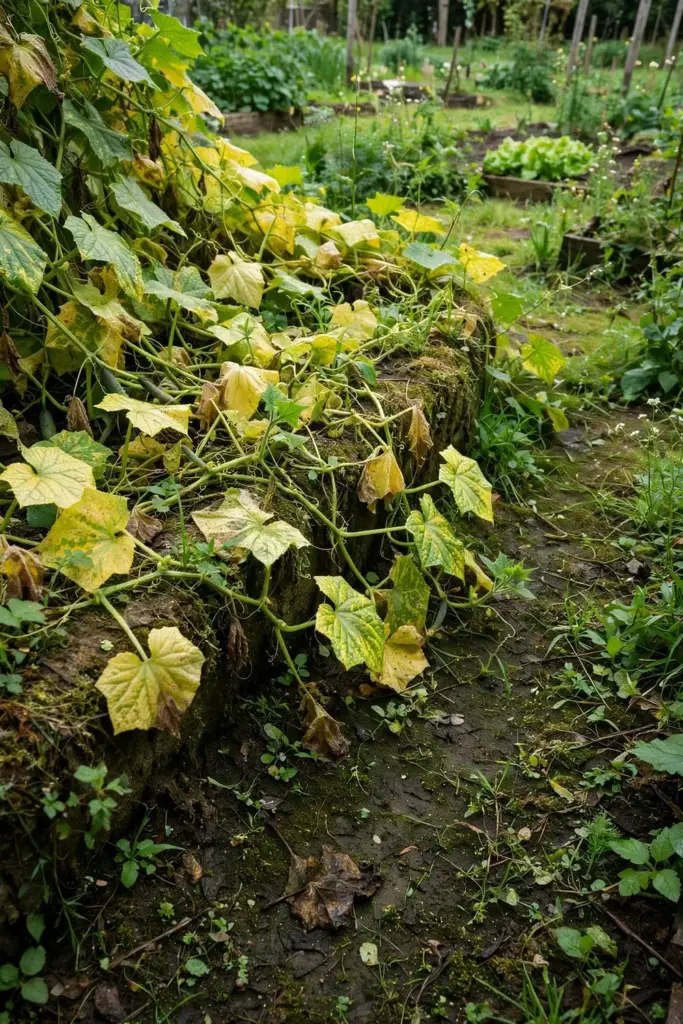
Crowding comes second. Plants packed tight trap humid air. No breeze dries the inner leaves. Weeds add the same trap at the bed edges. A bed that looks thick in June turns into a mildew nursery in July, because the canopy that looked productive now holds humidity against every leaf.
Shade and low spots come third. A bed that holds fog, sits in a hollow, or never sees morning sun stays wet longest. Downy mildew starts in the lowest, shadiest corner of most gardens. Walk the garden at dawn in a wet spell and the risk map draws itself. The corners that still drip at 9 in the morning are the corners that will spot first.
Succulent new growth and infected debris round out the list. Soft young leaves infect fastest. Fallen infected leaves hold oospores for the next season. Skip fall cleanup and the bed starts spring already loaded. Skip the sucker pruning and the fresh growth offers new tissue to every spore that lands.
Warm days do not stop it. Daytime heat dries leaves, but cool wet nights drive sporulation. A hot dry week with dewy nights still breeds downy mildew. Gardeners who watch only the daytime forecast miss the night conditions that actually drive the disease.
Step 1: Decide Whether This Plant Is Worth Saving
Start with the honest call. Downy mildew has no cure for leaves already colonized. A plant with a few spotted leaves and strong growth is worth saving. A plant stripped bare with rotting crowns is not. The decision saves the gardener more than any product, because a doomed plant kept in the bed infects its neighbors while it dies.
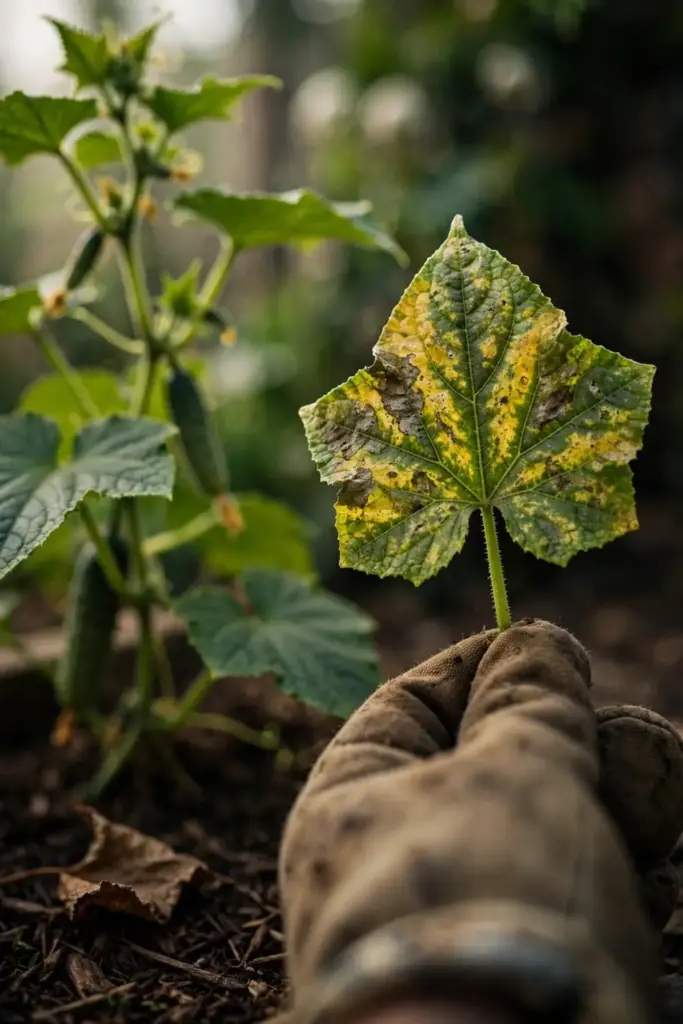
Count the healthy canopy. A cucumber vine with half its leaves still green can still fruit if the spread stops. A vine with only stems left cannot feed fruit, and nursing it spreads spores to neighbors. Pull the lost plant and protect the rest. The bed matters more than any single plant in it.
Weigh the neighbors. A single infected basil plant in a crowded bed threatens the whole bed. Pulling one plant early saves ten. A lone rose bush with room around it can ride out treatment. Decide on the bed, not the plant. A plant in isolation gets patience. A plant in a crowd gets the bag.
Set a deadline. Give the plan 7 days. If new spots keep appearing on clean leaves after a week of dry-leaf discipline, pull the plant. A deadline stops the slow drain of nursing a lost cause. Mark the date on a garden card when you start, and honor it when it arrives.
Step 2: Strip Infected Leaves and Sanitize Your Tools
Remove infected leaves first. Pick them on a dry morning, when spores are least active. Bag them. Do not drop them on the soil or toss them on the compost. Every leaf that falls on the bed drops its spores where the next rain will splash them back up.
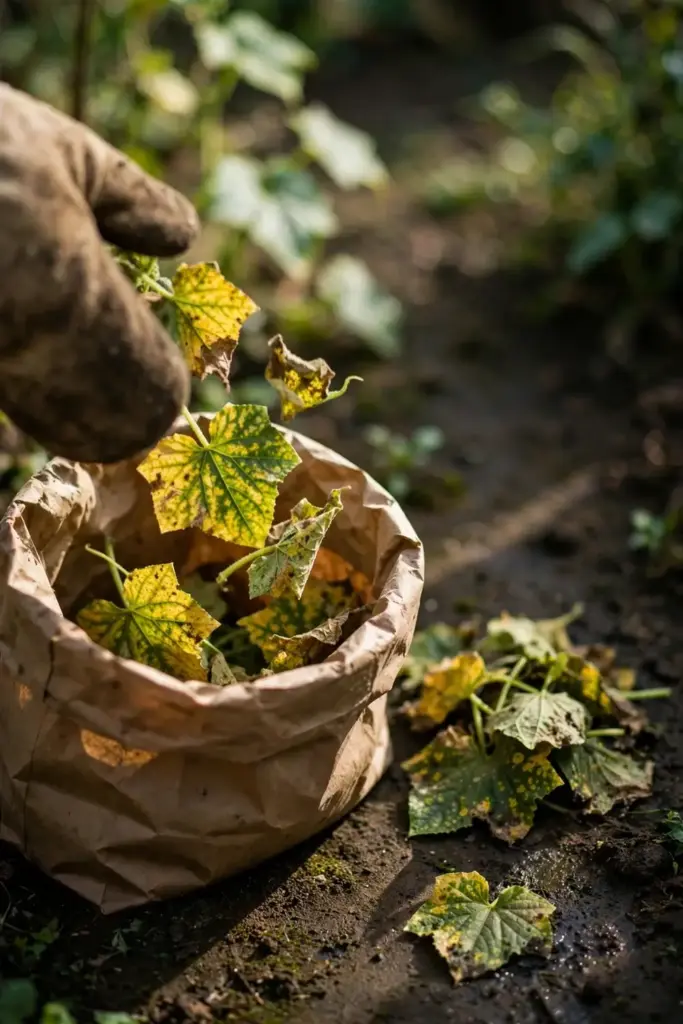
The Penn State Extension home-garden guide gives the same disposal rule. Dispose of infected material by burning it or throwing it away in a closed container. Do not compost diseased plant material, since most home compost piles never reach the heat that kills spores. The closed bag matters as much as the removal, because an open pile of infected leaves sporulates where the wind catches it.
Sterilize tools between plants. Wash soil off pruners, then wipe the blades with a disinfectant or a bleach solution and rinse. Use a 10 percent bleach solution for the soak, one part household bleach to nine parts water, then rinse and dry. Clean tools stop the gardener from becoming the vector, and a gardener who prunes sick plants and then healthy ones with the same blades spreads the disease faster than the rain.
Work healthy plants first. Move through clean beds, then the sick bed, so tools and shoes never carry spores from sick to healthy. Change gloves between beds if you wear them. Clean the tools again before you put them away, because spores dry on steel and wait for the next wet day.
Step 3: Flip Leaves and Scout Every Morning
Scout the undersides every morning. Downy mildew sporulates overnight, so morning is when the fuzz shows. Flip five leaves per plant on the lowest branches first. The lowest leaves sit closest to soil splash and dew, and they spot first in nearly every outbreak.
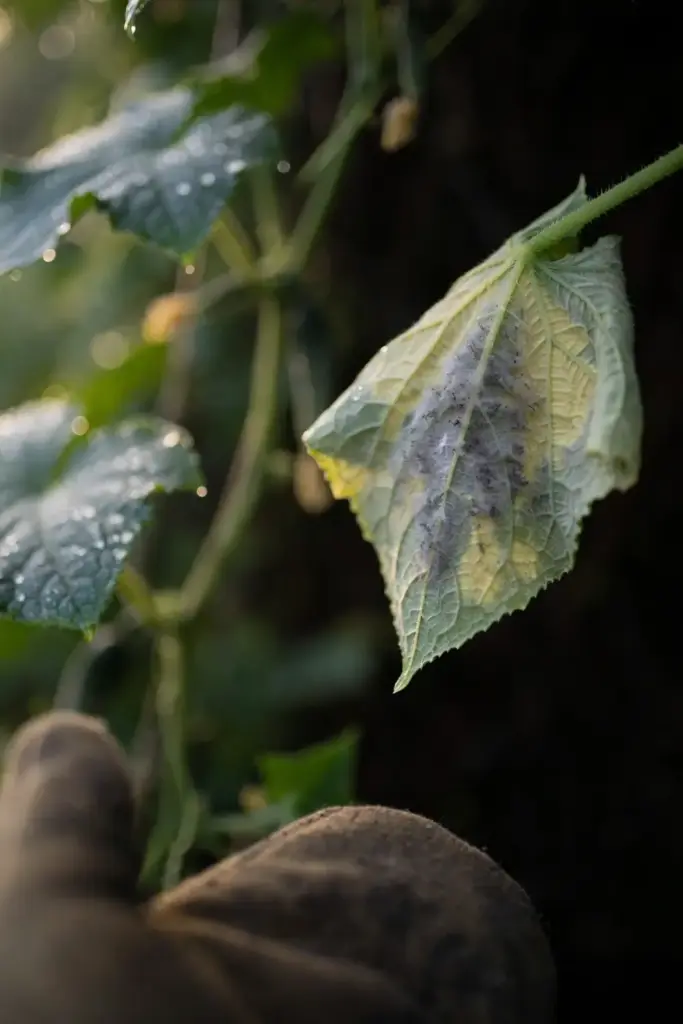
Mark what you find. Flag the plant with a twist tie. Note the date on a garden card. A note beats memory when the question is whether the spread stopped. A gardener who scouts without notes cannot tell a new spot from an old one, and that confusion wastes the week the plan needs.
Use the damp bag test on doubtful leaves. Seal a suspect leaf in a plastic bag with a moist paper towel overnight, then check the underside in the morning. Fresh fuzz confirms downy mildew. No fuzz points to another problem. The test costs nothing and settles the diagnosis before any spray goes on.
Scout after every rain. Rain splashes spores upward and wets leaves for hours. The first dry morning after a storm is the highest-value scout of the week. Catch the first lesions then, and the removal in Step 2 takes minutes. Miss them, and the next rain starts a second round from ten times the inoculum.
Step 4: Water at Soil Level in the Morning
Water the soil, not the leaves. Drip lines and soaker hoses keep water where roots drink and keep foliage dry. A narrow-spout can aimed at the mulch does the job on a small bed. The goal is simple. Roots wet, leaves dry, every time.
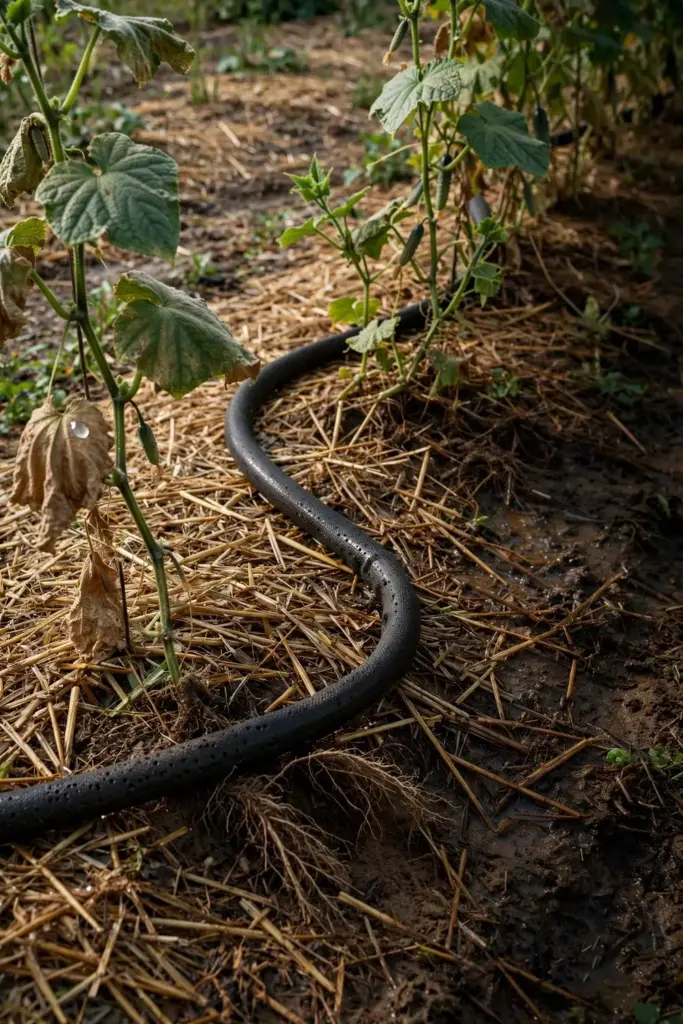
North Carolina State University Extension lists the same dry-leaf rules for cucurbits in its cucurbit downy mildew guide. Water the soil rather than the plant. Use drip irrigation. Water early in the day. Space plants to allow air circulation. Four short rules carry most of the prevention in this plan.
Morning water dries any incidental wetness during the day. Evening water sits on leaves all night and hands the pathogen its infection window. If overhead watering cannot be avoided, run it early enough that leaves dry before dark. A leaf that dries by noon gives the pathogen no swim.
Water deeply and less often. Deep roots sit in soil that dries slower, and the surface dries between waterings. Shallow daily sprinkles keep the surface wet and the leaves damp. Deep watering grows roots that reach past the splash zone, and dry surfaces starve the spores that land there.
Step 5: Open the Canopy for Airflow
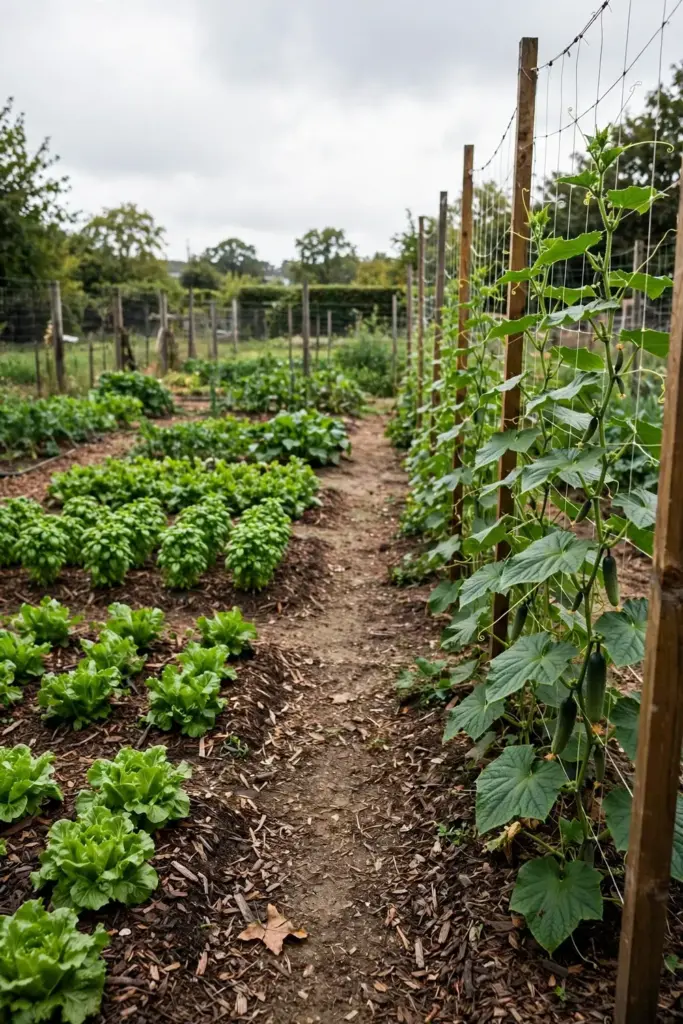
Open the canopy and air does the drying. Stake cucumbers and tomatoes. Prune suckers and crowded laterals. Thin seedlings to the spacing on the packet. Each cut lets breeze reach leaves that stayed damp before, and breeze is free fungicide against a water mold.
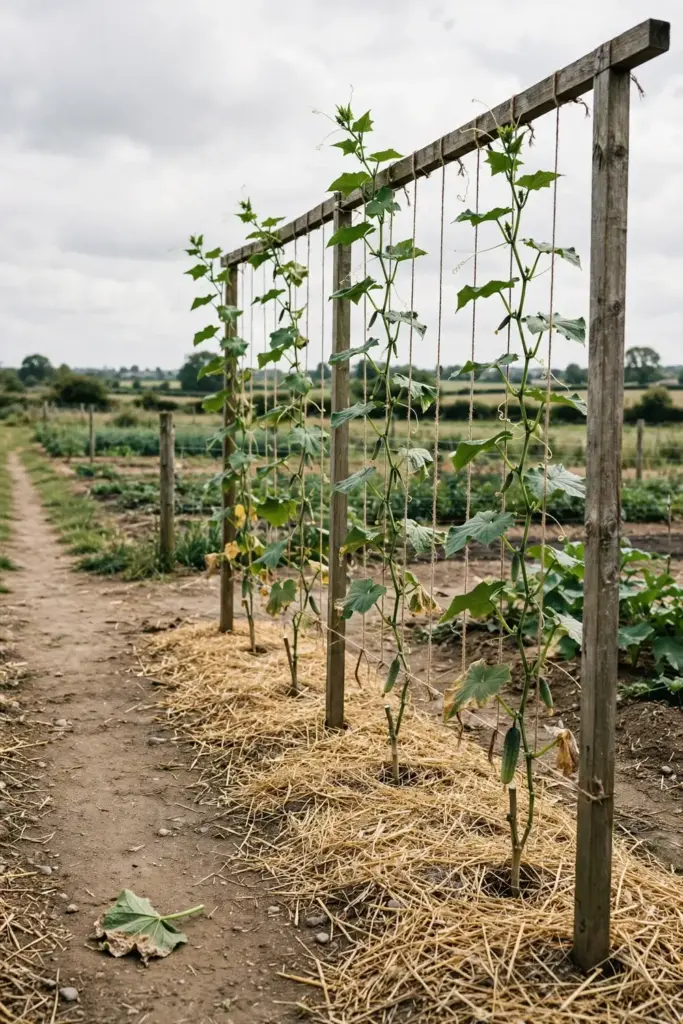
Space for airflow at planting time. Crowded plants trap humid air in the center of the bed. A bed that looks full in June turns into a mildew nursery in July. The spacing on the packet is a disease decision, not a neatness decision, and the gardener who honors it buys dry leaves all season.
Prune the lowest leaves. The lowest leaves catch soil splash and dry slowest. Removing them lifts the splash zone and opens the base to moving air. On cucumbers and tomatoes, a clear stem base of a hand span keeps the first leaves out of the splash and the damp.
Weed the bed edges. Weeds block airflow the same way crowding does. A clean edge lets morning breeze reach the bed. Keep paths clear so air moves through, not around. The weediest corner of the bed is often the corner where downy mildew starts, and that is no coincidence.
Step 6: Mulch, Clean Up Debris, and Break the Cycle
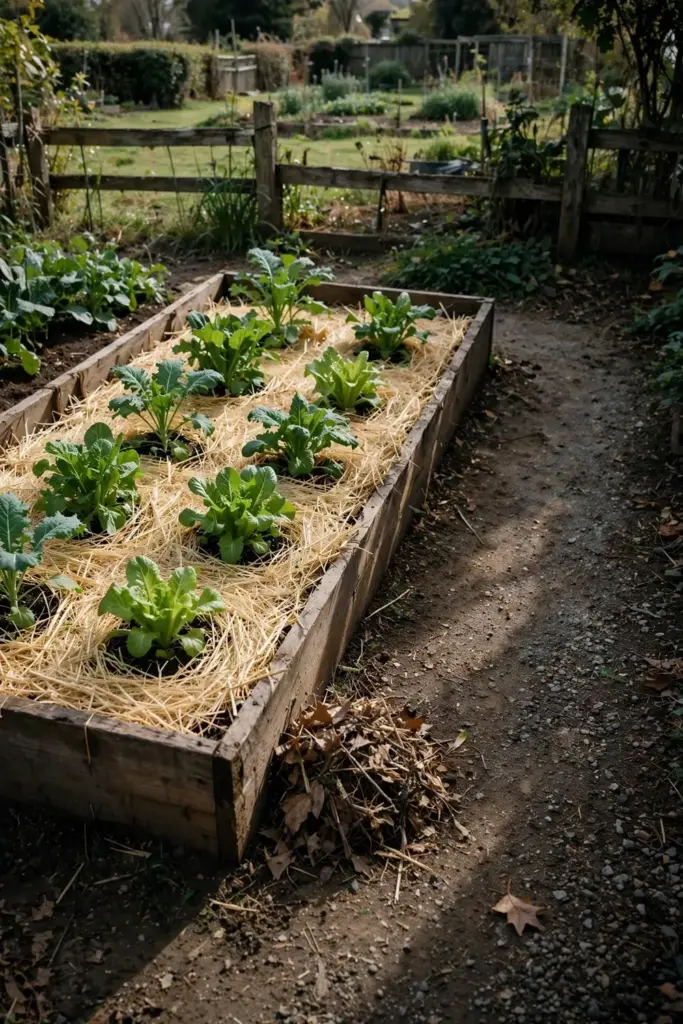
Mulch stops soil splash. Spread 2 to 3 inches of straw mulch around plants, keeping it a finger width off the stems. Mulch shades the surface, holds moisture in the soil, and stops spore-laden soil from splashing onto lower leaves. Bare soil under a vine is an open launch pad for every rain.
Clean up debris in fall. Rake fallen leaves out of beds. Pull spent vines. Oospores overwinter in leaf litter, according to the Cornell University grape downy mildew fact sheet, and a clean bed starts spring with far less inoculum. The rake is a disease tool in October, and the gardener who skips it pays in May.
Feed the soil while you clean. The soil health guide walks through structure, organic matter, and drainage in practical detail. Healthy soil drains fast, and fast drainage means drier leaves after rain. A bed that drains well dries well, and a bed that dries well starves downy mildew.
Never compost diseased vines. Home compost rarely sustains the heat that kills oospores. Bag infected material for municipal waste. A compost pile full of mildewed vines seeds next season. The pile looks like recycling and acts like an inoculum bank, and the gardener who dumps sick vines there meets the same disease in spring.
Step 7: Plant Resistant Varieties Where They Exist
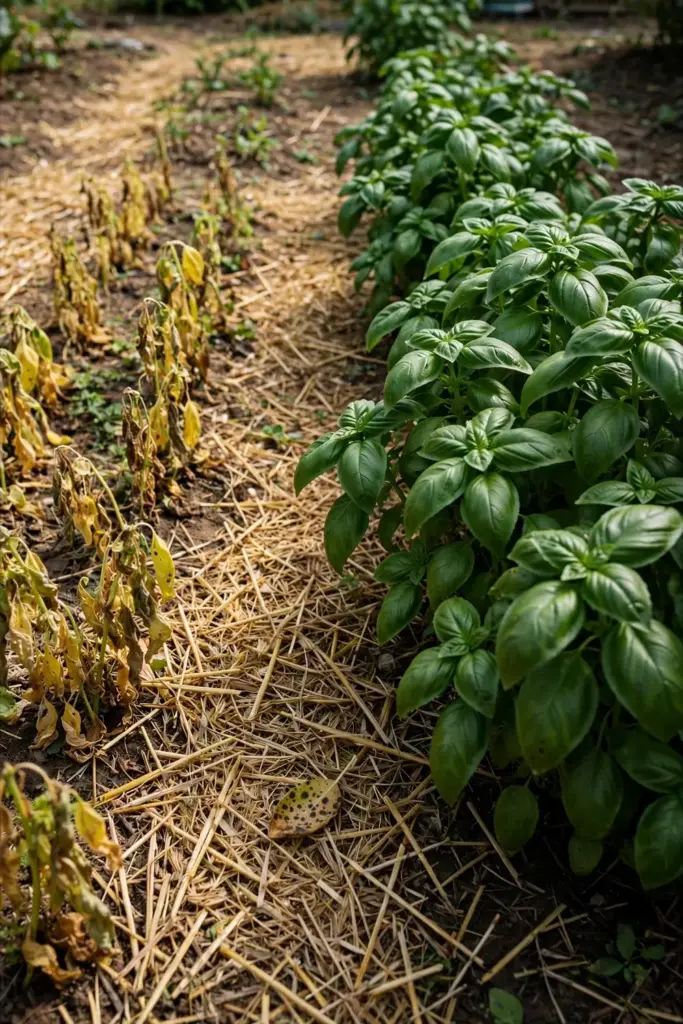
Buy resistance where it exists. Catalogs list downy mildew resistance codes for basil, lettuce, spinach, and some cucurbits. Read the code before you buy. A resistant variety is the cheapest spray ever sold, because it works every wet night without a trip to the bed.
Know the honest limits. For cucurbits, North Carolina State University Extension reports that no resistant varieties are available at present, in its cucurbit downy mildew guide. That sentence is why cucurbit growers lean on dry leaves and timing rather than genetics. A catalog that promises a downy-proof cucumber is selling hope, not resistance.
Grapes offer real choices. Cornell University recommends planting less-susceptible varieties, hybrids or native North American varieties, to reduce disease incidence and severity, in its grapevine downy mildew fact sheet. A hybrid grape in a wet climate outproduces a susceptible vinifera with no spray program. Site and variety together beat chemistry alone on grapes.
Basil growers have resistant options too. Modern basil varieties bred for downy mildew resistance hold leaves far longer than susceptible sweet basil under the same pressure. Ask the seed supplier for the resistance code, not the marketing claim. The code is the evidence. The claim is the advertisement.
Step 8: Spray Protectants Early and by the Label
Spray before infection, not after. Protectant sprays coat healthy leaves and stop spores from germinating. They do not cure leaves already colonized. A spray applied after spots appear protects only the leaves still clean. The calendar matters more than the product, because a protectant applied a day late protects nothing that is already infected.
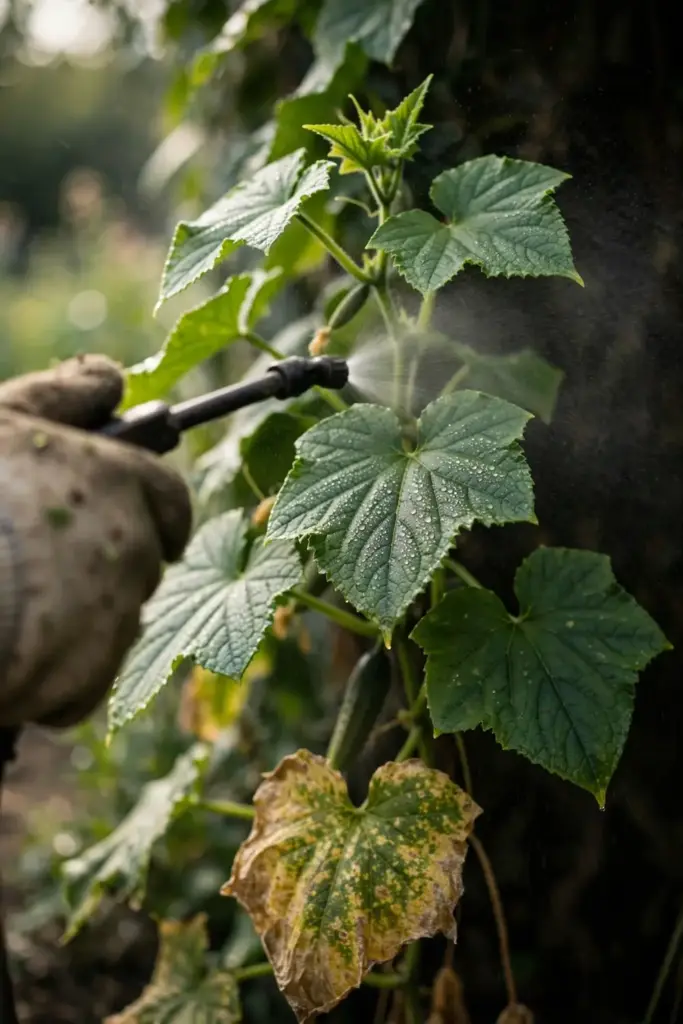
Read the label and match the target. Use only products labeled for downy mildew on the crop you grow. Oomycetes are not fungi, so a generic garden fungicide may miss them entirely. The label is the law and the guide. A product that lists powdery mildew but not downy mildew is the wrong product for this page.
Reapply after rain. Rain washes protectants off leaves. A heavy storm resets the clock. Reapply at the label interval, and rotate among different modes of action so the pathogen never adapts to one chemistry. Rotation is resistance management, and a pathogen that beats one chemistry in a season will beat it for years.
Identify first, then spray. Fungicides that target downy mildew will not manage powdery mildew, Penn State Extension warns in its home-garden mildew guide. Spraying the wrong mildew wastes money and leaves the real disease untouched. The bag test in Step 3 costs nothing and settles the diagnosis before the sprayer comes out.
Step 9: Rotate Crops and Starve Host-Specific Strains
Rotate crops and starve host-specific strains. Downy mildew species attack narrow host ranges. A bed that held diseased cucumbers can still grow beans, corn, or grains next season. The cucumber strain finds no host in a bean bed, and a season without a host cuts the inoculum that waits in the soil and debris.
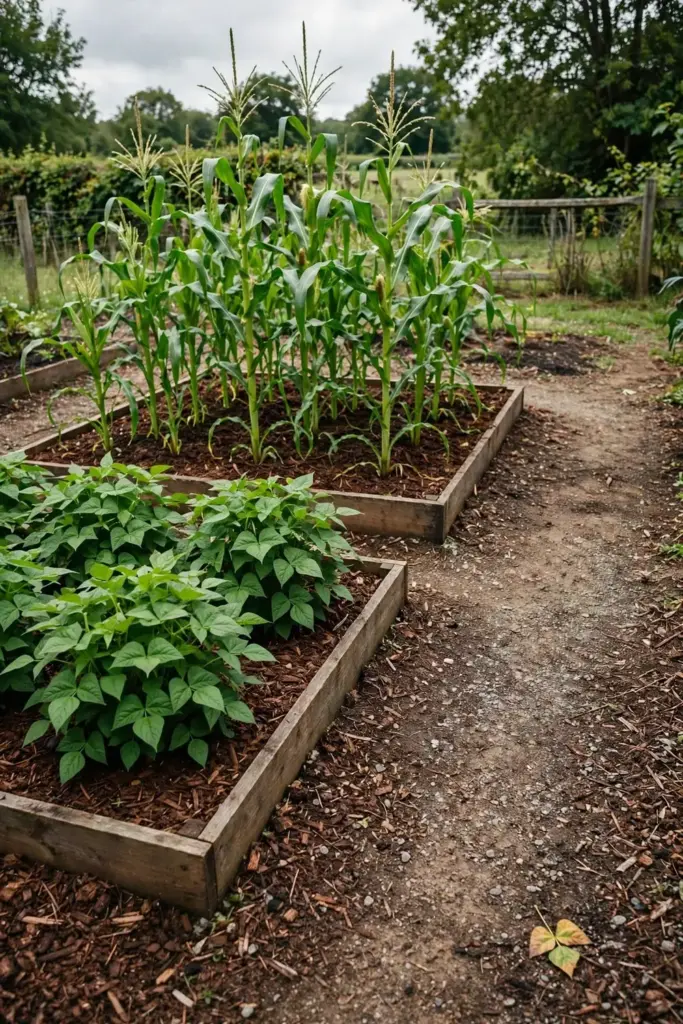
Penn State Extension notes that the downy mildew on cucumbers will not infect pumpkin or butternut squash. The pathogen splits into clades with separate host ranges. Rotation inside the cucurbit family still helps, because the cucumber strain and the squash strain are not the same. A gardener who rotates cucumber to squash still breaks the cucumber strain, even inside one family.
The crop rotation guide maps bed-by-bed rotation for a home garden. Map the bed on paper so next spring does not repeat this spring. Memory fades over winter. The map does not, and the map stops a gardener from planting cucumbers in the same bed out of habit.
Pull volunteers and weeds. Volunteer cucumbers and brassica weeds carry the pathogen through the off season. A clean fallow bed starves it. Keep the rotation for at least one full season away from the host family. A single volunteer seedling in a fallow bed feeds the pathogen all winter, and one plant is enough to restart the cycle.
Step 10: Plan Next Season Around Dry Leaves
Plan next season around dry leaves. Pick the sunniest, breeziest corner for mildew-prone crops. Avoid low hollows where fog pools. Morning sun dries dew fast, and morning sun is worth more than afternoon sun against this disease. The bed that dries first at dawn is the bed that spots last.
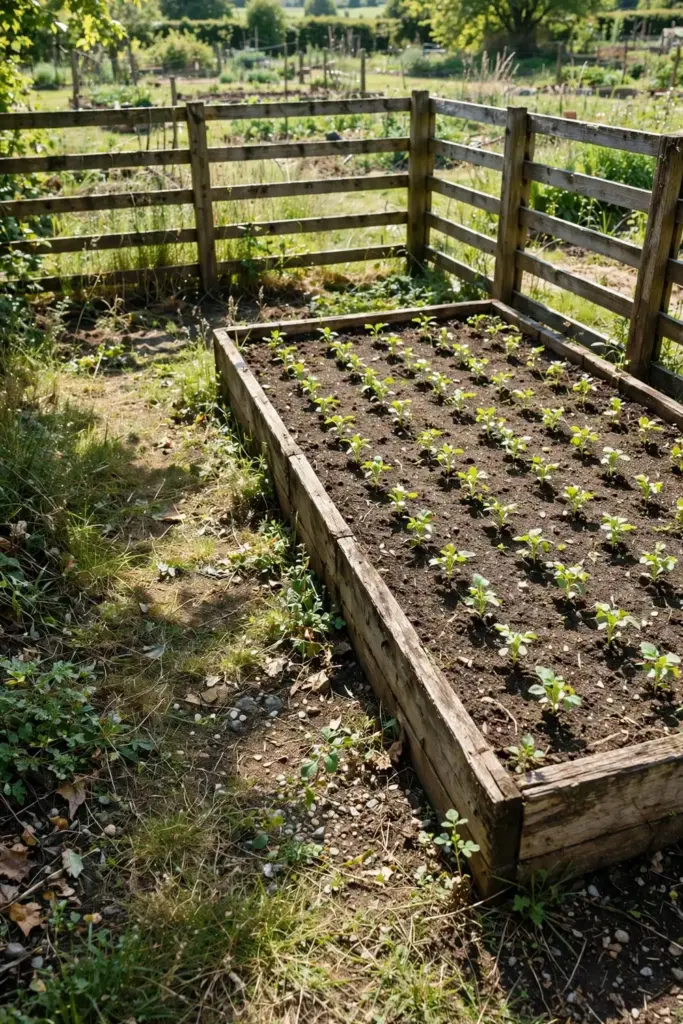
Plant early where the season allows. Plant early in the season to harvest before fall when disease levels are highest, North Carolina State University Extension advises in its cucurbit downy mildew guide. An early cucumber crop can finish before the worst pressure arrives. A late crop walks straight into peak season with young leaves out.
Start clean. The seed starting guide covers clean technique from sowing to transplant. Inspect every transplant before it leaves the store. Any spotted, stunted, or off-color seedling stays behind. One infected transplant seeds a bed that then punishes cucumbers for the whole season.
Keep a bed map and a spray calendar. Write down which bed held downy mildew, which variety grew there, and which year. Memory fades. The oospores do not. The gardener who writes it down plants clean next spring, and the gardener who trusts memory replants the same bed and wonders why the disease returned.
Living With Downy Mildew in a Garden That Has It
A garden with downy mildew is not a ruined garden. It is a managed garden. Grow susceptible crops in the driest beds. Keep resistant varieties as the default. Scout every morning in wet spells. The disease sets the terms, and the gardener who meets those terms keeps harvesting.
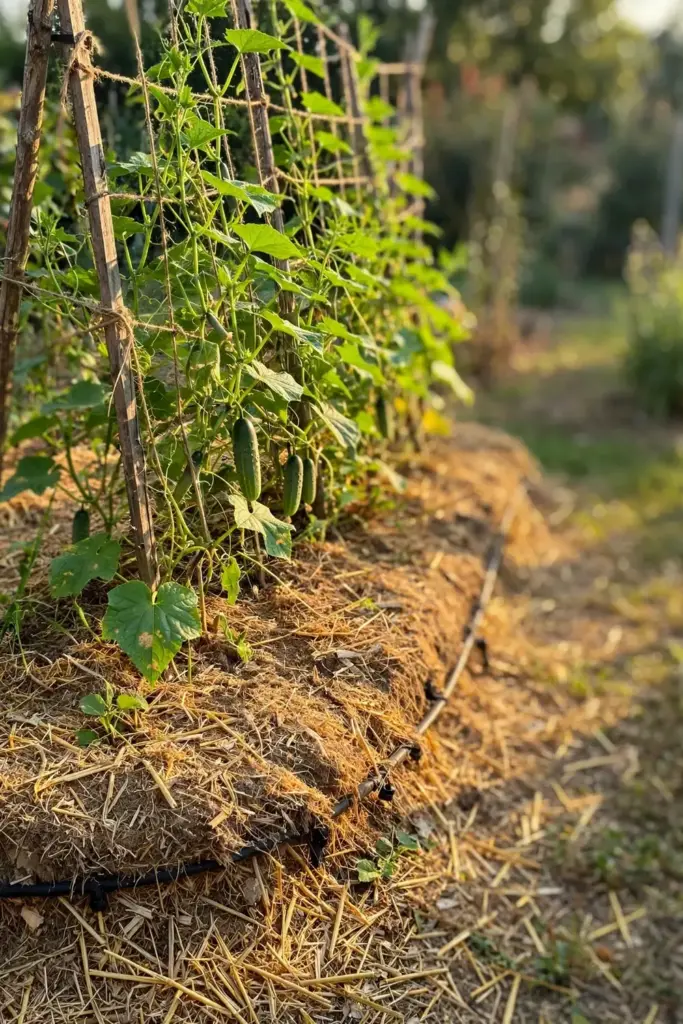
Shift the planting mix. If cucumbers collapse every August, grow the main cucumber crop for early summer and let fall beds carry beans and greens. Work with the disease calendar instead of fighting it. A garden that bends with the season outproduces a garden that fights the same battle every fall.
Accept partial loss. A defoliated vine that still sets a few fruit beats a sprayed vine that sets none. Harvest what ripens, clean the bed, and plan the next planting. The gardener who adapts keeps harvesting. The gardener who demands a perfect vine in peak mildew season loses the bed and the season together.
If the white coating sits on upper leaf surfaces in dry weather instead of the undersides after wet nights, the companion guide to Powdery Mildew fits that problem. The two diseases share a word and little else, and the fix follows the diagnosis.
Frequently Asked Questions
No. Downy mildew has no cure for leaves already colonized. Protectant sprays guard the leaves still clean, and sanitation removes the leaves already lost. A plant with a mostly healthy canopy can still finish its season when the spread stops. A plant stripped bare will not recover, and pulling it protects the rest of the bed. Prevention, not rescue, is the whole plan.
Yes, if the produce looks sound. Downy mildew is a plant disease, not a human one. Harvest fruit and leaves that look healthy and wash them as usual. Discard rotted, moldy, or collapsed produce. The real loss is yield, not safety. A plant that defoliates early stops feeding fruit, so pick what ripens before the canopy fails.
It can. Downy mildew defoliates fast, and a plant with no leaves cannot feed itself. Seedlings die quickly once the disease takes hold. Established plants often survive with a reduced canopy, but the crop shrinks with every leaf lost. Severe infections on grapes and cucurbits can strip a plant bare within days. Early action decides which outcome a gardener gets.
Baking soda is a powdery mildew home remedy. Downy mildew is an oomycete with different biology, and baking soda is not a tested control for it. Protectant sprays labeled for downy mildew are the tested option. Dry leaves, airflow, and sanitation carry more weight than any home remedy. Spend the effort on the steps that work instead of the spray that does not.
The cucumber strain does not jump to pumpkin or butternut squash. The cucurbit downy mildew pathogen splits into clades with separate host ranges. The cucumber strain attacks cucumber and cantaloupe. The squash strain attacks squash and pumpkin. Rotation inside the cucurbit family still helps, because each strain starves without its own hosts. Clean up both strains at season end.
It survives winter as oospores in fallen leaves and debris. Some species need living hosts to carry through, and they die out without one. Others wait in debris until spring wetness wakes them. Fall cleanup, debris removal, and rotation break the carryover. A bed that goes into winter clean starts spring with far less inoculum than a bed left littered.
Where to Go From Here
Downy mildew rewards fast identification and dry leaves. Flip the leaf, read the underside, and make the honest triage call in Step 1. Then work the sequence: strip, sanitize, water at the soil, open the canopy, clean up, and plan ahead.
Next season, start clean. Fresh seed, inspected transplants, and morning watering will prevent more downy mildew than any product treats. The blossom blight guide is a useful companion read if you are building a broader disease-identification habit, since it trains the same look-closely-at-symptoms approach.