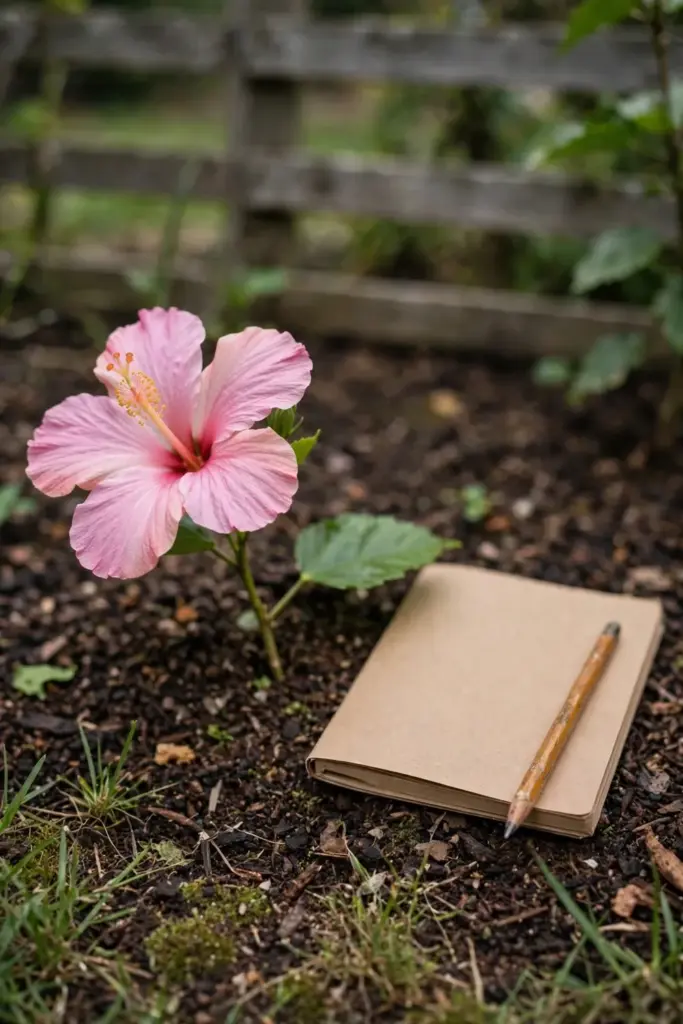
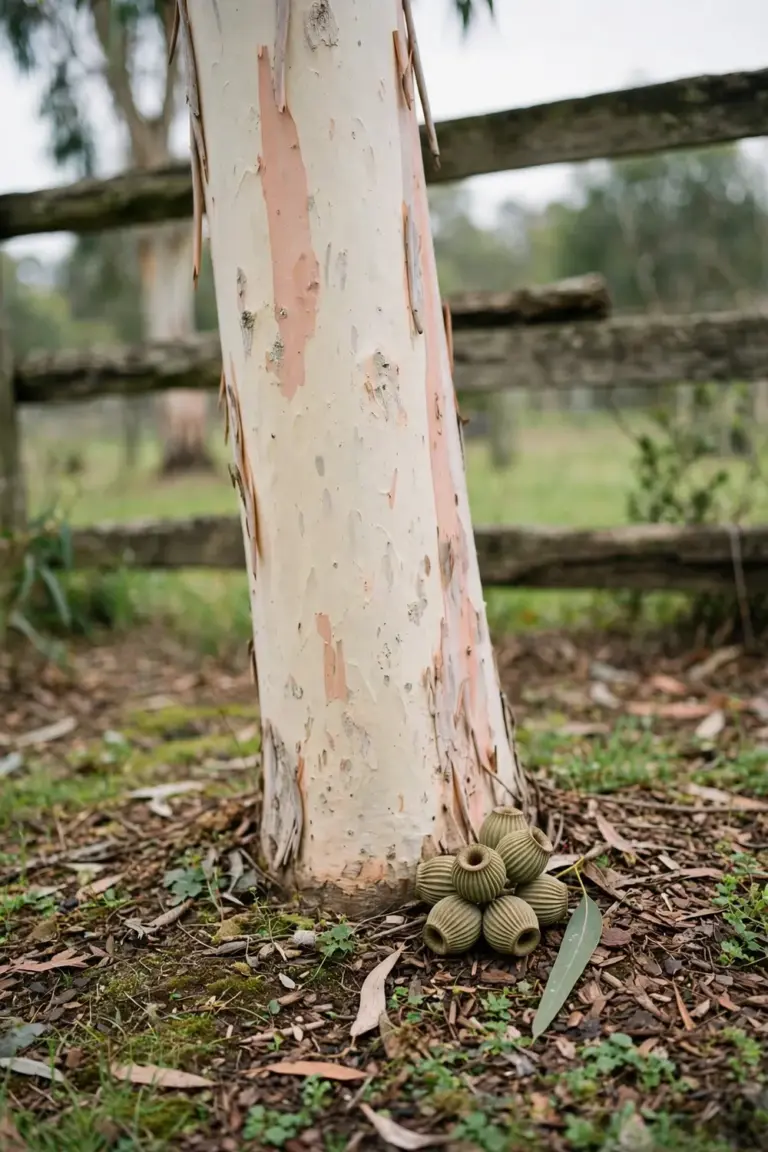
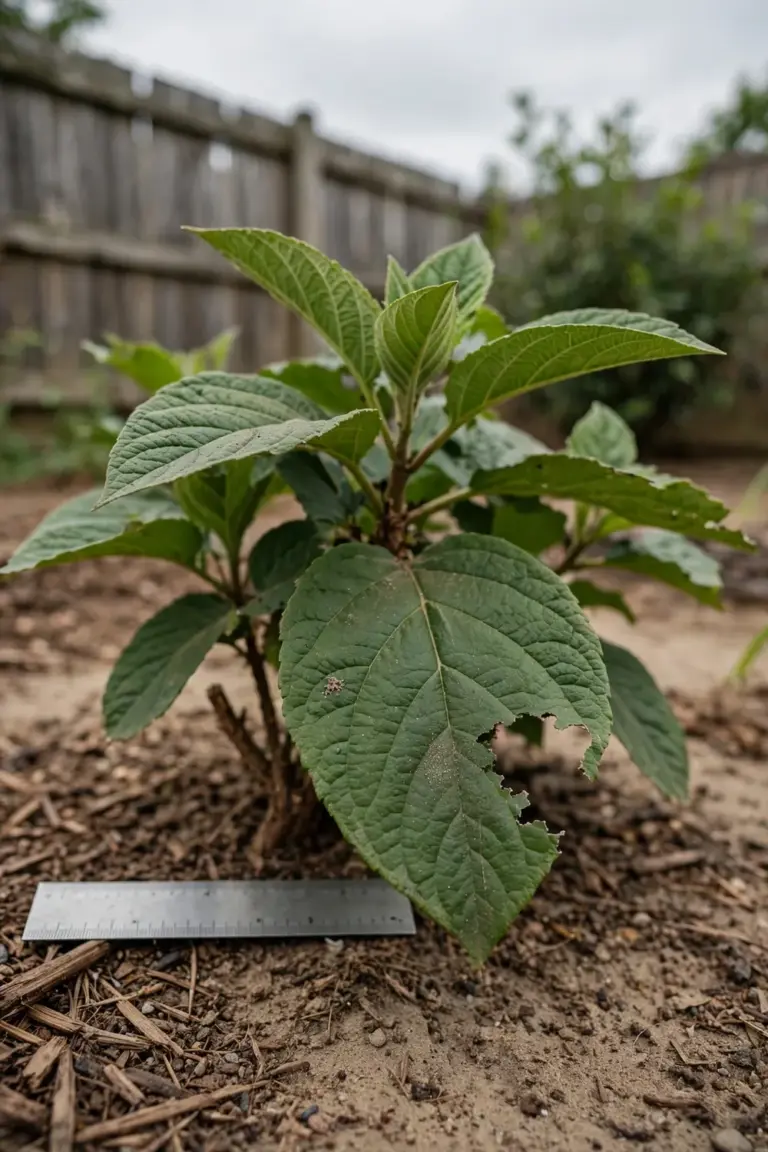
Photograph the flower, the leaves, and the whole plant before you guess a name. That is Australian flower identification for the 15 common flowers on this page. The rest of this page is 15 flowers, from the first wattle head to the final gum blossom.
I have learned that a single flower photo rarely settles a name. Australian flower identification names a flower from flower shape, petal arrangement, leaves, habit, season, and habitat. A photo set plus one state flora authority settles a garden ID without a guess.
Work from the flower outward. Read shape first, count petals second, read leaves third, and note season and habitat last. A name built on shape plus leaves holds. A name built on color alone fails against the nearest lookalike.
Read Flower Shape Before You Count Petals
Flower shape narrows a flower to one family, and petal count then settles the name within that family.
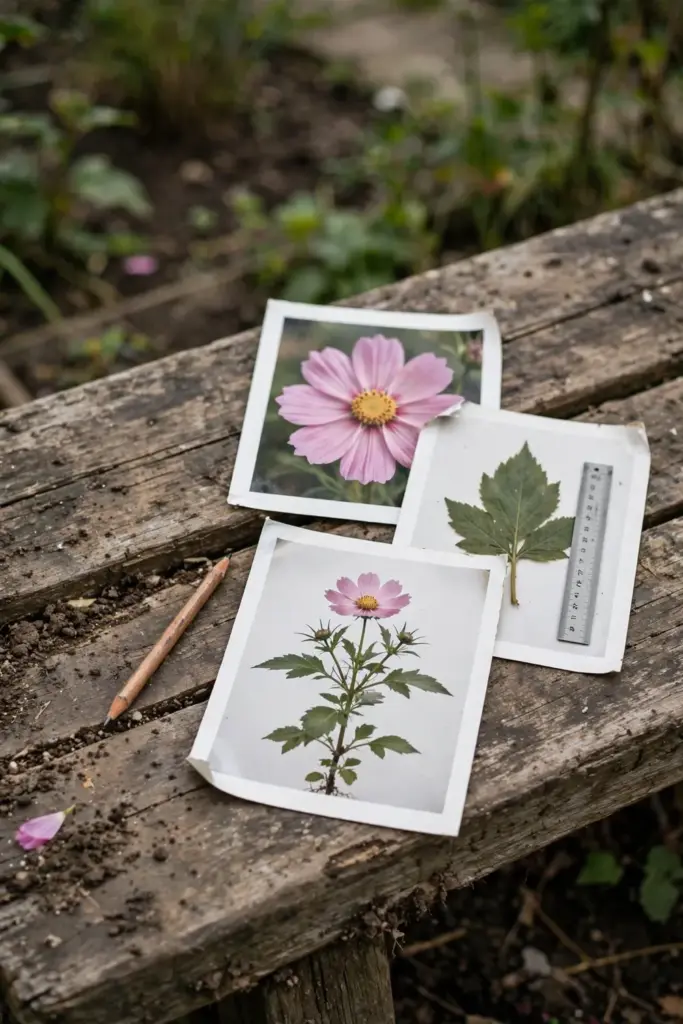
Start with shape. A single flower carries one set of petals around one center. A clustered head packs many tiny flowers into one ball or disc. A spike or brush lines many tiny flowers along one stem. A pea flower carries a banner petal, two wings, and a keel that hides the reproductive parts. A bell flower hangs as one tube or cup. An orchid flower carries three sepals and three petals with one petal shaped as a lip. Shape first. Petals second. Leaves third.
Photograph the flower from the front, from the side, and from behind where the sepals sit. Photograph one leaf with its stalk, the whole plant, and the ground around it. Note the season and the habitat with the photo set. A flower photo plus a leaf photo plus a habit photo separates families that share color. Color alone merges them.
Watch for the false flower trap. A wattle head, a bottlebrush spike, and a banksia spike look like single flowers. Each one is a dense cluster of many tiny flowers. Counting petals on a cluster fails. Read the cluster as one unit, then look for the tiny flowers inside it. The cluster habit points to wattle, bottlebrush, or banksia at once.
Confirm the name in one state flora authority, and match the botanical name in the record for the state where the flower grows. The New South Wales FloraOnline carries NSW species records, the Victorian VicFlora carries Victorian species records, and the Western Australian FloraBase carries Western Australian species records. A common name alone can point to two different flowers.
1. Name Golden Wattle by Round Golden Heads
Golden Wattle is the wattle with round deep golden heads and wide curved phyllodes.
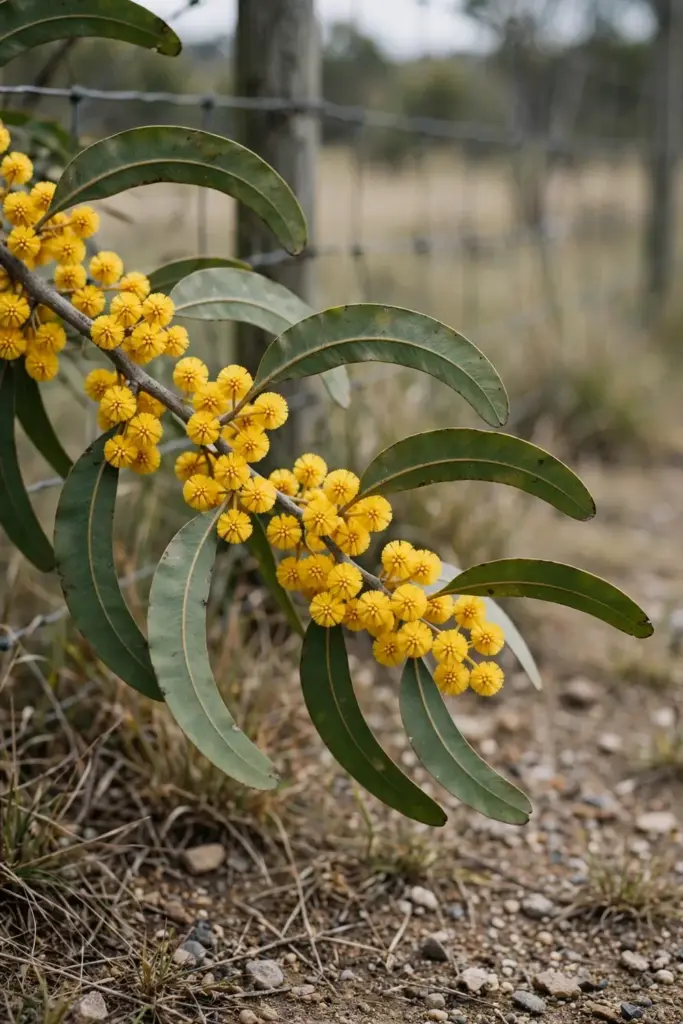
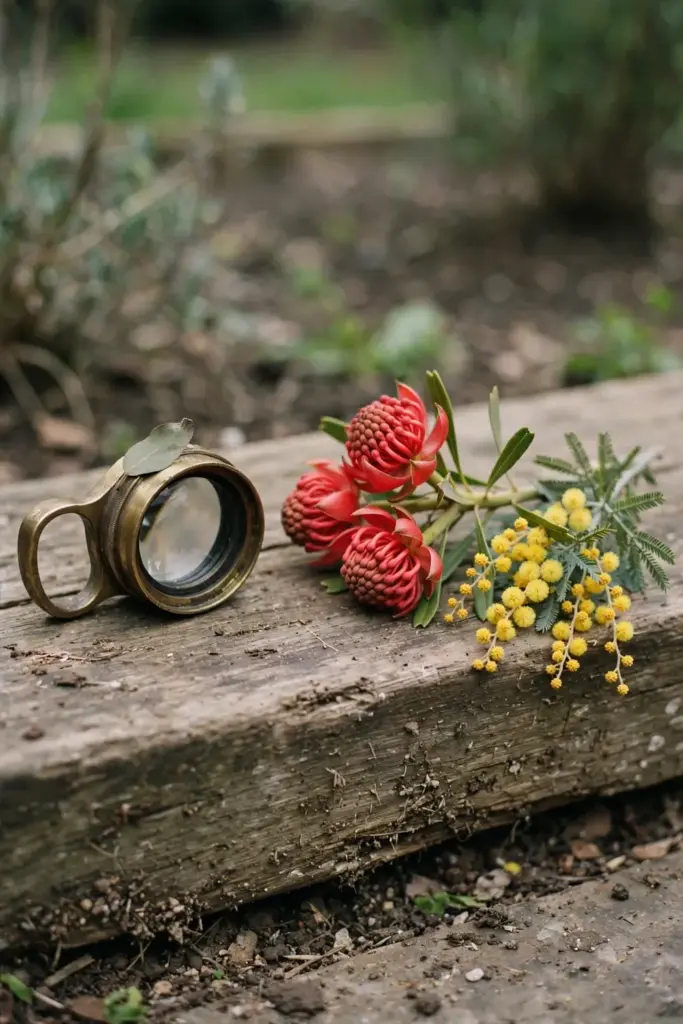
Golden Wattle is Acacia pycnantha. The flowers form round heads of deep golden yellow, and each head packs many tiny flowers into one ball. The phyllodes sit wide and curved like a sickle, with one main vein along the edge. The bark runs smooth and gray brown on young stems, and it roughens with age. The plant grows as a small tree or a large shrub in open woodland and in gardens with sun and drainage. Round golden heads plus wide curved phyllodes point to Golden Wattle. Golden Wattle is the national floral emblem of Australia, so it appears on badges and stamps as well as in gardens.
Separate Golden Wattle from Silver Wattle by phyllode and head color. Golden Wattle phyllodes sit wide and curved. Silver Wattle phyllodes sit narrow and silvery with a blue cast. Golden Wattle heads glow deep gold. Silver Wattle heads run pale cream to soft yellow. A phyllode photo plus a head photo settles the pair. A flower photo alone leaves the pair open.
2. Name Waratah by a Red Head of Many Florets
Waratah is the shrub with a large red head built from many small florets ringed by red bracts.
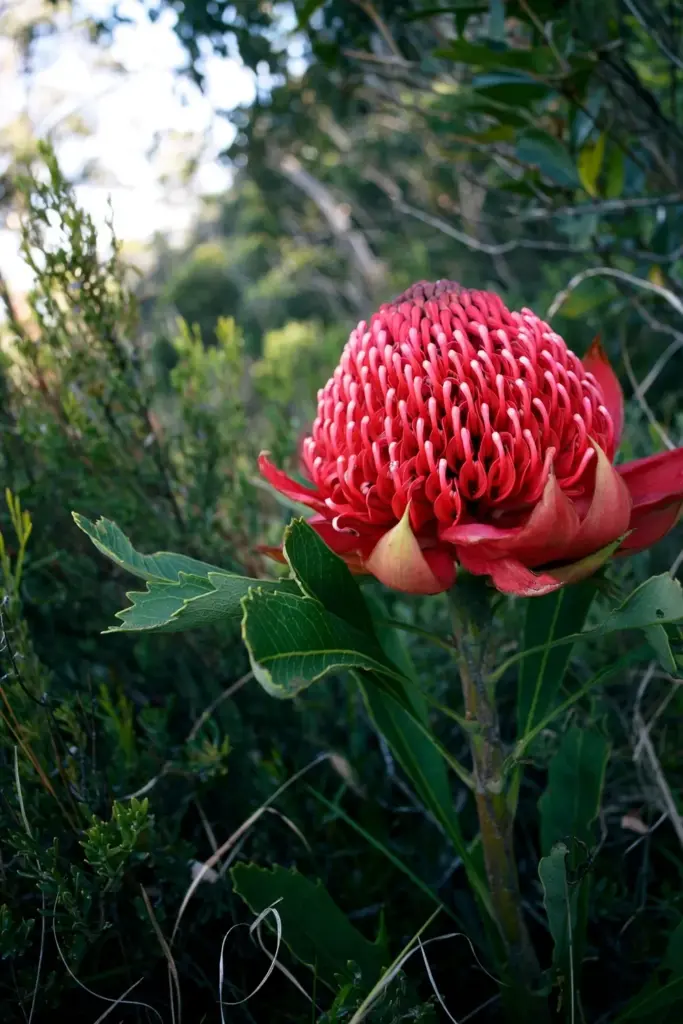
Waratah is Telopea speciosissima. The flower head sits large and dome shaped, with many small red florets packed into one head and stiff red bracts cupping the base. The leaves sit long, leathery, and toothed along the edges. The plant grows as a shrub in forest and in gardens with shade, drainage, and shelter from hot wind. A large red head plus stiff bracts plus toothed leaves point to Waratah. Waratah is the floral emblem of New South Wales, so it appears on state badges and in spring displays.
Separate Waratah from a protea by bract and leaf. Waratah bracts sit stiff and red around a dome of florets, while protea bracts sit broader and cup a wider cone. Waratah leaves carry teeth along the edges. Protea leaves run smooth and leathery. A bract photo with a leaf photo settles the pair. A red head photo alone leaves the pair open.
3. Name Crimson Bottlebrush by Red Brush Spikes
Crimson Bottlebrush is the shrub with crimson brush spikes of many tiny flowers around one stem.
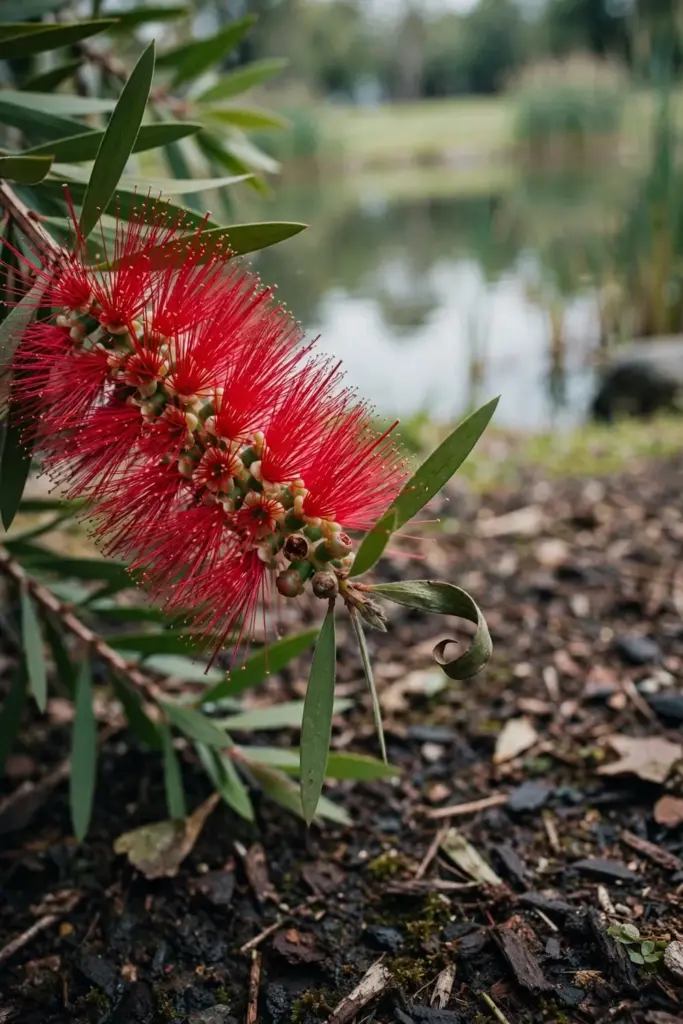
Crimson Bottlebrush is Callistemon citrinus. The flowers form dense spikes of crimson stamens that ring the stem like a bottle brush. The leaves sit narrow, stiff, and lemon scented when crushed. The fruit forms small woody cups packed along the old spike. The bark runs rough and gray brown. The plant grows as a large shrub or a small tree near water, in gardens with sun, and in damp soil. Crimson spikes plus stiff scented leaves point to Crimson Bottlebrush.
Separate Crimson Bottlebrush from a paperbark by flower color and leaf. Crimson Bottlebrush spikes run crimson red. Paperbark spikes run white or cream. Crimson Bottlebrush leaves sit narrow and scented. Paperbark leaves sit broad and veined. A spike photo plus a crushed leaf scent note settles the pair. A spike photo alone leaves the pair open.
4. Name Old Man Banksia by Tall Spikes and Woody Cones
Old Man Banksia is the banksia with tall spikes of many tiny flowers that age into woody cones.
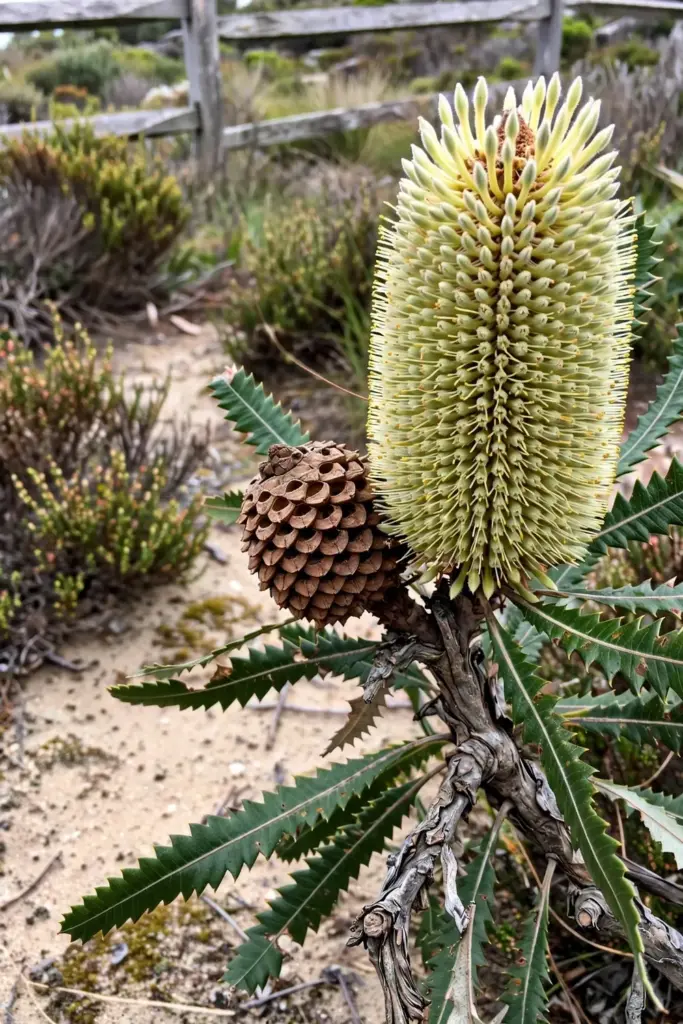
Old Man Banksia is Banksia serrata. The flowers form tall spikes of yellow green that age to brown, and each spike packs many tiny flowers along one axis. The leaves sit long and serrated along the edges, with teeth that catch a fingertip. The cones carry woody follicles that hold seed. The bark runs thick, gnarled, and gray brown. The tree grows in coastal heath and in gardens with sandy soil and sun. Tall spikes plus serrated leaves plus woody cones point to Old Man Banksia.
Separate Old Man Banksia from a bottlebrush by spike and leaf. Banksia spikes run tall and stiff with serrated leaves beside them, while bottlebrush spikes run softer with narrow scented leaves. Banksia cones stay woody on the branch for seasons, and bottlebrush fruit stays as small cups along the old spike. A spike photo plus a leaf photo settles the pair. A spike photo alone leaves the pair open.
5. Name Grevillea by Spider and Toothbrush Flowers
Grevillea flowers are spider or toothbrush blooms with long curved styles that stick out past the petals.
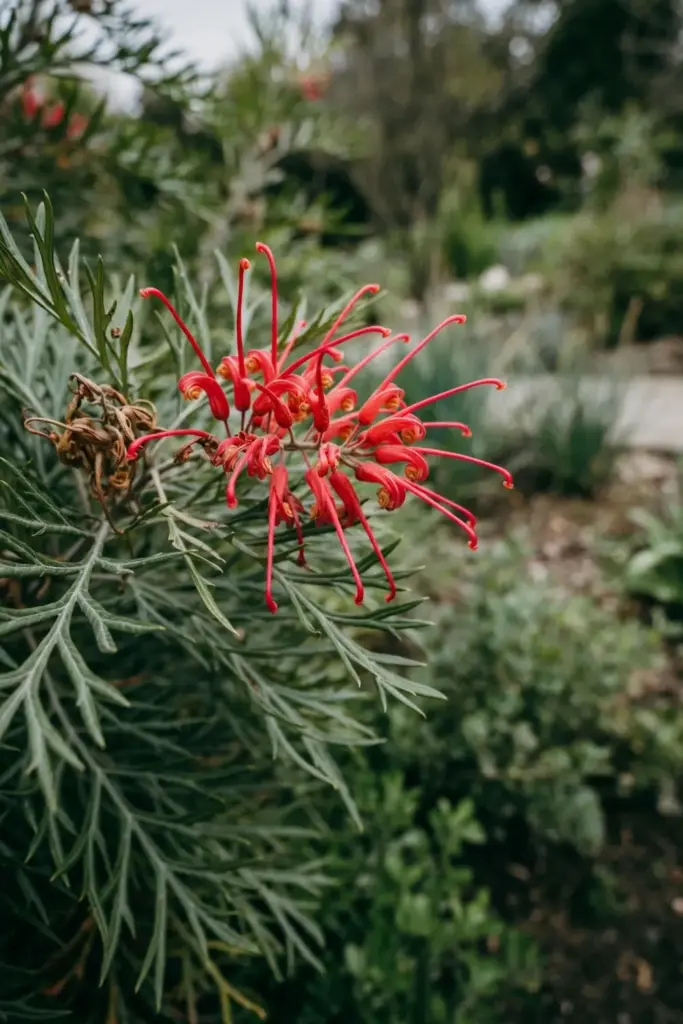
Grevillea Robyn Gordon shows the garden form. The flowers form dense clusters of red toothbrush blooms, and each bloom carries a long curved style that gives the spider look. The leaves sit deeply divided, with narrow lobes. The plant grows as a dense shrub in gardens with sun and drainage. Spider flowers plus divided leaves point to grevillea. The genus spans groundcovers to trees, so leaf shape varies widely across grevilleas while the curved style stays constant.
Separate grevillea from a bottlebrush by style and leaf. Grevillea blooms carry long curved styles that stick out past the flower, while bottlebrush blooms carry straight stamens that ring the stem. Grevillea leaves sit divided and fern-like, and bottlebrush leaves sit narrow and stiff. A close flower photo with a leaf photo settles the pair. A red flower photo alone leaves the pair open.
6. Name Kangaroo Paw by Paw Shaped Tubular Flowers
Kangaroo Paw is the plant with tubular flowers shaped like a paw, covered in fine velvet hairs.
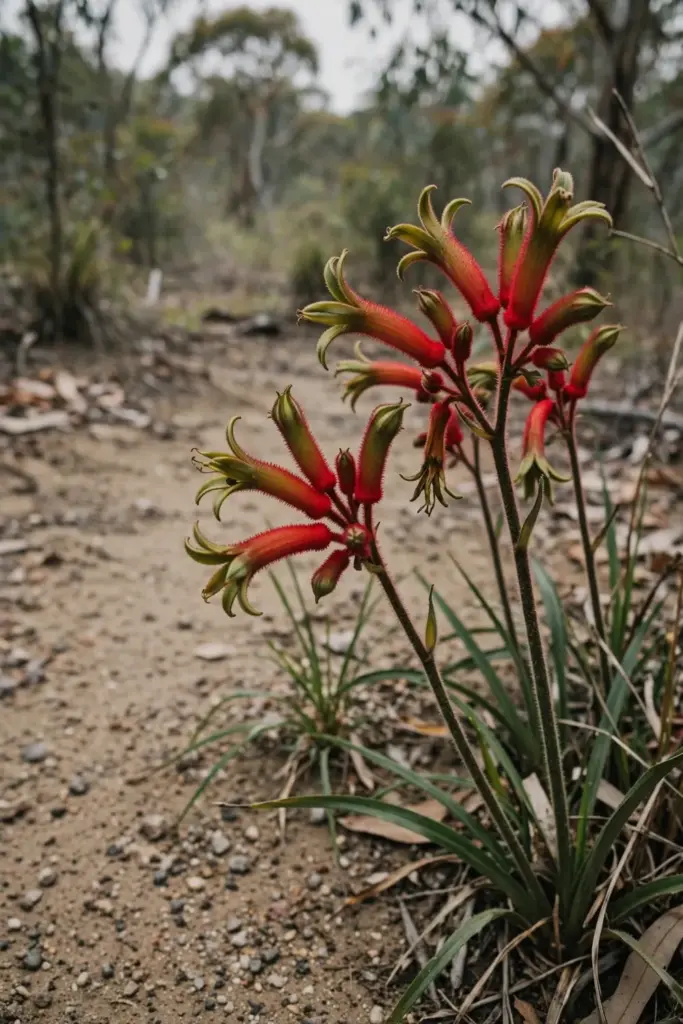
Kangaroo Paw is Anigozanthos manglesii. The flowers form tubes that split at the tip into six claw-like lobes, and the shape reads as a paw at a glance. The flower stems carry fine velvet hairs, and the best known form runs red and green. The leaves sit long, strappy, and basal, rising from the base in a fan. The plant grows in sandy soil in open woodland and in gardens with sun and drainage. Paw tubes plus velvet stems plus strappy leaves point to Kangaroo Paw. Kangaroo Paw is the floral emblem of Western Australia.
Separate Kangaroo Paw from a kangaroo paw hybrid by stem color and flower size. The species carries red and green tubes on tall stems. Garden hybrids run in pink, yellow, orange, and purple on shorter stems. A stem photo with a flower close view settles the pair. A flower color photo alone leaves the pair open, since hybrids copy the species shape in new colors.
7. Name Sturt’s Desert Pea by Red Pea Flowers With a Black Boss
Sturt’s Desert Pea is the groundcover with scarlet pea flowers, each carrying a glossy black boss at the center.
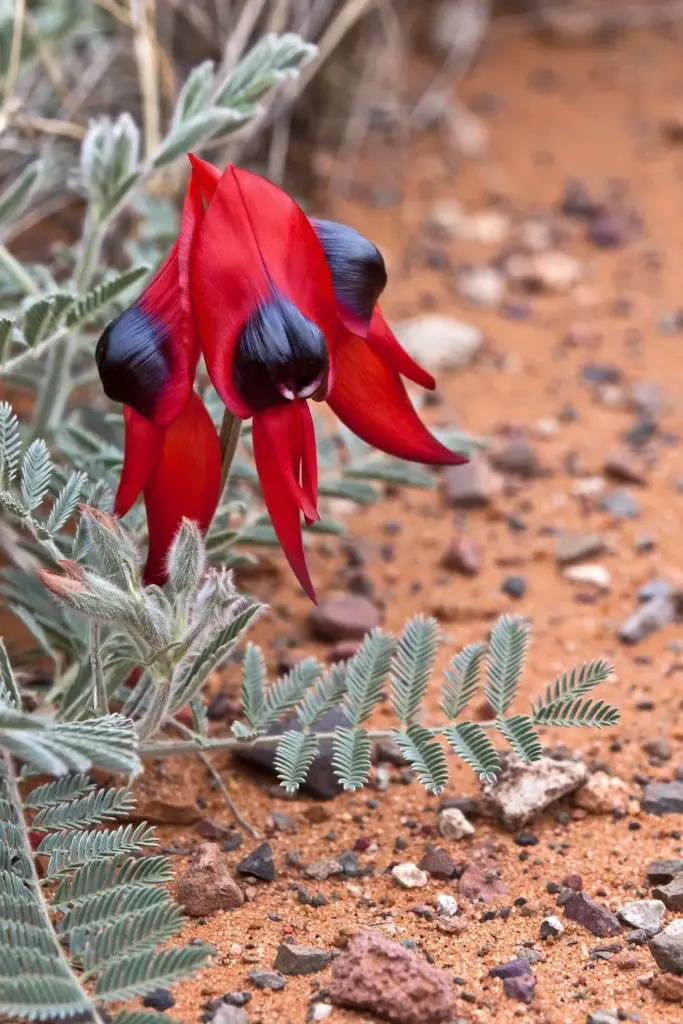
Sturt’s Desert Pea is Swainsona formosa. The flowers form pea blooms of bright scarlet, with a banner petal, two wings, and a keel, plus a glossy black boss where the petals meet. The leaves sit gray green and feathery, with many small leaflets along each stalk. The plant spreads low across red soil and sand in arid country, and it appears in gardens with sun, heat, and sharp drainage. Scarlet pea flowers plus a black boss plus feathery leaves point to Sturt’s Desert Pea. Sturt’s Desert Pea is the floral emblem of South Australia, and it is protected in that state, so do not pick it.
Separate Sturt’s Desert Pea from other pea flowers by the boss. Other pea flowers carry red, pink, purple, or yellow blooms without a black center. Sturt’s Desert Pea carries the black boss on every flower. A flower close view settles the pair at once. A distant red flower photo leaves the pair open.
8. Name Sturt’s Desert Rose by Pink Five Petal Blooms
Sturt’s Desert Rose is the shrub with large pink five petal blooms and a yellow center.
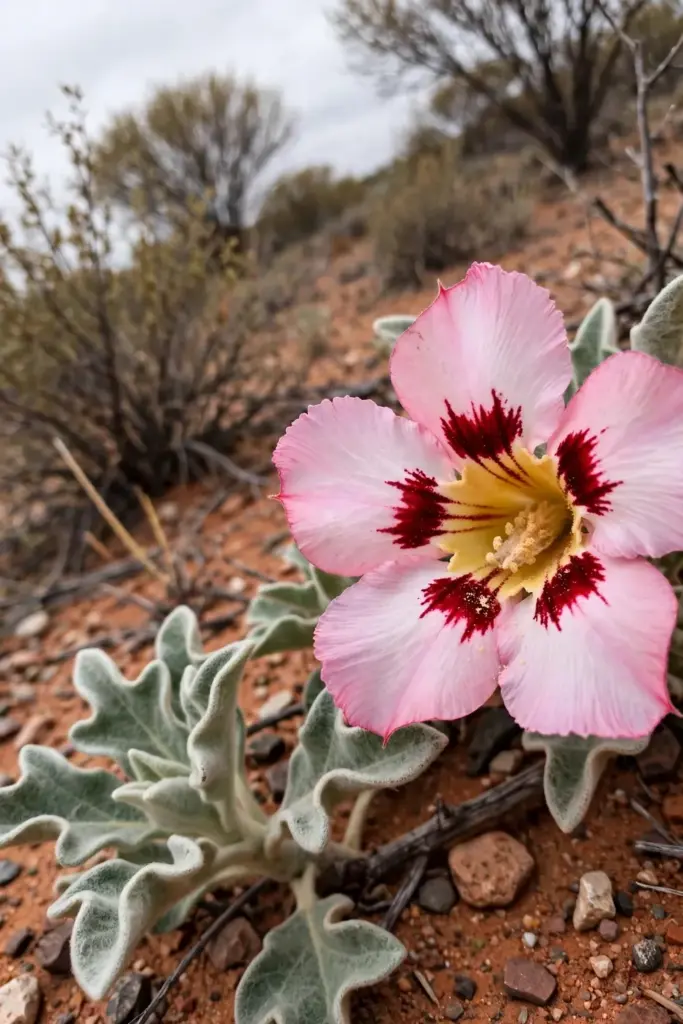
Sturt’s Desert Rose is Gossypium sturtianum. The flowers form broad pink blooms with five petals and a yellow center, and each petal carries a dark red blotch at the base. The leaves sit lobed and gray green, with a soft felted coat. The plant grows as a shrub in arid country and in gardens with sun, heat, and sharp drainage. Pink five petal blooms with a red blotch plus lobed gray leaves point to Sturt’s Desert Rose. Sturt’s Desert Rose is the floral emblem of the Northern Territory.
Separate Sturt’s Desert Rose from a garden hibiscus by petal blotch and leaf. Sturt’s Desert Rose petals carry a dark red blotch at the base of each petal. Garden hibiscus petals run plain or veined without that blotch. Sturt’s Desert Rose leaves sit lobed and gray green. Hibiscus leaves sit oval and glossy. A petal base photo with a leaf photo settles the pair. A pink bloom photo alone leaves the pair open.
9. Name Flannel Flower by White Flannel Petals
Flannel Flower is the flower with white petals that feel like soft flannel, ringed by green bracts.
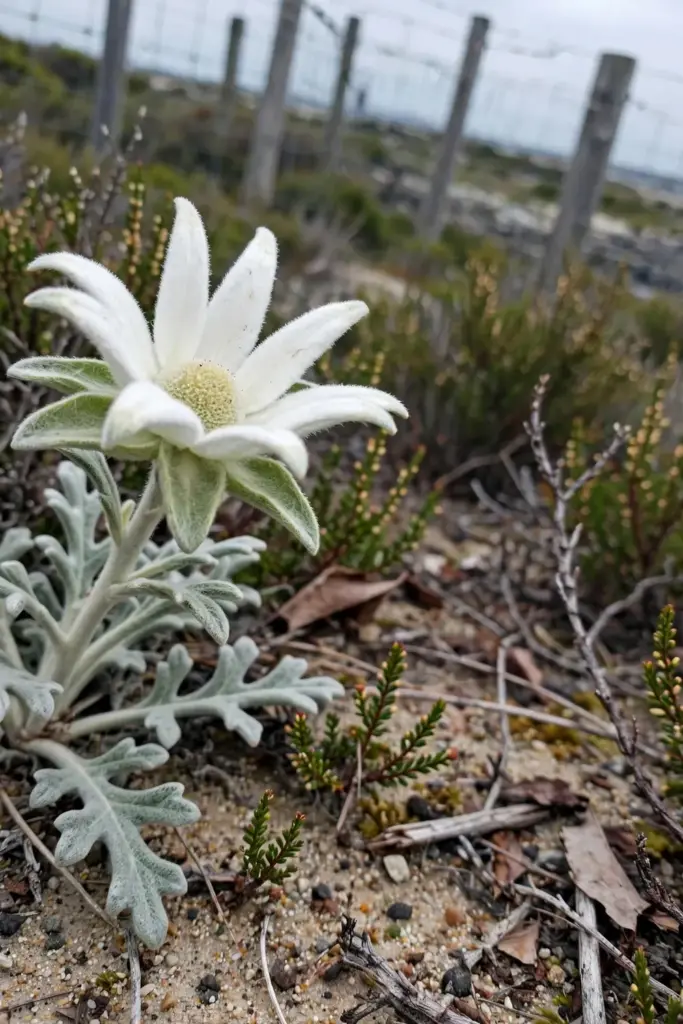
Flannel Flower is Actinotus helianthi. The flowers form white daisy-like heads with soft felted petals, and green bracts ring the base like a collar. The leaves sit gray green and felted, with lobed edges. The plant grows in coastal heath and in gardens with sun, drainage, and shelter from hot wind. White felted petals plus a green bract collar plus felted leaves point to Flannel Flower. The felted coat gives the flower its common name.
Separate Flannel Flower from a white daisy by petal feel and bract. Flannel Flower petals feel soft and felted. Daisy petals feel smooth and papery. Flannel Flower bracts sit green and felted around the head. Daisy bracts sit smooth and layered. A petal close view with a bract photo settles the pair. A white head photo alone leaves the pair open.
10. Name Everlasting Daisy by Papery Daisy Heads
Everlasting Daisy is the daisy with papery petals that keep their color and shape after the flower dries.
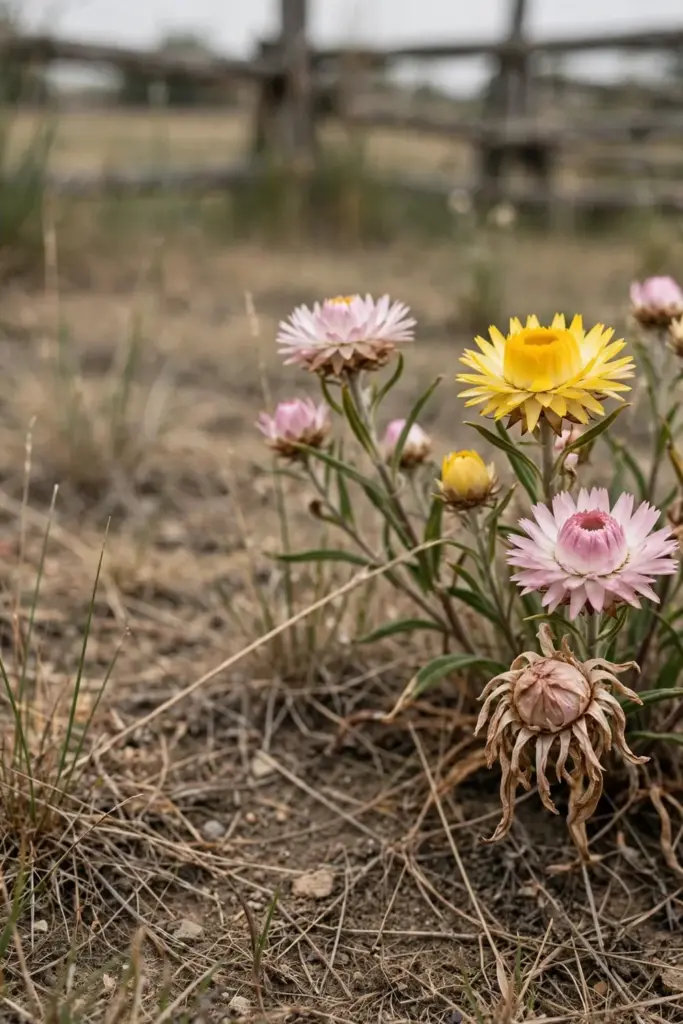
Everlasting Daisy is Xerochrysum bracteatum. The flowers form daisy heads with stiff papery bracts in white, pink, yellow, or orange, and the bracts hold their color after cutting. The leaves sit narrow and green along the stems. The plant grows in open country and in gardens with sun and drainage, and it flowers through spring into summer. Papery heads plus narrow leaves point to Everlasting Daisy. The heads dry on the stem and keep their shape, which gives the group its common name.
Separate Everlasting Daisy from a common daisy by petal texture. Everlasting bracts feel stiff and papery, like dry straw. Common daisy petals feel soft and wilt within days of cutting. A petal touch test with a head photo settles the pair. Cut stems for drying before the centers open fully, and the everlasting growing guide walks through cutting and drying.
11. Name Correa by Hanging Bell Flowers
Correa is the shrub with hanging bell flowers in green, pink, or red, often with a two tone tube.
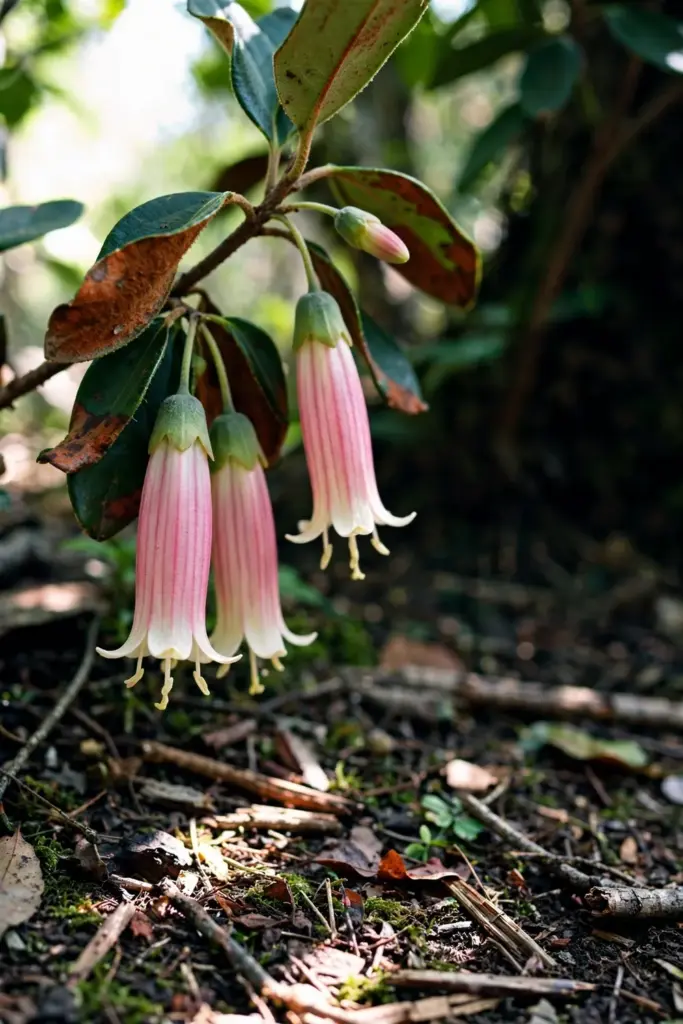
Correa is Correa reflexa. The flowers hang as bells or tubes, with petals fused for most of their length and flaring at the tip. The colors run green, cream, pink, or red, and many forms carry a two tone tube with a pale tip. The leaves sit oval and leathery, with a rusty felted underside. The plant grows as a shrub in forest and in gardens with shade, drainage, and shelter. Hanging bells plus leathery leaves with a rusty underside point to correa.
Separate correa from a fuchsia by petal fusion and leaf. Correa petals fuse into one tube for most of their length, while fuchsia petals split into separate sepals and petals that flare wide. Correa leaves sit leathery with a rusty underside, and fuchsia leaves sit soft and green. A side flower photo with an underside leaf photo settles the pair. A hanging bloom photo alone leaves the pair open.
12. Name Boronia by Four Petal Star Flowers
Boronia is the shrub with star shaped flowers of four petals, often pink or brown, with a strong scent.
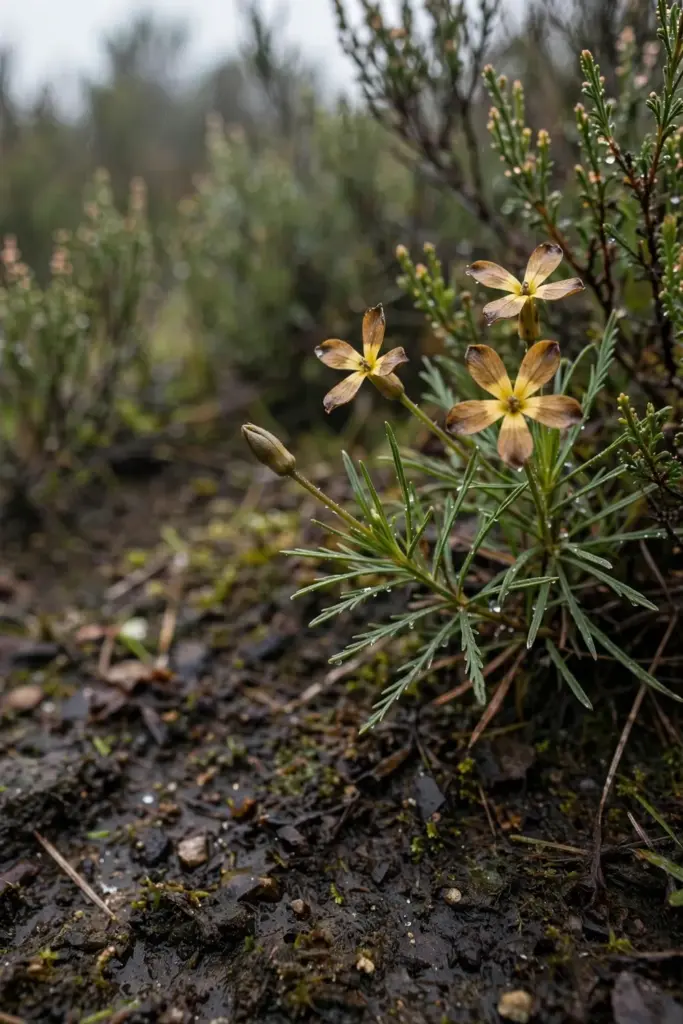
Boronia is Boronia megastigma. The flowers form small stars of four petals, in brown and yellow in the best known form, with a scent that carries across a garden. The leaves sit narrow and fine, with a scent of their own when crushed. The plant grows as a shrub in damp heath and in gardens with shade, drainage, and steady moisture. Four petal stars plus fine scented leaves point to boronia.
Separate boronia from a correa by petal count and fusion. Boronia flowers open as flat stars of four separate petals. Correa flowers hang as fused bells. Boronia scent runs strong and sweet. Correa scent runs faint. A front flower photo settles the pair at once. A pink flower photo alone leaves the pair open.
13. Name Tea Tree by Five Petal White Flowers
Tea-Tree is the shrub with small five petal flowers in white or pink, packed along the branches.
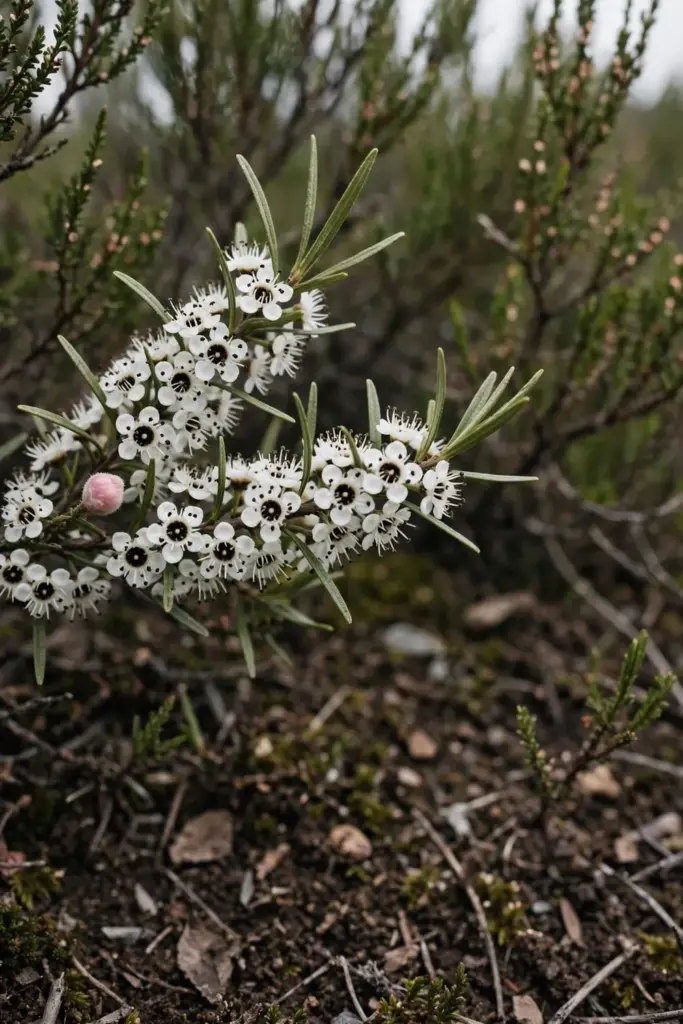
Tea-Tree is Leptospermum scoparium. The flowers form small cups of five petals, white or pink, with a dark center of stamens. The leaves sit small, narrow, and pointed, with a scent when crushed. The plant grows as a shrub in heath and in gardens with sun and drainage. Five petal cups plus small pointed leaves point to tea-tree.
Separate tea-tree from a myrtle by flower size and leaf. Tea-tree flowers sit small and cup shaped along the branches. Myrtle flowers sit larger with longer stamens that stick out past the petals. Tea-tree leaves sit narrow and pointed. Myrtle leaves sit broader and glossier. A flower close view with a leaf photo settles the pair. A white flower photo alone leaves the pair open.
14. Name Native Hibiscus by Large Blooms With a Staminal Column
Native Hibiscus is the shrub with large five petal blooms and a long staminal column that sticks out from the center.
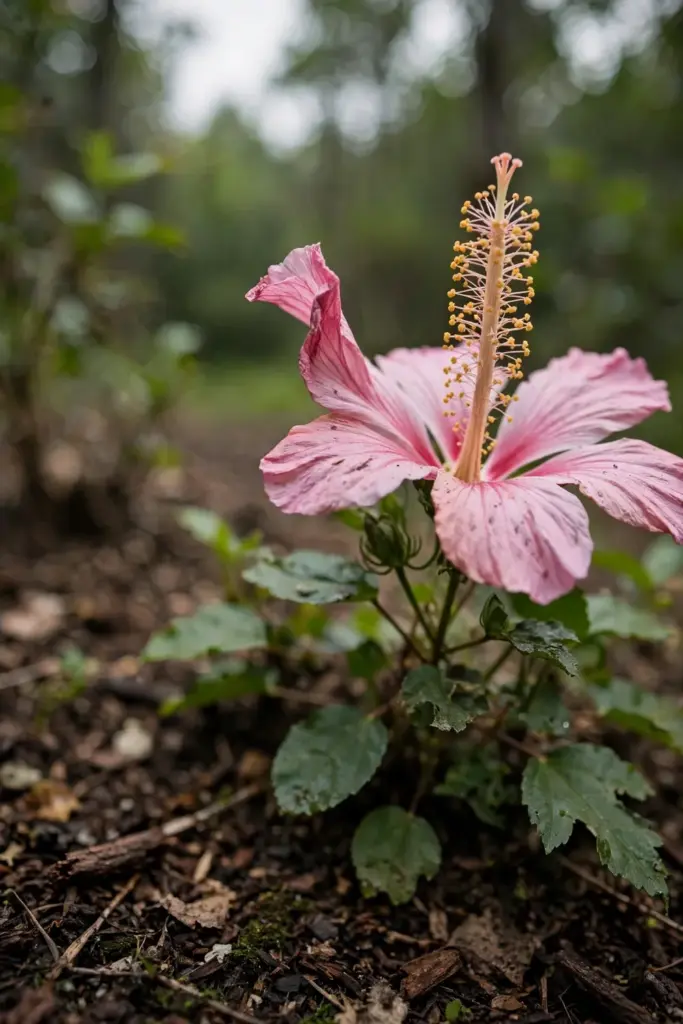
Native Hibiscus is Hibiscus heterophyllus. The flowers form broad blooms of white, pink, or mauve with five petals and a long column of fused stamens rising from the center. The leaves sit variable, from oval to lobed, on one plant. The plant grows as a shrub in forest edges and in gardens with sun, drainage, and shelter. Large blooms plus a staminal column plus variable leaves point to native hibiscus. A hibiscus in a mixed bed needs sun and room, and fall flower bed ideas covers bed layout for shrubs that flower in sequence.
Separate native hibiscus from Sturt’s Desert Rose by the staminal column. Native hibiscus carries a long column that sticks out from the center. Sturt’s Desert Rose carries a flat yellow center with a red blotch at each petal base. A center close view settles the pair at once. A pink bloom photo alone leaves the pair open.
15. Name Eucalyptus Blossom by Cap and Stamen Burst
Eucalyptus Blossom is the gum flower with a cap that pops off to release a burst of stamens.
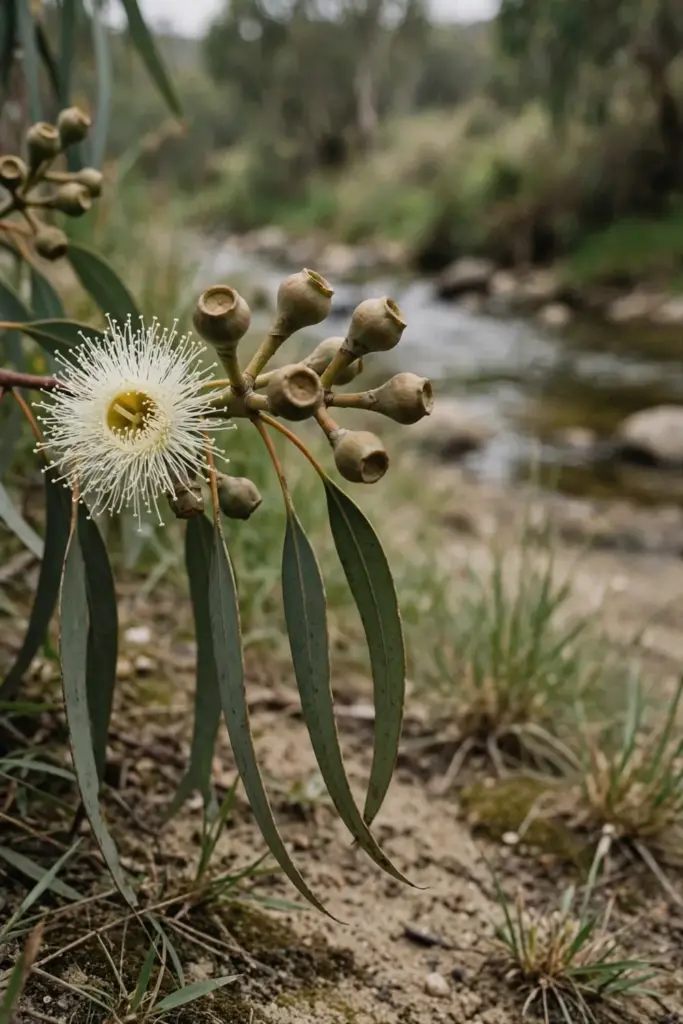
Eucalyptus Blossom is Eucalyptus camaldulensis in the river red gum form. The buds carry a cap that seals the flower, and the cap pops off at opening to release a burst of white or cream stamens. The leaves sit long and narrow, hanging from slender stalks. The tree grows near rivers, creeks, and floodplains, and it spreads a wide canopy over open ground. Cap buds plus stamen bursts plus narrow hanging leaves point to eucalyptus blossom.
Separate eucalyptus blossom from a bottlebrush by cap and arrangement. Eucalyptus flowers carry a cap and open as stamen clusters around a cup, while bottlebrush flowers line up along a spike with no cap. A bud photo with an open flower photo settles the pair. A white stamen photo alone leaves the pair open.
Match Each Flower to Its Shape in One Table
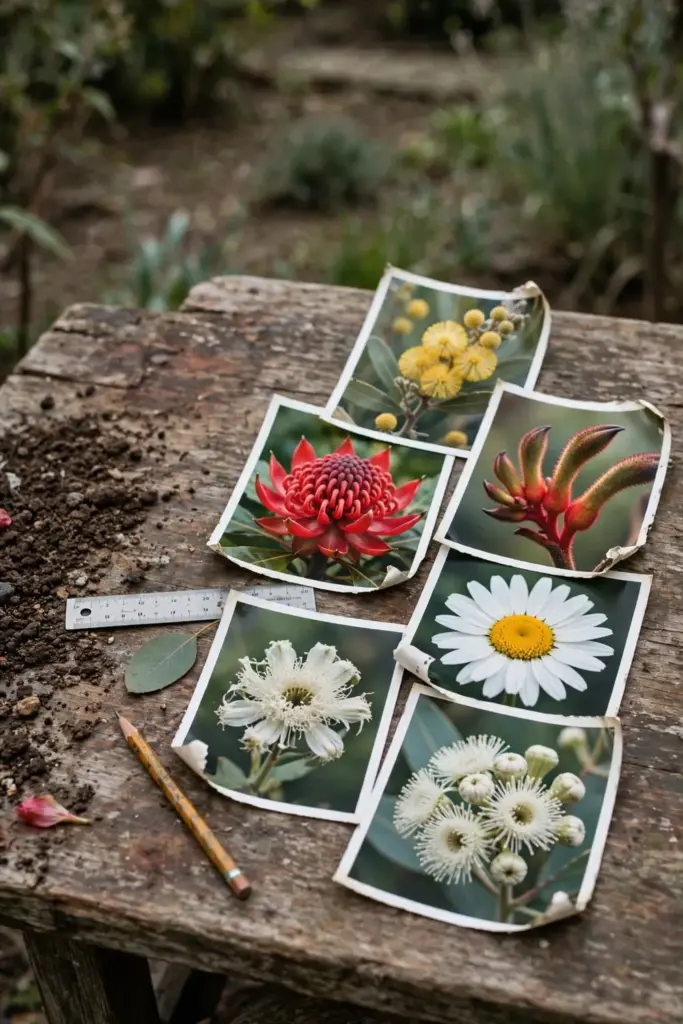
Shape plus leaf plus lookalike settles the name. Use this table as a quick check after the photo set.
| Flower | Flower Shape | Color | Leaf Clue | Lookalike |
|---|---|---|---|---|
| Golden Wattle | Round head | Deep golden yellow | Wide curved phyllodes | Silver Wattle |
| Waratah | Dome head of florets | Red | Long toothed leaves | Protea |
| Crimson Bottlebrush | Brush spike | Crimson | Narrow scented leaves | Paperbark |
| Old Man Banksia | Tall spike | Yellow green aging to brown | Long serrated leaves | Bottlebrush |
| Grevillea | Spider or toothbrush cluster | Red | Deeply divided leaves | Bottlebrush |
| Kangaroo Paw | Paw shaped tube | Red and green | Long strappy basal leaves | Hybrid kangaroo paw |
| Sturt’s Desert Pea | Pea flower | Scarlet with black boss | Feathery gray green leaves | Other pea flowers |
| Sturt’s Desert Rose | Five petal bloom | Pink with red blotch | Lobed gray leaves | Garden hibiscus |
| Flannel Flower | Daisy-like head | White | Felted gray green leaves | White daisy |
| Everlasting Daisy | Papery daisy head | White, pink, yellow, or orange | Narrow green leaves | Common daisy |
| Correa | Hanging bell | Green, pink, or red | Leathery leaves, rusty underside | Fuchsia |
| Boronia | Four petal star | Pink or brown | Fine scented leaves | Correa |
| Tea-Tree | Five petal cup | White or pink | Small pointed leaves | Myrtle |
| Native Hibiscus | Broad bloom | White, pink, or mauve | Variable oval to lobed leaves | Sturt’s Desert Rose |
| Eucalyptus Blossom | Cap bud, stamen burst | White or cream | Long narrow hanging leaves | Bottlebrush |
Frequently Asked Questions About Australian Flower Identification
One flower photo narrows the field, and it rarely settles the name. Shape plus petal count plus leaf plus habit plus habitat must join the flower view before the name firms up. Photograph the flower from the front and the side, one leaf with its stalk, the whole plant, and the ground around it. Match all four views in one flora record. A name built on one photo fails against the nearest lookalike.
A wattle head is a cluster of many tiny flowers packed into one ball, not one flower with many petals. A single flower carries one set of petals around one center. Look for the tiny flowers inside the head with a close view. Wattle, bottlebrush, and banksia heads all share this cluster habit. Read the cluster as one unit, then check the tiny flowers inside it for the family.
A banksia flower is a tall spike of many tiny flowers in bloom. A banksia cone is the same spike after flowering, with woody follicles holding seed. The flower spike runs yellow green and soft to touch. The cone runs brown and woody. A flower spike plus a cone on one plant confirms banksia at once. A cone alone points to banksia with no flower color to read.
Do not pick a wildflower to identify it. Picking removes the flower from the plant, and it breaks the law for protected species in some states. Photograph the flower, note the traits, and confirm the name in one flora record. A photo set carries more ID value than a picked stem. When a flower may be protected, keep clear and seek a herbarium verdict before any action.
Habitat and planting pattern separate natives from planted exotics. A native flower grows in bush, in a reserve, or in a self sown patch with local undergrowth. A planted exotic grows in a row, in a pot, in a street planting, or in a mulched garden bed. Flower shape still carries the ID, and the flora record confirms the range. A flower outside its native range in a tidy pattern points to a garden planting.
Name the Flower, Then Confirm It in One Flora Record
Three views name the flower, and one flora record confirms the name. Photograph flower, leaf, and whole plant. Match the three views against the 15 entries on this page. Check the botanical name in the flora record for the state where the flower grows. A confirmed name beats a fast guess. A fast guess wastes the next step, whether that step is care, pruning, or removal. The Australian National Botanic Gardens portal carries national plant records behind the state floras. Cut flowers for the vase come from the same flowers, and fall cut flowers covers harvest and conditioning. Fall blooming perennials extend the flower season with plants that return each year.