
Order 1 soil assay before you buy any product labeled for spiral nematode. Spiral nematode feeds on lawn roots from outside the root, and most lawns carry it without visible damage. The assay count decides whether the lawn needs work or patience.
Spiral nematode is Helicotylenchus spp., a genus of microscopic roundworms that coils into a spiral shape when dead or relaxed. Each worm feeds through a needle-like stylet, a mouth spear that punctures root cells and drains them one cell at a time. The feeding stays outside the root, so the damage looks like drought, hunger, or a fungal patch.
The rest of this page is 8 strategies, from the honest cost call to the repair work that rebuilds a thin lawn. Read the identification sections first when the lawn still stands. Start at Step 1 when the lawn already thins in patches.
What Spiral Nematode Actually Is
Spiral nematode is a plant-parasitic roundworm in the genus Helicotylenchus. It lives in soil, feeds on roots from outside, and coils into a spiral when dead or relaxed, which gives the group its common name.
The genus holds hundreds of species. Most of them count as minor pests on most hosts, and their damage often goes unmeasured. A few species cause real losses on specific hosts.
Three species carry most of the turf and crop damage. Helicotylenchus paxilli cuts growth in bermudagrass and seashore paspalum on Florida golf courses, Helicotylenchus multicinctus ranks as an important pest of banana, and Helicotylenchus pseudorobustus damages soybean, cotton, and corn in Florida, according to the University of Florida IFAS spiral nematode profile.
Spiral nematode belongs to the animal kingdom. It is no fungus, no insect, and no microbe. Every stage of its life cycle passes outside the root in the soil. That exposed life makes the worm easier to reach with soil-applied products than a worm that lives inside the root, and it also makes cultural control more powerful than many gardeners expect.
Beneficial nematodes belong to different genera and do opposite work. Cornell University turf specialists name Heterorhabditis bacteriophora and Steinernema feltiae as grub killers that attack soil insects and leave plants alone. A bag of grub-control nematodes will not treat spiral nematode, and spiral nematode will not kill grubs. Check the genus on the label before you buy.
How to Identify Spiral Nematode Damage on Lawns
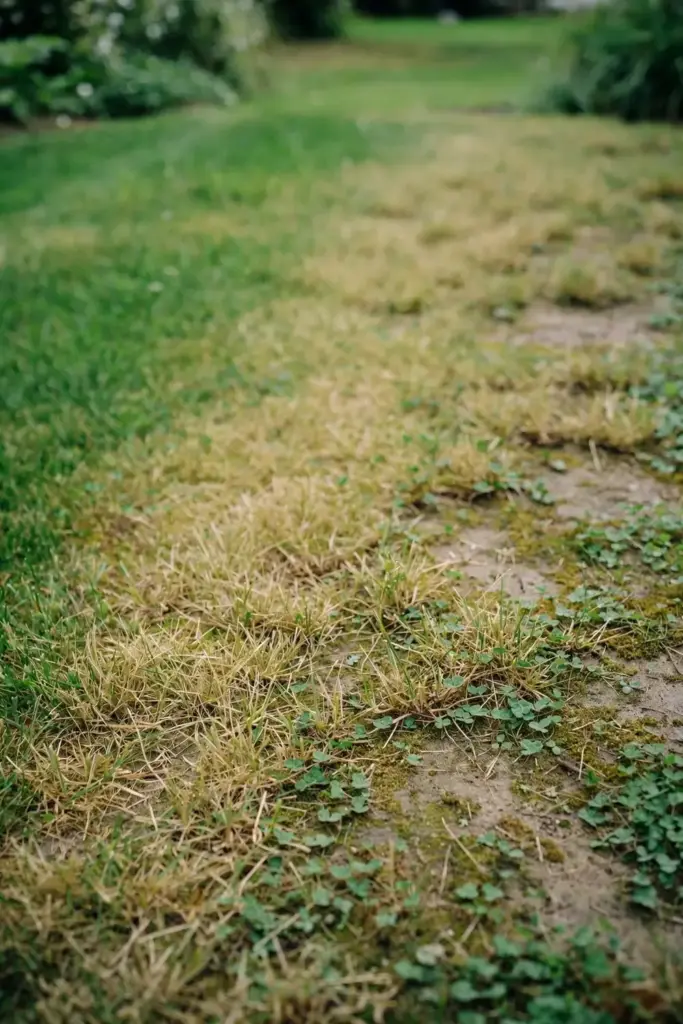
Spiral nematode damage on lawns shows as patches of thin, yellowing turf that ignore water and fertilizer. The patches grow slowly, weeds move into the gaps, and the same spots return year after year.
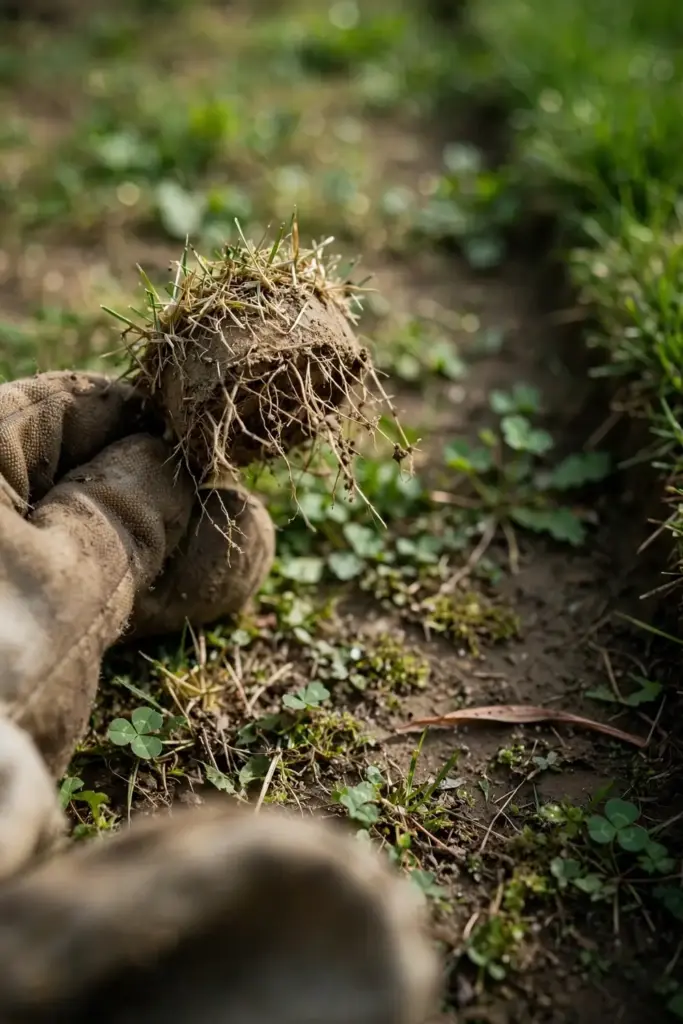
University of Florida IFAS researchers describe patchy decline with weeds filling the gaps. The pattern starts small. A patch that widens across one season deserves a soil assay. A patch that appears overnight points to something else.
Growth that stays slow after irrigation and fertilization points underground. LSU AgCenter lists slowed growth after irrigation and fertilization, a thinning stand, and discolored weak turf among the signs of nematode injury.
Brown patch, drought, and compaction all thin turf in patches, so the eye alone cannot name the cause. The brown patch guide shows the fungal pattern that most often gets blamed for nematode thinning. A soil assay separates the two, and the assay costs less than a season of wrong products.
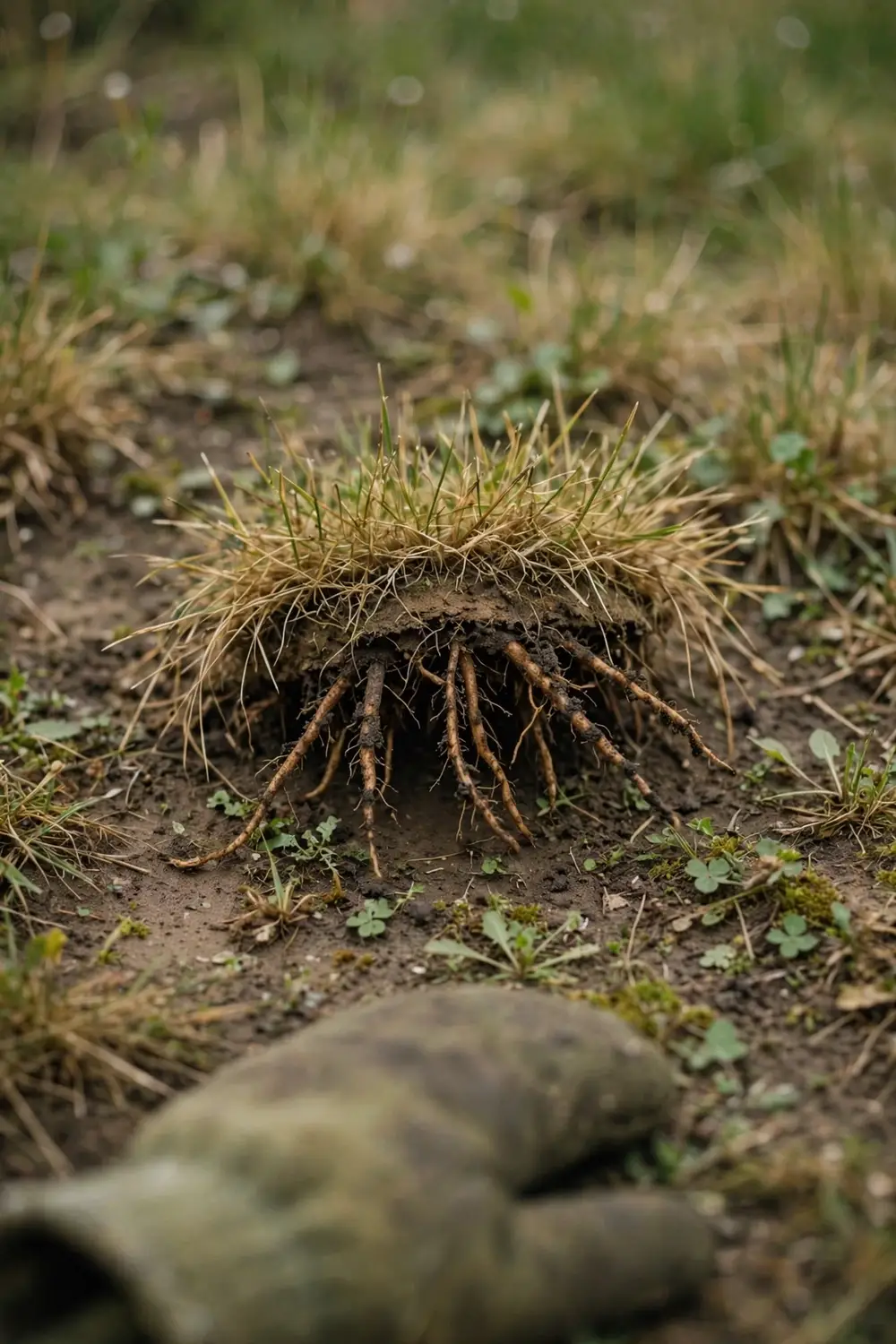
Pull a plug from the edge of a thinning patch. Short, cropped roots with discolored tips support a nematode diagnosis, while long white roots point elsewhere. Keep the plug moist and compare it with a plug from a healthy area. The comparison tells more than one plug alone.
How to Identify Spiral Nematode Damage on Roots and Garden Plants
Spiral nematode damage on roots shows as short, cropped roots with small dead spots and discolored tips. The root system shrinks, feeder roots go missing, and the plant wilts under stress that a healthy root system would handle.
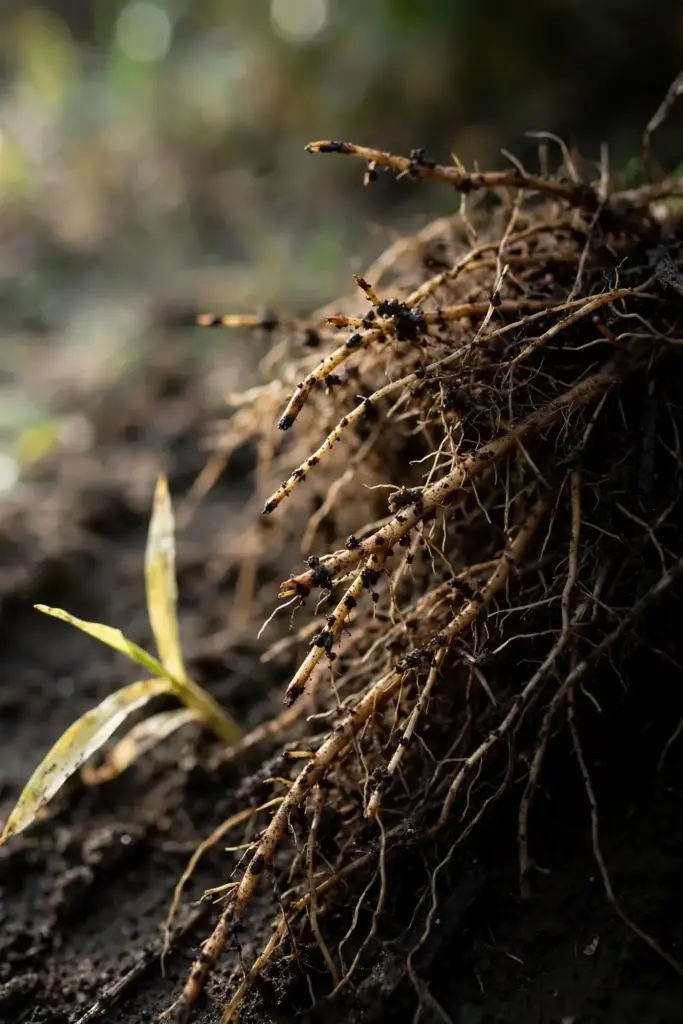
Helicotylenchus multicinctus cuts small dead spots into roots, and heavy infestation merges those spots into root necrosis and dieback. University of Florida IFAS researchers describe that progression from scattered spots to dead root tips.
Garden plants show the same root loss with stunting and yellowing above ground. Corn under spiral nematode feeding shows wilting, stunting, and poorly filled ears, and the symptoms cluster in parts of the field, and they stop short of the whole field, according to University of Illinois Extension corn nematode notes.
Banana carries the clearest garden warning. Helicotylenchus multicinctus ranks as an important banana pest worldwide, and nursery stock grown in infested soil spreads the worm with the plant. Buy banana plants from clean stock and keep new plants out of infested soil.
Spiral nematode never forms galls. A root with swellings or knots points to root-knot nematode, and the differential section below spells out that split.
Which Lawns and Plants Get Hit Hardest by Spiral Nematode
Seashore paspalum takes the hardest hit from spiral nematode among common turfgrasses. University of Florida IFAS researchers call seashore paspalum particularly susceptible to Helicotylenchus paxilli, and the worm ranks among the most common nematodes that need nematicide application on Florida golf turf.
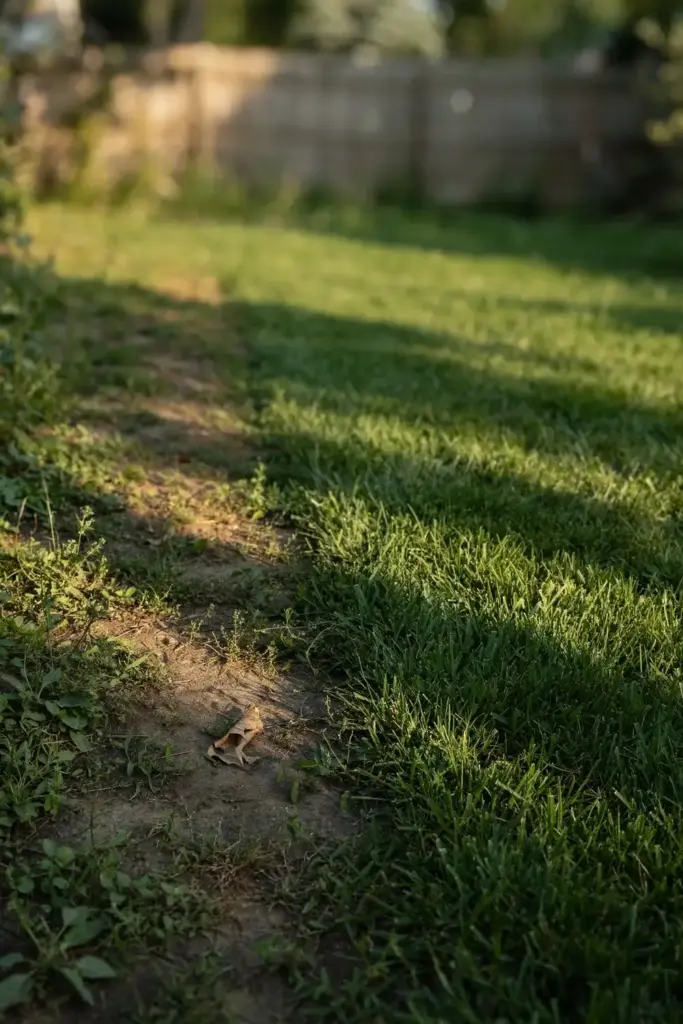
Bermudagrass, St. Augustinegrass, zoysiagrass, and centipedegrass all host spiral nematodes. LSU AgCenter notes that spiral nematodes live in all turfgrasses and seldom cause injury when the turf stays well maintained.
An Ohio State University turf survey of 81 samples from 40 golf courses counted spiral nematodes at an average of 454 per 100 cubic centimeters of soil, second only to ring nematodes, and 14 of 81 samples passed treatment thresholds for one of four nematode types. One Medina sample carried 5,088 spiral nematodes per 100 cubic centimeters, about eight times the bentgrass threshold of 600, and the superintendent reported obvious damage.
Stress decides the damage more than the worm count alone. A well-fed, deep-rooted lawn tolerates counts that flatten a drought-stressed lawn on sandy soil. Sandy soils grow the highest counts, and heat and drought turn a quiet population into visible thinning.
Beyond lawns, soybean, cotton, corn, and banana sit on the host list. A lawn beside a vegetable bed shares the same soil biology, so a garden bed with stunted plants and a lawn with thin patches can trace back to one infested area. Test both areas when both look sick.
Spiral Nematode vs Root-Knot Nematode
Root-knot nematode is the closest lookalike for spiral nematode. Both worms feed on roots, both stunt plants, and both produce yellowing and thinning above ground that no eye can separate.
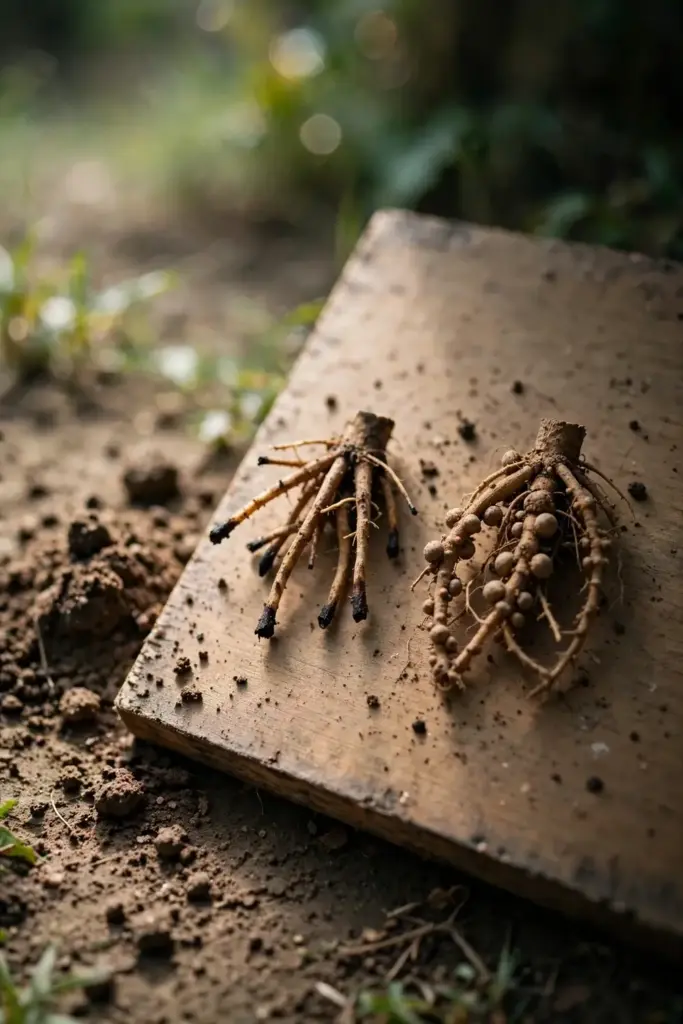
The roots split them. Spiral nematode feeds from outside the root and leaves no galls, while root-knot nematode enters the root, settles inside, and forces the root to grow galls around the feeding site. A washed root with knots means root-knot. A washed root with cropped, discolored tips and no knots means spiral.
| Clue | Spiral Nematode | Root-Knot Nematode |
|---|---|---|
| Feeding site | Outside the root, migratory ectoparasite | Inside the root, sedentary endoparasite |
| Root sign | Cropped, wilted, discolored roots, no galls | Swellings and galls on roots |
| Above-ground symptoms | Patchy thinning, yellowing, slow growth that ignores water and fertilizer | Stunting, yellowing, wilting, poor response to water and fertilizer |
| Arkansas medium threshold | 700 per 100 cubic centimeters of soil | 80 per 100 cubic centimeters of soil |
| Arkansas high threshold | 1,500 per 100 cubic centimeters of soil | 300 per 100 cubic centimeters of soil |
| Damage style | Subtler symptoms, needs high counts to injure most lawns | More aggressive at lower counts |
| Lab test | Soil assay counts worms in soil | Soil assay plus root inspection for galls |
The threshold gap carries the practical lesson. Root-knot nematode injures lawns at counts far below the spiral nematode thresholds, so a mixed assay needs a genus-by-genus read. One total worm count hides the split. Ask the lab to report each genus separately, and treat the report as one lawn, one genus, one decision.
Root-knot, ring, sting, lesion, and stubby root nematodes each need their own identification and management. Match the treatment to the genus on the assay, and the lawn gets the right plan.
Why Spiral Nematode Feeding Starves Roots From Outside
Spiral nematode starves the plant by cutting the root system down faster than the plant can regrow it. Each worm punctures root cells with its stylet and drains them, and thousands of worms feeding at once prune the feeder roots away.
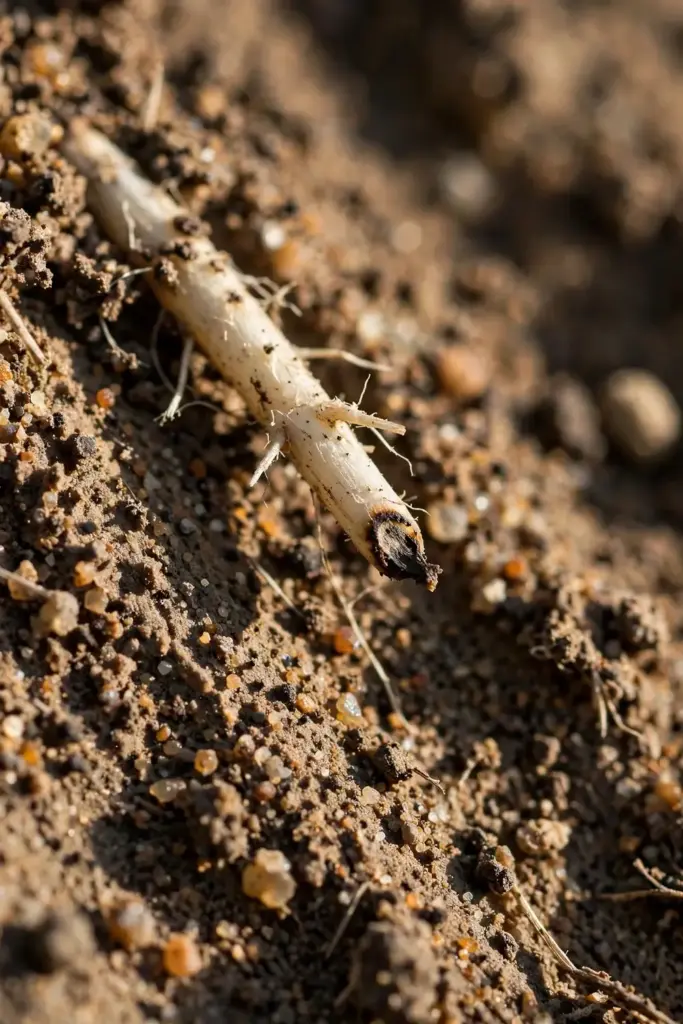
Spiral nematode feeds outside the root. The stylet punctures epidermal and cortical cells. The worm drains the cell contents through the stylet, and the root loses feeder tips faster than the plant regrows them. The plant loses water uptake.
A short root system cannot chase water. The lawn wilts in afternoon heat even when the soil holds moisture, and fertilizer sits unused because the roots cannot reach it. That gap explains why watering and feeding fail on nematode-thinned turf.
Feeding wounds give soil fungi an entry point into the root. A nematode-thinned lawn catches fungal patch diseases faster, and a fungal infection on short roots spreads faster than on deep roots. The worm starts the decline, and the fungi finish it.
Life outside the root cuts both ways. Soil-applied products reach the worm, and soil care changes the worm’s world. A worm inside the root would hide from both. Spiral nematode hides from neither, which is why the cultural steps below carry the whole plan.
What Makes Spiral Nematode Worse in a Home Lawn
Stress makes spiral nematode worse. Drought, heat, low mowing, compaction, and excess nitrogen each shrink the root system, and a small root system has no spare capacity for worm feeding.
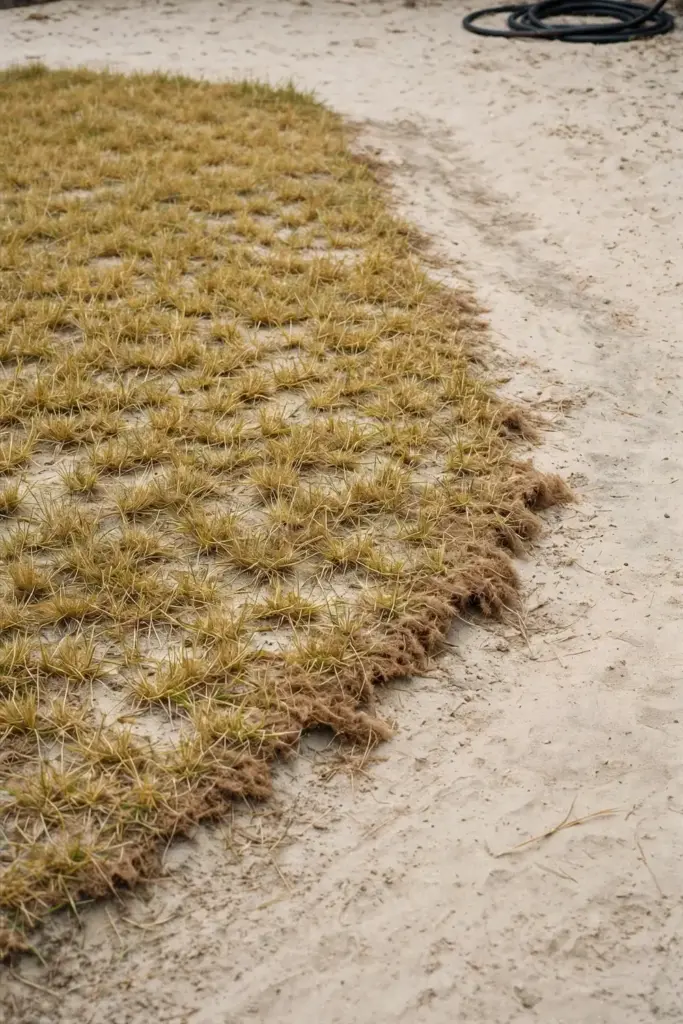
Sandy soil grows the worst cases. Nematodes move freely through sand, roots stay shallow in sand, and sand holds little water or nutrition. A lawn on sand needs deeper roots than a lawn on loam, and it gets them only through the watering and mowing habits in the steps below.
Excess nitrogen feeds the problem from the other side. University of Georgia Extension warns that excess nitrogen fertilizer grows succulent roots and can raise nematode populations, so a heavy feeding that greens the top for a week can feed the worms for a season.
Overseeding adds fresh food at the worst moment. University of Florida IFAS researchers found that overseeding can raise nematode numbers on bermudagrass during transition by feeding the worms through winter. Skip overseeding on a lawn with a known nematode problem.
Leaf diseases pile on. A lawn fighting bipolaris leaf spot loses leaf area, grows less root, and tolerates fewer worms. Fix the leaf disease and the nematode pressure in the same season.
Shade and compaction narrow the margin further. Grass in shade grows thin roots, and compacted soil blocks the roots from growing deep. Aeration and light carry more weight on a nematode lawn than on a healthy one.
Step 1: Decide Whether Treating Spiral Nematode Is Worth It
Treating spiral nematode pays only when the assay count passes the threshold and the lawn shows damage. A high count in a thick, green lawn needs watching, and a low count in a thin lawn needs a different diagnosis.
The University of Arkansas lawn nematode guide sets the spiral nematode medium threshold at 700 per 100 cubic centimeters of soil and the high threshold at 1,500, puts root-knot far lower at 80 and 300 on the same scale, and states that no chemicals are currently registered for nematode control in residential areas.
That last fact sets the budget. Home lawn care for spiral nematode runs on cultural work, and the cultural work costs time and water. It costs no chemicals. A lawn below the medium threshold needs better care, and a lawn above the high threshold needs better care plus professional advice.
Skip treatment entirely when the lawn looks thick and the count sits low. Spiral nematodes turn up in lawn soils across the country, and a lawn that tolerates them needs no rescue. Spend the season on roots, and retest before you spend on anything stronger.
Step 2: Confirm Spiral Nematode With a Soil Assay Before You Spend
A soil assay names the genus and counts the worms. No eye, no phone photo, and no guess from the patch pattern can do that job, because every lawn nematode produces the same thin yellow patch.
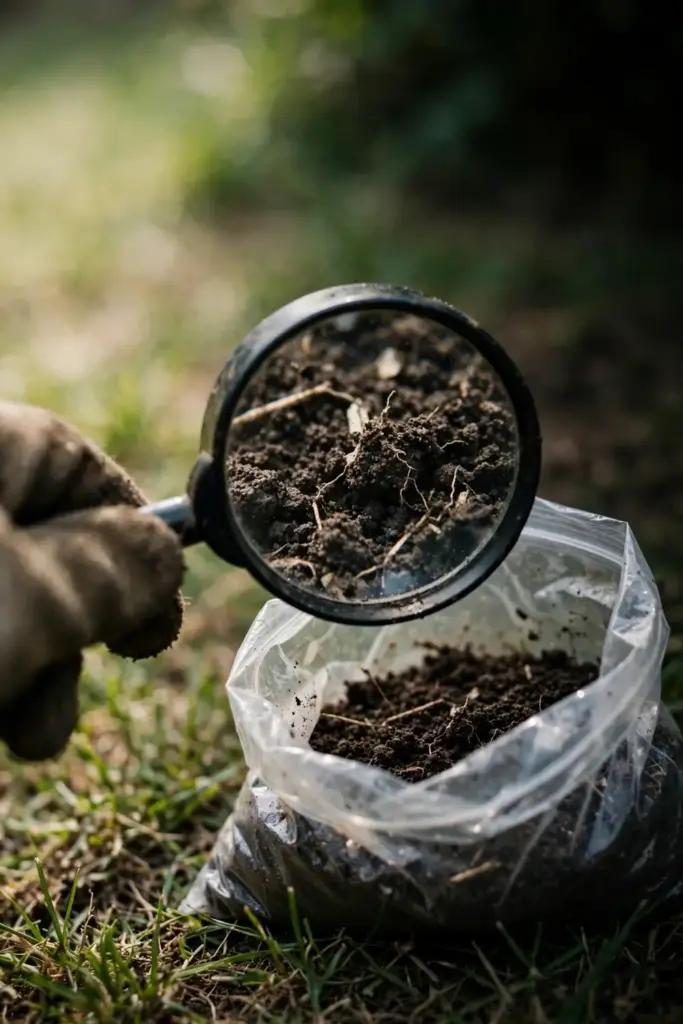
Sample the margin of the damage. University of Florida IFAS residential guidance recommends twelve to sixteen cores per lawn at four inches deep, pulled from the edge where grass still declines. Skip the dead center, where the worms already left.
LSU AgCenter sampling guidance calls for cores six to eight inches deep from fifteen to twenty spots in the sampling area, mixed into one pint of soil and roots for the lab.
Keep the sample cool and out of direct sun. Heat and drying kill the worms before the lab can count them, and a dead sample reports a clean lawn that never existed. Send the sample the same day when the lab allows it.
The University of Georgia guide to interpreting nematode assay results states that no nematicides can be used by homeowners or lawn care professionals on established home lawns, so home lawn management must focus on good turf practices.
Labs use different extraction methods and different thresholds, so compare the report against the lab’s own scale. University of Illinois Extension handbook rates spiral nematode at one to seventy-five per 100 cubic centimeters as not significant, one hundred fifty-one to three hundred as moderate, and more than five hundred as very severe. A count that alarms one lab can sit inside the tolerance band of another, so read the lab’s scale before you act.
Step 3: Water Deep and Less Often to Grow Roots Past the Feeding Zone
Deep watering grows deep roots, and deep roots outrun spiral nematode feeding. A shallow daily sprinkle grows shallow roots, and shallow roots sit where the worms feed hardest.
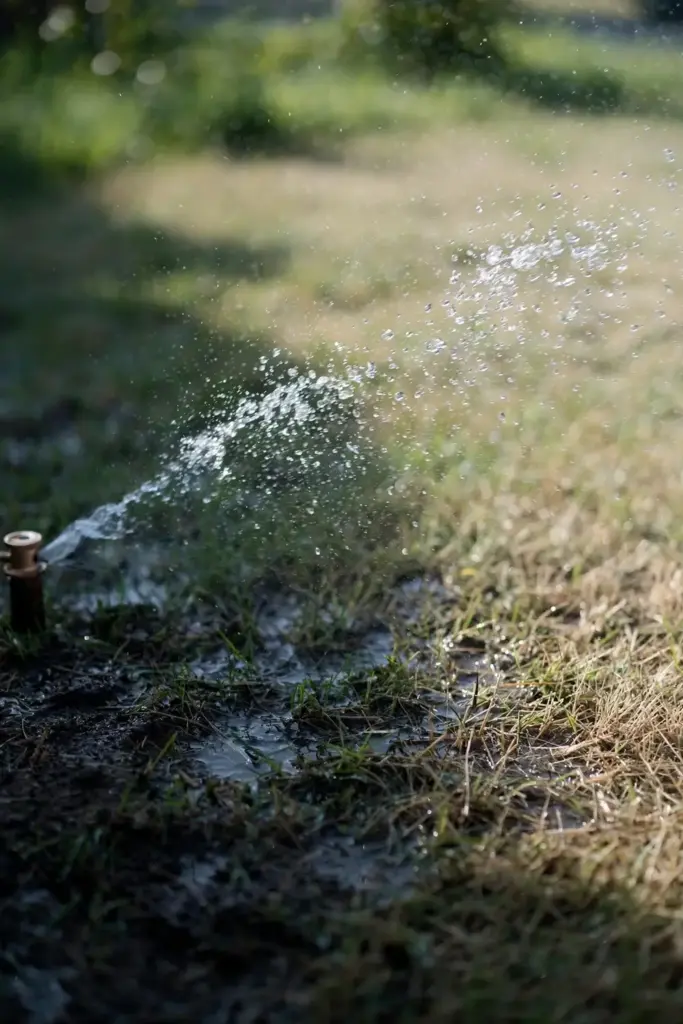
University of Georgia Extension recommends watering turf deeply and less often, because deep watering grows deeper roots that minimize nematode problems. Let the surface dry between waterings, and the roots chase moisture downward.
Water until the soil wets six inches down, then wait until the top inch dries. A screwdriver pushed into the soil tells the depth. It slides through wet soil and stops at dry soil.
Skip light daily watering in summer heat. A wet surface grows shallow roots and feeds surface fungi, while a deep soaking grows roots that reach past the feeding zone.
A lawn that wilts at noon and recovers at night needs water. A lawn that wilts at noon and stays wilted needs a root check, and the assay in Step 2 tells whether worms hold the roots back.
Step 4: Feed Lightly and Mow High to Rebuild a Stressed Lawn
Light feeding and high mowing rebuild the root system that spiral nematode prunes. Heavy feeding grows soft top growth, and low mowing starves the roots.
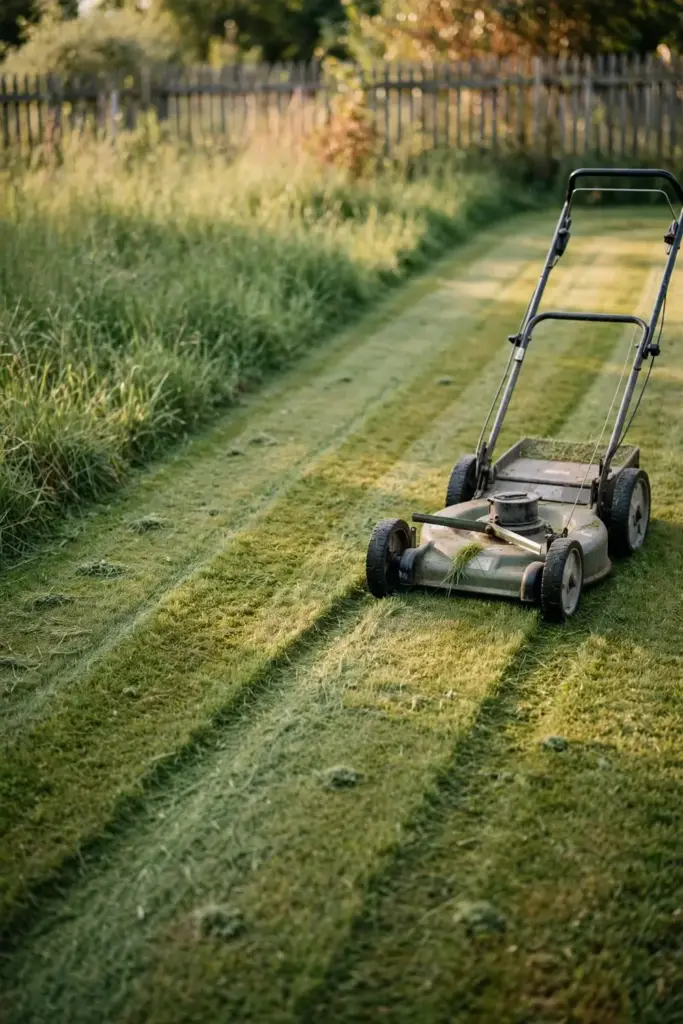
LSU AgCenter caps nitrogen at one pound per one thousand square feet per application and tells mowers to remove no more than one-third of the blade at one cutting. Follow the soil test for the rest of the fertility plan.
Spring feeding sets the season. The best time to fertilize lawn in spring guide times the first feeding to active growth. It ignores the calendar. A fed lawn grows roots, and roots carry the lawn through worm pressure.
Raise the mowing height on a nematode lawn. Taller grass shades the soil, cools the roots, and feeds a deeper root system with every extra inch of leaf. A higher cut costs nothing and pays every week.
Hold every application at the LSU cap, and skip the extra feeding that greens the top for a week. The lawn needs roots, and roots grow on steady light feeding.
Step 5: Aerate Compacted Soil and Fix Drainage
Aeration opens compacted soil so roots can grow deep and water can reach them. A compacted lawn grows shallow roots, and shallow roots feed spiral nematodes at close range.
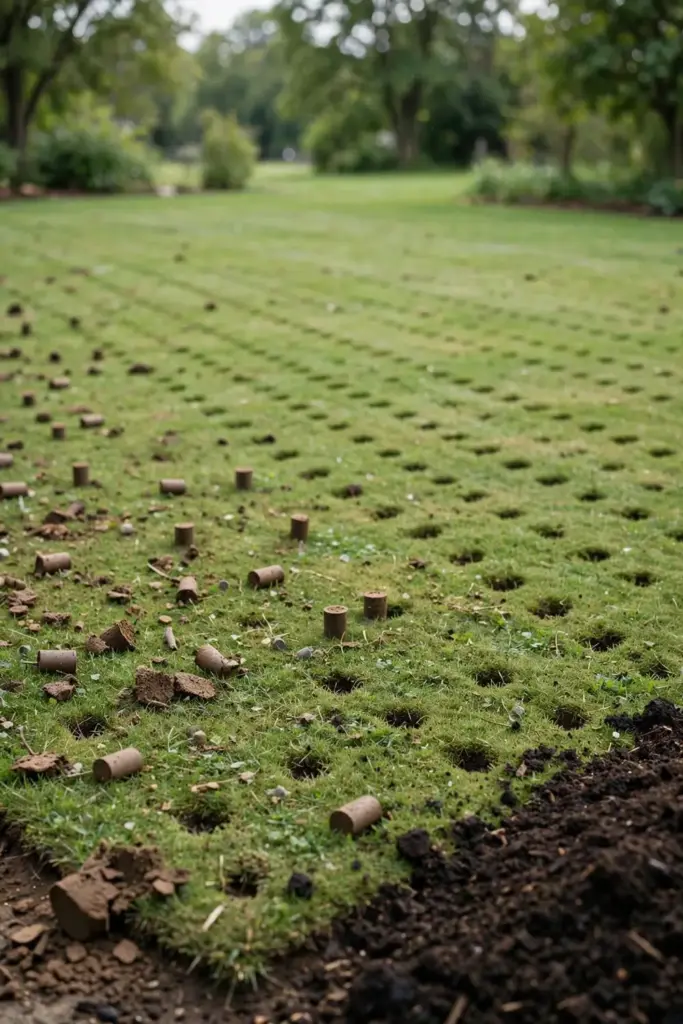
Core aerate in the growing season when the grass recovers fast. Pull plugs, leave them on the surface, and let rain break them down. The holes let air, water, and roots into soil that compaction sealed shut.
Aeration works best with organic matter. The soil health guide walks through structure, organic matter, and drainage as one system. Compost topdressing after aeration feeds the microbes that compete with soil pests and builds the soil the roots need.
Clemson researchers found biochar topdressing at ten pounds per one thousand square feet improved turf quality in high sting nematode plots without reducing nematode counts. Biochar may help the grass, and it does not count as nematode control. Buy it for soil structure when the soil needs it.
Fix the wet spots. Standing water drowns roots, and drowned roots rot faster under worm feeding. A French drain or a regraded swale moves water off the lawn, and dry roots grow deeper than wet ones.
Step 6: Keep Nematodes Out of Clean Areas With Simple Sanitation
Sanitation stops spiral nematode from riding tools, sod, and soil into clean areas. The worm moves slowly on its own, and garden traffic moves it fast.

Work clean areas first and infested areas last. Clean soil off tools, mower decks, and boots before moving to a healthy patch. A hose and a stiff brush remove most soil, and the habit costs two minutes.
Buy sod and seed from clean sources. Nematodes travel in planting material, and a fresh lawn laid on infested sod starts behind. Ask the supplier about nematode testing when the lawn has a history of thinning.
Wash borrowed tillers and aerators before they touch the lawn. University of Arkansas Extension warns that borrowed tilling equipment can carry nematodes into a clean lawn, and a wash removes the soil that carries them.
Bag clippings from infested patches when the lawn thins badly. Clippings carry little soil, and the real risk rides on soil, so the bag matters less than the boot wash. Treat the soil as the carrier, and the rest follows.
Step 7: Overseed and Repair Thin Patches With Tolerant Grass
Overseeding repairs the thin patches that spiral nematode opens, and tolerant grass holds the repair. Bare soil grows weeds, and weeds grow a thinner lawn.
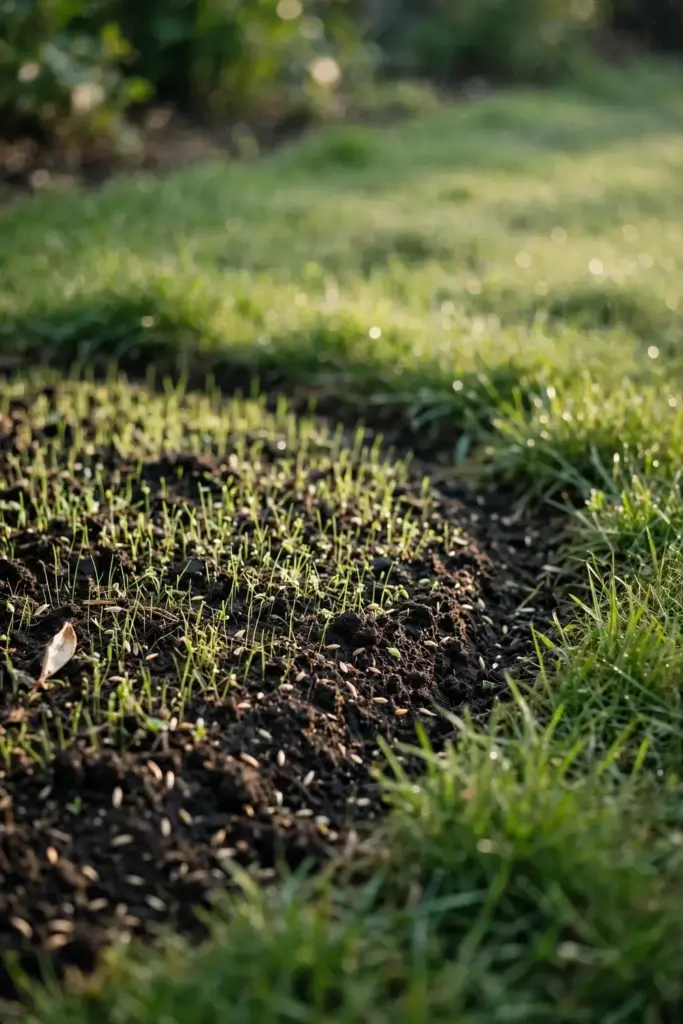
Overseed when the grass grows actively and the soil stays warm. Seed-to-soil contact decides germination, so rake the patch, scatter seed, and press it into the soil. Water lightly until the seedlings root, then shift to deep watering.
Wait on full-lawn overseeding until the assay counts fall. Fresh ryegrass roots feed the worms through winter, so a full overseed on an infested lawn grows the problem it tries to hide.
Seashore paspalum needs extra care, and bermudagrass tolerates more pressure on well-kept soil. Match the grass to the site, and pick the cultivar with the deepest roots for sandy ground. A deep-rooted cultivar outgrows worm feeding that flattens a shallow one.
Topdress thin patches with compost after seeding. The compost holds moisture around the seed, feeds the seedlings, and builds the soil the new roots need. A thin patch seeded into bare compacted soil fails twice. Once at germination, and once at rooting.
Step 8: Know When to Call a Professional and Skip Home Nematicides
Call a professional when the lawn sits above the high threshold and the thinning spreads. A turf diagnostic lab or extension nematologist reads the assay against local thresholds and rules out lookalike problems, and a professional lawn service can rebuild turf that home care cannot save.
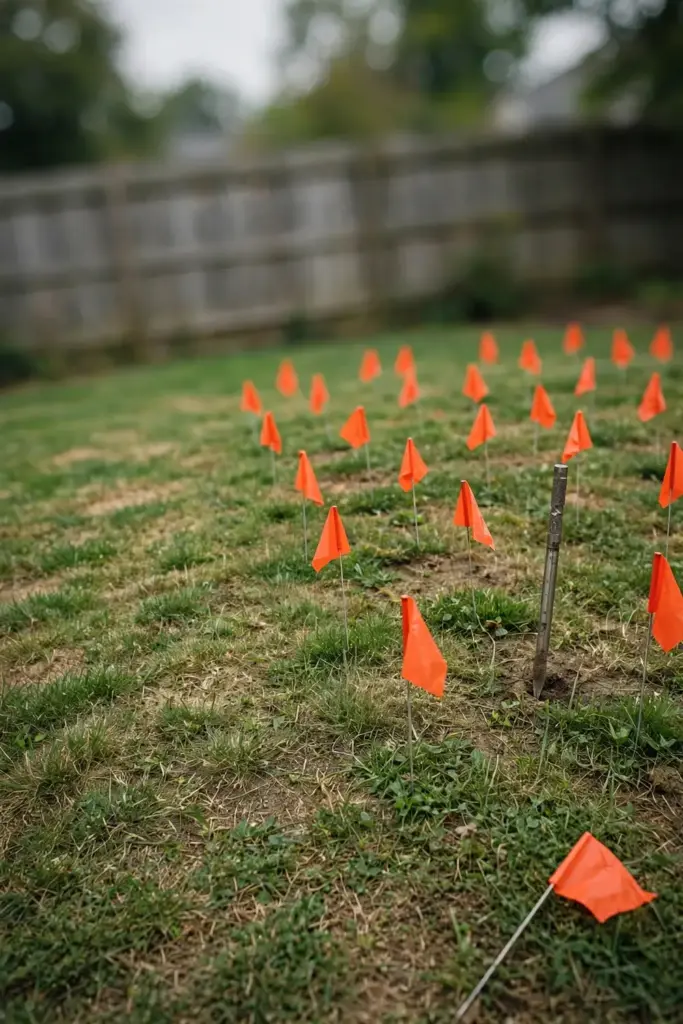
Skip home nematicide shopping. No product on the home shelf carries a label for spiral nematode on established lawns, and an off-label application risks the lawn, the soil, and the applicator. The cultural steps carry the home plan, and the lab carries the diagnosis.
University of Arkansas Extension notes that chemicals that control nematodes run highly toxic to mammals, which is why none carry a residential registration. That toxicity is the reason the home plan stays cultural.
Biological products promise more than they deliver on home lawns. Arkansas Extension lists products such as ClandoSan, DiTera, and mustard seed meal as laboratory successes with field testing still in progress, and their safety profile makes them attractive even while the field evidence stays thin.
Spend the chemical budget on the assay, the aerator rental, and the seed. Those three buy more lawn than any bottle, and the assay tells you whether the rest worked.
Living With Spiral Nematode in a Lawn You Already Own
A lawn with spiral nematode is a managed lawn, and management runs on roots. Water deep, feed light, mow high, and aerate on schedule. The worms stay, and the lawn outgrows them.
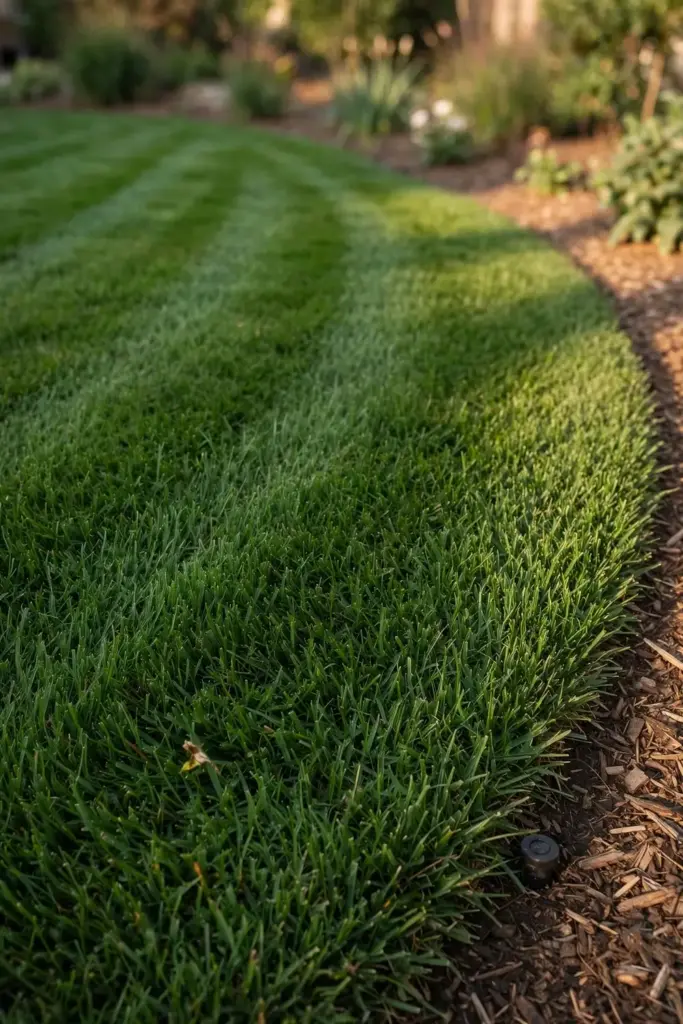
I have learned that a lawn with spiral nematodes rewards patience more than products.
Stop three habits. Do not overseed a known infested lawn before the counts fall. Do not feed heavy nitrogen to green a thin lawn. Do not move soil from a thin patch to a healthy patch. Each habit feeds the worms or spreads them.
Keep a lawn map on paper. Write down the assay counts, the sample spots, and the year. The map stops next spring from repeating this spring, and the next assay reads against a baseline. It beats a guess.
Garden beds on the same soil need the same patience. Mississippi State Extension holds clear plastic on moist bare soil for at least eight weeks to kill nematodes in garden beds, and a bed that grew stunted plants can rest under plastic for a summer before replanting. A lawn cannot take that treatment, and the bed can.
Roots with galls point to root-knot nematode. Roots with cropped tips point to spiral, and that worm needs its own plan.
Frequently Asked Questions
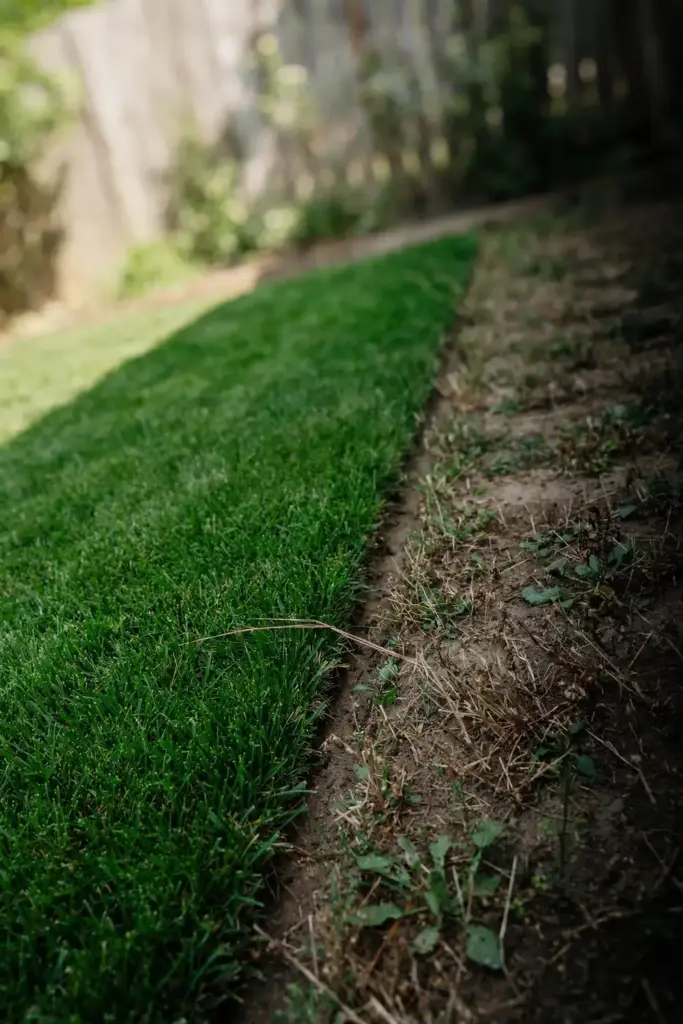
Rarely on its own. Spiral nematode thins lawns and weakens roots, and a healthy lawn tolerates moderate counts for years. Death comes when worms meet drought, heat, compaction, and disease at once. The lawn dies from the combination, and the worms take the blame. Fix the stress, and most lawns recover without any product aimed at the worm.
A soil assay gives the only firm answer. Pull cores from the edge of a thinning patch, keep the sample cool, and send it to a diagnostic lab. The lab reports the genus and the count per 100 cubic centimeters of soil. A high spiral nematode count with cropped roots confirms the diagnosis, and a low count sends you back to water, fertilizer, and disease checks.
No. Beneficial nematodes hunt insects, and spiral nematode is a plant feeder. Cornell University turf specialists name Heterorhabditis bacteriophora and Steinernema feltiae as grub killers that leave plants alone. Those products kill grubs, and they ignore spiral nematode entirely. A grub problem and a nematode problem need different products, and the label genus tells which job the bag does.
No product on the home shelf carries a label for spiral nematode on established lawns. University of Georgia Extension states that no nematicides can be used by homeowners or lawn care professionals on established home lawns. Home control runs on water, feeding, mowing, aeration, and sanitation. A professional diagnosis helps, and the cultural steps carry the plan.
Spiral nematode lives in soil year round, and it survives winter in the soil. Populations rise and fall with the season, the grass, and the weather. The worm never leaves on its own, and a lawn that once carried high counts can carry them again. Plan as though the worm stays. Every other decision gets easier once you accept that.
Replacement rarely pays. New sod laid on infested soil meets the same worms, and the worms feed on the fresh roots first. Fix the soil care first, then repair the thin patches with seed. Renovation makes sense only when the lawn holds more weeds than grass and the assay counts sit far above threshold. Even then, the new lawn needs the same cultural plan.
Where to Go From Here
Spiral nematode rewards fast assays and steady root care. Confirm the count, read it against the lab’s scale, and work the steps in order. Water deep, feed light, mow high, aerate, sanitize, repair, and call for help when the count stays high.
Next season, start with the assay. A lawn with deep roots, light feeding, and clean tools beats a lawn with a bottle of anything. Retest before you spend, and let the count decide.