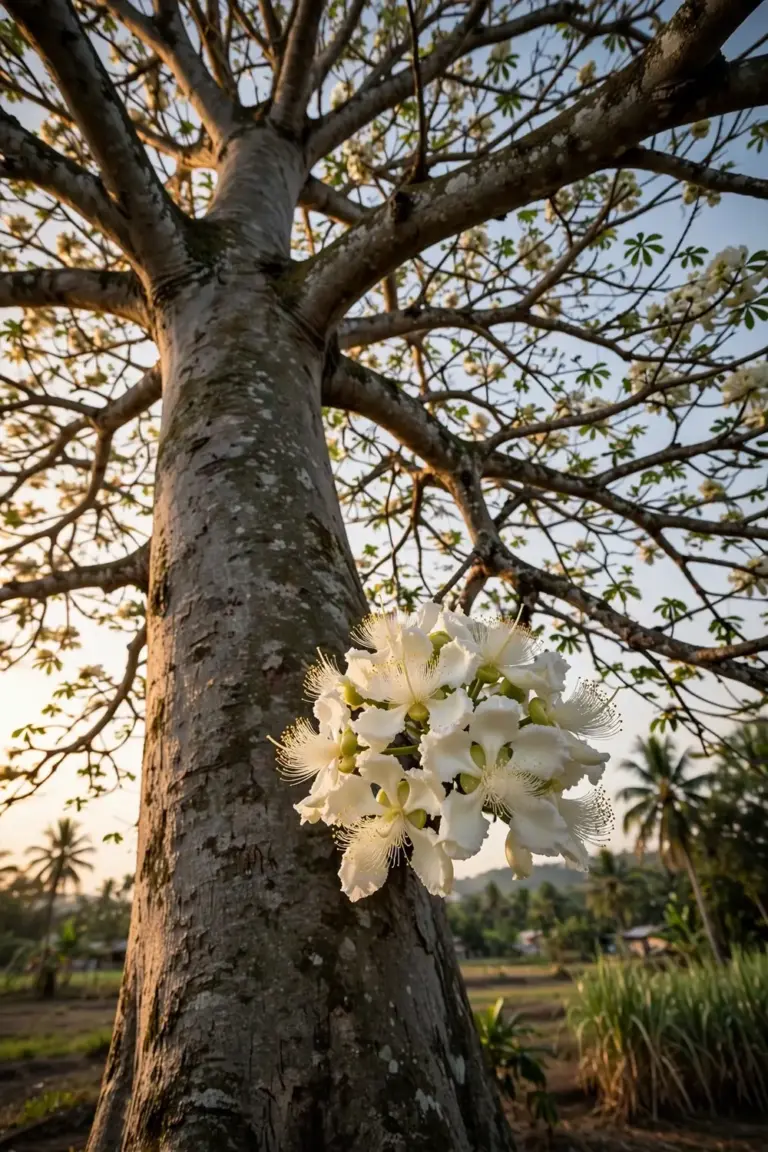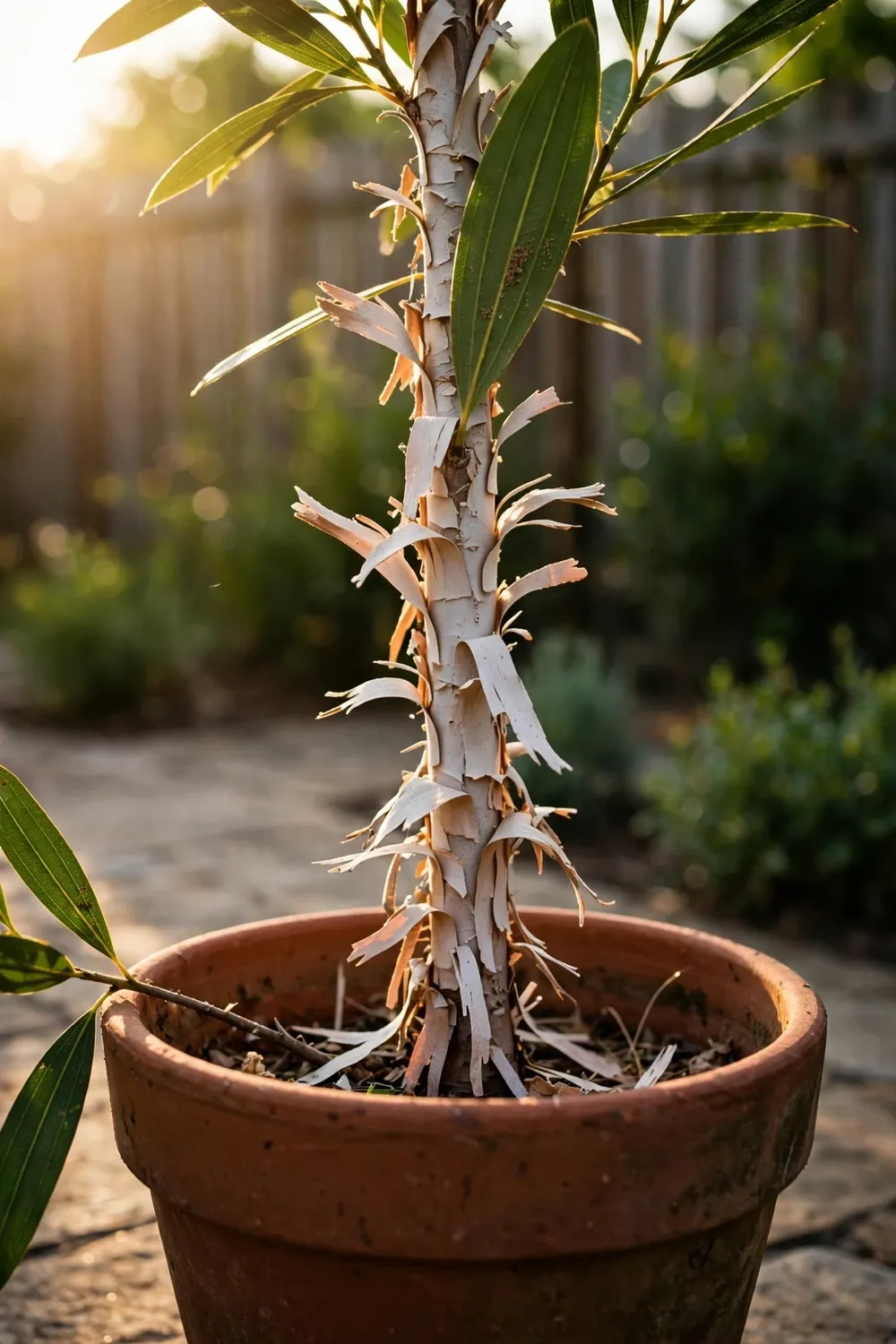

Start one seedling in a wide pot and keep it there for the rest of its life. That is how to grow cajuput in a temperate climate. The rest of this page is 16 steps, from the first seed to the third winter indoors.
Sow in spring. Sun all summer. Indoors before frost.
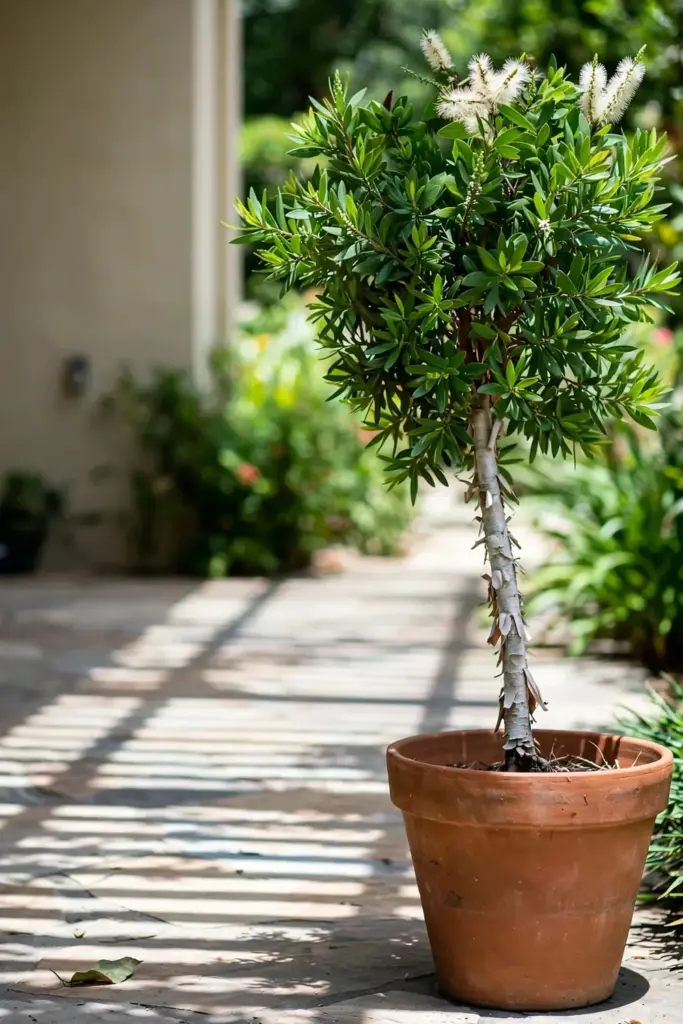
Melaleuca cajuputi is a medium to large tree that reaches 35 metres in the wild, yet it stays a manageable 1 to 2 metres for years in a pot if you prune it hard and bring it indoors before frost. In my experience, gardeners who accept this tree’s true scale up front are the ones who still have a healthy cajuput after three winters, because every later decision gets easier once the container plan is set.
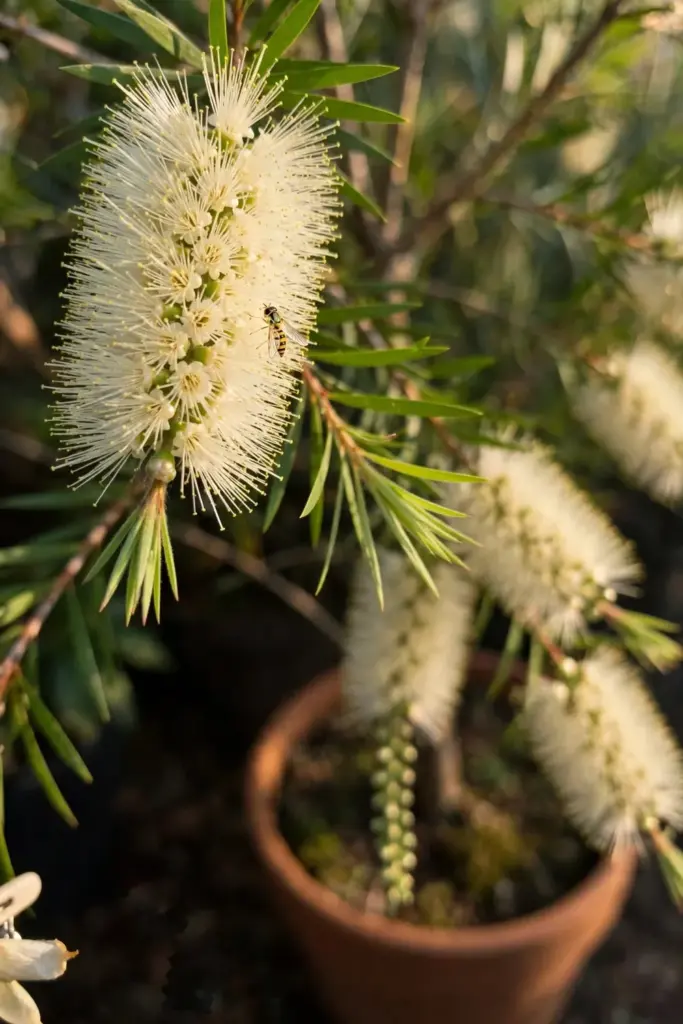
Cajuput carries many names. In Indonesia and Malaysia it is kayu putih, which means white wood, and in parts of Malaysia it is gelam. Nursery tags in the West sometimes call it cajeput or the white tea tree. Every one of those names points at the same tree: Melaleuca cajuputi, the Indonesian paperbark that yields minyak kayu putih, the cajuput oil sold in green bottles across Southeast Asia. Give it full sun, consistently moist soil, and a frost-free winter, and a pot-grown cajuput pays you back with fragrant leaves, peeling bark, and creamy bottlebrush flowers without a greenhouse.
1. Confirm the Real Species Before You Buy
The first job is identity. Buy the wrong species and two years of care go into a tree that never smells right. Check the nursery tag for the full botanical name, Melaleuca cajuputi, before you pay. Several look-alikes share the common names, and they behave differently in a pot.
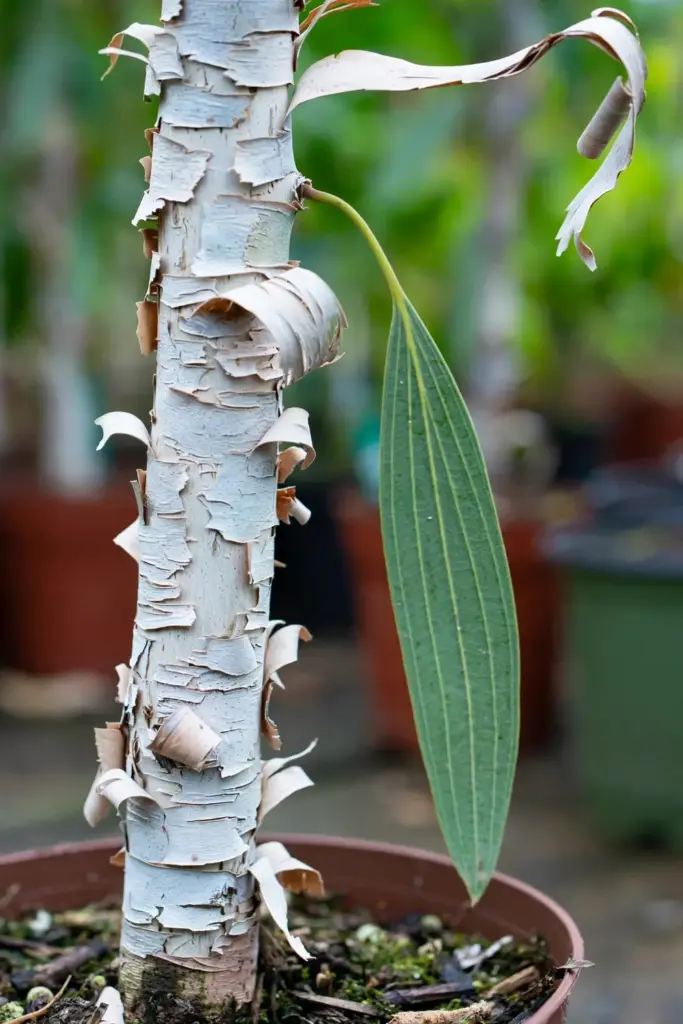
Cajuput oil comes only from Melaleuca cajuputi, mostly from subspecies cajuputi. True tea tree is Melaleuca alternifolia, an Australian tree whose leaves produce tea tree oil. Eucalyptus is a separate genus entirely. The three get confused at garden centres because all three smell medicinal when you crush a leaf. Growers who learned how to grow eucalyptus trees from seed will find the seed-sowing habits familiar, since both belong to the myrtle family.
| Feature | Melaleuca cajuputi (cajuput) | Melaleuca alternifolia (true tea tree) | Eucalyptus species |
|---|---|---|---|
| Main oil | Cajuput oil, rich in 1,8-cineole | Tea tree oil | Eucalyptus oil |
| Native range | Australia, Southeast Asia, New Guinea | Australia (Queensland, New South Wales) | Australia, mostly |
| Leaves | 40 to 140 mm long, leathery, 5 to 7 veins | 10 to 35 mm, narrow, linear | Highly variable |
| Adult size | Up to 35 metres | About 7 metres | Varies, often tall |
| Cold tolerance | Frost-tender, zones 9 to 11 | Frost-tender | Varies by species |
One more trap waits in Florida and other warm coastal states. Melaleuca quinquenervia, also sold under the name cajeput, is a different tree that has infested hundreds of thousands of acres of Florida wetlands and is listed as a Category I noxious weed there. Never plant any Melaleuca into open ground where it can naturalise. The container method keeps your cajuput honest wherever you live.
2. Accept the True Scale of This Tree
Cajuput is a tree-scale plant. In its native swamps of Indonesia, Malaysia, and Australia it reaches 35 metres with papery white bark and a narrow crown. That scale is exactly why a container works so well. A pot caps the roots, and a capped root system slows the whole tree down.
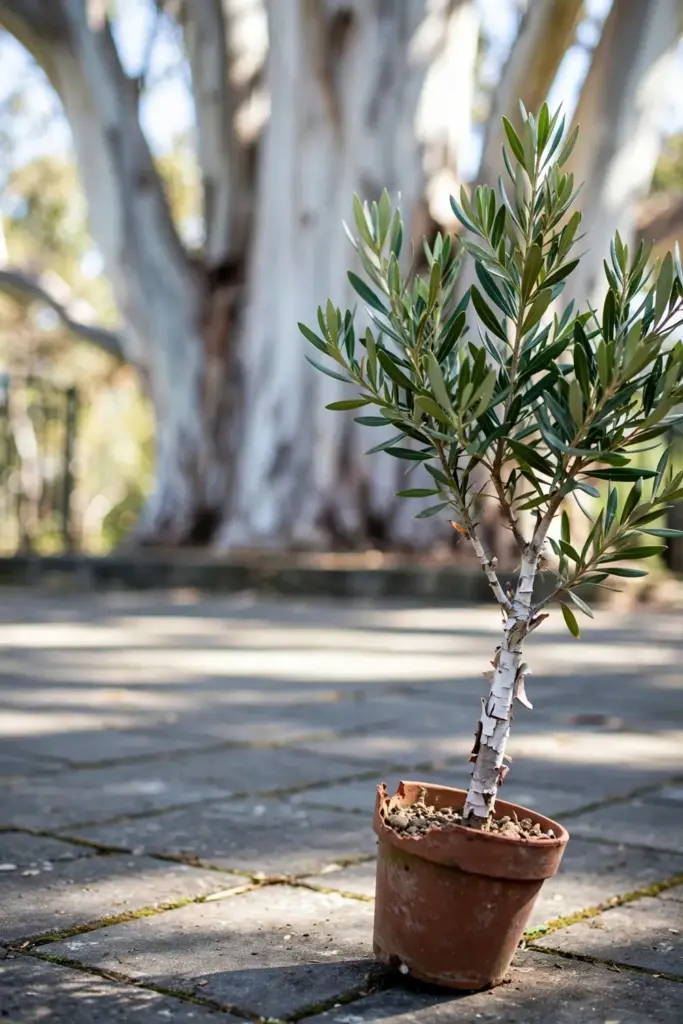
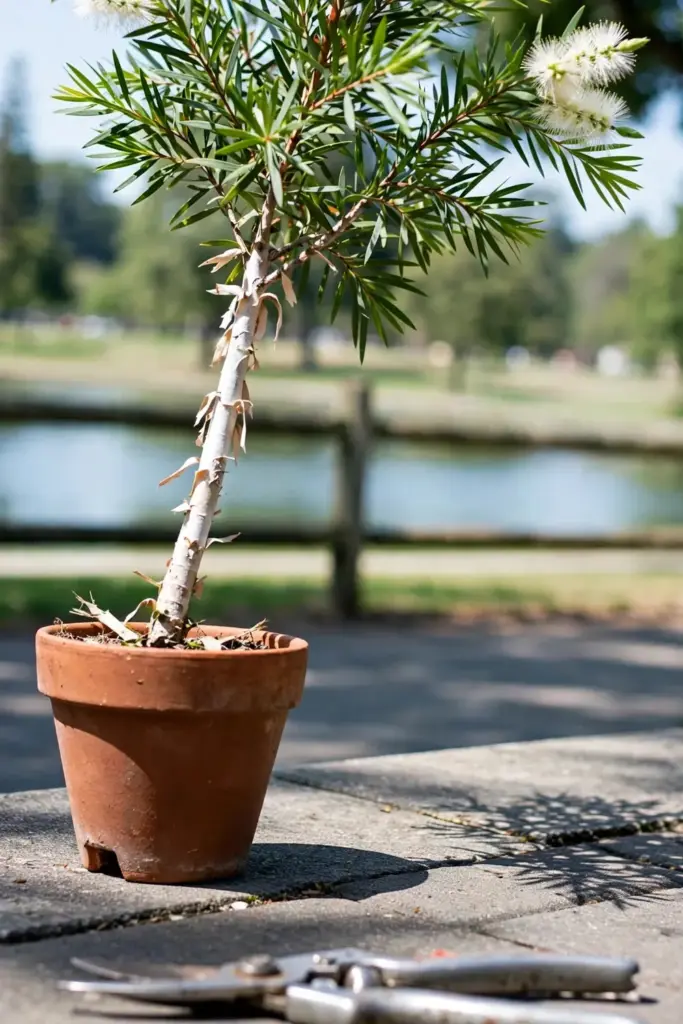
Expect a first-year seedling to reach 30 to 60 centimetres. A five-year-old container tree, pruned annually, holds at 1 to 2 metres and flowers at that size. Without pruning the leader, the same tree will try to double its height every couple of seasons and outgrow the pot, so treat height control as a standing chore, not a one-time job.
This is also why home oil distillation is off the table for most growers. Commercial cajuput oil is steam-distilled from the leaves of mature trees grown in Indonesian plantations, and oil content peaks in subspecies cajuputi. A single potted tree will never supply enough leaf material for distillation. Grow it for the plant: the fragrant foliage, the bark, the pollinator flowers. Anything beyond that is a bonus, not a plan.
3. Set the Climate Bar Honestly
Cajuput is hardy in USDA zones 9 to 11, which means it tolerates light frost but dies back or dies outright in a real freeze. Nearly all Melaleuca species are frost-tender. If your winter drops below about minus 4 degrees Celsius, the tree must come indoors.
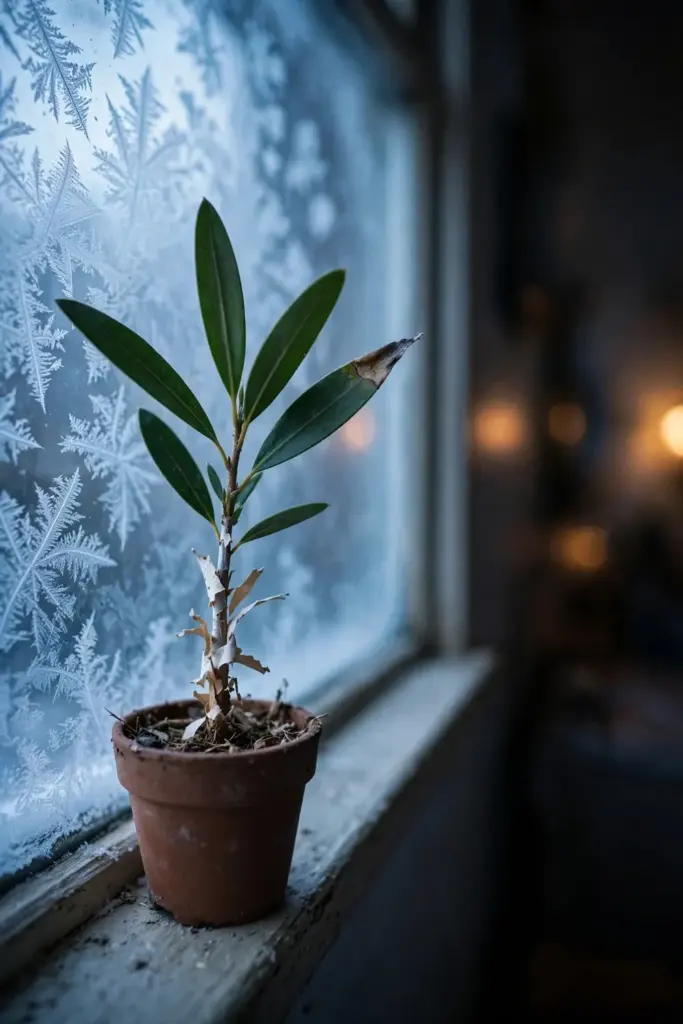
The seed stage sets the temperature band. Melaleuca seed germinates around 18 to 20 degrees Celsius during the day and stays above 15 degrees at night, with germination taking about five weeks. Mature trees prefer the same warmth you do, roughly 15 to 30 degrees, and stall below that range without freezing damage. A bright, unheated sunroom that stays above 10 degrees in January is a workable winter home.
Outdoors, full sun is non-negotiable. Cajuput grows in full sun in its native range and flowers best there. A spot that receives direct sun from morning to mid-afternoon, with bright reflected light after, counts as full sun for this tree.
4. Choose Between Seeds and Cuttings
Two starting paths work, and each suits a different grower. Seeds are cheaper and more available through seed exchanges, while cuttings clone the exact tree you admired, including its oil chemistry and growth habit. Either way, spring is the season.
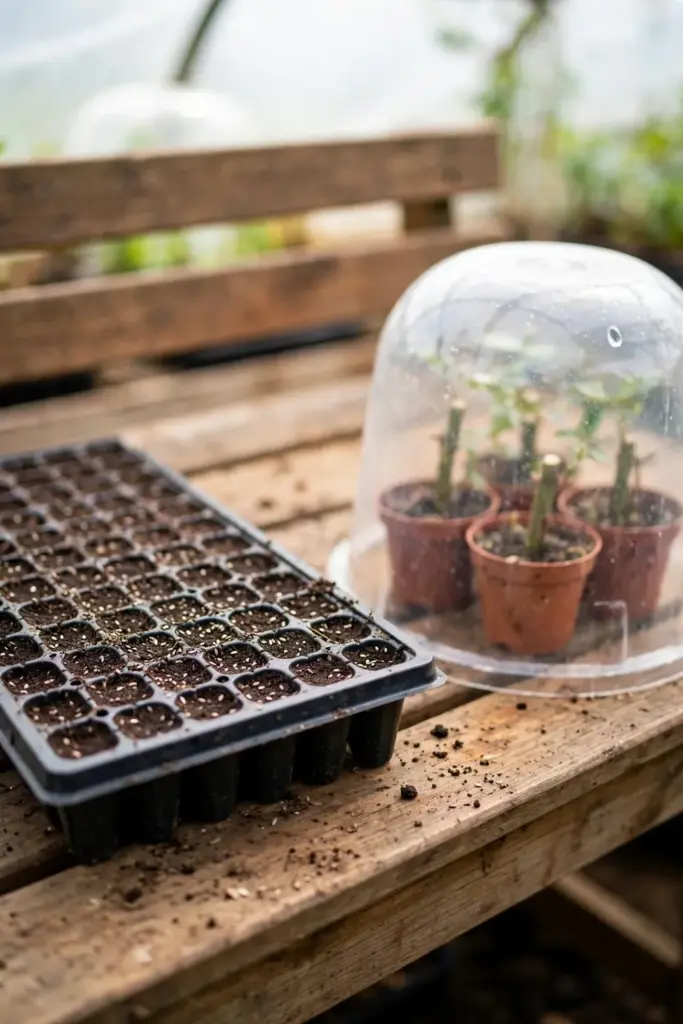
Seeds are the patient path. Melaleuca seeds are dust-like, and each woody capsule holds dozens of them, so two capsules are more than enough for a home tray. They need light to germinate, which changes the sowing technique completely.
Cuttings are the faster path. Take semi-hardwood cuttings in spring or summer, root them in a moist medium under a humidity cover, and you skip the slow five-week germination window. Choose this path if a friend or botanical garden lets you take cuttings from a confirmed Melaleuca cajuputi.
5. Sow the Seeds with the Light-Germination Method
Fill a seed tray with a sterile, well-drained but moisture-retentive seed compost. A mix of sieved compost with fine coir or worm castings holds moisture without staying soggy. Press the surface flat.
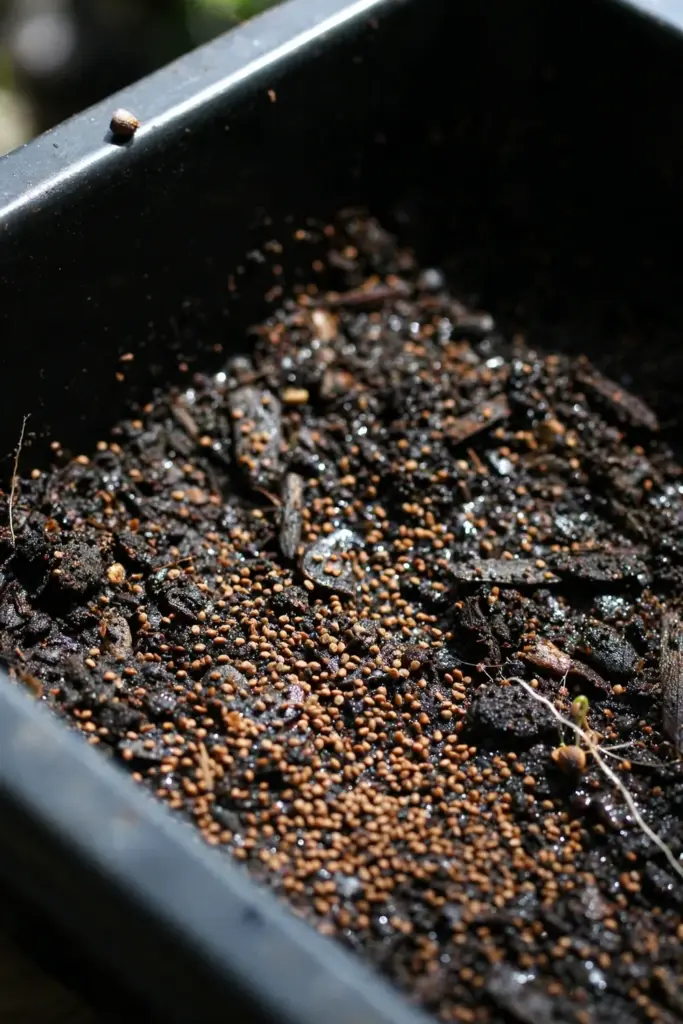
Scatter the seeds thinly across the surface and press them down with a dry hand or a wooden block so they touch the compost. Do not cover them. Melaleuca seeds need light to germinate, and a layer of compost on top will keep them dark and silent. Light is the whole trick of how to grow cajuput from seed, and skipping the cover is the step most beginners miss. Water lightly with a fine mister, then cover the tray with a sheet of glass, clear perspex, or cling film to hold humidity.
Keep the tray where daytime temperatures sit at 18 to 20 degrees Celsius and nights stay above 15 degrees. Water lightly, just enough to keep the compost moist but never wet. Expect the first seedlings around five weeks later, sometimes slower in cool rooms. This light-germination technique is the same one that works for eucalyptus grown from seed, another myrtle-family tree with dust-sized seed.
6. Give the Seedling Its First Full-Sun Summer
Move seedlings into individual small pots once they carry two sets of true leaves. Handle them by a leaf, never the stem, since the stems are thread-thin at this stage. Use a free-draining potting mix with added perlite or coarse sand.
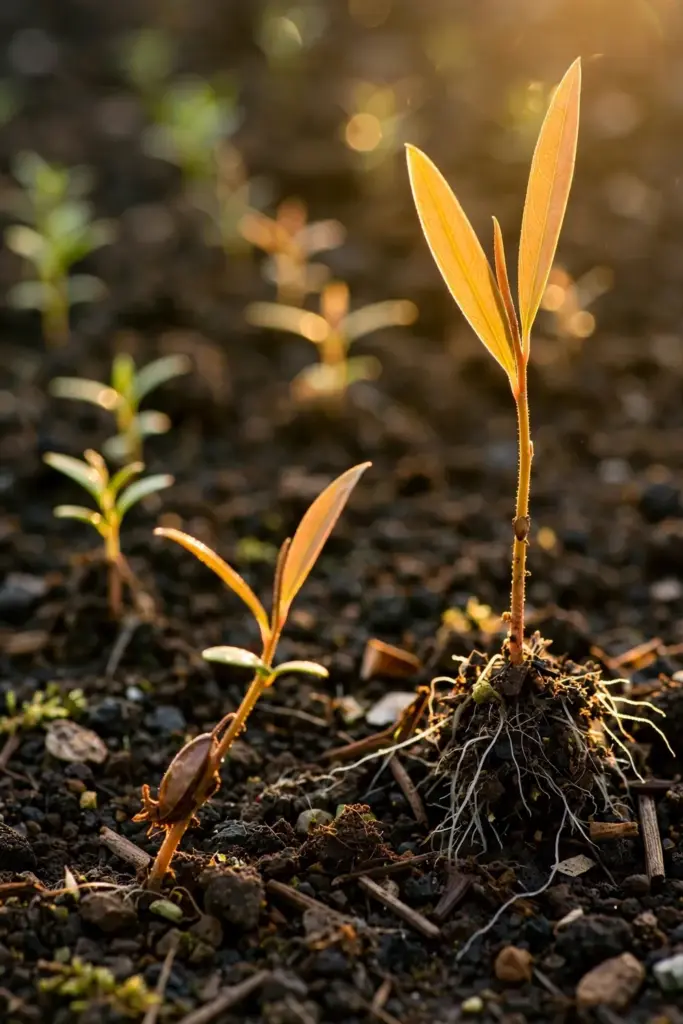
Place the young plants in full sun immediately. A south-facing patio, balcony, or the sunniest windowsill works for the first summer. Melaleuca grows fast when young, and light is the throttle. A seedling given weak light turns leggy and pale, then stalls when winter arrives, while one grown hard in sun builds the woody stem it needs to survive indoors later.
Water daily in hot weather. Cajuput is a swamp native that tolerates waterlogged soil in the wild, so a young tree is far more likely to suffer from drying out than from a heavy watering. Let the top centimetre of mix dry between waterings, then water deeply until it runs from the drainage holes.
Harden the seedlings off before their first full day outside. A tray raised under glass or indoors has soft leaves, and six hours of direct midday sun will bleach them. Give them a week of morning sun only, then a week of morning plus late afternoon, then the full day. Seedlings moved out in one jump stall for a month. Seedlings stepped out properly never pause.
7. Pot Up with the Wide-Not-Deep Rule
Cajuput roots spread outwards rather than diving down, so the planting hole or pot should be wide, not deep. Dig or choose a container about twice as wide as the root ball and no deeper than the ball itself. Planting deeper buries the root collar and invites rot.
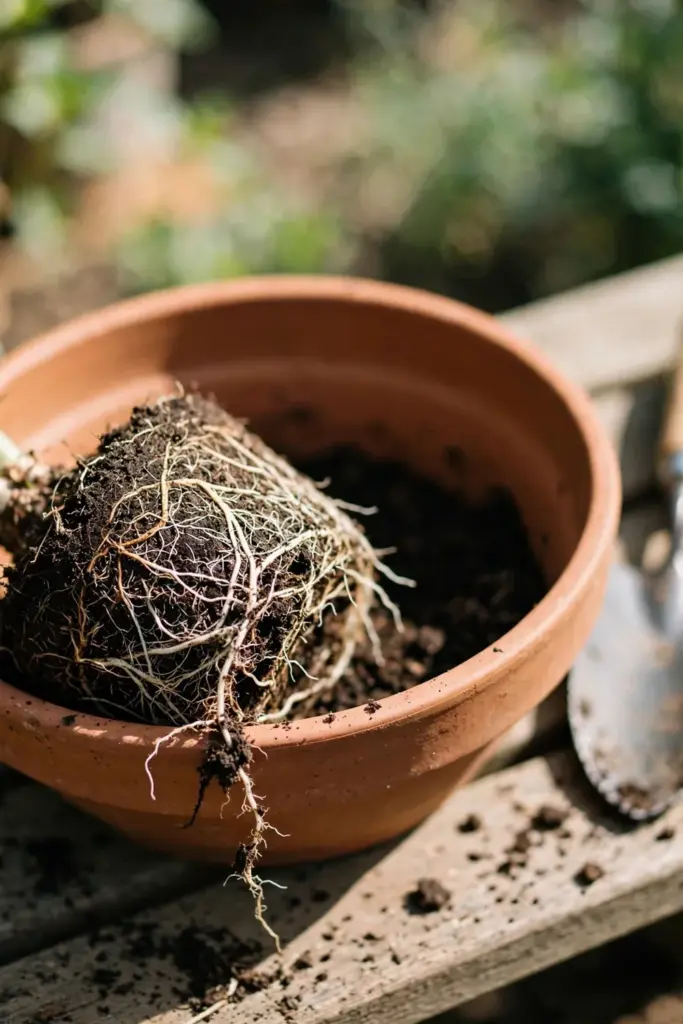
Step the pot up one size at a time, roughly every 12 to 18 months for a young tree. Jumping from a 1-litre pot to a 20-litre tub leaves a ring of wet, rootless compost around the root ball, and that ring is where root rot starts. A final container of 30 to 50 litres is plenty for a long-term specimen of 1.5 to 2 metres.
Use a loam-based, free-draining mix. Two parts loam compost, one part grit or perlite, and one part bark fines suits cajuput for years. Terracotta breathes better than plastic and suits a tree that hates stagnant moisture around its roots.
8. Water a Swamp Native Without Drowning It
Here is the paradox of this tree. In the wild, cajuput stands in flooded swamps behind mangroves and survives waterlogging that would kill most trees. In a pot, the same tree rots if its roots sit in stale water. The difference is oxygen: a swamp has moving water and soil life, while a saucer of trapped water has neither.
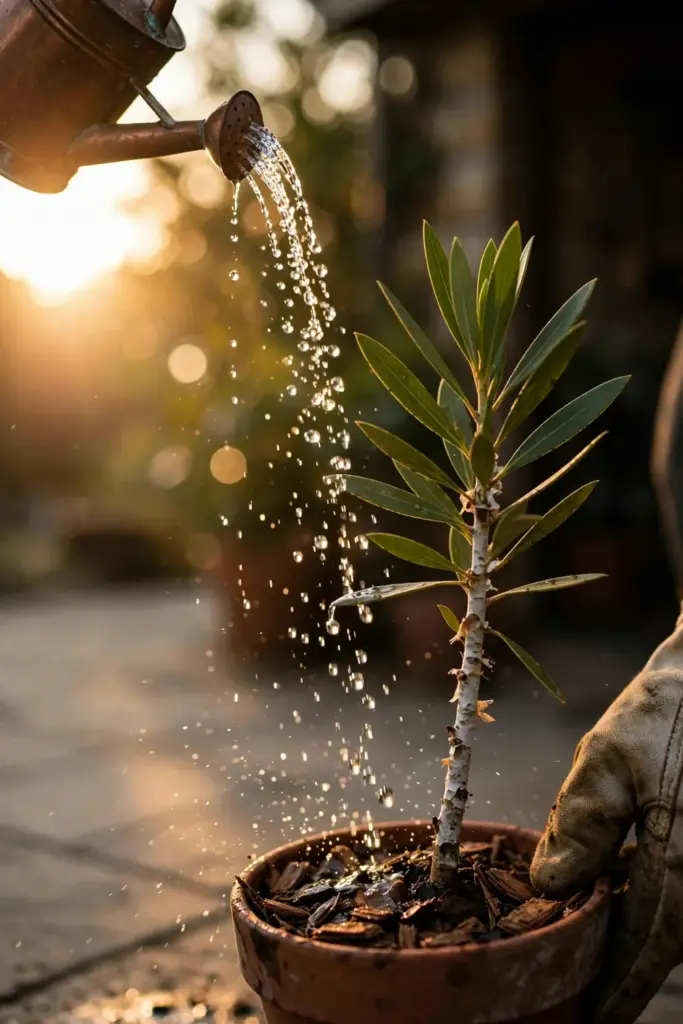
Water when the top 2 centimetres of mix feel dry. In a hot summer that means daily watering, sometimes twice daily in a small terracotta pot. In winter indoors, watering drops to once a week or less. Always empty the saucer after watering, or set the pot on feet so water never pools underneath.
Mulch the surface with bark chips to slow evaporation. Cajuput responds well to mulch the way most trees do, and a 3-centimetre layer keeps the surface roots cool in summer. Keep the mulch a few centimetres back from the trunk to avoid collar rot.
9. Stake the First-Year Trunk Against Wind
Young cajuput grows fast and top-heavy, and a gust can snap a first-year stem or rock the root ball loose. Drive a single sturdy stake beside the trunk at planting time, not after the tree starts leaning. Tie the trunk loosely with a figure-eight tie that leaves room for the stem to thicken.
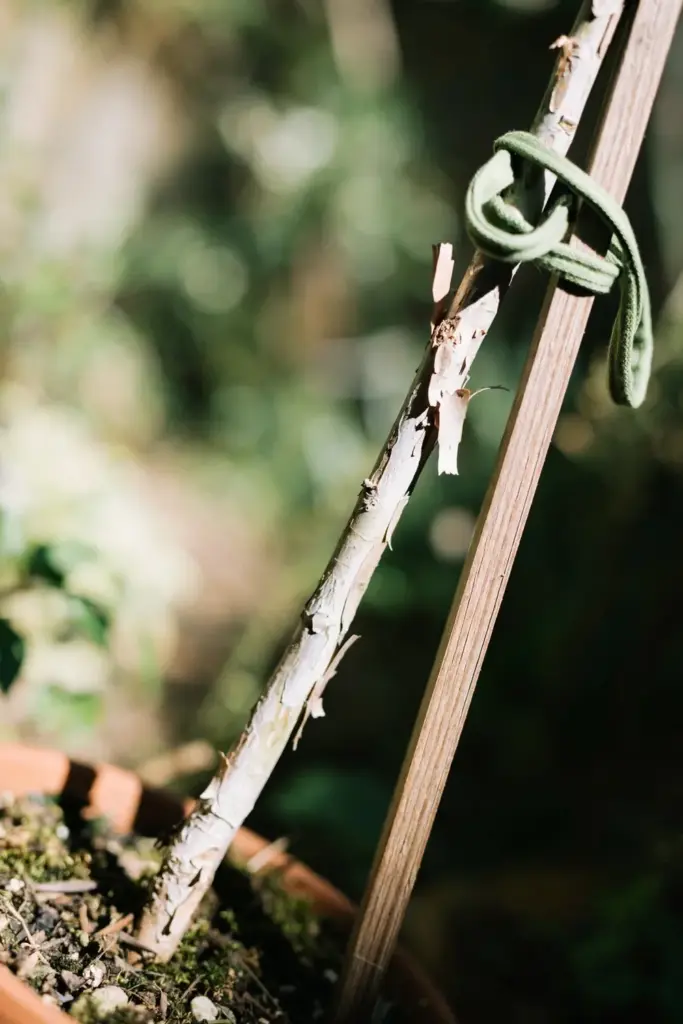
Remove the stake after the first year, once the roots have gripped the mix. Established Melaleuca copes with high wind on its own, and a stake left too long rubs the bark and weakens the trunk at the tie point. Check the tie monthly during the growing season and loosen it before it bites.
Container growers in windy balconies should also weight the pot. A tall young tree in a light plastic pot is a sail. A heavier terracotta pot, or a brick laid across the base of a light one, stops the whole thing toppling in a storm.
10. Feed Lightly and Watch the Leaves
Cajuput is not a hungry tree. In the wild it grows in poor, acidic, sometimes brackish soils, so it tolerates lean conditions far better than most ornamentals. A container tree still needs feeding, because every watering leaches nutrients from the pot.
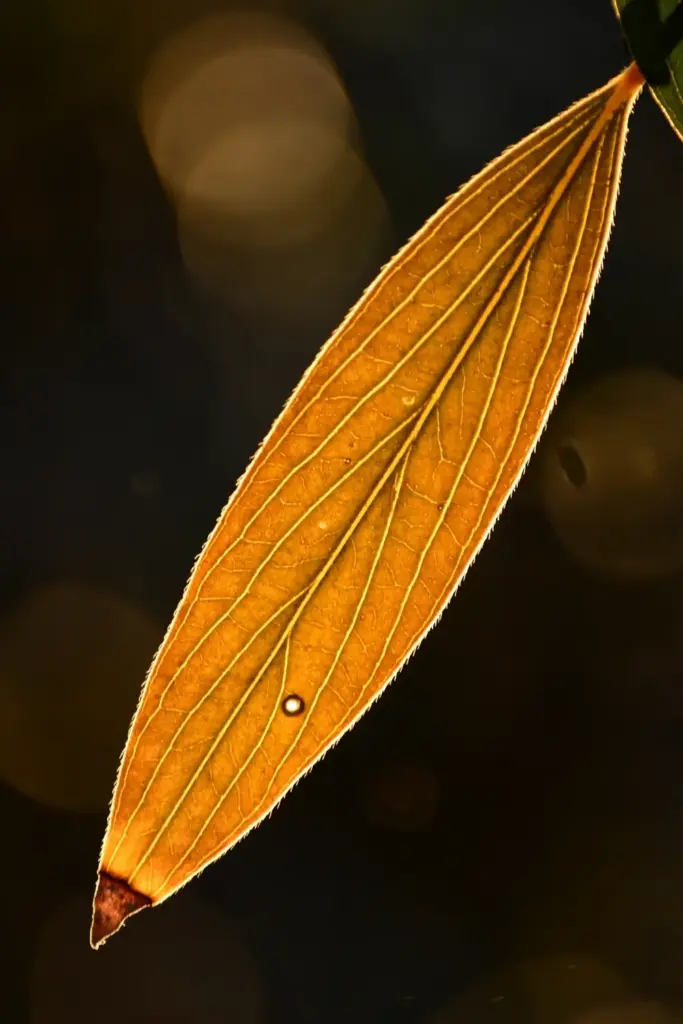
Apply a balanced slow-release fertilizer in early spring, at half the label rate for ornamentals. One application at the start of the growing season carries the tree through. Stop feeding by late summer, since late nitrogen pushes soft growth that winter cold will damage.
Read the leaves for feedback. Deep green, firm leaves mean the regime works. Pale new growth in spring usually means the mix has run out of nitrogen after a year of watering. Yellowing older leaves with green veins can point at iron shortage in alkaline mixes. Flush the pot with plain water once a season if you feed heavily, since salts build up in containers far faster than in open soil. No published feeding schedule exists specifically for potted cajuput, so adjust by observation and keep notes.
11. Prune for Container Size, Not for Fruit
Prune once a year, in late winter or early spring before new growth starts. Cajuput flowers on new wood at the branch tips, and the flower spikes keep growing into leafy shoots after blooming, so a hard prune does not sacrifice next year’s display the way it would on some trees.
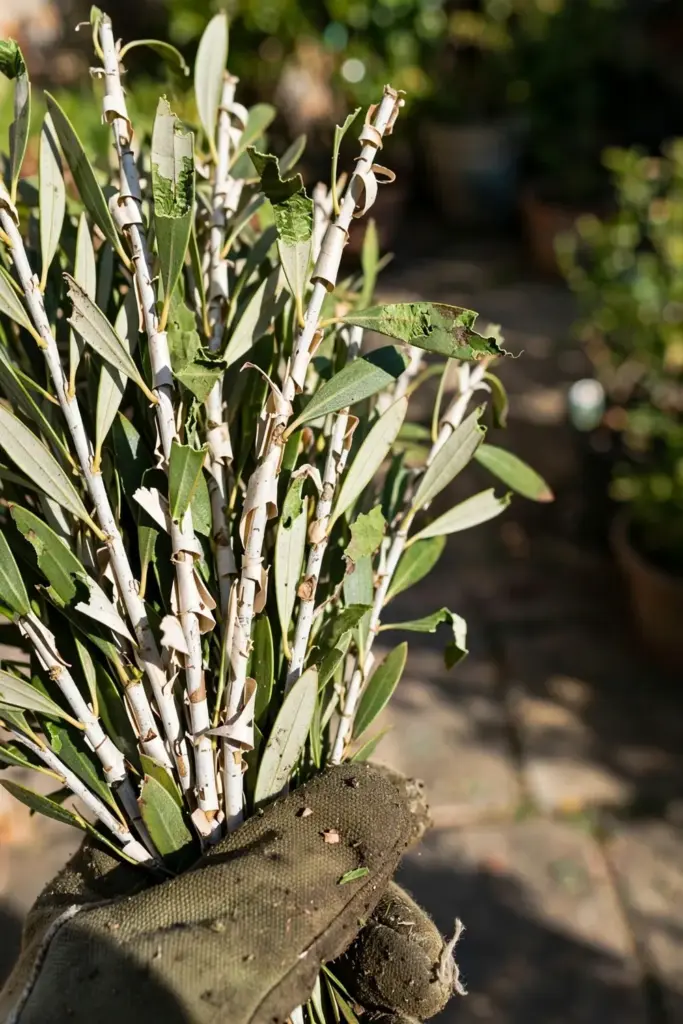
Cut the leader back to your target height each year. Then shorten the side branches by a third to keep the crown dense and balanced. Remove any dead, crossing, or inward-growing wood at the same time. Cajuput resprouts readily from older wood, so even a neglected tree can be cut back hard and rebuilt.
Take the pruned leaves and crush one. The burst of medicinal, camphor-like scent is the 1,8-cineole in the leaf oil glands, and it is the simplest confirmation that your tree is the real Melaleuca cajuputi. Hang small bundles of the trimmings in a wardrobe or drawer as a natural freshener, a traditional household use of the aromatic leaves.
12. Move Indoors Before the First Frost
This is the step that decides whether a temperate-climate cajuput lives or dies. Move the pot indoors before the first expected frost, not after a cold snap has already blackened the leaves. Cajuput is frost-tender, and a single hard freeze can kill a container tree outright because the roots have no soil insulation.
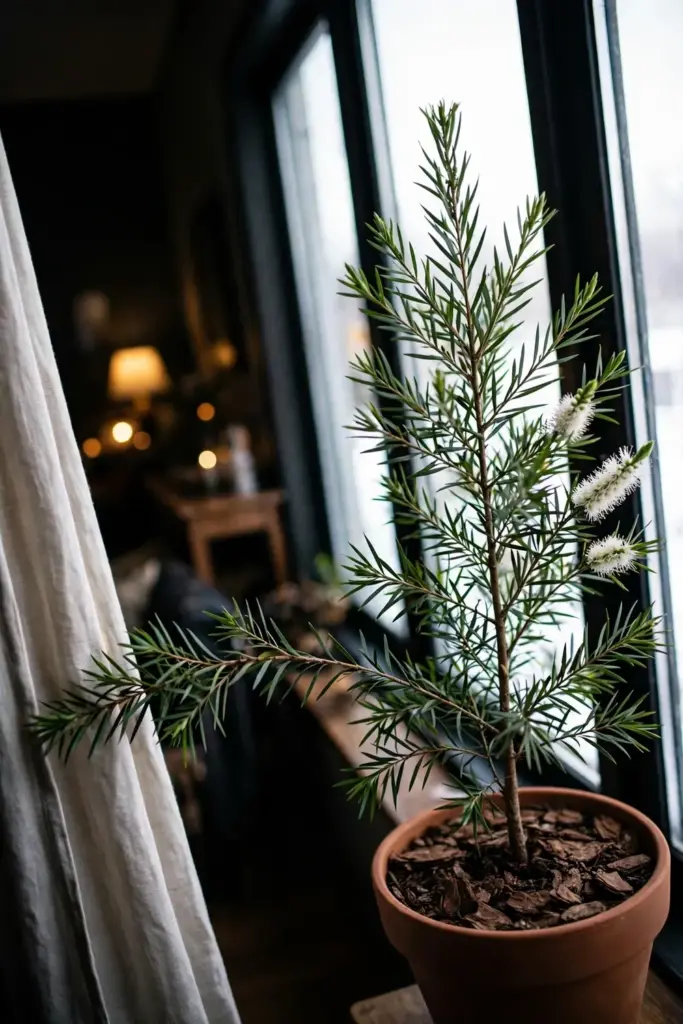
Give it the brightest spot you have. A south-facing window, a bright sunroom, or a spot under a full-spectrum grow light for 12 to 14 hours a day keeps the tree ticking over. Expect some leaf drop in the first weeks indoors. That is the tree adjusting to lower light, not a disease, and new growth resumes once days lengthen.
Keep winter care lean. Water sparingly, only when the mix is dry halfway down, and stop feeding entirely until spring. Do not repot in winter. Growers of other tropical container plants, such as sweet leaf grown in pots through temperate winters, follow the same lean-winter routine, and the logic is identical: the tree is resting, not growing.
Move the tree back outside only after night temperatures stay reliably above 10 degrees Celsius. Harden it off over a week, starting with a few hours of morning sun and building up, because leaves grown under glass scorch in sudden full sun.
13. Inspect for the Pests That Follow It Indoors
Indoors, cajuput faces the same sap-sucking pests as any container tree: scale insects and aphids on the stems and leaf undersides. Check monthly with a magnifying glass, especially after the tree comes inside in autumn, since pests hitchhike on the bark and explode in warm, dry indoor air.
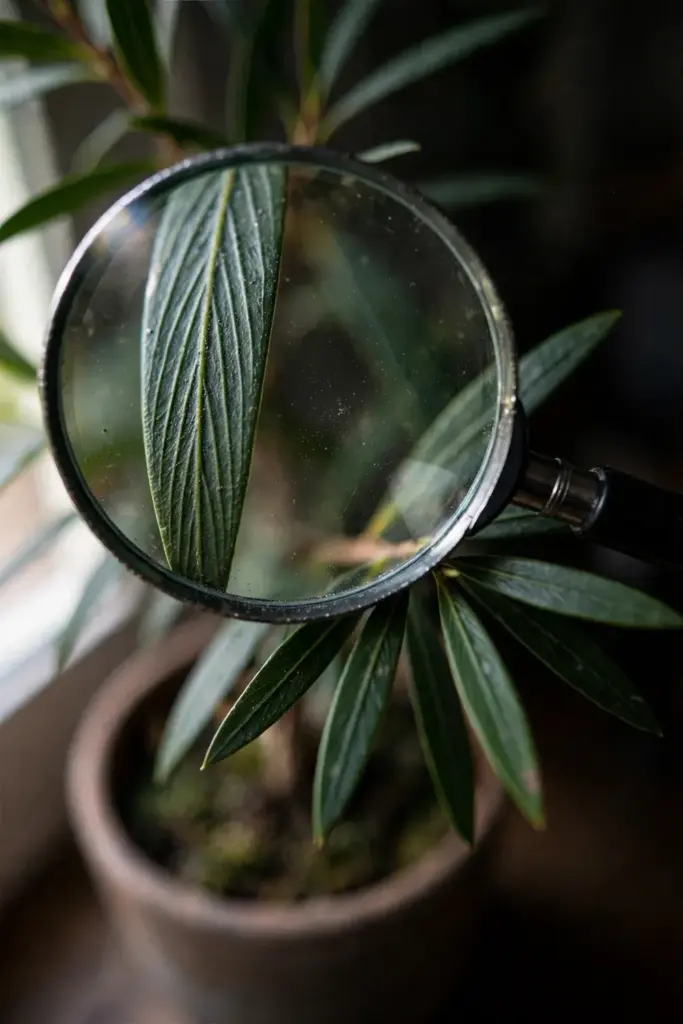
Wipe small scale infestations off with a cotton swab dipped in rubbing alcohol, and blast aphids off with a strong jet of water before the tree comes indoors. For larger outbreaks, insecticidal soap or horticultural oil applied per label directions controls both without harming the tree. Repeat the treatment after ten days to catch the next hatch.
No published pest survey exists specifically for home-grown cajuput, so data on species-specific problems is not available. The general rule for myrtle-family trees holds: good airflow, no overcrowding, and prompt removal of dead leaves prevent most trouble before it starts.
14. Understand the Oil Without Home-Distillation Dreams
Cajuput oil is a commercial product, not a kitchen project. Commercial cajuput oil is mostly obtained from Melaleuca cajuputi subspecies cajuputi, steam-distilled from the leaves of mature plantation trees. The oil is a pale yellow liquid, and 1,8-cineole is its main component, the compound behind its camphor-like smell.
The oil’s traditional roles are general information, not medical advice. In Indonesia and Malaysia, minyak kayu putih is used as a liniment and inhalant, and the oil has been classified as non-toxic and non-sensitizing, though skin irritation can occur at high concentrations. This article makes no dosage or treatment claims, and none should be inferred from it.
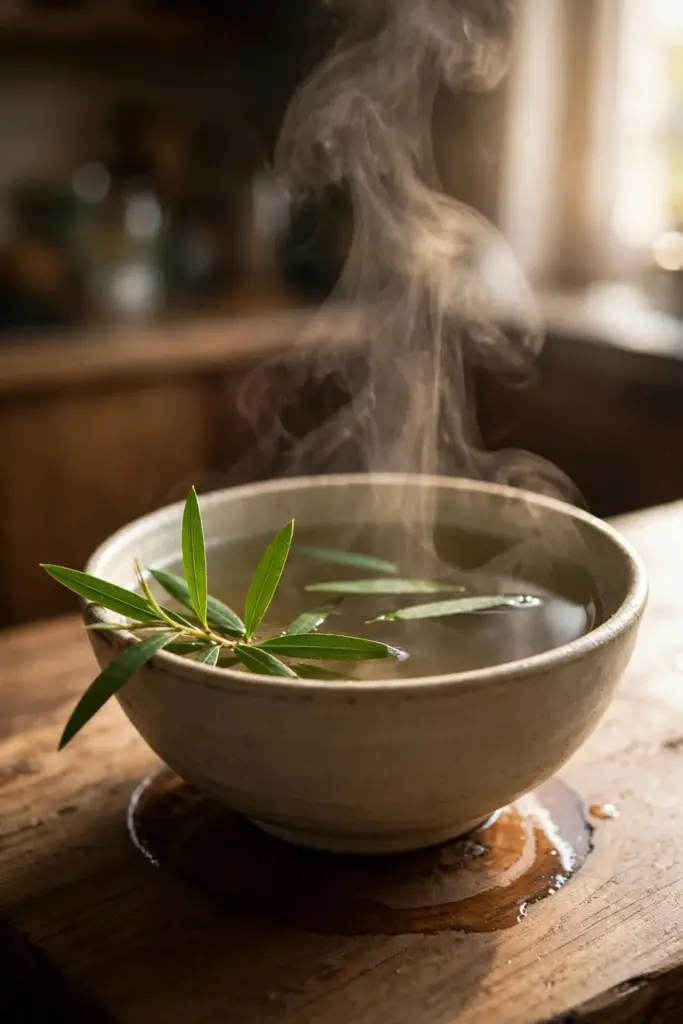
What the home grower can honestly do with the leaves is small and safe. Crush a leaf and inhale the scent. Add a few fresh leaves to a bowl of hot water for a fragrant steam in the bathroom. Dry pruned leaves for sachets. These are household pleasures, not medicine, and they need no equipment beyond a pair of secateurs.
15. Keep It Contained Where Melaleuca Turns Invasive
The invasive-species warning matters because cajuput has a close relative with a bad record. Melaleuca quinquenervia, sometimes sold as cajeput, was introduced to Florida as an ornamental and spread across roughly half a million acres of wetlands. It is now a Category I noxious weed in Florida, prohibited from planting, and a single tree can produce an estimated 20 million seeds per year.
Melaleuca cajuputi is a different species from the Florida invader, and it is not listed as a noxious weed the way quinquenervia is. Still, the lesson applies to every fast-growing, seed-prolific Melaleuca: never plant it into open ground near wetlands, waterways, or natural areas in warm climates. The container is your fence. Snip off spent flower spikes before the woody capsules mature if you want extra insurance against self-seeding.
If you live in Florida, the Gulf Coast, or Hawaii, check your local extension service before planting any Melaleuca outdoors. Regulations target quinquenervia specifically, but local rules change, and a quick check beats a fine or an ecological mess.
16. Multiply Your Success with Cuttings and Seed
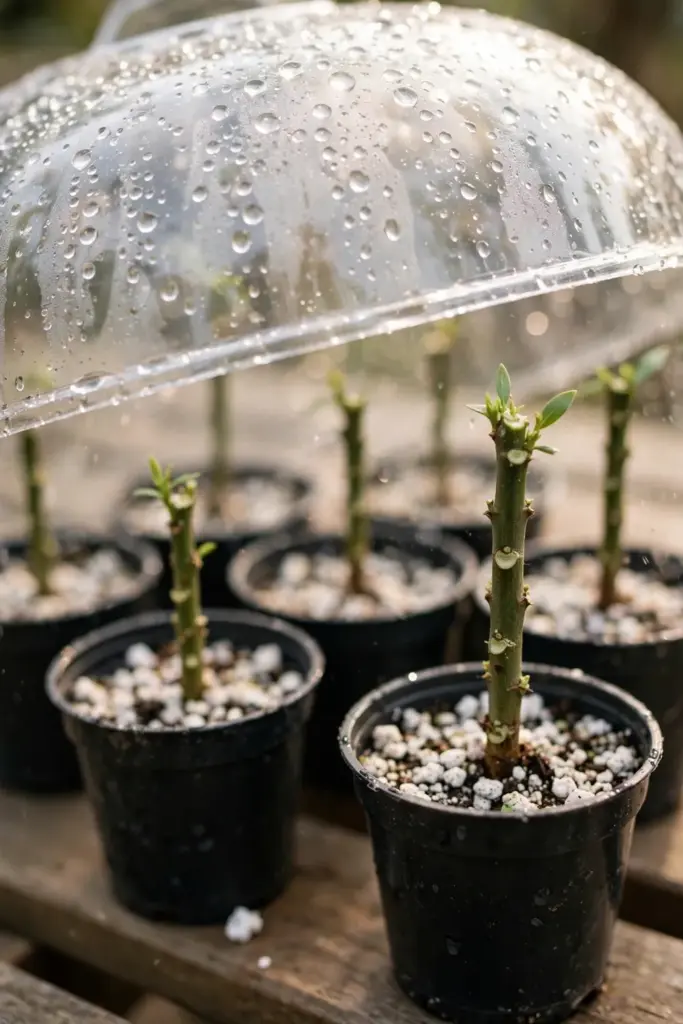
Once your tree thrives, propagate it. Take semi-hardwood cuttings in spring or early summer: 10 to 15 centimetre lengths of current-season wood that has just started to firm up. Strip the lower leaves, dip the base in rooting hormone, and set the cuttings in a moist mix of perlite and peat under a clear cover. Roots form in six to ten weeks in warm conditions.
Alternatively, collect seed the slow way. Let a few woody capsules dry on the tree, then warm them gently until they split and release the dust-like seed. Each capsule holds dozens of seeds, so a single branch gives you enough for years of sowing. Store the seed cool and dry in a paper envelope; Melaleuca seed stays viable for years when stored well.
Label everything with the full botanical name and the date. That is the full cycle of how to grow cajuput from a single tree: seed or cutting, pot, prune, repeat. Seedlings of cajuput, tea tree, and eucalyptus look alike when young, and a clear label is the difference between a known tree and a mystery pot. The Glacier Eucalyptus growing guide shows the same labelling discipline for another aromatic myrtle-family tree, and it saves the same confusion.
Frequently Asked Questions
Yes, with light and warmth. Sow the dust-like seeds on the surface of sterile compost without covering them, keep daytime temperatures at 18 to 20 degrees Celsius and nights above 15, and expect germination in about five weeks. A heated propagator on a bright windowsill works in any season, though spring sowing gives seedlings the longest first summer.
A container and annual pruning hold it at 1 to 2 metres for many years. Unpruned, the same tree keeps pushing upward toward its natural size of up to 35 metres, so cut the leader back every late winter. The pot caps the roots, which slows the whole tree and keeps flowering-sized wood within reach.
No. Cajuput is Melaleuca cajuputi, the source of cajuput oil, which is rich in 1,8-cineole. True tea tree is Melaleuca alternifolia, an Australian species and the source of tea tree oil. Both belong to the myrtle family and both have papery bark and aromatic leaves, which is why nursery tags confuse them. Check the botanical name before buying.
No, not realistically. Commercial cajuput oil is steam-distilled from large quantities of leaves from mature plantation trees, mainly subspecies cajuputi grown in Indonesia. A single potted tree never yields enough leaf for distillation. Enjoy the fragrant leaves for steam bowls and sachets instead, and buy the oil from a reputable distiller if you want it.
Melaleuca cajuputi itself is not the Florida invasive. That record belongs to its relative Melaleuca quinquenervia, a Category I noxious weed in Florida that is prohibited from planting. Cajuput can self-seed where frost never checks it, so keep it in a container in warm climates and snip spent flower spikes before capsules mature.
Buy from a nursery that lists the full botanical name on the tag, and avoid any listing that says only “cajeput” or “tea tree” without a Latin name. Botanical garden plant sales and specialist Australian-native nurseries are the most reliable sources. Seeds travel well through seed exchanges, and each woody capsule holds dozens of them.
Where to Go From Here
Start with identity, then commit to the container. A confirmed Melaleuca cajuputi in a wide pot, in full sun, moved indoors before frost, will give you fragrant leaves and paperbark character for years. Prune it hard every spring, water it like the swamp tree it is, and keep the spent flower spikes trimmed. The tree asks for little beyond that, and it pays back every crushed leaf with the sharp, clean scent of kayu putih.