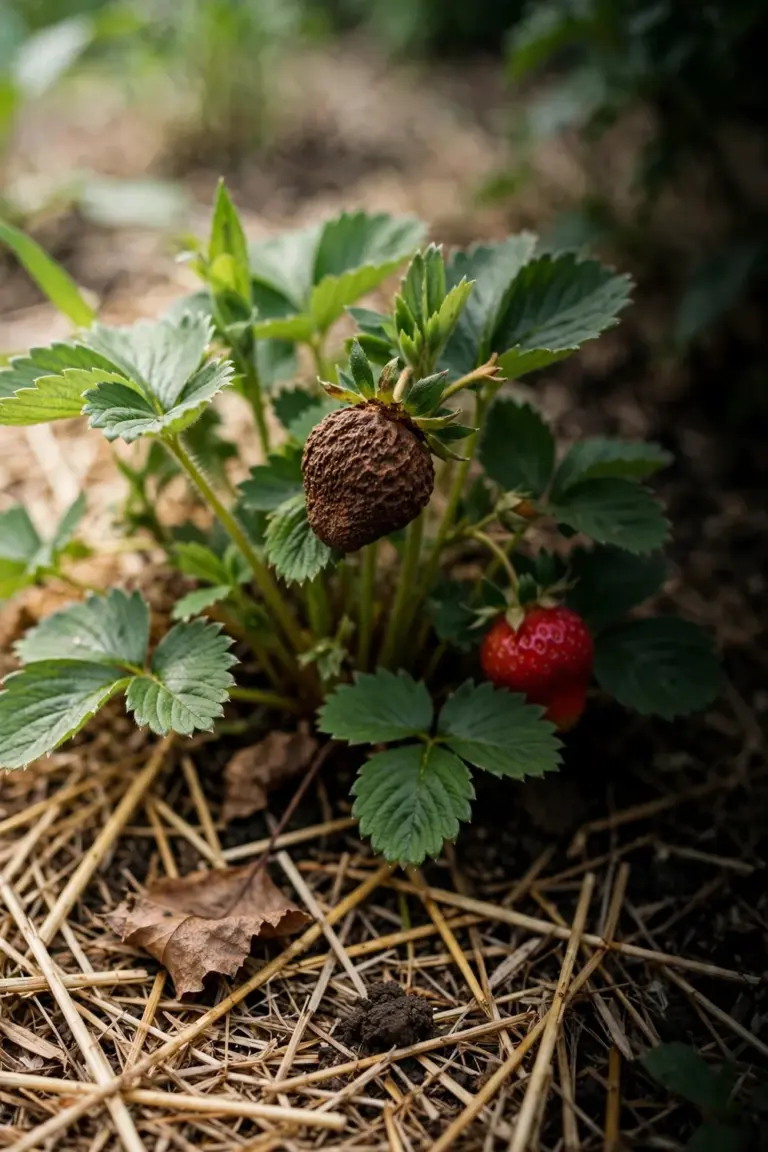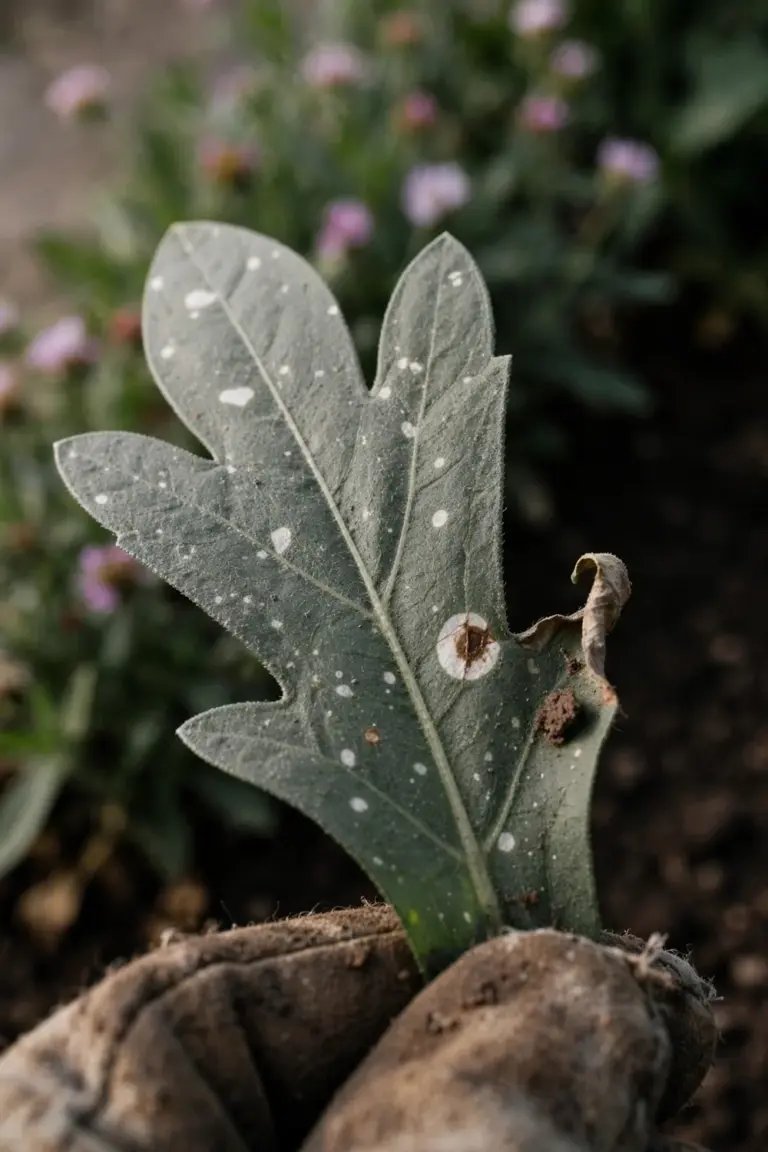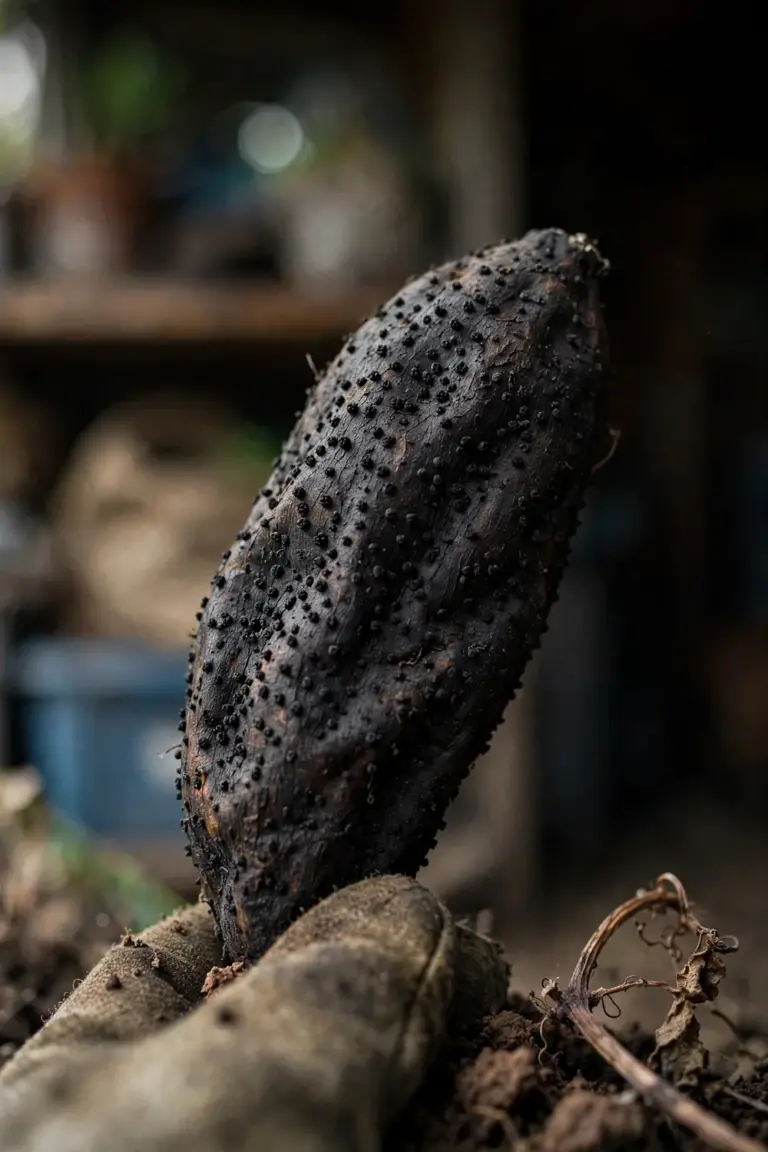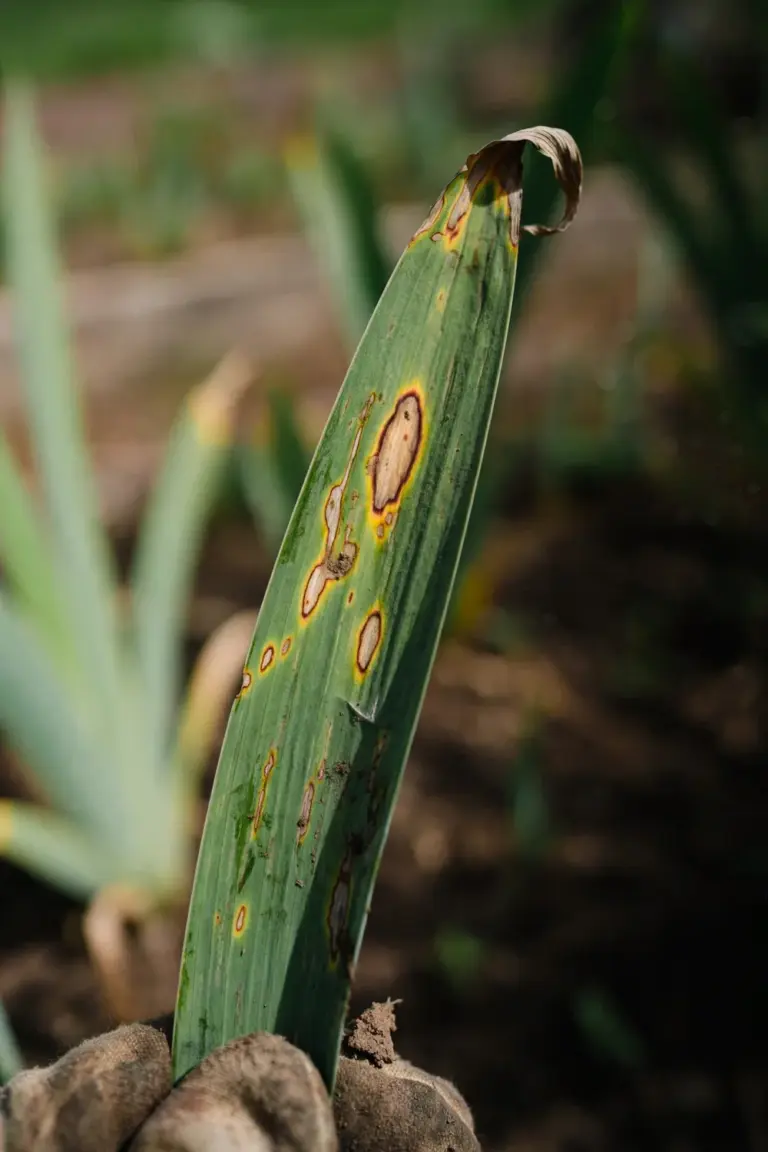

Ganoderma butt rot on palms has no cure, and that fact shapes the 9 strategies below. No fungicide cures an infected palm. No fertilizer rebuilds destroyed trunk tissue. No conk removal cures the palm. The strategies tell you how to spot the disease early, confirm it with the one symptom that settles the identification, remove the palm safely, dispose of the material correctly, and protect your other palms and your neighbors’ palms.
The disease is a Florida-centered problem of landscape palms, distributed throughout Florida and also known in Georgia and South Carolina. A palm owner in the Gulf Coast and Southeast who sees a shelf fungus on the lower trunk needs this guide. A palm owner elsewhere needs it only as a reference.
The rest of this page walks the identification, the hosts, the compiled Fusarium differential, the mechanism, the risk factors, and the 9 strategies. The disease name leads. The pathogen, Ganoderma zonatum, stays in the background after this introduction.
What Ganoderma Butt Rot on Palms Actually Is
Ganoderma butt rot on palms is a lethal fungal disease of palms. The pathogen is Ganoderma zonatum, a white rot fungus that degrades lignin first, then cellulose, in the lower 4 to 5 feet of the trunk. The trunk stays hard, not a soft rot, because the fungus degrades the wood internally while the trunk keeps its shape. The hard trunk is the trap: a palm can look solid while its lower trunk is hollowed by decay.
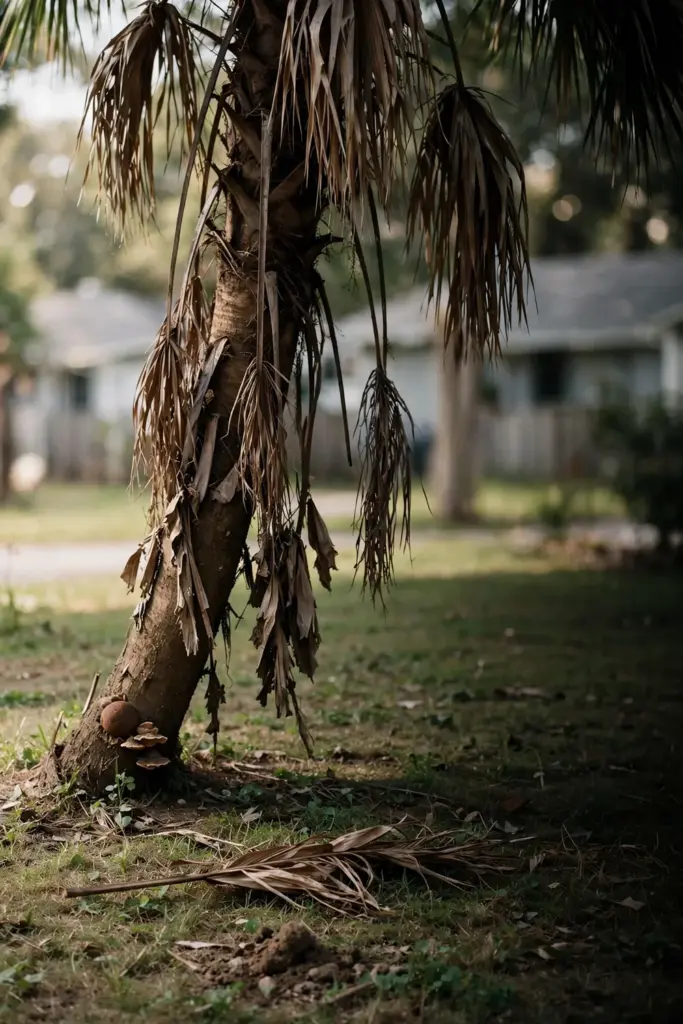
The disease is lethal. An infected palm will die. The decay destroys the water-conducting tissue, the palm wilts, declines, and becomes a blow-down hazard. The palm does not recover. The management is removal and protection of the remaining palms, not treatment of the infected one.
There is no cure and no preventive. There are currently no cultural or chemical controls for preventing the disease or for curing the disease once the palm is infected, per UF/IFAS. No fungicide, drench, trunk injection, or systemic product cures it. No growing practice prevents it. The honest response is recognition, safe removal, and protection of the rest.
The old name is history only. Ganoderma sulcatum was the old name for the palm butt-rot fungus in Florida literature, and the two species have been grouped as one, Ganoderma zonatum. The 1964 FDACS circular’s control advice, including copper fungicide as a preventive, is superseded by current UF/IFAS guidance. This article does not carry the 1964 advice as current.
How to Identify Ganoderma Butt Rot on Your Palms
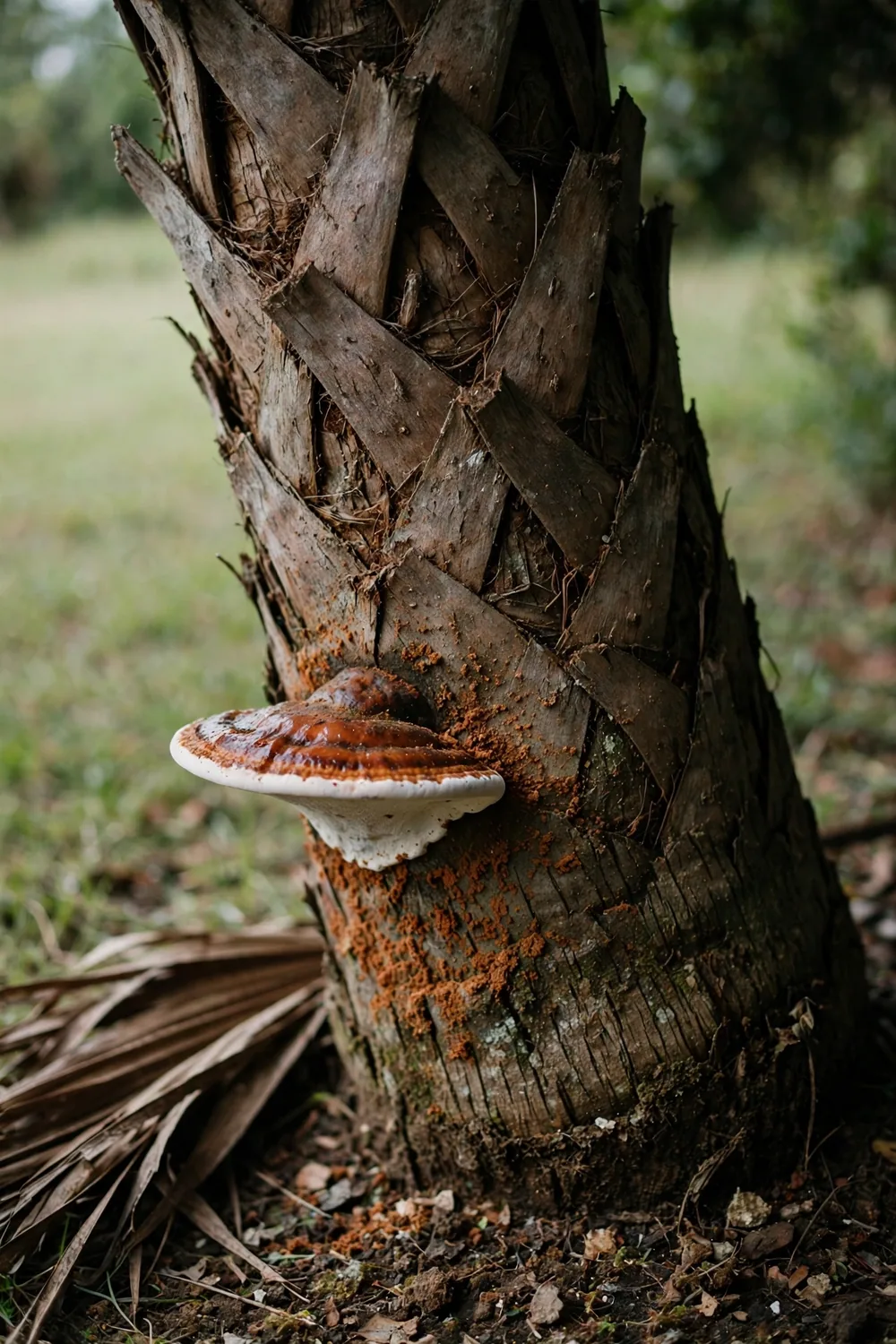
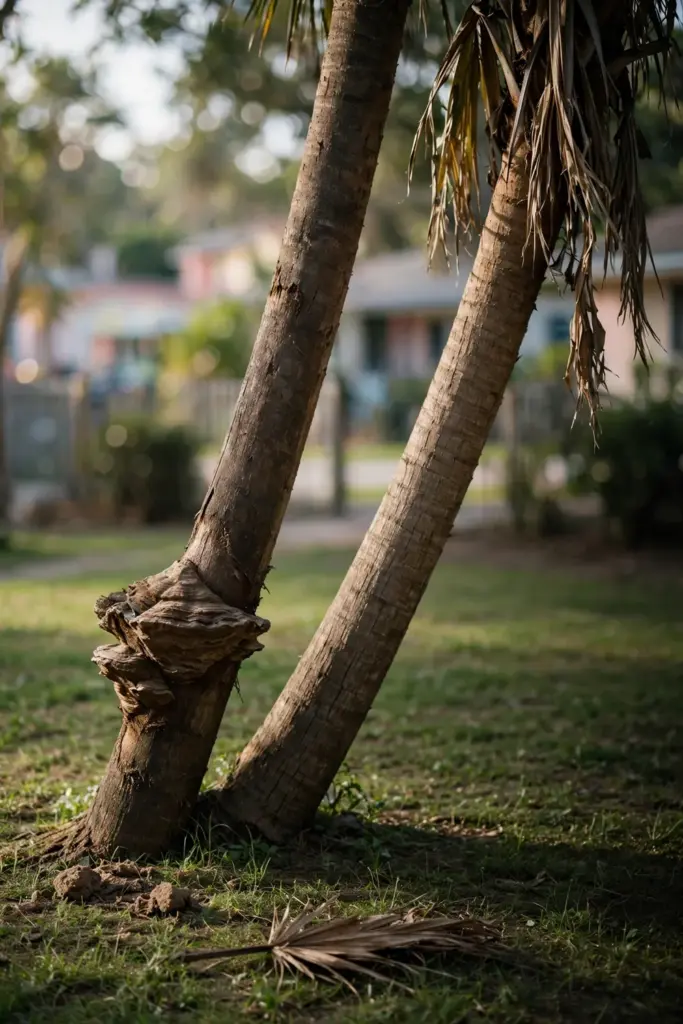
Look at the lower trunk first. The conk, the basidiocarp, is the most easily identifiable structure, and it forms on the lower 4 to 5 feet of the trunk. The lower trunk is where the fungus works, and the lower trunk is where the conk appears. A shelf fungus on the lower trunk of a living palm is the sign to act on.
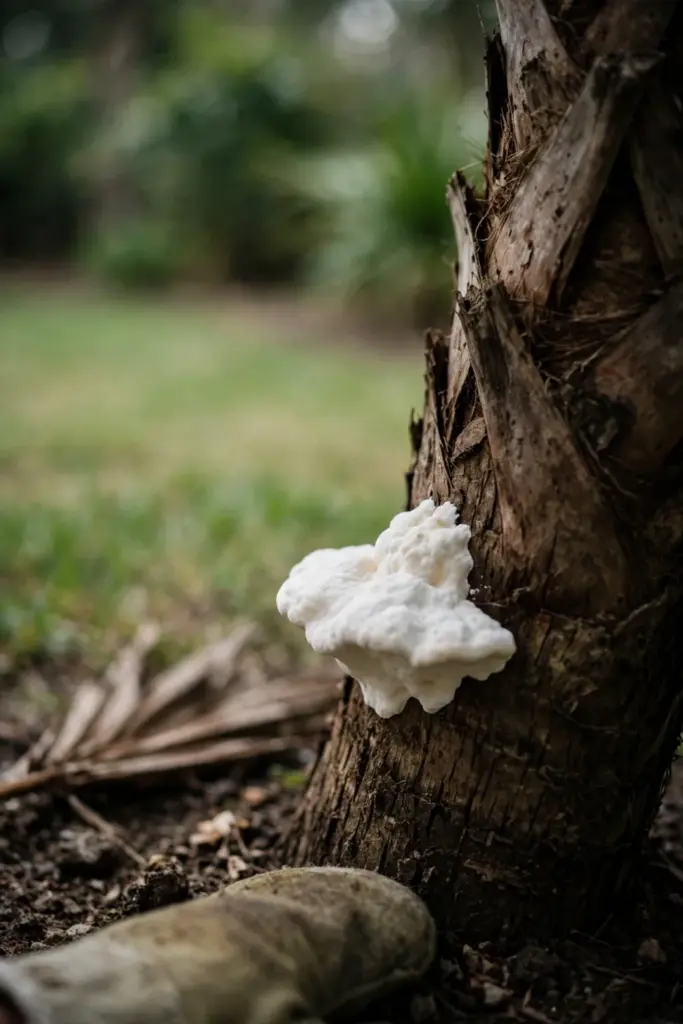
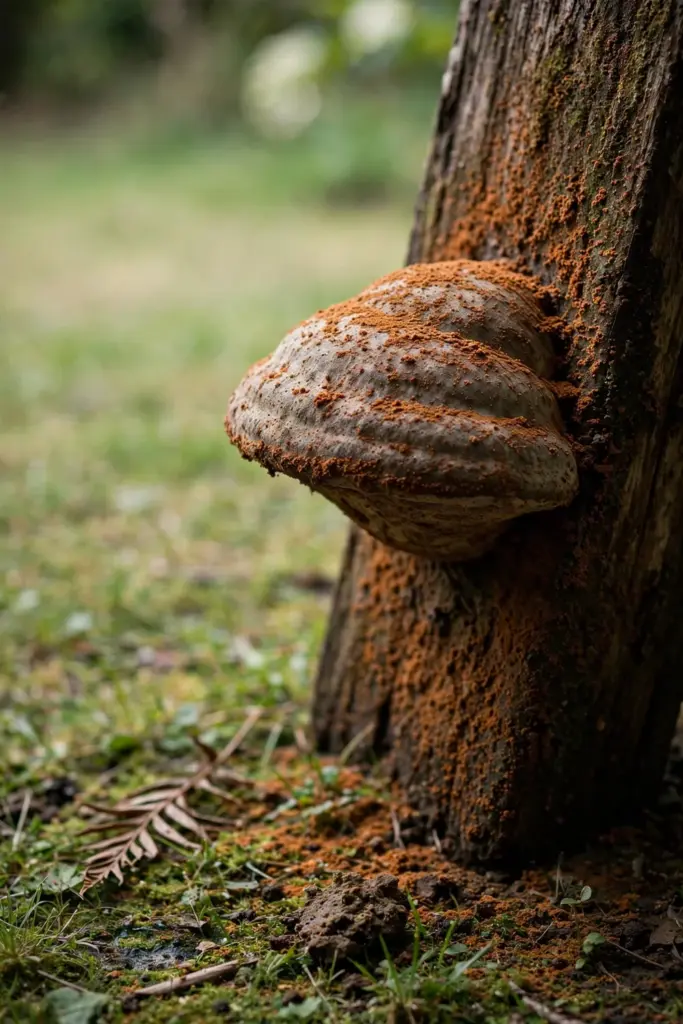
Learn the conk stages. When the conk first starts to form, it is a solid white mass, relatively soft when touched, irregular to circular, relatively flat on the trunk. As it matures, a small shelf or bracket starts to form, and the mature conk is a hard shelf with a glazed reddish-brown top surface and a white undersurface, with distinct zones. The mature conk is half-moon shaped, directly attached, with no stalk, up to 8 inches wide and 2 inches thick.
Watch for the rust-colored spores. Mature conks release rust-colored spores that cover the conk and the surrounding area. A rust-colored dusting on and around the conk is the spore release. The spore release is why early conk removal matters.
Accept the no-conk rule. Many diseased palms never produce a conk before they die. A palm with no conk has not been cleared. The palm cannot be diagnosed with Ganoderma butt rot until the conk forms, or the internal discoloration of the trunk is observed after the palm is cut down. No conk means no confirmation, not no disease.
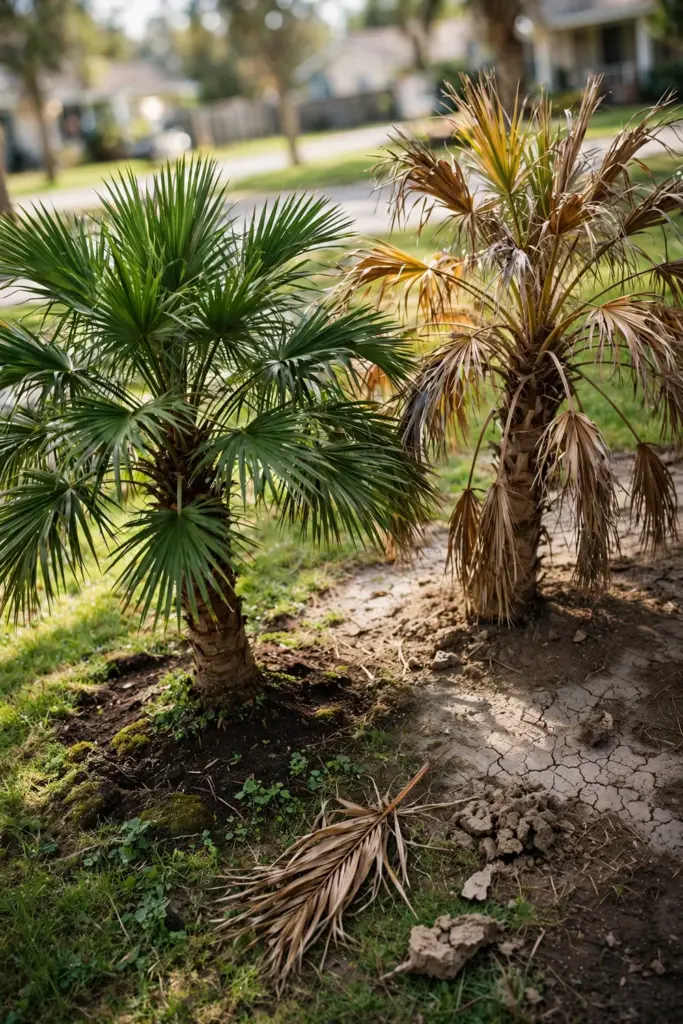
Watch the crown. The primary symptom may be wilting, mild to severe, of all leaves except the spear leaf. Other symptoms are general decline: slower growth, off-color foliage, and more dead lower leaves than normal. These symptoms alone should not be used for diagnosis, since other disorders and diseases also cause them. The crown tells you to look at the trunk. The trunk tells you the diagnosis.
Which Palms Get Hit Hardest
All palms are considered hosts. All palms are considered hosts of this fungus, and the fungus is not a primary pathogen of any other plant family. No palm species is safe. A palm is a palm, and the disease takes any of them.
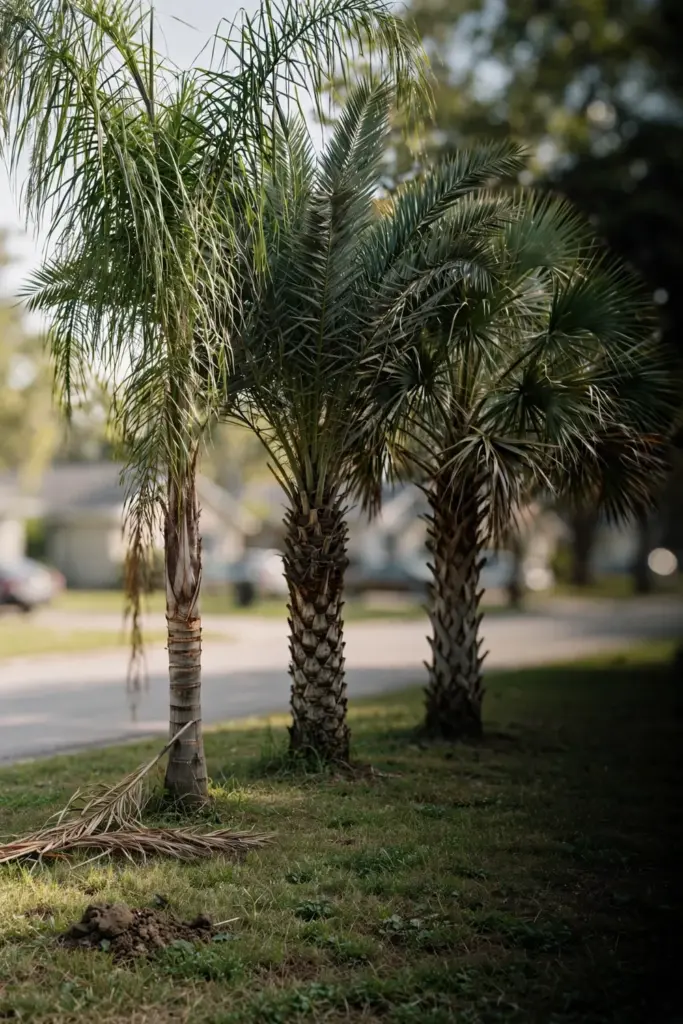
The documented hosts cover the landscape. Queen palm, pindo palm, coconut palm, Canary Island date palm, Senegal date palm, edible date palm, cabbage palm, royal palm, areca palm, windmill palm, and thatch palm all appear in the evidence. The host list is the landscape palm list. The palm in your yard is a host.
Hardwood Ganoderma is a different disease. Ganoderma sessile and the Ganoderma lucidum complex on oaks, maples, and honeylocust are different pathogens on different hosts. Ganoderma boninense basal stem rot of oil palm is a different disease in a commercial plantation context. This article is palms only, and no hardwood or oil-palm evidence is carried here.
Ganoderma Butt Rot vs Fusarium Wilt on Palms
The conk is the only distinguishing symptom. Wilting and decline are shared. The conk settles it. No conk means no confirmation in the field.
| Clue | Ganoderma Butt Rot (Ganoderma zonatum) | Fusarium Wilt on Palms |
|---|---|---|
| Confirming sign | Conk on the lower 4–5 ft of trunk: white mass → hard zoned shelf, glazed reddish-brown top, white underside | No conk; wilting and decline only |
| Wilting pattern | Wilting mild to severe, all leaves except the spear leaf; general decline | Wilting and decline, often one-sided frond death pattern |
| Trunk | Lower 4–5 ft decayed internally; trunk stays hard | No butt decay; trunk sound |
| Cause | White rot fungus degrading lignin, then cellulose | Soil-borne Fusarium fungus in the vascular system |
| Cure | None; palm is not recoverable once confirmed | None for the infected palm; management differs |
| Spread | Spores from the conk, wind-borne; fungus survives in soil | Soil-borne; moves in soil and on tools |
| Action | Remove palm ASAP for safety; do not replant a palm there | Remove palm; replant rules differ by species |
No published home-gardener head-to-head comparison article exists. This table compiles the distinction from parallel sources: UF/IFAS PP-54, the IFAS Collier County fact sheet, and the University of Florida research write-up. The conk is the only distinguishing symptom, and no conk means the field identification cannot confirm Ganoderma, so dissection or culture, or the newer UF DNA test, settles it. Lethal bronzing, a phytoplasma disease spread by insects, also causes wilting and decline without a conk, and it gets one line here, never a second table.
How Ganoderma Butt Rot Spreads
The conk is the spore factory. The fungus is spread by spores, which are produced and released from the conk, and one conk can produce millions of spores that travel by wind to nearby palms and soil. The conk on your palm is the infection source for the neighborhood.
The fungus grows internally for years. The fungus may grow internally for 3 years or more before symptoms are observed. A palm that looks healthy today may already carry the fungus. The hidden years explain why the disease seems to appear suddenly. The palm was infected long before the conk showed.
The fungus survives in the soil. Because the fungus survives in the soil, planting another palm back in that same location is not recommended, and the soil holds the fungus after the palm is gone, along with the stump and roots, which is why the replant rule is absolute.
Decay takes months to a year. Decay can take months to a year depending on trunk girth, and a thick-trunked palm stands longer than a thin one, but the standing time is not recovery time: the palm is dying throughout, and the blow-down risk grows with the decay.
What Raises the Risk of Ganoderma Butt Rot
No growing condition favors it. UF/IFAS has observed no growing conditions that favor the disease. Well-fed and stressed palms, well-drained and swampy sites, all soil types: the disease appears in all of them. No soil type protects the next palm. No fertilizer regime prevents it. The risk is the palm itself, in Florida, in the ground.
Wounds are not likely a factor. Current UF/IFAS understanding holds that wounds are not likely a factor in disease occurrence. Older sources, including TreeHelp, Davey, and the 1964 FDACS circular, say wounds are the entry. This article defaults to current UF/IFAS and flags the conflict rather than resolving it. You did not cause this with a string trimmer.
Mulch, irrigation, and nearby plants are not associated. Too much mulch against the trunk, irrigation striking the trunk, and flowers or shrubs planted too close to the trunk have not been associated with this disease. The landscape practices that matter for other diseases do not matter here. No practice change prevents it, and no practice change caused it.
Pruning tools do not spread it. UF/IFAS states pruning tools do not spread the fungus, since it is not associated with the fronds. One tree-service source claims pruning tools spread it. This article defaults to UF/IFAS and flags the conflict. Tool sanitation is good general practice, not a Ganoderma-specific control.
Strategy 1: Confirm the ID With the Conk
Check the lower trunk. The conk forms on the lower 4 to 5 feet of the trunk. Walk every palm and look at the base. A white mass, a hard shelf, or a rust-colored dusting on the lower trunk is the sign. The base check is the identification.
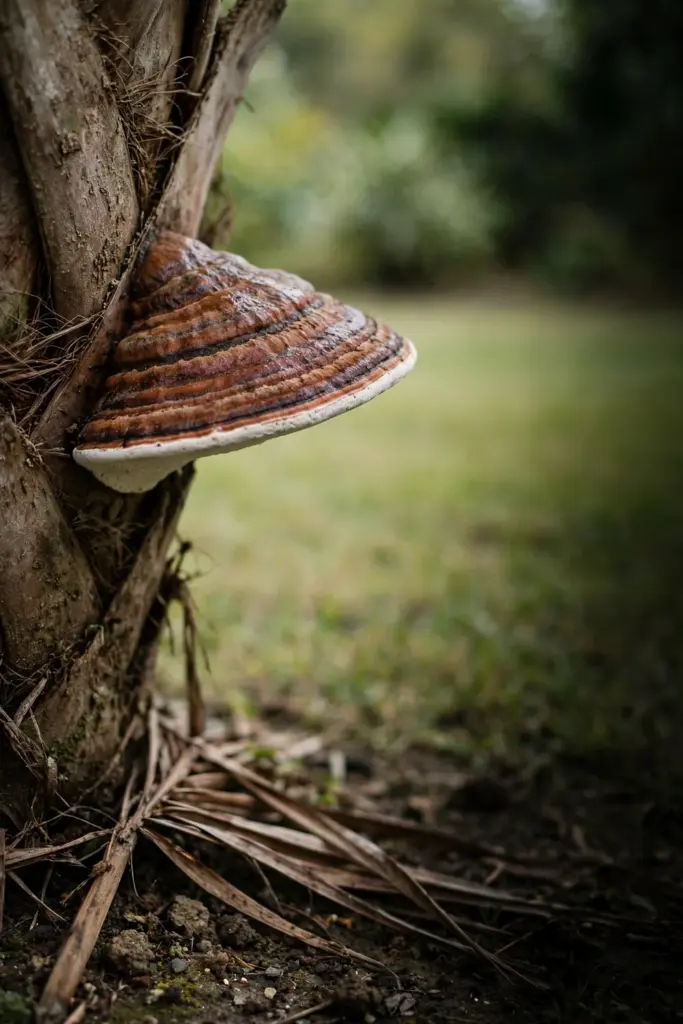
Match the conk stages. White soft mass, then hard shelf with glazed reddish-brown top and white underside, distinct zones, half-moon shape, no stalk, up to 8 inches wide and 2 inches thick. The stage match confirms the conk. A conk that matches the stages is a Ganoderma conk.
Do not clear a palm for lack of a conk. Many diseased palms die before conks appear. A wilting, declining palm with no conk is a suspect palm, not a cleared palm. The no-conk palm gets monitored, not dismissed.
Use the lab where the field cannot settle it. A palm cannot be diagnosed without a conk or internal trunk discoloration after cutting. The newer UF DNA test can confirm before the conk forms. The DNA test is a lab and research test, not a home test, and its availability should be verified with the local Extension before it is promised. The lab settles what the eye cannot.
Strategy 2: Tell It From Fusarium Wilt and Lethal Bronzing
Use the conk rule. The conk is the only distinguishing symptom. A palm with a conk has Ganoderma. A palm with wilting and decline and no conk may have Fusarium wilt, lethal bronzing, or Ganoderma without a conk. The conk rule sorts the field cases.
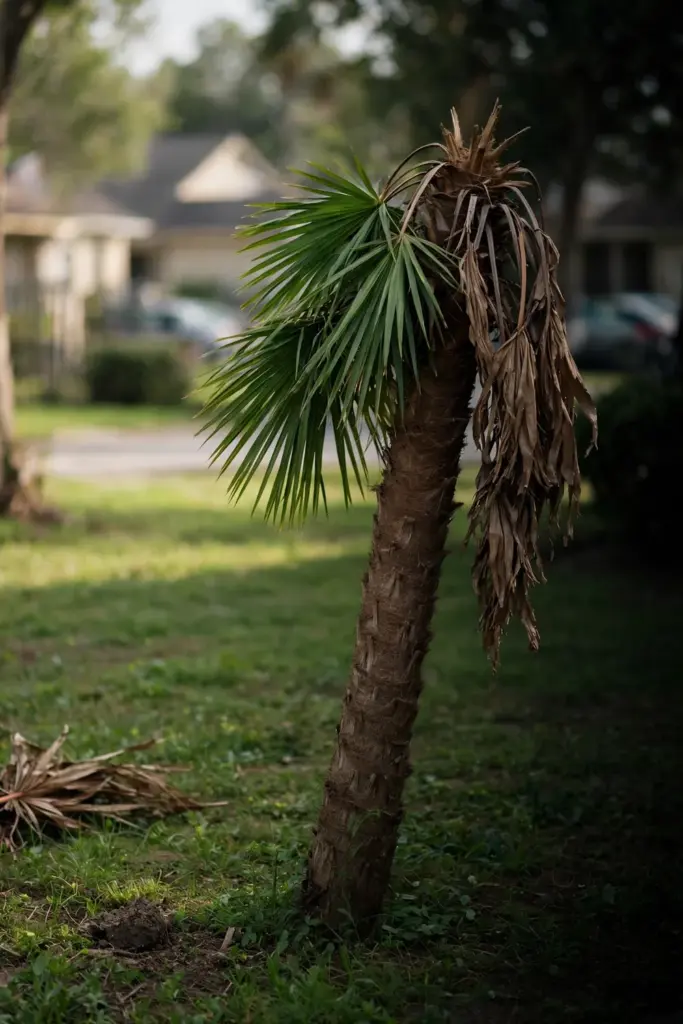
Check the wilting pattern. Ganoderma wilts all leaves except the spear leaf, with general decline. Fusarium wilt often shows a one-sided frond death pattern. Lethal bronzing, a phytoplasma disease spread by insects, shows wilting and decline without a conk. The pattern narrows the field, never settles it.
Check the trunk. Ganoderma decays the lower 4 to 5 feet internally while the trunk stays hard. Fusarium wilt and lethal bronzing leave the trunk sound. The trunk check is the second field check after the conk. A sound trunk with wilting points away from Ganoderma.
Let the lab settle the rest. No conk means no field confirmation, so dissection, culture, or the UF DNA test settles it, and a palm with wilting and no conk gets a lab answer before a removal decision where the removal is expensive or the palm is valuable, since the lab answer is worth the wait.
Strategy 3: Do Not Blame Yourself
Accept that no practice caused it. Wounds, mulch against the trunk, irrigation hitting the trunk, nearby plants, and soil type are not associated with the disease. No growing condition favors it. The palm was not lost to a mistake. The fungus infects healthy palms in good landscapes.
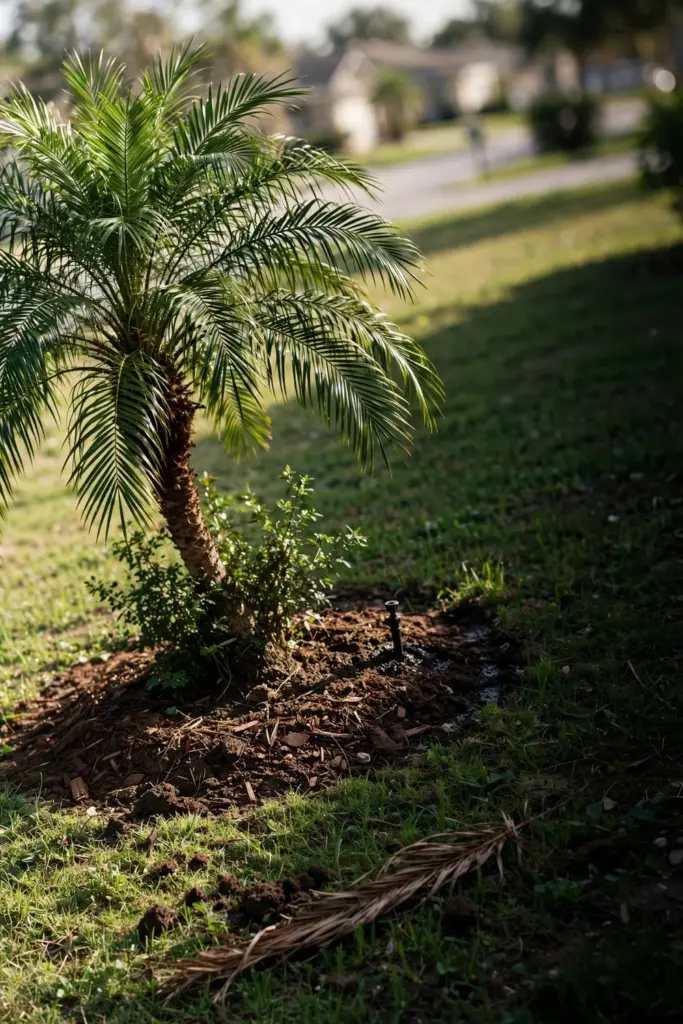
Drop the string-trimmer guilt. A trimmer nick did not cause this. Current UF/IFAS understanding holds that wounds are not likely a factor. Older sources disagree, and this article flags the conflict. The trimmer guilt is misplaced either way, because the fungus grows internally for years before symptoms.
Keep general good practice anyway. Keep the palm healthy, avoid root wounding, and keep tools clean as general practice. General practice is good practice, not a Ganoderma preventive. The distinction matters: good practice helps the palm, but it does not prevent this disease.
Tell the neighbors the same. A neighbor who blames a lawn crew for the conk will miss the real response: monitor, remove, and protect. The blame wastes the window. The monitoring uses it.
Strategy 4: Remove Conks Early and Safely
Remove conks as soon as they form. The earlier the conk comes off, the less likely it is to release spores. One conk can produce millions of spores, and every day the conk stands is a day of spore release. The early removal cuts the neighborhood’s spore load.
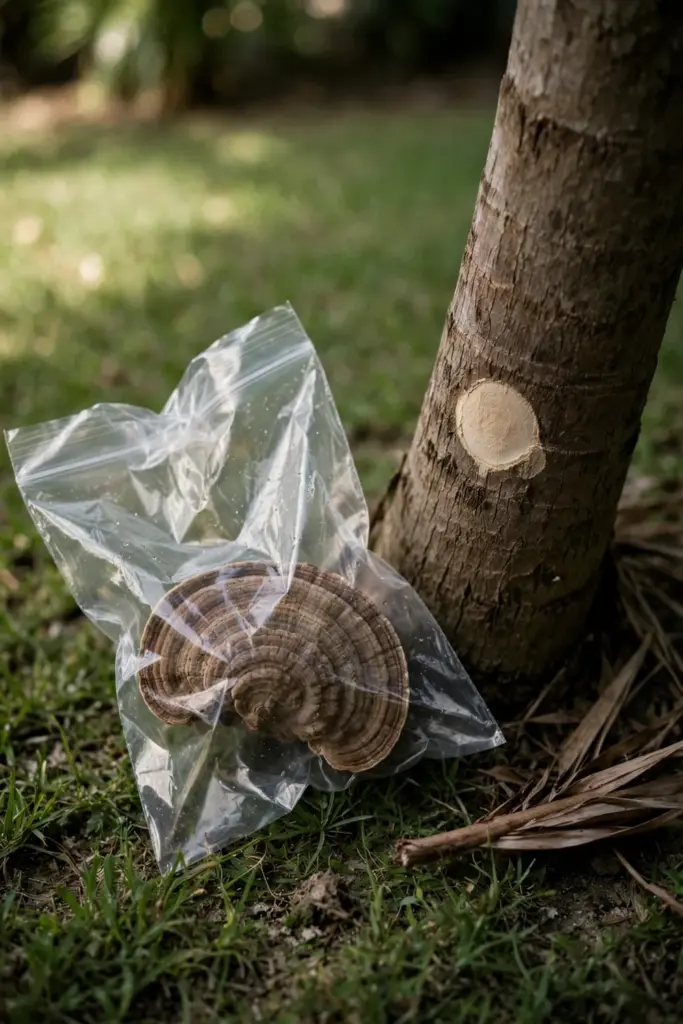
Bag immediately. Put the conk in plastic immediately after removal, and keep it bagged through transport. The bag contains the spores that the removal shakes loose. The bag is the containment.
Use the IFAS CIDP tip with care. The IFAS Collier County fact sheet suggests spraying the conk underside with WD-40, then bagging in plastic immediately. This article carries the tip as an IFAS CIDP suggestion, not as a settled home method, because it comes from a single IFAS source and is unusual. The bagging is the load-bearing step. The spray is optional.
Landfill or incinerate, never recycle. Put the bagged conk in trash that goes to a landfill or an incinerator. Never put it in yard waste that gets recycled into the landscape. Yard-waste recycling turns one conk into neighborhood mulch. The landfill is the disposal route.
Strategy 5: Remove the Palm, Safety First
Remove the palm as soon as possible after the conks appear. Once a conk appears, a significant portion of the trunk is already decayed. The palm is a blow-down hazard. UF/IFAS says the palm should be removed as soon as possible after the conks appear, primarily for safety reasons. The removal is a safety job, not a garden job.
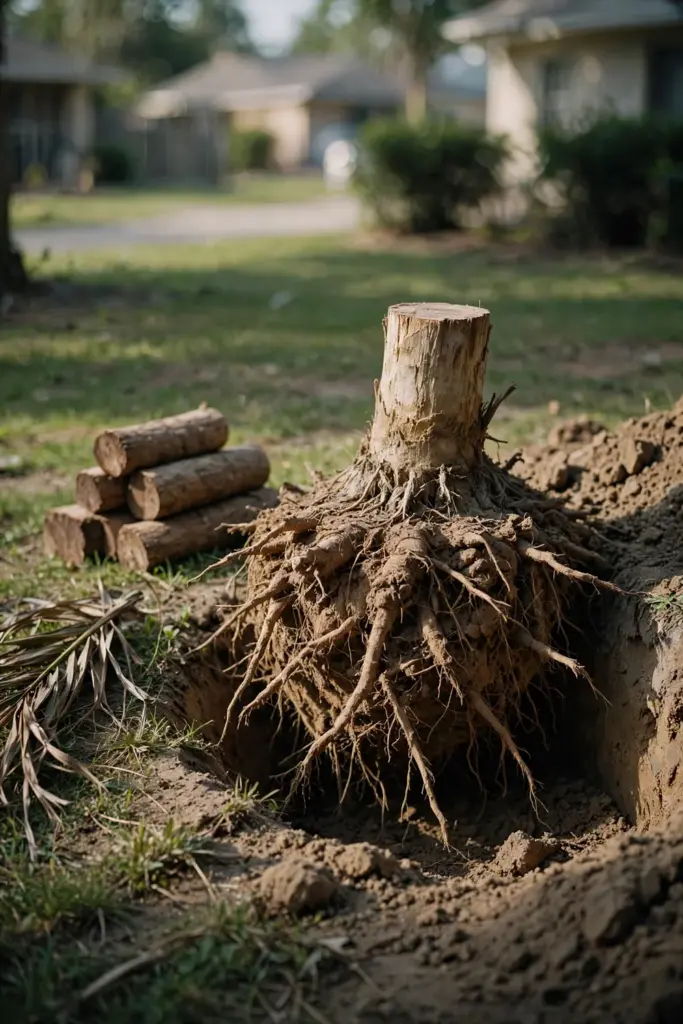
Remove the stump and as much of the root ball as possible. The fungus lives in the stump and roots. A stump left standing grows new conks. A root ball left in the ground holds the fungus. The removal is total or it is wasted.
Grind where removal is impossible, since a stump that cannot be removed should be ground to break the material down faster and limit conk formation, and the ground stump still gets monitored for conks.
Hire the removal where the palm is large. A tall palm with a decayed lower trunk is a dangerous removal. A professional crew with the right equipment removes it safely. The professional fee is the price of a safe removal. The DIY removal of a decayed palm is a false economy.
Strategy 6: Dispose of Infected Material Correctly
Landfill or incinerate the lower trunk, stump, and butt wood, since the infected wood carries the fungus, and never chip it for mulch or yard-waste recycle it. The chipper turns infected wood into infectious mulch.
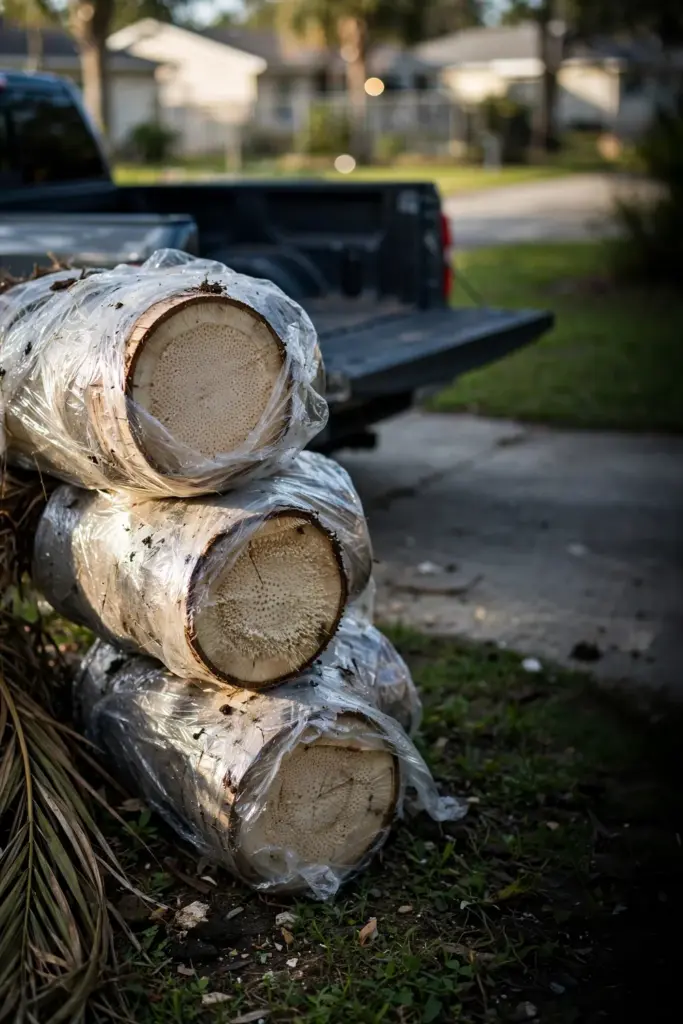
Wrap butt wood in plastic for transport, since the plastic contains spores during transport, and the wrapped load goes to the landfill or incinerator while the unwrapped load spreads spores along the road.
Chip the upper trunk only. The fungus-free upper trunk may be chipped for mulch, per UF/IFAS. The upper trunk is above the decay zone. The lower trunk is the infected zone. The cut between them is the line between safe mulch and infectious waste.
Do not compost any infected material. Home compost does not reliably kill the fungus, and community compost spreads it. The compost pile is a distribution route. The landfill is the disposal route.
Strategy 7: Do Not Replant a Palm in the Same Spot
Accept the absolute rule. Because the fungus survives in the soil, planting another palm back in that same location is not recommended. Replacement palms planted in the same site have become diseased and died. The spot is a palm grave, not a palm site.
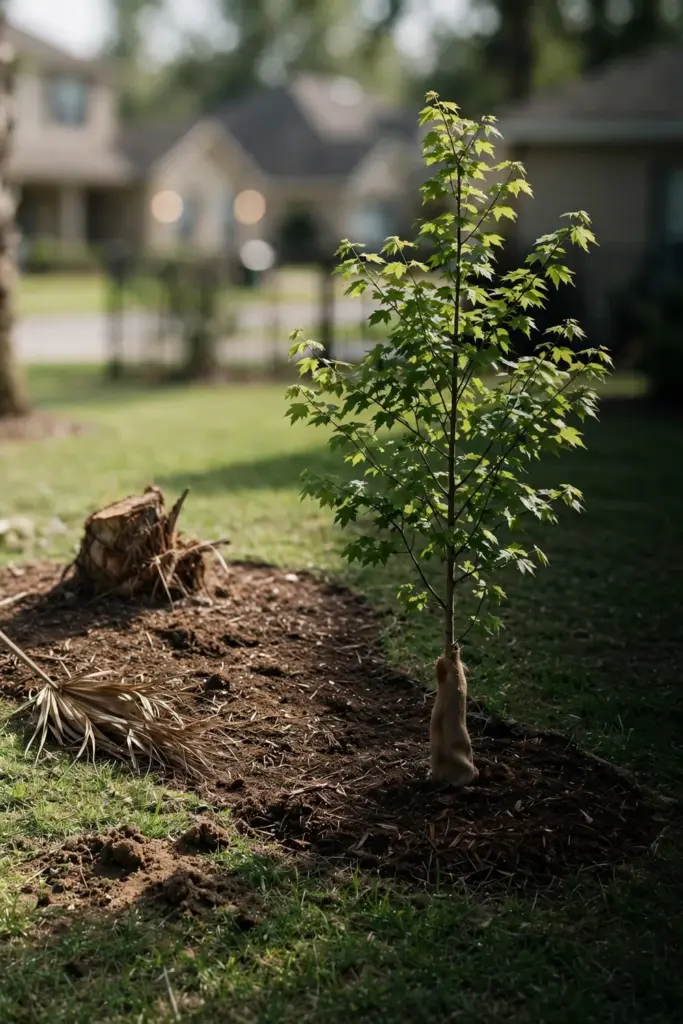
Know the wait-time conflict. Davey advises at least 1 year before replanting, one Extension column advises at least 10 years, and UF/IFAS gives no time, just do not replant a palm there, so this article flags the conflict rather than printing one rule, and the safe reading is the UF/IFAS reading: do not replant a palm there.
Plant a non-palm species instead. A non-palm tree, shrub, or bed in the spot breaks the cycle. The fungus is not a primary pathogen of any other plant family. The non-palm planting is safe from this disease.
Consider the Sabal minor exception with care. The IFAS CIDP fact sheet notes Sabal minor, the dwarf palmetto, as a possible exception, because it does not have the woody stem tissue the pathogen attacks. This article carries the exception as an IFAS CIDP note, not as a settled home recommendation. Verify with the local Extension before planting it in the spot.
Strategy 8: Monitor Monthly and Make It a Neighborhood Effort
Check every 6 months where the disease has never appeared. A palm with no history gets a base check twice a year. The base check takes minutes per palm. The twice-yearly habit catches the first conk.
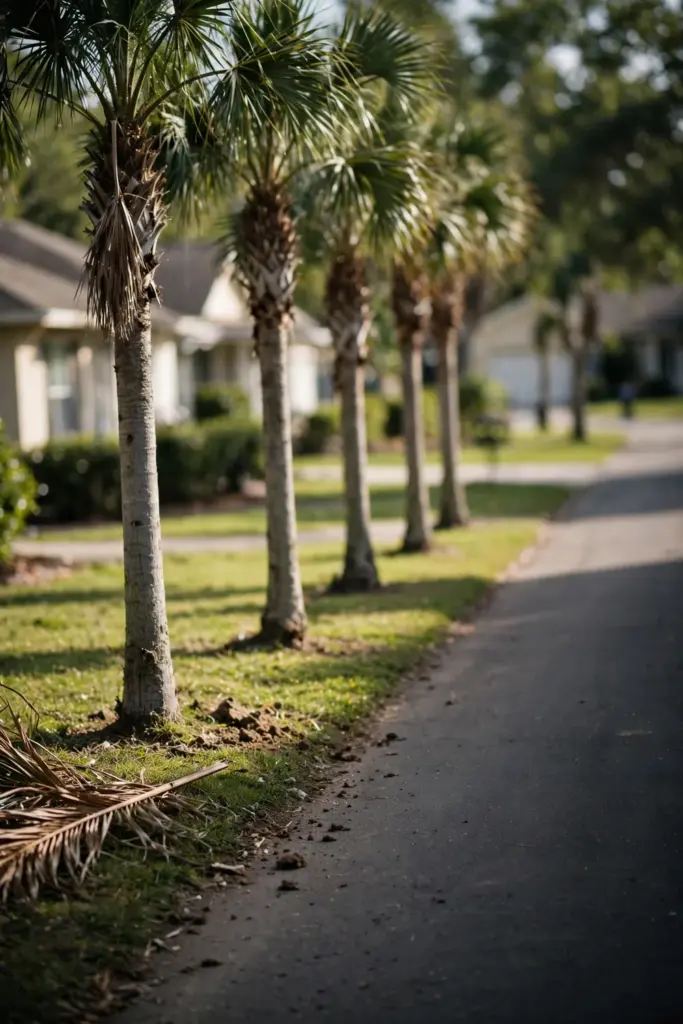
Check monthly once conks appear or a palm is removed. Once conks appear on the property, or a palm is removed for Ganoderma, the monitoring goes monthly. The monthly check catches the next conk before it releases its spores. The monthly rhythm is the protection.
Monitor the entire neighborhood, not just your yard. Spores travel by wind. A conk on the neighbor’s palm is a spore source for your palms. The neighborhood is the unit to protect. The yard is too small a unit.
Organize conk patrols and notify neighbors. HOA conk patrols, organized homeowner monitoring, turn one yard’s vigilance into a neighborhood’s. Notify neighbors when a conk appears. The notification protects their palms and yours. The neighborhood that monitors together keeps the spore load down together.
Strategy 9: Do Not Pay for a Cure
Accept that no cure exists. There are currently no cultural or chemical controls for preventing the disease or for curing the disease once the palm is infected. The sentence is the whole strategy. Any product or service sold as a Ganoderma cure contradicts UF/IFAS.
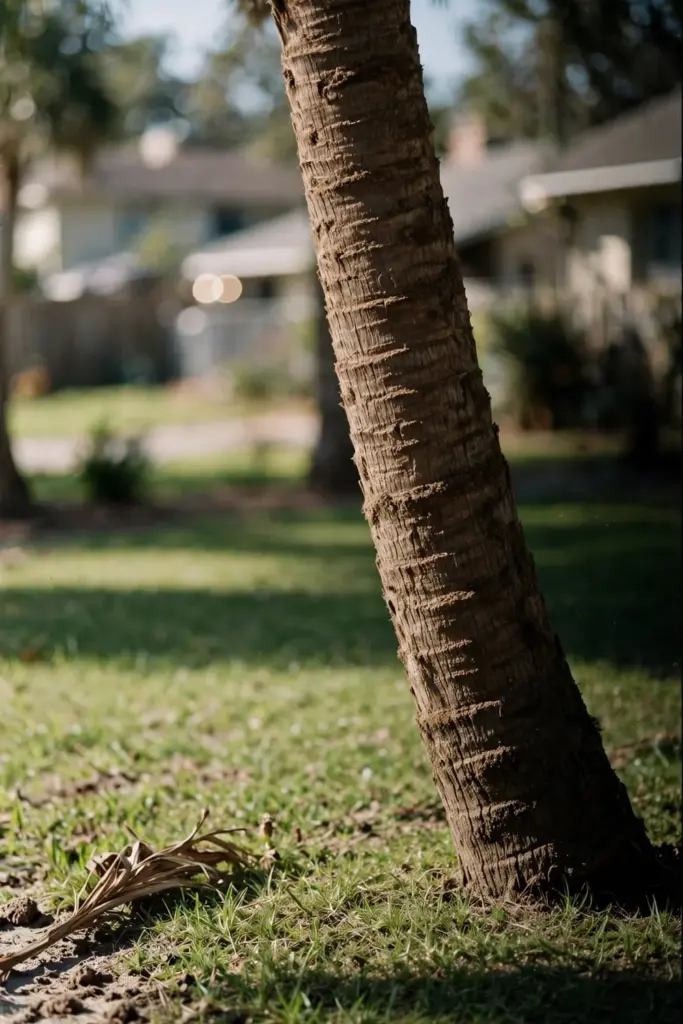
Do not pay for a fungicide. No fungicide, drench, trunk injection, systemic, or otherwise, cures an infected palm. No fungicide prevents infection. A fungicide sold for Ganoderma is a fungicide sold on a false promise. The money is wasted and the palm still dies.
Do not pay for a fertilizer cure. Fertilizer cannot rebuild destroyed trunk tissue. A palm with Ganoderma butt rot needs removal, not feeding. The fertilizer improves the color of a dying palm. The color is not the cure.
Do not pay for conk removal as a cure. Removing conks reduces spore release, and it does not cure the palm, so a service that sells conk removal as a cure sells half the story: the conk removal is Strategy 4, and the cure does not exist.
Living With Ganoderma Butt Rot on Palms You Already Own
A landscape with Ganoderma is a landscape to manage, not a landscape to abandon. Keep monitoring monthly. Keep removing conks early. Keep removing infected palms promptly. Keep the neighborhood informed. The disease will still appear, but it will appear slowly, and the remaining palms will keep standing.
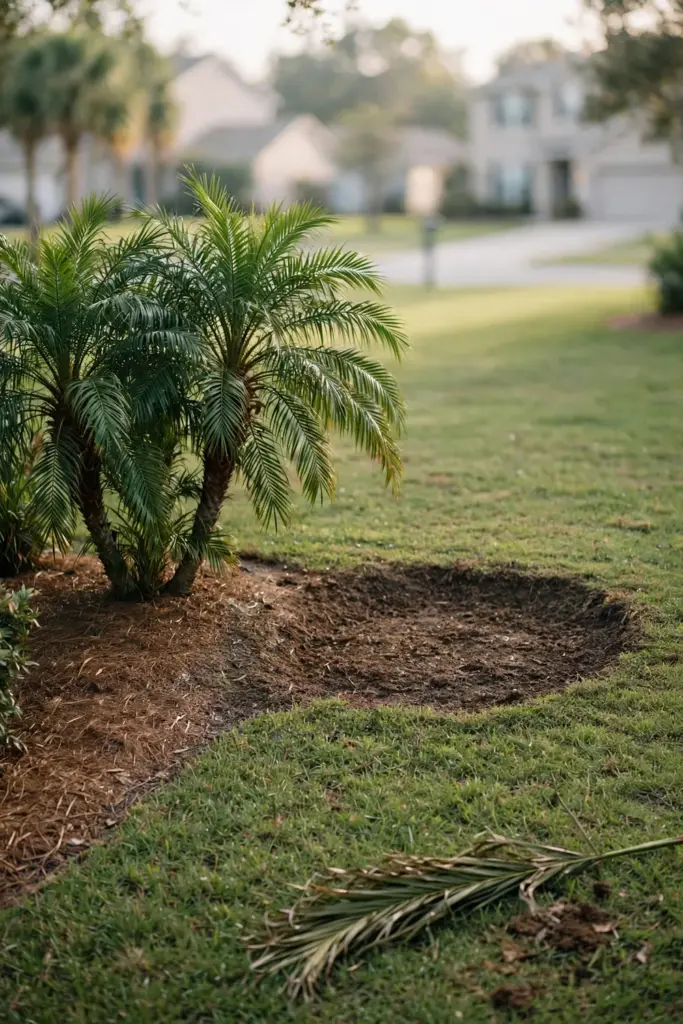
Stop three habits. Do not pay for a cure, do not chip infected wood for mulch, and do not replant a palm in the same spot, since keeping those three lines unbroken holds the disease contained to the palms that already carry it. The Plant Care archive collects the site’s disease coverage, and the palm growing guide covers palms from seed.
Frequently Asked Questions
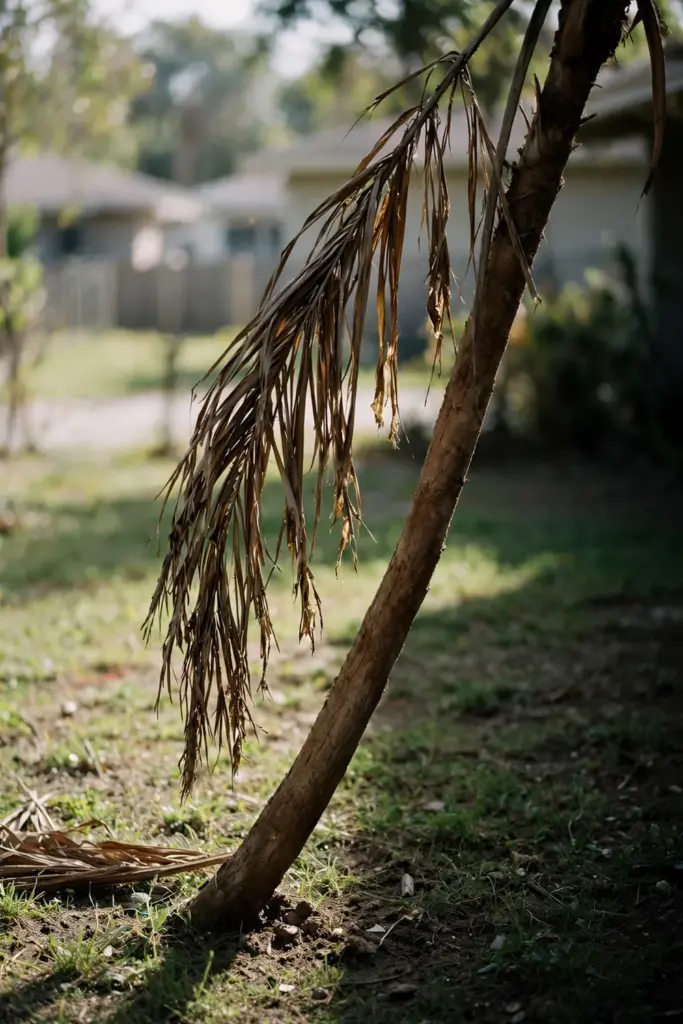
No. There are currently no cultural or chemical controls for preventing the disease or for curing the disease once the palm is infected, per UF/IFAS. No fungicide, drench, trunk injection, or fertilizer cures it. Removing conks reduces spore release but does not cure the palm. The infected palm should be removed as soon as possible after the conks appear, primarily for safety reasons. The cure does not exist, and any product sold as one contradicts UF/IFAS.
Maybe, and the field cannot settle it. Many diseased palms never produce a conk before they die, and wilting and decline alone also match Fusarium wilt and lethal bronzing. A palm with no conk has not been cleared. Monitor it, check the trunk, and use dissection, culture, or the UF DNA test to settle the identification. Do not assume Ganoderma, and do not assume it is safe.
No. Because the fungus survives in the soil, planting another palm back in that same location is not recommended, and replacement palms planted in the same site have become diseased and died. The wait time is disputed: one tree-service source advises at least 1 year, one Extension column advises at least 10 years, and UF/IFAS gives no time. Plant a non-palm species in the spot instead.
No, not as an infection. The fungus attacks palms only, not people or pets. The danger is physical: a palm with a decayed lower trunk is a blow-down hazard that can fall on people, pets, cars, and roofs. The safety risk is why UF/IFAS says to remove the palm as soon as possible after the conks appear. The hazard is the falling palm, not the fungus.
Yes. Spores from one conk travel by wind to nearby palms, so a conk on your palm is a spore source for the whole neighborhood. Notify neighbors when a conk appears, and organize monitoring together. HOA conk patrols turn one yard’s vigilance into a neighborhood’s. The neighborhood that monitors together keeps the spore load down together.
Where to Go From Here
Ganoderma butt rot rewards the palm owner who monitors, removes conks early, removes infected palms promptly, and never pays for a cure. Confirm the ID with the conk. Tell it from Fusarium wilt and lethal bronzing. Do not blame yourself. Remove conks early and safely. Remove the palm, safety first. Dispose of infected material correctly. Do not replant a palm in the same spot. Monitor monthly and make it a neighborhood effort. Do not pay for a cure.
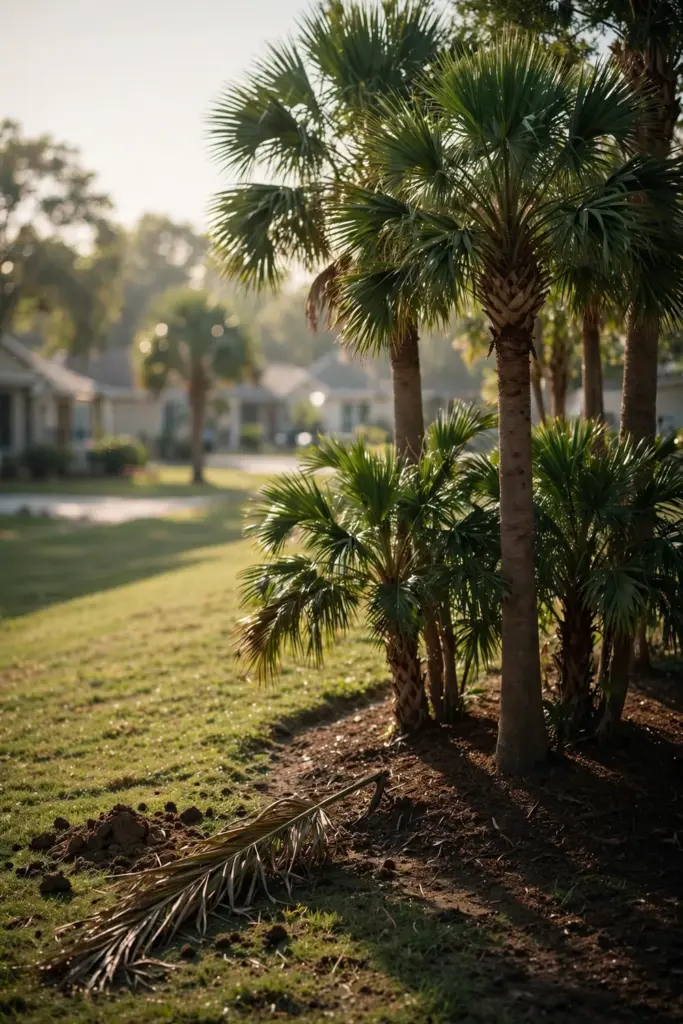
Next season, start watchful. A landscape with monthly base checks, early conk removal, and prompt palm removal will hold Ganoderma to an occasional loss. The UF/IFAS fact sheet on Ganoderma butt rot of palms is a useful companion for the full Extension picture, since it sets the home-garden response here against the university evidence behind it.