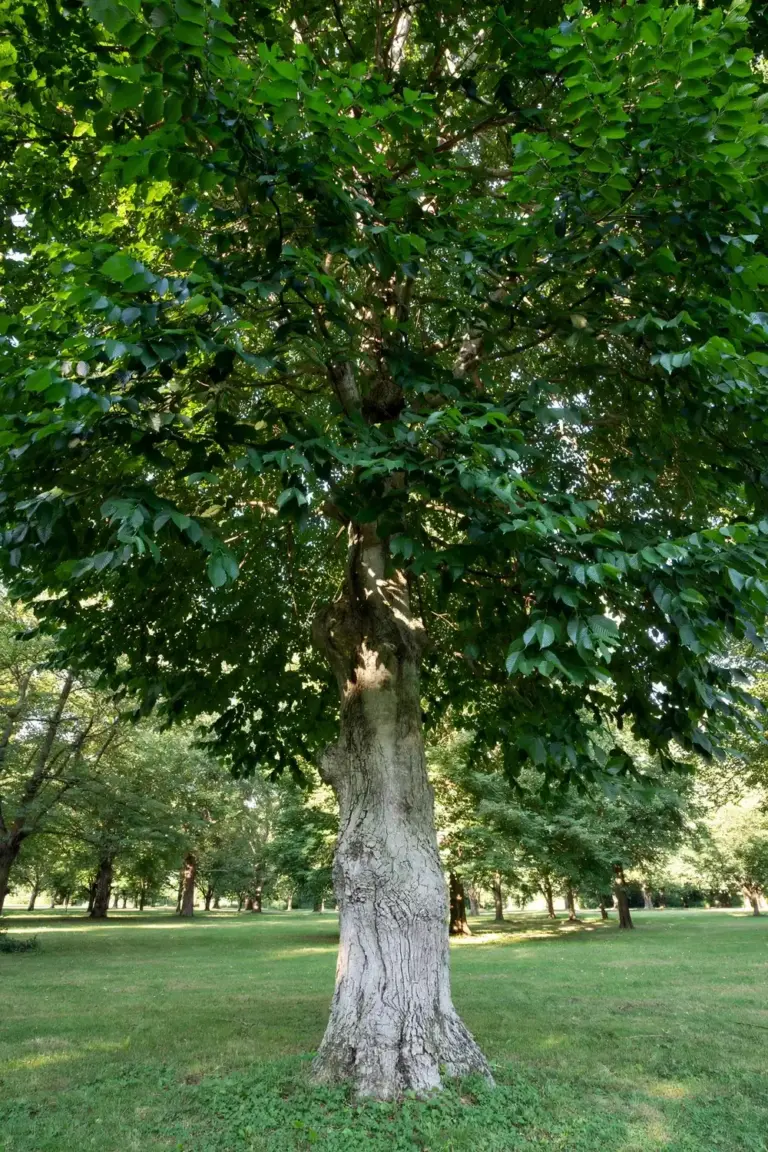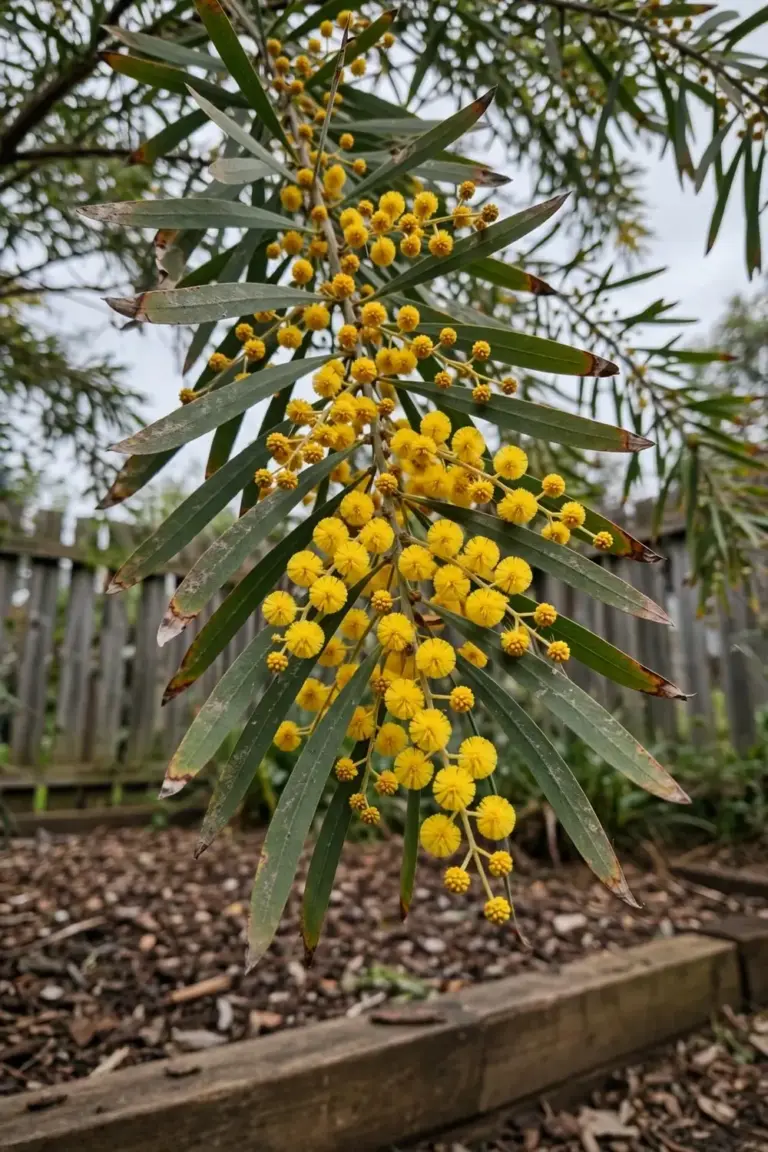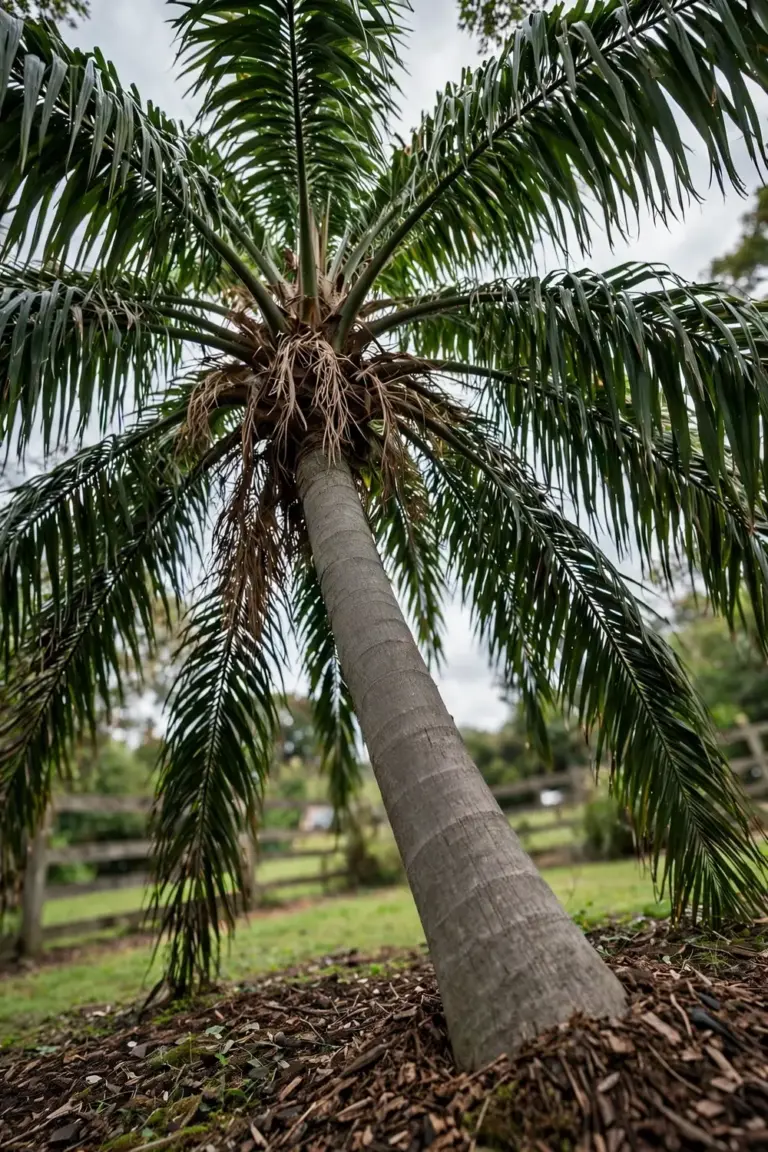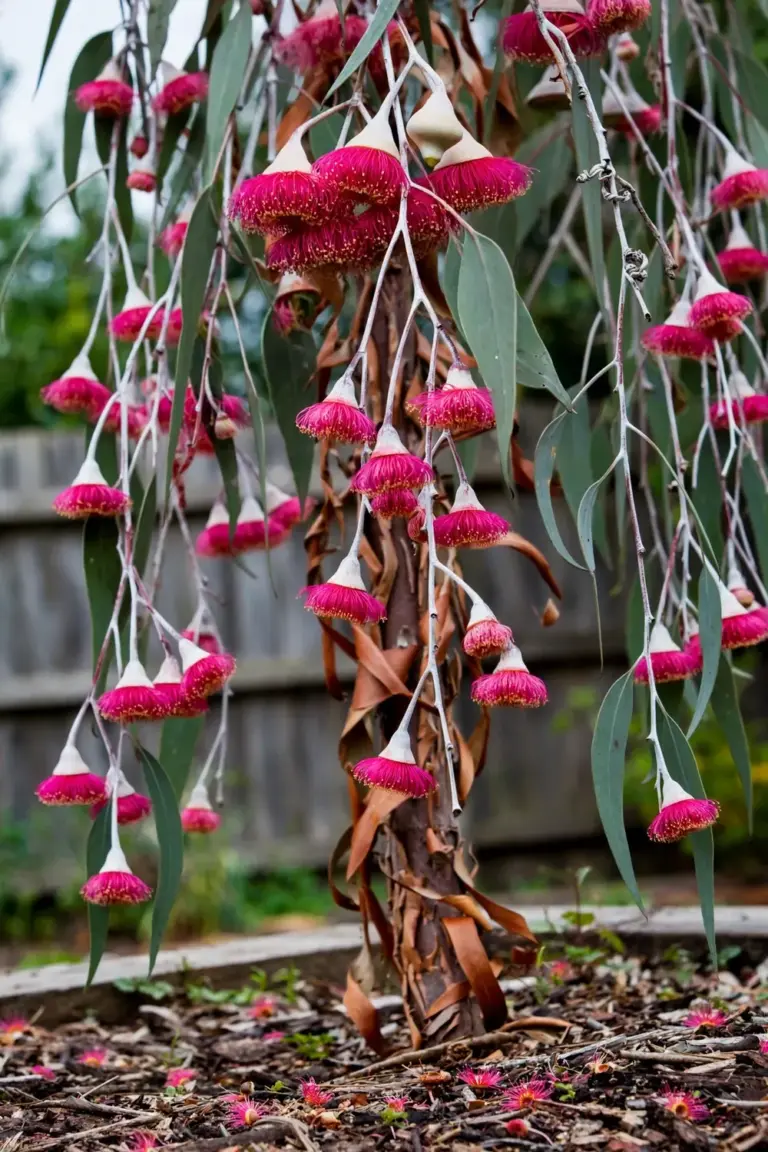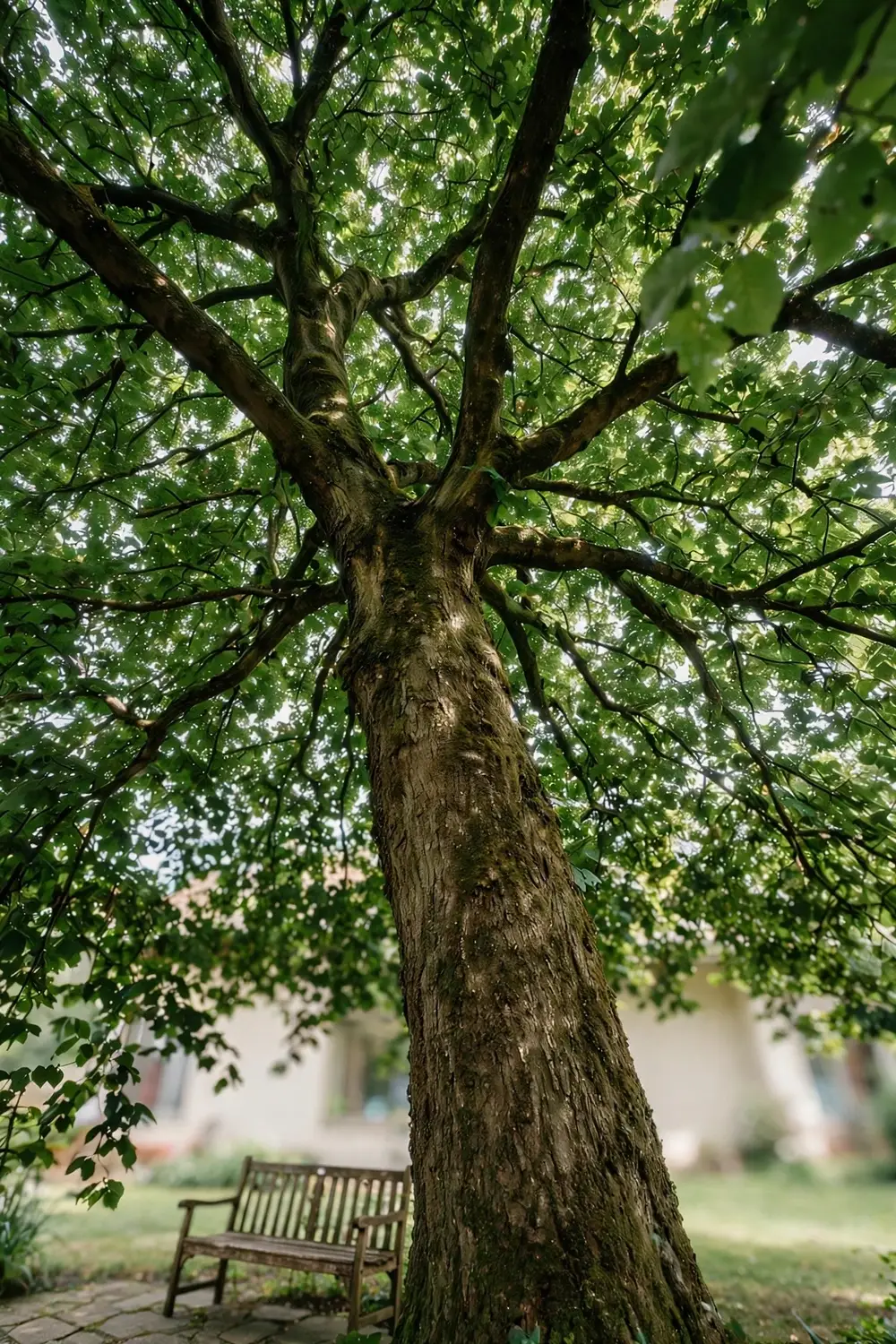

A shade tree is a tree that casts useful shade. The right shade tree is the one that fits your site. Choose it by 6 decisions, in order: the shading job, the site, the species, the size, evergreen or deciduous, and the planting time. Test every candidate against the 1.5 times canopy rule before you buy. This is how to choose shade tree stock that fits your site: work the 6 decisions in order, and the species list picks itself.
The six decisions answer one question: which tree, for which spot, for which job. Start with the job, not the species. A tree chosen for its flowers can shade the wrong place for 30 years. A tree chosen for the shade it casts does the job from its first full canopy. Work the six decisions in order, and the species list at the end picks itself.
1. The 6 Decisions in Order
The six decisions turn a vague wish for shade into a tree that fits. Each decision answers one question. Answer them in order, because each answer narrows the next choice. The table below is the whole method at a glance.
| Decision | Question | Answer |
|---|---|---|
| 1. Shading job | What are you shading, and how much shade does it need? | A house wall, a patio, a lawn, a walkway, or a car space. Each job wants a different canopy. |
| 2. Site | What does the site offer, and what does it forbid? | Soil, space, pipes, paving, wires, and neighbours. The site vetoes more trees than taste does. |
| 3. Species | Which species fits the job, the site, and the climate? | A shortlist by job, matched to coastal, inland, cool, or subtropical conditions. |
| 4. Size | How big will it get, and does the space hold that size? | Read the label for mature height and width. Test the mature canopy against the space. |
| 5. Evergreen or deciduous | Do you want shade all year, or summer shade with winter sun? | Evergreen gives year-round shade. Deciduous gives summer shade and winter sun. |
| 6. Planting time | When do you plant it? | Plant in the season that gives the roots time to establish before summer heat. |
Decision 1 fixes the job, decision 2 checks the site, and decision 3 picks the species. Decision 4 tests the size, decision 5 picks the leaf habit, and decision 6 picks the planting time. Skip a decision and the tree usually fails on the skipped one. The most common skip is decision 4. A buyer reads the pot label, sees a 2 m tree, and plants it 2 m from the house. The label describes the nursery plant. The mature tree is a different size.
Keep the table beside you as you read. Each numbered section below expands one row. The shortlists in decision 3 come after the site and size checks, because a species only earns its place once the site and the space allow it.
2. Decision 1: How Much Shade Do You Need?
How much shade you need depends on what you are shading. A house wall needs shade that lands on the wall in the hot part of the afternoon. A patio needs shade that lands on the chairs. A walkway needs shade that lands on the path. A car space needs shade that lands on the car. A lawn needs light shade that lets grass grow underneath. Each job wants a different canopy shape, a different height, and a different planting distance.
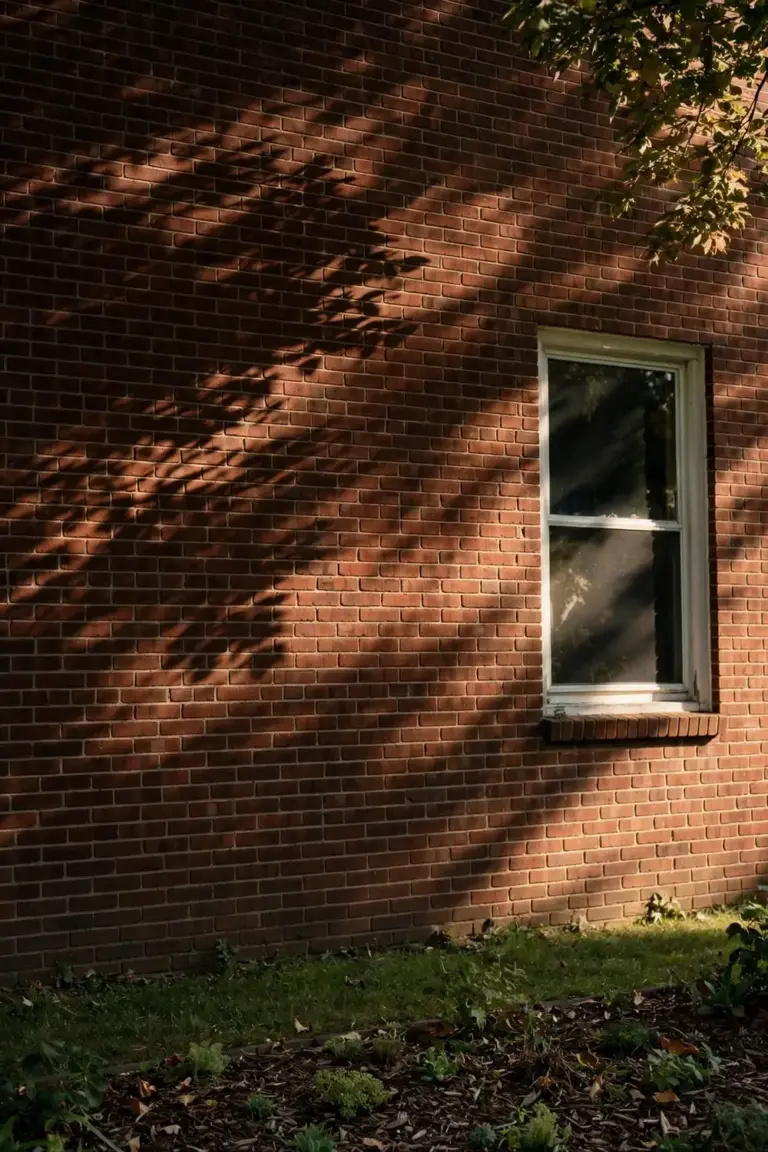
A house wall wants a tall, spreading canopy on the northern or western side of the house. The northern side carries the high summer sun in the southern hemisphere. The western side carries the low afternoon sun. A tree on either side casts its shadow onto the wall when the heat peaks. Seasol states the aspect rule plainly: when planting a shade tree to shade a space or the house, plant it on the northern or western side.
A patio wants a canopy that spreads above head height. The branches should clear the table and the chairs. The shade should fall on the seating at the hour you use it. A low, spreading canopy works when the patio sits close to the trunk. A tall canopy works when the patio sits at the canopy edge. Measure the patio at the hour you sit there. Stand in the spot at 4 pm in summer, because the tree must cast shade onto that spot at that hour.
A walkway wants a canopy that arches over the path. The canopy should clear heads and keep the path usable. A narrow, upright canopy suits a narrow path. A spreading canopy suits a wide path. A walkway tree also needs a clear trunk. Low branches over a path force walkers to duck. Choose a species that lifts its canopy above head height, or plan to lift it with formative pruning in the early years.
A car space wants a canopy that covers the car without dropping heavy litter onto it. Fruit drop stains paint. Heavy seed pods dent panels. A car-space tree should drop leaves only. Check the litter before you plant. A clean-canopy tree over a car space saves more cleaning time than any fast grower saves in shade.
A lawn wants light, filtered shade. Heavy shade kills lawn grass underneath. A lawn tree should carry a high canopy with gaps that let light through. The grass under a lawn tree still needs sun for part of the day. If the canopy closes over the lawn, the lawn thins and weeds move in. A lawn tree is a compromise between shade and grass. Accept the compromise, or move the tree to the lawn edge.
| Job | What the Shade Must Do | Canopy Shape |
|---|---|---|
| House wall | Shade the wall in the hot afternoon | Tall and spreading, on the northern or western side |
| Patio | Shade the chairs at the hour you sit | Spreading above head height, over the seating |
| Walkway | Shade the path and clear heads | Narrow or arched, with a clear trunk |
| Car space | Shade the car without heavy litter | Broad, with leaves only, no fruit or heavy pods |
| Lawn | Shade people and let grass grow | High canopy with gaps that let light through |
Shade also pays. Trees and shrubs that are well selected, well placed, and well planted can reduce the energy required to heat and cool a home by up to 25 percent, save 100 to 250 dollars a year for the average household, and pay for themselves within 8 years, according to University of Missouri Extension figures from the US Department of Energy. The figures describe US homes. Australian homes gain the same mechanism: shade on the hot wall cuts the cooling load.
I have learned that the tree I chose for the shade it casts beats the tree I chose for its flowers.
3. Decision 2: Check the Site: Soil, Space, and Services
The site decides which trees survive. Check the site before you shop. The site check has four parts: soil, space, services, and neighbours. Each part can veto a species. A veto early saves a removal later. Removal costs more than the tree cost. A tree removed at 10 years old costs more than the tree, the planting, and a decade of watering combined.
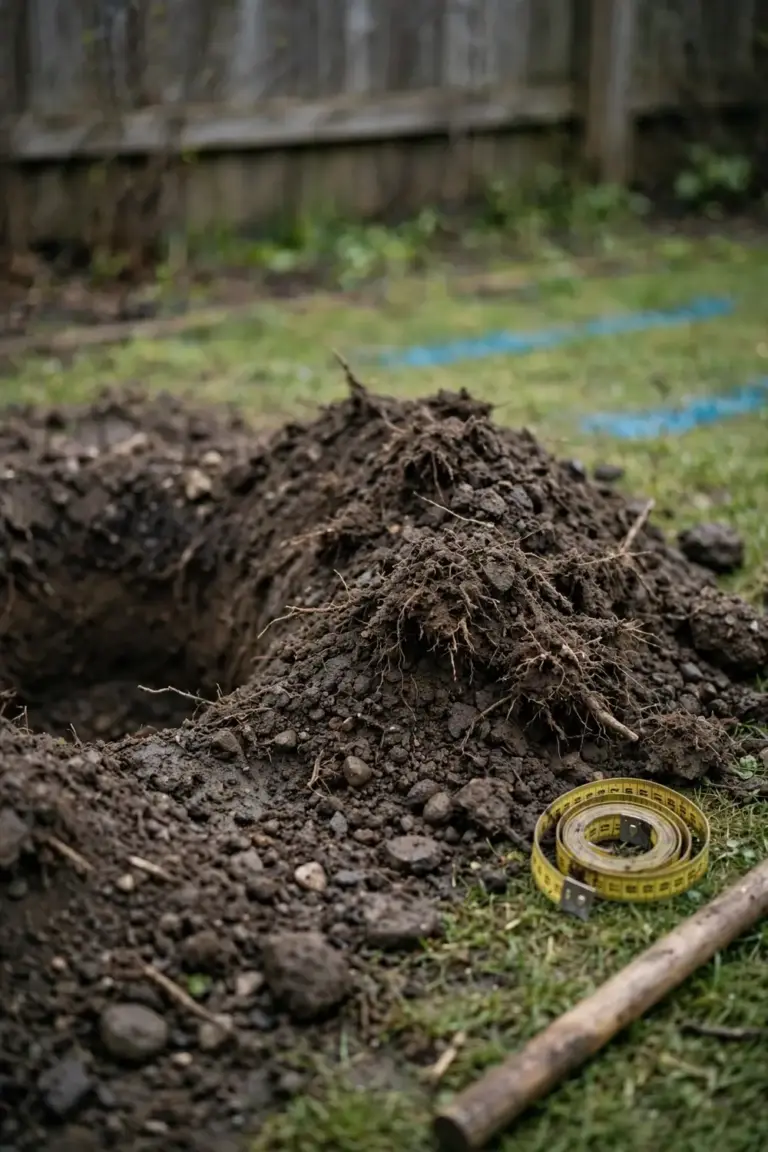
Soil comes first. Dig a hole and look at the soil. Sandy soil drains fast and holds little water. Clay soil drains slowly and holds water. A tree that wants free drainage dies in heavy clay. A tree that wants steady moisture dies in fast-draining sand. Test the drainage with a bucket of water. Pour a bucket into the hole. If the water still sits after an hour, the site drains slowly. If the water vanishes in minutes, the site drains fast. Match the species to the drainage you measured. If you want the full soil picture, building soil health explains the tests and the fixes. For tree-specific soil preparation, how to choose and prepare the best soil for your trees covers the soil side of planting.
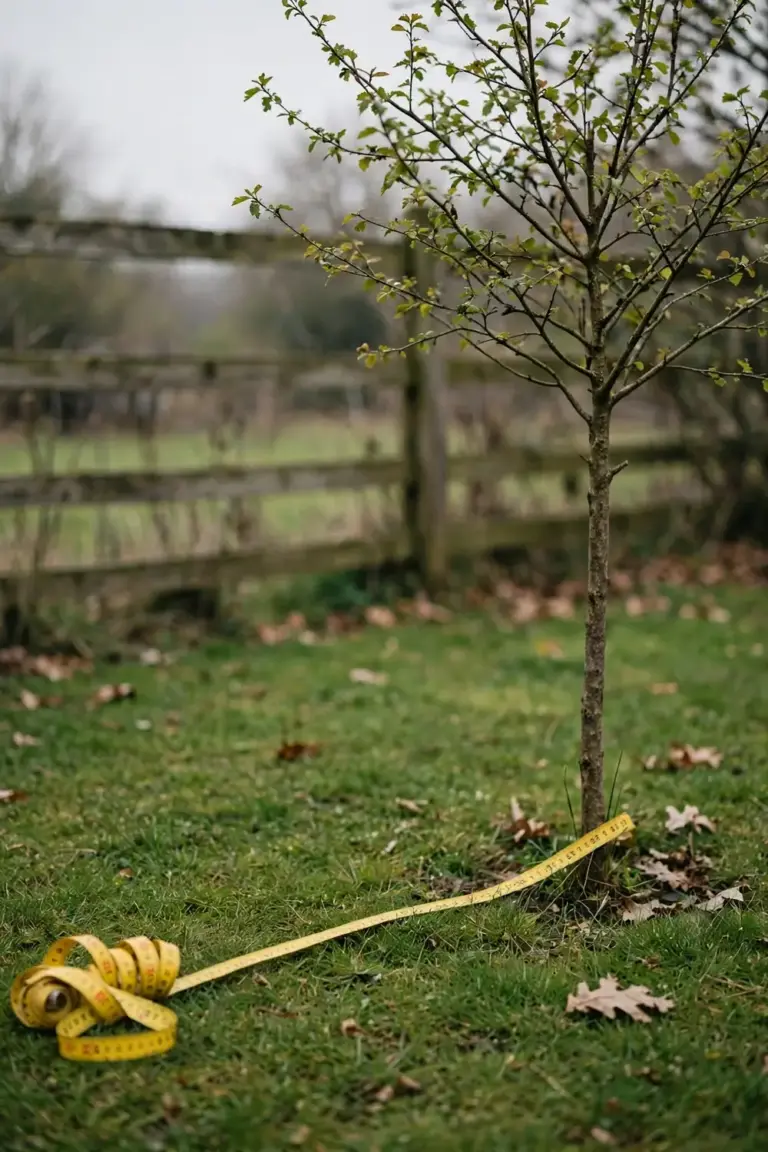
Space comes second. Measure the ceiling. The ceiling is the mature height and width on the label. A tree with a 10 m mature width needs 10 m of clear width. A tree with an 8 m mature height needs 8 m of clear height. Measure the distance to the house, the driveway, the boundary, and the power lines. The mature canopy must clear all of them. The ABC Gardening Australia checklist gives the working rule: plant a tree about 1.5 times the expected width of the mature canopy away from major structures, and call Dial Before You Dig on 1100 toll-free to locate underground pipes before you dig. A tree with a 6 m mature canopy width sits 9 m from a major structure under that rule. That is the conservative rule. Use it when the structure is a house.
Services come third. Find the pipes before you dig, because a tree root follows water: a leaking pipe attracts roots, and a root in a pipe blocks the pipe. The ABC checklist names the step: locate underground pipes before you dig. The call is free. The pipe repair is not. Mark the pipes, then position the tree beyond the suggested minimum distance from any pipe.
Overhead wires come fourth. Look up before you plant. A tree that grows into power lines gets cut back by the network operator. The cut leaves a flat top and a weak tree. A tree that grows under wires needs a mature height below the wire height. Check the wire height with the network operator if you are unsure. The ABC checklist states the check in one line: look overhead to make sure there are no power lines that your tree could grow into.
Neighbours come last. A shade tree shades more than your yard. Its shadow falls on the neighbour’s yard in the afternoon. Its leaves fall on the neighbour’s lawn in autumn. Its roots run under the fence. Talk to the neighbour before you plant. Show them the mature size on the label. Agree on the boundary distance. A tree that the neighbour accepts stays. A tree that the neighbour resents becomes a dispute. Council rules also apply. Some councils protect street trees and regulate pruning. Some councils require approval for trees over a set height. Check the council rules before you buy.
4. Decision 3: Pick the Species for the Job
Species choice is a matching exercise. Match the species to the job, the site, and the climate. The shortlists below come from Australian nursery and gardening sources. Each shortlist names species that suit one job. The shortlists are starting points, not orders. Check each species against your site before you buy. A species that suits a coastal job fails in a frost pocket. A species that suits a small garden fails in a narrow courtyard with heavy clay.
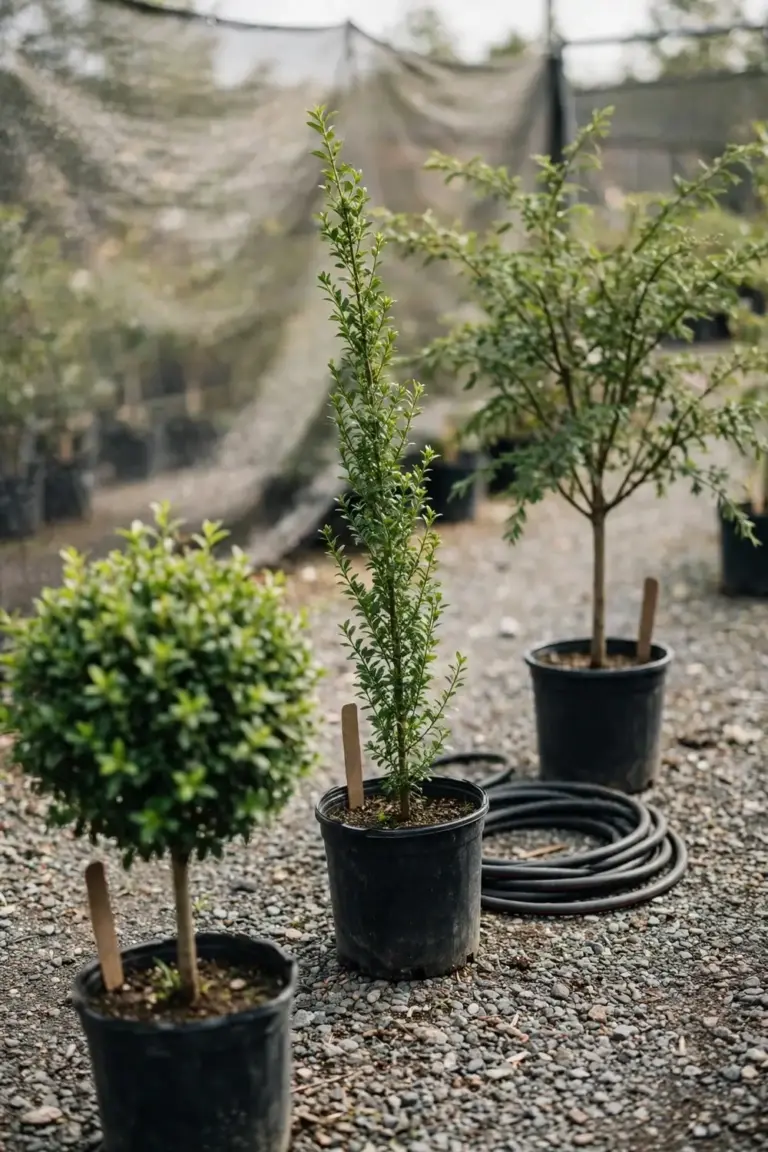
Small gardens want compact trees with a canopy that fits the space. The small-garden shortlist is Mop Top Robinia, crepe myrtle, evergreen ash, tuckeroo, and lemon-scented tea tree. Mop Top Robinia carries a grafted ball canopy on a clear trunk. Crepe myrtle carries summer flowers and a small frame. Evergreen ash carries year-round shade in a modest size. Tuckeroo carries dense evergreen foliage and a tidy shape. Lemon-scented tea tree carries fragrant foliage and a small canopy. Each of these fits a small garden when the site allows it. None of them fits a narrow courtyard with a 2 m width. The width still governs.
Coastal gardens want trees that handle salt and wind. The coastal shortlist is tuckeroo and water gum. Tuckeroo grows on coastal dunes in nature. It handles salt spray and wind. Water gum handles coastal conditions and carries dense foliage. Both want free-draining soil. Both fail in waterlogged soil. A coastal site with a high water table needs a different pick. Check the drainage before you commit.
Inland heat wants trees that handle hot, dry summers. The inland shortlist is kurrajong and Chinese elm. Kurrajong is a native tree of inland Australia. It handles heat and drought once established. Its evergreen foliage gives year-round shade. Chinese elm is an exotic tree with a vase shape and a broad canopy. It handles heat and poor soil. It drops its leaves in winter, which suits an inland house that wants winter sun.
Cool climates want trees that handle frost and cold autumn nights. The cool-climate shortlist is October Glory maple, pin oak, and Pacific Sunset maple. Maples need cold autumn nights for color. Seasol states the condition plainly: many deciduous trees, such as maples, will not put on a beautiful autumn foliage display unless they receive cold nights in autumn. A maple in a warm coastal garden gives shade but no autumn show. Plant it for the shade, and accept the missing color. Pin oak handles cold and carries a pyramidal shape. Pacific Sunset maple handles cold and carries strong autumn color.
Walkways want trees with a clear trunk and a canopy that arches over the path. The walkway shortlist is crepe myrtle, ornamental pear, and blueberry ash. Crepe myrtle lifts its canopy above head height on a small frame. Ornamental pear carries a narrow, upright shape that suits a straight path. Blueberry ash carries a small canopy and blue fruit. Blueberry ash drops fruit onto the path. Sweep the path in fruit season, or pick a different walkway tree.
Lawns want trees with a high canopy and filtered light. The lawn shortlist is Chinese elm, and Sydney red gum where space allows. Chinese elm lifts its canopy and lets light through. Sydney red gum needs space. It grows large. It suits a big lawn, not a small one. A Sydney red gum on a small lawn shades the whole lawn and kills the grass. The size rule in the next section decides whether it fits.
The Australian native set for shade includes tuckeroo, kurrajong, Australian teak, water gum, lemon-scented tea tree, Sydney red gum, blueberry ash, and golden penda. The exotic set includes Chinese elm, crepe myrtle, Mop Top Robinia, evergreen ash, ornamental pear, October Glory maple, pin oak, and Pacific Sunset maple. Native and exotic both earn their place. The job and the site decide. A native tree that wants coastal sand fails inland. An exotic tree that wants cold nights fails in the subtropics. The label and the local nursery settle the match.
5. Decision 4: Size It for the Space
Size is the decision most buyers skip. The pot lies. A 2 m tree in a pot is a young tree. The mature tree is the size on the label. Read the label for mature height and mature width. Those two numbers decide whether the tree fits. A tree that outgrows its space gets pruned hard, removed, or left to damage paving. None of those endings is a good outcome.
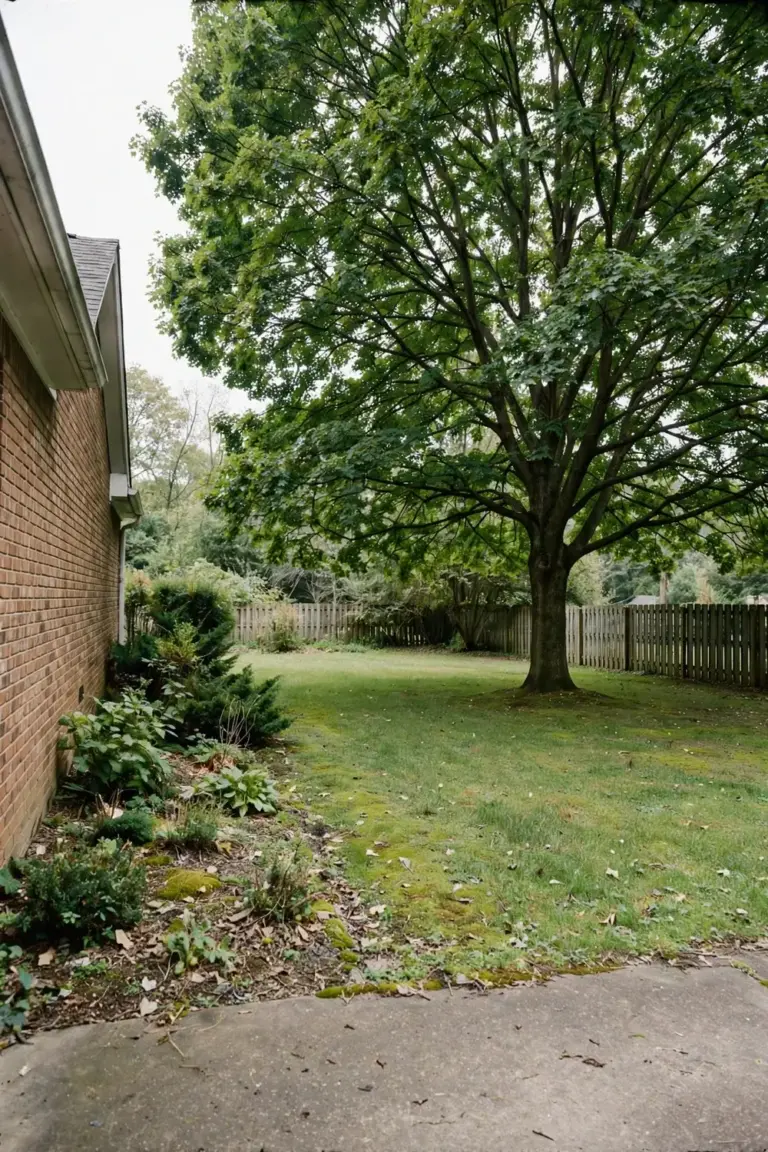
The ABC rule gives the distance from major structures. Plant a tree about 1.5 times the expected width of the mature canopy away from major structures. A tree with a 6 m mature canopy width sits 9 m from a major structure. A tree with an 8 m mature canopy width sits 12 m from a major structure. That rule is conservative. It keeps roots and canopy clear of the house. Use it for houses, sheds, and retaining walls.
Seasol gives a second rule for buildings. Plant trees so their mature width is at least 3 m from a building. Seasol states that rule in its shade-tree guide. The two rules agree in spirit. The ABC rule scales with canopy width. The Seasol rule sets a floor. A small tree with a 3 m canopy width sits at least 3 m from a building under Seasol, and 4.5 m under ABC. Use the larger distance when the two rules disagree. The larger distance is the safer one.
Roots decide the distance from pipes and paving. Some species carry aggressive roots. The ABC Gardening Australia checklist names the worst offenders: avoid placing trees with invasive root systems, such as evergreen fig, poplar, and liquidambar, near buildings and pipes. Poplar roots run far and suck water. Liquidambar roots lift driveways. None of these belongs near a house, a pipe, or a path.
Species with non-invasive roots suit tight spots. Tuckeroo, evergreen ash, water gum, and crepe myrtle carry roots that suit paving and pipes better than the aggressive set. Non-invasive does not mean no roots. Every tree grows roots. Non-invasive means the roots are less likely to lift paving or enter pipes. Keep the distance rules even for non-invasive species. A non-invasive root still follows a leaking pipe.
Height decides the distance from wires. A tree that grows taller than the wires gets cut. A tree that stays below the wires stays whole. Read the mature height on the label. Compare it with the wire height. If the mature height exceeds the wire height, pick a smaller species or a different spot. A tree pruned to clear wires loses its shape. A tree that keeps its shape never needed the cut.
Speed and longevity trade against each other. Fast growers shade sooner. Slow growers last longer. A fast grower can shade a patio in a few years. A slow grower can take a decade to reach the same canopy. A fast grower often carries weaker wood and a shorter life. A slow grower often carries denser wood and a longer life. Choose speed when the shade is urgent. Choose longevity when the tree is a permanent part of the garden. No published figure sets the exact shade timeline for a given species in Australian conditions. Data not available for a species-by-species shade timeline. Use the nursery growth-rate description as the guide, and treat it as a range, not a promise.
6. Decision 5: Evergreen or Deciduous?
Evergreen or deciduous is the leaf-habit decision. It decides whether the shade stays in winter. An evergreen tree keeps its leaves all year. A deciduous tree drops its leaves in autumn and winter. The choice shapes the house, the garden, and the lawn under the tree. Make it deliberately, not by accident.
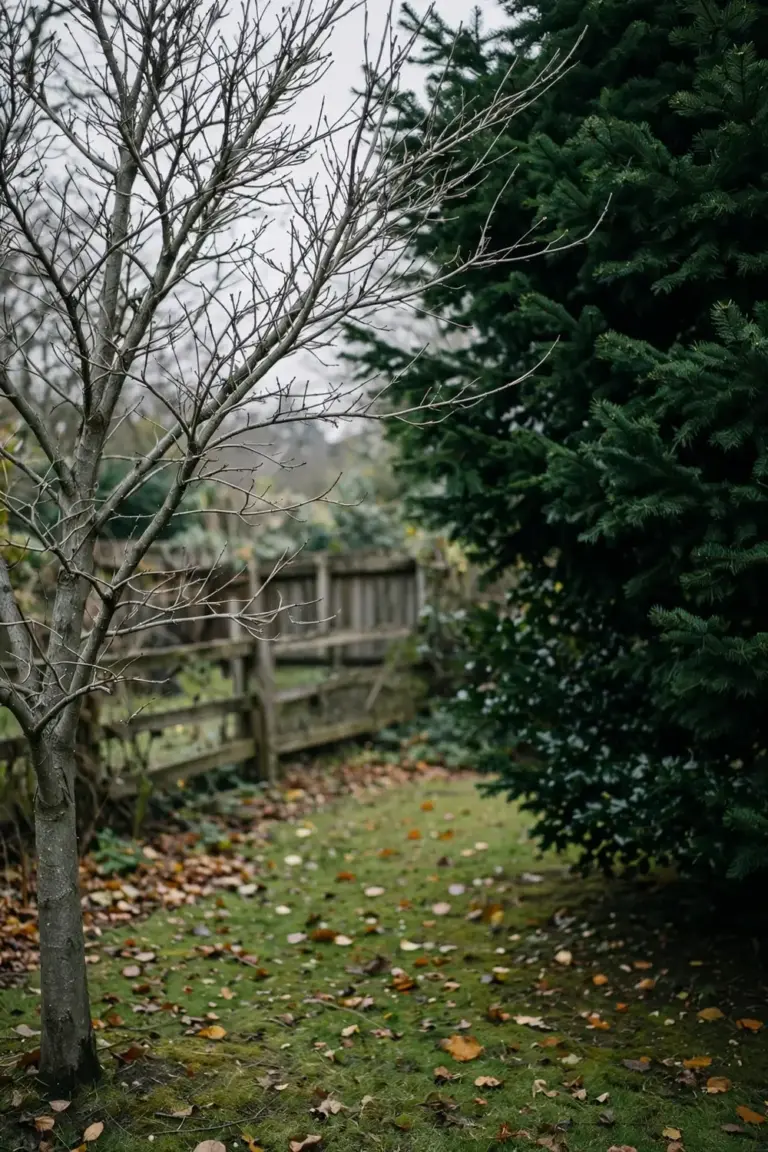
An evergreen tree gives shade all year. That suits a patio used in winter. It suits a car space that needs shade in every season. It suits a north-facing window that overheats in winter in the subtropics. It suits a boundary that needs cover all year. The cost is winter shade where you do not want it. An evergreen tree on the northern side of a house blocks winter sun. The house stays cooler in winter. The lawn under an evergreen tree stays shaded in winter. The garden bed under an evergreen tree gets less winter light.
A deciduous tree gives summer shade and winter sun. That suits a house that wants passive winter heating. It suits a lawn that needs winter light. It suits a garden bed that grows winter vegetables. The bare branches let winter sun through. The canopy returns in spring and shades the house through summer. Seasol states the trade plainly: if you want shade all year round, choose an evergreen tree; for summer shade but winter sun, grow a deciduous tree.
The southern hemisphere flips the northern-hemisphere advice. Northern-hemisphere guides say to plant deciduous trees on the southern side. Australian guides say to plant them on the northern side. The sun sits in the north in the Australian winter and summer. A deciduous tree on the northern side shades the house in summer and lets winter sun through. A deciduous tree on the southern side shades nothing useful. The aspect rule matters more than the species. A deciduous tree on the wrong side gives shade in the wrong season.
Climate sets the deciduous shortlist. Maples need cold autumn nights for color. Poinciana is frost-sensitive. Seasol states both facts: maples will not put on a beautiful autumn foliage display unless they receive cold nights in autumn, and poinciana will not bloom and can be damaged by frost if grown in cool climates. A maple in a warm coastal garden gives shade without the autumn show. A poinciana in a frost pocket gives dead branches in winter. Match the leaf habit to the climate band. Coastal salt and wind suit evergreen tuckeroo and water gum. Inland heat and drought suit evergreen kurrajong. Cool climates suit deciduous maples and oaks. Subtropical gardens suit evergreen natives and frost-tender exotics.
Litter differs by leaf habit. A deciduous tree drops its leaves in one autumn fall. The fall is heavy and short. A rake clears it in a weekend. An evergreen tree drops leaves through the year. The drop is light and constant. A rake clears it every few weeks. Both habits drop leaves. The question is whether you want one big clean-up or many small ones. Fruit and seed litter matters more than leaf litter. A deciduous tree with heavy fruit drops fruit onto paths and cars. An evergreen tree with heavy fruit does the same. Check the fruit before you plant. Leaf habit never excuses fruit litter.
7. Decision 6: Pick the Planting Time
Planting time is the last decision. It is also the smallest. The right tree planted in the wrong season still struggles. The right tree planted in the right season establishes faster. The rule is simple: plant when the roots have time to grow before summer heat. In most of Australia, that means autumn or early spring. Autumn planting gives the roots a cool, moist season to establish. Spring planting gives the roots a growing season before summer. Both beat midsummer planting.
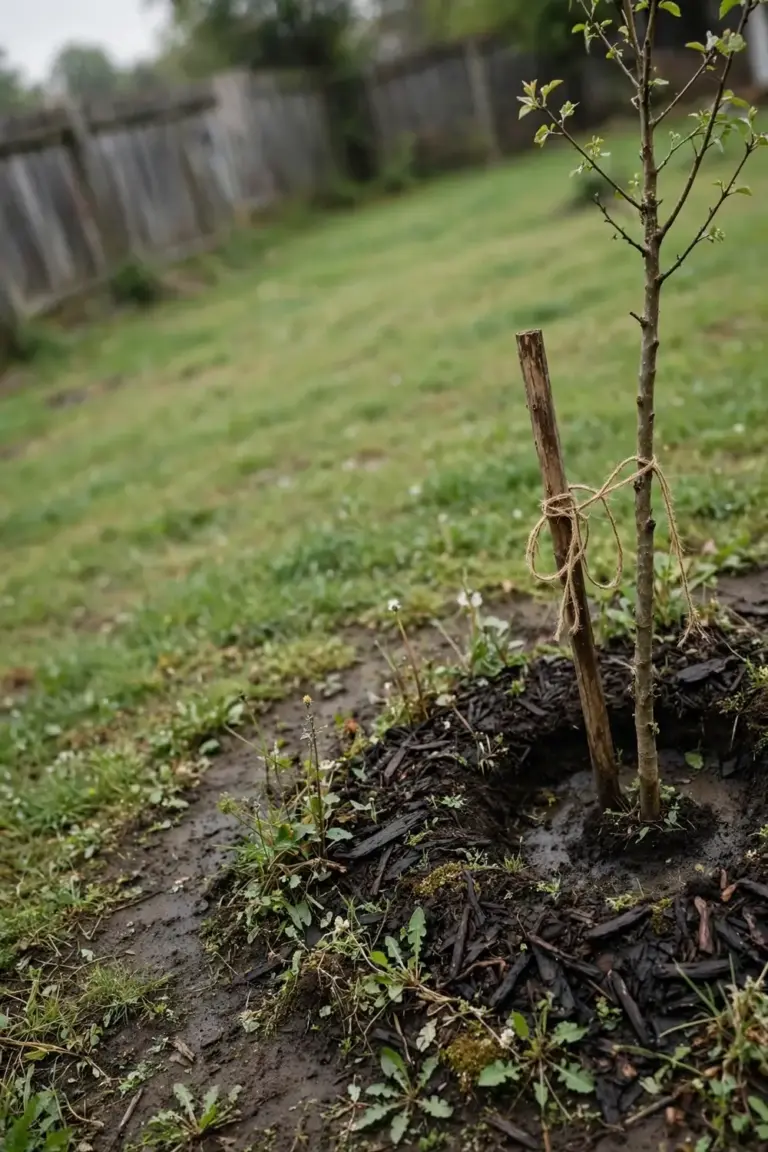
Autumn suits most Australian planting. The soil still holds summer warmth. The air cools. Rain returns. Roots grow in warm soil while the top growth slows. The tree enters winter with roots in place. Spring suits sites with cold winters. A frost-tender tree planted in autumn faces its first winter with fresh roots. A frost-tender tree planted in spring faces winter with a season of growth behind it. Match the planting time to the frost risk.
Planting depth matters more than planting month. Clemson Extension states the rule: locate the root flare, and keep the root flare at ground level and no deeper. Clemson Extension gives that rule in its tree-planting guide. The root flare is where the first main root attaches to the trunk. A buried flare rots. A flare above the soil dries. The flare sits at the soil surface. Dig the hole exactly the same depth as the root ball and 2 to 3 times wider. Backfill with native soil. Apply a 2 to 3 inch layer of organic mulch. Water slowly. Those three figures come from the same Clemson guide.
Watering after planting decides establishment. A new tree needs steady water through its first summer. The watering schedule depends on the soil, the species, and the weather. How much to water a new tree covers the watering side in detail. The short version: water deeply, water less often, and check the soil before you water again. A tree watered deeply grows deep roots. A tree watered shallowly grows shallow roots. Shallow roots dry out in the first heatwave.
Staking is a short-term job. Stake a new tree when wind moves it, and remove the stake when the tree stands on its own. A stake left for years girdles the trunk. A tree staked forever never builds a strong trunk. Check the tie every month. Loosen it when it tightens. Remove the stake within the first year in most cases. A tree that still leans after a year needs a root check, not a tighter tie.
Frequently Asked Questions
Choose a small-canopy species and test the mature size against the space. Mop Top Robinia, crepe myrtle, evergreen ash, tuckeroo, and lemon-scented tea tree suit small gardens. Read the label for mature height and width. Apply the 1.5 times canopy rule to the nearest structure. A small garden with a 4 m width cannot hold a tree with a 6 m canopy. Pick the tree that fits the width you have.
Plant about 1.5 times the expected width of the mature canopy away from major structures. That is the ABC Gardening Australia rule. Seasol adds a floor: keep the mature width at least 3 m from a building. Use the larger distance when the two rules disagree. Measure from the trunk to the structure. The canopy grows outward from the trunk, so the trunk distance must cover the full canopy radius.
Choose evergreen for shade all year. Choose deciduous for summer shade with winter sun. A deciduous tree on the northern or western side shades the house in summer and lets winter sun through. An evergreen tree on the northern side blocks winter sun. The aspect matters more than the species. A deciduous tree on the southern side shades nothing useful in the southern hemisphere.
Tuckeroo and water gum suit coastal gardens. Both handle salt spray and wind. Both want free-draining soil. Both fail in waterlogged soil. Check the drainage with a bucket test before you buy. A coastal site with a high water table needs a species that tolerates wet feet. Tuckeroo grows on coastal dunes in nature, which is why it handles salt and wind better than most garden trees.
Plant in autumn or early spring in most of Australia. Autumn planting gives roots a cool, moist season to establish before summer heat. Spring planting suits frost-tender trees and cold-winter sites. Avoid midsummer planting. A tree planted in midsummer faces its first heatwave with fresh roots. Water deeply through the first summer, and check the soil before each watering.
8. Start With the Shading Job, Not the Species
The six decisions run in order: shading job, site, species, size, evergreen or deciduous, planting time. Write the job first. Measure the site second. Pick the species third. Test the size fourth. Pick the leaf habit fifth. Pick the planting time last. A tree chosen this way fits the site, shades the job, and lives. A tree chosen for its flowers or its pot size fails on the decision that was skipped.
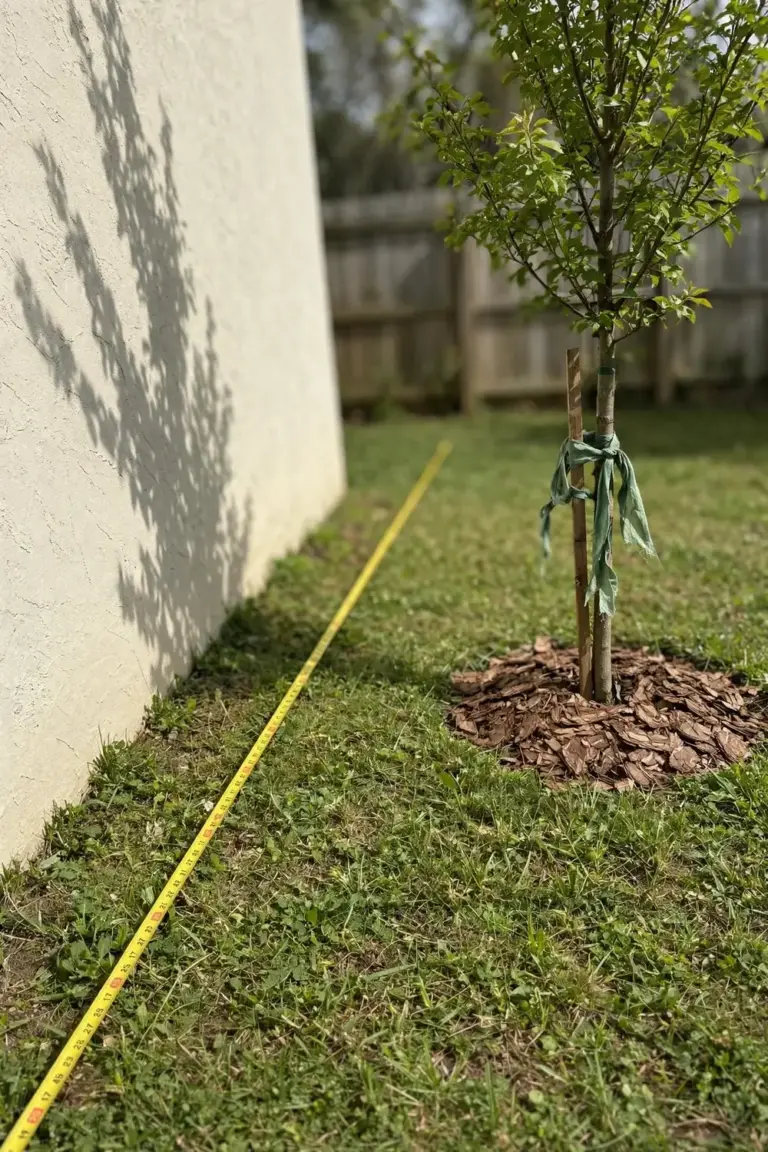
The most common failure is a tree planted too close to the house. The buyer liked the tree. The buyer ignored the mature width. The tree now lifts the driveway and shades the wrong rooms. The fix is removal. The removal costs more than the tree. The 1.5 times canopy rule prevents that failure. The 3 m floor prevents it for small trees. Use both rules. Measure twice, buy once.
Start this weekend with one measurement. Stand in the spot you want shaded at 4 pm. Mark the shadow you want. Measure the distance from the planting spot to the house, the pipes, and the wires. Call Dial Before You Dig on 1100 before you dig. Then pick the species from the shortlist that fits the job, the site, and the climate. The shade follows the decision, not the other way around.