
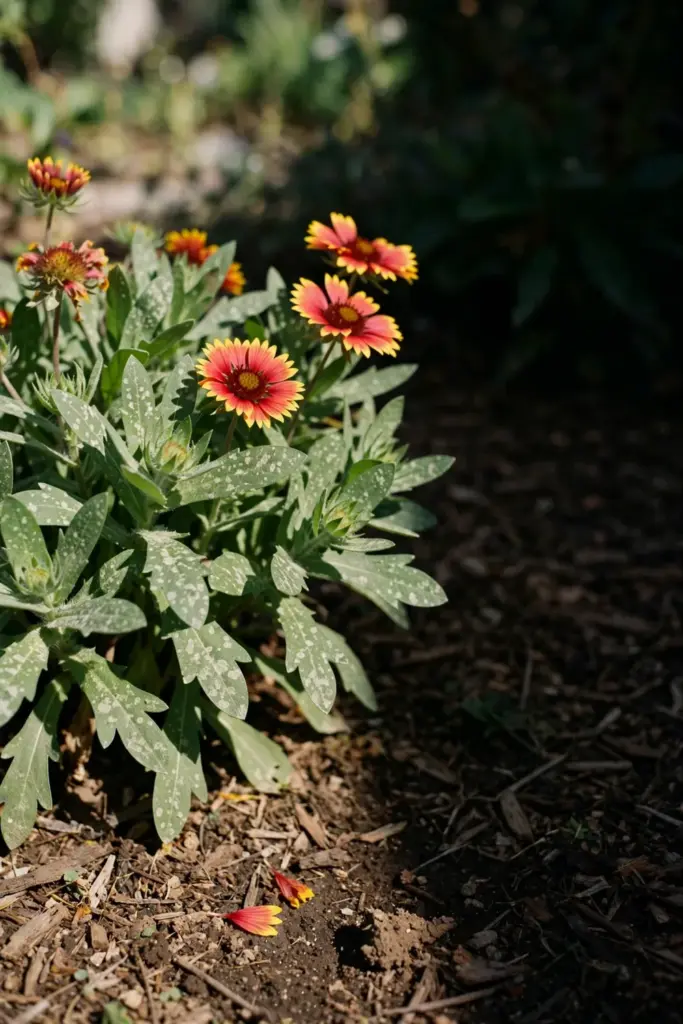
White spots on blanket flower leaves are usually powdery mildew, and that is exactly why white smut gets misdiagnosed. Home content overwhelmingly answers “white spots on Gaillardia” with mildew, and a gardener who sprays for mildew while the real problem is smut wastes the spray and loses the leaves. The 5 strategies below tell you how to spot white smut, separate it from powdery mildew with one rub test, and stop it spreading with sanitation alone, because at home there is no spray for this disease.
The disease is a disease-watch problem, not a plant-killer. White smut browns leaves and can defoliate severely infested plantings, but it does not kill the plant as the norm. A gardener who removes symptomatic foliage promptly, spaces for airflow, waters at the base, and clears all foliage at season’s end will hold white smut to a trace.
The rest of this page walks what white smut is, how to spot it, the compiled mildew differential, and the 5 strategies. The disease name leads. The pathogen, Entyloma, stays in the background after this introduction.
What White Smut on Gaillardia Actually Is
White smut on Gaillardia is a fungal leaf-spot disease of blanket flower. The disease is caused by fungi in the genus Entyloma, and the species attribution varies by source and region. Clemson and Michigan State name Entyloma polysporum. A UConn scouting sheet attributes Gaillardia white smut to Entyloma calendulae. A 2019 first report names Entyloma gaillardianum on Gaillardia × grandiflora in Italy. Michigan State Extension states the disease is caused by several related fungal pathogens in the genus Entyloma. This article does not present a single species as the settled cause. The disease identity is resolved. The species attribution is not.
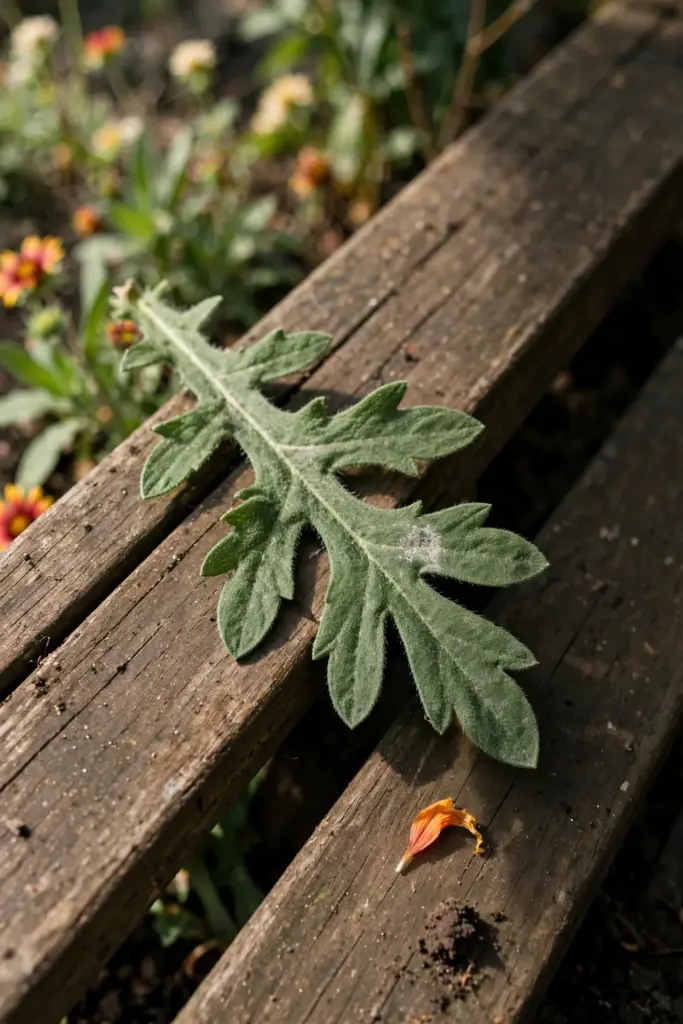
The spores form inside the leaf tissue. The leaf surface ruptures at maturity, releasing wind-dispersed spores. Microscopy is needed to see the internal spores, and no fruiting bodies show on the leaf surface. A white powdery material may be visible on the leaf surface late in the disease. The internal spores are why the field identification is presumptive and microscopy confirms.
The disease favors cool, humid conditions. Nursery plants with close spacing and overhead irrigation are more severely diseased, but landscape beds without overhead irrigation can also be heavily affected. Slow under warm, dry conditions, the disease waits for cool humidity. The weather window explains why the disease appears in late spring and early summer.
How to Spot White Smut on Your Gaillardia
Start with the faint spots. Young lesions are faint whitish spots, very easily overlooked. The faint stage is the stage to catch, because a faint spot is a spot that has not yet released its spores. A gardener who checks the leaves weekly in late spring catches the disease at its cheapest stage.
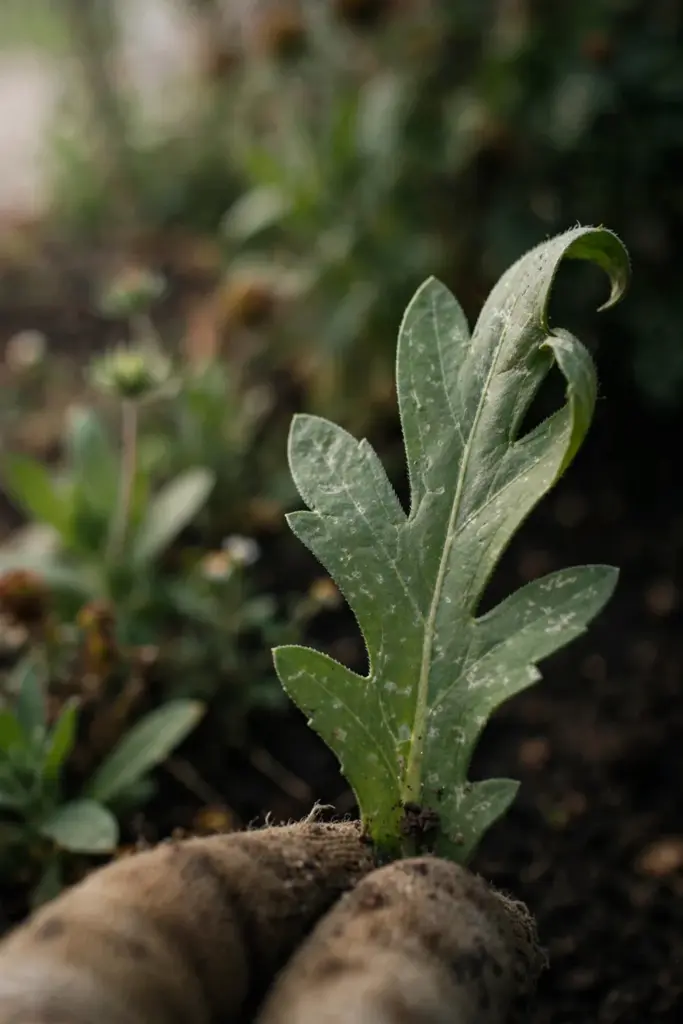
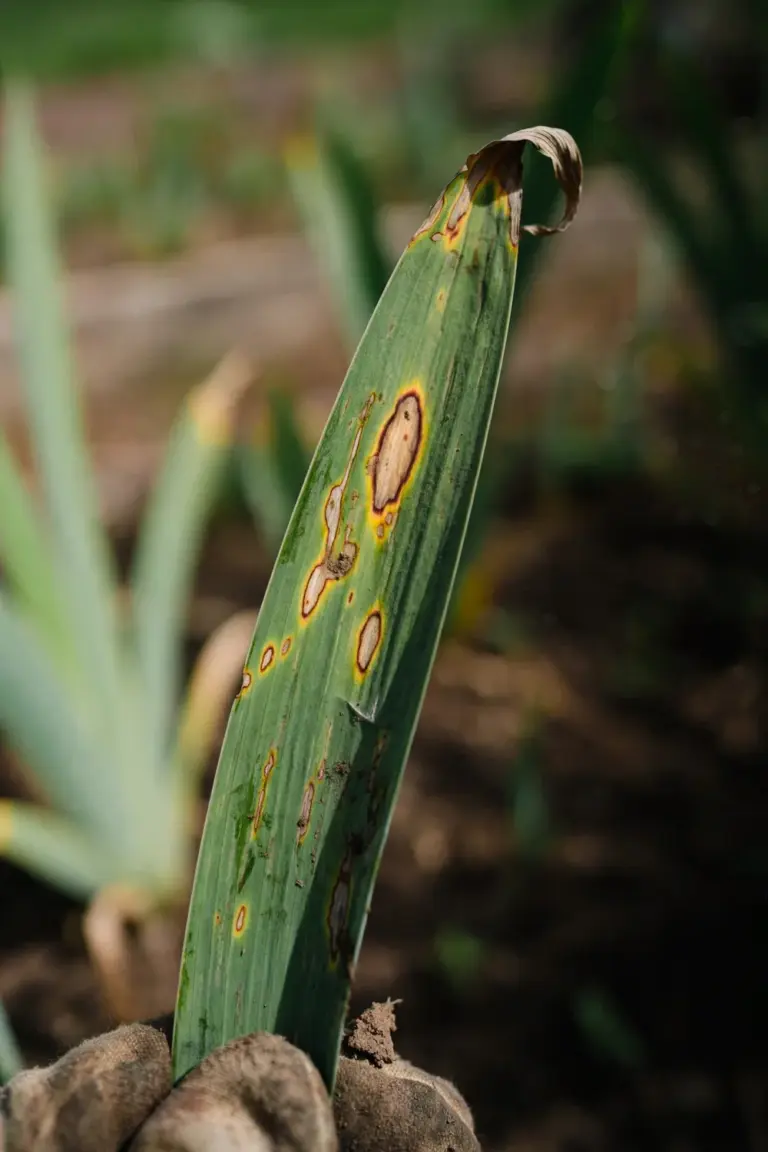
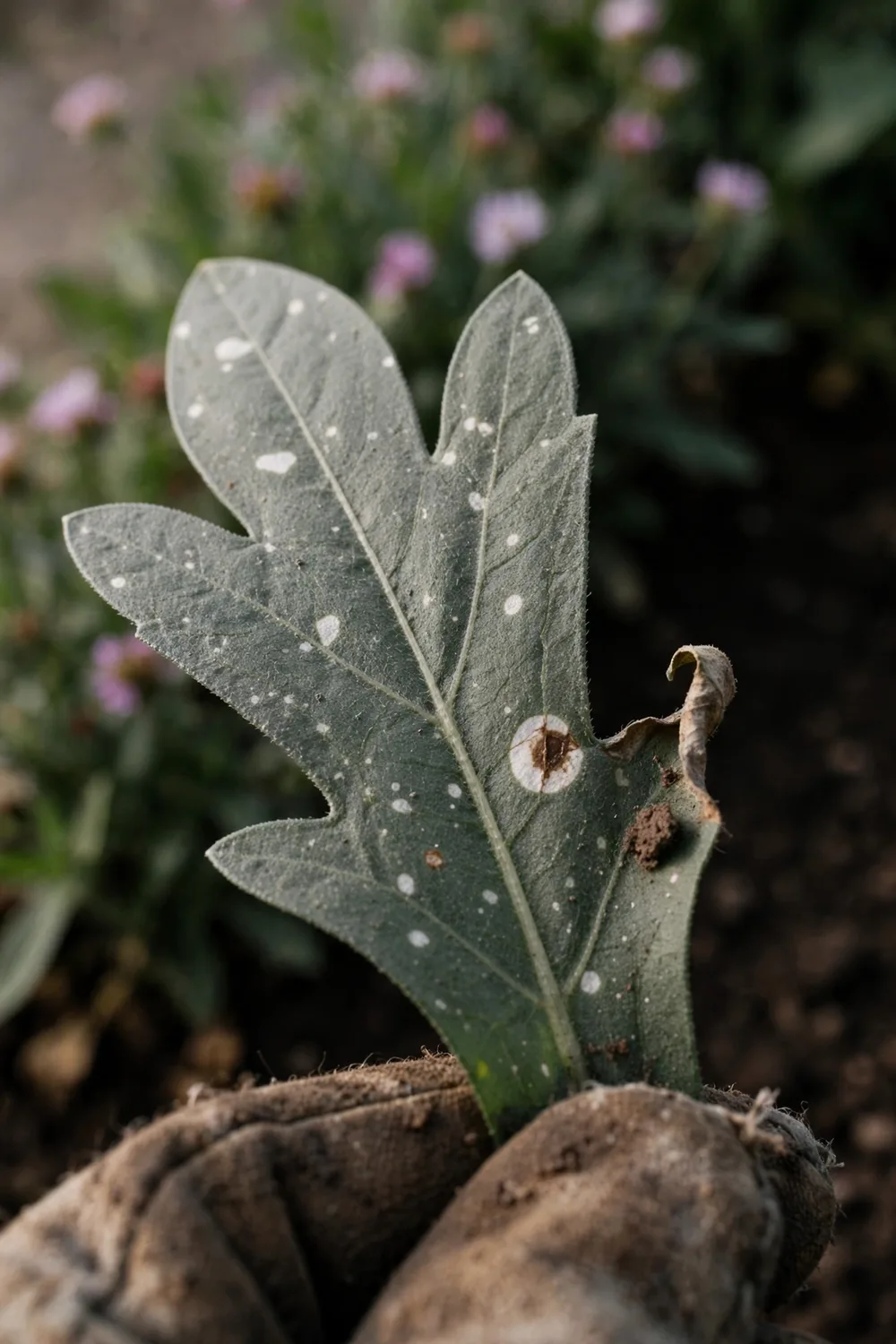
Watch the spots darken. Spots become slightly larger and more obvious over time. Eventually the spots turn brown in the center and may be bordered by whitish-colored halos. The brown center with the whitish halo is the mature form. A leaf with brown-centered spots ringed with white is a leaf with white smut.
Measure the spots. The spots are round and flat, white to tan, up to 1 cm across. A spot larger than 1 cm, raised, or sooty is not this disease. The flat round spot under 1 cm is the shape to learn.
Follow the coalescing. Spots may coalesce, and the entire leaf may die. A leaf with merging spots that browns and dies is a leaf to remove at once. The coalescing leaf is the spore source for the next leaf.
White Smut vs Powdery Mildew
The rub test settles it. If the white material rubs off as surface powder, it is mildew, not smut. If the spot is flat, inside the leaf tissue, and does not rub off, it is smut. The rub test is the field check, and it works in seconds.
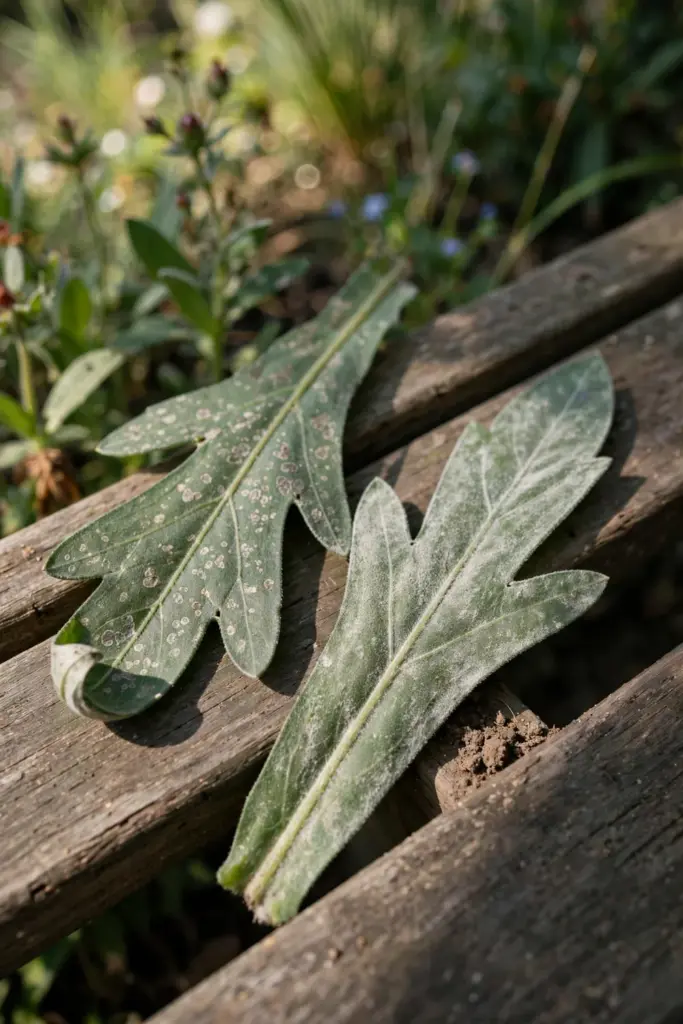
| Clue | White Smut (Entyloma spp.) | Powdery Mildew (Golovinomyces / Erysiphe spp.) |
|---|---|---|
| Where the white sits | Inside the leaf tissue; surface ruptures at maturity | On the leaf surface as a coating |
| Rub test | Flat spot does not rub off | Powdery coating rubs off as surface powder |
| Spot shape | Round, flat, white to tan spots up to 1 cm | Patches of white powdery growth, no flat spot |
| Centers | Turn brown with whitish halos | Stay powdery white, leaves yellow and may drop |
| Spore sign | Internal spores; no surface fruiting bodies | Abundant surface spores, powdery to the touch |
| Conditions | Cool, humid; slow under warm, dry | Humid but dry; severe when humid without rain |
| Field ID | Presumptive; microscopy confirms | Field ID by the powdery coating |
No published head-to-head white-smut-versus-powdery-mildew comparison article exists. This table compiles the distinction from parallel sources: Michigan State Extension, the UConn scouting sheet, Penn State’s Gaillardia diseases table, and Connecticut powdery mildew guidance. Field identification is presumptive, and microscopy confirms.
Do not confuse white smut with white rust. White rust, Albugo species, is an oomycete, a different disease in a different pathogen class. The name similarity is a collision, not a relationship. A white spot that is not smut and not mildew deserves a fresh identification, not a guess.
Strategy 1: Spot It Early, Check Weekly
Scout in late spring and early summer. Look for the white to yellowish-green spots in late spring or early summer. The scouting window opens with the cool humid weather that favors the disease. A weekly leaf check in that window catches the faint stage.
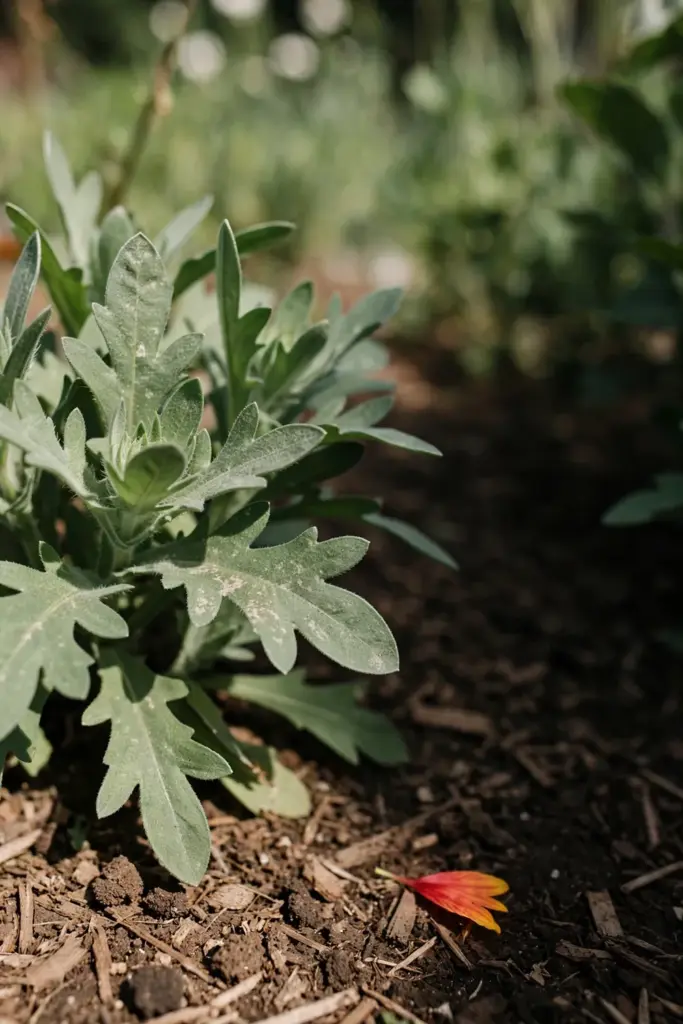
Learn the faint stage. Young lesions are faint whitish spots, very easily overlooked. The faint spot is the cheapest spot to remove. A gardener who learns the faint stage removes one leaf; a gardener who waits for brown centers removes the whole plant.
Check the undersides too. Spots appear on the leaves, and a thorough check covers both surfaces and the lower leaves first. The lower leaves sit in the humid air near the soil, and they spot first. The lower-leaf check is the early-warning system.
Photograph the first spot. A dated photo of the first faint spot gives next season a baseline. The photo shows whether the sanitation worked. The photo is free, and it keeps the memory honest across seasons.
Strategy 2: Tell It From Powdery Mildew With the Rub Test
Rub, do not guess. The rub test is the field check: surface powder that rubs off means mildew, a flat spot that does not rub off means smut. The test takes seconds and beats any photo comparison. A gardener who rubs the spot treats the right disease; a gardener who guesses from color alone often sprays the wrong one.
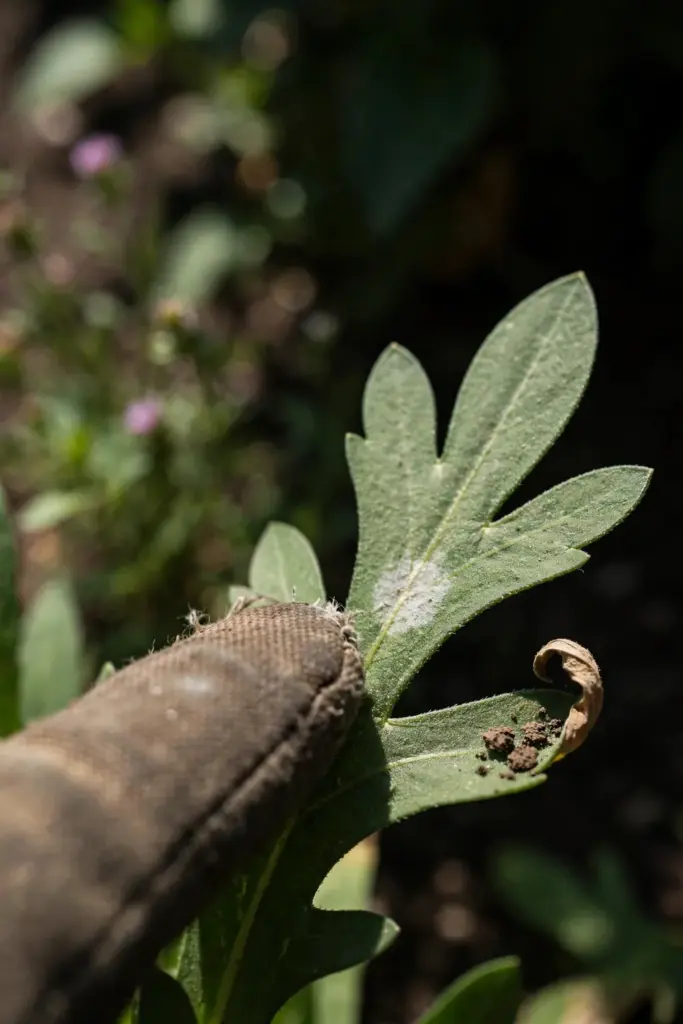
Check where the white sits. Mildew is a coating on the leaf surface, a combination of mycelium and spores in chains. Smut sits inside the leaf tissue, and the surface ruptures only at maturity. The location of the white, surface versus inside, is the distinction that matters.
Do not borrow mildew treatments for smut. Sulfur, potassium bicarbonate, and mildew fungicide schedules are mildew treatments, not smut treatments. A mildew spray on smut wastes money and leaves the smut spreading. The rub test saves the spray.
Treat the right disease. Smut management is sanitation-only at home. Mildew management includes fungicides and surface treatments. The identification sets the playbook, and the wrong playbook costs the season.
Strategy 3: Remove and Destroy Symptomatic Foliage Promptly
Pick off affected leaves when dry. Where feasible, diseased foliage should be removed and destroyed. Pick the leaves when the foliage is dry, so the picking does not spread spores on wet hands. The dry pick is the safe pick.
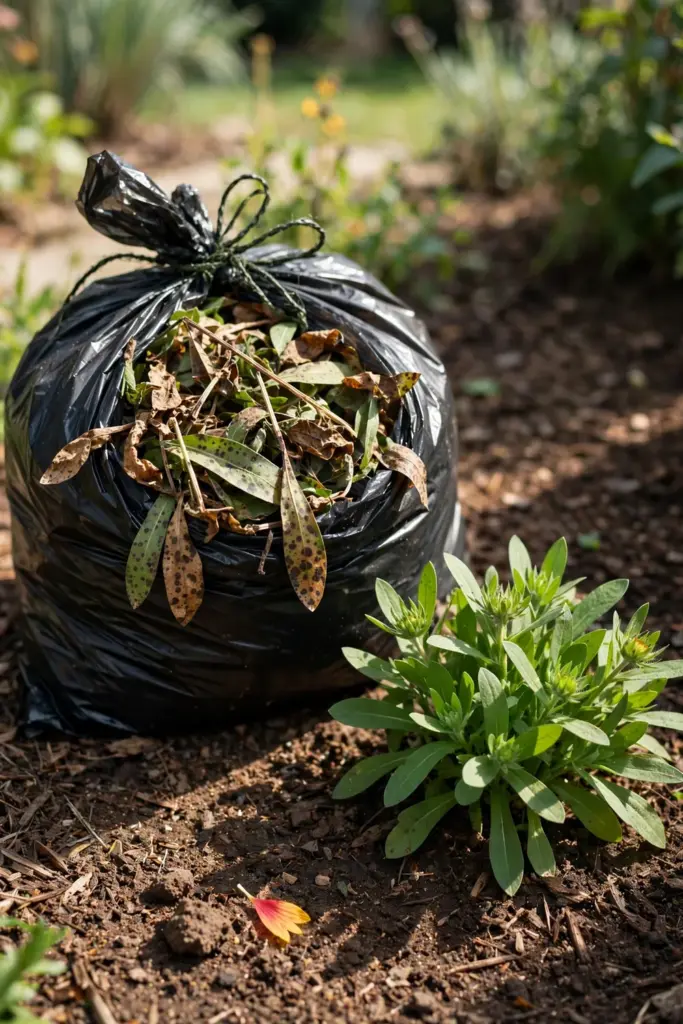
Bag the removed material. Bag symptomatic foliage to avoid spreading spores during removal. The bag contains the spores that the picking shakes loose. The bag is the containment.
Remove severely affected plants. A plant with most leaves spotted is a plant that spreads more spores than it is worth keeping. Remove the whole plant, bag it, and discard it. The removal protects the rest of the bed.
Never compost infected material. Composting does not reliably kill the fungus, and community compost spreads it. Bag diseased material and put it in municipal waste. The bag is the disposal route. The compost pile is a distribution route.
Strategy 4: Prevent With Spacing and Watering Discipline
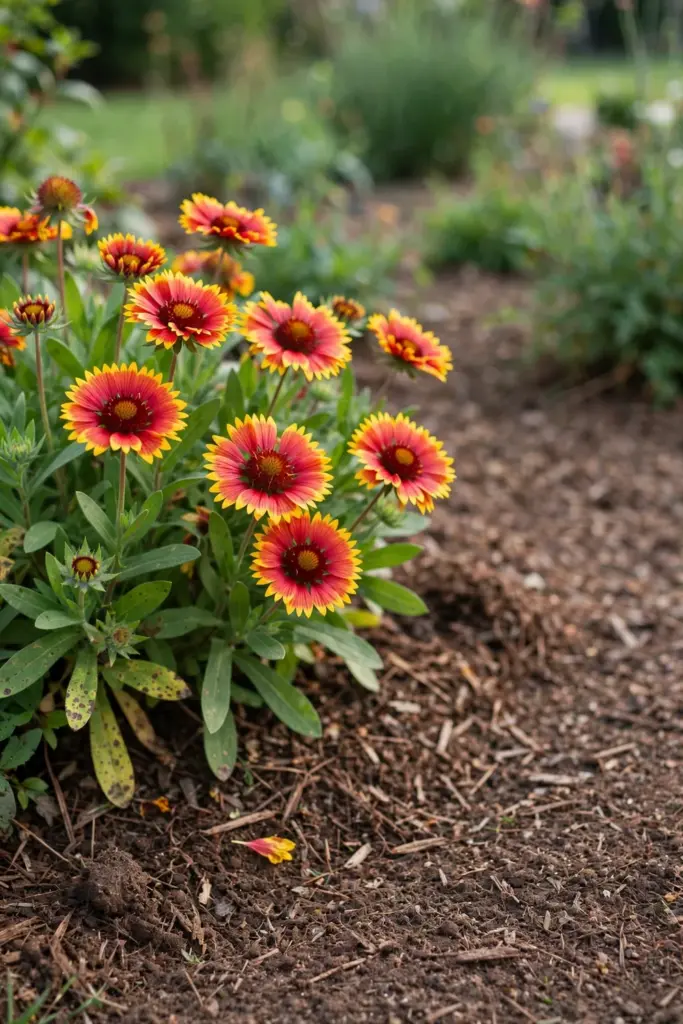
Space for airflow. Nursery plants with close spacing are more severely diseased, and the same holds in the home bed. Space plants so air moves between them and the foliage dries fast. Divide crowded clumps to restore airflow where the bed has filled in.
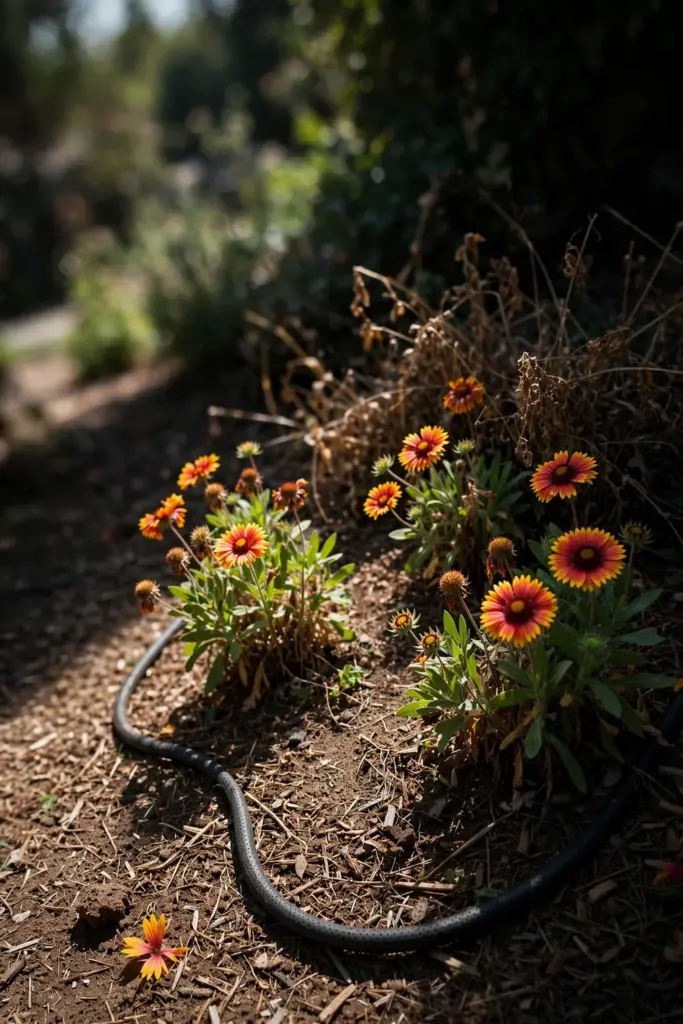
Water at the base. Overhead irrigation wets the foliage and spreads spores. Water at the base, with a soaker hose, drip line, or a watering can aimed at the soil. The base watering keeps the foliage dry and the spores unmoved.
Keep the foliage dry. Avoid overhead watering, and do not work among plants when the foliage is wet. Morning dew counts as wet. A gardener who weeds the Gaillardia bed while the leaves are still dewy spreads the disease with every touch.
Buy healthy stock and inspect before planting. Inspect new plants for faint spots before they join the bed. A spotted plant from the nursery is a spotted bed by midsummer. The nursery bench is the first quarantine.
Strategy 5: End-of-Season Cleanup, Remove All Foliage
Remove all foliage completely at season’s end. Landscape plantings benefit greatly from having the foliage completely removed at the end of the season. The complete removal takes the overwintering spores out of the bed. The end-of-season cleanup is the single highest-value action for this disease.
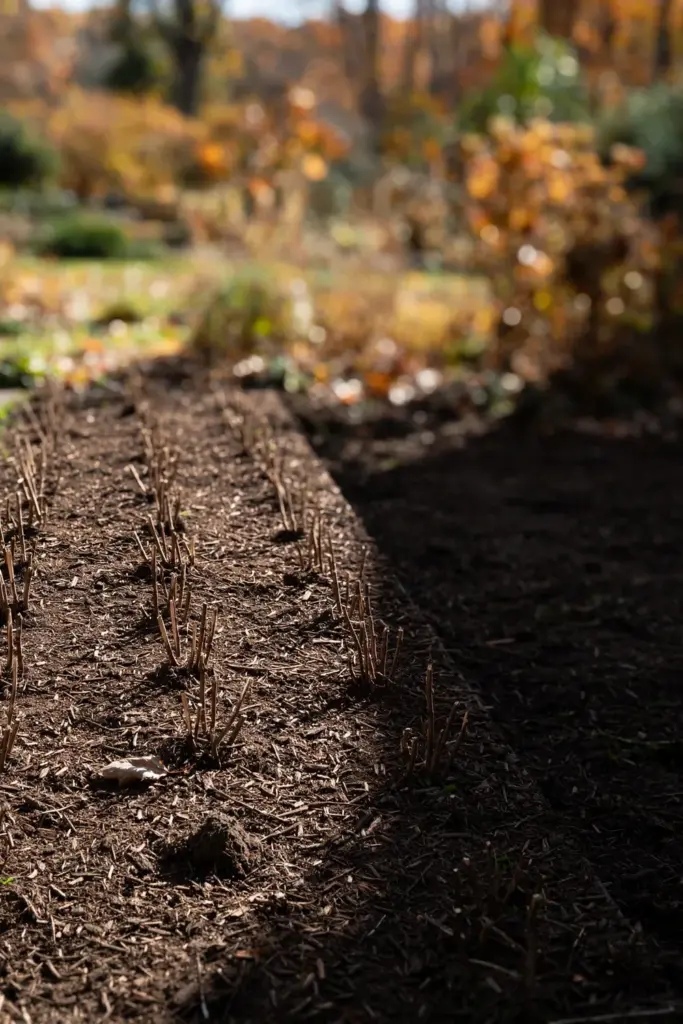
Clear all debris from the bed. Debris holds spores through winter. Clear every leaf, stem, and scrap from the bed, and bag it. The clean bed starts spring with no reservoir.
Do not leave a spotted plant standing. A plant that is still infected at season’s end should be removed, not left to overwinter. The removal lessens the chances of the fungus overwintering. The standing plant is next spring’s inoculum.
Note the conflict, do not resolve it. One aggregator source claims resting spores survive in dead tissue. Michigan State states the spores are not known to survive winters in the northern United States. This article flags the conflict rather than resolving it. Either way, the complete end-of-season removal is the right action.
Living With White Smut on Gaillardia You Already Grow
A bed with white smut is a bed to manage, not a bed to abandon. Keep scouting weekly in late spring. Keep removing symptomatic foliage promptly. Keep the water at the base. Keep the end-of-season cleanup complete. The disease will still appear, but it will appear late, light, and cosmetic.
Stop three habits. Do not spray for mildew without the rub test. Do not compost infected foliage. Do not leave foliage standing at season’s end. Keep those three lines unbroken and the disease stays cosmetic. The Plant Care archive collects the site’s disease coverage for the next problem the bed throws up.
Frequently Asked Questions
No, not as the norm. White smut browns leaves and can defoliate severely infested plantings, but it does not kill the plant as the norm. The damage is leaf loss and reduced vigor, not plant death. Remove symptomatic foliage promptly, keep the water at the base, and clear all foliage at season’s end. A managed bed keeps blooming through a light infection.
No, not at home. Michigan State states that greenhouse plants may need fungicide applications, but home management is sanitation-only. No home fungicide, including neem oil, is recommended for white smut here. One low-authority blog suggests neem oil, but it is unverified against Extension, and this article does not carry it. Remove and destroy symptomatic foliage, and clean up at season’s end.
Yes, to some. White smut on Gaillardia is most severe on Gaillardia, but the Entyloma fungi can also infect aster, echinacea, sunflower, and rudbeckia. Veronica, daylilies, and coreopsis are not listed hosts. Keep the sanitation strict in a mixed perennial bed, and check the aster and echinacea neighbors when Gaillardia spots appear. The bed, not the single plant, is the unit to protect.
No. White smut is caused by Entyloma fungi, and powdery mildew by Golovinomyces or Erysiphe fungi. The rub test separates them: surface powder that rubs off means mildew, while a flat spot inside the leaf tissue that does not rub off means smut. Smut management is sanitation-only at home. Mildew management includes fungicides and surface treatments. The identification sets the playbook.
Disease has been documented on the cultivars Goblin, Baby Cole, and Fanfare. Those are documented cases, not a resistant or susceptible ranking. Cultivar susceptibility may vary, but no ranked list exists. Buy healthy stock, inspect before planting, and manage any cultivar with the same sanitation. The cultivar name does not change the playbook.
Where to Go From Here
White smut rewards the gardener who scouts weekly, rubs the spot, and removes symptomatic foliage promptly. Spot it early, tell it from mildew with the rub test, and remove and destroy symptomatic foliage. Prevent with spacing and watering discipline, and clean up completely at season’s end.
Next season, start clean. A bed with no standing foliage, dry leaves, and open airflow will hold white smut to a trace. The Michigan State Extension item on white smut is a useful companion for the full Extension picture, since it sets the home-garden response here against the university evidence behind it.