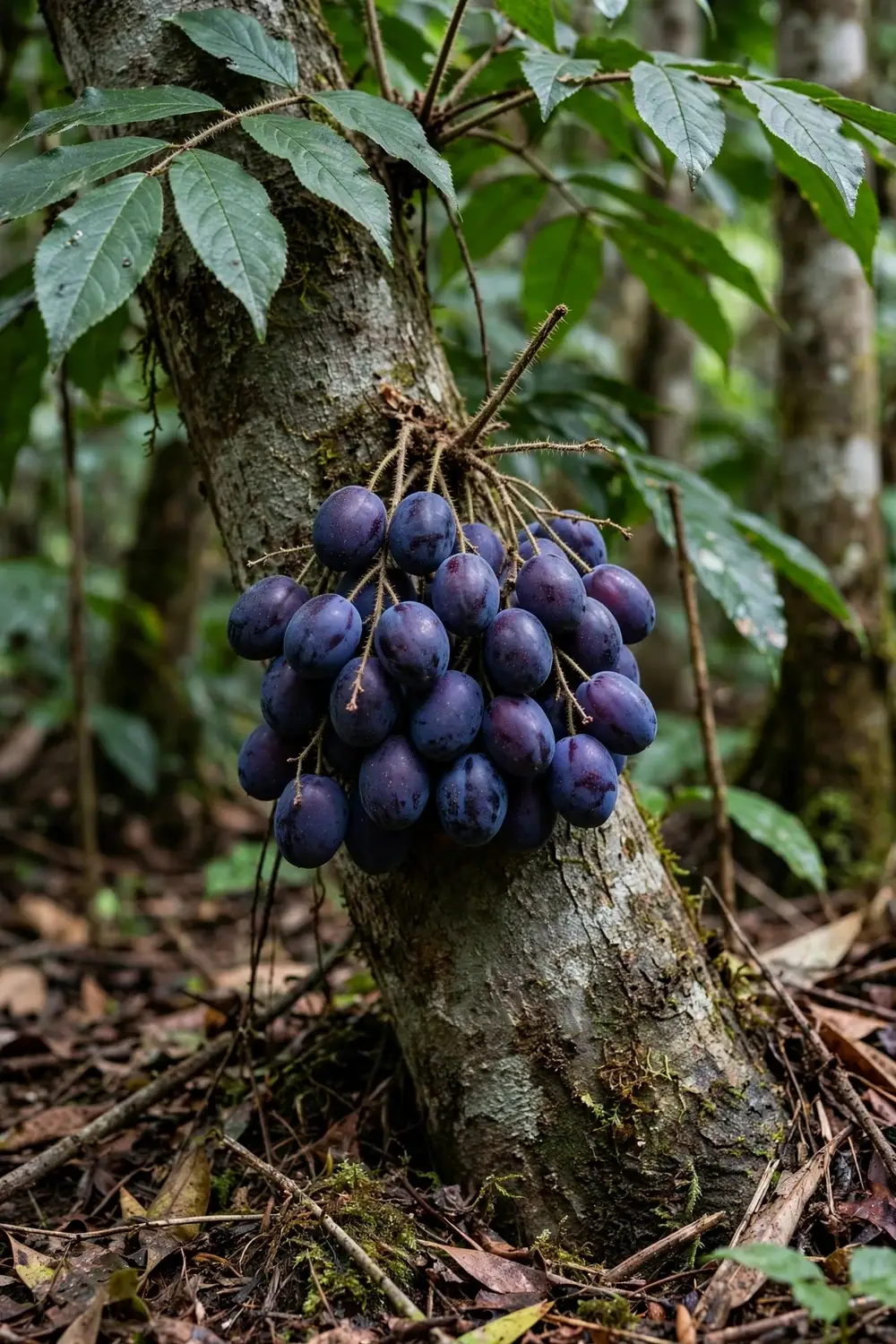

Plant one Davidson’s plum tree and expect fruit in 3 to 5 years. The tree grows 4 to 8 metres in a home garden, fruits directly on its trunk, and produces intensely sour fruit that suits jam, sauce, and cordial far better than fresh eating. The rest of this page is 11 moves, from picking the right species to turning the harvest into freezer stock.
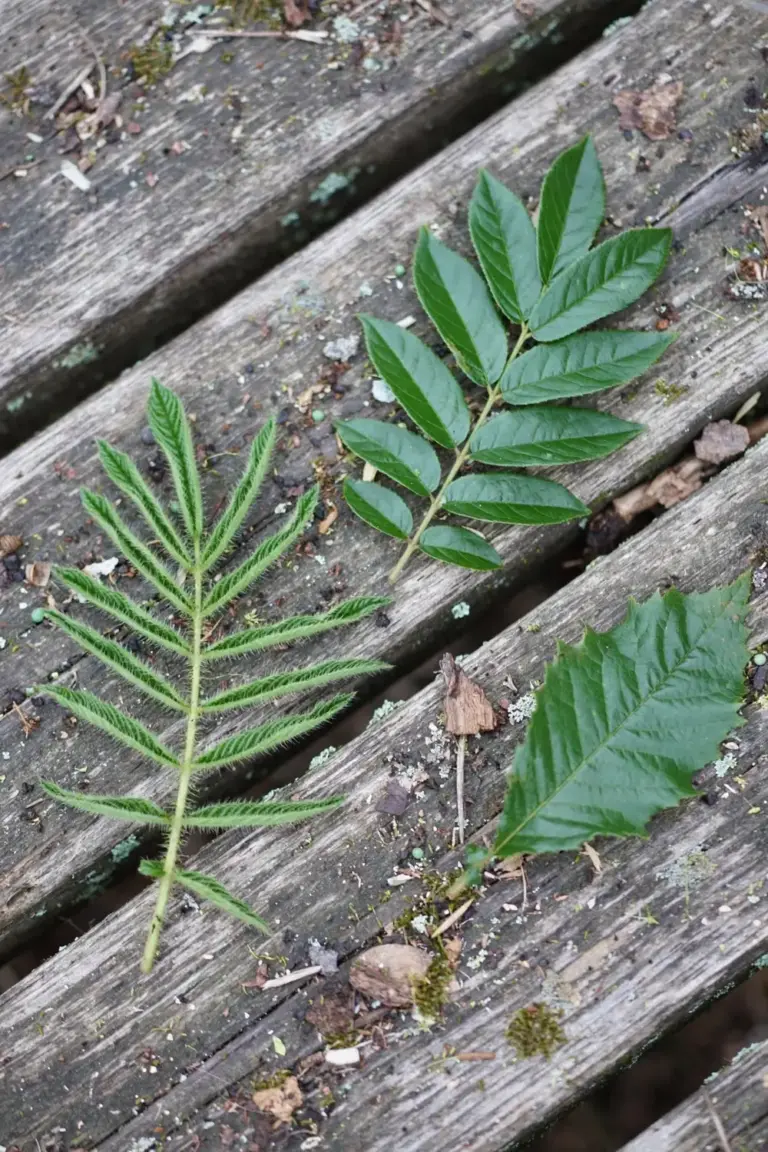
Davidson’s plum is the common name for three species in the genus Davidsonia, all native to Australian rainforest. Davidsonia pruriens is the Queensland form, called Ooray. Davidsonia jerseyana is the New South Wales form. Davidsonia johnsonii is the smooth form, with hairless leaves. The fruit looks like a European plum and shares its name, yet it is no true plum. It belongs to the family Cunoniaceae, which holds no other commonly eaten fruit.
1. Pick the Species That Fits Your Climate
Pick the species first, because the three Davidson’s plum species differ in size, cold tolerance, and how they propagate. Davidsonia pruriens suits tropical and subtropical gardens. Davidsonia jerseyana suits subtropical and warm temperate gardens. Davidsonia johnsonii suits subtropical gardens in the narrow band where it grows wild, from the Queensland and New South Wales border country south to Tintenbar.
| Species | Common name | Height in a garden | Home range | Propagation |
|---|---|---|---|---|
| Davidsonia pruriens | Ooray, Queensland Davidson’s plum | 4 to 8 m | Far north Queensland rainforest | Fresh seed, cuttings, suckers |
| Davidsonia jerseyana | NSW Davidson’s plum, Mullumbimby plum | 4 to 6 m | Lowland subtropical New South Wales | Fresh seed, cuttings, suckers |
| Davidsonia johnsonii | Smooth Davidson’s plum | 5 to 18 m in the wild, smaller in gardens | Queensland and New South Wales border rainforest | Cuttings, clump division, suckers only |
Davidsonia pruriens is the tallest of the three, reaching a maximum of 12 metres in the wild according to Sustainable Gardening Australia. Davidsonia jerseyana stays smaller, reaching 5 metres in the same account. Davidsonia johnsonii grows 5 to 18 metres tall in the wild with hairless leaves, according to the City of Gold Coast’s smooth Davidson’s plum profile. Garden trees stay smaller than wild trees in every species.
Buy jerseyana or pruriens if you want to grow from seed. Buy johnsonii only as a cutting-grown or division-grown plant, because its fruit is infertile. The Rare Fruit Club WA notes that Davidsonia johnsonii fruit carries no viable seed, so nurseries propagate it by clump division, cuttings, or suckers. Two of the three species are endangered in the wild, so buy nursery-grown stock and never dig a wild tree.
2. Plant in a Sheltered, Part-Shaded Spot
Plant Davidson’s plum in a sheltered, part-shaded spot with steady moisture and protection from wind. The tree is a rainforest understorey plant, so it grows best where taller trees or a building break the wind and soften the afternoon sun. Full sun suits pruriens better than jerseyana, yet both species still grow in partial shade.
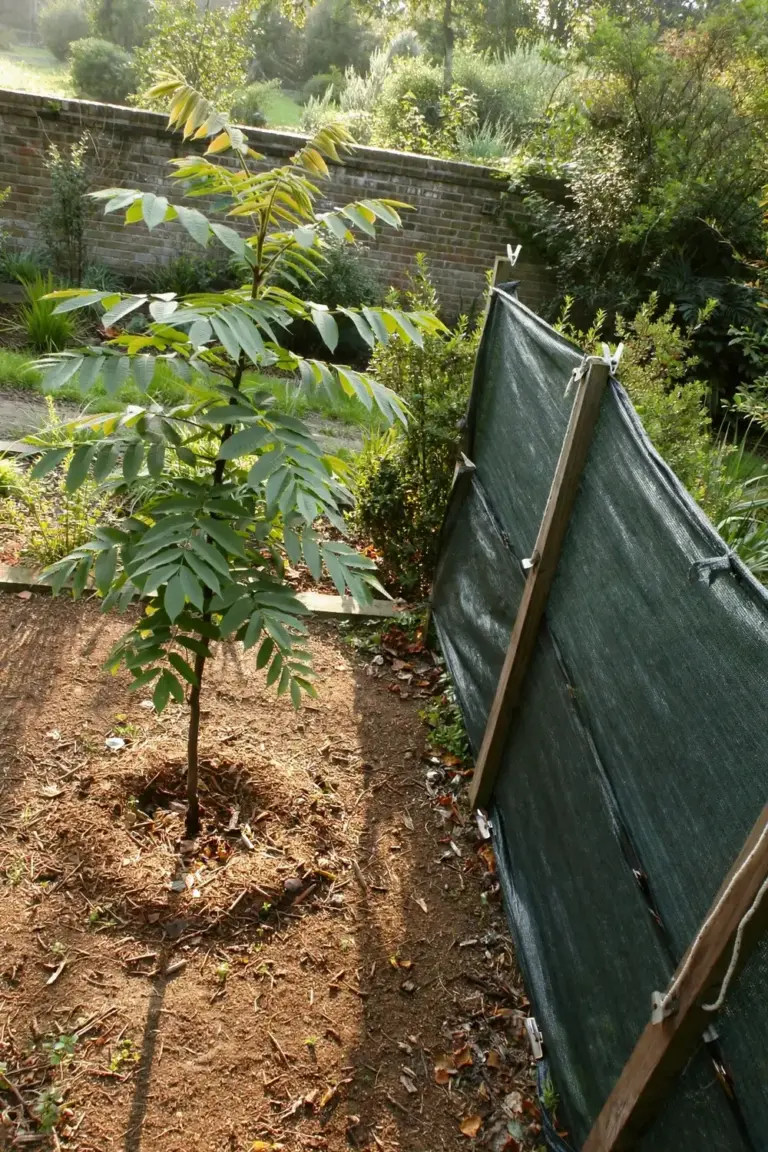
Give each tree 3 to 5 metres of clear space, per Brancho’s planting notes, so the crown can spread and the trunk stays reachable at harvest. The trunk is the fruiting zone. A tree crammed against a fence fruits where you cannot reach it, and a tree in a wind tunnel drops leaves and sheds young fruit.
Young trees need shelter from harsh sun, drying wind, and frost while they settle in. A shade cloth screen on the afternoon side, a windbreak of shrubs, or a spot on the south or east side of a building all work. Established trees tolerate more sun and light frost, but young trees do not.
Check the light before you plant. Davidson’s plum fruits in part shade, and a site that gets morning sun plus afternoon shade suits most gardens. Deep shade under a closed canopy starves the tree of the light it needs to flower, so aim for filtered light or a few hours of direct morning sun. If the only sheltered spot is deeply shaded, plant there and accept a slower tree, or grow the tree in a pot that moves into brighter light in summer. Other fruits that grow in shade share the same trade-off: shade keeps the tree alive, yet fruiting still needs light.
Test the drainage before you dig. Fill a 30 cm hole with water and watch it drain. Water that still stands after an hour means the site holds too much water for a rainforest tree that hates waterlogging. Raise the planting area with a low mound of compost-enriched soil, or pick a slope where water runs off. A mound 20 to 30 cm high keeps the crown above wet soil while the roots reach down into moisture.
3. Grow Davidson’s Plum From Fresh Seed
Grow pruriens and jerseyana from fresh seed, and sow the seed as soon as you have it. Davidson’s plum seed loses viability fast once it dries out, so fresh seed is the whole game. Speed matters. The Rare Fruit Club WA propagation notes record germination approaching 70 percent in pruriens and 100 percent in jerseyana within a few weeks when seed is sown fresh. Dried seed, by contrast, may not germinate at all.
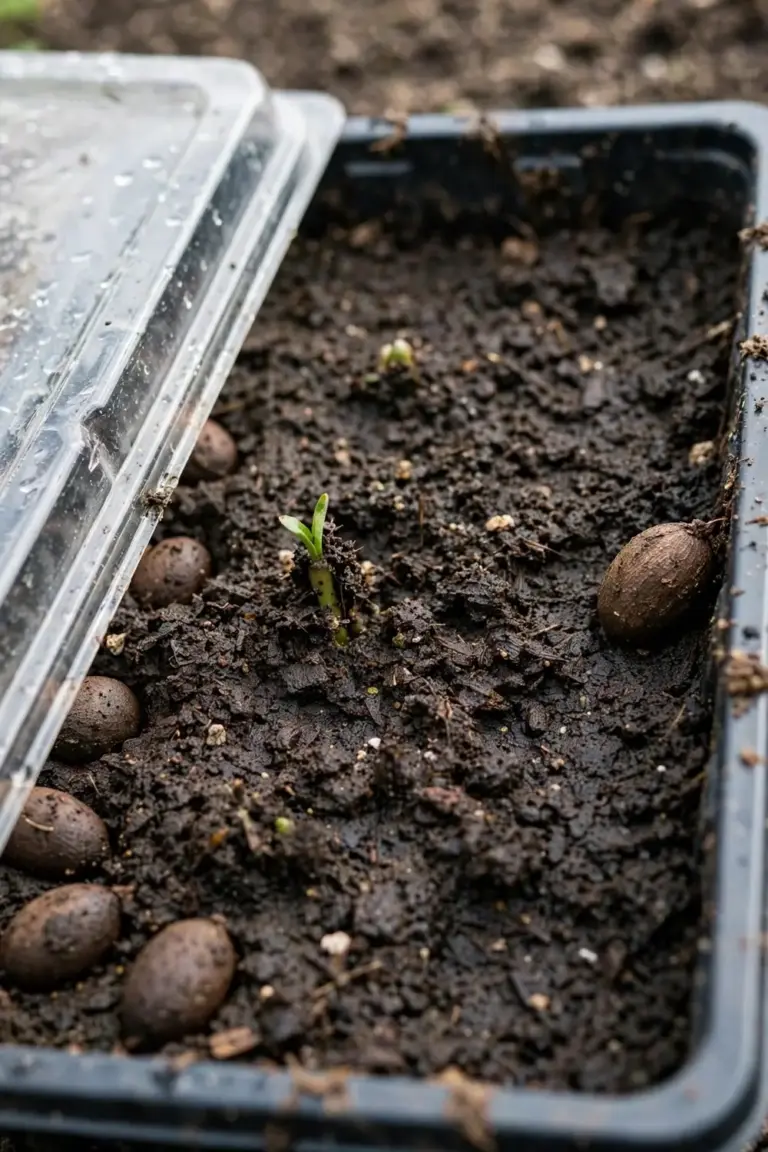
Wash the pyrenes, the hard seed cases inside the fruit, and rub away some of the surrounding fibrous material. Discard any pyrene that feels flat and empty. It holds no seed. Sow the rest in a simple soilless potting mix, cover lightly, and keep the mix damp but never waterlogged. Germination is cryptocotylar, which means the seed leaves stay inside the seed case while the shoot pushes up, so do not dig the seed up to check it.
Seed-grown plants vary, and that variation is normal. The Rare Fruit Club WA propagation notes state that 80 percent of fruit hold one viable seed, and pruriens seedlings include clones of the parent alongside sexually produced seedlings. Buy seed from a named source, and sow more seed than you need so you can keep the strongest seedling.
Sow in a tray or small pots rather than straight into the garden bed, so you control moisture and spot germination early. Use a free-draining seed mix, press each pyrene just below the surface, and cover the tray with a clear lid or plastic wrap to hold humidity. Keep the tray in bright shade, never in direct sun, and check the mix daily so it stays damp. The standard seed starting steps apply: warmth, steady moisture, and light once the shoot shows. Move seedlings into individual pots once they hold two sets of true leaves, and grow them on in shelter for a full season before planting out.
4. Plant a Nursery Tree in Enriched Soil
Plant a nursery tree in enriched, well-drained soil with plenty of organic matter. Davidson’s plum grows in many soil types in the wild, yet it does best in deep, friable soil with high organic matter. Sustainable Gardening Australia notes that the trees do best in deep, friable soils with plenty of organic material and need good irrigation or high natural rainfall, especially during flowering and fruiting.
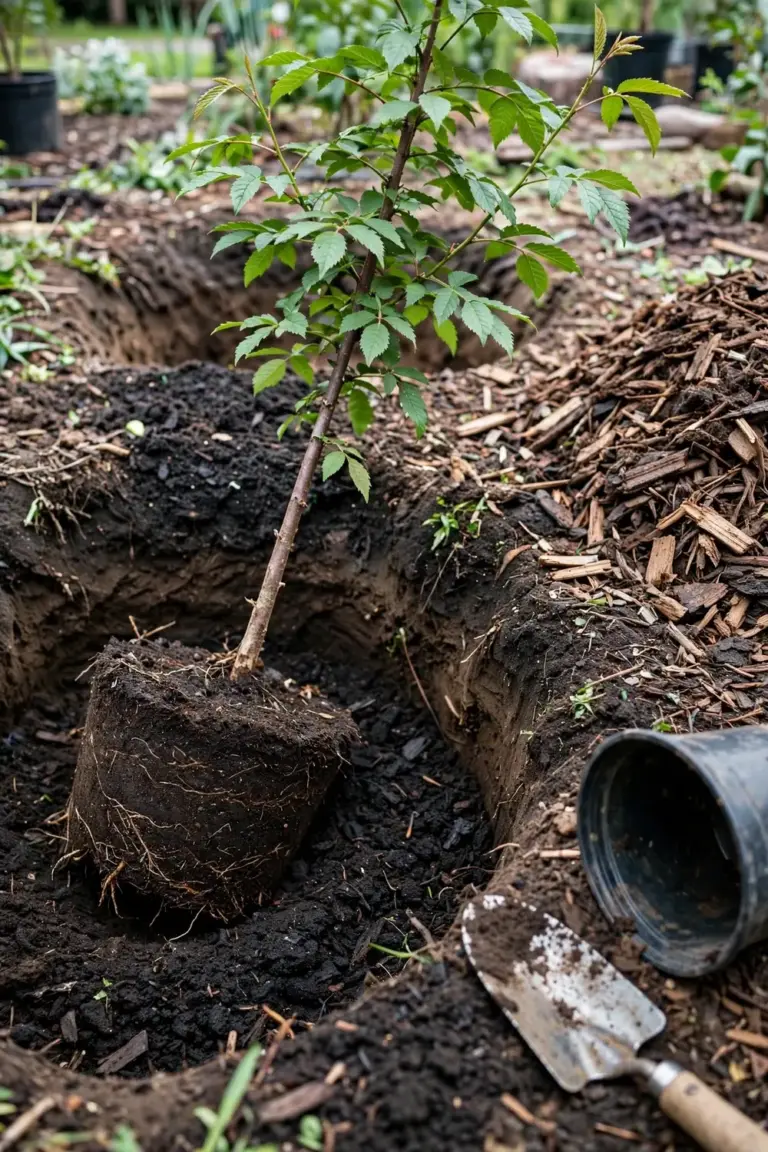
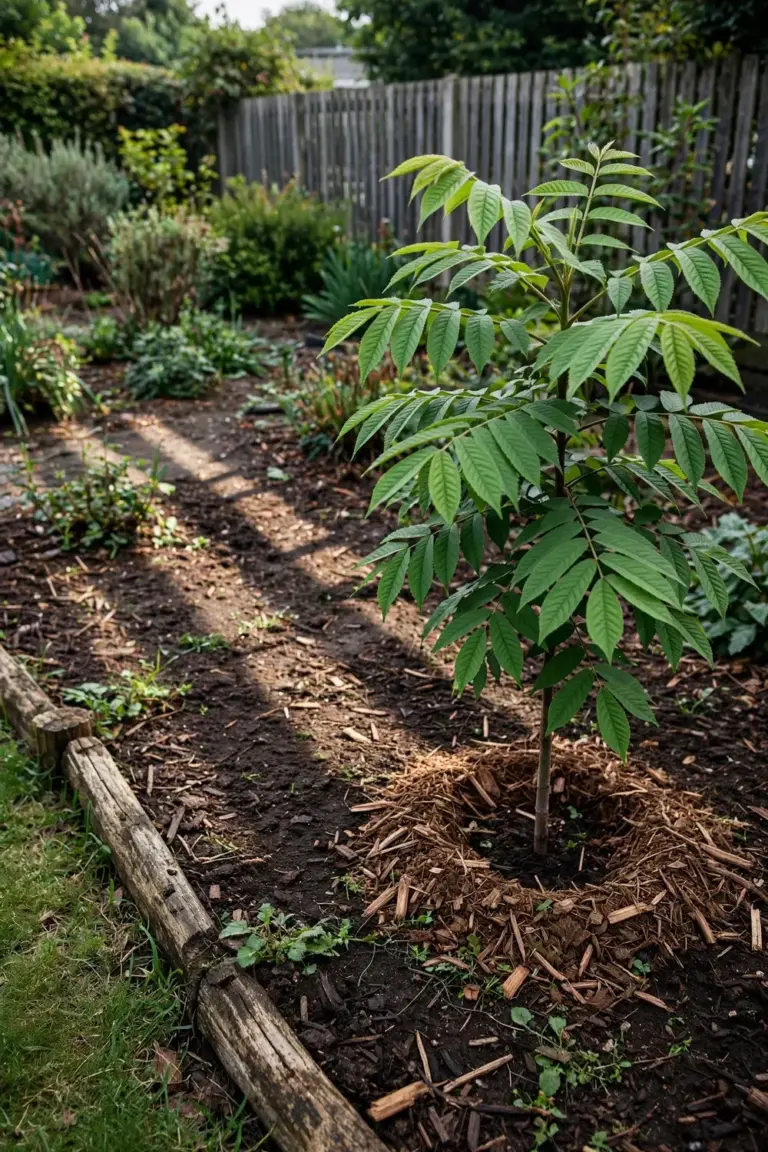
Dig a hole twice as wide and to the same depth as the existing root ball, following Bunnings’ Queensland Davidson plum guide. Enrich the backfill with compost and dig it in well. Remove the plant from its pot, loosen the soil to free the roots, and set the tree at the same depth it sat in the pot. Backfill, firm the soil, and water in well.
Spread organic mulch around the base after planting, keeping it clear of the trunk. Mulch holds moisture in the root zone and keeps the soil cool, which matters for a rainforest tree. Aim for slightly acid soil, near pH 5.5 to 6.5, per Holly’s Homestead’s grow guide, and skip lime unless a soil test shows you need it.
Healthy soil does more than hold the tree upright. Organic matter feeds the soil life that releases nutrients slowly, and a living soil holds moisture through dry weeks. The site’s soil health guide covers how compost, mulch, and steady moisture build that soil life. A Davidson’s plum planted in bare, compacted soil grows slowly no matter how much fertilizer you tip on it, while the same tree in compost-rich soil fruits years sooner.
Plant in spring in a warm, sheltered position, once frost risk has passed. A spring planting gives the tree a full warm season to root before its first winter.
5. Grow Davidson’s Plum in a Pot
Grow Davidson’s plum in a pot when space is tight or winters run cold. Daleys Fruit Tree Nursery lists Davidson’s plum as a container plant that suits courtyards and small gardens, maturing to 4 to 6 metres in the ground. A pot keeps the tree smaller, lets you move it under cover on frost nights, and still fruits.
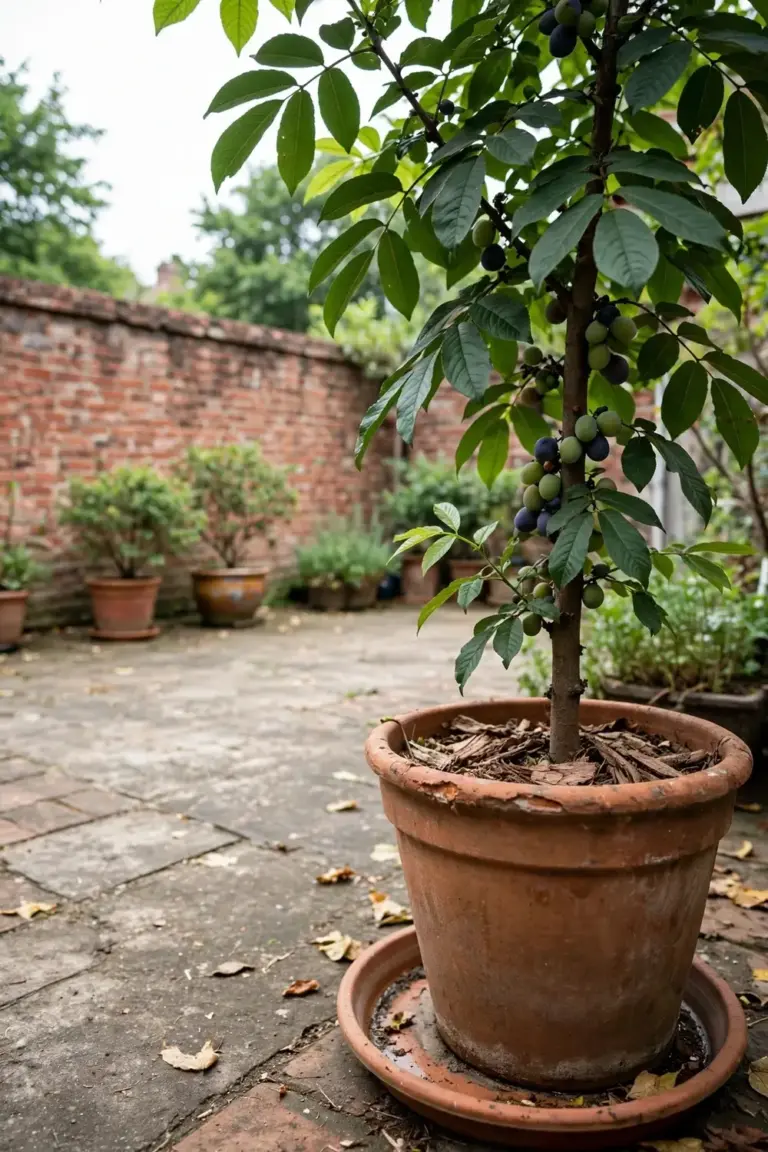
Use a large pot, at least 50 litres, with free drainage and a quality potting mix. The Bunnings guide says the tree works as a specimen plant in a large pot or a partly shaded spot, and can even come indoors with adequate light. A saucer under the pot helps in summer. Empty it after watering so the roots never sit in water.
Pot-grown trees dry out faster than trees in the ground, so check the mix with a finger before watering. Feed pot trees more often than garden trees, because each watering washes nutrients out of the mix. Repot when roots circle the base or growth stalls for a full season.
A pot-grown Davidson’s plum still fruits on its trunk, so keep the trunk reachable. Set the pot where you can walk around it at harvest, not jammed into a corner. Turn the pot a quarter turn each month. That small habit keeps the crown even instead of leaning toward the light. In winter, move the pot against a warm wall or under a covered patio, and wrap the pot in hessian or bubble wrap on nights when frost threatens, since a pot root zone chills faster than garden soil.
6. Water and Feed for Steady Growth
Water Davidson’s plum steadily and feed it lightly through the growing season. The tree needs consistent moisture all year, and low moisture hurts most during flowering and fruit set. The Rare Fruit Club WA cultivation notes warn that prolonged waterlogging is not tolerated, yet low moisture levels should be avoided, particularly during flowering and fruit set.
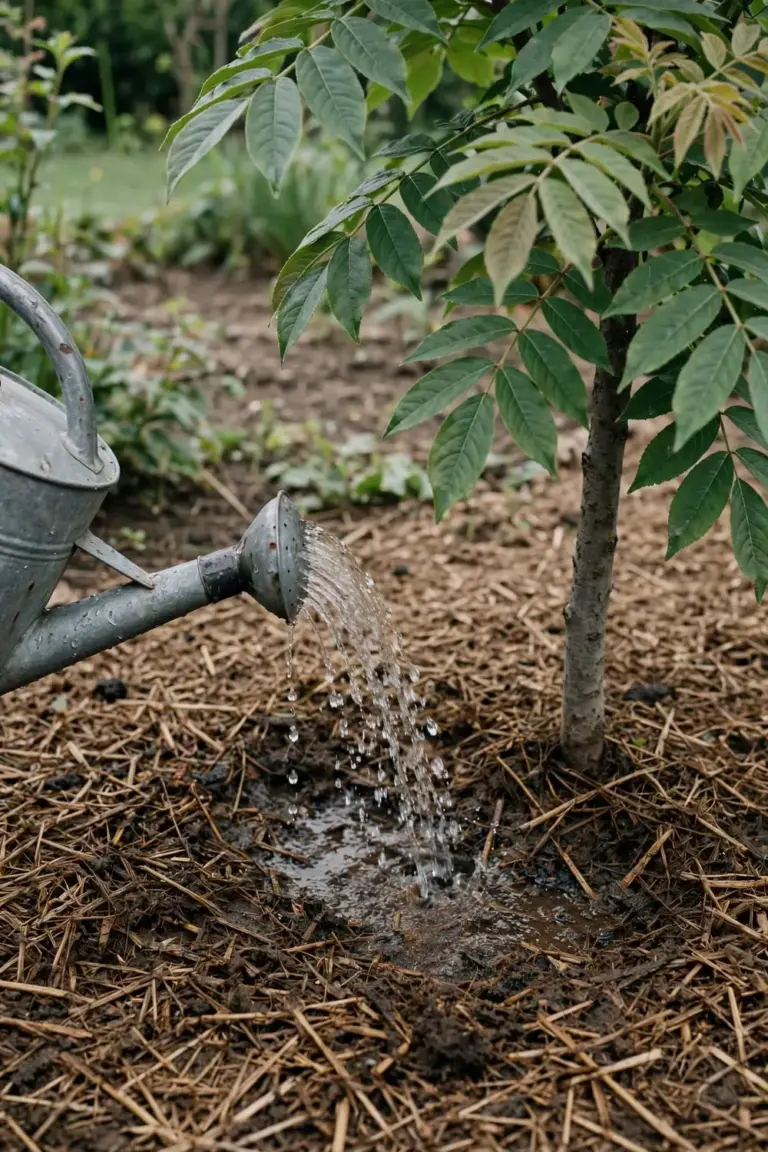
Mulch the root zone with 5 to 10 cm of organic mulch to hold moisture and keep the soil cool. Keep the mulch clear of the trunk by a hand span so the bark stays dry. Water deeply when the top 5 cm of soil feels dry, and water again before the root zone dries right through. The site’s mulching guide covers how mulch holds moisture, suppresses weeds, and feeds soil life as it breaks down.
Set a watering rhythm for the first year rather than watering on a calendar. A young tree in warm weather may need water twice a week, while the same tree in a cool, rainy week needs none. Push a finger into the soil before you water. Dry at 5 cm means water now. Damp at 5 cm means wait. A tree that wilts at midday and recovers by evening is usually heat-stressed, not thirsty, while a tree that stays wilted at dawn needs water that day.
Feed with small amounts of complete fertilizer spread over the whole growing season, which the Rare Fruit Club WA account recommends to support high flower and fruit production. Compost and mulch also feed the tree, and Daleys notes that Davidson’s plum thrives when composted and mulched and kept moist to bear good yields. Skip heavy single doses, which push soft growth that frost and wind damage.
7. Protect Young Trees From Frost
Protect young Davidson’s plum trees from frost, because frost is the factor that decides where each species grows. Mature trees withstand light frosts, yet younger plants suffer damage, according to the Rare Fruit Club WA climate notes. Young trees of jerseyana will not tolerate any frost at all, per Daleys nursery notes.
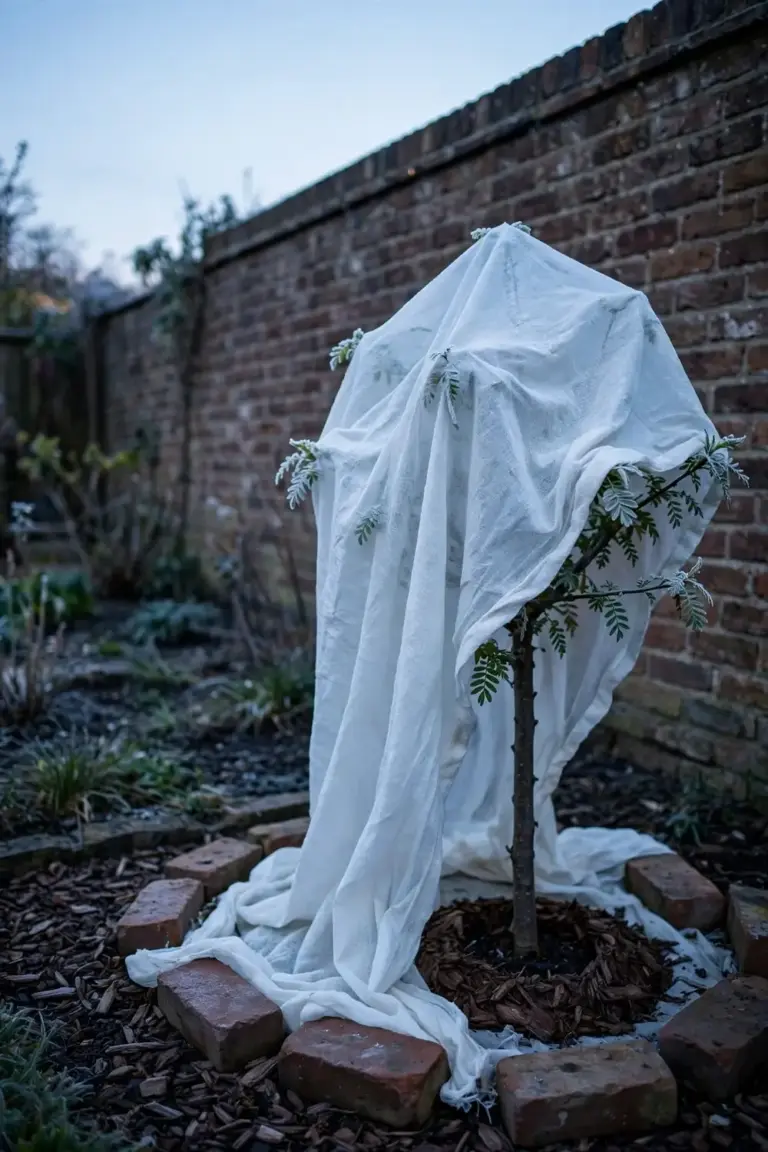
Site the tree where cold air drains away, never in a low pocket where frost settles. A spot near a brick wall, under a high canopy, or on a gentle slope runs warmer on clear winter nights than a hollow. Cover a young tree with frost cloth on nights when frost threatens, and remove the cover in the morning so the leaves dry.
Move a pot-grown tree under cover for winter in any district with regular frost. Daleys lists the smooth form as liking temperatures above 5 degrees, so treat johnsonii as the most frost-tender of the three. A tree that loses its leaves to frost in year one may recover, yet it loses a full season of growth, so prevention beats repair.
8. Prune the Tips to Force Multiple Stems
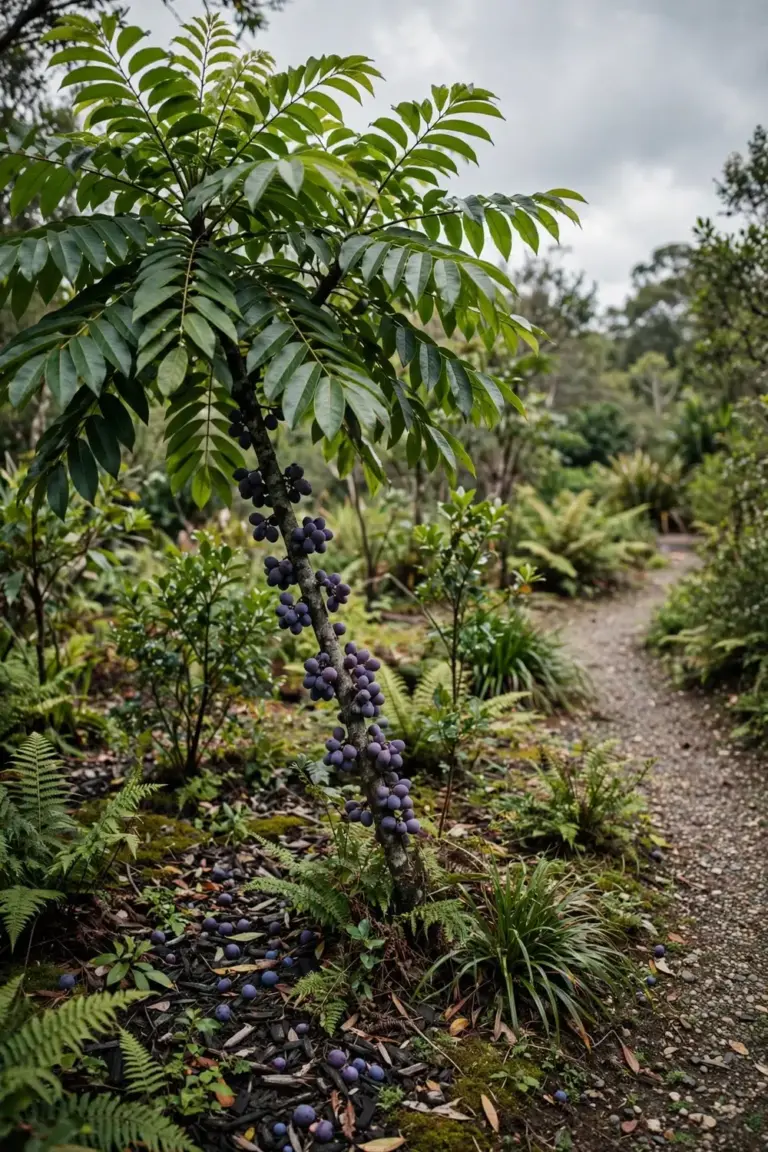
Prune the tips of young Davidson’s plum trees to force multiple stems and hold the height down. The tree naturally grows as a slender single stem with a tuft of leaves at the top, and fruit forms on the trunk and older branches. Tip pruning breaks apical dominance and pushes side shoots, which gives you more fruiting wood at a height you can reach.
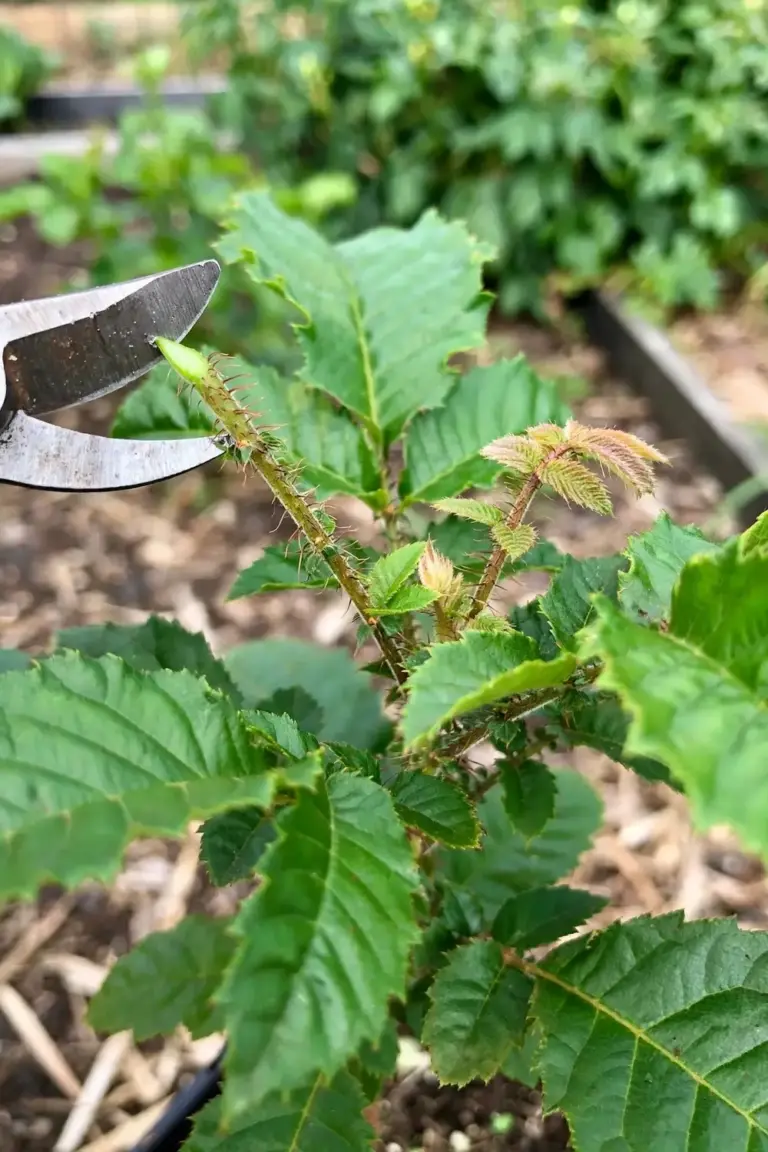
Sustainable Gardening Australia states that height is controlled by pruning off the tips, which also encourages multiple stems and fruiting. The Rare Fruit Club WA account agrees, noting that fruit yield increases when apical shoots are pruned to encourage multiple stems, which also constrains height.
Prune in late winter or early spring, before new growth starts. Cut the tip back by 10 to 15 cm on a young tree, and cut back to a side shoot on an older tree that has grown too tall. Remove dead or damaged branches at the same time. Bunnings says there is no need to prune Queensland Davidson plum, which is true if you accept a tall single stem, yet a tree you can reach fruits better for a home gardener. Check the tree after storms too, since a slender trunk with a heavy crown snaps in strong wind when the canopy stays one-sided.
9. Keep Fruit Fly, Birds, and Caterpillars Off the Crop
Keep fruit fly, birds, and caterpillars off the crop with inspection, netting, and clean ground. Davidsonia jerseyana is susceptible to fruit fly infestation, and Sustainable Gardening Australia lists sustainable controls: regular inspection for larvae, traps, fallen fruit sealed in a plastic bag and left in the sun for 3 to 7 days, and chickens scratching under the tree to eat larvae.
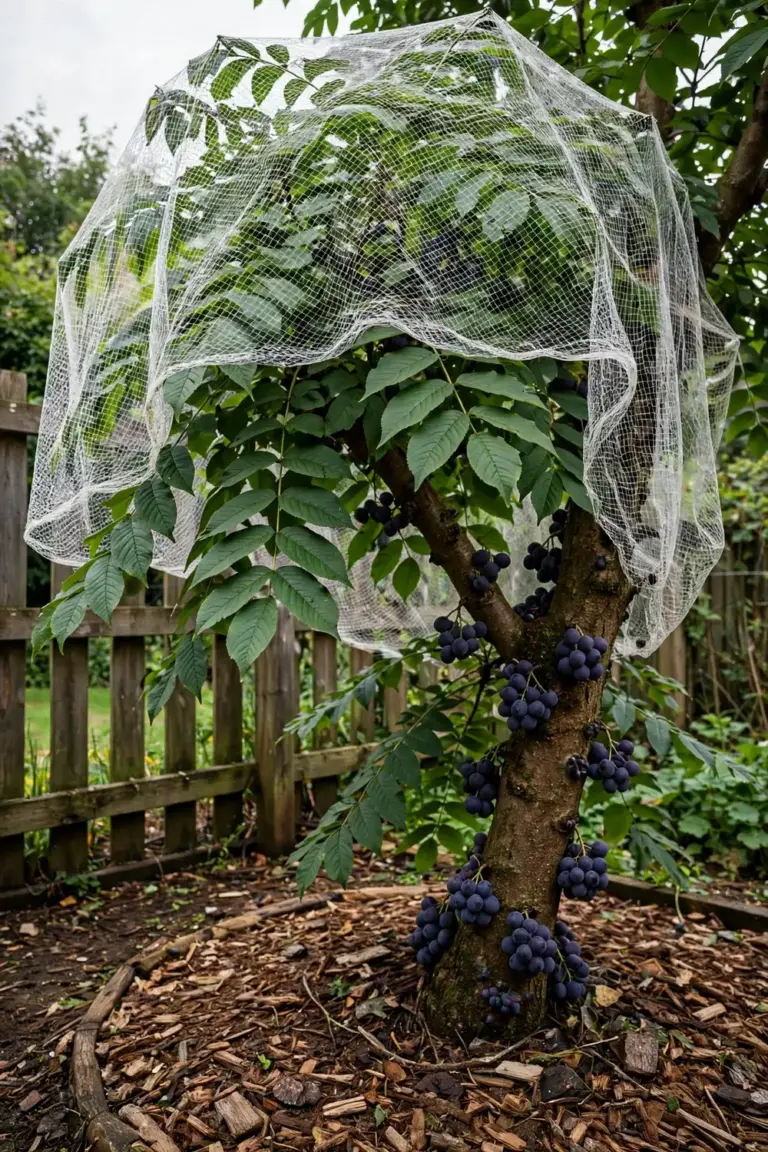
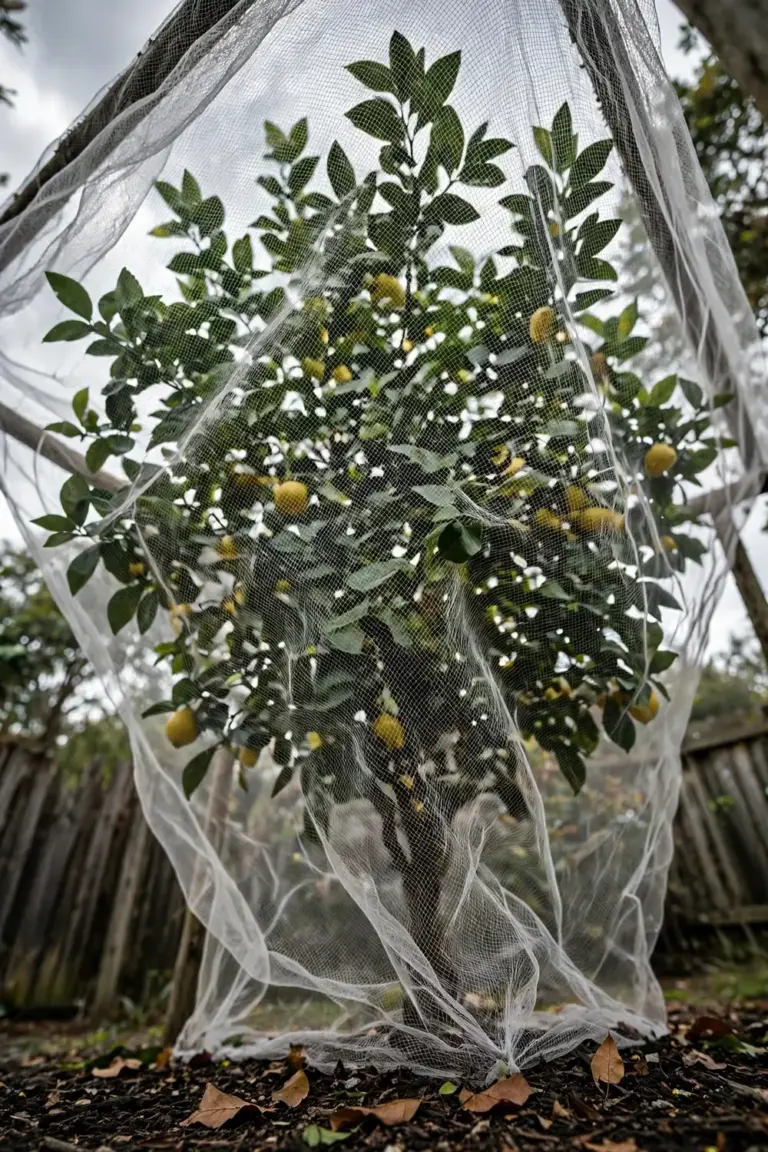
Net the tree as fruit colors, because birds, possums, and flying foxes all eat the fruit. Use wildlife-safe netting with a mesh that cannot trap birds or bats, and drape it so it does not rest on the fruit. Check the net each morning during harvest season.
Caterpillars, moth larvae, and beetles attack flowers and fruit. Hand-pick caterpillars on a small tree, and inspect the flower spikes weekly from the time they appear. The Rare Fruit Club WA notes that the trees resist root pathogens, and that caterpillars, beetles, Queensland fruit fly, and parrots damage fruit. Pruriens usually ripens in autumn and winter, when pest pressure is lower, which is one more reason to pick the species that suits your district.
Start pest control before fruit colors, not after damage shows. Hang fruit fly traps when flowers open, and keep them up until harvest ends. Walk the tree each week and look under leaves for caterpillar eggs and chewed flower spikes. Pick up every fallen fruit on the same day it drops, because fallen fruit breeds the next round of fruit fly. A clean floor under the tree does more for fruit fly control than any spray applied after the larvae are inside the fruit.
10. Harvest by Shaking the Trunk
Harvest Davidson’s plum by shaking the trunk and collecting the fruit that falls. The fruit grows directly on the trunk and older branches, a habit called cauliflory, so ripe fruit drops when the trunk gets a firm shake. Bunnings’ guide describes the same method: give the tree a firm shake and any ripe fruit will fall to the ground.
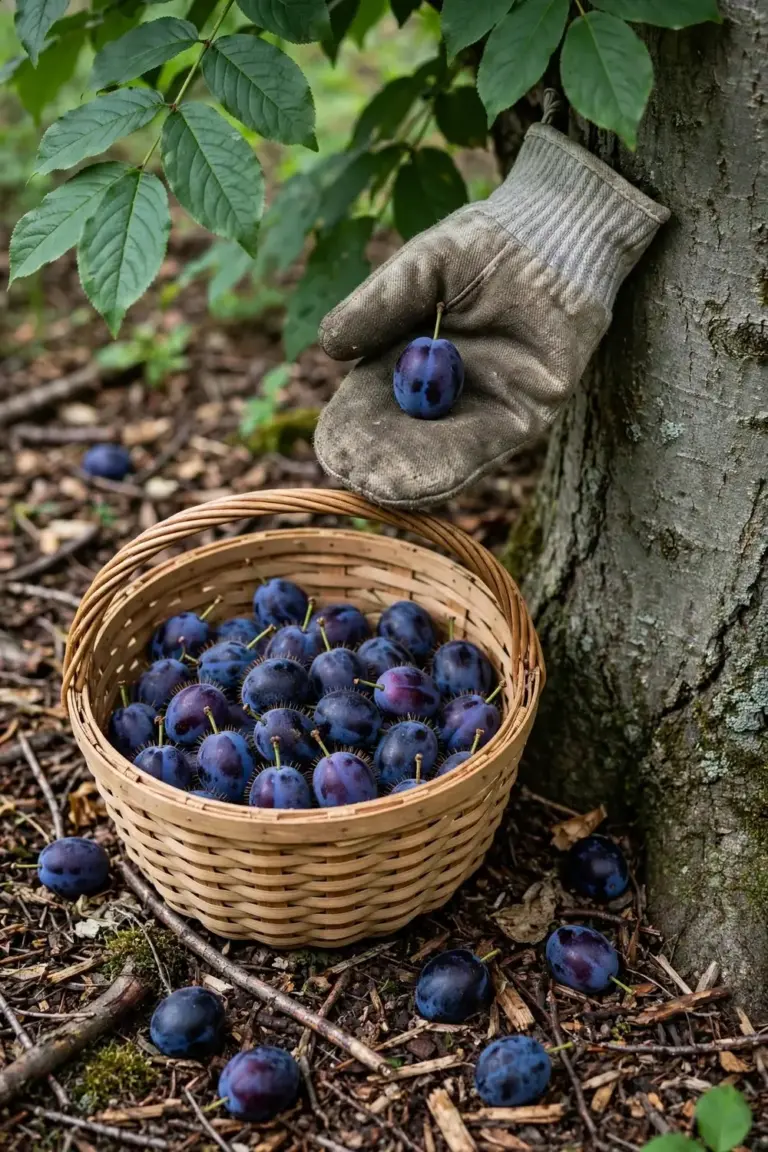
Pick fruit as it begins to turn purple, because fruit picked just as it starts to color ripens readily off the tree, according to Sustainable Gardening Australia. Early picking cuts pest build-up and stops fruit falling to the ground where it attracts rodents. I pick the fruit with gloves on, because the hairs on the leaves and fruit itch once they touch skin.
Fruit matures within 3 to 4 months from fruit set, per the Rare Fruit Club WA harvest notes. The Rare Fruit Club WA harvest notes record yields climbing from 2 to 3 kg per tree at 5 to 6 years to a maximum of 30 kg in the most productive trees by 12 to 16 years. Fruit ripens over a 2 to 4 week window on one tree, per Daleys, so shake the trunk every few days through the season.
11. Turn Tart Fruit Into Jam, Sauce, and Freezer Stock
Turn Davidson’s plum into jam, sauce, cordial, or freezer stock, because the fresh fruit is far too sour for most people. The flesh carries 3 percent malic acid with a Brix reading of 4 to 6 percent, according to the Rare Fruit Club WA fruit notes, which explains why the fruit tastes sharp even when fully ripe.
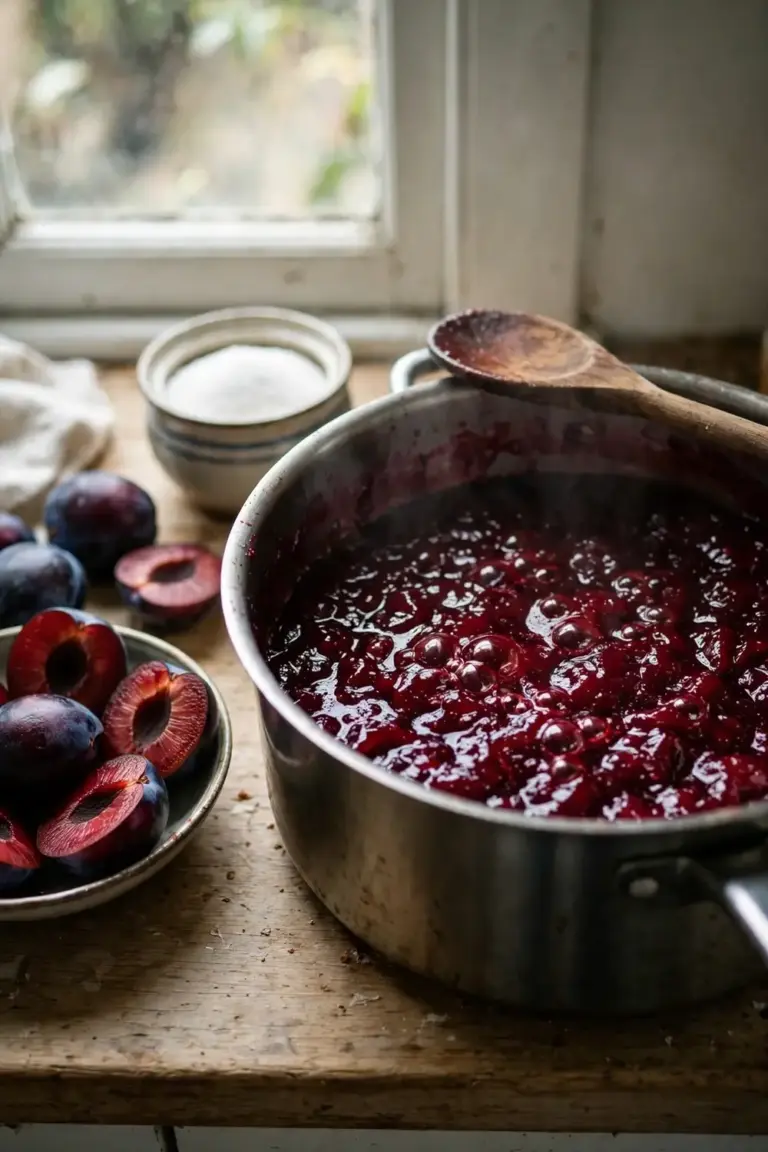
Use European plum recipes and double the sugar, as Sustainable Gardening Australia advises. The flesh works in savoury dishes too, as a souring agent in sauces, chutneys, and meat dishes. Freeze whole fruit for later use, since frozen fruit keeps its color and acid for months.
Cook a small jam batch first, before you commit a whole harvest. Halve the fruit, remove the pyrenes, and weigh the flesh. Add sugar at double the rate your European plum recipe calls for, then cook the fruit down until the jam sheets off a spoon. Taste before you bottle, because acid varies from tree to tree and season to season. A jam that tastes sharp in the pot tastes balanced on toast, so judge by the cooled spoon, not the hot pot.
For sauce, simmer the flesh with a little water until it collapses, then strain out the fibers and pyrene fragments. The strained pulp carries the color and the acid without the fibrous texture. Use it where a recipe calls for tamarind, lemon juice, or vinegar, and start with half the amount, since Davidson’s plum acid runs stronger than citrus juice. Freeze the strained pulp in ice-cube trays, then bag the cubes for cooking through the year.
Eat the skin with the flesh, because the skin holds most of the nutrients. The same SGA account notes the fruit carries more antioxidants than blueberry, plus potassium, lutein, vitamin E, folate, zinc, magnesium, and calcium. The intense color also works as a natural food color in cordials and desserts.
Frequently Asked Questions
No. Davidson’s plum belongs to the family Cunoniaceae, while European plum belongs to Prunus in the rose family. The two share a plum-like shape, purple skin, and a common name, and nothing else. Davidson’s plum fruit is far more sour than a European plum and suits cooking rather than fresh eating. Check the botanical name, Davidsonia, before following any growing advice.
Plant Davidsonia jerseyana first in subtropical and warm temperate gardens, because it fruits earliest, stays smaller, and grows well from fresh seed. Plant Davidsonia pruriens first in tropical and subtropical gardens, because it needs more warmth and grows taller. Plant Davidsonia johnsonii only when you can buy a cutting-grown plant, because its seed is infertile. Match the species to your frost risk before you buy.
Sydney suits jerseyana in a sheltered, frost-free spot, and the tree grows in pots that move under cover in winter. Melbourne suits a pot-grown tree kept under cover through winter, because regular frost damages young trees. A garden tree in Melbourne needs a warm microclimate, wind shelter, and frost cloth on cold nights. Start with a pot if your winters run below freezing.
A young tree may be too young, since pruriens often waits until year 5 or 6 while jerseyana fruits from year 3. Dry soil during flowering drops flowers before fruit sets, so water steadily through the flowering season. Heavy shade cuts flowering, so give the tree part shade rather than full shade. A tree that never fruits may also be johnsonii grown from a weak cutting, so check the label and buy from a named source.
Yes, the ripe fruit is safe to eat, though its acid makes it unpleasant raw for most people. Cook it into jam, sauce, cordial, or chutney, where sugar or savoury flavours balance the acid. The hairs on the fruit and leaves irritate skin, so wear gloves at harvest and wash the fruit before cooking. Eat the skin with the flesh, because the skin holds most of the nutrients.
Start With One Tree This Weekend
Start with one tree this weekend. Pick the species that fits your frost risk, plant it in a sheltered, part-shaded spot with enriched soil, and mulch it well. Water it steadily through its first summer, cover it on frost nights, and tip-prune it in late winter to build a low, multi-stemmed tree. The first crop arrives in 3 to 5 years, and a tree that fruits on its trunk is worth the wait.