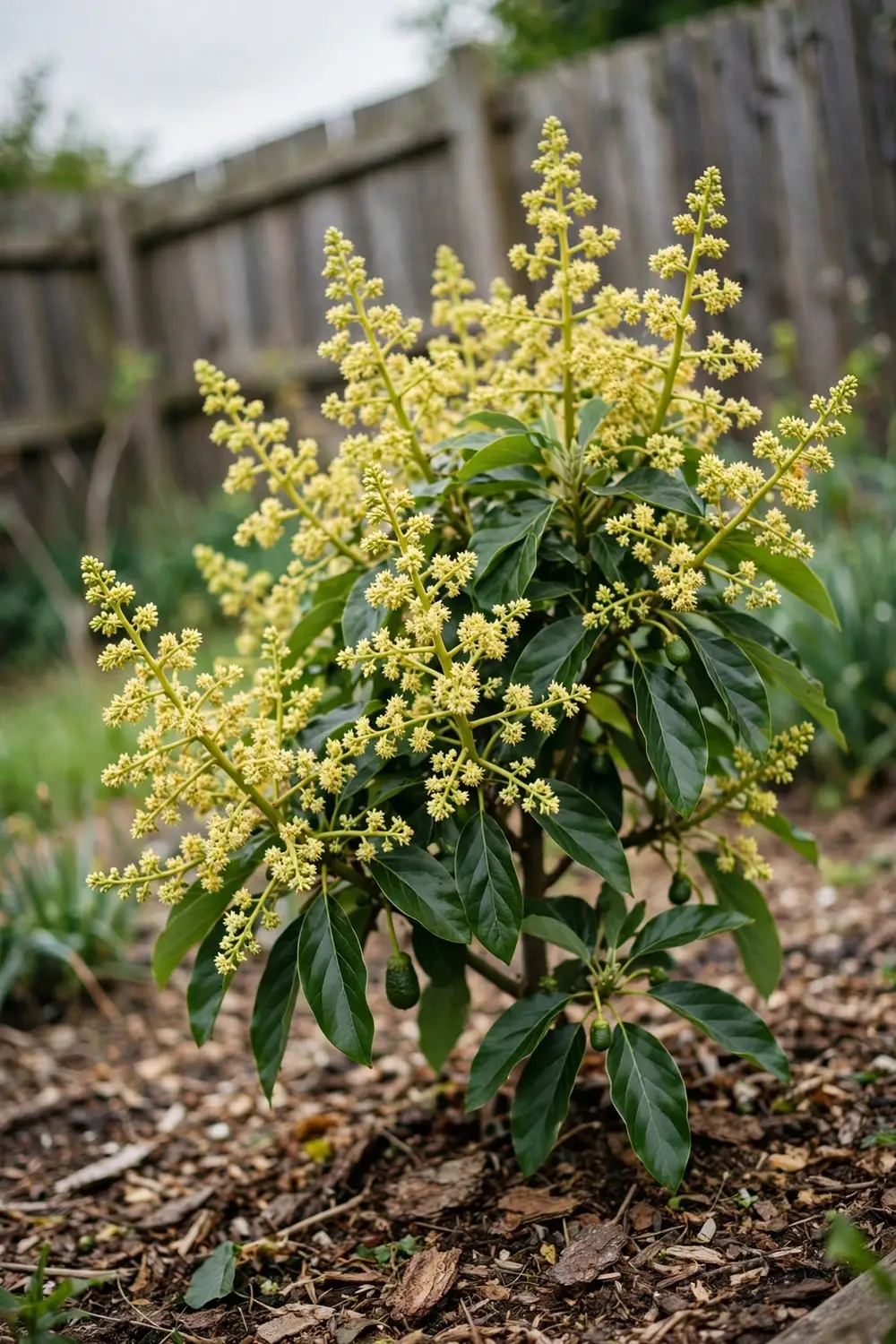

Count 3 marks on one flower cluster before you touch a brush. That is how to turn avocado flowers into fruit: read the flower phase, move pollen from a male-phase flower to a female-phase flower, and hold water steady while the tree decides what to keep. The rest of this page is 10 moves, from the two-day flower cycle to the two-month fruit-set check.
An avocado flower is Persea americana in flower. Each flower opens twice over two days. The first opening works as a female flower that receives pollen. The second opening works as a male flower that sheds pollen. Pollination moves pollen from a male-phase flower to a female-phase flower. Fruit set means the pollinated flower holds and grows into fruit.
I brush pollen onto the stigma in the morning, because the female phase will not wait for the afternoon.
1. Learn the Two-Day Flower Cycle Before You Touch a Bloom
Each avocado flower opens twice, and the two openings do different jobs. The first opening is the female phase. The stigma stands ready to receive pollen. The flower then closes. The second opening is the male phase. The anthers shed pollen. The flower closes again, and its work ends.
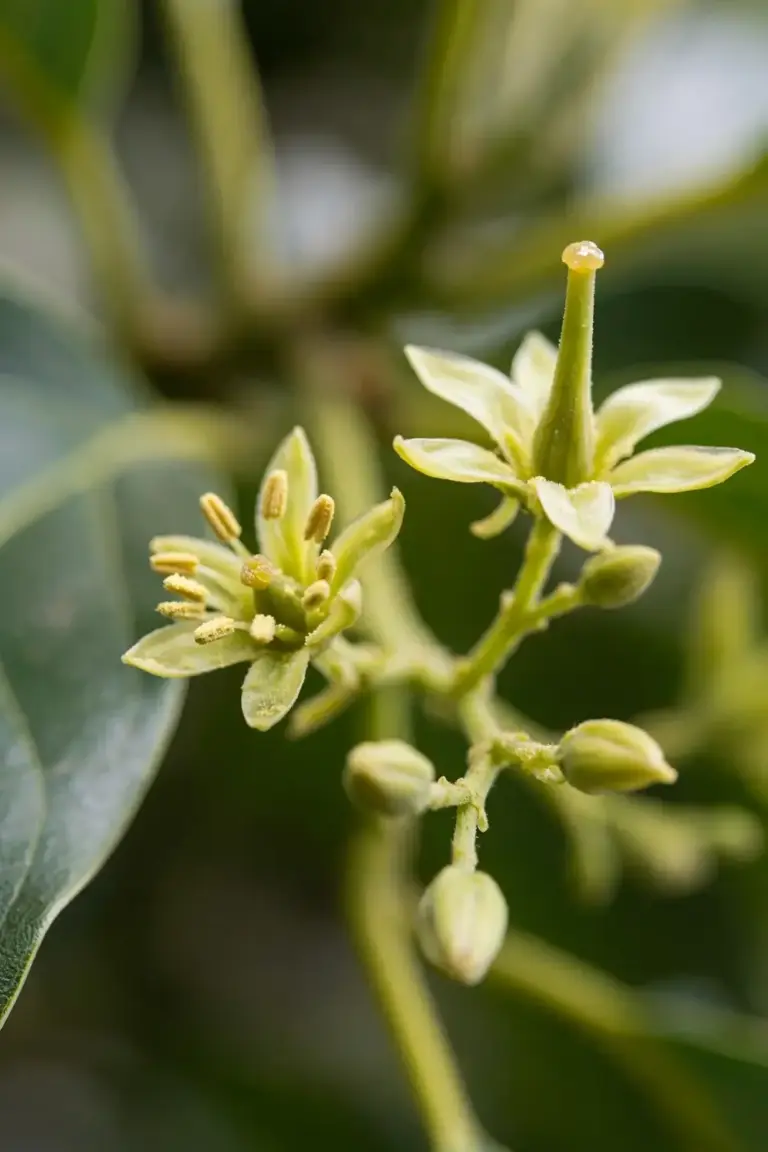
This split timing has a name. Botanists call it dichogamy: one flower, two phases, separated in time. The split cuts self-pollination, because a flower rarely carries its own pollen to its own stigma when the female and male phases never run at once on the same flower. The tree pushes pollen toward other flowers instead. The University of Hawaii’s CTAHR avocado guide describes the two flowering types and states that pollination is usually done by honeybees and other insects.
Watch one cluster for two mornings and note which flowers show a fresh, upright stigma in the center, because those are female-phase flowers. Note which flowers show anthers dusted with pale pollen, because those are male-phase flowers. The two groups look alike at a glance. The stigma tells them apart. A female-phase flower shows one central stalk with a sticky tip. A male-phase flower shows anthers around the center.
Time your work to the female phase, because pollen placed on a female-phase stigma can fertilize the flower, while pollen placed on a male-phase flower goes nowhere. The female window lasts hours, not days. Miss it, and that flower closes for good.
2. Match a Type A Tree With a Type B Tree for Cross-Pollination
Avocado cultivars fall into two flowering groups. Type A cultivars open female in the morning of day one and male in the afternoon of day two. Type B cultivars open female in the afternoon of day one and male in the morning of day two. The two groups complement each other. When a Type A tree shows female flowers in the morning, a Type B tree nearby shows male flowers shedding pollen. When the Type B tree shows female flowers in the afternoon, the Type A tree shows male flowers.
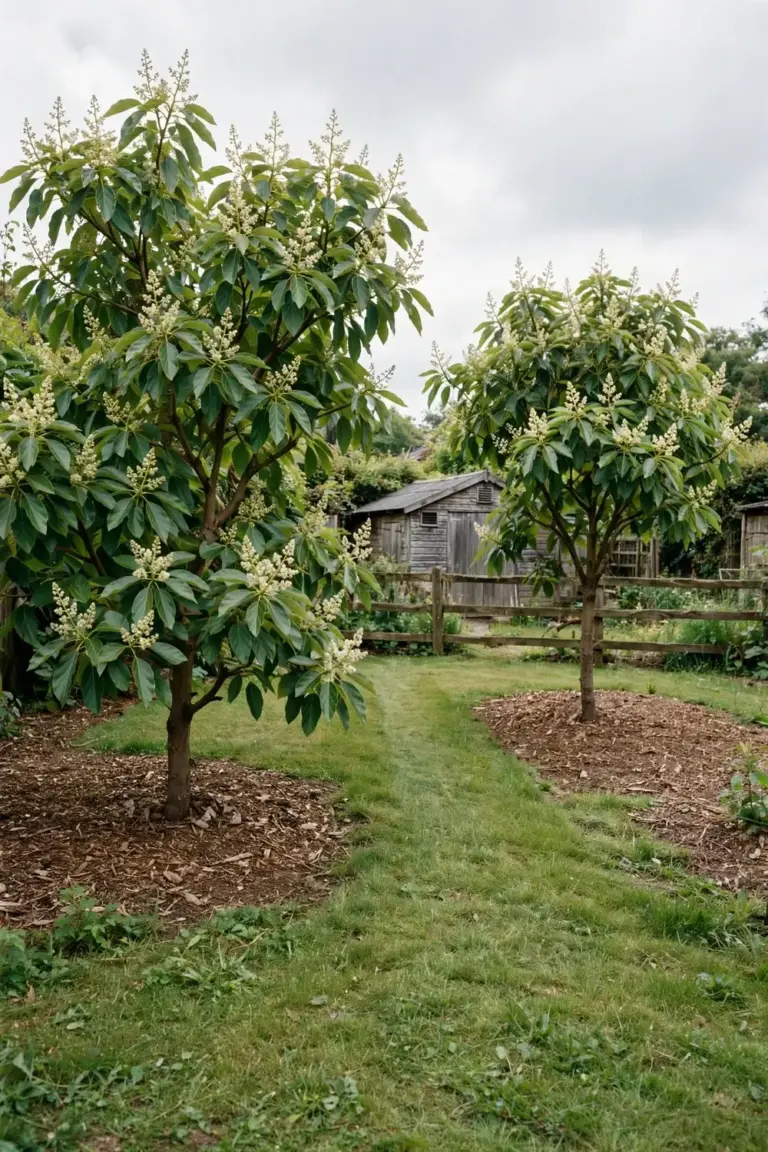
Plant one tree of each type. Space them so bees cross between the canopies without a long flight. A second tree in the same garden beats a second tree two streets away. Pollen moves on insect bodies, not on wind. Short distance means more visits.
Site the pair for sun and shelter. Both trees need full sun through the morning, when female-phase flowers open and bees fly. A windbreak on the cold side cuts flower loss on blustery spring days. Leave clear ground under each canopy for the bees to work low flowers. Mow the grass short under the trees during bloom so fallen petals stay visible and the bees find the flowers fast.
Pick varieties sold in Australia. Hass leads Australian plantings and sits in Type A. Wurtz suits small gardens and sits in Type A. Shepard, the green-skinned Queensland favorite, sits in Type B. Fuerte and Sharwil sit in Type B. Edranol sits in Type B. Reed sits in Type A.
| Variety | Flower Type | Notes for an Australian Garden |
|---|---|---|
| Hass | A | The standard eating avocado. Pairs with Shepard, Fuerte, or Sharwil. |
| Wurtz | A | Compact tree for a small garden. Pairs with a Type B tree. |
| Reed | A | Large round fruit. Pairs with a Type B tree. |
| Shepard | B | Green-skinned Queensland variety. Pairs with Hass, Wurtz, or Reed. |
| Fuerte | B | Pear-shaped fruit. Pairs with Hass, Wurtz, or Reed. |
| Sharwil | B | Buttery flesh. Pairs with Hass, Wurtz, or Reed. |
| Edranol | B | Early-season fruit. Pairs with Hass, Wurtz, or Reed. |
The table rests on the Avowest nursery flowering-class list for every variety except Shepard, which the Agronomy 2024 outcrossing paper names as a Type B cultivar. Check the label at purchase. Nursery stock sometimes carries a variety name with no flower type on the tag. Ask the nursery to confirm the type before you buy.
One tree still fruits, because avocado flowers are self-fertile in the sense that own-pollen can fertilize own-flowers when the phases overlap. Overlap happens on warm days when the timing slips. A single tree sets fruit. A pair sets more, because cross-pollen arrives while the female phase stands open.
3. Hand-Pollinate One Tree With a Small Brush
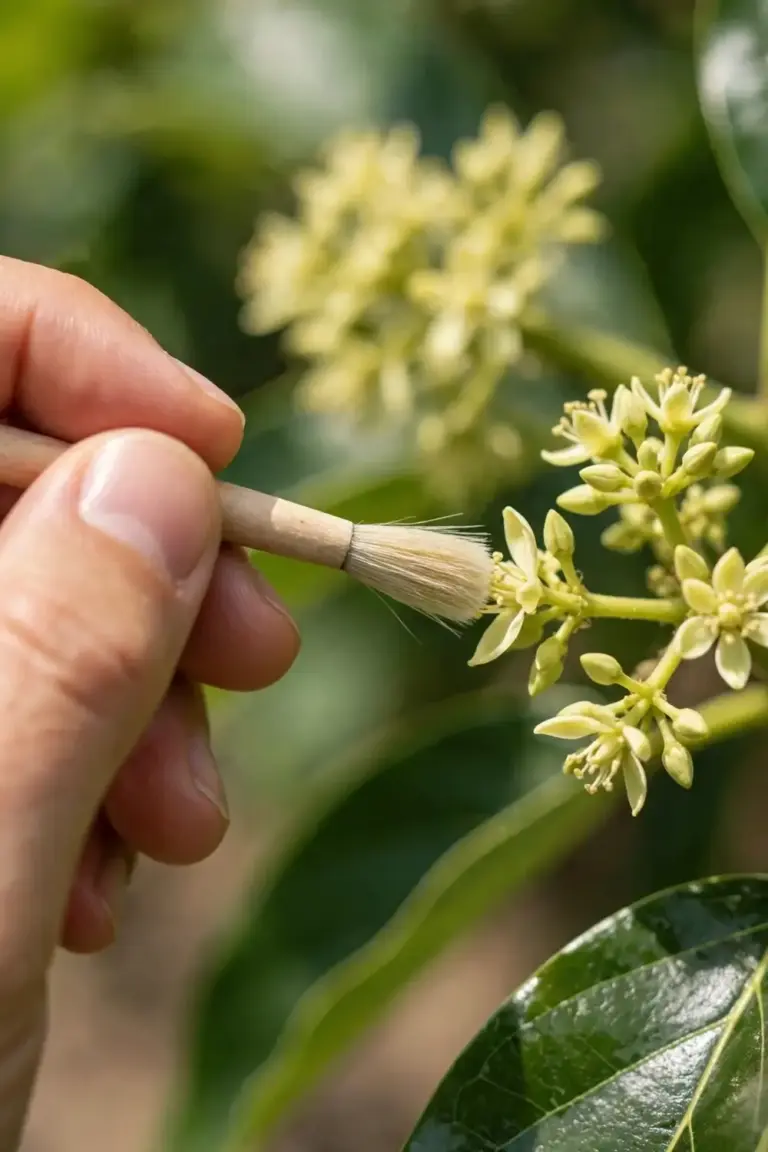
Hand pollination suits a single tree. It also suits a pair whose timing slipped. Hand pollination answers how to turn avocado flowers into fruit when one tree stands alone. The job is simple: move pollen from male-phase flowers to female-phase flowers. The tool is a small soft brush, a cotton swab, or a male flower held by its stem.
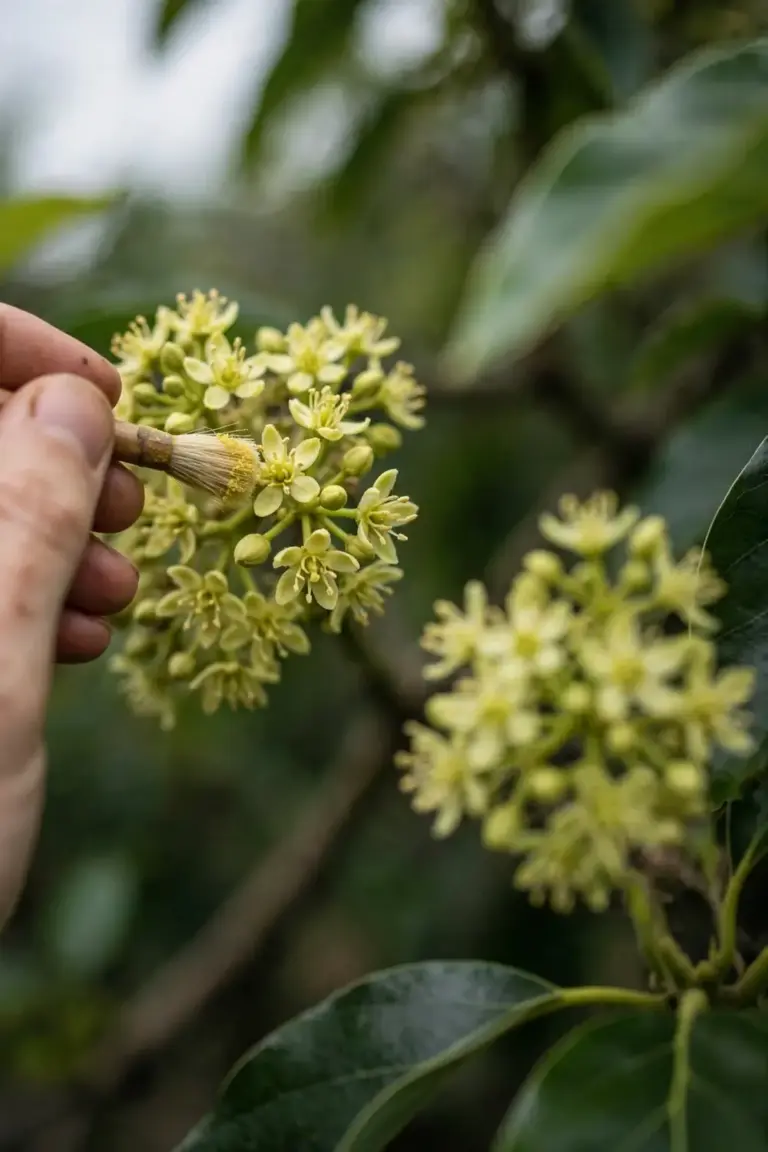
Work in the morning for a Type A tree. Female-phase flowers open in the morning. Work in the afternoon for a Type B tree. Female-phase flowers open in the afternoon. Match the brush to the female clock of the tree in front of you.
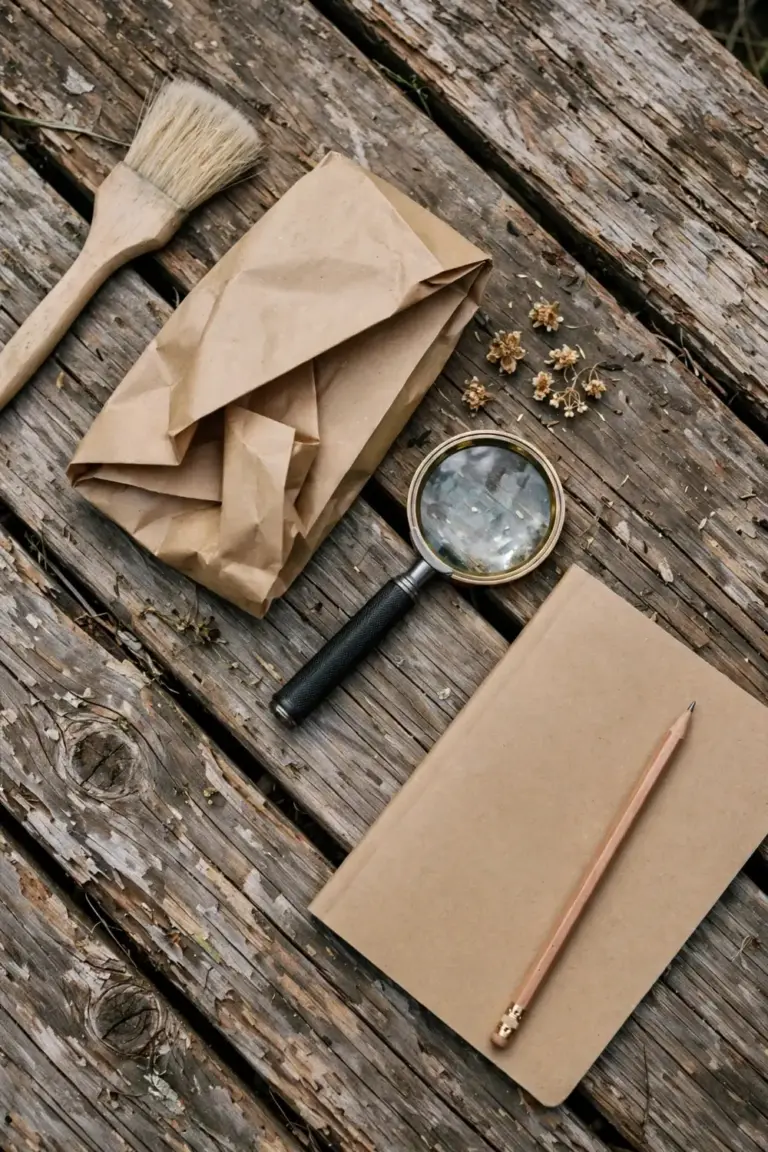
Pick a soft brush with fine bristles. A small watercolor brush or a makeup brush works. A stiff brush tears petals. Clean the brush between trees so pollen from one variety does not mix with pollen from another. A quick shake over a sheet of paper clears the bristles. Carry a second brush as a spare, because one brush drops into the mulch at the worst moment.
Find male-phase flowers first, looking for anthers dusted with pale pollen, and touch the brush to the anthers so pollen grains stick to the bristles. Find female-phase flowers next, looking for the single central stigma with a sticky tip, and touch the brush to the stigma until it carries a visible dusting of pollen grains.
Repeat across the canopy. Pollinate flowers on several branches, not one cluster. Pollinate low flowers and high flowers. A ladder reaches the high clusters. Pollinate on two or three mornings in a row. New flowers open each day. One pass covers one day of flowers only.
Direct contact works too. Pick a male-phase flower. Touch its anthers straight to the stigma of a female-phase flower. The direct-contact method proved most effective in the controlled-pollination study by Alcaraz and Hormaza, cited in avocado grower Greg Alder’s hand-pollination guide. The brush method works when the tree is tall and the flowers sit out of reach.
Pollen from a second variety lifts results. Collect male flowers from a neighbor’s tree of the opposite type. Carry them home in a paper bag. Brush their pollen onto your female-phase flowers the same morning. Ask the neighbor first. Leave enough male flowers on their tree.
4. Store Male Flowers for One Day When Timing Misses
Timing misses happen. Male flowers open after the female flowers closed. A single tree shows this gap on cool days. Stored pollen bridges the gap. Collect male-phase flowers in the afternoon. Use them the next morning on female-phase flowers.
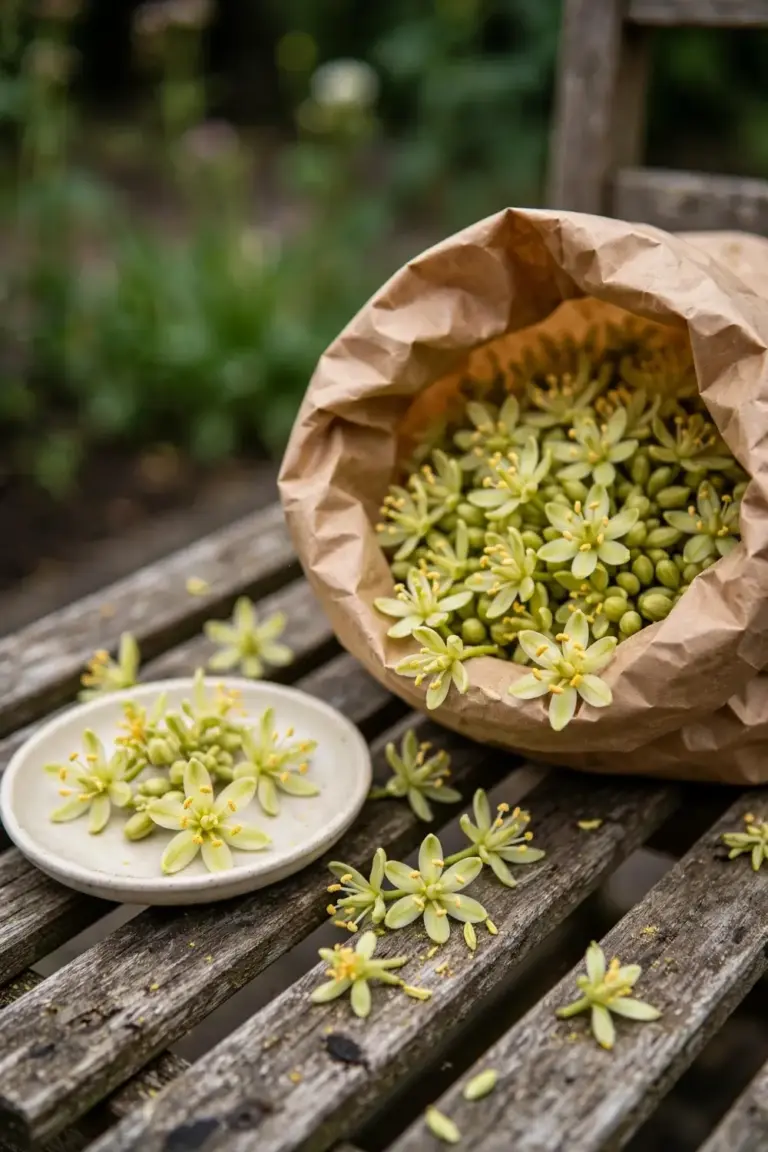
Pick flowers with visible pollen on the anthers and lay them in a paper bag or a small container, then store them cool and humid. Pollen used within a day loses only a little viability, according to avocado grower Greg Alder’s summary of pollen-storage research. The best storage conditions he cites are high humidity and low temperature. A refrigerator crisper drawer meets those conditions.
Check the stored flowers before use. Look for pollen still sitting on the anthers. Brush the stored pollen onto fresh female-phase flowers. Work gently. Cold flowers bruise fast. Warm them in your hand for a minute before brushing.
Do not store pollen for a week. Viability falls with time. One day is the working limit for a home gardener. Collect fresh male flowers each afternoon during the bloom.
Label the bag. Write the variety and the day on the paper. Two bags from two varieties look identical on the bench. A label stops a mix-up.
5. Bring Bees and Flies to the Canopy at Bloom
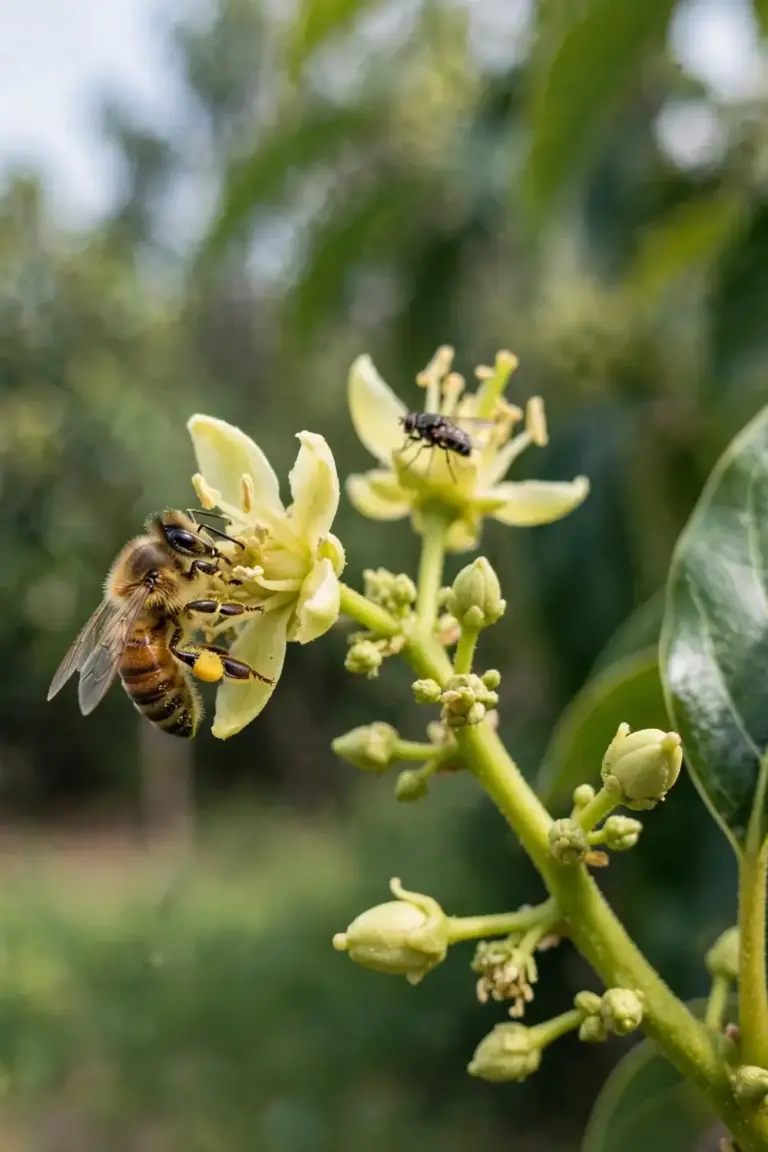
Insects move avocado pollen. Honeybees carry the load in most gardens. Flies carry pollen too. A New South Wales study recorded honeybees, one wasp species, one ant species, 11 fly species, and one species each of beetles and lacewings visiting Hass and Fuerte flowers. Australian field trials found blow flies and the drone fly Eristalis tenax pollinating Hass avocados in southwestern Australia. Bees lead. Flies back them up.
Grow flowers near the tree, planting basil and coriander beside the canopy, since both flower fast and draw insects. Plant marigolds and lavender along the bed edge. Leave a patch of clover in the lawn under the tree. Flowering ground cover feeds insects between avocado blooms. The attracting beneficial insects guide covers the wider crew of predators and pollinators that keep a garden working.
Skip the tidy-up during bloom. Fallen leaves and bare soil patches shelter ground-nesting bees. A mulch layer holds moisture and gives insects a cool surface. Keep the mulch thin under the canopy so it does not smother the soil.
Water a shallow dish for insects. Set a saucer of water with pebbles near the tree. Bees drink from the pebble tops without drowning. Refill the saucer on hot mornings.
Watch the canopy at mid-morning and count insects on the flowers for one minute. Ten or more visits in a minute means the insect crew is working, while fewer than three visits means the tree needs your brush. Hand pollination covers the gap while the insect numbers build.
6. Hold Soil Moisture Steady From Bud Extension to Fruit Drop
Water decides how many pollinated flowers stay on the tree. The tree needs steady moisture from flower bud extension through flowering and past the first fruit drop. The flowers themselves raise water demand. Australian extension guidance states that the evaporative surface of the tree increases by up to 90 percent at flowering, and that moisture stress must be avoided from flower bud extension to flowering, when the tree carries high water requirements through flowering until after the first fruit drop. A review of avocado irrigation research in the journal Plants reports that water stress at this stage provokes flower abortion, fruitlet abscission, and early leaf drop.
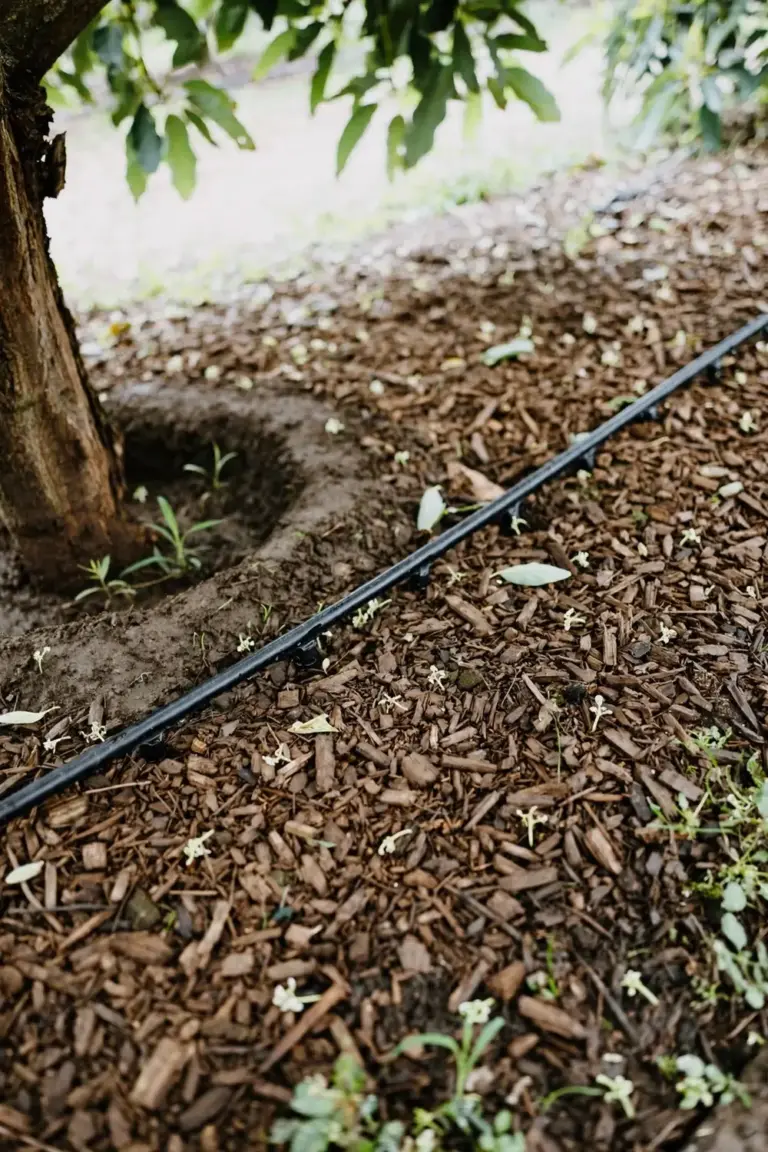
Check soil moisture before you water. Push a finger or a screwdriver 10 cm into the soil under the canopy edge. Water when the top 10 cm feels dry. Water slowly so it soaks in. A fast hose run sheets off dry soil and never reaches the roots. The soil health guide explains how living soil holds that moisture between waterings.
Mulch the root zone. A 5 to 8 cm layer of coarse mulch holds moisture and cools the soil. Keep the mulch 15 cm clear of the trunk. Mulch piled against the trunk holds wet bark and invites rot. What is mulching covers mulch types and depths for the whole garden.
Water in the morning. Morning watering cuts leaf wetness through the night. Wet leaves overnight invite fungal trouble. Morning water reaches the roots before the heat of the day.
Do not swing between drought and flood. A dry week followed by a deep soak drops fruitlets. The tree reads the flood as a shock after the drought. Steady beats generous. Small, regular waterings hold more fruit than one big soak.
Skip fertilizer at bloom. Feeding pushes soft leaf growth that competes with the flowers for the tree’s energy. Feed after fruit set, when the fruitlets hold firm.
7. Watch the 20 to 25 Degree Window at Bloom
Temperature sets the pace of the flower cycle. The ideal range for avocado flowering runs from 20 to 25 degrees Celsius, according to the Avowest nursery flowering guide. Inside that window, female and male phases overlap for hours. Pollen moves. Fertilization follows.
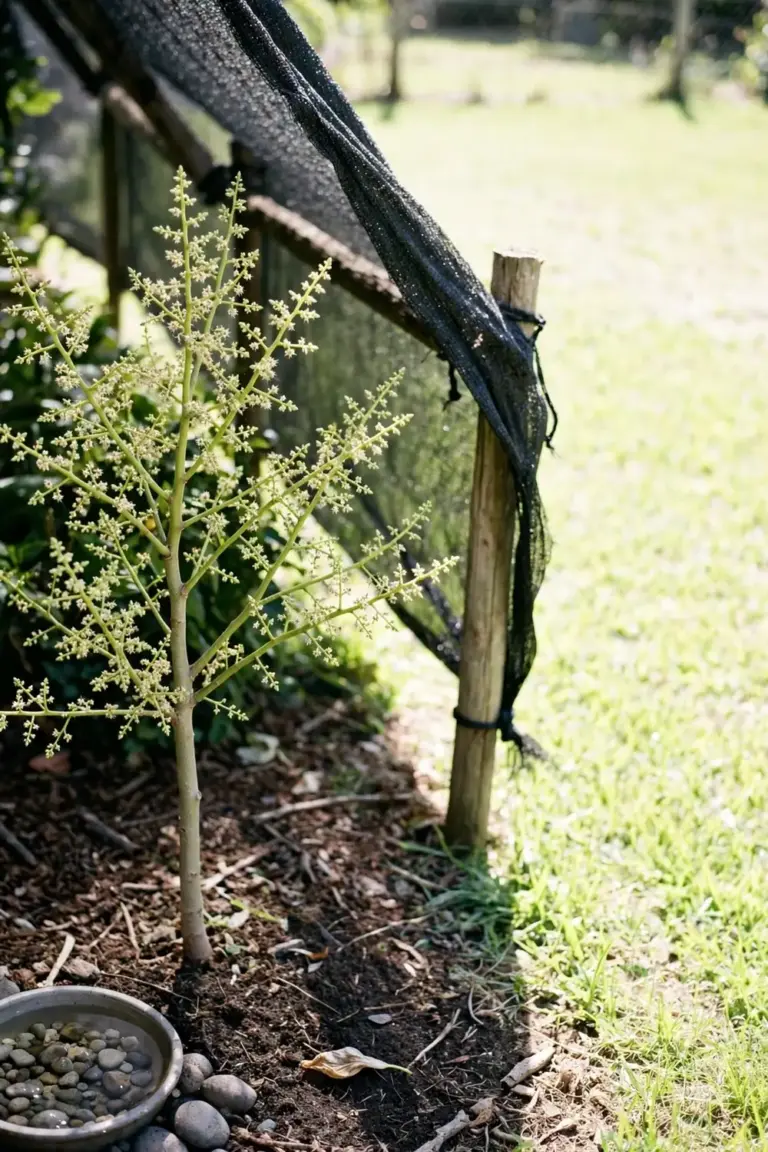
Cool weather stretches the cycle, so female-phase flowers open late, male-phase flowers open late, and the two phases may never meet on the same day. Pollination falls. Warm weather shortens the cycle. The phases overlap more. Pollination rises.
Heat above the window hurts, because flowers abort, fruitlets drop, and the tree sheds the load it cannot carry. Shade cloth over a small tree cuts the worst afternoon heat. Water the soil in the morning so the roots stay cool. A windbreak on the hot side cuts the drying wind that strips moisture from the flowers on a 35-degree afternoon. The tree reads heat plus wind as one stress, and the flowers pay for it.
Frost kills open flowers. A late frost in a cold pocket wipes a whole bloom. Site the tree where cold air drains away, not where it pools. Cover a small tree with frost cloth on a forecast frost night. Remove the cloth in the morning so insects reach the flowers. The late frost protection guide covers cloth, water, and siting for frost nights.
Track the daily maximum during bloom with a cheap maximum-minimum thermometer on the trunk, because days at 20 to 25 degrees mean good pollination weather, days below 15 degrees mean slow openings and poor overlap, and days above 30 degrees mean stress and drop.
8. Expect Most Flowers to Drop and Count Fruit Set, Not Blooms
A full bloom looks like a promise. It is not. Most avocado flowers fall. Under natural conditions, fruit set measured just 0.15 percent. The drop runs hardest in the two months after flowering, according to research on avocado pollination. Flowers fall. Fruitlets fall. The tree keeps a small share.
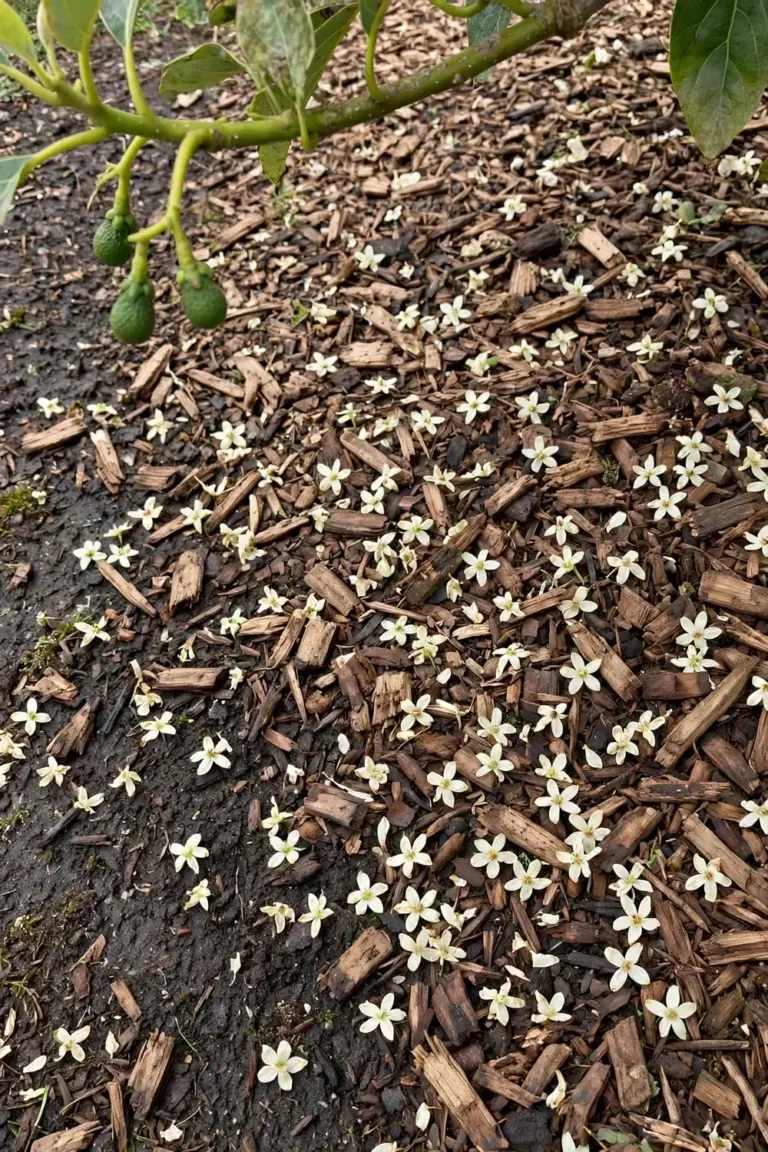
The numbers behind the drop are stark. For about every 700 flowers a tree produces, one fruit sets, according to a California Avocado Growers summary of a talk by avocado researcher Inaki Hormaza. Hand pollination lifted fruit set to 2.8 percent, or about 3 fruit for every 100 flowers. Hand pollination helps. It does not turn every flower into fruit.
Read the drop as the tree budgeting, because a tree carries a finite store of carbohydrates, each fruit costs energy for a year, and the tree drops the flowers it cannot feed. Heavy flowering triggers a strong crop-load adjustment through spring and summer fruit drop episodes, as the avocado productivity literature describes. The tree keeps what it can ripen.
Count fruit set, not blooms. Count fruitlets the size of a pea two months after flowering. Count them again at marble size. A tree holding 100 fruitlets at marble size carries a good crop for a home garden. A tree holding 10 fruitlets still gives a useful harvest. A tree holding none needs a diagnosis, not a panic.
Do not chase every fallen flower. Fallen flowers feed the soil. Sweep them into the mulch. The tree already spent their cost. The next bloom gets a better chance when the soil stays fed and moist.
9. Stop Spraying Insecticide While Flowers Are Open
Insecticide and pollination do not mix, because a spray that kills pests kills pollinators too, bees carry spray residue back to the hive, and flies die on the petals.
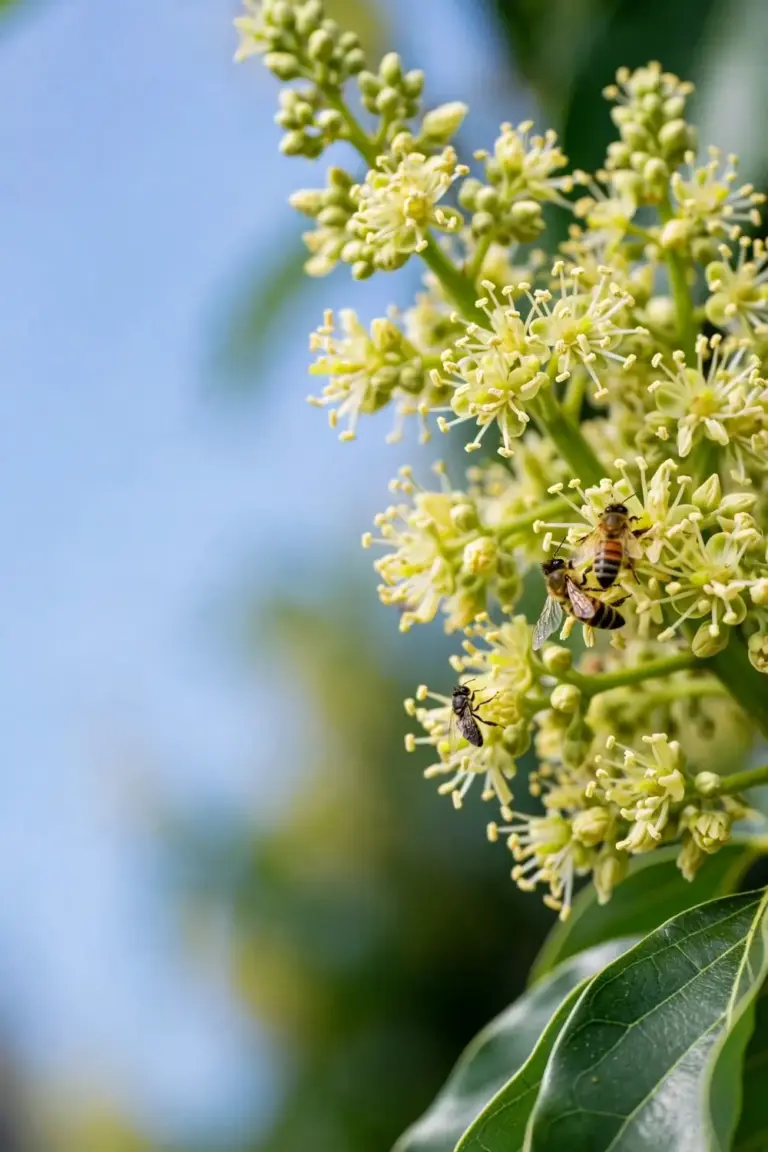
Stop insecticide sprays at first bloom. Hold the stop through petal fall. Resume only when the fruitlets hold firm and the flowers close. Two to three weeks of patience protects the whole crop.
Check for pests by hand during bloom, looking for thrips on the petals and scale on the stems, then squash small outbreaks with a thumb. Wash aphids off with a sharp jet of water in the morning. Water knocks them down without poison.
Read every label before you spray anything near the tree. Some products carry bee warnings that ban use on open blooms. Others allow evening use when bees rest. Follow the label. The label is the law for that product.
Tell the neighbor. A neighbor spraying a flowering hedge next door can kill your pollinators too. Ask them to hold sprays until your bloom finishes. Offer to hand-pollinate their tree in return.
When pest pressure forces action, reach for water first. A sharp morning jet dislodges aphids and thrips without residue. A thumb squashes scale crawlers on young stems. A sticky trap hung outside the canopy catches flying pests without touching a flower. Save any spray for after petal fall, and read the label for bee warnings before the bottle leaves the shelf.
10. Check Fruit Set Two Months After Flowering
Two months after flowering tells the truth, because the early drop ends and the fruitlets that remain will mostly stay. Walk the canopy and count, looking for fruitlets the size of a marble and the tiny stem holding each one.
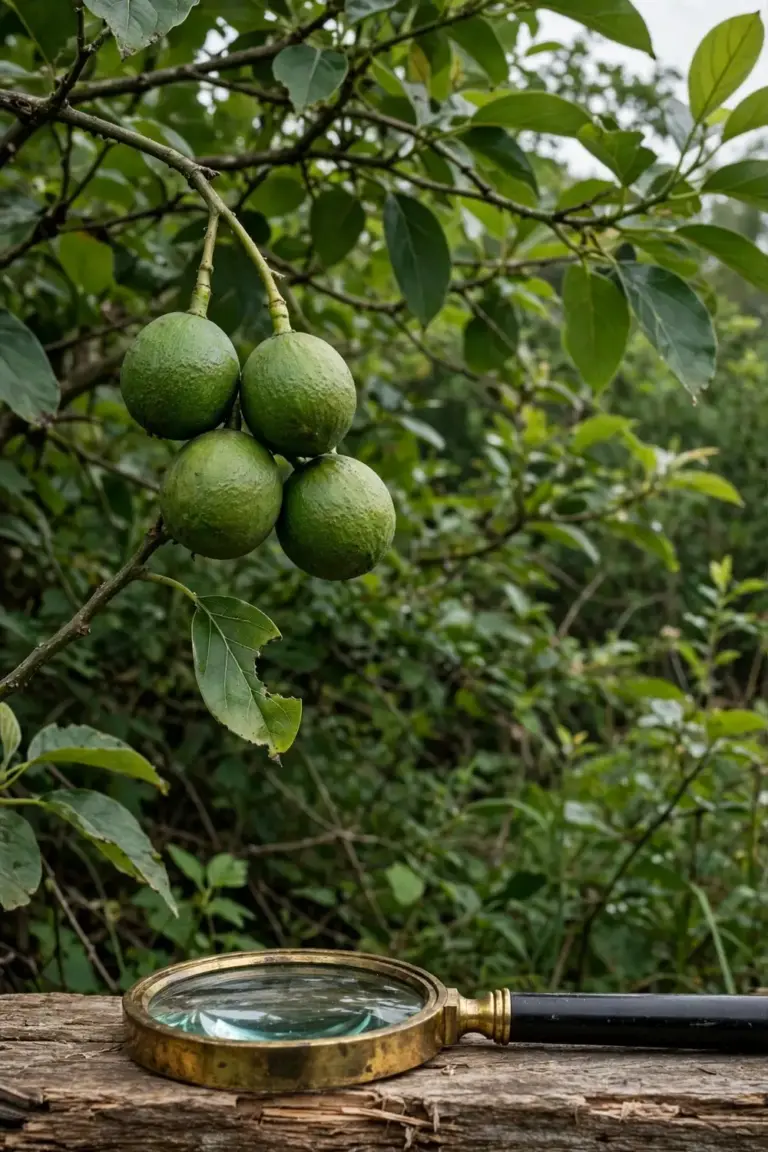
Sort the result into three groups. Group one: fruitlets holding firm across the canopy. The tree did its job. Group two: fruitlets holding on one side only. Pollination reached one side. Hand-pollinate the bare side next bloom. Group three: no fruitlets at all. Something failed. Work the checklist: no polliniser tree, cold bloom, dry soil, or insecticide at bloom.
Mark the calendar for the next bloom. Write down the variety, the bloom dates, the weather, and the fruitlet count. The note turns one season into a record. Next year the record tells you what to fix first.
Photograph the canopy at fruit-set check. One photo from the same spot each year shows which side fruits and which side stays bare. The bare side gets the brush next bloom. The photo also shows whether the canopy thinned or thickened over the year, which changes how much light reaches the inner flowers.
Thin nothing by hand at this stage, because the tree already thinned itself, so let the remaining fruitlets grow. Thin only when the tree holds clusters so tight that fruit rubs fruit. Rubbing scars the skin.
Feed the tree after fruit set. A balanced fertilizer at the label rate supports the fruitlets now. Water the fertilizer in. Mulch again if the layer thinned. The tree carries fruit for a year. It needs steady food and water for the whole run.
Frequently Asked Questions
Yes. Avocado flowers are self-fertile, and a single tree sets fruit when its own female and male phases overlap on warm days. The yield runs lower than a paired planting, because the phase timing limits self-pollination. Plant a second tree of the opposite flower type for a bigger crop. Hand pollination closes the gap when space allows one tree only.
Insects move avocado pollen. Honeybees carry the main load in most gardens, and flies back them up. A New South Wales study recorded honeybees, one wasp species, one ant species, 11 fly species, and one species each of beetles and lacewings visiting Hass and Fuerte flowers. Grow flowers near the tree, stop insecticide at bloom, and let the insect crew work.
Hand-pollinate when female-phase flowers stand open. Work in the morning for a Type A tree and in the afternoon for a Type B tree. Brush pollen from male-phase flowers onto the sticky stigma of female-phase flowers. Repeat on two or three mornings in a row, because new flowers open each day. Store male flowers for one day when timing misses.
Most avocado flowers fall by design. Under natural conditions, fruit set measured just 0.15 percent, and the drop runs hardest in the two months after flowering. A bare tree still needs a check. Look for cold bloom weather, dry soil, a missing polliniser tree, or insecticide sprayed at bloom. Fix the cause before the next bloom, and hand-pollinate the next flowers.
Off-season blooms appear through the year on some trees. Treat them the same way: read the phase, move the pollen, hold the water. Cool weather stretches the flower cycle, so the female and male phases may never meet on the same day. Hand pollination covers the gap. Frost kills open flowers, so cover a small tree with frost cloth on a forecast frost night and remove the cloth in the morning so insects reach the flowers.
Fruitlets show within weeks of pollination, starting pea-sized and growing to marble size about two months after flowering. The tree then carries the fruit for roughly a year before harvest, according to the California Avocado Growers summary of researcher Inaki Hormaza’s talk. Count fruitlets at two months to judge the crop. Feed and water the tree through the whole run.
Walk the Canopy Each Morning During Bloom
Pollination is a morning habit, not a one-day event. Walk the canopy each morning during bloom, read the flower phases, brush pollen onto the open female flowers, check the soil moisture, and count the insects. The tree does the rest.
Plant the pair when space allows. Hass with Shepard covers the common Australian pairing. Wurtz with Fuerte suits a small garden. One tree still fruits with a brush in your hand. That is how to turn avocado flowers into fruit on a home tree: read the phase, move the pollen, hold the water. The bloom lasts weeks. The habit lasts the season.