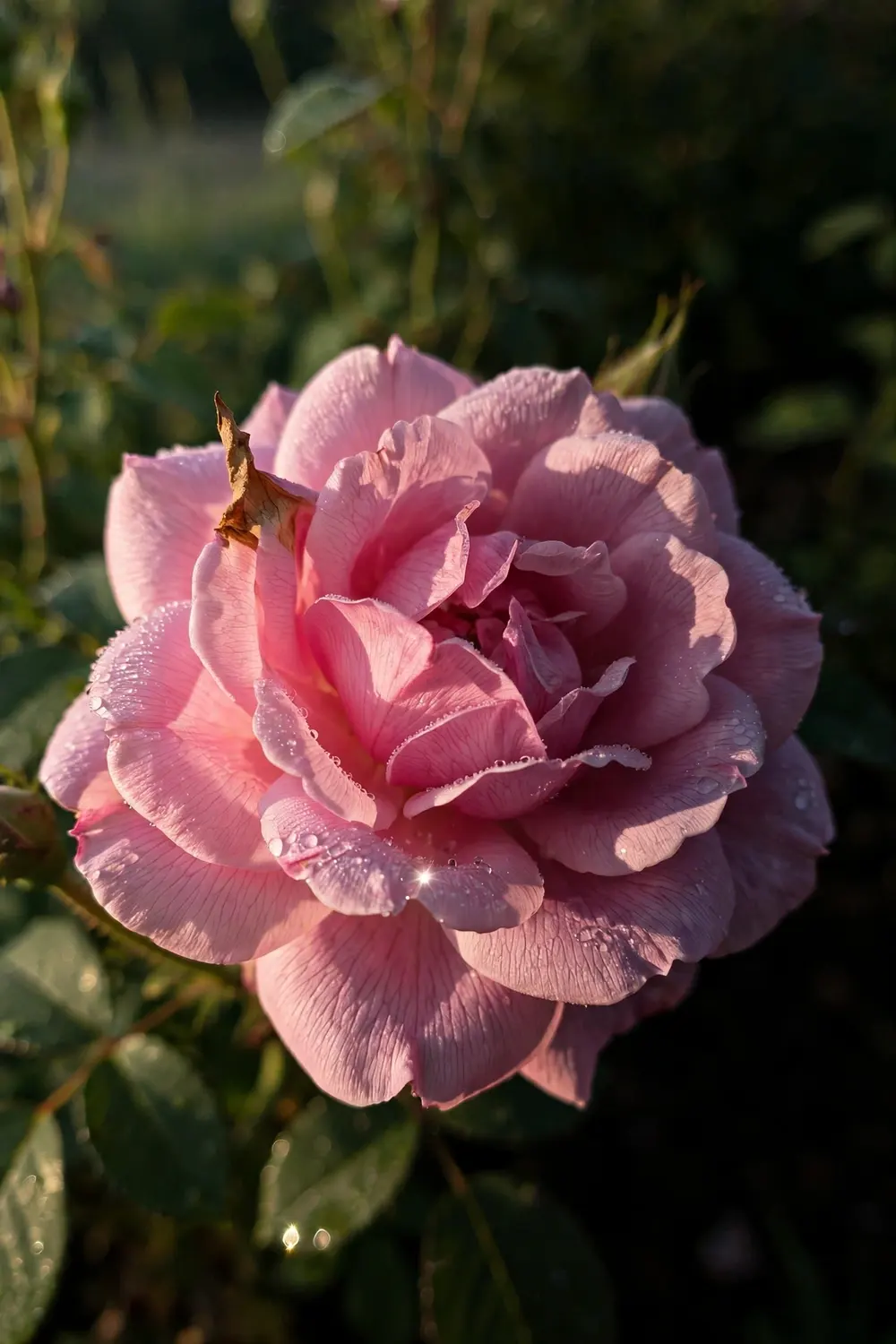

Growing roses for tea takes one fragrant variety, six to eight hours of sun, and the discipline to never spray a systemic. Give a rose bush that combination, feed it organically, and you get petals safe enough to brew. If you are learning how to grow roses for tea, start by choosing the right plant, because the hybrid tea roses sold for bouquets are bred for vase life, not for eating. The first confusion to clear is the biggest one on the internet: a “tea rose” (hybrid tea rose) is a flower class, not a drink ingredient. Rose tea is a tisane made from fragrant rose petals grown food-safe. The right roses are the fragrant old species and their close kin: Damask (Rosa x damascena), rugosa (Rosa rugosa), French rose (Rosa gallica), cabbage rose (Rosa x centifolia), and dog rose (Rosa canina). These are the roses with real perfume, and perfume is the entire point. TeaTime Magazine’s edible-rose guide puts the rule plainly: all organically grown roses are technically edible, but only fragrant ones impart real flavor, and the white heel at the petal base must be trimmed because it tastes bitter. In China this is an old tradition, not a new fad: dried rose buds and petals, mei gui hua, have been steeped for generations, and the rugosa rose behind many of them grows wild in northeastern China.
One honesty rule governs everything else here. Never brew petals from florist bouquets, grocery stems, or any rose sprayed with systemic insecticides. Systemic products move through the whole plant, so washing the petals does not remove them. Your tea rose must live its whole season under organic care. Learn the foundation of that kind of care in the guide to soil health and pest resistance.
1. The Disambiguation: Tea Rose vs Rose Tea
The internet is wrong about this more often than it is right, and search engines are wrong along with it. A hybrid tea rose is a class of modern garden rose (think Peace, Mister Lincoln, and the long-stemmed florist types), bred for big, perfect blooms on long stems. “Tea” in that name refers to the scent of tea leaves found in some of them, not to any drink. You do not brew your tea from these by default.
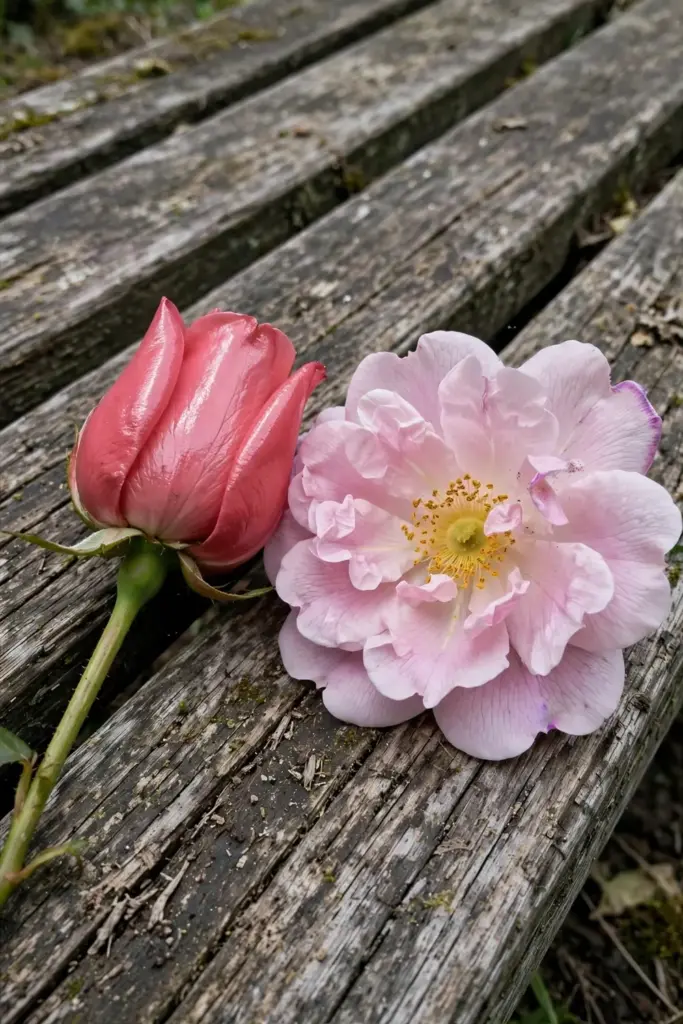
Rose tea is the opposite direction: petals and buds of fragrant roses, grown without synthetic pesticides, dried and steeped. The two ideas share one word and nothing else. Bing’s Copilot famously recommends Peace and Enchanted Peace “for tea-making,” which is exactly the confusion this article exists to prevent. Check your plant tag before you brew: if it says hybrid tea, it is a flower-class label, and you should only harvest from it if it is a fragrant variety that you personally grew spray-free.
Rose petal tea and rosehip tea also get mixed up. Petal tea comes from the blossoms; rosehip tea comes from the hips, the fruit that forms after pollination, usually from rugosa or dog rose. Both are real and both are food-safe when grown organically, but they are different harvests from different plant parts, picked at different times.
| What you are reading | What it actually is | Can you brew it? |
|---|---|---|
| Hybrid tea rose | A flower class bred for showy blooms (Peace, Mister Lincoln) | Only if fragrant, organically grown, and harvested from your own unsprayed plant |
| Rose petal tea | Petals and buds of fragrant species, dried and steeped | Yes, the subject of this guide |
| Rosehip tea | The fruit (hips), usually from rugosa or dog rose | Yes, a separate harvest after the petals fall |
| Florist bouquet | Conventionally grown cut flowers | No. Systemics cannot be washed off |
2. Quick Growing Specs for Tea Roses
Roses are forgiving about climate and strict about three things: sun, air, and clean inputs. The specs below cover the whole season in one glance.
| Spec | What to do |
|---|---|
| Sun | 6 to 8 hours daily, morning sun preferred |
| Soil | Rich, well-drained, generously amended with organic matter |
| Water | Deep soak at the base; keep foliage dry |
| Feeding | Organic fertilizer through the growing season; no systemics, ever |
| Planting depth | Bud union at or just above soil level; never bury the graft |
| Pruning | One major prune per year; deadhead for repeat bloom |
| First tea harvest | Second season for nursery plants; first season for established own-root plants |
| Harvest window | Buds just opening, picked early to midmorning |
3. Pick a Fragrant, Food-Safe Variety
Fragrance matters more than color. A red rose with no scent gives you pretty water; a fragrant one gives you tea. Let your nose decide at the nursery: bury your face in the bloom and buy the plants that smell like something you want to drink.
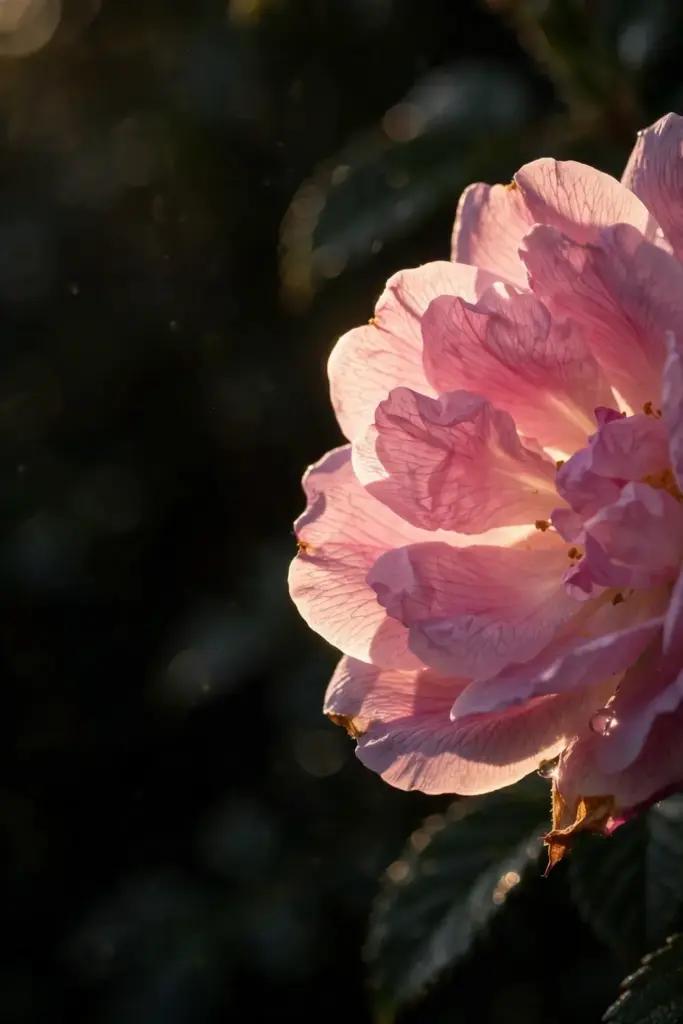
The five species below are the classic tea roses in the drink sense. All are widely available from rose nurseries, and all are real plants you can verify before you buy, per the scout’s Mohsina rule.
| Variety | Why it works for tea | Notes |
|---|---|---|
| Damask rose (Rosa x damascena) | The classic perfume rose; intense, old-rose fragrance; the oil rose of centuries | Repeat-blooming autumn damasks give more harvests than once-blooming summer types |
| Rugosa rose (Rosa rugosa) | Tough, disease-resistant, native to northeastern China; single fragrant blooms; huge hips | Spreads by suckers; listed invasive in parts of coastal New England and Virginia, so check local guidance |
| French rose (Rosa gallica) | The apothecary rose; strong old-rose scent; centuries of culinary use | Compact and hardy; once-blooming in most cultivars |
| Cabbage rose (Rosa x centifolia) | Hundreds of fragrant petals per bloom; the perfumer’s rose | Large shrub; needs space and good air flow |
| Dog rose (Rosa canina) | Lightly fragrant single blooms; outstanding hips for rosehip tea | Vigorous and thorny; best at the back of a border |
Choose own-root plants when you can. Grafted roses carry a bud union that can send up rootstock suckers, and while that matters mostly for looks, own-root plants also return true from the base if winter kills the top. Either works for tea. What matters is the growing history: ask the nursery whether the plant was raised without systemic insecticides, and prefer growers who sell to the organic market.
4. Where to Plant: Sun, Air, and the Contamination Rules
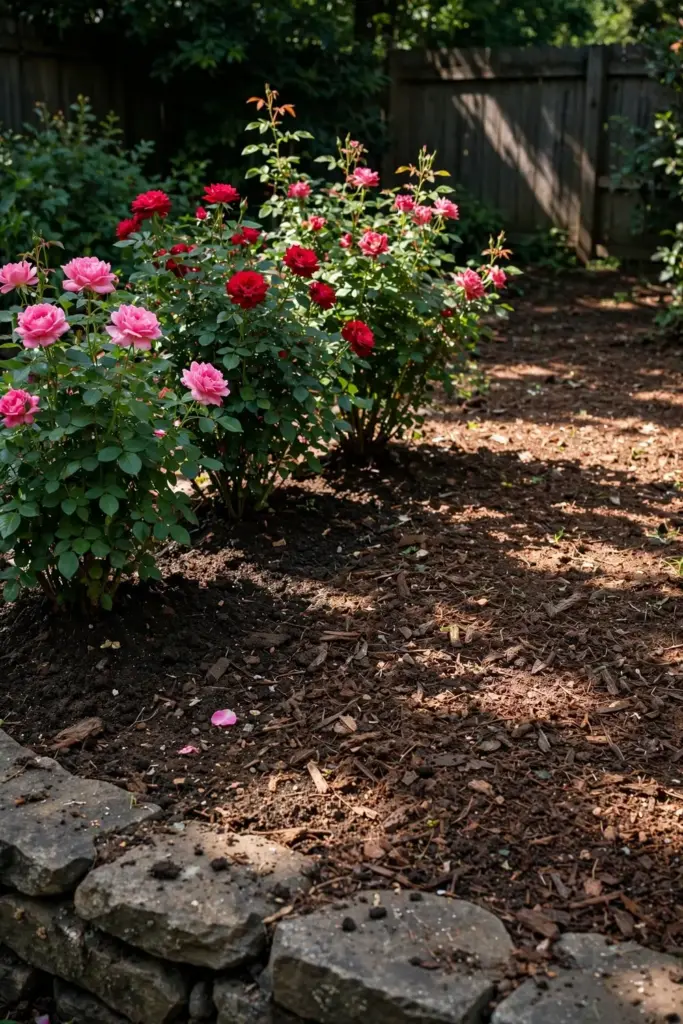
Roses need at least six hours of direct sun, and morning sun is the kind that matters most because it dries the leaves and heads off disease. TeaTime’s edible-rose guide names six to eight hours as the target. Pick an open spot with good air circulation, and space plants so mature canes never touch: crowding is how black spot and powdery mildew start.
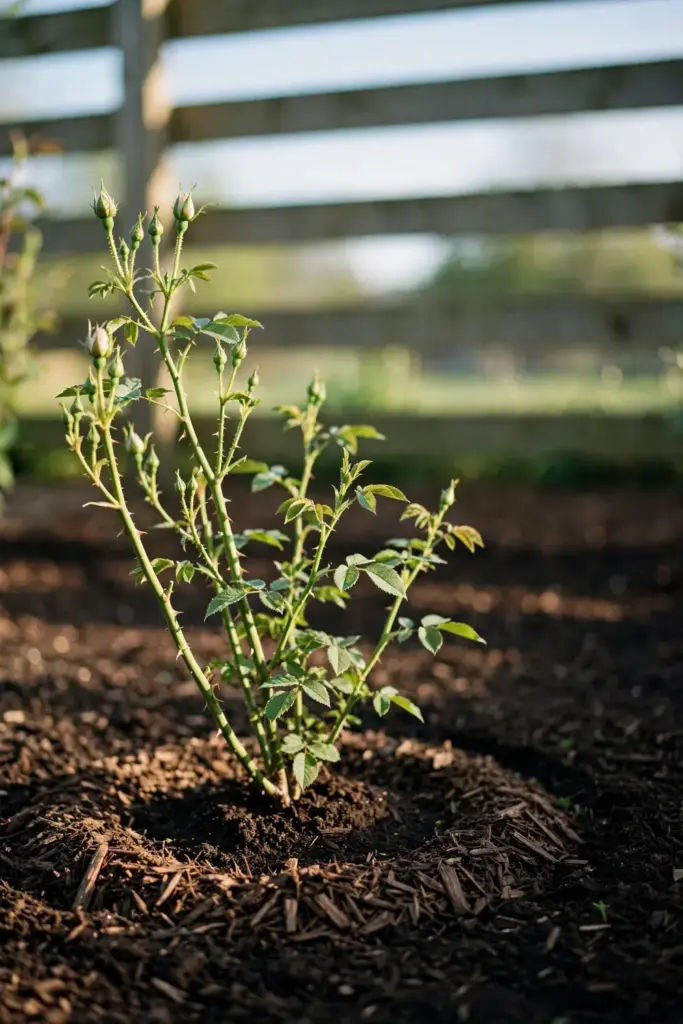
Then apply the contamination rules, which are the food-safety half of this article. Plant tea roses away from roads, railroads, and power-line corridors, where drift and runoff can contaminate petals. Do not plant them where the lawn gets sprayed, and keep a buffer from any neighbor’s spray drift. If you rent, grow in containers with fresh potting mix instead of the ground you cannot control.
If the plant arrived from a conventional nursery, be patient with the harvest. Give it at least one full growing season under your own unsprayed care, and brew only from buds that formed after you took over. Systemic insecticides persist in plant tissue for months, and no rinse fixes that. The honest move is to let the plant outgrow its chemical past before you pick a single petal.
5. Tools and Materials
Nothing here is exotic. The list is short because the discipline, not the equipment, is what keeps the petals food-safe.
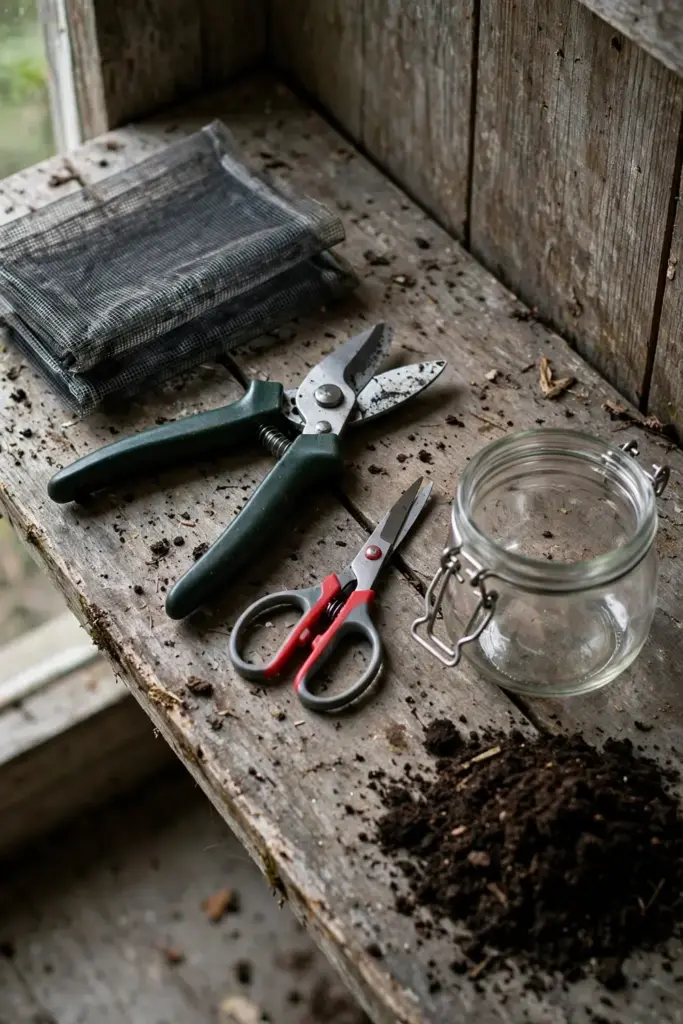
- A fragrant rose plant, own-root preferred, from a nursery you trust
- Compost and well-rotted manure for the planting bed
- Organic granular fertilizer (rose formula or all-purpose) and fish or alfalfa meal
- Sharp bypass pruners and a small pair of scissors for petal harvest
- A watering can or drip line for base watering
- Neem oil or insecticidal soap (contact only, never systemic)
- A mesh screen or dehydrator trays for drying
- Paper bags and sealed glass jars for storage
6. Step 1: Plant at the Right Depth in Amended Soil
Dig the hole twice as wide as the root ball and no deeper. Roses want their roots in enriched soil, not buried deep: set container plants so the soil surface sits level with the bed, and set bare-root plants so the bud union (the knobby graft point) sits at or just above soil level. Planting too deep is one of the classic rose failures, and the fix is a shovel and ten minutes.
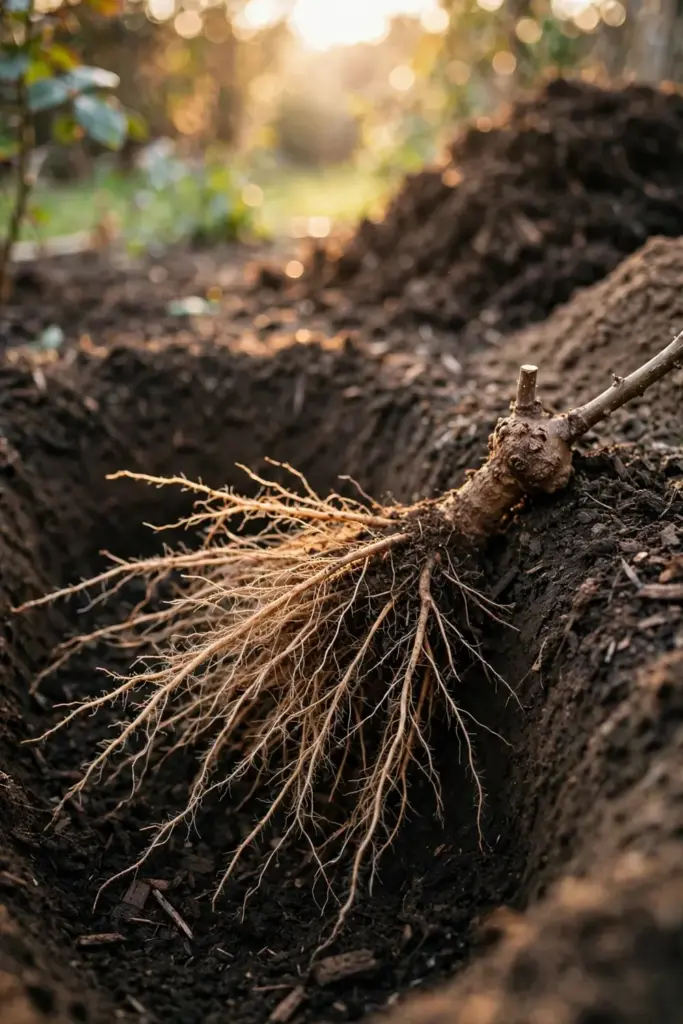
Work several shovelfuls of compost into the backfill and the whole bed, not just the hole. UF/IFAS advises enriching the entire planting bed with plenty of organic matter rather than creating one rich pocket in poor soil, which encourages roots to stay put instead of exploring. Water deeply at planting to settle the soil, then mulch 2 to 3 inches deep with shredded bark or straw, keeping the mulch a few inches away from the stems.
Fall planting suits roses well in most climates because roots establish while the top sleeps; if you are deciding when to put yours in the ground, the companion guide to roses for fall planting covers timing and establishment in detail. Spring planting works too, wherever winters are severe.
7. Step 2: Water Deep at the Base
Roses bloom best with frequent water, and the method matters as much as the amount. Water the soil, not the leaves: wet foliage invites black spot and powdery mildew, the two diseases you will fight most. A deep soak once or twice a week beats a daily sprinkle, because it drives roots down and keeps the surface dry between waterings.
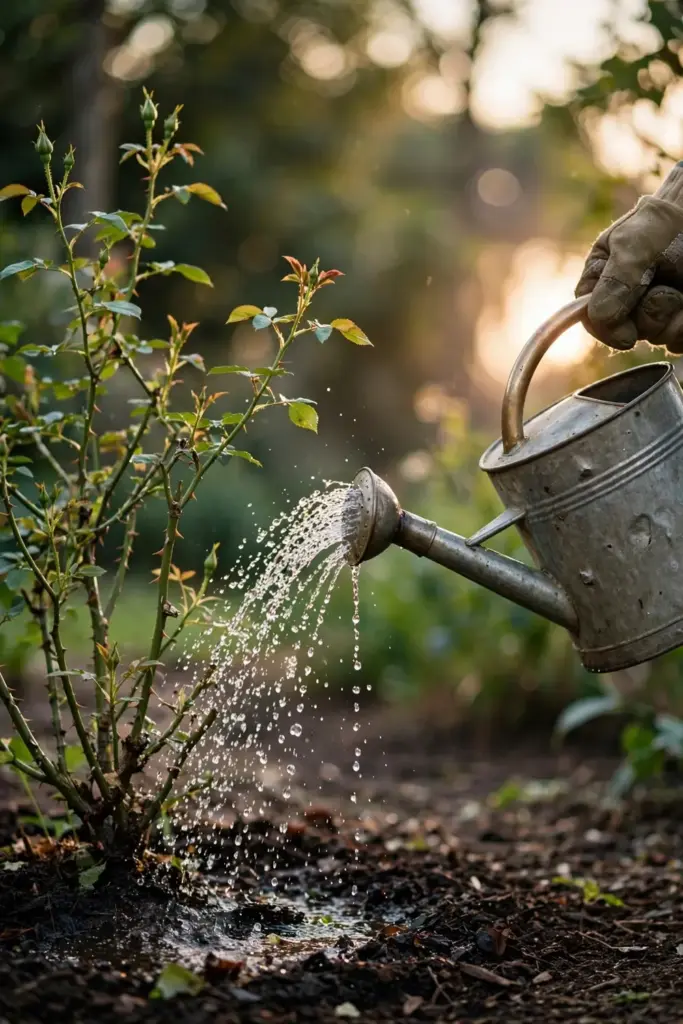
New plants need water more often until established, sometimes every two to three days in heat. Mature, own-root shrubs in amended soil can go a week between deep waterings in most climates. Mulch is doing half this job for you: 2 to 3 inches of organic mulch holds moisture, cools the roots, and slowly feeds the soil as it breaks down.
8. Step 3: Feed Organically and Never Systemically
Feed your tea roses the way you would feed food crops, because that is what they are. A granular organic rose fertilizer or a balanced organic all-purpose feed, scratched into the mulch line in spring and again in midsummer, covers the season. Fish emulsion or alfalfa meal as a spring top-dress adds the slow nitrogen roses love.
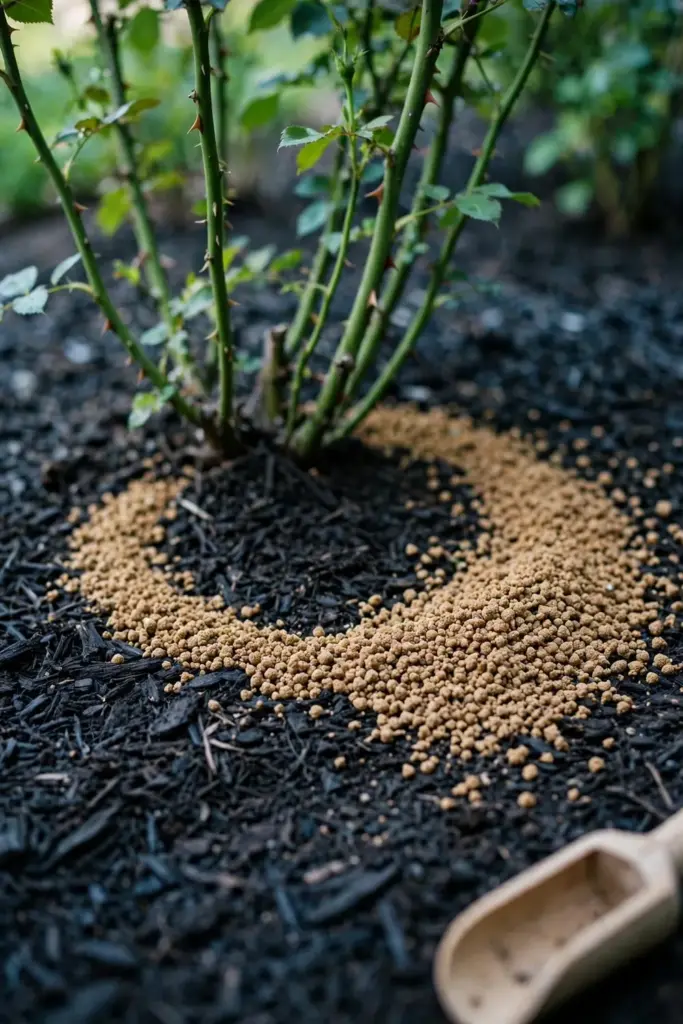
The non-negotiable rule: never use systemic insecticides or systemic rose-and-flower care granules on tea roses. Systemics are absorbed into the plant’s vascular system and distributed to every part, including the petals you plan to steep. Contact sprays like neem oil and insecticidal soap wash off and break down; systemics do not. Read every product label before it touches your roses, and if the label says “systemic,” it belongs in someone else’s garden.
9. Step 4: Prune Once a Year for Air and Blooms
One major pruning a year keeps a tea rose productive and open to the air. In most climates, do it in late winter or early spring while the plant is still dormant. Cut out dead, damaged, and crossing canes first, then shorten the remaining mature canes by about one-third to one-half, always cutting just above an outward-facing bud. UF/IFAS confirms this exact prescription and notes you can expect the first flowers about eight to nine weeks after pruning.
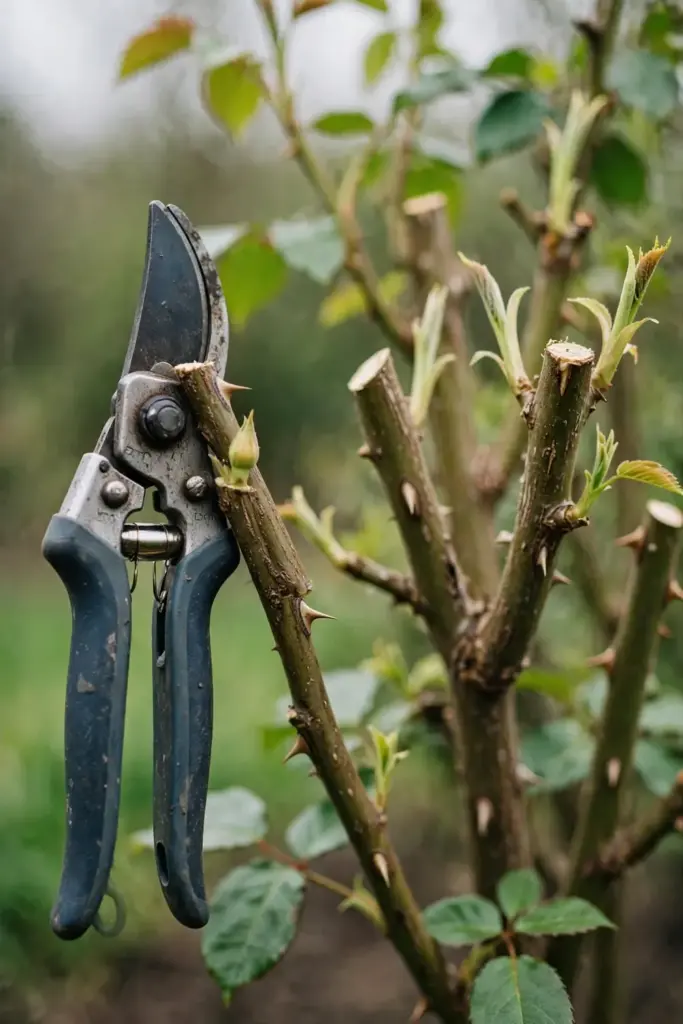
For a closer look at technique, the guide to spring pruning techniques walks through clean cuts and branch-collar discipline that apply to roses as well as fruit trees. Clean your pruners with alcohol between plants if you have ever seen rose rosette or canker in your garden; dirty tools spread disease faster than insects do.
Rugosa and other own-root shrub roses need lighter pruning than grafted hybrid teas: remove the oldest canes at the base every few years to renew the plant, and otherwise let the shrub be a shrub. Hard shearing a rugosa into a ball destroys the graceful form and cuts off the flowering wood.
10. Step 5: Deadhead for Repeat Flushes
Every faded flower you remove is a signal to the plant to make another one. For repeat-blooming varieties like autumn damasks, deadheading through the season multiplies your petal harvest several times over. Cut the spent bloom back to the first five-leaflet leaf below it, cutting at a slight angle about a quarter inch above the leaf.
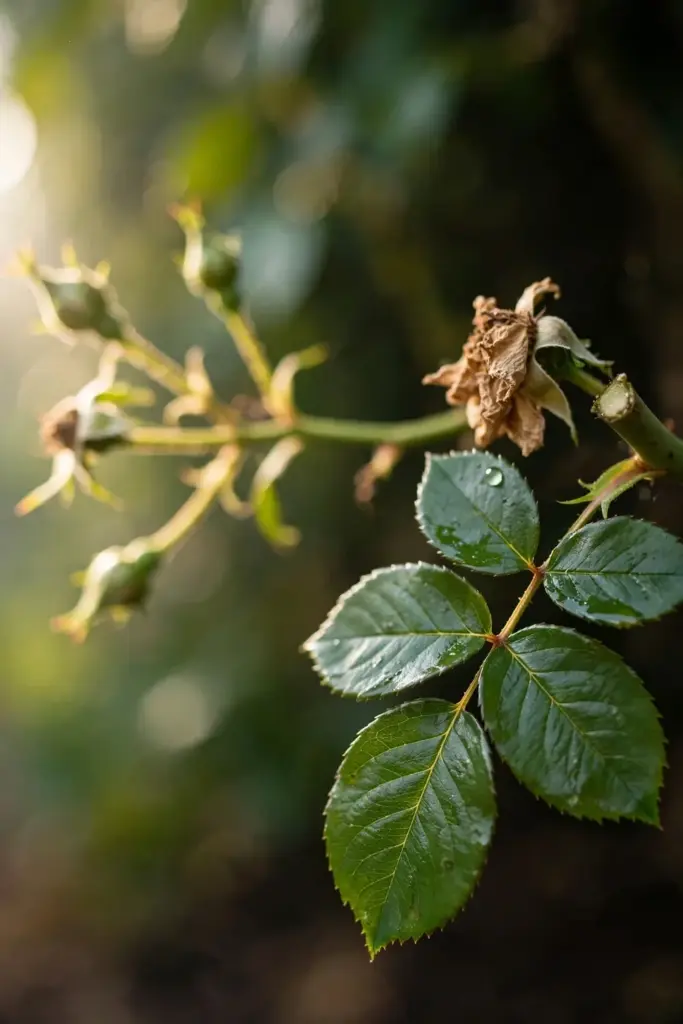
Stop deadheading in late summer, about six to eight weeks before your first expected frost. The plant needs the signal that the season is ending: hips forming on the canes tell it to harden off for winter. Late deadheading pushes soft new growth that freezes. On rugosa grown partly for hips, leave the last flush of flowers entirely alone and let the big red-orange fruits develop for winter rosehip tea.
11. Step 6: Harvest Buds Just Opening
The harvest window is short and specific, and it is where learning how to grow roses for tea pays off. Pick in the early to midmorning, after the dew has evaporated but before the heat of the sun burns off the volatile oils that carry the fragrance. Choose buds that are just starting to open, with the outer petals loosening: fully open, day-old blooms have already lost scent to the air, and tight green buds have not developed it yet.
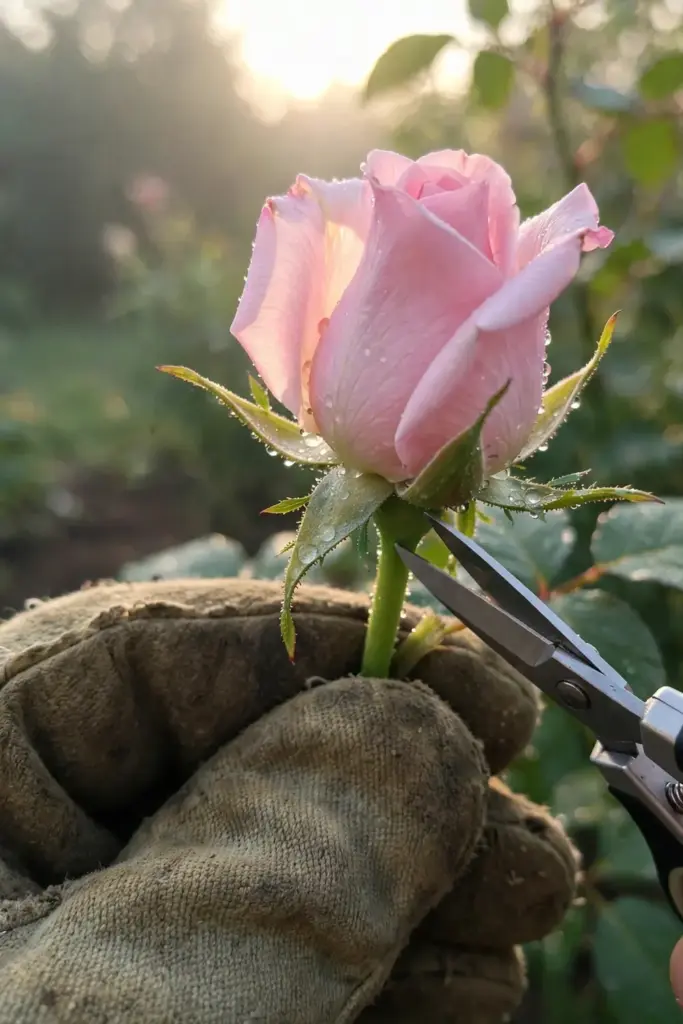
Use small sharp scissors and cut the bud with a short stem, then strip the green sepals. Cup the bloom and snip away the white base of each petal, the “heel,” which carries the bitterness. TeaTime’s guide describes exactly this step: the white portion at the bottom of the petals imparts a bitter taste, so it goes in the compost, not the cup. Shake the petals in a strainer to evict dust, pollen, and any tiny insects, and discard any bruised or spotted petals. Never harvest after a spray day, and never harvest from a plant you have not personally kept spray-free all season.
12. Step 7: Dry Petals Without Losing the Scent
Fresh petals brew beautifully for a day, but drying is how you bank the harvest for winter. Two methods work, and both protect the fragrance the same way: keep petals out of direct sun and move air around them.
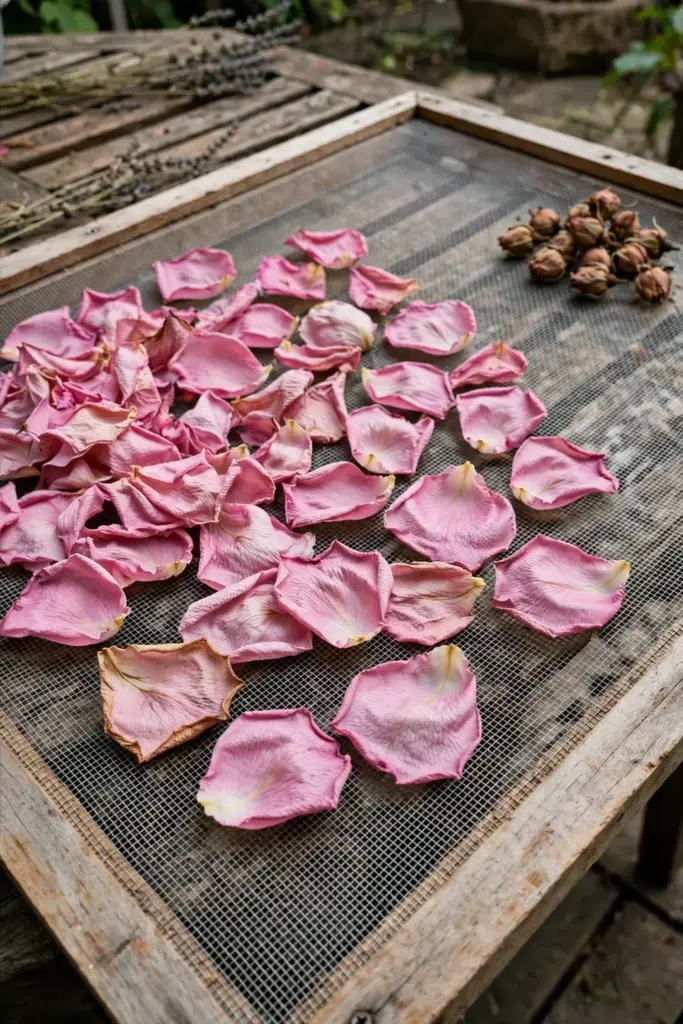
Air drying is the traditional method. Spread the petals in a single layer on a mesh screen or a paper towel, set them in a well-ventilated spot away from direct sunlight, and turn them occasionally. Depending on your climate this takes several days; the petals are done when they feel crisp and papery with no soft spots. The second method uses a food dehydrator set to its lowest temperature, usually around 95 degrees Fahrenheit, with petals in a single layer on parchment-lined trays. They crisp within a few hours. Either way, store the dried petals in a sealed glass jar in a cool, dark place, and plan to use them within six months while the color and fragrance are still strong.
Buds dry whole and make the prettiest tea: spread them on the screen with space between each bud, since a whole bud holds moisture longer than loose petals. If you are drying in humid weather, the dehydrator is the safer choice; moldy petals are not a salvage project.
13. Step 8: Brew Mei Gui Hua the Simple Way
Brewing is the easy part, and it deserves one honest sentence: rose petal tea is a tisane, not true tea, so it contains no caffeine and will not over-steep into bitterness the way green tea can. Use about one tablespoon of dried buds or petals per cup of just-boiled water, cover the cup to trap the aromatics, and steep five to eight minutes. The liquor should smell like the garden on the morning you picked it.
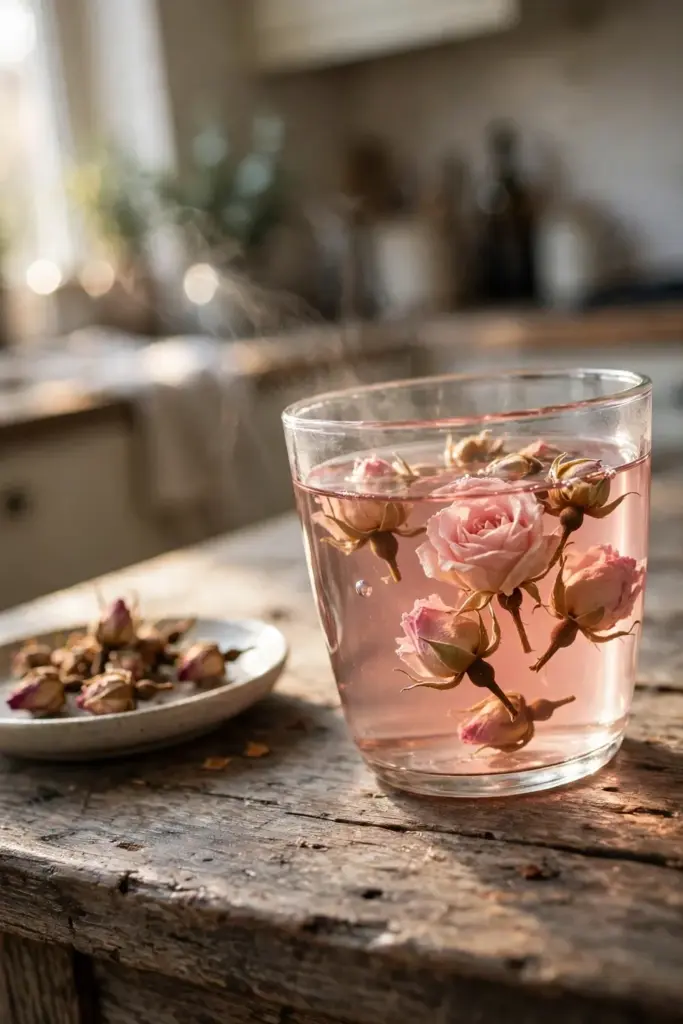
Blend it when you are ready to experiment. Rose pairs with green tea, with chamomile, with a slice of lemon, and with a little honey if the variety runs tart. In the Chinese tradition that gives this article its hook, dried rose buds are steeped alone as mei gui hua or combined with red dates and goji berries. Keep the medicinal framing conservative: this is a fragrant beverage with a long culinary history, not a remedy, and anyone managing a health condition should treat it as food, not medicine.
14. Pests and Diseases the Food-Safe Way
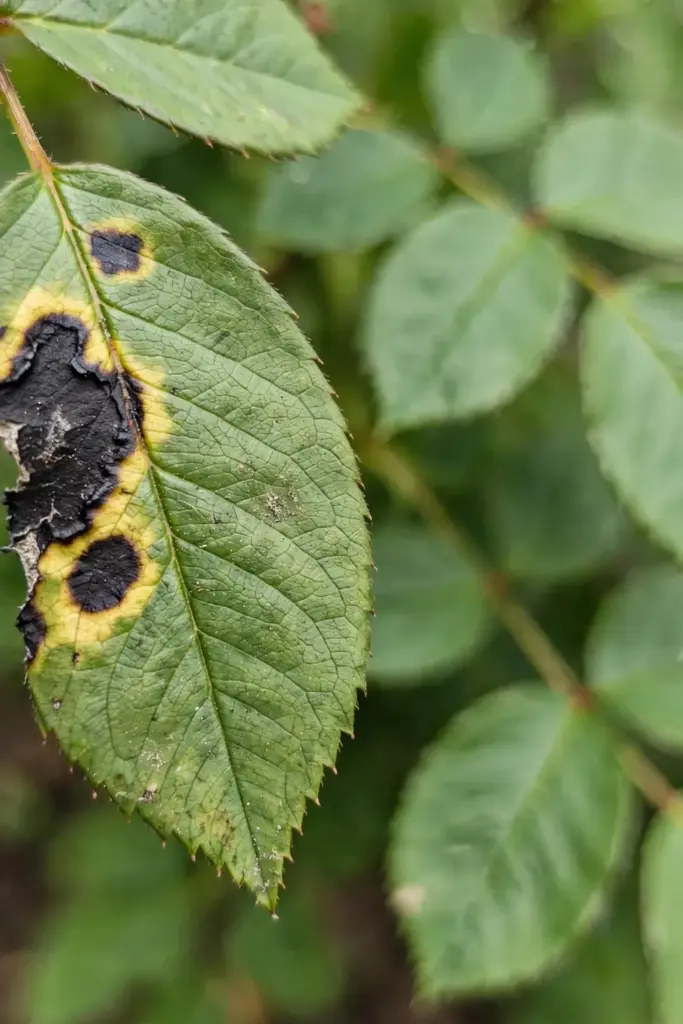
Tea roses get the same problems as ornamental roses, but your toolkit is smaller by choice, and that is the point. Black spot shows as black-fringed spots on leaves that yellow and drop; powdery mildew coats new growth in white dust; aphids cluster on buds; Japanese beetles chew blooms. Clemson’s rose factsheet covers the full lineup, and NC State’s rugosa profile adds rust, rose rosette, thrips, and spider mites to the watch list.
Prevention does most of the work: morning sun, spacing, base watering, and resistant varieties. Rugosa is the standout here; its thick wrinkled leaves shrug off most of what flattens hybrid teas, which is one reason it dominates the tea-rose conversation. When pests arrive, reach for contact controls only: a hard water blast for aphids, insecticidal soap for soft-bodied insects, neem oil for mildew pressure. Spray in the evening, never on open blooms you plan to harvest, and observe the label’s pre-harvest interval even for organic products.
Rose rosette disease is the one emergency. If you see witches’-broom clusters of distorted red shoots and excessive thorns, the plant is infected with an incurable virus spread by microscopic mites. Dig out and destroy the whole plant; do not compost it. This is the single case where losing the plant beats trying to save it.
15. Six Common Mistakes and How to Fix Them
Buying the wrong rose. If the tag says hybrid tea and the bloom has no scent, you bought a flower, not a tea ingredient. Fix: shop by nose and by species name, not by bloom photo.
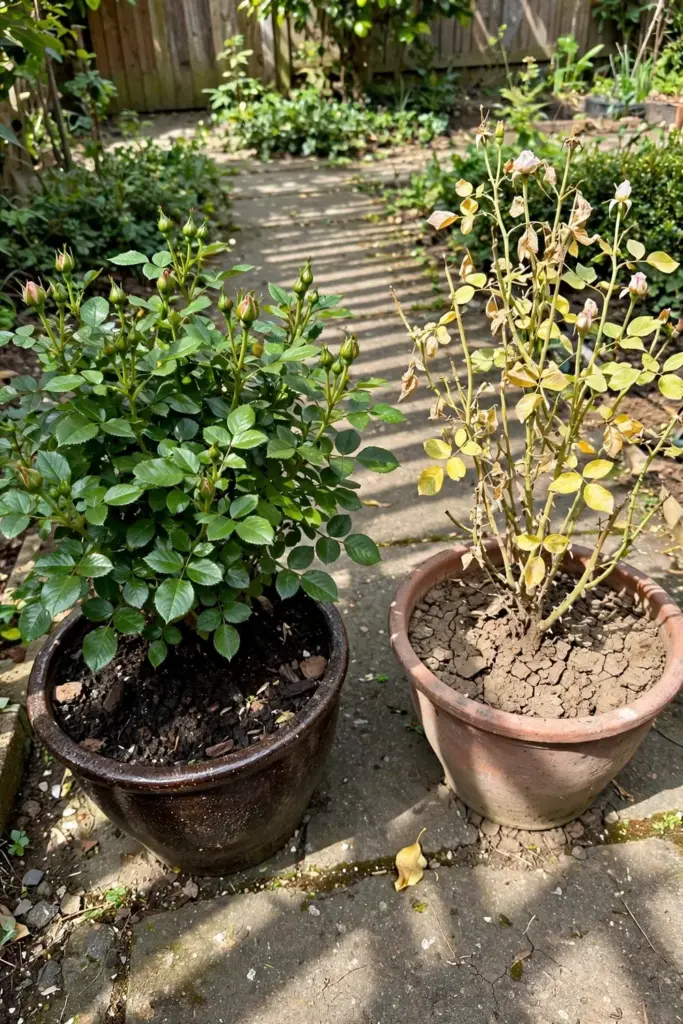
Spraying systemics “just once.” One granular systemic treatment can make a whole season of petals unsafe, because the chemical moves through the plant. Fix: commit to contact-only pest control from day one, and restart the waiting clock if you slip.
Planting too deep. Buried graft unions rot, and deep-planted own-root roses sulk. Fix: keep the bud union at or just above soil level.
Overhead watering. Wet leaves are a disease invitation you send daily. Fix: water the base, mulch, and let the foliage dry by noon.
Skipping the heel trim. Brewing whole petals with the white base gives bitter tea and a false verdict on the variety. Fix: snip every white heel before drying or steeping.
Harvesting from the florist. Bouquet roses are grown with chemicals you cannot wash off. Fix: brew only from plants you raised spray-free yourself.
16. Troubleshooting
My rose blooms have no scent. Some varieties are scentless, and no growing trick adds fragrance that genetics left out. Heat also flattens scent: blooms picked at noon in a heat wave smell like less than the same buds picked at 7 a.m. in cool weather. If the variety is a known fragrant one and still smells faint, the plant may be young; fragrance often intensifies in the second and third year.
The leaves are yellowing with black spots. Classic black spot. Strip the affected leaves (do not compost them), improve air flow with light pruning, and switch to base-only watering. Resistant varieties like rugosa rarely need more than this.
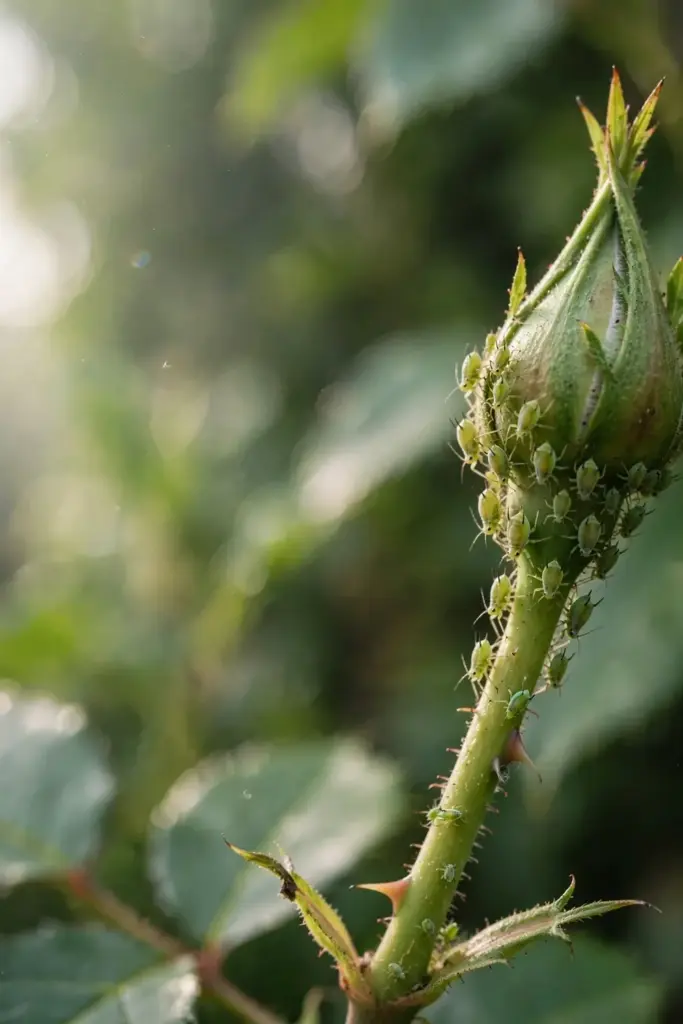
Aphids cover every bud. Blast them off with a strong jet of water, repeating every few days. For heavy pressure, insecticidal soap in the evening works; avoid spraying open blooms you intend to harvest within the week.
My rugosa is sending suckers everywhere. That is what rugosa does. Mow or dig the suckers you do not want, or plant it where a thicket is welcome. Choosing a named, better-behaved cultivar at purchase time prevents most of this.
Dried petals smell like hay. They were dried too slowly in humid air or stored too long. Use the dehydrator in humid climates, jar petals only when fully crisp, and brew within six months.
The plant blooms once and stops. Once-blooming varieties (many gallicas, summer damasks) flower on old wood and will not repeat no matter how you deadhead. If you want a summer-long harvest, add a repeat-blooming autumn damask or a reblooming rugosa cultivar.
17. Frequently Asked Questions
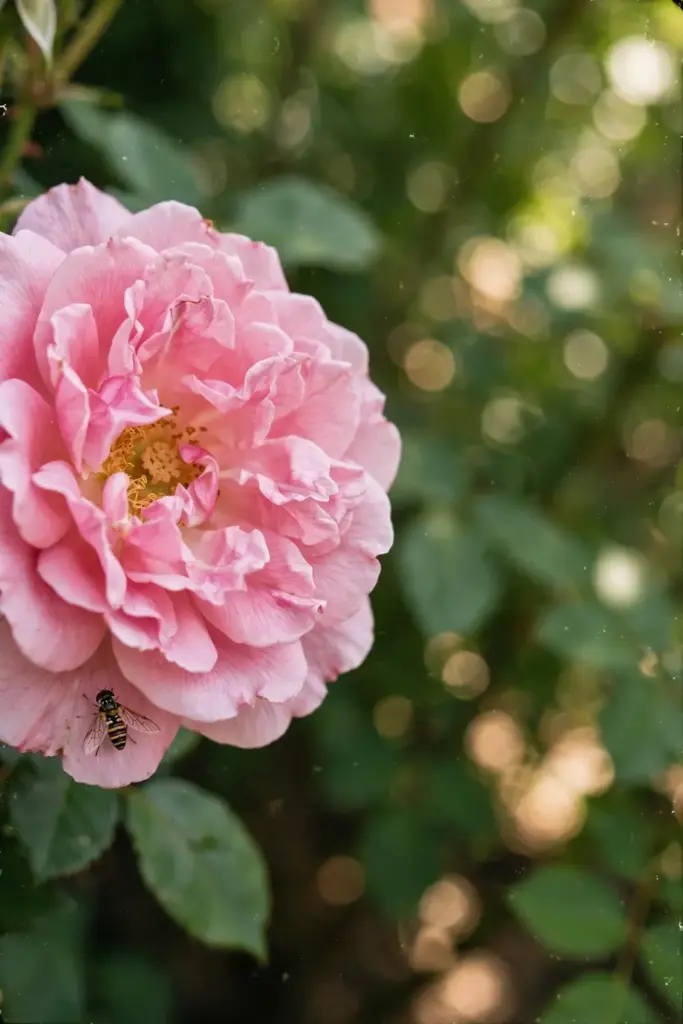
Only from roses you grew without synthetic pesticides, and only fragrant varieties make tea worth drinking. TeaTime’s edible-rose guide confirms that all organically grown roses are technically edible, but scentless blooms give scentless tea. Never use florist or grocery roses, since systemic chemicals cannot be washed off.
The name is the trap: “hybrid tea” is a flower class, not a drink ingredient. Most hybrid teas are bred for vase life and many have little scent. A fragrant hybrid tea grown spray-free can be brewed, but the classic tea roses are the fragrant species: damask, rugosa, gallica, centifolia, and dog rose.
For systemic insecticides, the honest answer is a full growing season, not a number of days. Systemics move through the whole plant and persist in tissue for months. Grow the rose under organic, contact-only care and harvest only buds that formed after your unsprayed regime began.
Pick in the early to midmorning after the dew dries, choosing buds just starting to open. Heat burns off the volatile oils that carry fragrance, so noon-picked blooms make weaker tea. Snip the white bitter heel from each petal before drying or steeping.
Spread petals in a single layer on a mesh screen in a ventilated spot away from direct sun, turning occasionally until crisp, which takes several days. Or use a dehydrator at its lowest setting, around 95 degrees Fahrenheit, for a few hours. Store fully crisp petals in a sealed jar in a cool, dark place and use within six months.
Rugosa rose is the most forgiving: disease-resistant, drought-tolerant, hardy in cold climates, and native to northeastern China. Its single fragrant blooms make good tea and its hips make rosehip tea. Note it suckers and is considered invasive in some coastal areas, so choose a well-behaved cultivar.
18. Where to Go From Here
You now have the full chain: the disambiguation that keeps you from brewing the wrong plant, a fragrant variety picked by nose, a spray-free season, a dawn harvest, a slow dry, and a cup that smells like the morning you picked it. The work is mostly patience, and the reward is a tea no store can sell you because it came from your own garden.
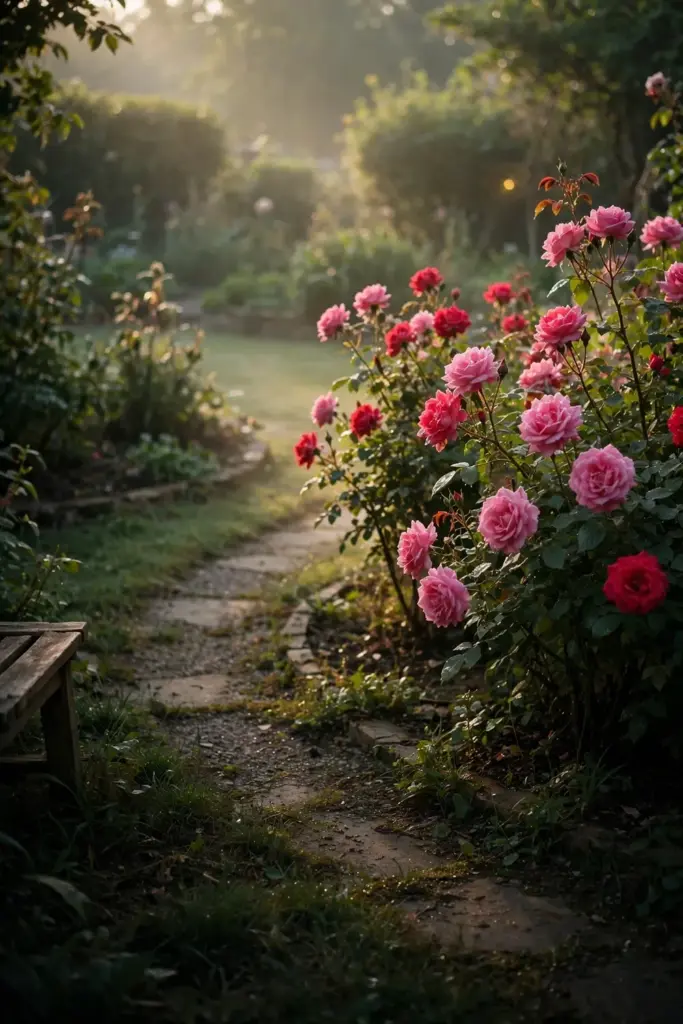
Start with one plant this season. A single rugosa or autumn damask in a sunny, unsprayed corner gives you enough buds to learn the whole rhythm: pick, trim, dry, steep. Next year, add a second variety and compare the cups. That comparison, more than any guide, will teach you what your garden’s roses taste like, and it is the real reward of learning how to grow roses for tea.