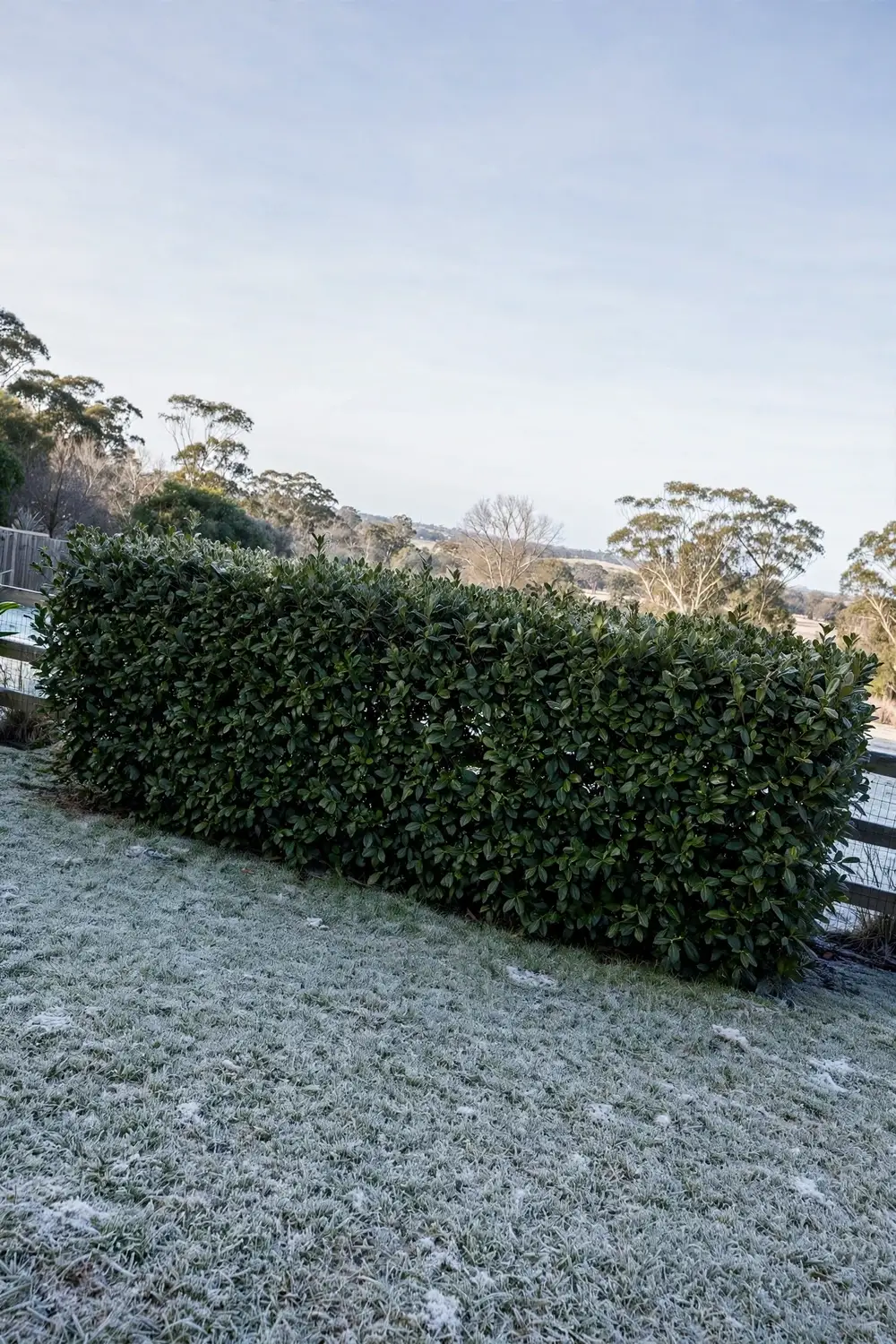

Buy for your coldest night, not your average winter. Acmena smithii takes moderate frost once established, while most Syzygium cultivars take light frost only, and Waterhousea belongs in warm gardens. The rest of this page ranks the best lilly pilly varieties for cold climates, 11 of them, by frost tolerance, from the hardest Acmena to the tender Waterhousea.
Lilly pilly is the common name for a group of evergreen trees in the genera Syzygium, Acmena, and Waterhousea. Frost means air temperature below 0 degrees Celsius. Nursery labels like light frost and moderate frost are shorthand, not measured thresholds. No nursery source defines those bands in degrees. The bands in the table below are a decision rule, not a nursery standard.
I have learned that the hedge I shelter in its first winter settles in while the one I leave exposed shows tip burn.
Canberra shows why the coldest night matters. The Bureau of Meteorology records a historical average of 60 nights below 0 degrees Celsius at Canberra Airport, with an average of 7 nights below minus 5 degrees, according to the Bureau of Meteorology’s ACT climate summary for 2013. A hedge that survives an average Canberra winter still faces about 7 nights a year cold enough to burn tender tips. Pick the tier that survives those nights, not the tier that survives the average.
1. Ask the Frost Question Before You Buy
Ask how cold your coldest night gets, not how cold your average winter feels. The coldest night decides whether a lilly pilly hedge holds its leaves or burns back. One record cold snap does more damage than a whole mild winter.
Find your coldest night in local station records. Look for the lowest minimum across the last 5 to 10 winters, because the long-term average smooths away the single cold snap that does the damage. A garden that saw minus 6 degrees once in that span needs a hedge that survives minus 6 degrees. Averages hide the night that kills.
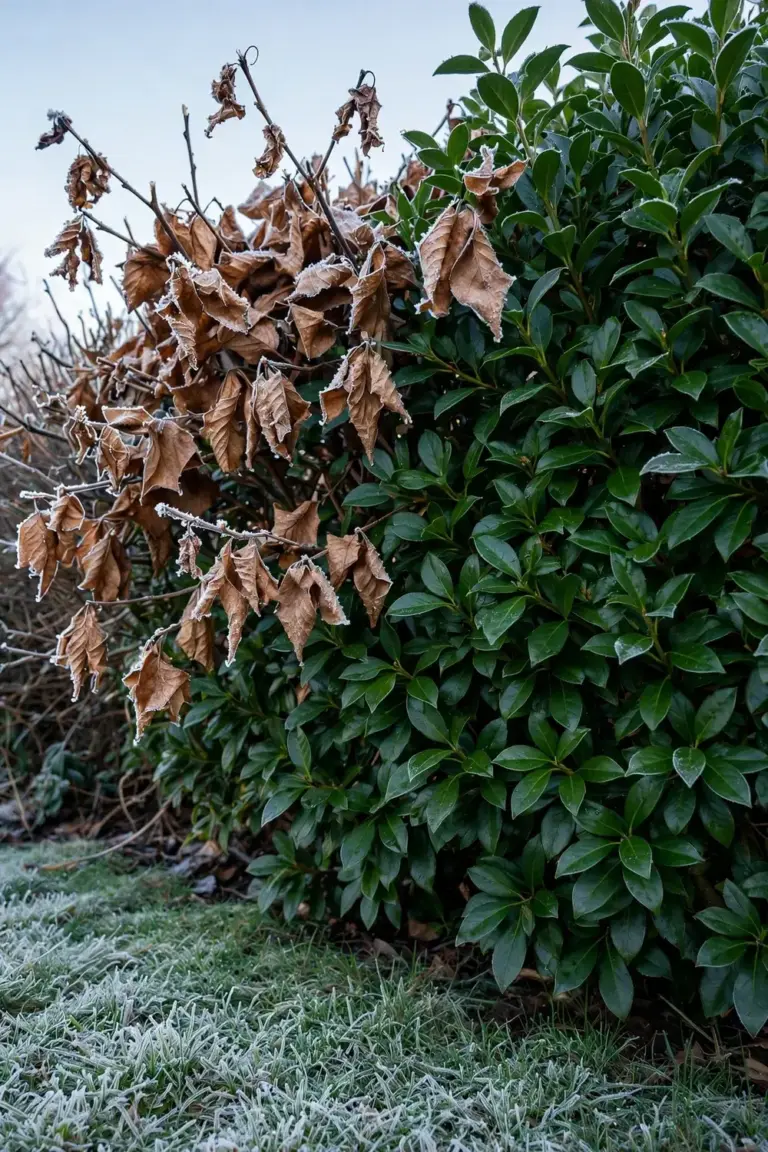
Frost burns new growth first. Soft new flushes hold more water than hardened older leaves, so ice forms in them first on a clear cold night. The burnt tips turn brown and dry. Older hardened growth behind the tips usually survives. That pattern is why tip burn looks alarming and stays cosmetic on a hardy variety, and why the same frost strips a tender variety bare. A hedge that burns back to old wood every winter never thickens into a screen.
Clear still nights bring the worst frost. Cloud acts as a blanket, and wind mixes the air. A clear calm night lets heat radiate away from leaves into the sky, and leaf temperature drops below the air temperature around it. Frost forms on leaves while a thermometer nearby still reads above zero. The worst damage comes on clear calm nights after a sunny day, not on cloudy windy nights. Check the forecast for clear skies and light winds, not just the minimum temperature.
A local nursery that grows its own stock in your district knows the coldest pockets, because its hedges already lived through them. Ask which lilly pilly hedges nearby held their leaves through the last hard winter. A reseller may not know. Trust the nursery with hedges in the ground nearby.
Young plants are the most vulnerable. The first winter decides the hedge. Shelter a new hedge through its first couple of winters, and expect some tip burn on exposed plants before they settle in. An established hedge takes more frost than the same variety in its first year.
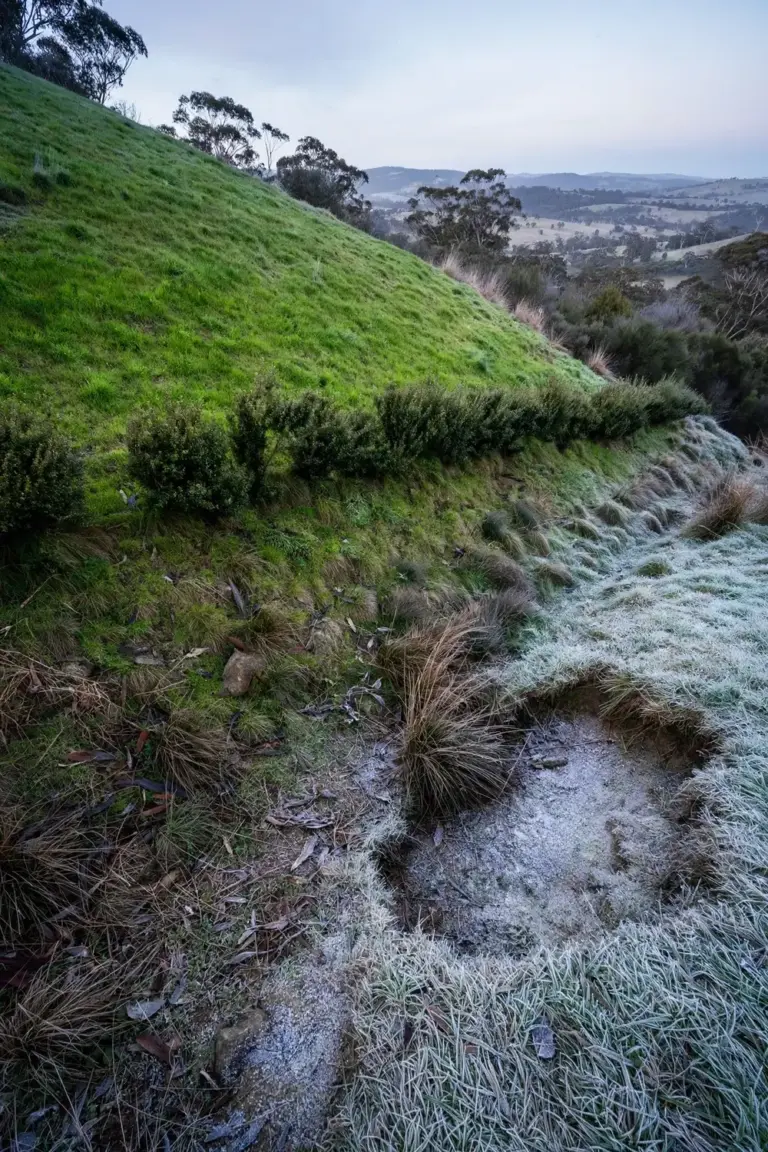
Frost hollows trap cold air. Cold air pools at the bottom of a slope, in a low corner behind a fence, and in any dip where air cannot drain away. A hedge on a mid-slope can sit 2 or 3 degrees warmer than one in the hollow below it on the same night. Walk the garden on a clear winter morning and note where frost lingers longest. That patch is the hollow. Mark it with a stake so you remember it in spring.
2. Match Your Frost Zone to the Right Tier
Match your frost zone to a tier before you match a variety to a hedge. The zone tells you which tier survives. The variety list comes second.
| Frost Zone | Coldest Nights | Which Lilly Pilly Survives |
|---|---|---|
| Light frost | Dips to about minus 2 degrees Celsius, a few nights a year | Every variety in the ranking below |
| Moderate frost | Repeated nights to about minus 5 degrees Celsius | Acmena types, plus the hardiest Syzygium cultivars, with tip burn likely |
| Heavy frost | Regular nights below minus 5 degrees Celsius, frost hollows | No lilly pilly hedge is a safe bet; pick a hardier evergreen screen |
The bands above are a decision rule. Nursery sources use light frost and moderate frost without defining them in degrees, so the degree anchors come from two measured points. Backyard Bliss takes light frost down to around minus 2 degrees Celsius for short periods. Canberra sits in the heavy band on the Bureau of Meteorology figures quoted in the introduction. A Canberra hedge needs Tier 1, shelter, and realistic expectations about tip burn.
Light frost gardens cover most coastal and warm temperate districts, from Brisbane down the New South Wales coast to Perth. Frost there is occasional, brief, and rarely deep. Any variety in the ranking below survives, and tip burn is a rare spring cleanup. Moderate frost gardens cover inland New South Wales and Victoria, the Adelaide Hills, and sheltered parts of Tasmania. Frost there is regular, repeated, and deep enough to test every variety. Buy Tier 1 or the hardiest Tier 2. Heavy frost gardens cover Canberra, the Blue Mountains, the Southern Highlands, inland frost hollows, and exposed Tasmanian sites. Frost there is a nightly event through winter. Use the table against the nursery label. Nursery labels often say frost tolerant without naming a band. Ask which band the variety sits in: light, moderate, or heavy. No answer means light frost only. A label that says frost tolerant and nothing else is a light frost claim wearing a brave face. The ranking above gives you the question to ask. If your garden sits on the line between two bands, buy for the colder one. The colder tier costs the same at the nursery. The wrong tier costs the hedge.
3. Rank the Best Lilly Pilly Varieties for Cold Climates by Frost Tolerance
Rank by frost tolerance first, then by height and habit. A hedge that dies back every winter never becomes a hedge, no matter how fast it grows or how bright its new flush looks.
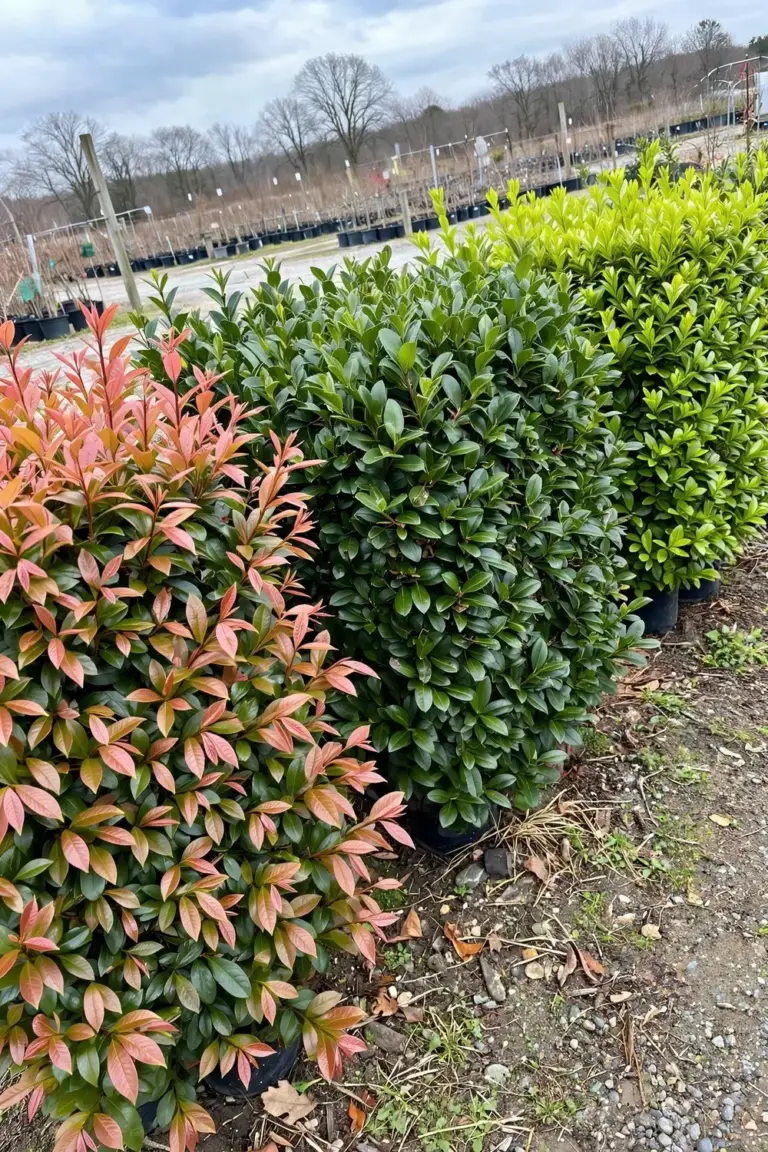
| Variety | Frost Tolerance | Height | Best For |
|---|---|---|---|
| Acmena smithii (species) | Moderate frost once established | 5 to 6 meters | Coldest gardens, formal hedge |
| Acmena smithii ‘Firescreen’ | Light to moderate frost once established | 4 to 5 meters | Color in cold gardens |
| Syzygium australe ‘Resilience’ | Light to moderate frost once established | 4 to 6 meters | Fast privacy hedge |
| Syzygium australe ‘Select’ | Light to moderate frost once established | 4 to 6 meters | Uniform formal hedge |
| Syzygium australe ‘Winter Lights’ | Light to moderate frost once established | 4 to 6 meters | Color in cold gardens |
| Syzygium paniculatum ‘Backyard Bliss’ | Light frost, about minus 2 degrees Celsius for short periods | 3 to 4 meters | Small spaces, narrow beds |
| Syzygium australe ‘Straight & Narrow’ | Moderate tolerance, light or occasional frosts | 5 to 8 meters, 1 to 1.5 meters wide | Narrow strips |
| Acmena (syn. Syzygium) smithii ‘Sublime’ | Light frosts, tip burn with heavy frosts | 5 meters, 2 to 3 meters wide | Lime foliage, poolside screens |
| Syzygium australe ‘Hinterland Gold’ | Warm humid subtropical preference | 4 to 5 meters | Warm gardens only |
| Waterhousea floribunda | Low frost tolerance, avoid regular heavy frosts | 8 to 15 meters | Warm gardens only |
| Waterhousea floribunda ‘Whisper’ | Some frost, not sustained or extreme cold | 8 by 5 meters | Sheltered warm gardens |
Tier 1 is the hardest tier. Acmena leads because its natural range runs furthest south. Acmena smithii grows naturally in eastern Australia from Queensland to Victoria, through subtropical and temperate rainforests. That southern reach means the species already meets cold winters in its home range. Syzygium australe grows naturally in subtropical rainforests further north, and its cultivars carry that warmer origin. Natural range is not a guarantee. It explains why the Acmena tier sits above the Syzygium tier. Acmena smithii takes moderate frost once established. One landscape profile calls it resistant to at least moderate frosts. An Australian native guide says it handles moderate frost once established. The species grows 5 to 6 meters tall and 2 to 3 meters wide, with a naturally dense habit that fills in from ground level. New growth flushes bronze to pink over dark green. Fluffy white flowers are followed by ornamental berries. ‘Firescreen’ sits in the same tier, with light to moderate frost once established and copper red new growth that matures to mid green. Buy Tier 1 first if your garden sees repeated frost. Acmena smithii is also naturally resistant to the psyllid that pimples Syzygium leaves, so the hedge holds clean foliage without spraying.
Tier 2 covers the hardy Syzygium cultivars. ‘Resilience’ takes light to moderate frost once established, according to Evergreen Trees, and Evergreen Trees’ frost-tolerant hedging guide says it holds frost well in cool temperate climates. One wholesale sheet says light frosts only, so the ranking places it on the conservative side of its own sources. ‘Resilience’ grows fast, 50 to 90 cm a year once established, with dense glossy foliage and bronze new growth. ‘Select’ takes light to moderate frost once established, and a hedge planted in autumn in a cold district may show some tip burn before it settles in. ‘Select’ is a uniform selection, so plants grown from it look alike and form a reliable hedging line. ‘Winter Lights’ takes light to moderate frost once established, with bright red, bronze, and lime green new growth that gives year-round color. ‘Backyard Bliss’ takes light frost down to around minus 2 degrees Celsius for short periods, and it stays compact at 3 to 4 meters tall and 1.5 meters wide. ‘Straight & Narrow’ carries moderate frost tolerance and copes with light or occasional frosts once established, but where frosts are heavy or prolonged, a hardier evergreen screen is the safer choice. ‘Straight & Narrow’ stays just 1 to 1.5 meters wide at maturity, so it fits narrow strips where wider varieties crowd the path. All five are bred for psyllid resistance, so the hedge stays clean year round. Evergreen Trees’ nine-pick hedging guide groups Winter Lights, Backyard Bliss, and Straight & Narrow together as the cool temperate and light frost set.
Tier 3 is marginal. ‘Sublime’ takes light frosts but expects tip burn with heavy frosts. Its lime new growth stays green through winter without the yellowing or spotting that cold brings to some other screens. ‘Whisper’ copes with some frost, as long as the cold is not sustained or extreme, and it comes from Victorian motherstock that handles cooler conditions better than standard Waterhousea. Plant Tier 3 only with shelter, and only where heavy frosts are rare. A Tier 3 hedge in a frost hollow is a Tier 4 mistake. Check the hedge after the first hard frost. Tip burn on the outer flush is normal. Bare inner branches mean the variety sits too high for the site.
Read the heights in the table as mature unpruned heights. A hedge held at 2 meters stays narrower than the table width, because clipping keeps the canopy tight. Height still matters for frost. A tall hedge catches more wind, which mixes the air and can reduce frost settling on the canopy. A low hedge in a frost hollow sits in the coldest air in the garden. Height does not rescue a tender variety. It shifts the odds slightly for a hardy one.
Tier 4 is the skip tier in frost gardens. ‘Hinterland Gold’ prefers warm humid subtropical climates for its strongest gold flushes. One retail nursery says it handles frosts, but the warmth preference puts it last in a frost ranking. Waterhousea floribunda carries low frost tolerance and belongs in warm gardens. The next section explains why Waterhousea sits last despite one conflicting product page.
4. Skip These in Frost Hollows
Skip Waterhousea floribunda and Hinterland Gold where frosts are regular and heavy. Both want warmth. Both punish a cold garden with burnt tips, thin growth, and a hedge that never closes.
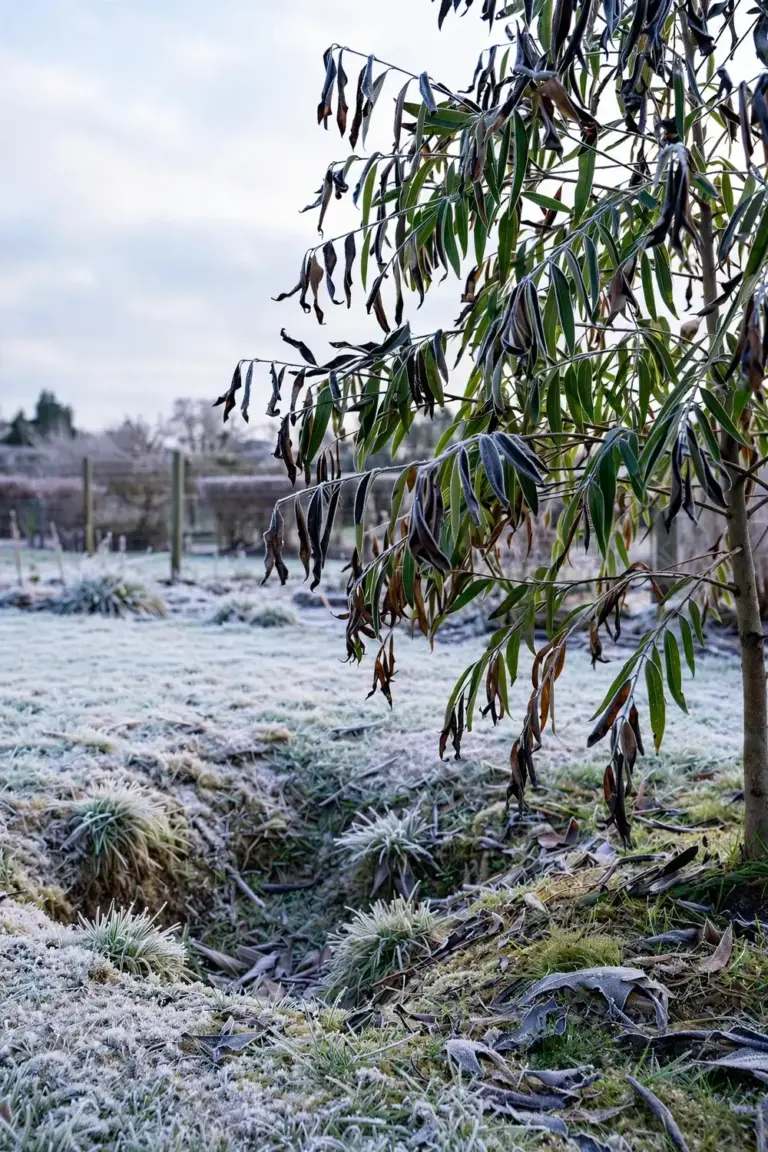
Waterhousea carries a source conflict worth stating plainly. One Evergreen Trees product page says it handles light to moderate frost once established. Evergreen Trees’ own FAQ says Waterhousea has low frost tolerance and is best suited to temperate and subtropical climates, and advises avoiding it in regions with regular heavy frosts. Nurseries Online’s Waterhousea profile says it does not cope well with frosts, especially when young, and warns against wet, cold, frosty areas. The FAQ and Nurseries Online win that argument. The two agree with each other, and both are more specific than the product page. A product page that sells the tree is the weaker witness.
Waterhousea also grows 8 to 15 meters tall with a 3 to 5 meter spread. A tender tree that size in a frost hollow is a large mistake, not a small one. It wants consistent moisture and humid coastal positions. A cold inland garden gives it neither. Skip it and pick a hardier evergreen screen.
Hinterland Gold fails differently. It survives light frost, but its gold flush wants warm humid subtropical conditions. A Hinterland Gold hedge in a cold garden keeps its leaves and loses its reason for planting. The flush stays dull. The growth stays slow. Buy it for warmth, not for frost. One retail nursery says it handles frosts, but that bare yes answers a different question. The frost ranking asks which variety thrives in cold, not which one merely survives it.
A pot does not change the tier. A potted Waterhousea on a patio still burns on a heavy frost night, and a pot chills faster than soil in the ground. Pots help only because you can move them under cover on forecast cold nights. If you cannot move the pot, the pot buys nothing.
‘Whisper’ deserves one caution. Its Victorian motherstock handles cooler conditions better than standard Waterhousea, and it copes with some frost. Some frost is not repeated heavy frost. Plant ‘Whisper’ in a sheltered warm pocket only, never in a frost hollow.
When no lilly pilly fits, plant a harder screen instead. Bay ‘Miles Choice’, Photinia ‘Robusta’, and Elaeagnus all hold form through cold Australian winters, according to the frost-tolerant hedging guide linked in the ranking section. A hedge that holds its shape through winter beats a lilly pilly that burns back every year. The goal is a screen, not a genus. Buy the plant that survives the site, then enjoy the screen it gives you.
5. Cheat the Frost With Microclimate
Microclimate buys a tier, not two. A sheltered Tier 2 hedge can behave like a Tier 1 hedge. A Tier 4 tree in a frost hollow stays a Tier 4 tree. Microclimate moves the edge. It does not erase the zone.
Plant on the mid-slope, not at the bottom. Cold air drains downhill and pools at the lowest point, so the bottom of a slope collects the coldest air in the garden. A hedge halfway up the slope sits above the pool. A hedge at the bottom sits in it. Check where frost lingers longest on a clear winter morning, then plant above that line. A fence at the bottom of a slope makes the pool deeper, because the fence blocks the cold air from draining away. Leave a gap at the base of a boundary fence in a frost hollow, or plant the hedge above the fence line.
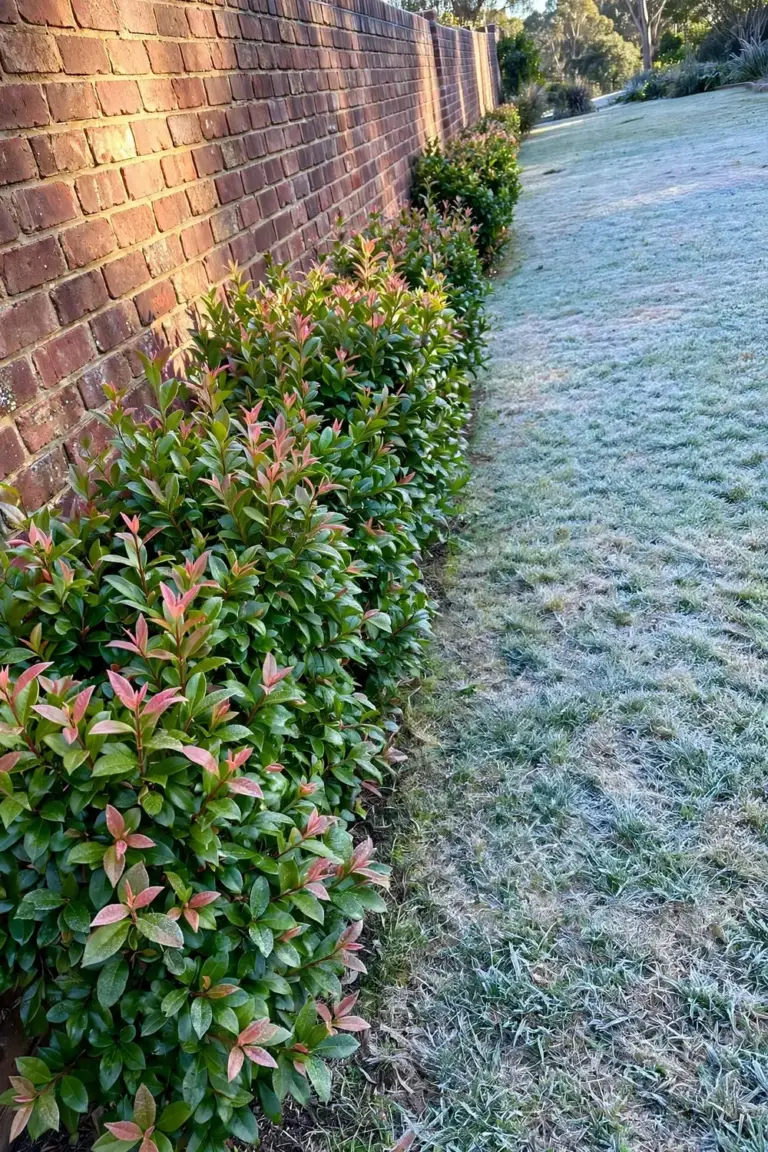
Use a north-facing wall. A wall facing north catches winter sun and radiates stored heat after dark. A hedge in front of that wall gains a few degrees on a clear frost night. A hedge behind a south-facing wall gains nothing. The wall works only if it sees winter sun. A brick wall stores more heat than a timber fence, and a wall that catches morning sun matters most, because the coldest hours sit just before dawn.
Shelter from cold wind. Wind strips heat from leaves and dries the hedge on clear frost nights. A fence, a building, or an established windbreak on the windward side cuts the loss. Shelter matters most in the first winter. Young roots are shallow. A windbreak on the prevailing winter wind side does more for frost survival than one on any other side, so find which way the cold wind comes on a winter night and shelter that side first.
Mulch the base. Mulch around the base of the hedge holds soil moisture and steadies soil temperature through winter. Keep mulch clear of the trunk. Mulch piled against bark holds moisture against it and invites rot. Healthy soil under the hedge carries the roots through winter better than compacted bare soil.
Run a first-winter routine. Check the forecast each evening from late autumn through early spring. Cover the hedge on clear calm nights when frost is forecast. Remove the cover in the morning. Check the mulch gap at the trunk each month, and pull mulch back if it creeps against the bark. Walk the hedge after each hard frost and note which plants burned. The notes tell you which tier to buy next time.
Plant in spring. Spring planting gives roots a full warm season to establish before the first winter. A hedge planted in autumn in a cold district goes into its hardest test with shallow roots. Spring is the frost gardener’s planting season. Cover a young hedge with frost cloth on forecast cold nights in its first winter, then remove the cover in the morning. A cover left on through a sunny day cooks the leaves it was meant to protect. The cover buys a few degrees on the nights it is on. It does not change the tier. Use it as a bridge through the first winter, not as a permanent fix.
Frequently Asked Questions
Yes, if you buy Tier 1 or the hardiest Tier 2 varieties and shelter them in the first winter. Canberra sits in the heavy band, so expect tip burn on exposed plants. Avoid Waterhousea entirely. Plant on the mid-slope, never in a frost hollow.
Acmena smithii handles the hardest frost of any lilly pilly in this ranking. It takes moderate frost once established. ‘Firescreen’ sits in the same tier with light to moderate frost tolerance and copper red new growth. Buy Acmena first if your garden sees repeated frost. It also resists psyllid without spraying.
No, not where frosts are regular and heavy. Waterhousea carries low frost tolerance and does not cope well with frosts, especially when young. One product page claims light to moderate frost tolerance, but the FAQ and nursery profiles disagree. Follow the stricter sources. ‘Whisper’ copes with some frost only in a sheltered warm pocket.
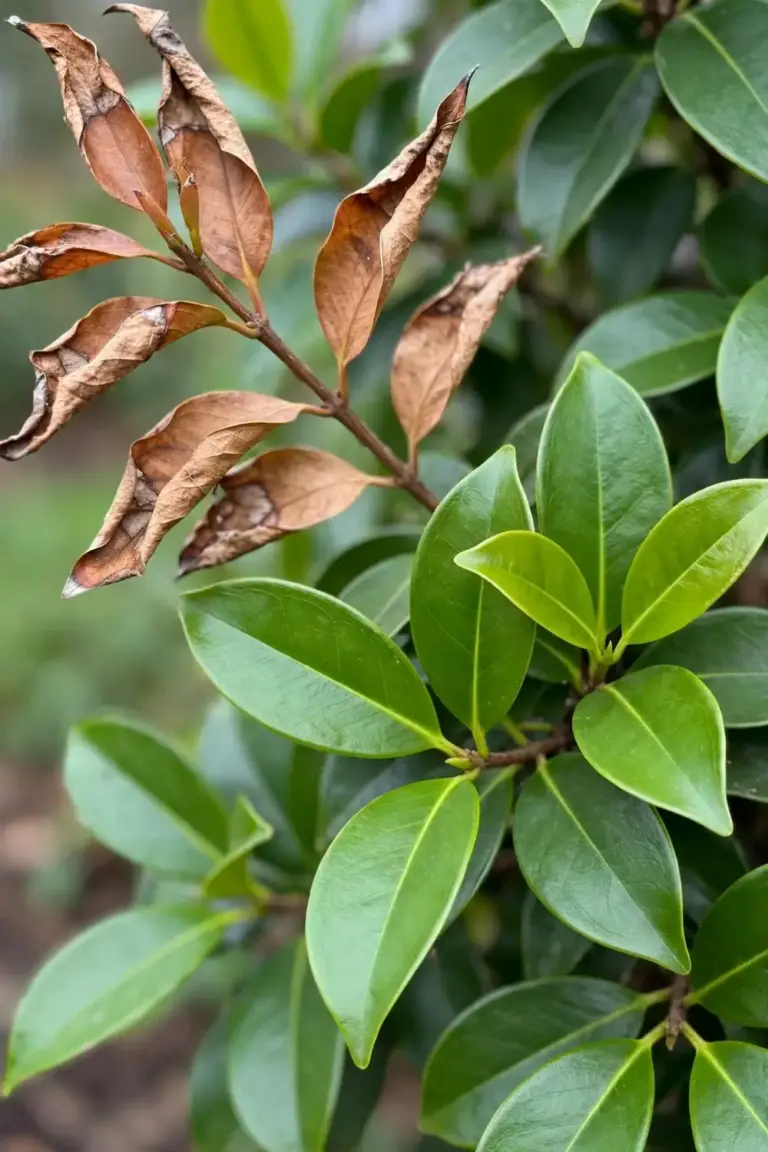
Frost usually burns tips first. Tip burn is cosmetic and trims away cleanly in spring. Repeated heavy frost on a tender variety does worse, thinning the hedge and stalling growth season after season. A hedge that burns back every winter never closes. Buy the tier that survives your coldest night, and tip burn stays a spring cleanup job.
Plant in spring. Spring planting gives roots a full warm season to establish before the first winter. An autumn-planted hedge in a cold district faces its hardest test with shallow roots. Shelter the hedge through its first winter and cover it with frost cloth on forecast cold nights. Remove the cover in the morning.
Buy for Your Coldest Night, Not Your Average Winter
Buy for your coldest night, not your average winter. Acmena smithii leads the ranking for repeated frost. ‘Resilience’, ‘Select’, ‘Winter Lights’, ‘Backyard Bliss’, and ‘Straight & Narrow’ cover light to moderate frost. ‘Sublime’ and ‘Whisper’ need shelter. ‘Hinterland Gold’ and Waterhousea belong in warm gardens. Check your coldest night, pick the tier that survives it, and plant in spring. A hedge chosen this way holds its leaves through the winter that matters, and the hedge that holds its leaves is the hedge that becomes a screen.
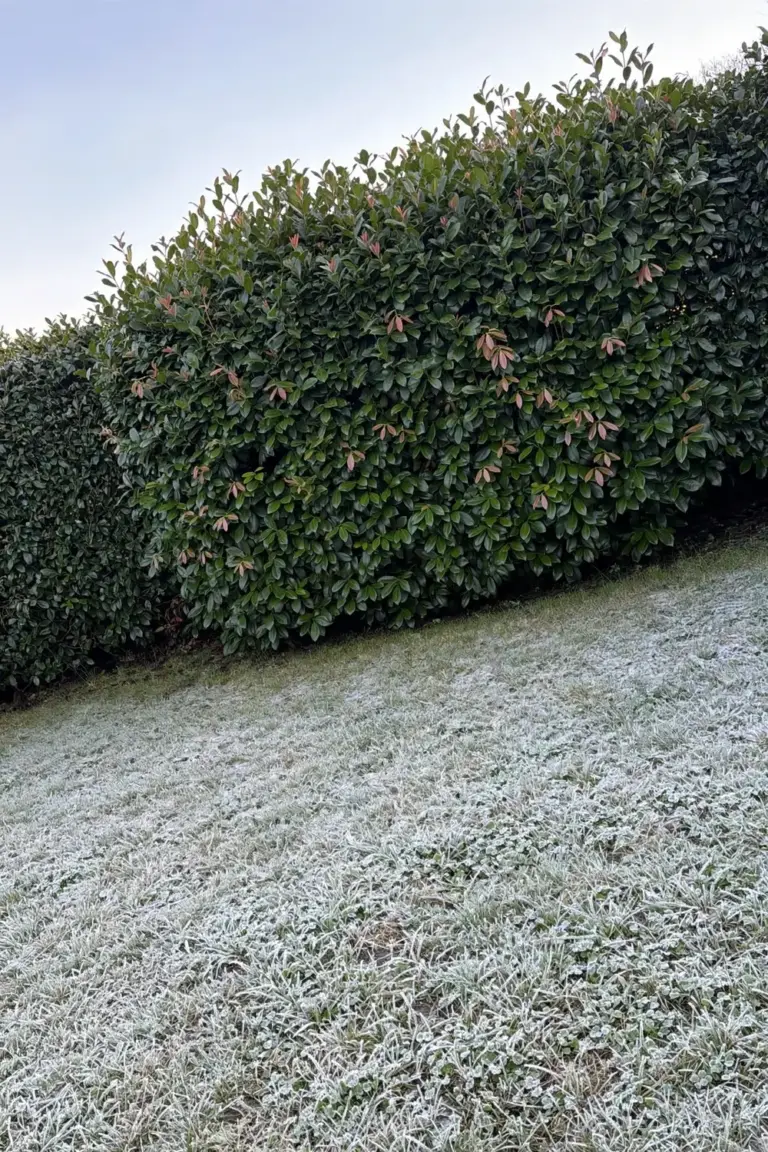
Buy from a nursery that grows in your climate. A nursery with hedges in the ground nearby has already run the frost test for you. Ask which varieties held their leaves through the last hard winter, then buy those. A catalogue photo never answers the frost question. Photographs show summer leaves. Frost answers in winter. A hedge in the ground does.
Shape comes after survival. The spring pruning guide covers the cut itself, and the hedge trimmer guide covers the tool. A hedge that survives its first winter is a hedge worth shaping.