Spend 30 minutes pressing 25 corms into cool fall soil, pointed end up. That is how to grow crocus in its simplest form. The rest of this page is 11 moves, from the corm bag to the last green leaf in spring.
Crocus is a corm, not a true bulb. A corm is a solid swollen stem base that stores food underground, and that stored food pushes the flower up through cold soil in late winter. The flower opens with the morning sun and closes at night or on cloudy days.
Plant in fall, water once, and leave the leaves alone for six weeks after the flowers fade. Those acts decide whether the same corms flower again next year.
| At a Glance | Crocus |
|---|---|
| Plant type | Corm in the iris family, about 90 species |
| Bloom | Late winter to early spring, flowers close at night |
| Height | Under 15.2 cm tall and wide |
| Sun | 5 to 6 hours of direct sun, tolerates partial shade |
| Soil | Gritty and well drained, sandy loam with compost, pH 6 to 7 |
| Planting depth | 7.6 to 10.2 cm, measured from the base of the corm |
| Spacing | 7.6 to 10.2 cm apart, 35 to 70 corms per square foot in drifts |
| Planting window | Mid-September through October, soil below 15.6°C |
| After bloom | Leave the foliage about 6 weeks, divide every 4 years |
Pick the Right Crocus Type for Your Spring
Buy spring crocus for late winter flowers and autumn crocus for fall flowers. The two groups bloom six months apart, and the bag rarely says which one it holds. The North Carolina Extension crocus page lists about 90 species in the genus, so the choice starts with the bloom season on the label.
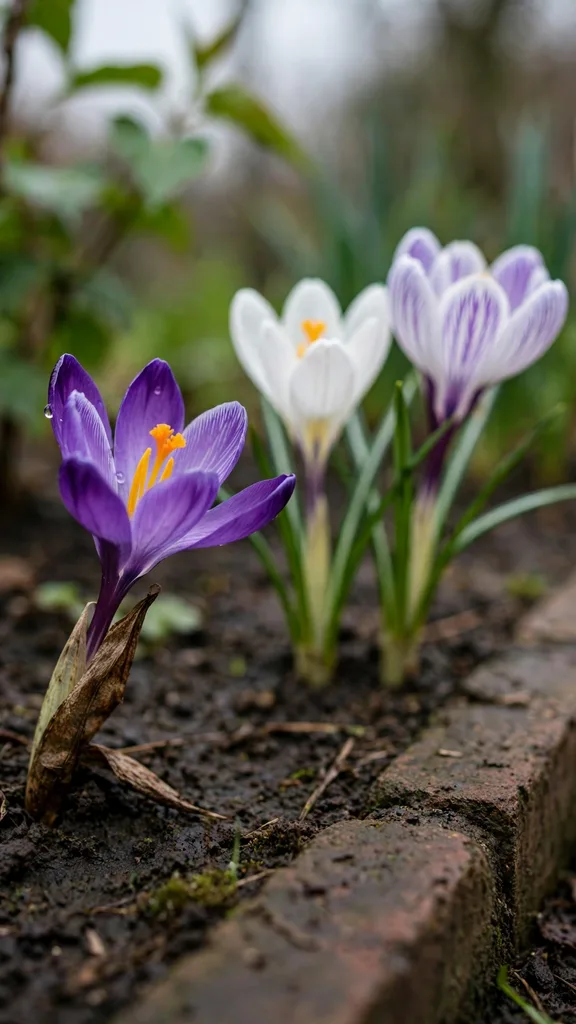
Dutch crocus, Crocus vernus, carries the big cups most gardeners picture. Jeanne d’Arc opens white, Pickwick carries lilac stripes on white, and Remembrance opens deep purple. All three stand under 15.2 cm tall, and all three flower in late winter to early spring. Plant them where the morning sun hits first, along a path edge or at the front of a border. The same page packs drifts at 35 to 70 corms per square foot, which is about 377 to 753 corms per square metre, and a drift at that density flowers as one sweep.
Species crocus runs smaller and earlier. Crocus chrysanthus opens in gold, cream, and pale blue, with Blue Pearl and Cream Beauty among the named forms. Crocus tommasinianus Ruby Giant opens lavender and seeds itself into drifts under shrubs. Crocus ancyrensis Golden Bunch opens yellow before most spring bulbs wake. These small forms suit lawns and rock edges, where a big Dutch cup would look out of scale.
Saffron crocus, Crocus sativus, flowers in fall. Saffron comes from the dried stigmas of Crocus sativus, and each flower carries three red threads. Pick the threads on a dry morning and dry them on a plate indoors. One flower gives a pinch, so a saffron patch needs dozens of corms to fill a single jar.
Autumn crocus, Crocus speciosus, also flowers in fall, in lilac cups with no leaves beside them. Check the botanical name on the bag before buying. Colchicum autumnale is sold under the same common name, autumn crocus, and it is a different plant with toxic corms. The name on the label is the only guard.
A bag of mixed autumn corms planted in October flowers when the garden is shutting down. The gardener who wanted February color waits a full year for the next chance.
Plant Crocus Corms in the Fall Window
Plant from mid-September through October, once the soil at planting depth falls below 15.6°C. Corms set in that window grow roots before the ground freezes, and roots are what hold the flower upright in February wind. The Rutgers spring bulb guide puts the window at mid-September through October, when the soil temperature falls below 60°F.
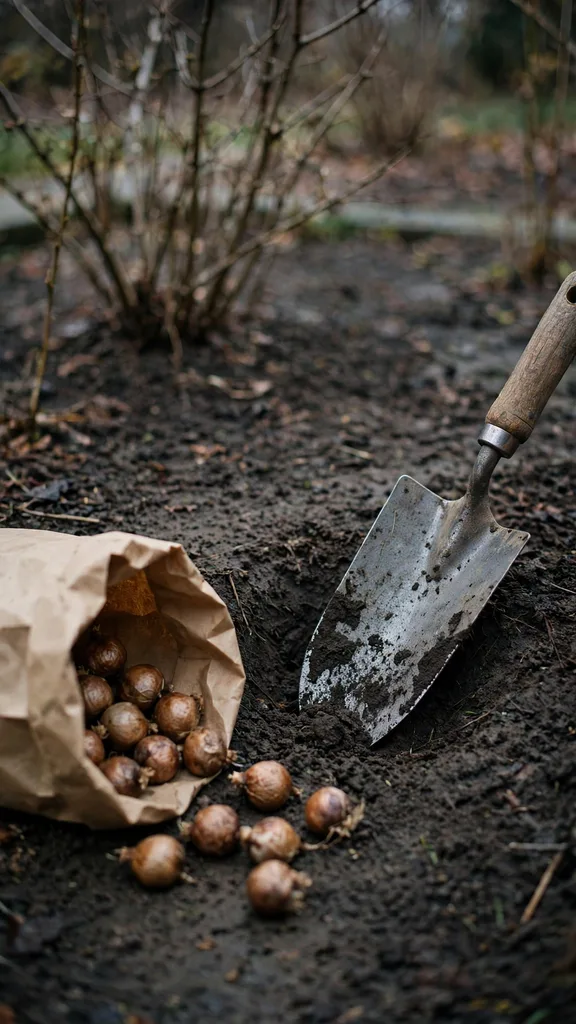
Cold soil is the trigger, not the calendar date. A warm September keeps the ground above the mark, and corms planted into warm soil sit in damp ground and rot before they root. Wait for the cool nights. Soil that feels cool to a bare wrist at planting depth is ready.
Crocus belongs in the same fall planting round as tulips and daffodils. The bulbs to plant in fall list sets the order for the whole bed, and crocus goes in with the small bulbs, ahead of the big tulip bags. One afternoon covers the lot if the bed is loose and the corms are sorted by type.
Late planting still works if the ground has not frozen. The corms root slower, and the flowers open a week or two later in spring. A frozen crust on the soil surface ends the season. Break it with a fork and the corms underneath sit in ground too cold to root.
Corms planted in warm September soil sit in damp ground and rot before they root. The calendar never beats the soil temperature.
Plant Crocus Corms in 7 Moves
Set the corms in seven moves, and the whole bed takes half an hour. Loosen the bed first, then set the corms, then water once and walk away.
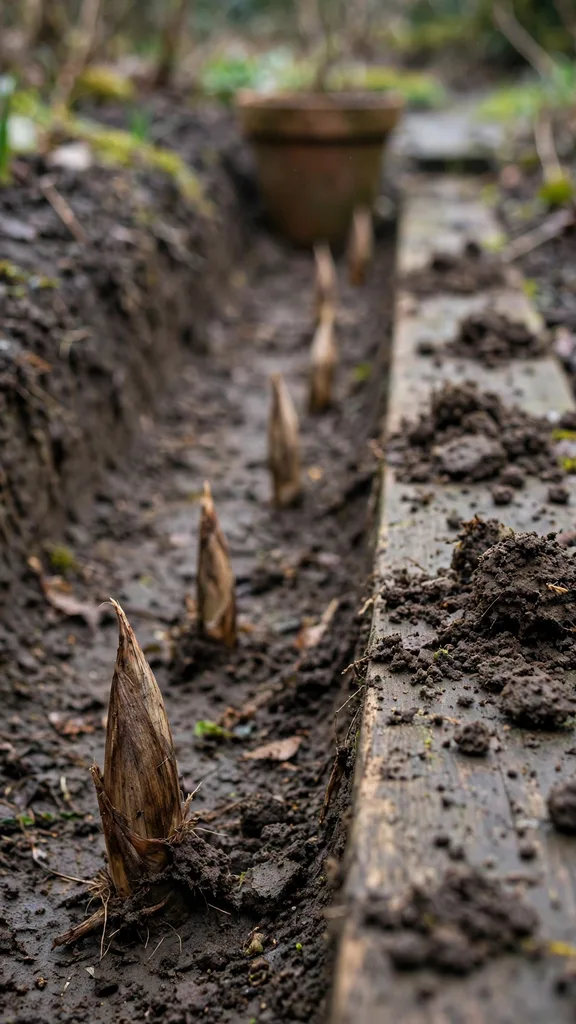
- Loosen the soil with a fork until it crumbles freely. Crocus roots run shallow, and loose soil lets them spread in the weeks before frost.
- Mix compost through the loosened soil. Sandy loam with composted organic matter is the best ground for crocus, and compost lifts heavy soil enough to drain.
- Dig each hole 7.6 to 10.2 cm deep, measured from the base of the corm to the soil surface. The rule is two to three times the height of the corm.
- Set the corm pointed end up, flat base down. The point is easy to miss on a round corm, so look for the small tuft of fibres at the base and set that side down.
- Space the corms 7.6 to 10.2 cm apart in rows, or pack drifts tighter.
- Cover the corms and press the soil down with a palm to close the air pockets. A corm left in a pocket of air dries out and never roots.
- Water once, deeply, to settle the soil around the corms. Then label the spot with a stake so spring digging does not lift the bed by accident.
I have learned to plant crocus in drifts, never in singles, because five corms in one spot read as a patch and one corm reads as a weed. The fall planting guide covers bed preparation for the whole autumn round, and the seven moves above are the crocus half of that job.
A corm planted on its side still flowers. The shoot bends around the corm and comes up short. Set the point up and skip the bend.
Give Crocus 5 to 6 Hours of Sun and Gritty Soil
Set crocus where it gets 5 to 6 hours of direct sun and the soil drains fast. Shade and wet feet are the two conditions that thin a drift year after year. The same guide that sets the sun figure calls for at least five to six hours of direct sunlight a day, and a bed that holds puddles after rain fails that test before the first flower opens.
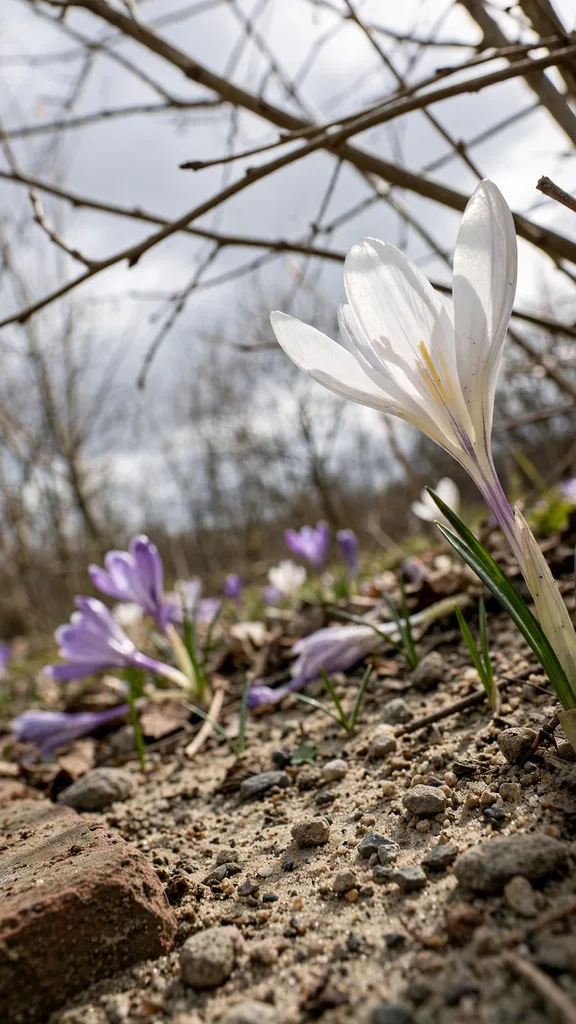
Gritty soil matters more than rich soil. Crocus grows in gritty, well drained ground, and sandy loam with composted organic matter is the best mix. Heavy clay holds winter water around the corm, and a corm that sits wet rots from the base. Dig a handful of compost into clay beds and plant the corms on a slight rise so water runs off.
The optimum pH range for spring flowering bulbs is 6 to 7. A soil test gives the number, and limestone lifts a low reading while sulfur drops a high one. Most garden soil sits inside the range already, so test before adding anything.
Bare branches in February let the sun through, and the leaves arrive after the crocus finish. That timing makes the ground under a deciduous tree a good crocus bed. Evergreen shade is a different story. The ground under a pine stays dark all winter, and crocus planted there stretches pale and flowers late.
Heavy clay holds winter water around the corm. A corm that sits wet rots from the base, and the rot shows as a soft brown patch that spreads to the corms beside it.
Water Once and Mulch 5.1 to 7.6 cm Deep
Water once after planting, then cover the bed with 5.1 to 7.6 cm of mulch. Skip the second watering unless the fall turns dry. The same guide caps the mulch at two to three inches and warns that over watering at planting time causes bulb rot, so one deep soak is the full watering job for the season.
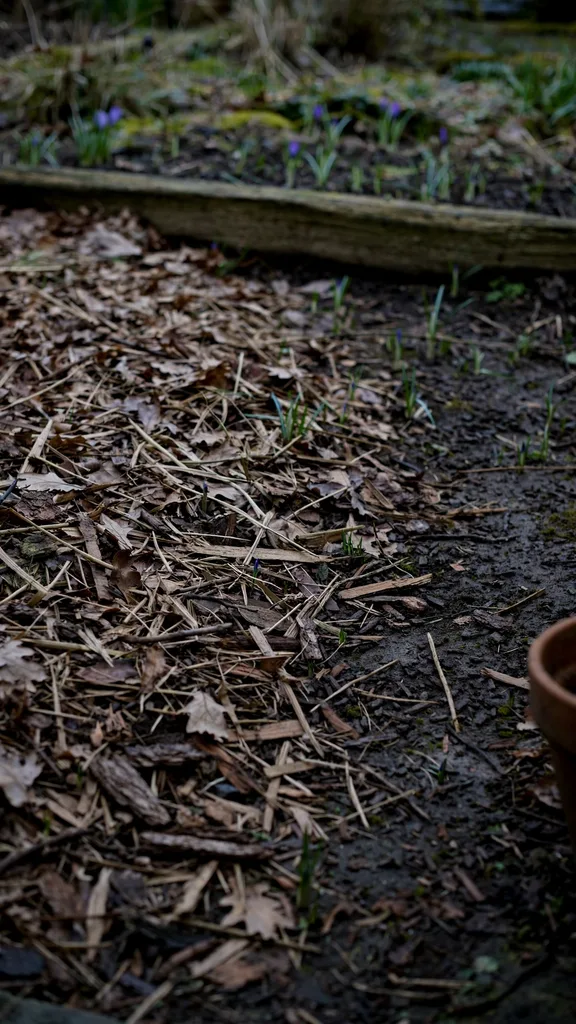
Mulch holds moisture in and steadies the soil temperature through the first frosts. Leaves, clean straw, and shredded bark all work. Small early bulbs need only a light mulch, and a thick blanket over a small early bulb blocks the shoot in spring. Keep the layer thin over crocus and thicker over the big tulip bags beside them.
Rain does the rest. A fall with steady rain needs no extra water at all. A dry fall calls for one more soak in late October, aimed at the soil, not the corms. Water in the morning so the surface dries before night.
Stop watering once the ground turns cold. Wet soil plus freezing nights heaves corms out of the ground, and a heaved corm dries in the wind. Mulch holds the corm down and the temperature steady.
A thick mulch blanket over a small early bulb blocks the shoot in spring. The flower pushes against the mat, bends, and opens underground.
Keep the Leaves Green for 6 Weeks After Bloom
Leave the foliage standing for about 6 weeks after the flowers fade. The leaves feed the corm for next year, and a corm with no leaves stores no food. The same page that sets the six week figure says the leaves are generating food for next year’s floral production, so the wait is the crop.
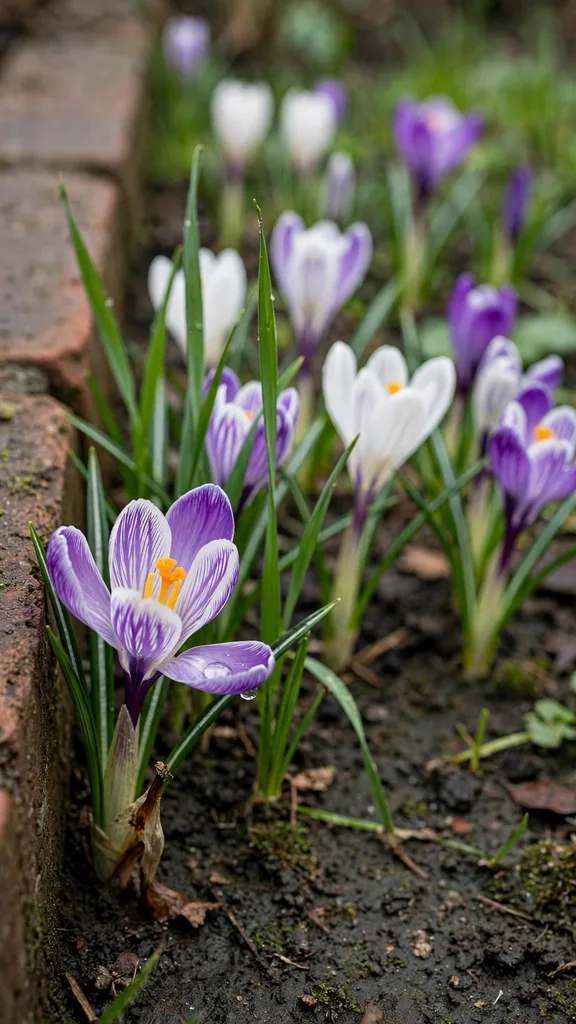
Cut the faded flowers off as they finish. Seeds take stored food away from the corm, and a crocus allowed to set seed flowers smaller the next spring. Snip the stem just below the spent flower and leave the leaves untouched.
Do not mow the lawn until the crocus leaves turn yellow and die back on their own. The foliage on small bulbs dies back fast, and a week of yellow leaves is the full cost of a lawn planting. A mower that runs the week the flowers fade gives a tidy lawn and a corm with no food stored for next spring.
Hide the yellowing leaves instead of cutting them. Plant the corms behind perennials that leaf out late, or interplant with groundcovers that cover the bed by the time the crocus foliage yellows. Hosta, daylilies, and ferns all open after the crocus finish, and their leaves cover the dying foliage without touching it.
After the leaves die back, the bed is free for summer. Sunflowers grown from seed take the sunny spot once the soil warms, and their roots run deep enough to leave the corms below untouched.
A lawn mowed the week the flowers fade gives a tidy bed and a corm with no food stored for next spring. The flowers the next year come back smaller, then stop.
Divide Crowded Clumps Every 4 Years
Dig and divide crowded clumps every 4 years, in mid-July once the foliage has yellowed. Replant the corms in fall. The same page that sets the four year figure calls division the way to keep a drift flowering, and a clump left longer flowers smaller each spring.
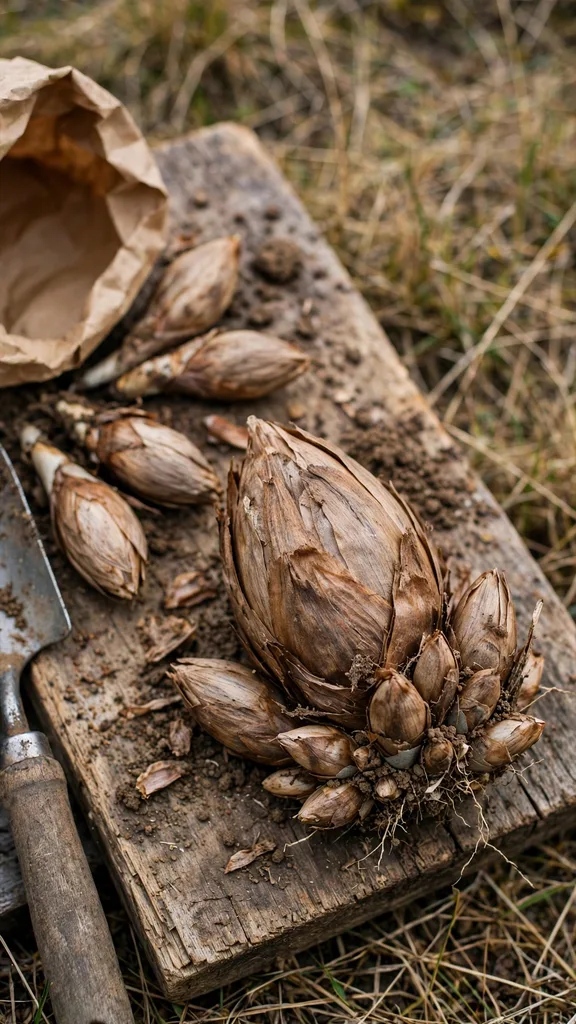
Crowding shows first in the flowers. The cups shrink, the stems shorten, and the drift flowers in patches instead of one sweep. Lift the clump with a fork, shake the soil off, and pull the corms apart by hand. Keep the firm ones and compost the soft ones. A soft corm is rot, and rot spreads in the bag.
Dry the lifted corms in the shade for a day, then store them in a paper bag in a cool dry spot until fall. Wipe the soil off before storing and leave the papery skin on. A corm stored damp in plastic rots before September.
Replant in the same window as new corms, mid-September through October, at the same depth and spacing. The divided corms flower the first spring after replanting, and the drift comes back denser than before.
A clump left for eight years flowers small and sparse, and the corms underneath are a tangled mat. Lift it, split it, and the drift starts over.
Grow Crocus in Pots for Winter Flowers
Pot 15 corms in a 15.2 cm pot in October, chill them for 12 to 13 weeks at 1.7 to 8.9°C, then bring them into a cool bright room. Flowers open 3 to 4 weeks later. The same guide that sets the pot figure calls crocus one of the easiest bulbs to force, and the chill is the whole trick.
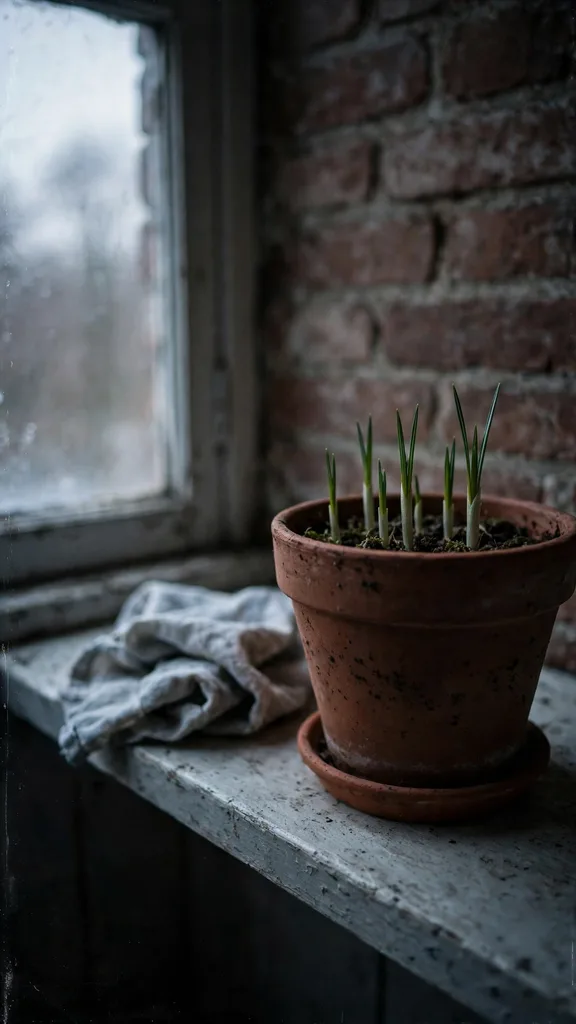
Mix one part loamy soil, one part organic matter, and one part sand, and skip the fertilizer. Fill the pot, set the corms with their tips at the soil line, and water once. A pot without drainage holes rots the corms in a week, so check the base before planting.
Chill the pot in an unheated basement, a cellar, or a cold frame. The temperature must stay between 1.7 and 8.9°C for the full 12 to 13 weeks. A fridge works if the pot fits and no ripening fruit shares the shelf, since fruit gas pushes the shoots up early.
Bring the pot into a bright cool room at 12.8 to 15.6°C once short shoots show. Water when the top of the mix dries. The flowers open in 3 to 4 weeks.
Discard the forced corms after flowering. Forced bulbs seldom rebloom when planted outdoors, and a spent corm in the garden is a dead spot in the bed.
A pot brought into a warm room too early grows leaves with no flowers. The chill was short, and the flower never formed inside the corm.
Stop Squirrels Digging Up Fresh Corms
Lay chicken wire over the bed right after planting and pin it down. Squirrels dig fresh corms the first week, then lose interest. The same page that names the squirrel problem says squirrels seem particularly adept at locating, digging up, and eating newly planted corms, and fresh soil is the signal.
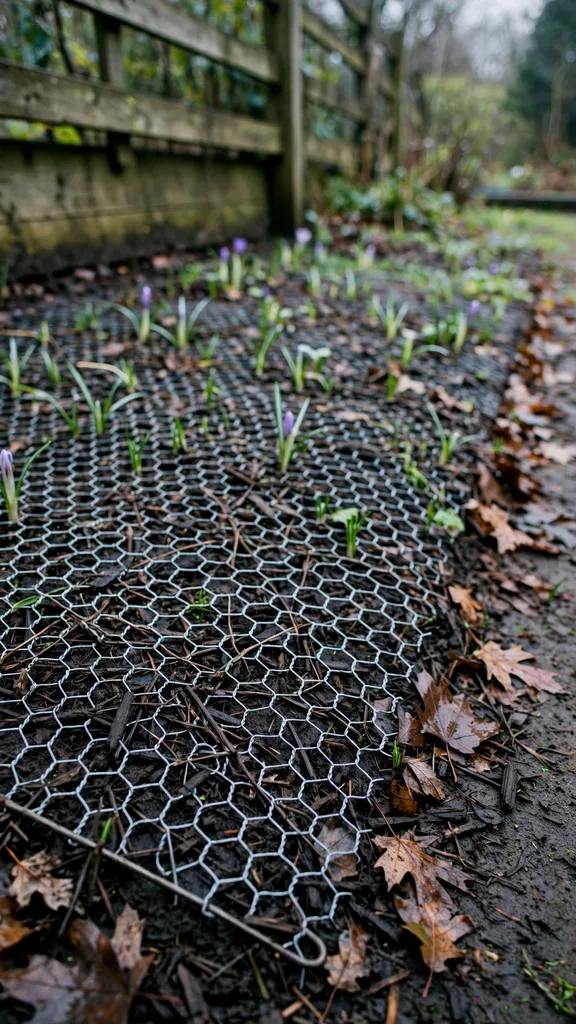
Pin the wire with landscape staples and cover it with mulch. The shoots grow through the mesh in spring, and the wire lifts off once the flowers open. A wire left on all spring tangles the stems, so set a reminder to lift it in February.
Planting crocus beside daffodils helps. Squirrels and voles leave daffodil bulbs alone, and a mixed drift gives the diggers a bad mouthful before they reach the crocus. The same guide lists voles, squirrels, rabbits, and deer among the animals that eat crocus, and wire mesh at planting time is its first defence.
Repellents are the second line. A granular repellent scattered over the bed at planting time lasts a few weeks, which is long enough for the soil to settle and the scent of fresh digging to fade. Reapply after heavy rain.
A bed planted on Saturday and left uncovered is often dug up by Sunday. The wire goes on the same day as the corms, never the next morning.
Fix Crocus That Refuse to Flower
A crocus that grows leaves and no flowers is usually a corm that never got its winter chill, or a corm starved by early mowing. The leaves tell the story, so read them before digging.
Leaves up, no flowers, warm winter behind them. The corm needed a long cold winter to form the flower inside, and a mild winter shortens that chill. Nothing fixes that spring. Plant earlier in fall next year, or move the drift to a colder spot in the garden.
Leaves up, no flowers, lawn mowed early last spring. The corm stored no food, so it grew leaves on last year’s reserves and had nothing left for a flower. Leave the leaves for six weeks this spring and the flowers return next year.
Small flowers, crowded clump, stems short. The drift needs dividing. Lift the clump in mid-July, split it, and replant in fall at full spacing.
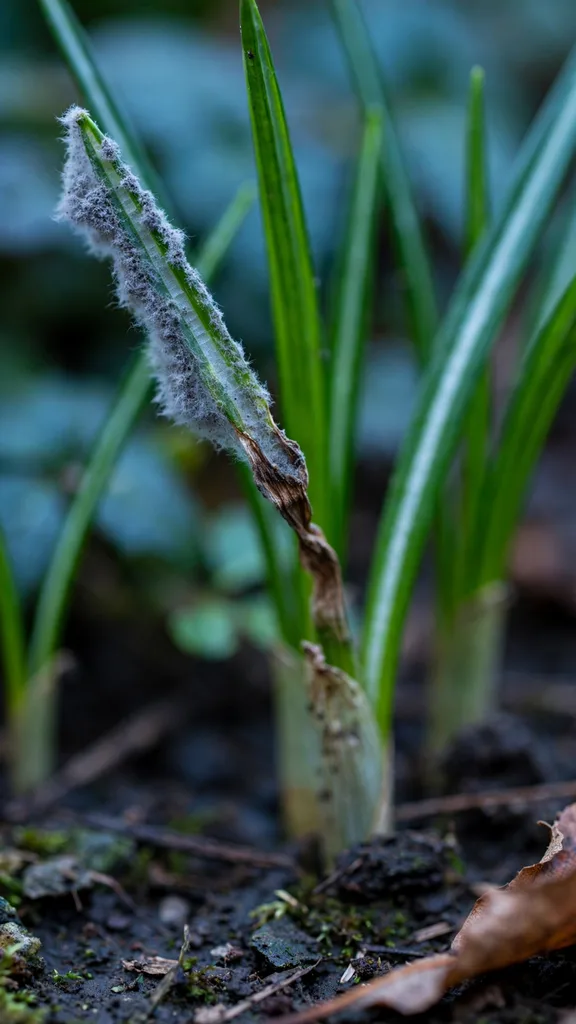
Gray mold on the leaves and stems. Botrytis is the most prevalent foliar disease on spring flowering bulbs, and it shows as gray fuzz on wet foliage in cool damp weather. Pull the worst leaves, space the corms wider at replanting, and keep the bed clear of dead leaves through winter.
No leaves at all in spring. The corms are gone, eaten or rotted. Dig one spot and look. A hollow papery shell means rot from wet soil. No shell at all means squirrels, and the wire goes on earlier next fall.
Leaves with no flowers for two years in a row mean the corms need lifting, dividing, and a better spot. A third year in the same ground gives the same result.
Skip the 5 Mistakes That Shrink Next Spring
Five mistakes shrink next spring’s flowers. Each one is easy to make, and each one costs a year.
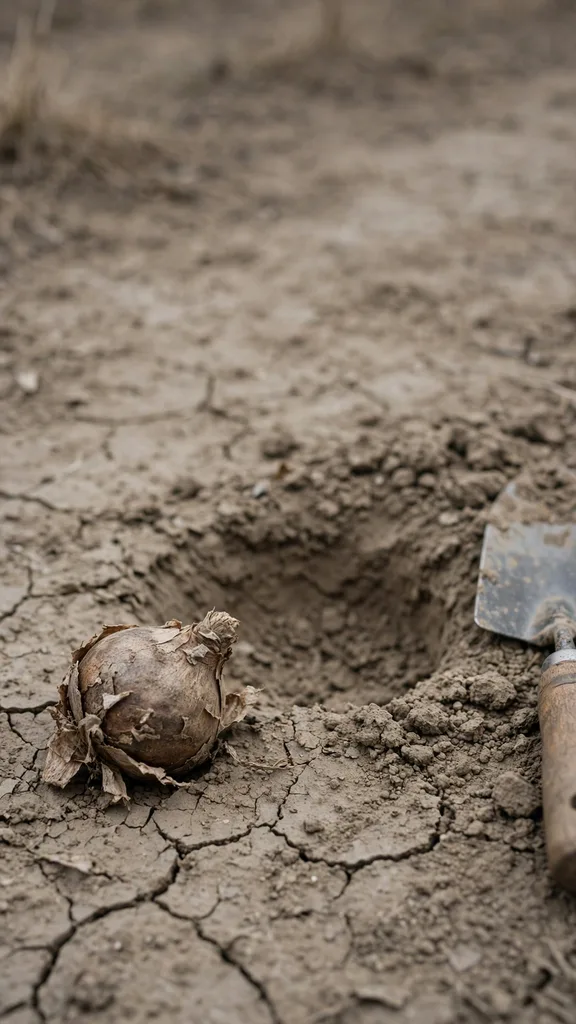
- Planting too shallow. A corm set 2.5 cm deep dries in the first warm spell and heaves out in the first frost. Set it 7.6 to 10.2 cm deep and the soil holds it steady.
- Planting in wet clay. Clay holds winter water, and a corm that sits wet rots from the base. Add compost, plant on a rise, or pick a different bed.
- Watering twice. One deep soak settles the soil. A second soak in warm soil pushes rot, and rot takes the corm before it roots.
- Cutting the leaves early. The leaves feed the corm for six weeks after bloom. Cut them in week two and the corm stores half its food.
- Skipping the wire. Squirrels find fresh corms in days. The wire costs less than the corms it saves, and it lifts off in February.
One of these five is behind most thin drifts. Fix it this fall and the corms pay it back in February.
Frequently Asked Questions
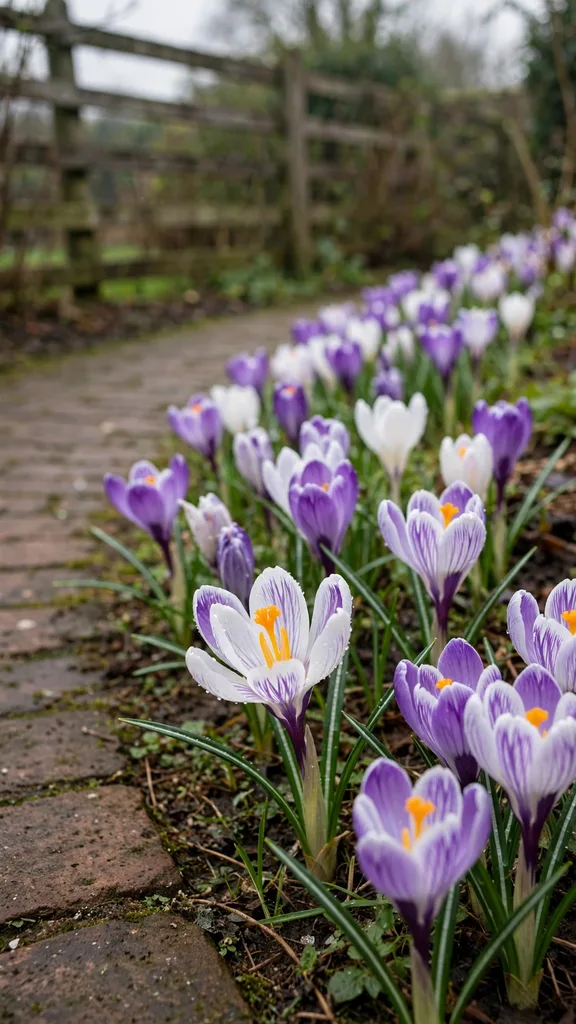
Plant crocus corms from mid-September through October, once the soil at planting depth falls below 15.6°C. Corms set in that window grow roots before the ground freezes. Late planting still works if the ground has not frozen, though the flowers open later in spring. A frozen crust on the soil ends the season, so finish before the first hard freeze.
Set crocus corms 7.6 to 10.2 cm deep, measured from the base of the corm to the soil surface. Space them 7.6 to 10.2 cm apart in rows, or pack drifts tighter at 35 to 70 corms per square foot. The rule is two to three times the height of the corm. Set the pointed end up and the flat base down, then water once to settle the soil.
Crocus grows well in a lawn if the grass is thin and the spot gets sun. Plant the corms in drifts, not singles, and keep the mower off until the leaves turn yellow, about six weeks after bloom. Mowing early starves the corm and the flowers shrink the next year. Short grass and a sunny slope give the best lawn drifts.
A crocus with leaves and no flowers usually missed its winter chill or lost its leaves to an early mowing. The corm needs a long cold winter to form the flower, and the leaves need six weeks after bloom to store food. Crowded clumps also flower small or not at all, so divide them every four years in mid-July and replant in fall.
Autumn crocus and saffron crocus are different plants. Saffron crocus is Crocus sativus, and its dried red stigmas are the saffron spice. Autumn crocus is usually Crocus speciosus, a lilac fall flower with no culinary use. Colchicum autumnale is also sold as autumn crocus, and it is a different plant with toxic corms. Check the botanical name on the bag before buying.