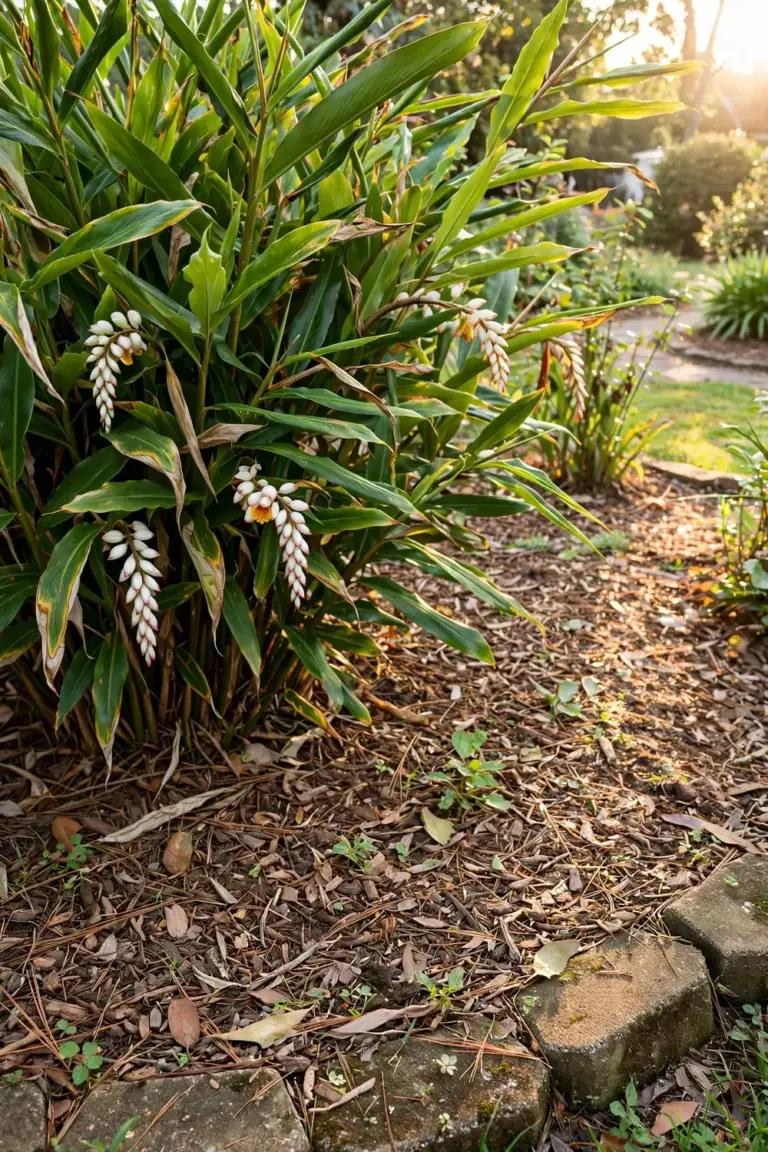

Shell ginger spreads by creeping underground rhizomes that can build colonies 10 m or more across in south-east Queensland, where the Queensland weed key lists it as a minor environmental weed. Contain it with a pot, a rhizome barrier, yearly division, and safe disposal of every rhizome piece. That is how to contain shell ginger plants from spreading in Australia.
Shell ginger is Alpinia zerumbet, a clump-forming perennial in the ginger family that usually grows 2 to 3 m tall and occasionally reaches 4 m, according to the Queensland Lucid weed key. It is not culinary ginger. Culinary ginger is Zingiber officinale, a different species grown for its edible rhizome, and its growing needs are covered in the site’s culinary ginger growing guide. This page stays on containment: stopping Alpinia zerumbet from leaving the spot you gave it.
The rest of this page is 11 moves, from settling the invasive-versus-not debate to digging out a clump that already escaped. Work from the top if you are choosing a plant. Jump to the barrier and division sections if one is already in your ground.
1. Settle the Contradiction: Read Both Verdicts in Context
Both verdicts are honest. They describe different places. The University of Florida extension service rates the invasive potential of variegated shell ginger as not known to be invasive, based on its behavior in Florida landscapes. The Queensland Lucid weed key calls the same species a minor environmental weed in south-eastern Queensland, where it has spread from cultivation into natural vegetation.
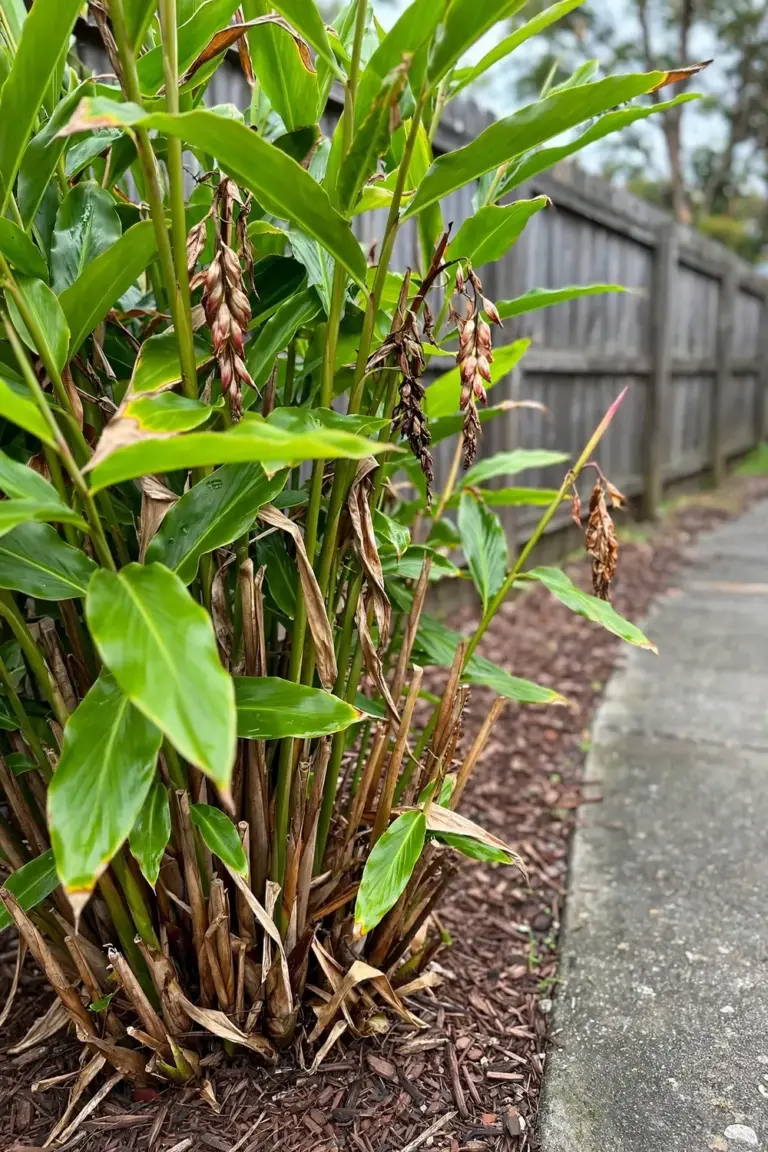
The difference is the escape route, not the plant. In Florida the assessment reflects garden behavior. In south-east Queensland the key documents shell ginger establishing where garden waste has been dumped, particularly along waterways and in gullies, then spreading laterally via creeping underground stems into dense colonies 10 m or more across that exclude other species and are very difficult to remove. A plant that stays put in a tended bed becomes a problem the moment its rhizomes reach a dumped pile near a creek.
Treat the stricter verdict as your operating rule if you garden anywhere near bushland, a waterway, or a gully in eastern Australia. The species is not declared under any state or local government legislation, and there are no restrictions on its sale or cultivation, so the responsibility sits with the gardener. Assume it will spread and contain it from day one.
The practical upshot is that neither label tells the full story on its own. “Not known to be invasive” describes a plant that behaves in cultivation. “Minor environmental weed” describes what happens when cultivation ends at the fence line. Your habits decide which description fits your garden. Contain the clump and bin every rhizome piece, and you are growing the Florida plant. Let it wander toward the back creek, and you are growing the Queensland weed.
2. Learn How Shell Ginger Actually Spreads
Shell ginger spreads two ways, and only one of them matters in most Australian gardens. The Queensland weed key records that the species reproduces by seed and vegetatively via its creeping underground stems, but adds that fruit are generally not produced in south-eastern Queensland. Seed is a minor pathway here. Rhizomes do the real work.
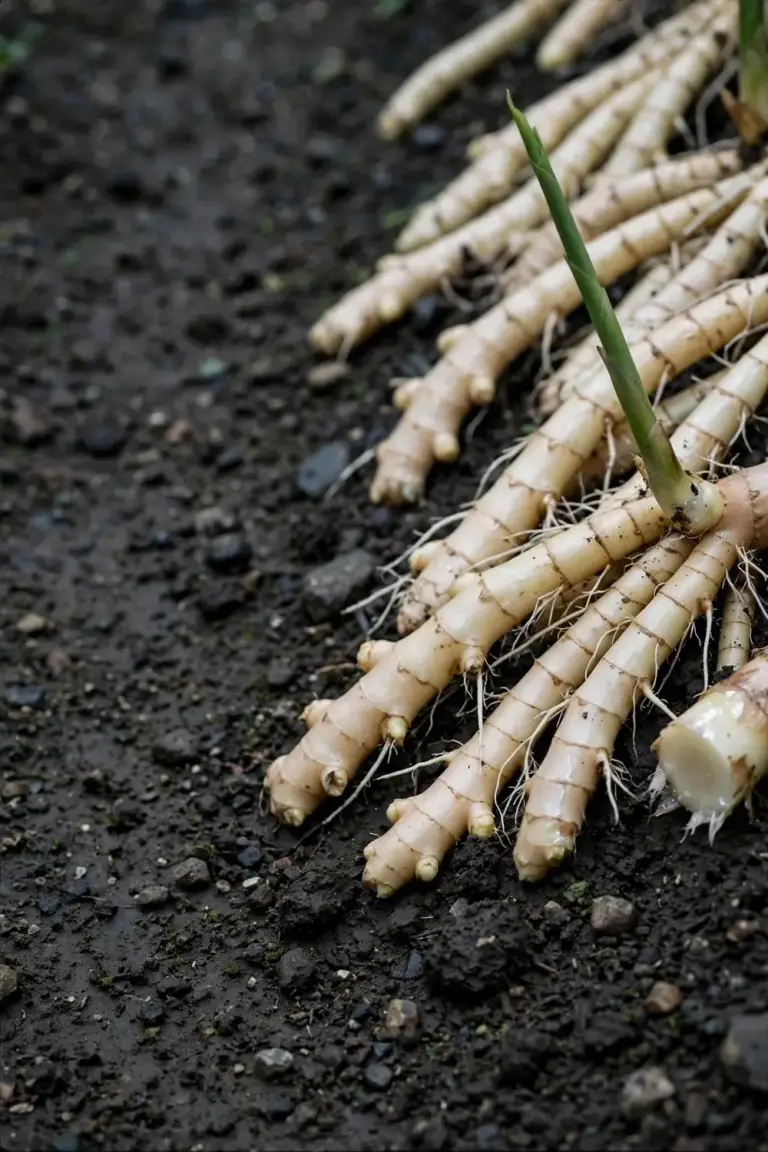
The rhizomes are short, fleshy, creeping underground stems that push outward from the clump each growing season. The University of Florida notes that the roots sprout from roots or lower trunk tissue as rhizomes, and that a mature plant spreads 5 to 8 feet wide, which converts to 152.4 to 243.8 cm. Left alone, the clump widens year after year. The Lucid key describes the endpoint: very large and dense colonies that exclude other species.
The second spread pathway is human. The Lucid key states plainly that shell ginger is usually dispersed in dumped garden waste. A wheelbarrow of dug-out rhizomes tipped over a back fence or into a gully is the classic start of a new colony. Water then helps; the key lists riparian vegetation and disturbed sites among its habitats. Every containment method below targets one of these two pathways: the creeping rhizome, or the careless dump.
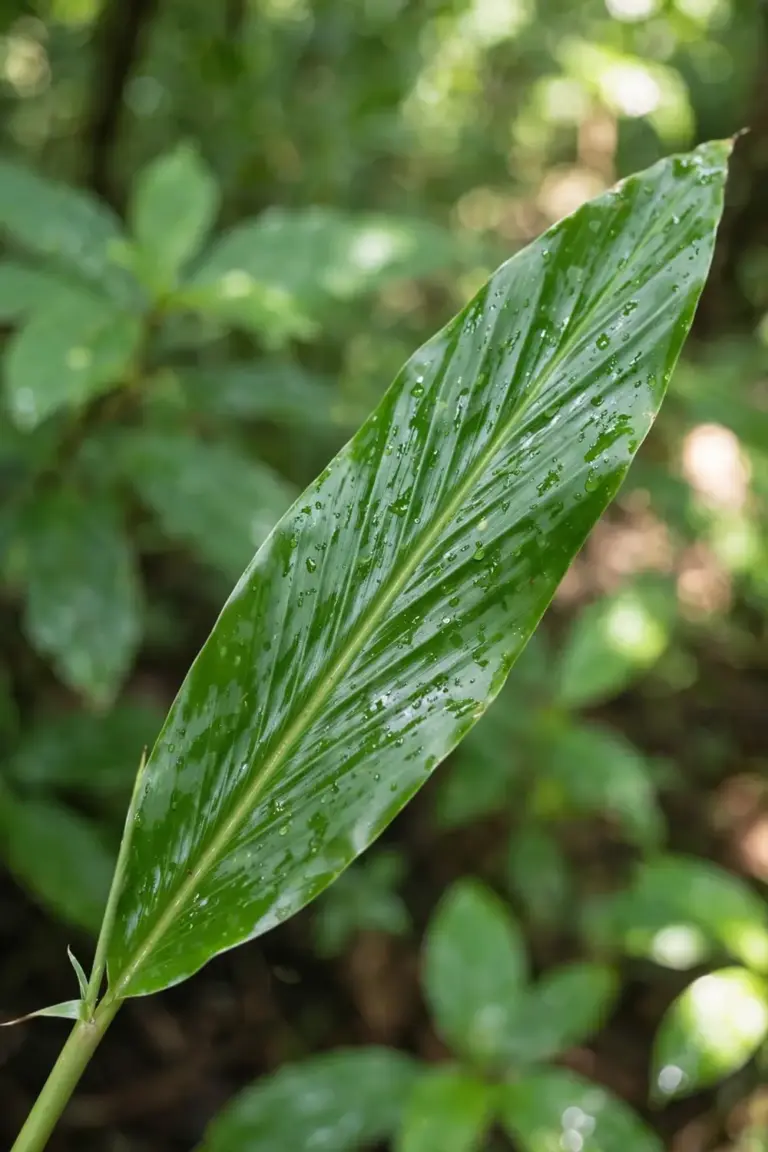
Watch for the early signs of a clump on the move. New shoots emerging a metre or more from the parent clump mean rhizomes have already traveled. The foliage gives the game away before the rhizomes do: shell ginger leaves run 20 to 67 cm long and 5 to 12 cm wide, glossy and lance-shaped, so a cluster of those spears outside the intended footprint is easy to spot against lawn or mulch. Catch them in the first season and removal is a ten-minute job. Wait three seasons and it becomes a weekend.
3. Name the Plant Right: Shell Ginger Is Alpinia Zerumbet
Buy and plant by the botanical name. Shell ginger is Alpinia zerumbet (Pers.) B.L. Burtt and R.M. Smith, in the ginger family Zingiberaceae, native to China, Japan, the Indian sub-continent, and south-eastern Asia. Nurseries also sell it under older or trade names, so check the label before you commit to a containment plan.
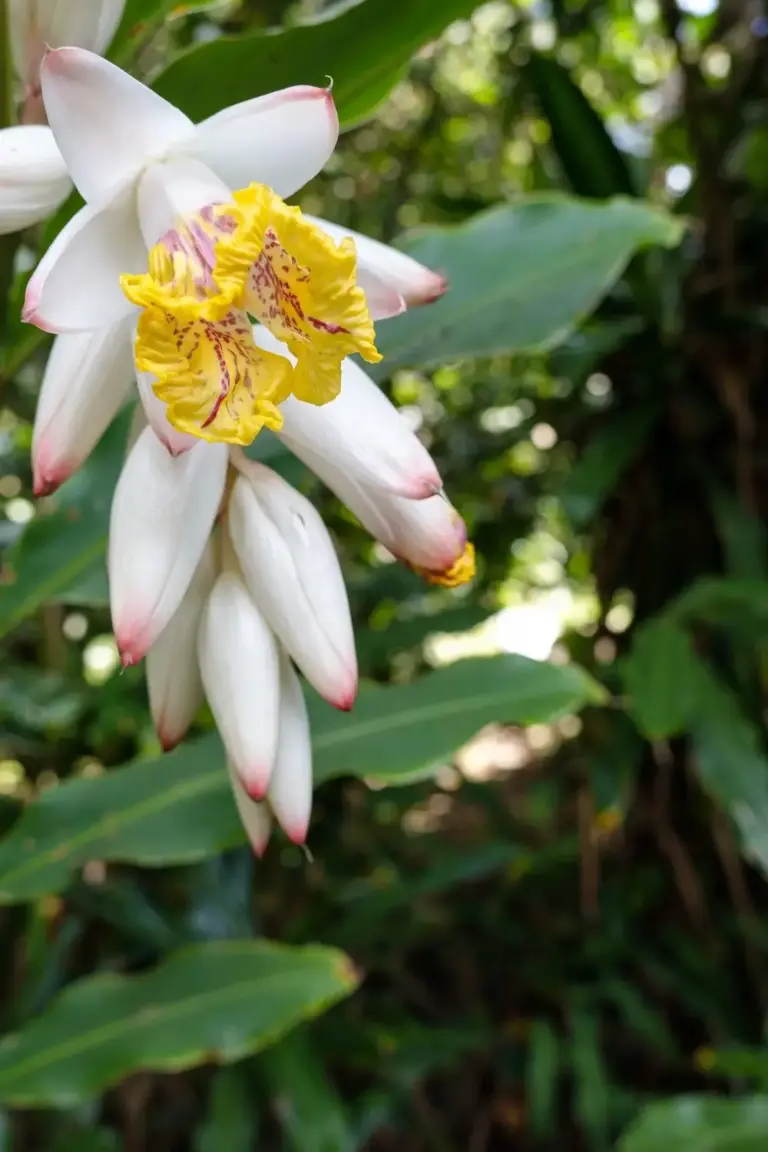
Do not confuse it with its relatives. Culinary ginger is Zingiber officinale, grown for edible rhizomes. Wild gingers in the genus Hedychium are different plants with different behavior. The two Australian native gingers, Alpinia caerulea and Alpinia arundelliana, look similar to shell ginger when neither is in flower, according to the Lucid key, but they are easily distinguished by their smaller pale pink or whitish flowers and bright blue fruit. The broader ginger family holds many ornamental species, and a rundown of ginger plant types helps keep them straight. If your plant came from a nursery as an ornamental with large white-and-pink shell-like flowers, it is almost certainly Alpinia zerumbet.
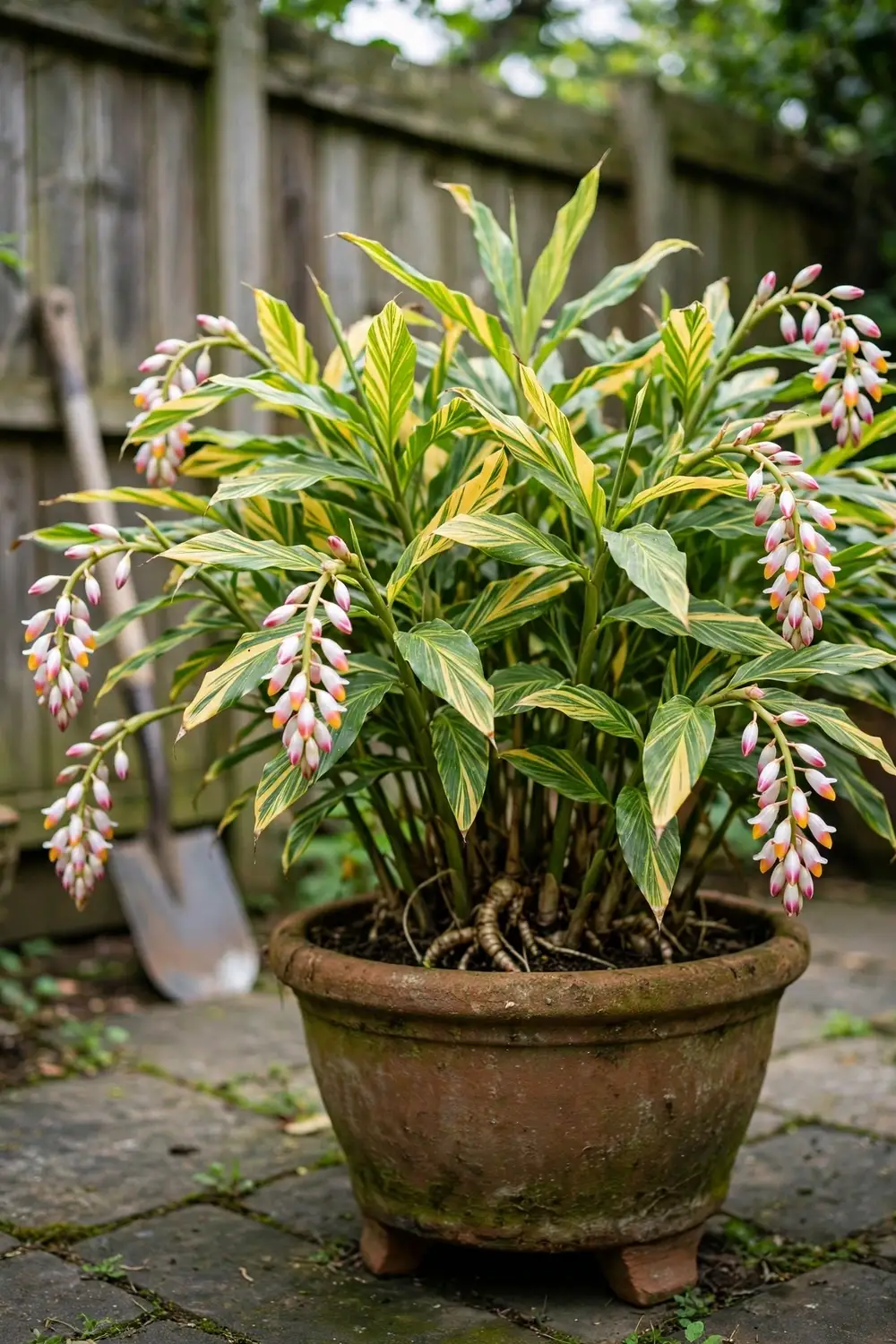
The variegated form sold as Alpinia zerumbet ‘Variegata’ is the same species with yellow-striped leaves. It carries the same rhizomes and the same spread potential. A pretty leaf does not change the containment job.
4. Pick a Less Aggressive Cultivar for Small Gardens
Cultivar choice is the cheapest containment method. It costs nothing extra at purchase time and works for the life of the plant. A University of Florida county extension horticulturist observes that the variegated shell ginger is less aggressive and easier to keep within bounds than its original all-green predecessor. Choose variegated forms when you want the look with a slower footprint.
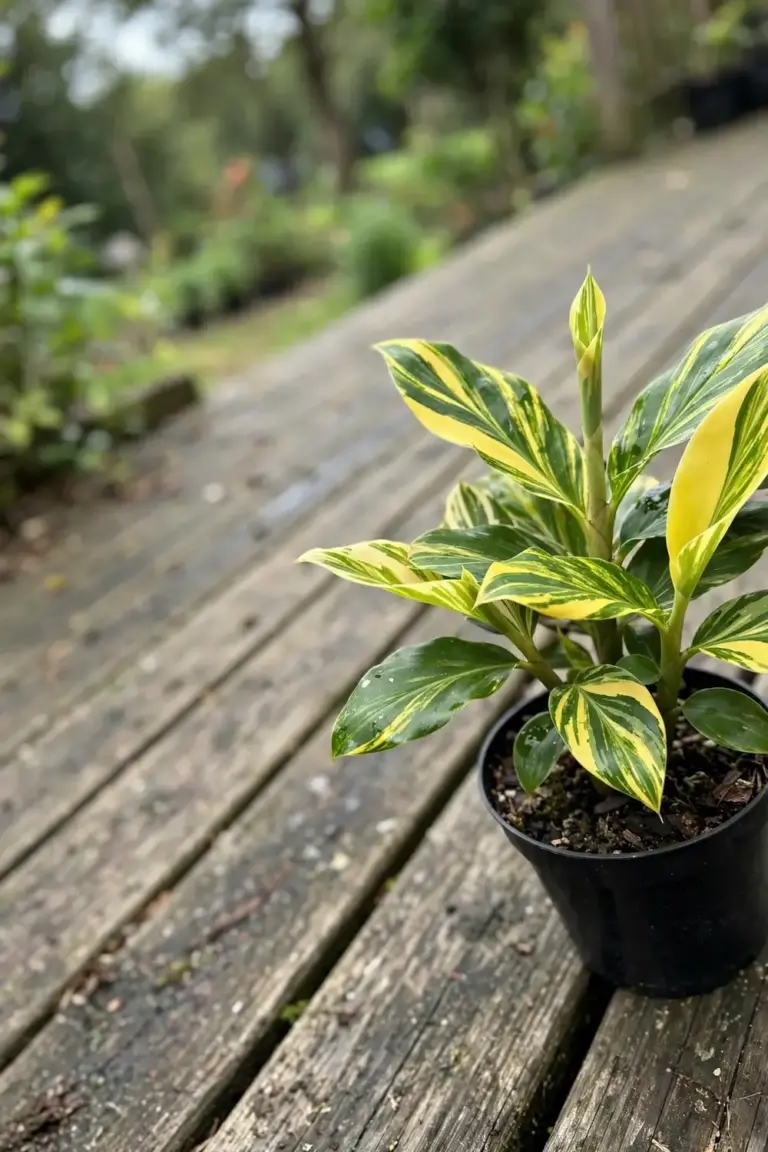
Size matters as much as vigor. The same extension notes describe ‘Variegata Dwarf’, a selection that grows only 30.5 cm tall with the full variegated coloration, against ‘Variegate Chinese Beauty’, which can reach 240 cm and needs planning ahead. Match the cultivar to the space. A dwarf form in a courtyard pot is a different risk profile from the full-size species planted beside a creekline.
Height also decides how much rhizome mass you are managing. A 240 cm specimen carries a root system to match, and dividing it is a two-person job with a sharp spade. A 30.5 cm dwarf lifts out of a pot with one hand. When the nursery cannot name the cultivar, assume the full-size species and contain accordingly. An unnamed plant gets the strictest method, not the benefit of the doubt.
Wisconsin Extension lists further compact options, including ‘Nana’ at 30 to 60 cm and ‘Variegata Nana’ at just 15 to 30 cm tall. Ask the nursery for the mature height on the label, not just the pot size. A 140 mm pot tells you nothing about where the plant wants to be in five years.
5. Grow Shell Ginger in a Pot to Lock the Rhizomes In
A pot is the simplest rhizome barrier ever made. The University of Florida states that variegated shell ginger may also be used in containers, and a county extension horticulturist calls it an excellent single specimen in a container. Rhizomes cannot creep past a solid wall. Choose a pot at least 50 cm across for a standard form so the clump has room to look good for a few seasons. For styling ideas that keep a large container planting handsome rather than merely functional, the site’s fall planter ideas show how to compose thriller-filler-spiller combinations, a formula that works for a bold ginger specimen too.
I divide my shell ginger when it outgrows its pot, because Wisconsin Extension’s advice is plain: a plant too large for its container gets divided, not repotted into something bigger. Lift the clump, cut the rhizome mass into sections with a sharp spade or knife, and replant one section back into the same pot with fresh mix. Give the spares away with a warning, or dispose of them safely.
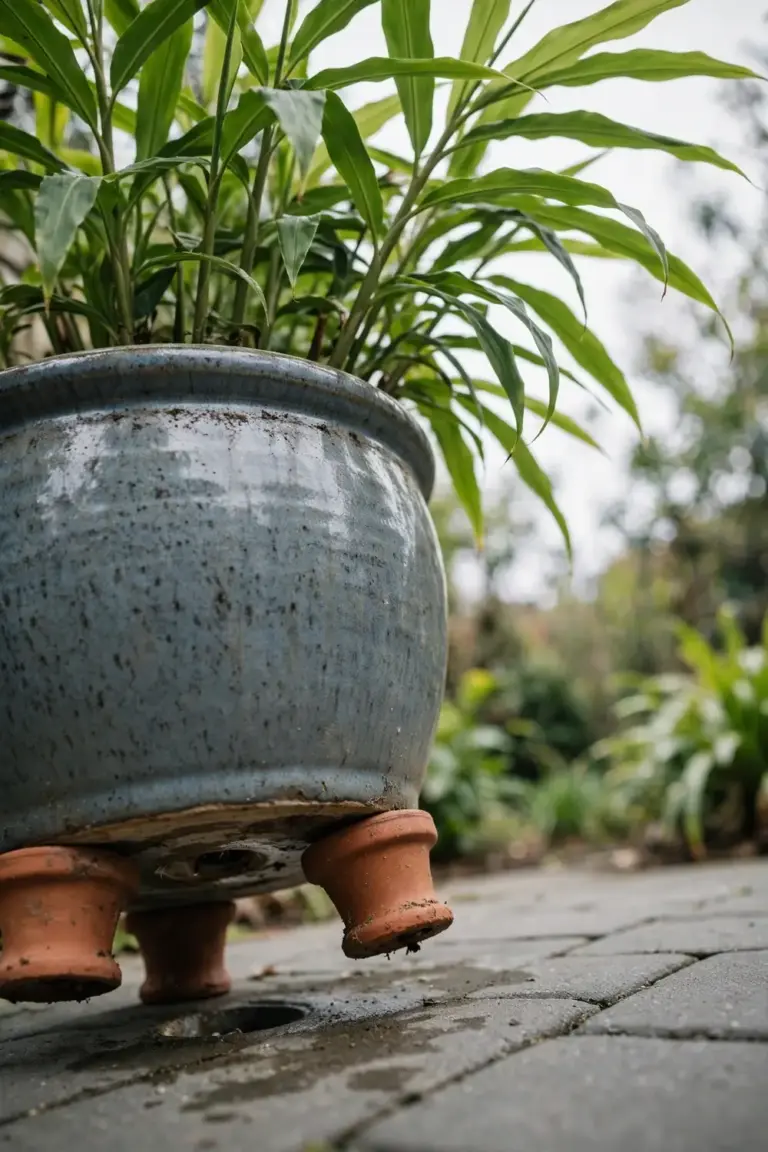
Watch the drainage holes. Rhizomes probing out of the base are the first sign the clump has filled the pot. A pot sitting directly on soil can root through the holes and establish a satellite clump underneath, which defeats the purpose. Raise pots on pot feet or pavers so you can see what is happening underneath. Repot or divide every two to three years, before the clump turns the pot into a solid root-bound brick.
Pots also let you control the plant’s favorite conditions without feeding its ambitions. Shell ginger wants partial shade and moist, fertile, well-drained soil, and it sulks in standing water. A pot gives you that control with a hose and a bag of mix. What the pot does not give the rhizomes is somewhere to go, which is exactly the point. Containment and good culture are the same job here.
6. Sink a Rhizome Barrier Around In-Ground Clumps
A rhizome barrier is a vertical wall sunk into the soil around the planting hole. It works because shell ginger rhizomes creep shallowly. Wisconsin Extension advises planting shell ginger rhizomes shallowly, about 2.5 cm below the soil surface, which tells you the active rhizome zone sits near the top of the soil, not deep underground.
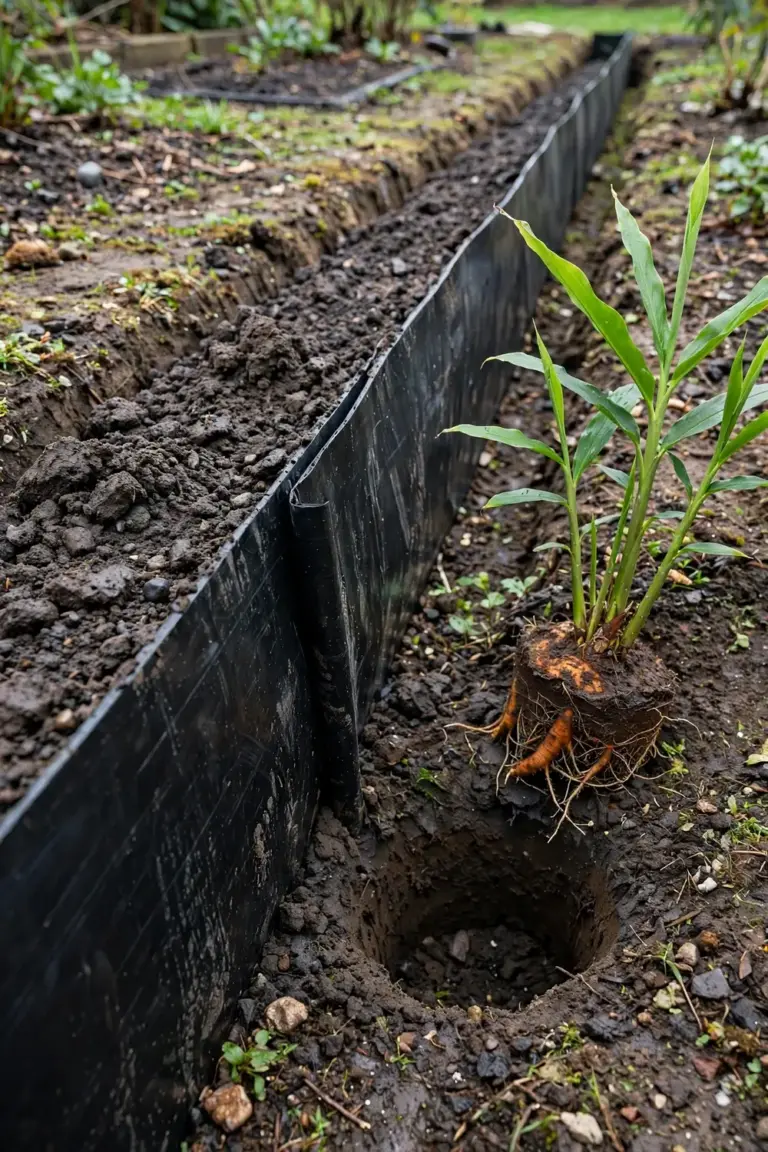
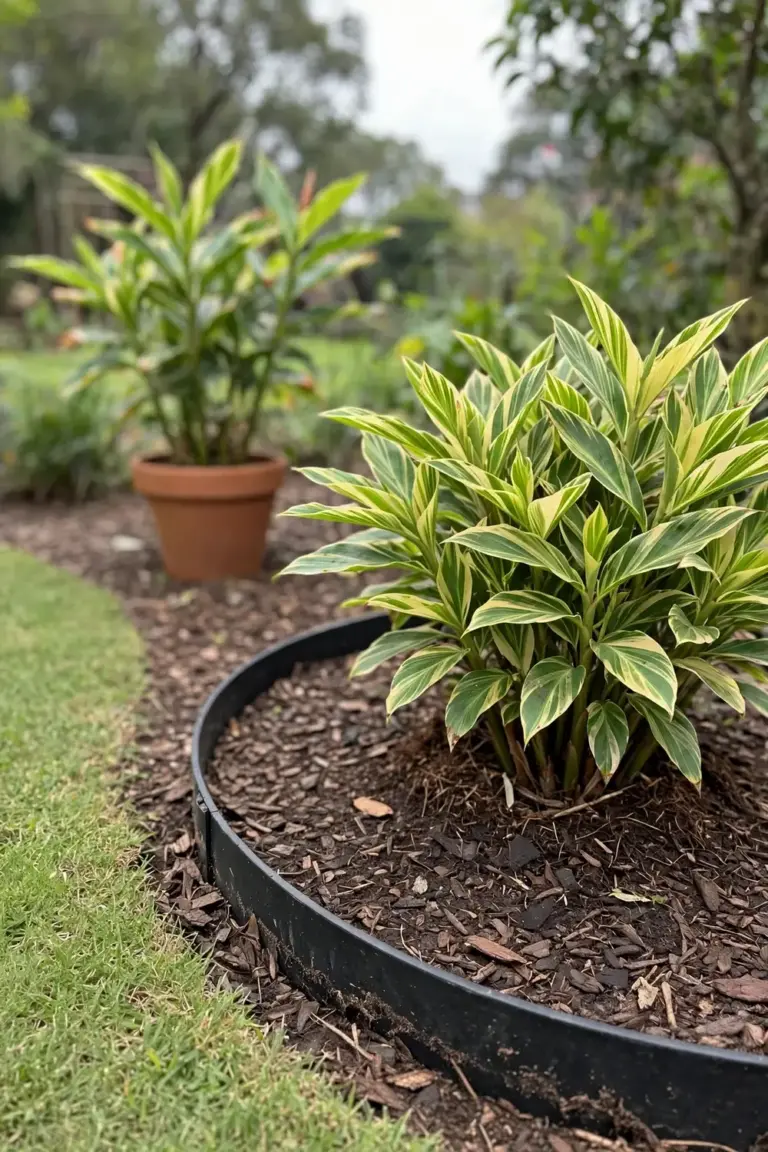
Use rigid high-density polyethylene barrier, 30 to 45 cm deep, installed with about 5 cm protruding above the soil surface. Overlap the ends by at least 30 cm and face the smooth side toward the plant. Rhizomes hit the smooth wall and turn. Backfill firmly so no gaps open along the seam. The above-ground lip matters: it stops rhizomes from going over the top, which shallow creepers will try.
No published trial gives a shell-ginger-specific barrier depth, so treat these figures as craft guidance built on the shallow rhizome zone, not as a researched specification. Data not available for an exact tested depth for this species. Inspect the barrier line twice a year. Any shoot emerging outside the ring gets dug out with its rhizome attached, immediately, before it establishes.
Install the barrier at planting time, not after the clump is established. Retrofitting means cutting through live rhizomes, and every cut piece left in the soil outside the new wall is a fresh start. If the clump is already in the ground, dig the whole thing out first, install the barrier in the empty hole, then replant a single divided section back inside. More work up front. Far less work later.
7. Divide the Clump Before It Decides for You
Division is both propagation and containment. The University of Florida lists propagation as via division of rhizomes during the active growing season, and a county extension horticulturist warns that clumps will develop over time and will need to be divided. A clump you divide on schedule never gets the chance to outgrow its allotted space.
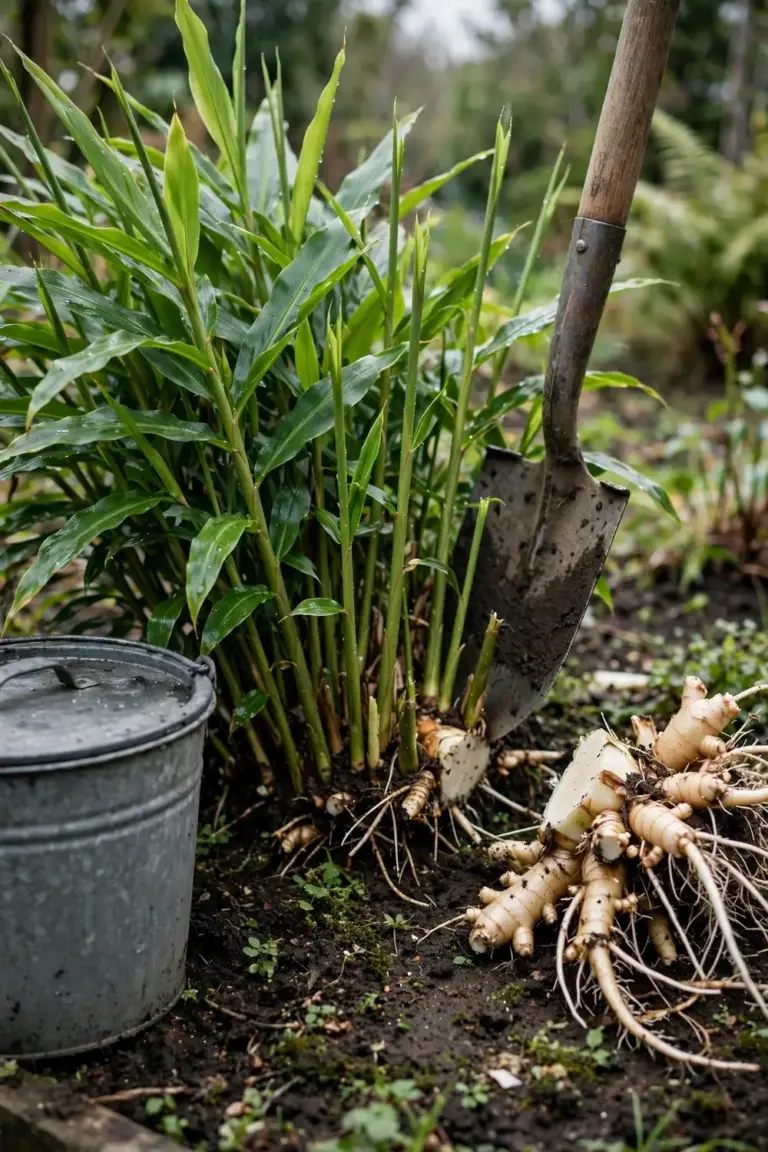
Divide in spring as new growth starts. Drive a sharp spade straight down through the clump 30 cm out from the center, lever out the outer section, and cut it free. Each division needs several healthy shoots and a solid piece of rhizome with roots. Replant divisions at the same depth they were growing, which Wisconsin Extension puts at about 2.5 cm below the surface for rhizome pieces. Water them in well.
For in-ground clumps inside a barrier, divide every two to three years. For pots, divide when growth slows or rhizomes circle the drainage holes. Never toss divisions or trimmings onto a compost heap or over the fence. Every piece of rhizome is a potential new plant, and the disposal section below explains where they must go instead.
A county extension horticulturist notes that division of these clumps can occur at any time of year by tearing apart the old plants by hand into smaller portions of rhizomes. That flexibility helps containment: you do not need to wait for a calendar window when a clump is escaping. See shoots outside the barrier in midsummer and you can act that weekend. Replant the divisions at the same depth, water them in, and bin the surplus.
8. Site New Plantings Away From Waterways and Bushland
Placement is prevention. The Lucid key records shell ginger establishing in natural vegetation where garden waste has been dumped, particularly along waterways and in gullies, with reports from Enoggera Creek, gullies in Toowong, streams in Keperra, wetlands at Birkdale, and islands in Moreton Bay. Do not plant it where a flood, a storm, or a careless clean-up can carry rhizome pieces into those corridors.
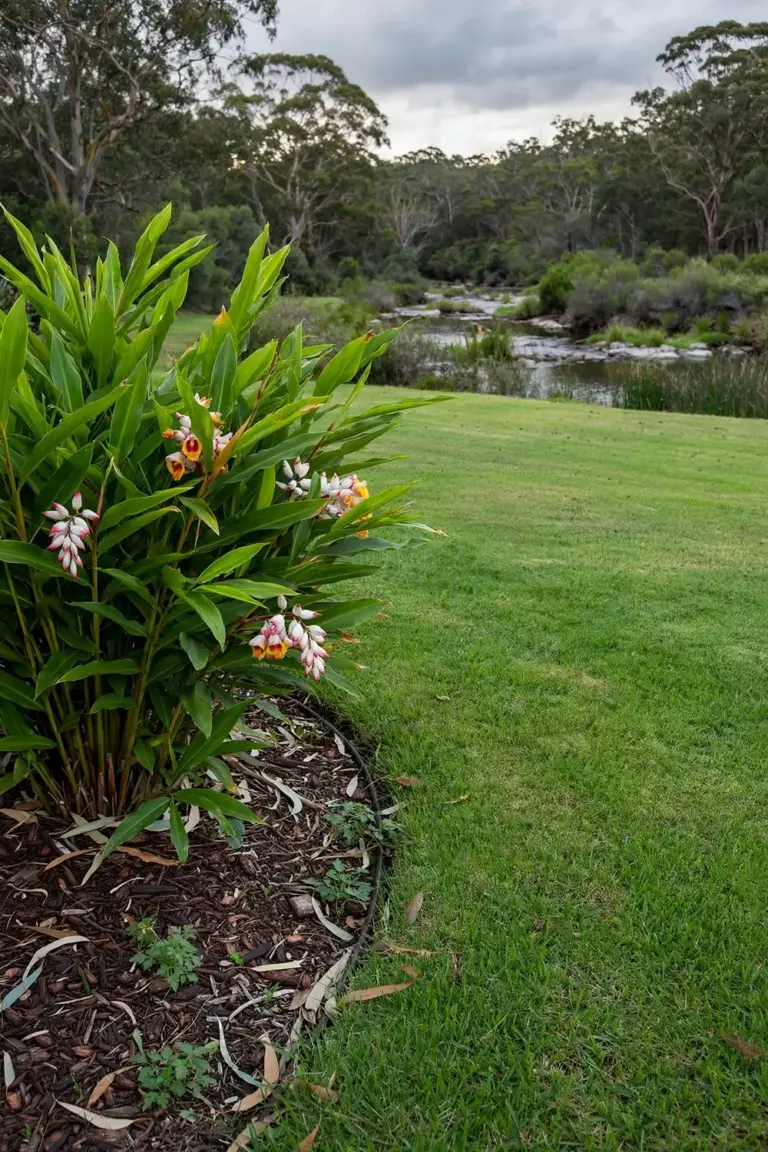
Keep new plantings at least 10 m from creek lines, drainage lines, gullies, and bushland edges. That distance is a practical buffer, not a researched figure. Data not available for a tested safe setback distance for this species. The principle holds: rhizomes move slowly through soil, but water and people move them fast, so put distance between the clump and anything that moves.
Think about where the plant’s waste stream goes, too. Prunings, divisions, and dig-outs all leave your property through a bin or a trailer. If your clean-up habit involves a pile at the back of the block “for later,” that pile is the dispersal event the weed key describes. Site the plant where its maintenance waste has a short, boring trip to the general waste bin.
The key also advises that shell ginger should be controlled in sensitive bushland and conservation areas. If your property backs onto either, choose the pot option instead of open ground. A contained plant near bushland is defensible. An in-ground clump 3 m from a gully is a future weed-control bill.
9. Dispose of Every Rhizome Piece Safely
This is the section that prevents the Queensland scenario. The Lucid key identifies dumped garden waste as the usual dispersal route for shell ginger in south-east Queensland. Every rhizome piece you remove must go somewhere it cannot grow.
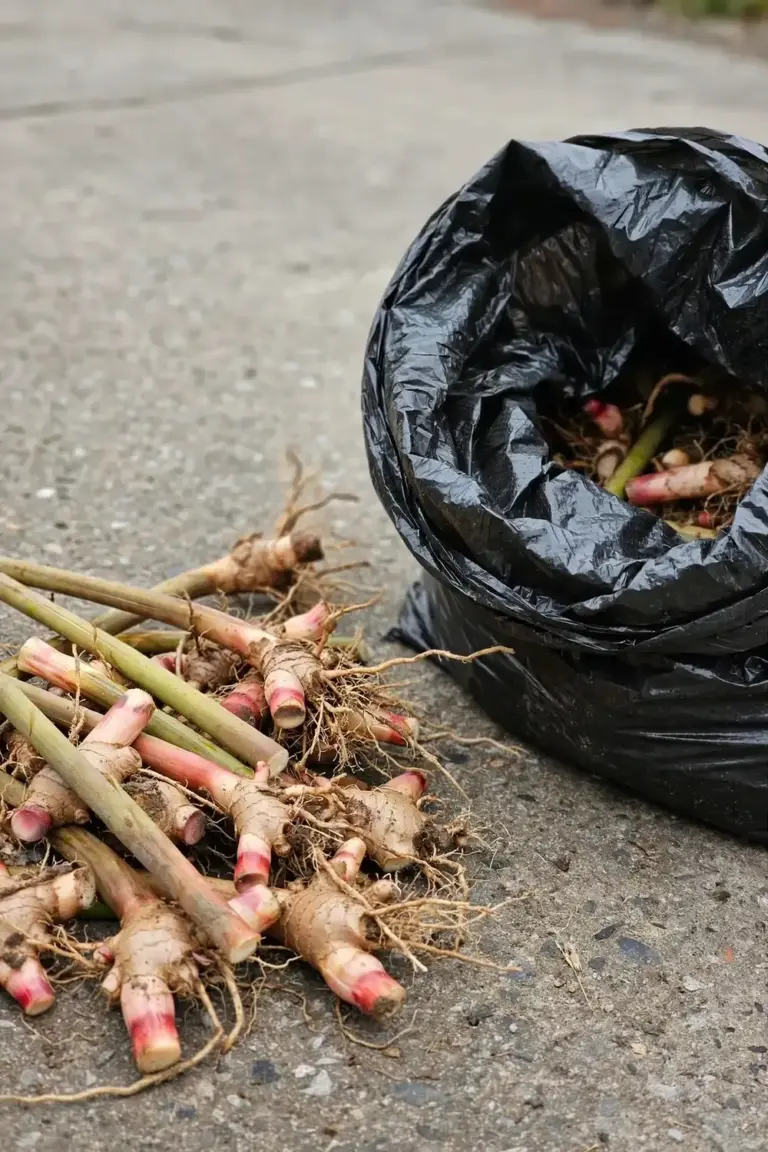
Bag rhizomes and put them in the general waste bin, not the green waste bin. Green waste collection is shredded and composted, and rhizome pieces can survive cool composting to sprout at the other end. Never dump garden waste in bushland, on vacant blocks, in gullies, or near waterways. That single habit is how minor garden plants become minor environmental weeds.
Dry small quantities in the sun on concrete for several days until the pieces are crisp and dead, then bin them. For large dig-outs, take the material to a council waste facility that handles it as general waste. Tell anyone you give divisions to exactly what the plant is and what it does. An unlabeled gift of rhizomes is how the next colony starts two suburbs away.
Make disposal the easiest part of the routine, not an afterthought. Keep a dedicated sturdy bag or lidded bucket near the work area during division or dig-out days, and fill it as you go. Rhizome pieces left sitting on soil while you finish the job can take root where they lie if rain arrives. Bag first, admire the clean bed after.
10. Dig Out an Escaped Clump Completely
If shell ginger is already spreading beyond its spot, partial removal fails. The Lucid key warns that established colonies are very difficult to remove, which is the price of the plant’s tough rhizome system. Plan for a thorough job, not a quick one.
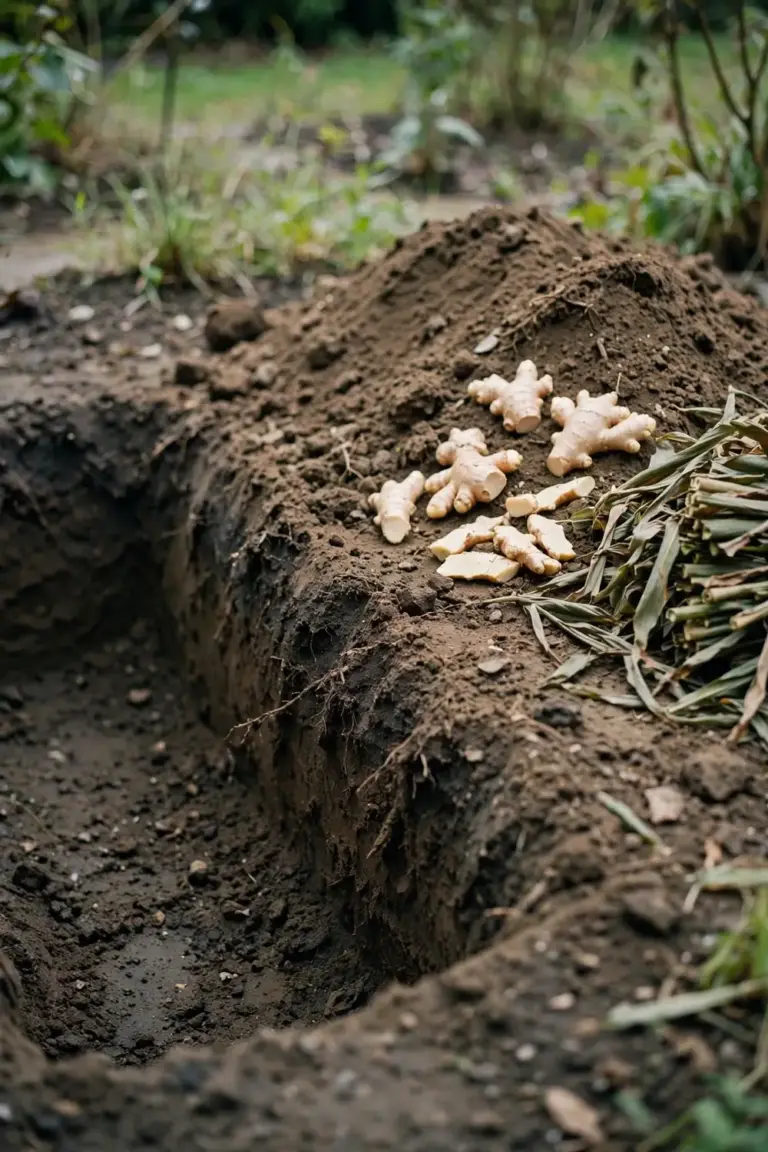
Cut the foliage down first so you can see the ground. Then dig the entire rhizome mass out, working outward at least 30 cm beyond the last visible shoot. Rhizomes snap easily, and every snapped piece left behind can resprout, so sift through the loosened soil and pick out every fleshy segment. This is slow work. Rushing it is how you do the job twice.
Dispose of all material as general waste, never green waste. Watch the site for at least twelve months. New shoots from missed fragments usually appear within one growing season; dig them out the moment they show, with the rhizome piece attached. Two or three follow-up passes in the first year beat one heroic dig followed by neglect.
Mark the calendar. A quick check each season for the first year catches stragglers while they are small and their rhizome pieces are still shallow. Each pass takes minutes. Skip the follow-ups and a missed fragment rebuilds the clump you just removed, and you are back at the start with a year’s growth to undo.
11. Match the Containment Method to Your Garden
No single method fits every garden. Use the table to pick the combination that matches your situation, then commit to the maintenance each method demands. Containment fails when the method is right but the follow-through stops.
| Method | Effort | Best For | Watch Out For |
|---|---|---|---|
| Pot culture | Low | Courtyards, patios, near bushland | Divide every 2 to 3 years; watch drainage holes |
| Less aggressive cultivar | None extra | Small gardens, first planting | Variegated still spreads; it is slower, not sterile |
| Rhizome barrier | Medium, one-time install | In-ground feature clumps | Inspect twice yearly; no tested depth published |
| Scheduled division | Medium, every 2 to 3 years | Vigorous in-ground clumps | Every piece must be disposed of safely |
| Safe disposal habit | Low, ongoing | Every gardener growing it | Green waste bins do not kill rhizomes |
| Careful siting | None extra | New plantings | Keep 10 m from waterways as a practical buffer |
Combine methods for higher-risk spots. A variegated dwarf cultivar in a pot, sited away from the back fence drain, is about as contained as a plant gets. A full-size green form planted unbarriered 3 m from a gully is the scenario the Queensland weed key describes. Most gardens fall between those extremes, so layer two methods and you cover the gap: pot plus division, or barrier plus careful siting.
Frequently Asked Questions
It is a minor environmental weed in south-east Queensland, where the Lucid weed key documents garden escapes forming colonies 10 m or more across along waterways and gullies. It holds no declared status under state or local legislation, which makes control a gardener’s choice rather than a legal duty. In the United States, the University of Florida rates it as not known to be invasive. Treat the Queensland verdict as your guide if you garden in eastern Australia.
Yes, if you maintain it. A solid pot walls off the creeping rhizomes completely, and the University of Florida lists containers as a suitable use. The failure points are division neglect, rhizomes escaping through drainage holes into soil below, and dumping the repotted rhizome mass in green waste. Divide every two to three years and raise pots off soil on feet or pavers.
Shallow. Wisconsin Extension advises planting rhizome pieces about 2.5 cm below the soil surface, which reflects the plant’s shallow creeping habit. That is why a 30 to 45 cm barrier with a 5 cm above-ground lip contains it in practice. No published trial gives a tested barrier depth for this species specifically, so treat the figure as craft guidance and inspect the barrier line twice a year.
No. Rhizome pieces survive cool home composting and sprout wherever the compost is spread, and the Queensland weed key identifies dumped garden waste as the main dispersal route in south-east Queensland. Bag removed rhizomes for the general waste bin, or dry them on concrete until crisp before binning. Never put them in the green waste bin or dump them near bushland.
It is slower, not safe. A University of Florida extension horticulturist notes the variegated form is less aggressive and easier to keep within bounds than the all-green original. Compact cultivars like ‘Variegata Dwarf’ at 30 cm suit small spaces. But variegated shell ginger is the same species, Alpinia zerumbet, with the same creeping rhizomes, so it needs the same containment discipline.
Dig out every rhizome piece on your side, working 30 cm beyond the last visible shoot, and dispose of it as general waste. Then talk to your neighbour about a barrier or division before it crosses again. If the planting sits near a waterway or bushland, mention the Queensland weed key listing. Offer to help divide it in spring; shared maintenance beats a fence-line feud.
Keep It Contained and It Stays a Good Neighbour
Shell ginger earns its place. Few plants give that tropical look with so little fuss. The price is vigilance: a pot or a barrier, a division every couple of years, and a disposal habit that never feeds the green waste bin. Do those three things and the plant stays where you put it. Skip them near a Queensland waterway and you are growing the next colony the weed key will be mapping. Walk your garden each spring, spade in hand, and check the edges before the rhizomes do. The gardeners who contain shell ginger successfully are not the ones with the strongest barriers. They are the ones who look twice a year and act the same weekend, every single year, without fail.