
You cannot buy keji beling as a garden plant in the West. No nursery trade sells its seedlings or seeds, and no seed packet with that name carries a verified source. The plant behind the name is a woody shrub 1 to 1.5 meters tall, grown in Javanese gardens as a fence and harvested for its leaves. What follows answers how to grow keji beling honestly, starting with the plant and ending with the limits.
Keji beling is Strobilanthes crispus, a member of the Acanthaceae family. Pecah beling is the same plant under a second Indonesian name, and Malay sellers use pecah beling as well. I have learned that the leaf trade defines this plant more than any garden trait does, so the leaf comes first and the growing instructions second.
The sections below meet the plant, untangle its names, describe the shrub, and give the one propagation method the evidence supports. No section gives a dose. No section invents a temperate growing method. The honest limits stay visible from the first paragraph to the last.
1. Start With the Right Plant: Keji Beling Is Strobilanthes Crispus, a Jamu Shrub
Keji beling is Strobilanthes crispus, a woody shrub in the Acanthaceae family. Indonesian jamu makers use its dried leaves. The plant is a fence shrub first and a medicine plant second.
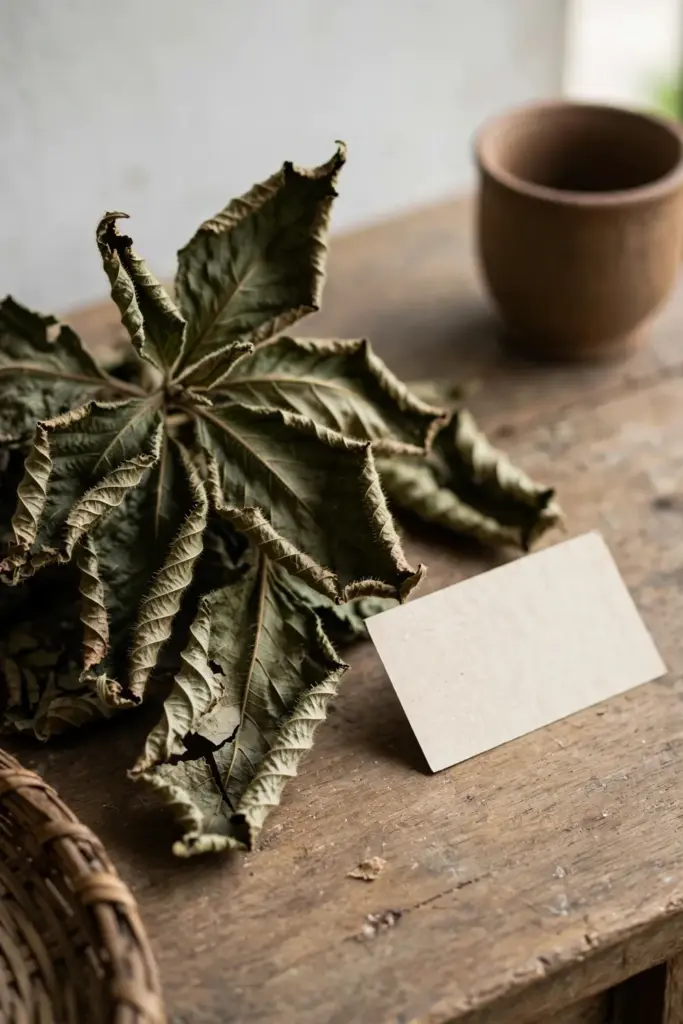
The GlobinMed monograph on Strobilanthes crispus states that pecah beling leaves consist of the dried leaves of Strobilanthes crispus (L.) Bremek, a member of Acanthaceae. That sentence sets the whole story. The traded part is the leaf. The plant behind the leaf is a shrub. Everything else follows from those two facts.
Keji beling is the common name, and Strobilanthes crispus is the botanical name. The harvested part is the dried leaf. One name per entity keeps the reading clear, and the next section untangles the names that break that rule.
Jamu is the Indonesian tradition of herbal medicine, and keji beling sits inside it as a leaf remedy. Jamu makers buy dried leaves, not plants, and the trade runs through herbal sellers and market stalls. A gardener who meets keji beling through jamu meets the leaf first and the plant second. That order is the right one. The leaf is the product, the fence is the source, and the shrub is the factory that makes both.
2. Untangle Three Botanical Names Before You Trust Any Label
Three botanical names follow this plant through labels and databases. Strobilanthes crispus is the name the jamu literature uses. Two other names appear in checklists, and a buyer who knows all three avoids buying the wrong plant.
Kew’s Plants of the World Online lists Strobilanthes crispa T.Anderson, published in 1867, as a synonym of Strobilanthes phyllostachya. That listing shows how unstable the checklist names run. The jamu literature keeps Strobilanthes crispus. A label that prints Strobilanthes crispa needs the leaf check below before you trust it.
Sericocalyx crispus is the third name, an older synonym from the same literature, per the GlobinMed monograph. Hei mian jiang jun is the Chinese name, translated as Black Face General. Yellow strobilanthus is the English name. Different names in different markets describe one plant, and the botanical name plus the leaf check together identify it.
A label with only a common name gives you no check at all. Keji beling on a bag could hold the right leaf or a substitute leaf from another shrub. The seller must add the botanical name before the bag earns trust. Ask for it. A seller who answers with the botanical name has passed the first test. A seller who answers with a promise has not.
| Name on the Label | What It Means | What to Check |
|---|---|---|
| Keji beling | Indonesian common name | Botanical name Strobilanthes crispus beside it |
| Pecah beling, pecah kaca | Indonesian and Malay common names | Same botanical name check |
| Strobilanthes crispus | Botanical name in the jamu literature | Leaf traits match the description below |
| Strobilanthes crispa | Checklist spelling, treated by Kew as a synonym of Strobilanthes phyllostachya | Leaf traits, plus caution about the name |
| Sericocalyx crispus | Older synonym | Leaf traits |
| Hei mian jiang jun | Chinese name, Black Face General | Botanical name on the label |
3. Expect a Woody Shrub to 1.5 Meters, Not a Soft Herb
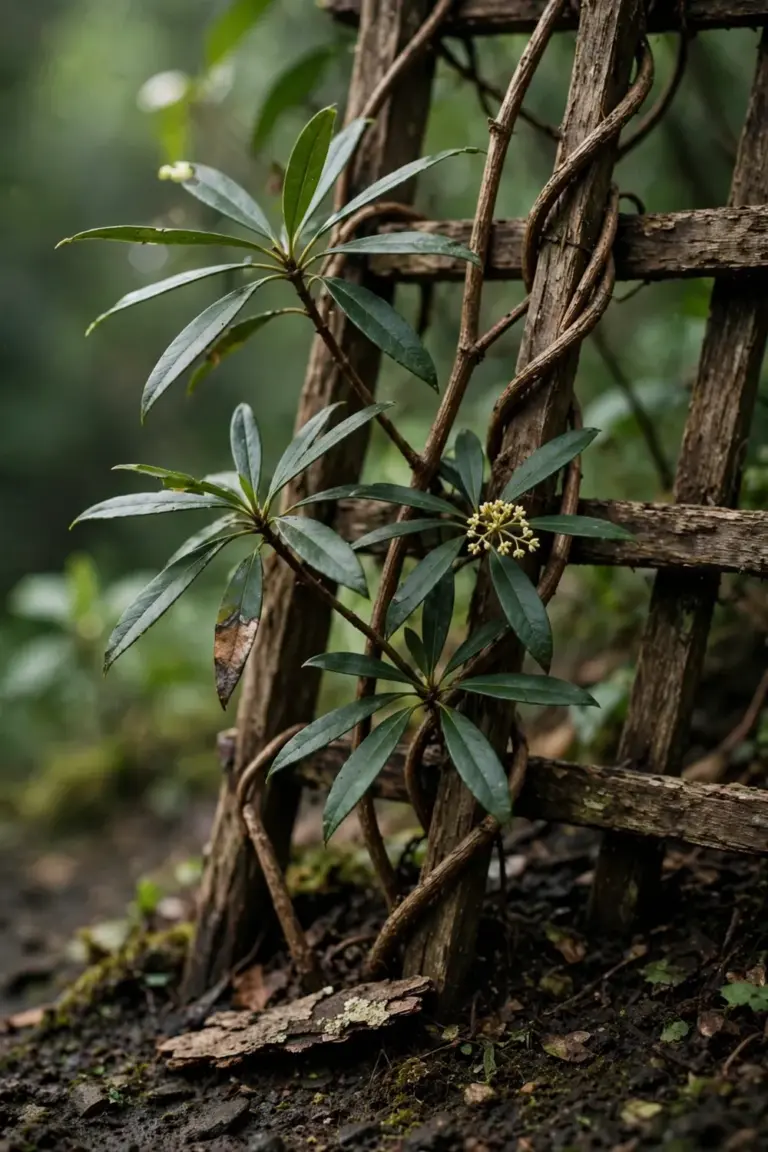
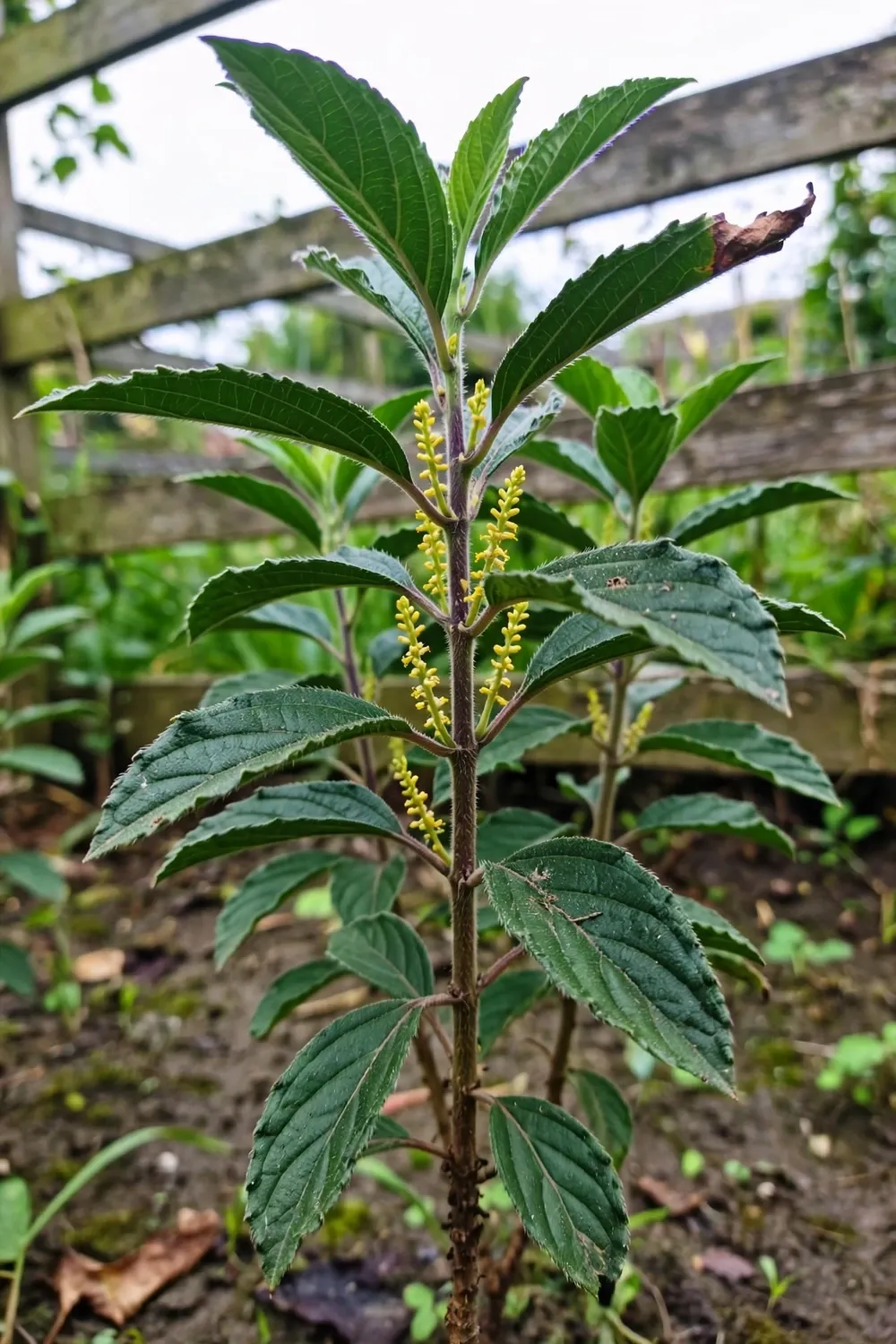
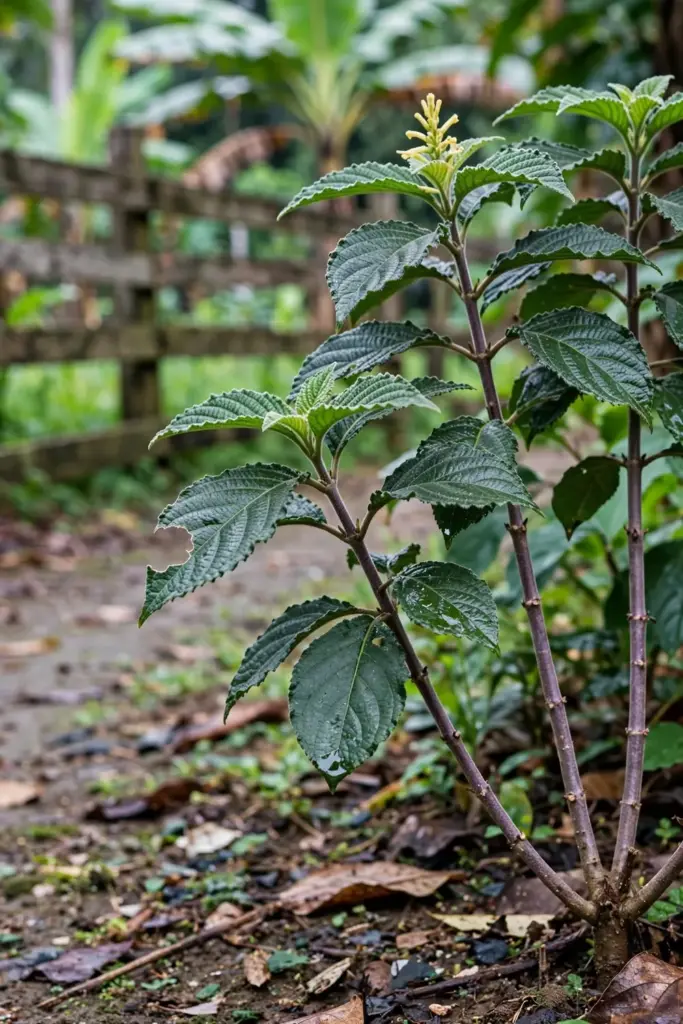
Keji beling grows as a woody spreading shrub 1 to 1.5 meters tall, per the GlobinMed monograph on Strobilanthes crispus. Branches run four-angled, and the bark turns purplish when young and brown when matured. Old branches turn woody and hollow with age, so an old stem carries little leaf.
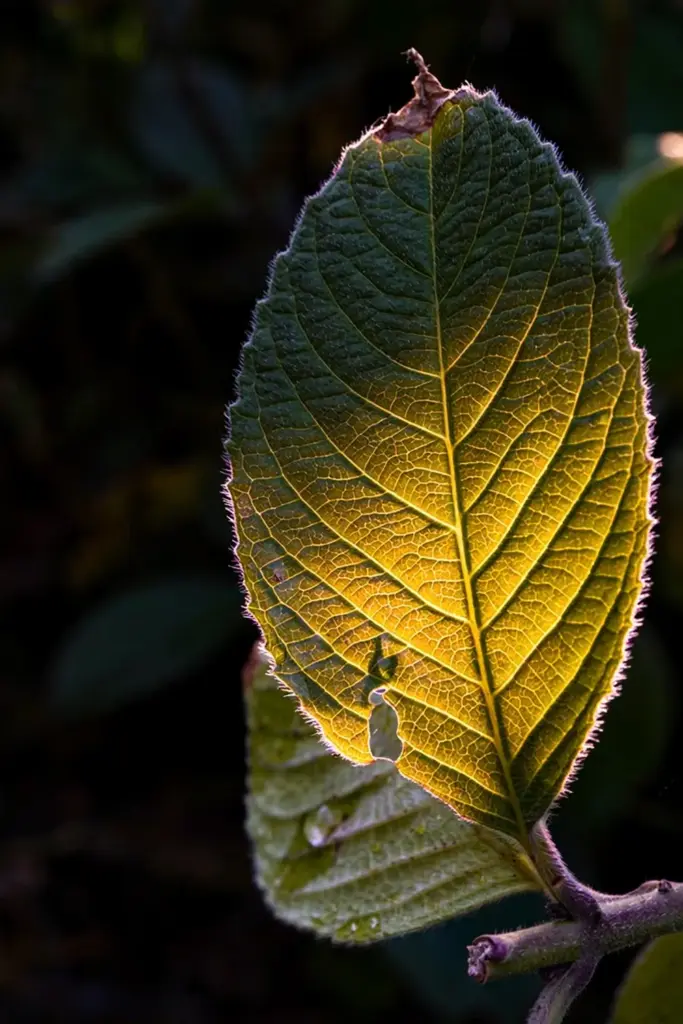
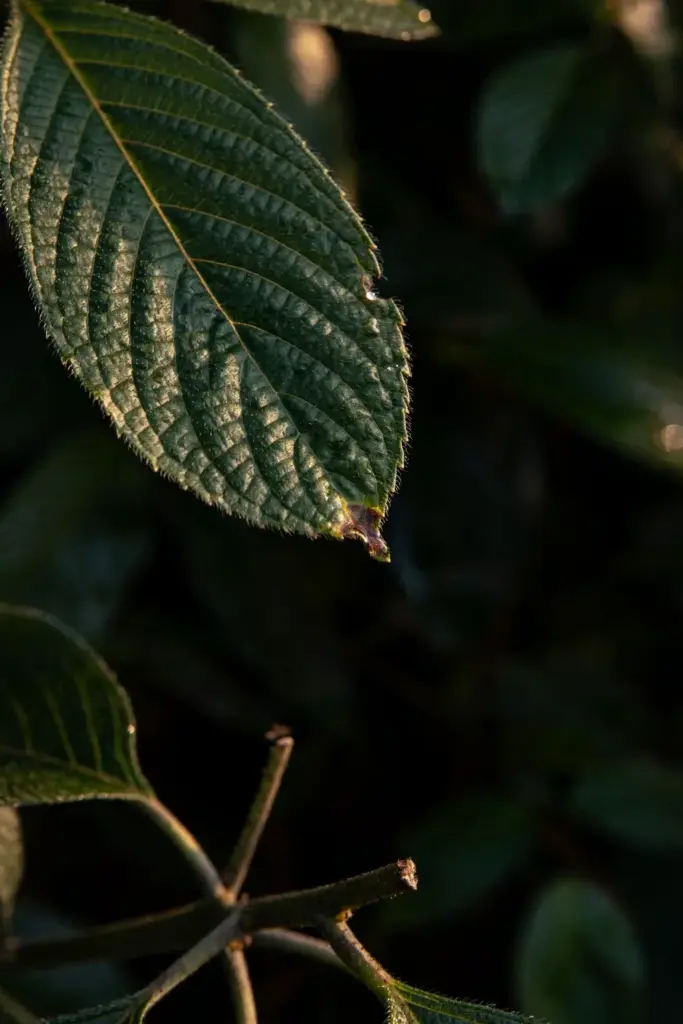
Leaves run elliptical, 5 to 8 cm long and 2 to 5 cm wide, oblong-lanceolate, rather obtuse, and shallowly crenate-crispate, per the same GlobinMed monograph. The surface feels rough, covered with short hairs. The upper surface runs darker green and less rough than the underside. The crisped margin matches the epithet crispus.
Flowers sit in short, dense, terminal panicle spikes, yellow and funnel-shaped, per the GlobinMed monograph. The inflorescence carries a lanceolate bract. Seeds run ovate or orbicular in outline, flattened, and pubescent with appressed mucilaginous trichomes. A gardener who expects a soft herb will misread this plant at first sight. The leaves feel built for a fence line, stiff and rough, and the flowers add a short yellow accent, nothing more.
4. Place Keji Beling in Moist Tropical Riverbanks and Garden Fences
Keji beling grows in the moist tropics from Madagascar to Indonesia. It turns up wild on riverbanks and abandoned fields, and Javanese gardeners plant it as a fence. No temperate habitat exists in the record.
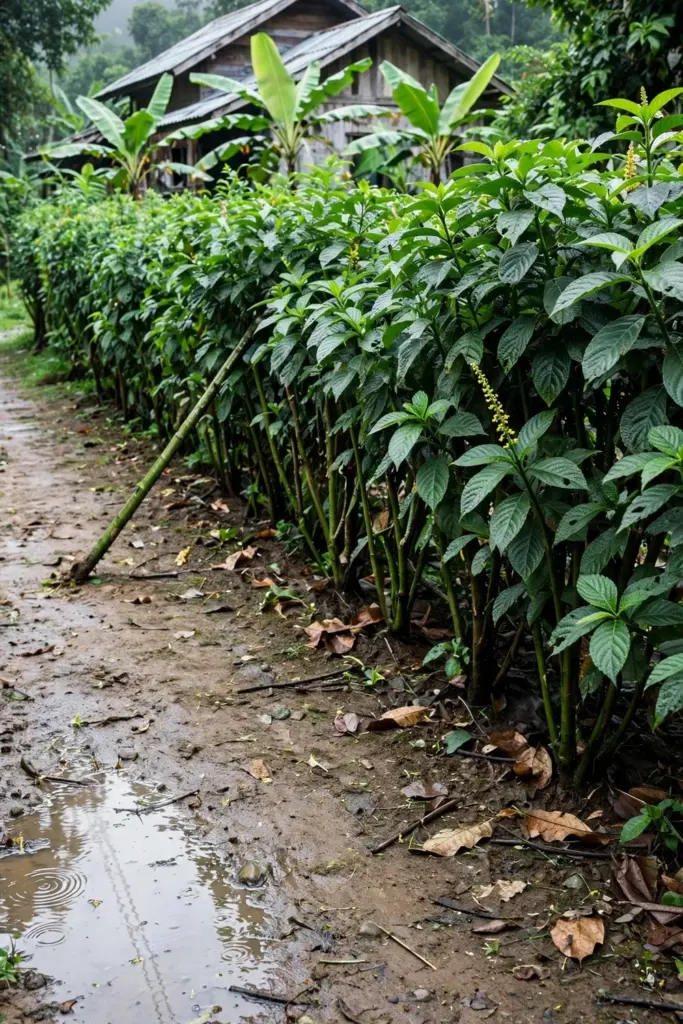
That range tells a temperate gardener almost everything. A plant of moist tropical riverbanks wants warmth, water, and a long growing season. It has no documented cold season, no frost rest, and no temperate trial. A temperate bed cannot supply the conditions the plant comes from.
A tropical shrub that already grows in warm gardens shows the contrast. Guava grows as a tropical shrub with the same demands for warmth and room, and it fruits where winters stay mild. Keji beling asks for the same kind of climate without offering fruit in return. The fence and the leaf harvest are the whole payoff.
Moist tropics means rain through the year and no cold season. The plant never rests for winter, and it never faces frost. A temperate garden gives the opposite: a short warm season, a long cold rest, and a frost that kills soft growth. Keji beling has no answer to that cycle, because no record shows it surviving one. The fence rows of Java grow where the rain never stops for long.
5. Learn Why Javanese Gardens Grow Keji Beling as a Living Fence
Javanese gardeners plant keji beling as a living fence. The shrub grows dense, takes cutting back, and supplies leaves at the same time. A fence plant earns its space twice: boundary and harvest in one row.
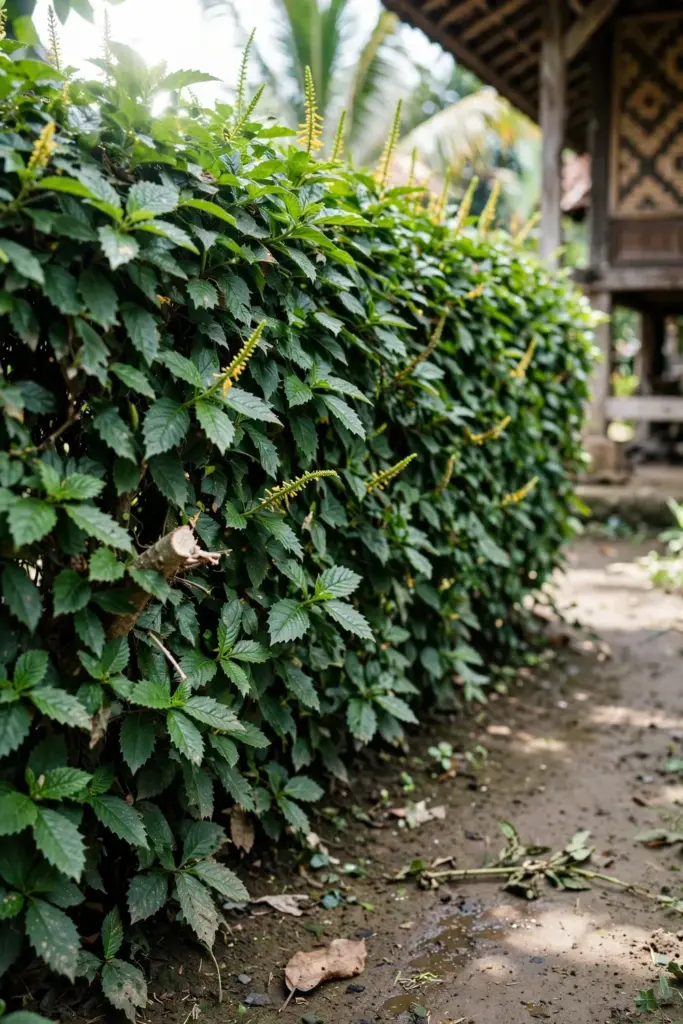
A fence row of keji beling marks a boundary without a built wall. Stems rise 1 to 1.5 meters, per the GlobinMed monograph, and close ranks when cut back. The fence needs no bought material. Cuttings from one row start the next row, and the fence spreads through the garden at the cost of labor alone.
The fence habit explains why the plant stays common in Java while staying unknown in the West. A plant that serves as a fence spreads through cuttings between neighbors, not through nurseries. No nursery trade grows around a plant that every neighbor gives away. That local spread is the reason the plant never reached Western catalogs.
6. Propagate Keji Beling From 10-Centimeter Stem Cuttings
Stem cuttings propagate keji beling. A Malaysian nursery study rooted 10 cm cuttings with 2 nodes each in coarse river sand, per the FRIM propagation study. Leaves came off before planting. That study is the only quantitative propagation record in the evidence.
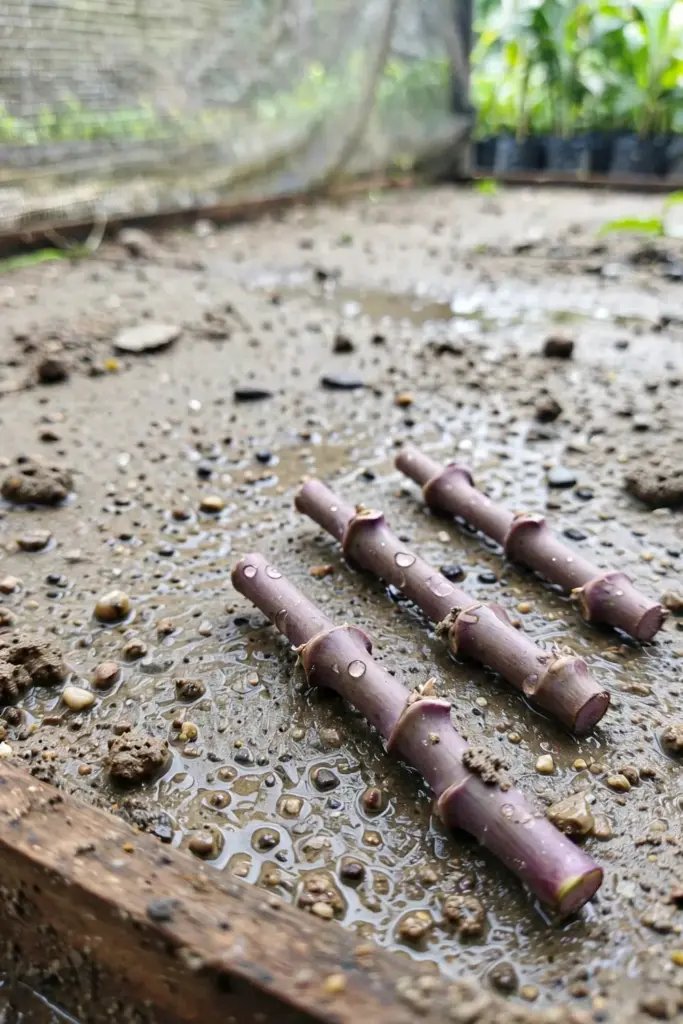
Indonesian references also describe propagation from cut stems, which matches the nursery result. Cuttings beat seed for this plant for a plain reason. A cutting copies the parent plant exactly, and a fence row from cuttings grows uniform. Seed brings variation and a germination method nobody has published.
| Cutting Spec | Trial Value |
|---|---|
| Length | 10 cm |
| Nodes per cutting | 2 |
| Leaves | Removed before planting |
| Rooting medium | 100% coarse river sand |
| Hormone | Optional; trial tested IAA, IBA, and NAA |
The trial tested IAA, IBA, and NAA at 0, 0.5, and 2 mg/L, per the FRIM propagation study. The 0 mg/L treatment served as the control, so hormone stays optional in practice. A home propagator in the tropics can root cuttings without hormone and still follow the trial. The rates in the trial are research treatments, not a home-garden recommendation.
7. Set Cuttings in Coarse Sand Under 50 Percent Shade and High Humidity
Root cuttings in 100% coarse river sand under 50% shade at 70 to 80% relative humidity, with intermittent misting, per the FRIM propagation study. The nursery held those conditions through the rooting period. A home propagator copies the conditions, not the equipment.
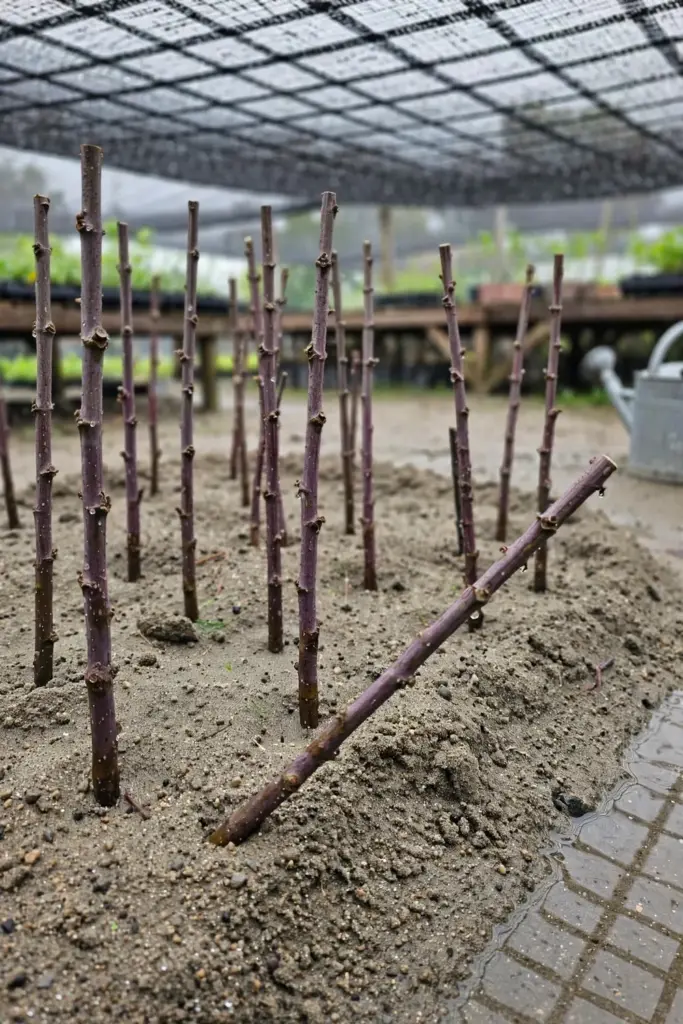
Misting ran 10 minutes three times a day, at 8:00, 12:00, and 16:00, per the same FRIM study. Shade cloth supplies the shade, and a sand bed gives the drainage. A covered frame or a humid corner holds the moisture. The study kept cuttings in a high-humidity nursery, and a home setup needs the same damp air.
Sand matters more than it looks. Coarse river sand drains fast and holds little water around the cut base, which keeps the base from rotting in damp air. A peat-heavy mix holds too much water for this job. A gardener who has only potting mix can cut it with coarse sand, and the sand should dominate the mix. The trial used sand alone, so a mix stays an extrapolation from the trial, not a tested result.
8. Water and Feed a Fence Shrub for Leaves, Not for Flowers
No published trial sets a fertilizer rate for keji beling. Water keeps the soil evenly moist, and feeding follows standard tropical-shrub practice. Leaves are the harvest, so growth that makes leaves matters more than flowers.
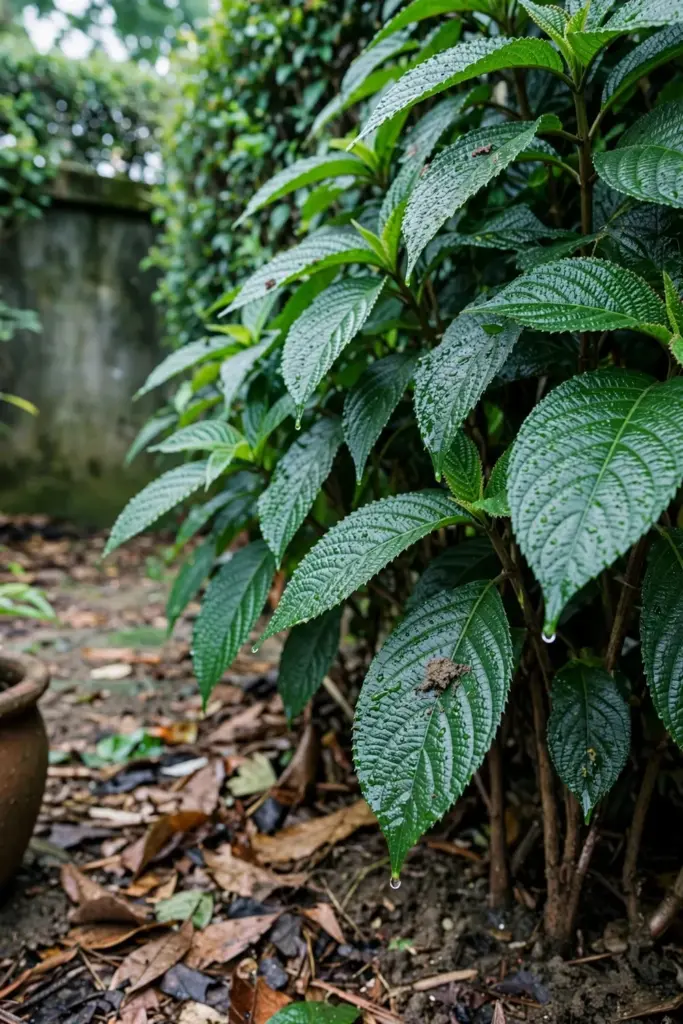
Leafy tropical herbs follow the same rule. The lemongrass growing guide grows a leafy tropical herb for foliage, and the same logic applies here: steady water, mulch, and regular cutting back. A plant cut for leaves needs water more than it needs a feeding calendar. Mulch holds soil moisture through dry spells, and cutting back keeps new leaves coming.
The honest limit stays in view. No trial compares fertilizer rates, watering schedules, or soil mixes for this species. The guidance here is standard practice for tropical fence shrubs, carried over to keji beling because the plant grows as one. A gardener who wants numbers will not find them, because nobody has published them.
Fallen leaves from the fence itself make the mulch. Rake them under the row and let them rot where they fall. Keep the mulch off the stem base, where trapped moisture rots bark. A clear ring around each stem base keeps the bark dry while the mulch feeds the soil. The fence feeds itself, and the gardener moves little more than leaves.
9. Prune Keji Beling Hard to Keep a Fence Dense and Leafy
Prune a keji beling fence hard and often. Cutting back keeps the row dense, stops stems from going woody and hollow, and yields the leaves at the same time. A fence left unpruned thins at the base and stops earning its space.
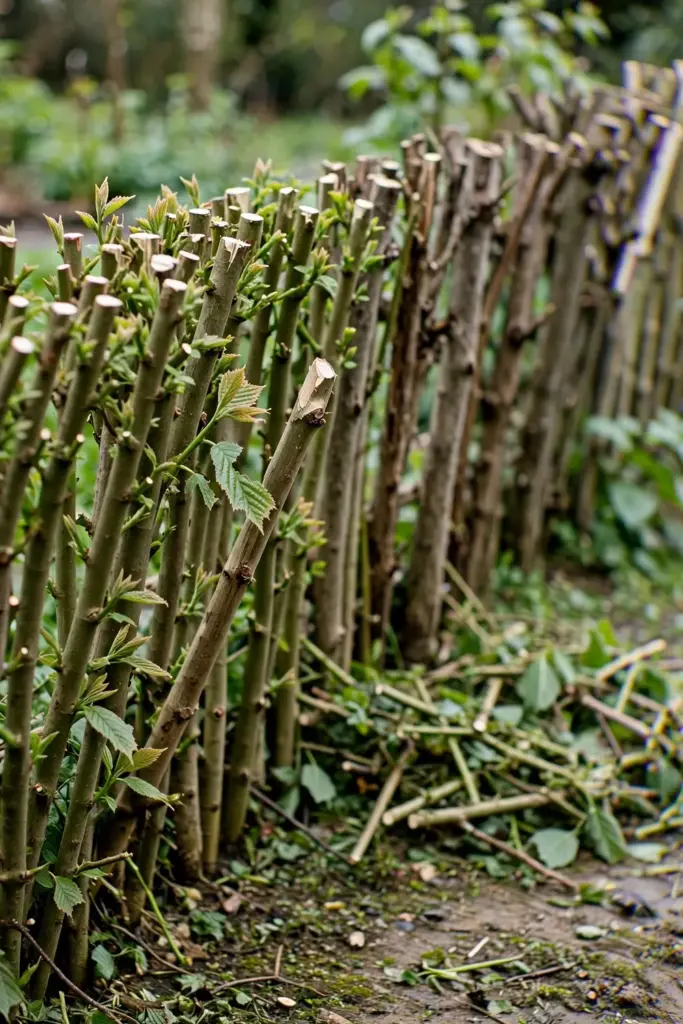
Branches turn woody and hollow with age, per the GlobinMed monograph, so old stems contribute little leaf. Cut old stems back to young growth. Leave leafy growth on each stem so the plant keeps feeding itself. A stem stripped bare cannot regrow with vigor, and a stem with leaves left on it can.
Cut stems with sharp shears kept clean. A clean cut heals faster than a torn one. Prune after a leaf harvest, so one job serves two ends. The fence thickens with each round, and the harvest grows with the fence.
10. Face the Temperate Verdict: No Western Nursery Trade Exists
No Western nursery sells keji beling plants, cuttings, or seeds, and no Western grower, nursery listing, or English grow guide exists for this plant. A temperate gardener without tropical material has no honest path to a plant.
That verdict shapes how to grow keji beling for a temperate reader. The honest answer is that you cannot start. Frost tolerance is data not available, and no indoor growing trial or zone rating exists for this species. A guide that printed a zone number would invent it.
A packet labeled keji beling seeds from a marketplace deserves doubt. No verified seller exists, and a label without a botanical name proves nothing. Keep your money until a seller prints Strobilanthes crispus and names the part used. That seller has not appeared in the Western trade.
Marketplace listings make the trap worse. One listing calls a bag keji beling, the next calls the same bag pecah beling, and neither prints a botanical name. Stock photos rotate between listings, and the leaf in the photo may belong to another shrub entirely. The label rule from the earlier sections is the only defense. No botanical name means no purchase.
11. Read Jamu Labels for Leaves, Not for a Miracle Cure
Jamu labels should name dried leaves of Strobilanthes crispus. The traded part is the leaf. A label that names the botanical name and the part used gives you something to check.
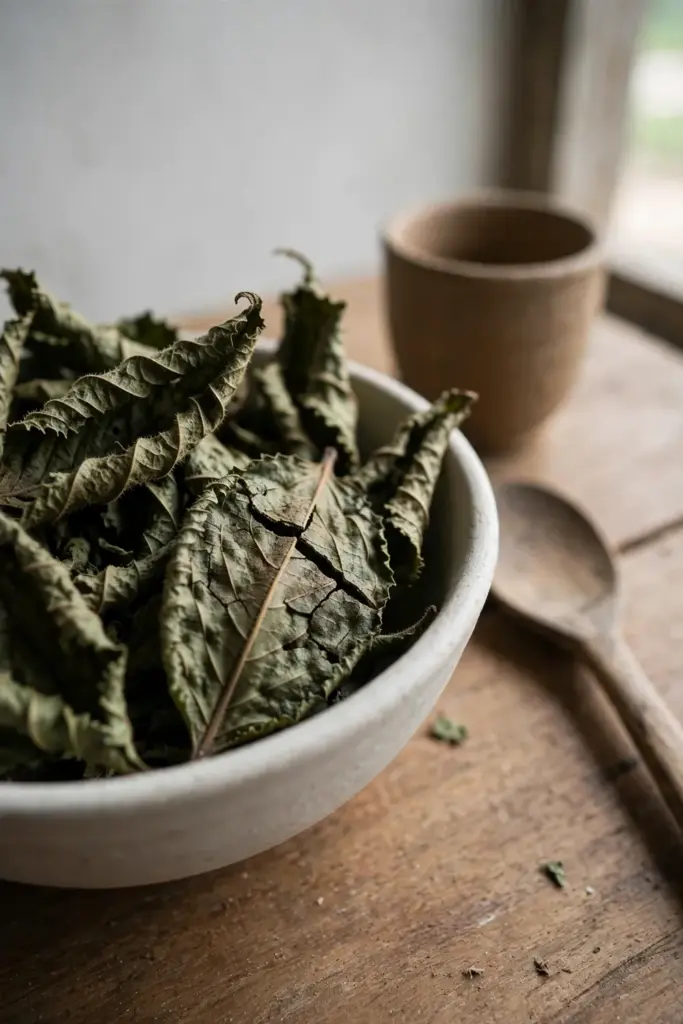
The GlobinMed monograph states that pecah beling leaves consist of the dried leaves of Strobilanthes crispus. A buyer can test a label against that sentence. Botanical name present, part used named as leaves, and the contents match the record. A label missing either fact gives you no way to verify the bag.
Leaf teas follow the same label rule as other herbs. The green tea herbs guide grows a leaf crop where species and part used come first and promises come last. Keji beling labels deserve the same reading. Promises on the front mean little. The botanical name and the part used mean everything. Store dried leaves below 30°C, protected from light and moisture, per the GlobinMed monograph.
12. Report Traditional Uses as Records, Not as Recommendations
Traditional records attach many uses to keji beling leaves. The records describe the plant as a diuretic, an antilithic, an antidiabetic, and a laxative, taken as tea or infusion. This section reports those records as general information, not as advice.
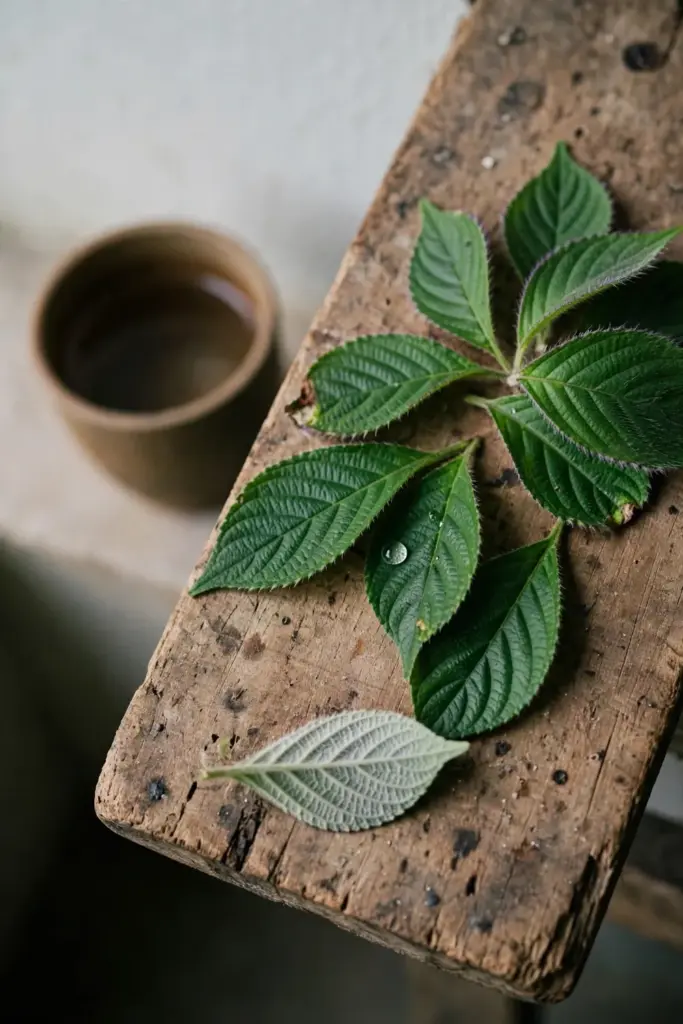
A 2024 review covering literature from 2014 to 2024 lists flavonoids, phenolics, alkaloids, tannins, terpenoids, phytosterols, and fatty acids in the leaves, per the review in Medical Sains. The same review lists antimicrobial, antioxidant, antidiabetic, anti-urothelial, immunomodulatory, wound healing, cytotoxic, and anti-cancer activities from lab studies, per the review. Lab studies show activity in test tubes and animals. Lab studies do not prove effects in people.
The review closes with a warning. Pharmacological and phytochemical data stay limited, and further studies must explore bioactive compounds, toxicity, and safety, per the review. GlobinMed states that the folk uses lack experimental or clinical support, and records clinical studies as not established, per the GlobinMed monograph. A reader with a health question needs a clinician, and a reader who wants jamu needs a licensed product with its own labeling.
Lab evidence and clinical evidence answer different questions. Lab evidence asks whether a compound acts on cells or animals. Clinical evidence asks whether a preparation helps people at a safe dose. Keji beling holds the first kind and lacks the second. That gap is normal for a jamu plant, and it is the reason this section reports uses as records rather than recommendations.
No dose appears anywhere here. Dosage belongs on regulated product labeling, not on a gardening page. A bulk leaf bag that prints a dose is marketing, not medicine, and the dose deserves no trust.
13. Compare Keji Beling With the Kidney-Stone Plants It Gets Confused With
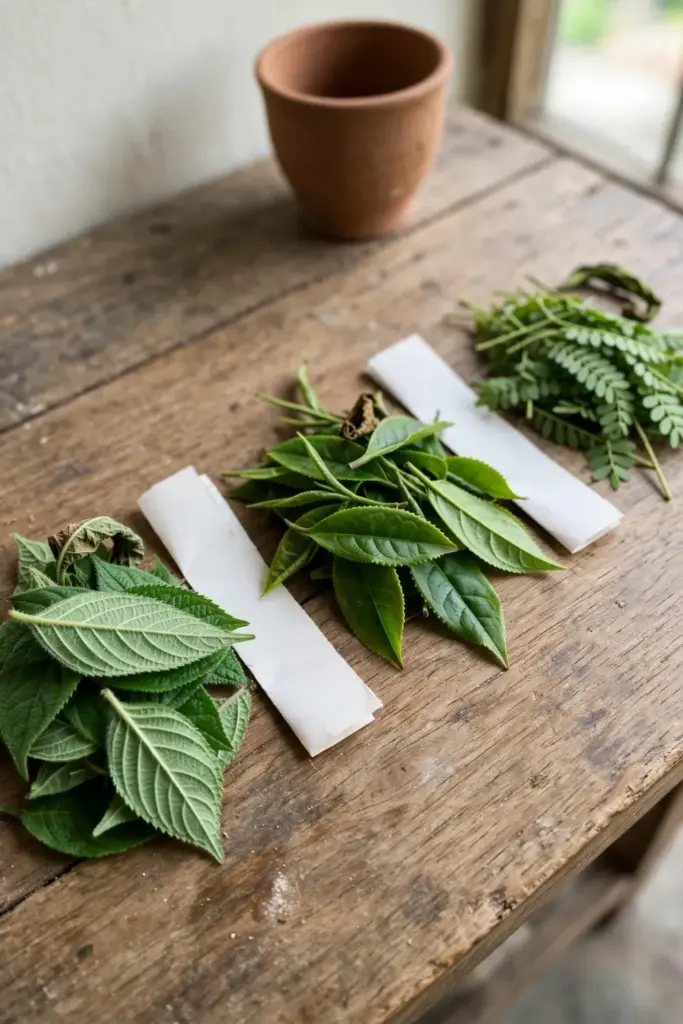
Three plants share the kidney-stone reputation in Malay and Indonesian jamu. Keji beling, java tea, and stonebreaker all appear in traditional kidney-stone lists. They are three different plants, and the name on the label decides which one you hold.
| Plant | Part Used in Jamu | Traditional Record | Garden Reality |
|---|---|---|---|
| Keji beling (Strobilanthes crispus) | Dried leaves | Diuretic and antilithic record | Tropical fence shrub, no temperate trade |
| Java tea (Orthosiphon stamineus) | Leaves | Diuretic and kidney record | Tropical herb, grown in pots |
| Stonebreaker, meniran (Phyllanthus niruri) | Whole plant | Kidney-stone record | Small tropical herb |
The table separates the three by part used and by plant. A buyer who wants keji beling leaves and receives whole-plant stonebreaker holds the wrong plant. A buyer who wants java tea leaves and receives keji beling holds the wrong plant. The botanical name on the label prevents both mistakes.
Jamu formulas mix many plants, and one ingredient crosses into ordinary cooking. Ginger grows as a jamu rhizome and as a kitchen staple, and the ginger guide shows the growing side. Keji beling never made that crossing. It stays a jamu plant, and its labels should read like one.
14. Buy Dried Leaves Without Getting Fooled by a Wrong Species
Buy dried keji beling leaves only when the label prints Strobilanthes crispus and names leaves as the part used. Check the leaf traits. A seller who cannot name the species cannot prove the contents.
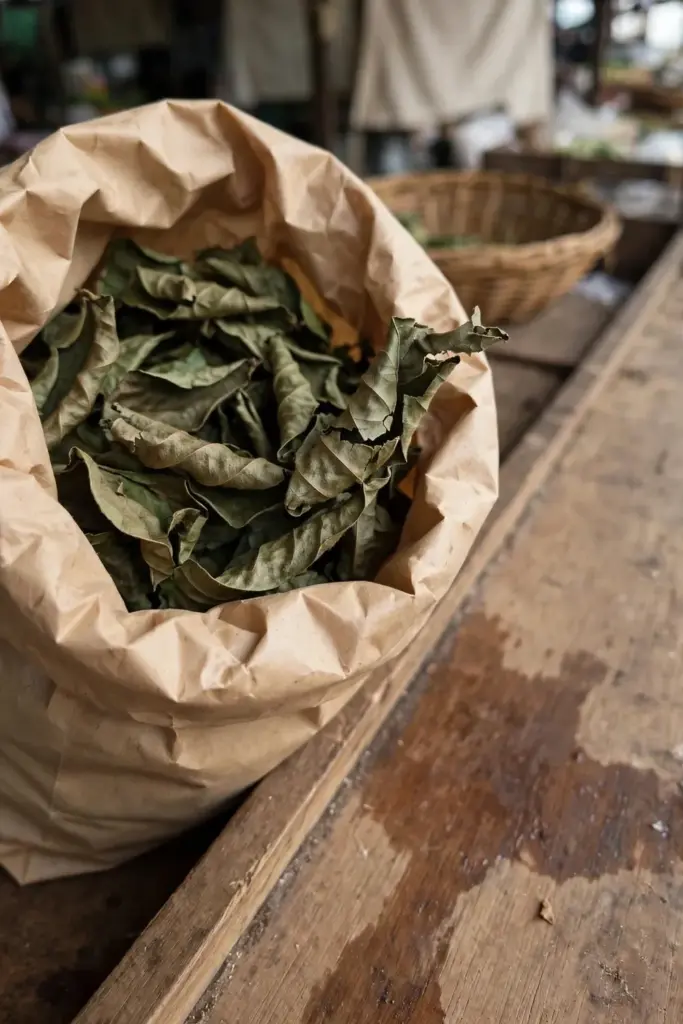
The leaf check runs on touch and shape. Leaves run 5 to 8 cm long and 2 to 5 cm wide, with a rough surface covered in short hairs and an underside rougher than the top, per the GlobinMed monograph. A batch of smooth, soft leaves fails the check.
Extract powders and capsules carry stronger claims than dried leaves. General information covers the leaf, not the extract. A seller who prints a dose on a bulk leaf bag is marketing, not medicine, and the dose deserves no trust.
15. Decide Whether Keji Beling Belongs in Your Garden
Grow keji beling if you live in the moist tropics with access to real cuttings; skip it if you live in a temperate climate and would need to import material. The plant rewards the first gardener and frustrates the second.
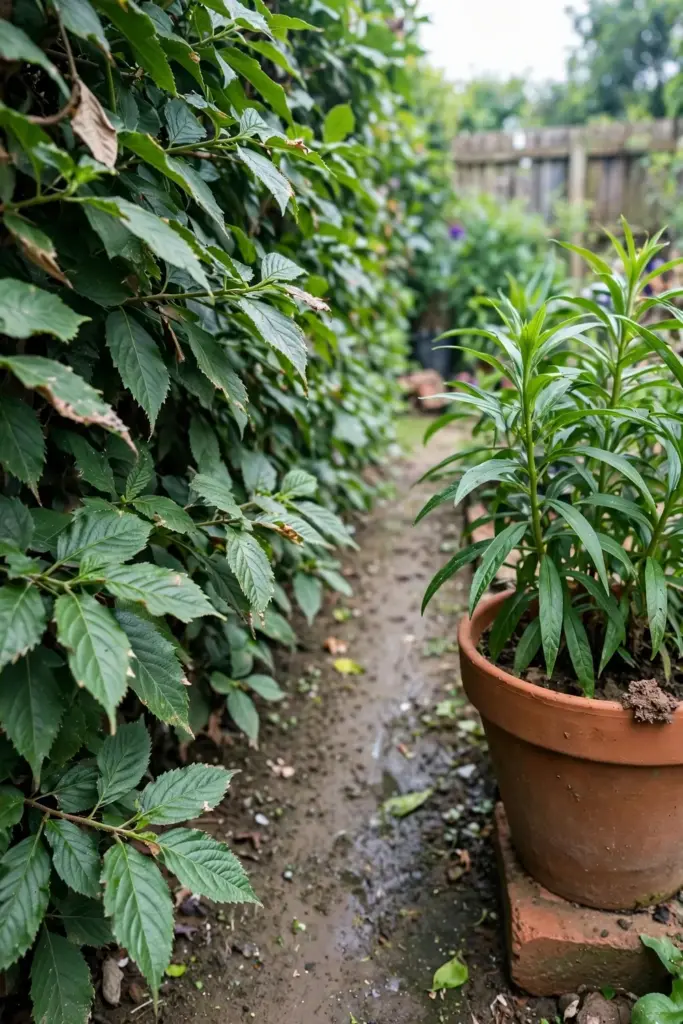
That decision is the whole answer to how to grow keji beling. Place decides whether the plant can live, and material decides whether you can start, and the two answers together settle the question.
A temperate gardener who wants a jamu leaf can grow ginger in a pot. Ginger grows indoors through winter and supplies a rhizome for cooking and tea. It is not keji beling, and it never pretends to be. The swap gives a temperate gardener a living jamu plant without the import problem.
A fence of keji beling in a Javanese garden does quiet work through every season, asking little and giving leaves. It marks a boundary and feeds the leaf harvest. That is the plant at its best.
Frequently Asked Questions
No honest seed path exists for a home gardener. No verified seller offers keji beling seed, and no published germination method covers this species. Seeds run ovate, flattened, and hairy with mucilaginous trichomes, per the GlobinMed monograph. Those details identify a seed. They do not give a sowing method. Propagation in the record runs through stem cuttings, not seed. Treat any seed packet with this name as unverified until the seller prints a botanical name and a part used.
No published trial grows keji beling indoors in a temperate climate. The nursery protocol needs 70 to 80% relative humidity with misting, per the FRIM propagation study. A windowsill cannot hold that humidity through winter. A greenhouse could copy the conditions, but no published result proves the copy works. Temperate growers face the same verdict as the outdoor case: no material, no honest path.
Data not available for a home-garden rooting calendar. The nursery study gives conditions, not a timeline: 10 cm cuttings with 2 nodes in coarse river sand, per the FRIM propagation study. Watch for new leaf growth and for resistance when you tug the cutting with care. Those signs show roots. No published day count exists, and any seller who promises one invents it.
This page gives general information only, not safety advice. Clinical studies are not established, per the GlobinMed monograph. A 2024 review found toxicity and safety data still limited, per the review in Medical Sains. No dose appears here. A reader with a health question needs a clinician, and a reader who wants jamu needs a licensed product with its own labeling.
No difference exists. Keji beling and pecah beling name the same plant, Strobilanthes crispus. Keji beling is the Indonesian form, and pecah beling is the Malay form. Sellers in both markets may also print Strobilanthes crispa or Sericocalyx crispus. Buy by the botanical name Strobilanthes crispus and check the leaf traits. A label without a botanical name proves nothing.
No Western trade sells keji beling plants. Dried leaves come from Indonesian and Malay herbal sellers, and the label must print Strobilanthes crispus with leaves as the part used. Store dried leaves below 30°C, protected from light and moisture, per the GlobinMed monograph. Avoid marketplace seed packets and bulk bags that print a dose. A seller who cannot name the species cannot prove the contents.
Make the Honest Call on Keji Beling
Start with the name. Confirm Strobilanthes crispus on any label, and check the leaf traits before you trust the bag, because a label without a botanical name proves nothing. Place comes next: moist tropics or nothing. Material comes last: real cuttings from a real plant, or no plant at all.
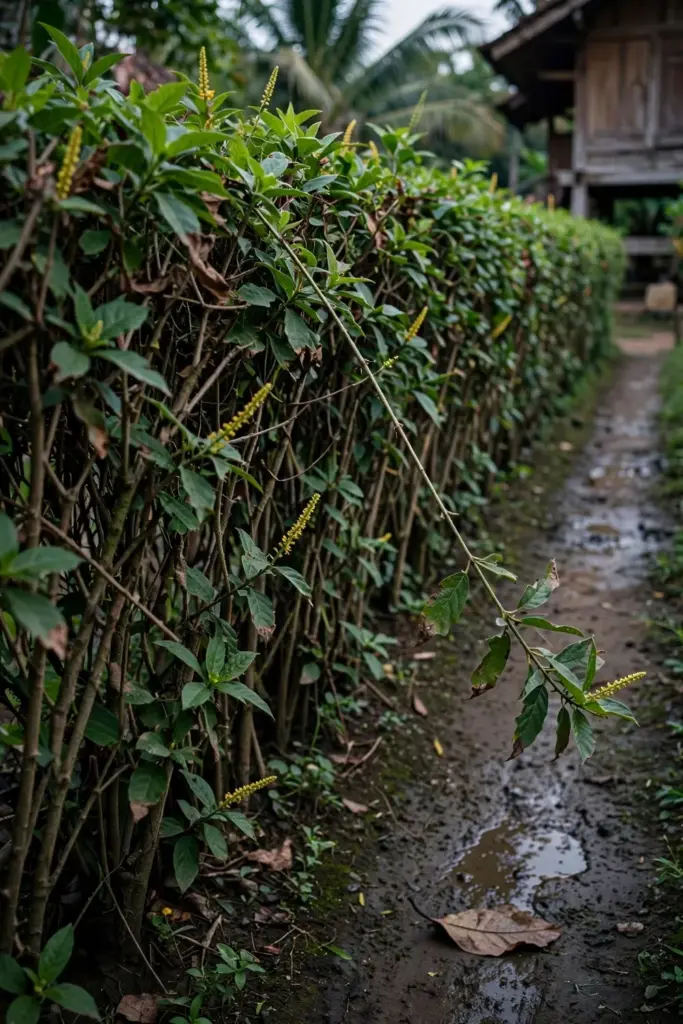
Keji beling will not become a Western garden plant on the strength of a wish, and no catalog will carry it. It stays a Javanese fence shrub and a jamu leaf. A gardener who wants it should look for a Javanese garden, where the fence rows already grow. The fence, the leaves, and the honest limits are the whole story.