
Dagger nematode is a virus carrier that happens to feed on roots. In a commercial orchard or vineyard, the virus damage decides the budget, and the feeding damage only sets the stage. A soil assay before planting is the cheapest decision in the whole replant cycle, because the fallow alone can run more than 10 years when the assay comes back virus-positive.
Plan on a fallow of more than 10 years before replanting grapes on a fanleaf-infested site. That figure comes from vineyard practice in California, and it explains why prevention beats cure with this pest. I have learned to trust the soil assay over the canopy, because the canopy keeps a block looking acceptable for seasons after the virus arrives.
This guide is written for growers who manage blocks, not single trees. It covers identification on roots and canopy, the hosts that suffer most, the lookalikes that waste money, and three steps that run in order: decide, sample, then manage or replant.
1. What Dagger Nematode Actually Is in an Orchard or Vineyard Block
Dagger nematode is a group of migratory ectoparasitic roundworms in the genus Xiphinema. The worms feed from outside the root with a needle-like mouthpart, and they move through soil water between feeding sites. Two species matter most in North American fruit plantings: Xiphinema index and Xiphinema americanum.
The ectoparasite habit separates dagger nematode from its common neighbors. Root-knot nematodes enter the root and settle inside it. Lesion nematodes travel through root tissue. Dagger nematodes stay outside, pierce the root surface, drain cell contents, and move on. That outside feeding is why a root wash can miss them while a soil assay catches them.
Feeding alone thins the feeder-root system and slows growth. The larger cost is viral. Dagger nematodes carry nepoviruses, a group of plant viruses that includes grapevine fanleaf virus and tomato ringspot virus. A small population can spread virus through a block long before feeding damage looks serious, because each feeding probe on an infected root can load the worm, and each probe on a healthy root can deliver the load.
Perennial plantings give the pest time. An orchard or vineyard stands for decades, and the virus load in its soil and old roots climbs across those decades. Annual crops break the cycle at harvest. A vineyard never does. That long horizon is the reason dagger nematode belongs in the planting decision, not in the spray program.
Distribution inside a block is patchy. Damage shows in irregular patches across a planting, and the patches often track changes in soil texture. A block can look healthy at the road edge and decline badly in one low corner. Patchiness is a diagnostic clue, and it is also the reason a single soil core proves nothing.
2. How to Identify Dagger Nematode Damage on Roots
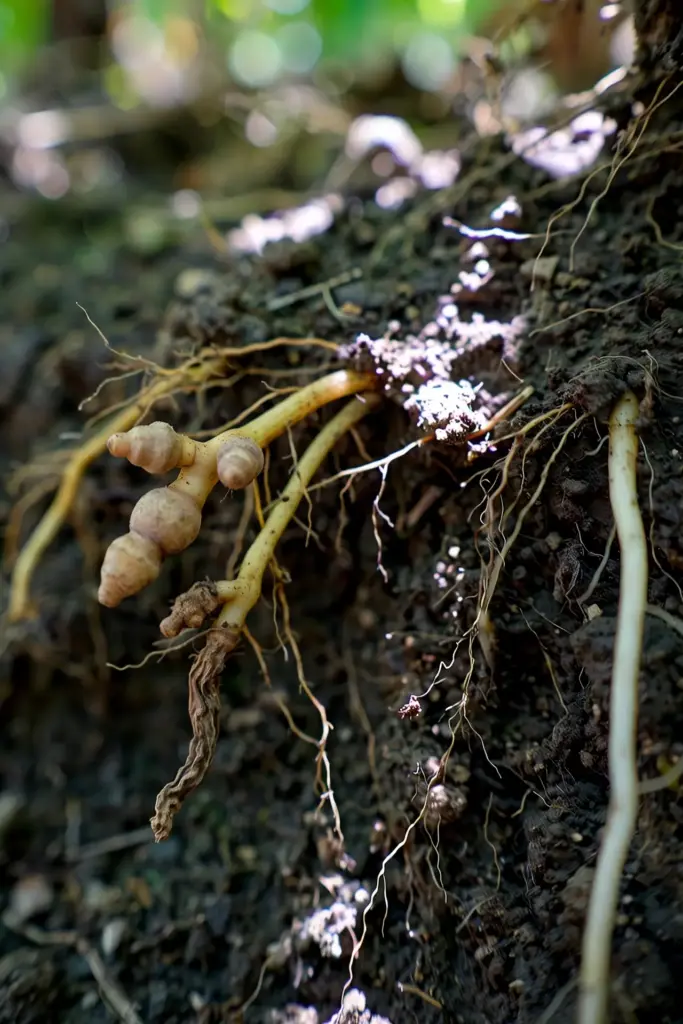
Dig roots. Dagger nematode damage shows at the root tips: swelling, stubby ends, dead brown tips, and a thin feeder-root system.

Start with a vine or tree at the edge of a declining patch, where symptoms are fresh. Clear the mulch, dig down into the feeder-root zone, and lift a section of fine roots with the soil still attached. Healthy feeder roots look pale, flexible, and plentiful. Damaged feeder roots look sparse, and the tips swell into blunt knobs or die back brown.
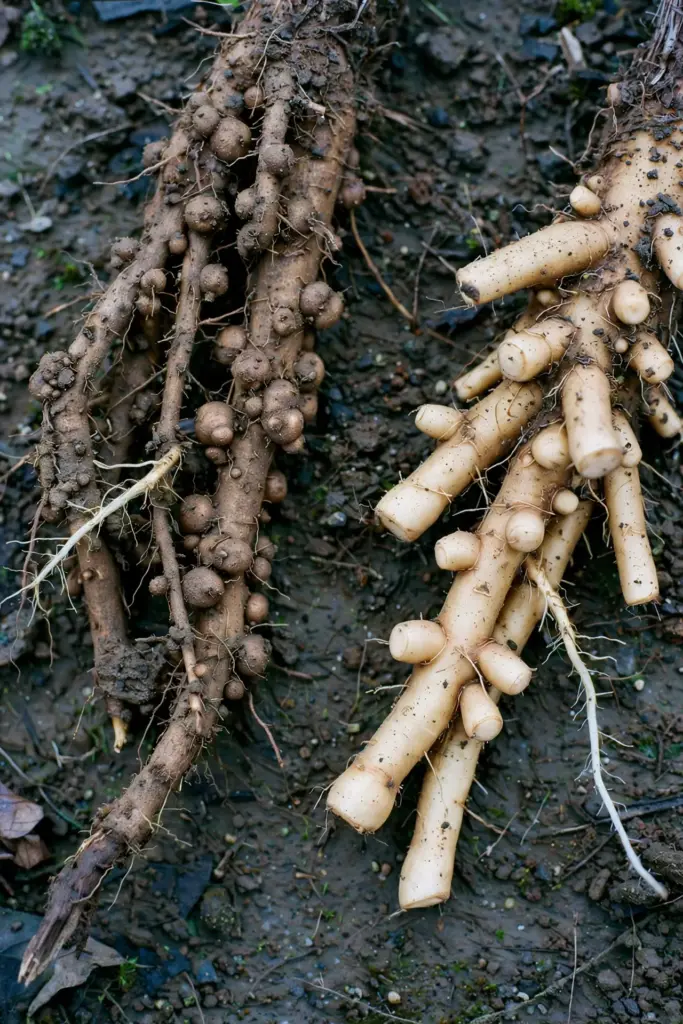
Three root signs point toward dagger nematode. The first is terminal swelling at the root tip, where feeding stops elongation. The second is a stubby, forked appearance where the tip died and laterals pushed out behind it. The third is a witches’-broom tuft of short laterals where heavy feeding forced repeated branching. Necrosis follows on the oldest damaged tips.
Two absences matter as much. Dagger nematode feeding does not produce the round galls that root-knot nematodes cause. It does not rot the whole root system the way water molds do. A root system that is thin and stubby-tipped, without galls and without a general rot, fits dagger nematode feeding.
Include roots in any sample you send. A soil-only sample can miss the worms feeding on the root surface, and the root symptoms themselves help the lab confirm the diagnosis. Look late in the growing season, when symptoms are clearest and populations are easiest to detect.
3. How to Identify Dagger Nematode Damage Above Ground in Grapevines and Fruit Trees
Above ground, dagger nematode damage looks like a slow decline that never matches the fertilizer program. Vines or trees lose vigor in patches, leaves turn pale, shoots stay short, and yields fall a little each year.
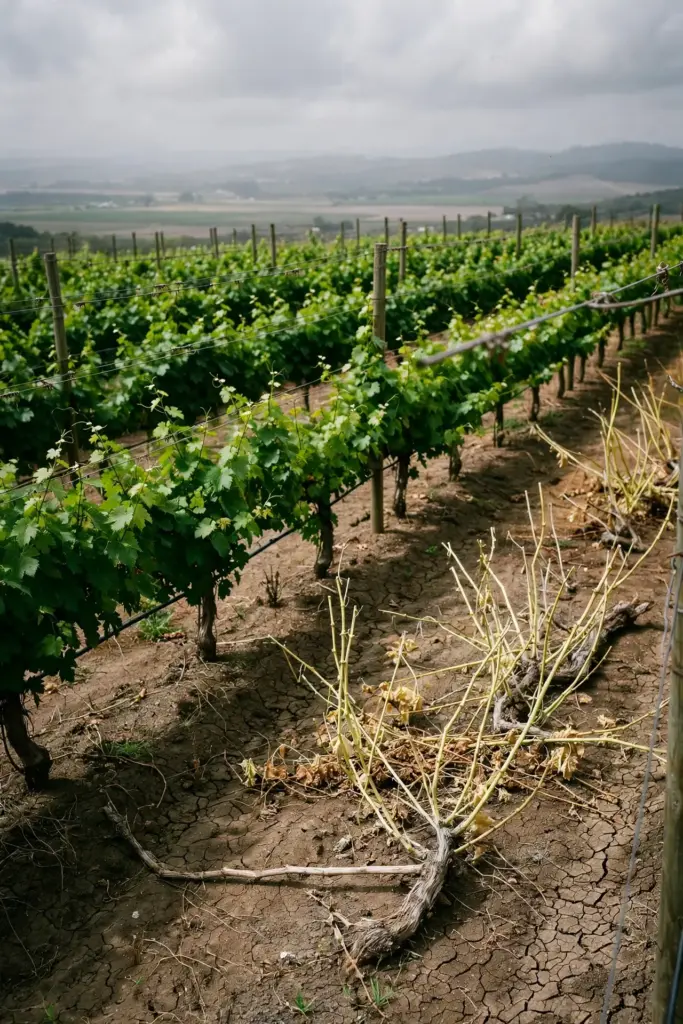
Canopy symptoms stay general. Expect stunting, low vigor, chlorosis, and wilting even when water is adequate. Fruit set drops and fruit size shrinks. The pattern across the block is the giveaway: irregular patches of weak plants among healthy ones, often tied to soil texture changes, rather than a uniform decline across the whole planting.
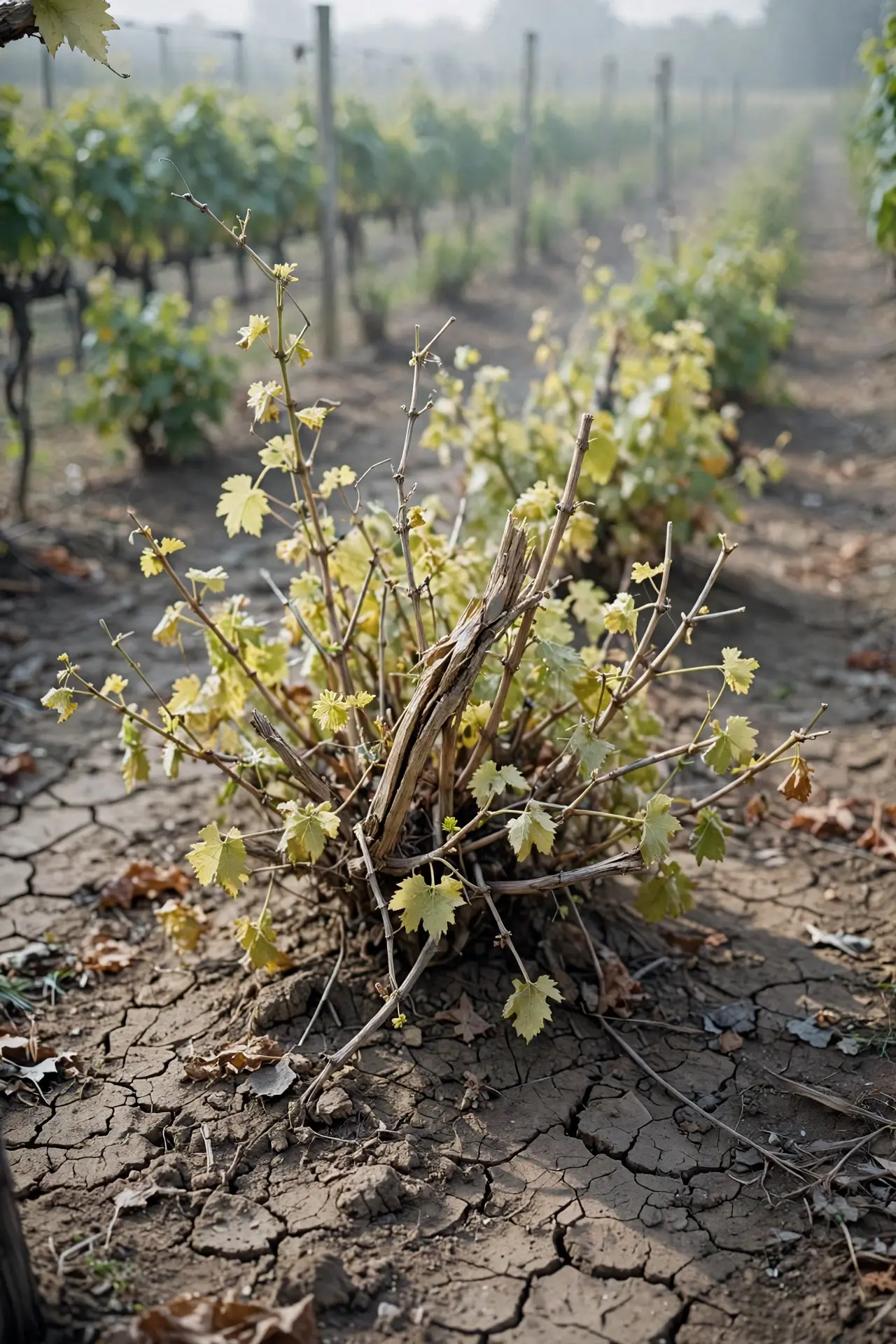
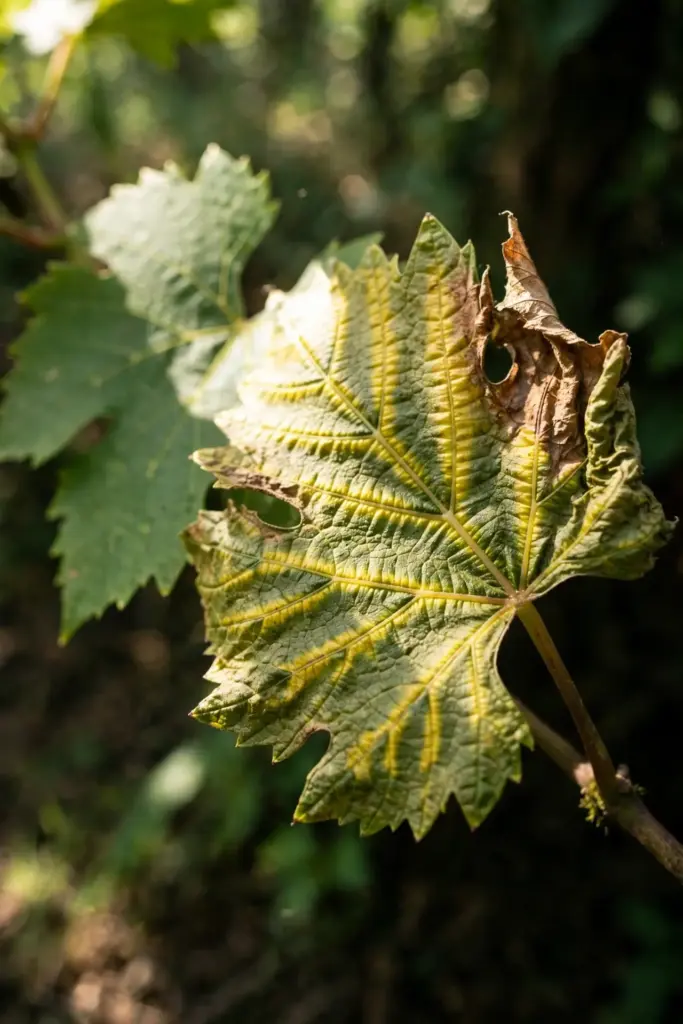
In grapevines, fanleaf infection adds leaf symptoms on top of the general decline. Leaves deform into a fan shape with sharp teeth, yellow banding appears along the veins, internodes stay short, and shoots take on a bushy look. Fruit set falls hard in infected vines. A block with fan-shaped leaves and poor set is a virus block, and the nematode assay tells you whether the vector is still present.
Stone fruit shows a similar layered picture. Trees lose vigor, leaves yellow, and yields slide. Yellow bud mosaic on peach, nectarine, and cherry traces to tomato ringspot virus, which dagger nematodes carry. The virus signs and the feeding signs arrive together, which is why growers misread the whole problem as nutrition for seasons.
The canopy lies. A tree can look acceptable for seasons after virus arrives, because the decline is gradual and the strong plants mask the weak ones. Trust the root dig and the lab assay over the view from the road.
4. Which Orchard and Vineyard Hosts Get Hit Hardest
Grapevines suffer the worst losses, because grapevine fanleaf virus pairs with Xiphinema index. Stone fruit and pome fruit follow, each with its own virus pairing.
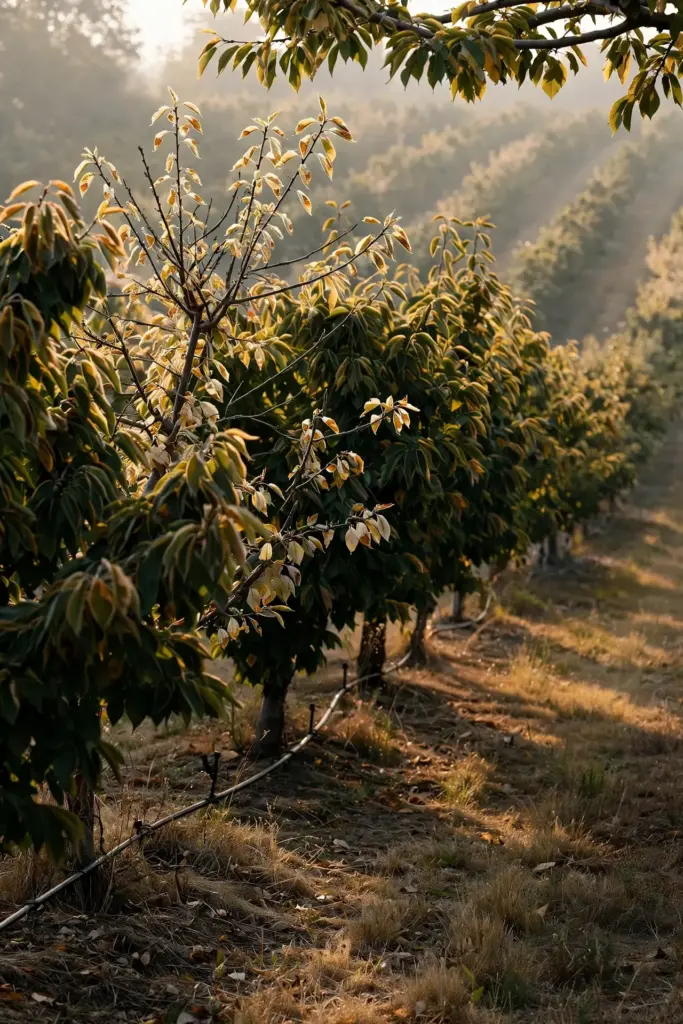
Grapevines sit at the top of the list. Xiphinema index feeds on grape roots and carries grapevine fanleaf virus, the most damaging grapevine virus in commercial viticulture. Xiphinema americanum also feeds on grapevines and carries tomato ringspot virus, which shows in grapes as yellow vein disease. A vineyard on infested ground faces two virus pairings from one pest group.
Stone fruit carries the tomato ringspot pairing. Peach, nectarine, cherry, and plum trees on susceptible rootstocks decline as the virus spreads through the planting. Stone fruit plantings carry the same virus risk as vineyards, and chill hours and disease pressure in nectarines shows how disease pressure shapes variety choice in one stone fruit. Cherry adds a second pairing in cherry rasp leaf virus, which dagger nematodes carry into orchards from infected hosts nearby.
Apple trees suffer through the graft union. Tomato ringspot virus attacks the union between scion and rootstock, and infected trees decline from bearing age onward. Trees on size-controlling clonal rootstocks carry the highest risk, because the virus concentrates at the union those rootstocks create.
Cane fruit and fig round out the host list. Raspberry carries several nematode-transmitted viruses, including tomato ringspot virus and raspberry ringspot virus. Fig hosts Xiphinema index as well. Young replants on infested ground decline fastest, because their small root systems meet the vector population before they establish.
5. Dagger Nematode vs Root-Knot Nematode vs Lesion Nematode
The three nematodes need different responses, so the assay must name the genus. Dagger nematodes feed outside the root and carry viruses. Root-knot nematodes enter the root and cause galls. Lesion nematodes move inside roots and leave dark lesions.
| Feature | Dagger Nematode | Root-Knot Nematode | Lesion Nematode |
|---|---|---|---|
| Feeding style | Feeds outside the root from the surface | Enters the root and settles inside | Moves through root tissue, feeding as it goes |
| Root symptoms | Swollen root tips, stubby ends, dead tips, thin feeder system | Galls or knots on roots, disrupted uptake | Dark lesions along roots, pruned feeder roots |
| Above-ground signs | Patchy decline, pale leaves, short shoots, falling yield | Stunting, wilting, poor response to fertilizer | Stunting, thin canopy, gradual decline |
| Virus role | Carries nepoviruses such as fanleaf and tomato ringspot | No virus vector role | No virus vector role |
| Assay clue | Ask the lab to report Xiphinema to species | Ask the lab to report Meloidogyne to species | Ask the lab to report Pratylenchus to species |
| First response | Virus test, then fallow or resistant rootstock plan | Resistant rootstock, rotation, soil care | Rootstock choice, drainage, soil care |
The table separates the three by what you can see and what the lab must confirm. More than one species can share a block, so a report that names one genus does not rule out another. A mixed report changes the plan, because a root-knot problem and a virus-vector problem need different rootstocks and different rotations.
Decline with gumming, cankers, or sudden branch death points elsewhere. Bacterial canker in fruit trees produces gumming and dieback that can look like decline from below ground, and it needs a different response entirely. Rule out the canker and dieback group before blaming the soil.
6. Why Virus Vectoring Matters More Than Feeding Damage
Feeding damage weakens a vine. Virus infection ends its productive life. A block can live with feeding damage for years. It cannot outgrow a virus.
The mechanism is simple and hard to stop. A dagger nematode feeds on an infected root and picks up virus particles. The particles ride in the worm’s feeding apparatus. The worm moves through soil water to a healthy root, probes it, and delivers the virus. The virus then moves systemically through the vine or tree. No spray reaches the virus once it is inside the plant.
Infected vines stay infected. There is no cure for a virus-infected vine or tree, and the virus persists in the planting through old roots long after the top growth is gone. When a block is pulled, the remaining root fragments keep the virus available in the soil. Nematodes feeding on those fragments keep the cycle running. That persistence is what makes replanting into the same ground without a fallow a slow failure.
Fanleaf shows what the end state looks like. Infected grapevines develop fan-shaped deformed leaves with yellow vein banding, short internodes, bushy shoots, and poor fruit set. Vineyard life shortens. Yield and fruit quality fall each year, and the decline never reverses.
Tomato ringspot virus does parallel damage in orchards. It attacks the graft union in apple, spreads through stone fruit as yellow bud mosaic, and shows in grapes as yellow vein disease. One vector group carries both viruses, which is why a single assay answers questions for the whole farm.
The decision follows from the mechanism. A feeding-only block gets soil care, rootstock choice, and monitoring. A virus-positive block gets a replant plan. Treating a virus-positive block as a feeding problem wastes seasons and money.
7. What Makes Dagger Nematode Worse in a Commercial Block
Old roots, weedy floors, compacted soil, and replanting into the same ground make dagger nematode worse. Each one keeps the virus fed or the roots stressed.
Old root fragments are the main reservoir. After a block is pulled, fragments remain in the soil for years, and the virus inside them stays available to feeding nematodes. A short turnaround between pulling and replanting hands the new vines a loaded vector population. The fallow clock runs on root decay, not on the calendar alone.
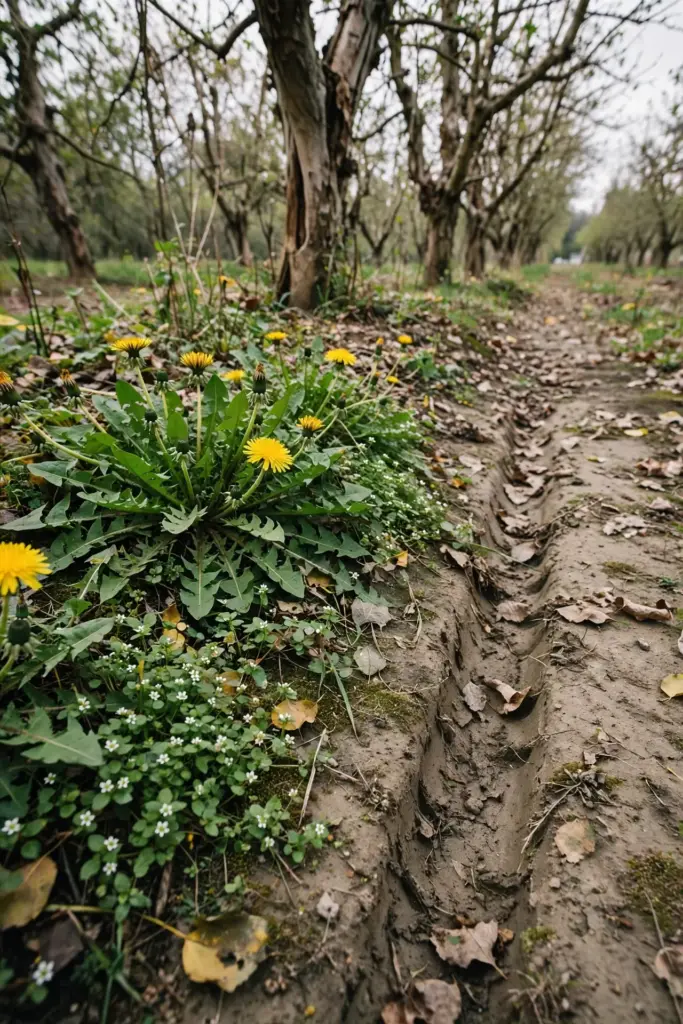
Weed hosts feed the cycle from the floor. Infected weeds give nematodes a virus source even when the crop is gone. Dandelion, chickweed, plantain, and other perennial weeds hold tomato ringspot virus and pass it to feeding nematodes. A clean crop above weedy ground is still an exposed crop.
Soil movement spreads the pest. Nematodes ride on soil stuck to equipment, boots, and tillage tools, and tillage drags them along rows. A block that was clean can pick up the vector from one dirty pass. Clean equipment between blocks is cheap insurance, and it costs nothing but discipline.
Compaction and poor drainage deepen every root problem. Compacted soil holds water, stresses roots, and slows the feeder-root growth that would replace feeding damage. Compacted, poorly drained soil deepens every root problem, so building soil health belongs in the same plan as the nematode work. Drainage and tilth do not kill nematodes, and they still decide how much damage the nematodes cause.
Replanting susceptible varieties on infested ground is the costliest error. A susceptible scion on a susceptible rootstock, planted into virus-positive soil, repeats the previous block’s decline on a fresh schedule. The assay exists to prevent exactly that sequence.
8. Step 1: Decide Whether the Block Is Worth Treating or Replanting
Step 1 is a business call, not a spray call. Weigh the block’s remaining productive life against the cost of fallow, fumigation, and replanting, and decide before you spend anything on treatment.
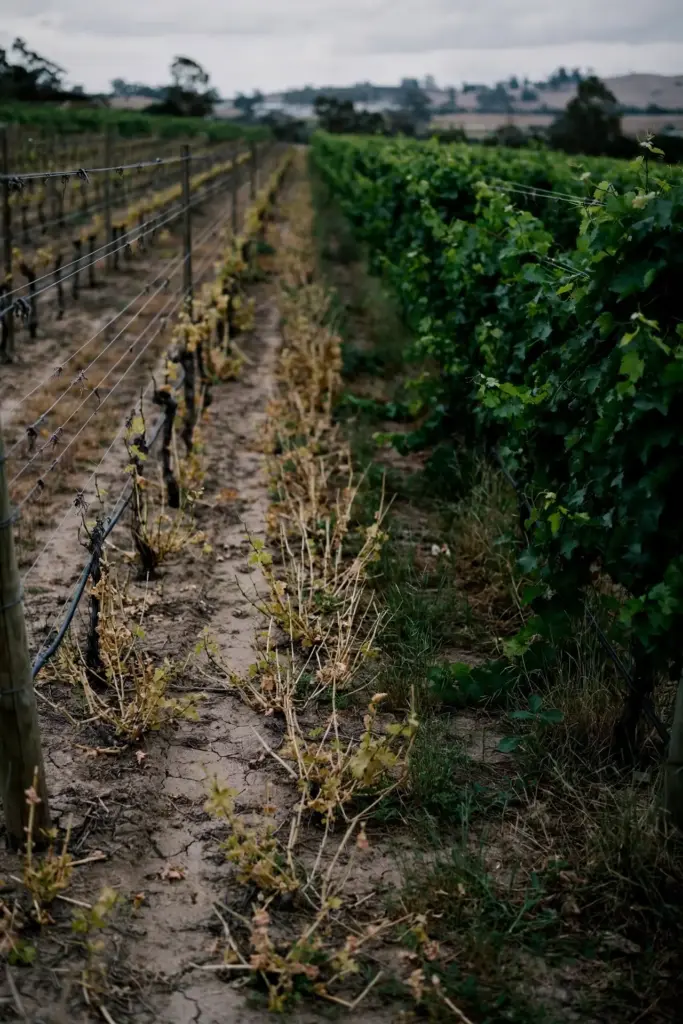
Four questions frame the call. First, is virus confirmed, or is the damage feeding only? Second, how old is the block, and how far has yield fallen? Third, how much productive life remains if the decline continues at its current pace? Fourth, what does the replant path cost in time and money, including the fallow years when the ground earns nothing?
A virus-positive old block with falling yield points to the replant path. Treatment cannot cure the virus, and each season of management spending buys a smaller crop. A feeding-only young block with a clean virus test points to management in place: soil care, weed control, monitoring, and rootstock planning for the eventual replant.
An uncertain block points to Step 2. The decision rule stays open until the assay returns, and no treatment money moves before then. That discipline is the whole point of Step 1. The assay costs a fraction of one spray pass, and it separates the blocks worth treating from the blocks worth replanting.
Set the decision in writing. Record the virus status, the yield trend, the block age, and the chosen path. A written call keeps the next season’s spending honest, and it keeps a new manager from re-arguing a settled question.
9. Step 2: Sample Soil and Roots Before You Spend Anything
Sample before you spend. A lab assay that names the genus and the population density is the only evidence that separates a nematode problem from a water, nutrient, or virus-only problem.

Mississippi State University Extension’s nematode sampling guide calls for a minimum of 15 to 20 soil cores, each 1 inch in diameter by 8 inches deep, per 10 to 20 acres of the same soil type, mixed into one composite sample. Split the block by soil type and cropping history, and sample each area separately. Never sample only the visibly damaged spots, because the worms cluster and a damage-only sample misreads the block.
For vineyards, the Lodi growers guide to nematodes in grapes adds vineyard detail: collect soil from 0 to 18 inches deep between the dripper spot and the vine trunk, include any roots encountered, and build about 1 quart of composite soil from 5 randomly chosen vines per block, after irrigating 3 days before sampling or waiting for 3 consecutive days of rain. The same guide puts Xiphinema index detection in the San Joaquin Valley from November through February, when populations run highest.
Michigan State University’s guide to detecting and avoiding nematode problems in fruit plantings recommends sampling before a new planting, monitoring 1 to 2 years after transplanting, and then every 3 to 5 years, because post-plant control options are limited, and damage from these pests costs Michigan growers millions of dollars annually. Time the sampling to the crop: fall after harvest catches overwintering populations, and spring before planting guides the planting decision.
Handle the samples like living evidence. Keep them cool, never frozen, and ship them promptly to a diagnostic lab. Label each bag with the block, the soil type, the previous crop, and the variety you intend to plant. Ask the lab to report Xiphinema to species and to give population densities against threshold levels. A genus-level report is not enough, because the virus pairing depends on the species.
A single clean result never proves a block clean. The worms cluster in patches, and a sample can miss a patch. Repeat the assay on the schedule, and treat a positive result as confirmed. Treat a negative result as one data point.
10. Step 3: Manage the Block You Keep and Plan the Replant
Step 3 splits the work. The block you keep gets stress relief and weed control. The ground you replant gets a long fallow and clean planting material.

The Lodi growers guide to nematodes in grapes puts the vineyard fallow for Xiphinema index and grapevine fanleaf virus at more than 10 years, long enough for old roots to decompose and nematode numbers to fall, and names Ramsey, Freedom, Harmony, and 1616C as the rootstocks with the broadest resistance, with the GRN 1 through GRN 5 series as the most promising newer options. A fallow that long rarely pays on its own, which is why the replant decision belongs in Step 1, before the ground sits idle.
Penn State Extension’s guide to apple union necrosis and decline makes points that apply beyond apples: buy certified virus-free trees, because apples are propagated by grafting, note that Malling Merton 106 is the rootstock clone most frequently found naturally infected, and run a good weed management program, because infected weeds spread tomato ringspot virus. Apply the same three rules to grapevines and cherry trees. Order certified virus-tested vines and trees, and confirm the certification in writing before delivery.
No single rootstock resists every nematode. Match the rootstock to the assay, not to the catalog. A rootstock that resists root-knot nematodes can still feed dagger nematodes, and a rootstock that resists dagger nematode feeding can still pass virus while the worm probes for a feeding site. The assay tells you which resistance matters on your ground.
Pre-plant fumigation is a one-time, pre-plant tool. Vineyards established on pre-plant fumigated ground show improved growth and yields over ground planted without fumigation. Fumigation needs a licensed applicator and local permits, and it works before planting, not after. Post-plant chemical options are few, which is why the pre-plant window carries the whole strategy.
Rotation and cover crops carry the fallow. A rotation to crops or cover crops that do not host the nematode keeps the ground productive without feeding the pest, and cover crops for fall planting covers establishment and timing. Manures and composts improve vine vigor and reduce the effect of infestation. Proper irrigation and fertilizer reduce stress on vines and lessen the effect of nematodes. Prevent soil compaction and improve drainage, because stressed roots pay more for every feeding probe.
11. Living With Dagger Nematode Damage in an Established Block
A virus-positive block stays virus-positive. The work shifts from cure to keeping the block productive for as many seasons as it can pay.
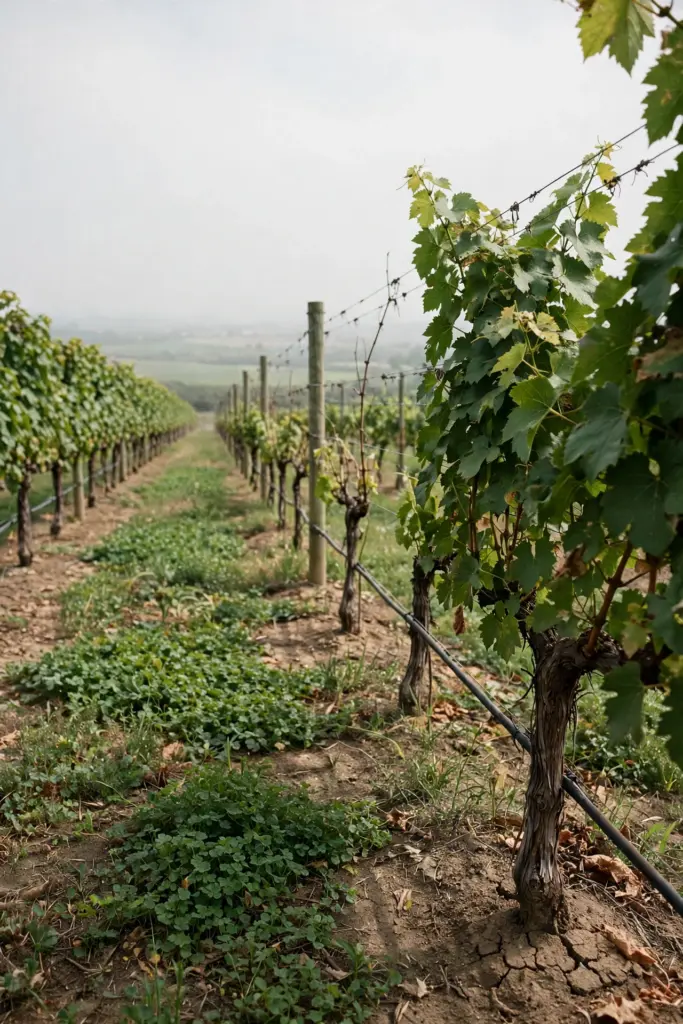
Stress relief is the main lever. Irrigate evenly and feed to the vine’s needs, because a well-watered, well-fed vine tolerates root feeding better than a stressed one. Add compost or manure where the soil needs organic matter. Keep the floor weed-free, because every infected weed is a virus source for the next feeding probe. Keep sampling on schedule, so the decline trend stays visible instead of surprising you.
Pulling single declining vines rarely pays once virus is in the soil. The nematodes and the old roots stay behind, and the replacement vine meets the same vector population. Rogueing helps only when the removed vine is an isolated infection in otherwise clean ground, and the assay says so.
Clean equipment between blocks. Soil on tires and tillage tools carries the vector from a virus-positive block to a clean one. The habit costs minutes and protects the clean ground that the farm’s future depends on.
Use the productive years to plan the replant. Line up the rootstock, the certified stock, and the fallow rotation while the old block still earns. A block that tests virus-positive today should already have a replant date on the calendar. The farm that plans the replacement while the old block pays is the farm that survives the transition.
12. Frequently Asked Questions
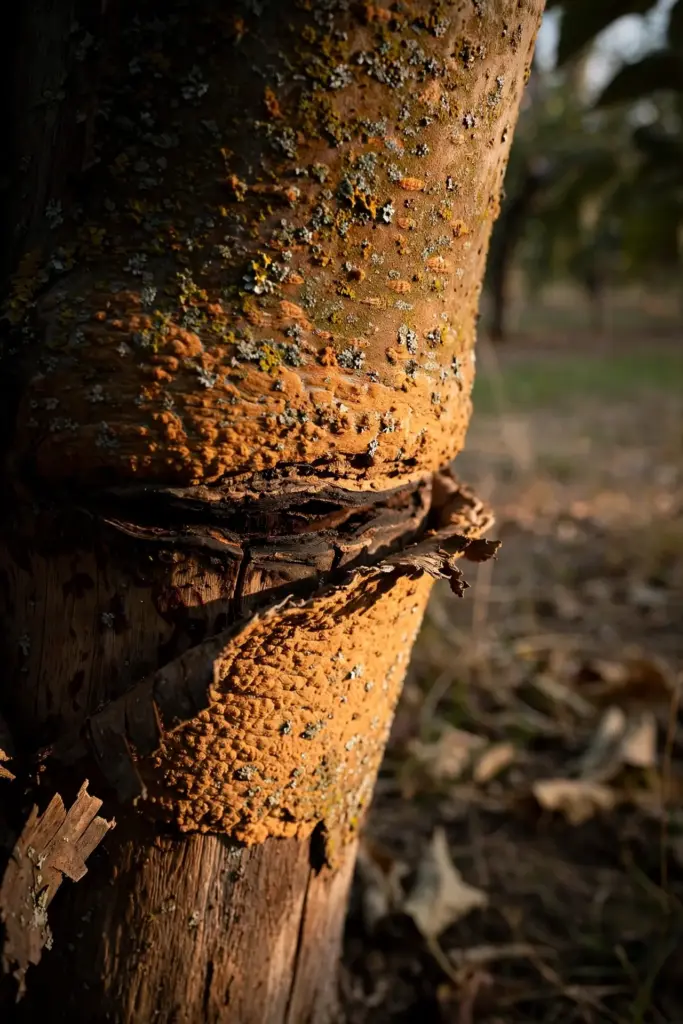
Fumigation suppresses dagger nematodes before planting, and vineyards on fumigated ground grow better than vineyards on ground planted without it. It does not guarantee eradication. The worms live deep in the soil and inside old roots, beyond the reach of any single pass. Treat fumigation as one part of a replant plan with fallow and certified stock, not as a stand-alone cure.
Sample before planting, then monitor 1 to 2 years after transplanting, and then every 3 to 5 years. That schedule comes from Michigan State University guidance for fruit plantings. Test sooner if a block shows patchy decline, pale leaves, or short shoots that do not respond to fertilizer. A single clean result never proves a block clean, because the worms cluster in patches.
Both. The worms move short distances through soil water on their own, which is why damage spreads slowly along rows. People move them much farther on soil stuck to equipment, boots, and nursery stock, and on infected planting material. Clean soil from equipment between blocks, and never accept planting stock without virus certification.
No. A resistant rootstock reduces nematode feeding, but the nematode can still pass the virus while probing for a feeding site, and the virus then moves through the vine. Resistant rootstocks pay on ground where the virus load is low or where the block starts clean. On ground with heavy fanleaf pressure, fallow and clean stock matter more than rootstock choice alone.
No. Home kits measure nutrients and pH, not living worms. Dagger nematode identification needs a diagnostic lab that extracts the worms from soil and roots and reports the genus and the population density. Send a composite sample from the block, include roots, and keep the sample cool until it ships.
13. Where to Go From Here
Start with the assay. One composite sample per block tells you whether you are managing feeding damage or living with a virus.
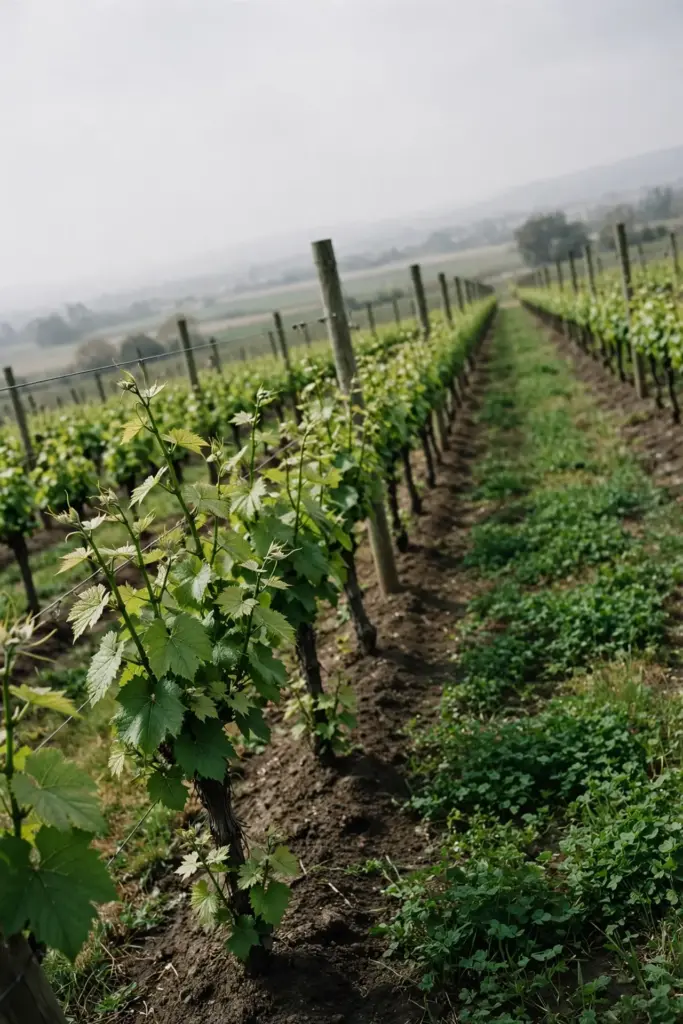
The sequence runs in order. Step 1 sets the decision rule. Step 2 supplies the evidence. Step 3 executes the plan. A block that tests clean earns a different plan than a block that tests virus-positive. The assay is the line between the two.
Send the samples before the next planting decision. The fallow clock, the rootstock order, and the certified stock lead time all start from the assay result, and every one of them runs longer than growers expect.