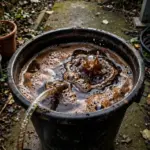
Charge 2 buckets of black crumbs in compost tea overnight before you dig them in. Biochar is charcoal made for soil: plant material burned with little oxygen until only a black, porous skeleton stays. Biochar is a lasting home for water, nutrients, and microbes in the ground.
Biochar differs from ash, and it differs from grill charcoal. Ash dissolves and feeds plants at once. Grill charcoal carries binders and chemicals that soil never needs. Biochar is clean plant carbon, burned hot enough to hold its shape for centuries.
Fresh biochar soaks up nutrients first, and gives them back later. Dig it in raw, and it steals nitrogen from the bed for weeks. Charge it in compost first, and it enters the bed already loaded. The charge step decides.
| Point | Detail |
|---|---|
| Definition | Plant charcoal made with little oxygen |
| Application rate | 5 to 10 percent by volume of soil |
| Charge first | Soak in compost tea or mix with compost |
| Lasts | Centuries in the soil |
| Raises | Soil pH, a little |
| Worst mistake | Digging it in raw and uncharged |
What Is Biochar?
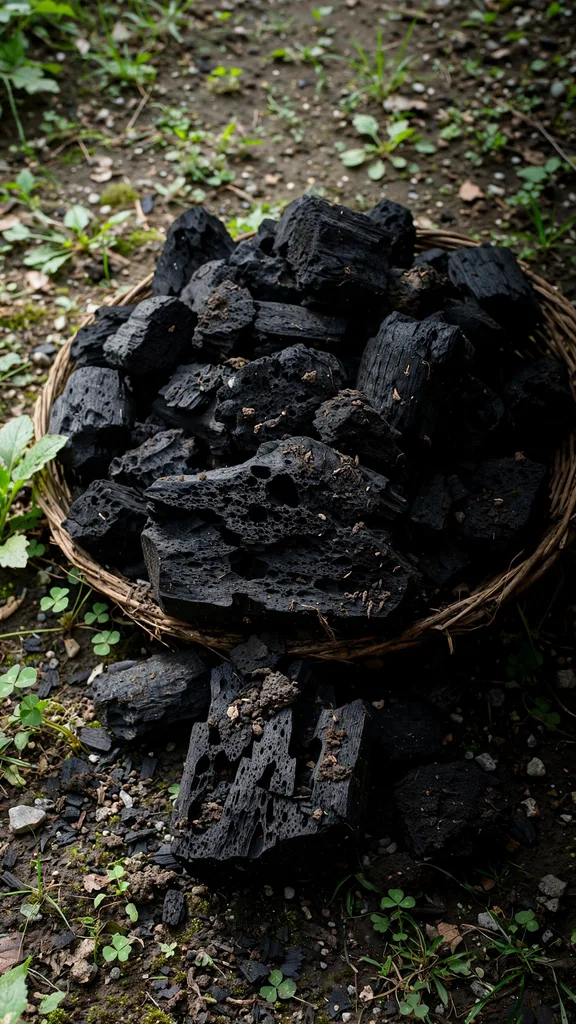
Biochar is a type of charcoal produced from exposing organic material to high heat with low amounts of oxygen, and it is used as an amendment that holds nutrients in the soil. Biochar acts as a container for nutrients, and its high surface area binds nutrients so they stay available to plants longer instead of washing away. The pores inside each crumb hold water, nutrients, and microbes, and the carbon skeleton resists decay for centuries.
The Iowa State University Extension biochar study compared 4 application rates, at 0, 500, 1,000, and 2,000 lb per acre, with compost added at 9,680 lb per acre in each treatment, to find the rate that lifts vegetable yield and plant health. The compost pairing matters: biochar plus compost feeds the microbial community further, through faster growth of mycorrhizal fungi. The trial asks a gardener’s question with field numbers, and the answer sets the dose.
Most biochar raises soil pH, though the size of the rise varies between types, and biochar carries a low lime equivalence, so it takes a higher rate than agricultural lime to move pH the same amount, according to the University of Georgia biochar practical guide. Many soils are acid, so a small pH rise suits them. Alkaline beds need care, because biochar pushes pH the wrong way there.
What Biochar Is Made Of
Biochar is made of wood, straw, husks, manure, or any dry plant material burned in a kiln with little oxygen. The heat drives off water and volatile compounds, and the carbon skeleton stays behind as a black, light, porous crumb. The feedstock sets the character: woody biochar is dense and long lasting, and manure biochar carries more nutrients and ash.
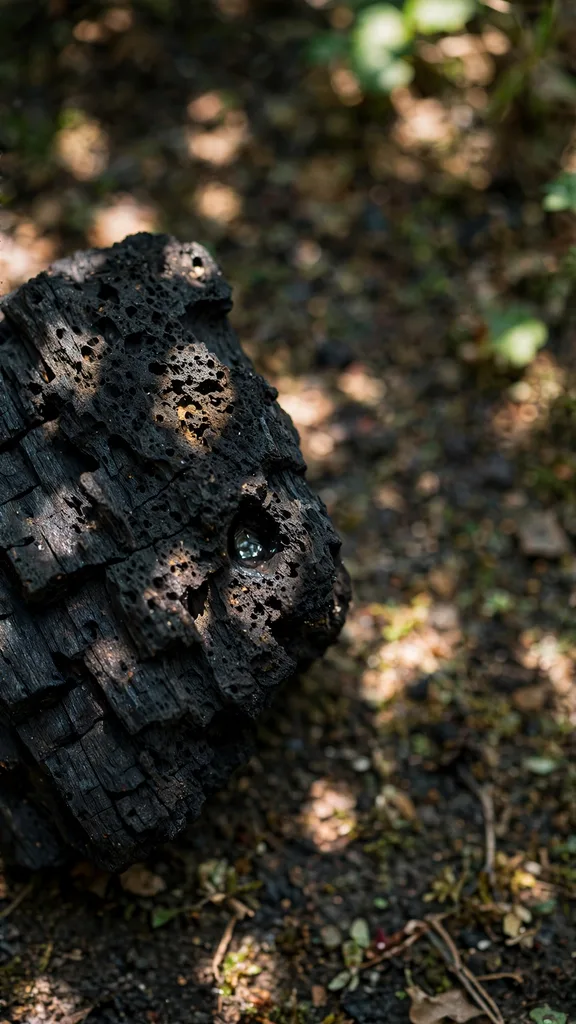
The pores are the point. A single gram of biochar holds an inner surface larger than a tennis court, and that surface grips water, nutrients, and microbes. The pores shelter bacteria and fungi from drying out, and the fungi grow through the pores into the soil around them. The crumb is a hotel for soil life, and the guests pay rent in nutrients.
Biochar lasts. The carbon skeleton resists decay, and it stays in the soil for centuries while compost disappears in a season. That permanence is the promise and the risk: a good dose keeps working for years, and a bad dose stays wrong for years. Test a small bed first, and scale up only when the plants answer. The gardening glossary lists the soil terms that share this ground, and biochar is the longest lasting amendment among them.
Biochar vs Charcoal
| Trait | Biochar | Charcoal |
|---|---|---|
| Made for | Soil | Fire, cooking, or industry |
| Feedstock | Clean wood, straw, husks, manure | Wood, often with binders |
| Additives | None | Binders, lighter fluid, chemicals |
| Pore structure | High, clean pores for microbes | Varies, often clogged |
| Soil effect | Holds water and nutrients | Can harm soil life |
| Worst mistake | Digging it in raw | Using grill charcoal in a bed |
Biochar and charcoal are both black carbon from burned wood, and the difference is the making and the additives. Biochar is burned clean, with little oxygen and no binders, to leave open pores for soil life. Grill charcoal is burned for heat, and it carries binders, lighter fluid residues, and chemicals that soil never needs. The bag that lights a grill has no place in a bed.
Wood ash differs from both. Ash is the mineral left after full burning, and it dissolves fast, feeds plants at once, and raises pH hard. Biochar is the carbon left after partial burning, and it dissolves slowly, holds nutrients, and raises pH a little. Ash is a quick feed, and biochar is a slow home.
How to Recognize and Measure Biochar
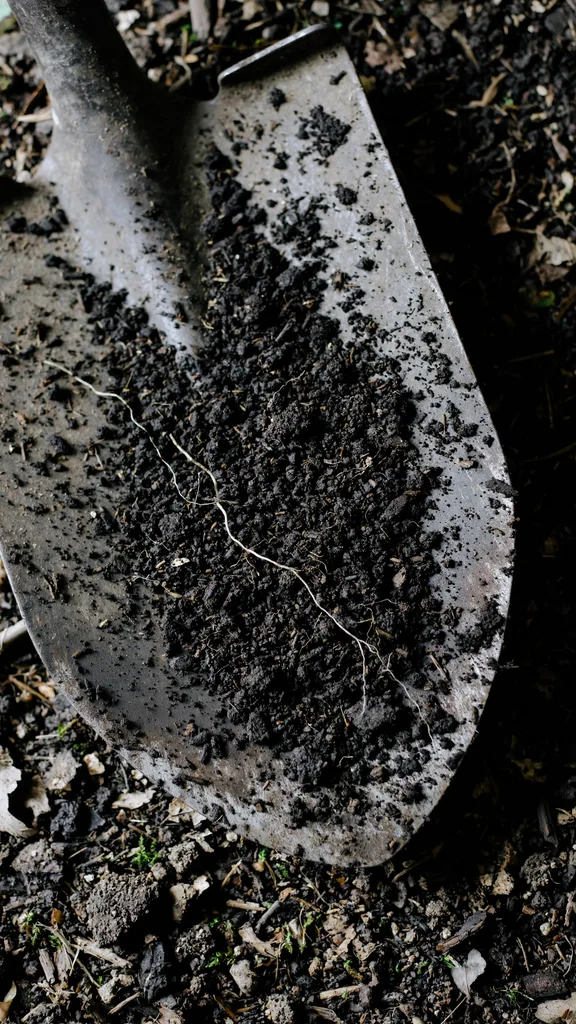
Good biochar looks like black crumbs, light in the hand, and it snaps cleanly between thumb and forefinger. The crumbs range from rice grains to peas, and the surface looks matte, never shiny. A shiny crumb holds tar in its pores, and tar clogs the hotel. Crush a crumb and smell it: clean biochar smells of nothing, and a chemical smell means the batch never finished burning.
Measure the dose by volume, and mix it where roots will grow. The guide recommends a small share of biochar by volume of soil, and never above a tenth. A new tree hole 1.5 m wide, 1.5 m long, and 0.3 m deep holds 25 cubic feet of soil, and a small dose adds a little over a cubic foot of biochar to the backfill. Mix it through the backfill, and never layer it at the bottom.
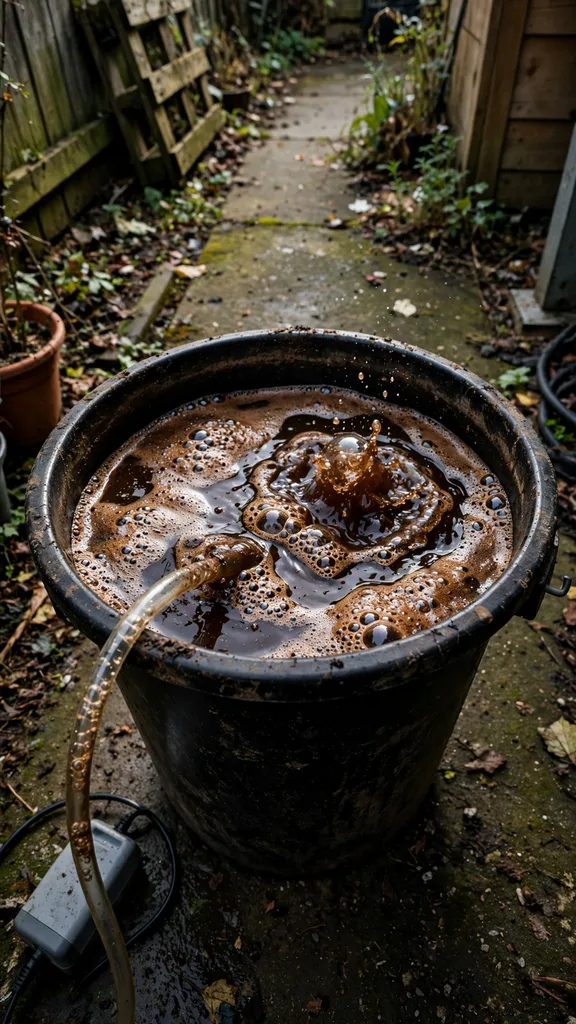
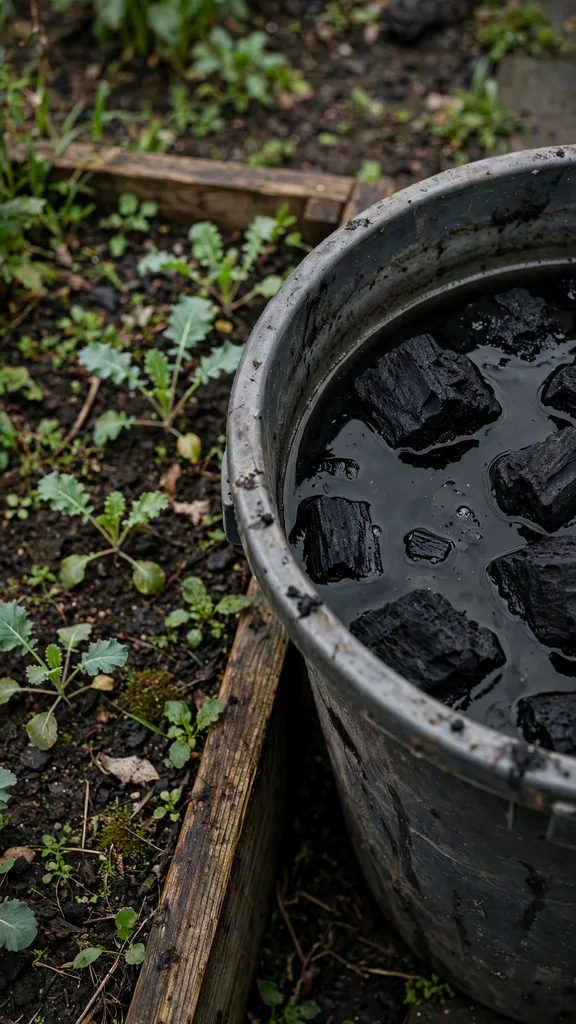
Charge the biochar before it touches a bed. Soak it in compost tea overnight, or mix it into the compost pile for 2 weeks. Fresh biochar soaks up nitrogen first, and a charged crumb enters the bed already loaded. Dig raw biochar into a hungry bed, and the plants yellow for weeks while the crumbs fill up.
Common Mistakes With Biochar
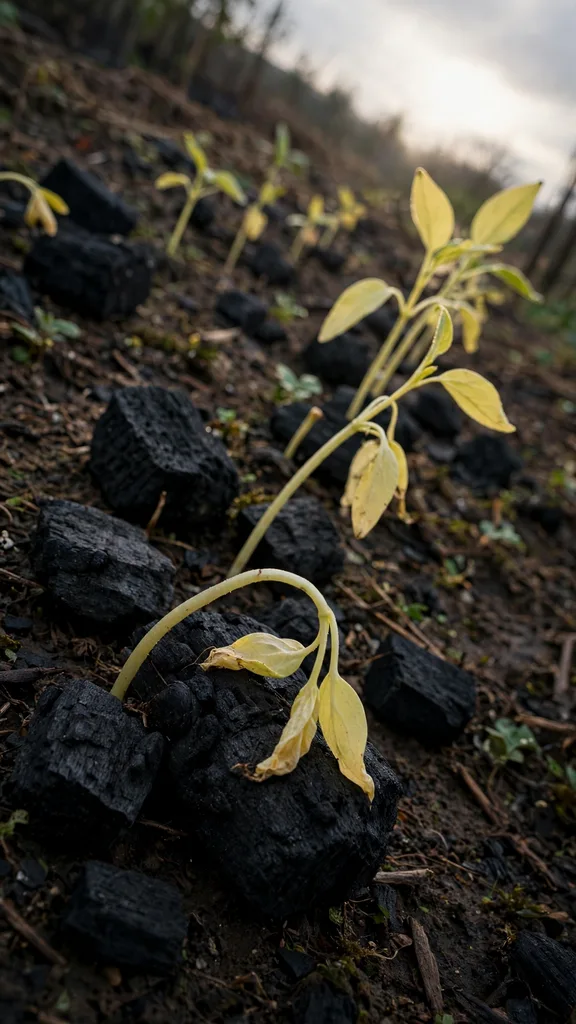
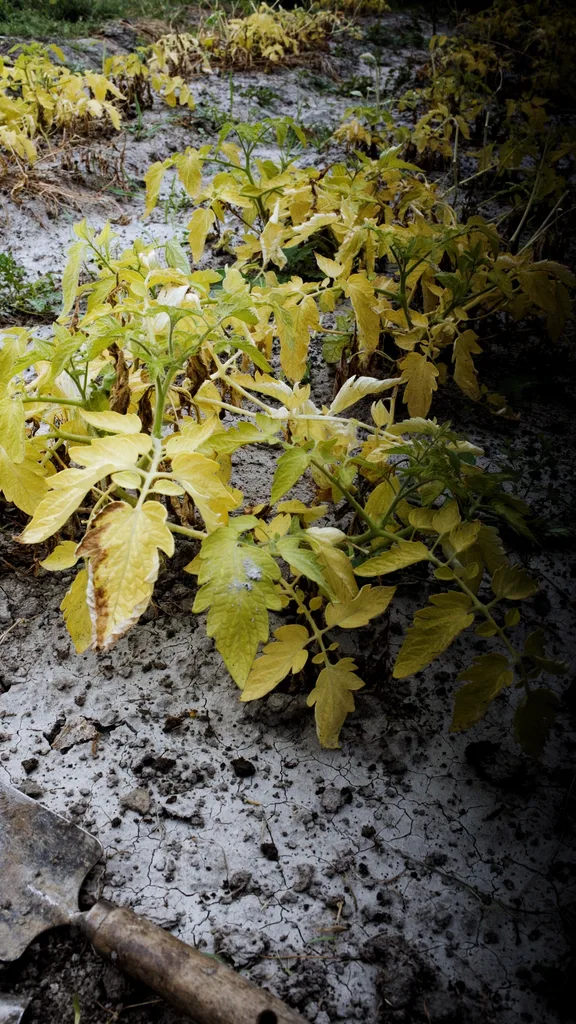
- Digging it in raw and uncharged. Fresh biochar soaks up nitrogen from the bed, and the plants yellow for weeks. Charge it in compost tea overnight, or mix it into the compost pile for 2 weeks first.
- Adding too much. A heavy dose dries the bed and ties up nutrients. The guide caps the dose, and a small test bed beats a whole garden of regret.
- Using grill charcoal. Grill charcoal carries binders and chemicals, and the pores clog with tar. Buy biochar made for soil, and read the label for feedstock and additives.
- Expecting a fast yield jump. Biochar builds soil slowly, and the first season shows little. The payoff comes in year 2 and later, as microbes colonize the pores and the crumbs hold water through dry weeks.
- Adding biochar to alkaline soil. Most biochar raises pH, and an alkaline bed needs the opposite. Test pH first, and skip biochar on beds already above 7.5.
When Biochar Matters in Your Garden
Biochar matters most in sandy soil, where water and nutrients wash through within days. The pores hold water against gravity, and the charged surfaces hold nutrients against leaching. A sandy bed with charged biochar stays damp a week after rain, and the plants stop wilting by noon. The sand never changes, and the crumbs inside it do the holding.
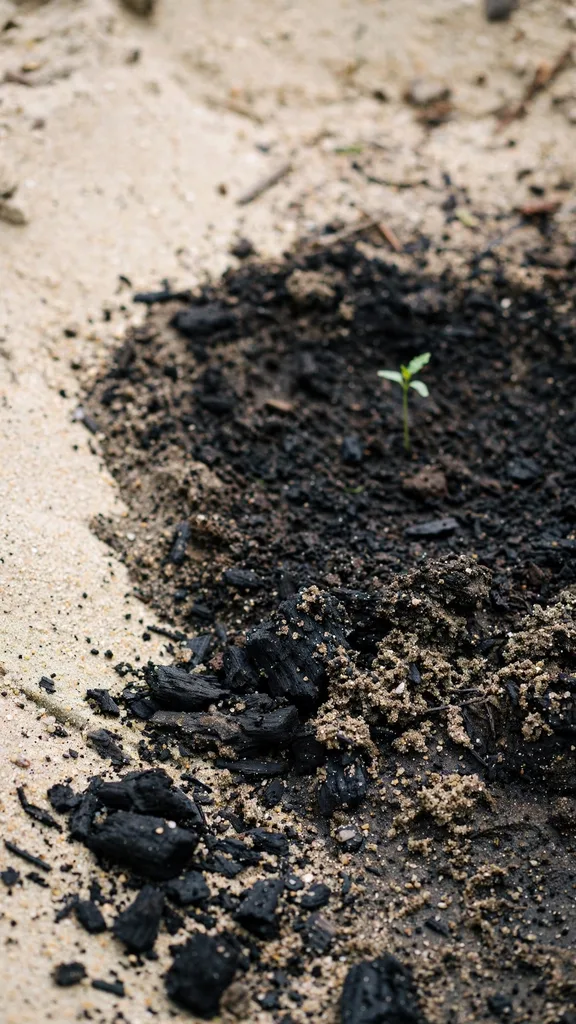
It matters for new trees and shrubs, where one dose lasts the life of the plant. Mix charged biochar into the backfill at planting, and the roots grow into a crumb network that feeds them for years. A tree planted with biochar in the hole outgrows one planted without it, and the difference shows in the second season.
Compost is the partner biochar needs, and the pile is where charging happens. Mix biochar into the compost pile for 2 weeks, and the crumbs load up with nutrients and microbes. Learn how to set up a compost bin and keep a steady supply, because charged biochar starts working the day it hits the bed. Fall cover crops also feed the bed between seasons, and cover crops for fall planting keep roots in the ground while the crumbs settle in.
FAQ
Biochar suits a vegetable garden when it is charged first and dosed low by volume of soil. The pores hold water and nutrients, and the carbon lasts for centuries. Raw biochar steals nitrogen for weeks, and heavy doses dry the bed. Charge it in compost tea overnight, and test a small bed first.
Add biochar at a low share by volume of soil, and never above a tenth. A new tree hole 1.5 m wide, 1.5 m long, and 0.3 m deep takes a little over a cubic foot of biochar at that dose. Mix it through the backfill, and never layer it at the bottom. Charge it in compost before it touches a bed.
Charge biochar before use, because fresh biochar soaks up nitrogen from the bed first. Soak it in compost tea overnight, or mix it into the compost pile for 2 weeks. A charged crumb enters the bed already loaded with nutrients and microbes. Raw biochar yellows plants for weeks while the crumbs fill up.
Most biochar raises soil pH a little, and the size of the rise varies between types. Biochar carries a low lime equivalence, so it takes a higher rate than lime to move pH the same amount. Acid soils suit biochar, and alkaline beds above pH 7.5 do not. Test pH first, and skip biochar on alkaline ground.