
Cylindrocladium root rot is a soilborne fungal disease that rots the roots and crown of ornamentals, then wilts the plant from below. The fungus attacks more than 300 plant species, and its resting bodies can wait in soil for 15 years or more. No spray cures an infected plant, so the work is catching it early and removing it fast.
I have learned to distrust a wilted azalea that still sits in wet soil, because wet soil with a wilting plant points below ground, not at the watering can.
What follows covers identification on roots, crowns, leaves, and stems, the hosts hit hardest, a compiled comparison against three lookalike root rots, and three steps in order: decide, remove, rebuild.
1. What Cylindrocladium Root Rot Actually Is
Cylindrocladium root rot is a root and crown rot caused by fungi in the genus Cylindrocladium. The name Cylindrocladium covers the asexual stage of the fungus Calonectria, so the two names describe the same organism, according to the Purdue Landscape Report guide to Cylindrocladium root rot. One species does not cause every case. Azalea disease, for example, is tied to Cylindrocladium scoparium, whose sexual stage is Calonectria morganii, according to the Pacific Northwest Pest Management Handbooks page on azalea Cylindrocladium blight and root rot.
The host list is wide. Cylindrocladium species have caused disease in over 300 plant species worldwide, according to the Purdue Landscape Report guide to Cylindrocladium root rot. The same genus causes leaf spots, cankers, stem blights, and root, crown, and cutting rots, and one species can infect every part of a susceptible plant. That range is why a leaf spot and a dead root system can trace back to the same fungus.
Boxwood blight belongs to the same genus group. Boxwood blight is caused by a Calonectria species, and it is a separate disease with its own hosts and management. Do not treat a boxwood blight plan as a Cylindrocladium root rot plan. The two share a genus group and little else that matters in a home garden.
The disease mostly starts where plants are grown, not where they are planted. Cylindrocladium root and crown rot problems show up most often in nurseries, and infected plants then carry the fungus into the landscape, per Purdue’s guide. A plant can look healthy on the bench and fail months after planting. That lag is the reason new stock deserves a quarantine period before it joins the garden.
2. How to Identify Cylindrocladium Root Rot on Roots and Crowns
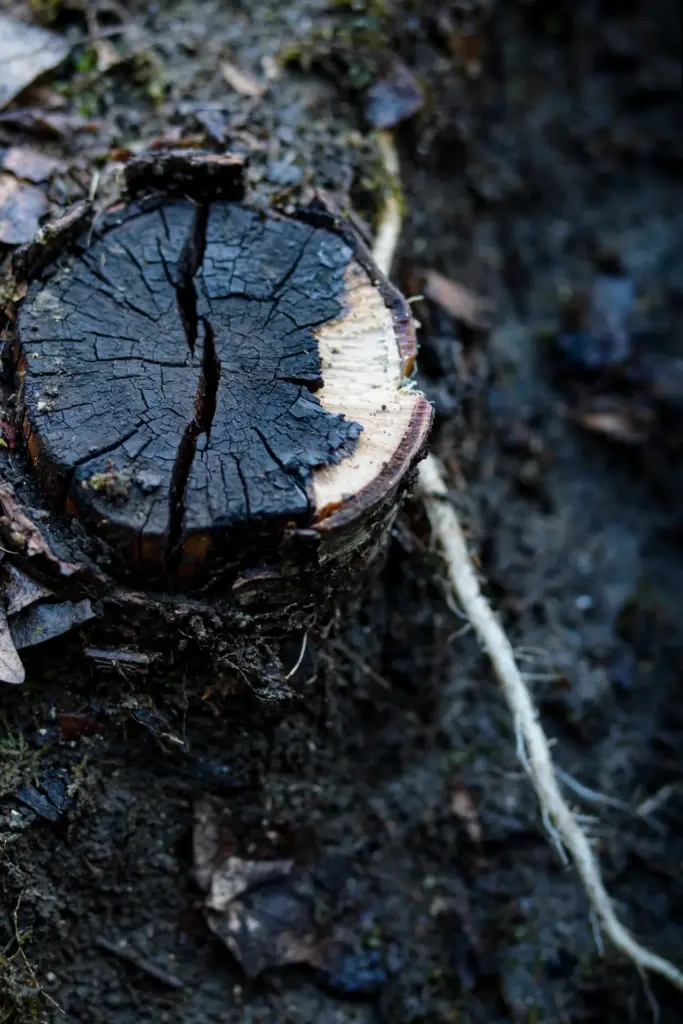
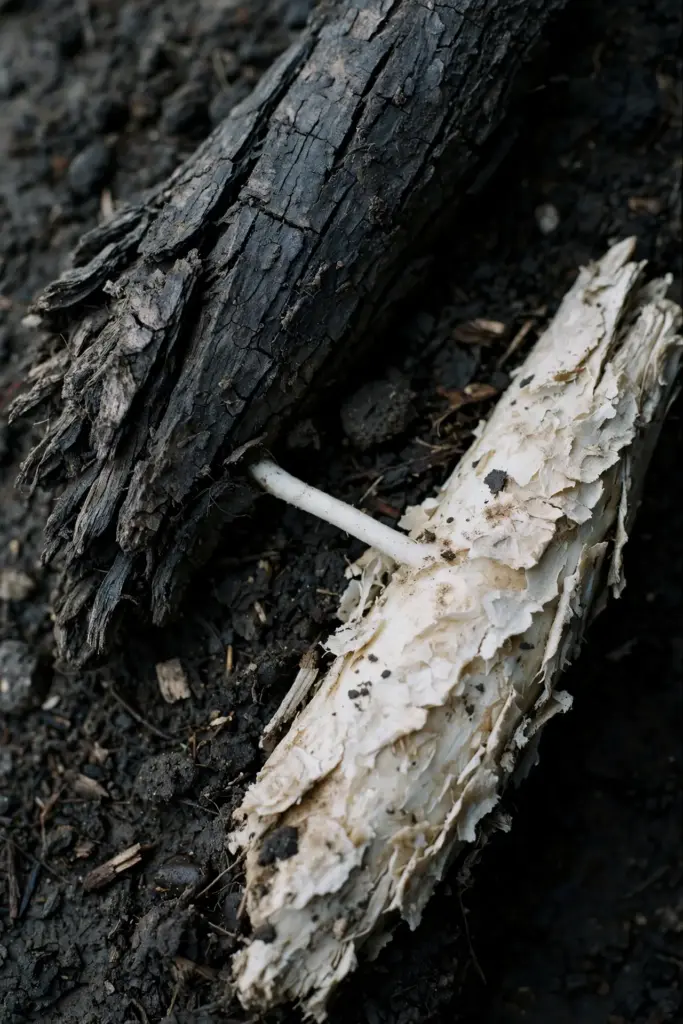
Cylindrocladium root rot shows on roots as dark gray, almost black lesions, per Purdue’s guide, and vertical cracks can develop along those lesions to give the tissue a rough, fissured look. Infections can begin on the tap root or at the root collar. A spreading lesion girdles. A girdled root or stem dies.
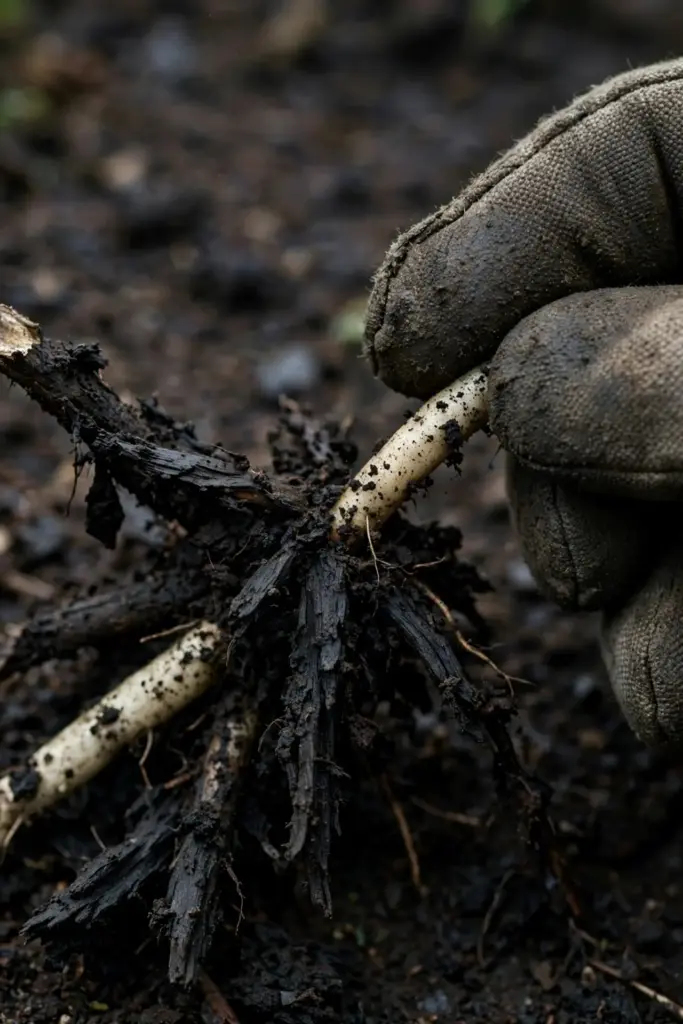
Start the check by lifting the plant and washing the roots. Healthy feeder roots are firm and pale. Rotted roots are discolored and soft, and rotted roots often look water soaked, according to Purdue Extension on root rot in landscape plants. Peel the outer cortex gently on a suspect root. The cortex of a rotted root slips or shreds, and the tissue under it is dark. A firm root with pale tissue under the cortex is still working.
The crown tells the next part of the story. The fungus invades roots and can move into the crown and lower stem. Woody stems can show a distinct internal brown discoloration, and the vascular browning does not progress more than an inch or so above the soil line, according to the Pacific Northwest Pest Management Handbooks page on azalea Cylindrocladium blight and root rot. Cut a thin slice from the lower stem of a dead or dying plant and look for that brown ring or streak. The one-inch limit is a useful field mark. Browning that runs far up the stem points at a different problem.
Seedlings and saplings carry the highest risk. In woody plants, seedlings, saplings, and smaller trees get infected more frequently, per Purdue’s guide. Young plants have thin bark, small root systems, and little stored energy. A lesion that a mature shrub might outgrow can girdle a seedling in one season. Check new woody plants at the root collar before planting, and reject any plant with dead stems, yellowing leaves, or a soft collar.
3. How to Identify Cylindrocladium Root Rot on Leaves and Stems
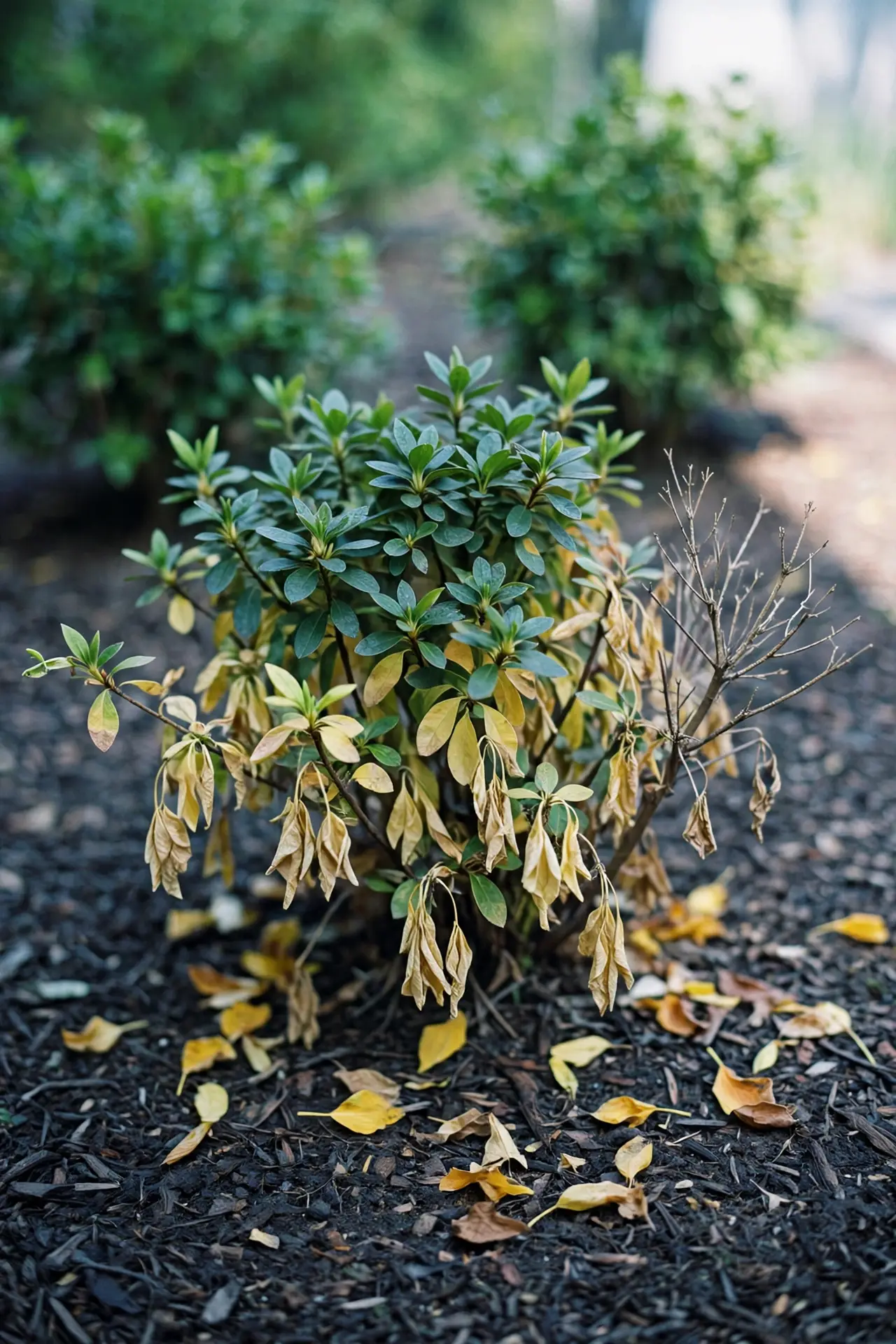
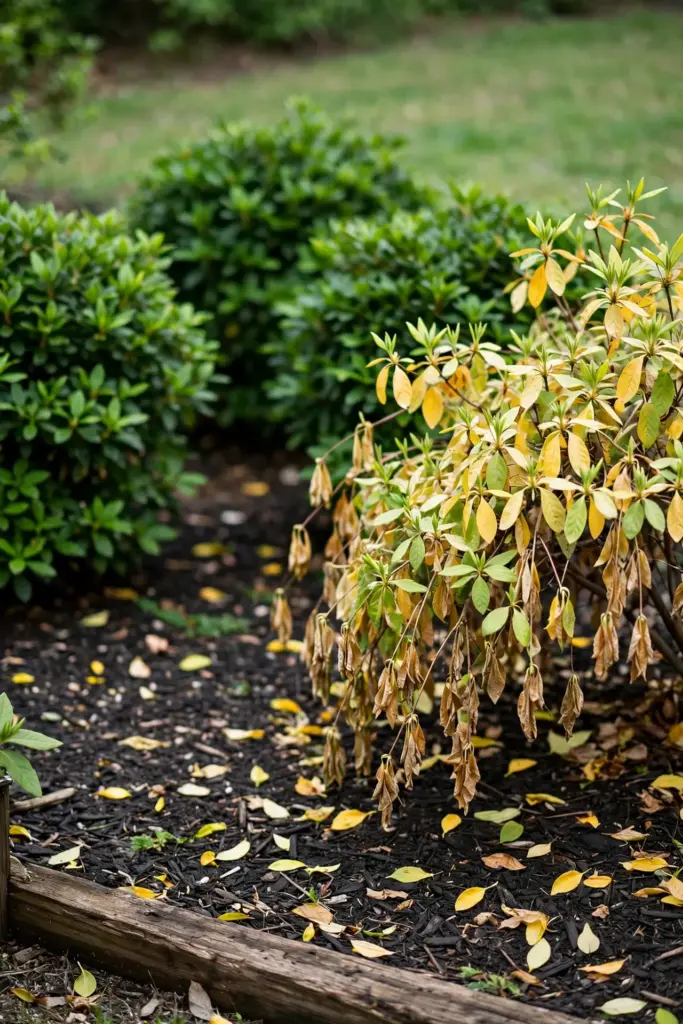
Above-ground symptoms of Cylindrocladium root rot include stunting, foliage discoloration, and wilting, per the PNW handbook. These symptoms may not appear until the roots have been rotted for some time. The plant starves slowly while the canopy still looks almost normal. Then one hot week exposes the dead root system, and the plant collapses.
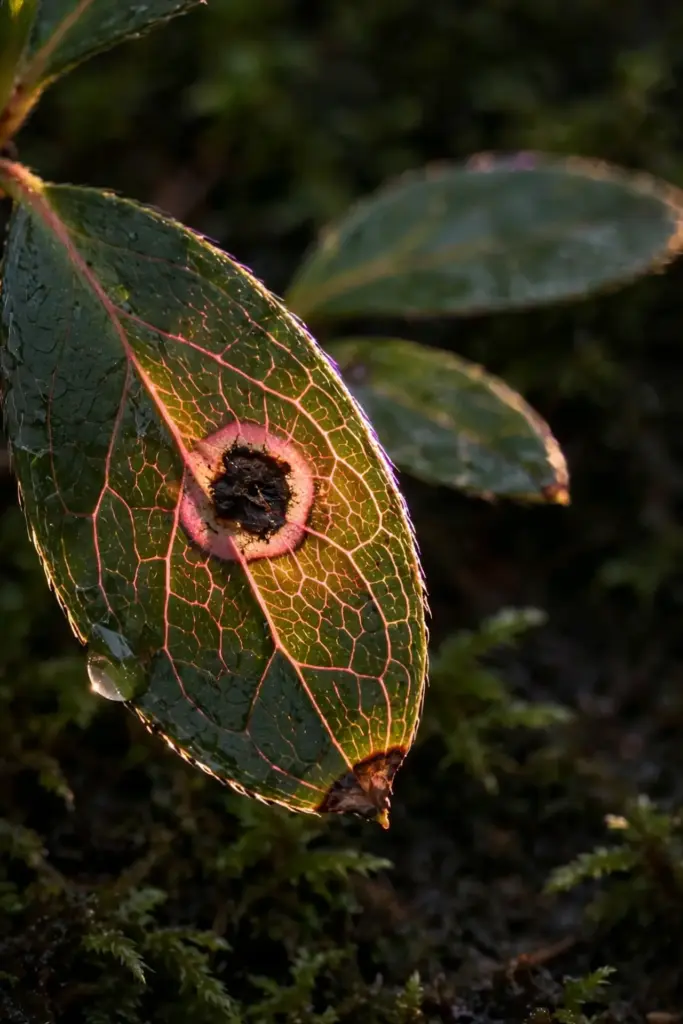
Yellowed lower leaves and wilt are usually the first symptoms on Spathiphyllum, and extensive root and crown damage causes them, according to the UMass Extension page on Spathiphyllum Cylindrocladium root and crown rot. The pattern holds across hosts. The lowest leaves yellow first. Wilting follows. Watering does not revive the plant, because the roots that would take up the water are gone. A plant that wilts in wet soil has a root problem until proven otherwise.
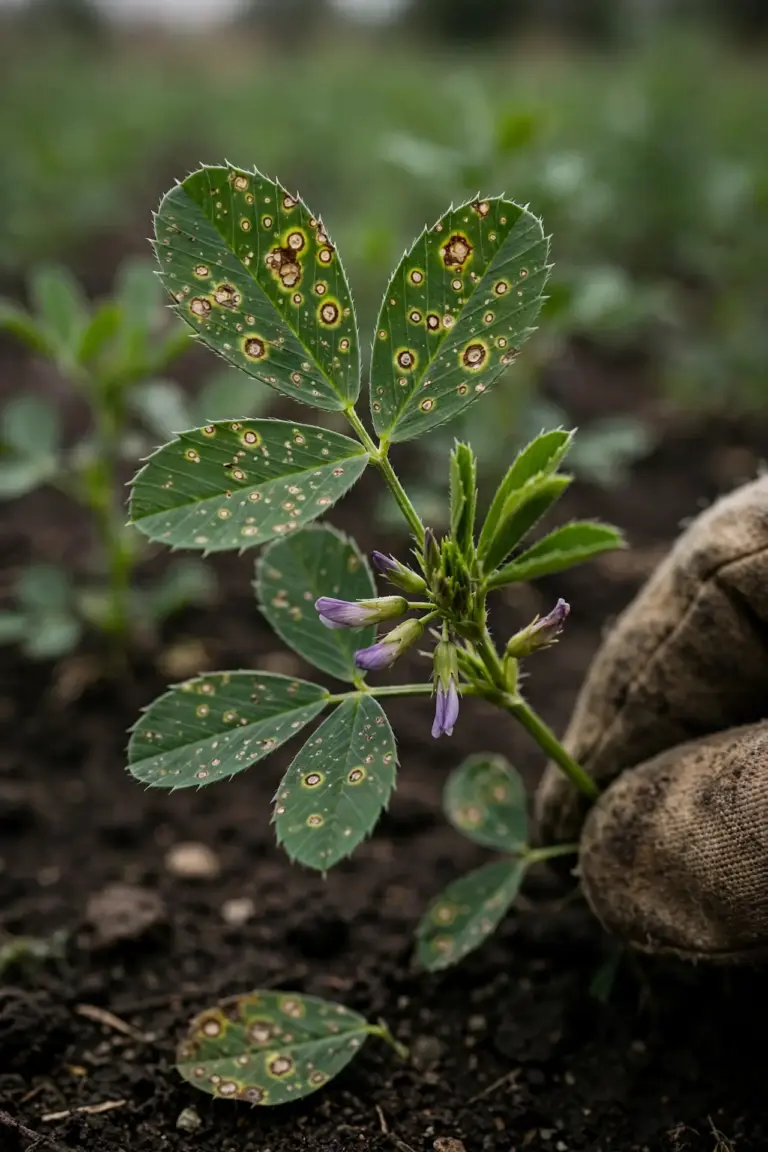
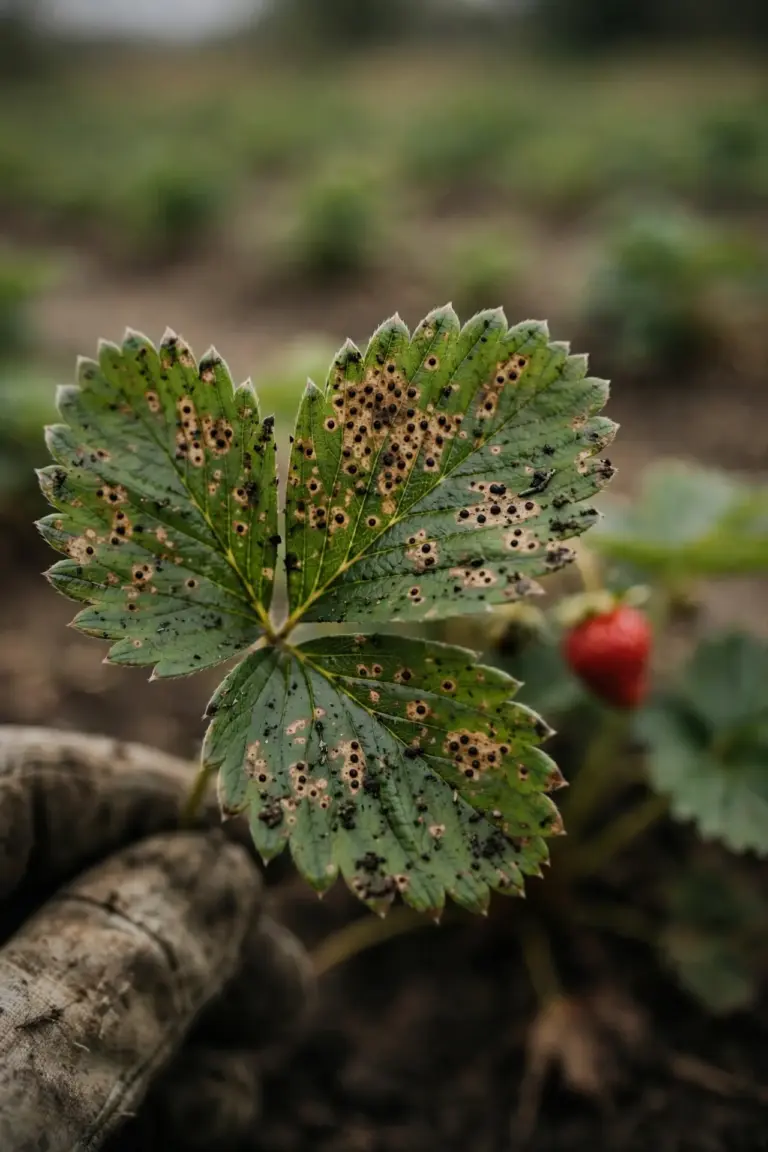
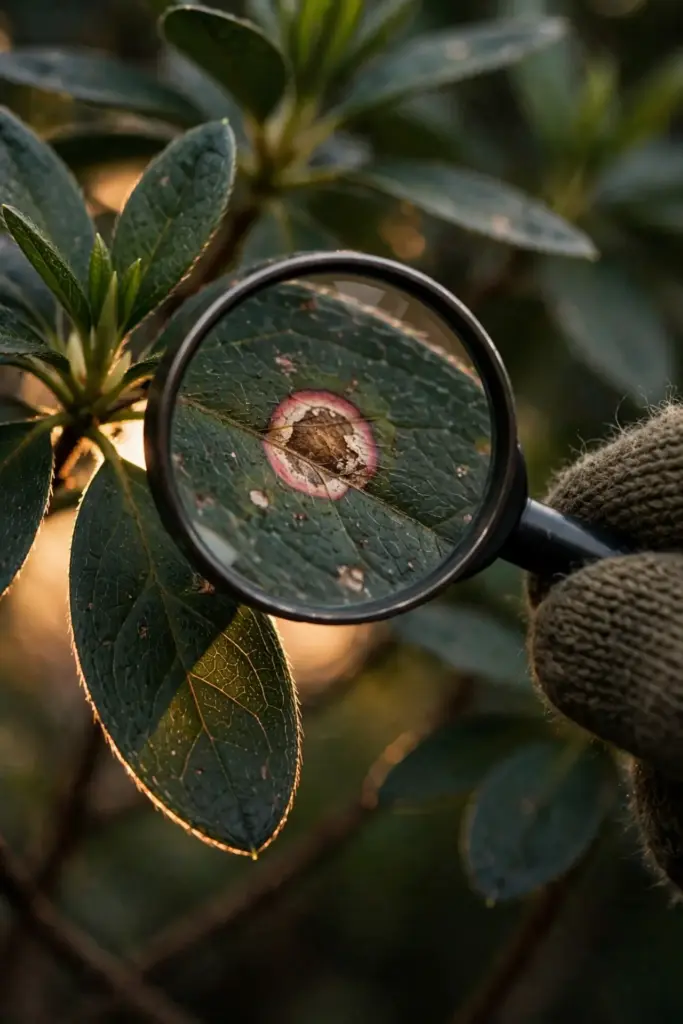
Leaf spots give a second set of marks. Cylindrocladium can cause a leaf spot, stem canker, flower spot, root rot, or quick wilt, per the PNW handbook. Leaf spots are discrete with necrotic centers. The spots carry a chlorotic halo on white cultivars and a light brown to pinkish zone on pink or red cultivars. Veins on the underside of leaves may radiate pinkish red from spots on pink or red cultivars. Necrotic flecks may appear on flowers before the flowers collapse.
Stem cankers and flower spots matter because they spread spores. Spores that land on leaves or flowers germinate and penetrate through stomata or directly through the epidermis, per the PNW handbook. Fallen leaves and flowers then feed the fungus, and the fungus builds its resting bodies in that debris. Pick up fallen leaves and flowers around a suspect plant. The cleanup removes the next round of spores.
4. Which Ornamental Plants Get Hit Hardest
Azalea and rhododendron sit at the top of the risk list. Azalea disease has been a greenhouse problem, and infected cuttings from other facilities can bring in inoculum, per the PNW handbook. Azaleas carry fine, fibrous roots that rot fast in warm, wet media. A greenhouse-grown azalea that collapses a few months after purchase often carried the fungus home from the nursery. Buy from a grower with clean stock practices, and quarantine every new azalea before planting.
Peace lily is the classic indoor host. Spathiphyllum species suffer root rot, crown and lower stem blight, and leaf spots from Cylindrocladium, per UMass Extension. Indoor plants spread the fungus through water. The pathogen spores move plant to plant by water, so plants should not sit directly on the floor where splash carries spores between pots. Raise pots on a drained bench or saucer, and never let one pot drain into the next.
Cuttings and young plants in propagation face the sharpest risk. Cylindrocladium causes cutting rots, and a single infected cutting can contaminate a whole batch of media, per Purdue’s guide. Cuttings have open wounds, wet media, and no root system to fall back on. Never take cuttings from a stressed or wilting plant. Start propagation only with visibly healthy stock plants, fresh media, and clean containers.
Trees and shrubs in the landscape come next. Seedlings, saplings, and smaller trees get infected more frequently than mature specimens, per Purdue’s guide. A young tree that stalls in its first year, yellows from the lower leaves up, and shows a dark collar lesion deserves a root inspection. Mature trees and shrubs can carry latent root infections that progress slowly and then collapse after a stress event such as shipping, repotting, extra watering, or fertilizing, per the PNW handbook. The stress does not create the fungus. The stress exposes it.
5. Cylindrocladium Root Rot vs Phytophthora Root Rot vs Pythium Root Rot vs Fusarium Root Rot
Cylindrocladium root rot shares its headline symptoms with three other root rots. All four cause stunting, yellowing, and wilting. The table below compiles parallel Extension descriptions into one comparison. Field identification stays presumptive. A diagnostic lab culture confirms the pathogen.
| Disease | Pathogen Type | Key Field Signs | What Confirms It |
|---|---|---|---|
| Cylindrocladium root rot | Fungus, the asexual stage of Calonectria | Dark gray to black root and crown lesions, vertical cracks along lesions, internal browning that stops just above the soil line | Lab culture from root or crown tissue |
| Phytophthora root rot | Oomycete, a water mold, not a true fungus | Brown, soft, water-soaked roots, crown rot, rapid decline in saturated soil | Lab culture or baiting from root tissue |
| Pythium root rot | Oomycete, a water mold | Soft, rotted feeder roots, slow growth, chlorotic foliage, seedling damping off in wet media | Lab culture from root tissue |
| Fusarium root rot | Fungus | Stunting, yellowing, wilting, dark discoloration of the vascular system | Lab culture from root or stem tissue |
The pathogen type drives the chemical choice, which is why the comparison matters. Fungicides that control oomycetes do not control true fungi, and fungicides that control true fungi do not control oomycetes. A misidentified root rot wastes the spray and leaves the fungus in place. The table keeps the two groups apart so the treatment matches the organism.
Phytophthora root rot is the closest lookalike and the most common one. Phytophthora is an oomycete that thrives in saturated soil, and its root damage runs soft and water soaked rather than cracked and fissured. The site’s avocado root rot guide covers Phytophthora root rot in detail for one host, and the same wet-soil pattern applies across ornamentals. If the bed holds standing water after rain, Phytophthora climbs the suspect list. If the roots show dark cracked lesions with a one-inch browning limit, Cylindrocladium climbs it.
Two more lookalikes deserve a check before the lab result returns. Armillaria root rot announces itself with mushrooms or conks at the base, a sign that separates it from Cylindrocladium at a glance, as described in the site’s Armillaria root rot guide. Black root rot is a separate disease with its own host list and its own black lesions on roots. A lab result settles the close calls. Field marks narrow the field.
6. Why Microsclerotia Make Cylindrocladium Root Rot So Hard to Erase
Microsclerotia are the reason Cylindrocladium root rot outlasts the plant it kills. Cylindrocladium produces survival structures called microsclerotia that withstand extreme weather and germinate when conditions turn favorable, per Purdue’s guide. The fungus can survive in plant debris or in soil for 15 years or more through these structures, according to the Purdue Landscape Report guide to Cylindrocladium root rot. Removing the dead plant does not remove the microsclerotia. The soil keeps the disease.
The resting bodies form in plant tissue and in fallen debris. Microsclerotia that form in plant tissues can survive many years in soil or media, per the PNW handbook. Once infected leaves and flowers fall, the fungus colonizes them and forms microsclerotia. Those microsclerotia then produce conidia that keep the cycle going. A bed that looks clean after the dead plant goes out still holds the next outbreak in its debris layer.
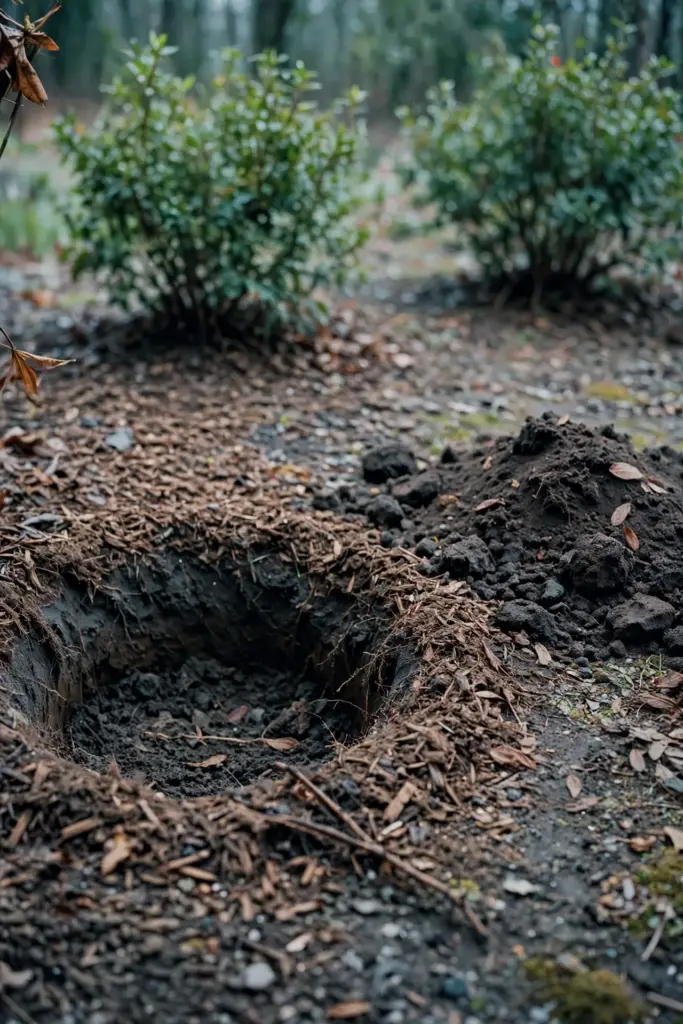
Depth makes removal harder. The fungus has been recovered from as deep as 12 inches in soil, according to the Pacific Northwest Pest Management Handbooks page on azalea Cylindrocladium blight and root rot. Scraping the top inch of soil does nothing. A shallow replant into the same hole puts fresh roots straight into the infested zone. Any replant plan has to treat the whole root zone, not the surface.
The spore cycle runs all season. Cylindrocladium produces microscopic clusters of rod-shaped conidia in crystalline bundles that are highly sticky, per Purdue’s guide. Conidia can be produced throughout the growing season, so repeat infections occur very frequently. The stickiness matters. Spores cling to tools, hands, pots, and boots. Every contact with an infected plant is a chance to move the fungus to a healthy one.
7. What Makes Cylindrocladium Root Rot Worse in a Home Garden
Overhead water is the fastest spreader. Cylindrocladium spores disperse primarily by water splash, so rainfall or overhead irrigation can increase disease spread, per Purdue’s guide. A sprinkler that wets the canopy every evening also wets the spores onto every leaf and into every pot. Switch suspect beds to drip or soaker delivery, and water in the morning so foliage dries fast.
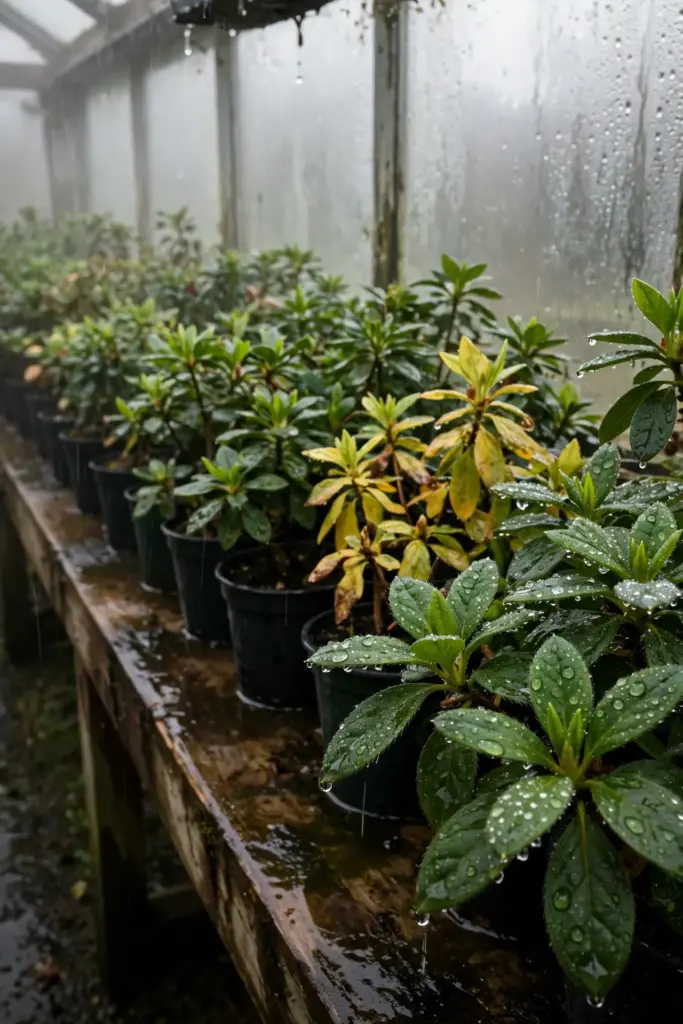
Heat and humidity feed the fungus. High humidity and high temperatures of 85 degrees Fahrenheit favor fungus growth, according to the Pacific Northwest Pest Management Handbooks page on azalea Cylindrocladium blight and root rot. A closed greenhouse or a crowded cold frame in summer hits both conditions at once. Open vents, space pots apart, and run fans to move air through the canopy. Airflow alone will not cure an infected plant, and it will slow the spread to its neighbors.
Dirty tools and reused containers carry the fungus between plants. Spores can be transferred by contaminated tools, per Purdue’s guide. Spores may also be carried in soil, water, by the wind, or on hands, per the PNW handbook. Pruners that cut an infected stem and then cut a healthy one carry spores on the blade. Pots from a previous crop carry microsclerotia in their debris. Wash tools between plants, and never reuse pots or media from a crop that showed root rot.
Infected incoming stock starts most home outbreaks. New infected cuttings from other facilities can bring in inoculum, per the PNW handbook. A nursery plant can carry latent root infection with no visible symptoms. Quarantine new plants when first received and monitor for disease development before moving them into the growing area or the planting location, per Purdue’s guide. A short isolation period costs nothing. One infected plant in a shared bench can cost a whole collection.
Stress turns a quiet infection into a collapse. Stress from shipping, repotting, extra watering, and fertilizing can trigger collapse symptoms, per the PNW handbook. Latent root infections progress slowly and can account for sudden wilts in plants that are several years old. A plant that sailed through two seasons and then dies in a week probably did not catch a new disease. The old infection finally ran out of healthy root.
8. Step 1: Decide Whether the Plant Is Worth Saving
Step 1 is the honest cost and benefit call. No fungicide cures an infected plant. Fungicides applied as a drench can prevent disease spread, and they will not cure affected plants, according to the UMass Extension page on Spathiphyllum Cylindrocladium root and crown rot. Fungicides may not provide adequate control and cannot provide curative benefits to stem and root infections, per Purdue’s guide. Treatment protects the neighbors. It does not rescue the patient.
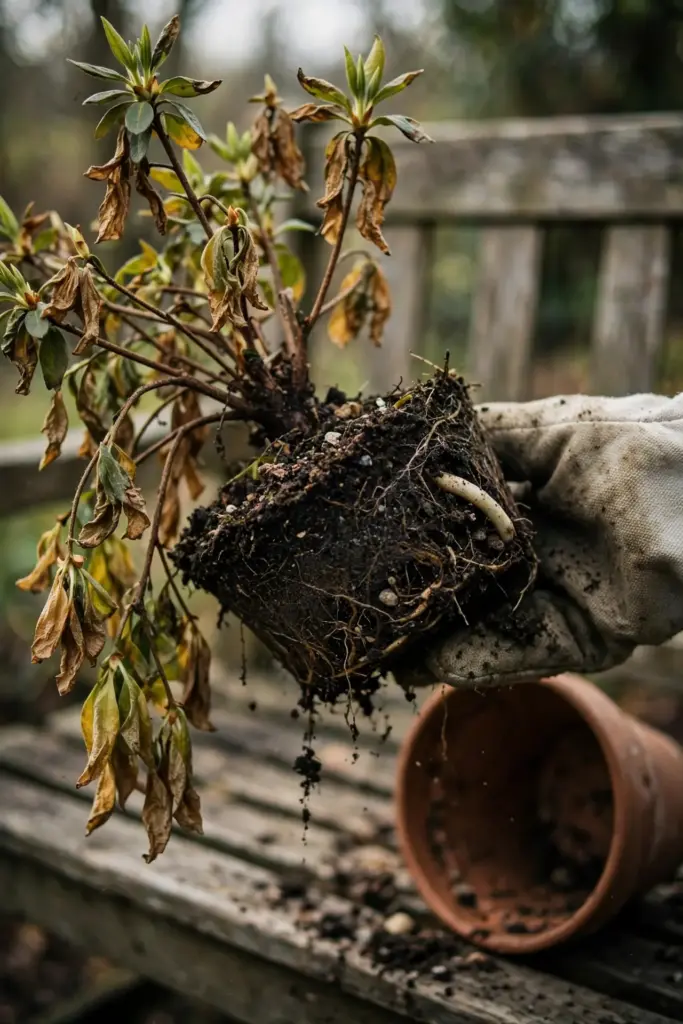
Ask three questions before spending anything, starting with how much root is left. Lift the plant and look. A root system with mostly firm, pale roots and one dark patch can survive with isolation and care, while a root system that is mostly dark, soft, and sloughing has nothing left to save. Second, has the lesion girdled the stem? A girdled stem cannot move water past the ring, and no drench restores that connection. Third, what does the plant cost to replace? A common azalea costs less than a season of protective drenches and quarantine space. A rare specimen or a mature landscape shrub earns more effort.
Default to removal for in-ground shrubs with advanced wilt. The soil already holds microsclerotia, the plant cannot be cured, and the infected plant keeps shedding spores onto its neighbors while it stands. Cutting losses early protects the rest of the bed. Purdue Extension makes the same call in plain terms for root rot in landscape plants: prevention is the best approach, and saving a tree or shrub is sometimes not possible or cost effective, according to Purdue Extension on root rot in landscape plants. A replacement plant in a corrected site beats a dying plant in an infested one.
Keep the effort for plants that earn it. A potted specimen with early symptoms, a rare cultivar, or a plant with most of its root system still firm deserves isolation and a protection plan. Move it away from every other plant. Prune away the dead tissue with disinfected tools. Then protect the remaining healthy tissue and watch for new symptoms for a full season. If the plant declines again, remove it. One more season of nursing rarely changes the outcome.
9. Step 2: Remove, Bag, and Sanitize Without Spreading Spores
Removal starts with containment. Cull diseased plants, or remove and destroy infected plant parts, per Purdue’s guide. Bag the plant before carrying it through the garden. A plastic bag over the canopy keeps spores off every plant along the path. Tie the bag shut at the base, then lift the root ball into a second bag. Double bagging sounds fussy. It keeps sticky spores off the wheelbarrow, the gloves, and the path.
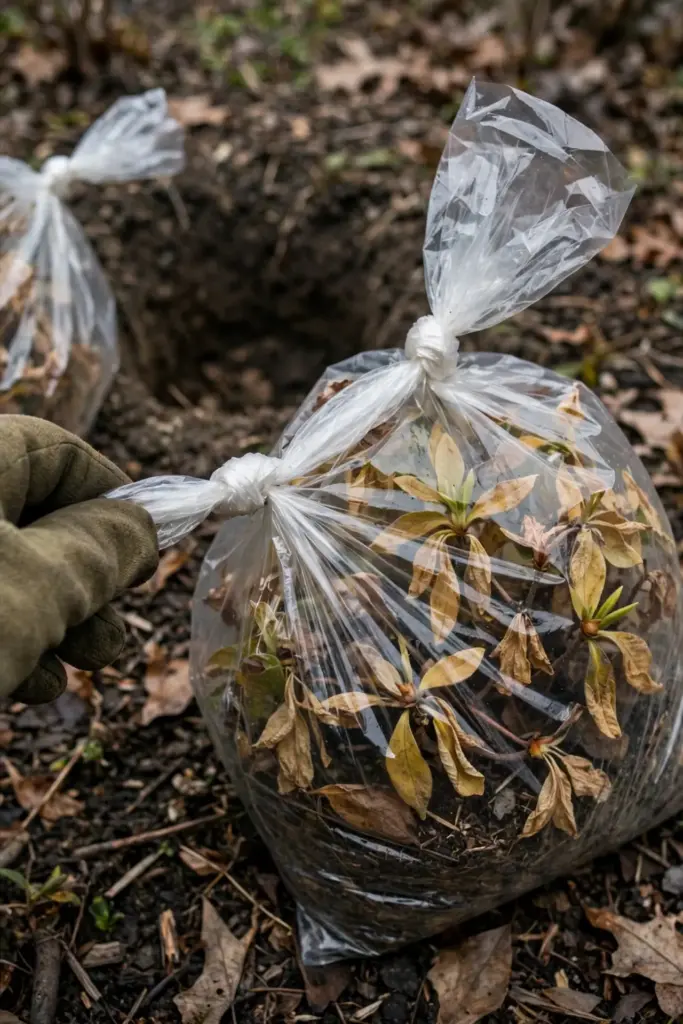
Cull the neighbors that look healthy. Healthy appearing plants around known infected plants may also be infected, so cull them too, per the PNW handbook. This is the hardest cut in the whole process. A plant with no symptoms can still carry latent infection, and a latent carrier sheds spores all season. When the plant is cheap and the disease is aggressive, removal of the ring of plants around the outbreak saves the rest of the bed.
Disinfect every tool that touched the outbreak. Use disinfectants on pruners and other cutting tools to reduce the risk of spreading the pathogen from an infected plant to healthy plants, per Purdue’s guide. Wash soil and sap off the blade first, then soak or wipe with disinfectant. A dirty blade shields spores from the disinfectant. Work from healthy plants toward sick plants when pruning a mixed bed, and disinfect between each plant.
Handle pots and media as contaminated material. Avoid reusing pots from a previous crop for propagation, and if pots must be reused, wash off all debris and then soak in a sanitizing solution or treat with aerated steam for 30 minutes, according to the Pacific Northwest Pest Management Handbooks page on azalea Cylindrocladium blight and root rot. Never reuse media from an infected pot. Bag the old media and send it out with the trash. Do not compost infected plants, media, or debris. Home compost piles do not reach the temperatures that kill microsclerotia.
Place diseased plants in a closed container if they cannot leave the site at once, per the PNW handbook. An open pile of infected prunings beside the greenhouse sheds spores with every rain. A closed bin or a tied bag holds them. Clean the ground under the outbreak too. Pick up fallen leaves and flowers, and scrape the top layer of debris from the bench or bed. The debris layer is where the next round of microsclerotia forms.
10. Step 3: Rebuild the Site Before You Replant
Replanting starts with clean material. Use only disease-free cuttings in disease-free soil or soilless potting media, per the PNW handbook. Tissue-culture source plants are another good way to break the cycle. Buy from growers who can describe their sanitation practices. Ask what they do about root rot in their stock. A grower who answers clearly is a grower worth buying from.
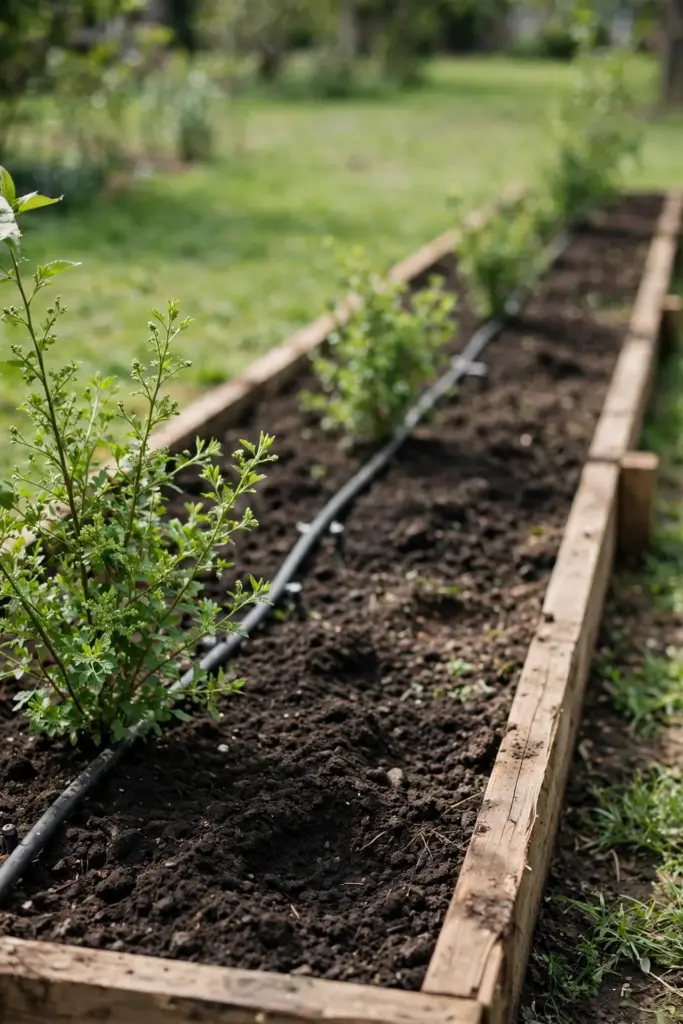
Fix the drainage before the plant goes in, because a planting hole in clay becomes a sump that holds water against the roots. Avoid heavy clay, poorly draining soil, downspouts, and low spots that collect water when planting root-rot-susceptible species, according to Purdue Extension on root rot in landscape plants. Break up the sides of the hole. Work coarse organic matter into the backfill, grade the surface so water drains away from the crown, and set the root collar at the soil surface, never buried.
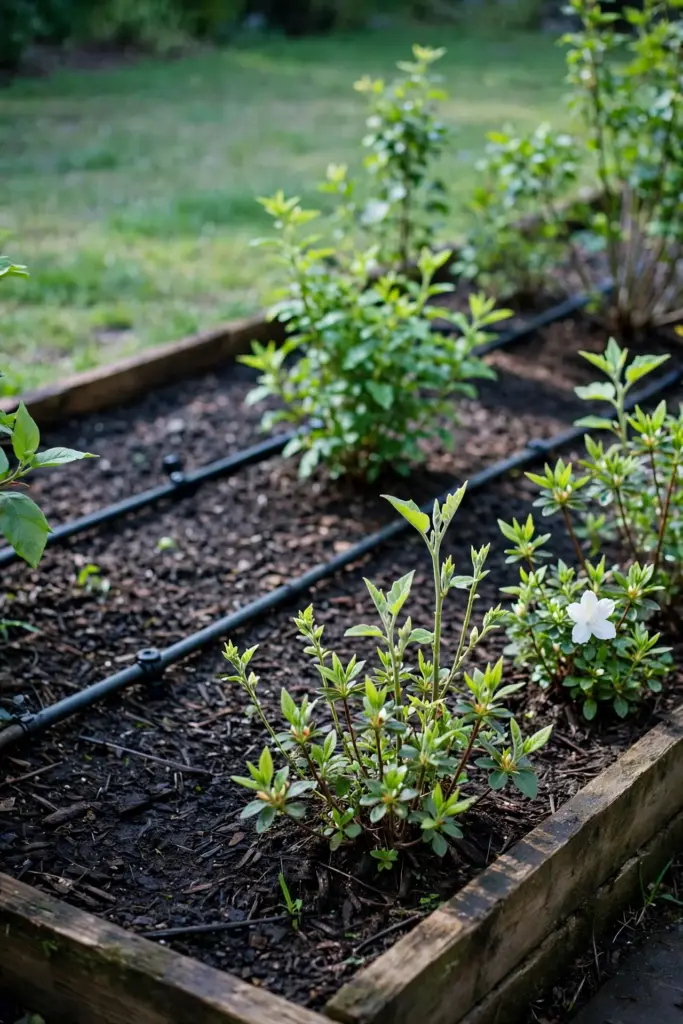
Space plants for airflow and keep water off the canopy. Increase plant spacing to help slow down disease spread, because spacing affects humidity and airflow between plants and increases the distance water droplets need to travel to reach another plant, per Purdue’s guide. Avoid overhead irrigation where possible to reduce the potential for pathogen dispersal. Drip lines, soaker hoses, and morning watering keep leaves dry and spores in place.
Protective fungicides have a narrow, honest role. Chemical controls are for protection only and will not cure plants, and they succeed only combined with good sanitation and other cultural controls, per the PNW handbook. Spray stock plants before taking cuttings, and follow with drenches after cuttings are stuck. Home gardeners should read the product label, confirm the host is listed, and test any product on a small number of plants before treating a whole collection, as UMass Extension advises. Rotate among active ingredient classes to slow resistance.
Biological products add one more layer. Biological controls based on Trichoderma work in conjunction with other tactics such as thorough sanitation, per the PNW handbook. Use them before symptoms develop, mixed into the soil or media. A biological product will not rescue an infected plant. It can help clean media stay clean when the rest of the sanitation program holds.
11. Living With Cylindrocladium Root Rot Damage You Cannot Undo
The plant is gone and the soil still holds the fungus. Microsclerotia survive in soil long after the plant they killed is gone. No home treatment sterilizes a garden bed to that depth. The work now is to grow a healthy garden on infested ground without feeding the fungus.
Stop replanting the same hosts in the same spot. Azalea, rhododendron, and other susceptible ornamentals in the old hole invite the same collapse. The microsclerotia do not care that the new plant came from a clean nursery. Fresh roots in infested soil meet the fungus within a season. Choose a species outside the susceptible group for that spot, and confirm the choice with a local Extension diagnostic service before buying.
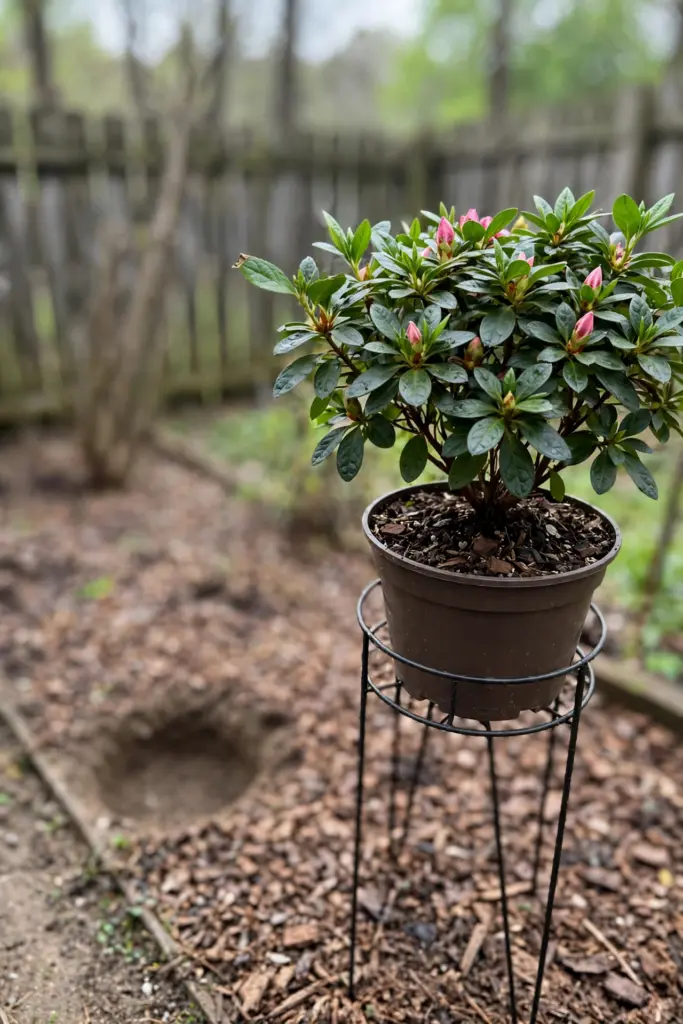
Containers break the contact. A pot with fresh, disease-free media sits above the infested soil and keeps clean roots away from microsclerotia. The pot needs drainage that never lets the saucer hold water, and the pot must never sit directly on infested soil where splash carries spores upward. Set the pot on a raised stand or a clean gravel pad. Refresh the media with each repotting, and never top up a container with soil from the infested bed.
Watch the neighbors for a full season. Latent infections progress slowly and can collapse plants that looked healthy for years, per the PNW handbook. Walk the bed often in warm, wet weather. Check the lower leaves first, then the crown. A plant that yellows from the bottom up in wet soil goes into isolation at once. Early removal of one plant beats late removal of five.
Keep the sanitation habits after the outbreak ends. Disinfect tools between plants. Pick up fallen leaves. Water at the base. Quarantine new stock. These habits cost minutes and they hold the line against the next introduction. A garden that beat Cylindrocladium root rot once can hold the line again, because the same habits that starve this fungus also starve most soilborne diseases.
12. Frequently Asked Questions
Yes. Cylindrocladium spreads through water splash, contaminated tools, infested media, and infected cuttings. Sticky spores cling to hands, blades, pots, and boots, and rain or overhead irrigation moves them onto healthy plants. Bag infected plants before carrying them, disinfect tools between cuts, and never reuse media from an infected pot. Isolation of new stock breaks the introduction route.
No. Seedlings and cuttings die fast because a small lesion can girdle a thin stem. Established plants decline more slowly, and some carry latent infections for years before collapsing after a stress event. A plant with most of its root system still firm can survive with isolation and care. A plant with a girdled stem or a mostly rotted root system will not recover, and removal protects the neighbors.
No fungicide cures an infected plant. Fungicide drenches can protect healthy tissue and slow spread to neighbors, and they work only combined with sanitation and cultural controls. A plant with advanced root rot keeps declining under any spray program. Spend the treatment budget on clean replacement stock, fresh media, and disinfected tools. Prevention earns the return that cure cannot.
There is no fixed wait that clears the soil. Microsclerotia can survive in soil for years after the plant is gone, so a calendar does not solve the problem. Replant the spot with a species outside the susceptible group, confirmed with a local Extension diagnostic service. Containers with fresh media break soil contact at once. Never replant a susceptible host into the same hole and expect a different result.
No. Boxwood blight is caused by a Calonectria species in the same genus group, and it is a separate disease with its own hosts and management. Cylindrocladium root rot attacks roots and crowns across many ornamentals, while boxwood blight attacks boxwood foliage and stems. A boxwood blight plan does not cover root rot, and a root rot plan does not cover boxwood blight.
13. Where to Go From Here
Start with the roots. One lifted plant with washed roots tells more than a week of watching the canopy. Dark, soft roots with cracked black lesions and a wilted top in wet soil mean Cylindrocladium root rot until the lab says otherwise.
The sequence runs in order. Step 1 sets the decision. Step 2 removes the source. Step 3 rebuilds the site. A plant that earns saving gets isolation and protection. A plant that does not earns a bag and a trip out with the trash.
Walk the garden this week. Check every wilting plant in wet soil at the crown, and quarantine anything suspect before the next watering. The fungus spreads on the next splash. The response has to beat it.