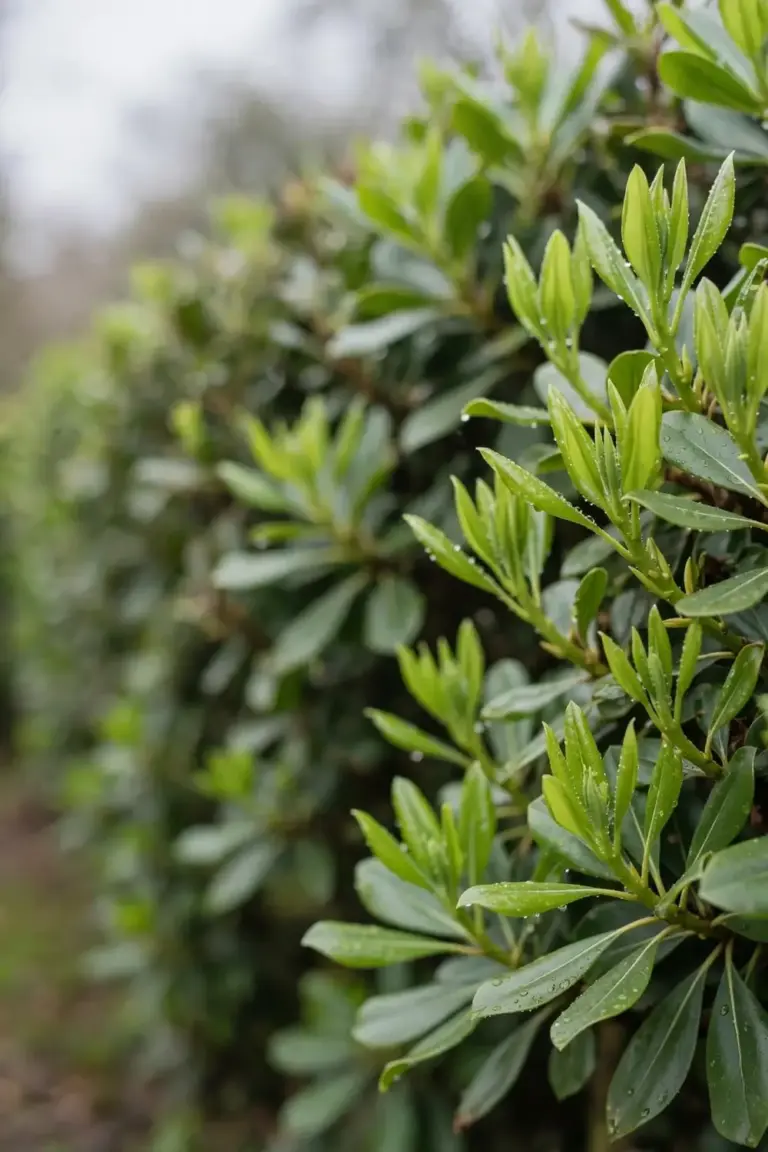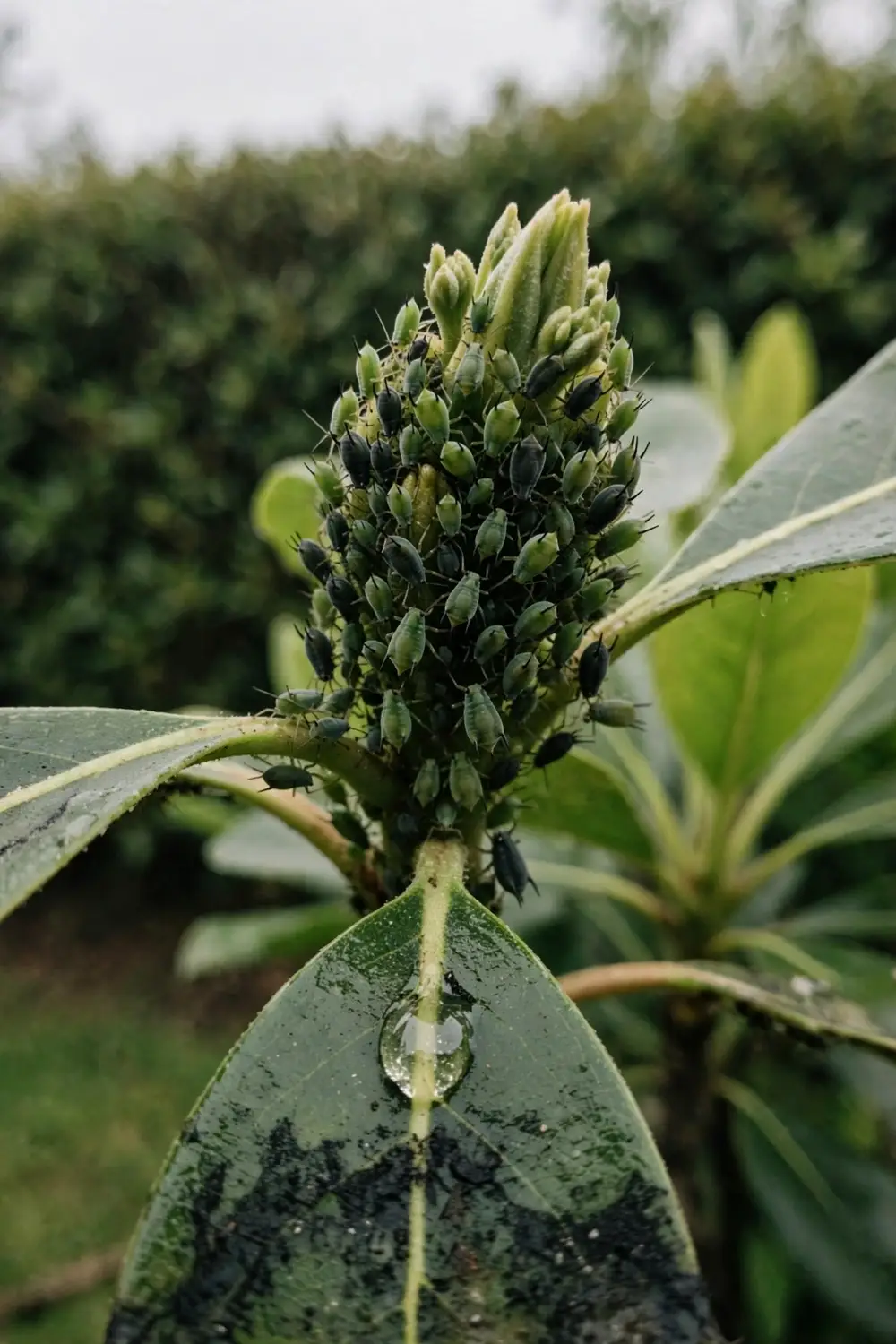

Aphids on pittosporum cluster on soft new growth and along leaf-underside midribs, and they leave sticky honeydew that turns black with sooty mold. Check the cluster location, the honeydew, and the leaf underside before you spray anything. Those 3 signs name the pest in under 60 seconds. I have learned that the pittosporum I check with a finger under the leaf names its pest faster than the one I spray on a guess.
Pittosporum is the genus Pittosporum, a group of evergreen shrubs and small trees. Australian gardens grow several of them as hedges and screens: Japanese pittosporum (Pittosporum tobira), kohuhu (Pittosporum tenuifolium) including the forms sold as James Stirling and Silver Sheen, sweet pittosporum or Victorian box (Pittosporum undulatum), and Brisbane laurel (Pittosporum revolutum). Aphids feed on all of them the same way. Aphids are sap-sucking insects with soft pear-shaped bodies. They pierce tender plant parts with long slender mouthparts and suck out fluids.
A dense hedge hides a colony until the honeydew shows. The rest of this page runs the identification table, then the natural removal ladder, from a water blast to the ant loop.
1. Check the Cluster First: New Growth, Midribs, and Honeydew
The cluster location names the pest. Aphids feed in dense groups on leaves or stems, and they favor soft new growth. Turn a leaf over and look along the midrib on the underside. Aphids sit there in a tight crowd.
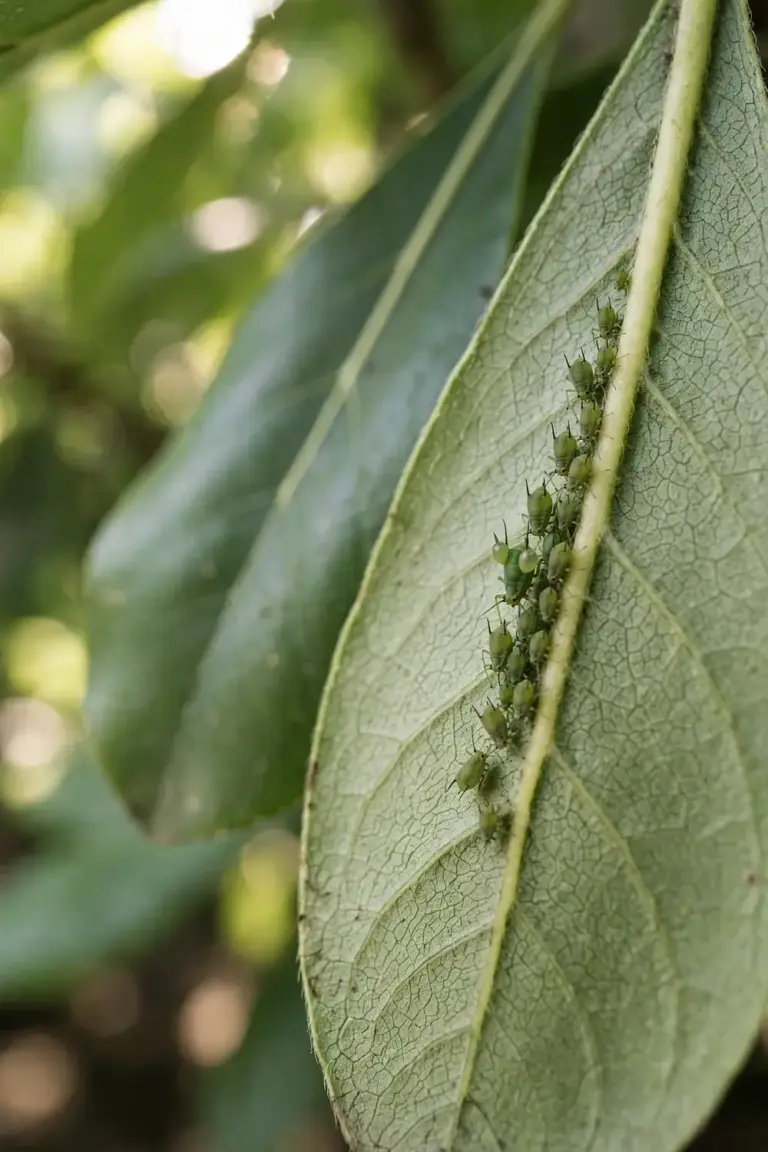
Two more signs confirm them. Aphids have soft pear-shaped bodies with long legs and antennae, and most species carry a pair of tubelike structures called cornicles that project backward from the hind end of the body, according to the UC IPM aphids guide. The presence of cornicles distinguishes aphids from all other insects. Aphids can be green, yellow, brown, red, or black, and most species also occur in winged forms when populations are high. Most aphids do not move rapidly when disturbed.
The third sign is honeydew. Aphids excrete a sticky liquid while they feed. Honeydew lands on leaves below the colony, on furniture, on cars, and on paths. Ants climb the shrub to harvest it. Black sooty mold grows on the honeydew next. If you see sticky leaves, ants, and a black coating together, you are looking at a honeydew producer, and aphids are the first suspect on pittosporum.
2. Run the ID Table: Aphids, Psyllid, Scale, Mealybug, Whitefly, or Sooty Mold
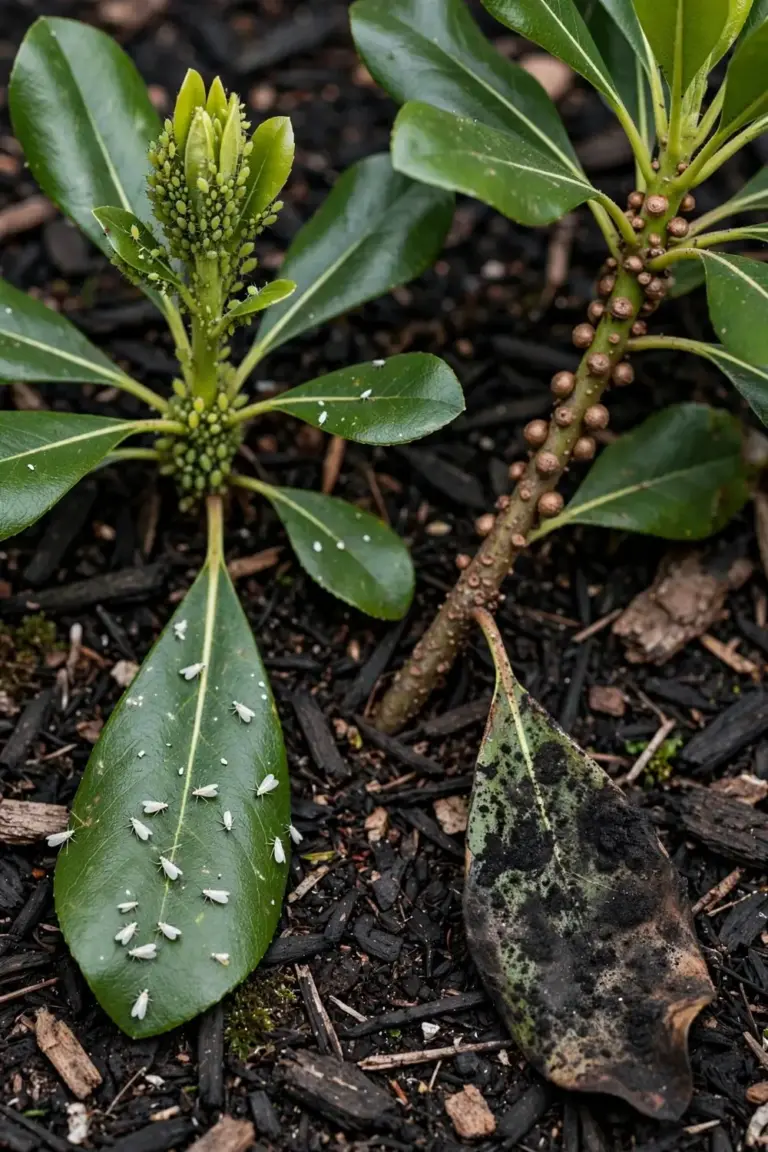
The table below is the decision tool. Match what you see to one row before you act. Sooty mold appears in the table as a symptom, not a pest. It is a fungus that grows on honeydew, and it does not infect the plant.
| What You See | Aphids? | What Else It Could Be |
|---|---|---|
| Soft-bodied cluster on new growth or midribs, sticky honeydew, ants | Yes | Aphids |
| Immobile bumps that never move, no legs, no head | No | Scale |
| White cottony wax coating over slow-moving insects in leaf joints | No | Mealybug |
| Tiny white insects that lift off in a cloud when you shake the branch | No | Whitefly |
| Pitted leaves, swollen twigs, wax strands, adults that jump | No | Pittosporum psyllid |
| Black powdery coating on leaves, wipes off, no insects visible | No | Sooty mold from an earlier honeydew producer |
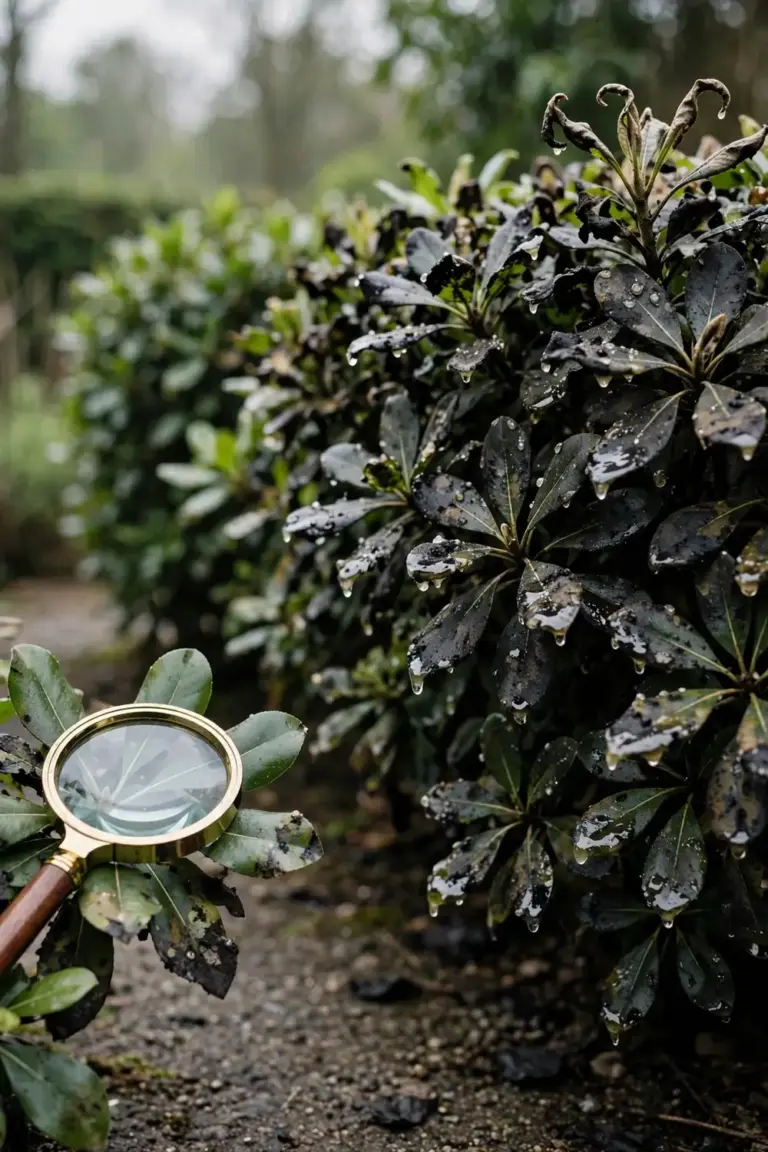
Sooty mold is a fungal disease that grows on plants and other surfaces covered by honeydew, and it does not infect plants but grows where honeydew deposits accumulate, according to the UC IPM sooty mold guide. The mold can coat leaves until sunlight cannot reach the leaf surface, which reduces photosynthesis and stunts growth. Control of sooty mold begins with managing the insect that creates the honeydew. Wash the coating off with a strong stream of water or soap and water once the insects are gone.
3. Aphids vs Scale: Bumps That Never Move
Scale insects sit still. Adult scale insects lack an obvious head or legs and do not resemble most other insects, and their coverings run from 1.0 to 6.4 mm long, according to the UC IPM scales guide. Press one with a fingernail. A scale bump stays put. An aphid moves, even slowly.
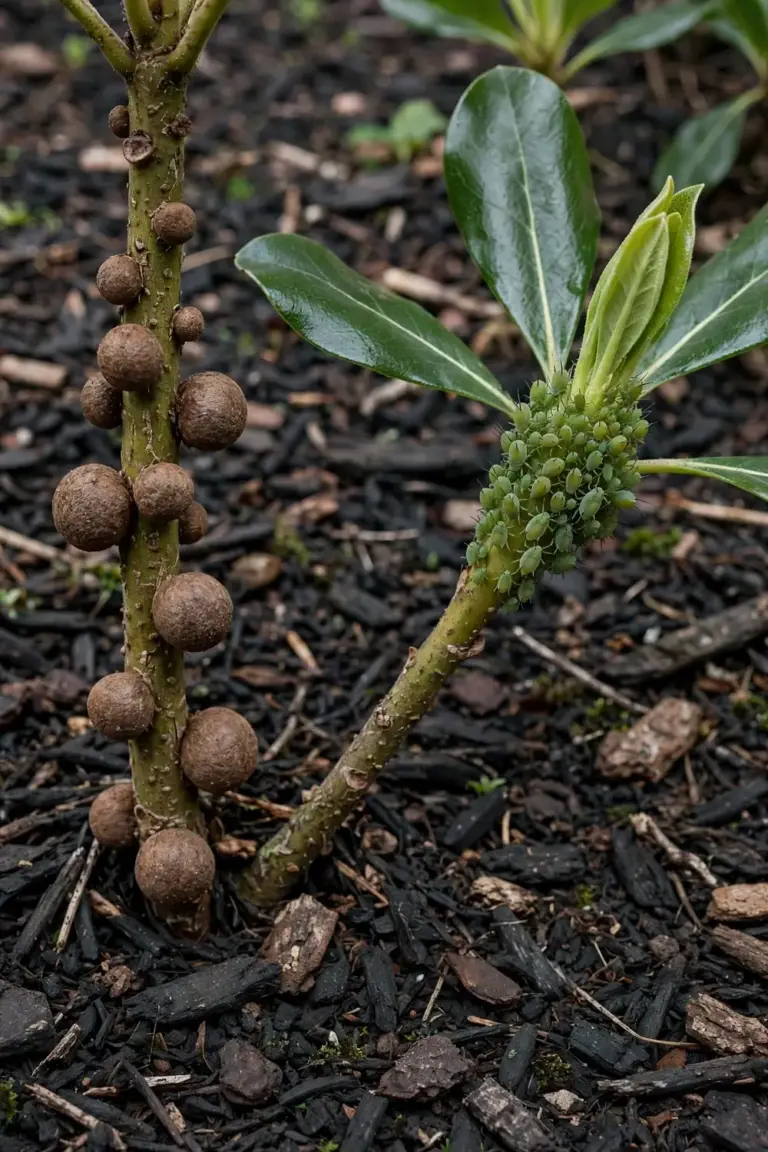
Two scale groups matter on pittosporum. Soft scales are larger, rounder, and excrete honeydew, which drips on plants and surfaces underneath and promotes blackish sooty mold. Armored scales are tiny and flat, and they do not secrete honeydew. Cottony cushion scale sits in a third group, and the same UC IPM notes list pittosporum among its hosts, along with citrus and nandina. Cottony cushion scale carries a white cottony egg sac that can look like mealybug at a glance.
The treatment differs, so the split matters. A water blast knocks aphids off. A water blast does almost nothing to settled scale. Scale control starts with pruning out the worst stems, then horticultural oil aimed at the crawler stage, the one life stage with legs that moves. Follow the label on any oil product. Keep pets and children off the plant until the spray dries, never spray in wind or rain, and never spray open flowers.
4. Aphids vs Mealybug: White Cottony Coating
Mealybugs wear their coat. A mealybug colony looks like small white cottony lumps tucked into leaf joints, along stems, and under leaves. The insects beneath the wax are slow-moving and oval. An aphid colony looks like a crowd of soft pear-shaped bodies with no wax coat at all.
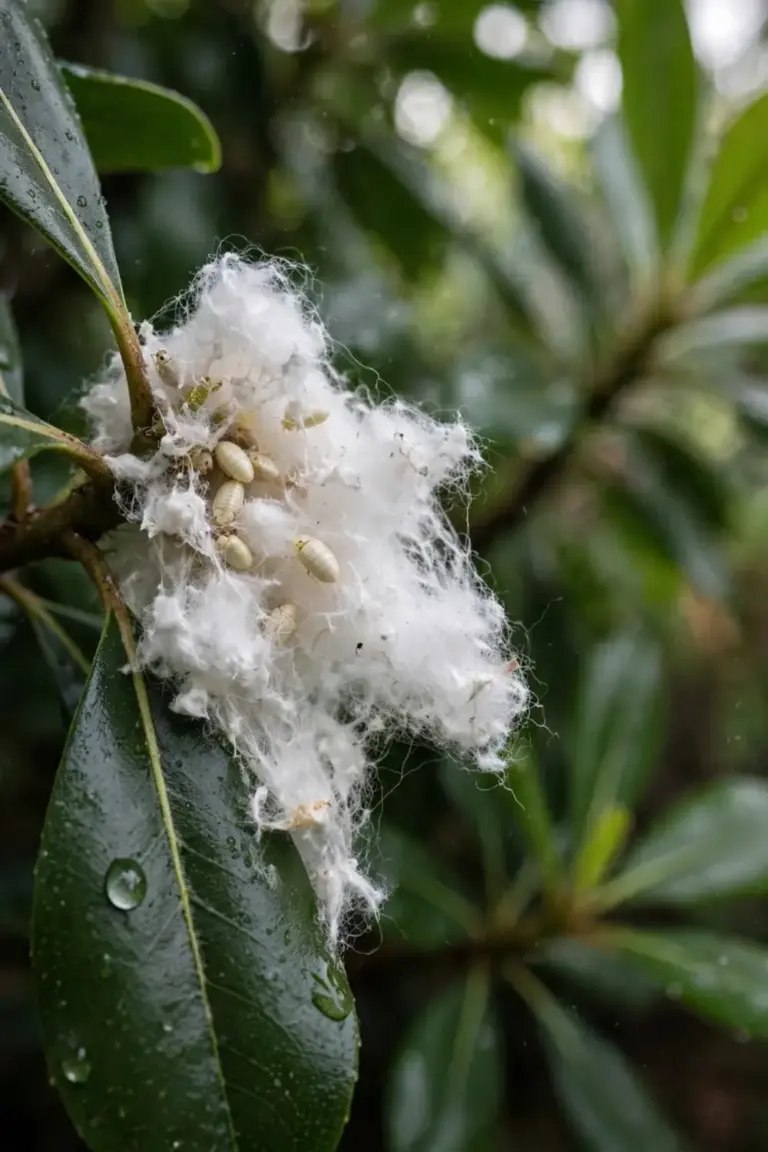
The wax coat changes what works. A water blast strips aphids off a pittosporum tip in seconds. The same blast leaves most mealybugs in place, because the wax sheds water and the insects sit in sheltered joints. A cotton swab dipped in rubbing alcohol, dabbed directly on each mealybug cluster, dissolves the wax and reaches the insect. Follow the label on any spray you use after dabbing, and keep pets and children off the plant until it dries. Never spray in wind or rain, and never spray open flowers.
Check the stem joints and the undersides of lower leaves first. Mealybugs hide where water and sprays reach last: in the angle where a leaf meets a stem, under loose bark flakes, and inside a curled tip. A colony in those joints can sit for weeks before honeydew shows below it. Peel back one curled tip and look inside. The white cotton inside a curled tip is mealybug, not aphid.
Mealybugs also excrete honeydew, so a mealybug colony brings the same sticky leaves and sooty mold as an aphid colony. The honeydew chain does not separate them. The coat does. If the colony wears white cotton, treat it as mealybug. If the colony shows bare soft bodies with cornicles, treat it as aphids.
5. Aphids vs Whitefly: The Cloud That Lifts
Shake the branch. Whitefly adults lift off in a small white cloud and settle again within seconds. Aphids stay on the leaf. That one shake separates the two pests faster than any photograph.
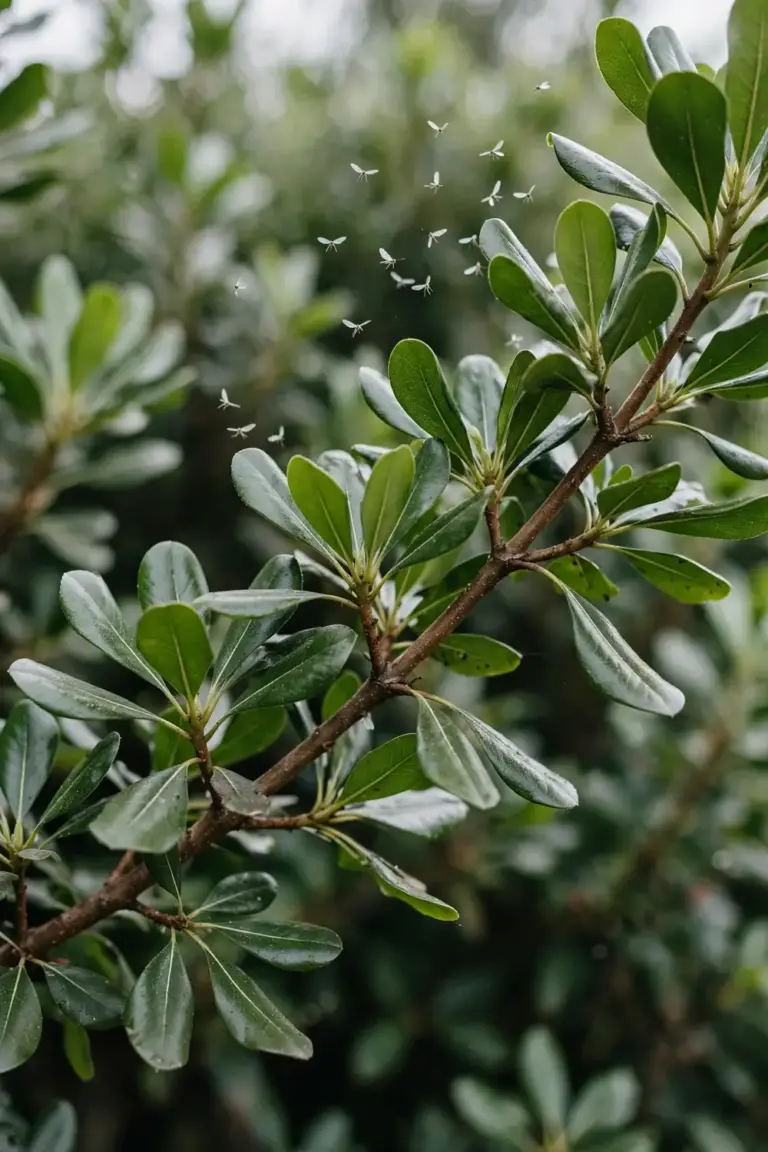
Whitefly nymphs sit flat and still on leaf undersides, and they can look like scale at a glance. The adults give the game away. Whiteflies are tiny white winged insects that rise together when the branch moves. Aphids are wingless in most colonies, and the winged forms that appear when populations are high are larger, darker, and far fewer in number than a whitefly cloud.
The control ladder overlaps but the emphasis shifts. A water blast knocks whitefly nymphs off leaf undersides, and the same blast knocks aphids off new growth. Sticky yellow traps catch whitefly adults and tell you whether the population is rising. Sticky traps do little for aphids, because most aphids in a colony never fly. Use traps as a monitor for whitefly, not as the treatment. Follow the label on any spray you use. Keep pets and children off the plant until the spray dries, and never spray in wind, in rain, or on open flowers.
6. Aphids vs Pittosporum Psyllid: Pits, Swollen Twigs, and Jumping Adults
The pittosporum psyllid is the closest lookalike, and it is a different pest with different handling. The pittosporum psyllid, Cacopsylla tobirae, feeds on mock orange, Pittosporum species, and causes swollen twigs, pitted leaves, shoot dieback, and wax strands, according to the UC IPM psyllids guide. Adults hold their wings rooflike over their bodies and run from 2.1 to 5.1 mm long. Adults are quite active and often jump away when disturbed.
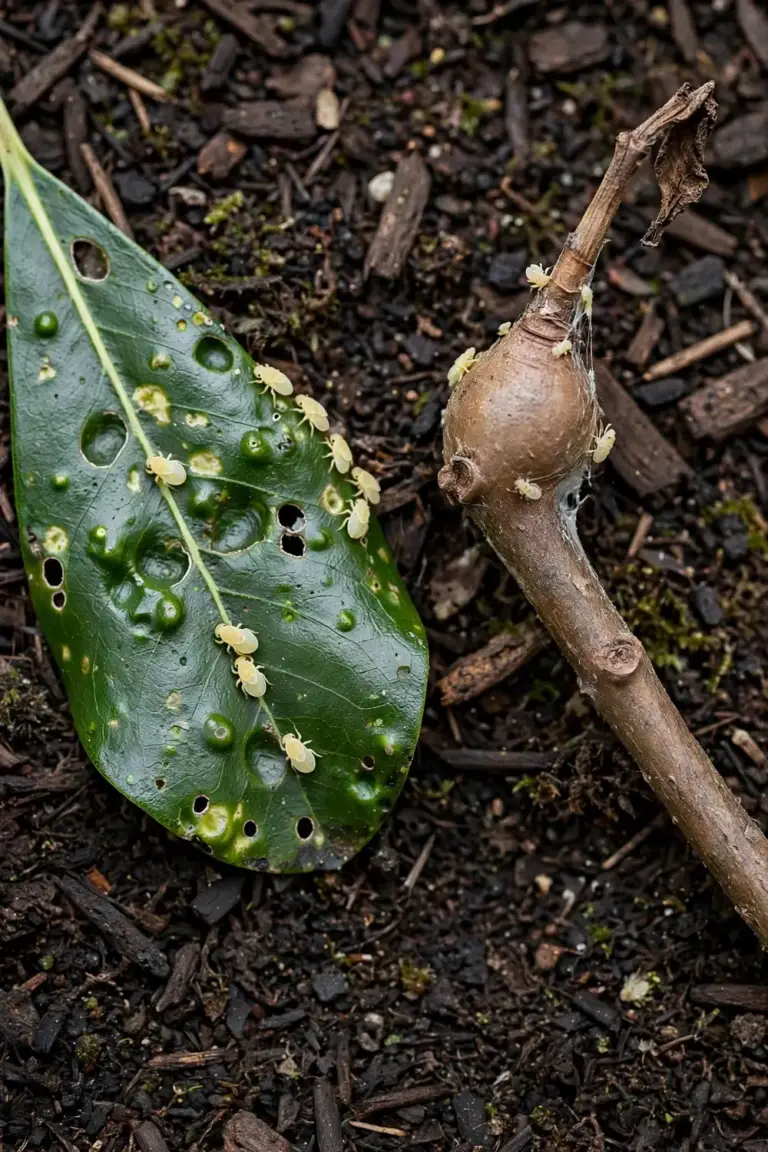
Three signs separate psyllids from aphids. First, the leaf surface. Psyllid nymphs sit in pits they make in the leaf, and the leaf carries small dimples and welts where each nymph fed. Aphid feeding curls leaves but does not pit them. Second, the twigs. Psyllid feeding swells twigs and can kill shoot tips. Aphid feeding stunts shoots but does not swell twigs. Third, the jump. Brush the colony with a finger. Psyllid adults jump. Aphids do not.
Psyllid damage runs deeper than aphid damage. Shoot dieback means the psyllids have already killed growing tips, and those tips will not recover. Prune the dead tips out and bin them. A water blast still helps, because it knocks nymphs off, but the pitted leaves stay pitted. Judge the result by new growth, not by old leaves. If new growth comes out clean, the ladder is working.
7. Blast the Colony With Water First
Start with water. A strong stream from a garden hose knocks aphids off sturdy pittosporum stems. Aim at the leaf undersides and the soft tips where the colony sits. Work from the top of the shrub down so the dislodged aphids fall to the ground, not onto clean growth below. A thumb over the hose end works when you have no nozzle. A fan nozzle spreads the stream and covers a whole tip in one pass. Either tool knocks aphids off, because the force of the water does the work, not the fitting.
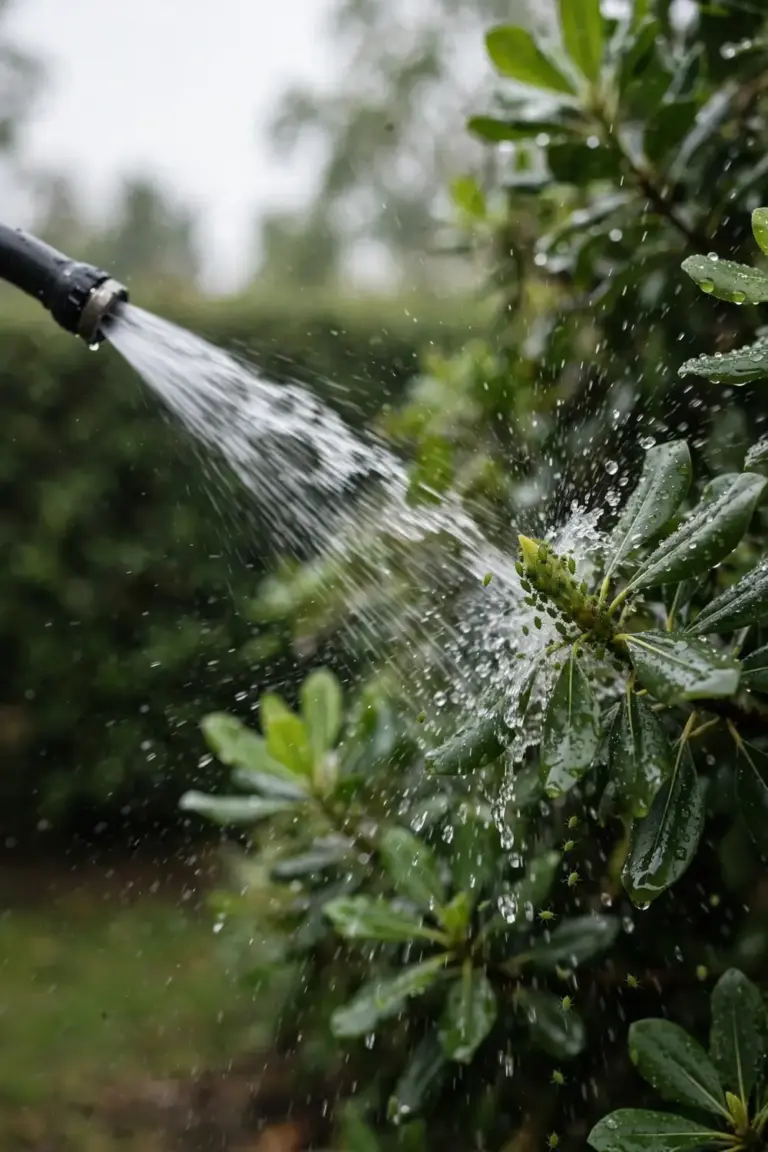
Repeat the blast every few days. Aphids reproduce fast. The same UC IPM aphids guide notes that many species can develop from newborn nymph to reproducing adult in seven to eight days, and each adult can produce 80 offspring in a matter of a week. One blast clears the colony you can see. The next blast catches the nymphs that were too small to see and the winged adults that flew in after the first pass.
Check the shrub twice a week while new growth is coming out. The same guide recommends checking plants at least twice a week when plants are growing rapidly, and it notes that many aphid species cause the greatest damage in late spring when temperatures are warm but not hot, from 18 to 27 degrees Celsius. A twice-weekly check catches the next colony while it is still a handful of insects on one tip. A colony caught early takes one blast. A colony caught late takes three cycles and a spray.
8. Prune the Worst Tips and Bin Them
Prune the tips that are curled tight around a colony. Curled leaves shelter aphids from water, from sprays, and from predators. No spray reaches inside a curled leaf. Cut the curled tip off at a healthy leaf joint and drop it straight into a bag or bin.
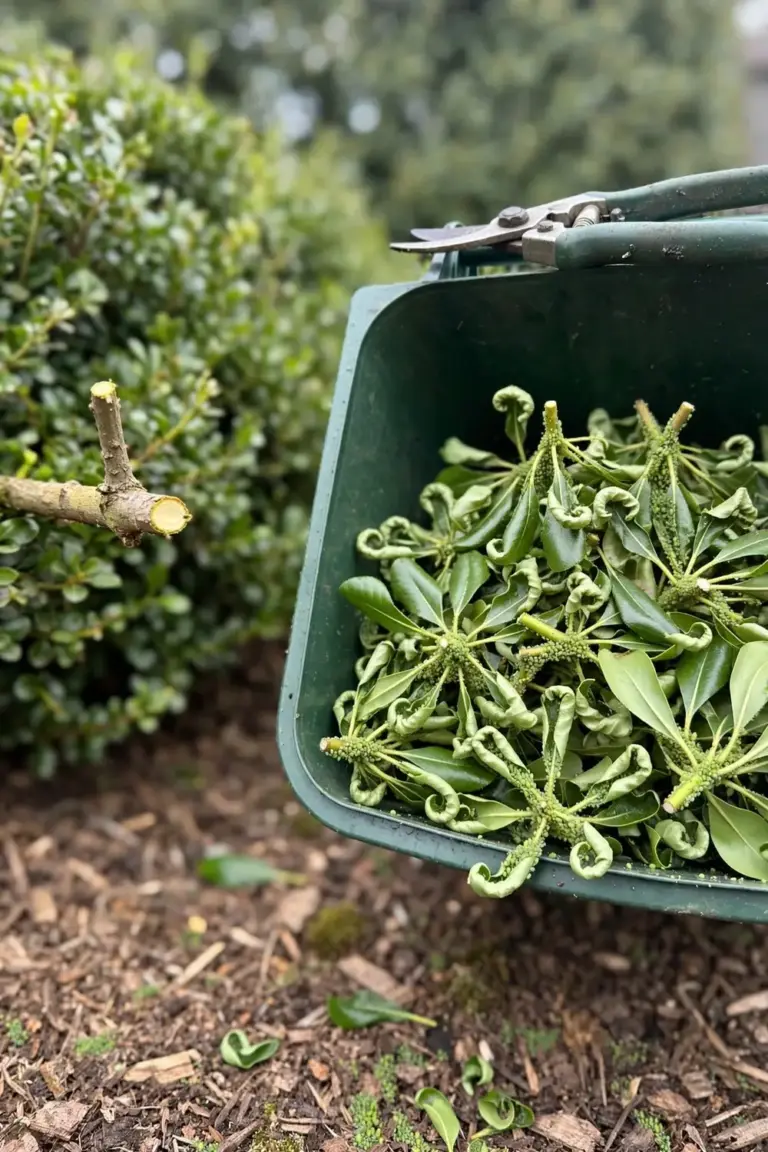
Disposal matters. Do not drop pruned tips under the shrub. Aphids walk back onto the plant from pruned material left on the ground. Bin the tips or hot-compost them. A cold compost pile keeps aphids alive, and the colony walks back out onto the hedge.
Prune for airflow at the same time. A dense pittosporum hedge holds humidity and shade inside the canopy, and aphids build fastest in still, sheltered growth. Thin the worst congestion by cutting out crossing stems and opening the center of the shrub. Better airflow dries the foliage faster after rain, and it lets predators reach the colonies that remain. Spring pruning techniques for shrubs cover the cut angles and the timing in full.
Clean your secateurs between shrubs. Wipe the blades with a cloth dampened with rubbing alcohol before moving to the next plant. Dirty blades carry honeydew and insects from one shrub to the next, and they carry disease too. A clean blade makes a clean cut, and a clean cut heals faster than a ragged one.
9. Spray Soap or Oil on the Undersides, Exactly as the Label Directs
Use soap or oil only after water and pruning have done their work. Insecticidal soaps and oils smother aphids, so the spray must reach the insects directly. Coat the leaf undersides and the soft tips where the colony sits. A spray that lands on top of the leaf and never reaches the underside misses the colony entirely.
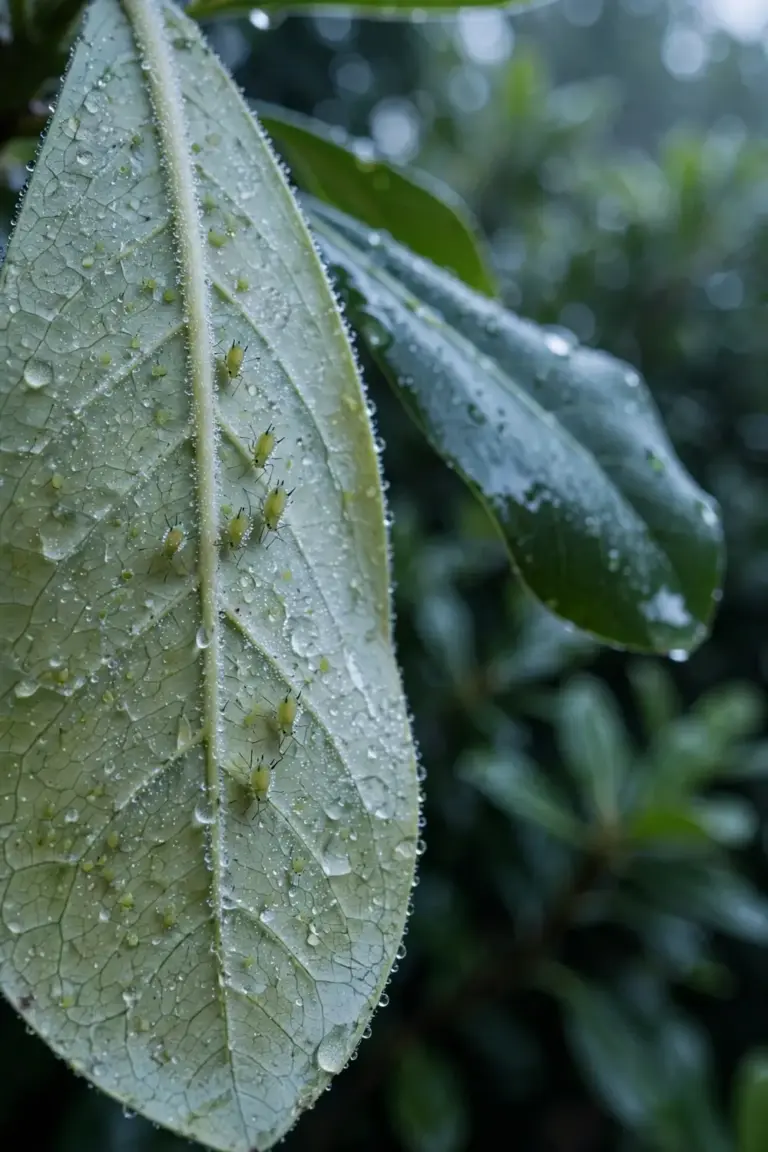
Follow the label exactly. The label sets the mix rate, the repeat interval, and the safety rules for the product you bought, and it bars mixing stronger than directed. Do not spray a drought-stressed plant or spray when it is very hot. The same UC IPM aphids guide warns against applying soaps and oils to drought-stressed plants or when it is very hot, and it notes that some plants are sensitive to these products. Spray in the morning or the evening, when the air is cool and the leaf surface is dry, keep pets and children off the plant until the spray dries, and never spray in wind, in rain, or on open flowers.
Bees and other beneficial insects work open flowers, and a soap spray that lands on them harms them too. Repeat on the interval the label sets, and stop when the colony is gone. Two thorough applications a week apart clear most pittosporum aphid colonies. A third application means the colony is being re-seeded, and the cause is usually ants.
10. Leave the Predators Alone: Ladybirds, Lacewings, and Hoverflies
Predators do the long-term work. Ladybirds, lacewings, and hoverflies all feed on aphids, and the larval stages do most of the eating. A single lacewing larva eats aphids for weeks. A ladybird larva eats aphids for weeks. The adults of both species also feed on aphids, and hoverfly larvae feed on aphids too.
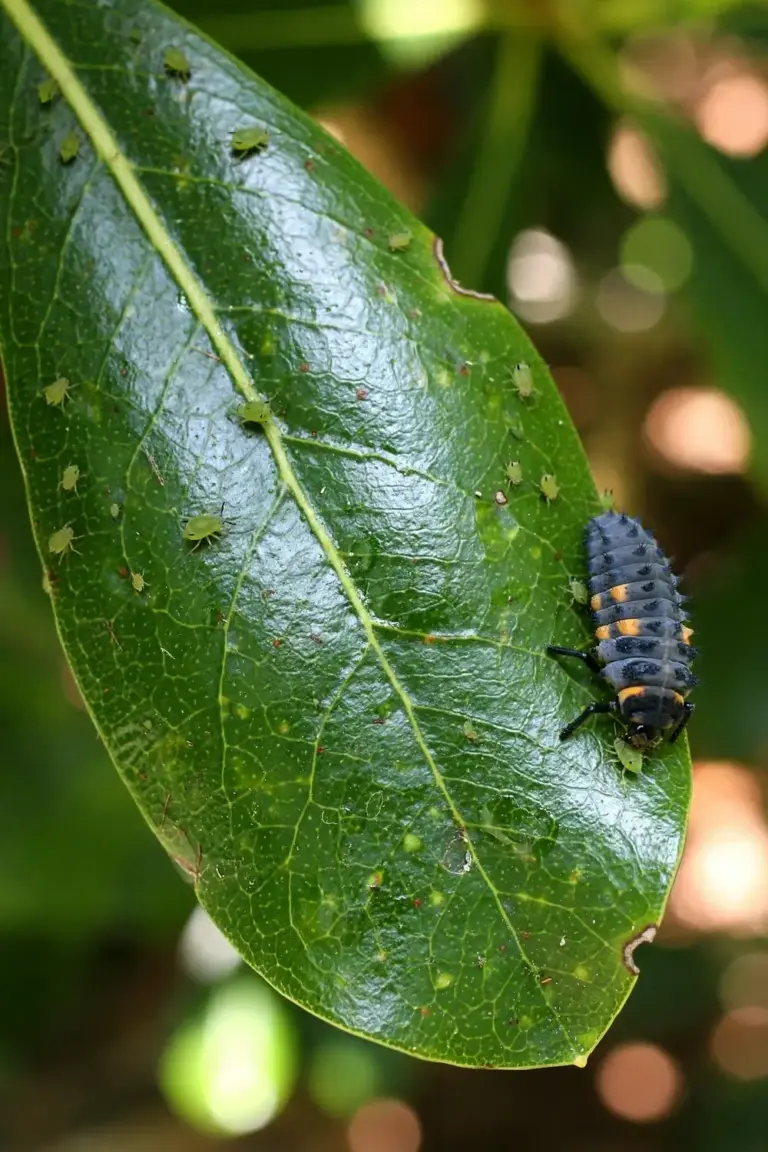
Learn to recognize them before you spray. Ladybird larvae look nothing like adult ladybirds: they are dark, spiny, alligator-shaped grubs, and new gardeners mistake them for pests and spray them. Lacewing larvae are small brownish grubs with curved jaws, and hoverfly larvae are small green maggots on leaf undersides. All three are aphid eaters. A beneficial insect guide with photographs of each stage stops the mistake.
Broad-spectrum insecticides kill predators along with the pest. The same UC IPM aphids guide warns that most insecticides destroy beneficial insects along with the pest, and that naturally occurring predators work best in gardens not sprayed with broad-spectrum products. Skip the broad-spectrum spray. Water, pruning, and soap leave predators alive. A hedge with live predators holds aphids down between your visits. A hedge sprayed clean of predators invites the next colony to explode with nothing eating it.
11. Break the Ant Loop: Bands, Barriers, and Pruned Bridges
Ants farm aphids. Ants harvest honeydew from aphids, and they protect the colony from predators and parasites in return. The same UC IPM aphids guide states that ants protect aphids from natural enemies, and that managing ants is a key component of aphid management. A pittosporum hedge with ants climbing the stems will keep its aphids no matter how often you blast them.
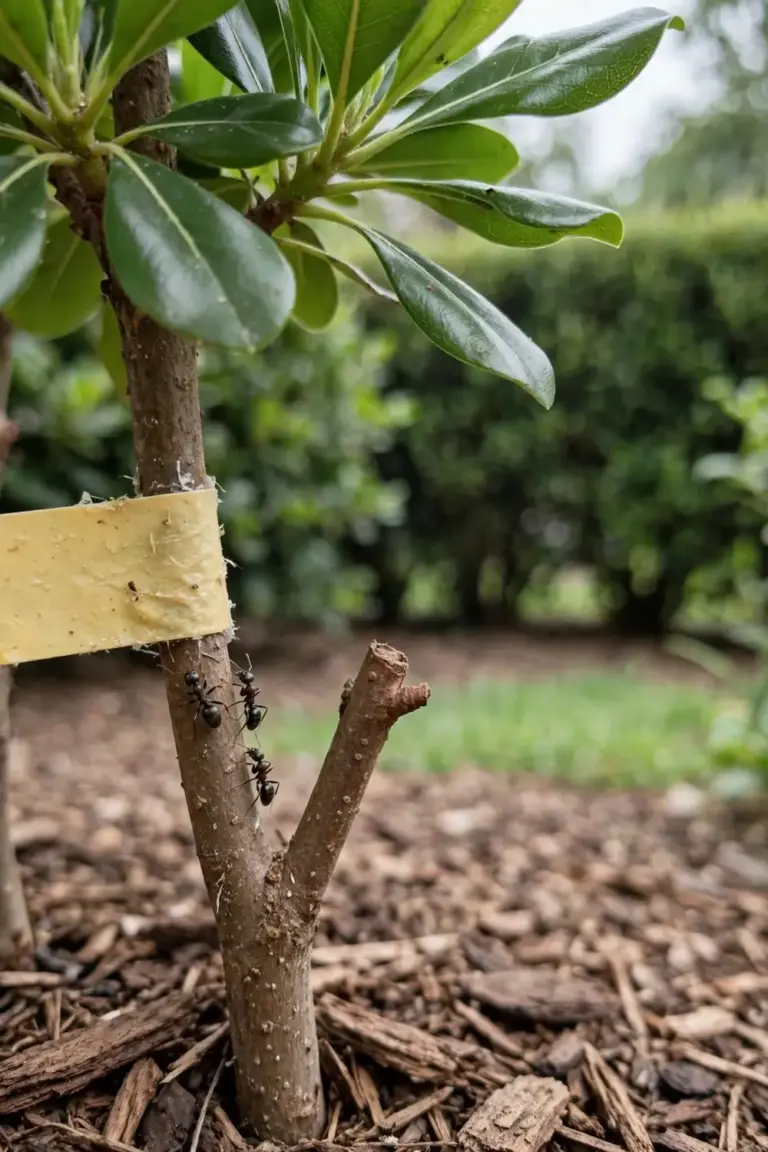
Start with the bridges. Prune every branch that touches the ground, a fence, a wall, or a neighboring plant. Ants use those branches as highways onto the shrub. One pruned bridge removes a whole route. Clear mulch and leaf litter away from the base of the shrub so ants cannot nest against the stems.
Then set a barrier. A sticky band around the trunk or the main stems stops ants from climbing. Wrap the band on a smooth section of stem and check it weekly. Dust and dead insects clog the sticky surface, and ants walk over the clogged band. Replace the band when it stops catching. Ant baits placed under the shrub cut the ant population at the nest, and they work slower than a band but last longer. Use baits, not sprays, against ants. A spray on the shrub kills the predators that eat your aphids.
12. Stop Feeding the Problem: Steady Water, No Excess Nitrogen
Excess nitrogen grows the food aphids want. Fast soft growth from a heavy feed is the first place aphids settle. The same UC IPM aphids guide advises against over-fertilizing and recommends slow-release products. A pittosporum hedge fed hard in spring pushes out soft tips, and aphids colonize those tips first. A hedge fed lightly grows firmer tips that aphids colonize more slowly.
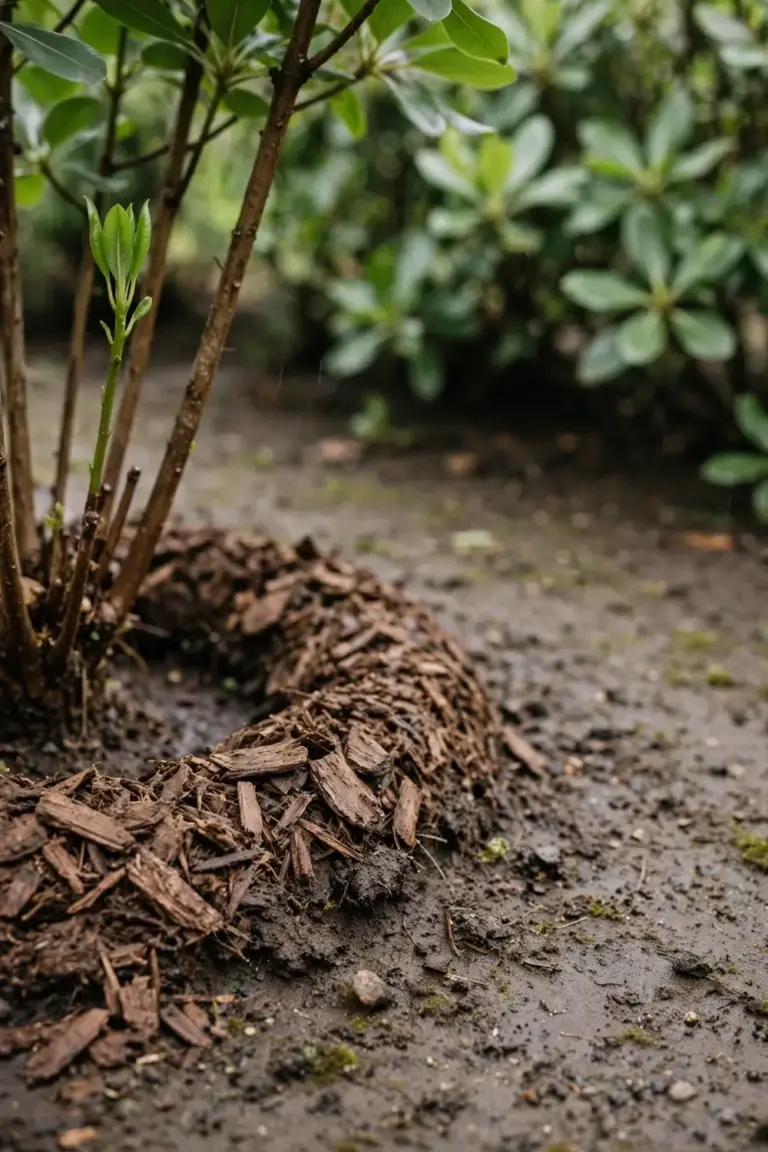
Water steadily instead of in floods. A drought-stressed pittosporum drops leaves and pushes weak regrowth after the next watering, and that regrowth draws aphids. A waterlogged pittosporum rots at the roots and pushes weak growth too. Keep the soil evenly moist through the growing season. Mulch holds moisture steady and keeps the root zone cool. Lay mulch in a ring around the base, kept clear of the stems, because mulch touching stems holds moisture against bark and invites rot and ants. A clear gap keeps the stems dry and the ants visible. Soil health underpins the whole ladder: a shrub with steady water and living soil grows firm tips that resist aphids better than a shrub on feast-or-famine watering.
Check new growth weekly through spring. Spring flush is the peak aphid season on pittosporum. A weekly check of the soft tips, the leaf undersides, and the midribs catches a colony while it is still small enough for one water blast. The check takes minutes. The colony you miss in spring becomes the hedge-wide infestation of summer.
13. Know When Natural Is Not Enough
Natural control clears most pittosporum aphid colonies. Three situations call for a step up. First, a scale-dominant infestation. Settled scale does not respond to a water blast, and a hedge-wide scale problem needs horticultural oil timed to the crawler stage. Second, hedge-wide sooty mold that has coated most of the foliage. The mold itself washes off, but the coating means the honeydew producer has been feeding for weeks, and the underlying colony needs a full ladder run plus ant control. Third, repeated failure after three full cycles. Three cycles of water, pruning, and soap with no improvement means the colony is being re-seeded, usually by ants, or the pest is not aphids at all.
Do not reach for a broad-spectrum insecticide. A broad-spectrum spray kills ladybirds, lacewings, hoverflies, and parasitic wasps along with the pest, and it leaves the hedge defenseless against the next colony. It also kills bees on open flowers. If the ladder fails three times, re-run the identification table. A colony you called aphids may be scale, mealybug, or psyllid, and each of those needs its own treatment. Organic pest control for beginners covers the full decision tree for the next step.
A light colony on one tip is not a failure. Established pittosporums tolerate low aphid numbers, and predators often clear a light colony without any spray. The same UC IPM aphids guide notes that most established plants can tolerate aphid feeding and will outgrow any damage. Leave a light colony alone when predators are present, and check it again in a week. Spray when the colony spreads past one tip, when honeydew drips, or when shoot tips curl tight.
Frequently Asked Questions
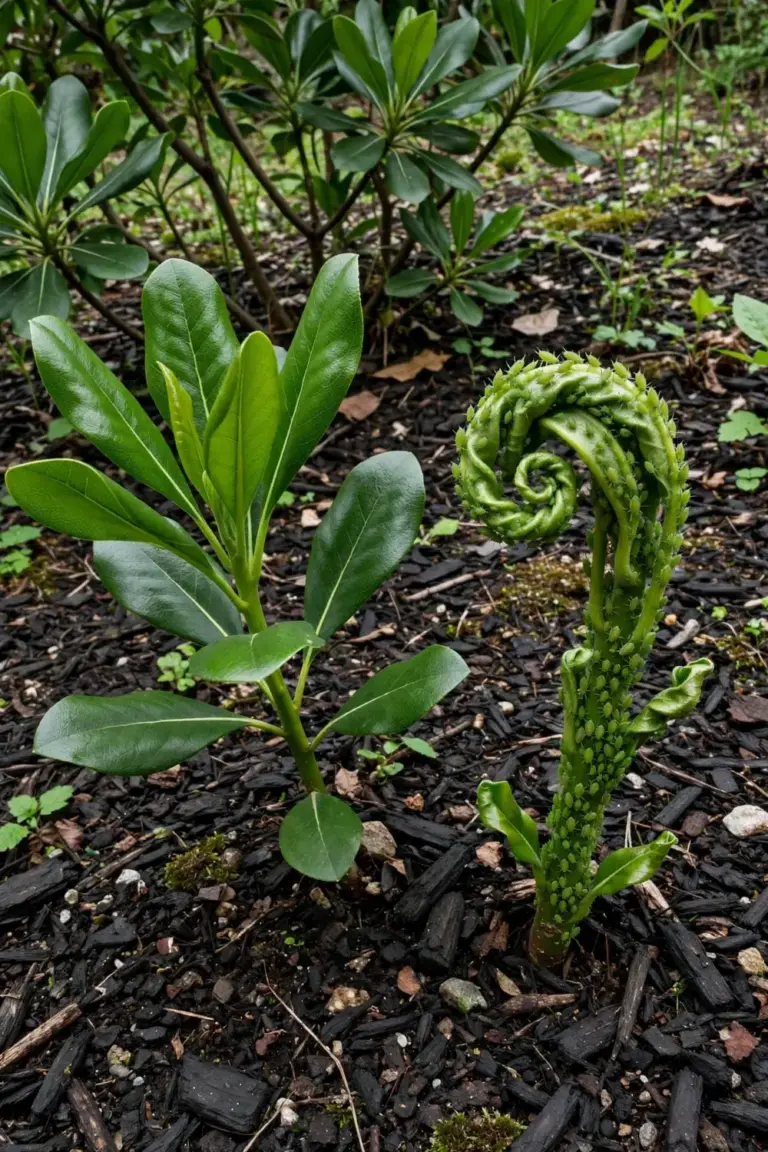
Low to moderate aphid numbers rarely damage an established pittosporum. Large colonies stunt shoots, curl leaves, and coat foliage with honeydew and sooty mold. The mold blocks sunlight and slows growth. A mature hedge tolerates a light colony and outgrows the damage. Treat a colony when honeydew drips, sooty mold spreads, or shoot tips curl tight.
Press the bump. A scale insect stays put because it has no legs as an adult. An aphid moves, even slowly. Aphids show soft pear-shaped bodies with cornicles at the hind end. Scale shows a hard or waxy cover with no head and no legs. Soft scales excrete honeydew like aphids do. Armored scales do not excrete honeydew at all.
Yes, when the spray reaches the insects. Insecticidal soap smothers aphids on contact, so coat the leaf undersides and soft tips where the colony sits. Follow the label exactly. Keep pets and children off the plant until the spray dries. Never spray in wind or rain. Never spray open flowers. Repeat on the label interval until the colony is gone.
Ants are the usual cause. Ants protect aphids from predators and farm them for honeydew. A hedge with ants climbing the stems keeps its aphids no matter how often you blast them. Prune ground-touching branches, fit a sticky band on the stems, and set ant baits under the shrub. Excess nitrogen also invites a return by pushing soft growth aphids favor.
Yes. Ladybird adults and larvae both eat aphids, and the larvae eat far more than the adults. Lacewing larvae and hoverfly larvae also feed on aphids. Broad-spectrum sprays kill these predators along with the pest. Water, pruning, and soap leave predators alive. A hedge with live predators holds aphids down between your visits far better than a sprayed-clean hedge.
Start With Water, Then Wait
A pittosporum aphid colony clears with water, pruning, soap, and patience. Blast the colony off, prune the curled tips, spray the undersides, and break the ant loop. Then wait and watch the new growth. New growth that comes out clean tells you the ladder worked. New growth that comes out colonized tells you the ants are still farming, or the pest was never aphids at all. Re-run the table, fix the cause, and run the ladder again.