
A weed killer is safe only for the place it was labelled for. 4 places decide safety: lawn, garden beds, veggie patch, and paths. The same spray that clears a path can kill a lawn, and the same spray that saves a lawn can ruin a veggie patch. So the first question is never which product to buy. The first question is where the weed grows.
This guide answers one question: which weed killer is safe for your garden, place by place. It covers four places: lawn, garden beds, veggie patch, and paths. It ranks nothing. It matches a product class to a place, then to a weed type, then to a label check. Read the label before you spray. The label names the site, the weed, the rate, and the re-entry interval. When the label and this guide disagree, the label wins.
1. Ask Where the Weed Is Before You Ask What to Spray
Ask where the weed is before you ask what to spray. Place decides safety. A non-selective spray is safe on a bare path. The same spray on a lawn kills the grass it touches. A selective spray is safe on a lawn. The same spray in a veggie patch can leave residue on food crops. The product did not change. The place changed.
Two terms carry the whole decision. A selective weed killer kills weeds and spares grass, while a non-selective weed killer kills everything it touches. Selective means the spray can tell a broadleaf weed from a grass plant. Non-selective means it cannot. Every weed killer below belongs to one of these two classes. Know the class before you pick up the sprayer.
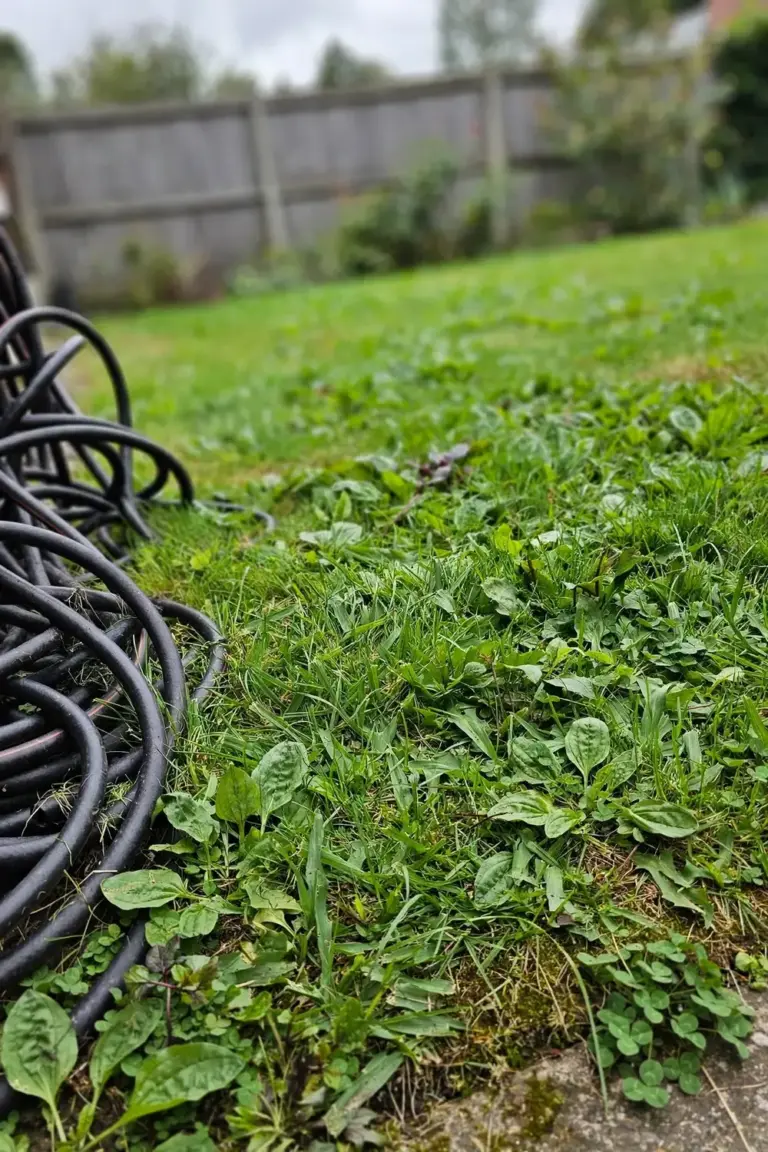
After place comes weed type. Four weed types cover most garden weeds. Broadleaf weeds have wide leaves and include bindii, clover, capeweed, catsear, and creeping oxalis. Sedges look like grass but have triangular stems and include nutgrass and Mullumbimby couch. Grassy weeds are true grasses that grow where you do not want them, such as winter grass in a couch lawn. Woody weeds have stems that turn hard with age and include creepers, suckers, and tree seedlings. Place plus weed type points to the product class. The label confirms the match.
The decision order stays the same in every place. First, name the place. Second, name the weed type. Third, pick the product class for that pair. Fourth, read the label and confirm the site, the weed, and the grass type all appear on it. Skip step four and the other three cannot save the lawn. A product that is safe on kikuyu can still damage buffalo. A product that is safe on a path can still drift onto a bed. The label is the last check, and it is the check that counts.
2. Lawn: Pick a Selective Spray That Spares Your Grass Type
A lawn needs a selective spray that kills the weed and spares the grass, because a non-selective spray on a lawn kills the lawn. That rule has no exception for a small patch: a spot of glyphosate on turf leaves a dead spot, and a broadcast of glyphosate across turf leaves a dead lawn. The table below matches each lawn weed type to its product class and its safety rule.
| Place on the Lawn | Weed Killer Class | Safety Rule |
|---|---|---|
| Broadleaf weeds (bindii, clover, capeweed, catsear, creeping oxalis) | Selective broadleaf herbicide | Buffalo-safe label only. Never dicamba on buffalo. |
| Sedges (nutgrass, Mullumbimby couch) | Sedge-specific herbicide | Spot-spray. Repeat when regrowth appears. |
| Grassy weeds (winter grass, summer grass) | Hand pull, or selective grass herbicide where labelled | Pre-emergent before germination. |
| Woody weeds and creepers | Cut and paint | Keep spray off the lawn. |
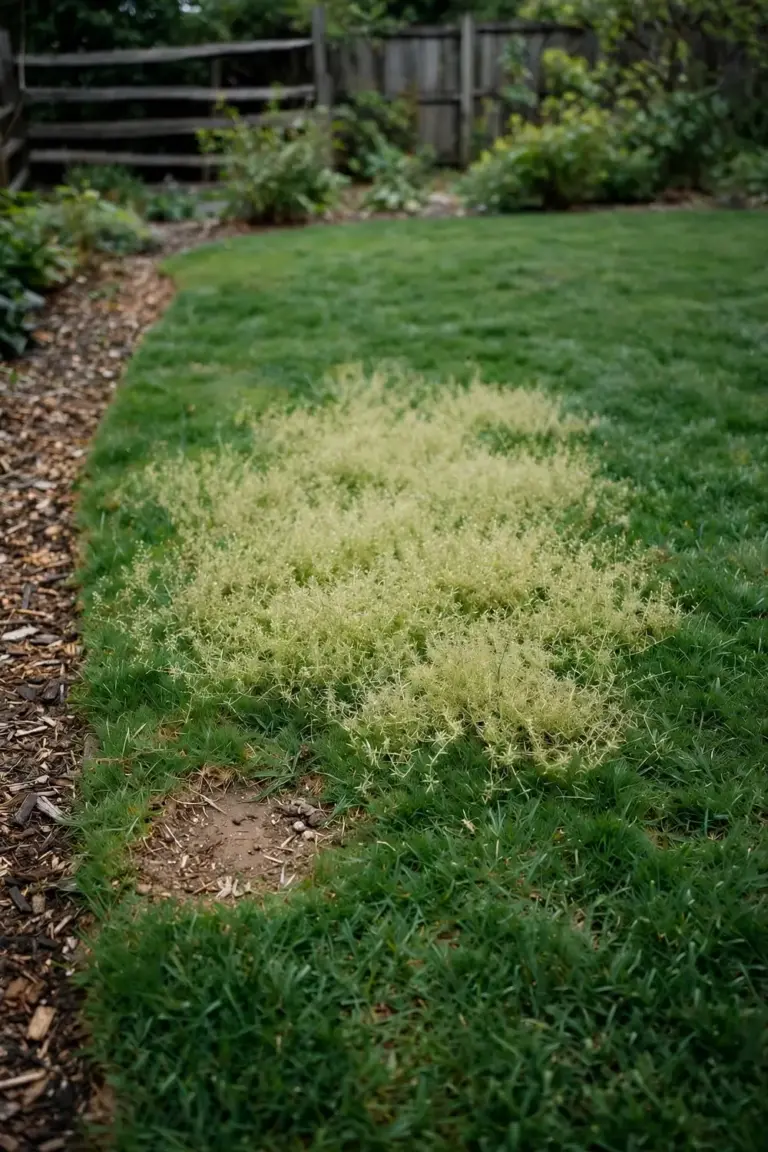
The dicamba trap is the most expensive mistake on an Australian lawn. Dicamba is a selective herbicide for broadleaf weeds. On buffalo lawns it causes bleaching, yellowing, curling, dry leaves, stalled growth, and death. Heat makes the damage worse. Lawn Solutions Australia states that dicamba-based products are not recommended on buffalo lawns because damage is highly likely, and lists common dicamba products including Yates Weed n Feed, Yates Lawn Weed Killer, Dicamba M, Kamba M, Amgrow Multiweed, and Amgrow Kleen Lawn. If dicamba has already hit a buffalo lawn, irrigate the area at once and keep the lawn moist, then hold off other herbicides, granular fertilizer, and low mowing for weeks while it recovers. For buffalo-safe broadleaf control, the same source names buffalo-safe products such as All Purpose Weed Control and Estate Herbicide. Dicamba and buffalo lawns
I have learned that the sprayer I check against the lawn type before I fill it saves more grass than any rescue watering after.
Glyphosate has no place as a broadcast spray on a lawn. NC State Extension describes glyphosate as a systemic herbicide that moves from treated leaves to the roots, and as a non-selective herbicide that controls grasses, sedges, and broadleaves alike. That combination is what makes it lethal to turf. A spray that reaches the roots kills the whole plant, and a non-selective spray kills grass as readily as it kills weeds. Glyphosate has little or no soil residual, because clay particles bind it and render it inactive, so the damage comes from spray that lands on leaves, not from poisoned soil. Keep glyphosate off turf. Use it as a spot-spray on paths and paving, where nothing worth keeping grows. Glyphosate alternatives and behaviour
Sedges need their own class. A selective broadleaf spray does not control nutgrass or Mullumbimby couch. NC State Extension names three sedge herbicides for landscape use: bentazon, halosulfuron (sold as Sedgehammer), and sulfentrazone. Bentazon needs repeat applications at 10 to 14 day intervals for acceptable control. Halosulfuron controls both yellow and purple nutsedge, with a repeat when regrowth appears, typically 4 to 6 weeks after the first application. Treat sedges as a spot-spray job. Broadcast spraying a sedge product across a lawn wastes product and raises the risk of damage to desirable plants.
Grassy weeds in a lawn leave two honest options. Hand pulling works when the patch is small and the roots come out whole. A selective grass herbicide works only where the label names both the weed and the turf type. Winter grass has no selective spray that suits every turf, so prevention carries more weight than cure: a pre-emergent applied before germination stops the seed from establishing. Woody weeds and creepers get the cut-and-paint method. Cut the stem close to the ground, then paint the cut surface at once. The paint stays on the weed and off the lawn.
3. Garden Beds: Hand Pull First, Spray Seedlings Only
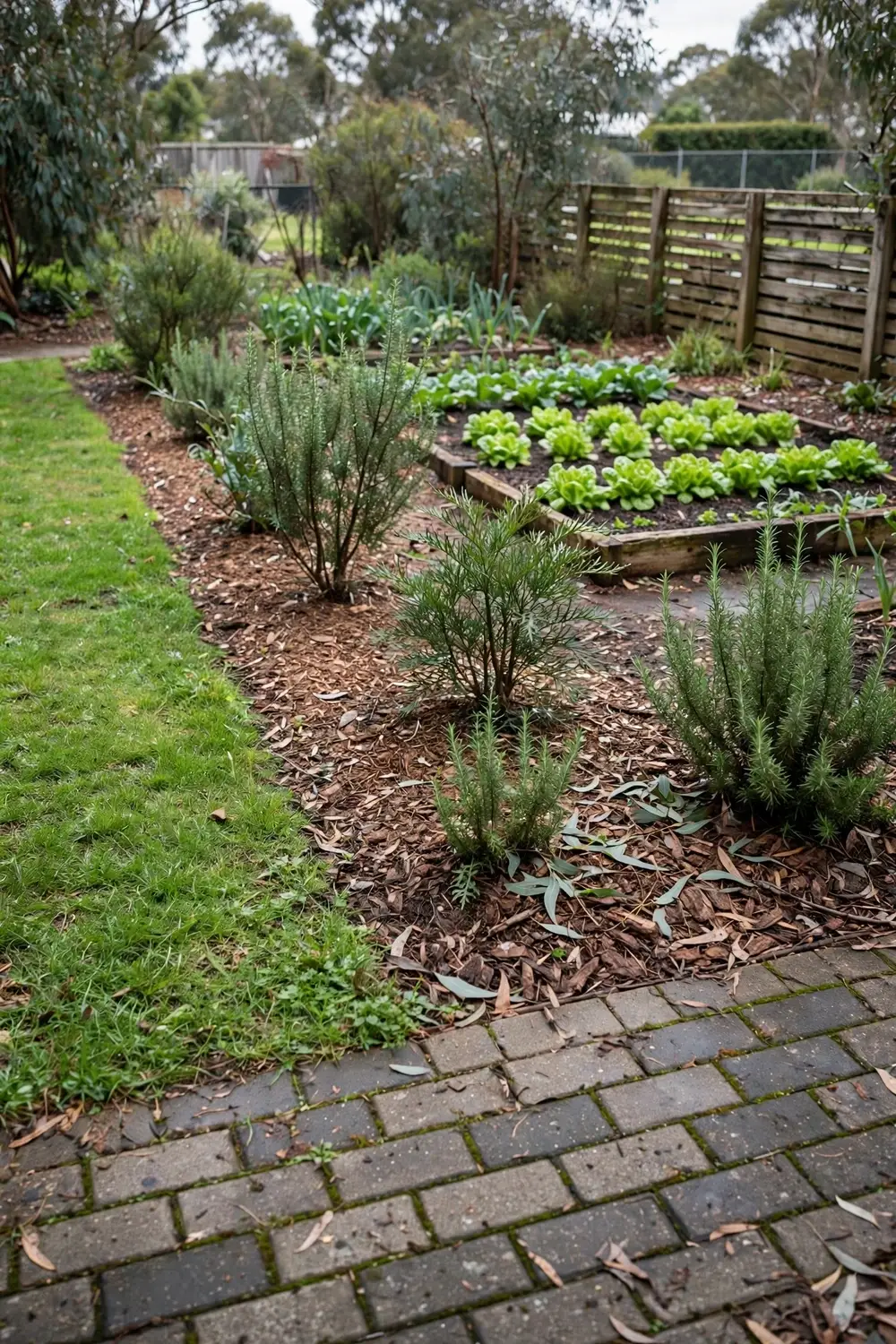
A garden bed needs hand pulling first and spray second. Mulch and dense planting do the steady work. Spray handles the seedlings that slip through. That order keeps spray off the plants you want to keep. It also keeps spray out of soil that feeds the bed.
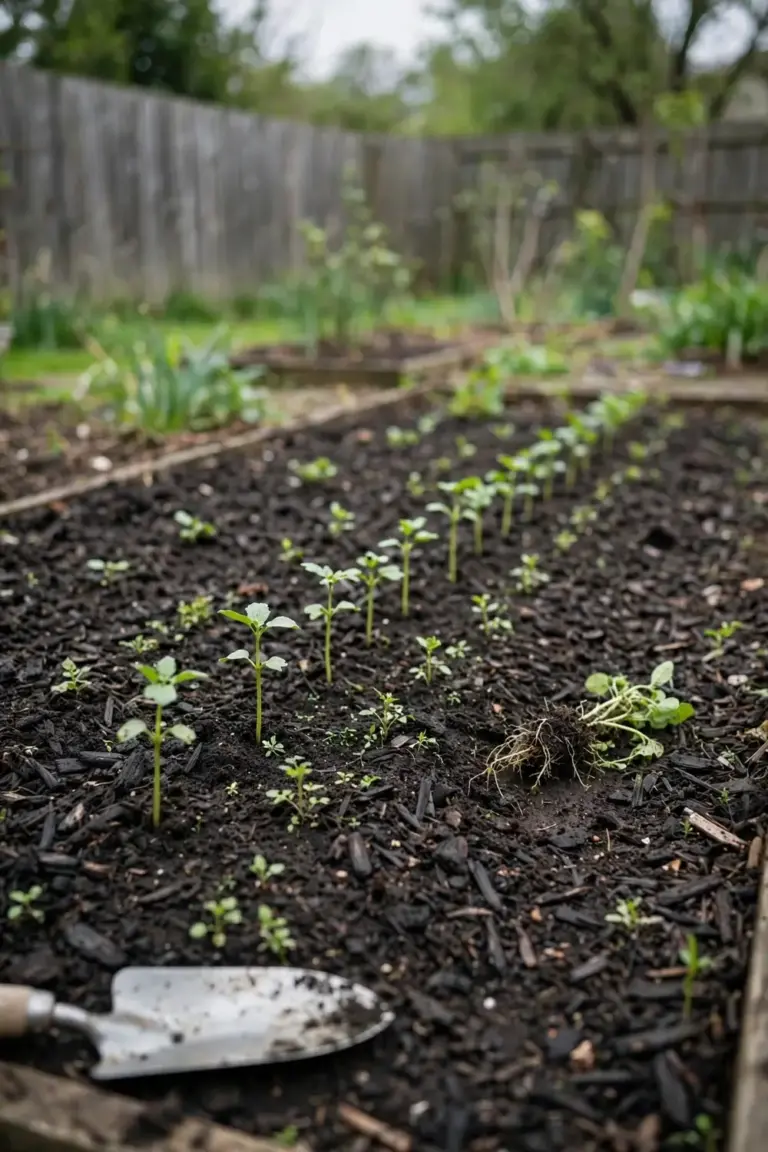
Contact killers suit seedling weeds in beds. NC State Extension describes contact herbicides as sprays that do not translocate to the roots. Diquat, pelargonic acid, glufosinate, vinegar, and botanical oils all act by contact. They control seedling annual broadleaf weeds. They do not control perennial weeds, grasses, or well-established annual weeds. They have no residual activity in soil. A spray that only burns the leaf it touches cannot kill a weed with deep roots. It can clear a flush of seedlings between plants. Use contact killers on young weeds, on a calm day, with a shield behind the target so drift cannot reach wanted leaves.
Vinegar shows the limits of a contact killer clearly. Montana State University Extension explains that acetic acid acts as a contact herbicide. It ruptures plant cells, so fluids leak and tissues dry out. It does not move within the plant to the roots, and it is non-selective, so it injures any plant it touches. It has no residual activity in soil. Household vinegar holds about 5 percent acetic acid, while herbicidal vinegar products hold 20 percent or 30 percent (Vinegar as a weed killer). The stronger solutions kill young leaves and growing points more completely. Seedlings at the two- to four-leaf stage are the ideal target, because the spray can reach every leaf. Perennial plants are unlikely to be controlled, because they resprout from roots even after the tops die. Broadleaf plants fall more easily than grasses. The stronger formulations are strong acids, so applicators should wear protective equipment for eyes and skin, and the label must be followed.
Perennial weeds in beds need a different method. A weed with deep roots, such as dandelion or dock, survives a contact spray. Pull it root and all, or spot-spray it with a systemic product while shielding the plants around it. A systemic spray moves to the roots and kills the whole plant. That same movement is what makes drift dangerous. One drifted drop on a wanted plant can travel through it. Spray on a still morning. Use a coarse spray. Hold a cardboard shield behind the target. Walk away when the wind rises.
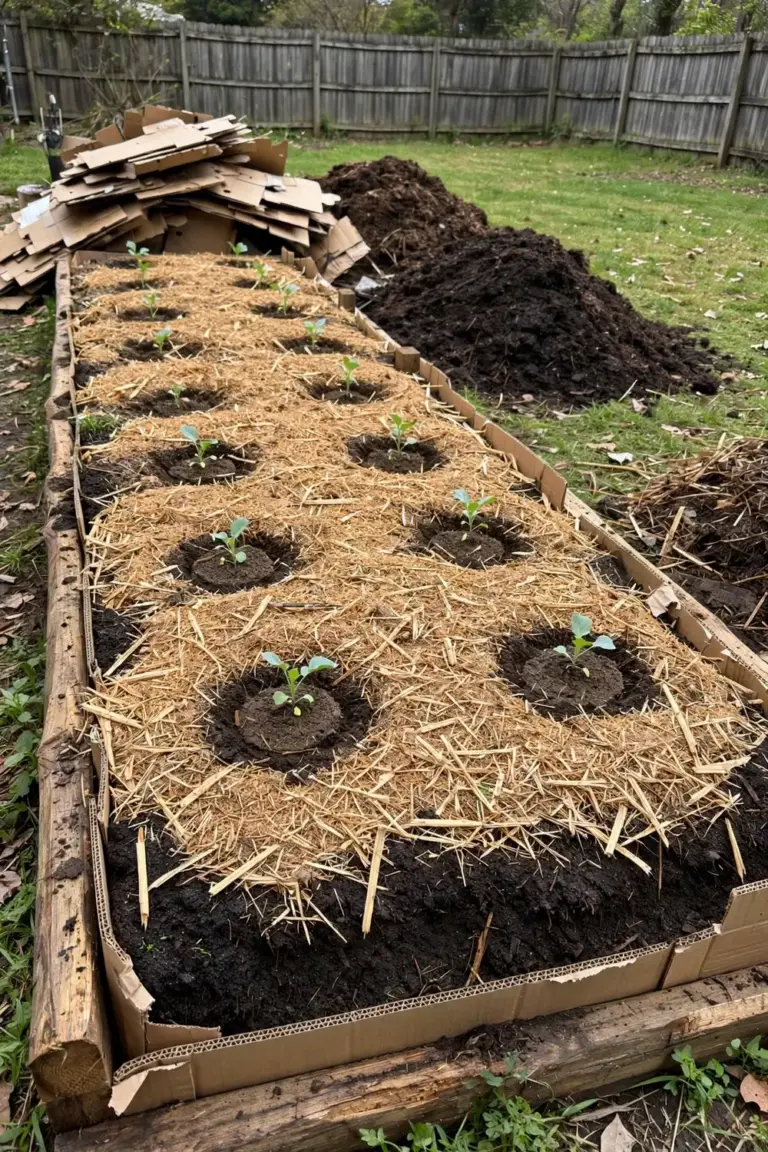
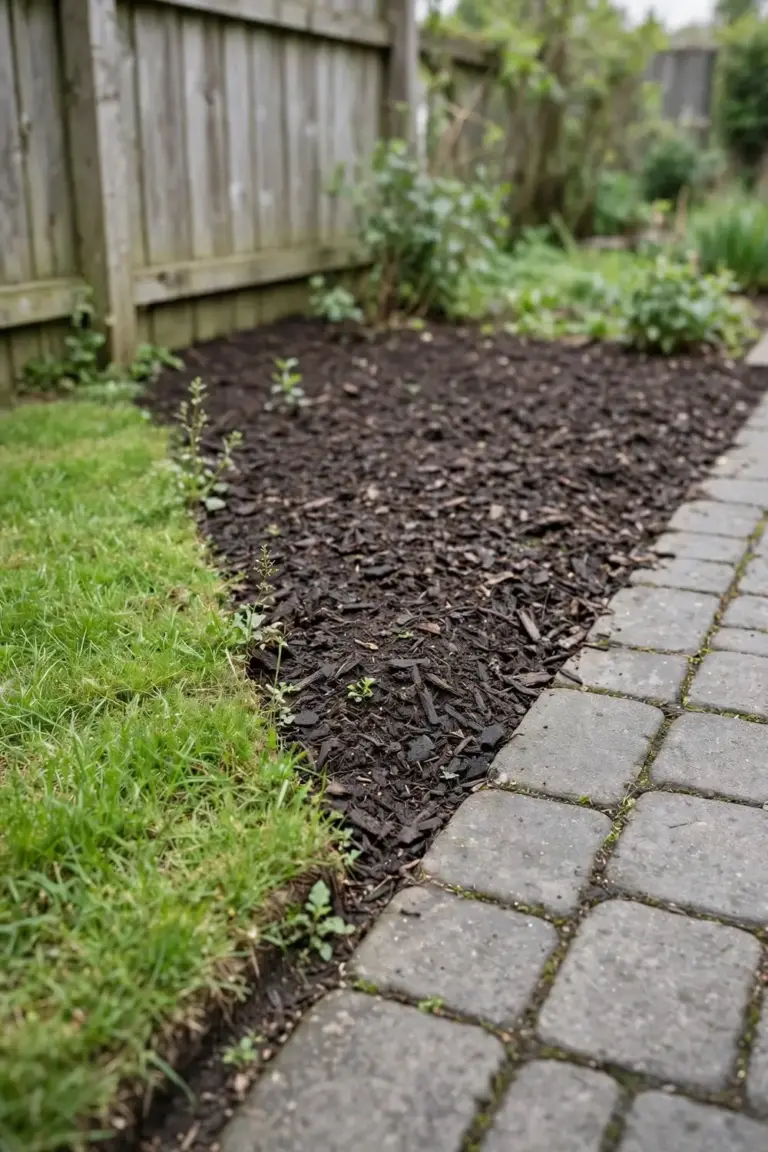
Mulch is the bed’s best weed killer, and it is not a spray at all. A mulch layer blocks light, so weed seeds cannot germinate. It holds moisture in the soil. It feeds soil life as it breaks down. Mulch does more than block weeds When a bed is rebuilt, the setup matters as much as the spray. A cardboard and compost stack smothers what sits below and gives new plants a clean start. Fall garden bed prep covers the bed rebuild in full. Spray is the backup. Mulch is the plan.
Pre-emergent has one hard limit in beds. It stops seeds from establishing. It cannot tell a weed seed from a wanted seed. University of Nevada, Reno Extension warns that pre-emergent herbicides affect many germinating seeds, not just those of weeds, and advises against using them where plants will grow from seed. A bed sown with seed stays free of pre-emergent until the plants are established. A bed filled with transplants can use pre-emergent where the label allows it. Read the label for the site list before you spread anything.
4. Veggie Patch: Hand Pulling, Mulch, and Labelled Products Only
A veggie patch needs hand pulling, mulch, and labelled products only. Food crops change the safety test. A spray that is safe on a lawn is not automatically safe on lettuce. A spray that is safe on roses is not automatically safe on tomatoes. Only the label can answer the food-crop question. If the label does not list the crop and the site, do not spray it there.
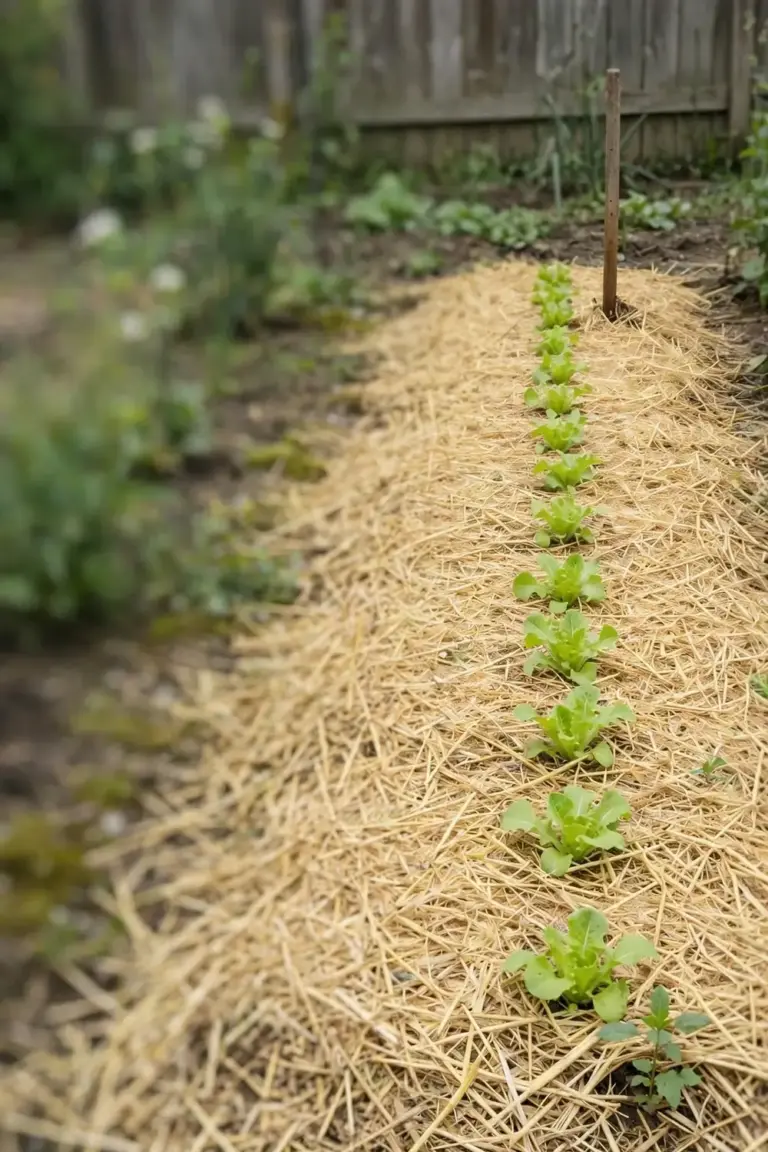
Hand pulling carries most of the work in a veggie patch. Weeds near food plants sit close to stems, leaves, and fruit. A spray that drifts a few centimetres can land on food. A hand that pulls the weed out leaves the crop untouched. Pull after rain or watering, when the soil is soft and roots release, and pull before the weed sets seed. One weed that seeds can refill the patch for a season. Mulch between rows blocks light and holds moisture. It also keeps soil off leaves, which keeps fruit cleaner.
Any product used in a veggie patch must be labelled for food crops. The label names the crops it covers. The label names the harvest withholding period. The withholding period is the wait between the last spray and safe harvest. It is a label figure, not a guess. Count it from the day of spraying. Wash the crop after harvest anyway. Washing removes surface residue. It does not remove residue inside the plant. Only the withholding period covers that.
Salt and vinegar have no place in a veggie patch. Vinegar is a contact killer that burns any leaf it touches, and it cannot reach deep roots. Salt is worse. Cooperative Extension advisers warn that too much salt harms soil health and stops roots from taking up moisture, and that salt can cause longer-term harm to soil microbial activity. A veggie patch lives on healthy soil and active microbes. Salt attacks both. Keep salt out of beds and out of the patch. Keep vinegar on paths, where nothing grows that you plan to eat.
Corn gluten meal is the one pre-emergent option that fits a veggie patch, and only for transplants. University of Nevada, Reno Extension reports that Iowa State University studied corn gluten meal as a pre-emergent herbicide and fertilizer. The product stops roots from forming in germinating plants. A short dry period after seeds germinate is essential to kill the seedlings. It is not appropriate for seeded garden crops. It can be used with transplants or mature plants. Iowa State suggests the product stays effective for five to six weeks after application. It also releases nitrogen slowly as it decomposes, feeding existing plants. In a veggie patch, that means corn gluten suits beds of transplanted seedlings, never beds sown with seed.
Organic methods fit a veggie patch well, because they lean on removal and prevention rather than spray. Organic pest control for beginners covers the same approach for insects: identify the problem, remove it by hand where possible, and spray only as a last step. Weeds follow the same order. Hand pull first. Mulch second. Spray last, and only with a product labelled for food crops.
5. Paths and Paving: The One Place Non-Selective Spray Earns Its Keep
Paths and paving are the one place a non-selective spray earns its keep. Nothing worth keeping grows in a crack between pavers. A spray that kills everything it touches is safe there, because the only plants it can reach are weeds. This is the one place where glyphosate, flame, boiling water, and vinegar all make sense. The safety rule moves from the product to the edges. Keep the spray on the path. Keep it off the lawn edge, the bed edge, and the veggie patch.
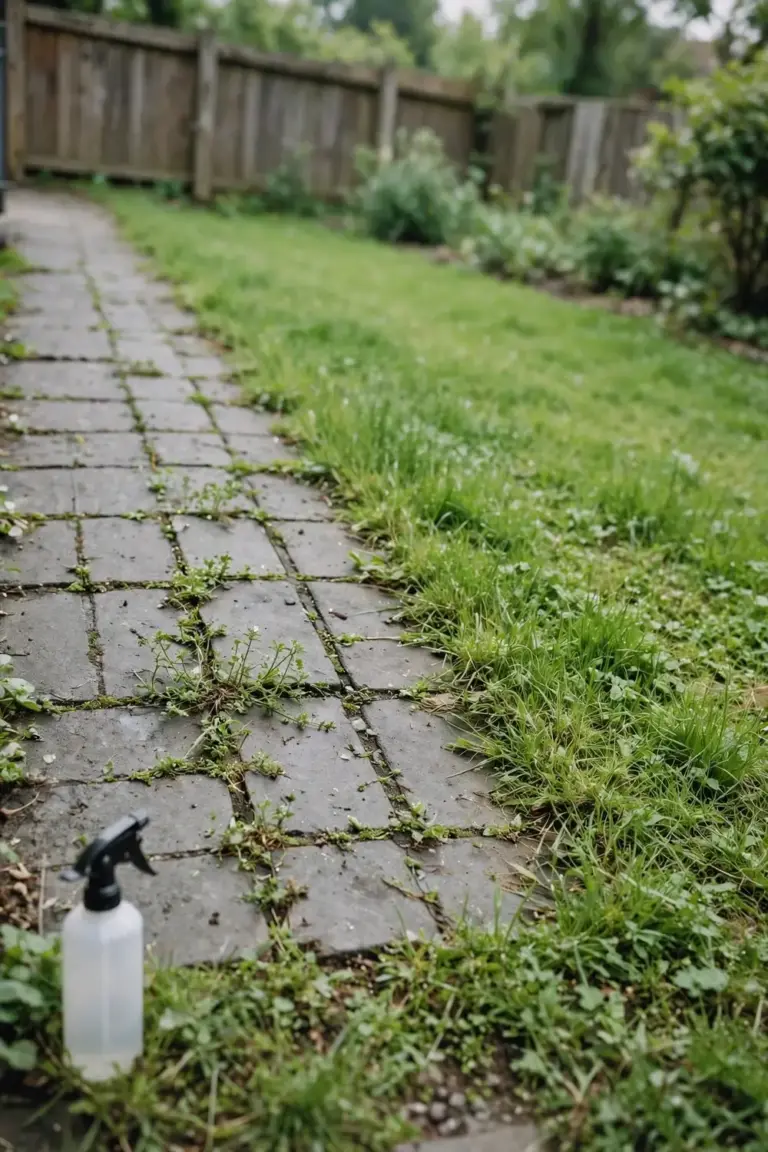
Glyphosate suits paths because it moves to the roots. NC State Extension describes glyphosate as a systemic herbicide that moves from treated foliage to other plant parts, including the roots, and kills annual and perennial weeds. A perennial weed in a path, such as couch runners creeping under pavers, dies when the spray reaches its roots. A contact spray would burn the top and leave the roots to resprout. Use glyphosate as a spot-spray on the weed, not as a broadcast across the paving. A broadcast wastes product and raises drift risk. A spot-spray puts the chemical on the weed and nowhere else.
Heat methods suit small path jobs. NC State Extension notes that flame weeding kills seedling broadleaf weeds in hardscapes, including cracks in driveways, between pavers, and in gravel mulch. A brief exposure heats the water inside the plant, and the leaf tissues collapse soon after treatment. Flame weeding gives only foliar damage to grasses, perennial sedges, and perennial broadleaf weeds, which regrow rapidly after treatment. It must not be used where flammable mulch sits nearby. Boiling water works the same way on a small patch: heat kills the tissue it touches. It suits a few weeds in a crack. It does not suit a long path, because carrying kettle after kettle is slow and the burn risk is real. Wear closed shoes and long sleeves. Keep children and pets away from the work area.
Vinegar suits path seedlings when used with care. Montana State University Extension explains that acetic acid works best on small, young weeds. Seedlings at the two- to four-leaf stage are the ideal target. Perennials resprout from roots. The stronger formulations are strong acids that need eye and skin protection. Household vinegar is weak on established weeds. On a path, that weakness matters less, because the goal is a tidy crack, not a dead root system. Repeat sprays handle the next flush of seedlings.
Salt is the one path method that can cause lasting harm. Salt kills weeds by drawing water out of plant cells. It also stays in the soil. Cooperative Extension advisers warn that too much salt harms soil health and stops roots from taking up moisture, and that salt can cause longer-term harm to soil microbial activity. A path edge sits beside soil that feeds the lawn or the bed. Salt that washes off the path lands in that soil. It does not wash away quickly. It stays and harms the next plant that tries to grow there. Keep salt off paths that drain into beds, lawns, or veggie patches. Use glyphosate, heat, or vinegar instead.
Drift discipline matters most at the path edge. A path runs beside a lawn, a bed, or a patch. Wind carries fine spray sideways, so NC State Extension advises keeping spray on the weeds and off desirable plants. Spray on a still morning with a coarse spray setting, hold a shield between the path and the plants beside it, and stop when the wind rises. A shield and a still morning cost nothing. A drifted spray costs a bed of seedlings.
6. Six Safety Traps That Ruin Lawns, Beds, and Soil
Six traps cause most weed-killer damage in home gardens. Each trap looks like a shortcut, and each one costs more than the time it saves. All six are preventable: read the label, match the product to the place, and respect the timing.
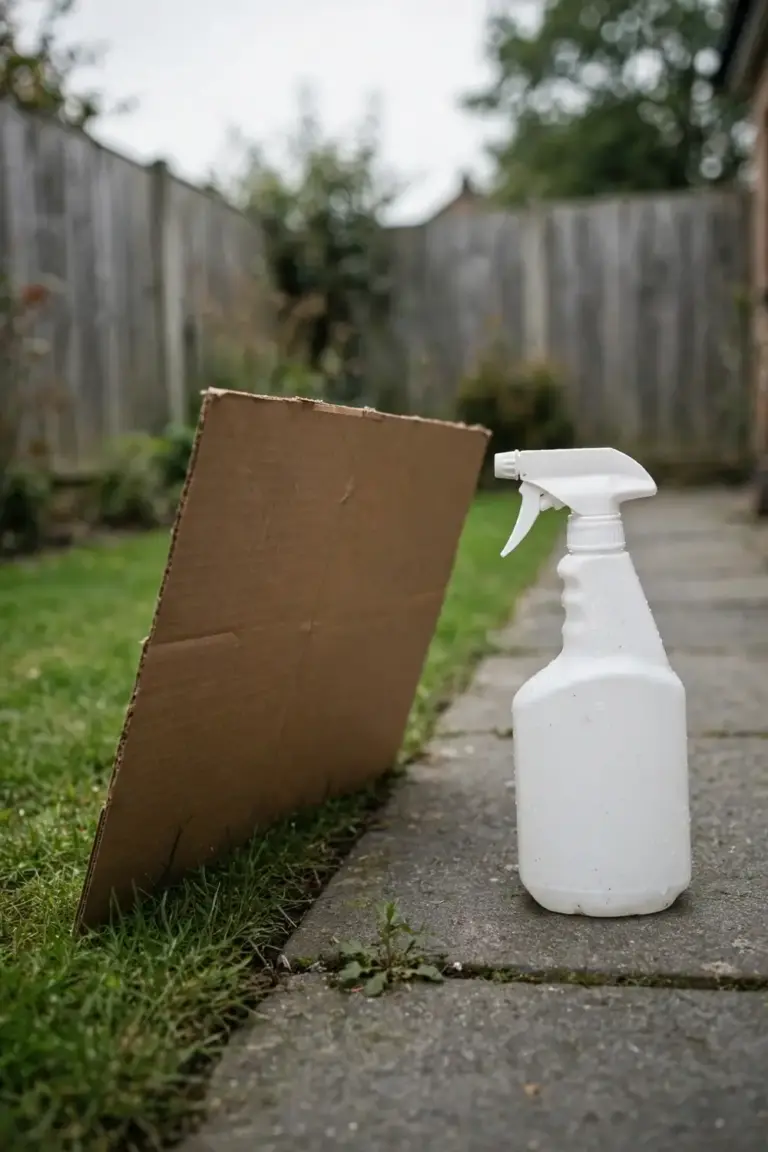
Trap one is dicamba on buffalo. Dicamba is a selective herbicide for broadleaf weeds, but on buffalo lawns it causes bleaching, yellowing, curling, dry leaves, stalled growth, and death, and heat makes the damage worse. Lawn Solutions Australia states that dicamba-based products are not recommended on buffalo lawns because damage is highly likely. The trap catches gardeners who buy a general lawn weed killer without checking the active ingredient. Yates Weed n Feed, Yates Lawn Weed Killer, Dicamba M, Kamba M, Amgrow Multiweed, and Amgrow Kleen Lawn all contain dicamba. Check the active ingredient line on the label before you buy. If the lawn is buffalo, pick a buffalo-safe selective product instead. If dicamba has already been sprayed, irrigate the area at once, keep the lawn moist, and hold off other herbicides, granular fertilizer, and low mowing for weeks.
Trap two is glyphosate on a lawn. Glyphosate is non-selective and systemic. It kills grasses, sedges, and broadleaves, and it moves to the roots. A broadcast across turf kills the turf. A spot on turf kills a spot of turf. The trap catches gardeners who reach for the strongest spray to clear a weedy lawn. The strongest spray clears the lawn too. For a weedy lawn, use a selective broadleaf spray matched to the grass type. Use glyphosate only as a spot-spray on paths, paving, and bare ground where nothing worth keeping grows.
Trap three is salt and vinegar in soil. Vinegar is a contact killer that burns the leaf it touches without reaching the roots, and it has no residual activity in soil. Salt is different. Salt stays in the soil and harms soil health, root moisture uptake, and microbial activity. Cooperative Extension advisers warn against both mistakes: salt that accumulates in soil, and vinegar mixes that promise more than they deliver. A salted bed grows nothing well for a long time. A vinegar spray on a perennial weed burns the top and leaves the root to resprout. Keep salt out of beds, lawns, and veggie patches. Keep vinegar on paths and seedlings. Soil health explains what salt damages: the living soil that feeds every plant in the garden.
Trap four is pre-emergent timing. Pre-emergent herbicides work before weed seeds germinate. They do not control weeds that have already emerged. University of Nevada, Reno Extension explains the mechanism: when sprouting seeds meet the herbicide, cell division in the young root system stops, and the young seedling dies. The active period for most products runs from three to 12 months or more. The products are not discriminating. They affect many germinating seeds, whether weeds or wanted plants. Two timing errors follow. Applied too late, the weeds have already germinated and the product does nothing. Applied where seed will be sown, the product kills the wanted seedlings too. In Australia, the seasons flip the Northern Hemisphere calendar. Apply in early spring for summer weeds, and in late summer to early autumn for winter weeds. That mapping is this guide’s own seasonal rule, derived from the mechanism above: apply before the target weeds germinate. Water the product into the top soil after spreading. University of Nevada, Reno Extension states that at least one-half inch of water, about 13 mm, is necessary to move the product into the soil. Do not disturb the soil after application. Traffic and digging break the barrier and open holes where weeds emerge. Pre-emergent herbicides
Trap five is re-entry and protective gear. The label names the re-entry interval. The interval is the wait before people and pets return to the treated area. Keep pets and kids off the area until the interval passes. Do not guess the interval. Do not shorten it because the spray looks dry. The label also names the protective gear. Gloves, eye protection, long sleeves, and closed shoes are the usual minimum. Strong-acid formulations need eye and skin protection. Concentrated products are not household vinegar. Treat them as the corrosive chemicals they are. Store every product in its original labelled container, out of reach of children and pets. Never pour a spray into a drink bottle. Never leave a mixed spray unattended.
Trap six is drift and label-first discipline. Drift is spray that moves off target. Wind carries fine droplets sideways onto wanted plants. A systemic spray that drifts onto a wanted plant can travel through it and kill it. A contact spray that drifts burns the leaves it touches. The label-first discipline prevents all six traps. Read the whole label before you open the container. Check the site list, the weed list, the grass type, the rate, the re-entry interval, the protective gear, and the weather limits. The label is the law for that product. A product used off-label is a product used without a safety net.
Frequently Asked Questions
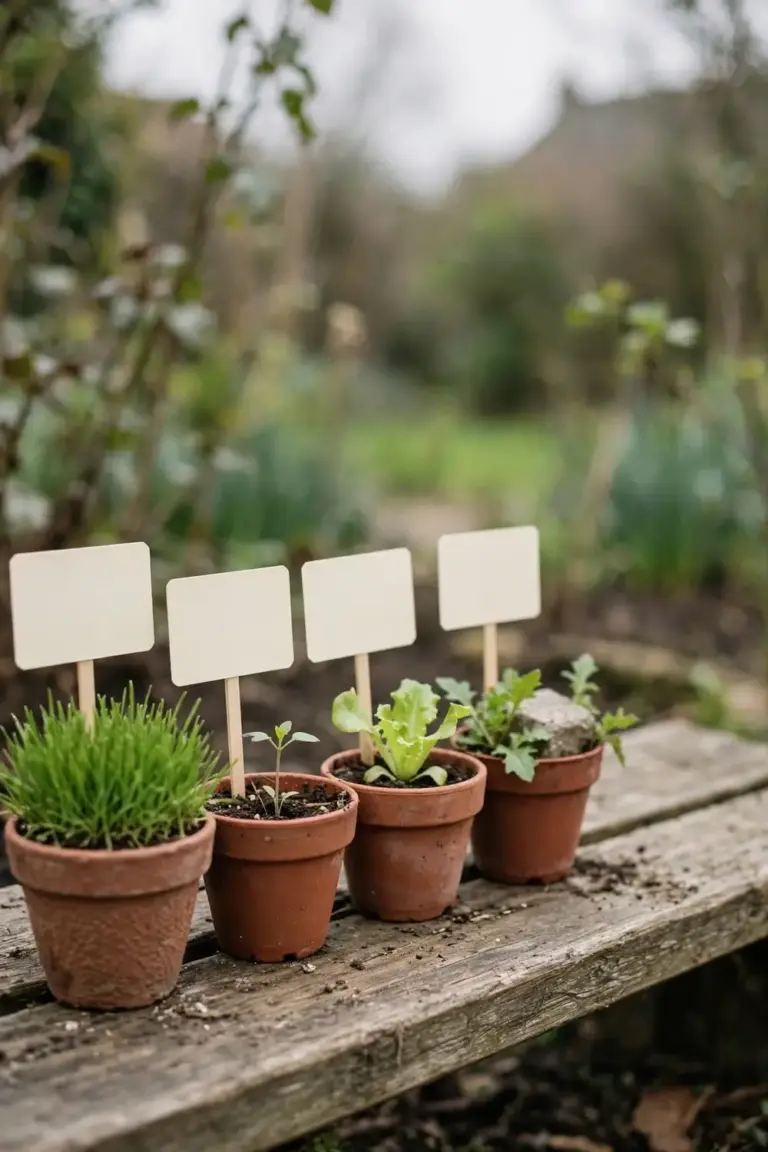
No. A lawn needs a selective spray that spares grass, while a bed needs hand pulling, mulch, and contact spray on seedlings. A selective lawn spray can harm bed plants, and a non-selective path spray kills lawn grass and bed plants alike. Match the product class to the place, then confirm the site on the label, because one product does not cover every place.
Vinegar is a contact killer that burns leaves and leaves roots alive. It suits path seedlings. Salt is the risk. Salt stays in soil and harms soil health, root moisture uptake, and microbial activity. Salt that washes off a path lands in the soil beside it. Skip salt on paths that drain into beds, lawns, or veggie patches. Use glyphosate, heat, or vinegar instead.
Apply before the target weeds germinate. In Australia, that means early spring for summer weeds and late summer to early autumn for winter weeds. This mapping flips the Northern Hemisphere calendar. Water the product into the top soil with about 13 mm of water. Do not disturb the soil after application. Never apply pre-emergent where seed will be sown, because it kills wanted seedlings too.
Irrigate the area at once and keep the lawn moist. Water before the herbicide absorbs can wash it off the leaf. Even after absorption, moisture helps the lawn survive. Hold off other herbicides, granular fertilizer, and low mowing for weeks. Extra stress compounds the damage. The lawn may still suffer. Buffalo-safe selective products exist for the next round. Check the active ingredient line before you buy.
Not automatically. Natural does not mean safe. Vinegar and botanical oil products can carry a Danger signal word and higher skin toxicity than synthetic herbicides. Concentrated acetic acid is corrosive to eyes and skin. Keep pets and kids off treated areas until the label’s re-entry interval passes. Read the label for protective gear and re-entry rules, even on an organic product.
Start With the Place, Then Pick the Product
Start with the place, then pick the product. Name the place: lawn, bed, veggie patch, or path. Name the weed type: broadleaf, sedge, grassy, or woody. Pick the product class for that pair. Read the label and confirm the site, the weed, and the grass type. That order answers which weed killer is safe for your garden, place by place, every time you spray. Dicamba stays off buffalo. Glyphosate stays off lawns. Salt stays out of soil. Pre-emergent goes down before germination, never where seed will be sown.
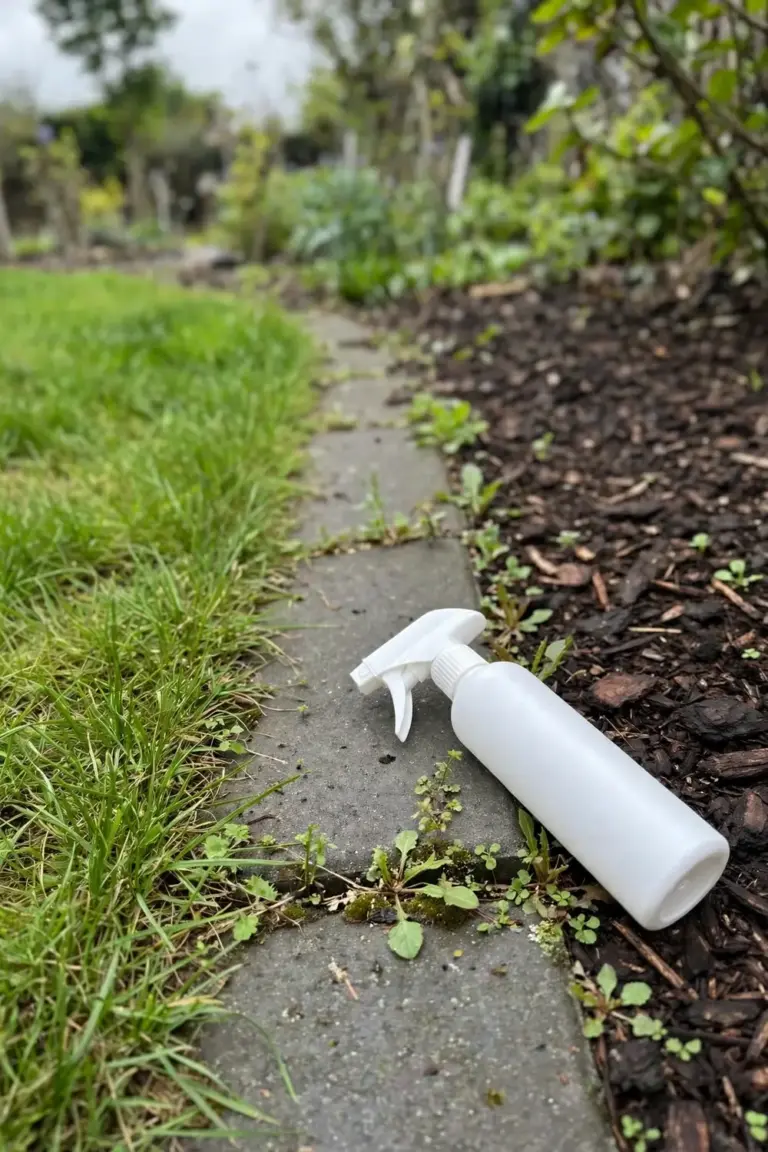
The cheapest weed killer is the one you never need. A thick lawn shades out seedlings. A mulched bed blocks light. A hand pull before seeding stops a season of pulling later. Spray is the backup for the weeds that slip through. Use it by place, by weed type, and by label. The garden will show the difference within a season.