
11 pests attack pumpkins in Australian gardens. Six of them suck sap. The rest chew leaves, stems, or fruit, and the fix follows the feeding type. If you searched for sap-sucking bugs on pumpkin, start here, because the most famous pumpkin bug does not suck sap at all.
I have learned that a pumpkin leaf chewed to veins means a beetle, and a leaf curled with honeydew means aphids.
Overseas search results fill with the squash bug, a North American insect. Australian sources do not list it among pumpkin pests. The Australian set is smaller and clearer: melon aphid, pumpkin beetle, whitefly, thrips, two-spotted mite, mealybugs, scale, the 28-spotted ladybird, cucumber moth, slugs and snails, and Queensland fruit fly. The rest of this page runs the damage test first, then one pest at a time, then a weekly check that keeps the patch ahead of all of them.
Sap-Sucker or Chewer? Read the Damage First
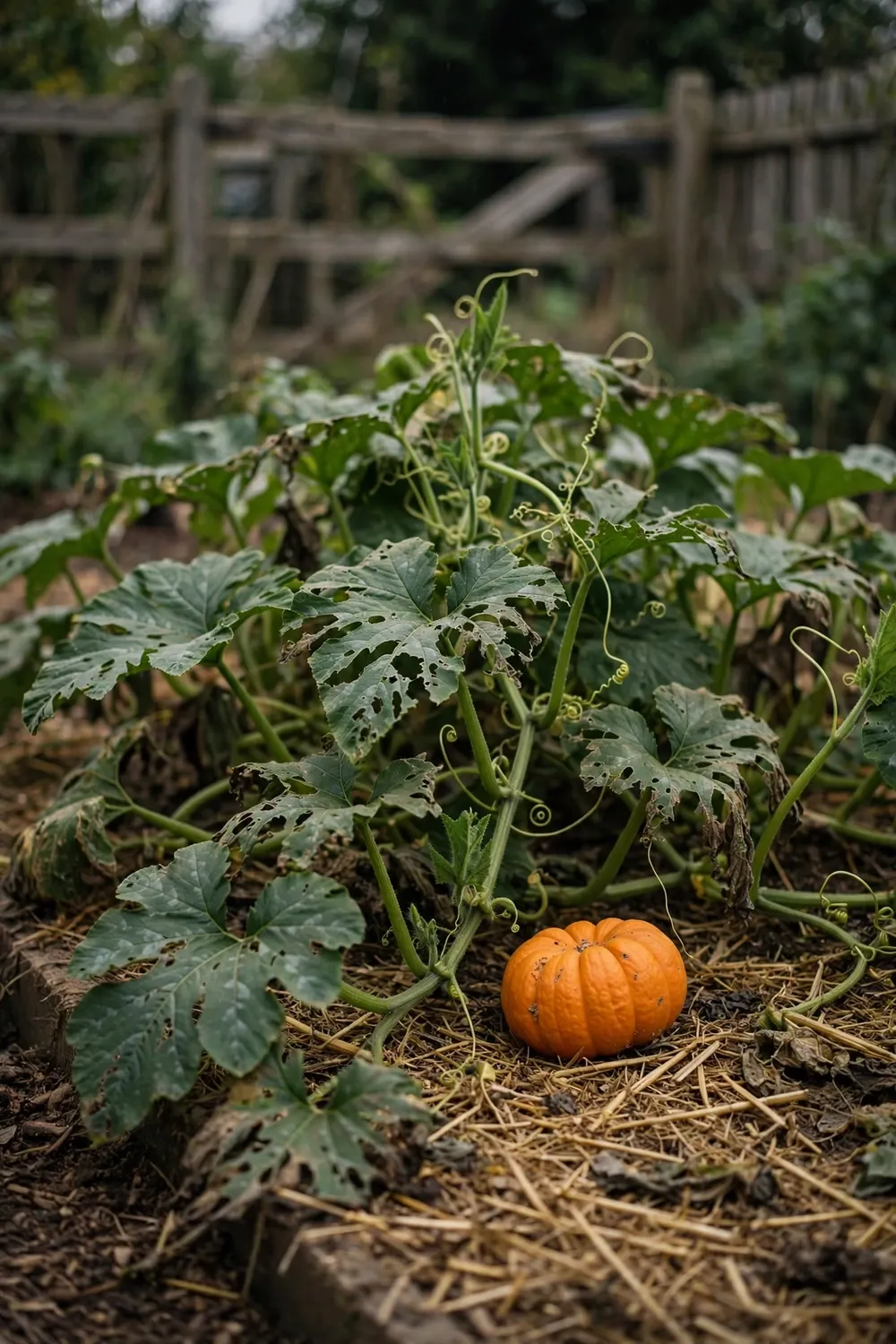
Read the damage before you look for the bug. Sap-suckers leave curling, stippling, and sticky honeydew. Chewers leave holes, skeletonised leaves, and missing seedlings.
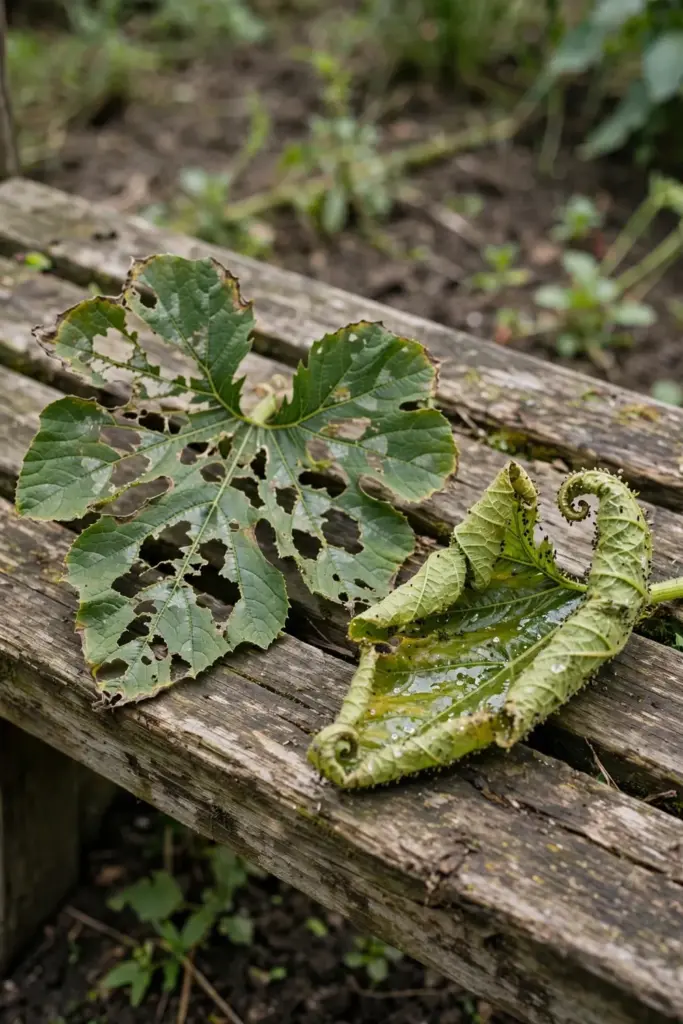
Run three checks. Turn a leaf over and look at the underside. Look at the growing tip and the joints where leaves meet stems. Check the fruit where it touches the ground. Check once more after dark with a torch, because slugs and snails feed at night and hide by day.
Damage alone does not always name one pest. Aphids and whitefly both drip honeydew, so the cloud test separates them. A skeletonised leaf points to the 28-spotted ladybird, while veins-only leaves point to pumpkin beetle. A leaf that yellows without holes, curling, or insects points away from pests entirely, toward water, feed, or disease. When two pests share one vine, treat the one doing the most damage first, then re-check after a week.
| Pest | Feeding Type | Damage Signs | First Fix |
|---|---|---|---|
| Melon aphid | Sap-sucker | Curling tips, sticky honeydew, ants | Forceful water spray, ladybirds |
| Pumpkin beetle | Chewer | Large holes, veins only, seedling death | Hand-pick, row covers |
| Whitefly | Sap-sucker | Cloud on brushing, stippling, honeydew | Water spray, sticky traps |
| Thrips | Sap-sucker | Silvering, scarring, distorted tips | Water spray, weed removal |
| Two-spotted mite | Sap-sucker | Stippling, fine webs, bronzing | Water spray to leaf undersides |
| Mealybugs | Sap-sucker | Cotton clumps in leaf joints, honeydew | Prune, swab, oil per label |
| Scale | Sap-sucker | Bumps on stems, honeydew | Oil at crawler stage per label |
| 28-spotted ladybird | Chewer | Skeletonised leaves | Hand-pick, destroy eggs |
| Cucumber moth | Chewer | Chewed leaves, flowers, and fruit | Hand-pick caterpillars |
| Slugs and snails | Chewer | Night feeding, slime trails | Night hand-pick, shelter removal |
| Queensland fruit fly | Fruit attacker | Sting marks, maggots, rotting fruit | Bag fruit, garden hygiene |
1. Aphids Cluster on Tips and Undersides
Melon aphids are the true sap-suckers on pumpkin. They cluster on growing tips and leaf undersides, curl leaves, and leave sticky honeydew.
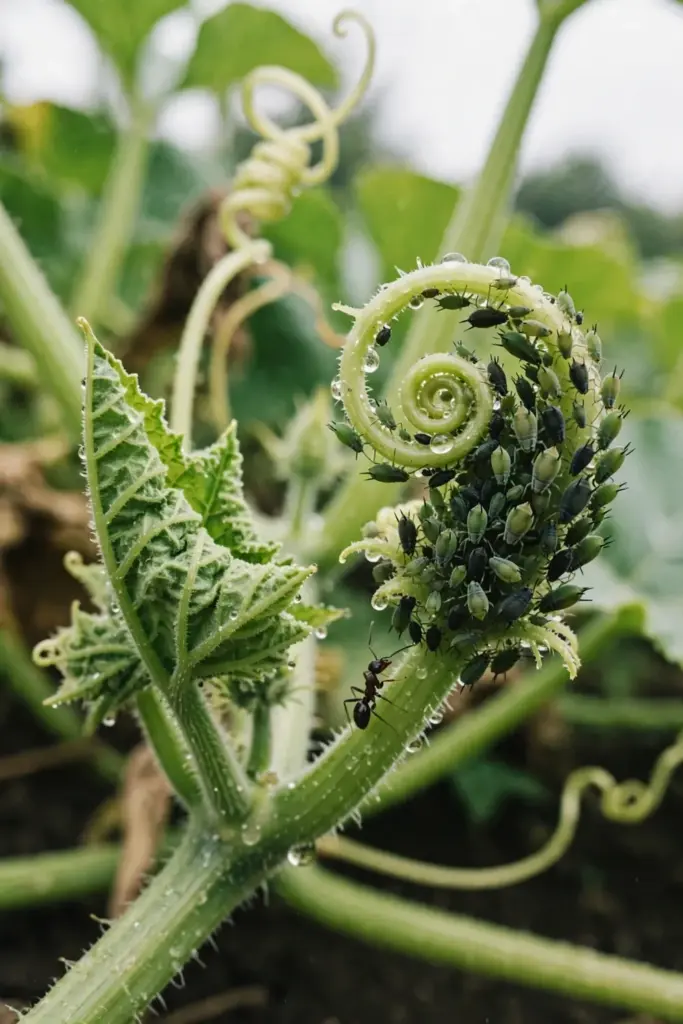
Melon aphid (Aphis gossypii) is a soft-bodied, pear-shaped insect. Colonies range from yellow-green to almost black. Winged forms appear when a colony grows crowded. Ants tend aphids for honeydew, and ants guard the colony from predators. Honeydew grows sooty mold, a black coating that blocks light from the leaf.
Aphids feed with piercing mouthparts. Feeding curls young leaves and stunts tips. Aphids also spread viruses from plant to plant. A curled tip with ants on it points to aphids before you see a single insect.
Spray the colony off with a forceful jet of water, aimed at leaf undersides, according to the University of Florida melon aphid guide. Repeat the spray after a few days, because survivors rebuild fast. Ladybirds, lacewing larvae, and hoverfly larvae eat aphids, and the beneficial insect guide names the predators to protect. Insecticidal soap works on direct contact, so cover the undersides and follow the label. Row covers block winged aphids from landing, and reflective mulch confuses them. Remove the ants first, because ants defend the colony.
Watch for virus symptoms after an aphid attack. Leaves that stay mottled, puckered, or stunted after the aphids leave may carry a virus the aphids brought in. No spray cures a virus. Pull the worst plants and bin them, because infected plants feed the next wave of aphids. Clean tools between plants, and start the next crop from clean seed in fresh ground.
2. Pumpkin Beetle Chews Holes and Leaves Veins
Pumpkin beetle chews. It does not suck sap. Adults cut large holes in leaves and often leave only the veins.
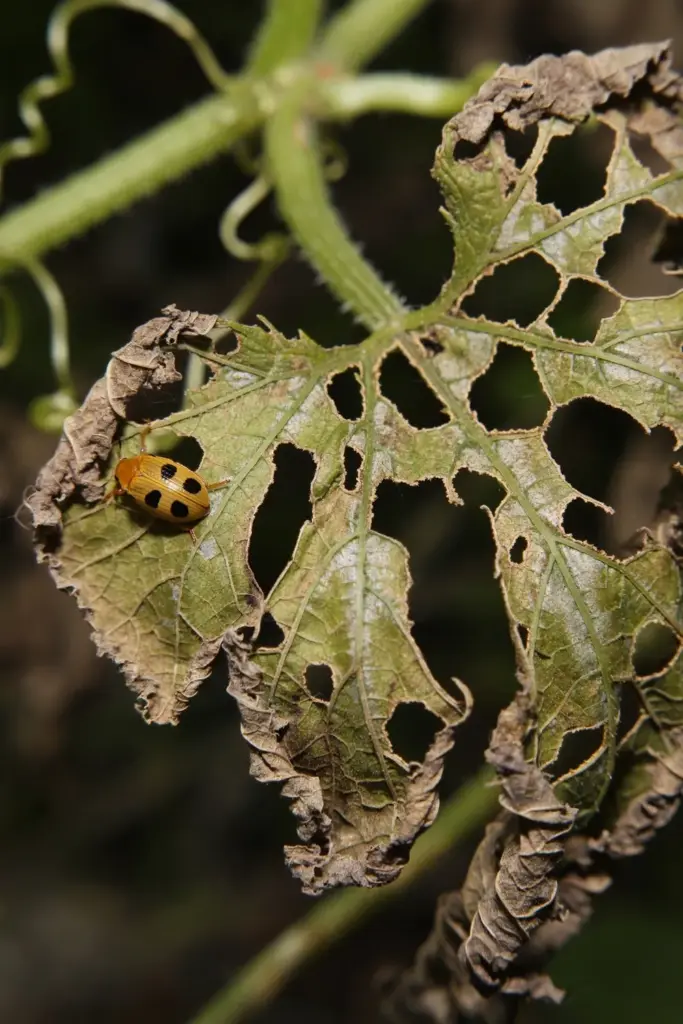
Two species share the name. Pumpkin beetle (Aulacophora hilaris) carries four large black spots on its back. Plain pumpkin beetle (Aulacophora abdominalis) has no spots. Adults measure 6 to 7 mm long and wear yellow or orange, according to the Northern Territory Government cucurbit pest Agnote. Beetles gather in groups on young and old leaves. Females lay eggs in soil near roots, and creamy white larvae feed underground before pupating.
Adult feeding leaves large holes and veins-only leaves. Seedlings suffer worst. Small numbers of beetles can strip a seedling bare and kill it. Mature plants carry more damage before yields fall. Larvae feed on roots, and root damage stays minor in most gardens. Beetles can carry cucumber green mottle mosaic virus from plant to plant while they feed, according to the NRM Regions cucurbit guide.
Hand-pick beetles into a bucket of soapy water in the morning, when they move slowly. Scrape egg clusters off leaf undersides. Cover seedlings with row covers until flowering, then lift the covers so bees reach the flowers, or hand-pollinate under the cover. Clear crop debris at season end, because beetles shelter in it. Check seedlings twice a week through the first month, and treat the moment beetles appear.
Seedlings deserve the closest watch. A mature vine outgrows beetle feeding, and a seedling cannot. Cover the row the day the seedlings emerge, and seal the edges with soil so beetles cannot walk in. Lift the cover each week to check growth and to clear any beetle that slipped under. A seedling that loses its first true leaves rarely recovers, so the cover stays on until the vine runs.
3. Whitefly Clouds Rise When You Brush the Leaf
Whitefly are small white sap-suckers on leaf undersides. Brush the leaf and a cloud lifts.
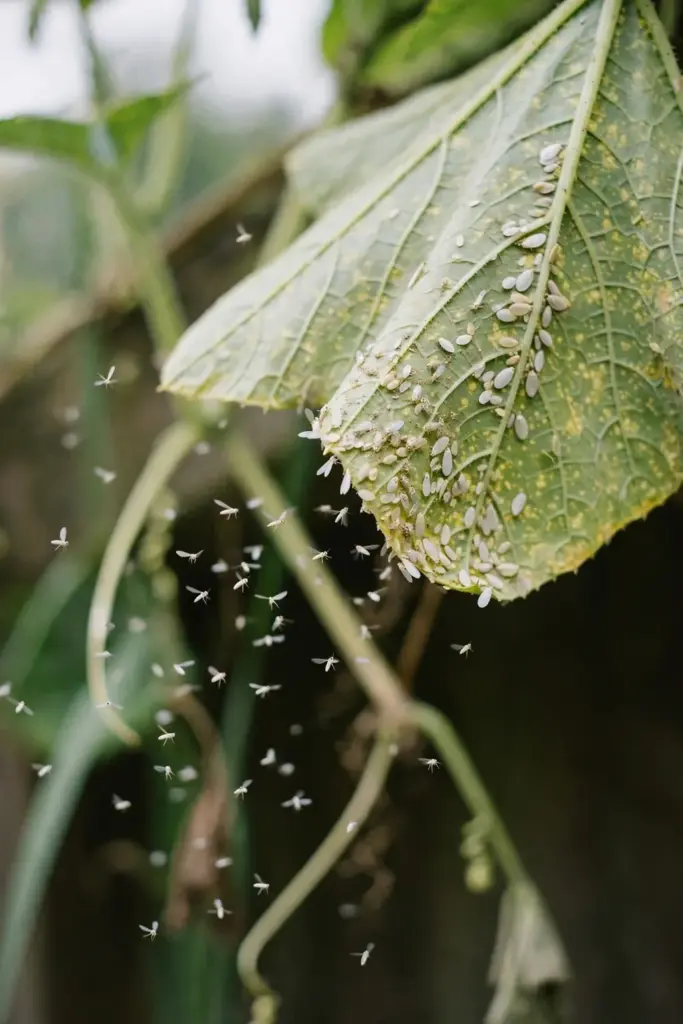
Adults are tiny white-winged insects, about the size of a pinhead. Nymphs sit flat on leaf undersides like pale scales. A shake of the vine sends adults into the air, then they settle again. Whitefly feed through the season in warm weather, and numbers climb fast in dry heat.
Feeding causes stippling and yellowing. Heavy colonies drip honeydew, and sooty mold follows. Whitefly also spread viruses. A vine that yellows from the lower leaves upward, with honeydew beneath, points to whitefly or aphids. The cloud test separates them. Aphids stay put. Whitefly lift.
Spray leaf undersides with a forceful jet of water to knock adults and nymphs off. Yellow sticky traps catch flying adults and show whether numbers fall. Hang the traps just above the canopy, and replace them when they fill. Ladybirds and lacewing larvae eat whitefly nymphs. Reflective mulch confuses landing adults. Keep the vine watered and fed, because a stressed vine collapses faster under sap-suckers. Spray soap only where it touches the insects, and follow the label.
Whitefly colonies build fastest in still, warm air. Open the canopy by spacing vines so air moves through the patch. A vine that grows through a trellis or fence dries faster after rain, and whitefly settle less on dry leaves. Check the undersides of lower leaves first, because colonies start low and climb. A trap that fills in two days signals a colony worth spraying. A trap that stays near empty means predators hold the line.
4. Thrips Silver the Leaf Surface
Thrips rasp leaf cells and suck the contents, and the leaf turns silvery, then bronzes.
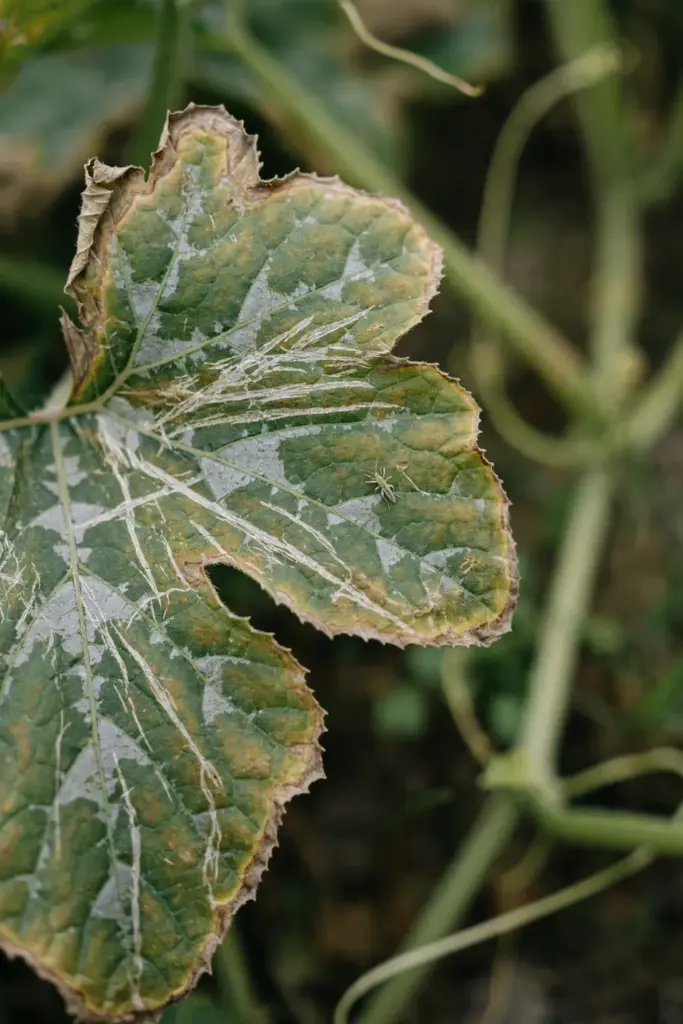
Melon thrips (Thrips palmi) is the main thrips on Australian cucurbits. Adults measure 1 to 2 mm long, golden brown, with narrow wings folded along the back, according to the NRM Regions cucurbit guide. Nymphs run cream to yellowish, wingless, under 1 mm. Thrips hide on leaf undersides, in flowers, and on young fruit, and identification to species needs magnification. In a home garden the damage pattern matters more than the exact species.
Feeding scars the leaf surface. Light feeding leaves silvery scars beside veins, while heavy feeding bronzes leaves, stunts young growth, and scars fruit. Thrips also vector viruses, which makes early action worth the effort. Fruit scarring stays cosmetic on a home pumpkin. Stunted tips cut the crop.
Spray leaf undersides with water to dislodge thrips, and remove weeds around the patch, because weeds host thrips between crops. Blue sticky traps catch adults and show whether numbers fall. Green lacewing larvae prey on thrips. Skip broad-spectrum sprays that kill the predators and leave thrips to rebuild. Water the vine well. Dry-stressed plants show damage sooner, and a watered vine grows past light feeding.
Flowers carry thrips too. Tap a flower over a sheet of white paper and watch for tiny dark specks that crawl. Thrips in flowers scar young fruit, and the scars stay on the rind at harvest. A flower check each week catches the move from leaves to fruit. If flowers hold thrips, spray the vine in the evening after the flowers close, and keep the spray off open blooms.
5. Two-Spotted Mite Stipples Leaves and Spins Webs
Two-spotted mites are sap-suckers too small to spot at first. Look for stippling and fine webs.
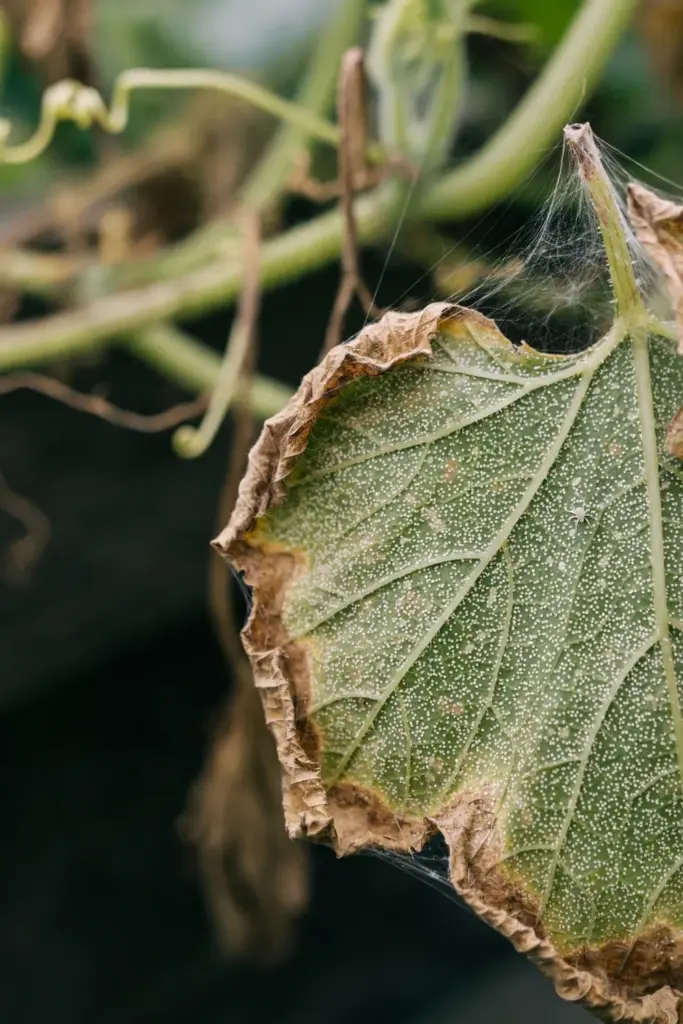
Two-spotted mite (Tetranychus urticae) is barely detectable with the naked eye, according to the Northern Territory Government cucurbit pest Agnote. Colonies are pale yellow with two dark spots on the body. Large colonies spin fine silky webs for shelter while they feed. Mites move leaf to leaf and plant to plant. In cold weather they turn orange-red, and gardeners call them red spider mites.
Feeding punctures single cells. The leaf shows fine pale stippling first. Heavy feeding bronzes the leaf, dries the edges, and drops leaves early. Mites thrive in hot, dry, dusty weather, and the undersides of lower leaves host the first colonies. Webs across a leaf tip confirm mites, not mildew.
Spray leaf undersides with a forceful jet of water to break webs and wash mites off. Repeat every few days in hot weather. Mites breed fast in heat, and one missed week restores the colony. Keep soil moisture steady, because dry-stressed vines feed mites well. Predatory mites eat two-spotted mites. Skip broad-spectrum sprays that kill them, or the mites return without a predator in sight. Prune the worst leaves and bin them. Never compost them, because compost piles shelter survivors.
6. Mealybugs and Scale Hide in Joints and Stems
Mealybugs and scale are sap-suckers that sit still. Mealybugs look like cotton clumps in leaf joints, while scale looks like small bumps on stems.
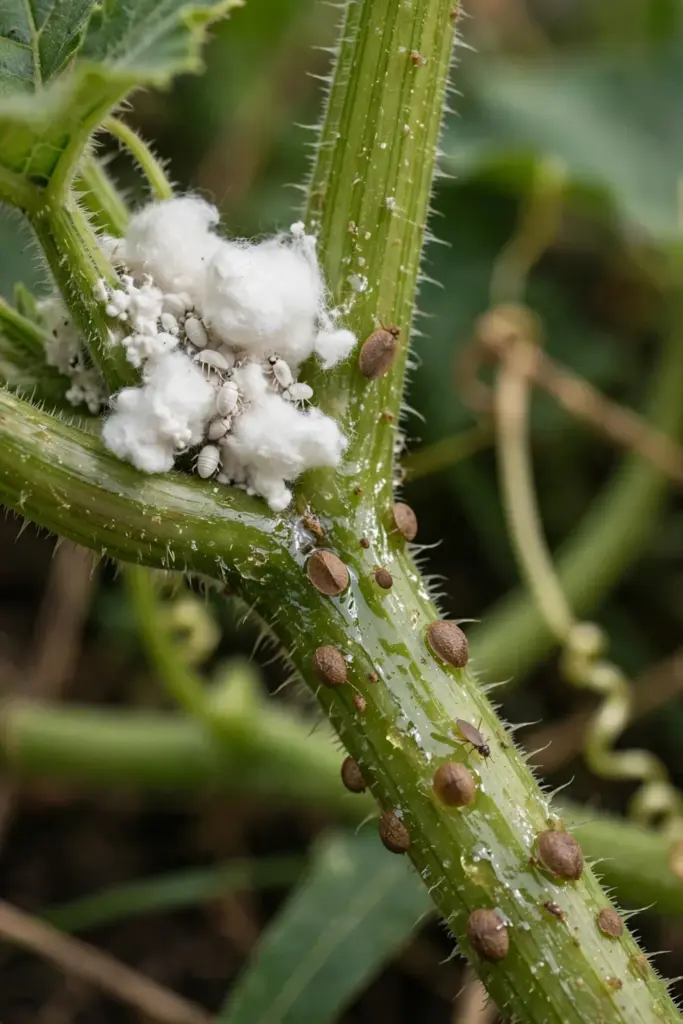
Mealybugs coat themselves in white wax and gather in leaf joints, under leaves, and on stems. Scale insects lose their legs as adults and sit as immobile bumps. Both feed on sap and drip honeydew. Sooty mold grows on the honeydew and blackens leaves and fruit. Ants farm both pests for honeydew, just as they farm aphids.
Check joints and stem bases when a vine wilts for no clear reason. Rub a bump with a thumbnail. A scale bump lifts off and leaves a stain. A mealybug smears waxy white. Honeydew without aphids points to mealybugs or scale higher on the vine.
Prune the worst growth and bin it. Dab mealybug clumps with a cotton swab dipped in diluted rubbing alcohol, then rinse the leaf. Spray horticultural oil at the crawler stage for scale, because settled adults resist sprays, and follow the label. Control the ants, because ants defend both pests. The organic pest control overview covers oils and soaps in more depth. Keep the vine vigorous, because stressed plants carry heavier colonies.
Check stems, not just leaves. Scale settles on stems and fruit stalks where a quick glance misses it. Run a thumb along the stem of any vine that wilts for no clear reason. Mealybugs hide where a leaf stalk meets the stem, and the white wax shows against green bark. A vine that carries both pests needs two passes a week apart, because crawlers hatch after the first pass. Mark the vine with a tie so the second pass finds it.
7. 28-Spotted Ladybird Skeletonises the Leaf
The 28-spotted ladybird is a plant-eating ladybird. Larvae and adults skeletonise leaves from the underside.
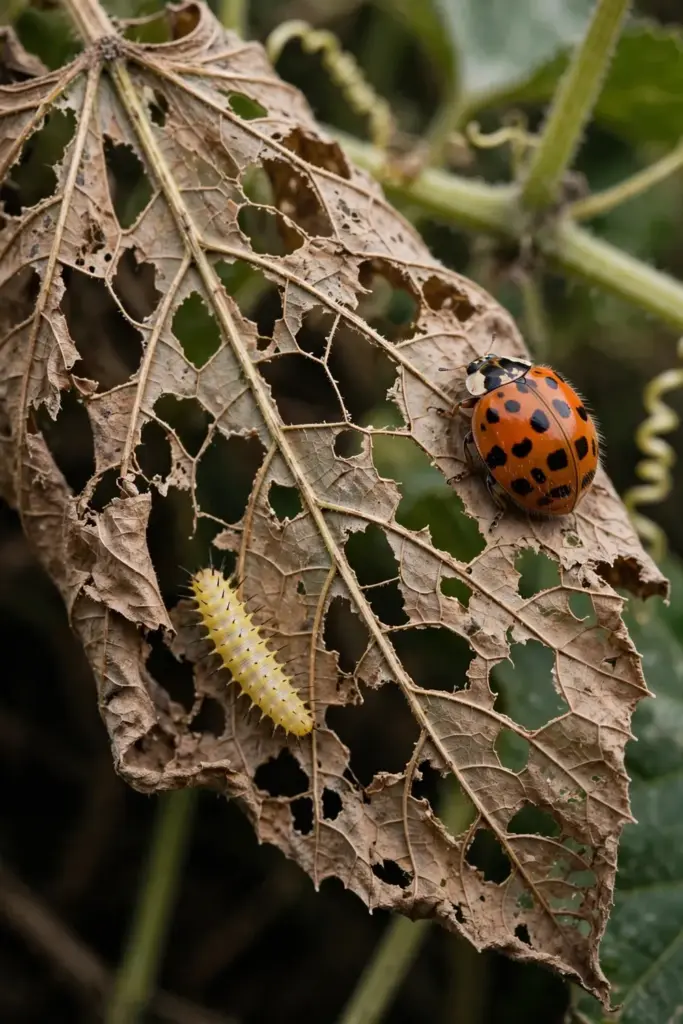
Cucurbit ladybird (Epilachna vigintioctopunctata) is orange with black dots and short downy hair on its wing covers, according to the NRM Regions cucurbit guide. The downy hair marks plant-feeding ladybirds apart from predatory ones. Larvae are pale yellow with dark branched spines, growing to 6 mm long. Females lay upright oval yellow eggs in batches of 10 to 20 under leaves.
Larvae feed on leaf undersides. Adults feed on both sides. Feeding strips the soft tissue between veins and leaves a skeleton of veins. Heavy feeding slows the vine and cuts yield. Seedlings can die under attack. The beetles play dead and drop to the ground when disturbed, so check the soil under a damaged vine.
Hand-pick adults and larvae into soapy water. Crush egg batches under leaves. Clear crop debris at season end, because adults shelter in it. Never spray a ladybird colony with a broad-spectrum product, because the spray kills the predatory ladybirds that eat aphids and mites. Learn the downy hair mark, because it stops you from killing the good ladybirds by mistake.
8. Cucumber Moth Chews Leaves, Flowers, and Fruit
Cucumber moth larvae chew. They eat leaves, flowers, and young fruit.
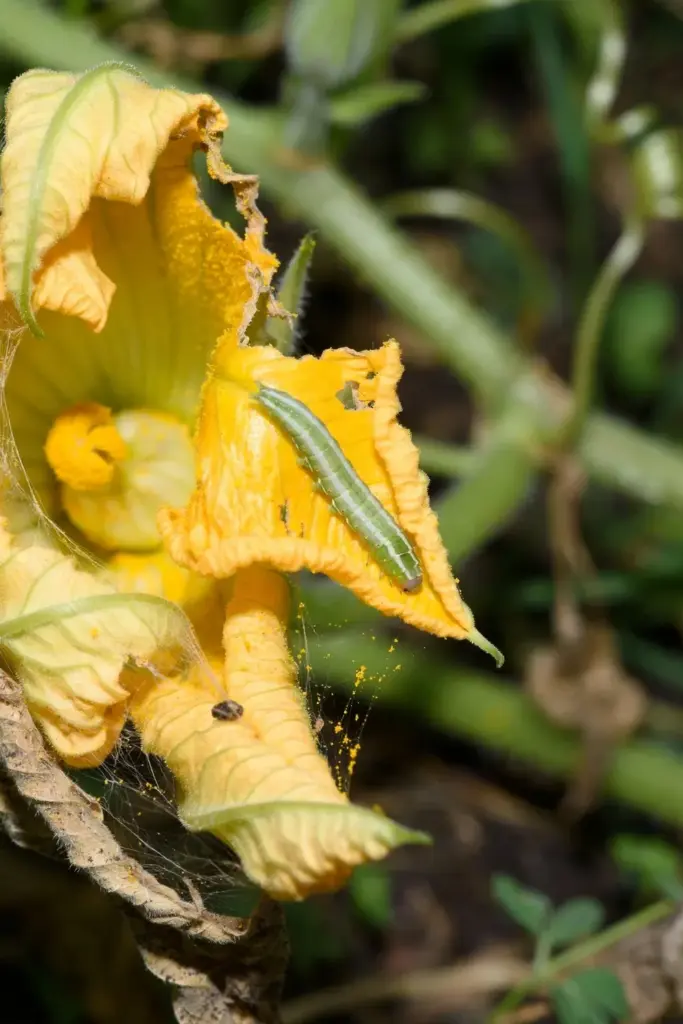
Cucumber moth (Diaphania indica) lays eggs on cucurbit leaves, and the larvae feed from hatching, according to the Northern Territory Government cucurbit pest Agnote. Larvae are green caterpillars that fold or web leaves for shelter. They chew holes in leaves, eat flower buds, and scar young fruit. A flower that drops without setting, with chewed petals, points to cucumber moth before any other cause.
Check flowers and young fruit in the morning. Hand-pick caterpillars and crush webbed leaves. Row covers block egg-laying moths until flowering, then lift the covers for bees. Clear debris at season end, because pupae shelter in it. Birds and parasitic wasps prey on caterpillars, so skip broad-spectrum sprays that kill them. A vine that loses a few flowers still crops, and early picking stops the worst fruit damage.
Webbed leaves mark the feeding site. A caterpillar folds a leaf edge and feeds inside the fold, safe from sprays and birds. Open every folded leaf you find and crush the caterpillar inside. Check the underside of young fruit, because larvae chew shallow grooves into fruit that touches the ground. Lift fruit onto a board or tile to keep it dry and out of reach. A fruit with one shallow groove still eats well, and the scar stays on the rind.
9. Slugs and Snails Eat Seedlings at Night
Slugs and snails feed at night. They eat seedlings and leave slime trails.
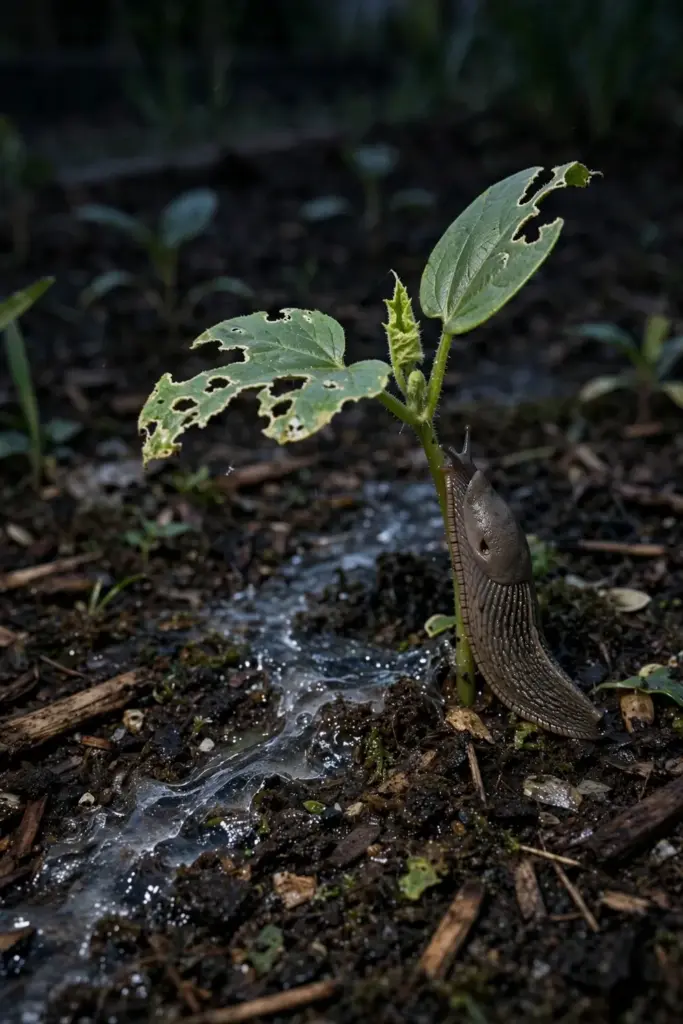
Slugs and snails hide by day under mulch, boards, pots, and dense leaves. They emerge after dark and after rain. They eat seedlings to the ground and chew ragged holes in leaves and fruit that touch soil. Slime trails on leaves and soil confirm them. A seedling that vanishes overnight, with no insect in sight by day, points to slugs or snails.
Hand-pick with a torch after dark, and drop the catch into soapy water. Remove daytime shelter near the patch. Pull mulch back from seedling stems so the ground dries by day. Raise beds where drainage allows, because slugs travel slower across dry ground. Water in the morning so the surface dries before night. Check the patch after rain, because wet nights bring the heaviest feeding.
Lay a flat board near the patch as a trap, because slugs gather under it by day. One lift each morning collects them. Fruit that rests on soil draws slugs too, so lift pumpkins onto boards or tiles as they swell. A fruit with a chewed patch still stores once you cut the damage away, and the board keeps the next fruit clean. Copper rings around pots stop slugs on container vines. The ring needs a gap-free join to work.
10. Queensland Fruit Fly Maggots Rot the Fruit
Queensland fruit fly lays eggs in fruit. Maggots feed inside, and the fruit rots and drops.
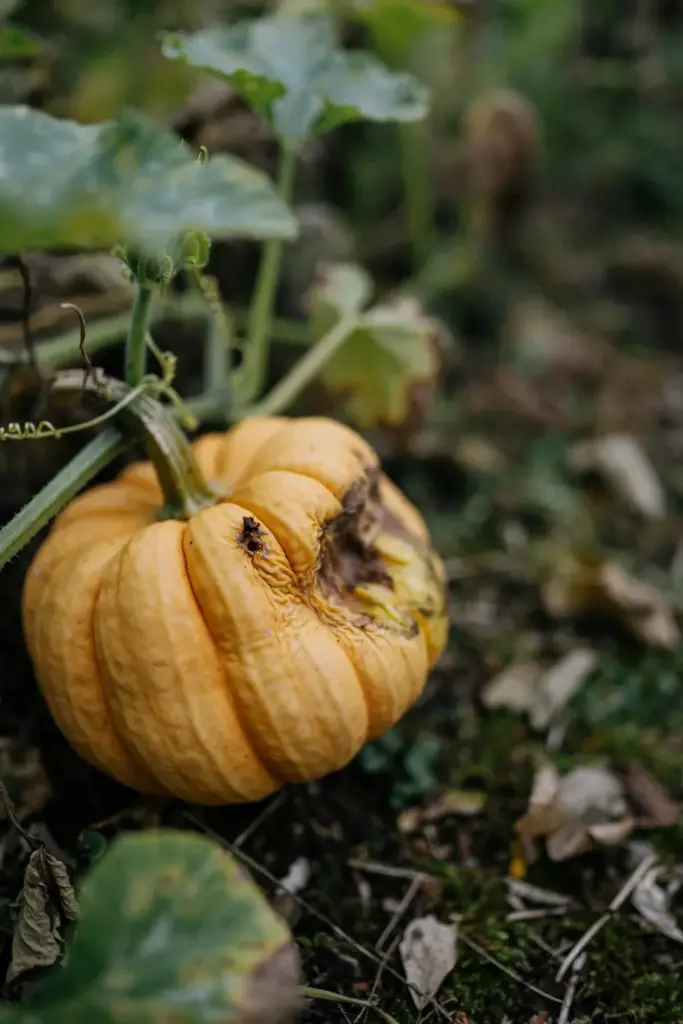
Queensland fruit fly (Bactrocera tryoni) is the Australian fruit fly that attacks pumpkins. It differs from the melon fly named in overseas pages, which is not the Australian pumpkin story. Females sting fruit and lay eggs under the skin. Maggots feed inside the fruit, and the fruit yellows, rots, and drops early. A pumpkin that softens and rots while still small, with a sting mark on the skin, points to fruit fly.
Exclusion beats spraying. Slip bags or sleeves over fruit after the fruit sets, and seal them so no fly enters, according to the Agriculture Victoria home garden fruit fly guide. Drape fine mesh over the patch after pollination, and keep fruit clear of the mesh. Pick up fallen fruit every day and destroy it in a sealed bag in the sun, never in the compost. Protein bait sprays attract and kill adults, and the label governs the mix and timing. Hang traps at the patch edge to track numbers.
Traps tell you when the flies arrive. A trap that catches flies two weeks in a row means the patch needs bagging now, not next week. Check traps twice a week through the fruiting season, and replace the lure per the label. Fallen fruit carries the next generation, so a missed day of hygiene undoes a week of trapping. A neighbour who leaves fallen fruit feeds your flies too, and a shared clean-up beats a solo one.
Run the Weekly Pumpkin Pest Check
Check pumpkins twice a week. Look under leaves, at tips, and at fruit in contact with the ground.
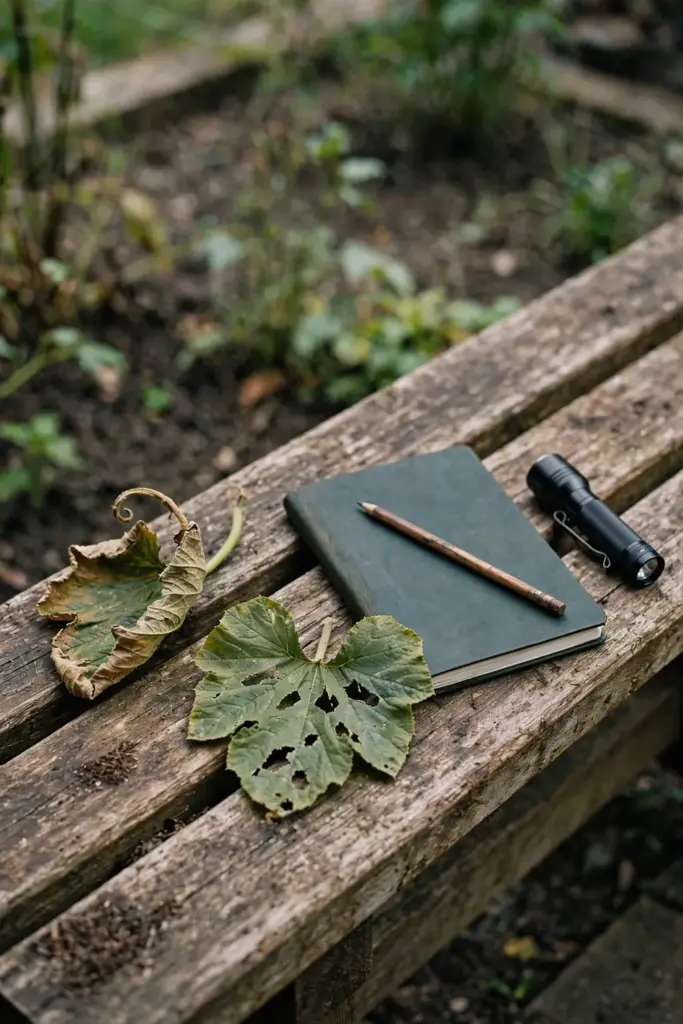
Walk the patch with a torch once after dark each week. Turn five leaves over per vine and look at the undersides. Check growing tips for curling and ants. Check fruit where it touches soil for sting marks and chew marks. Write the count down, because a count shows whether a colony grows or shrinks. A check takes ten minutes on a home patch, and it catches colonies before they explode.
Use the count to decide. A handful of aphids on one tip needs a water spray, not a product. A beetle on every seedling needs hand-picking the same day. A trap that fills twice in a row means bagging starts now. A colony that shrinks after two sprays needs watching, not a third spray. The count turns worry into a decision, and the decision keeps the patch ahead of the pests.
Spray in the evening after flowers close. Never spray open flowers, because bees work them by day. Follow the label on every bought product, and keep pets and children away until sprays dry. Row covers block pests until flowering, then lift them for pollinators or hand-pollinate under the cover. Companion planting for pest control adds trap crops like nasturtiums that draw aphids away from the vine. Clear debris at season end, rotate the patch next year, and keep the soil fed, because building soil health grows vines that outrun light pest pressure.
Frequently Asked Questions About Pumpkin Pests in Australia
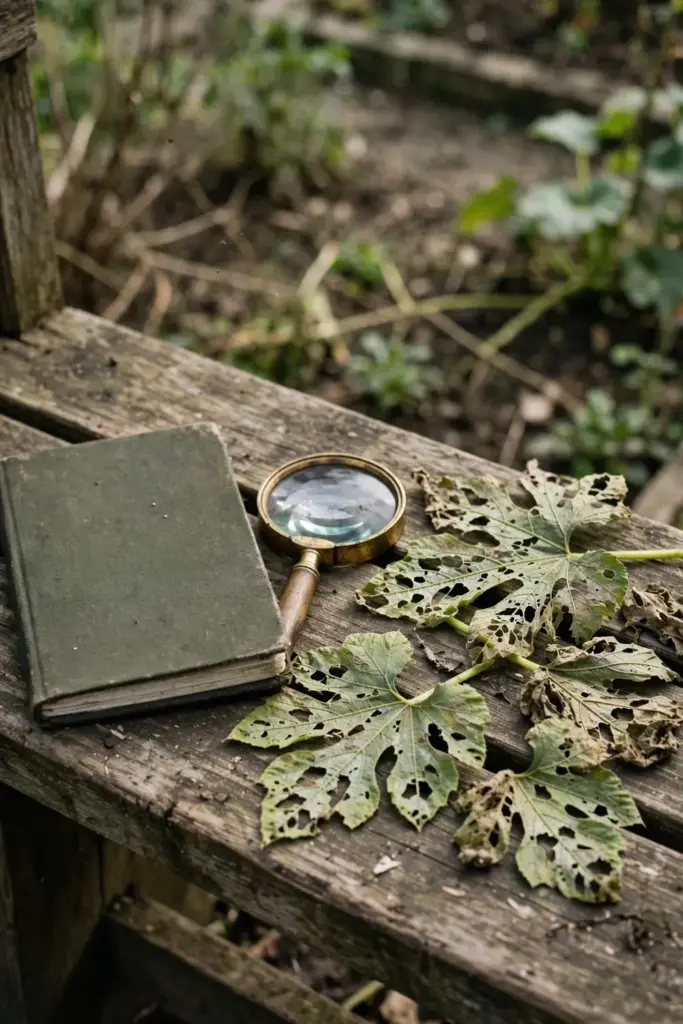
Pumpkin beetle eats the largest holes, and it often leaves only the veins. The 28-spotted ladybird skeletonises leaves from the underside. Cucumber moth larvae chew leaves, flowers, and young fruit. Slugs and snails eat seedlings at night and leave slime trails. Match the hole shape to the culprit, then check the underside of the leaf, the stem joints, and the soil beneath the vine before you treat anything.
No. Pumpkin beetles chew. Adults cut large holes in leaves and leave veins behind. Larvae feed on roots underground. The sap-suckers on pumpkin are melon aphid, whitefly, thrips, two-spotted mite, mealybugs, and scale. The confusion comes from overseas pages about the squash bug, a North American insect that does not attack Australian pumpkins. Name the feeding type first, because the fix follows it.
Spray the colony off with a forceful jet of water, aimed at leaf undersides and growing tips. Repeat after a few days, because survivors rebuild fast. Remove the ants that guard the colony. Leave ladybirds, lacewing larvae, and hoverfly larvae alone, because they eat aphids. Row covers block winged aphids from landing. Soap works on direct contact, and the label governs the mix.
Row covers block beetles, moths, aphids, and whitefly while the cover stays sealed. Lay the cover at sowing and seal the edges with soil. Lift the cover at flowering so bees reach the flowers, or hand-pollinate under the cover. Covers also warm the soil and push early growth. A torn cover admits pests, so check the edges twice a week and patch tears at once.
Spray in the evening after flowers close, because bees work pumpkin flowers by day. Never spray open flowers. Spray leaf undersides, where sap-suckers feed, and keep the spray off blooms. Follow the label on every product, and keep pets and children away until sprays dry. Hand-picking, water jets, row covers, and predators come first, and sprays stay the last tool in the kit.
Name the Feeding Type, Then Treat It
Pumpkin pests split into two camps. Sap-suckers curl, stipple, and drip honeydew, while chewers cut holes, skeletonise leaves, and eat seedlings. Fruit fly works alone inside the fruit.
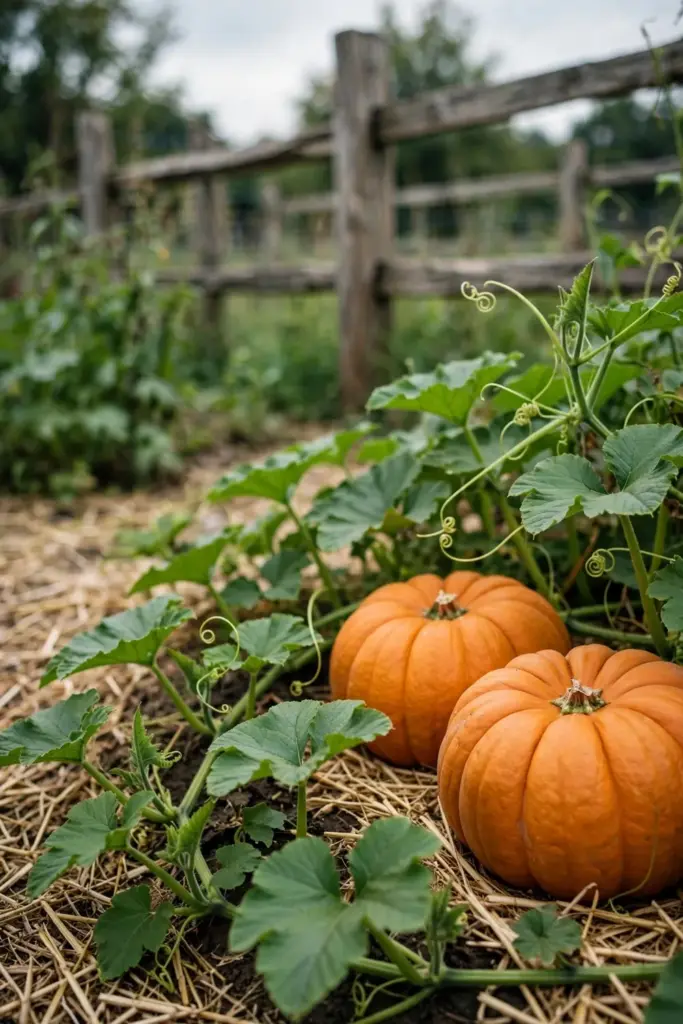
Run the damage test first, then match the pest to the fix in the table at the top of this page. Turn the leaf over. Check the tip. Check the fruit. Hand-pick the chewers, wash off the sap-suckers, bag the fruit, and spray in the evening after the bees go home. A patch checked twice a week stays ahead of every bug on this page, and the harvest repays the ten minutes.