
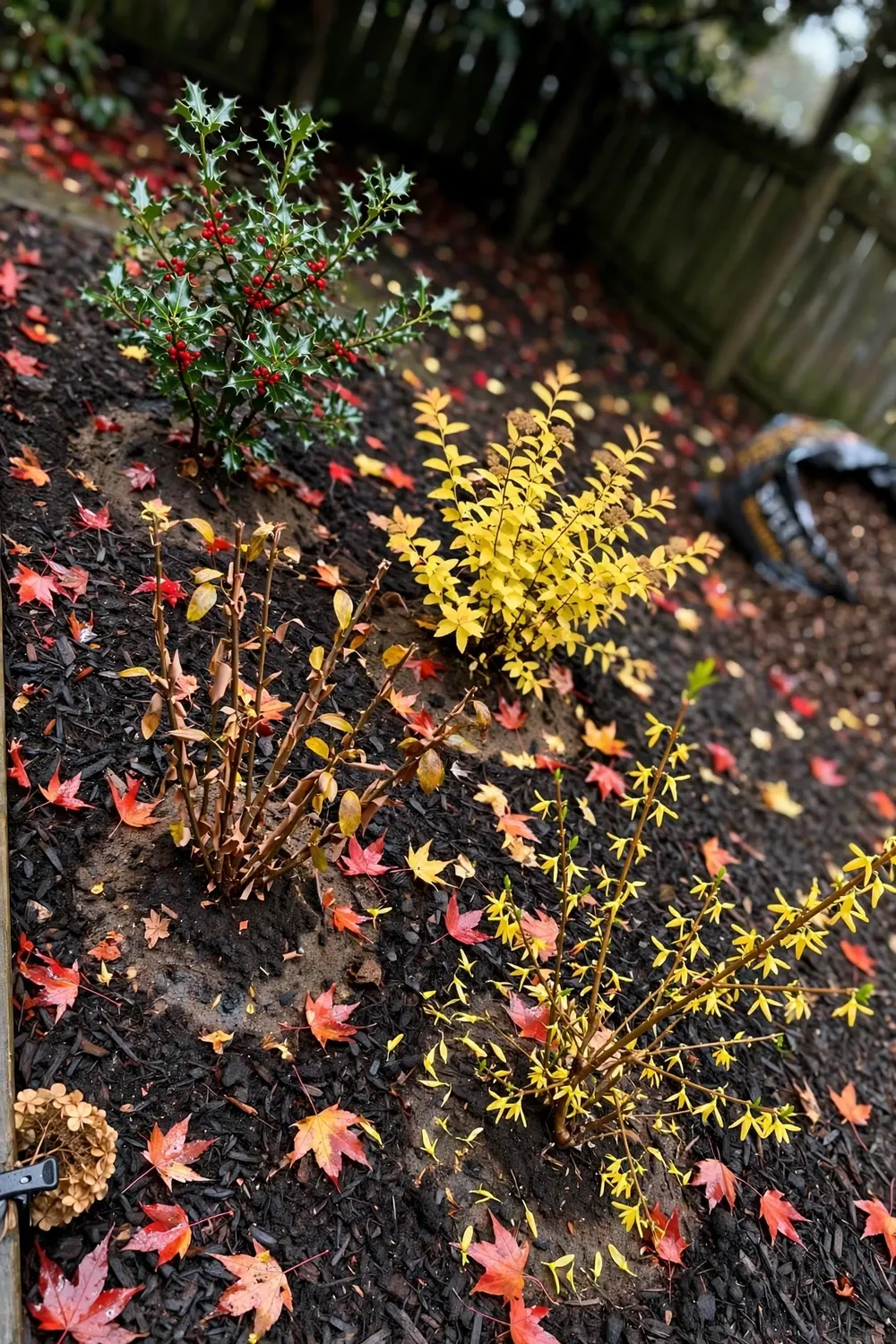

Plant 5 shrubs this October and you will see the difference by May. That is the short version of bushes to plant in fall: woody plants go in while the soil is still warm, roots grow for months before summer heat, and you skip the spring rush at the nursery. Gardeners say “bushes” and nurseries say “shrubs”; they mean the same woody plants, and this list uses “shrubs”.
Fall works for shrubs for one reason. The top of the plant goes dormant while the soil stays warm enough for roots to keep working. The Morton Arboretum’s fall planting guide notes that most deciduous shrubs can be planted in fall and that plants with shallow, fibrous root systems establish the easiest. NC State Extension adds the mechanics: dig the hole two to three times wider than the root ball, keep the root flare level with the surrounding soil, and backfill with native soil so roots spread outward instead of circling in amended fluff, as their New Hanover County planting guide explains. Mulch 5 to 7.6 cm deep, keep it off the stems, water until the ground freezes, and do not fertilize: NC State’s Robeson County guide warns that nitrogen in the planting hole burns roots and pushes soft shoot growth that winter kills.
This is the WHICH listicle of the fall cluster. Timing lives on the fall planting guide, the full autumn task list on fall gardening tips, and frost-date math on when to start fall garden. Planting technique in depth belongs to a future how-to article, so each entry below gives you the tags that decide the purchase: mature size, sun, zone, growth rate, evergreen or deciduous, wildlife value, and primary use.
The Comparison Table: 26 Shrubs at a Glance
| Shrub | Mature size | Sun | Zones | Growth rate | Leaf habit |
|---|---|---|---|---|---|
| ‘Green Giant’ Arborvitae | 12–18 m tall, 3.6–6 m wide | Full sun | 5–8 | Fast, 0.9–1.5 m/yr | Evergreen |
| Leyland Cypress | 15–21 m tall, 4.5–7.5 m wide | Full sun | 6–10 | Fast, 0.9–1.2 m/yr | Evergreen |
| Cherry Laurel | 3–6 m tall and wide | Full sun to shade | 6–9 | Fast | Evergreen |
| Wax Myrtle | 3–6 m tall and wide | Full sun to part shade | 7–11 | Fast | Evergreen |
| Privet | 3–4.5 m tall, 3 m wide | Full sun to part shade | 5–8 | Fast | Semi-evergreen |
| Nellie Stevens Holly | 4.5–7.5 m tall, 3–4.5 m wide | Full sun to part shade | 6–9 | Medium | Evergreen |
| Red Tip Photinia | 3–4.5 m tall and wide | Full sun | 7–9 | Fast | Evergreen |
| Forsythia | 2.4–3 m tall and wide | Full sun to part shade | 5–8 | Fast | Deciduous |
| Panicle Hydrangea | 1.8–3 m tall and wide | Full sun to part shade | 3–8 | Medium | Deciduous |
| Lilac | 3.6–4.5 m tall, 3–3.6 m wide | Full sun | 3–7 | Medium | Deciduous |
| Viburnum | 1.8–3 m tall and wide | Full sun to part shade | 5–8 | Medium | Deciduous |
| Weigela | 1.5–1.8 m tall and wide | Full sun | 4–8 | Medium | Deciduous |
| Rose of Sharon | 2.4–3.6 m tall, 1.8–3 m wide | Full sun to part shade | 5–9 | Medium | Deciduous |
| Evergreen Azalea | 0.9–1.5 m tall and wide | Part shade | 6–9 | Slow to medium | Evergreen |
| Boxwood | 0.6–1.8 m (dwarf) to 6 m | Full sun to part shade | 5–9 | Slow | Evergreen |
| Juniper | 0.3–3 m by type | Full sun | 4–9 | Slow to medium | Evergreen |
| Yew | 3–6 m tall and wide | Full sun to full shade | 4–7 | Slow | Evergreen |
| Camellia Sasanqua | 1.8–3.6 m tall and wide | Part shade | 7–9 | Medium | Evergreen |
| Serviceberry | 4.5–7.5 m tall, 4.5–6 m wide | Full sun to part shade | 4–9 | Medium | Deciduous |
| Ninebark | 1.5–3 m tall and wide | Full sun | 3–7 | Fast | Deciduous |
| Chokeberry | 1.8–2.4 m tall and wide | Full sun to part shade | 3–9 | Medium | Deciduous |
| Winterberry Holly | 1.8–3 m tall and wide | Full sun to part shade | 3–9 | Medium | Deciduous |
| Dwarf Korean Lilac | 1.2–1.5 m tall and wide | Full sun | 3–7 | Slow to medium | Deciduous |
| Spirea | 0.6–1.2 m tall and wide | Full sun | 4–9 | Medium | Deciduous |
| Potentilla | 0.6–1.2 m tall and wide | Full sun to part shade | 2–7 | Medium | Deciduous |
| Knock Out Rose | 0.9–1.2 m tall and wide | Full sun | 5–11 | Medium | Deciduous |
Sizes are standard nursery mature figures for the named type; a fast grower in zone 8 hits the top of its range sooner than the same plant in zone 5.
How to Use the Table Without Regret
Read the table in this order: zone first, sun second, size third. Zone is the non-negotiable filter; a zone 7 plant in zone 5 is a one-winter rental. Sun comes next because a full-sun shrub in shade grows leggy and flowers poorly no matter how good the soil. Size is last because it is the column gardeners ignore and then pay for with a decade of shearing.
Growth rate tells you how patient to be. Fast means the plant visibly changes in one season; slow means you buy the biggest pot you can afford because the plant will not catch up on its own. Evergreen versus deciduous decides the winter look of the bed. Wildlife value is the tiebreaker between two plants that otherwise match; in a garden that already feeds birds, it matters less than mature size.
Space Them Like the Adults They Become
The most expensive shrub mistake is spacing for the nursery pot instead of the mature plant. A ‘Green Giant’ planted 1 m from the fence becomes a 6 m wide tree arguing with the fence in year eight. Read the mature width in the table, then plant at half that width for a hedge that closes in three years, or full width for specimens that never touch.
Crowding also invites disease. Boxwood blight, photinia leaf spot, and juniper tip blight all spread fastest where foliage stays wet from touching neighbors. Airflow is free fungicide. When two shrubs mature into each other, the weaker one dies back from the inside out, and the survivor looks lopsided for a decade.
There is one more spacing trap: the house. Foundation plantings need 60 to 90 cm between the mature shrub edge and the wall, not between the pot and the wall. Shrubs crammed against siding stay damp, invite pests into the house, and force you to shear the back side blind. Measure from the center of the planting hole to the foundation and compare against half the mature width plus 30 cm of breathing room.
Fast-Growing Privacy
The screen is the most common reason gardeners plant shrubs in fall. A hedge started in October gets a full extra growing season over one planted in April, which matters when the goal is blocking a second-story window. The eight below are ordered by mature height, tallest first, so read down until the size matches your problem. Every one of them wants full sun for maximum speed; shade cuts the growth rate in half and opens the habit up.
1. Plant ‘Green Giant’ Arborvitae for the Fastest Screen
Nothing else sold at the nursery builds a 6 m screen as fast. ‘Green Giant’ pushes 0.9 to 1.5 m of growth a year once established, keeps its rich green through winter without bronzing, and shrugs off the bagworm and deer pressure that ruin its eastern arborvitae cousins. Plant them 1.8 to 2.4 m apart for a solid hedge; closer spacing buys one season and costs you airflow for decades.
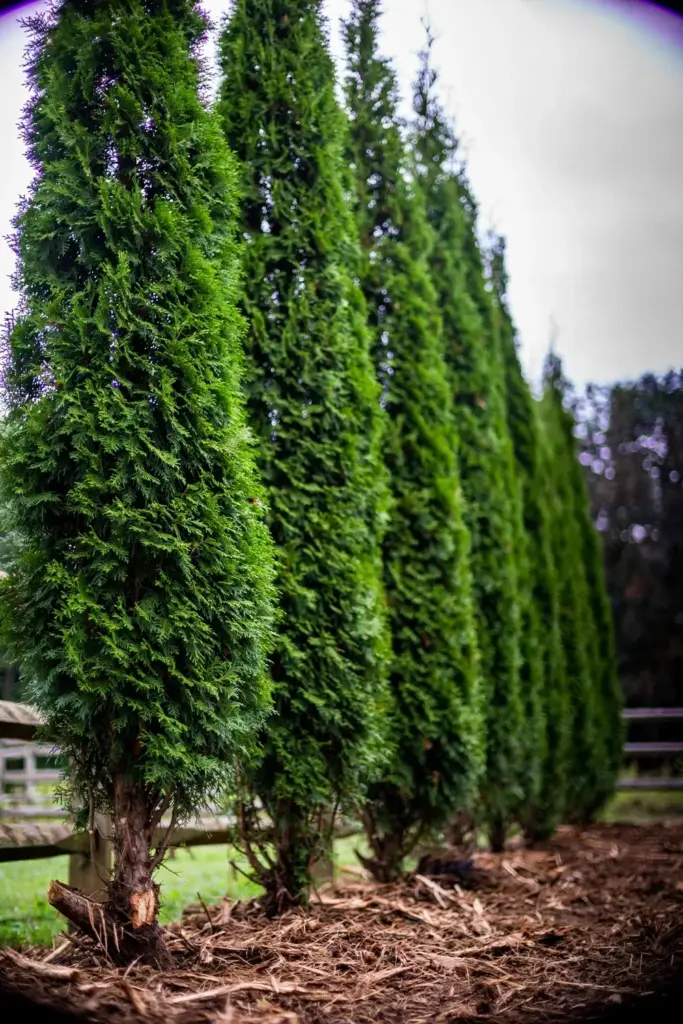
Deer mostly leave it alone, which is why suburban screens of it survive where yews get eaten to stubs. Do not plant where the mature 6 m width will swallow the sidewalk; moving a 4 m arborvitae is a crane job, not a shovel job.
Fall planting suits it because the fibrous root system the Morton Arboretum flags as fall-friendly is exactly what arborvitae has. Water the row deeply once a week until freeze; a dry fall kills more new screens than cold does. Tags: 12–18 m tall, 3.6–6 m wide · full sun · zones 5–8 · fast · evergreen · wildlife: nesting cover · use: privacy screen.
2. Use Leyland Cypress Where Winters Stay Mild
Leyland cypress is the warm-zone answer to the same question: a 15 to 21 m evergreen wall in under a decade. It wants full sun, tolerates drought once rooted, and grows fastest of any common screen conifer. The failure mode is planting it where winter bites below zone 6 or where the soil stays wet; both invite canker and root rot that no fall planting technique fixes.
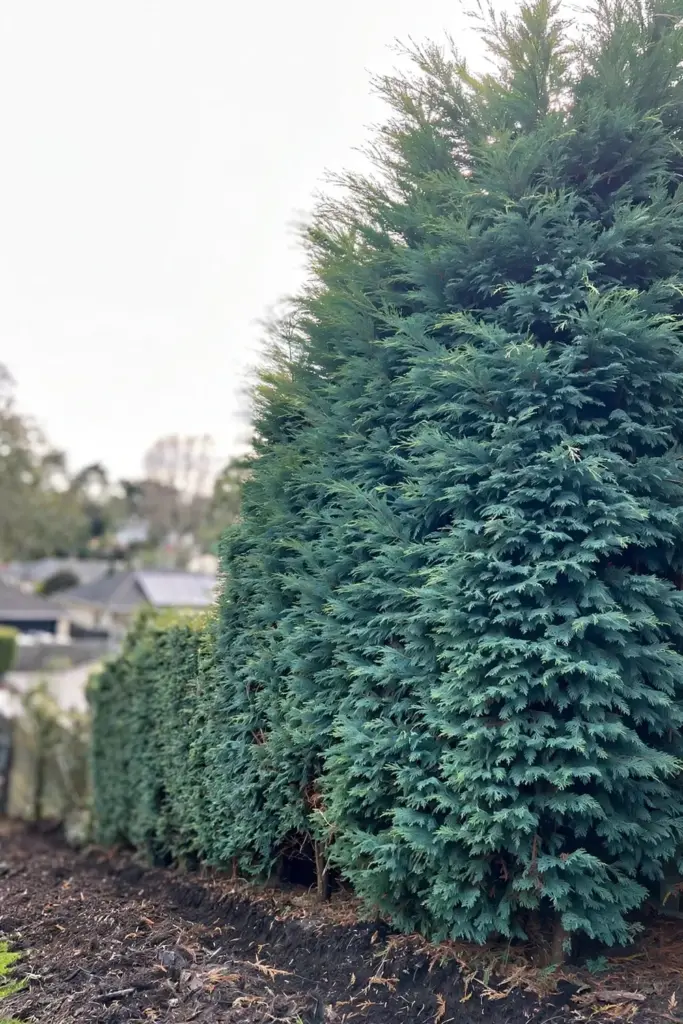
Canker shows as sunken bark patches weeping resin; prune infected limbs 15 cm below the damage in dry weather and disinfect the saw between cuts. In the humid Southeast, plant a canker-resistant selection rather than the straight species.
Buy the straight species only if you have the room; columnar cultivars exist for narrower lots. Space at one-third of the mature width and let the trees meet. Tags: 15–21 m tall · full sun · zones 6–10 · fast · evergreen · wildlife: nesting cover · use: tall privacy screen.
3. Fill Shade With Cherry Laurel
Few evergreens tolerate shade and still grow fast. Cherry laurel does both, reaching 3 to 6 m with glossy leaves that read as expensive from the street. It fruits in fall; birds strip the black cherries within days. Every part except the ripe fruit flesh is toxic, so keep it away from grazing animals and curious toddlers.
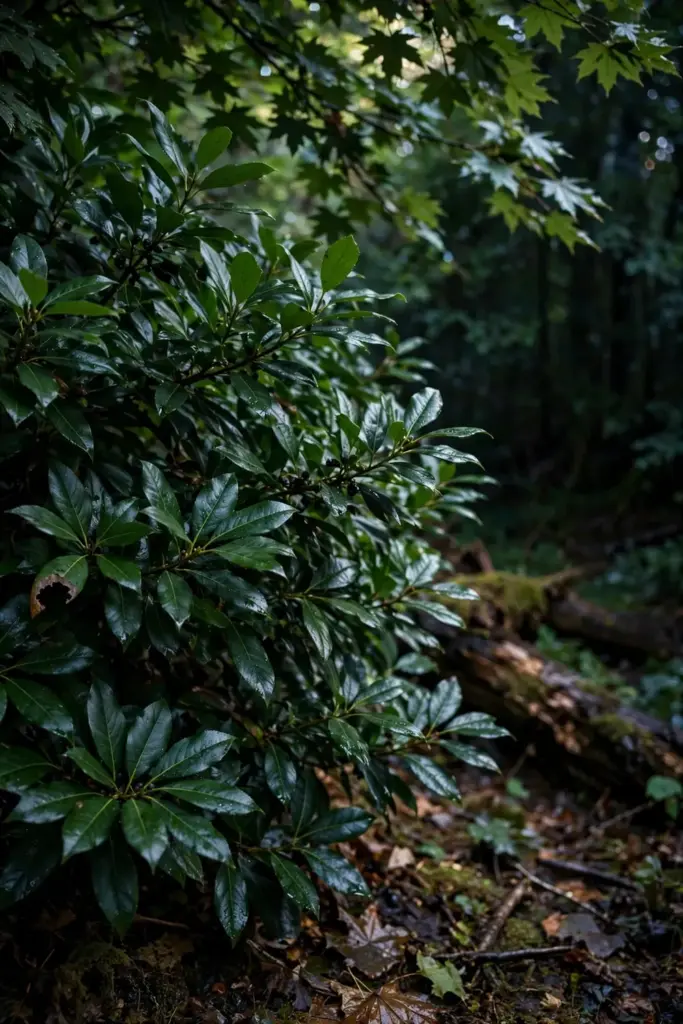
Crushed leaves release a bitter-almond smell from cyanogenic compounds, the plant’s own deer repellent. In windy sites, pick a sheltered corner; winter wind desiccates broadleaf evergreens faster than cold ever does.
It suckers and layers where happy, which makes it a filler rather than a specimen. Shear in late winter if you must, never in fall; fresh cuts going into winter is the classic way to brown an evergreen. Tags: 3–6 m · full sun to shade · zones 6–9 · fast · evergreen · wildlife: bird fruit · use: shade screen, filler.
4. Let Wax Myrtle Work the Tough Spots
Wax myrtle takes salt spray, wet feet, and poor sand, then grows 3 to 6 m of fragrant evergreen foliage anyway. The waxy blue-gray berries feed birds through winter and the crushed leaves smell like bayberry candles. In the coastal South it is the default native screen, and it earns that status.
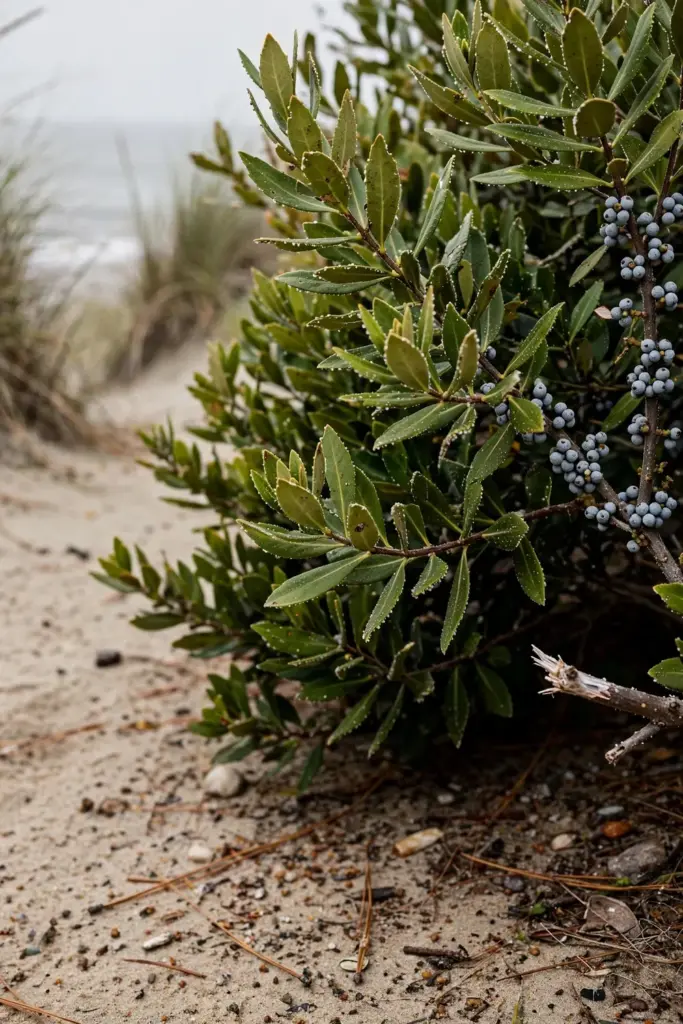
It takes hard rejuvenation pruning in late winter and pushes fresh growth from old wood without complaint. Tease out circling roots at planting; a root that circles the pot becomes a girdling root that strangles the trunk in year ten.
It is only reliably hardy to zone 7, so northern gardeners should stop here and pick from the zone 5 entries instead. Prune to shape in late winter; fall pruning wastes the plant’s stored energy. Tags: 3–6 m · full sun to part shade · zones 7–11 · fast · evergreen · wildlife: winter berries for birds · use: coastal screen, native hedge.
5. Hedge Fast and Cheap With Privet
Privet is the fastest cheap hedge in the temperate garden: 3 to 4.5 m of dense, white-flowered, black-berried growth from inexpensive bare-root whips. It tolerates shearing into anything, including the formal rectangles that make small gardens look larger. The trade is invasiveness in parts of the Southeast and Midwest; check your state’s list before planting, and deadhead if seedlings appear.
Where privet is listed invasive, the responsible move is a native alternative like ninebark or chokeberry from the list below. If you plant it anyway, shear right after flowering so no berries form to seed the neighborhood.
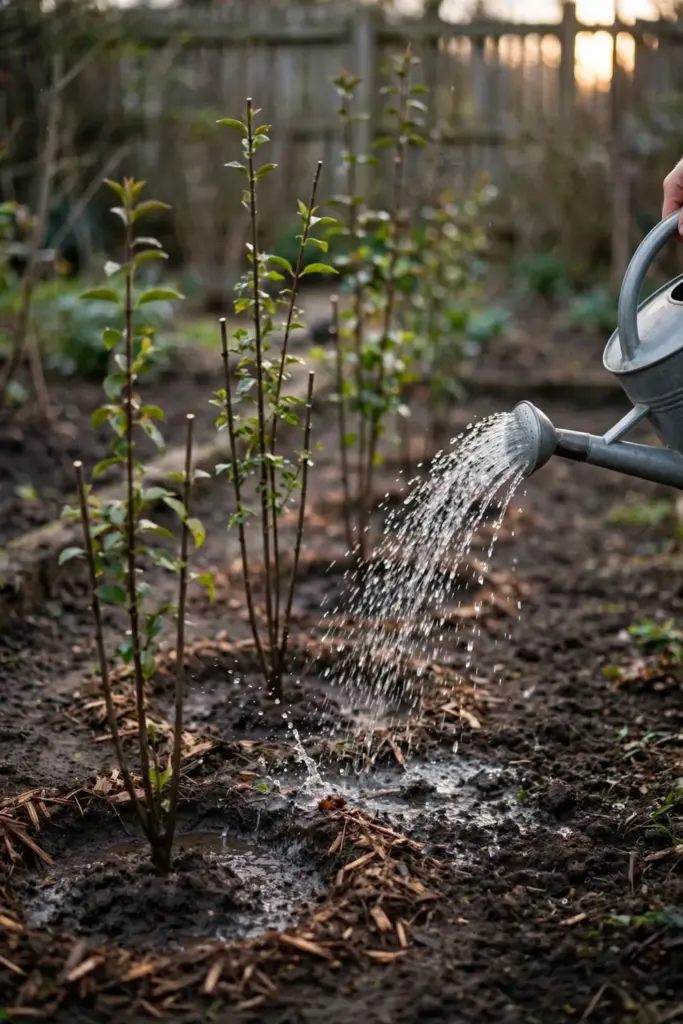
Plant whips 30 cm apart in fall, mulch, and cut them back by a third at planting to force low branching. A privet hedge planted tall and thin stays thin at the base forever. Tags: 3–4.5 m · full sun to part shade · zones 5–8 · fast · semi-evergreen · wildlife: bee flowers, bird berries · use: budget hedge.
6. Get Red Winter Berries From Nellie Stevens Holly
Nellie Stevens holly solves two problems at once: a 4.5 to 7.5 m evergreen screen that also decorates itself with red berries from November into spring. It is a hybrid, so every plant is female and berries heavily without a male pollinator nearby. Birds take the berries in late winter when little else is available.
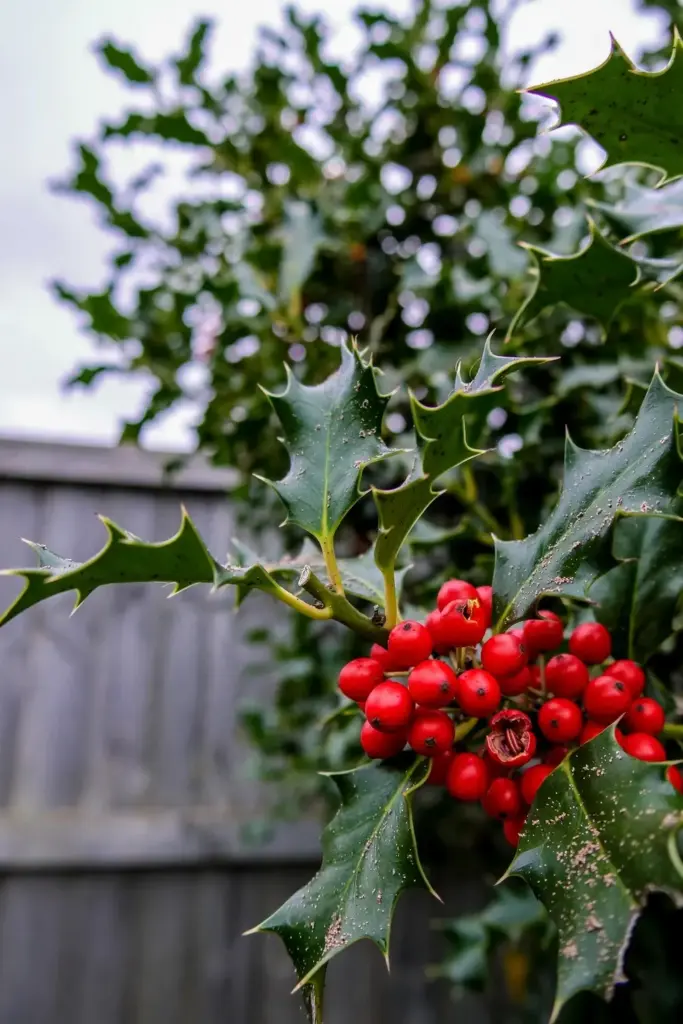
Berries form heaviest in full sun; a shaded holly still screens but fruits sparsely. Every plant is female, so a single specimen by the entry berries on its own with no pollinator partner needed.
Give it room; shearing a holly meant to be 6 m wide into a 2 m slot is a yearly fight you will lose. Fall planting is ideal because the broadleaf evergreen keeps transpiring and needs the extra root months. Tags: 4.5–7.5 m · full sun to part shade · zones 6–9 · medium · evergreen · wildlife: winter berries · use: berry screen, specimen.
7. Flash Red New Growth With Red Tip Photinia
Red tip photinia earns its place with spring foliage that emerges fire-engine red before maturing to green. At 3 to 4.5 m it screens a two-story window from the neighbor’s deck. The catch is Entomosporium leaf spot in humid climates; plant where air moves, space generously, and avoid overhead watering.
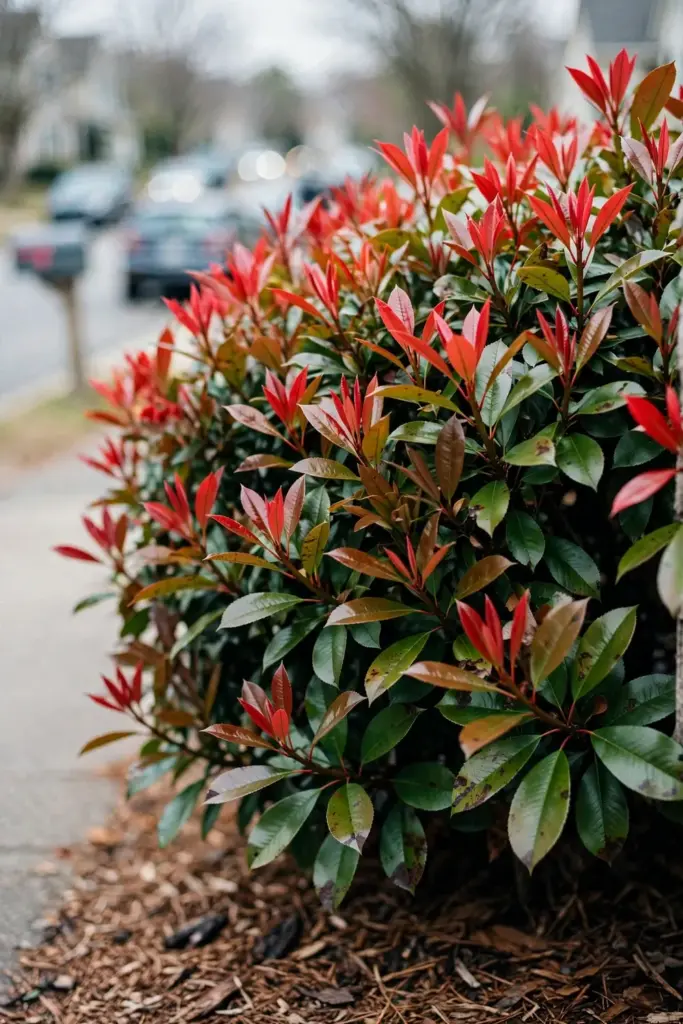
Leaf spot explodes under overhead irrigation; drip or soaker hoses keep the foliage dry and the plant clean. Rake up and discard spotted fallen leaves instead of mulching them back into the bed.
In zones 7 to 9 it is evergreen and fast. North of zone 7, treat it as an annual experiment and pick ninebark instead. Tags: 3–4.5 m · full sun · zones 7–9 · fast · evergreen · wildlife: low · use: colorful screen.
8. Shout Spring With Forsythia
Forsythia is the plant that tells the whole street winter is over: 2.4 to 3 m of yellow bloom on bare stems, weeks before anything else leafs out. It grows fast, tolerates almost any soil, and roots from a cutting stuck in the ground. The only real mistake is shearing it into a meatball in summer, which removes next spring’s flower buds.
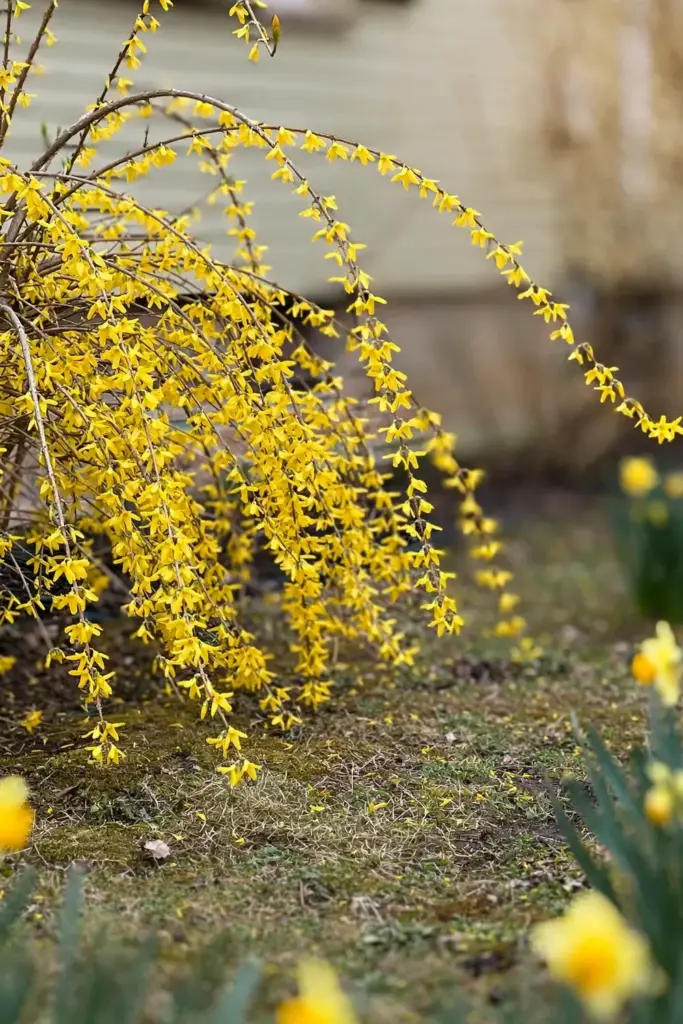
The arching form comes from stems that root where they touch soil. Peg a low branch to the ground in fall and you have a rooted new plant to sever by spring, free.
Let it fountain. Prune right after flowering by removing a third of the oldest stems at the base; that keeps the arching habit the plant is famous for. Tags: 2.4–3 m · full sun to part shade · zones 5–8 · fast · deciduous · wildlife: early bee forage · use: spring signal, informal hedge.
Flowering Shrubs
Flowering shrubs pay rent twice: bloom season, then structure or berries or fall color. The six below are sequenced by bloom time, forsythia first in March through rose of Sharon last in September, so a garden planted from this group alone flowers for seven months. Old-wood bloomers dominate this group, which means the pruning rule is absolute: cut right after flowering, never in fall. For flowers that open in autumn itself rather than shrubs you plant in autumn, see fall blooming perennials.
9. Grow Panicle Hydrangeas for Bulletproof Blooms
Panicle hydrangea is the hydrangea that cannot be killed by a late frost, because it blooms on new wood. Cone-shaped white flower heads open in midsummer, age to pink, and dry on the plant into winter interest. At 1.8 to 3 m it fits the foundation bed that swallows smaller shrubs.
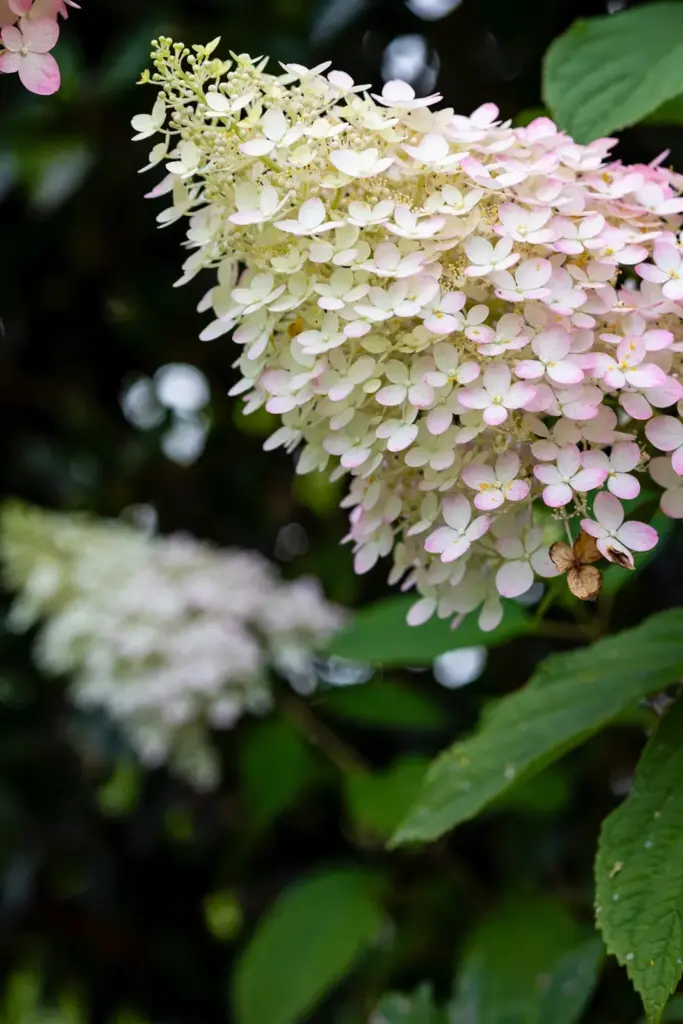
Leave the flower heads standing and they catch frost beautifully into January; cut them in September for indoor arrangements that last months. Newer dwarf cultivars fit the 1 m foundation bed the species would outgrow.
Prune in late winter without fear; every cut produces a flowering stem. The one demand is water in the first year; a dry August turns the flower heads brown at the edges. Tags: 1.8–3 m · full sun to part shade · zones 3–8 · medium · deciduous · wildlife: pollinator flowers · use: summer bloom mass.
10. Plant Lilacs for the Scent You Remember
Common lilac grows 3.6 to 4.5 m of suckering, fragrant, purple spring bloom and outlives the gardener who plants it; century-old lilacs still flower. It needs full sun and air circulation to dodge powdery mildew, and it sulks in the heat south of zone 7. Fall planting gives the roots a head start on the spring growth surge that makes lilac bloom.
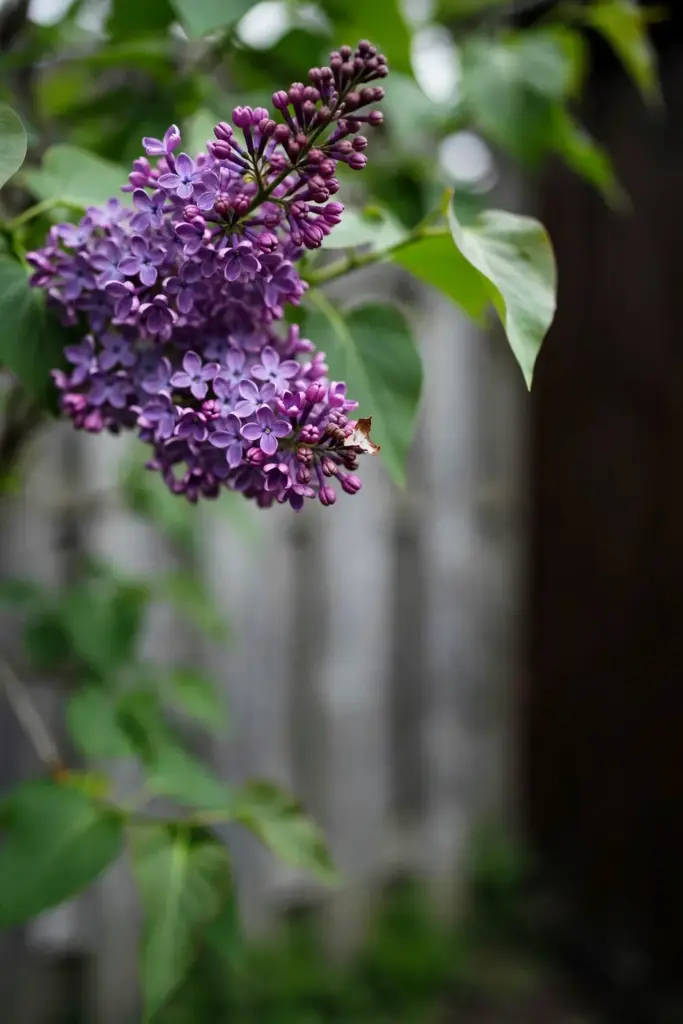
Suckers are free plants: sever a rooted sucker in fall with a sharp spade and pot it up for a friend. A neglected old lilac renews from a third-at-a-time basal pruning spread over three springs.
Deadhead the spent trusses and prune right after flowering. Every June haircut is next May’s flowers removed. Tags: 3.6–4.5 m · full sun · zones 3–7 · medium · deciduous · wildlife: butterfly nectar · use: fragrant spring specimen.
11. Double Up With Viburnum: Flowers Then Berries
Viburnum is two shrubs in one: spring flowers, then fall berries that birds fight over. Korean spice viburnum perfumes the April garden; doublefile viburnum stacks white flower tiers in May. Most reach 1.8 to 3 m and ask for nothing beyond decent soil.
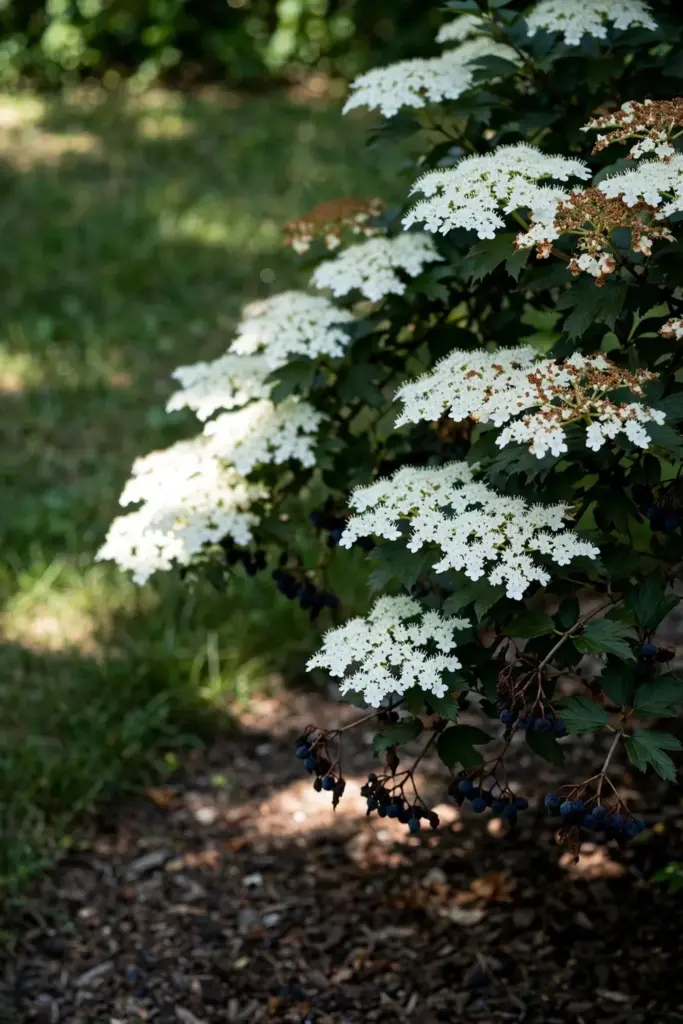
Viburnum leaf beetle is the pest to watch: check leaf undersides in spring for the larvae that skeletonize foliage, and prune out the worst stems. A lone viburnum fruits lightly. Two different species planted near each other fruit far heavier, because cross-pollination does the work.
Plant two compatible species or cultivars where space allows and the berry show doubles. Fall suits viburnum because its roots keep running all winter in unfrozen soil, building the framework spring flowers need. Tags: 1.8–3 m · full sun to part shade · zones 5–8 · medium · deciduous · wildlife: berries, nesting · use: two-season interest.
12. Feed Hummingbirds With Weigela
Weigela pours trumpet-shaped pink and red flowers over a 1.5 to 1.8 m arching frame in late spring, then repeats lightly all summer. Hummingbirds work it daily. Newer cultivars carry purple or variegated foliage, so the plant earns its place even out of bloom.
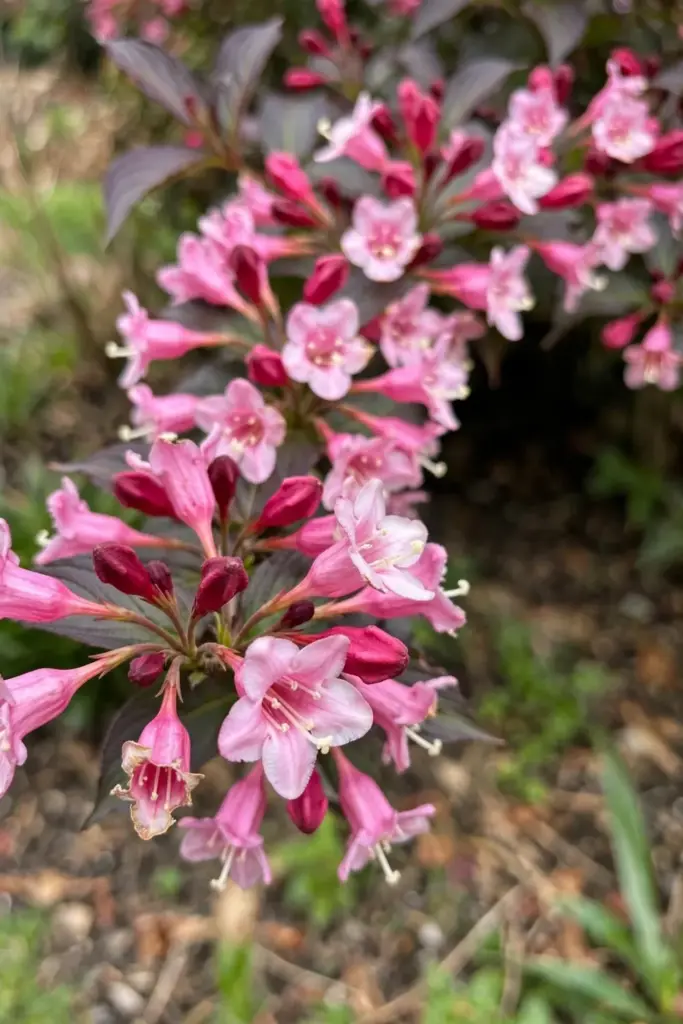
Old thick stems flower weakly, so remove a few of the oldest at the base each spring after bloom. A branch pinned to the soil layers itself; sever it in fall for next year’s gift plant.
It is a plant-and-forget shrub for zones 4 to 8. Prune after the spring flush only; like forsythia, it blooms on old wood and summer shearing deletes flowers. Tags: 1.5–1.8 m · full sun · zones 4–8 · medium · deciduous · wildlife: hummingbirds · use: pollinator border.
13. Stretch Summer With Rose of Sharon
Rose of Sharon blooms when everything else quits: big hibiscus flowers from July into September on a 2.4 to 3.6 m frame. It tolerates heat, drought, and neglect that kill fussier flowering shrubs. The trade is enthusiastic self-seeding; choose sterile cultivars like the Chiffon series where seedlings would be a nuisance.
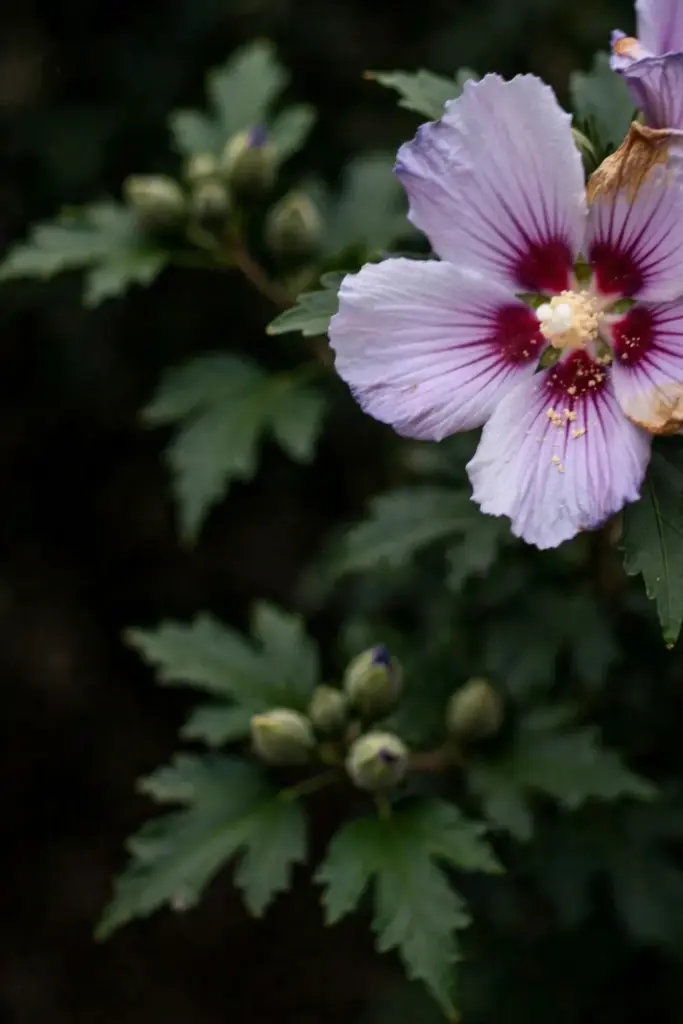
Seedlings pull easily when small; ignore them one season and you are digging taproots. The sterile Chiffon series stays exactly where you put it and blooms just as hard.
Because it leafs out late, mark its spot so spring cleanup crews do not declare it dead. Fall planting is safe; the roots establish while the top sleeps. Tags: 2.4–3.6 m · full sun to part shade · zones 5–9 · medium · deciduous · wildlife: late bee forage · use: late-summer color.
14. Keep Color Coming With Evergreen Azalea
Evergreen azaleas hold their leaves and rebloom: spring’s main show plus encores into fall on repeat-blooming types. At 0.9 to 1.5 m they tuck under windows and along paths. They demand acid soil; in alkaline regions plant in raised beds of pine-bark mix or keep them in containers.
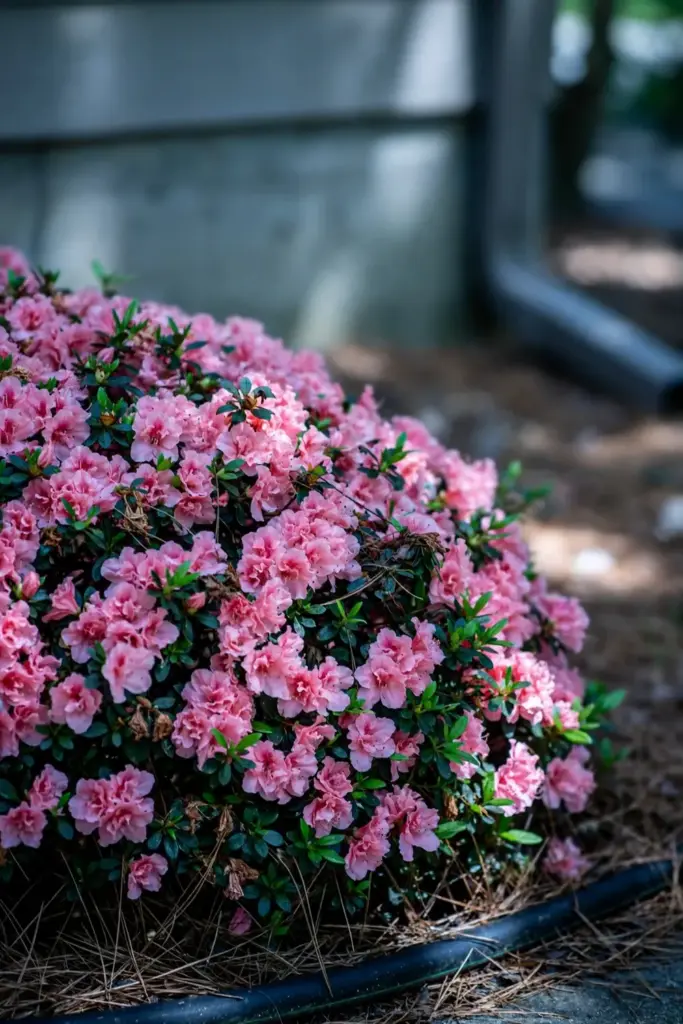
Pine bark fines worked into the top 20 cm of the bed solve most azalea complaints at the root, literally. Lace bugs stipple leaves in hot sun; the part-shade site prevents the problem before it starts.
Mulch with pine straw, water through fall, and never let the shallow roots dry. A thirsty azalea drops its buds before you ever see them. Tags: 0.9–1.5 m · part shade · zones 6–9 · slow to medium · evergreen · wildlife: bee flowers · use: foundation color.
Evergreen Structure
Deciduous shrubs disappear for five months. Evergreens hold the garden together through those months, which is why landscape designers plant structure first and flowers second. The four below cover every light condition from full sun to full shade. They are also the slowest group on this list, so fall planting matters most for them: every extra week of root growth before freeze is winter survival.
15. Anchor the Garden With Boxwood
Boxwood is the skeleton of the formal garden: slow, dense, shearable, green in February when everything else is brown. Dwarf types stay 0.6 to 1.2 m; the species reaches 6 m if you let it. It has one modern enemy, boxwood blight; buy from reputable nurseries, space for airflow, and avoid wetting the foliage.
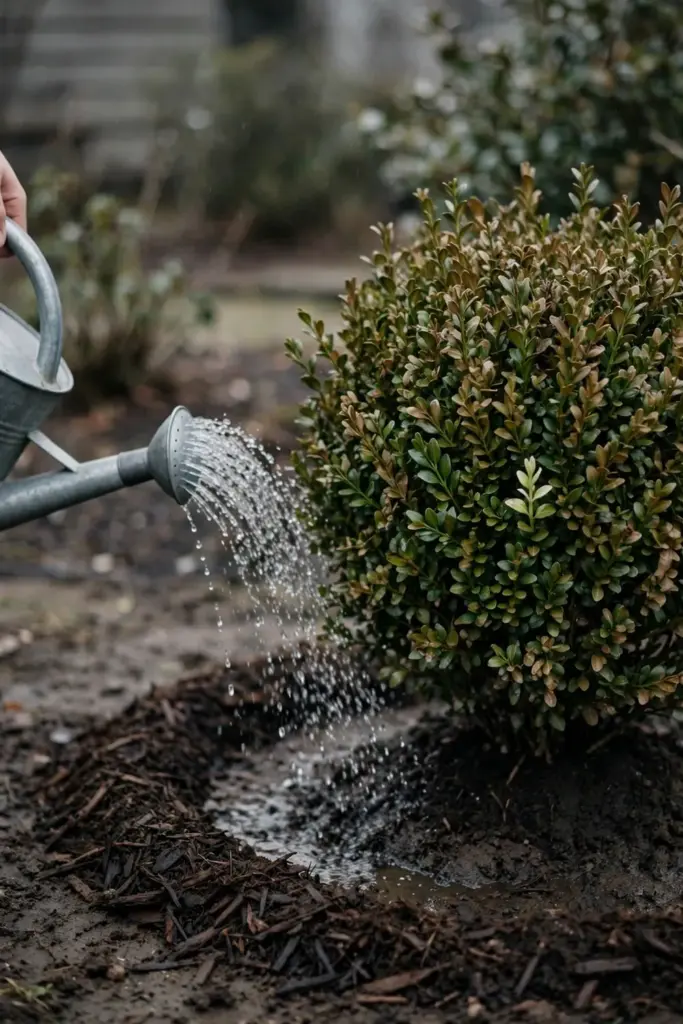
Boxwood blight spreads on wet foliage and dirty tools, so disinfect pruners with alcohol between plants and never shear wet hedges. An anti-desiccant spray in late fall cuts winter burn on exposed sites.
Fall planting works, but boxwood wants the longest lead time of the evergreens on this list, so plant it first while the soil is still warm. Check the frost-date math for your zone and count backward from there. Tags: 0.6–6 m by type · full sun to part shade · zones 5–9 · slow · evergreen · wildlife: shelter · use: hedging, topiary, structure.
16. Cover Ground Fast With Juniper
Juniper is the evergreen that asks for the least: full sun, any drained soil, and it covers banks, slopes, and hot strips where grass dies. Low types stay under 0.3 m; uprights reach 3 m. Blue Star holds its color all winter; Sea Green takes shearing.
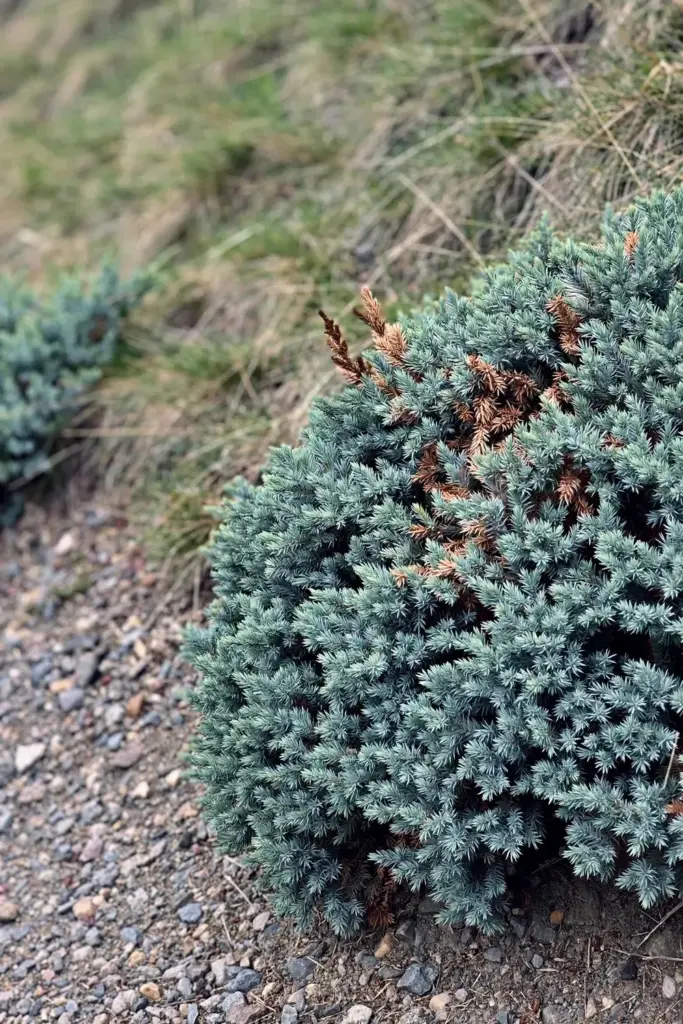
Phomopsis tip blight browns new growth in wet springs; thinning the center for airflow beats any spray. Never shear junipers into formal shapes the way you would yew; juniper does not regrow from old bare wood.
The failure mode is wet feet. In clay that puddles, plant high on a mound or pick yew instead. Once established, juniper outlives most gardeners’ interest in watering it. Tags: 0.3–3 m by type · full sun · zones 4–9 · slow to medium · evergreen · wildlife: winter berries for birds · use: groundcover, slope holder.
17. Trust Yew for Deep Shade
Yew is one of the only evergreens that thrives in full shade, growing 3 to 6 m of dark, soft needles where boxwood thins and hollies sulk. It shears into hedges, cones, and walls, and it lives for centuries. Every part except the red aril flesh is poisonous, so site it away from livestock and teach children not to eat the berries.
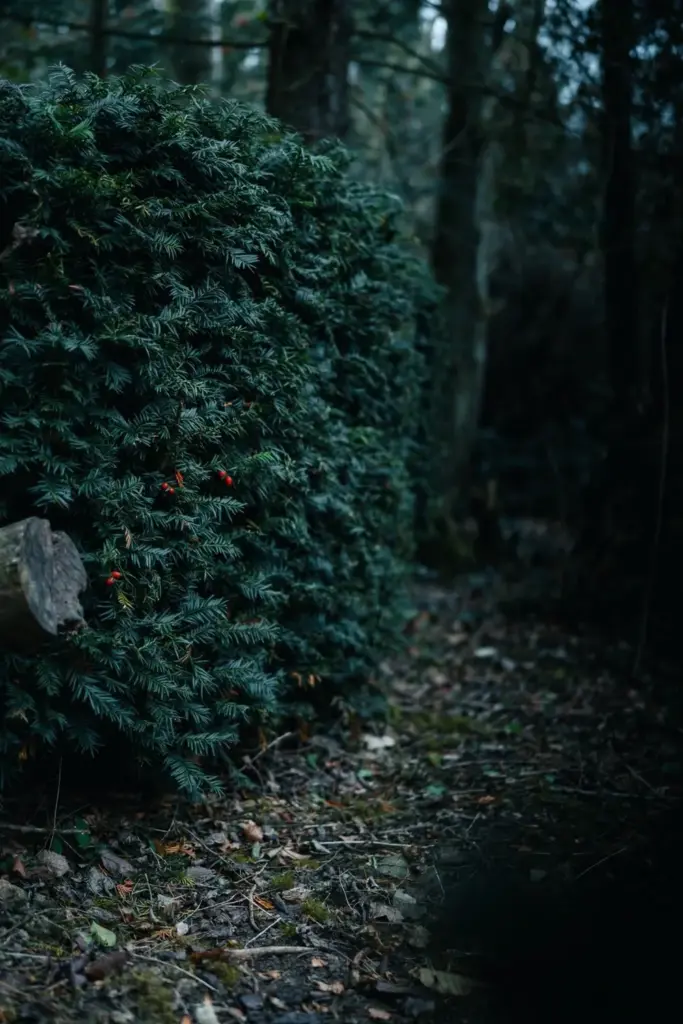
Yew regenerates from old wood, so a butchered hedge cut back hard in spring recovers where juniper would die. Every part except the red aril flesh is toxic, so keep clippings away from pets and livestock.
It hates wet soil more than it hates shade. In soggy ground the roots rot fast; fix drainage first or choose another plant. Tags: 3–6 m · full sun to full shade · zones 4–7 · slow · evergreen · wildlife: bird berries (flesh only) · use: shade hedge, topiary.
Owner field note: [Add 2–3 sentences of first-hand experience here: which evergreen you planted in fall, how it looked the following spring, one thing you would do differently.]
18. Bloom in Fall With Camellia Sasanqua
Camellia sasanqua flowers when the garden is shutting down: white, pink, or red blooms from October into December on a 1.8 to 3.6 m evergreen frame. It wants part shade, acid soil, and shelter from winter wind. In zones 7 to 9 it is the aristocrat of the fall garden.
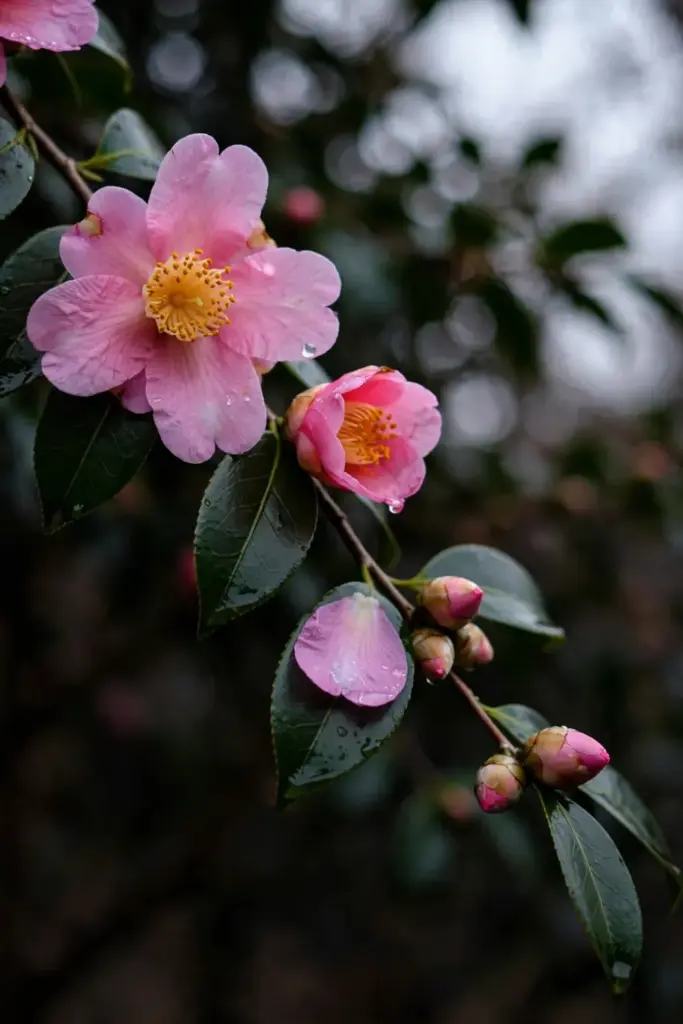
Bud drop almost always traces to a dry fall; deep watering in September and October sets the winter bloom. A burlap windbreak on the north side stops bud blast on exposed sites.
Plant it where you will see the flowers from indoors; a camellia blooming outside the kitchen window beats one hidden at the property line. Mulch deeply and water through dry falls. Tags: 1.8–3.6 m · part shade · zones 7–9 · medium · evergreen · wildlife: late bee forage · use: fall bloom specimen.
Native and Wildlife
Native shrubs feed the food web that ornamental imports ignore. The four below are all North American natives that establish fast, shrug off local pests, and produce the berries birds actually need in the months when insects are gone. They also happen to be the toughest plants on this list; if your soil is clay, your summers brutal, or your watering habits aspirational, start here.
19. Feed Birds First With Serviceberry
Serviceberry gives birds the June berries, gives you white spring flowers and orange-red fall color, and asks for almost nothing. At 4.5 to 7.5 m it works as a large shrub or a small multi-stem tree. The berries taste like blueberry-almond to humans too, if you beat the birds to them.
Net the berries if you want any yourself; a flock of cedar waxwings strips a tree in a morning. Fall color runs strongest in full sun, another reason not to tuck it into shade.
It is native across eastern North America and transplants easily in fall. Cedar-apple rust can spot the fruit in bad years; it is cosmetic and the birds do not mind. Tags: 4.5–7.5 m · full sun to part shade · zones 4–9 · medium · deciduous · wildlife: top-tier bird fruit · use: native specimen, edible landscape.
20. Go Tough and Native With Ninebark
Ninebark survives drought, clay, cold to zone 3, and neglect, then offers peeling bark, white spring flower clusters, and red fall foliage. Cultivars run from the 1.5 m ‘Tiny Wine’ to the 3 m species. It grows fast enough to fill a gap in two seasons.
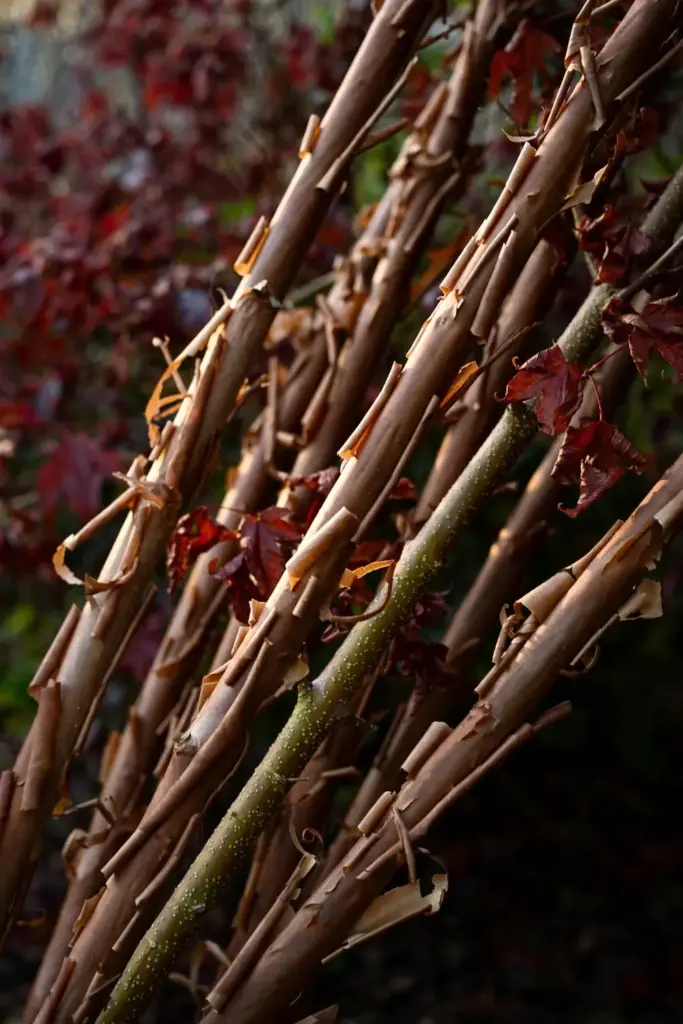
Powdery mildew finds stressed plants first; full sun and open spacing keep it clean. Coppice to the ground every 3 to 4 years for the most colorful young stems and the best bark show.
Cut a third of the oldest stems to the ground every few years; the fresh growth carries the best bark and color. Fall planting is about as safe as it gets for this one. Tags: 1.5–3 m · full sun · zones 3–7 · fast · deciduous · wildlife: bee flowers, bird cover · use: tough native filler.
21. Color Fall and Feed Winter With Chokeberry
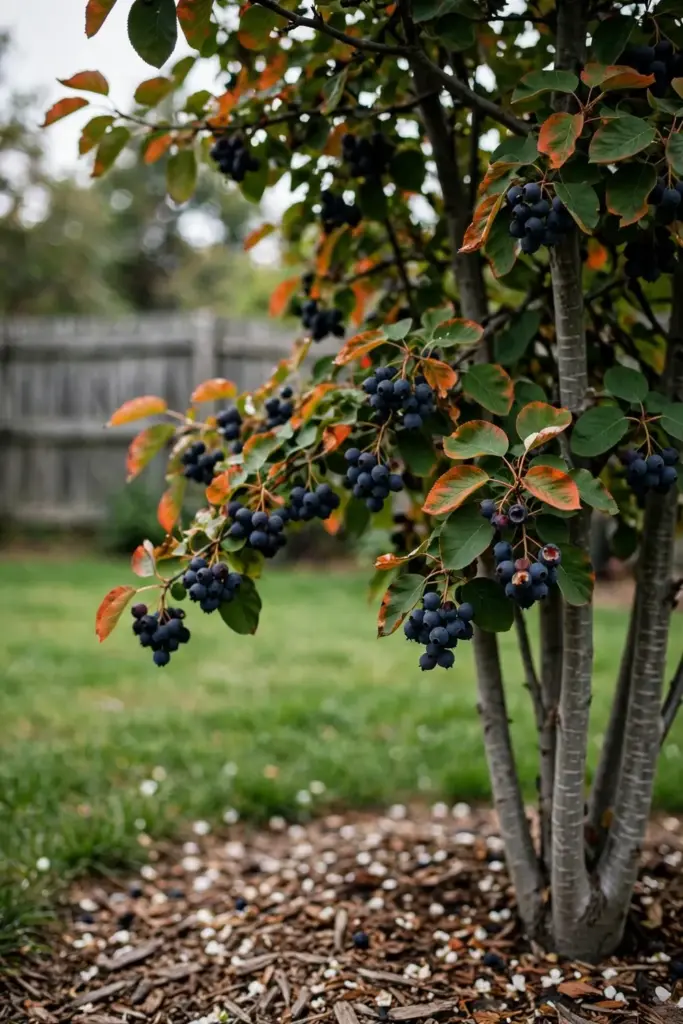
Chokeberry, Aronia, is the hardest-working native shrub almost nobody plants: white spring flowers, glossy summer leaves, flaming red fall color, and black berries that persist into winter for birds. At 1.8 to 2.4 m it fits where serviceberry would overwhelm.
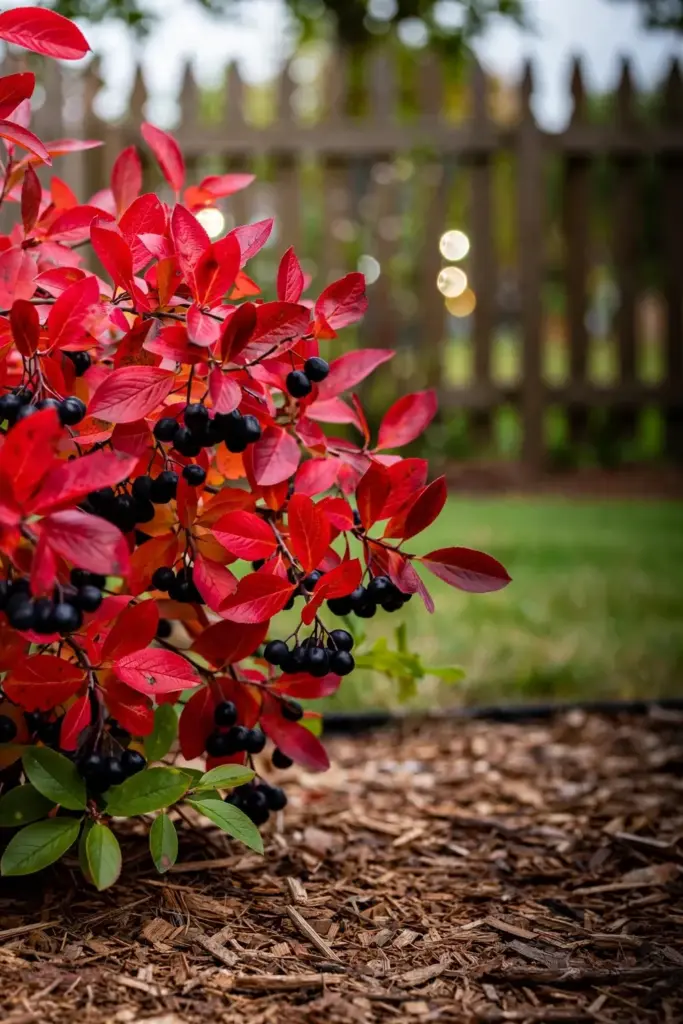
Birds ignore the astringent berries until late winter, which is exactly when wild food runs out. Suckers root easily; sever one in fall and you have a free plant for the back of the border.
The berries are astringent fresh but make superb juice and jam. Suckering forms colonies, which is a feature for a wildlife hedge and a bug for a formal border; buy clumping cultivars for the latter. Tags: 1.8–2.4 m · full sun to part shade · zones 3–9 · medium · deciduous · wildlife: winter-persistent berries · use: fall color, edible native.
22. Light Up Winter With Winterberry Holly
Winterberry drops its leaves and keeps its berries: dense clusters of red fruit on bare stems from November into February. At 1.8 to 3 m it is the best winter interest a deciduous shrub offers. You need a male pollinator within 15 m; one ‘Southern Gentleman’ serves several females.
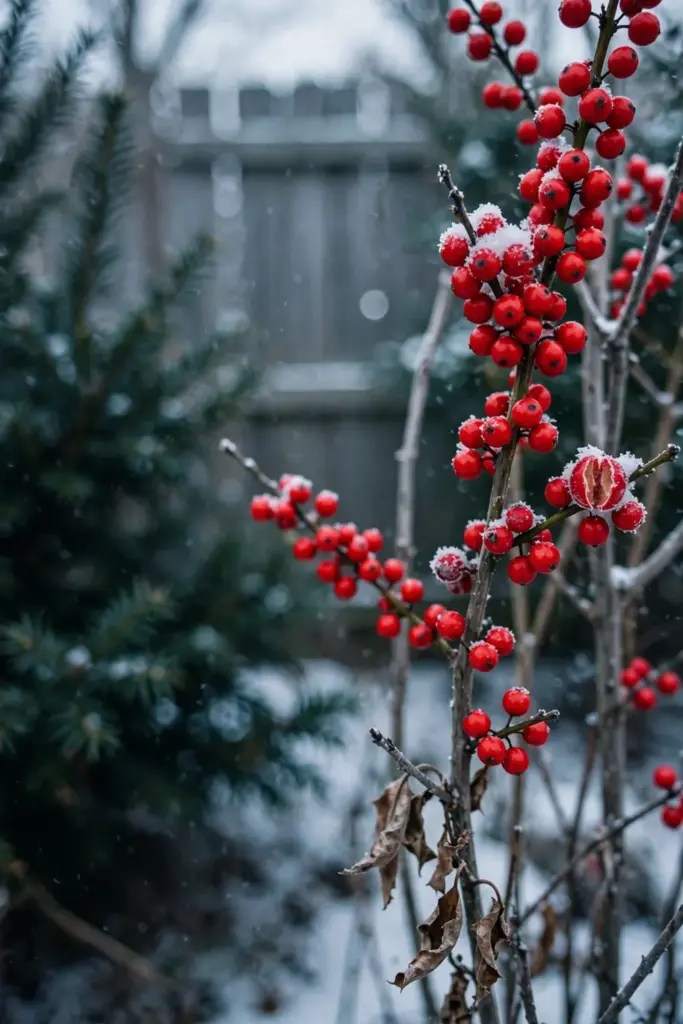
Stems cut in November last a month indoors in plain water, which is why florists buy them by the bundle. Set the male on the windward side so breeze and bees carry pollen across the females.
Plant it where the winter sun hits it, against evergreens or a dark fence. Cut stems last for weeks indoors, which is why florists buy them by the bundle. Tags: 1.8–3 m · full sun to part shade · zones 3–9 · medium · deciduous · wildlife: winter bird berries · use: winter interest, cut stems.
Front-Yard Curb Appeal
The front yard has one job: look intentional from the street in every season. That means compact size, long bloom or strong foliage color, and no maintenance drama visible to the neighbors. The four below stay under 1.5 m, behave in foundation beds, and carry the curb-appeal framing that dominates the planting conversation every fall.
23. Shrink the Lilac for the Foundation
Dwarf Korean lilac gives you real lilac perfume on a 1.2 to 1.5 m plant that fits under a window. It blooms a week or two after common lilac, mildew-resistant where the big species spots up. For a small front yard it is the lilac that actually fits.
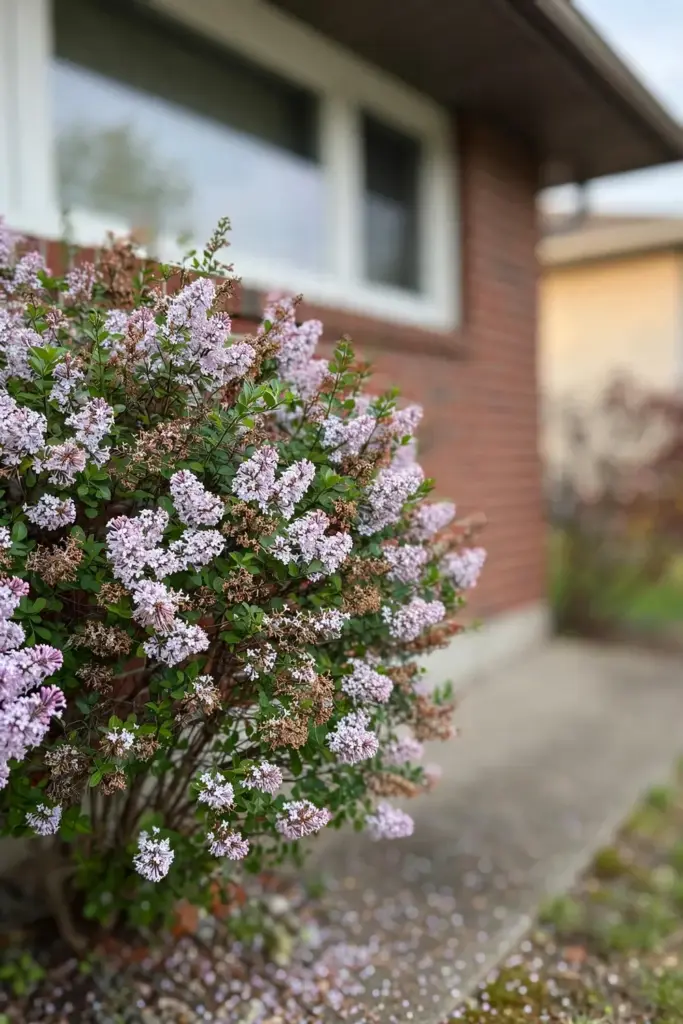
Unlike common lilac it rarely suckers, so it stays where you plant it. A light shearing right after bloom keeps the mound dense instead of leggy.
Give it full sun and do not crowd it; airflow keeps the foliage clean. Prune after flowering, same rule as its tall cousin. Tags: 1.2–1.5 m · full sun · zones 3–7 · slow to medium · deciduous · wildlife: butterfly nectar · use: foundation fragrance.
24. Paint the Border With Spirea
Spirea is the front-yard workhorse: 0.6 to 1.2 m of foliage that runs gold, lime, or burgundy by cultivar, topped with pink or white flower clusters in early summer. ‘Goldflame’ glows; ‘Anthony Waterer’ blooms longest. It takes shearing, drought, and beginner mistakes.
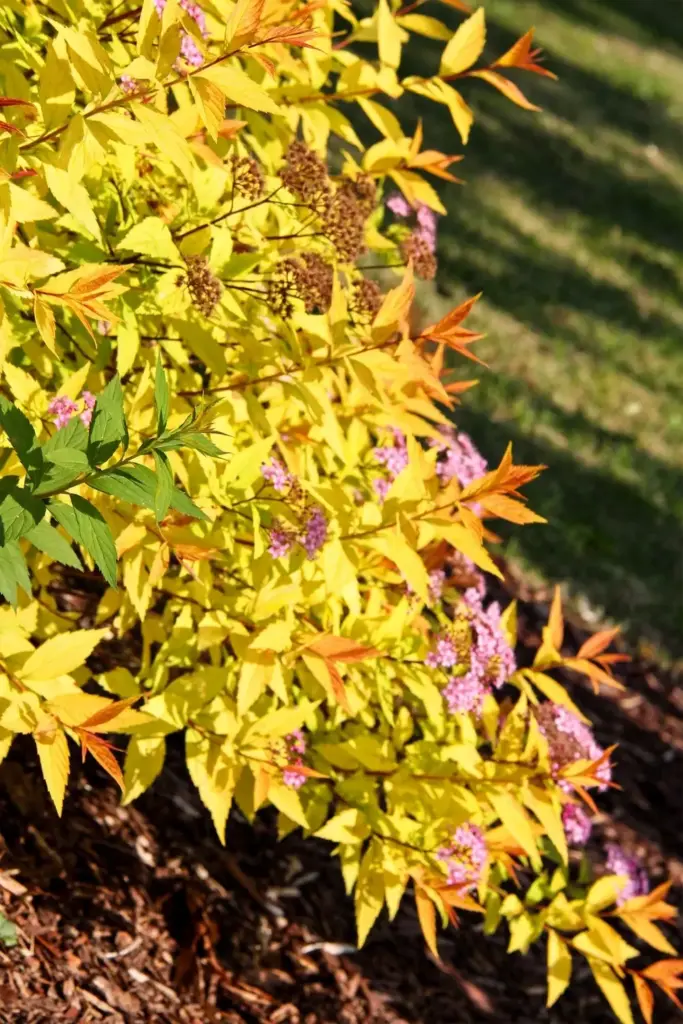
Old ‘Goldflame’ plantings throw plain green reversions; prune those shoots out to keep the gold. Rabbits browse spirea in hard winters, so a wire guard the first year pays off.
Shear the spent flowers and you often get a second flush. Fall-planted spirea barely notices transplanting; the fibrous roots settle in weeks. Tags: 0.6–1.2 m · full sun · zones 4–9 · medium · deciduous · wildlife: bee flowers · use: colorful low border.
25. Bloom All Summer With Potentilla
Potentilla flowers from June to frost on a tidy 0.6 to 1.2 m mound, yellow, white, pink, or orange by cultivar. It is hardy to zone 2, tolerates poor soil, and asks for a haircut every few years. For cold climates it is the most reliable long-blooming shrub sold.
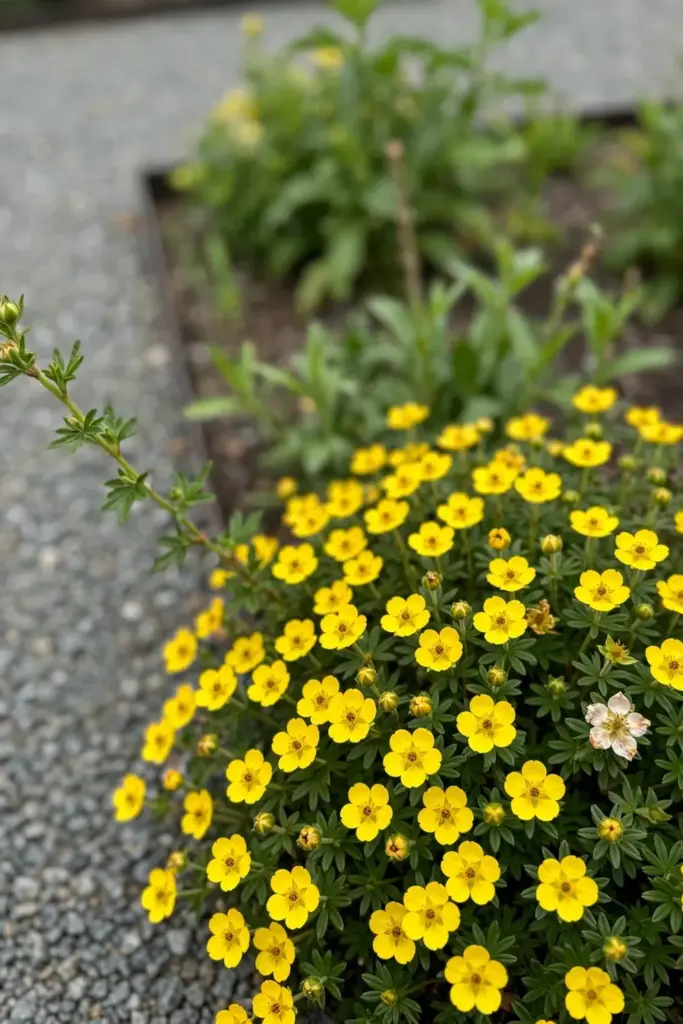
Pink cultivars fade toward white in extreme heat; a touch of afternoon shade in zone 7 keeps the color true. It is one of the few flowering shrubs that tolerates the salty soil along driveways.
Deadhead or shear lightly after the first flush to keep new buds coming. It pairs well with spirea for a two-tone low hedge. Tags: 0.6–1.2 m · full sun to part shade · zones 2–7 · medium · deciduous · wildlife: bee flowers · use: cold-climate color.
26. Cheat With a Knock Out Rose
Knock Out is the rose for people who do not grow roses: 0.9 to 1.2 m of disease-resistant, self-cleaning bloom from spring to frost. No spraying schedule, no deadheading ritual. It is the one rose this list needs, because a front yard with season-long color usually has one.
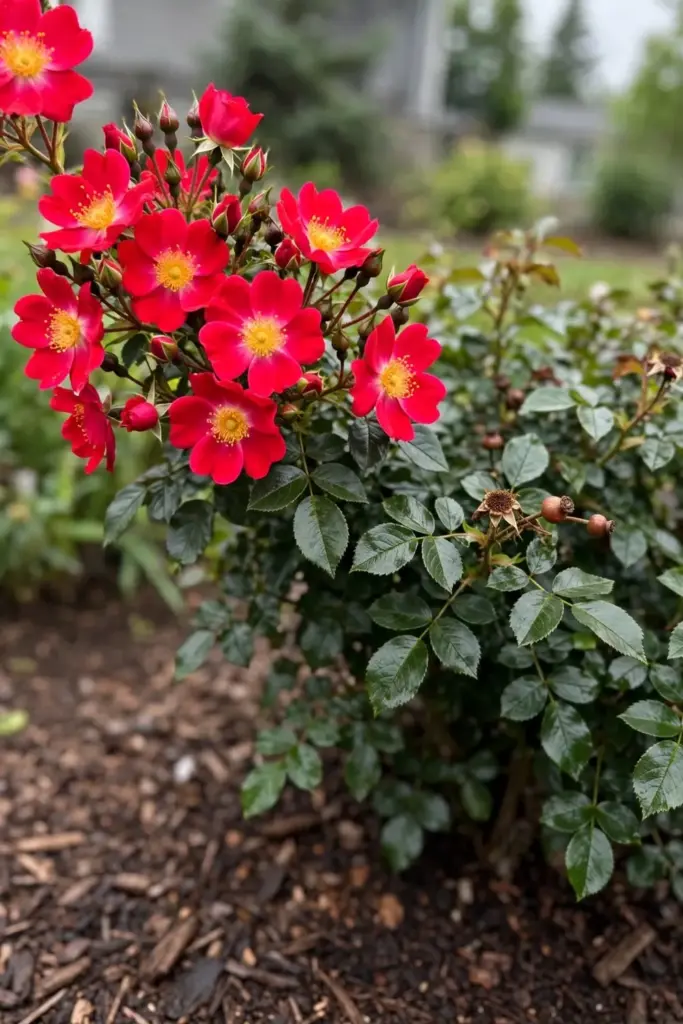
Rose rosette disease is the one real threat; distorted witches’-broom growth with excess thorns means digging the plant out, not treating it. Apart from that it truly is plant-and-forget.
Plant it in full sun with good air movement; even disease-resistant roses spot up in stagnant damp corners. Mulch, water the first fall, and let it be. Tags: 0.9–1.2 m · full sun · zones 5–11 · medium · deciduous · wildlife: rose hips for birds · use: season-long color.
What to Inspect Before You Buy
Fall nursery stock falls into three forms, and each has a tell. Container shrubs should have roots that fill the pot without circling into a solid mat; tip the pot and look. A root-bound plant with a dense coil needs its roots scored or teased apart at planting, or the coil keeps strangling the plant for years.
Balled-and-burlapped shrubs, the big evergreens and specimen trees, should have a firm, intact root ball. If the ball wobbles loose in the burlap, fine roots tore during handling and the plant starts at a deficit. Check the trunk flare: you should see it widening at the soil surface, not a straight telephone pole disappearing into the mix.
Bare-root whips, the cheapest way to build a privet or forsythia hedge, should have moist, fibrous roots and no mold smell. Soak them an hour before planting and get them in the ground the same day. A bare-root plant left in a bag over the weekend is a dead plant with paperwork.
Buy from the sale bench with confidence, but inspect harder there. A half-price shrub with a cracked pot and dry root ball is only a bargain if the roots are alive; scratch a root lightly and look for white or cream inside. Brown and brittle means compost, not a comeback.
Planting Mistakes That Kill New Shrubs
Planting too deep. The root flare must sit level with the surrounding soil, not below it. A shrub planted 5 cm too deep suffocates slowly over three years; by the time it declines, the warranty is a memory. Dig the hole no deeper than the root ball and let the flare show.
Amending the hole like a pot. Rich amended backfill teaches roots to circle inside the hole instead of exploring outward. NC State Extension is explicit: backfill with the native soil you removed. Amend the whole bed if the soil is truly bad, not the hole.
Fertilizing at planting. Nitrogen pushes soft top growth while roots are trying to establish, and it can burn roots in direct contact. Wait until spring, then feed lightly. The soil health guide covers what your soil actually needs before you amend anything.
Pruning in fall. Fall pruning stimulates tender growth that winter kills and removes spring flower buds on old-wood bloomers like lilac, forsythia, and weigela. The only fall cut is a broken or crossing branch. Save the real work for the right season with spring pruning techniques.
Mulching against the stems. A volcano of mulch piled on the trunk holds moisture against bark that should stay dry, inviting rot and rodents. Keep a 5 to 7.6 cm ring pulled back from every stem, the donut not the volcano.
Planting the wrong plant for the zone. A zone 7 photinia planted in zone 5 dies no matter how perfect the hole. The zone column in the table is not a suggestion; it is the hardiness limit the nursery industry converged on over decades. When in doubt, pick the tougher plant.
Forgetting water. Water loss never stops in winter: bark breathes and evergreen foliage transpires straight through January. Soak new plantings deeply until the ground freezes, then again during winter thaws. In a dry winter, newly planted evergreens desiccate first.
Pick the Job, Then Plant
Twenty-six shrubs, one fall. Pick the job first: screen the neighbors, perfume the path, feed the birds, or light up February. Then match the plant to your zone and your sun, dig the hole wide and shallow, and let winter do the quiet work of rooting.
The garden you plant this October will not look like much by Thanksgiving. That is normal and that is the point. Roots do not perform for an audience. Come May, when the forsythia shouts and the lilacs open, you will walk past shrubs that already belong there, because they have been there all along. Spring will show you what fall started.
FAQ
In garden speech, yes. “Shrub” is the horticultural term for a woody plant with multiple stems branching from the base; “bush” is the everyday word for the same thing. Nurseries overwhelmingly say “shrubs,” which is why this article leads with it. Use whichever word your neighbors use; the plants do not care.
There is no single best, but the safest bets are the ones with fibrous root systems that establish fast: arborvitae, ninebark, spirea, viburnum, and most deciduous shrubs generally. The Morton Arboretum notes most deciduous shrubs plant easily in fall. Match the plant to your zone first; a zone-pushed shrub planted perfectly still fails.
Camellia sasanqua is the true fall bloomer here, opening October into December in zones 7 to 9. Rose of Sharon and Knock Out roses carry summer bloom into fall; repeat-blooming azaleas encore for a second show. The honest answer to ‘what starts in autumn’ is camellia, not the lingerers.
Yes, in most zones, as long as you leave about six weeks before the ground freezes hard. Roots grow in soil well below the air temperatures that shut down top growth. Water until freeze and mulch 5 to 7.6 cm deep. In zone 5 and colder, finish early October; in zones 7 to 9, November still works.
No. Fertilizer, especially nitrogen, stimulates soft shoot growth that winter damages, and fertilizer placed in the planting hole can burn roots on contact. NC State Extension advises waiting until spring for the first light feeding. Compost as a topdress mulch is fine; granular fertilizer is not.
Until the ground freezes too hard to dig, provided the plant gets a few weeks of root growth first. Deciduous shrubs are the most forgiving because the leafless top demands nothing while roots work. Broadleaf evergreens like holly and camellia need the longest lead time, so plant those first and save the ninebark and viburnum for last.








