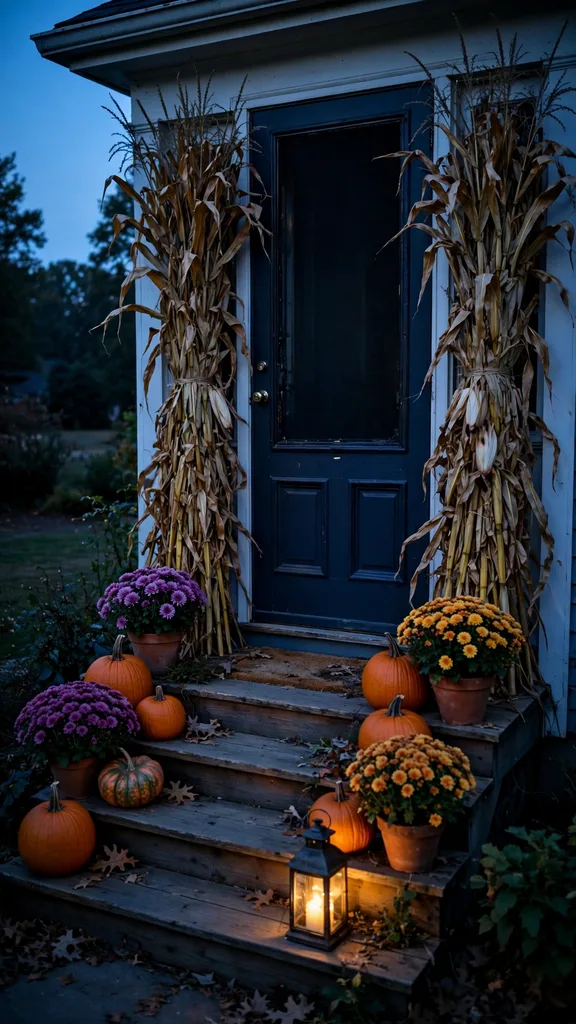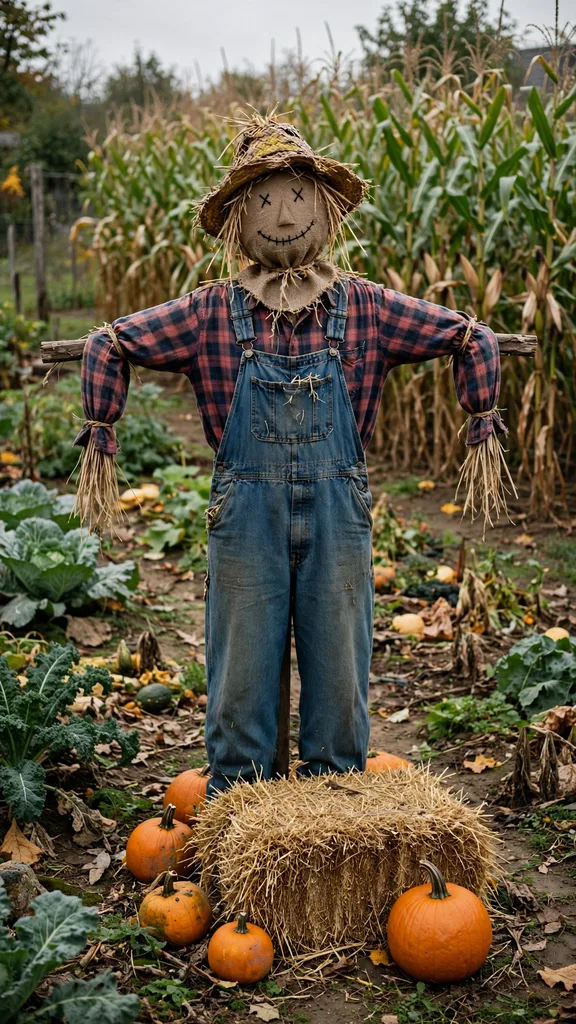

A good scarecrow earns its place twice. The strongest thanksgiving scarecrow ideas build a figure that works in the garden all season and still looks right greeting guests in November. I keep a straw figure standing in my own corn patch from the first ripe ears until the Thanksgiving weekend. Every build below uses adult scale, garden timber, straw, burlap, and clothes from the back of a closet.
A still figure stops working fast. Birds habituate to a motionless scarecrow within days, so the builds here plan for movement from the start: loose sleeves, streamers, sound makers, and a move every 2 to 4 days. The list runs from the basic frame to yard figures and porch sitters, and it ends with the placement and rotation habits that keep birds wary of the whole planting.
Most builds take one afternoon and household materials: two lengths of timber, a bale of straw, a square of burlap, and a set of worn work clothes. Build in October and a weatherproofed figure stands through six weeks of rain, wind, and frost. Start with the frame, because every figure on this list begins with the same cross.
| What You Need | Best Pick | Why It Works |
|---|---|---|
| A bird guard for ripening crops | Item 6: Stand the Classic Garden Guardian Between the Rows | The figure stands at crop height inside the planting, right where birds land to feed |
| A porch greeter | Item 12: Seat a Life-Size Sitter on the Porch Bench | A seated figure at adult scale meets guests at eye level on the bench |
| A figure on a budget | Item 9: Build the Corn Stalk Figure From Your Own Row | The whole body comes from stalks already grown and dried in the garden |
| A small-space guard | Item 11: Set a Small Pair to Guard the Raised Beds | Two light figures at bed corners move in minutes and cover both approaches |
| A display that lasts six weeks | Item 5: Weatherproof the Build for Six Weeks Outdoors | Tight ties, a shedding hat, and dry reserve straw keep the build standing to Thanksgiving |
Build the Basic Figure
1. Build the Cross Frame Every Scarecrow Starts With
Every scarecrow in this list hangs on the same skeleton. The vertical pole measures 1.8 m and carries the full weight of the figure. The arm bar measures 1.2 to 1.5 m and sets the width of the shoulders. Use straight timber for both pieces: a fence rail, a sturdy garden stake, or a cut length of 50 mm by 25 mm batten.
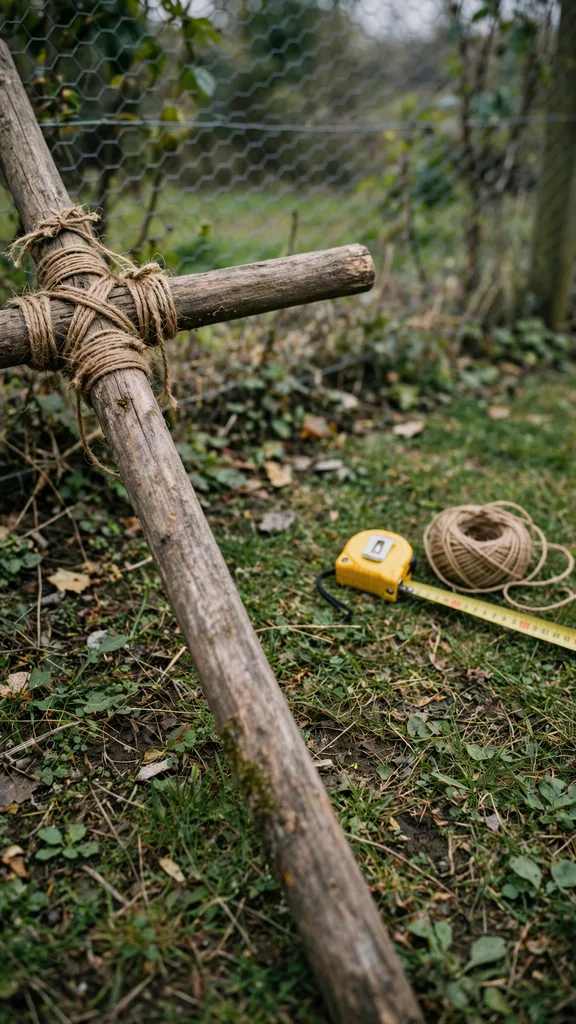
Fix the arm bar across the pole at shoulder height with two screws or a tight lashing of wire. Plant the pole 40 to 50 cm deep in firmed soil so the figure stands 1.3 to 1.4 m above ground. Drive the pole first and hang the bar second, working at ground level where the joint is easy to tighten. Finish with a hard sideways rock of the whole frame: any sway at ground level means the hole needs repacking before the figure goes on.
2. Stuff the Body With Straw, Not Plastic Bags
Straw holds a scarecrow’s shape because the hollow stems trap air and spring back under pressure. Straw also breathes, so damp air moves through the stuffing and the figure dries after rain. Plastic bags trap moisture against the cloth, and that trapped damp grows mildew within days.
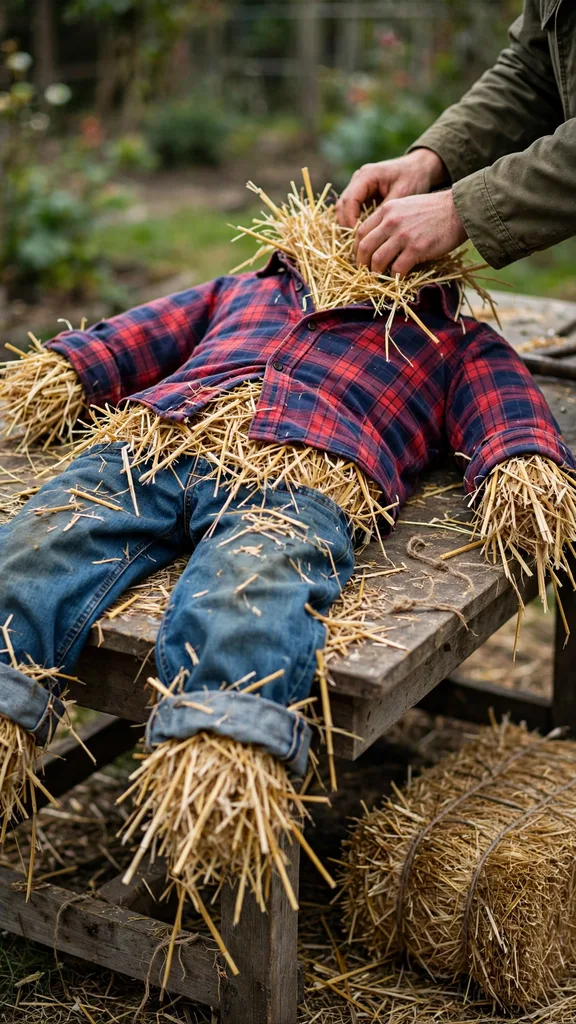
Pack the shirt first, pushing straw down into each sleeve and filling the chest last. Tie the cuffs, the waist, and the neck with twine to hold the fill in place, then stuff the trousers the same way and lace the waistband to the shirt. A well packed torso feels firm at the shoulders and gives slightly at the belly. Squeeze each limb before the figure goes up: a soft spot found now takes a handful of straw, and a soft spot found in week three means a sagging arm.
3. Make a Burlap Head That Holds Its Shape
A burlap head holds its shape because the open weave locks around a firm core of straw. Cut a square of burlap, pile straw in the center, and gather the cloth up around the fill. Twist the gathered cloth at the base to form a neck, then bind the neck with twine. Burlap survives a full season outdoors, so one head serves from the October build to the Thanksgiving weekend.
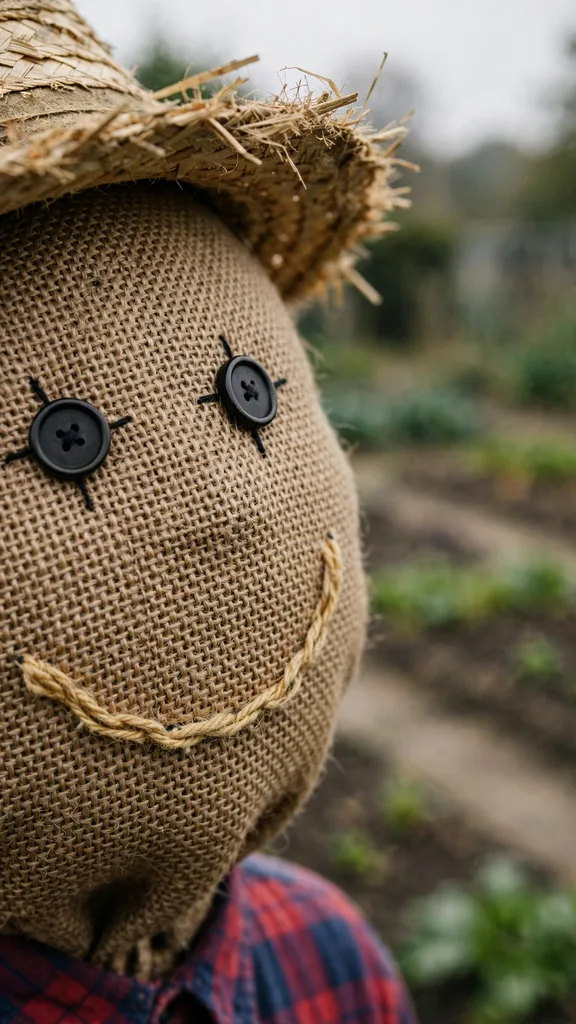
Work the head round with both palms, pushing stray lumps toward the back, and stitch the neck binding through the cloth so the fill cannot shift. Sit the head on the pole top and drive one long screw through the neck binding into the wood. Finish with a wide brimmed hat tied under the chin. Squeeze the finished head hard before it goes up: a head that dents and stays dented needs more straw packed into the crown.
4. Dress the Figure in Real Work Clothes
Dress the figure in the clothes a gardener wears to work: a flannel work shirt, worn jeans or overalls, a belt, and boots. Real cloth hangs heavy, and that weight makes sleeves and trouser legs move in light wind. That movement matters, because birds read a shifting outline as a living presence and hold their distance from the rows around it.
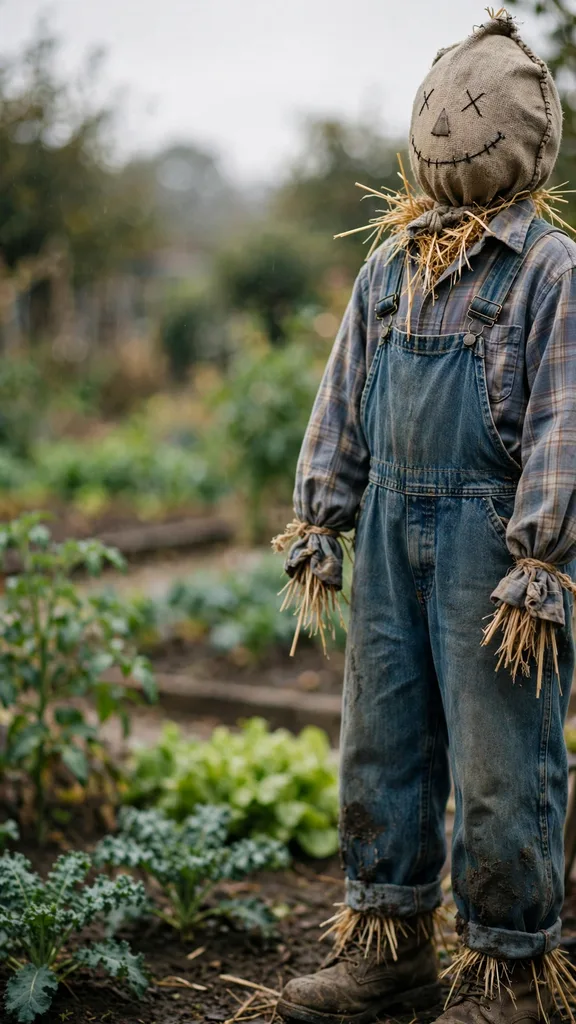
Button the shirt onto the frame before stuffing it, and thread the arm bar through the sleeves so the shoulders sit square. Pull the trousers up the pole, belt them at the waist, and stuff the legs with the boots already laced on. Choose faded, patched pieces with no costume shine. Walk 20 m away and look back once the figure is dressed: from that distance the outline should read as a worker paused mid-task, with no stick or pole showing.
5. Weatherproof the Build for Six Weeks Outdoors
Six weeks outdoors tests every joint and seam on the build. Rain adds weight to straw, wind works at the arm bar joint, and sun rots damp cloth held against wet fill. Weatherproofing starts at the build: tight twine at every tie point, a hat shedding water off the head, and the figure planted clear of roof drip lines and sprinkler throw.
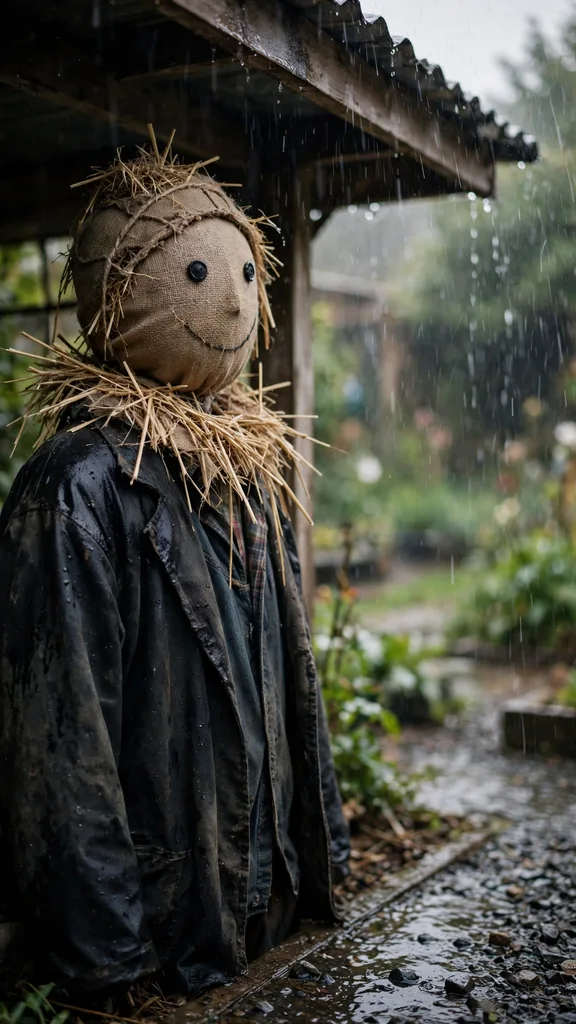
Keep a dry reserve of straw under cover for repairs. After each heavy rain, walk the figure and press every limb, checking for flat spots and slipped ties. Repack a flattened limb on the spot and retie any binding that has worked loose. Ten minutes of repair after a storm keeps the stuffing dry and the shoulders square, and a figure maintained this way reaches week six standing straight with its head up.
Yard and Garden Figures
6. Stand the Classic Garden Guardian Between the Rows
The classic guardian stands in the crop, between the rows it protects. Placement inside the planting puts the figure at bird height, surrounded by the food the birds want. Install the guardian before the crops ripen, because birds that find a row first and feed undisturbed claim that row as safe ground.
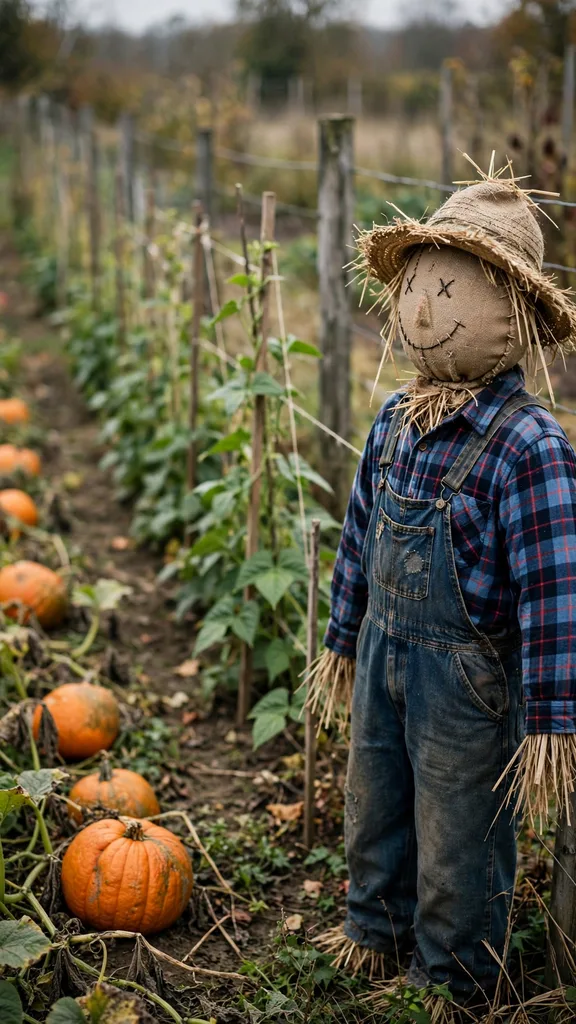
Use the standard frame, plant the pole 40 to 50 cm deep in the row gap, and dress the figure in the brightest worn shirt available. Face the figure along the row so its outline crosses the birds’ flight line into the crop. Check the planting each morning for the first week: fresh peck damage on the near ears means the guardian stands in the wrong spot and needs a new position down the row.
7. Top a Sentry With a Real Pumpkin Head
A real pumpkin makes the fastest head in the list. Choose a hard, unblemished pumpkin with a flat base and a strong stem, and sit it whole on the pole top. A whole pumpkin head lasts 5 to 7 days before the flesh softens. The short working life is the trade for the look, because no other head reads as harvest at 30 m the way a ripe pumpkin does.
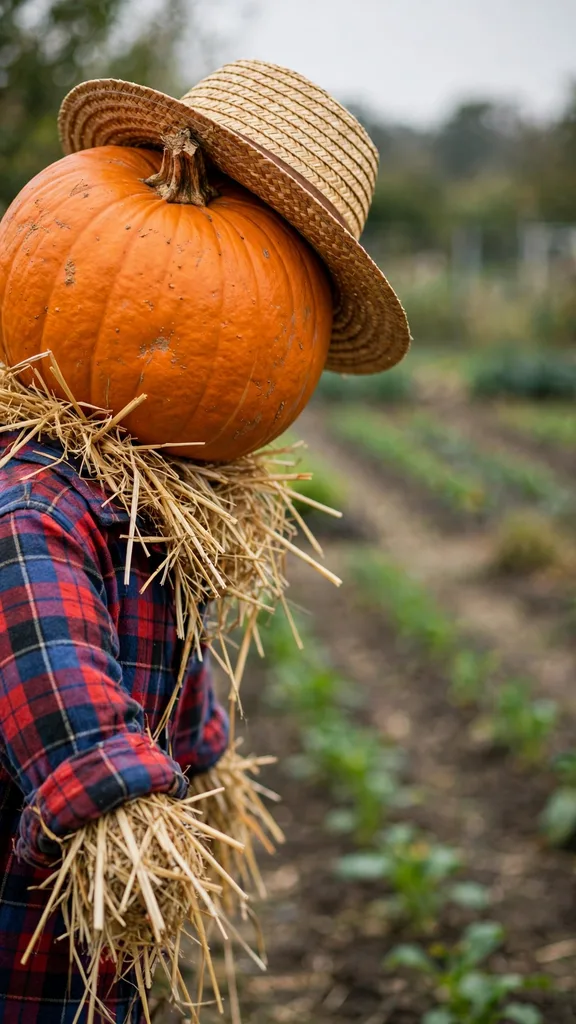
Fix the pumpkin to the pole with a short dowel driven into its base, then settle a hat or a small straw bundle over the stem to hide the joint. Keep a second pumpkin in reserve in the shade. Check the head each morning by pressing the skin near the stem: once the flesh gives under a thumb, swap in the reserve the same day and send the soft head to the compost.
8. Seat a Greeter on a Hay Bale by the Gate
The gate greeter sits, so build it sitting from the start. Form the torso on a short frame, stuff the shirt, and bend a pair of stuffed trousers at the knee. Set the figure on a hay bale beside the gate post, with its boots resting on a board at the bale’s base. A seated figure needs no deep planting, and the bale carries the full weight of the build.
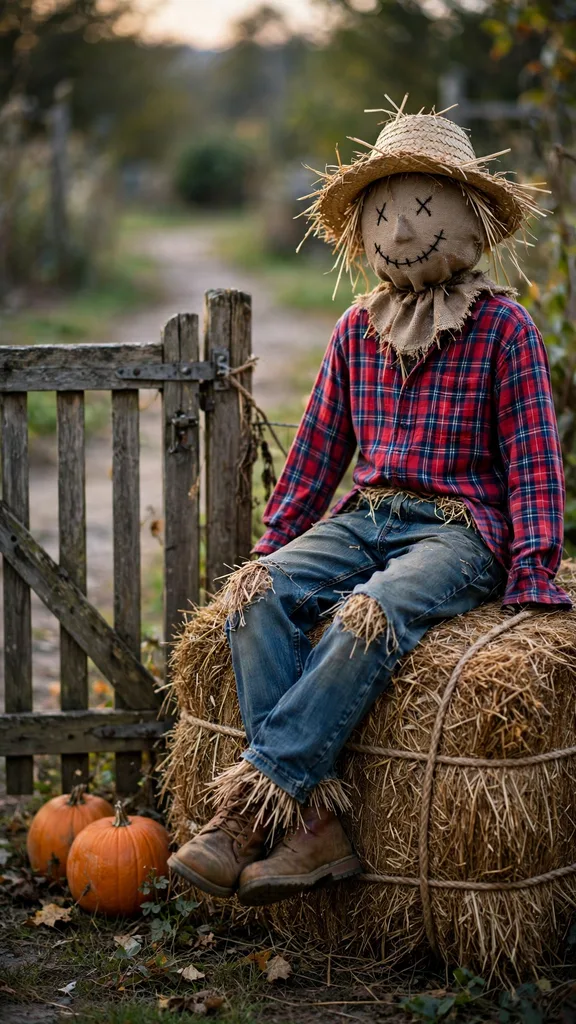
Face the greeter toward the path so arrivals meet it head on, and angle the head slightly down the drive. Sit the bale on boards or a pallet so rain cannot wick up into the straw from wet ground. Check the bale straps each week: a loosened strap lets the seat slump, and a slumped seat drops the greeter’s shoulders below the gate line where arrivals stop seeing it.
9. Build the Corn Stalk Figure From Your Own Row
Your own corn row supplies the whole body of this figure. Dried stalks form the torso, the arms, and the legs, lashed around the standard cross frame with twine. The dry leaves stay on the stalks and fill the outline, so the figure reads as a person from the road and as pure harvest up close. Cut the stalks after the husks have dried on the plant.
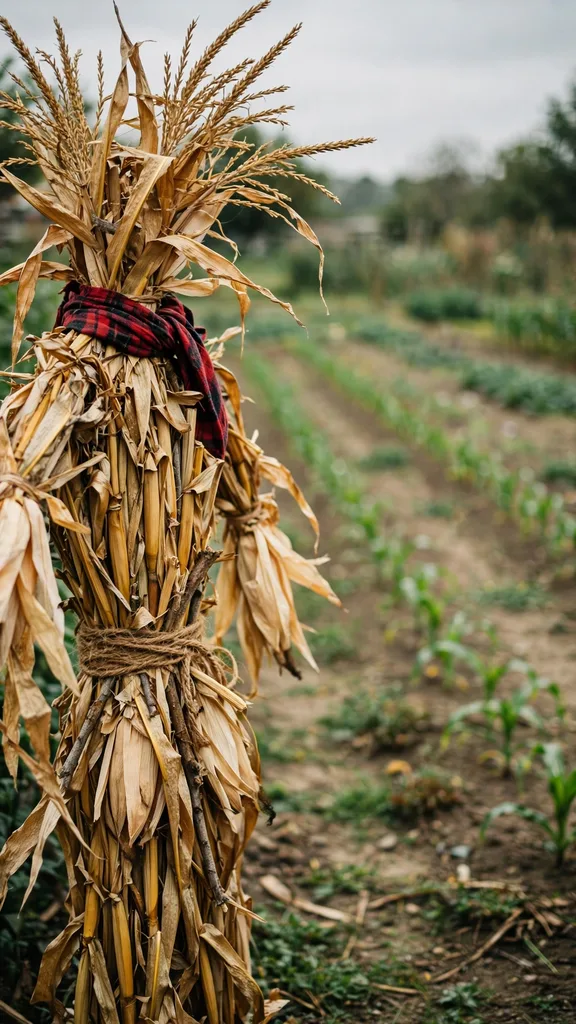
Stand three stalks together for each leg and bind them at the ankle, the knee, and the hip. Lash pairs of stalks along the arm bar for sleeves, and fill the chest with a fanned bundle of stalks tied at the waist. Finish with a burlap head and a hat over the top joint. Build only with fully dry stalks: green stalks shrink as they cure, and every tie on a green build loosens within the first week.
10. Pose a Gardener With a Wheelbarrow
The wheelbarrow gardener leans into a job. Build the standard frame with the arm bar angled down at the front, and fix the figure’s hands at the height of the barrow handles. Stand the wheelbarrow in front of the figure and load it with pumpkins, squash, and the last of the harvest from the beds it guards.
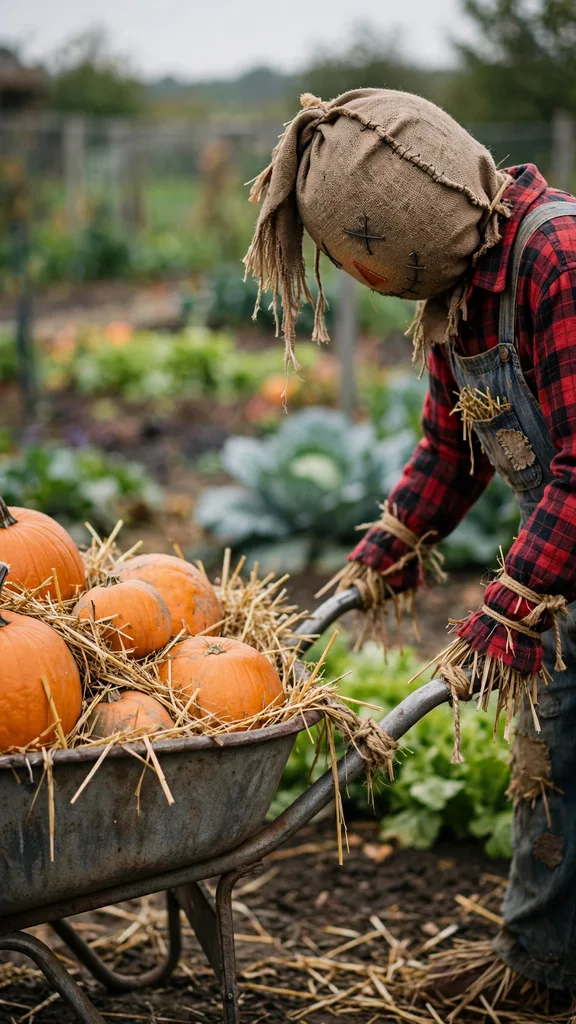
Stuff the sleeves firmly so the arms hold the lean, and plant the pole at a slight forward tilt to match the push. Chock the wheel with a brick and drive a short stake behind each leg of the barrow. Fill the barrow at least half full, because the load lowers the center of gravity. Test the finished figure with a hard shove at the shoulder: a pose that rocks and settles is ready, and a pose that slides needs its stakes driven deeper.
11. Set a Small Pair to Guard the Raised Beds
Raised beds need guards at bed scale. Each small figure stands on a 1 m stake with a 60 cm arm bar, planted 20 cm deep at the corner of a bed. The pair works the bed from opposite corners, so birds approaching from either side meet a figure. Straw stuffing keeps each figure light enough to lift and move with one hand.
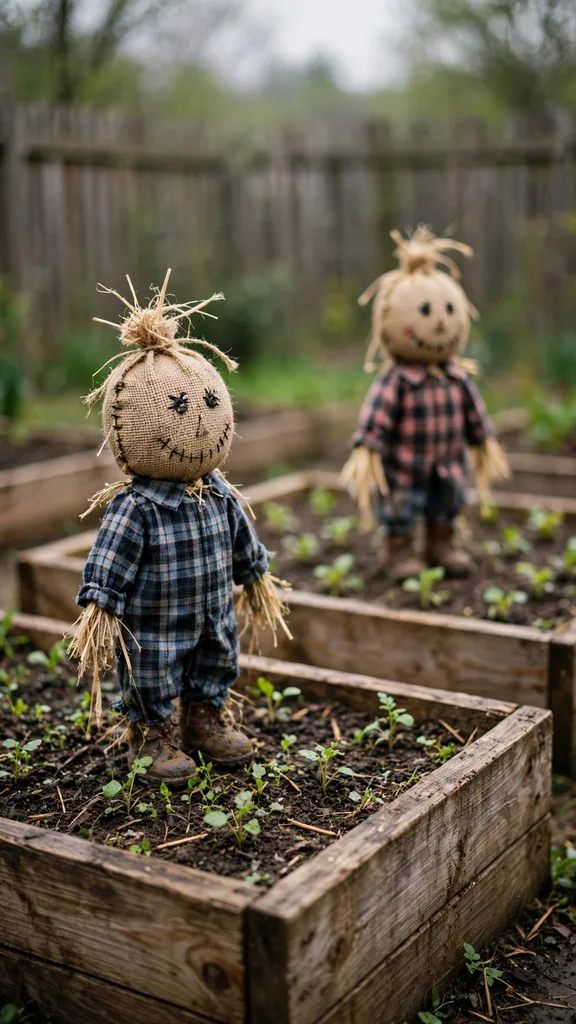
Move the pair to fresh corners every 2 to 4 days, and swap their shirts at each move so the outlines change. A moved figure restarts the birds’ caution, and a fixed figure becomes part of the furniture within the week. Check both stakes after watering: soft bed soil lets a shallow planted stake lean, and a leaning guard reads as fallen to every bird working the garden.
Porch and Door Sitters
12. Seat a Life-Size Sitter on the Porch Bench
A bench sitter starts with trousers and a shirt stuffed with straw and joined at the waist. Pack each trouser leg firm with straw, bend the legs at the knee, and tie twine behind each knee so the bend holds through the season. The shirt carries the standard arm bar of 1.2 to 1.5 m, and the stuffed sleeves rest along the bench back or across the knees, wherever the pose looks most settled.
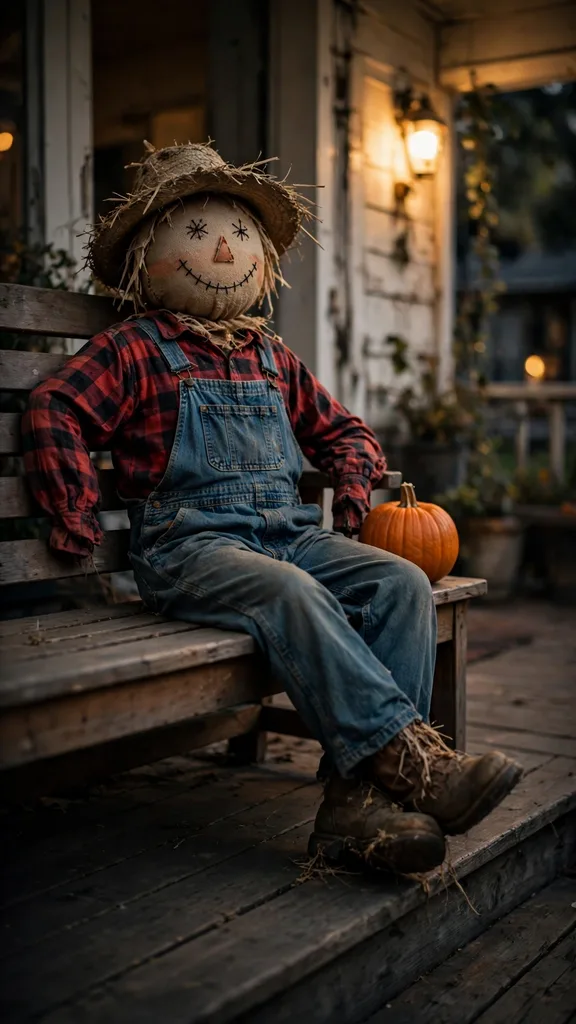
Set the figure deep on the bench so the hips carry the weight and the boots rest flat on the porch boards. A burlap head holds its shape under a straw hat. A folded coat under the figure hides the flat seat of the stuffed trousers. Stand at the street and check the silhouette: shoulders, hat, and bent knees should read as a seated person before any single detail registers. It pairs with the step pots and door pieces in the thanksgiving entryway decor schemes without crowding the bench.
13. Rock a Grandpa Figure in the Porch Chair
A rocking chair gives a still figure free movement, so the grandpa build dresses for the chair from the start. Stuff a cardigan or an old work sweater over the frame, add a flat cap over the burlap head, and let a spill of loose straw under the chin stand in for a beard. Boots rest on the chair rung, and the sleeves settle on the chair arms with the stuffing packed soft at the elbows.
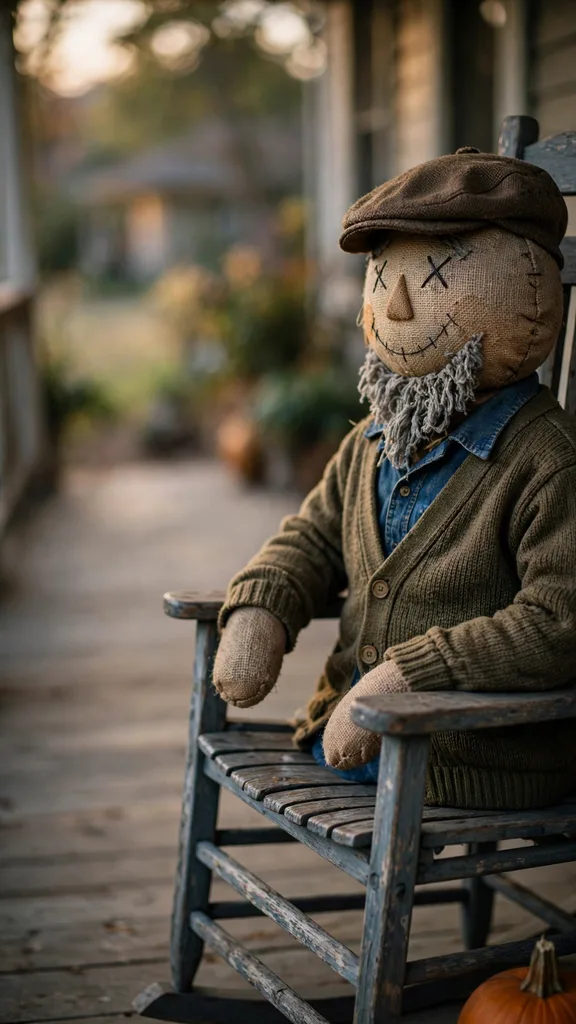
Tie one loop of twine from the figure’s waist to the chair back, loose enough that the chair still rocks in gusts. That rocking motion works on porch birds as well as passersby, since a moving figure holds attention longer than a frozen one. Tie the waist line before the first windy night: an unsecured figure slides forward in the rocking chair and ends folded on the porch boards by morning.
14. Lean a Casual Figure Against the Porch Post
The leaner skips the deep planting entirely and lets the porch post carry the load. Build the full-height figure on its 1.8 m pole, set the butt of the pole 30 cm out from the post, and rest the shoulders against the post at a lazy angle. One tie of twine at shoulder height locks the lean, and a second tie at the hip keeps the base from creeping across the boards.
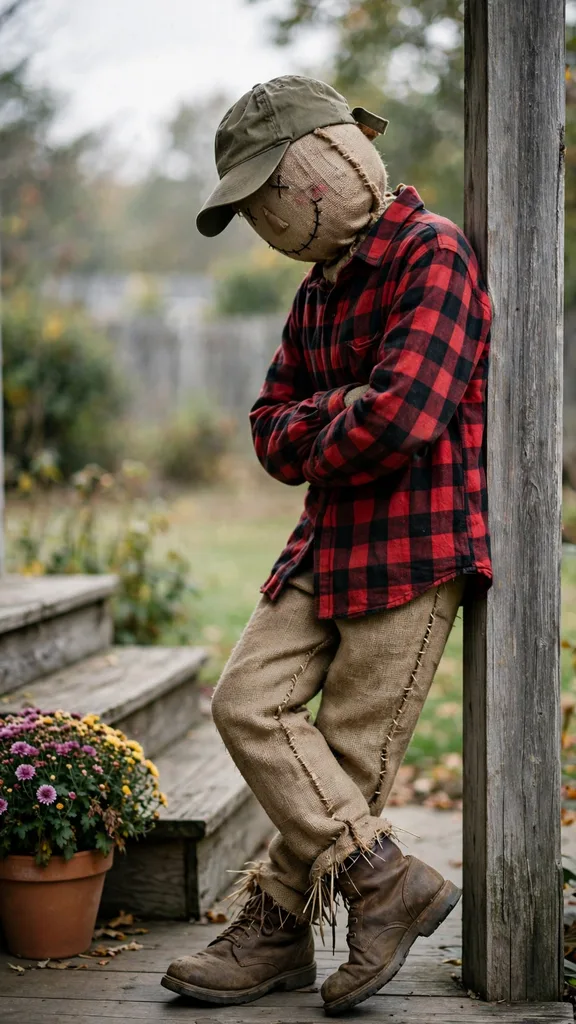
Dress the leaner in a worn flannel shirt and a cap tipped forward, with one sleeve raised to rest along the post. The posture sells because the weight rests on solid wood, the way a tired gardener leans at the end of a row. Recheck the lean after every hard rain: wet straw adds weight, the base slides forward a little more each storm, and a leaner left unchecked finishes flat across the porch boards.
15. Shrink the Design to a Tabletop Harvest Sitter
The tabletop version keeps the same construction at a fraction of the scale. A straight stick 45 cm long forms the spine, a 30 cm cross stick spans the arms, and handfuls of straw fill a shirt and trousers cut down from worn adult clothing. A fist-size ball of burlap makes the head, and twine at the waist and knees holds the seated bend the same way the full-size build does.
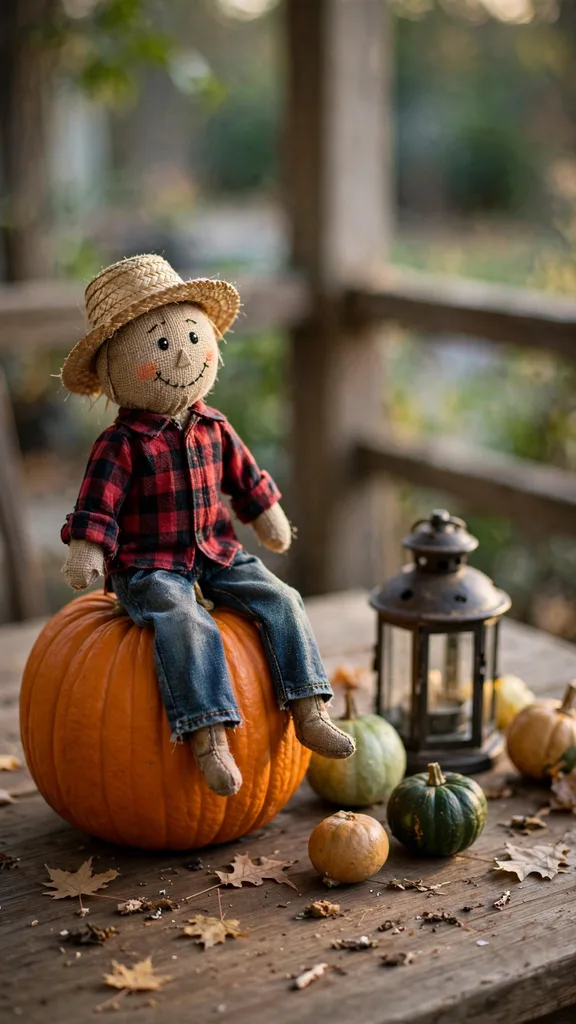
Seat the finished sitter on a small wooden crate at the center of the harvest table, flanked by pumpkins and a pot of mums. The small figure reads as a place marker and a conversation piece at adult scale. It is built from the same garden materials as the yard figures. Bring the sitter under the porch roof on wet nights: thin straw sections saturate fast, and a soaked sitter slumps and smells of mildew by the weekend.
16. Give the Sitter a Welcome Sign to Hold
The sign turns a seated figure into a greeter, and the board needs a light touch. Cut the sign from a cedar shingle or a sheet of 6 mm plywood 45 cm wide, and paint the letters 10 cm tall so the words read clearly from the garden path. Hang the board from two loops of twine over the figure’s wrists, or rest the lower edge across the sitter’s lap with the top edge against the hands.
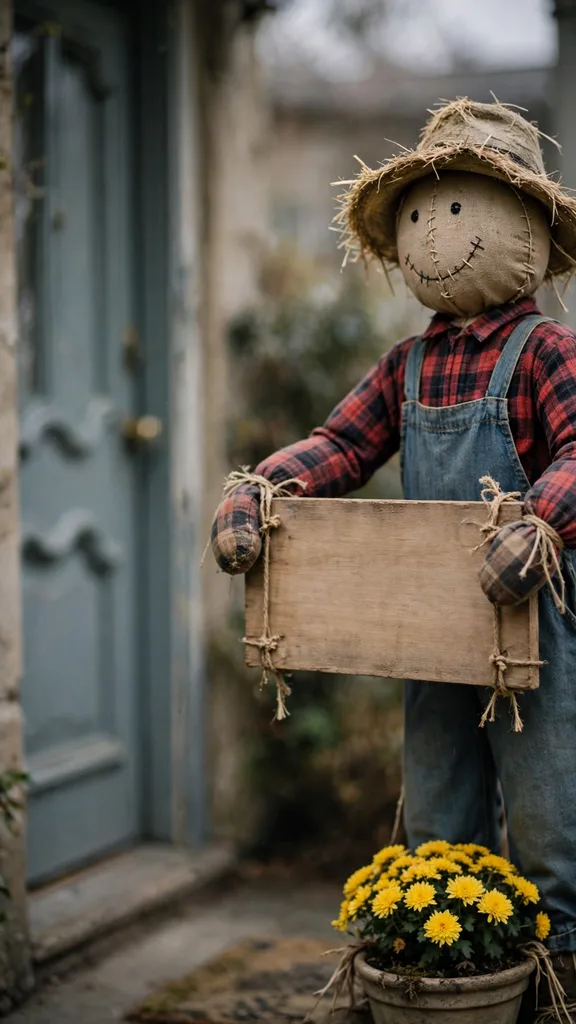
Keep the board thin and the twine short, since the arm bar carries the whole load. A painted greeting in cream on dark wood survives the weather better than bare lettering, and a coat of exterior paint seals the edges against rain. Check the arm bar after a week of holding the sign: a heavy board bends the sleeves downward and twists the frame until the sign tips forward and hides its own letters.
The Working Scarecrow
17. Add Movement With Loose Sleeves and Streamers
Movement is the working part of a scarecrow, because birds stop fearing any shape that never changes. Leave the last 20 cm of each sleeve unstuffed so the cuffs hang loose and flap in light air. Tie streamers at both wrists: strips 40 cm long cut from an old bedsheet or a worn work shirt, knotted so each strip swings on its own schedule.
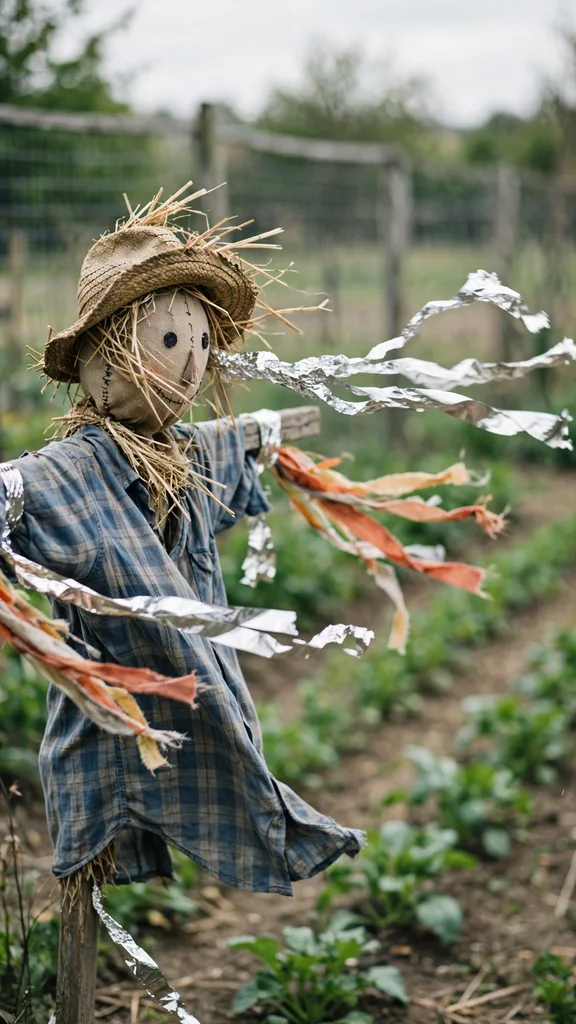
Add more strips along the arm bar and at the hat brim, anywhere the wind reaches first. Gust-driven movement works because no two flaps land on the same beat, and that broken rhythm reads as alive from a distance. Watch the figure on a breezy afternoon: cuffs and streamers should move in separate gusts, and any strip hanging tangled and still gets retied the same day.
18. Hang Sound Makers That Startle Birds
Sound covers the moments when nothing moves. Hang aluminum pie plates in pairs at the ends of the arm bar, tied back to back on 15 cm of twine so the plates clink together in gusts. Metal jar lids strung along a length of twine give a sharper note, and a short string at the hat brim catches the lightest air of all.
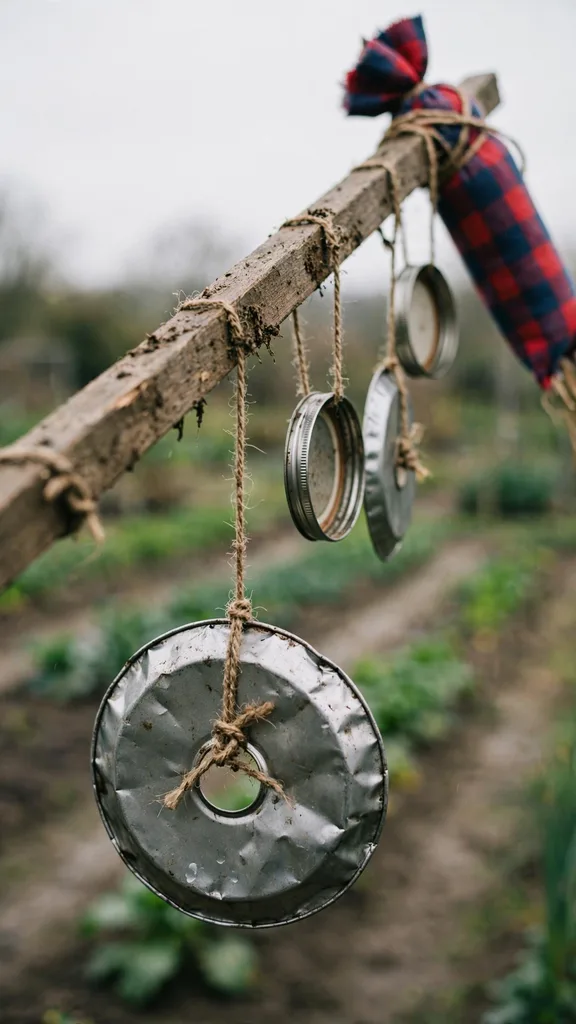
Keep every hanger short and exposed, because plates muffled inside the clothing barely sound. Intermittent noise startles. Steady noise fades into the background, and birds ignore it within days. Listen from the crop rows at midday: plates that never sound in a sheltered corner protect nothing, and the strings move to the figure’s exposed side the same afternoon.
19. Move the Figure Every Few Days
A bird’s respect for a scarecrow lasts days, and it expires on a schedule. Birds test a still figure, feed beside it inside a week, and treat the post as furniture from then on. Moving the figure every 2 to 4 days restarts the clock, and a change of shirt or hat at each move stretches the effect further, since the silhouette itself reads as new.
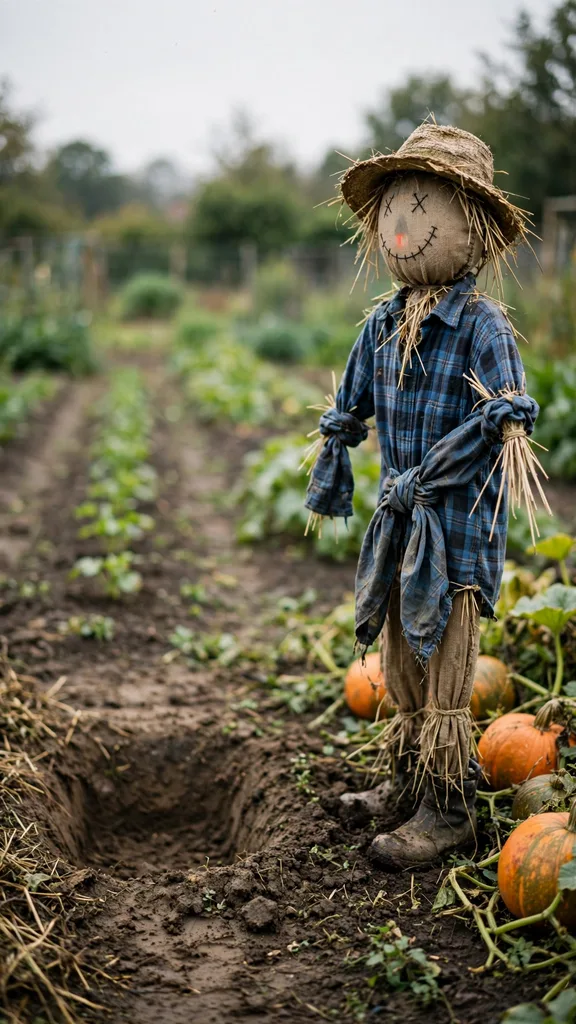
Prepare two or three planting holes across the beds before the season starts so each move takes minutes. Shift the figure several meters at a time and change the arm bar angle, so the outline differs from the last position. Treat feeding birds within a meter of the figure as the overdue signal, and move the figure the same day. The University of California pest guidance on scarecrows gives the same rule from the research side: models should look lifelike, stay highly visible, and move often, or birds habituate within days.
20. Place the Guard Where Birds Actually Feed
Placement decides whether the figure works at all, because birds gather at the food. Post the guard at the edge of the ripening sweet corn, the sunflower heads, or the late fruit, close enough that a landing bird meets the figure before the first row. Install the figure before the crop ripens, since birds that have already fed in a patch return to it with far more confidence.
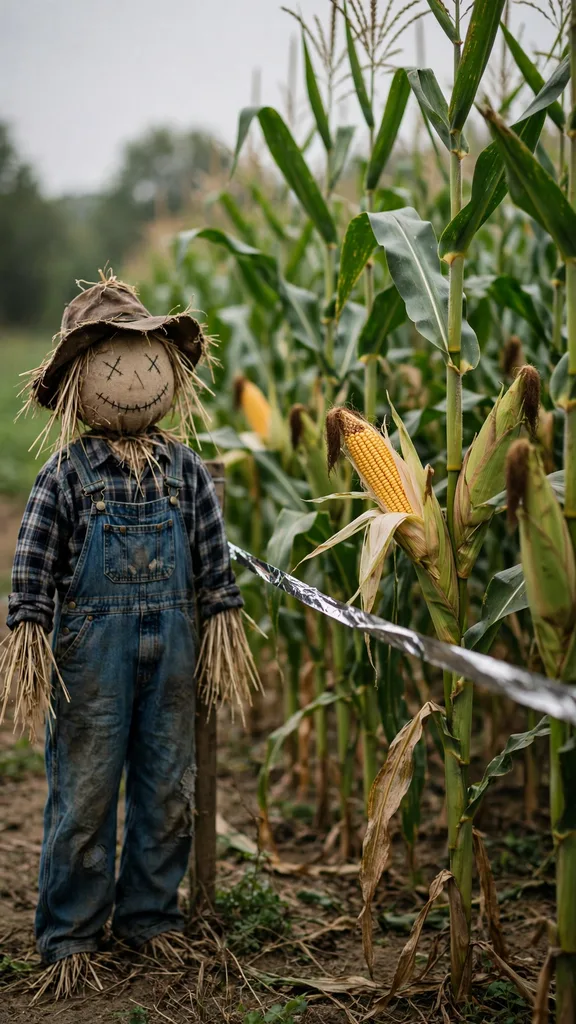
Keep the head above the crop canopy so the outline shows from every approach line. The guard follows the harvest across the beds, tracking the ripening rows as each bed comes into season. Judge placement by the harvest basket: rows behind the figure come in whole, and stripped ears at the far corner mark a guard posted in the wrong place. The Cornell Vegetable Program makes the timing half of the same point: every scare tactic has to be deployed before birds find the crop.
21. Know the Honest Limits of a Scarecrow
A scarecrow buys days of protection, and honesty about the limit keeps the harvest plan realistic. Bold birds, crows first among them, test a figure quickly and learn fastest. Even shy species habituate once the figure stands still long enough. One figure covers a small patch only, so a long bed or a wide block of corn outgrows a single guard from the start.
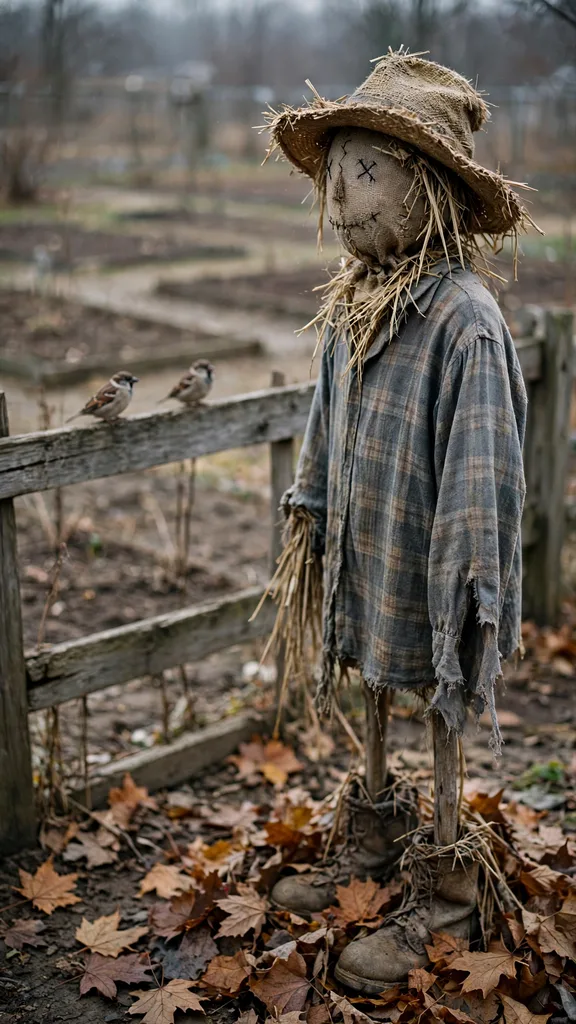
Layer the defense and the figure earns its place. Movement, sound makers, and repositioning every 2 to 4 days hold the effect, prompt harvest of ripe ears removes the prize, and netting bars birds from the rows that matter most. Set the expectation plainly. A scarecrow discourages birds for a while, and crops guarded by a motionless figure alone still lose ears to the boldest birds.
Frequently Asked Questions
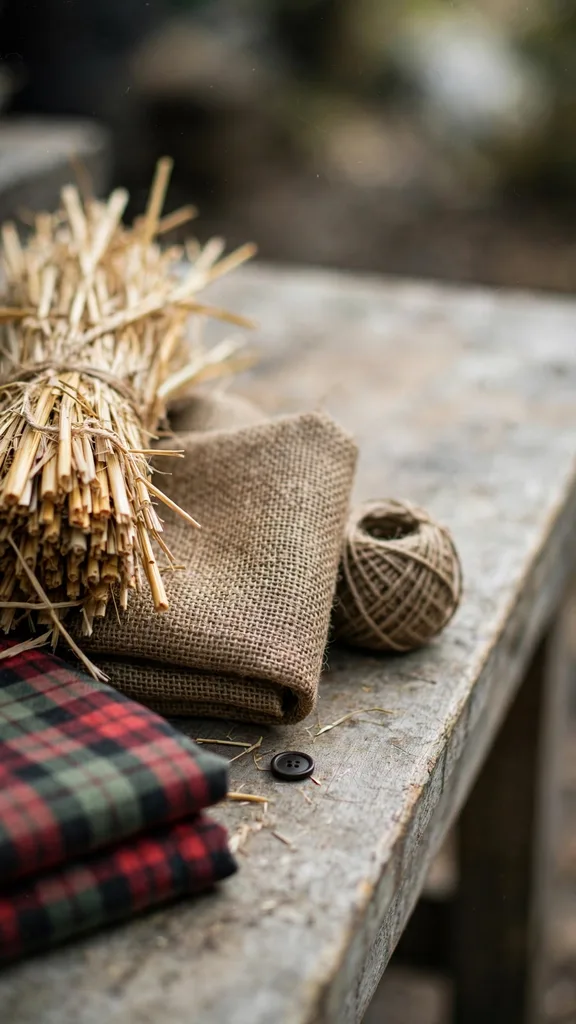
Yes, briefly. A new figure startles birds, and most species avoid the area for the first few days. Birds then test the figure, find no threat behind the still shape, and habituation sets in within a week on an unmoved figure. The thanksgiving scarecrow ideas that keep working add movement, hanging sound makers, and a new position every 2 to 4 days, which stretch the effect across the harvest weeks.
Straw. A straw body holds its shape for the full season, and straw breathes, so damp air moves through the stuffing and dries between rains. Plastic bags weigh less, and plastic traps moisture inside the clothing until the fill molds and sours. Straw also packs into sleeves and trouser legs without lumps, which keeps the figure’s outline steady in wind.
Build the figure at adult height. The frame pole measures 1.8 m, and the pole plants 40 to 50 cm into the ground, which leaves the head at standing eye level. The arm bar spans 1.2 to 1.5 m, shoulder width on an adult frame. A figure at full height reads as a person from the road, and birds judge the threat at the same scale.
Depth does the work. Plant the pole 40 to 50 cm into the ground, and tamp the backfill firm in layers with a boot heel. On exposed ground, run two twine guy lines from the arm bar to short stakes set at angles. After the first storm, push the pole back to vertical and tamp the softened soil again.
Yes, with the right fill and cover. The thanksgiving scarecrow ideas built on straw and burlap stay outside for the full season: straw dries between rains, and a burlap head lasts the season without splitting. Plastic stuffing holds rainwater and molds. A real pumpkin head stays out too, and softens within 5 to 7 days, faster in wet weeks.
A Porch Figure for Thanksgiving, a Garden Guard All Season
The porch figures carry the holiday first. A bench sitter holding a welcome sign greets guests at the door, a grandpa figure rocks beside the steps, and the tabletop sitter holds the center of the harvest table. Every figure comes off the same frame and the same garden materials, dressed once and holding its pose from the first cold week to the holiday dinner.
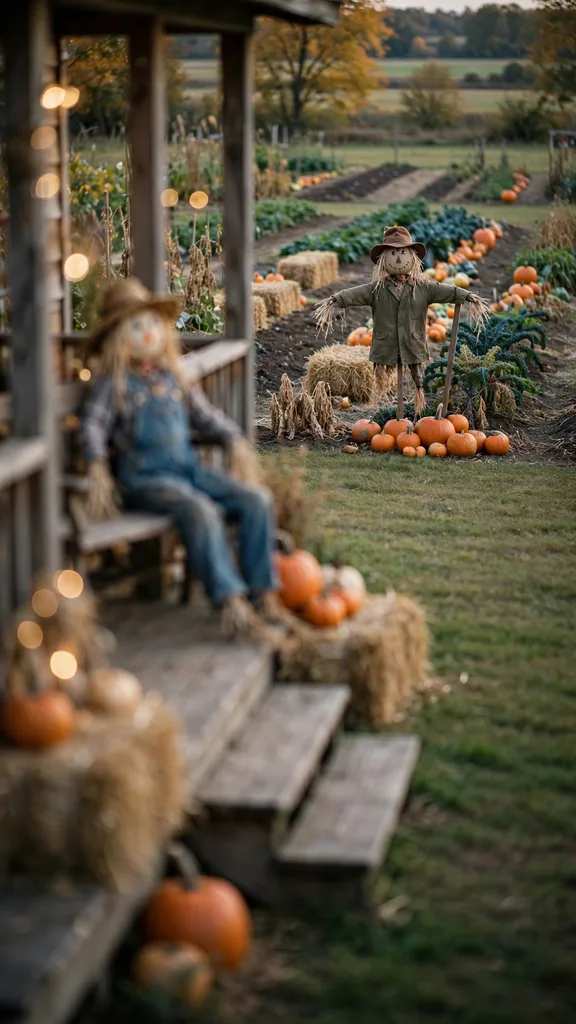
After the holiday, the same figures move to the garden and earn their keep. Set a figure among the late beds, add the streamers and sound makers, and shift the position every 2 to 4 days while the last crops finish. Stored dry at season’s end, the poles, the clothing, and the straw return ready for the next autumn. Set the yard pieces from the thanksgiving yard decorations collection around the guard and the whole property reads as one harvest scene.