
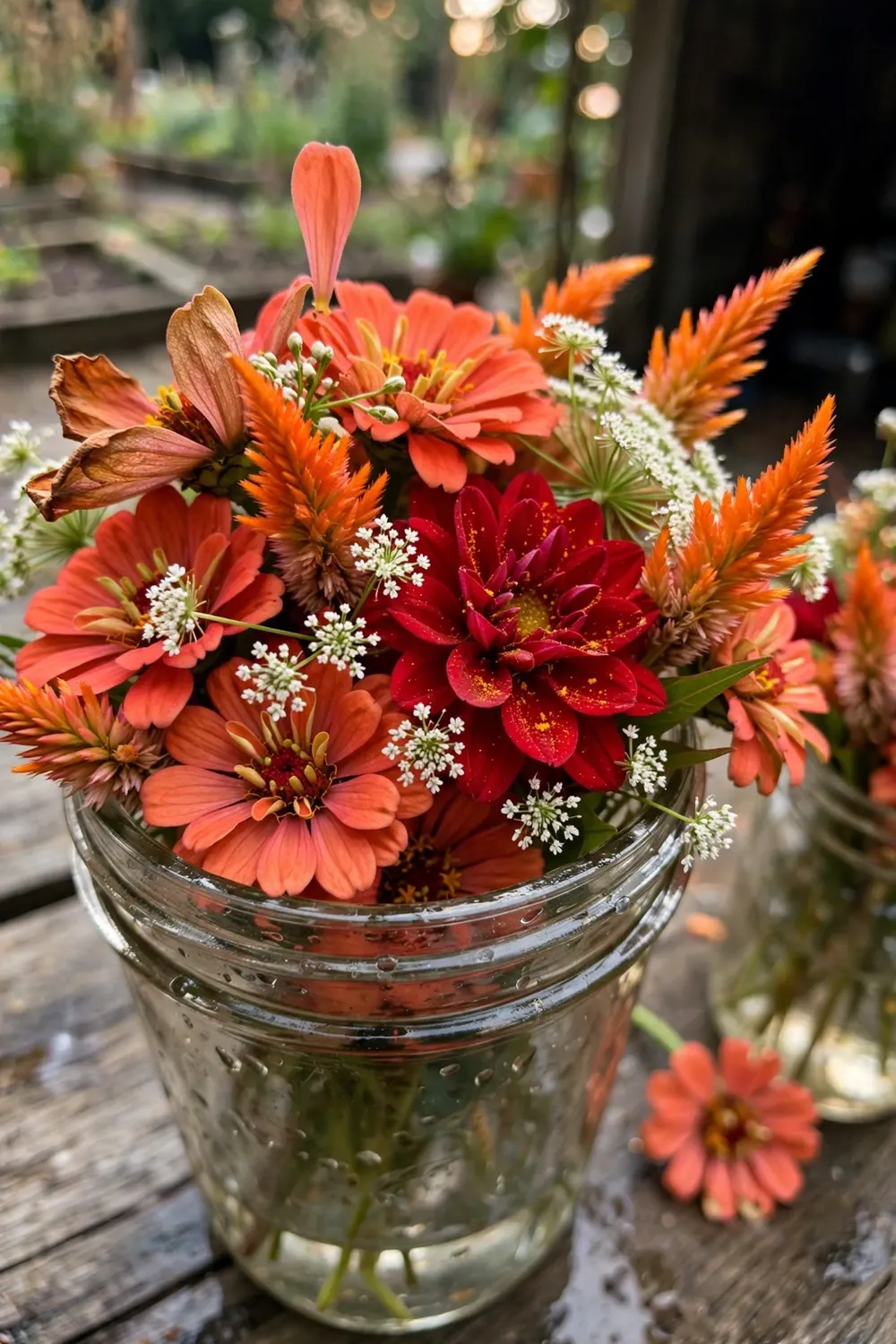

Cut 26 stems on a cool morning and stand them in a clean bucket before the sun clears the fence. That is fall cut flowers in their working form: varieties grown for the vase, ranked by how many days each one holds once cut. The rest of this page is 26 flowers ordered by vase life, the morning conditioning routine that decides half the outcome, and the sowing calendar that keeps bouquets coming until frost.
Cut before 9 a.m. Strip every leaf that would sit underwater. Recut each stem underwater on a slant. Change the water on day three, and keep the bucket out of direct sun.
Flowers still blooming in the beds are a different job. That job lives with the fall blooming perennials. This page stays on the vase: which varieties to grow for bouquets, how long each one lasts, what stage to cut it at, and the conditioning that stretches every stem. For the full fall task list, beds and soil included, see the fall gardening tips.
The Vase-Life Table: 26 Fall Cut Flowers, Ranked
Read the table first, then pick your group. Vase-life ranges below are drawn from North Carolina State’s cut flower postharvest trials, Cornell’s cut flower crop notes, and Utah State Extension’s cut flower production guides. Trial rooms run cooler and cleaner than a home kitchen, so expect the low end of each range on your counter. “Cut stage” is the moment that maximizes vase life for that variety. Zones are USDA hardiness where the plant survives winter; “annual” means it is grown for one season everywhere. Three varieties in the table carry exact trial figures in their sections below: celosia, amaranthus, and ammi.
| Variety | Vase Life | Cut Stage | Zones |
|---|---|---|---|
| Celosia | 14+ days | Plume fully colored, feels firm | Annual |
| Amaranthus | 10+ days | Tassels filled out, pollen just showing | Annual |
| Chrysanthemum | 14 to 21 days | Three-quarters to fully open | 5 to 9 |
| Craspedia | 14+ days | Balls fully round and firm | 8 to 11, annual elsewhere |
| Gomphrena | 14+ days | Bracts fully colored | 9 to 11, annual elsewhere |
| Statice | 14+ days | Tiny flowers open along the stem | 8 to 10, annual elsewhere |
| Eucalyptus | 14+ days | Stems firm, any time | 8 to 11 |
| Ornamental kale | 14+ days | Heads colored after cool nights | Annual, cool season |
| Ammi majus | 10 days | Half the florets open | Annual |
| Sedum ‘Autumn Joy’ | 7 to 14 days | Heads fully colored, before browning | 3 to 9 |
| Zinnia | 7 to 10 days | Second row of outer petals expanded | Annual |
| Sunflower | 6 to 12 days | Petals just lifting off the disk | Annual |
| Marigold | 7 to 10 days | Fully open | Annual |
| Rudbeckia | 7 to 10 days | Petals fully open, stem firm | 3 to 9 |
| Echinacea | 7 to 10 days | Petals just open, cone firm | 3 to 9 |
| China aster | 7 to 14 days | Half to three-quarters open | Annual |
| Scabiosa | 7 to 10 days | Outer florets open | 3 to 7 |
| Hydrangea paniculata | 5 to 7 days | Florets papery to the touch | 3 to 8 |
| Dahlia | 4 to 7 days | Nearly fully open | 8 to 11, lift tubers elsewhere |
| Cosmos | 4 to 6 days | Petals just opened | Annual |
| Snapdragon | 7 to 10 days | Lower third of florets open | 7 to 11, annual elsewhere |
| Larkspur | 7 to 10 days | Lower third of florets open | Annual |
| Bachelor’s buttons | 6 to 8 days | Fully open | Annual |
| Sweet peas | 4 to 5 days | Two or three florets open per stem | Annual, fall sow in zones 7+ |
| Ranunculus | 7 to 10 days | Buds colored, soft to the touch | 8 to 11, spring plant elsewhere |
| Anemone | 7 to 10 days | Buds colored, not yet open | 7 to 10 |
Cut the Marathoners: 10 Flowers That Hold 10 Days or More
Start here if you want bouquets that outlast the week. Every flower in this group holds 10 days or more with plain water and a clean cut. They are the backbone of a fall cutting garden because one harvest covers two weekends.
1. Cut Celosia When the Plume Feels Firm
Grow celosia for the longest vase life in the fall cutting garden. The plume types (Celosia argentea plumosa) and the crested cockscomb types both dry on the stem without losing color, which means a stem you forget to water still looks deliberate. North Carolina State’s cut flower postharvest research recorded 31.8 days of vase life for the plume cultivar ‘Orange Peach’ in plain water, and even the shortest-lived stem in that trial lasted 12 days.
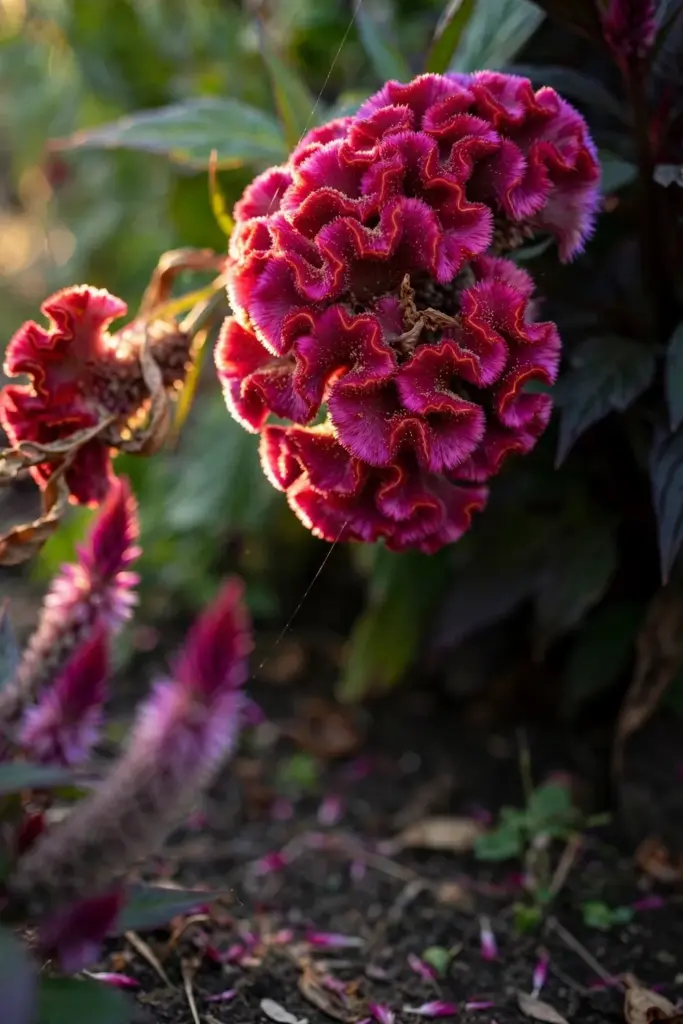
Cut when the plume is fully colored and feels firm under your thumb, not soft and still stretching. Strip the lower leaves. Celosia drinks steadily and the stems are thick enough to stand without wiring. Zones are annual everywhere; it is grown for one season and pulled after frost. The failure is cutting too early: an immature plume keeps growing in the vase, flops over, and never colors up.
Celosia comes in two habits worth growing side by side. The plume types give height and air; the crested cockscomb types give dense, brain-like heads in reds and magentas that hold their shape for months dried. Grow both and the dried harvest alone fills winter vases. Hang bundles upside down in a dark shed for two weeks; the color holds better out of direct light.
2. Cut Amaranthus as the Tassels Fill Out
Grow amaranthus for trailing texture no other fall flower gives you. The upright ‘Hot Biscuits’ and the pendulous green-flowered types both work in tall vases where their tassels can hang. NCSU’s 2012 postharvest trials measured 10.6 days for ‘Hot Biscuits’ and 9.9 days for the green-flowered type, with hydrator plus holding solution adding nearly six days on top.
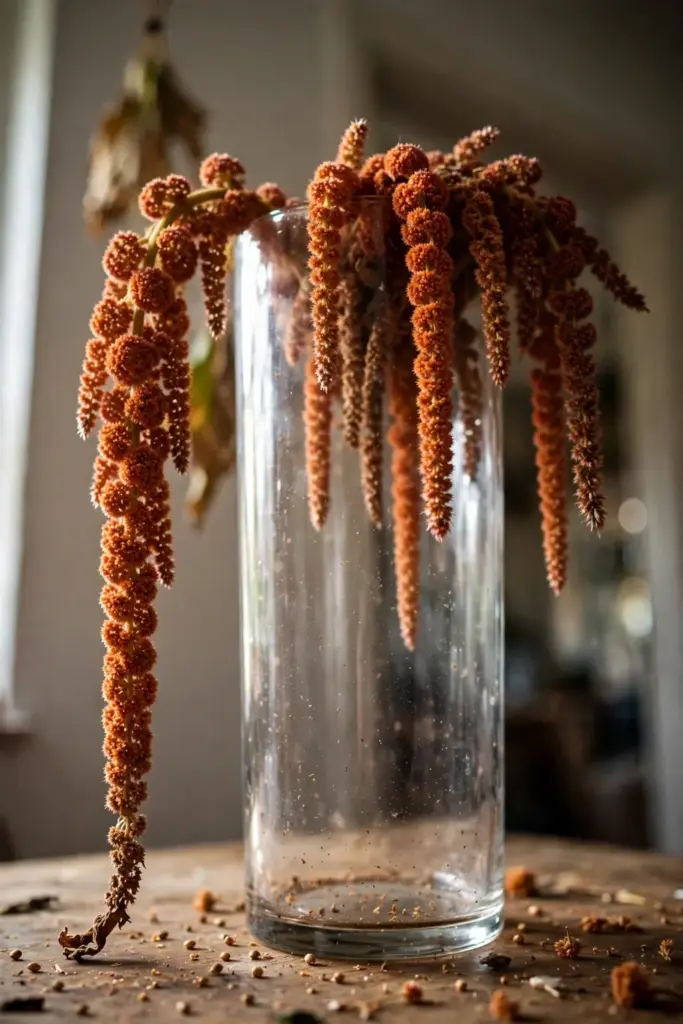
Cut when the tassels have filled out and the first pollen shows. Earlier than that and the tassel keeps elongating in the vase and sheds. Amaranthus is an annual in all zones. Give it full sun and lean soil; rich soil grows leaves at the expense of tassels. The failure is underwatering the plant, not the vase: drought-stressed amaranthus sets small tassels that shatter within days of cutting.
Use amaranthus where other flowers cannot go: cascading over the rim of a tall vase, trailing from a mantel arrangement, filling the back of a large bouquet. The tassels are light for their size, so they do not drag the arrangement down the way heavy hydrangea heads do. Cut the tassels at different lengths and let them fall naturally instead of wiring them upright.
3. Cut Chrysanthemums Three-Quarters Open
Grow garden mums as the fall bouquet’s anchor. They are the longest-lived fresh flower most home gardeners can cut, holding 14 to 21 days, and they shrug off the first light frosts that finish the zinnias. Cut sprays when the blooms are three-quarters to fully open. Buds cut tight rarely open well indoors.
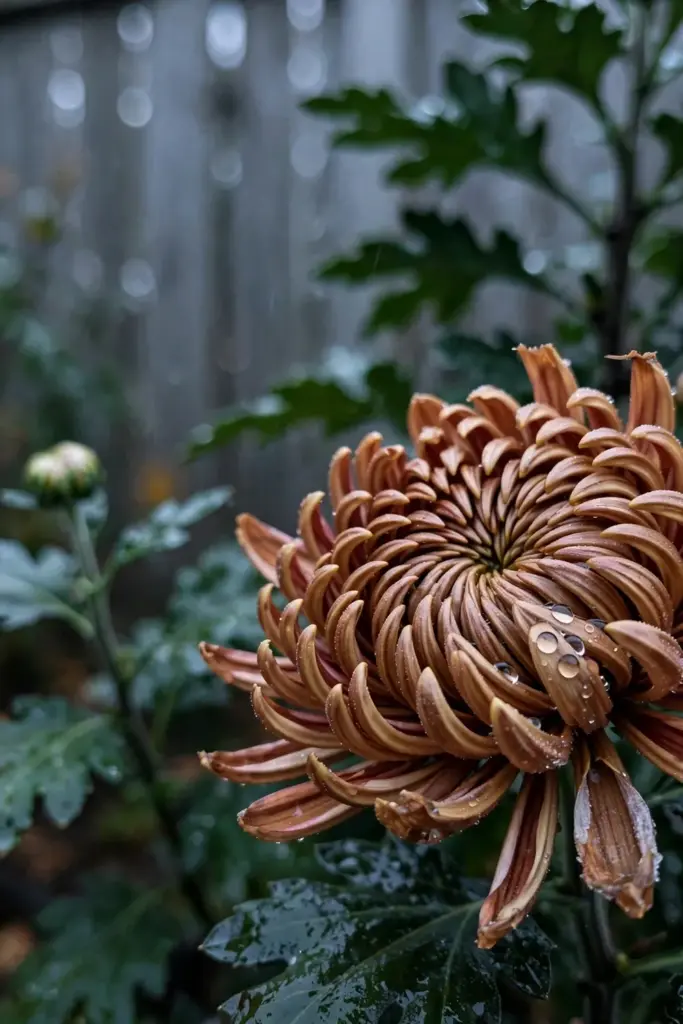
Mums root easily from cuttings taken in spring, so one mother plant becomes next year’s row. Hardy garden mums survive zones 5 to 9 if planted early enough to root before hard frost. Pinch the plants twice before midsummer for branching; each pinch doubles the stem count. The failure is buying florist mums labeled for fall color and expecting them back next year: many are tender greenhouse types hardy only to zone 7 at best.
Disbud exhibition mums for larger blooms. When the buds form, rub off all but the central bud on each stem; the plant pours its energy into one flower instead of five. For cutting sprays, do the opposite: leave every bud and cut the whole spray. Both habits come from the same plant, decided by your thumb in August.
4. Cut Craspedia When the Balls Turn Solid
Grow craspedia, the billy buttons, for drumstick heads on wiry stems that need no arranging skill. They hold 14 days or more fresh and dry standing in an empty vase with no attention, which makes them the filler that never wastes. Cut when each ball is fully round and firm, with no green softness left at the base of the head.
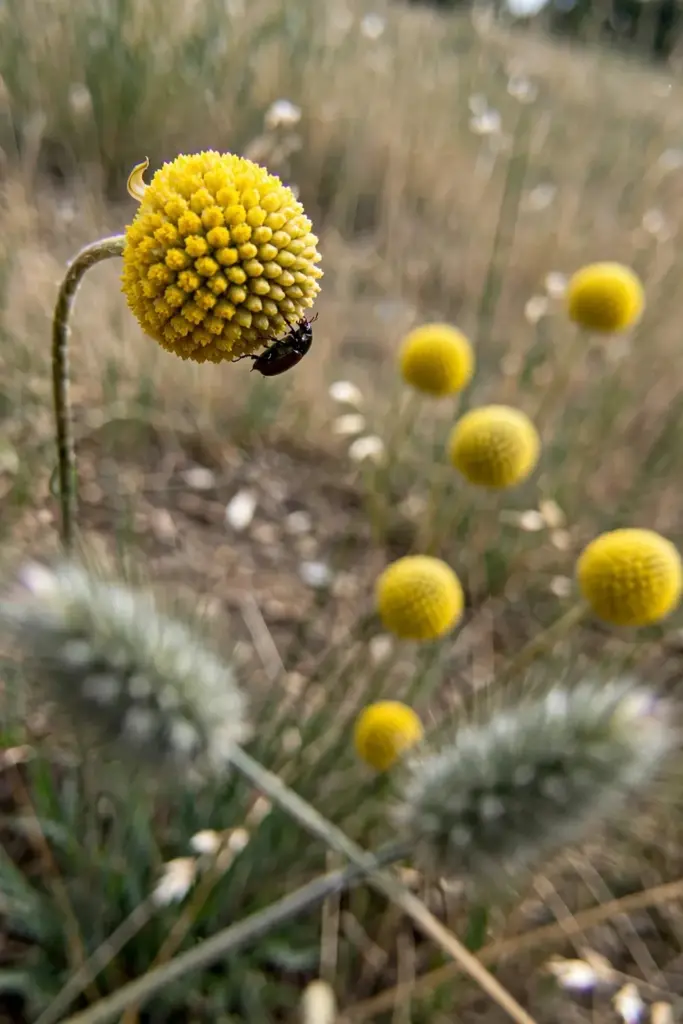
Craspedia is perennial in zones 8 to 11 and grown as an annual elsewhere. It wants full sun and sharp drainage; wet feet rot the crown over winter in marginal zones. Space plants 20 to 25 cm apart so air moves between the rosettes. The failure is cutting soft heads: they droop within a day and never recover, while firm heads stay upright for two weeks.
5. Cut Gomphrena When the Bracts Color Fully
Grow gomphrena, the globe amaranth, for clover-like heads that hold color for months dried and two weeks or more fresh. The papery bracts are the flower; the true flowers are tiny and hidden. That structure is why it outlasts everything fleshy around it. Cut when the bracts are fully colored and the head feels solid.
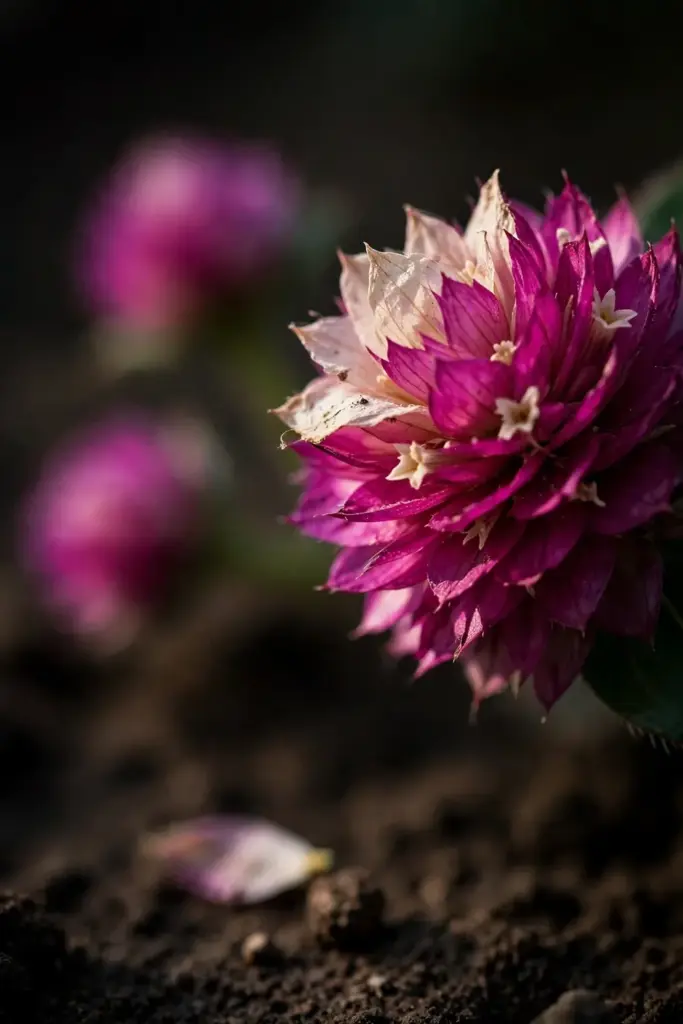
Gomphrena is perennial in zones 9 to 11, annual everywhere else, and it loves heat that makes other fall flowers sulk. Sow after the soil warms; it germinates poorly in cool soil. Deadhead the first flush hard and the plants branch into twice the stems. The failure is planting it in rich, wet soil: the plants grow leafy, flop, and the heads stay small.
6. Cut Statice When the Tiny Flowers Open
Grow statice for the filler that behaves like a marathoner. Each stem carries clouds of tiny papery flowers that hold 14 days or more fresh and dry without fading. Cut when the small true flowers are open along the stem, not when the buds are still tight and green.
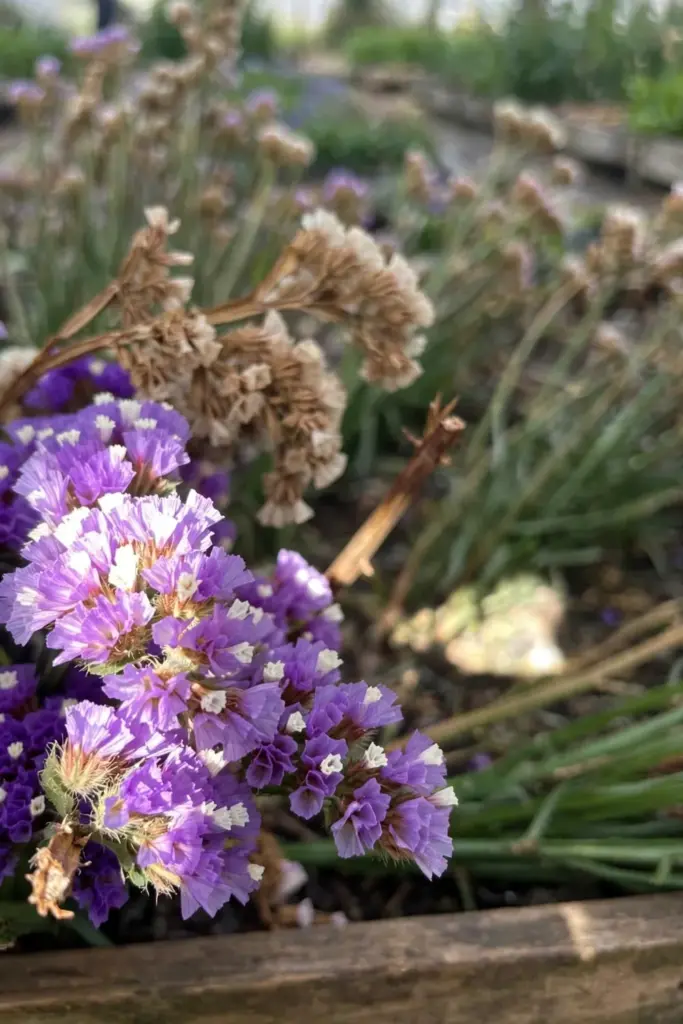
Statice is perennial in zones 8 to 10 and grown as an annual elsewhere. It tolerates poor soil and salt air better than most cut flowers, which is why coastal cutting gardens lean on it. Sow in succession; one sowing gives one flush, and the plants do not rebloom strongly. The failure is harvesting in wet weather and packing the stems tight: the papery calyces trap moisture and spot.
7. Cut Eucalyptus Stems Any Time They Feel Firm
Grow eucalyptus for the foliage filler that outlasts every flower in the bucket. Silver dollar and baby blue types hold 14 days or more, and the scent carries a whole arrangement. Cut stems any time they feel firm; soft new tip growth wilts, so take stems with mature round leaves.
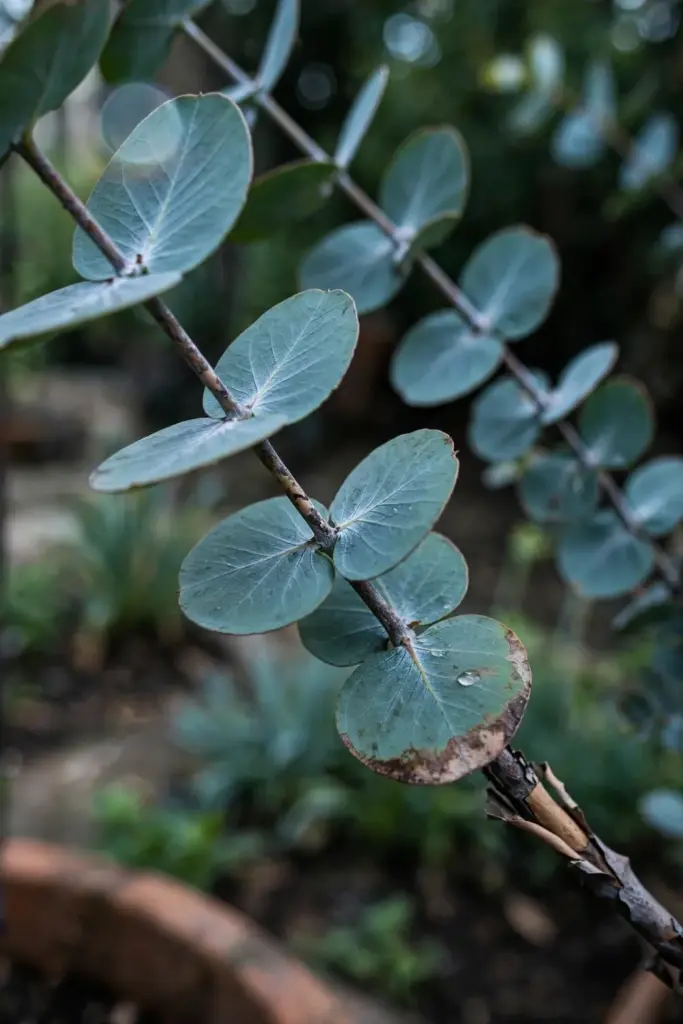
Eucalyptus is hardy in zones 8 to 11. In colder zones growers treat it as an annual, sowing in late winter for one season of cutting foliage. It grows fast enough to give cutting stems by late summer from a spring sowing. Strip the lower leaves before the stems go in water; submerged eucalyptus leaves foul the water faster than most. The failure is letting it become a tree: coppice it hard each spring to keep the juvenile round leaves that florists want.
8. Cut Ornamental Kale After Cool Nights Color It
Grow ornamental kale for the rosette that looks like a flower and holds like a weed. Once cool nights paint the centers pink, white, or purple, a cut head lasts 14 days or more in water. It is the only “flower” in this list that improves after frost.
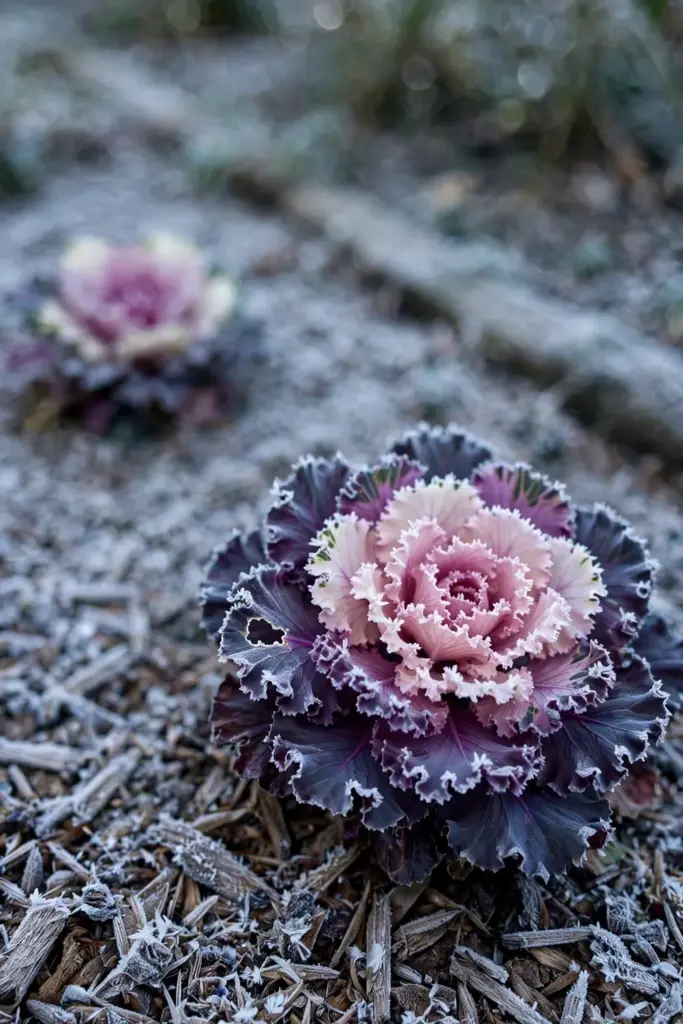
Sow in midsummer for fall heads; spring-sown plants bolt and look tired by October. Ornamental kale is a cool-season annual everywhere. Space heads 25 to 30 cm apart so each rosette opens fully. The failure is cutting before the color develops: a green head in the vase never pinks up, because the pigment needs cold nights on the living plant.
9. Cut Ammi Majus When Half the Florets Open
Grow ammi majus, false Queen Anne’s lace, for the frothy white filler that makes every bouquet look professional. NCSU’s 2012 trials measured 10 days of vase life, with holding solution adding two more. Cut when about half the florets in the umbel are open; fully open heads shatter, tight buds never open.
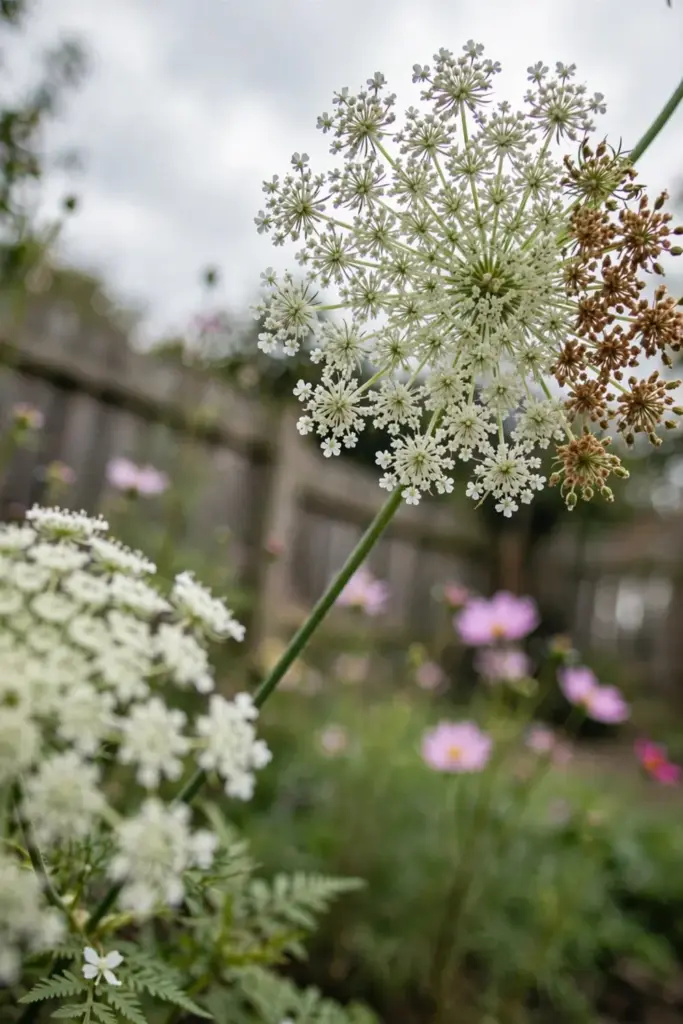
Ammi is a hardy annual: sow in fall in mild zones or very early spring elsewhere, because it bolts in heat. One word of caution from the NCSU trial notes: the sap makes skin photosensitive, so cut it last and get out of the sun. Give it full sun and ordinary soil. The failure is sowing too late in spring: the plants race to seed in the first heat wave and the umbels stay small.
10. Cut Sedum ‘Autumn Joy’ Before the Heads Brown
Grow sedum ‘Autumn Joy’ for the succulent filler that bridges summer and fall. The flat broccoli-like heads color from green to pink to rust, and cut stems hold 7 to 14 days. Leave some heads standing for winter structure; cut the rest.
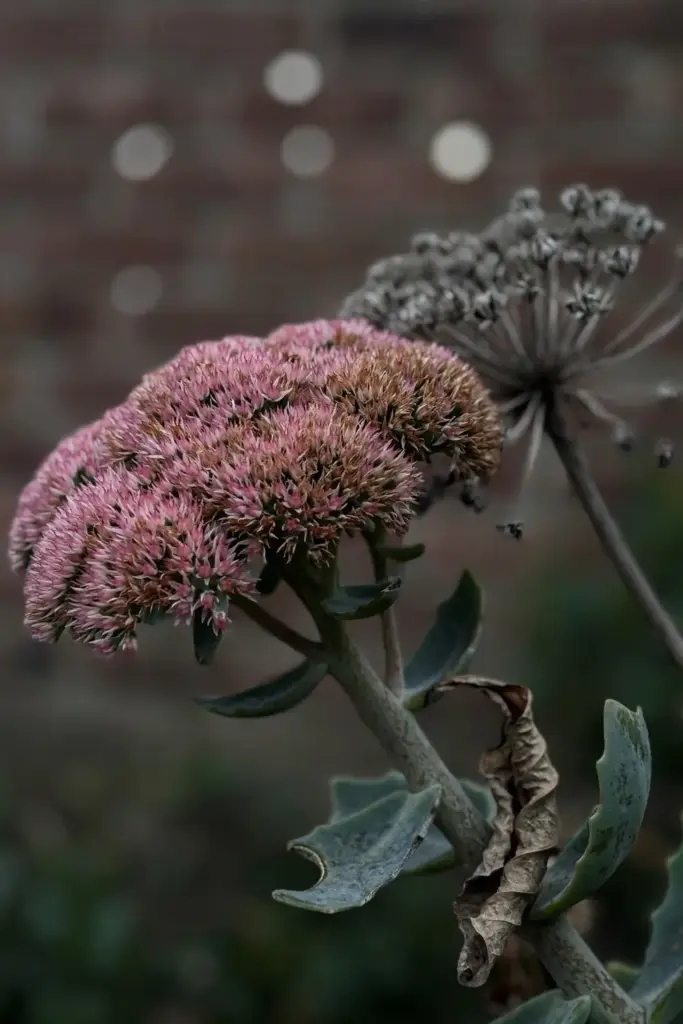
Sedum is perennial in zones 3 to 9 and nearly indestructible once established. Cut when the heads are fully colored but before they brown and dry on the plant. The thick stems drink slowly, so recut and give them deep water. Divide clumps every three or four years or the centers open up and flop. The failure is cutting too late: brown heads in the vase shed tiny florets across the table for a week.
Fill the Middle: 10 Flowers That Hold a Solid Week
This group holds 5 to 10 days: the classic fall bouquet flowers. They need the morning cutting routine more than the marathoners do, and they repay it. Cut them at the right stage and change the water once, and a Saturday harvest still looks good the following weekend. These are also the heaviest producers: a short row of zinnias or cosmos out-yields the entire marathoner group in stem count.
11. Cut Zinnias on the Wiggle Test
Grow zinnias as the workhorse of the fall cutting garden. No flower gives more stems per square meter from August to frost. Utah State University Extension’s cut flower production guide puts zinnia vase life at 7 to 10 days, with the harvest stage deciding where in that range you land: cut when the second row of outer petals has fully expanded, and use the wiggle test, a firm stem that does not flop when you shake it.
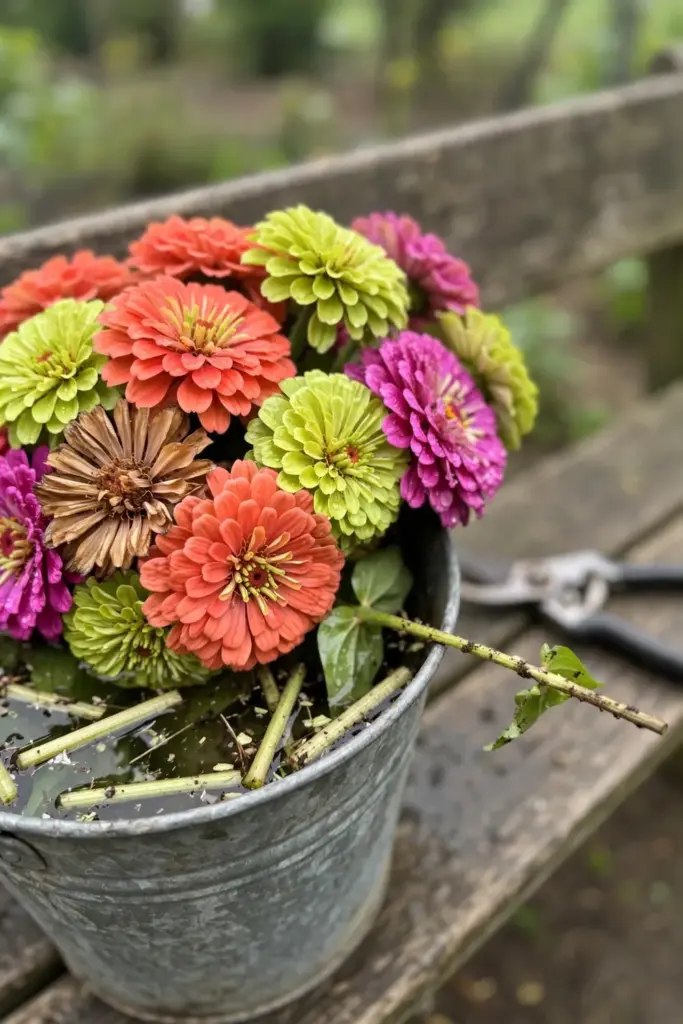
Zinnias are annual in all zones. The ‘Benary’s Giant’ series was bred for cutting: long stems, large blooms, disease resistance. Space plants 20 to 25 cm apart in full sun; tight spacing grows longer stems as plants reach for light. USU notes that floral preservative research on zinnias is inconclusive, so clean water changed often beats additives. Never store zinnias below 4.4 degrees; chilling damages the blooms. The failure is letting spent blooms stand: every uncut flower tells the plant to make seed instead of new buds, and production collapses within two weeks.
Powdery mildew finds zinnias every fall. Water at the base, space for airflow, and choose resistant series like ‘Benary’s Giant’ or ‘Zinderella’. Mildewed leaves leave vase life alone. A weakened plant produces shorter stems with smaller blooms. Strip any spotted lower leaves before the stems go in the bucket; nobody sees them in the arrangement anyway.
12. Cut Sunflowers as the Petals Lift
Grow sunflowers for the fastest fall color from seed: 50 to 60 days from sowing to cutting in warm soil. Choose pollenless single-stem types bred for cutting (‘Sunrich’, ‘ProCut’ series); their pollen-free centers do not shed yellow dust across the table, and the vase life runs 6 to 12 days. Cut when the ray petals just lift off the disk, before they flatten fully open.
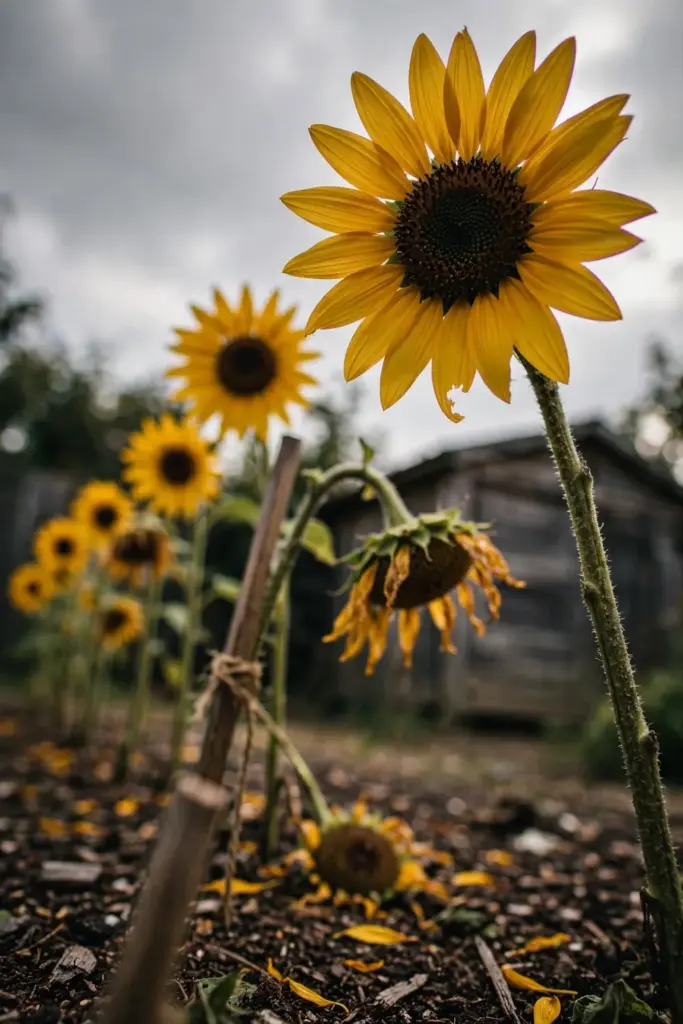
Sunflowers are annual everywhere. Sow in succession every 10 to 14 days for continuous stems; one sowing gives one flush per stem on single-stem types. Do not pinch single-stem varieties; branching types exist but give smaller heads on shorter stems. The failure is cutting fully open heads in the heat of the day: they have already spent their best hours and drop petals within three days.
Stake tall sunflower rows before the fall winds arrive. A 1.5-meter stem with a heavy head is a sail; one October storm flattens an unstaked row overnight. Drive the stake at planting time, not after the plants lean, because driving stakes through established roots damages the very plants you are trying to save.
13. Cut Marigolds Fully Open
Grow marigolds for the toughest cut flower in the fall garden. African marigolds (Tagetes erecta) give 7 to 10 days in the vase on stems long enough to arrange, and the plants bloom until hard frost kills them. Cut when the blooms are fully open; marigold buds do not open reliably after cutting.
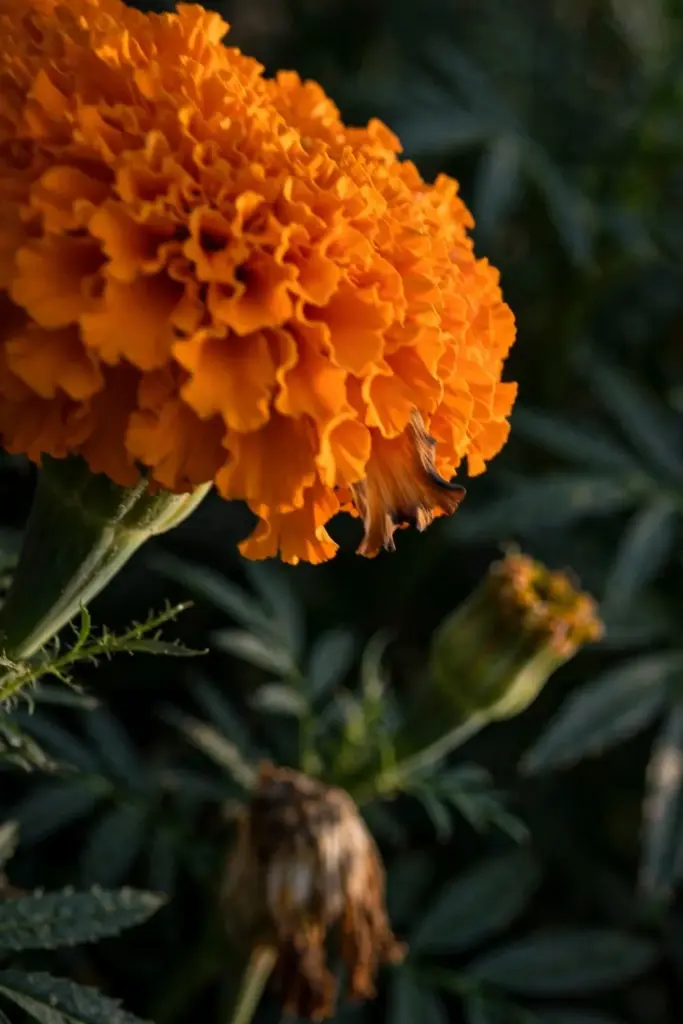
Marigolds are annual in all zones and germinate fast in warm soil. The tall African types need staking in wind; the French types are too short for the vase but work as bed edging around the cutting rows. Deadhead ruthlessly. The failure is growing them in shade: stems stretch thin, heads stay small, and vase life drops by days.
Marigold foliage carries the scent people either love or hate; strip it all before arranging, because the blooms hold their perfume without the leaves and the water stays cleaner. The strong scent is also why vegetable growers interplant marigolds: they are the one cut flower on this page that earns its bed space twice, in the vase and in the rotation.
14. Cut Rudbeckia When the Stem Feels Firm
Grow rudbeckia, the black-eyed Susan, for gold petals that hold a week in the vase. Cut when the petals are fully open and the stem feels firm from base to bloom. Soft-necked stems bend at the vase rim within a day.
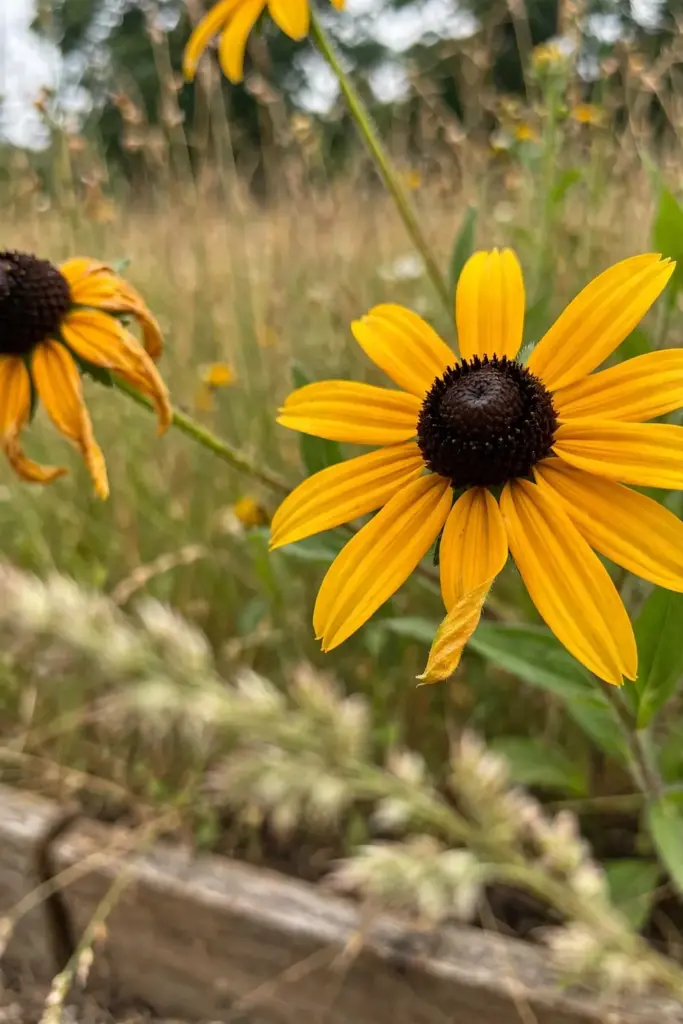
Rudbeckia is perennial in zones 3 to 9. ‘Goldsturm’ is the classic; ‘Indian Summer’ gives larger blooms on annual plants. Deadhead the first flush and most plants push a second round of stems in early fall. Full sun and average soil suit it; it tolerates drought once established. The failure is cutting stems with green, flexible necks: they cannot hold the heavy head upright and kink at the water line.
15. Cut Echinacea as the Petals Drop Open
Grow echinacea, the coneflower, for structural blooms with a prominent cone that holds 7 to 10 days. Cut as the petals drop open and horizontal; the cone should feel firm. Leave the last flush standing: goldfinches strip the seed heads all winter, and the dried cones last for months in everlasting arrangements.
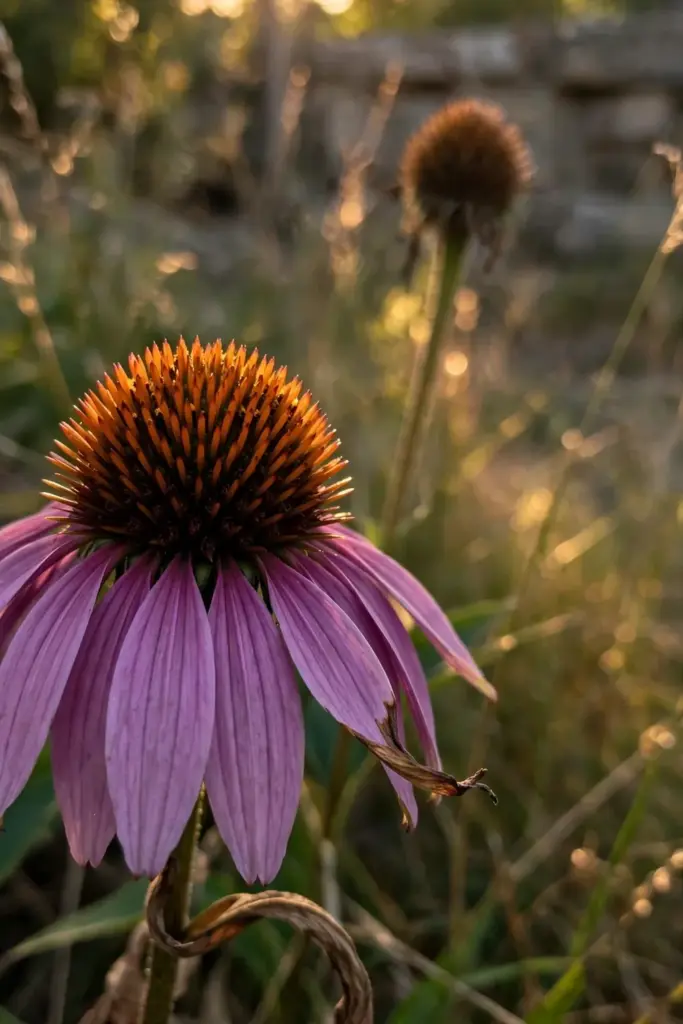
Echinacea is perennial in zones 3 to 9. It needs full sun and lean, well-drained soil; wet winter soil kills more plants than cold does. Do not deadhead everything: leave at least a third of the heads for seed and self-sowing. The failure is overwatering established plants. Soggy crowns rot, and a rotted crown gives no stems at all.
16. Cut China Asters Half to Three-Quarters Open
Grow China asters (Callistephus chinensis) for the fall bouquet’s color range: no other annual gives you this many petal forms in pink, purple, red, and white on cutting-length stems. Vase life runs 7 to 14 days when cut at the right stage: half to three-quarters open, with the center still tight.
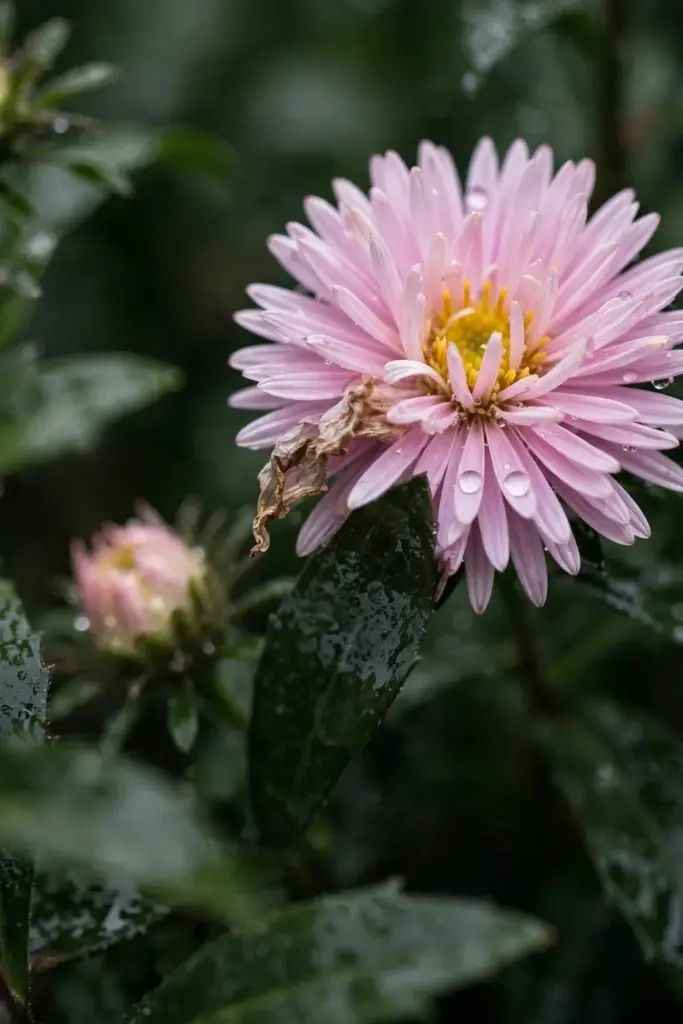
China asters are annual everywhere and must be sown fresh each year. They are prone to aster yellows and fusarium wilt, so rotate the bed and never plant them where asters grew the year before. The wilt-resistant series (‘Matsumoto’, ‘Bouquet’) earn their keep. Pinch once for branching. The failure is planting them in the same spot two years running: fusarium builds in the soil and the second year’s plants wilt just as the buds color.
17. Cut Scabiosa as the Outer Florets Open
Grow scabiosa, the pincushion flower, for wiry stems and pincushion blooms that add movement to fall bouquets. Vase life is 7 to 10 days. Cut when the outer florets have opened; the center continues to develop in the vase, which extends the display.
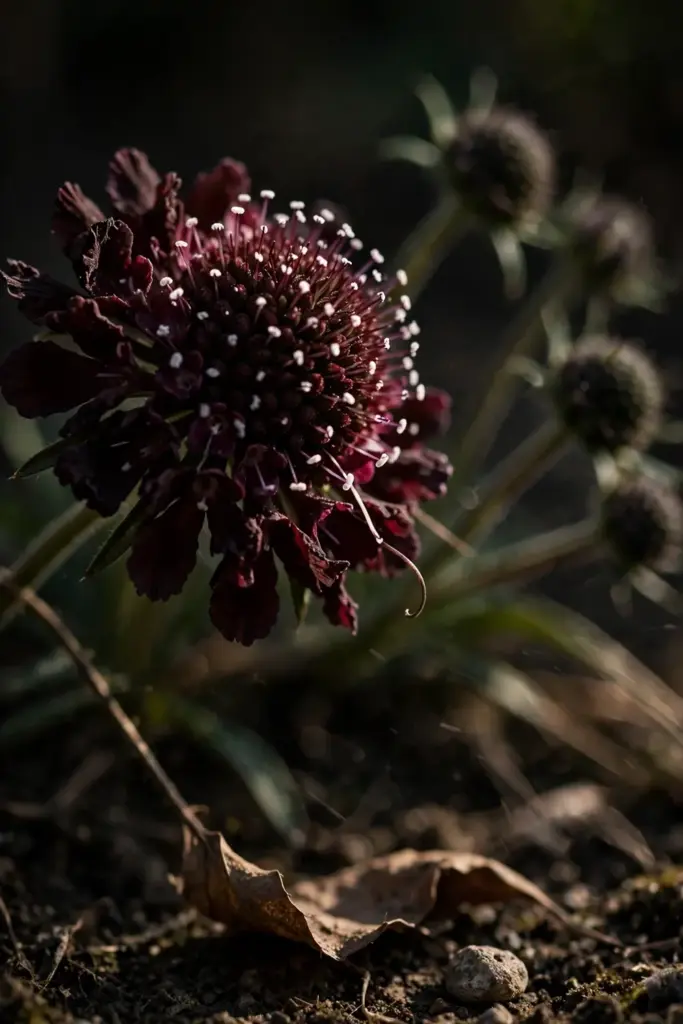
Scabiosa is perennial in zones 3 to 7. The annual types (Scabiosa atropurpurea) give longer stems for cutting and come in near-black ‘Black Knight’ that designers prize. Deadhead constantly; a scabiosa allowed to set seed stops blooming within weeks. Full sun and alkaline soil suit it best. The failure is letting seed form: one missed deadheading round can end the season’s production.
18. Cut Hydrangea Paniculata When the Florets Turn Papery
Grow hydrangea paniculata for the large filler heads that no annual can match for volume. Fresh-cut vase life is 5 to 7 days, shorter than the rest of this group, but the heads dry well on the plant and hold for months as everlastings. Cut for the vase when the florets feel papery to the touch; cut for drying two weeks later, when they feel stiff.
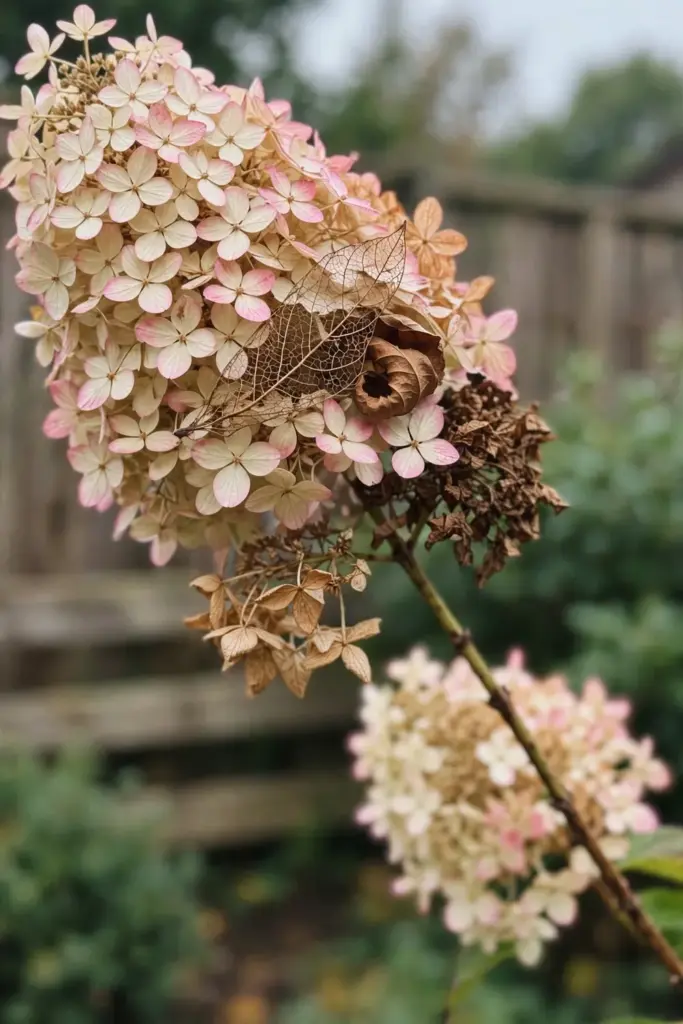
Panicle hydrangeas are hardy in zones 3 to 8 and bloom on new wood, so a hard spring prune only increases the flower count. ‘Limelight’ and ‘Vanilla Strawberry’ give the largest heads. Strip all leaves before arranging; hydrangea foliage drinks heavily and wilts first. The failure is cutting soft, water-filled heads in early summer for the vase: they collapse overnight. Wait for the papery late-season texture.
19. Cut Dahlias Nearly Fully Open
Grow dahlias for the fall garden’s showiest cut flower, and accept the trade: the vase life is the shortest on this page. Cornell’s high-tunnel cut flower notes put dahlia vase life at 3 to 5 days in plain water, stretching to 7 to 10 days with a hydrator, and the harvest rule is strict: cut when the flowers are nearly fully open, because dahlia buds cut too soon never open.
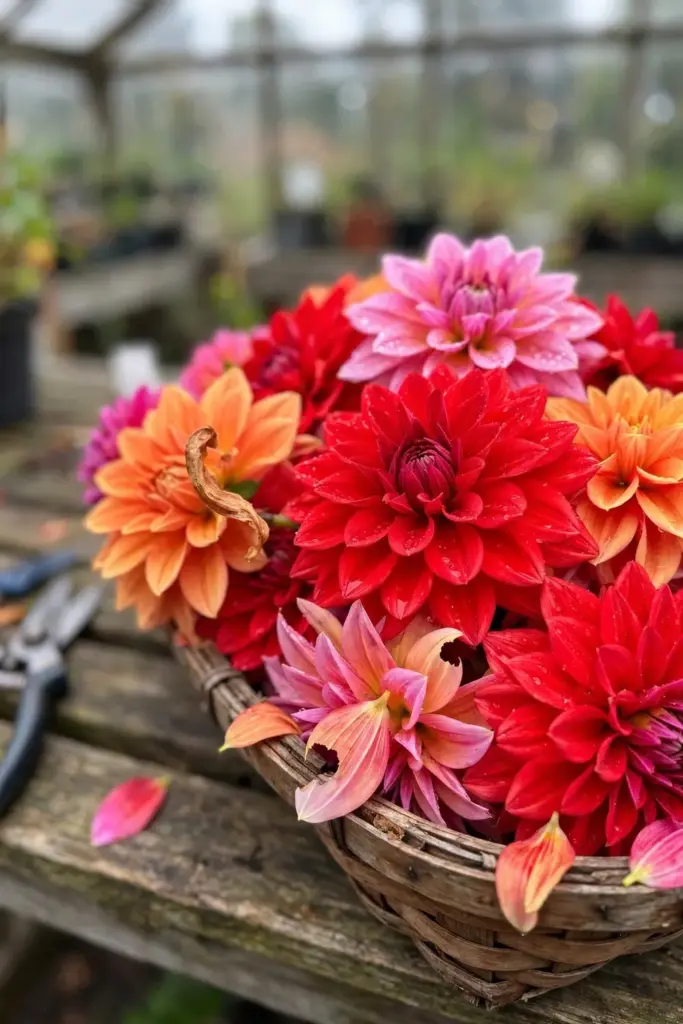
Cut deep into the plant, down to a leaf joint, and the plant answers with longer replacement stems. Disbud side buds on dinnerplate types for one massive bloom, or leave them for sprays of smaller flowers. Dahlias are perennial in zones 8 to 11; in colder zones lift the tubers after the first frost blackens the tops and store them frost-free. Harvest into water immediately; dahlias wilt fast once cut. The failure is cutting tight buds for a “longer-lasting” bouquet: they sit closed for two days, then brown without ever opening.
Lift tubers after the first hard frost blackens the tops. Cut the stems to 15 cm, lift the clumps with a fork, and let them dry for a day under cover. Store in barely damp peat or wood shavings at 4 to 10 degrees; a frost-free garage shelf works. Check monthly and discard any tuber that turns soft. One healthy clump divides into three or four plants next spring.
20. Cut Cosmos as the Petals Open
Grow cosmos for feathery foliage and daisy blooms on stems that keep coming until frost. Vase life is short, but the plants produce so many stems that a daily handful is realistic. Cut as the petals open; cosmos continues opening in the vase, so slightly early beats slightly late.
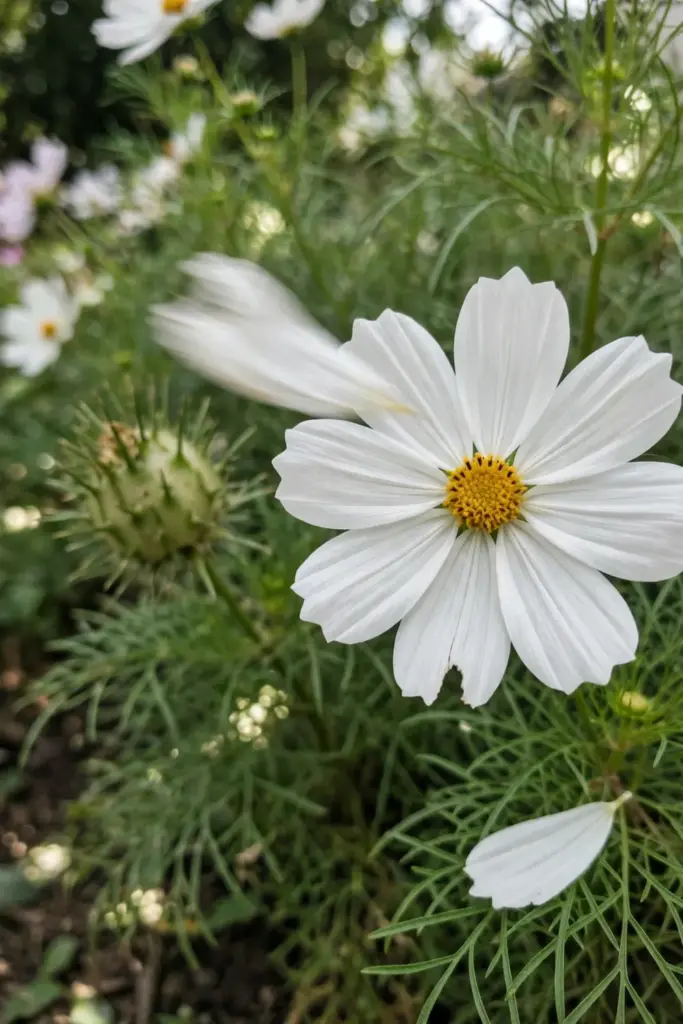
Cosmos is annual everywhere and thrives on neglect: poor soil gives more flowers, rich soil gives leaves. ‘Sensation’ and the ‘Sonata’ series give cutting-length stems. Deadhead or cut daily; cosmos sets seed fast and a seeding plant stops blooming. The failure is fertilizing them like vegetables: fed cosmos grows 1.5-meter leafy towers with few flowers.
Sow in Fall for Taller Stems: 4 Cool-Season Cuts
Fall sowing is the cutting garden’s quiet advantage. Seeds sown in fall germinate in cool soil, build deep roots over winter, and produce taller, sturdier stems than spring-sown plants the following year. The four flowers below all prefer it. In zones 7 and warmer, sow direct; in colder zones, sow under cover or start indoors. For the indoor-starting method, the site’s seed starting steps cover lights, timing, and hardening off.
21. Sow Snapdragons in Fall for Spring Towers
Sow snapdragons in fall for the tallest, straightest spikes you will ever cut from this plant. Fall-sown plants establish roots through winter and bloom weeks earlier than spring sowings, with stems that reach 60 to 90 cm. Vase life is 7 to 10 days. Cut when the lower third of the florets are open; the upper buds continue opening upward in the vase.
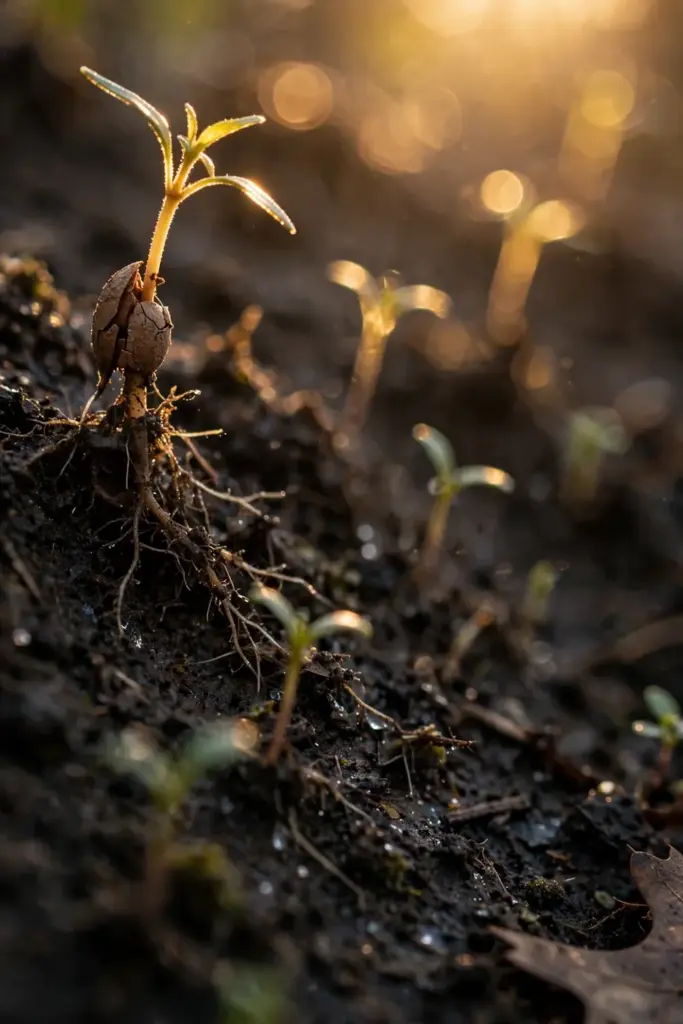
Snapdragons are perennial in zones 7 to 11 and grown as annuals elsewhere. They need light to germinate: press the dust-fine seed onto the soil surface and do not cover it. Pinch the central stem once at 15 cm for branching, or leave it for one exhibition spike. The failure is burying the seed: covered snapdragon seed germinates poorly or not at all, and growers blame the packet.
22. Sow Larkspur in Fall, Not Spring
Sow larkspur in fall because it demands cold to germinate well. Spring-sown larkspur germinates erratically and blooms on short stems; fall-sown seed stratifies naturally over winter and produces tall, well-branched spires. Vase life is 7 to 10 days. Cut when the lower third of the florets are open.
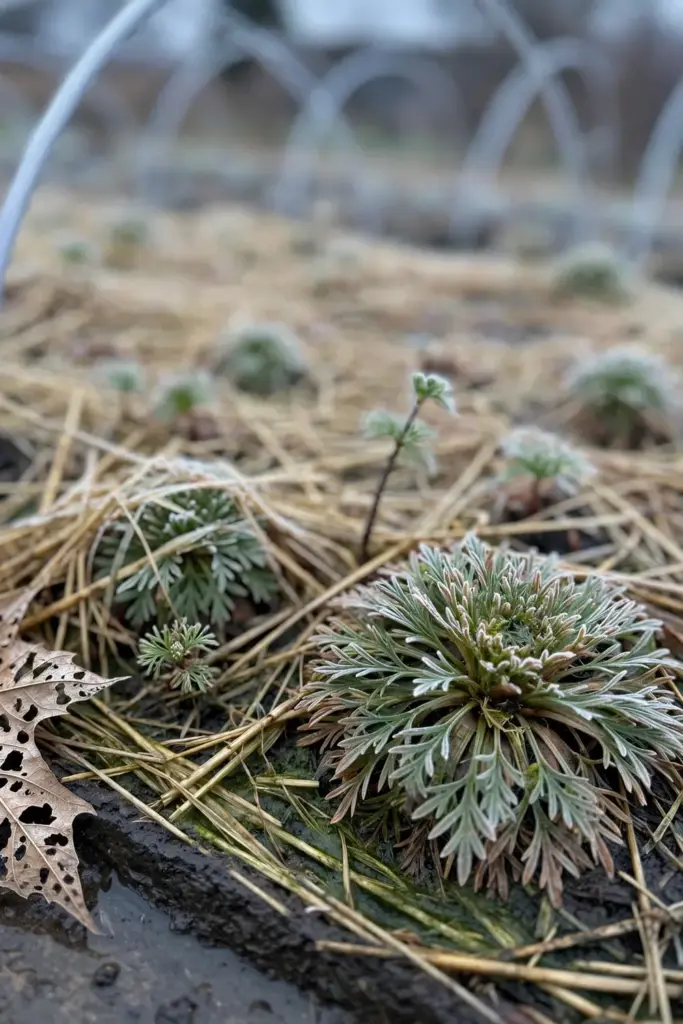
Larkspur is a hardy annual everywhere. Sow where it is to grow; it resents transplanting. Thin ruthlessly to 15 to 20 cm apart: crowded larkspur gives thin, short stems. All parts are toxic if eaten, so keep it out of the vegetable rotation and wash hands after handling. The failure is sowing in spring and wondering why half the seed never appears: without winter chill, germination is poor and late.
OWNER FIELD NOTE: <describe your fall-sown larkspur here: the sowing date and zone, how germination compared with a spring sowing of the same variety, the stem height difference you measured, and one thing you would do differently next fall.>
23. Sow Bachelor’s Buttons in Fall for Early Blooms
Sow bachelor’s buttons, the cornflowers, in fall for blooms a full month earlier than spring sowing. The plants overwinter as small rosettes and bolt into flower at the first warm days. Vase life is 6 to 8 days. Cut fully open; the buds do not open after cutting.
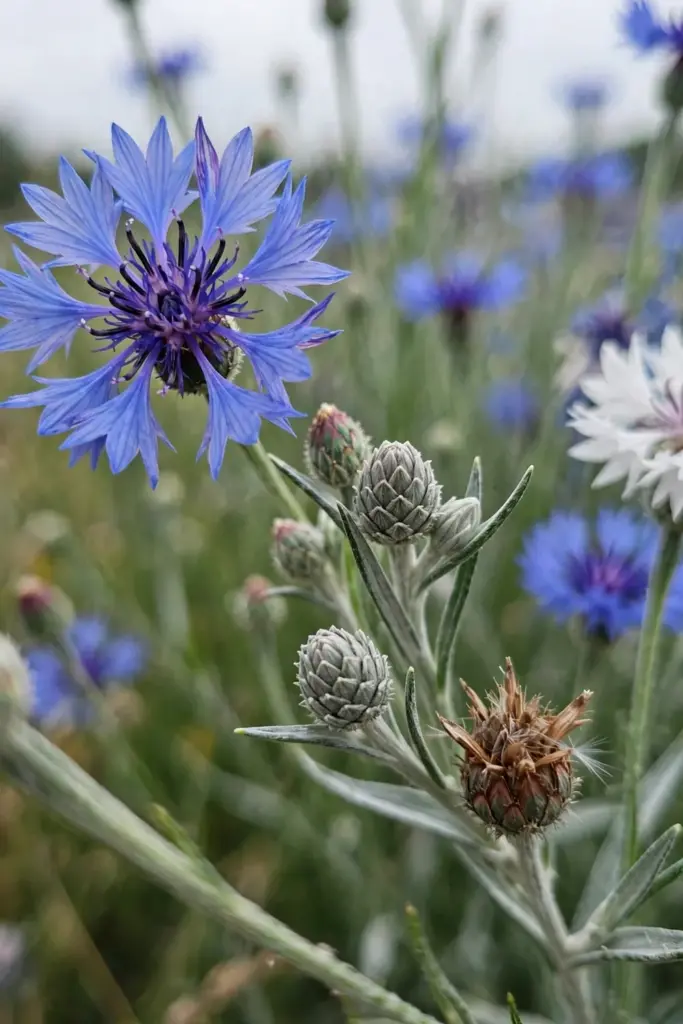
Bachelor’s buttons are annual everywhere and self-sow freely, so one fall sowing can establish a permanent patch. Thin to 15 cm; crowded plants mildew. The classic blue ‘Blue Boy’ and the mixed ‘Polka Dot’ both cut well. Deadhead or cut daily to keep the flush coming. The failure is letting them self-sow into the paths: volunteers are charming until they crowd out everything else in the bed.
24. Sow Sweet Peas in Fall Where Winters Are Mild
Sow sweet peas in fall in zones 7 and warmer for the longest stems and the earliest fragrance. Fall-sown plants build massive root systems over winter and outgrow spring sowings by weeks. Vase life is short, 4 to 5 days, but no fall-sown flower perfumes a room like sweet peas do. Cut when two or three florets are open per stem; the rest open in sequence.
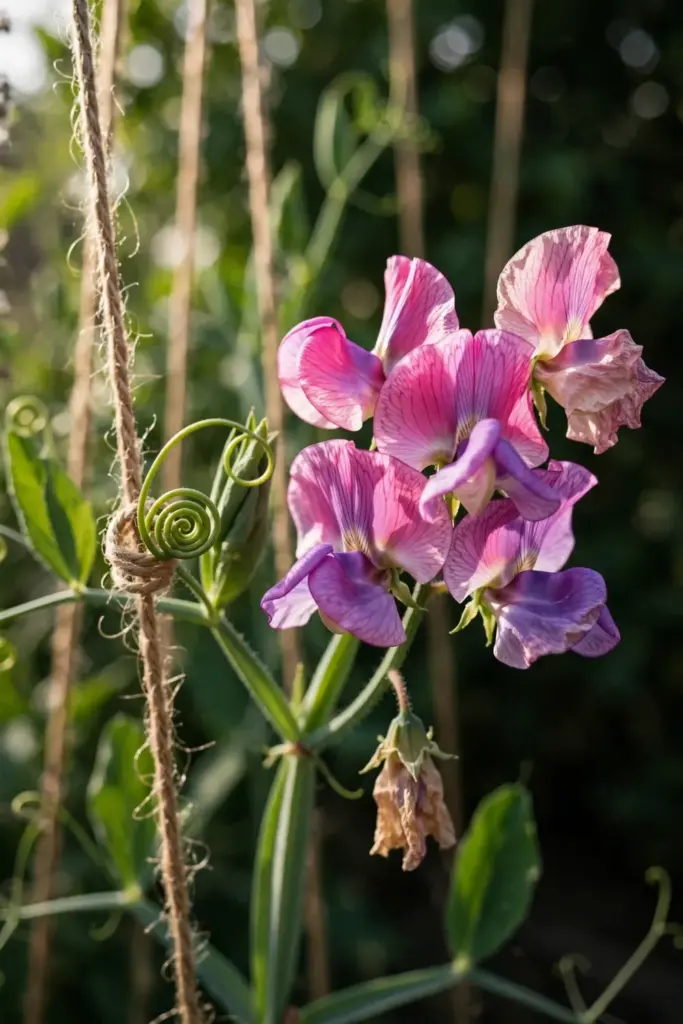
Sweet peas are annual everywhere. Soak the large seeds overnight and sow 2.5 cm deep. They are heavy feeders for a flower: work compost into the trench before sowing. Provide support early; a sweet pea that flops never recovers its stem straightness. Pick every open flower without mercy: a plant allowed to set one pod stops blooming. The failure is sowing in spring in a warm climate: the plants hit heat before they size up, and the season ends with short stems and few flowers.
Plant in Fall for Spring Bouquets: 2 Corm Crops
Two flowers answer “cut flowers to plant in fall for spring”: ranunculus and anemones. They go into the ground as corms in fall in mild zones, sleep through winter, and produce the spring bouquet flowers that florists charge premium prices for. In zones colder than 7, plant the corms in early spring instead; the article on when to start a fall garden sorts out timing by zone.
25. Plant Ranunculus Corms in Fall for Spring Layers
Plant ranunculus corms in fall in zones 8 to 11 for layer upon layer of tissue-paper petals in March and April. Vase life is 7 to 10 days, remarkable for so delicate a bloom. Cut when the buds show color and feel soft; buds cut green and hard may never open.
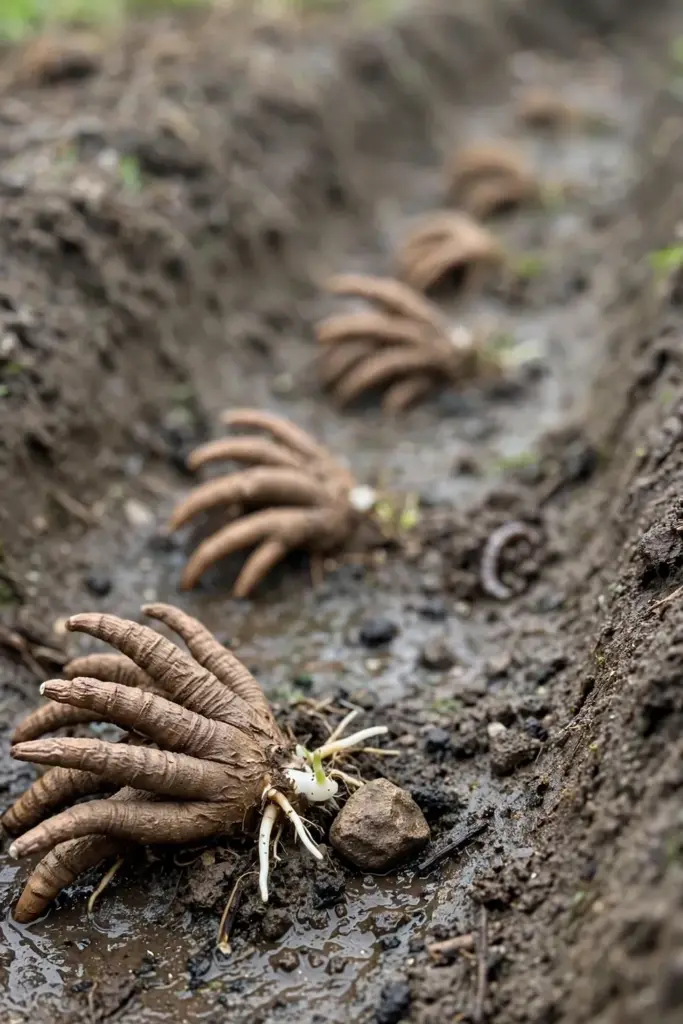
Soak the claw-shaped corms for 3 to 4 hours before planting, then plant 5 cm deep in well-drained soil. Ranunculus hates wet winter soil more than cold: in heavy clay, plant in raised beds or lose them. In zones 7 and colder, hold the corms dry and plant in early spring as soon as the soil can be worked. The failure is planting in soggy ground: the corms rot within weeks, and growers blame the cold that only finished the job.
26. Plant Anemone Corms in Fall for Early Color
Plant anemone corms (Anemone coronaria) in fall in zones 7 to 10 for simple, vivid blooms weeks before the tulips. Vase life is 7 to 10 days. Cut when the buds show color but have not yet opened; they unfurl in the vase over two days.
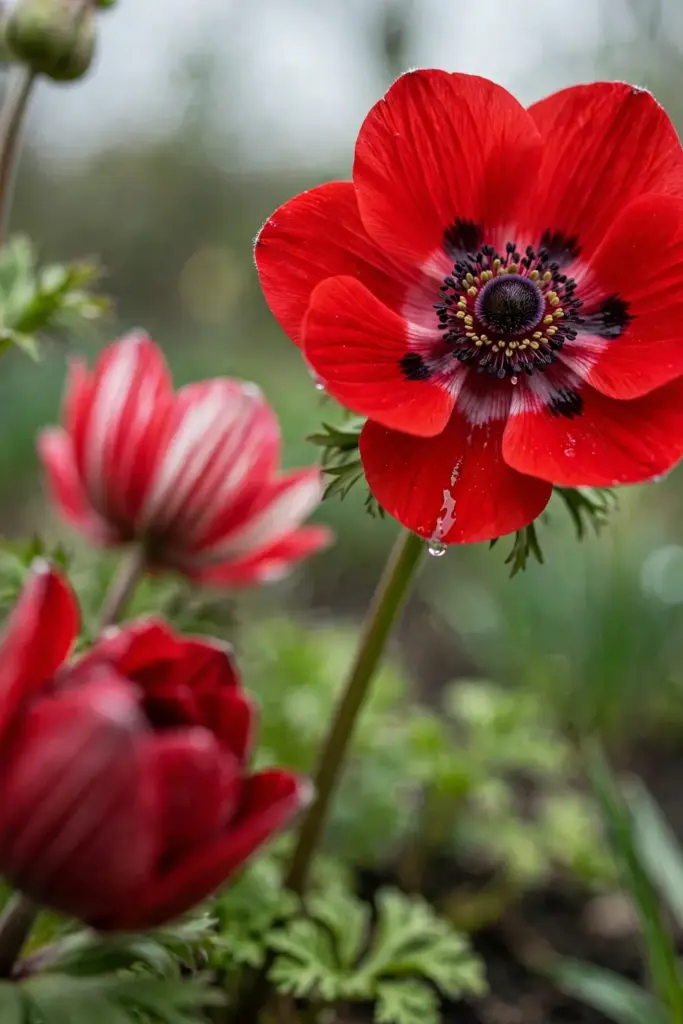
Soak corms 3 to 4 hours, plant 5 cm deep, and mulch in marginal zones. Anemones want cool growing weather: they bloom gloriously in spring and collapse at the first real heat. Succession-plant corms two weeks apart for a longer cutting window. The failure is expecting summer blooms: anemones are done by June in most climates, and the bed should already hold their successors.
Condition Every Stem the Same Morning
Cutting is half the job. Conditioning, what happens in the first hour after the cut, decides how many days the table in the vase-life section actually delivers. Run this routine every harvest morning.
Fill a clean bucket with lukewarm water before you walk out to the beds. A dirty bucket undoes everything: bacteria clog stem ends faster than any other factor, and North Carolina State’s cut flower postharvest notes list microbial contamination alongside water stress and ethylene as the three quality killers after harvest.
Cut in the cool of the morning, when stems hold the most water. Carry the bucket with you and stand each stem in it immediately; a stem left lying on the path for ten minutes has already lost measurable water. Recut every stem underwater on a slant before arranging. The slant adds surface area: more cut surface drinks faster, and cutting underwater keeps air out of the vessels.
Strip every leaf that would sit below the water line. Submerged leaves rot within two days, and the rot feeds the bacteria that block the stems. For hollow-stemmed flowers like dahlias and amaranthus, the standard grower fix is a short dip of the cut end in hot water, then straight into cool water; the heat sets the stem tissue and stops the hollow core from collapsing. For sappy stems like euphorbia relatives, the same hot-water dip stops the sap flow that would otherwise seal the stem shut.
Use a holding solution for the flowers that respond to it. NCSU’s postharvest notes explain the chemistry: holding solutions carry sugar to feed the bloom, an acidifier to lower water pH, and an antimicrobial to slow bacteria. Their trials show the response is species-specific: some flowers gain days, a few are harmed by preservatives, most sit in the middle. When in doubt, test on a small bunch before committing the whole harvest.
Change the water on day three and recut the stems. Keep arrangements out of direct sun and away from ripening fruit; fruit gives off ethylene, and the same notes report that concentrations as low as 100 parts per billion damage sensitive flowers within hours. Cool rooms beat warm ones by days. A bouquet on a cool north-facing table outlasts the same bouquet on a sunny sill by nearly half its vase life.
Use lukewarm water in the harvest bucket, not cold. Cold water carries air bubbles that lodge in freshly cut stems; lukewarm water moves up the vessels faster. The arranging vase can be cool. The distinction sounds fussy until you watch two identical zinnia bunches diverge by day four: the lukewarm-started bunch still crisp, the cold-started bunch flagging.
Time the Fall Sowing by Your First Frost
Fall sowing works backward from your average first frost date. Count back: snapdragons and larkspur need 6 to 8 weeks of growth before hard frost to establish the rosettes that overwinter. In zone 7 that means sowing in September; in zone 9, October still works; in zone 5, sow in August under row cover or start indoors.
Soil temperature matters more than air temperature for germination. Larkspur wants soil below 18 degrees to germinate well, which is another reason fall beats spring for it. Sweet peas germinate across a wide range but establish best when days are short and cool. Water the seedbed daily until emergence; fall seedbeds dry fast in warm September wind, and a dried seedbed kills germination silently.
Mulch the fall-sown rows lightly after the first hard frost, not before. Early mulch keeps the soil warm and invites rodents to nest in it; mulch applied after the ground cools insulates without the invitation. The fall planting guide covers what else goes into the ground in the fall window, from bulbs to perennials.
A floating row cover buys two advantages for fall sowings: it holds off the first light frosts and it breaks the drying wind that kills September germination. Lay it over hoops, not flat on the seedlings, and anchor the edges with soil. Remove it once daytime temperatures settle below 10 degrees or the cover starts shading more than it shelters.
Sow in Waves for Six Weeks of Bouquets
One sowing gives one flush. Three sowings give six weeks of cutting. Succession is the difference between a cutting garden that feeds the house for a month and one that gives a single glorious weekend.
Sow fast annuals, zinnias, cosmos, sunflowers, every 10 to 14 days from midsummer until 60 days before your first frost. Each wave replaces the last as production fades. Mark each sowing with the date on a plant label; memory lies about which row is which by September. Keep the waves small: a 1-meter row per sowing beats a 5-meter row sown once, because you can actually cut a short row clean.
For perennials like echinacea and rudbeckia, succession means deadheading, not resowing. Cut every open bloom and the plant keeps producing; leave the seed heads and it quits. The last flush can stand for the birds. Plan the waves so the final sowing peaks just before frost, and the garden ends the season working, not winding down.
Keep a simple sowing log: date, variety, row. Three sowings blur together by September, and the log tells you which wave is peaking and which failed to germinate. Note the weather next to each date. After two seasons the log becomes a planting calendar tuned to your exact garden, worth more than any generic zone chart.
Build Bouquets From Fillers First
Professional bouquets are built on filler: most of the stems in a florist’s arrangement are filler, with a few focal flowers set into them. Home bouquets fail when every stem is a focal flower. Ten zinnias in a jar read as a bunch, not an arrangement. The fillers on this page, ammi, eucalyptus, sedum, statice, hydrangea, are what turn stems into bouquets.
Cut fillers first and build the shape with them. A loose dome of ammi or eucalyptus gives every focal flower a place to sit; without it, heavy heads slide to the rim and the arrangement collapses by evening. Use odd numbers of focal flowers, three or five, and let the fillers carry the volume. Strip filler foliage below the water line with the same ruthlessness as the focal flowers.
Grow twice the filler you think you need. Every cutting gardener underplants fillers the first year and overplants focal flowers. A 2-to-1 ratio of filler stems to focal stems in the bed matches how bouquets actually get built. Eucalyptus and ammi earn their space twice over: they fill summer bouquets too, long before the fall flowers peak.
Dry the surplus instead of composting it. Statice, gomphrena, craspedia, and celosia dry standing in an empty vase with no attention; hydrangea heads dry best hung upside down in a dark shed. A jar of dried fillers on the shelf rescues thin winter bouquets and costs nothing.
Mistakes That Steal Vase Days
Cutting at noon. Stems cut in afternoon heat have lost water all day and never fully recover turgor. Morning cutting is the single highest-return habit on this page.
Leaving leaves underwater. One submerged leaf rots, feeds bacteria, and the bacteria clog every stem in the bucket. Strip to above the water line, every stem, every time.
Cutting dahlias as tight buds. They will not open. Cut nearly open or do not cut.
Skipping the recut. Stems seal within minutes of cutting. A stem arranged without a fresh underwater cut drinks through a sealed end and wilts two days early.
Crowding too many stems in one jar. Flowers packed tight share fouled water and trap ethylene. NCSU’s trial notes observe that one dirty stem shortens the vase life of everything around it. Give stems room or split the harvest across two buckets.
Storing zinnias cold. Below 4.4 degrees the blooms take chilling injury and the petals brown. Room temperature, out of the sun.
Forgetting the succession. A single sowing of sunflowers gives ten days of cutting and then silence. The calendar, not the variety, is usually the problem when the vases stand empty in October.
Arranging in a warm kitchen. Heat accelerates every decay process in the vase: bacteria multiply faster, stems lose water faster, petals age faster. Arrange in the coolest room, then move the finished bouquet where it will be seen. The display location matters less than the first 24 hours.
Cut for the vase, not for the garden show. The longest vase life on this page belongs to flowers most gardeners walk past: celosia, amaranthus, ornamental kale. Plant the marathoners, sow the fall group, condition every stem the same morning, and the house has fresh bouquets from September until the hard frost finishes the dahlias.
Frequently Asked Questions
Celosia, chrysanthemums, craspedia, gomphrena, statice, eucalyptus, and ornamental kale all hold 14 days or more with plain water and a clean cut. Amaranthus and ammi majus are the shortest holders in this group, and still cover a week and a half. These are the marathoners: cut them at the stages in the table above and one harvest covers two weekends.
Cut in the cool of the morning, before 9 a.m., when stems hold the most water, and stand each stem in a clean bucket immediately. Recut underwater on a slant before arranging. Strip every leaf below the water line and change the water on day three. Morning cutting plus clean water adds more vase days than any preservative.
Yes, and four of the best prefer it. Larkspur needs winter chill to germinate well; snapdragons, bachelor’s buttons, and sweet peas build bigger root systems over winter and produce taller stems than spring sowings. Sow 6 to 8 weeks before your first hard frost in zones 7 and warmer, or under cover farther north.
Ranunculus and anemone corms go into the ground in fall in zones 7 to 11 and bloom in spring, answering the “cut flowers to plant in fall for spring” search directly. Soak corms 3 to 4 hours, plant 5 cm deep in well-drained soil. In colder zones, hold the corms dry and plant in early spring instead.
Almost always the cut stage. Dahlia buds cut tight never open and brown within days; Cornell’s cut flower notes say to harvest when flowers are nearly fully open. Cut deep to a leaf joint, stand stems in water immediately, and consider a hydrator, which Cornell reports stretches dahlia vase life from 3 to 5 days up to 7 to 10.








