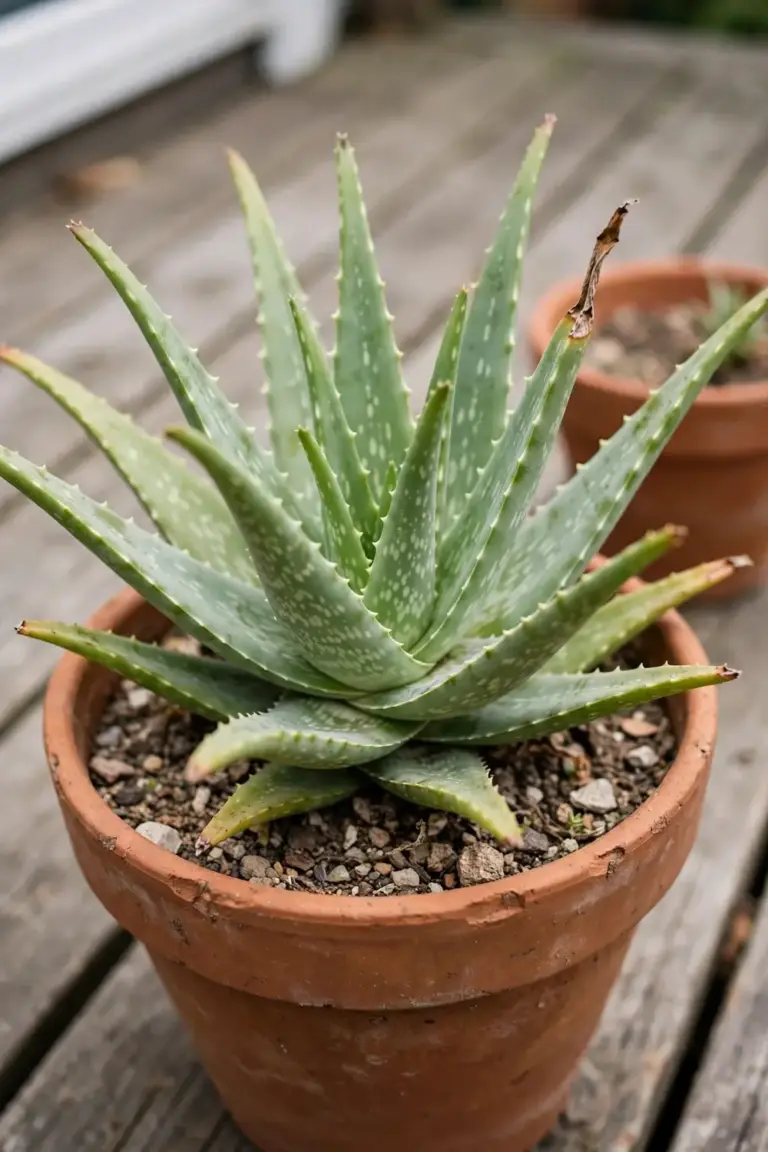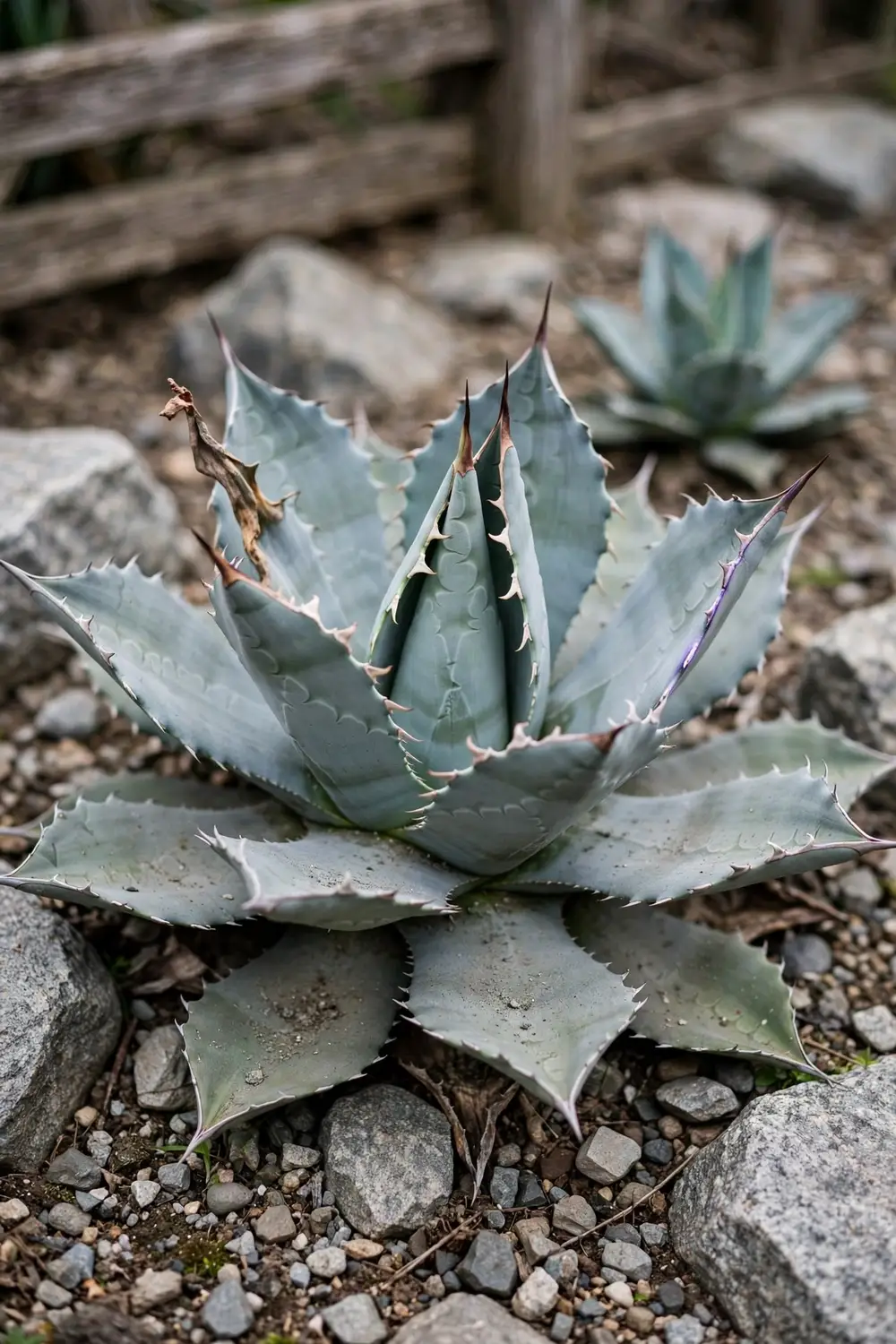

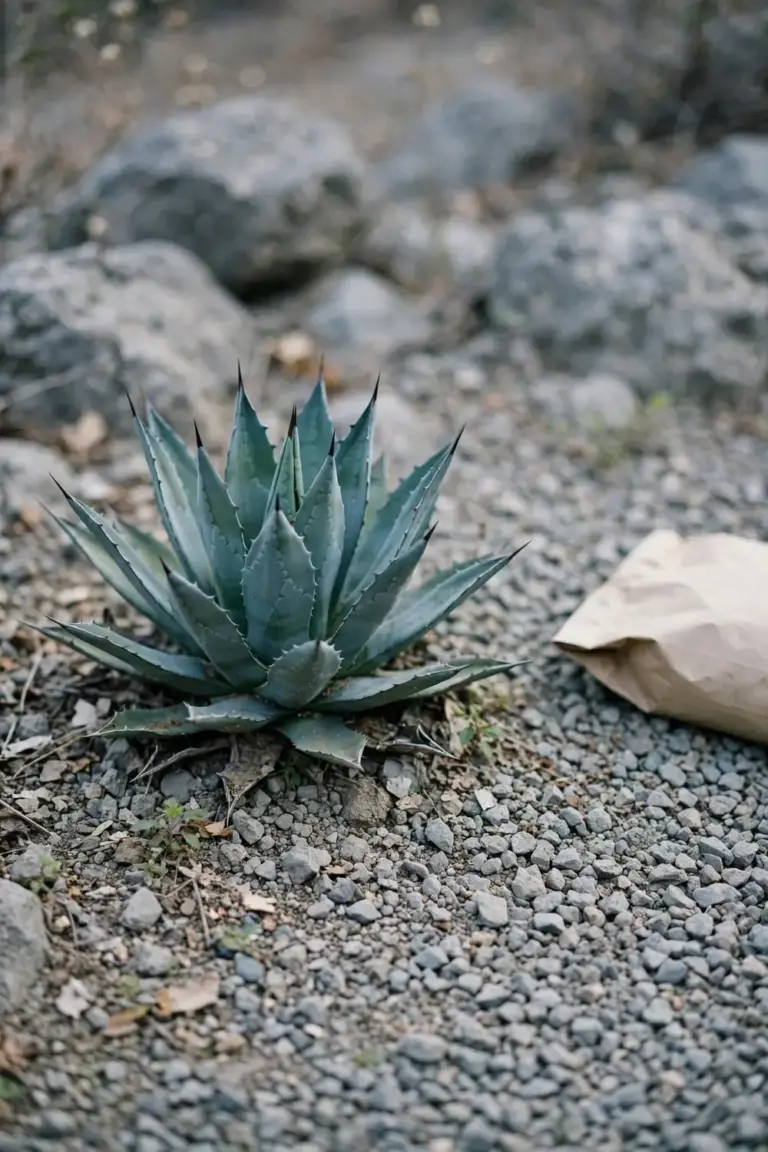
Plant agave in a rocky garden by building a drainage pocket first and planting second. Dig between rocks, backfill with gritty mix, set the crown above the surrounding soil, and water deep every 4 or 5 days for the first month. That is how to plant and care for agave in rocky gardens in Australia.
Agave is the genus Agave, a group of rosette-forming succulents from the southern United States and Mexico. A rocky garden is a bed built from rock and gravel with sharp drainage. Care is ongoing maintenance: water, pups, pests, and frost cover. The rest of this page is 11 moves, from picking the pocket to the monthly walk.
Agave suits warm, frost-free districts of Australia and any bed where water never sits. A rock pocket gives the plant what it wants: sun, air around the crown, and soil that drains fast after rain. A flat clay bed gives it the opposite, and the plant rots.
1. Pick a Frost-Free Pocket With 6 Hours of Sun
Pick a pocket that takes at least 6 hours of direct sun and never holds frost. Agave plants prefer a spot with full sun, meaning at least 6 hours of direct sunlight on most days, according to The Spruce agave care guide. The hotter the climate, the more shade the plant tolerates. In Australia’s hottest districts, morning sun with afternoon shade still counts as full sun for agave.
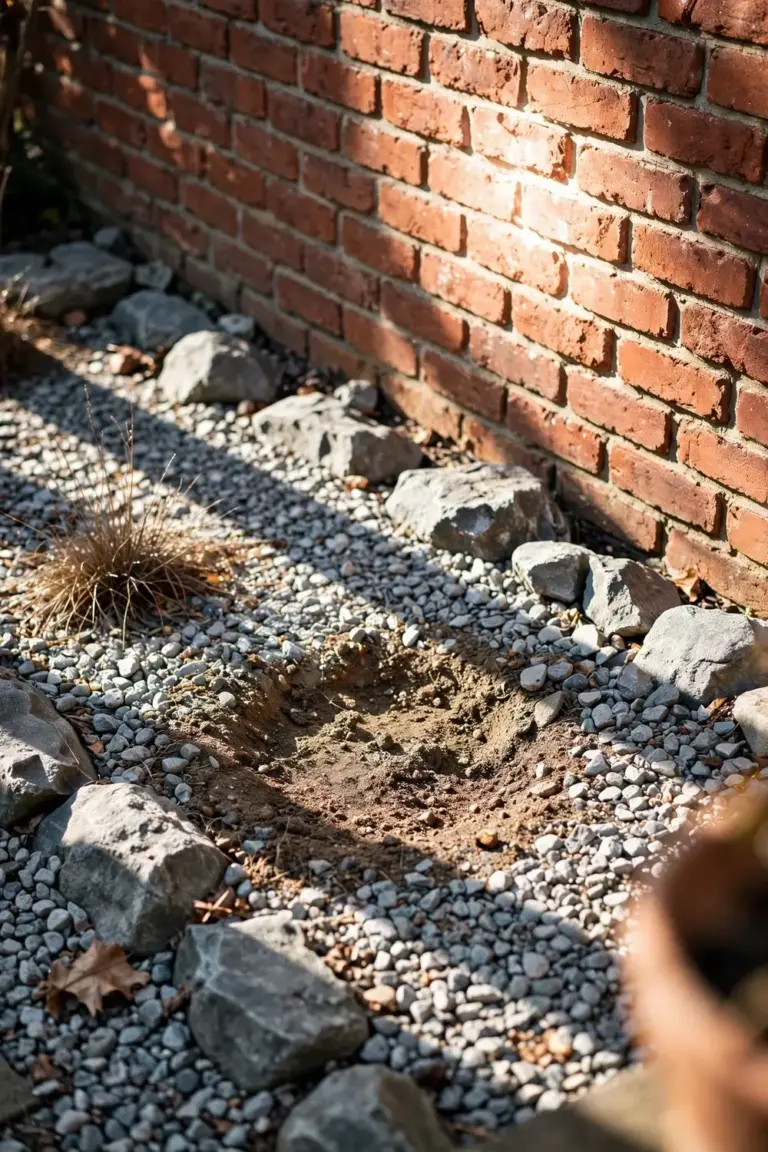
Frost decides the site more than sun does. Most agave plants cannot tolerate frost and only grow as far north as USDA growing zones 8 or 9, according to the same guide. Agave parryi is the exception, reliably perennial to zone 5. In Australia, that means a frost-free coastal or inland pocket for most species, and a cold-district pick only where the species earns it.
Shelter matters as much as sun. A pocket against a north-facing wall takes the morning sun and sheds cold air downhill. A hollow at the foot of a slope collects cold air and frost. Walk the bed on a cold morning before you dig. Frost sits where the grass stays white longest.
In Australia, the safe agave belt is the frost-free coast and the warm inland. Sydney, Brisbane, Perth, and the northern coasts suit most species outdoors. Melbourne, Adelaide, Canberra, Hobart, and the tablelands suit only cold-hardy species, and only in sheltered pockets with frost cover on cold nights. A species that thrives in Brisbane can die in one Canberra winter. Match the species to the pocket, not the other way around.
Read the slope before you dig. Water runs downhill, and a pocket at the foot of a slope collects every drop from above. A pocket midway up a gentle slope sheds water past the plant. A pocket on flat ground needs a raised mound to shed water at all. The best rocky pocket sits where water passes through, never where water stops.
2. Build a Drainage Pocket for Agave in a Rocky Garden
Build the pocket before you buy the plant. Agave dies in wet soil faster than in any other condition. Root rot may occur, particularly in poorly drained or overly moist soils, according to the North Carolina Extension Gardener Plant Toolbox entry for Agave americana. A rocky garden earns its keep here: rock and gravel drain while clay holds water.
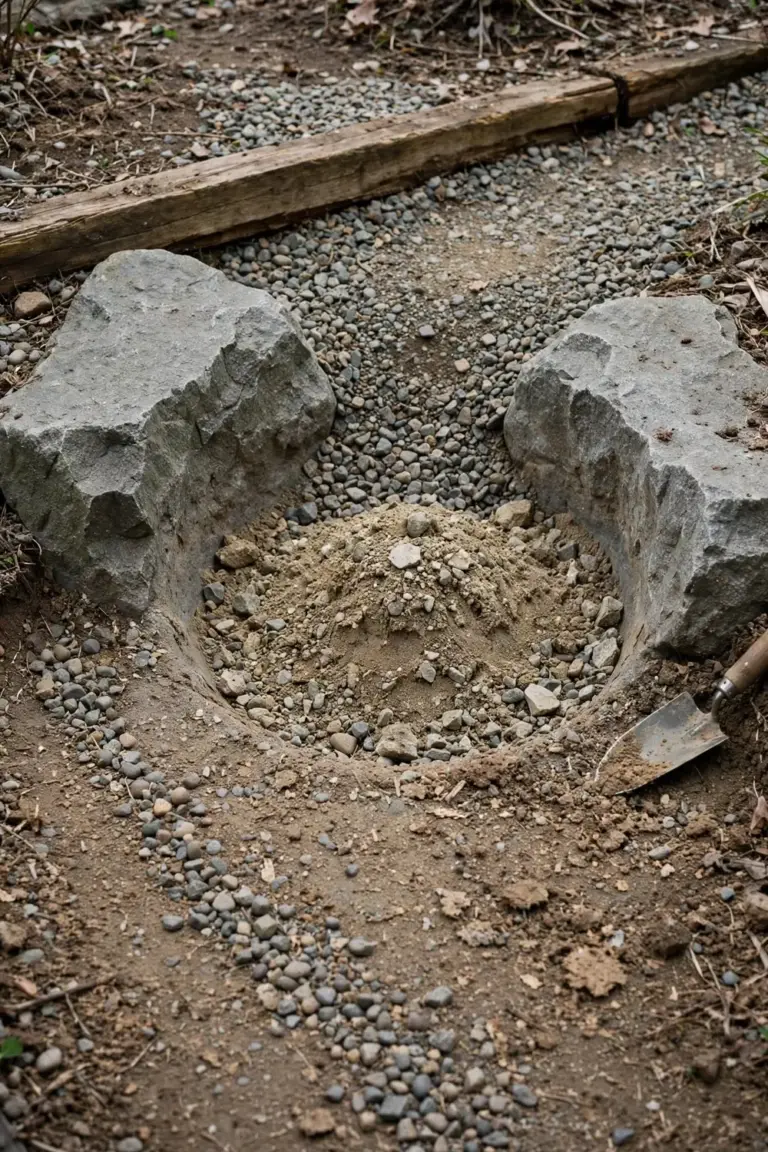
Set two or three large rocks to form a bowl, leaving a gap between them for the root ball. Pack coarse gravel behind the rocks so water runs through the pocket and out the downhill side. The pocket must drain the way a sieve drains. If water ponds in the bowl after a hose test, the pocket fails. Rebuild it.
Fill the pocket with a gritty mix of coarse mineral material and lean soil. Coarse sand, scoria, or crushed gravel all work. Skip rich compost. Rich mix holds water and feeds soft growth that rots first. The mix should feel gritty in the hand and fall apart when you squeeze it. Building soil health in a rocky bed means structure first: air gaps between particles, not fertility. Lean soil grows a tough agave. Rich soil grows a soft one.
Test the pocket with a hose before planting. Flood the bowl and watch. Water must drain through within minutes and run out the downhill side. If it ponds, the pocket fails. Add more coarse material or raise the pocket higher. A pocket that fails a hose test fails the first storm too.
Set the rocks so they cannot shift. A rock that rolls onto a rosette crushes leaves. Bury the bottom third of each anchor rock in the mix, and test each rock with a hard shove before planting, because a rock that moves under a shove moves under a storm.
Use local stone where you can. Sandstone, granite, and basalt all suit a rocky bed. Local stone matches the garden and costs less than imported rock. One stone type through the whole bed reads as a real rocky outcrop, while mixed stone from three suppliers reads as a pile of leftovers.
3. Dig the Hole Wide and Keep the Crown High
Dig the hole as wide as the root ball plus room to work, and no deeper than the root ball. A wide hole lets roots spread into the gritty mix. A deep hole buries the crown, and a buried crown rots. The crown is the point where leaves meet roots. Keep it visible.
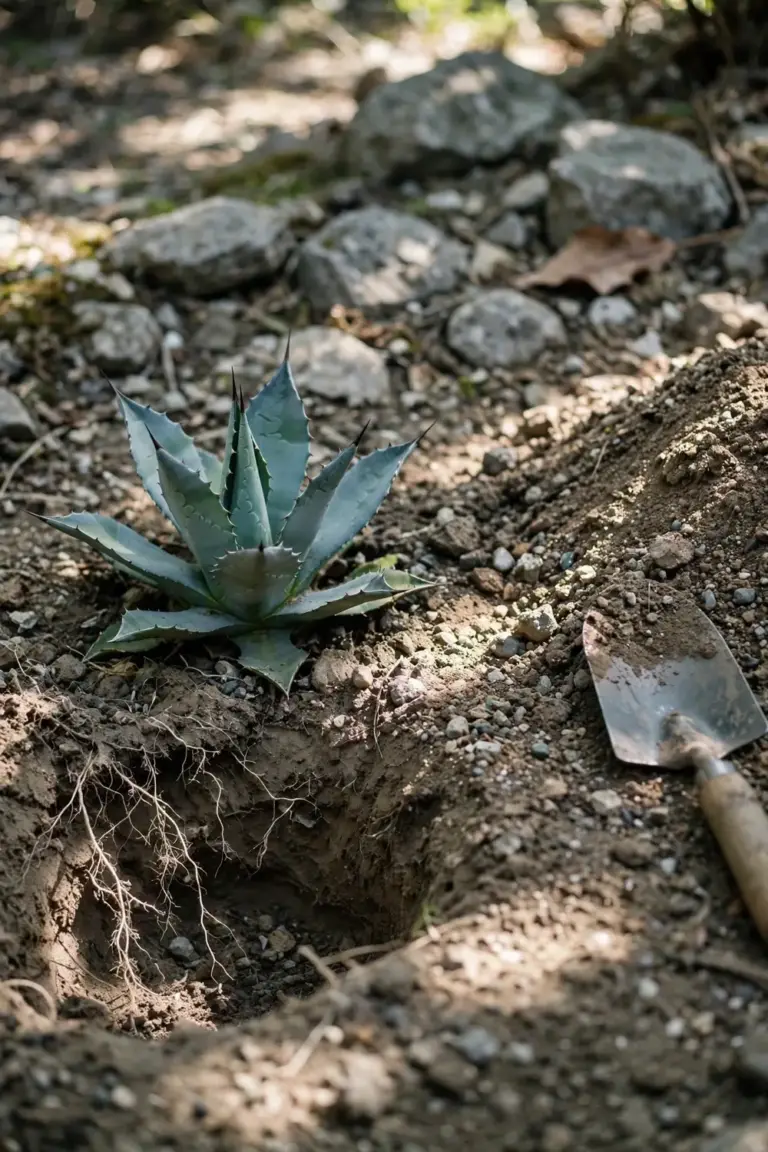
Plant in spring, when the soil has warmed and frost nights have passed. A spring planting gets a full warm season to root before winter. An autumn planting in a cold district faces frost with shallow roots. Spring planting is the safer bet everywhere except the frost-free north, where any month works.
Ease the plant out of its pot, loosen any circling roots with your fingers, and set the plant so the crown sits above the surrounding soil surface. Backfill with the gritty mix and firm it gently. The crown stays high. Water runs away from it. Water never pools against it.
Move a large plant with two people and a tarp. Slide the tarp under the root ball, and each person takes two corners. One person guides the plant while the other steadies the tarp. A dropped agave breaks leaves and can drive a spine through a glove, so slow hands beat strong hands here.
Wear gloves and long sleeves for this job. Agave leaves carry sharp marginal teeth and a heavy terminal spine. The RHS lists agave sap as a skin irritant and advises gloves and other protective equipment when handling, on its Agave americana plant page. Gloves also protect your hands from the spine on the leaf tip.
4. Mulch With Gravel and Keep the Crown Dry
Mulch with gravel, never with bark or woodchip. A layer of coarse gravel around the plant keeps the crown dry, holds the rocks in place, and stops soil from splashing onto the leaves. Organic mulch holds moisture against the crown and feeds rot. Gravel does the opposite.
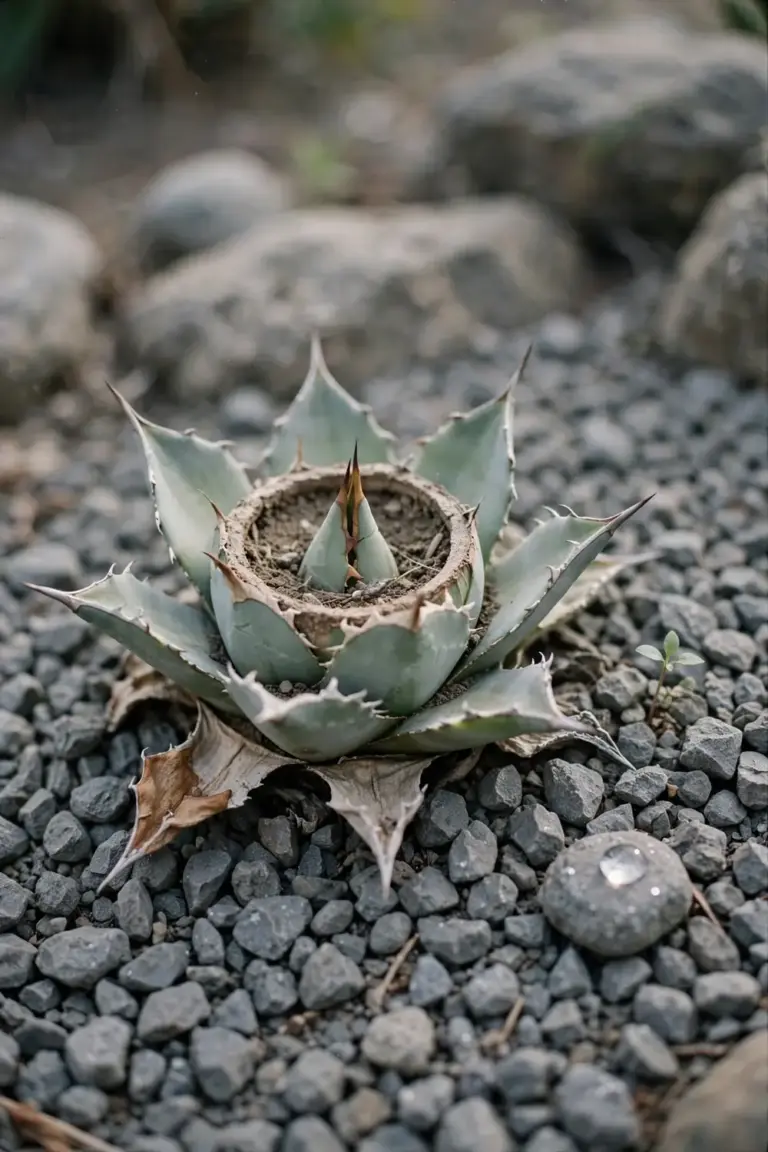
Keep the gravel clear of the crown itself. Leave a bare ring around the base of the plant. Rain runs off the gravel and away from the crown. The crown stays dry. Dry crowns do not rot.
Gravel mulch also keeps the pocket honest. Weeds show up fast in bare soil and hide in bark. Gravel shows a weed the day it sprouts. Pull it while it is small. A weed left to seed in a rocky bed becomes a permanent resident. Mulching covers the wider mulch decision across the garden; in a rocky agave bed, gravel is the only mulch that keeps the crown dry.
Top the gravel up after the first storm. Rain washes fines into the mix and the gravel layer thins. A thin layer lets soil splash back onto the leaves. Add fresh gravel until the layer looks even again.
5. Water Deep for the First Month, Then Back Off
Water deep every 4 or 5 days for the first month, because deep water drives roots down into the pocket while shallow sprinkles keep roots at the surface, where the next dry week kills them. Then water once a week, and gradually space watering to every other week, depending on rainfall, according to The Spruce.
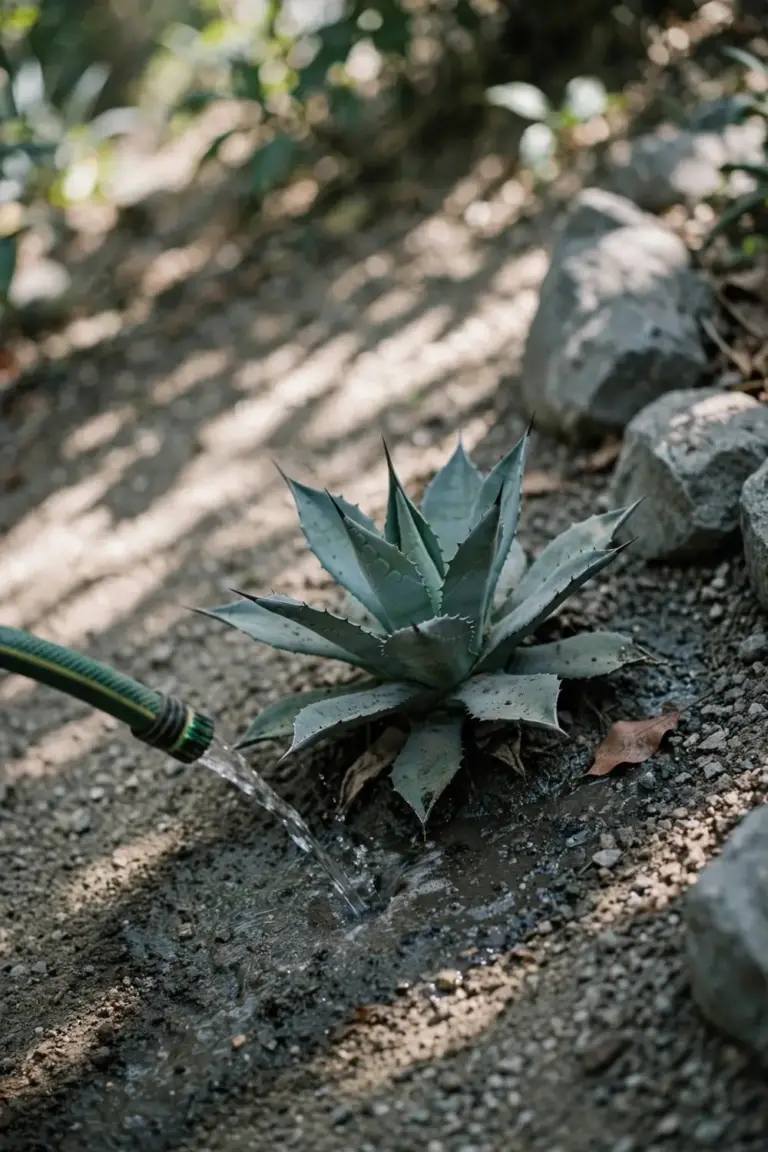
Soak the pocket until water runs out the downhill side. Then wait. Check the soil with a finger before the next watering. Water only when the top layer of mix feels dry. A schedule on the calendar means nothing. The soil tells you.
Water at the base in the morning, with a slow soak from a hose that drives water down into the pocket. Overhead spray wets the leaves and the crown. Wet crowns rot. Morning water gives the leaves time to dry before night. Evening water sits cold on the plant all night.
Once the plant establishes, stop scheduled watering. Mature agave plants are very drought tolerant, and you generally only need to water them if you have had a long stretch without rainfall and the soil is completely dry, according to the same guide. An established agave in a rocky bed survives on rainfall in most Australian districts. Water is a rescue tool now, not a routine.
Rain counts as watering. A week of steady rain resets the clock. A month of dry heat does not mean the plant needs water if the last rain soaked the pocket. Check the soil, not the sky. The finger test beats the calendar every time.
6. Space for the Mature Rosette, Not the Pot
Space for the mature rosette, not the pot the plant came in. A small agave in its nursery pot becomes a wide rosette with leaves that reach past your knees. A rosette planted too close to a path stabs ankles. A rosette planted too close to another plant chokes it.
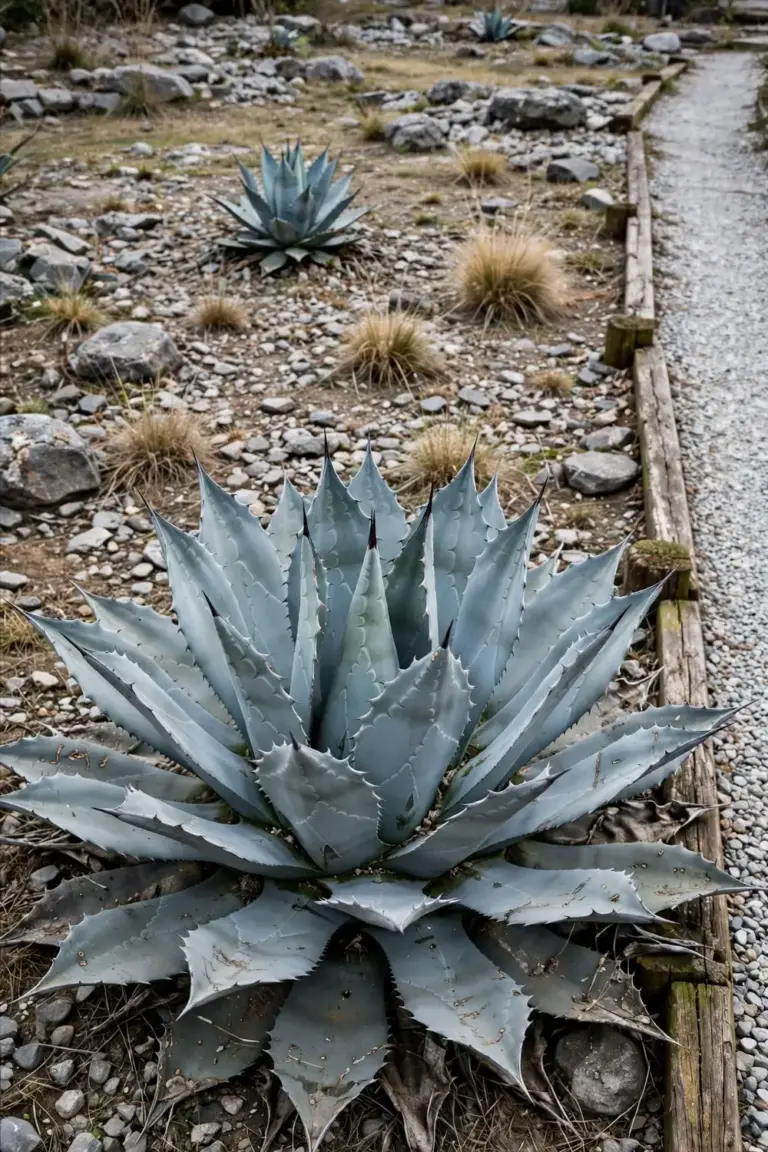
Agave americana can get quite large, and NC State puts mature size at 10 feet with large spiny leaves, so choose your planting site carefully. Ten feet is 3 m. Give a century plant a full 3 m of clear ground. Measure from the center of the pocket to the path, the fence, and the next plant.
Leave working room around the rosette. You need space to lift pups, cut dead leaves, and check the base for weevil. A rosette jammed against a fence leaves no room for your hands. Give yourself a clear path to every side of the plant. The plant grows. Your access must grow with it.
Thin a crowded clump before leaves start to shade each other. Pups left in place form a thicket that traps moisture and hides the base. Lift the extras in spring or autumn and give them their own pockets. A clump of three rosettes with air between them outlives a clump of ten packed tight.
| Species | Mature spread | Frost note | Rocky-bed note |
|---|---|---|---|
| Agave americana | Up to 3 m | Frost tender, needs a frost-free site | Needs the widest pocket |
| Agave attenuata | 1.2 to 1.5 m tall | Frost tender, spineless | Safest near paths |
| Agave parryi | Data not available | Hardy to zone 5 | Best cold-district pick |
| Agave salmiana | 2.4 to 4 m | Tolerates cold only if the soil stays dry | Needs the driest pocket |
Agave salmiana grows 8 to 13 feet tall with equal spread in full sun in well-drained sandy to rocky soils, according to the NC State salmiana entry. Eight to 13 feet is 2.4 to 4 m. Colder temperatures are tolerated only if the soil is dry. A rocky pocket that drains fast is exactly what that species needs.
Agave attenuata is the spineless exception. The Spruce describes it as a popular spineless variety known as the foxtail or dragon-tree agave, growing around 4 to 5 feet tall and a bit wider. Four to 5 feet is 1.2 to 1.5 m. Plant it near a path where people walk. A spiny species belongs where nobody brushes past it.
7. Skip Fertilizer in an Outdoor Rocky Bed
Skip fertilizer in an outdoor rocky bed. Feeding typically is not necessary for agave plants, according to The Spruce. Feeding encourages flowering, and most agave plants die after flowering. A fed agave grows soft, flowers early, and dies young. An unfed agave grows slow, stays tough, and flowers on its own schedule.
The RHS feeding advice applies to plants grown under glass, not outdoor beds, and its Agave americana page tells growers under glass to feed every 2 or 3 weeks with a balanced liquid feed while the plant is in growth. That schedule belongs in a glasshouse. Outdoor agave gets no feed.
Poor soil is a feature here, not a problem. Agave salmiana tolerates drought and poor soils, according to the NC State salmiana entry. The rocky pocket already gives the plant lean, gritty mix. Extra feed undoes that. Leave the bag in the shed.
Skip manure and compost top-dressing too. Both hold moisture against the crown and feed soft growth. A rocky bed stays lean on purpose. The plant evolved for lean ground. Feed it like a rose and it rots like a rose.
8. Cut Dead Lower Leaves With Gloves
Cut dead lower leaves with gloves. NC State advises removing lower leaves as needed. Dead leaves hang against the rosette, trap moisture, and hide the base, where weevil damage shows first, so a clean base is a base you can inspect.
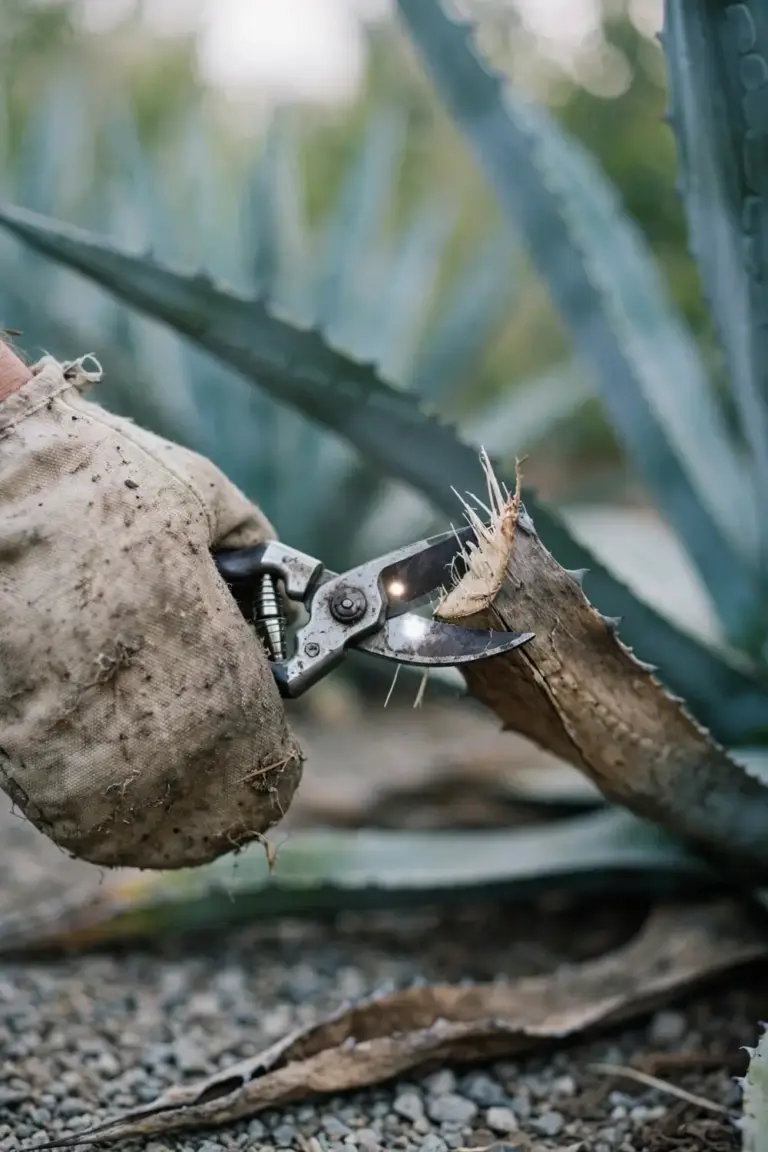
Cut each dead leaf at its base, where it joins the stem. Use a sharp knife or secateurs. Wear gloves and long sleeves. The marginal teeth on a dead leaf cut as well as the teeth on a live one. Pulling tears live tissue and opens a wound. Cutting leaves a clean edge.
Leave live leaves alone, because a live leaf feeds the plant, and cutting live leaves for looks weakens the rosette and opens wounds that rot invites.
9. Lift Pups in Spring or Autumn
Lift pups in spring or autumn, when pups are the small rosettes that appear at the base of the mother plant. The RHS advises propagating by offsets taken in spring or autumn, and NC State lists propagation by seeds and offsets, with a note to remove lower leaves as needed.
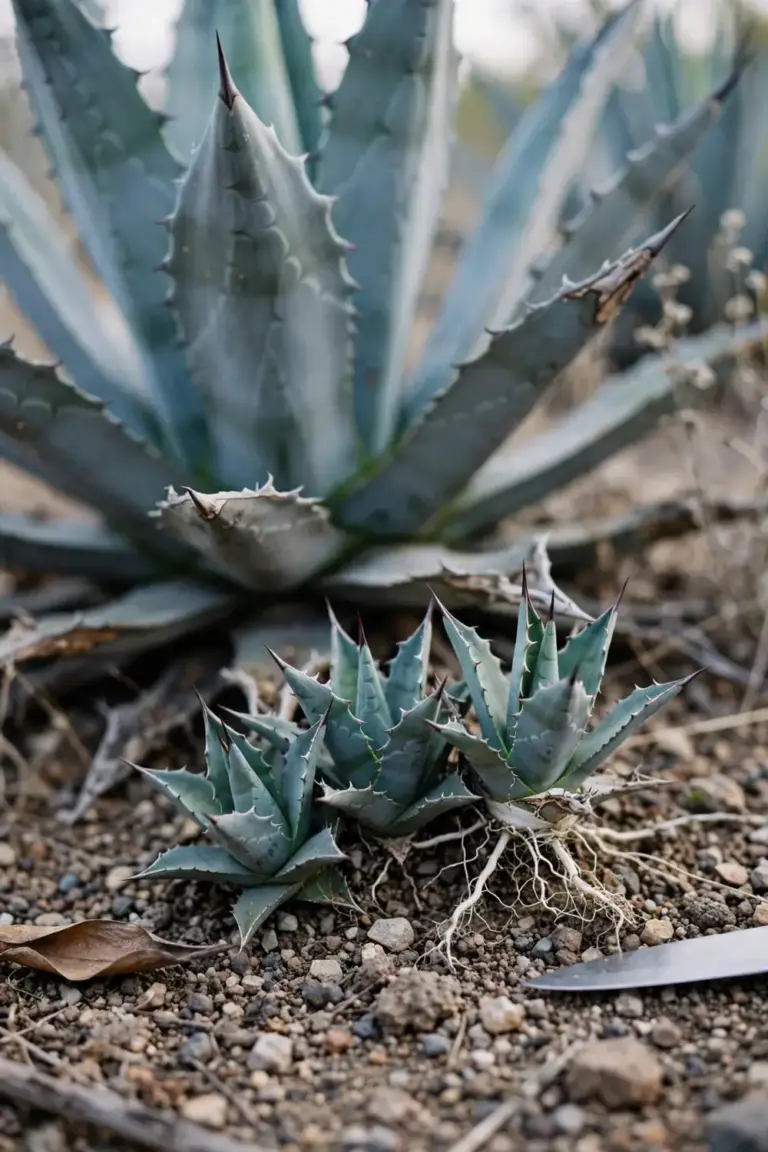
Wait until a pup has several of its own leaves and shows roots when you tug it gently. Cut the connecting stem with a clean knife. Let the cut end dry for a few days in shade. A dry cut calluses over and resists rot. A wet cut rots in the soil.
Set the pup in its own gritty pocket, crown high, and water lightly once. Then wait. A pup with no roots drinks nothing. Water it like an established plant and it rots. Let it root first. New leaves from the center mean the pup took.
Leave the mother plant alone after flowering. The main rosette dies after it flowers, and offsets at the base carry on. Pulling the dead rosette too early disturbs the offsets. Let the offsets fill the gap. The bed renews itself.
Skip the compost bin for surplus pups. Pot them up. A pup in a gritty potting mix makes a gift for another gardener or a spare for a bare pocket. Label the pot with the species name and the date. An unlabelled pup becomes a mystery plant, and a mystery agave gets planted in the wrong pocket.
10. Check the Base for Agave Snout Weevil
Check the base of every agave for snout weevil from late spring through autumn. Agave snout weevil is a serious pest of agave that can rapidly kill plants, according to UC Agriculture and Natural Resources. Adults bore holes into the base of agave plants and lay eggs that hatch into larvae. The larvae feed on the plant, tunneling into the base and destroying roots and other tissue.
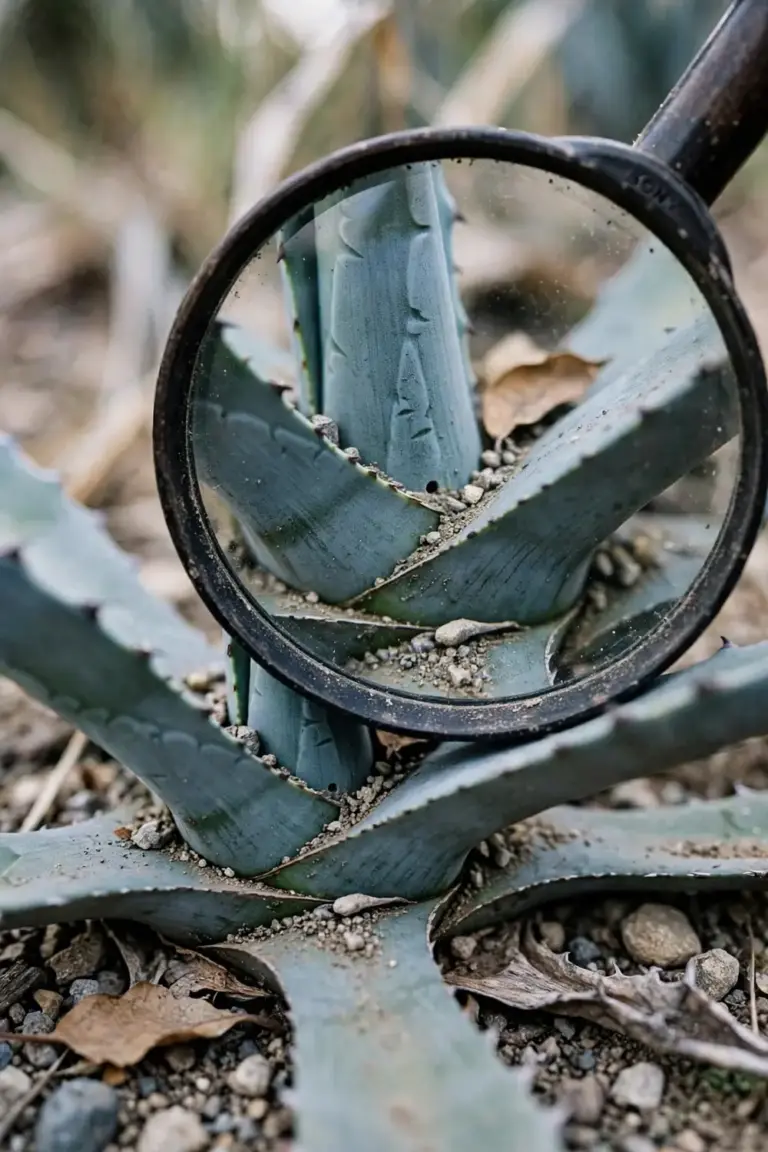
I check the base of each agave for small entrance holes every month in summer, because a weevil infestation shows no symptom until the plant collapses. UC ANR warns that infestations are difficult to detect before symptoms develop, and that often the first signs are entire plants separating from their roots or collapsing. Small entrance holes at the base, dying leaves, or discoloration low on the plant all signal an infestation in progress.
Learn what a healthy base looks like so a sick one stands out. A healthy base feels firm when pressed and shows clean, dry leaf joints. A base under attack feels soft or hollow, and the lowest leaves yellow or loosen. Press the base gently each month. Your fingers learn the difference faster than your eyes.
Remove an infested plant and discard the soil around the roots. UC ANR advises removing infested plants and discarding the soil around the roots to remove any remaining weevils, their larvae, and pupae. Do not compost the plant. Do not reuse the soil. The weevil lives in both.
Plant narrow-leafed varieties where weevils are a repeat problem. UC ANR notes that agave snout weevils prefer agave with large- to medium-sized leaves, and suggests considering narrow-leafed varieties in areas where weevils are consistent issues. A narrow-leafed species in a rocky bed beats a large-leafed species that collapses.
Do not spray on a schedule. No spray prevents weevil attack reliably, and scheduled spraying poisons the pollinators that visit the flowers. Inspection and removal are the control. A monthly base check costs minutes. A collapsed century plant costs years.
11. Cover Before a Frost Night
Cover before a frost night, not after it, because frost damage shows the next morning as blackened, collapsed leaf tissue. Covering after the fact saves nothing. Check the forecast each evening from late autumn through early spring. A forecast frost night in a low pocket means cover that evening.
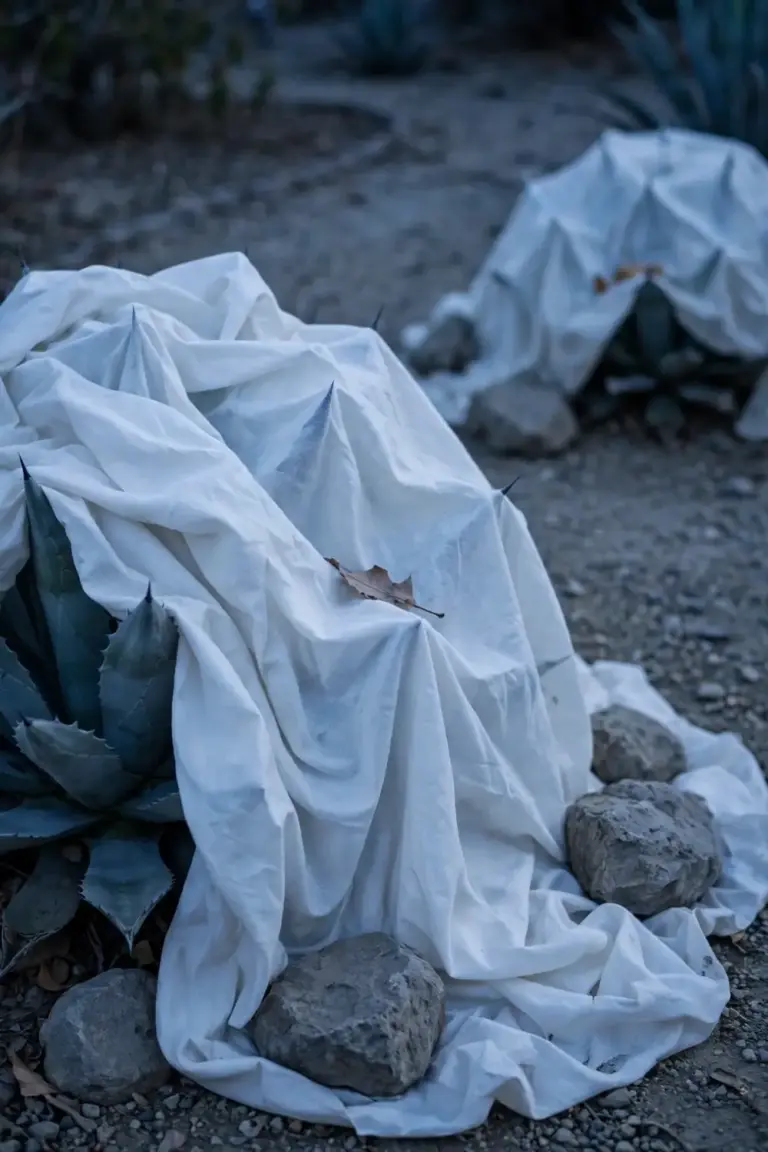
Drape frost cloth over the rosette and weight the edges with rocks. Frost cloth breathes. Plastic traps moisture and freezes onto the leaves. Pull the cloth off in the morning once the temperature climbs above freezing. A cover left on through a sunny day cooks the plant. How to protect plants from late frost covers the wider frost toolkit; for agave, cloth and a warm pocket are the whole method.
Check the plant the morning after a frost night, because frost damage shows as blackened, collapsed leaf tissue. Cut away dead tissue with gloves and leave the rest. A rosette with a live center regrows, while a rosette with a dead center does not. Do not feed a frost-damaged plant, because feed pushes soft growth into the next cold night.
Move potted agaves under cover for winter. A pot freezes faster than a bed. A rocky bed holds daytime heat in its stones. A pot holds nothing. Shift pots against a north-facing wall under an eave, where the wall radiates stored heat overnight.
Frequently Asked Questions
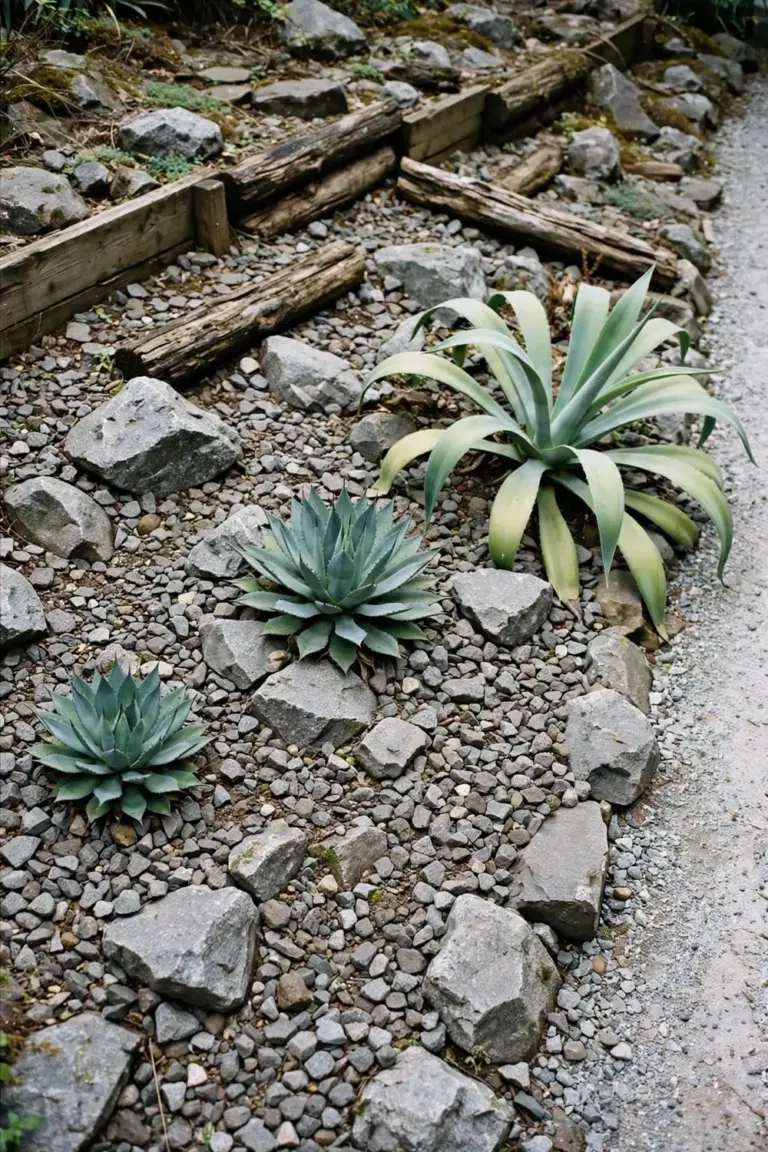
Yes, if the pocket drains. Dig out the clay and rebuild the pocket with gritty mix and gravel. Agave rots in clay that holds water, and a rocky bed only helps when the pocket itself drains. Run a hose test before planting. Water must run through the pocket and out the downhill side within minutes. If it ponds, rebuild the pocket with more coarse material.
Water deep every 4 or 5 days for the first month, then once a week, then every other week as rainfall allows. Check the soil with a finger before each watering. Water only when the top layer of mix feels dry. Once the plant establishes, stop scheduled watering and water only after a long dry stretch when the soil is completely dry.
Wet soil, a buried crown, or organic mulch against the crown causes most base rot. Root rot follows poorly drained or overly moist soil. Dig the plant up and check the base. Cut away soft, black tissue to firm white tissue. Let the cut dry for several days in shade, then replant in a fresh gritty pocket with the crown above the soil surface.
Most species survive only in frost-free districts. Most agaves cannot tolerate frost and suit USDA zones 8 or 9. Agave parryi is the cold-hardy exception, perennial to zone 5. In Australia, plant tender species in frost-free pockets and cover before forecast frost nights. A pocket that collects cold air kills a tender agave in one night.
Remove pups in spring or autumn, once each pup has several of its own leaves and shows roots when tugged gently. Cut the connecting stem with a clean knife and let the cut dry for a few days in shade. Set the pup in its own gritty pocket with the crown high and water lightly once. New leaves from the center mean the pup took.
Walk the Bed Once a Month
Walk the bed once a month. Check the crown, the base, and the gravel. Pull weeds while they are small. Lift pups in spring or autumn. Cover before frost nights. An agave in a rocky bed asks for almost nothing. Give it drainage, sun, and a monthly look, and it holds its shape for years.
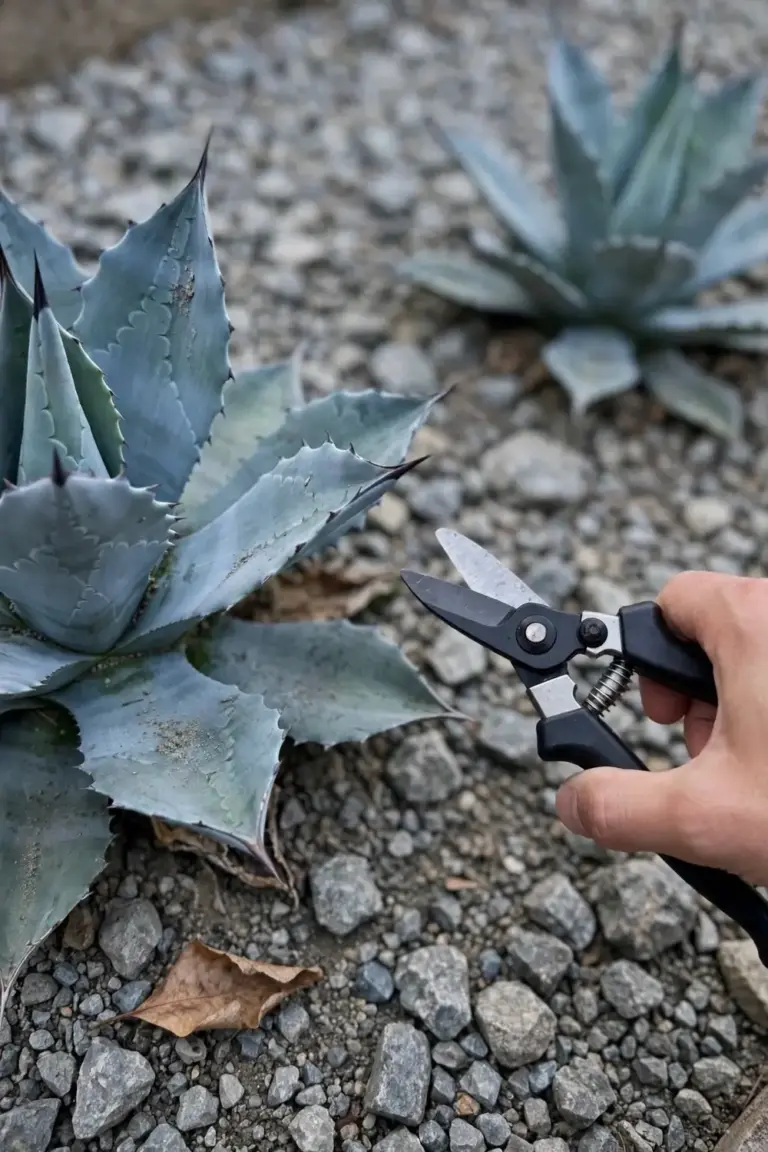
The monthly walk is the whole care program. Everything else on this page is setup. A bed that drains, a crown that sits high, and a plant matched to the pocket need little more than a look each month. Skip the monthly look and small problems grow into dead plants. Keep it, and the bed takes care of itself. Start with one pocket, one plant, and one bag of gravel.