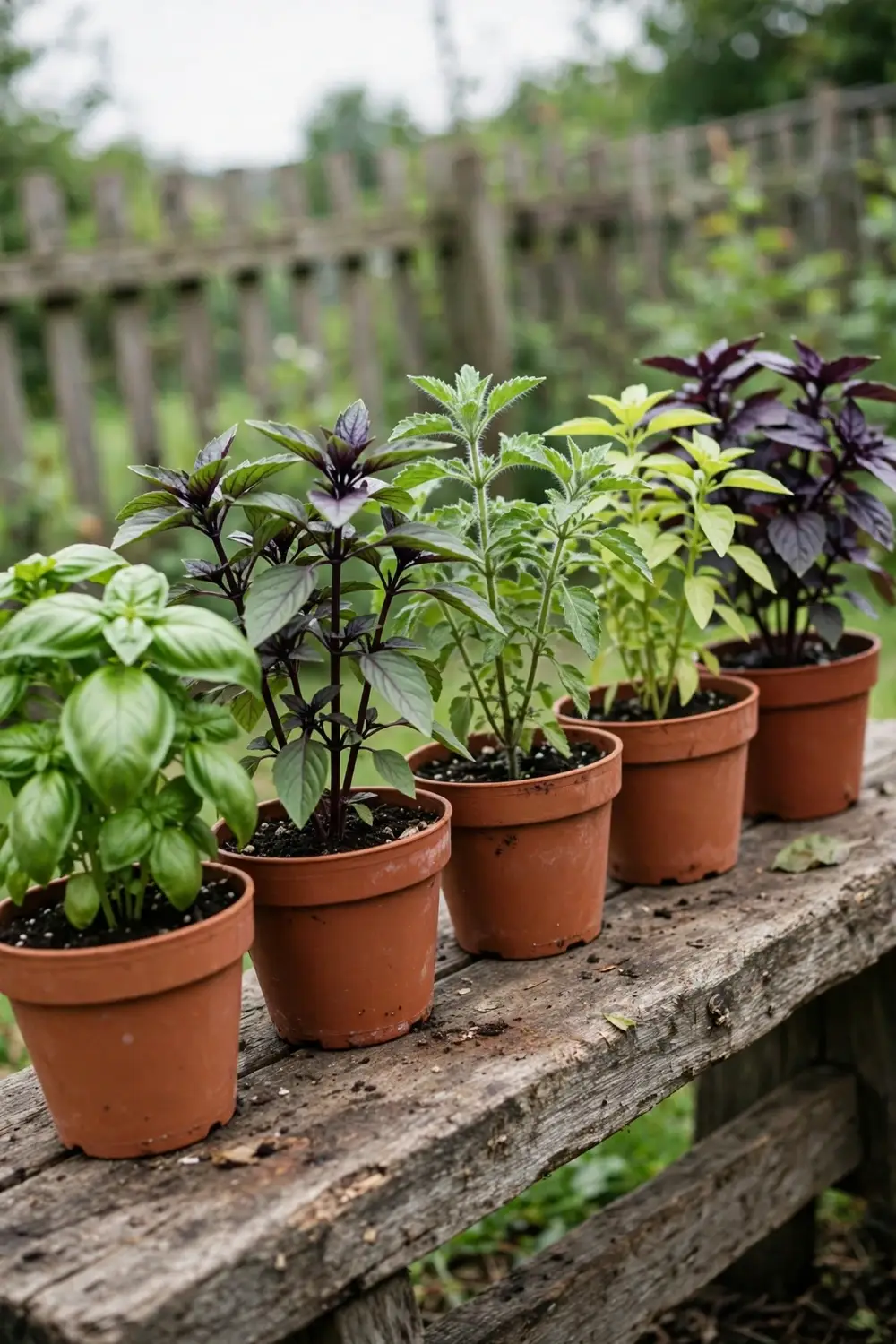

Pick up the pot, roll the stem between your fingers, and crush one leaf. Those 3 tests name most basils sold in Australia. Basil identification in Australia starts with the plant in front of you, not with the label on the pot, because labels mix up Thai basil and holy basil, sell a native shrub as bush basil, and print two different botanical names for lemon basil. I crush one leaf before I trust any label, because the smell names the basil faster than the leaf shape.
Basil is Ocimum basilicum, a culinary herb of the mint family Lamiaceae. The mint family link matters for identification. Many mint-family herbs share square stems and opposite leaves, so those two traits confirm the family, not the basil. The crush test separates basil from its mint-family cousins. A crushed basil leaf smells of clove, aniseed, lemon, or cinnamon, depending on the variety. A crushed mint leaf smells of menthol. That smell, plus the leaf shape and the stem color, carries the identification.
The rest of this page runs a decision path. Confirm the mint-family test first. Match the leaf, stem, and aroma to one of seven basils. Check the three lookalikes and label traps that catch Australian buyers. Finish with a four-check key that names the plant in under a minute.
1. Basil Identification Starts With 3 Tests: Square Stem, Opposite Leaves, Aroma
Three tests confirm a mint-family herb before you name the basil. Roll the stem between thumb and forefinger. A basil stem feels square, with four flat faces and four ridges. Penn State Extension’s basil profile describes basil stems as square, with leaves opposite, ovate, green to purple, and entire. Opposite leaves sit in pairs across the stem from each other, and each pair sits at a right angle to the pair below it. That cross pattern is called decussate, and it shows on every basil.
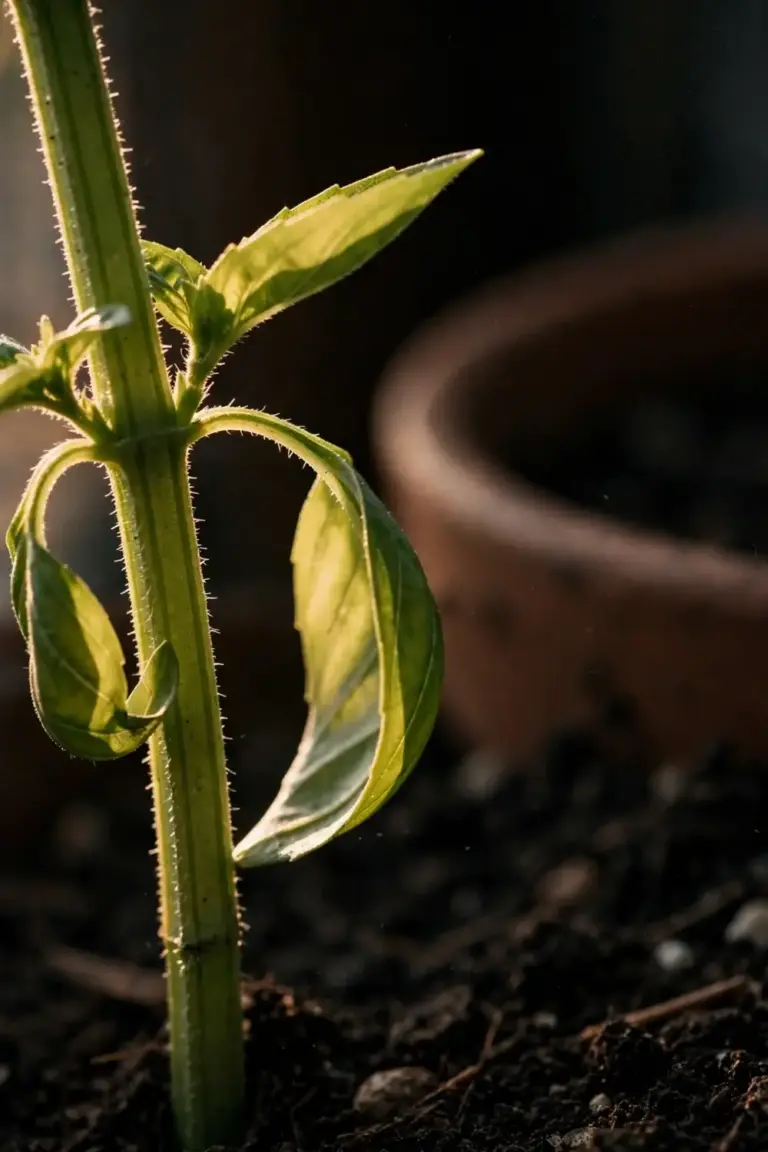
Crush one leaf and smell it. The aroma test does the work the eyes cannot. Sweet basil smells of clove and sweet spice, Thai basil smells of aniseed, lemon basil smells of lemon peel, holy basil smells of pepper and clove, and cinnamon basil smells of cinnamon. No two basils share the same scent, and no mint-family cousin smells like any of them. A leaf that smells of menthol is mint, not basil, whatever the label says. A crushed peppermint leaf gives the menthol reference point. Rosemary sits in the same family, with square stems and needle leaves, which shows why the stem test alone never names a basil.
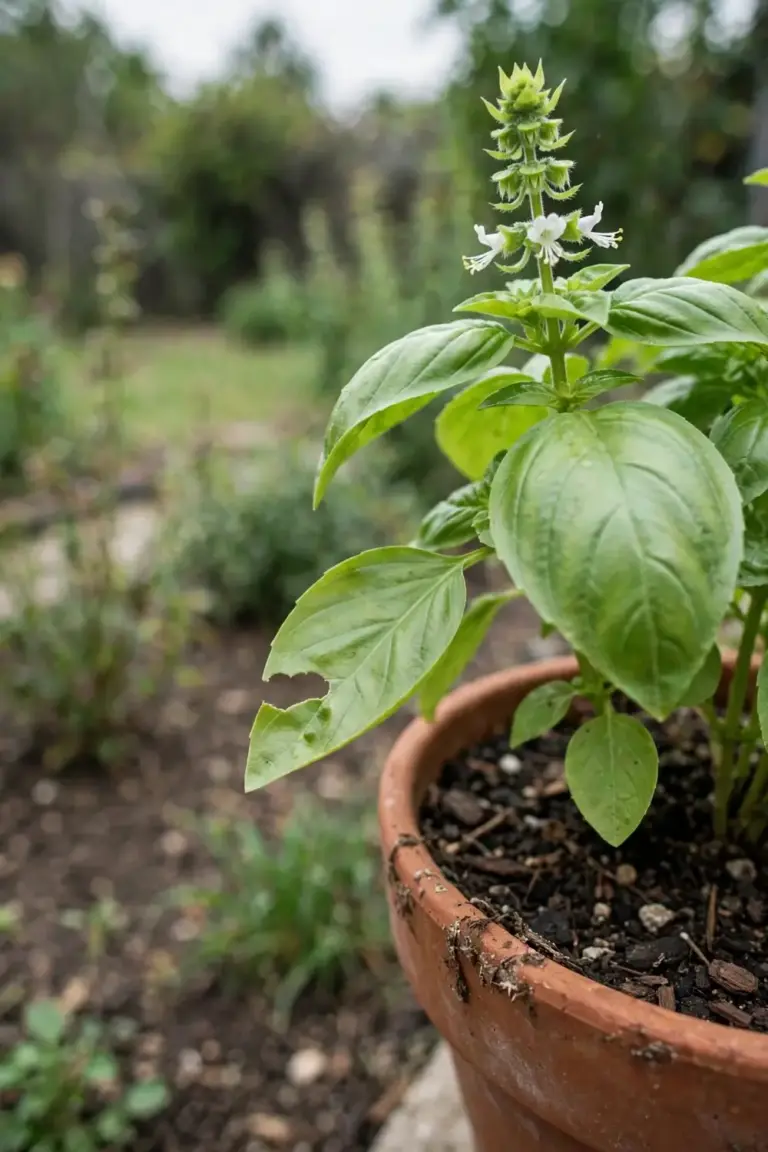
Check the flower spike last. Basil flowers grow as two-lipped white flowers on spikes in terminal racemes, per Penn State Extension’s basil profile. The spike shape helps, but the flower color alone never names a basil. Thai basil carries purple flower spikes. Sweet basil carries white spikes. Growers pinch spikes off to keep leaves tender, so a plant with no flowers still names cleanly from stem, leaves, and aroma.
2. Sweet Basil: Big Soft Leaves and a Clove-Sweet Smell
Sweet basil is the default basil. When an Australian recipe says basil with no qualifier, it means sweet basil, Ocimum basilicum. The leaves are big, soft, ovate, and bright green, with a smooth edge and a slightly cupped surface. The stem is green and square. The crushed leaf smells sweet and clove-like, with a warm spice note and no aniseed edge. The plant grows as a bushy annual with large leaves.
Cultivars matter less than the species traits for identification. Penn State Extension’s basil profile lists sweet-flavored, large-leaf cultivars such as Genovese, Italian Large Leaf, Napoletano, Lettuce Leaf, Mammoth, and Nufar. Genovese is the classic pesto basil, with large, slightly crinkled, dark green leaves. Lettuce Leaf grows leaves so big and ruffled that one leaf covers a slice of bread. All of them share the sweet clove scent and the big soft leaf. If the leaf is big, soft, bright green, and sweet-clove scented, the plant is sweet basil whatever the cultivar name on the tag.
Sweet basil sets the baseline for every other basil on this page. Thai basil narrows the leaf and purples the stem. Holy basil hairies the stem and sharpens the scent to pepper. Lemon basil shrinks and pales the leaf and adds lemon. Purple basil recolors the leaf, Greek basil shrinks the whole plant, and cinnamon basil adds purple veins and a cinnamon scent. Learn sweet basil first and the rest fall into place.
3. Thai Basil: Purple Stems, Narrow Leaves, Aniseed Scent
Thai basil is sweet basil, variety thyrsiflora, and it is no separate species. The stem gives it away first: it runs dark purple, often deep violet along the whole stem, with purple veins through the leaf. The leaves are narrower and more pointed than sweet basil leaves, with a smooth edge and a glossy surface, and the flower spike is purple with pink open flowers.
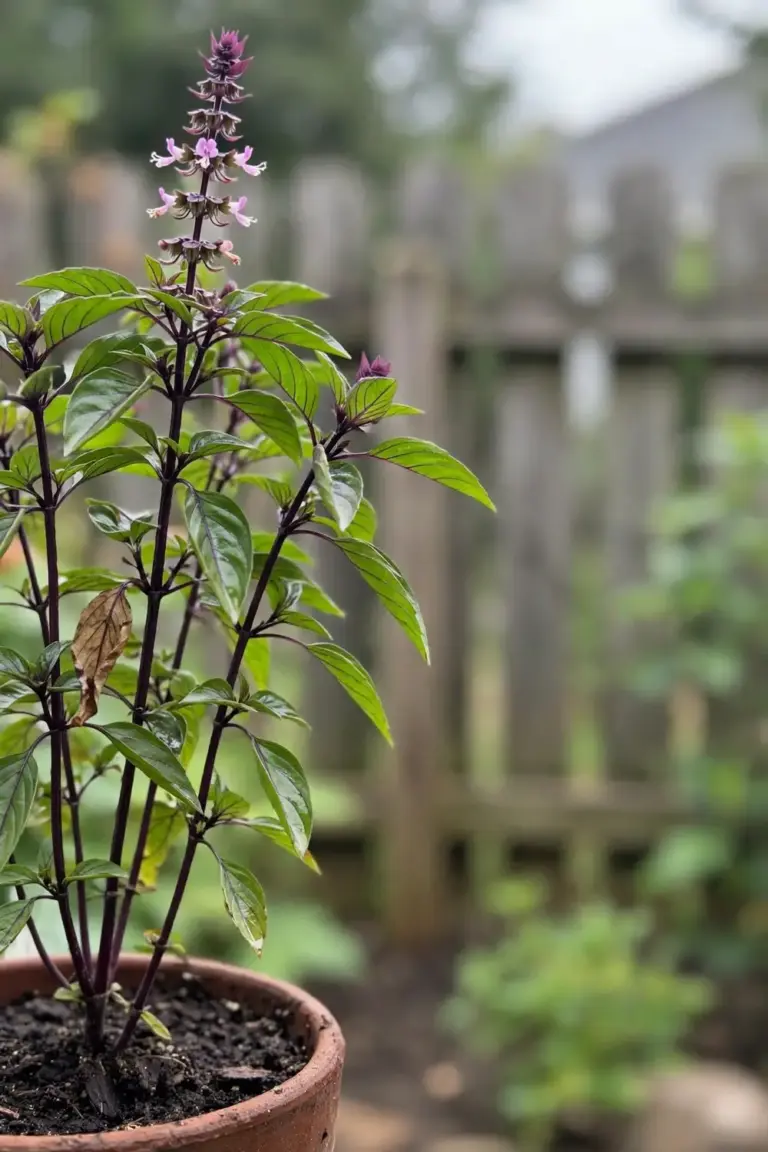
The aroma test settles it. Thai basil smells of aniseed and licorice, strong and sharp, with none of the sweet clove note of sweet basil. The Encyclopedia of Life basil article describes Thai basil as a common ingredient in Thai cuisine with a strong flavor similar to aniseed. Crush one leaf and the aniseed note hits at once. A plant with green stems and a sweet clove smell is sweet basil, even if the tag says Thai. A plant with purple stems and an aniseed smell is Thai basil, even if the tag says sweet.
Thai basil holds its flavor in cooking better than sweet basil, per Gardenia’s variety guide, which is why stir-fries and curries call for it. That cooking behavior does not help identification, and this page gives no cooking method. The traits that name it are the purple stem, the narrow pointed leaf, the purple flower spike, and the aniseed scent. All four together make a firm identification. Any three make a strong one.
4. Holy Basil: Hairy Stems, Toothed Leaves, Peppery Clove Scent
Holy basil is a separate species, Ocimum tenuiflorum, also sold under its old name Ocimum sanctum. It is no sweet basil variety. The stem test shows the difference at once. Holy basil stems are hairy, often woody at the base, with fine hairs along the whole stem. Sweet basil and Thai basil stems feel smooth. The leaves are smaller than sweet basil leaves, ovate, with a slightly toothed margin and a strong scent. Botanical descriptions give the leaf blade at up to 5 cm long, with a decussate leaf arrangement and a slightly toothed edge.
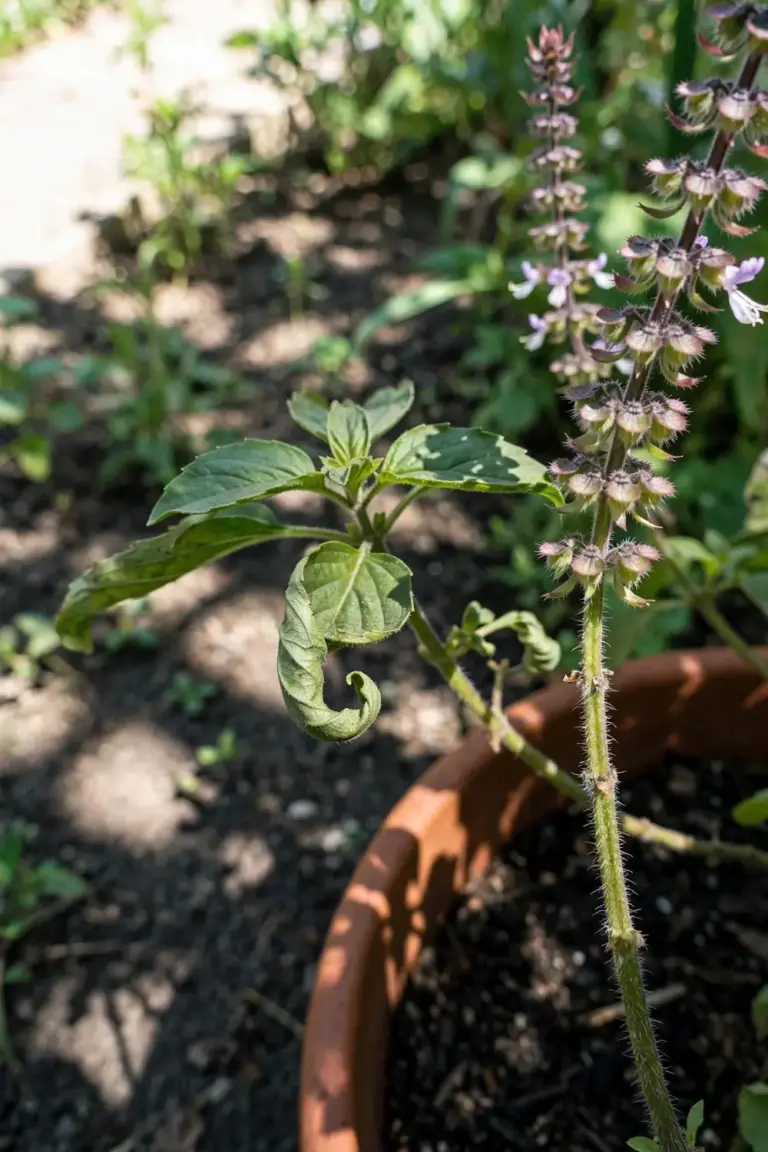
The aroma test separates holy basil from every other basil. The crushed leaf smells peppery and clove-like, sharp and warm, with a bite that sweet basil lacks. Two forms circulate in cultivation, per Gardening in South Africa’s basil guide: a green-leaved form and a purple-leaved form. Both share the hairy stem, the toothed leaf edge, and the peppery clove scent. The flower spike carries purplish flowers in close whorls on elongated racemes. The plant grows as an erect, many-branched subshrub, reaching 30 to 100 cm tall per Useful Tropical Plants.
Holy basil carries religious weight in India, where it is called tulsi, and it is the basil of Thai stir-fries, where it is called kaphrao. Those two uses explain why the same plant appears under two different names in Australian nurseries. The traits stay constant across both names. Hairy stem, toothed leaf, peppery clove scent. If the stem feels smooth, the plant is not holy basil.
5. Lemon Basil: Narrow Pale Leaves and a Lemon Peel Smell
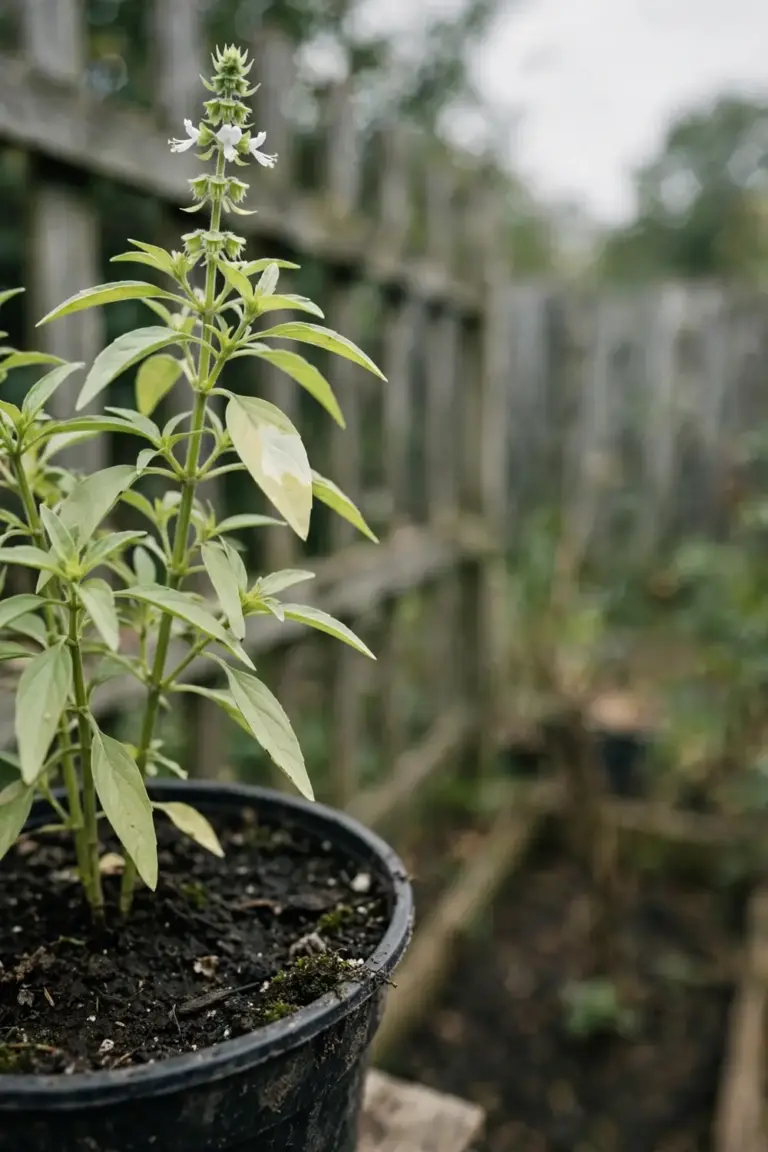
Lemon basil is a hybrid between Ocimum americanum and Ocimum basilicum. The Encyclopedia of Life basil article gives the cross and the hybrid name Ocimum x citriodorum, and notes the lemon flavor. The leaves are narrower and paler than sweet basil leaves, matte rather than glossy, with a pointed tip. The plant looks like a refined sweet basil until the crush test. One crushed leaf smells of lemon peel, clean and sharp, with a faint aniseed note underneath.
The hybrid name needs care, because labels print two of them. Some labels print Ocimum x citriodorum. Others print Ocimum x africanum. Both names circulate for the lemon basil hybrid, and both refer to the same cross. The cross matters more than the hybrid name. A label that gives either hybrid name and a lemon scent names lemon basil. A label that gives Ocimum basilicum var. citriodora names Mrs. Burns’ Lemon, a sweet basil variety with a lemon scent, not the hybrid. The two plants smell alike and cook alike, but the botanical name differs. Check the name on the tag, then trust the nose.
Lemon basil leaves run smaller than sweet basil leaves, and the plant grows to 60 cm tall per Gardenia’s variety guide. The flower spike is white. The leaf color is pale green, lighter than sweet basil and lighter than Thai basil. Pale leaf, narrow shape, lemon scent. Those three traits name it.
6. Purple Basil: Dark Violet Leaves on a Sweet Basil Plant
Purple basil is sweet basil with dark leaves. It is a cultivar of Ocimum basilicum, not a separate species. The leaves run deep violet to near-black purple, glossy, with the same ovate shape and smooth edge as sweet basil. The stem is purple. The flower spike carries lilac-pink flowers. The crushed leaf smells like sweet basil with a stronger spicy note, per Gardenia’s variety guide.
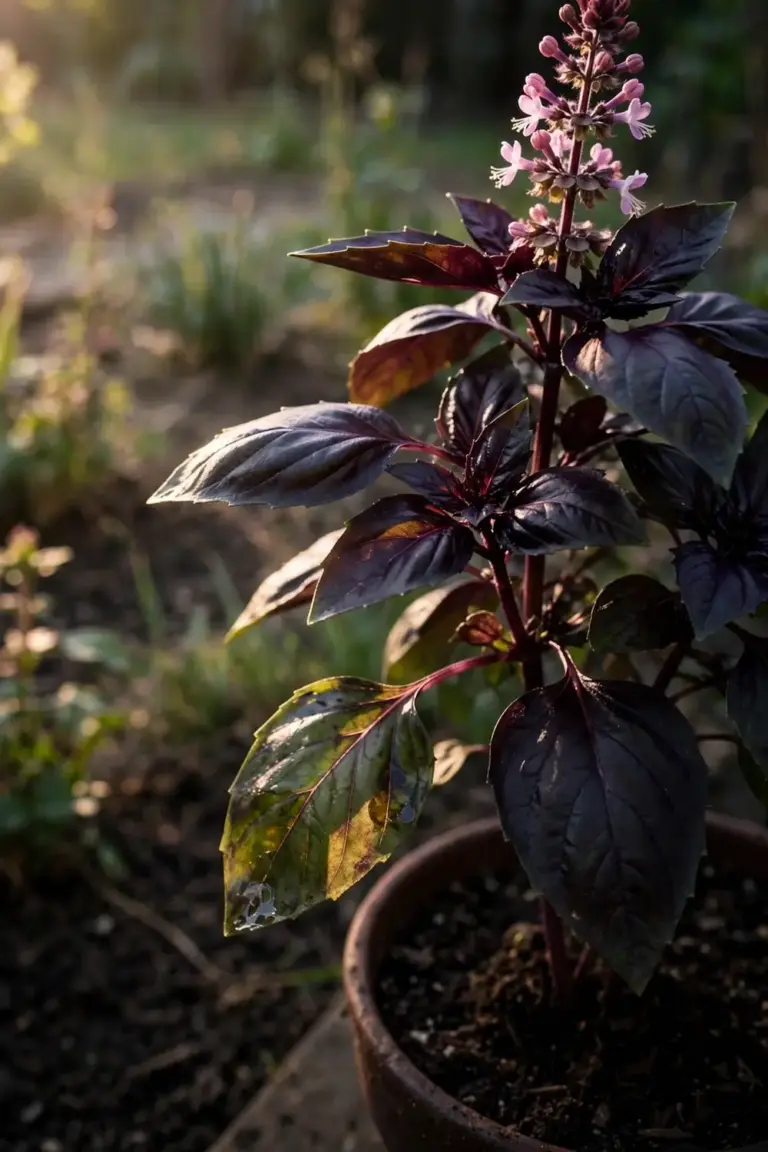
Two purple cultivars dominate Australian nurseries. Dark Opal grows deep purple, sometimes mottled leaves, with pink-purple flowers. Red Rubin grows a similar deep purple with a redder cast. Both are Ocimum basilicum cultivars, and both name as purple basil. The color can vary with light. A purple basil grown in shade greens up, and a sweet basil grown in strong sun can flush purple on the stem. Color alone never names a basil. The leaf shape, the stem, and the scent carry the identification, and the purple color confirms it.
Purple basil loses its color in cooking, which is why cooks use it raw. That cooking behavior does not help identification. The traits that name it are the deep violet leaf, the ovate sweet-basil leaf shape, the purple stem, and the sweet basil scent with a spicy edge. If the leaf is purple and the scent is sweet clove, the plant is purple basil.
7. Greek Basil: Tiny Leaves on a Tight Ball
Greek basil is the smallest basil on this page. It is Ocimum basilicum var. minimum, a botanical variety of sweet basil, and it grows as a tight, compact ball of tiny leaves. The leaves are small, pointed, and densely packed, with a strong basil scent for their size. The plant grows 20 to 30 cm tall per Gardenia’s variety guide, and it keeps a rounded, mounding shape without pruning.
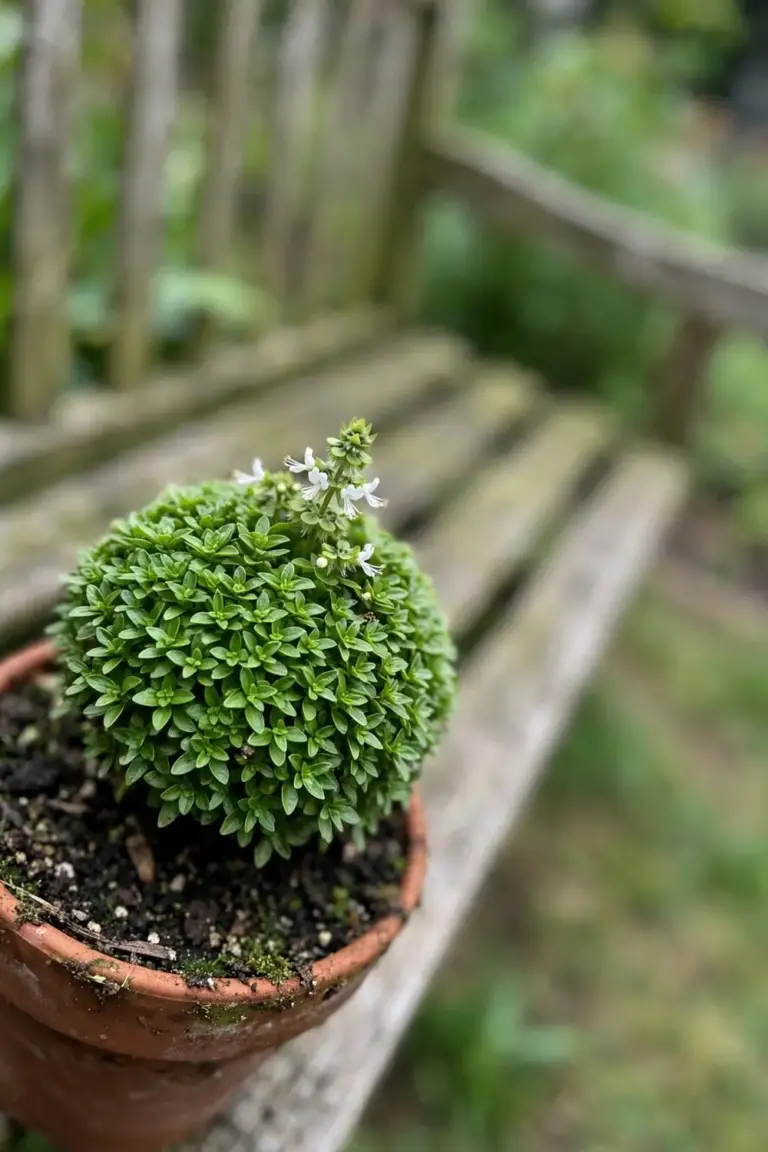
The dwarf habit names it. No other common basil grows as a tight ball of tiny leaves. Penn State Extension’s basil profile lists small-leaf and dwarf types such as Minette, Minimum, Spicy Globe, and Spicy Bush. Spicy Globe and Spicy Bush are dwarf cultivars with the same tight-ball habit and tiny leaves. A buyer who sees a dense ball of tiny leaves is looking at a dwarf basil, and the botanical name on the tag settles whether it is Greek basil or a dwarf cultivar.
Greek basil leaves taste stronger than their size suggests, which is why cooks use them in small amounts. That flavor strength does not help identification. The traits that name it are the tiny leaves, the tight ball habit, and the compact size. If the plant is a ball of tiny leaves under 30 cm tall, the plant is a dwarf basil, and the tag name gives the variety.
8. Cinnamon Basil: Olive Leaves, Purple Veins, Cinnamon Scent
Cinnamon basil is a cultivar of sweet basil, Ocimum basilicum ‘Cinnamon’. It is not a separate species. The leaves are smooth, pointed, and olive-green, with purple veins running through the leaf. The stem is dark purple. The plant grows 60 to 90 cm tall per Gardenia’s variety guide, taller than sweet basil. The flower spike carries pale pink to purple flowers.
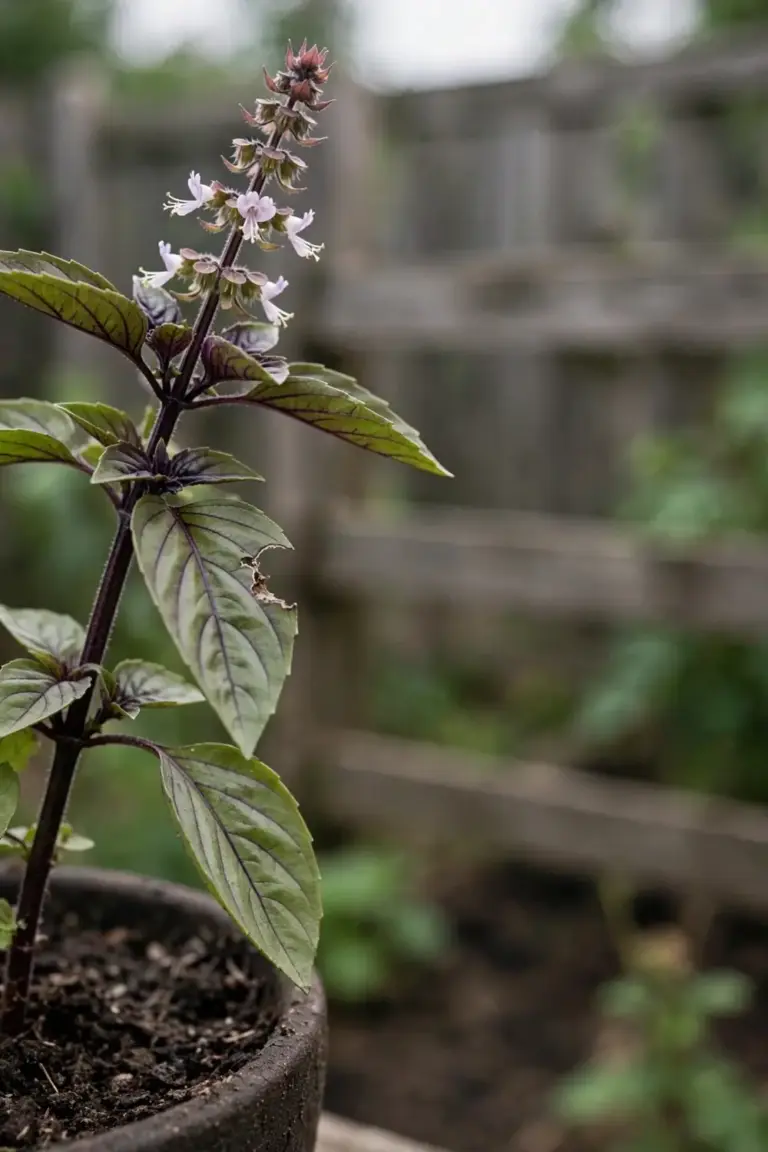
The aroma test names it at once. The crushed leaf smells of cinnamon and clove, warm and spicy, with none of the aniseed note of Thai basil and none of the lemon note of lemon basil. The cinnamon scent is the single trait that separates it from Thai basil, which shares the purple stem and the purple veins. A plant with purple stems, purple veins, and an aniseed smell is Thai basil. A plant with purple stems, purple veins, and a cinnamon smell is cinnamon basil. The nose decides.
Cinnamon basil leaves taste spicy and warm, which suits fruit salads and sweet dishes. That flavor does not help identification. The traits that name it are the olive-green pointed leaf, the purple veins, the dark purple stem, and the cinnamon scent. All four together make a firm identification.
9. Bush Basil: The Native Lookalike That Is Not Basil at All
Bush basil is not a basil. It is Coleus graveolens, also sold under its older name Plectranthus graveolens, an Australian native shrub in the mint family. Aussie Green Thumb’s bush basil guide states plainly that bush basil is neither a basil nor a bush, but a prostrate shrub. The common name is the trap. The plant smells basil-like, tastes basil-like, and sits in the mint family with basil, but it belongs to a different genus. It belongs to the genus Coleus. The basil name does not apply to it.
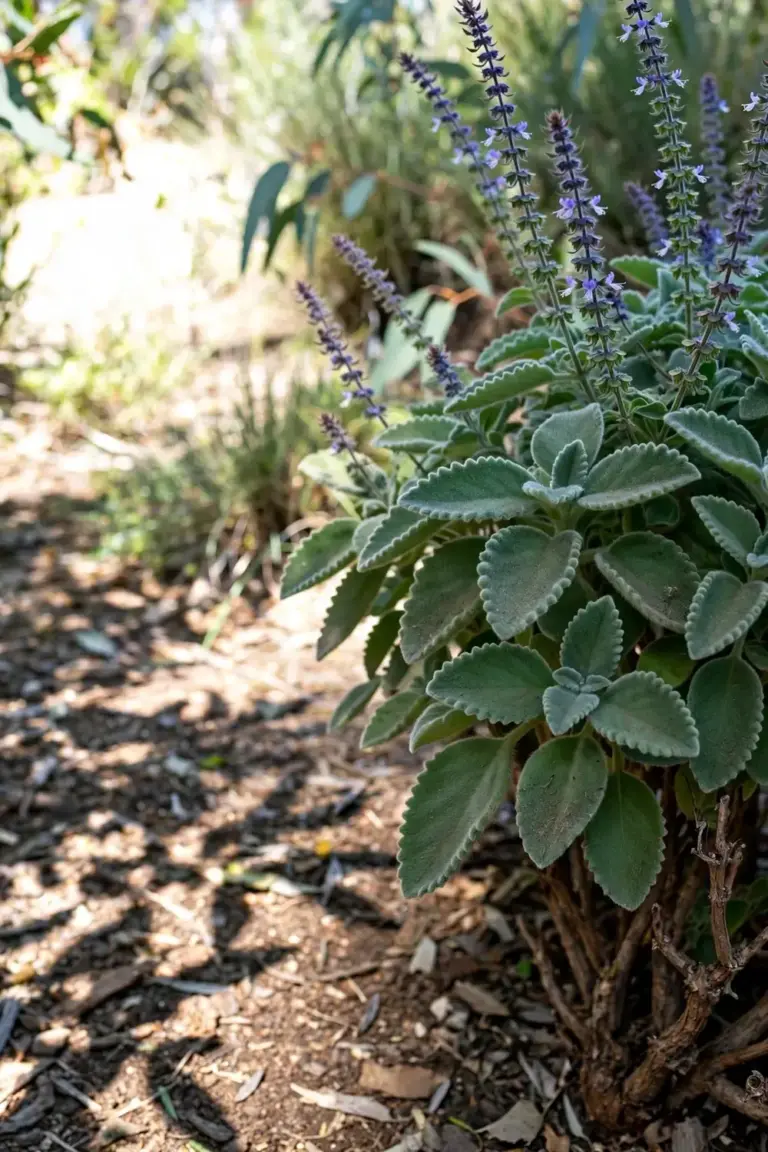
The traits separate it cleanly. Bush basil grows as a low, spreading shrub with broad, fuzzy leaves and a scalloped edge. Aussie Green Thumb’s bush basil guide lists it at 50 cm tall and 50 cm wide, while Tucker Bush lists it at up to 1.5 m tall with a 2 m spread. The two figures differ because nurseries sell it at different ages and the plant keeps spreading. The leaves feel velvety and fleshy, thicker and fuzzier than any true basil leaf. The flower spike carries tiny blue-purple flowers in spring and summer. The crushed leaf smells complex, like basil mixed with thyme, lemon balm, mint, and sage, which is why early settlers called it the Five Spice Plant.
Bush basil is edible, and it is a genuine bush food with a long record of use. The identification point is not about eating it. The point is the genus. It belongs to a different genus, so the name basil does not apply to it. Check the botanical name on the tag: Ocimum means basil, while Coleus or Plectranthus means a mint-family cousin with a basil-like smell.
10. Holy Basil Name Tangle: Tenuiflorum vs Caryophyllinum in Australia
Australian holy basil carries a naming tangle that no other basil carries. The Atlas of Living Australia Ocimum page lists five Ocimum taxa as accepted in Australia under the Australian Plant Census: Ocimum americanum, Ocimum basilicum, Ocimum caryophyllinum, Ocimum tenuiflorum, and the hybrid Ocimum x africanum. Two of those names, tenuiflorum and caryophyllinum, both attach to plants sold as holy basil. That is the tangle.
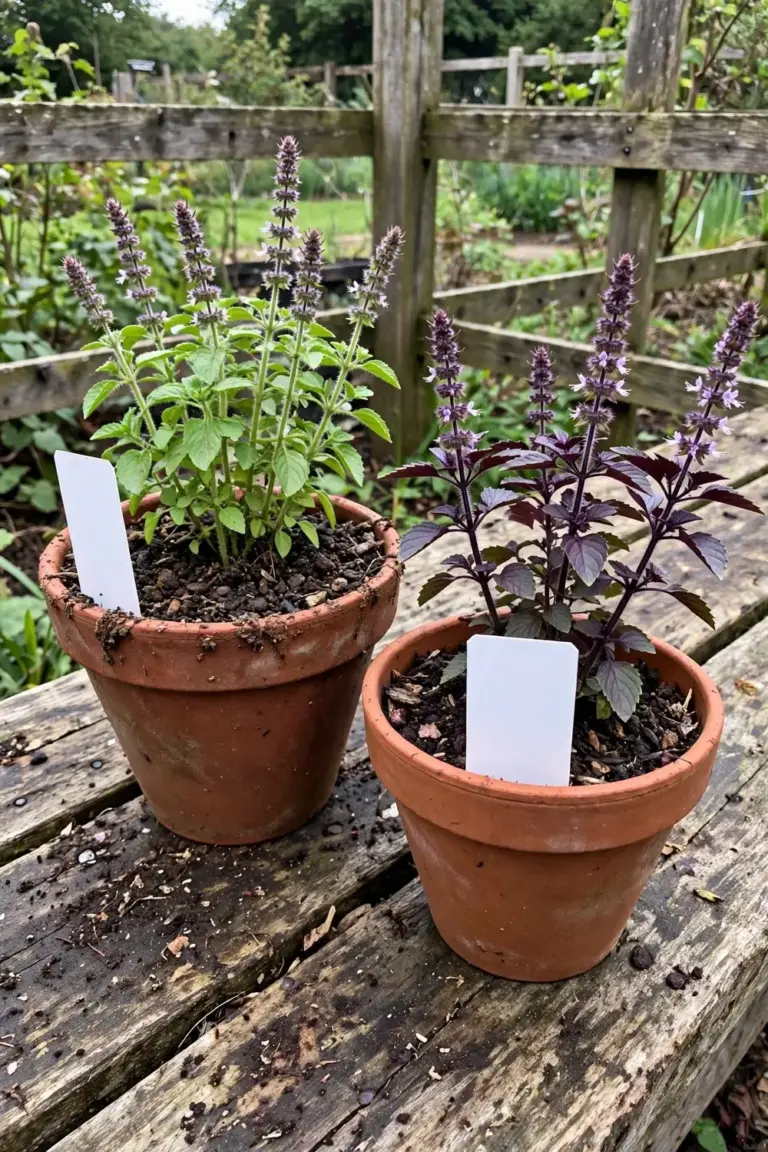
The Telopea revision by Barry Conn in 2014 reinstated Ocimum caryophyllinum as a distinct species for Australian material. Much of the Australian material previously filed under Ocimum tenuiflorum belongs to Ocimum caryophyllinum under that revision. The two species look alike to a home gardener. Both have hairy stems, toothed leaves, and a peppery clove scent. Telling them apart needs a botanist’s key, not a garden check.
The practical rule for a buyer is simple. A tag that reads Ocimum tenuiflorum names holy basil, and a tag that reads Ocimum caryophyllinum also names an Australian holy basil under the revised taxonomy. A tag that reads only “holy basil” with no botanical name names neither with certainty, so ask for the botanical name or buy from a seller who prints it. The plant in the pot is the same kind of herb either way, but the name on the tag should match the plant in the pot.
11. Label Traps: Thai Holy Basil, Lemon Basil, and Spice Basil
Three label traps catch Australian basil buyers. The first is “Thai holy basil.” That phrase is not a cross between Thai basil and holy basil. It is holy basil as used in Thai cooking, where it is called kaphrao. A label reading “Thai holy basil” should carry the botanical name Ocimum tenuiflorum. If the label reads Ocimum basilicum var. thyrsiflora, the plant is Thai basil, not holy basil, whatever the word “holy” on the tag says. Check the botanical name, then trust the nose. Thai basil smells of aniseed. Holy basil smells of pepper and clove.
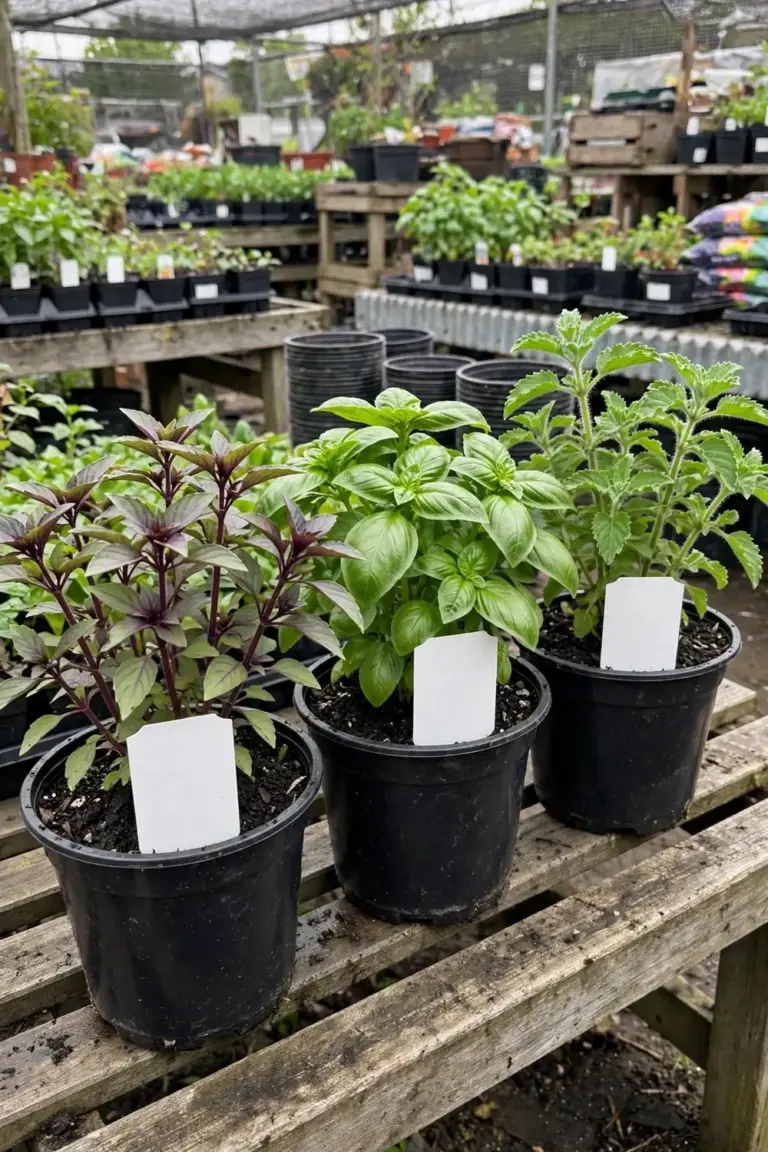
The second trap is lemon basil, where two different plants share one name. The hybrid lemon basil is Ocimum x citriodorum, a cross between Ocimum americanum and Ocimum basilicum, while Mrs. Burns’ Lemon is Ocimum basilicum var. citriodora, a sweet basil variety with a lemon scent. Both smell of lemon and both cook alike, so the botanical name on the tag separates them. Either hybrid name, citriodorum or africanum, marks the hybrid, and the variety name citriodora marks the sweet basil variety.
The third trap is spice basil. Spice basil is a cross between sweet basil and American basil, and seed catalogues note that it is sometimes sold under a holy basil label. Spice basil is not holy basil. It lacks the hairy stem and the peppery clove scent of true holy basil. A plant sold as holy basil with a smooth stem and a mild scent is likely spice basil. Check the stem. Hairy stem, toothed leaf, peppery clove scent. Those three traits name holy basil, and no label overrides them.
12. Run These 4 Checks in Order and Name Your Basil
Four checks name any basil in under a minute. Run them in order, and stop when the plant matches. First, roll the stem. A square stem with opposite leaves confirms a mint-family herb. A round stem rules basil out. Second, crush one leaf and name the scent. Clove means sweet or purple basil, aniseed means Thai basil, pepper and clove means holy basil, lemon means lemon basil, cinnamon means cinnamon basil, and menthol means mint, not basil.
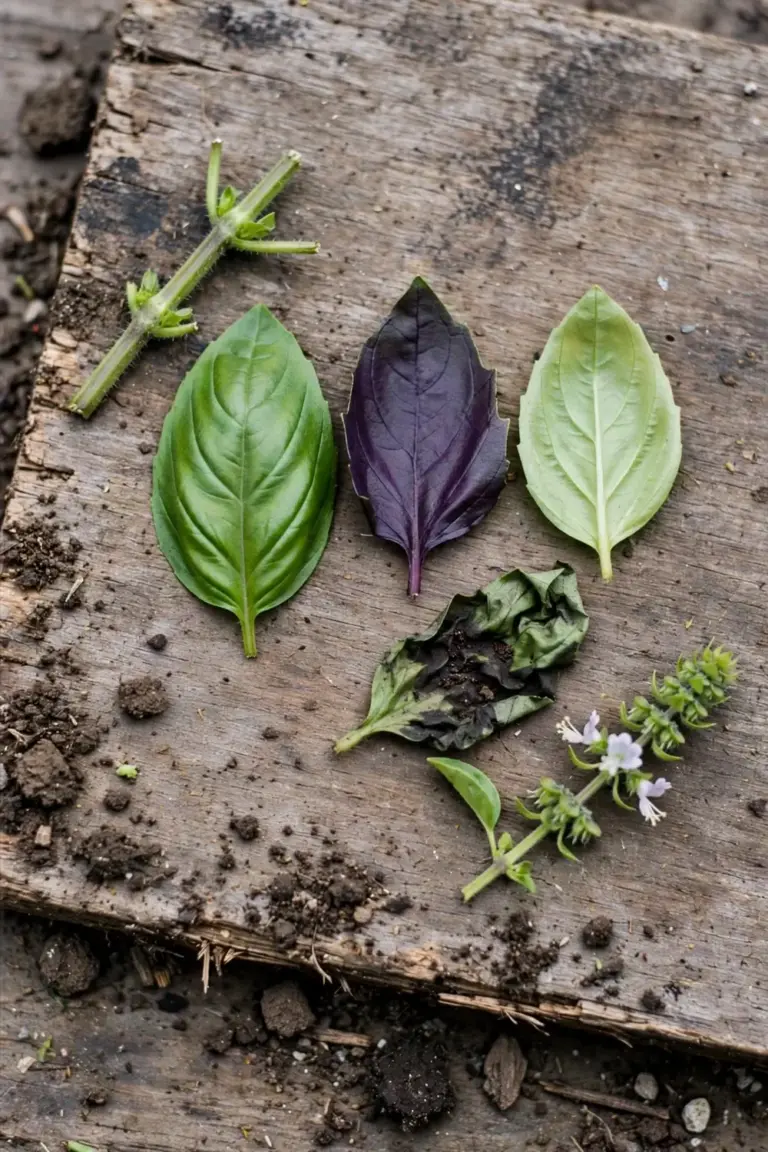
Third, read the leaf and the stem color. Big soft green leaves mean sweet basil, and narrow leaves with purple stems mean Thai basil, while small toothed leaves with hairy stems mean holy basil. Pale narrow leaves mean lemon basil, dark violet leaves mean purple basil, and tiny leaves on a tight ball mean Greek basil. Olive leaves with purple veins mean cinnamon basil. Broad fuzzy leaves with a scalloped edge mean bush basil, which is not basil at all.
Fourth, read the botanical name on the tag and match it to the traits. Ocimum basilicum means sweet basil or one of its cultivars. Ocimum basilicum var. thyrsiflora means Thai basil. Ocimum tenuiflorum or Ocimum caryophyllinum means holy basil. Ocimum x citriodorum or Ocimum x africanum means hybrid lemon basil. Ocimum basilicum var. minimum means Greek basil. Coleus graveolens or Plectranthus graveolens means bush basil, not basil. When the tag and the traits disagree, trust the traits and ask the seller for the true name.
| Variety | Botanical Name | Leaf | Stem and Flower | Aroma |
|---|---|---|---|---|
| Sweet basil | Ocimum basilicum | Big, soft, ovate, bright green | Green square stem, white flower spike | Sweet clove |
| Thai basil | Ocimum basilicum var. thyrsiflora | Narrow, pointed, glossy | Dark purple stem, purple flower spike | Aniseed, licorice |
| Holy basil | Ocimum tenuiflorum | Small, ovate, slightly toothed | Hairy stem, purplish flowers in close whorls | Peppery clove |
| Lemon basil | Ocimum x citriodorum | Narrow, pale, matte, pointed | Green square stem, white flower spike | Lemon peel |
| Purple basil | Ocimum basilicum ‘Purpurascens’ | Deep violet, ovate, glossy | Purple stem, lilac-pink flowers | Sweet clove, spicy edge |
| Greek basil | Ocimum basilicum var. minimum | Tiny, pointed, densely packed | Green square stem, small white flowers | Strong sweet basil |
| Cinnamon basil | Ocimum basilicum ‘Cinnamon’ | Olive-green, pointed, purple veins | Dark purple stem, pale pink to purple flowers | Cinnamon, clove |
| Label Says | Check the Botanical Name | What It Really Is |
|---|---|---|
| Thai holy basil | Ocimum tenuiflorum | Holy basil, as used in Thai cooking |
| Thai holy basil | Ocimum basilicum var. thyrsiflora | Thai basil, mislabeled with the word holy |
| Lemon basil | Ocimum x citriodorum or Ocimum x africanum | Hybrid lemon basil |
| Lemon basil | Ocimum basilicum var. citriodora | Mrs. Burns’ Lemon, a sweet basil variety |
| Holy basil | No botanical name printed | Uncertain, ask for the name or check the stem |
| Bush basil or native basil | Coleus graveolens or Plectranthus graveolens | Bush basil, a native shrub, not a basil |
13. Frequently Asked Questions
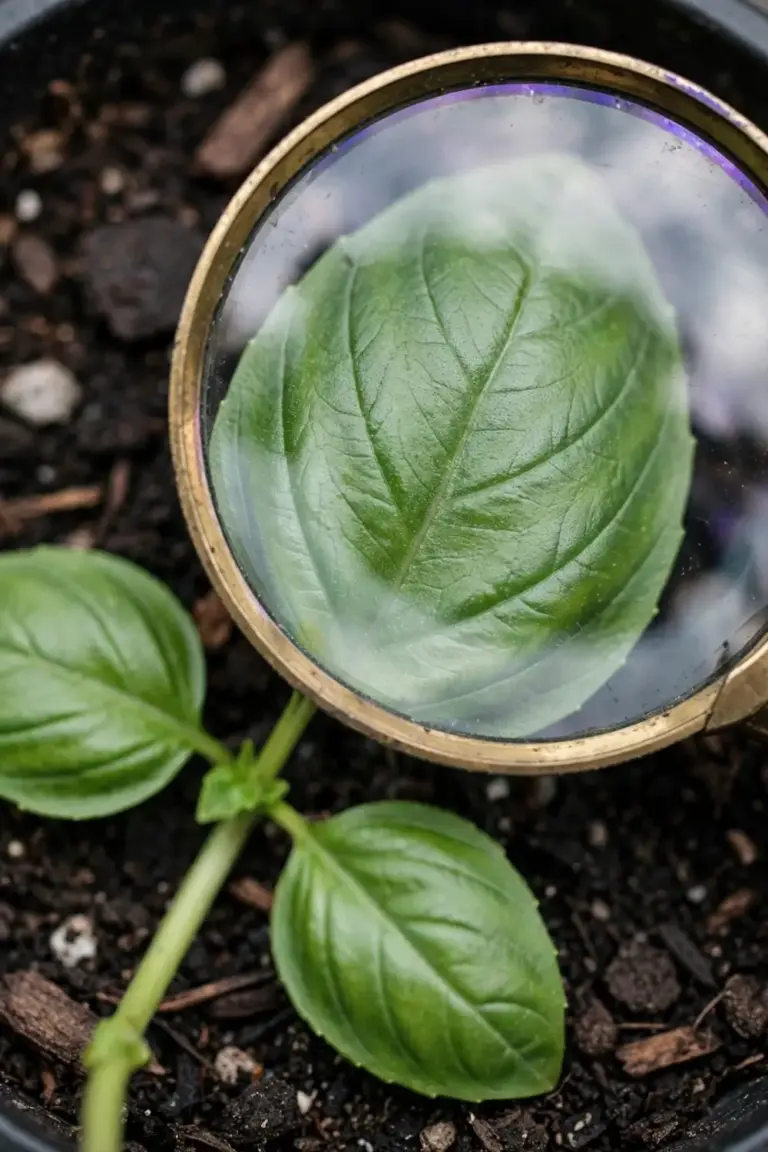
Roll the stem first. Both basil and mint have square stems and opposite leaves, because both sit in the mint family. The crush test separates them. Crush one leaf and smell it. Basil smells of clove, aniseed, lemon, cinnamon, or pepper, depending on the variety. Mint smells of menthol. A leaf that smells of menthol is mint, whatever the label says. Check the leaf edge next. Mint leaves often carry a sharper tooth than basil leaves.
No. Thai basil is Ocimum basilicum var. thyrsiflora, a sweet basil variety. Holy basil is Ocimum tenuiflorum, a separate species. Thai basil has smooth purple stems, narrow leaves, and an aniseed scent. Holy basil has hairy stems, toothed leaves, and a peppery clove scent. The phrase “Thai holy basil” means holy basil as used in Thai cooking, not a cross between the two. Check the botanical name on the tag.
Yes, bush basil is edible, and it is a genuine bush food with a long record of use in Australia. The leaves work fresh in salads, on pizza, and blended into pesto. Use small amounts at first, because the flavor runs stronger and more complex than sweet basil. The identification point stands apart from eating it. Bush basil is Coleus graveolens, not Ocimum, so it is not a true basil even though it is edible.
Basil labels carry two names because the naming itself is tangled. Lemon basil circulates under two hybrid names, citriodorum and africanum. Holy basil circulates under tenuiflorum and caryophyllinum in Australia. Bush basil circulates under Coleus graveolens and Plectranthus graveolens. Read the botanical name, then match it to the traits in the key. When the tag and the traits disagree, trust the traits.
No. Flower color helps, but it never names a basil on its own. Thai basil carries purple flower spikes, sweet basil carries white spikes, and holy basil carries purplish flowers in close whorls, but growers pinch spikes off to keep leaves tender. A plant with no flowers still names cleanly from stem, leaves, and aroma. Run the stem test, then the crush test, then the leaf test, in that order.
14. Write the Name Down Before You Cook With It
Name the basil before it goes into the pot. The three tests take under a minute: roll the stem for the square shape, crush one leaf for the scent, and read the leaf and the stem color. Match the botanical name on the tag to the traits. Basil identification in Australia turns on those four moves, and the label alone never settles it. Thai basil smells of aniseed. Holy basil smells of pepper and clove. Bush basil is not basil at all.
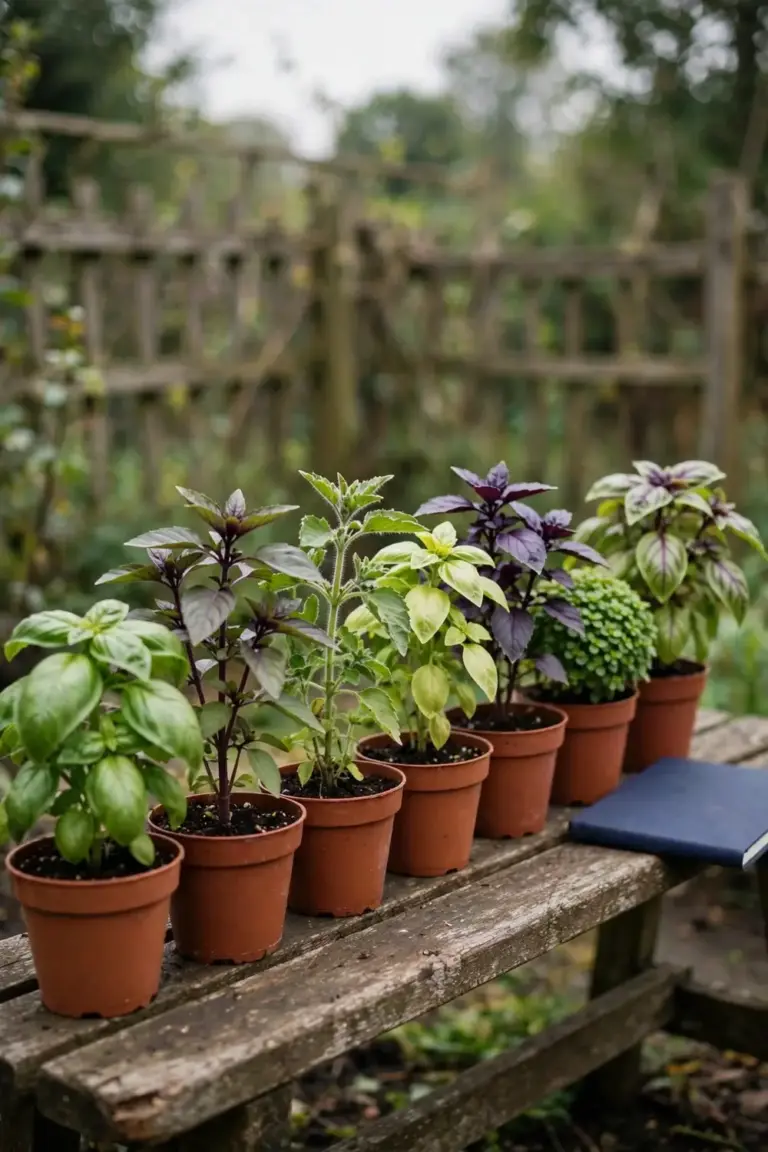
Once the name is certain, the kitchen decision gets easy. Sweet basil suits pesto and tomato dishes, Thai basil suits stir-fries and curries, and holy basil suits Thai stir-fries. Lemon basil suits seafood and salads. Cinnamon basil suits fruit salads. Greek basil suits garnish. Purple basil suits raw salads where the color shows. Bush basil suits pizza and pesto in small amounts. The herb garden gives more when every pot carries its true name. For more herbs to name after this one, the fall herbs to plant list covers the herbs that share the bed with basil.