
You cannot buy pulasari as a garden plant in the West, and no nursery trade sells its seedlings or seeds. The plant behind the bark is a woody climber with stems to 3 metres, and its trade runs on bark, not on plants. What you can do is understand that plant, buy bark honestly, and attempt propagation only if you already live in the moist tropics with access to real material. This guide answers how to grow pulasari honestly, starting with the bark trade that defines the plant.
Pulasari is Alyxia reinwardtii, a woody climber in the dogbane family, Apocynaceae. Jamu makers in Indonesia buy its stem bark, called cortex, for traditional formulas. Gardeners outside Indonesia mostly meet the plant as dried bark in a market stall or as an ingredient name on a jamu label. I have learned that bark harvest defines this plant more than any garden trait does, so the guide starts with the bark and treats growing as the smaller part of the story.
The sections below follow that order. You will meet the plant, its names, its habitat, its uses, its conservation limits, and then the small set of propagation facts that actually exist. No section invents a temperate growing method, because none exists in the evidence.
1. Start With the Right Plant: Pulasari Is Alyxia Reinwardtii, a Bark Climber
Pulasari is Alyxia reinwardtii Blume, a woody climber whose harvested part is stem bark. Kew’s Plants of the World Online lists Alyxia reinwardtii as the accepted name and records pulasari as a common name for it.
The plant belongs to Apocynaceae, the dogbane family. That family placement matters for identification, because Apocynaceae sap runs bitter and milky in many members, and pulasari shares the family habit of tough, leathery leaves and small tubular flowers. The family name alone never identifies a plant, and the botanical name does the real work. Buy or discuss this plant as Alyxia reinwardtii, and check that name on any label before you trust the contents.
One name stays fixed through the guide. Pulasari is the common name. Alyxia reinwardtii is the botanical name. The harvested bark is cortex. The article uses no synonym swaps for any of them, so a reader never has to guess whether two names mean one plant or two.
2. Spell It Two Ways: Pulasari and Pulosari Name the Same Bark
Pulasari and pulosari name the same bark. Indonesian spelling varies, and manufacturers use both forms. Sido Muncul, Indonesia’s largest jamu maker, lists the raw material as “pulosari” with the botanical name Alyxia reinwardtii beside it.
That spelling split causes real confusion in shops and in online listings. A stall selling “pulosari” bark and a website selling “pulasari” bark may hold the same material, and only the botanical name tells you for certain. A listing that prints neither spelling with a botanical name gives you no way to check. The botanical name settles the question every time. A label without it deserves doubt.
Adas-pulasari adds a second ingredient to the name. Adas is fennel, Foeniculum vulgare. The paired name describes pulasari bark used together with fennel in Javanese jamu, and the pairing has its own section below. White cinnamon is a market name for the same bark, not a species. The bark smells warm and sweet, and sellers reach for the cinnamon comparison to describe the scent.
| Name on the Label | What It Means | What to Check |
|---|---|---|
| Pulasari | Common name for Alyxia reinwardtii bark | Botanical name Alyxia reinwardtii on the label |
| Pulosari | Alternate spelling of the same bark | Same botanical name check |
| Adas-pulasari | Pulasari bark paired with fennel (adas) | Both ingredients named |
| White cinnamon | Market name for pulasari bark, from its scent | Botanical name, since this is not a cinnamon species |
| Alyxia cortex | Trade name for the harvested stem bark | Part used: cortex, the bark layer |
3. Expect a Woody Climber, Not a Small Herb
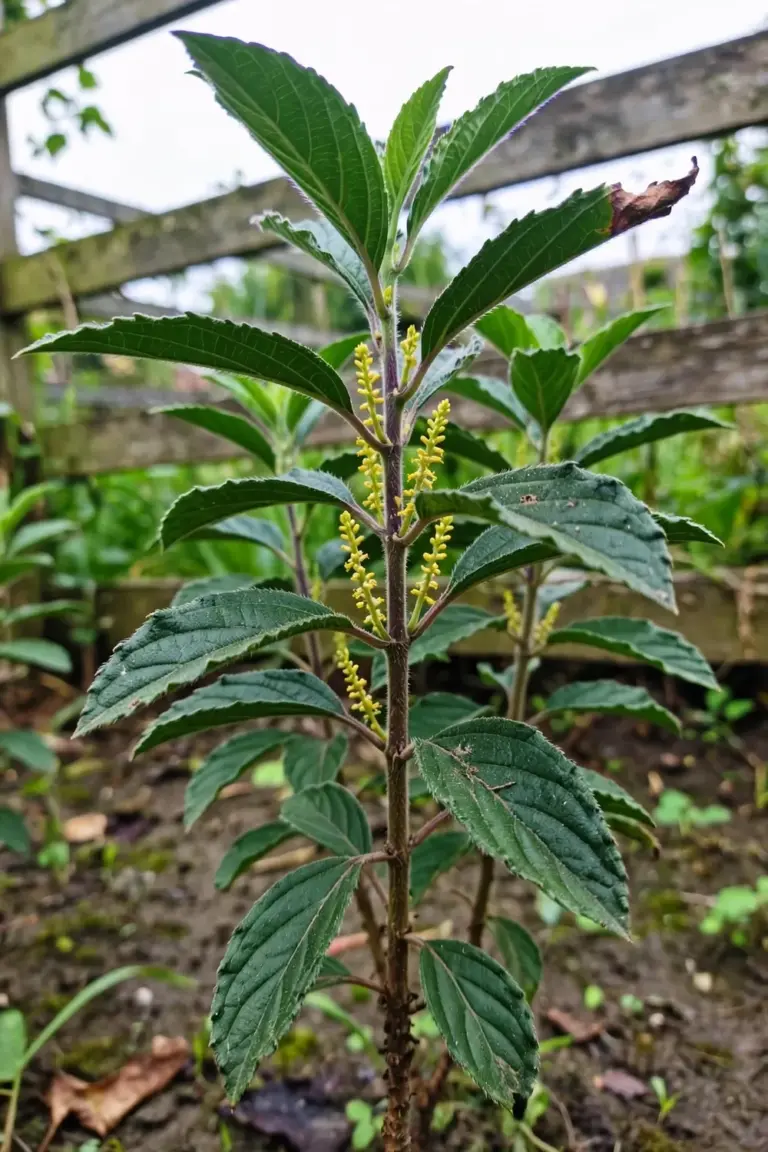
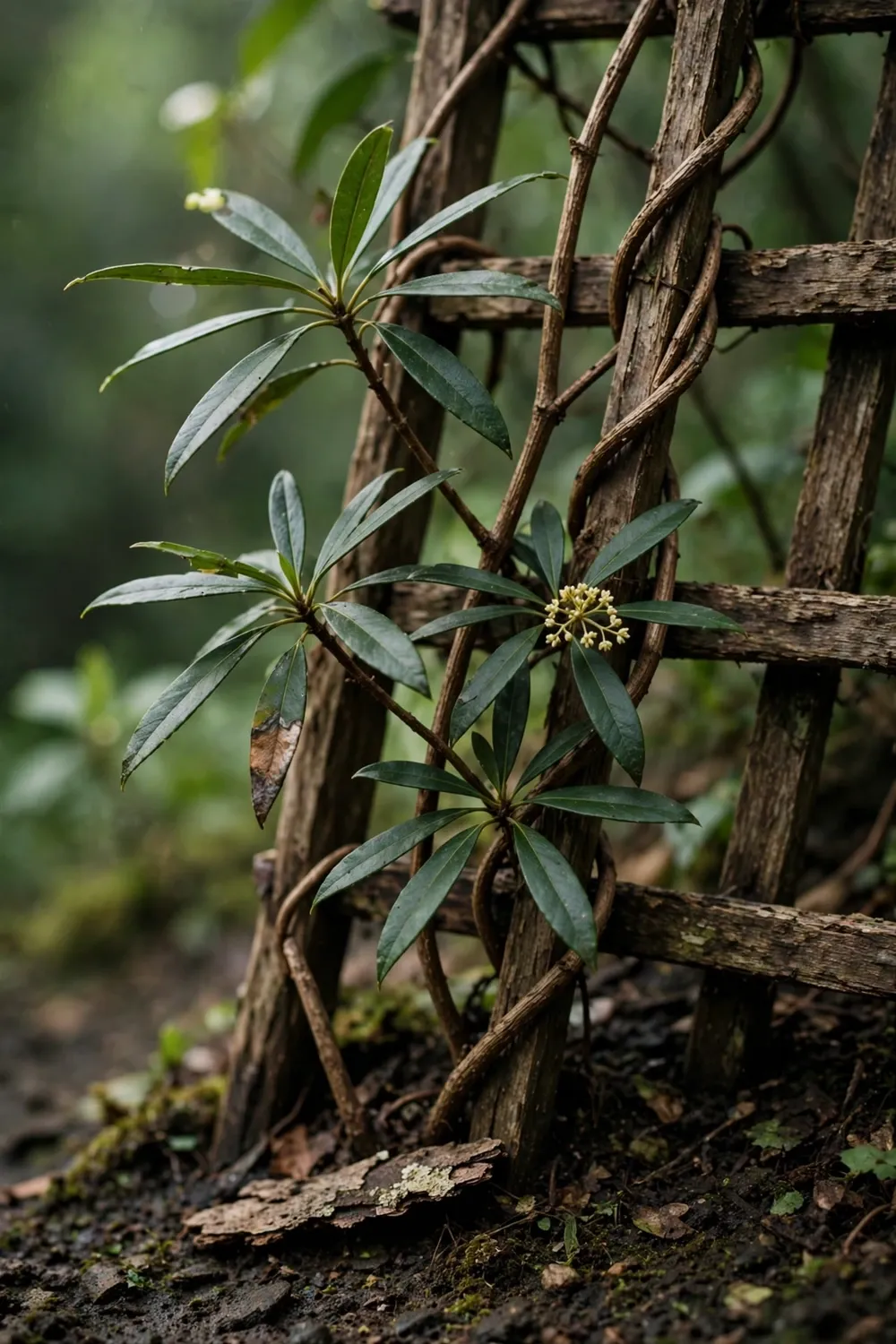
Pulasari grows as a woody liana, a climber with stems that reach 3 metres and twine into surrounding vegetation, according to the Flora of China treatment of Alyxia reinwardtii. Useful Tropical Plants describes the same habit as a slender climbing or scandent evergreen shrub with stems up to 3 metres long.
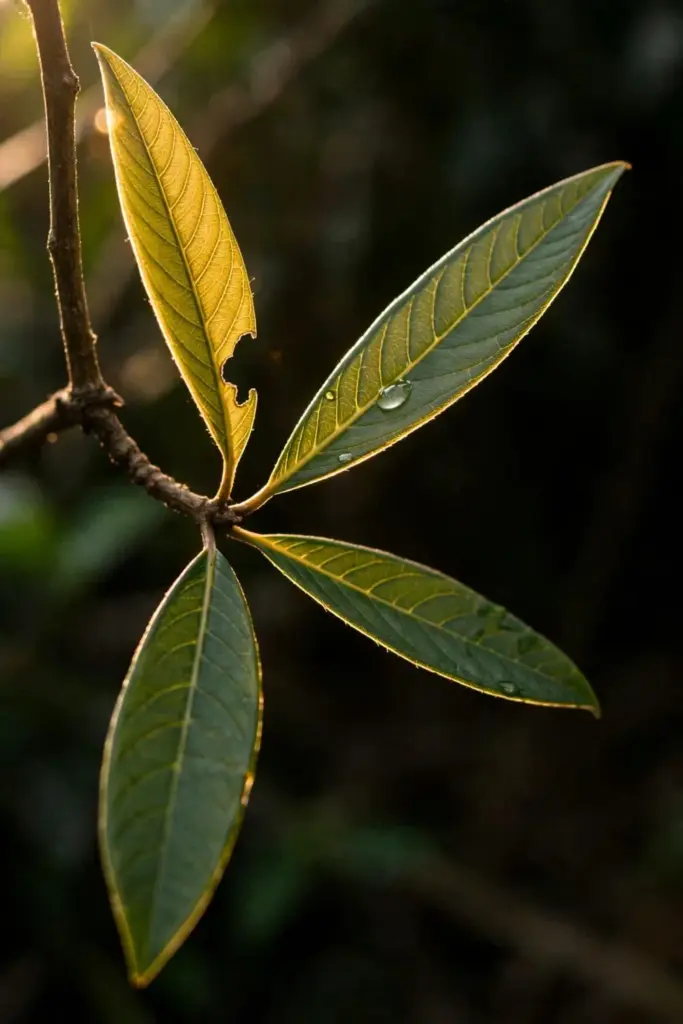
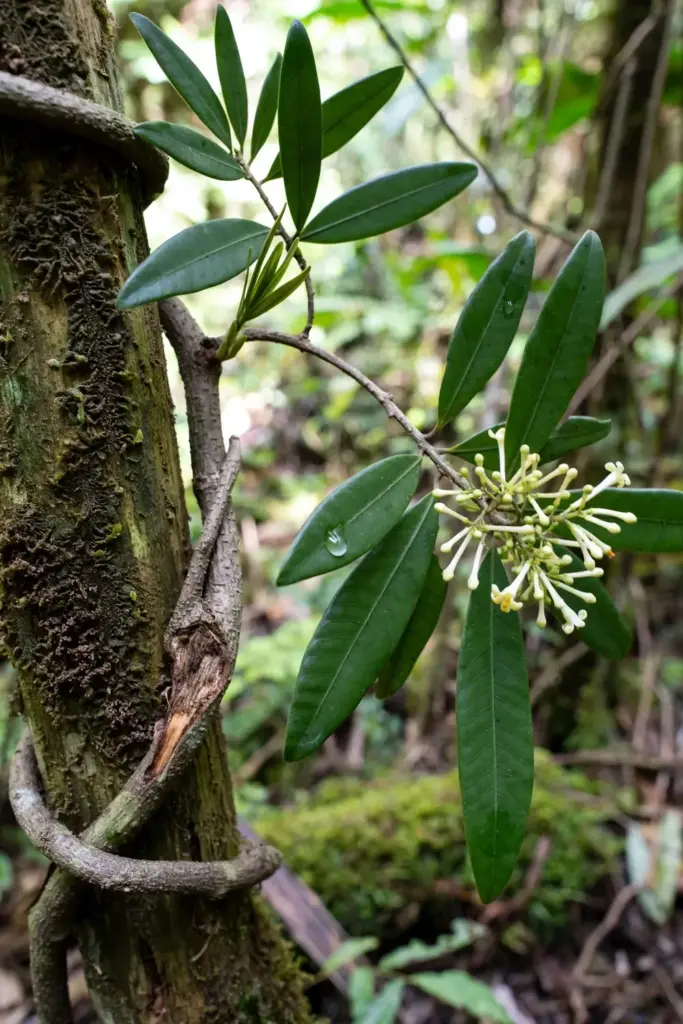
The leaves sit opposite each other or in whorls of 3 or 4. Each leaf blade runs narrowly elliptic or oblong, 8 to 11 centimetres long and 1.5 to 2.5 centimetres wide, with a leathery texture and a narrowly long acuminate tip, per the Flora of China treatment. The leaf underside stays glabrous, and the side veins read obscure on the lower surface. A gardener who expects a soft herb will misread this plant at first sight. The leaves feel built for a forest edge, stiff and glossy, not soft and crushable like mint or basil.
Flowers arrive in fascicled cymes from the leaf axils, each cluster 3 to 5 centimetres long. The corolla runs yellowish white and glabrous, with a tube about 8.5 millimetres long and ovate lobes about 4 millimetres, per the Flora of China treatment. Flowering runs May to October in the Flora of China account. The fruit is an oblong-ellipsoid drupe about 1.5 centimetres long and 5 millimetres wide, with fruiting from August to December in the same account.
Young branchlets start triangular in cross-section and turn round with age. That small detail helps identification in the field, and it separates pulasari from many lookalike climbers at close range. The whole plant reads as a forest-edge scrambler, not a pot herb. Any growing plan must start from that habit, with support for climbing stems and room for a plant that wants to reach.
4. Place It in Moist Tropical Forest From Sea Level to 3,050 Metres
Pulasari grows in moist tropical forest across a wide Asian range. Useful Tropical Plants places the range across southern China, Bangladesh, Myanmar, Thailand, Cambodia, Laos, Vietnam, Malaysia, Indonesia, and the Philippines.
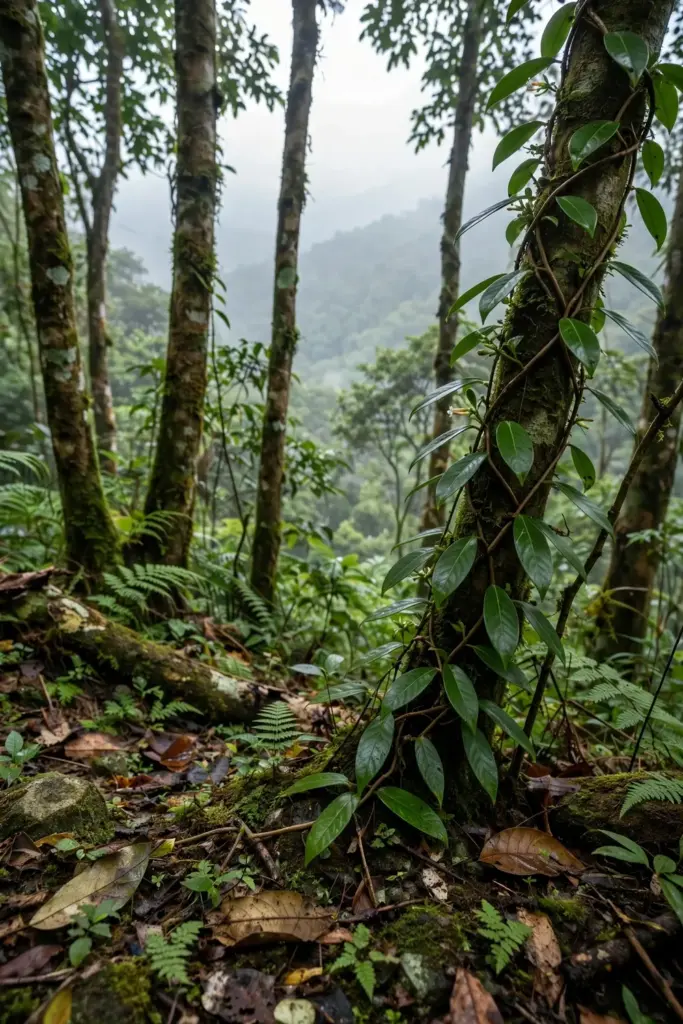
The habitat range is unusually broad. The plant grows in primary or secondary lowland forest, montane forest, peat swamp forest, scrub, and open ridges, on granitic, sandy, clay, or ultrabasic soils, from sea level to 3,050 metres, per Useful Tropical Plants. The Flora of China account narrows the Chinese habitat to forests and brushwoods at 800 to 1,700 metres. A plant that tolerates both lowland swamp edges and high ridges is adaptable within the tropics, and that adaptability explains why it turns up across so many countries.
The wide range carries a warning for gardeners. A species that grows from sea level to 3,050 metres does not hand you one climate recipe. A lowland plant and a highland plant of the same species can differ in temperature tolerance, growth speed, and flowering time. No published trial separates those populations for gardeners, so no single temperature or elevation figure here pretends to cover the whole species.
Indonesia sits inside the native range, and Javanese highland populations anchor the jamu trade. The 2013 Indonesian domestication thesis on pulasari describes those highland plants as rare and medicinal, with minimal domestication information behind the claim. That thesis is the only cultivation document behind the growing sections below, and its thinness shapes everything that follows.
5. Know Why the Harvest Targets Bark, Not Leaves or Fruit
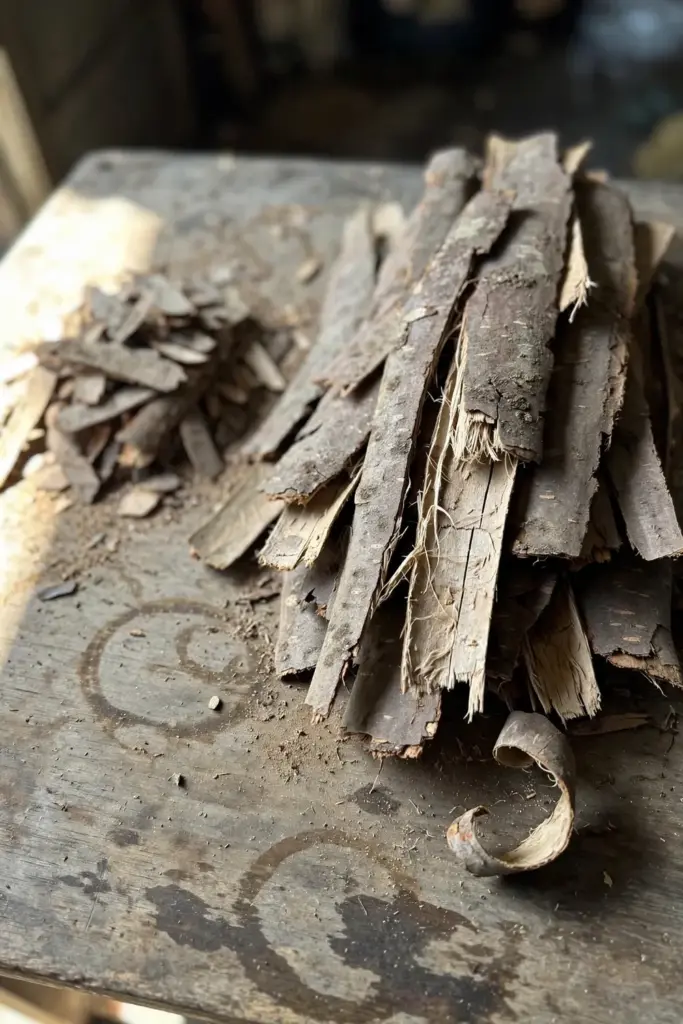
Harvest targets stem bark because the bark holds the fragrance. The fragrant compounds in Alyxia bark are a mixture of isomeric coumarins, concentrated in the bark, according to Useful Tropical Plants. Coumarin smells sweet and warm, close to vanilla and new-mown hay, and that scent is the reason the bark sells as white cinnamon in local markets.
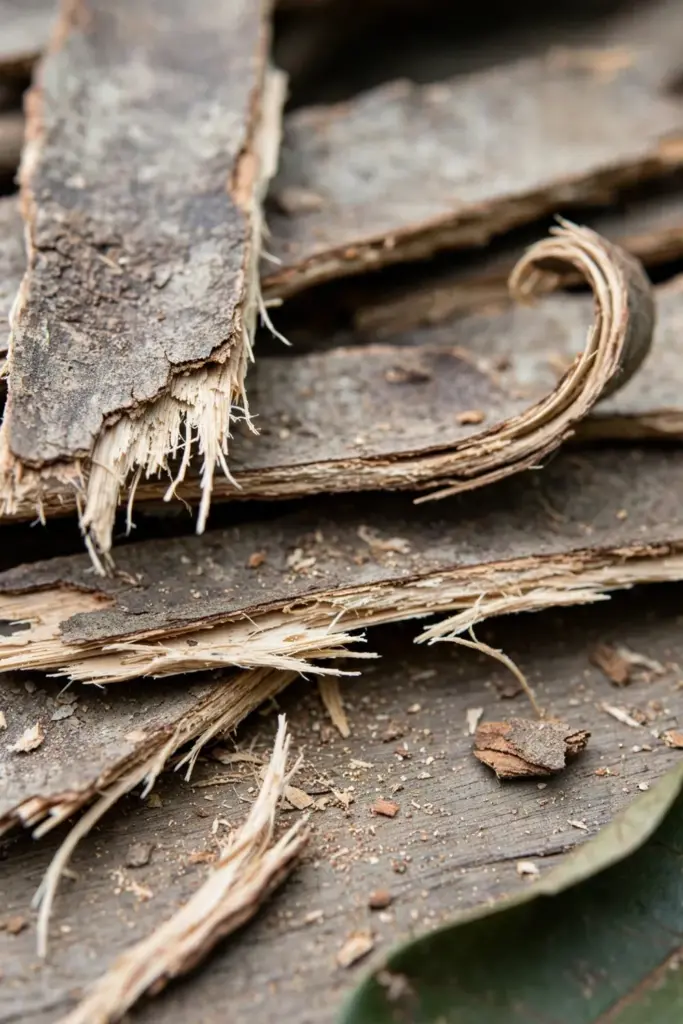
The bark trade works at a scale that leaf or flower harvest never reaches. The plant is gathered from the wild and sometimes cultivated for its aromatic bark and medicinal properties, per Useful Tropical Plants. Bark is the part that Sido Muncul buys, the part that jamu formulas list, and the part that market stalls sell. Leaves and flowers taste spicy and rather bitter when fresh, and traditional use sometimes substitutes them for bark, but the trade runs on cortex.
Bark harvest wounds the plant in a way leaf harvest does not. Stripping bark from a stem girdles it, and a girdled stem dies above the wound. Sustainable bark harvest takes bark from pruned stems or from stems cut for harvest, never a full ring around a standing stem. A buyer who understands that rule can ask sellers how their bark was harvested, and a seller with no answer has given you useful information.
6. Learn the Adas-Pulasari Pairing Before You Buy Anything
Adas-pulasari is the pairing that carries pulasari into Javanese jamu. Adas is fennel, Foeniculum vulgare, and the two ingredients travel together in traditional formulas. Useful Tropical Plants records that pulasari bark is used in medicines in Indonesia combined with fennel, and that the mixture serves in Javanese traditional medicine both to treat various illnesses and to give flavour and a pleasant odour to the other ingredients.
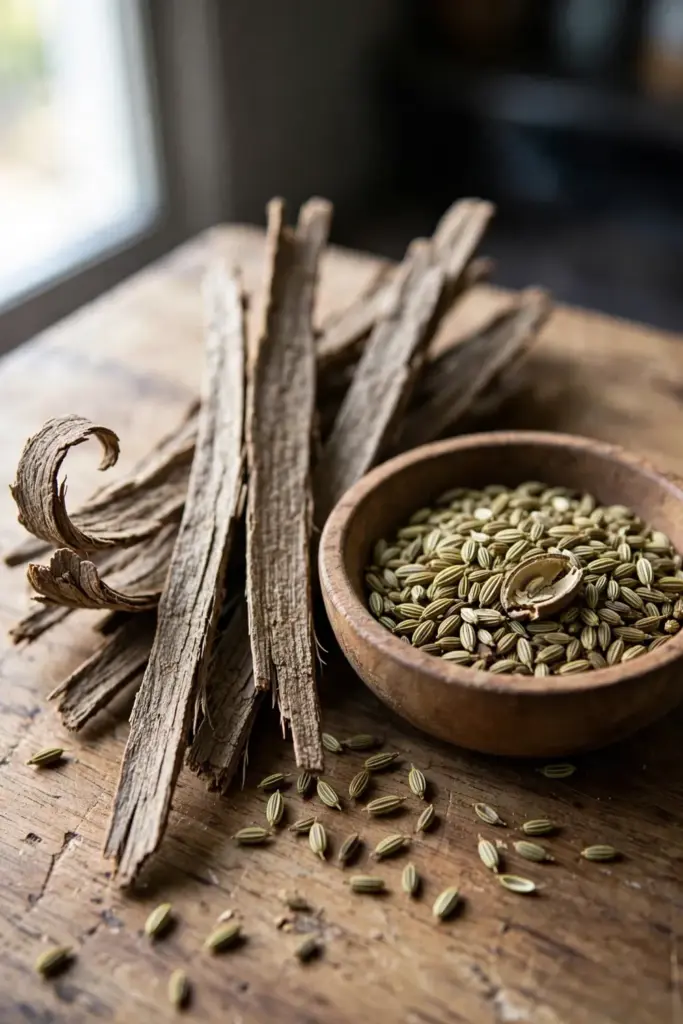
The pairing makes practical sense. Fennel brings its own aromatic seed, and the two aromatics cover the bitter or earthy notes of companion ingredients in a formula. Jamu makers value pulasari partly as a flavour and fragrance carrier, not only as an active ingredient. A reader who grows fennel already holds half the pairing in the garden, and fennel grows readily in temperate beds where pulasari cannot follow.
About 18 different manufactured medicines from Central Java list adas-pulasari as a principle ingredient, per Useful Tropical Plants. Those formulas serve as antispasmodics and for stomach-ache, flatulence, colic, fever, dysentery, as a carminative, and for sprue. The count of 18 shows how deep the pairing sits in Central Javanese manufacturing, and it explains why the name adas-pulasari appears on labels far more often than pulasari alone.
7. Read Jamu Labels for Cortex, Not for a Miracle Ingredient
Sido Muncul lists Alyxia cortex as a jamu raw material under the spelling “pulosari”, with the part used given as cortex and a 5:1 ratio on the product listing. The listing shows how the trade treats the plant: a standardised extract input, bought by the bark, processed at scale.
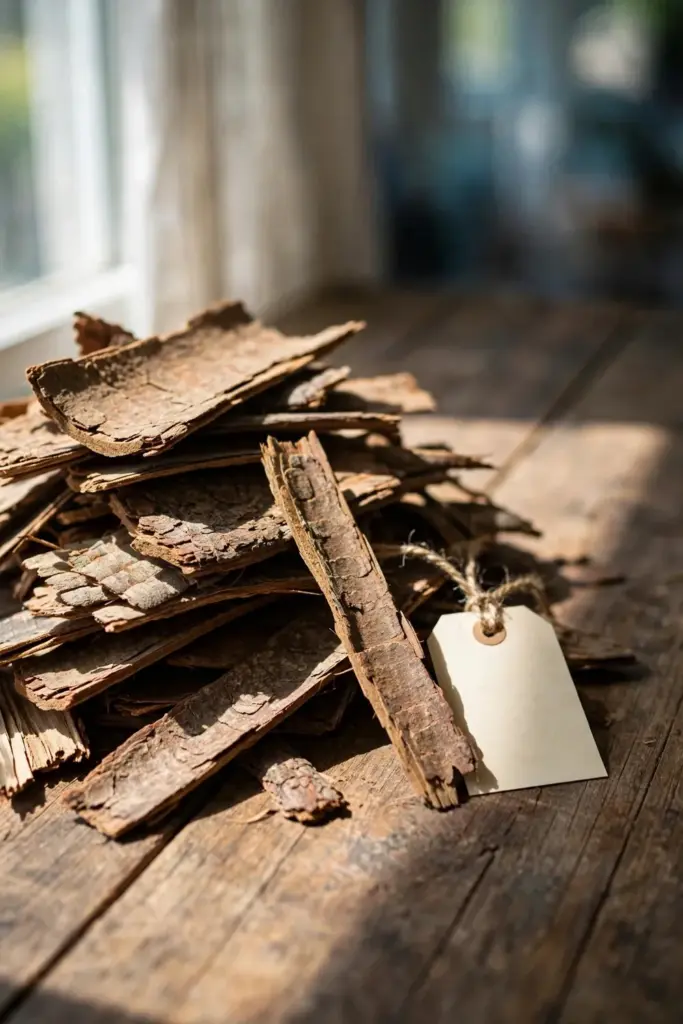
Read that kind of listing for three facts. The botanical name confirms the species, while the part used confirms bark rather than leaf or root. The ratio describes the manufacturer’s extract strength, not a dose. No label here carries a dosage, and no section below gives one. Dosage belongs to clinicians and to the product’s own regulated labelling, not to a gardening article.
General information is the limit on every health topic below. The article describes what jamu makers use and what traditional records report. It never recommends a preparation, a dose, or a course of treatment. A reader with a health question needs a clinician, and a reader who wants jamu needs a licensed product with its own labelling, not a bark bundle from an unlabelled stall.
8. Treat Every Health Claim as General Information, Not Advice
Traditional records attach many uses to pulasari, and the guide reports them as records, not as recommendations. Useful Tropical Plants lists leaf infusions as a vermifuge, bark, leaf, and flower infusions for gonorrhoea, all parts as antipyretic and cardiotonic, smoke for headache, bitter sap as an emetic, and bark combinations for bronchitis, thrush, and emmenagogue use. The same source notes that most pharmacological reports on Alyxia reinwardtii have shown negative results, except for antihistamine and antispasmodic activities.
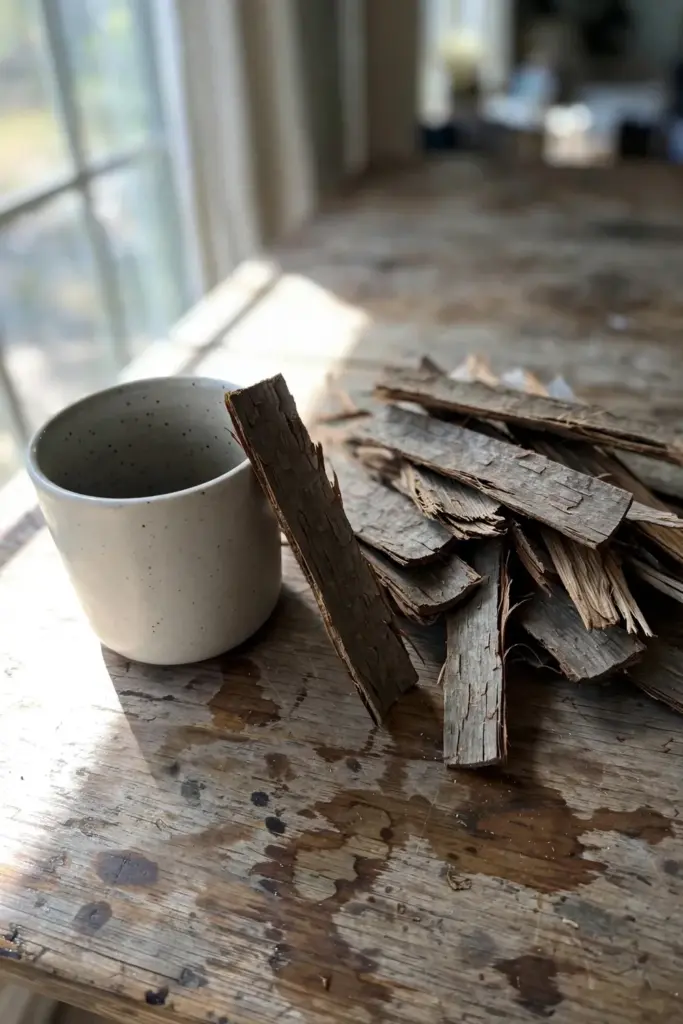
That split between traditional use and tested activity is the honest picture. A long use record does not prove effectiveness, and a negative lab result does not erase a cultural practice. Both facts belong in the same paragraph, because a reader who sees only one side will draw the wrong conclusion. The article takes no position on whether any traditional use works. It reports the record and the test results side by side.
Coumarin deserves a plain caution. Coumarin gives the bark its fragrance, and coumarin is also a compound with dose-dependent effects that regulators limit in food in several countries. No coumarin dose, safe intake figure, or preparation method appears below. A reader who buys pulasari bark for scent or for study should treat it as a fragrant botanical, not as a home remedy, and should check local food and medicine rules before any ingestion.
9. Use the Bark as Fragrance, Incense, and Cupboard Scent
The non-medical uses of pulasari bark are the most accessible for a Western reader, and they need no health claim at all. Dried twig bundles placed in cupboards perfume them, and the fragrant smell may last up to two years, per Useful Tropical Plants. The aromatic bark goes among clothes for its fragrance, and dried, finely powdered bark serves as an ingredient in incense manufacture in Java.
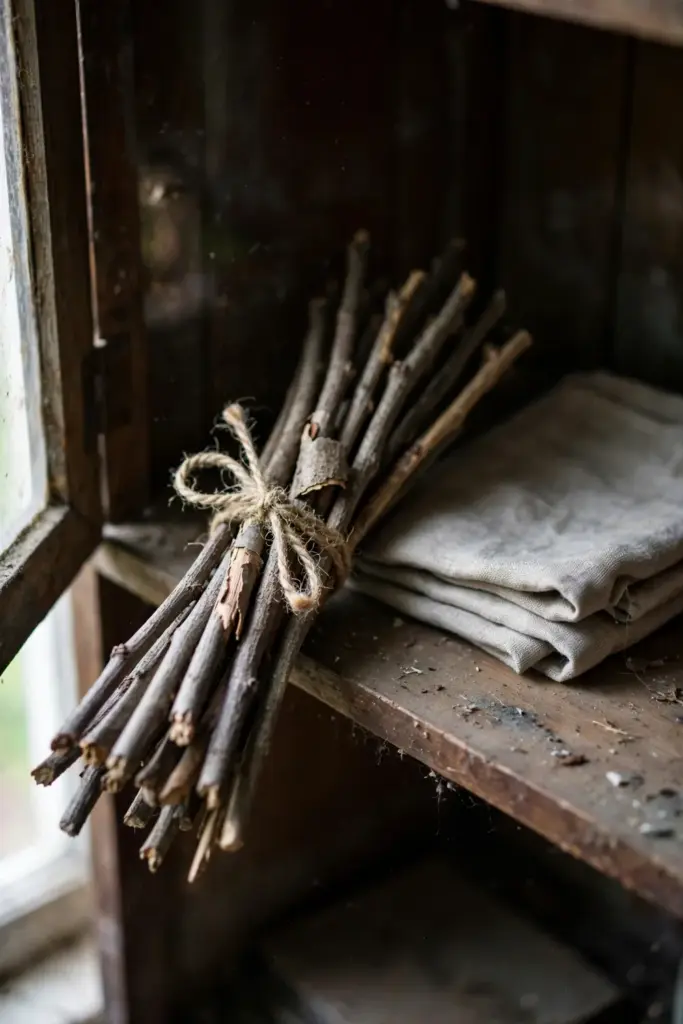
Those uses suit a gardener who wants the plant’s scent without its medicine. A bundle of dried twigs in a linen cupboard asks nothing of the reader beyond a sense of smell. A small dish of powdered bark in a workshop gives the same fragrance without a single ingestion question. The two-year scent life makes one bundle a long-running experiment in whether you even like the fragrance.
The fragrance trade also explains the perfume industry’s interest. Useful Tropical Plants notes that the plant has potential for greater use and commercial exploitation in the medicinal and perfumery industries. Coumarin-rich bark is a perfumery raw material, and the scent profile sits close to vanilla, tonka, and sweet hay. A reader who works with incense or natural perfumery will recognise the family at once.
10. Face the Conservation Question Before You Seek Wild Plants
The conservation picture for pulasari splits into two true statements that point in different directions. Kew’s Plants of the World Online predicts the species as not threatened, and marks that prediction confident, in its extinction-risk assessment. The species ranges across ten Asian countries, and a wide-ranging species rarely faces species-level extinction pressure.
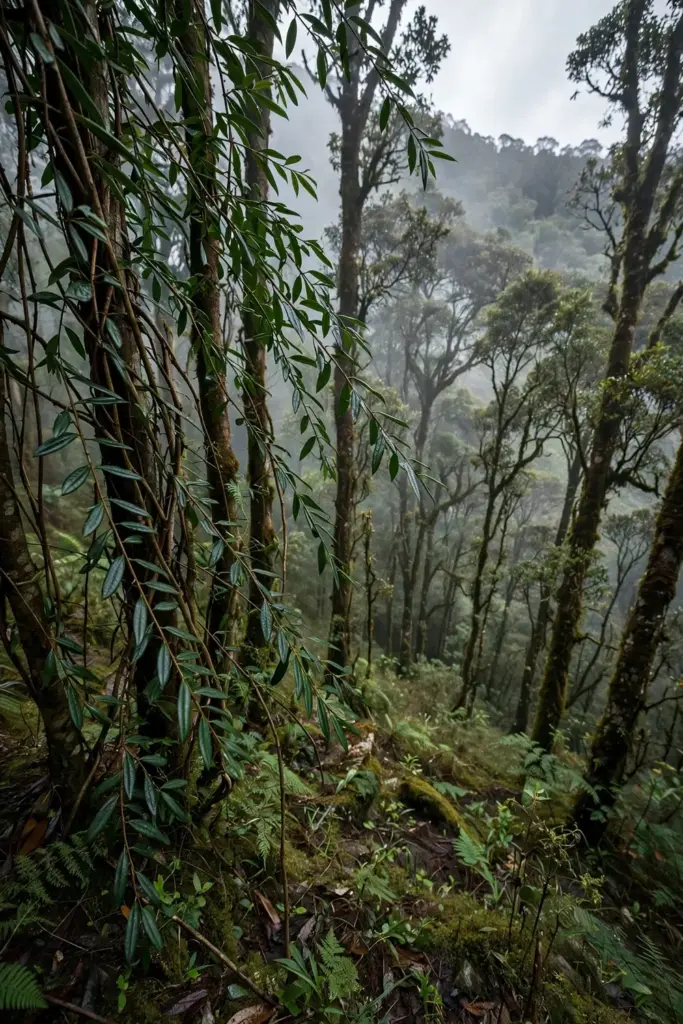
The Javanese highland populations tell a narrower story. Indonesian domestication research describes those highland plants as rare, and the jamu trade draws on wild gathering alongside occasional cultivation. A species can be safe globally and pressured locally at the same time. The highland stands that supply the trade face harvest pressure, habitat change, and the slow growth of a woody climber that cannot replace stripped stems quickly.
The reader’s rule follows directly. Do not seek wild pulasari, do not strip bark from wild plants, and do not ask a seller for wild-harvested material. Buy bark that a seller can describe as cultivated or market-sourced, or skip the purchase. A gardener who would never dig a wild orchid should apply the same rule to a wild bark climber. The plant’s future in Javanese highlands depends on buyers who refuse wild material.
11. Accept That No Western Nursery Trade Exists for This Plant
No Western nursery sells pulasari seedlings, and no Western seed house lists pulasari seed. That is the central fact of how to grow pulasari from Indonesia for a Western gardener. Research turned up no Western grower, no nursery listing, and no English grow guide. Temperate growing is unstudied. The only cultivation document behind the growing sections below is the 2013 Indonesian domestication thesis.
The absence is not a gap a clever search fixes. Seed sellers in the West carry thousands of tropical species, and pulasari is not among them. Jamu manufacturers buy cortex by weight, and no part of that supply chain produces seedlings for gardeners. A listing that promises pulasari seedlings to a Western address deserves the same doubt as a label without a botanical name.
That honesty shapes the rest of the guide. The propagation sections below report the documented methods from a tropical plant reference, and they apply to a reader who already has propagation material in the tropics. They are not a promise that a Western reader can obtain material. Data on temperate growing does not exist, and the guide writes “data not available” where the evidence stops rather than inventing a workaround.
12. Grow Pulasari From Seed Only If You Can Find Fresh Fruit
Seed propagation works when fresh fruit exists. Useful Tropical Plants reports that the plant grows easily from seed, especially if the fruit pulp is removed before sowing. Pulp removal matters because fruit pulp carries germination inhibitors in many tropical species, and a cleaned seed meets soil without that coating.
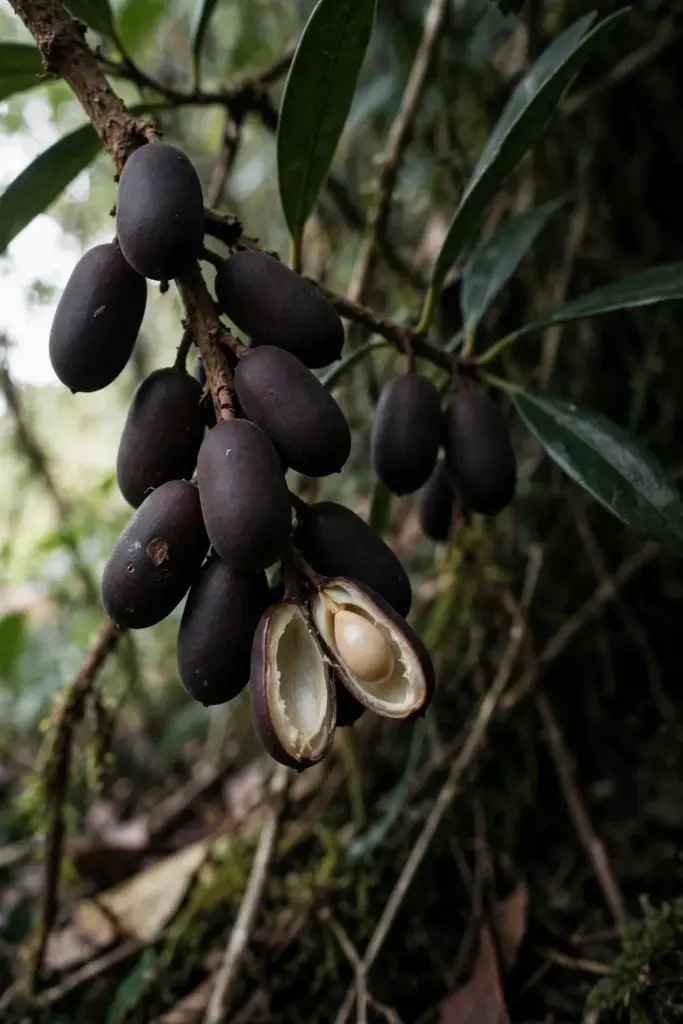
The article gives no germination temperature, no days-to-sprout figure, and no seed viability window for pulasari. Data not available. No published trial reports those numbers for this species, and an invented figure here would mislead a reader who trusts it. A reader with fresh seed should sow it promptly, keep it warm and moist, and watch for emergence rather than counting days from a figure the guide refuses to invent.
Seed-starting basics still apply at the level of general practice. A clean, moist, free-draining mix, a warm spot, and patience cover the seed stage. The difference between pulasari and a common garden seed is the evidence base: one has published germination data, and the other does not. Sow fresh seed as an experiment with unknown timing, not as a scheduled crop.
13. Root Cuttings the Documented Way: 10 to 15 Centimetres, 2 Centimetres Deep
Cuttings carry the only propagation method with published detail for this species. Useful Tropical Plants prefers cuttings 5 to 8 millimetres in diameter and 10 to 15 centimetres long, inserted directly to a depth of 2 centimetres in a medium of equal parts soil and compost. The cuttings need screening from direct sunlight and regular spraying to maintain humidity.
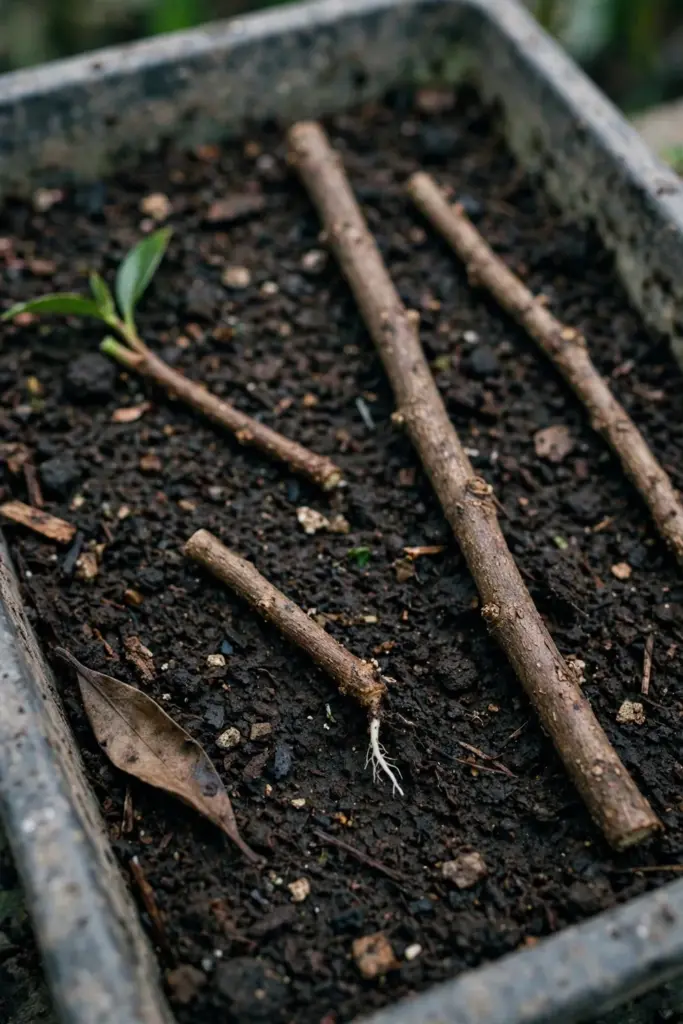
The timeline runs fast for a woody plant. Roots of 1 centimetre length develop after 2 weeks, and the first pair of leaves can be discerned after 3 weeks, per Useful Tropical Plants. The cuttings are ready for transplanting when 2 to 3 pairs of leaves have developed. Shade and watering frequency can then reduce gradually. Those four numbers, diameter, length, depth, and the two-week root mark, are the entire documented cutting protocol, and nothing is added to them here.
A gardener who has rooted other tropical cuttings will recognise the shape of the method. Warmth, humidity, shade, and a free-draining mix do the work. Propagation guides for common houseplants use the same principles, and the pulasari cutting method fits that family of techniques. The difference is the evidence: one documented protocol against a background of no Western nursery trials.
14. Let Stems Layer Where They Touch the Ground
Layering needs no tools and no cutting. Useful Tropical Plants notes that the plant layers naturally whenever parts of the stem touch the ground. A stem that rests on moist soil roots at the contact point, and the rooted section can later separate from the parent.
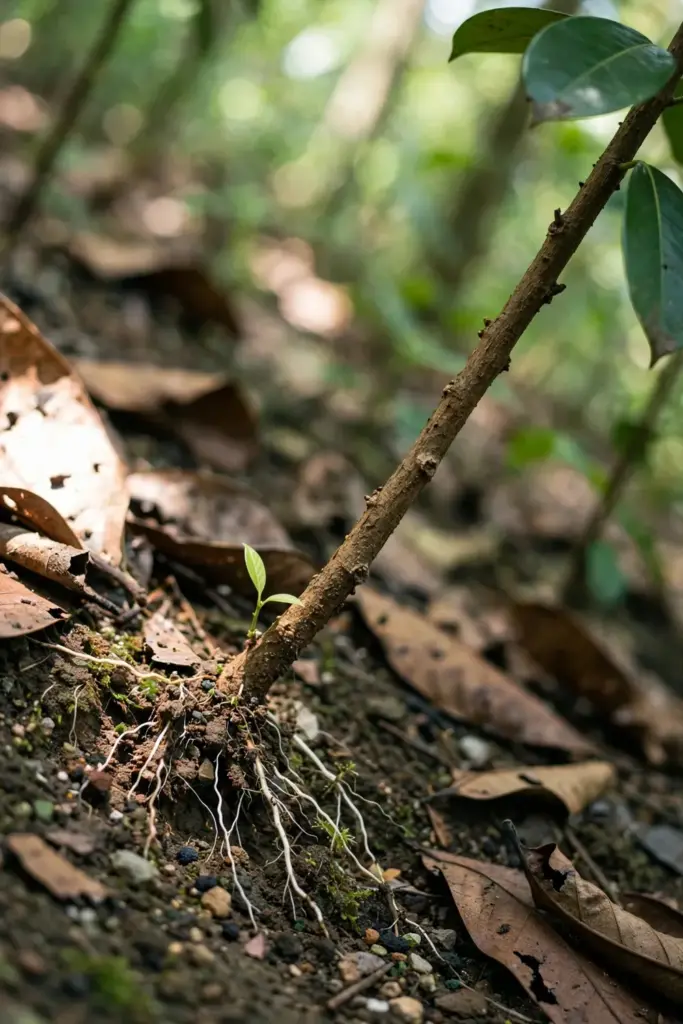
That habit fits a scrambling climber. Stems that twine through neighbouring vegetation fall, rest, and root, and the plant spreads by that quiet mechanism alongside seed. A gardener with a parent plant can encourage the same process by pegging a low stem to moist soil and waiting for roots. No hormone, no wounding, and no published timeline accompany this method. Data not available for rooting time by layering, and the guide will not invent one.
Layering also explains why a planted pulasari needs room. A climber that roots where it touches will claim ground beyond its original planting spot. A pot with a support keeps the habit contained, and a bed planting needs a watchful eye on stems that reach the soil. The habit is a feature in the wild and a management task in a garden.
15. Give a Potted Plant Warmth, Humidity, and Something to Climb
A potted pulasari is an extrapolation, not a tested method, and this section labels it as one. The plant comes from moist tropical forest, so a pot version needs warmth, humidity, and a support for climbing stems. Those three needs follow directly from the habitat record. Everything else in this section is general tropical-plant practice, not pulasari-specific evidence.
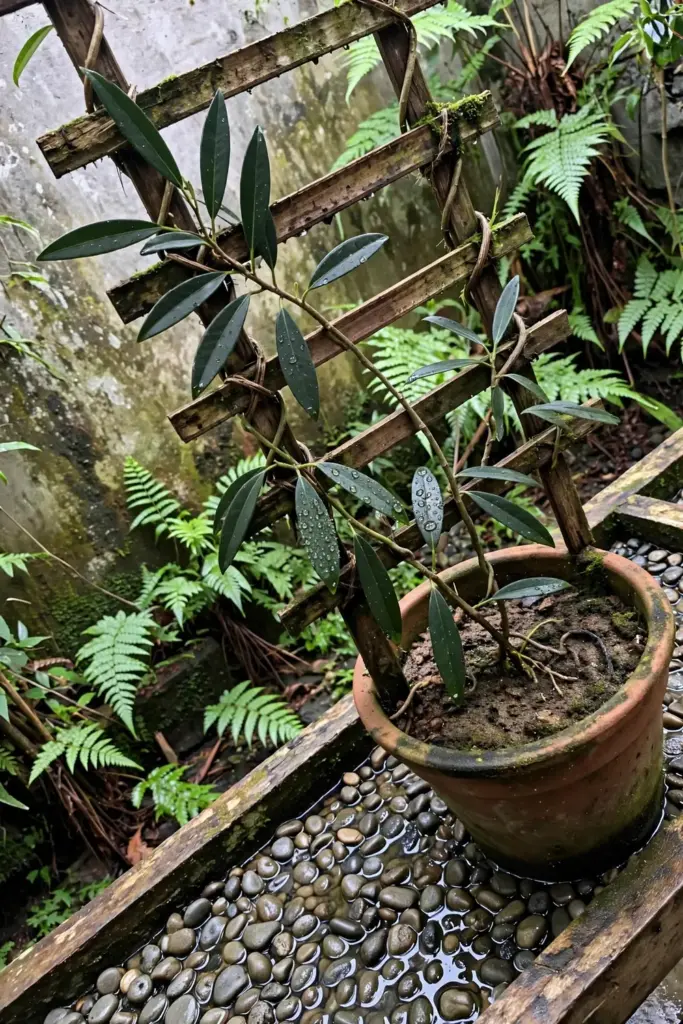
Warmth comes first. The species grows across the moist tropics from sea level to high ridges, and no published figure gives a minimum temperature for garden plants. Data not available for frost tolerance, and a reader should assume none. A pot that moves under cover before cold weather is the only safe approach outside the tropics, and even that is untested for this species.
Humidity comes second. Forest-edge climbers in the moist tropics grow in humid air, and dry indoor air stresses them. A pebble tray, a humid room, or a sheltered outdoor spot in a humid climate all help. A support comes third. The stems reach 3 metres and twine, so a trellis, a post, or a rough wall gives them the structure the forest edge provides. A pot without support forces a climbing plant into a shape it never takes in nature.
16. Buy Bark With Your Eyes Open: 7 Checks Before You Pay
Most readers will meet pulasari as bark, not as a plant, so the buying decision matters more than any growing step. These seven checks separate an honest bark purchase from a gamble.
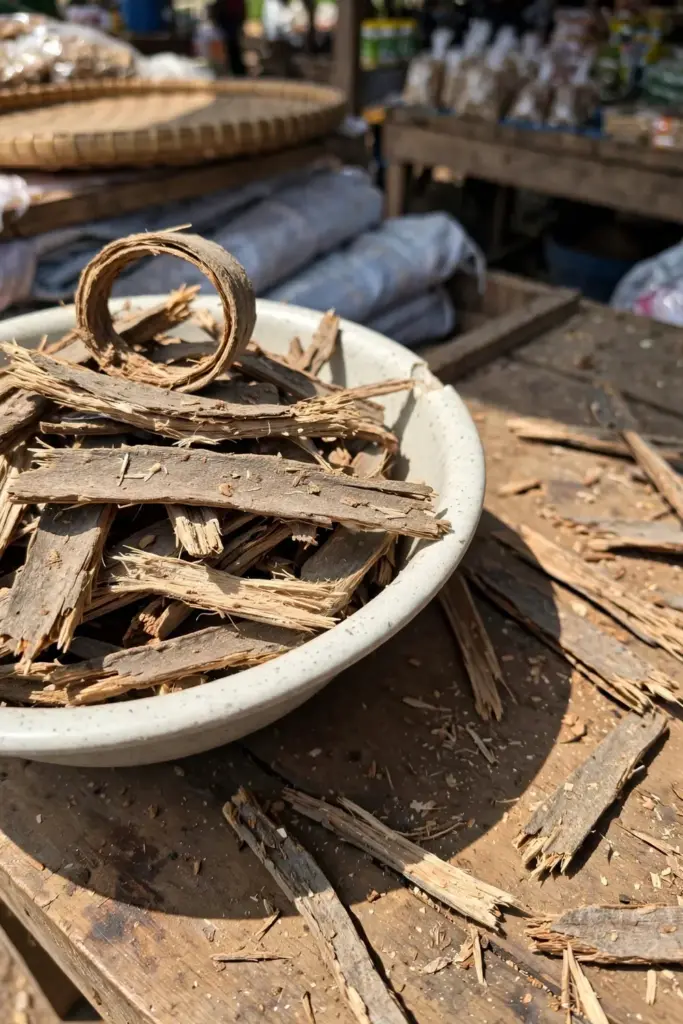
First, read the botanical name. The label should print Alyxia reinwardtii. A label with only a common name gives you no verification. Second, read the part used. The label should say cortex or bark. A label that names leaves or roots describes different material. Third, read the origin. The label should name a country inside the native range, such as Indonesia. A label with no origin tells you nothing about sourcing.
Fourth, ask about cultivation. A seller who can describe cultivated or market-sourced bark beats a seller who offers wild-harvested material. Fifth, smell the bark. Pulasari bark smells warm, sweet, and coumarin-rich, close to vanilla and hay. Bark with no scent is old, wrong, or spent. Sixth, distrust dosage promises. A seller who prescribes doses for a bark bundle is selling medicine without a licence, and no dose appears here to compare against. Seventh, compare the price against other aromatic barks, not against true cinnamon. White cinnamon is a scent comparison, not a price anchor.
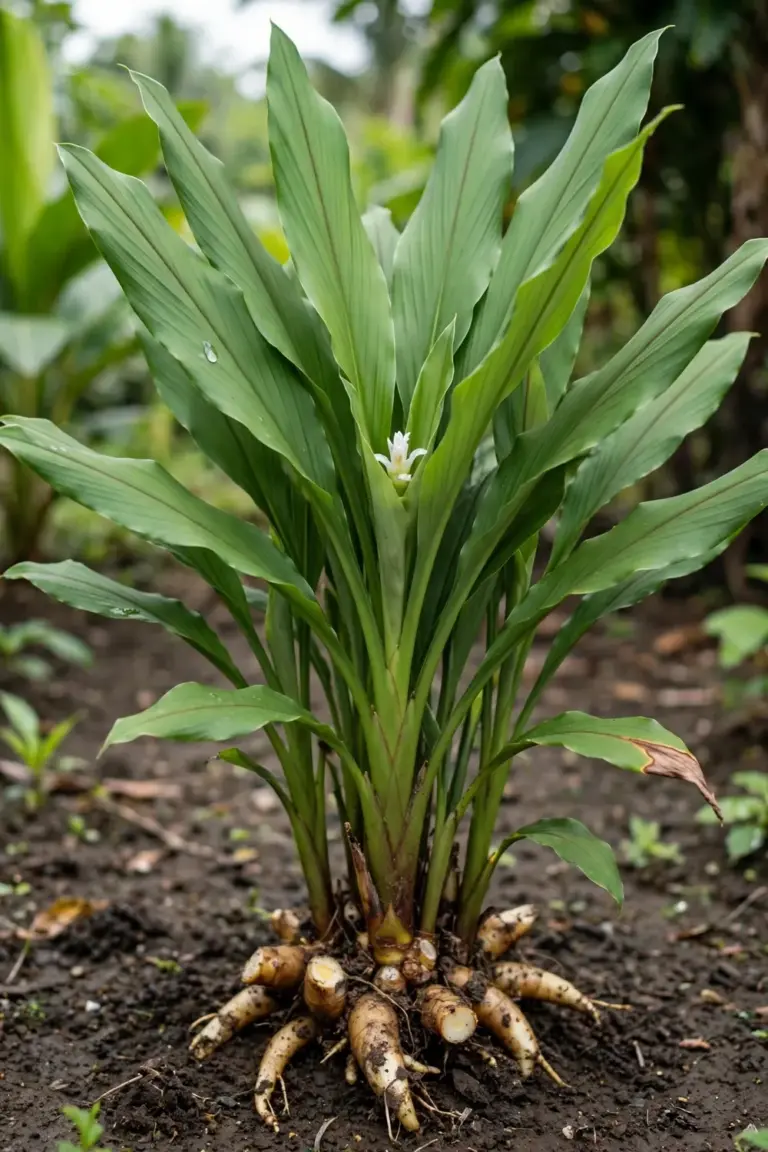
Two companion plants cover the kitchen side of the pairing while pulasari stays a bark purchase. Ginger grows readily in pots, and turmeric grows from rhizomes in warm pots. Both belong to the same jamu tradition as pulasari, and both give a temperate gardener a real growing project while pulasari remains a bark to buy.
Frequently Asked Questions
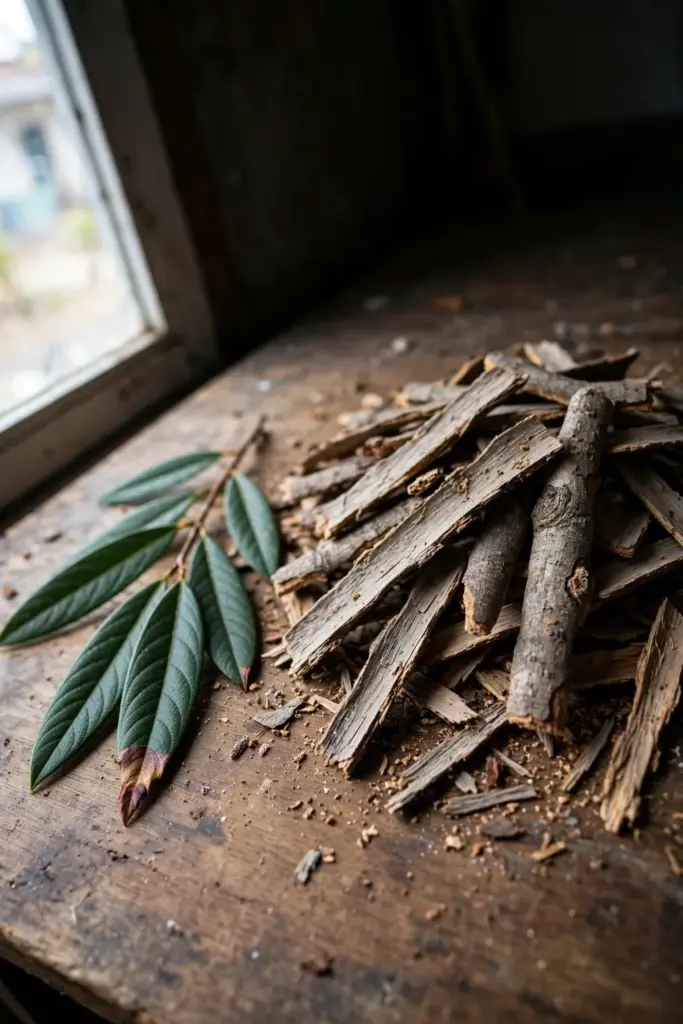
No listing in the Western seed trade sells genuine pulasari seed, and a packet with that name deserves doubt unless it prints the botanical name Alyxia reinwardtii. Seed propagation works from fresh fruit with the pulp removed, per tropical plant references. No published germination temperature or sprouting time exists for this species. Treat any online packet as unverified until the seller proves the species.
White cinnamon is a market name for pulasari bark, not a separate species. Sellers use the name because the bark smells warm and sweet, like cinnamon, and the comparison sticks in a shop. True cinnamon comes from a different genus, Cinnamomum, and the two barks are different materials. Check the botanical name on any label. A label that prints Alyxia reinwardtii holds pulasari. A label without a botanical name proves nothing.
Adas-pulasari pairs pulasari bark with fennel, Foeniculum vulgare, in Javanese jamu. Adas is the Indonesian name for fennel. About 18 manufactured medicines from Central Java list the pairing as a principle ingredient, per Useful Tropical Plants. The pairing serves traditional formulas as an antispasmodic and carminative and for stomach complaints. This article reports those uses as general information, not as recommendations or doses.
Kew’s Plants of the World Online predicts the species as not threatened, and marks that prediction confident, and the species ranges across ten Asian countries. The Javanese highland populations that supply the jamu trade are a different matter. Indonesian domestication research describes those highland plants as rare. A species can be safe globally and pressured locally. Do not seek wild plants or wild-harvested bark.
Data not available. No published trial grows pulasari in a temperate climate, and no Western nursery sells the plant. The documented propagation methods assume tropical conditions and tropical material. A temperate reader who already holds material in the tropics can try the documented cutting method. A temperate reader without material has no honest path to a plant, and the guide will not invent one.
Use it as fragrance, not as medicine. Dried twig bundles perfume cupboards for up to two years, and powdered bark serves as incense material in Java, per Useful Tropical Plants. Store bark dry, sealed, and away from light, and check the scent before use. Bark with no scent is spent. Never follow a dosage from a bark seller, and ask a clinician before any ingestion.
Make the Honest Call on Pulasari
Pulasari rewards the reader who accepts what it is. The plant is a woody climber with fragrant bark, a wide Asian range, a deep place in Javanese jamu, and almost no path into a Western garden. How to grow pulasari has an honest answer, and the answer is that growing it depends on tropical material most readers will never hold. That answer disappoints, and it is still the right one.
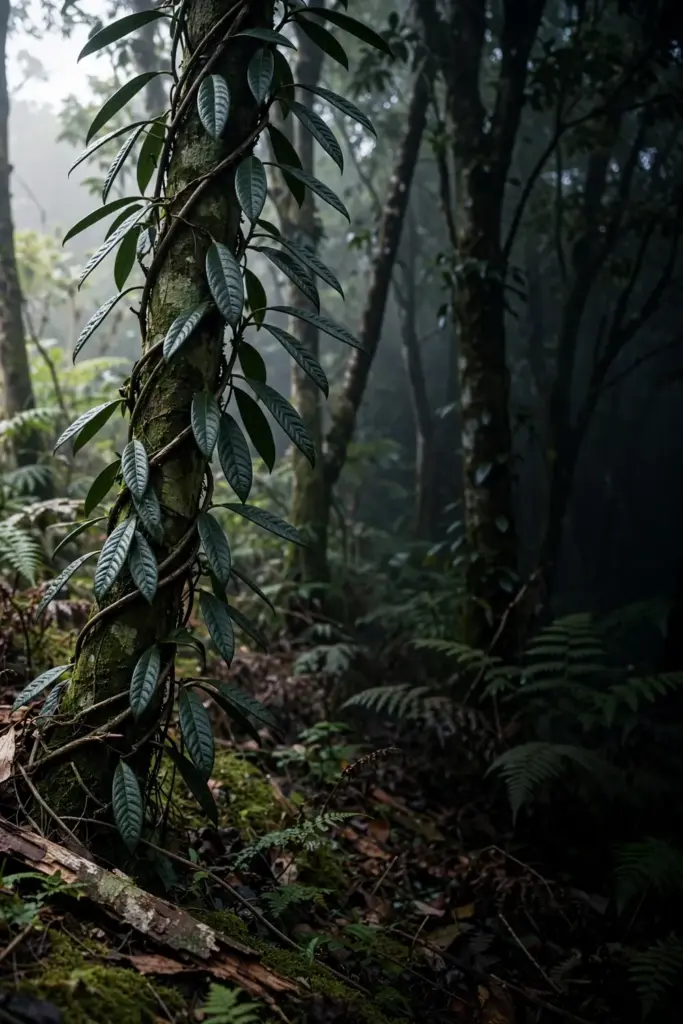
Buy bark with the checks above, use it as fragrance, and grow the companion plants that actually thrive in your climate. Fennel, ginger, and turmeric all belong to the same tradition, and all three grow in temperate pots and beds. The bark trade will continue with or without your purchase, and your refusal of wild-harvested material is a small vote for the highland stands. Pulasari stays a plant to respect from a distance, and that distance is part of its story.