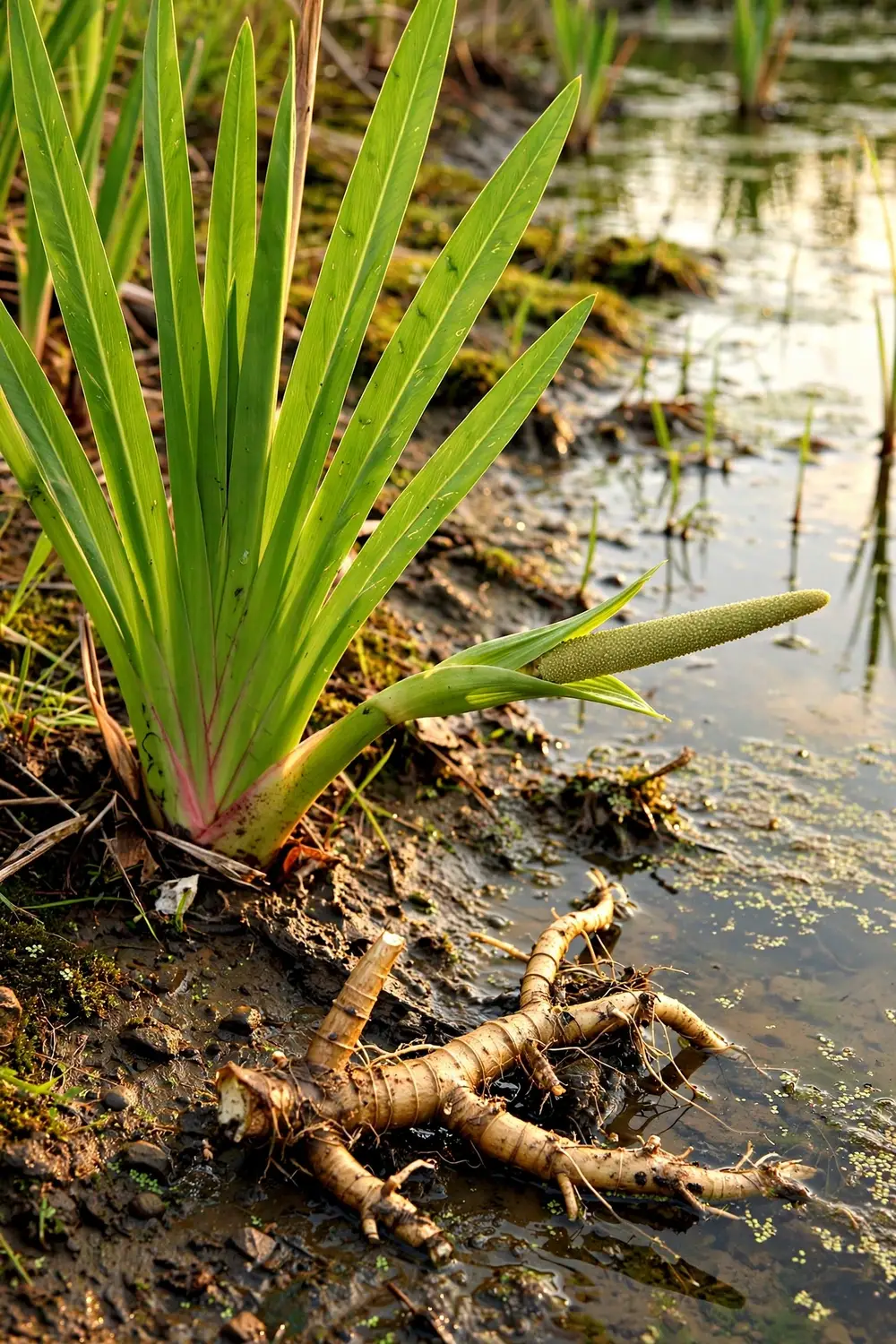

Sweet flag takes eight to twelve months to pay you back, and it asks for only two things in return: wet feet and honest rhizomes. Grow vacha (Acorus calamus) the way India grows it, in a marshy bed or a water-holding pot, and this creeping rhizome rewards you with fragrant, tangerine-scented roots that have traded in Asia for centuries. This guide shows you how to grow sweet flag from India at home with the rhizome mechanics that Indian agronomy actually uses, the species disambiguation that keeps you from buying the wrong plant, and the safety question you must understand before a single rhizome touches your mouth.
In the next nineteen sections you will learn where sweet flag truly thrives, how to pick rhizomes over seeds, how to divide and plant them horizontally in wet soil, how to feed and water a semi-aquatic crop, when to harvest at leaf yellowing, how to wash and dry the harvest, and why growing this listed-endangered plant is conservation work as much as it is gardening.
1. Climate & Zone Reality for Sweet Flag
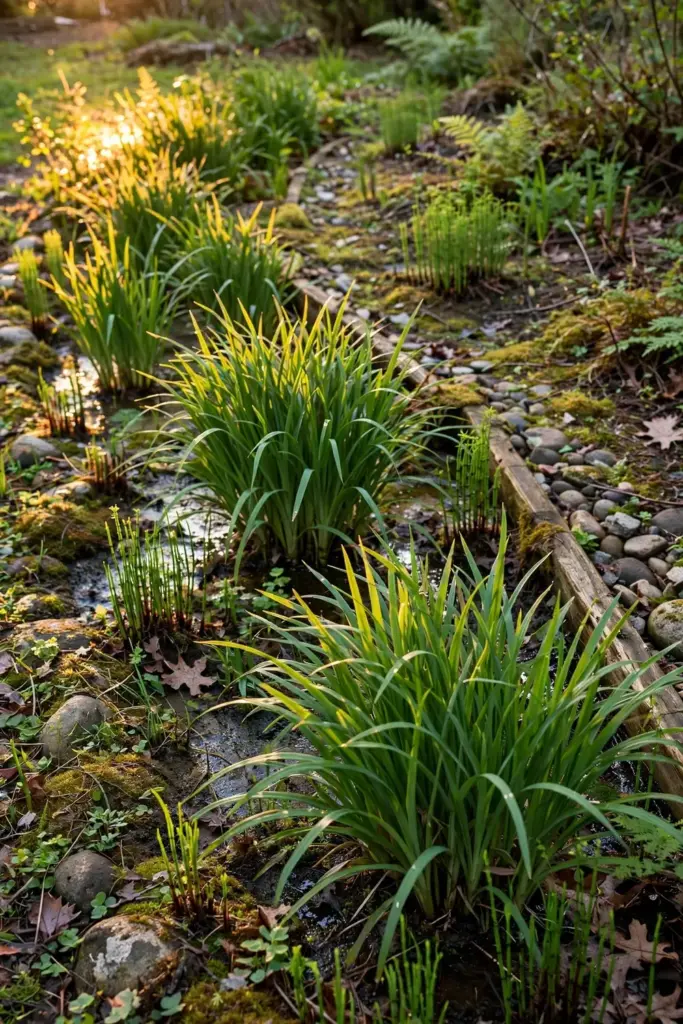
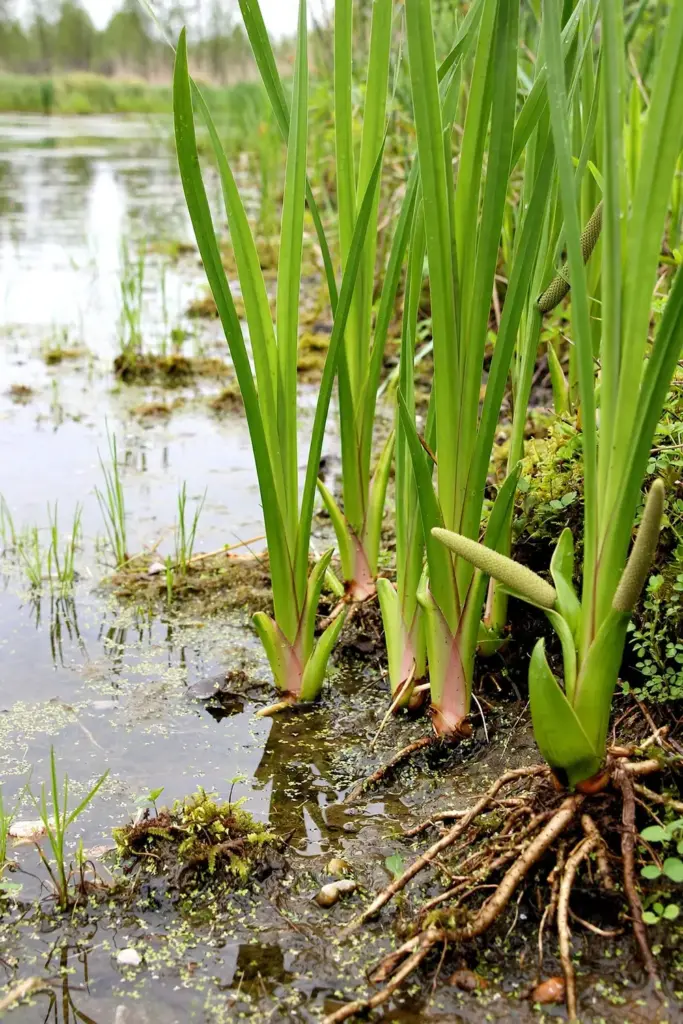
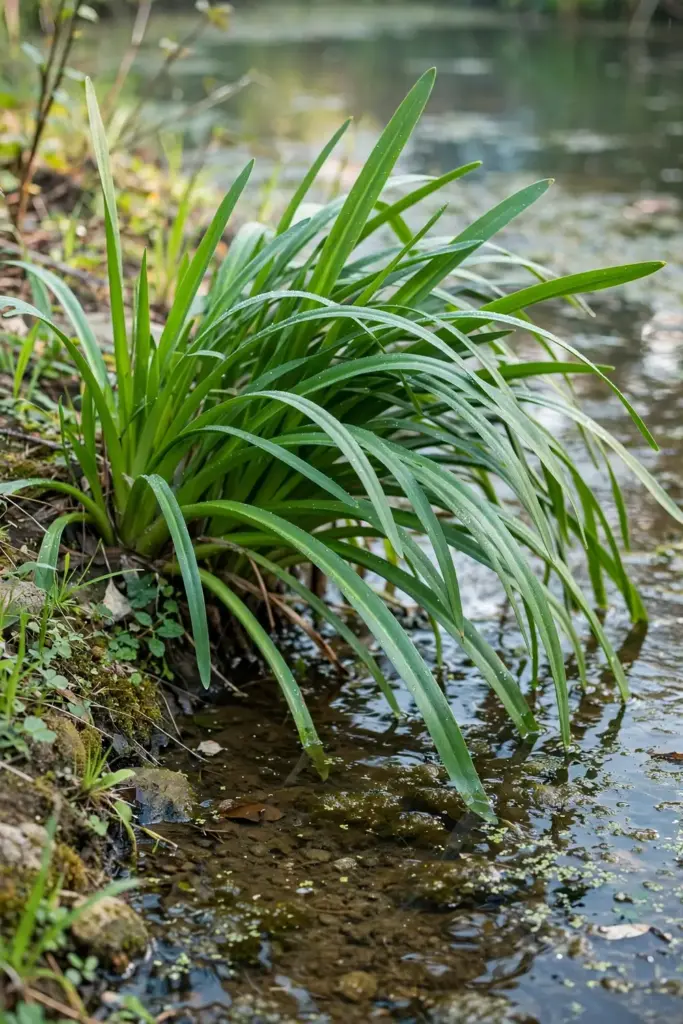
Sweet flag is a temperate-to-tropical wetland plant that tolerates an astonishing range, from winters near minus 25 degrees Celsius in its cold hardiness to the hot Indian plains where it grows in paddy-like fields. It prefers growing in shallow water or a very moist loamy soil, demands full sun to partial shade, and wants soil pH between 5.5 and 7.5. In India it is cultivated in the marshy tracts of Kashmir, Himachal Pradesh, Manipur, the Naga Hills, and Karnataka’s Koratagere belt, where farmers treat it like a semi-aquatic field crop. Give it a reliably wet spot, protect young divisions from long dry spells, and your climate almost anywhere in India will cooperate.
2. The Rhizome Is the Prize
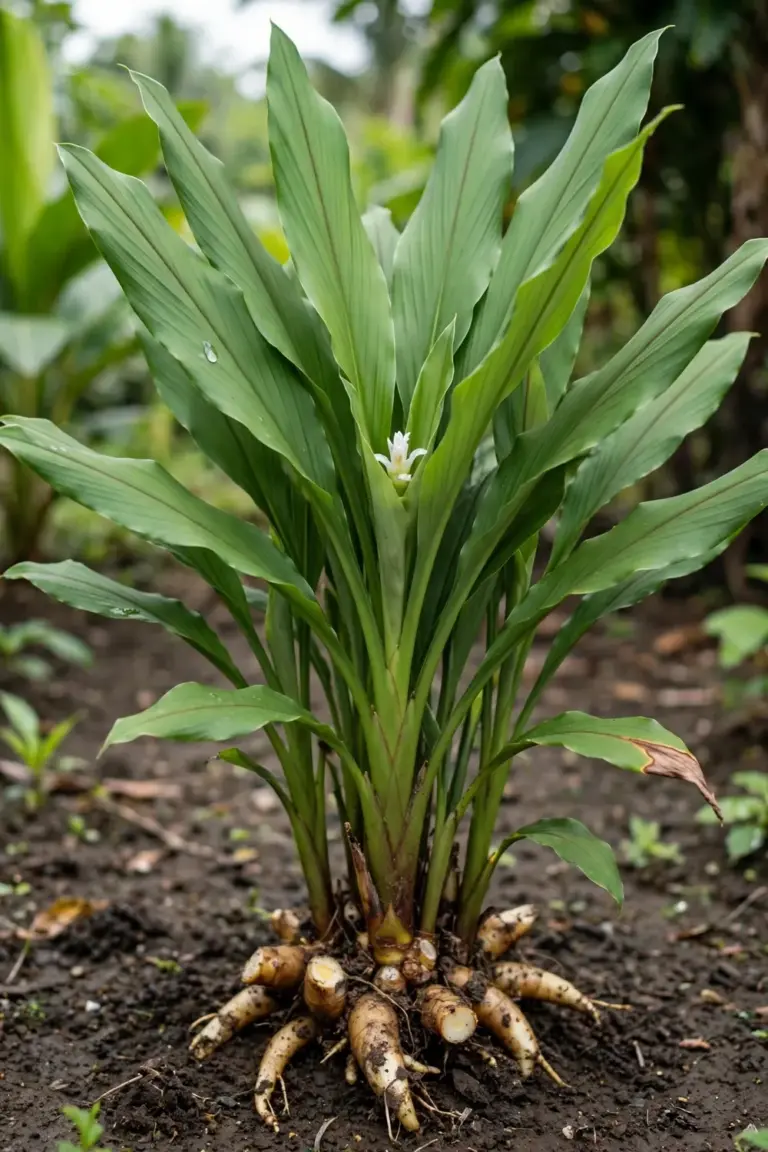
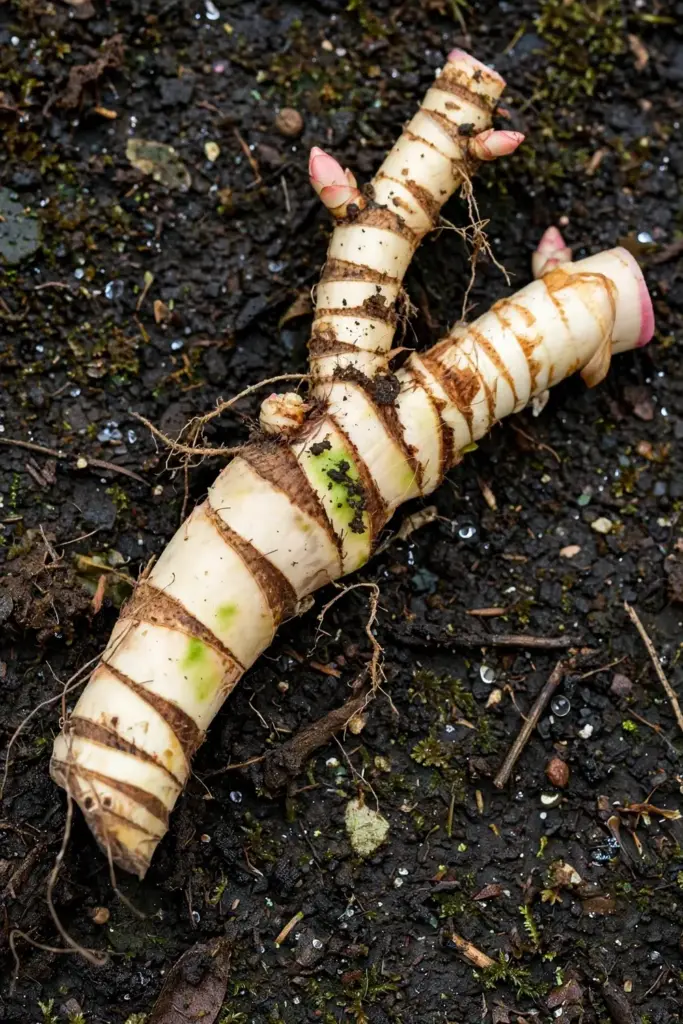
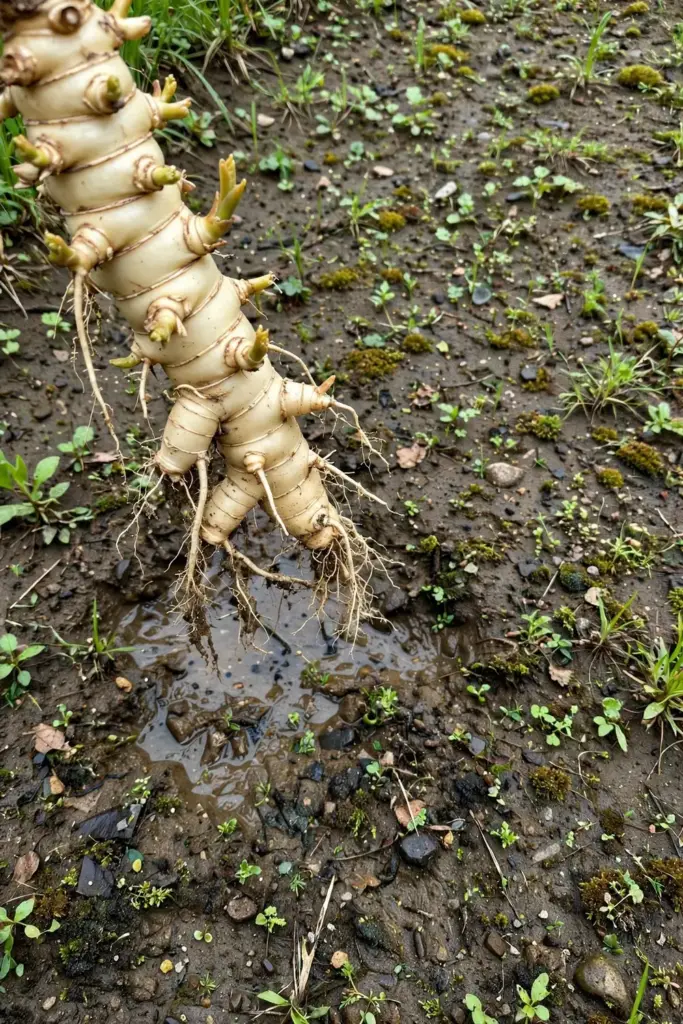
Understand one thing before you buy anything: the rhizome is the crop. The sword-shaped leaves are handsome and aromatic when bruised, and the tiny spadix flowers are botanically interesting, but every rupee of this plant’s value sits underground in the creeping, branched rhizome. That focus changes how you plant (shallow, horizontal), how you space (wide enough for runners to creep), how you feed (for underground growth), and how you harvest (whole-bed digging after one growing season). It also changes how you judge success: vigorous tops with thin rhizomes mean you fed leaves instead of roots, while modest tops over fat, fragrant rhizomes mean you did everything right. Buy planting material for its rhizomes, not for pretty tops.
3. Sweet Flag, American Sweet Flag, and Japanese Sweet Flag: Know What You Buy
Nurseries sell three different plants under the name “sweet flag,” and only one of them is India’s vacha. A quick identification check saves you from growing an ornamental grass and expecting medicine.
| Feature | Acorus calamus (Indian sweet flag / vacha) | Acorus americanus (American sweet flag) | Acorus gramineus (Japanese sweet flag) |
|---|---|---|---|
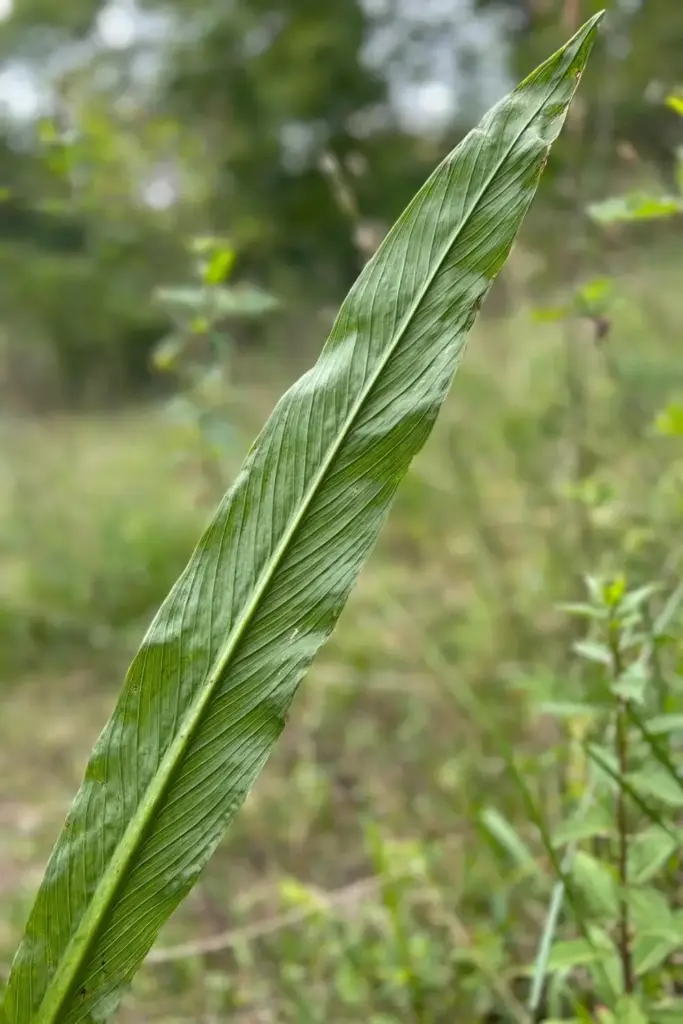
| Leaf veins | One single prominent midvein, usually off-center | Two to several prominent parallel veins | Many fine veins, grass-like blades |
| Seeds | Sterile triploid; produces no viable seed | Fertile diploid; red berries with viable seed | Fertile diploid |
| Chemistry | Beta-asarone present (safety note below) | Alpha-asarone only, no significant beta-asarone | Ornamental, not the medicinal species |
| Habit | Tall, 60 to 150 cm, pond and marsh edges | Similar height, northern wetlands | Dwarf, often variegated, edging plant |
The single off-center midvein is your field test: hold a leaf up to the light and look for one dominant vein. If a nursery lists “sweet flag seeds” for the Indian species, be skeptical, because A. calamus is a sterile triploid that spreads by rhizomes. This distinction, confirmed by the Missouri Department of Conservation field guide, is the most important five-minute check in this whole article. It keeps you from spending a season raising a dwarf ornamental when you wanted vacha.
4. Rhizome or Seed: Choose the Proven Lane
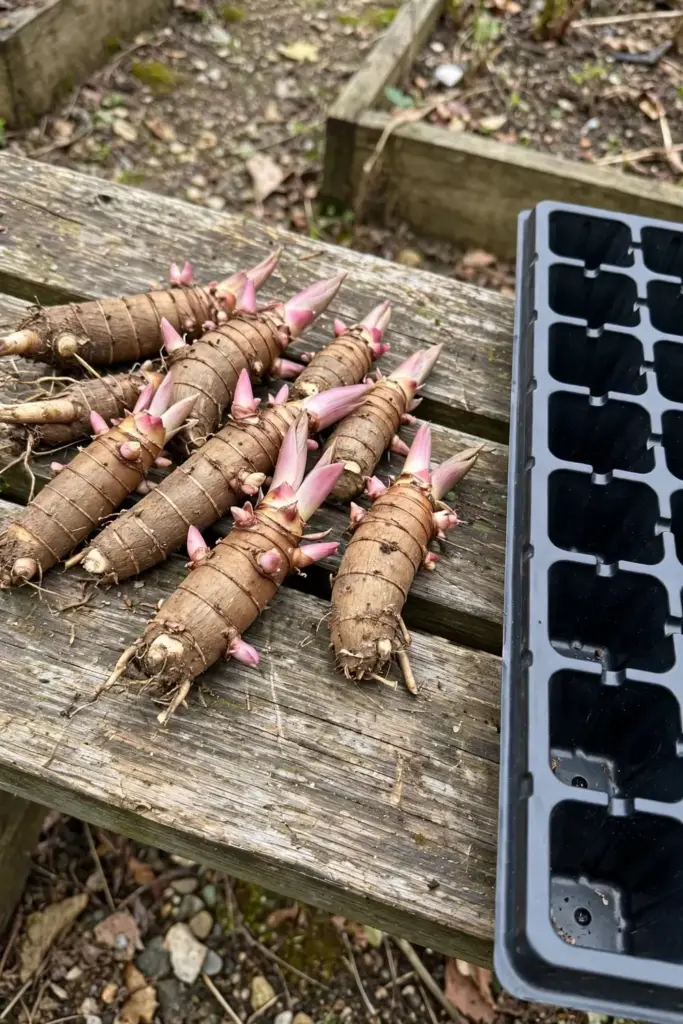
Choose rhizomes. Division is the only propagation the Indian crop uses, and for good reason: A. calamus is sterile, so seed is essentially unavailable for the medicinal species, and what “sweet flag seed” packets exist in the trade usually belong to other species. Rhizome pieces carry the exact genetics of the mother plant, establish in weeks, and let you plant 400 kilograms of material per hectare with predictable results. A single mother clump divided each spring can supply dozens of planting pieces, which is how small growers scale without buying stock twice. Seeds demand greenhouse trays, two weeks of pampering, and a gamble on species identity. Buy firm, undamaged rhizome pieces with visible buds, and never buy roasted or dried rhizomes for planting; those are the kitchen product, not planting stock.
5. Divide and Plant Rhizomes: The Five Steps That Matter
Plant rhizomes horizontally at or just below the soil surface in wet or waterlogged soil, and the crop nearly grows itself. The mechanics below follow the consensus of extension and India agronomy sources.
| Step | Action | Time |
|---|---|---|
| 1 | Select firm rhizome pieces with visible buds, free of soft spots | Early spring, before growth resumes |
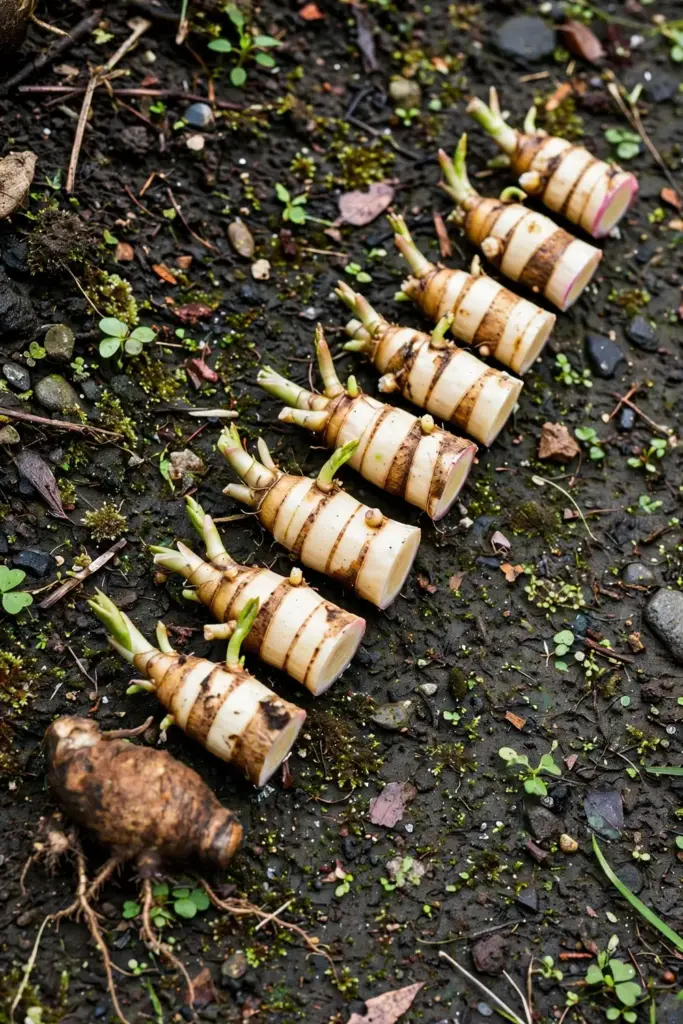
| 2 | Cut into sections 5 to 15 cm long, keeping at least two buds per piece | Planting day |
| 3 | Lay pieces horizontally 4 to 8 cm deep in wet, loamy soil | March to April in the Indian plains |
| 4 | Space pieces 30 by 30 cm in the bed | Planting day |
| 5 | Flood or saturate the bed so soil stays waterlogged | Immediately, and keep it wet all season |
NC State Extension describes rhizomes planted slightly below the soil surface in moist soil at the water’s edge or in shallow water, and Indian field practice matches: a bed prepared like a paddy field, saturated from day one. Press each piece firmly so bud tips just meet the surface, then water the bed until it glistens. If you have never divided a rhizome crop before, the seed-starting routine teaches the same firm-press, keep-moist discipline on a smaller scale.
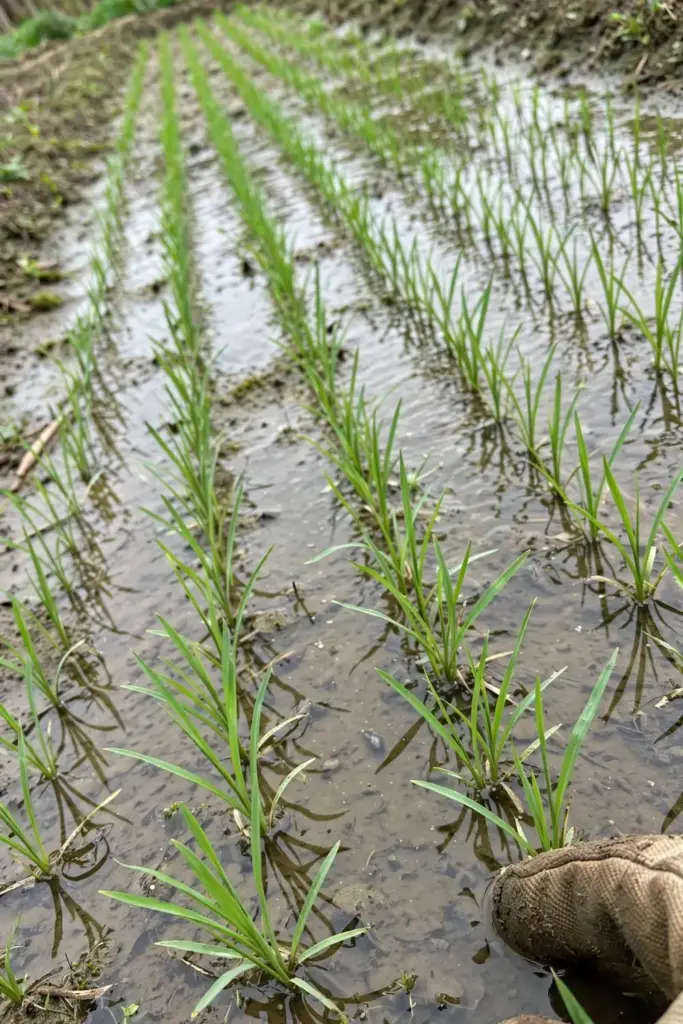
6. The Wetland Bed Method
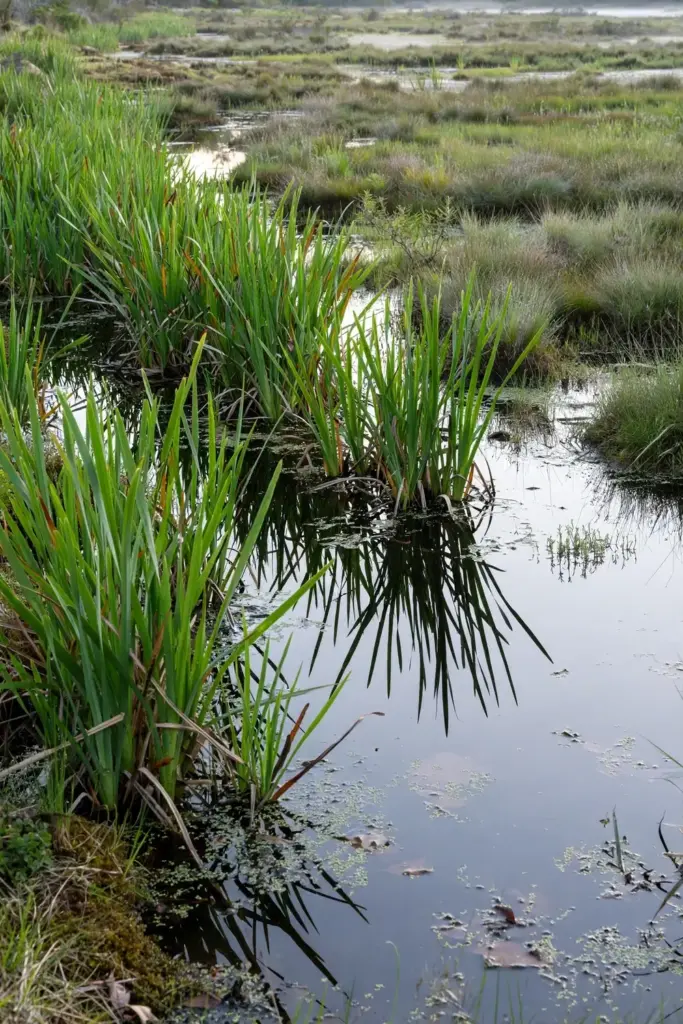
Prepare land like a paddy field. This is the method that feeds Karnataka’s 70 percent share of India’s cultivated area, and it is disarmingly simple: choose a low spot or a raised bed you can keep wet, work the soil into fine tilth, and incorporate 15 tonnes per hectare of farmyard manure before planting. Indian cultivation data puts the numbers plainly: 400 kilograms of rhizomes per hectare, planted at 30 by 30 cm in March and April, yielding about 10 tonnes per hectare at one year. Keep the bed saturated through the growing season; sweet flag tolerates standing water up to about nine inches in ornamental settings, and Indian beds stay shallow-flooded. Weed the crop once a month for the first four to five months, until the plants block the rows with a thick cover and shade out competitors. In the second fortnight of June to July, some Odisha growers plant a second window crop, so your first planting is not your only chance. If you want a companion read on rhizome economics at garden scale, the turmeric beginner’s guide walks through the same plant-shallow, feed-well, dig-late logic.
7. The No-Drainage Container Method
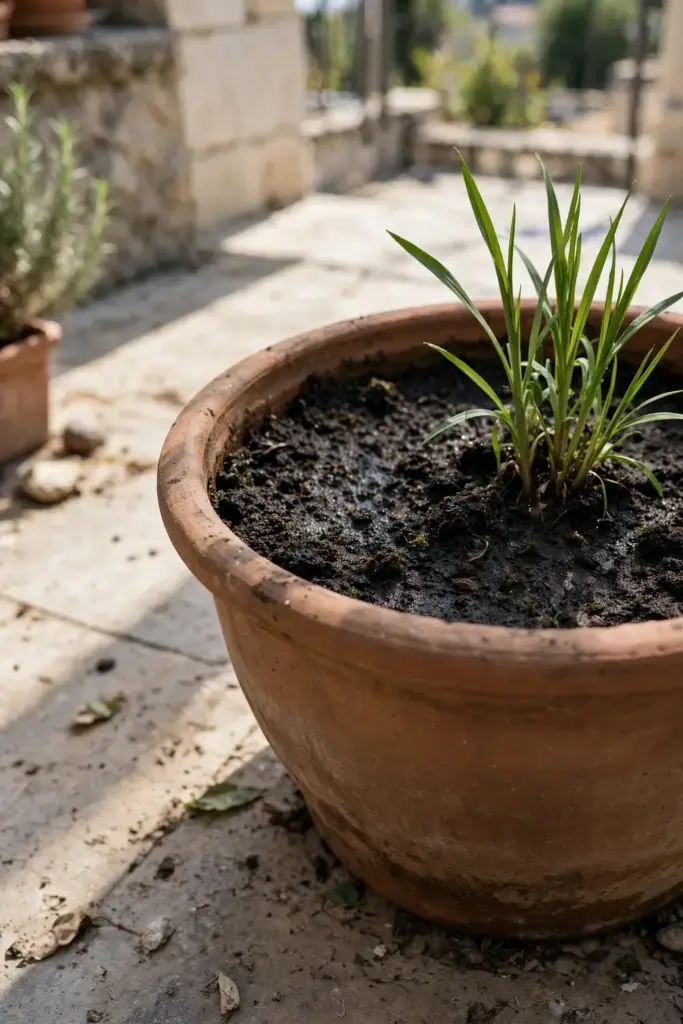
No wetland? Grow sweet flag in a pot without drainage holes. Choose a wide, shallow container at least 30 cm across, fill it with loamy soil rich in organic matter, and plant one rhizome piece horizontally per pot. Set the pot where it gets full morning sun, then keep the soil saturated; a saucer of water under the pot is not enough, the soil itself must stay boggy. Because the container holds water, top up whenever the surface starts to dry, and expect slower but completely viable growth. This is the method for balconies, terraces, and cold climates where you can move the pot indoors for winter. One honest warning: a sealed aquatic pot is mosquito habitat, so refresh the surface water weekly and consider a few mosquito-eating fish or a thin layer of oil-free surface movement. Wintering the pot indoors follows the same logic as any indoor herb garden: bright light, cool room, soil kept moist but not ice-cold.
8. Soil and Standing Water Rules
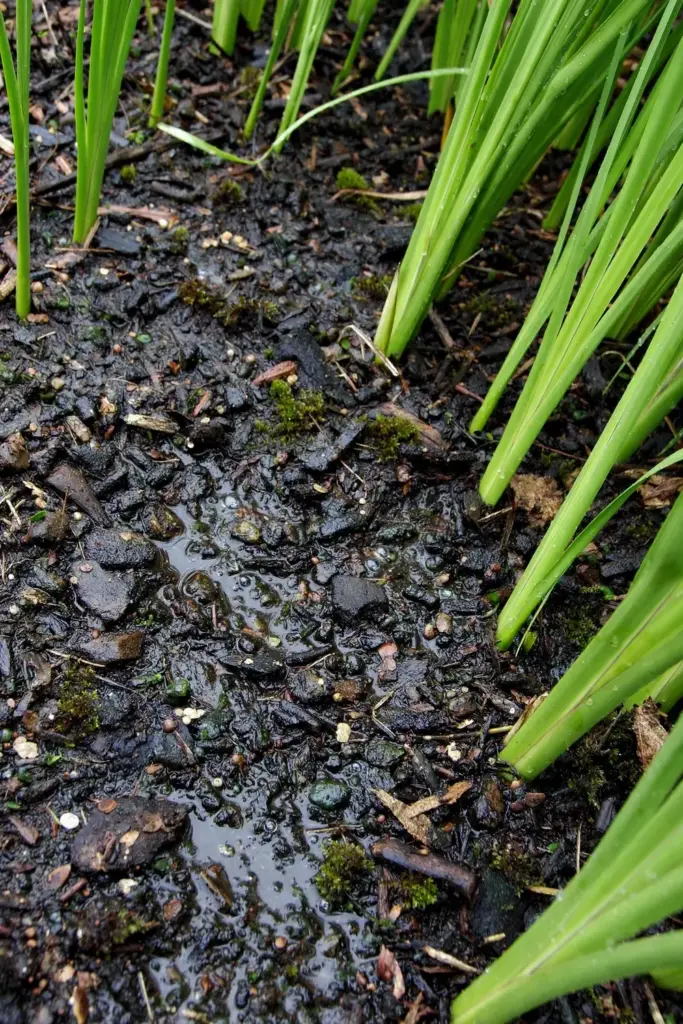
Sweet flag wants clayey loams and light alluvial soils with a high moisture-holding capacity, at soil pH between 5.5 and 7.5. Heavy clay is fine as long as it stays wet; sandy soil needs compost worked in to hold water. For containers, mix garden soil with well-rotted compost and a little sand at roughly three parts soil, two parts compost, one part sand, and skip the perlite and drainage layer entirely. This plant does not tolerate droughty conditions at any stage, so design for saturation first and fertility second. If your bed dries between waterings, you are growing a different plant’s problem. The soil health foundations that carry every other crop on this site apply here too, with one twist: here organic matter serves water retention first and nutrition second.
9. Feeding a Hungry Wetland Plant
Feed for rhizome bulk, not leaf show. The Indian package of practices applies 15 tonnes of farmyard manure per hectare at bed preparation, and top-dresses chemical fertilizer after sixty days of planting in two to three split doses where needed. Home gardeners can translate that to a simpler rhythm: mix compost into the bed at planting, then side-dress with a balanced organic fertilizer monthly through the growing season. Watch the leaves as your gauge: deep green, upright swords mean the feeding is right, while pale, thin blades mean the crop wants more nitrogen. Container growers should feed lightly every three to four weeks, because nutrients leach fast in saturated pots; a slow-release organic pellet worked into the top layer beats liquid feeds that wash straight through. Stop feeding about two months before your expected harvest so the rhizomes harden and concentrate their aromatic oils.
10. Weeds, Pests, and Rot in Wet Soil
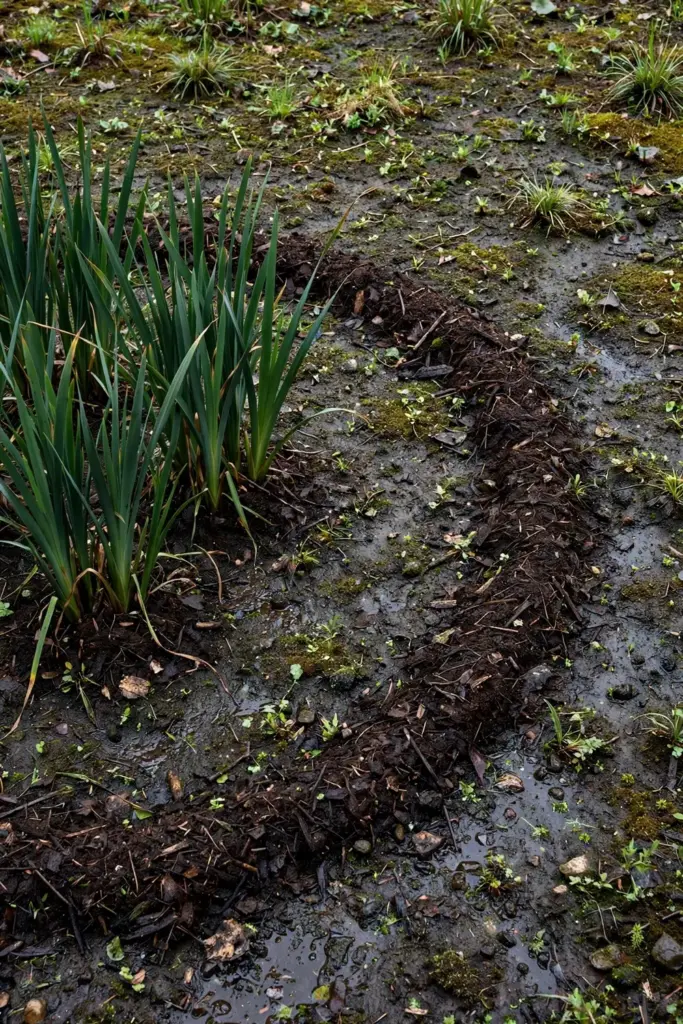
Sweet flag’s biggest enemy is dry soil, and its second biggest is competition. Weed monthly until the canopy closes, because young divisions lose badly to aggressive grasses. Hand-pull rather than hoe near the crowns, since the rhizomes sit shallow and a careless hoe does more damage than the weeds. Rhizome rot appears when planting material is soft or damaged at purchase; inspect every piece, discard anything mushy, and never plant into a bed that stayed anaerobic and sour-smelling for weeks. If a bed smells of rot, drain it, let it breathe for a week, and replant fresh stock rather than nursing doomed pieces. Leaf-feeding beetles, including the Plateumaris leaf beetle that prefers this plant, chew foliage but rarely threaten the underground crop. If leaves yellow early from pests rather than maturity, lift a rhizome and check: firm and fragrant means feed and wait; soft and foul means start over with fresh stock.
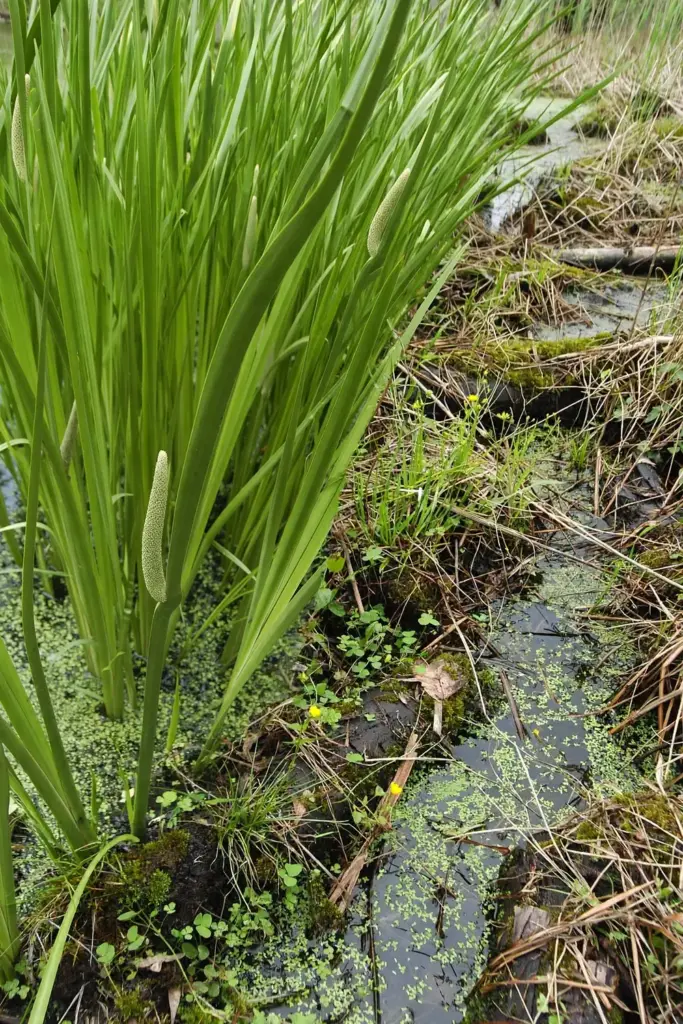
11. What the First Year Looks Like
Expect a slow first month and a confident second season. Rhizome pieces sprout new sword leaves within two to three weeks of planting in warm wet soil, and the clump fills its 30 cm spacing by mid-season. Each new fan of leaves means new rhizome growing underground, so top growth is your honest progress report: if the fans multiply, the harvest is multiplying too. By six to eight months, leaves stand tall and the bed looks like a miniature reed marsh, and the sweet tangerine scent when you bruise a leaf tells you the aromatic oils are building. Do not harvest early: the rhizomes are still thin and watery, and premature digging resets the whole crop. The reliable maturity signal is leaf yellowing, when lower leaves dry and turn yellow. In the Indian plains that arrives around ten to twelve months after a March planting; in cooler or ornamental settings the same signal can take two to three years.
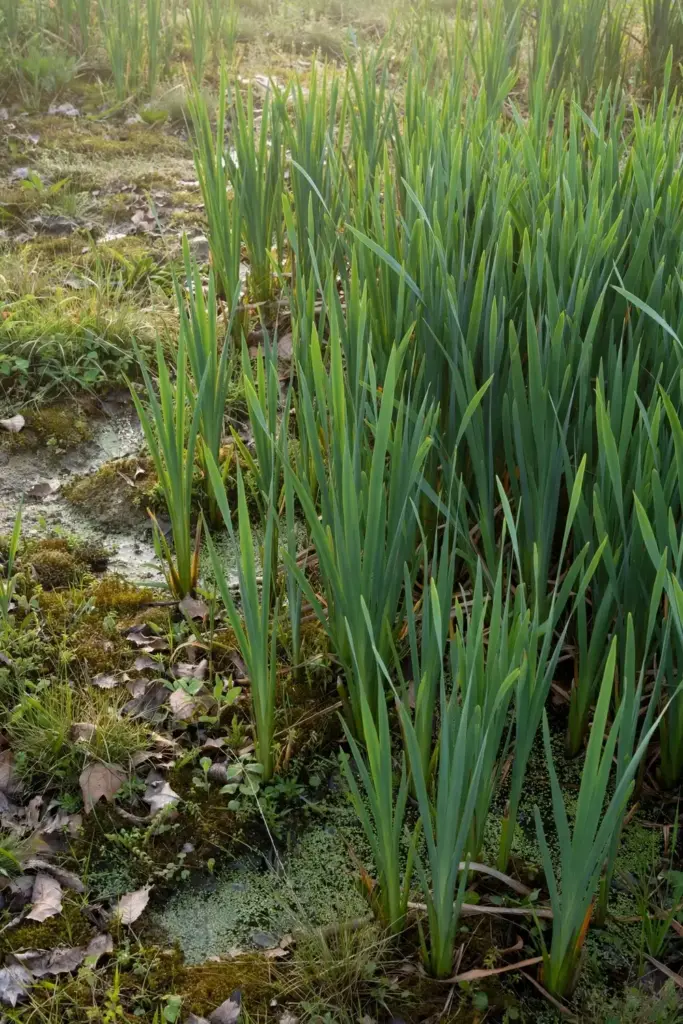
12. Harvest Rhizomes When the Leaves Yellow
Harvest when lower leaves dry and turn yellow, which is the plant’s own announcement of maturity. In Indian field cultivation that moment comes ten to twelve months after planting, and farmers dig during February and March when rhizomes near the surface have grown 30 to 60 cm long. Ornamental and extension sources in cooler climates describe two to three years, which is the same plant on a slower clock, not a contradiction to fear. Commercial Indian data reports average yields around 10 tonnes of fresh rhizome per hectare, with market prices near Rs 121 per kilogram in recent reporting; treat prices as market-dependent and check current mandi rates before planning a commercial plot. For the home grower, the math is simpler: one well-grown bed or three large pots will fill several jars of dried vacha for the year. That is the honest scale of how to grow sweet flag from India at home: a small wetland that pays in fragrance. Before digging, partially dry the bed so the soil crumbles and rhizomes lift without snapping. Wash the harvest thoroughly, because wetland soil clings to every crevice of the branched rhizome.
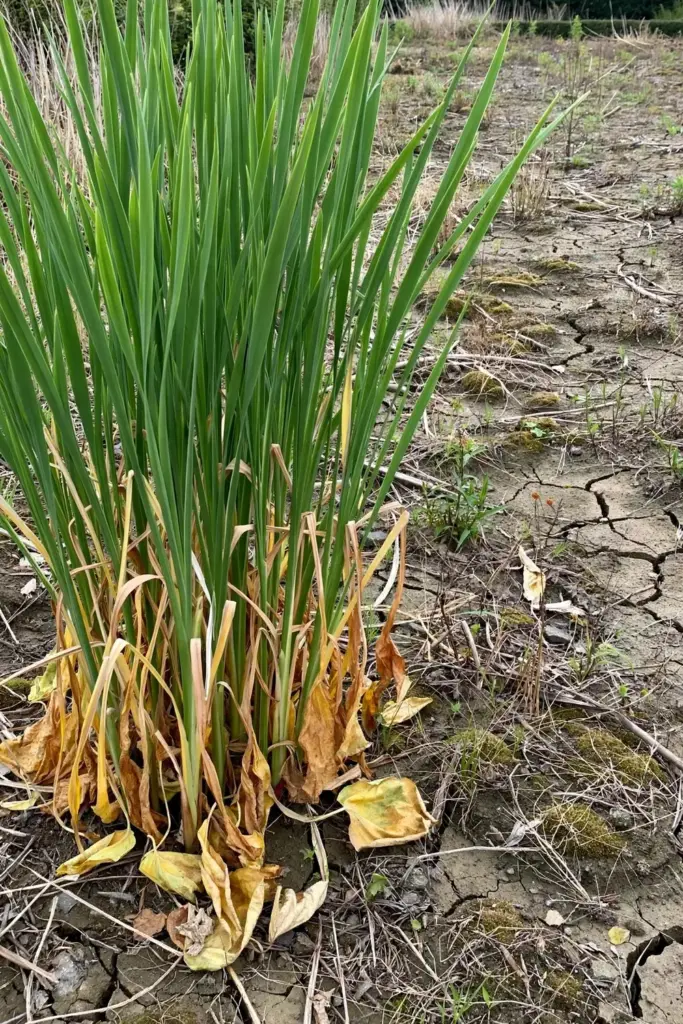
13. Wash, Cut, and Dry the Rhizome Harvest
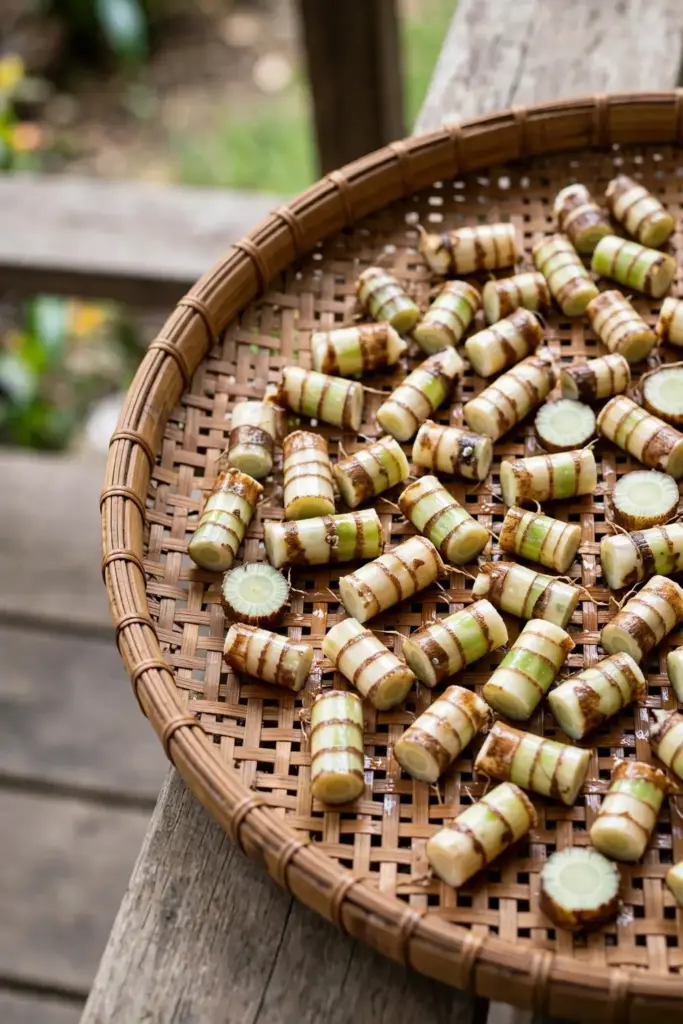
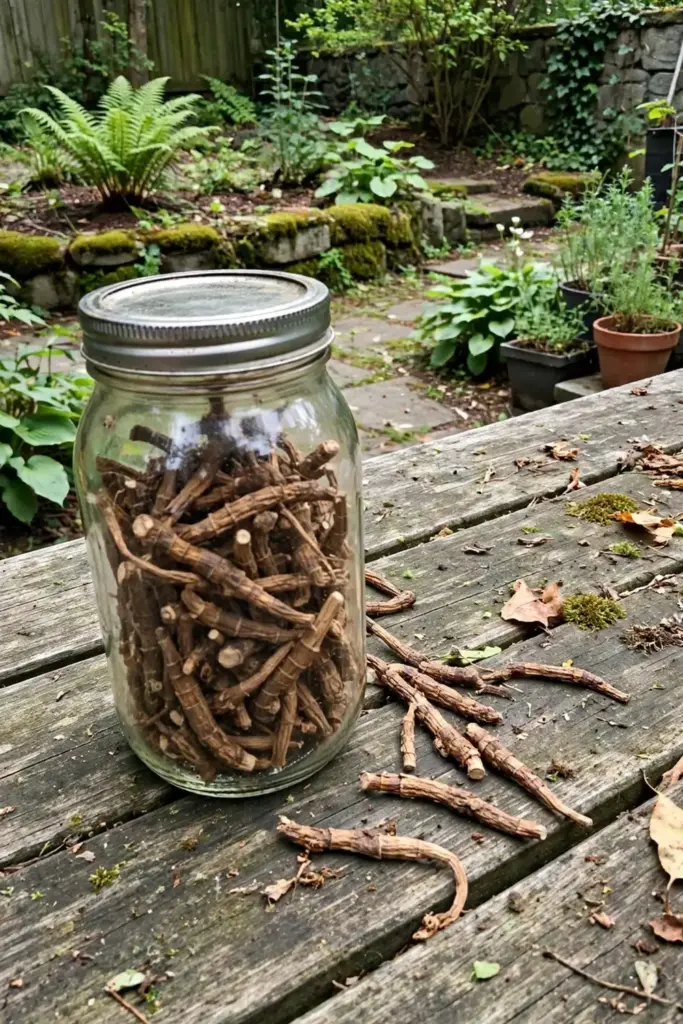
Process the harvest within a day of digging. Scrub rhizomes clean, trim away hair-like roots, and cut the cleaned pieces into 5 to 7.5 cm lengths. Air-dry them in shade with good airflow, turning the pieces every couple of days so no side stays damp, then rub and beat the dried pieces two to three times to remove the outer skin and loose fibers, exactly as the Odisha cultivation SOP describes. Drying in direct sun bleaches the aroma, so shade is the rule even though it takes longer. Properly dried vacha snaps cleanly and smells strongly sweet and tangerine-like when broken; if it bends instead of snapping, give it more days. Store the dried pieces in airtight jars away from light, and grind only what you need, since whole pieces hold their fragrance far longer than powder. Expect the fresh-to-dry weight to shrink dramatically; Indian field data records about 40 quintals of fresh rhizome per acre drying down to roughly 16 quintals.
14. The Beta-Asarone Safety Question
Read this before you taste anything. The rhizomes of Acorus calamus contain beta-asarone, a compound found carcinogenic in animal studies, and the US Food and Drug Administration banned calamus products as food additives in 1968, as documented in the Illinois wildflowers botanical profile. Individual reports of oral use describe severe nausea and prolonged vomiting, and one authoritative review notes that no rigorous clinical research has established a safe dose. The American species, A. americanus, contains alpha-asarone but lacks significant beta-asarone, which is why some sources call it the safer choice. Traditional Ayurvedic practice does use vacha internally, often after purification steps, but tradition is not toxicology. Never self-dose with homegrown rhizomes, never give vacha preparations to children or pets, and talk to a qualified clinician before any internal use. Grow it for the garden, the fragrance, and the craft; treat the medicine cabinet with professional caution.
15. Vacha in Ayurveda: Tradition, Not Prescription
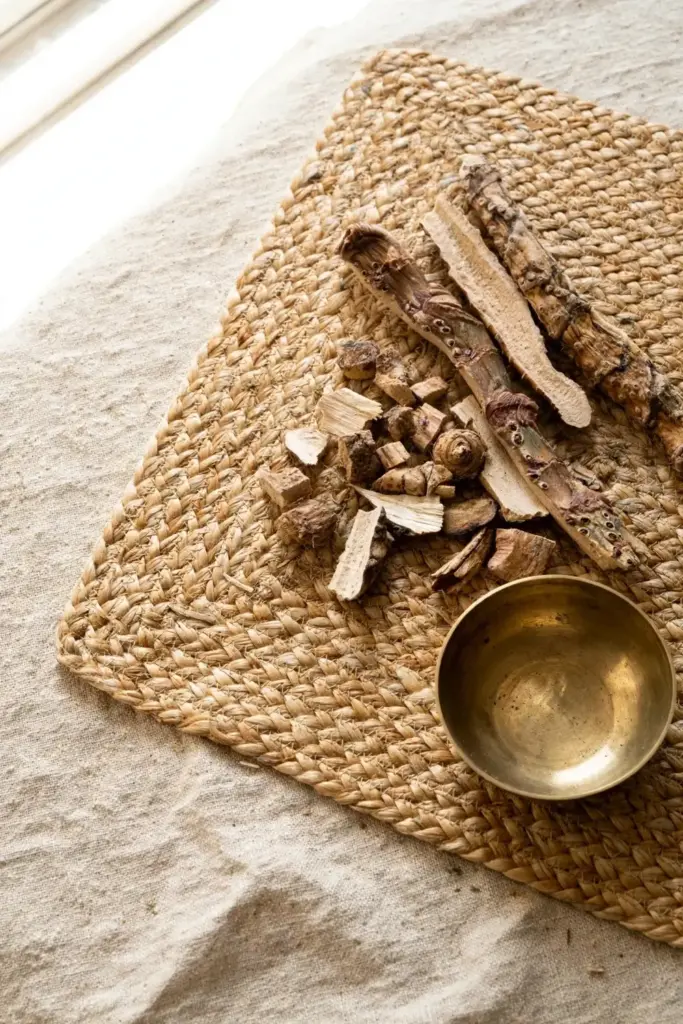
Ayurveda knows this plant as vacha, and classical texts describe it in formulations for digestion and clarity of mind, with traditional powder doses cited in the range of 125 to 500 milligrams. Some traditions also describe a purification step before internal use, which itself signals that the raw rhizome was never considered casual food. That history is real and worth respecting, and it is also centuries older than modern toxicology. The honest position for a home grower is to learn the tradition, understand the beta-asarone evidence, and keep any medicinal use inside a conversation with a qualified Ayurvedic practitioner rather than a kitchen experiment. This article teaches you to grow the plant well; it does not teach you to dose it.
16. Cultivation as Conservation
Here is the deeper reason to grow it. Sweet flag is listed as an endangered species in India, rapidly extracted from the wild, with Karnataka holding about 70 percent of the cultivated area and commercial cultivation in states like Odisha yet to begin despite suitable climate. Research on Indian populations describes it as critically endangered in the mountainous regions where wild collection pressure is highest. Every home bed and every farm plot of cultivated vacha is one less reason to strip a wild marsh. Buy planting material from cultivated sources, never dig wild clumps, and share divisions with fellow gardeners; a single healthy clump divided each spring can supply a whole neighborhood within three years. A plant that survives because people grow it on purpose is a conservation story you can plant in a pot.
17. Ten Common Sweet Flag Mistakes
Learn these once and the crop forgives almost everything else.
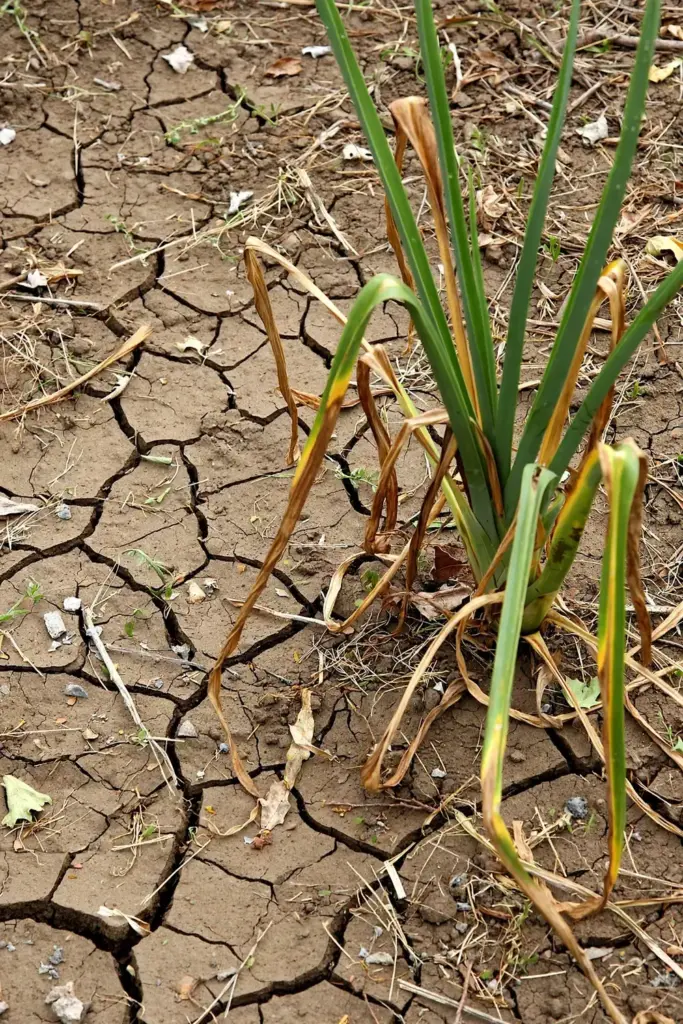
- Letting the bed dry out between waterings, which the plant reads as drought stress.
- Planting dried kitchen rhizomes and wondering why nothing sprouts.
- Burying rhizome pieces deeper than 8 cm, where buds suffocate.
- Growing Acorus gramineus from a nursery tag that just said “sweet flag.”
- Harvesting at six months because the tops look big, while rhizomes are still watery.
- Skipping the monthly weeding until grasses own the bed.
- Feeding heavy nitrogen late in the season, which softens rhizomes before harvest.
- Ignoring the beta-asarone evidence and chewing raw rhizome as a “natural” tonic.
- Planting in a sealed pot and forgetting the mosquito problem.
- Digging wild clumps from a marsh instead of buying cultivated stock.
18. Troubleshooting: Why Your Sweet Flag Struggles
Leaves emerge then stall: the bed dried out or the rhizome piece had no viable buds; replant fresh pieces and commit to saturation. Leaves yellow in the first three months: usually pests, waterlogging with sour soil, or nitrogen hunger; check a rhizome for firmness and feed if it is firm. No spreading after a full season: spacing too tight, shade too deep, or a pot too small; sweet flag spreads by creeping runners and needs room to roam. Rhizomes smell musty instead of sweet at harvest: they were dug too early or dried in damp conditions; re-dry with better airflow and rub the skins clean. Everything rots in the pot: the mix turned anaerobic; repot into fresh loam, keep water shallow rather than deep, and refresh it weekly.
Frequently Asked Questions
Yes. Vacha is the Ayurvedic and Hindi name for Acorus calamus, the Indian sweet flag. The same rhizome is sold as bach, vasambu in Tamil, and sweet flag in English nurseries. Confirm the Latin name on the label before buying, because “sweet flag” alone can also mean the American or Japanese species.
Practically, no. Acorus calamus is a sterile triploid that does not produce viable seed, and seed packets labeled “sweet flag” usually belong to A. americanus or A. gramineus. Propagate by rhizome division, which is faster, true to type, and the method all Indian cultivation uses.
Treat it as semi-aquatic. The bed should stay saturated through the growing season, and it tolerates standing water several inches deep. If the top two centimeters of soil dry out, water immediately. Drought is the one condition this plant never forgives.
Harvest when the lower leaves dry and turn yellow, which signals maturity. In Indian field conditions that is ten to twelve months after a March planting, with digging in February and March. Cooler climates run slower, and the same leaf-yellowing signal can take two to three years.
Exercise real caution. Acorus calamus rhizomes contain beta-asarone, found carcinogenic in animal studies, and the FDA banned calamus as a food additive. Traditional Ayurvedic use exists but does not override modern toxicology. Do not self-dose with homegrown rhizomes; consult a qualified clinician first.
Early yellowing usually means pests, sour waterlogged soil, or nitrogen deficiency, not maturity. True harvest maturity yellows the lower leaves after most of a growing season. Lift one rhizome and check it: firm and fragrant means feed and keep watering; soft and foul-smelling means rot, and you should replant with fresh stock.
Where to Go From Here
You now know how to grow sweet flag from India the way Indian growers do: honest rhizomes planted shallow in wet soil, a full season of saturation, harvest at leaf yellowing, careful drying, and clear-eyed respect for the beta-asarone question. Start with one bed or one sealed pot, buy cultivated planting stock, and let this endangered wetland plant earn its place in your garden. If the marsh life suits you, the rhizome crops are a natural next step: ginger and turmeric follow the same plant-shallow, harvest-underground logic you just learned.