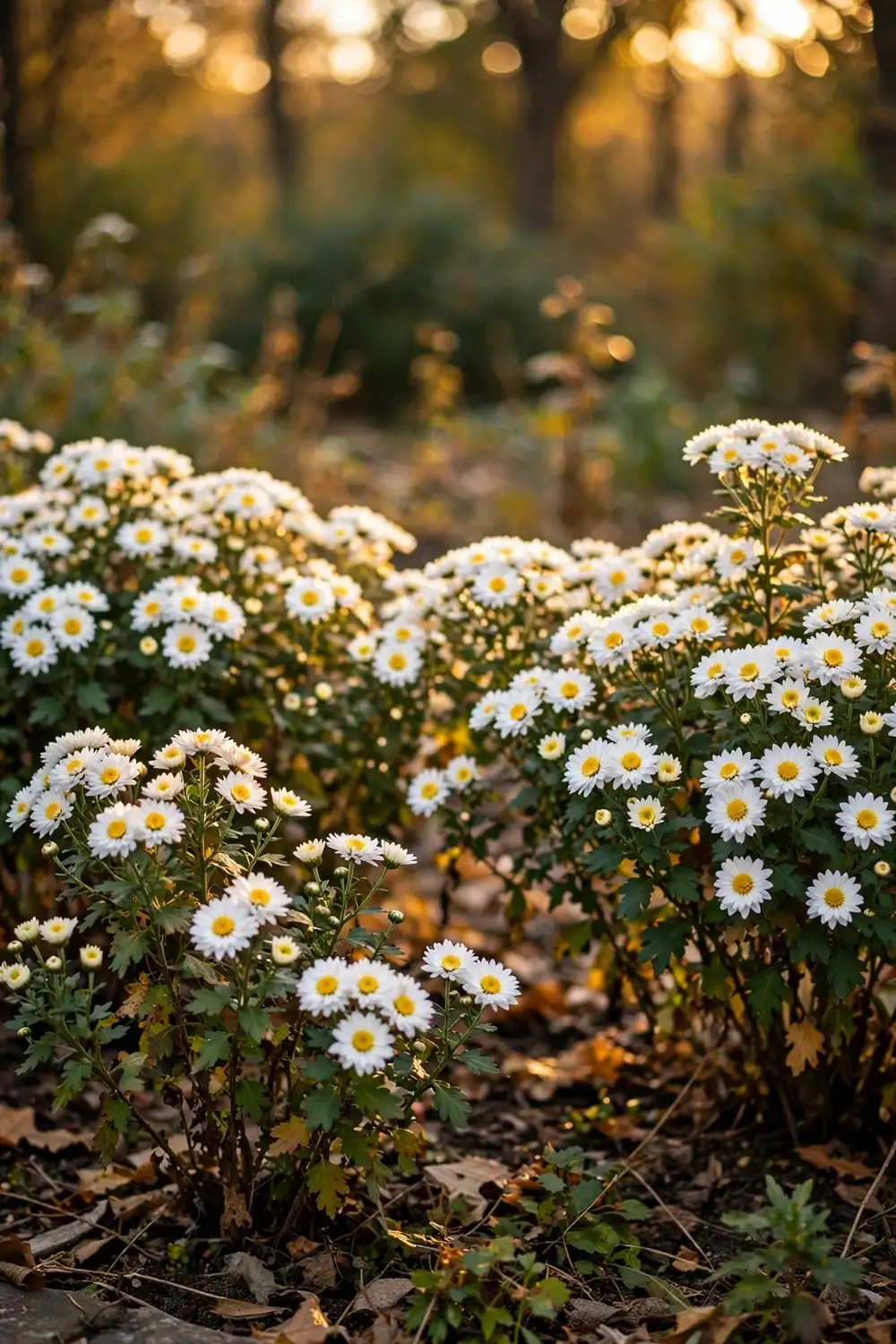

Plant one chrysanthemum this spring and brew your own tea by autumn. That is how to grow chrysanthemum for tea: a perennial flower with centuries of Chinese tradition behind it. The flowers are dried whole and steeped into a pale golden drink with a floral aroma, re-steeped several times in the Chinese tradition. The rest of this page is 15 moves, from the right plant to the first pot. I have learned that the cultivar you buy matters more than anything you do after: the wrong chrysanthemum makes a pretty garden and a disappointing cup. The rest of this page is 15 moves, from the right plant to the first pot. I have learned that the cultivar you buy matters more than anything you do after: the wrong chrysanthemum makes a pretty garden and a disappointing cup.
Tea chrysanthemum is Chrysanthemum × morifolium, a perennial hardy to zone 5, grown in full sun and well-drained soil for its white to yellow flowers, which are dried and steeped into a pale golden drink. This guide grows the right plant, keeps it spray-free, and walks the drying and brewing that turn flowers into tea. Choose your cultivar before you buy anything else; everything downstream depends on it. No medical claims here: this is about growing, drying, and drinking, and the pleasure of a cup you grew yourself. Chrysanthemum tea has centuries of tradition behind it; this guide sticks to the horticulture and the harvest, which is where the gardener’s work lives.
1. Know Your Tea Chrysanthemums
Four cultivars dominate Chinese tea chrysanthemum, collectively famous as the “Four Famous Chrysanthemums.” Gong Ju (Yellow Mountain tribute chrysanthemum) was historically tribute tea; Hang Bai Ju comes from Tongxiang near Hangzhou; Chu Ju comes from the Chuzhou district of Anhui; Bo Ju comes from the Bozhou district of Anhui. Of these, the first two are the most popular. The flowers range from white to pale or bright yellow, and the plant has been cultivated in China as a herb since 1500 BCE, with flower tea popular since the Song dynasty, according to the Wikipedia chrysanthemum tea article. Buy a named tea cultivar, not a generic garden mum. The table below is your shopping list.
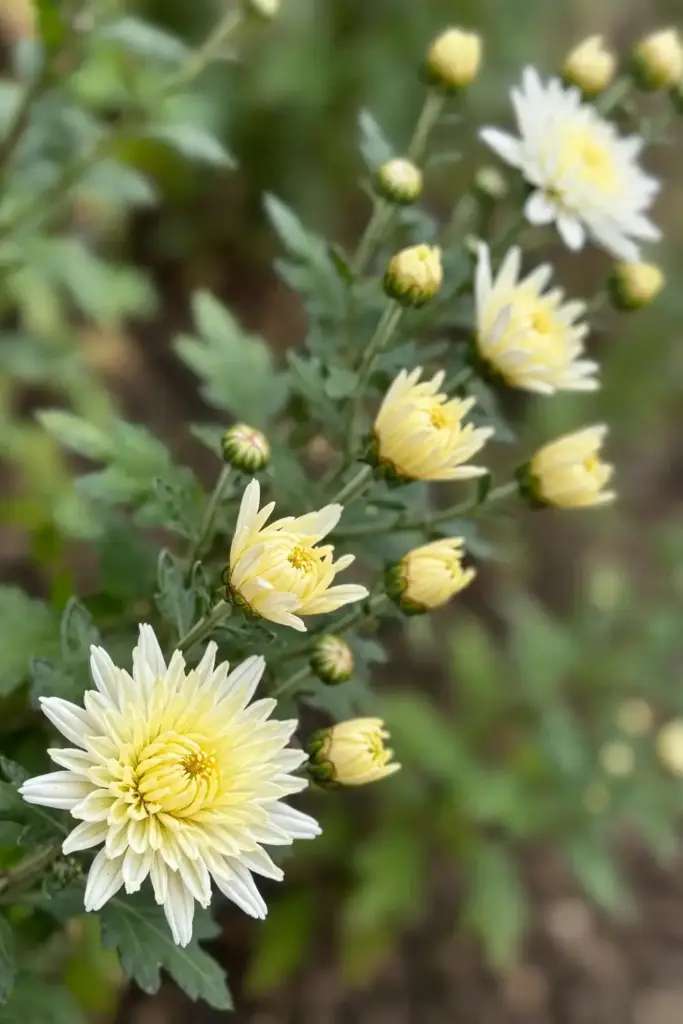
The names encode geography, and geography encodes flavor tradition. Tongxiang’s Hang Bai Ju and Bozhou’s Bo Ju are geoherbs: the same cultivar grown elsewhere is not quite the same tea. You cannot replicate Anhui in Ohio, but you can grow the named cultivar well and get a very good cup. When a nursery lists “tea chrysanthemum” without a cultivar name, ask which one it is. A seller who knows the answer is a seller worth buying from. A seller who does not is selling you a generic mum and hoping you never notice.
| Cultivar | Origin | Flower | Note |
|---|---|---|---|
| Gong Ju | Yellow Mountain | White/yellow-tinged | Historic tribute tea; division-propagated |
| Hang Bai Ju | Tongxiang, near Hangzhou | White | Among the most popular for tea |
| Bo Ju | Bozhou, Anhui | Yellow-white | Large flowers; the Bo Ju Hua variety |
| Chu Ju | Chuzhou, Anhui | White | Classic Anhui tea chrysanthemum |
2. Not That Chrysanthemum
Three different plants share the chrysanthemum name, and only one makes tea. Chrysanthemum × morifolium is the tea and garden chrysanthemum: a perennial with large daisy flowers, the species this guide grows. Glebionis coronaria, called tong ho, is a different annual species grown for its leaves as a vegetable: it has yellow ray florets and aromatic, deeply lobed leaves, and it bolts quickly in warm summers, per the Wikipedia garland chrysanthemum article. Florist mums are morifolium too, but they are raised with heavy pesticides for perfect blooms: never brew flowers from a florist or a garden center display plant. For tea, you need an unsprayed, food-grown morifolium of a tea cultivar. Anything else is the wrong plant for the cup.
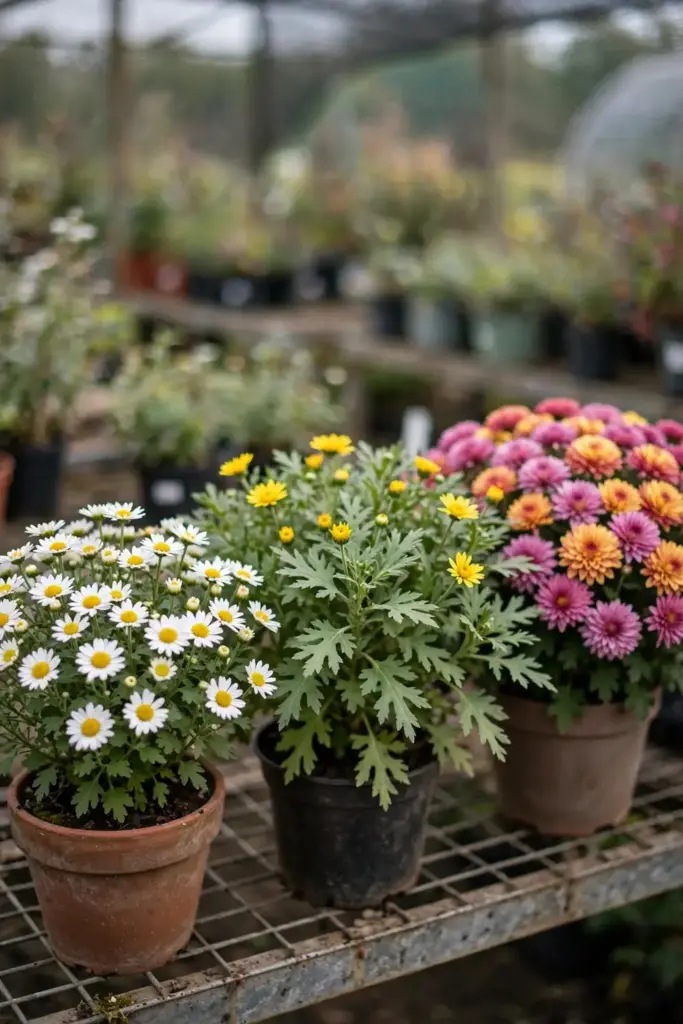
Tong ho deserves its own clarity because seed packets confuse the two. If the packet says “edible chrysanthemum” or “chop suey greens,” that is tong ho: grow it for stir-fried leaves, not for tea. If the packet says “chrysanthemum tea” or names a tea cultivar, that is morifolium: grow it for flowers. The plants look nothing alike once you know them, but the seed packets look very alike on the rack. Read the Latin name before you buy, every time. The five seconds it takes saves a season of the wrong crop.
3. Buy the Right Plant
Buy from a herb nursery, not a florist. Tea cultivars like Gong Ju are propagated by division, not seed, and a good nursery sells you a living division of the real thing. The Crimson Sage Nursery listing for Chinese chrysanthemum (C. morifolium, Gong Ju Hua) notes exactly this: division-propagated, white/yellow-tinged flowers, hardy to zone 5, full sun, well-drained soil. Ask the seller two questions: is this a named tea cultivar, and has it been grown without pesticides? If the answer to either is no, walk away. One healthy division becomes a flowering clump by autumn. A packet of generic mum seed becomes a lottery you will lose.
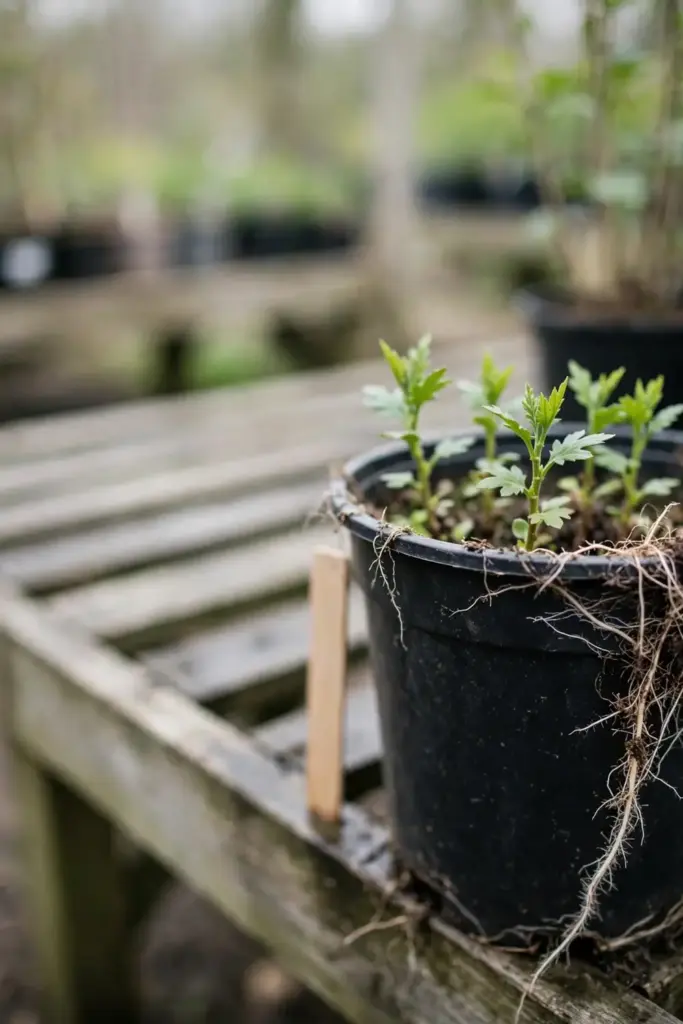
Buy early in the season for the best selection. Herb nurseries sell out of tea cultivars by midsummer, and a division bought in May has months to establish before the autumn bloom. A division bought in September blooms weakly or not at all in its first year. The price difference between a small and large division is small; buy the largest you can. A big division in spring becomes a harvest by autumn. A tiny one becomes a promise for next year. Order in winter for spring delivery if the nursery ships; the best stock never reaches the shelf.
4. Confirm Your Climate
Tea chrysanthemum is a perennial hardy to zone 5, which covers most temperate gardens. It needs a long season: the plants grow through summer and bloom in autumn, typically September to November, so your climate must deliver flowers before hard frost. In zone 5, plant early and choose a warm microclimate. In zones 6 to 9, the plant is easy and reliable. Short-season gardeners can still succeed by buying large divisions in spring rather than small ones. The flowers are the crop, and the crop needs autumn warmth. If your first hard frost arrives in September, grow in the warmest spot you own or treat it as an annual.
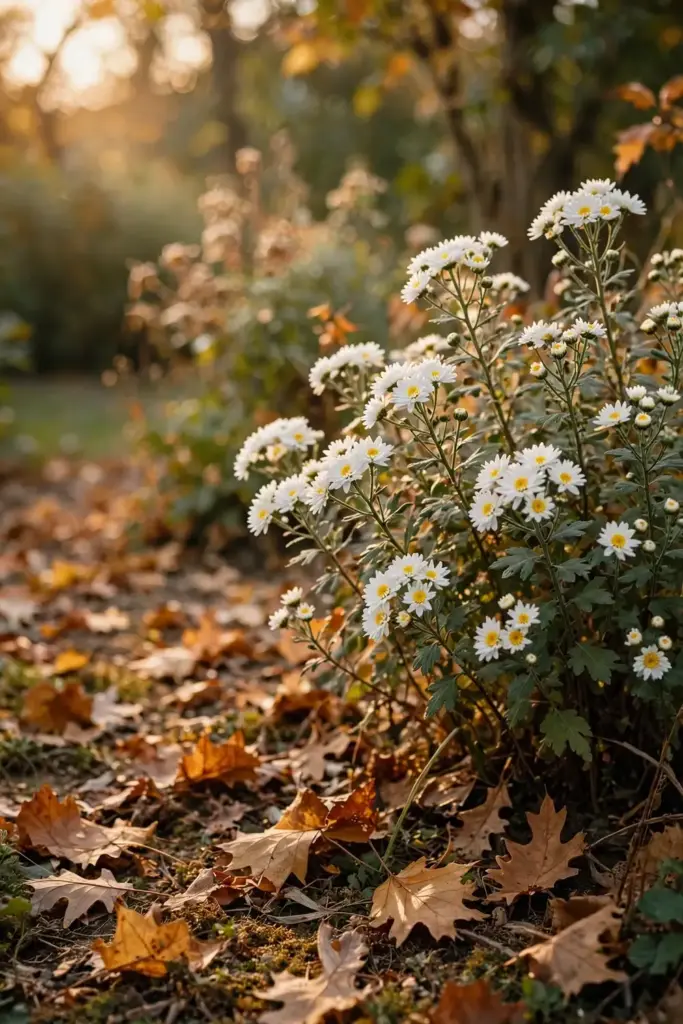
Track your actual frost dates, not the zone average. A zone 6 garden in a frost pocket blooms two weeks later than the same zone on a slope, and two weeks is the whole harvest in a short season. Ask neighboring gardeners when their mums bloom; that date is your real calendar. The plant does not read zone maps. It reads your garden’s actual autumn, and so should you. Keep a garden journal for one season and you will never guess again.
5. Pick the Sunniest Spot
Full sun grows the most flowers, and flowers are the harvest. Give the plants at least six hours of direct sun; eight is better. Morning sun dries the dew and discourages the fungal diseases that plague crowded mums. Afternoon shade in very hot climates is acceptable, but shade-grown plants bloom less and later. Air circulation matters as much as light: space plants 45 to 60 cm apart so leaves dry fast after rain. A sunny, breezy bed produces clean, unsprayed flowers. A shady, crowded corner produces mildew and disappointment.
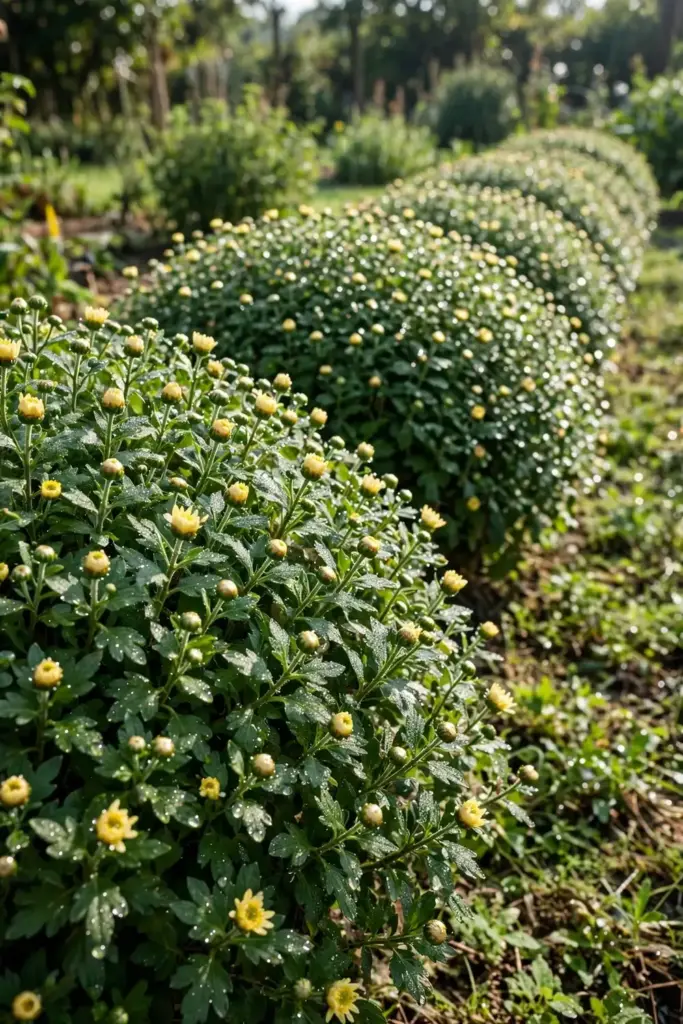
Walk your garden at 9 a.m. and 3 p.m. in midsummer before you plant. The morning walk shows which beds dry fast; the afternoon walk shows which beds bake. The best tea-chrysanthemum bed dries by mid-morning and holds even moisture through the afternoon. South-facing beds against a wall are ideal in cool climates; east-facing beds are kinder in hot ones. An hour of observation in July saves a season of regret in October. The garden tells you where to plant if you ask it at the right hours.
6. Prepare Rich, Well-Drained Soil
Tea chrysanthemums are hungry perennials. Work 8 cm of compost into the top 20 cm of soil before planting; the plants feed heavily through the flowering season. Drainage is non-negotiable: winter-wet soil rots the crowns, and no amount of summer care compensates. In heavy clay, plant on a slight mound or in a raised bed. Aim for a soil pH near neutral; chrysanthemums tolerate a wide range but sulk in very acidic soil. Mulch 5 cm deep after planting to hold moisture and suppress weeds. Rich soil grows big flowers; big flowers make more tea.
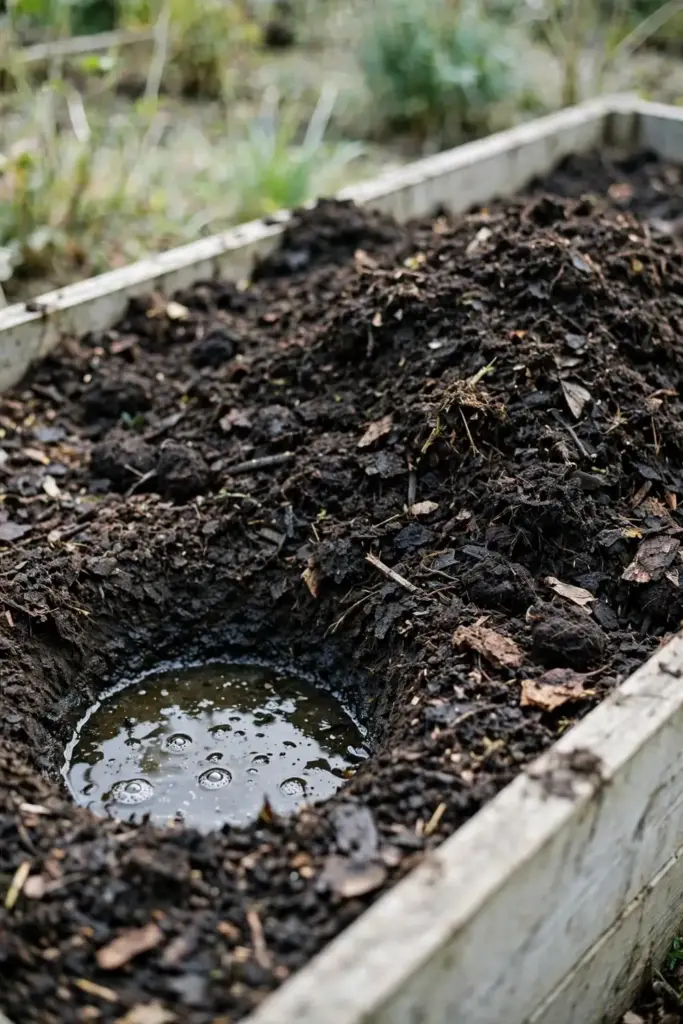
Test the drainage before you plant, not after. Dig a 30 cm hole, fill it with water, and time the drain: gone within a few hours means the bed works; standing water the next morning means the crowns will rot in winter. Fix bad drainage with a raised bed or a different spot; no soil amendment fixes a true drainage problem in one season. The crown sits through winter in that soil, and winter is when drainage kills. Get this right in spring and forget it. The hole test takes an afternoon and saves a plant.
7. Plant After Frost
Plant divisions in spring after the last frost, once the soil has warmed. Set the crown at soil level, never buried; buried crowns rot. Water deeply at planting and keep the soil moist for the first month while roots establish. Space plants 45 to 60 cm apart: they look small in May and fill the space by August. If you bought a potted plant, tease the root ball gently and plant at the same depth it grew in the pot. A spring-planted division usually blooms lightly in its first autumn and heavily from the second year on. Patience in year one is repaid in year two.
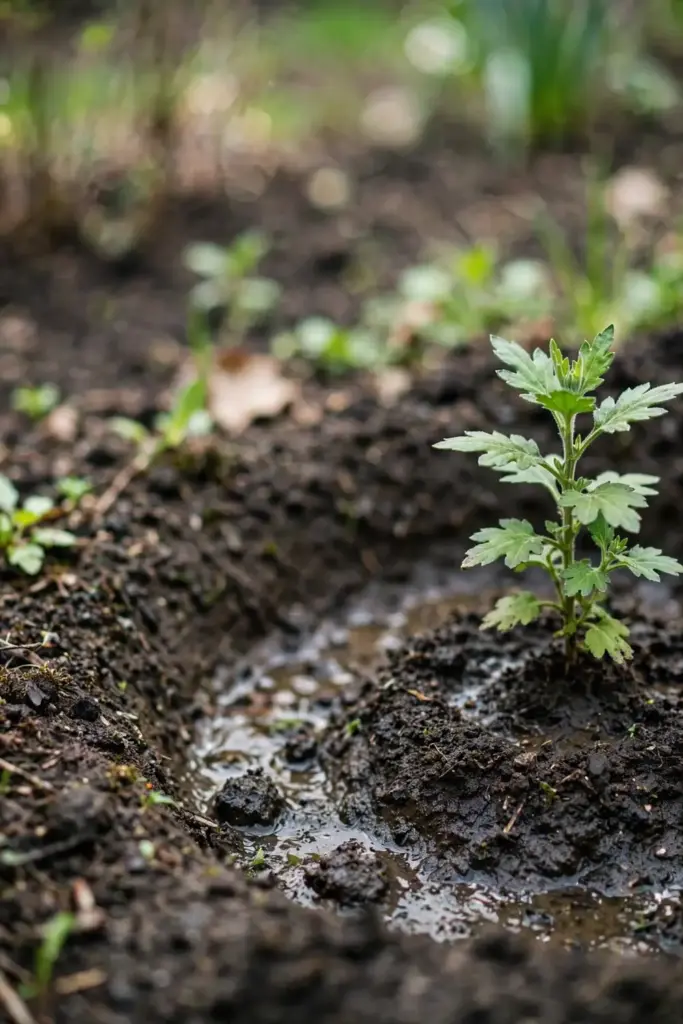
Mark the planting spots with permanent labels. Chrysanthemum crowns are invisible in winter, and spring digging destroys what it cannot see. A label also records the cultivar, which matters when you divide and share. Plant on a cloudy day or in the evening to reduce transplant shock; harsh midday sun on fresh divisions wilts them fast. Water the hole before the plant goes in, so dry soil walls do not wick moisture from the root ball. The first month decides the first year.
8. Water Like a Vegetable
Water deeply and regularly through the growing season; chrysanthemums are thirsty plants, and drought stress cuts the flower count. An inch of water a week, by rain or hose, keeps them productive. Water at the base, not overhead: wet foliage invites powdery mildew and botrytis, the two diseases that ruin a tea harvest. Mulch helps enormously by holding soil moisture between waterings. In containers, check daily in summer. Reduce watering after the first frost; the plants are done growing and wet crowns rot over winter. Consistent water grows flowers; erratic water grows stress.
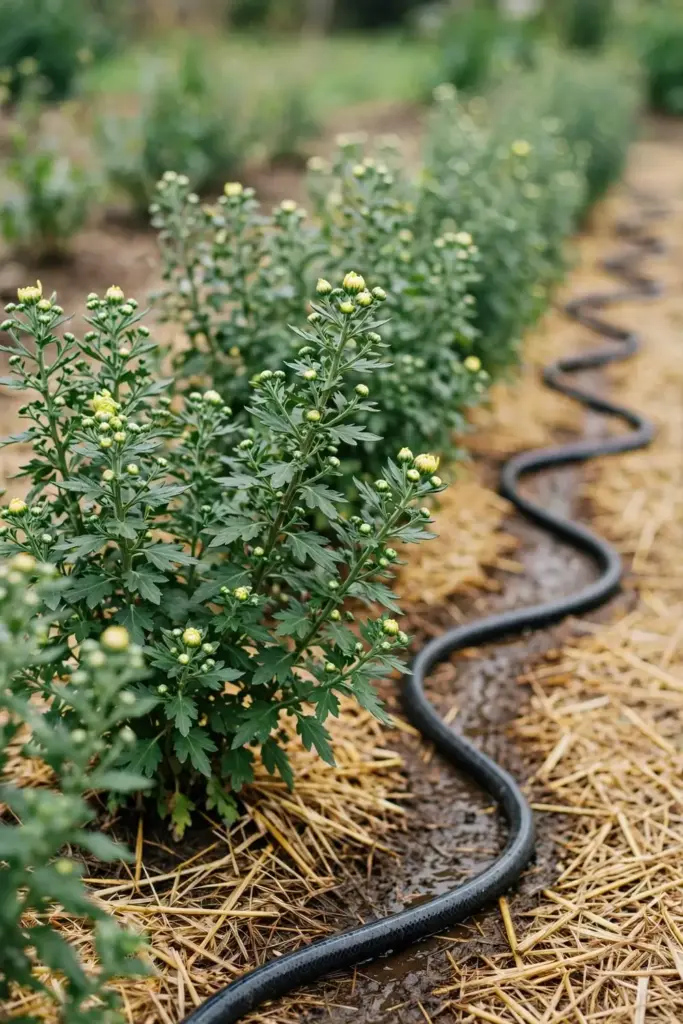
Set up the watering before the heat arrives. A soaker hose under the mulch, on a timer, beats heroic hand-watering in August. The plants want steady moisture, not floods followed by drought. Check the soil with a finger, not a schedule: moist 5 cm down means wait; dry means water now. A rain gauge near the bed ends the guessing. Mums watered by attention out-bloom mums watered by habit. The timer is the cheapest farmhand you will ever hire.
9. Feed for Flowers
Feed monthly from planting through August with a balanced fertilizer at half the label rate, or side-dress with compost twice a season. Stop all feeding by early September: late nitrogen grows soft leaves instead of flowers and delays the bloom you are growing for. In rich, compost-amended soil, one midsummer feeding may be all the plants need. Yellowing lower leaves in midsummer usually mean hunger; feed and the plants green up within two weeks. Container plants need more frequent feeding than bed plants. Feed the flowers, not the foliage: the harvest is petals, and the calendar is the boss.
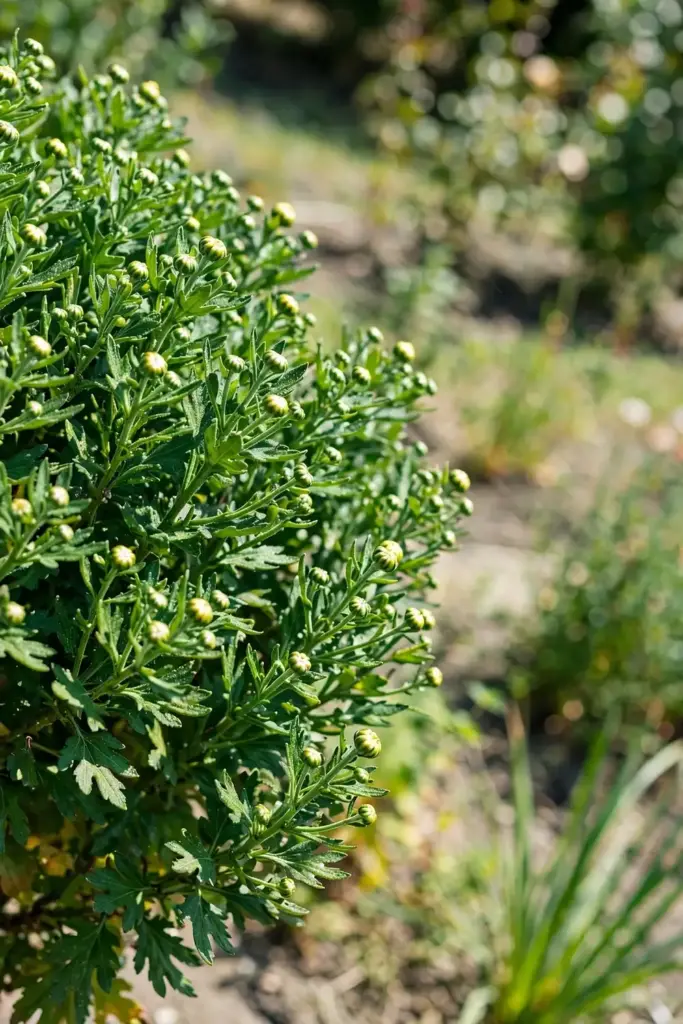
Watch the leaf color through July; it tells you everything. Deep green and vigorous means the feeding is right. Pale and slow means feed now. Dark green and floppy means you overfed, and the autumn bloom will suffer for it. The plants are honest reporters. Adjust once based on what you see, and the second half of the season takes care of itself. Feeding is a conversation with the plant, not a schedule on the wall. Listen in July and the flowers answer in October.
10. Pinch for Bushy Plants
Pinch the growing tips when the plants reach 15 cm tall, and again when they reach 30 cm. Each pinch forces branching, and each branch ends in flowers: a pinched plant carries twice the blooms of an unpinched one. Stop pinching by midsummer (around July 4 in most climates) so the buds can set for autumn. The spring pruning techniques for flowering perennials cover this routine. Use your thumbnail or clean snips; the stems are soft and pinch easily. A well-pinched plant is a dome of buds by September. An unpinched plant is a leggy stalk with a lonely flower.
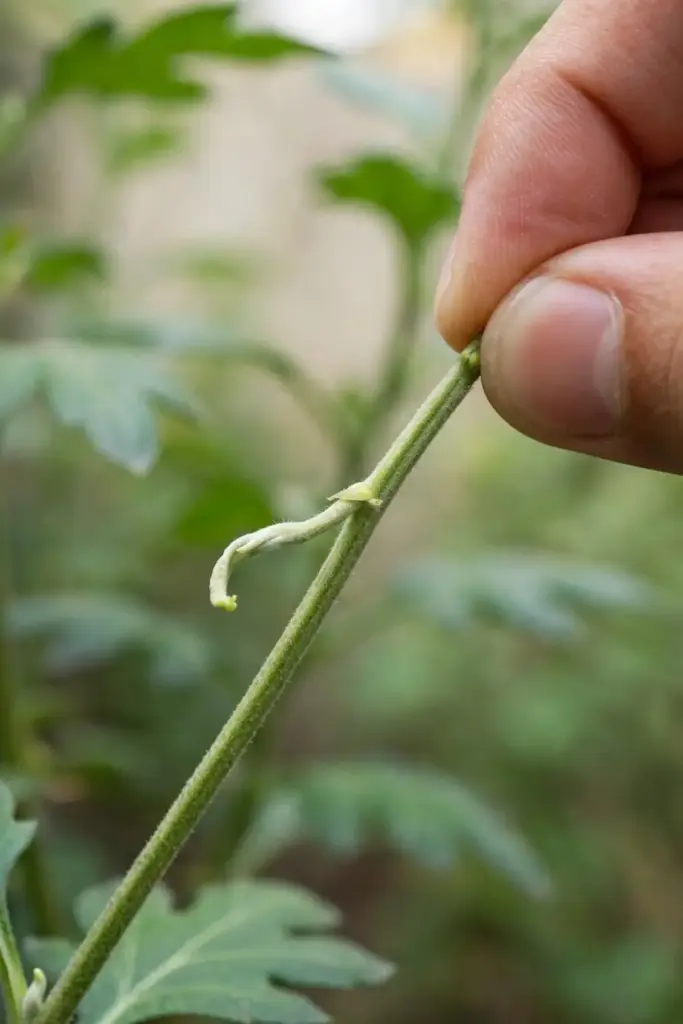
Put the pinching dates on the calendar now. The first pinch in late May, the second in late June, and then hands off: this rhythm works across most temperate climates. Pinching after the cutoff delays the bloom past the frost, which wastes the whole season. If you inherit a leggy unpinched plant in July, pinch once and accept a smaller, later bloom rather than pinching twice and getting none. The calendar is stricter than the plant. Write the dates in ink.
11. Stake Tall Stems
Tea cultivars grow 60 to 90 cm tall and flop under the weight of their own blooms, especially after rain. Stake in midsummer before the buds open: drive a bamboo cane beside each plant and tie loosely at two heights, or corral a row with twine between stakes. Staking keeps the flowers clean and off the soil, which matters when the flowers are the food crop. Flowers that touch wet soil rot or pick up grit; staked flowers stay clean and dry. Do this job once in July and forget it. A flopped plant in October is a harvest lost to the mud.
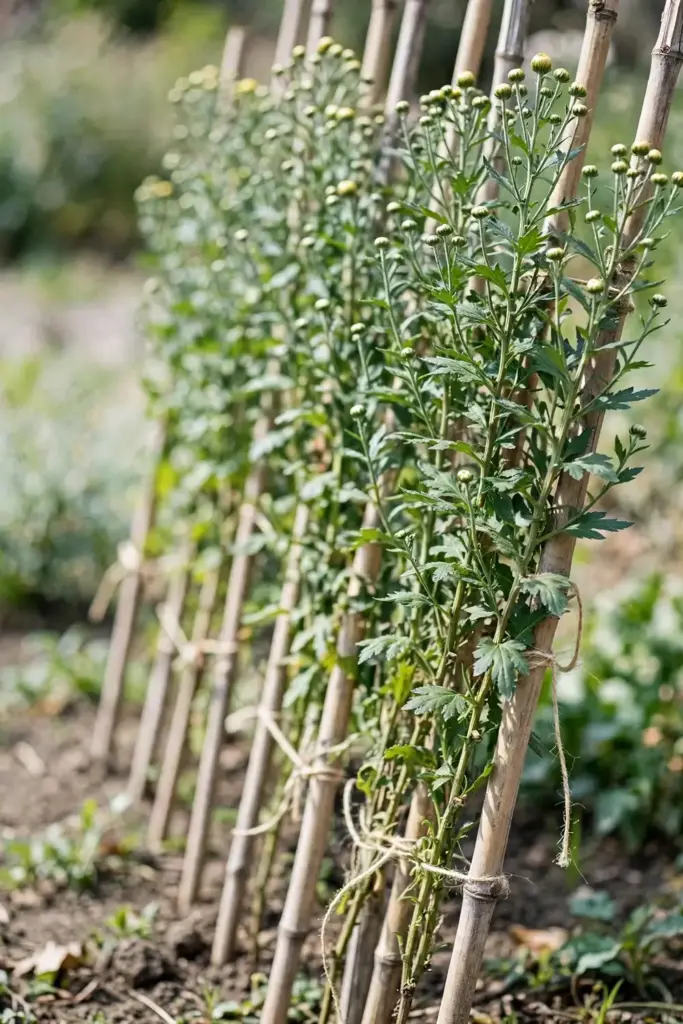
Use soft ties and check them once in August. Twine that was loose in July girdles a thickening stem by September. Old t-shirt strips, soft plant tape, or purpose-made ties all work; wire never does. The goal is support, not strangulation. A well-staked row stands through autumn storms and keeps every flower pickable. An hour with canes and twine in July protects a harvest worth weeks of picking. Check the ties when you deadhead the spent blooms.
12. Keep Pests Off Without Sprays
This is the rule that makes the tea safe to drink. Never spray a tea chrysanthemum with synthetic pesticides or fungicides: whatever lands on the flowers ends up in the cup. Control aphids with a strong jet of water or insecticidal soap applied early, well before buds form. Pick off caterpillars by hand. Encourage ladybirds and hoverflies with nearby flowers. Powdery mildew is best prevented with spacing, morning sun, and base watering; remove affected leaves promptly. A few imperfect leaves are the price of clean flowers. The unsprayed harvest is the whole point; a perfect plant with sprayed flowers is a failed crop.
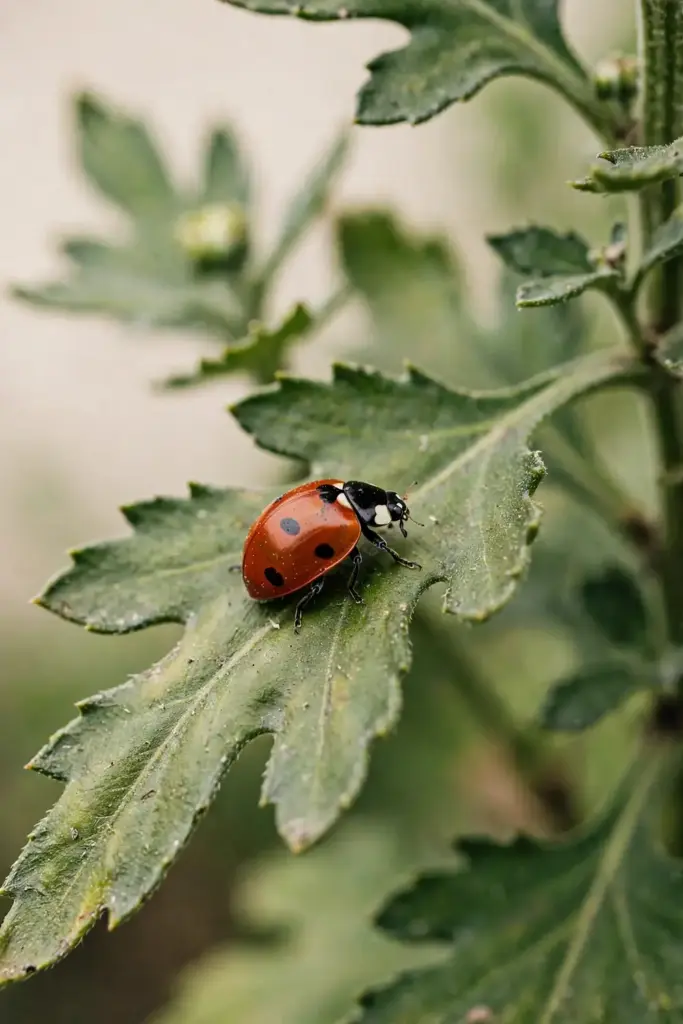
Scout weekly from midsummer on. Turn over a few leaves each visit and look at the undersides; aphid colonies start small and explode fast. A blast of water on day one ends an infestation; the same colony ignored for two weeks needs stronger measures. Early detection is the entire pest program. Keep a dedicated spray bottle of insecticidal soap by the bed from July onward, and the ten-second response becomes a habit. The best pesticide is a gardener who looks.
13. Pick Flowers at Peak
Harvest on a dry morning after the dew lifts. Pick flowers that are fully open but fresh: the petals should be firm and the color vivid, not browning at the edges. Buds picked too early lack flavor; flowers left too long fade and taste dusty. Pinch or snip the flower head with a short stem, and handle gently; bruised petals dry dark. Harvest in passes over several weeks as the flush continues. A mature plant yields bowl after bowl through the autumn bloom. Pick every two to three days at peak season. The harvest window is generous, but the best flowers never wait.
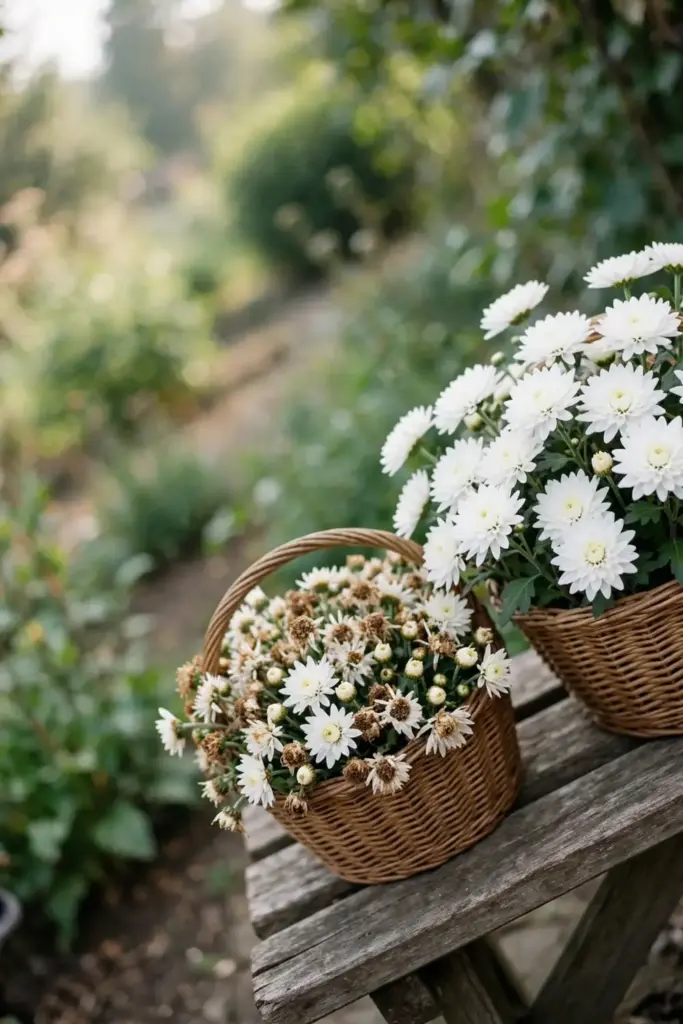
Carry two baskets: one for perfect flowers, one for the seconds. The perfect ones become your drinking tea; the slightly bruised ones still dry fine for everyday pots. Sorting at picking saves sorting at drying. Handle the harvest like eggs, not like firewood. Every bruise shows in the dried flower, and the dried flower is the product. Gentle hands at picking are the cheapest quality control in the whole process. The basket you carry shapes the tea you drink.
14. Dry Low and Slow
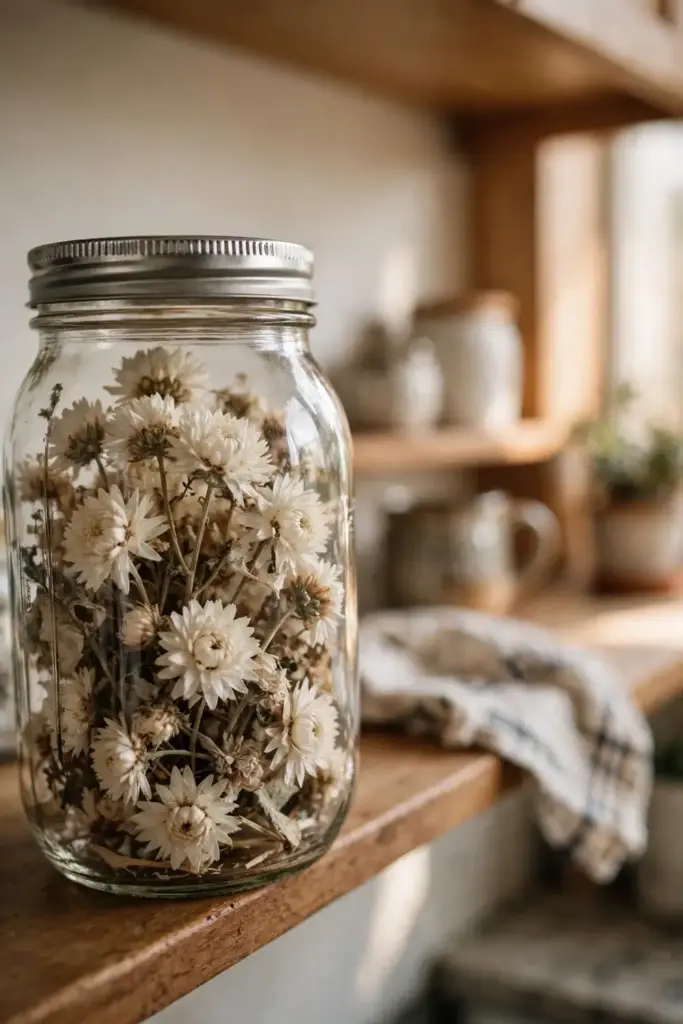
Dry the flowers the same day you pick them. Spread in a single layer on screens or trays in a warm, airy, shaded spot: 35 to 40°C with good airflow is ideal, whether in a dehydrator, a warm attic, or a shaded greenhouse. Turn the flowers daily. They are done when the petals are crisp and the center snaps dry, usually in 3 to 5 days. Never dry in direct sun; sunlight bleaches the color and the flavor. Store the dried flowers in a sealed glass jar away from light; they keep for a year. A jar of home-dried chrysanthemum is the payoff for the whole season: golden, fragrant, and entirely yours. Label it with the cultivar and the year. Next autumn you will compare harvests like a tea merchant, and the season after that you will have opinions about drying temperatures that surprise you.
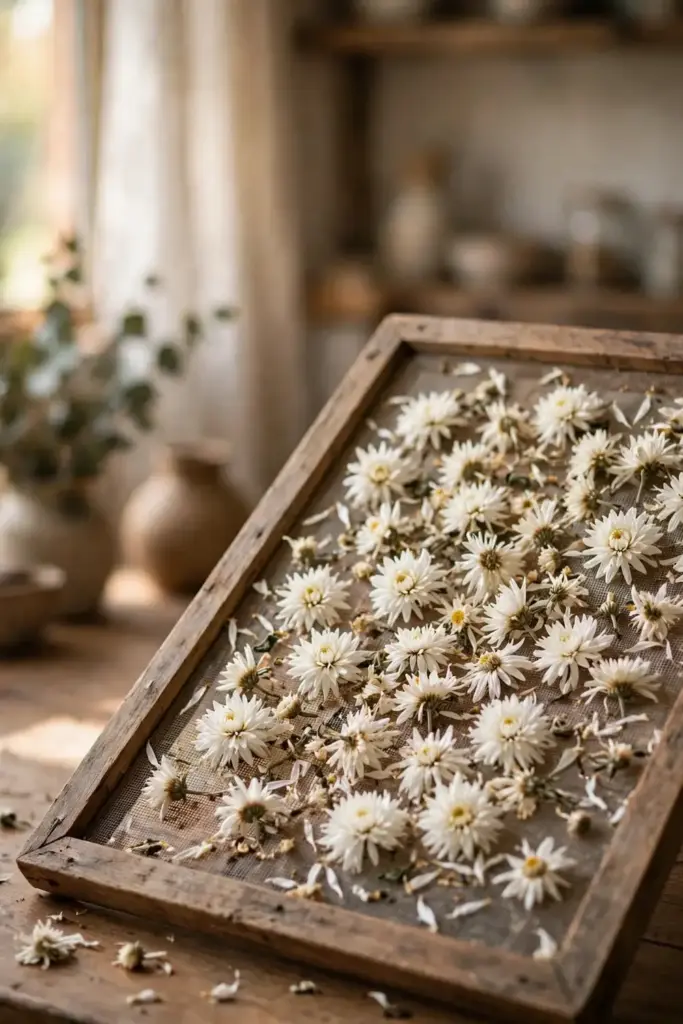
Test dryness before jarring, every time. Bend a flower center: if it flexes, it needs another day; if it snaps cleanly, it is done. Jarring under-dried flowers grows mold, and mold ruins the whole jar. When in doubt, give it one more day; over-dried flowers merely lose a little aroma, while under-dried ones lose the batch. The snap test takes five seconds and never lies. Your nose confirms: properly dried flowers smell intensely floral, like the garden concentrated. Trust the snap, then trust the nose.
15. Brew Your First Pot
Brewing is simple and forgiving. Place 8 to 10 dried flowers in a teapot, pour over freshly boiled water, and steep 3 to 5 minutes. The liquor runs pale to bright yellow with a floral aroma. In the Chinese tradition, once the pot is drunk, hot water is added again to the same flowers, and the re-steeping is repeated several times, each infusion slightly lighter. Drink it hot or iced, plain or with a little honey. Taste your own harvest against a shop-bought bag and you will understand the season’s work in one sip. This is the moment the garden becomes the teapot.
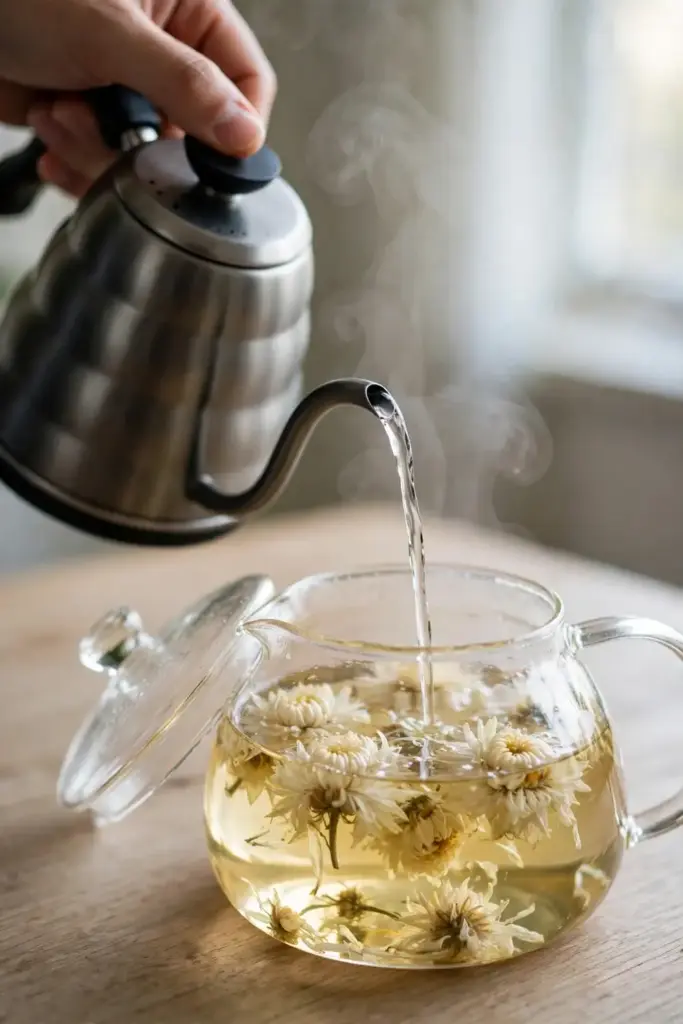
Serve the first pot to someone who watched the season. The story of the tea is part of the flavor: the division planted in May, the pinching, the autumn picking, the drying screens. Use a glass teapot if you have one; the flowers unfurling in hot water are beautiful to watch. Keep the steeping short for a delicate cup and longer for a stronger one. There is no wrong way to drink your own harvest, only the way you like it.
Frequently Asked Questions
No. Florist mums are grown with heavy pesticide programs for perfect display blooms, and those residues concentrate in the dried flowers. Only brew flowers from plants you grew yourself without sprays, or from a trusted food-grade source. The plant is the same species, but the growing history is everything. Buy a named tea cultivar from a herb nursery and grow it spray-free; that is the only safe path to the cup.
Buy plants. The best tea cultivars, like Gong Ju, are propagated by division because they do not come true from seed. A nursery division gives you the exact cultivar, already mature enough to bloom in its first autumn. Seed-grown mums are a genetic lottery: pretty flowers, but rarely the tea quality you want. One division costs little and becomes a clump you can divide yourself in future years.
The usual causes are too little sun, missed pinching, or hunger. Chrysanthemums need full sun and monthly feeding through August to build the energy for a heavy bloom. Unpinched plants put their energy into one stalk instead of many branches. Late planting also cuts the season short. Fix all three next year: sunniest spot, pinch twice before July, and feed monthly. A well-grown plant is a dome of flowers, not a lonely stalk.
About a year in a sealed glass jar stored away from light and heat. The flowers are at their best in the first six months, when the aroma is strongest. If the color has faded to brown or the scent is gone, compost them and wait for the next harvest. Label each jar with the cultivar and the drying date; your future self will want to compare years.
Where to Go From Here
Fifteen moves, one autumn harvest, and a teapot that refills itself. Buy the right cultivar, keep it spray-free, pick at peak, and dry low and slow. The first pot of your own chrysanthemum tea tastes like the whole season: sun, patience, and flowers. Plant one division this spring and the kettle is yours by autumn. The second year, divide the clump and share the tea with a friend. The third year, you will wonder why you ever bought tea in a bag.