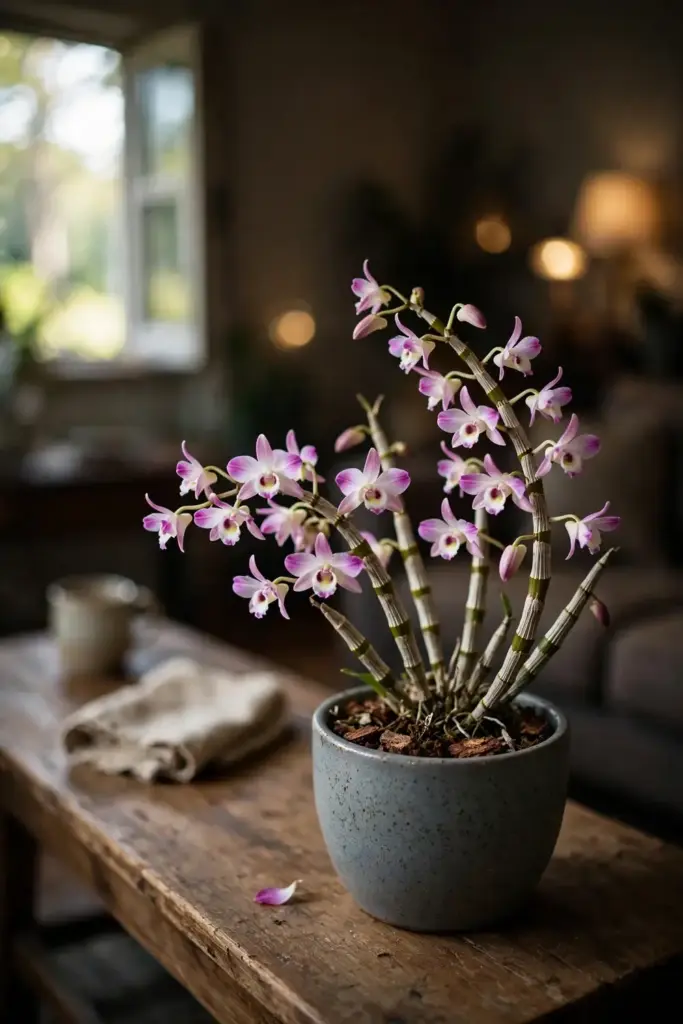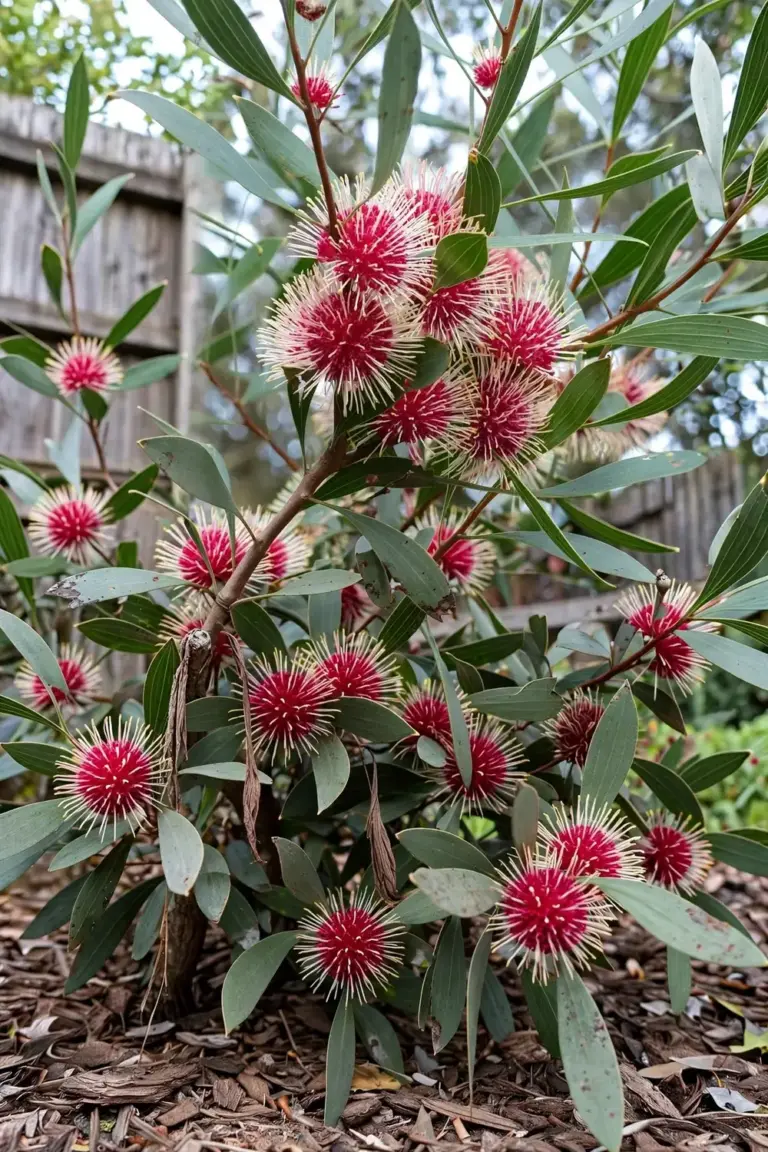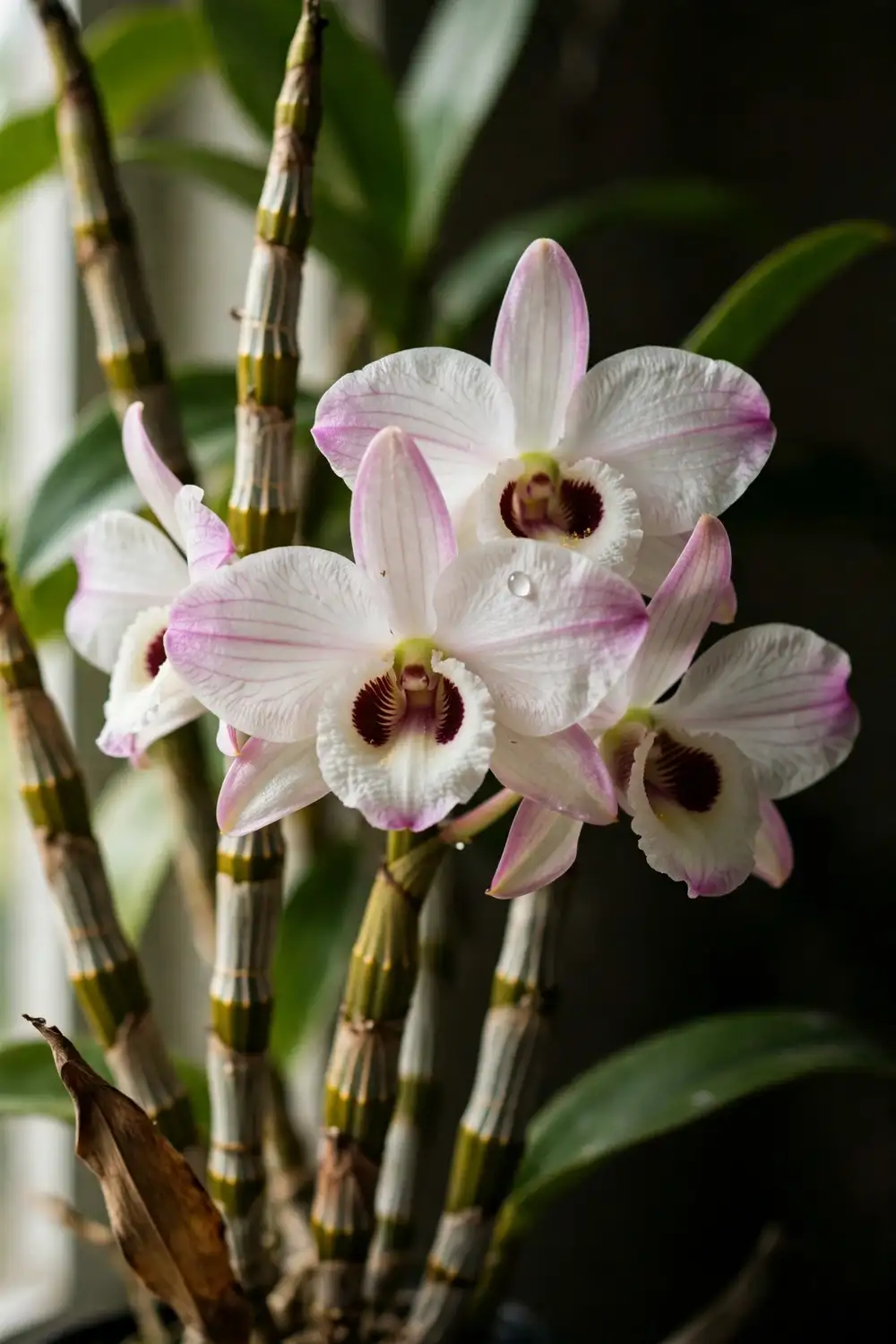

Identify which of the two dendrobium types sits on your windowsill before you water it again. That is how to grow dendrobium orchid plants indoors without killing them: nobile types need bright light plus a cool, dry winter rest to set buds, while phalaenopsis types want steady warmth year-round with no rest at all. The rest of this page is 18 moves, from naming your type to the winter rest that triggers 50 to 100 flowers per cane. Mix the two types up and the plant survives but never blooms.
Dendrobiums are the cane orchids. Instead of the broad leaves of a moth orchid, they grow upright, segmented canes that store water and energy, with flowers emerging from nodes along those canes. Each cane is a battery. Your job is to charge it through the growing season, then let a nobile discharge into blooms during its rest. I have learned that a nobile treated like a warm-growing phalaenopsis skips its winter rest and rewards you with bare canes instead of flowers.
Give either type 12 to 14 hours of bright, indirect light daily, water only when the top inch of bark feels dry, and keep humidity between 50 and 70 percent.
1. Identify Your Type: The Nobile vs Phalaenopsis Split
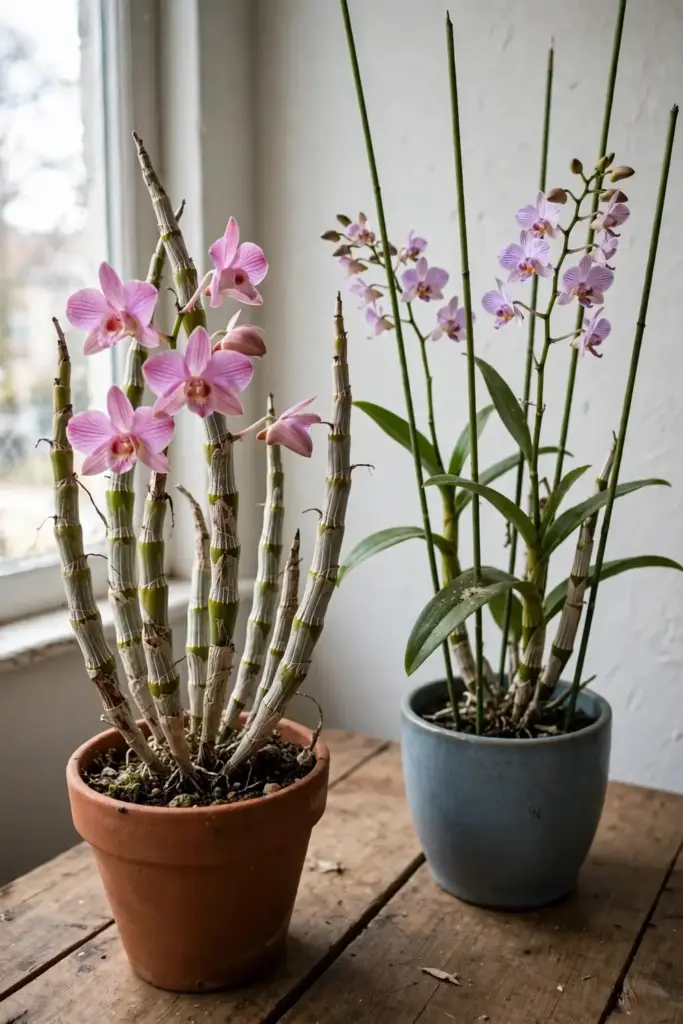
Start by naming the type on your windowsill, because the two common indoor groups want opposite winters. Nobile types (Dendrobium nobile and its hybrids) are cool growers with plump, segmented canes that often drop their leaves before flowering. Phalaenopsis types (mostly Dendrobium bigibbum hybrids, sold as “den-phals”) are warm growers with tall, thin, evergreen canes that keep their leaves year-round. The table below maps the differences that matter.
| Care point | Nobile type | Phalaenopsis type |
|---|---|---|
| Day temperature | 65 to 75°F | 70 to 85°F |
| Night temperature | 50 to 55°F in fall and winter | 60 to 65°F year-round |
| Winter rest | Yes: cool and nearly dry, October to February | No: steady warmth and watering |
| Canes | Plump, segmented, often leafless at bloom | Tall, thin, evergreen |
| Flowers | 2 to 3 inches, fragrant, along leafless canes | Smaller sprays from cane tips |
The temperature split comes from nursery culture data: cool-growing nobile types prefer 65 to 75°F days with nights of 50 to 55°F, while warm-growing phalaenopsis types thrive at 70 to 85°F days, according to the indoor growing guide from Emerald City Orchids. Most big-box store dendrobiums are nobile-type hybrids, but check the tag. If the tag only says “Dendrobium,” the cane shape tells you: plump and jointed points to nobile, tall and reed-like points to phalaenopsis type.
2. Understand What Shi Hu Really Means
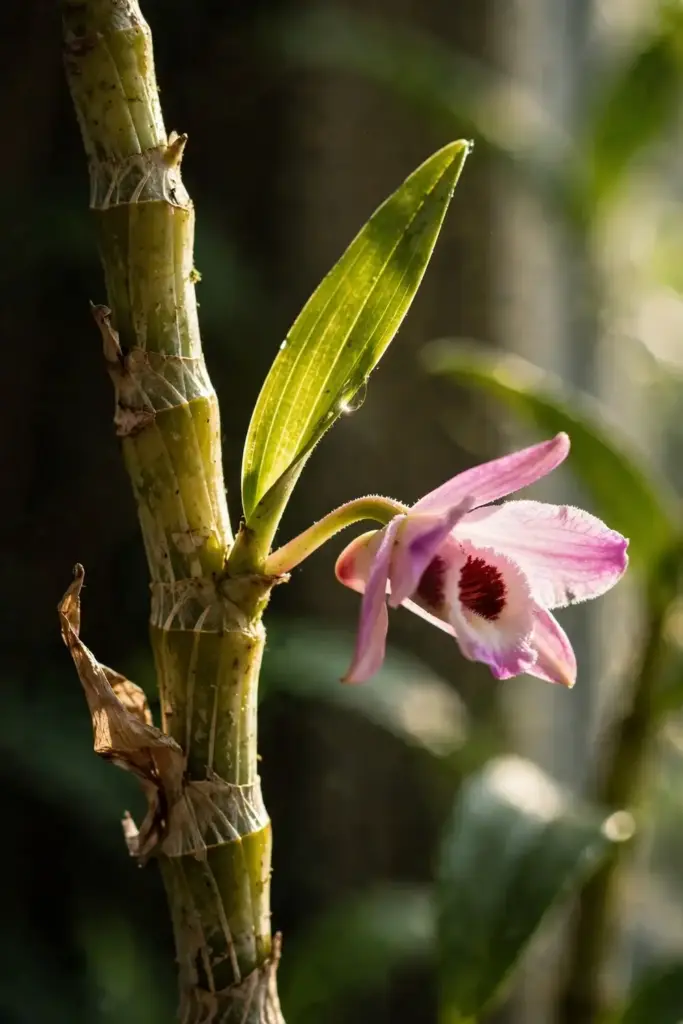
Shi hu is the traditional Chinese name for the dried stems of a few specific Dendrobium species, and it is not a synonym for every ornamental dendrobium. The name belongs to species like Dendrobium nobile and Dendrobium officinale (also sold as Dendrobium catenatum), harvested and dried for traditional use. Your grocery-store nobile hybrid shares ancestry with the medicinal species, but it was bred for flowers, not for the stem material, and the two are not interchangeable. The American Orchid Society notes that the Section Dendrobium group, which includes Dendrobium nobile, generally requires a cool dry rest to flower well, a trait that ties the ornamental and the traditional plant together in the greenhouse if not in the medicine cabinet. This article stays in the growing lane. It makes no health claims and offers no dosage advice.
3. Buy the Right Plant and Skip the Seed Scam
Buy a potted plant, never a packet of “dendrobium seeds.” Orchid seeds are dust-fine, carry no food reserves, and germinate only in sterile laboratory flasks with specific fungi or agar media. No seed packet sold to hobbyists grows into a dendrobium on a windowsill. The sponsored “Dendrobium Orchid Nobile Seeds” listings that appear on shopping search results are a known scam vector, and no page-one care guide endorses them. Real propagation happens through division, keikis, or cane cuttings, which this article covers later.
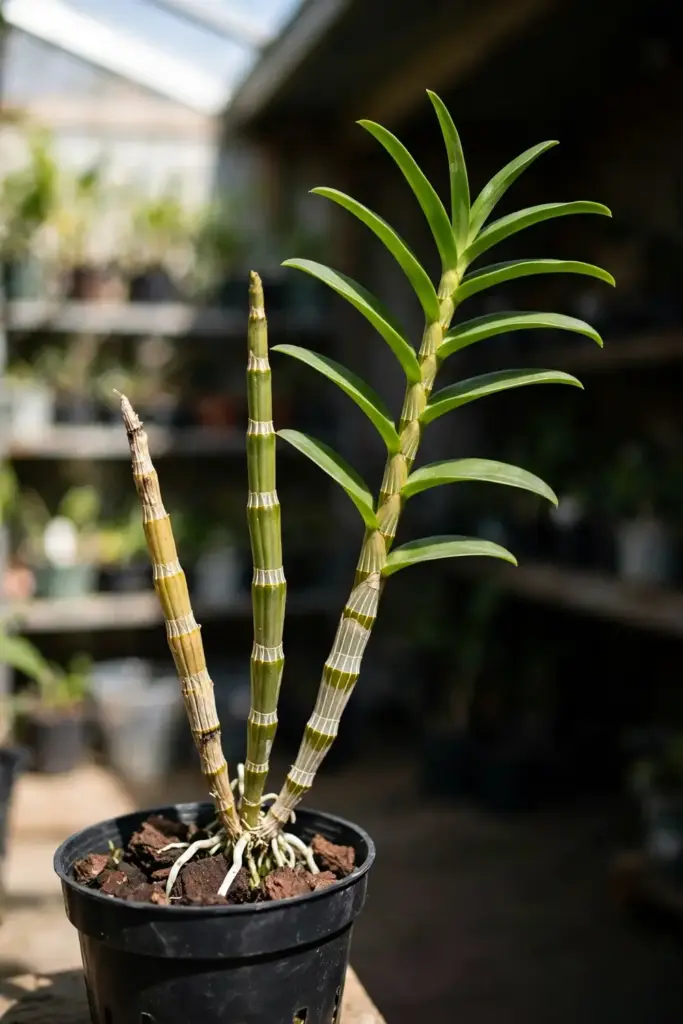
Choose a plant with at least three firm, plump canes and one cane carrying a full set of leaves. Older canes that look woody, shriveled, or yellowed are normal as long as younger growth looks healthy, since leafless canes store energy for future blooms. Avoid plants with mushy canes, blackened leaf spots that spread, or a sour smell from the pot, which signals rotted media. A snug plastic pot with drainage holes and visible white or green root tips at the surface is a good sign.
4. Give It 12 to 14 Hours of Bright, Indirect Light
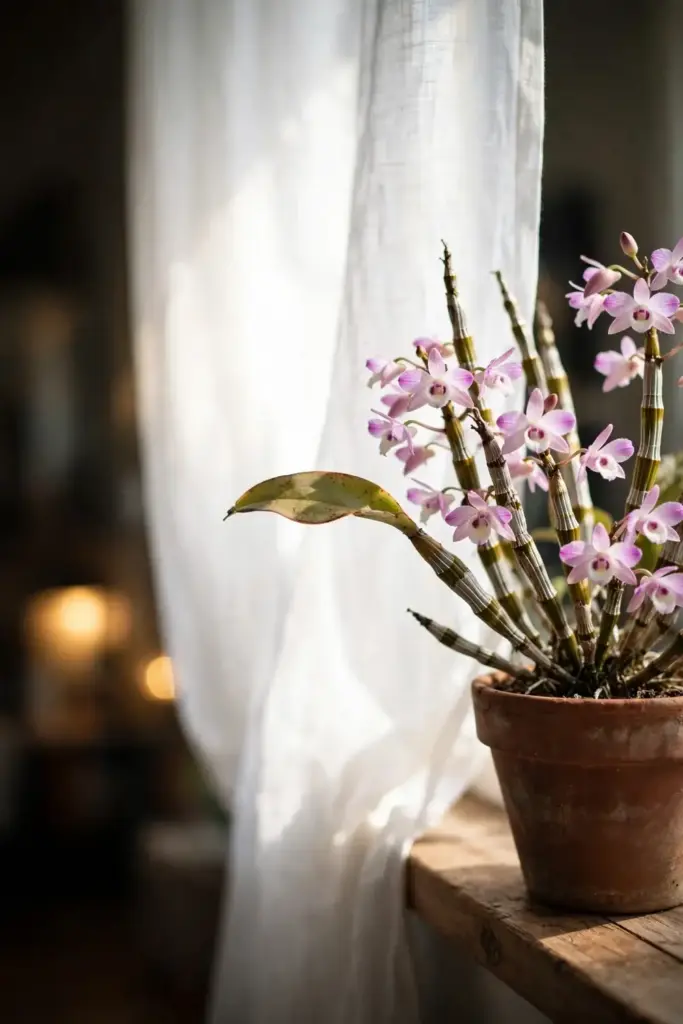
Place your dendrobium near an east or south-facing window where it receives bright, indirect light for most of the day. Dendrobiums need stronger light than moth orchids. A sheer curtain takes the edge off harsh midday sun, which scorches leaves. Leaf color reads the light level for you: dark, limp leaves ask for more light, while a reddish tint warns of too much. If no window delivers enough, a grow light positioned about one foot away and run 12 to 14 hours daily encourages blooming, a setup the Emerald City Orchids indoor guide recommends for light-hungry dendrobiums. For choosing the right fixture, the grow light guide for indoor gardens walks through the options that suit orchids. Watch the seasons too. A south window that feels perfect in December can scorch leaves in June when the sun climbs higher, so be ready to add the sheer curtain or shift the plant a foot back from the glass as summer approaches. When moving a plant to stronger light, acclimate it over two weeks rather than all at once: an hour or two of the brighter spot daily, increasing gradually. Leaves that blush slightly red are adapting; leaves that bleach white or develop papery brown patches are burning, and the plant needs shade immediately.
5. Set Day and Night Temperatures With a 10-Degree Drop
Dendrobiums bloom on temperature contrast. Aim for days of 65 to 75°F and nights a full 10°F cooler, which mimics the mountain forests where nobile types evolved. In fall and winter, nobile types need nights of 50 to 60°F to trigger bud development, with days of 70 to 75°F, according to OrchidWeb’s nobile care guide. Once buds appear, nights of 60 to 64°F speed flower development, with blooms arriving by February. Phalaenopsis types skip this drama: keep them at 70 to 85°F days and 60 to 65°F nights all year. Keep every dendrobium away from heating vents, radiators, and cold drafts, which blast buds off before they open.
6. Water It the Epiphyte Way: Soak, Then Dry
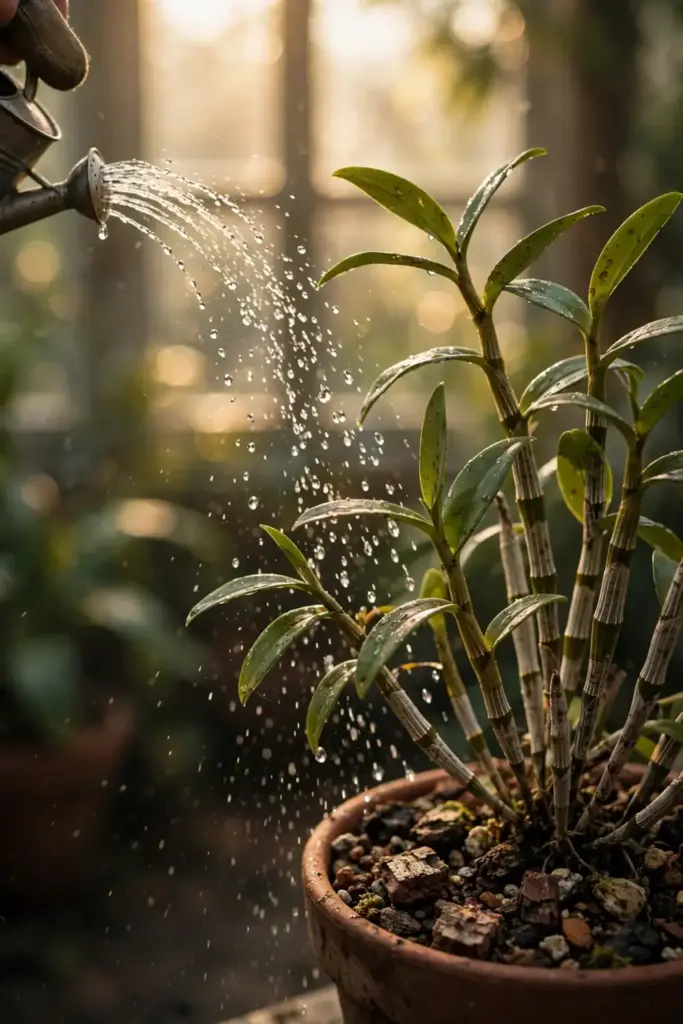
Water thoroughly, then let the mix dry before watering again. Dendrobiums grow on tree bark in the wild, so their roots expect a drench followed by air. Each time you water, add enough room-temperature water that it runs out through the drainage holes, flushing the mix. Then wait until the top inch of bark feels dry before the next watering. Gardening Know How’s dendrobium nobile care walkthrough stresses the same rhythm: moist while actively growing in spring and summer, tapering as temperatures cool. Water in the morning so leaves dry by night. Rainwater, distilled, or demineralized water suits them best, since mineral buildup burns root tips over time. Read the plant as well as the calendar. Plump, firm canes mean the watering rhythm is right. Canes that wrinkle lengthwise are asking for water, while canes that turn soft and translucent at the base warn of too much. In a clear pot you can also read the roots: silvery-white roots want water, green roots are freshly watered. During the peak of summer growth a nobile in bark may need water twice a week; the same plant in its winter rest may go three weeks between light sips. Let the season, not the schedule, decide.
7. Keep Humidity at 50 to 70 Percent With Moving Air
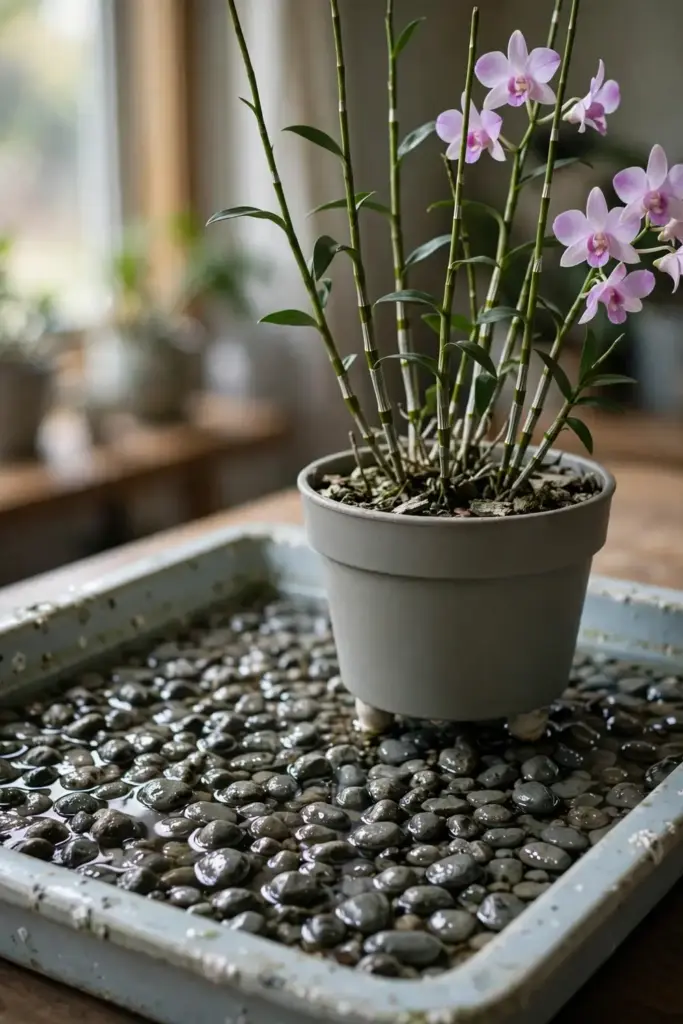
Hold humidity between 50 and 70 percent during the growing season, the range Emerald City Orchids’ indoor guide recommends for these orchids. A humidity tray (a shallow tray of pebbles and water set under the pot, with the pot itself above the waterline) or a small room humidifier both work. Cool-growing nobile types appreciate the moister end of that range while growing. Pair humidity with air movement: a small fan on low, or uncrowded spacing between plants, prevents the fungal and bacterial problems that stagnant damp air invites. Dendrobiums share these needs with many foliage houseplants, and the anthericum houseplant guide shows the same humidity-tray technique working for another indoor plant. Never let the pot stand in water. Roots sitting in a saucer of water rot within days.
8. Pot It in Bark, Never in Ordinary Soil
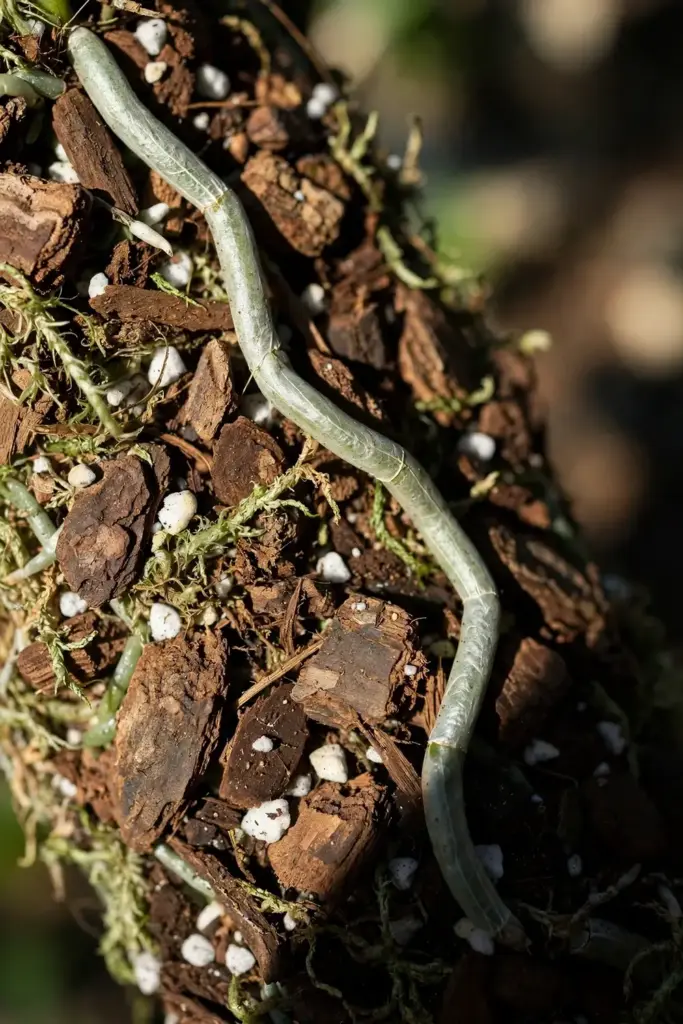
Plant dendrobiums in a loose, free-draining orchid mix. Never in potting soil, which compacts around epiphytic roots and rots them within weeks. Fine-grade bark mixed with perlite and a little sphagnum moss suits dendrobium roots, which run finer than the thick silvery roots of moth orchids. The mix must hold some moisture yet drain fast and breathe. If you mix your own, start with mostly fine bark plus a generous handful of perlite and a little sphagnum moss, then adjust: more sphagnum for dry homes, more perlite for humid ones. Choose a small, snug plastic pot with generous drainage holes. Dendrobiums bloom best slightly root-bound. A pot only a finger’s width larger than the root mass, tall rather than wide, matches how these plants grow wedged into tree crotches. Clear plastic pots earn their keep here: you can watch root color through the wall, green or white meaning healthy, brown and mushy meaning trouble.
9. Repot Only Every 2 to 3 Years, in Spring
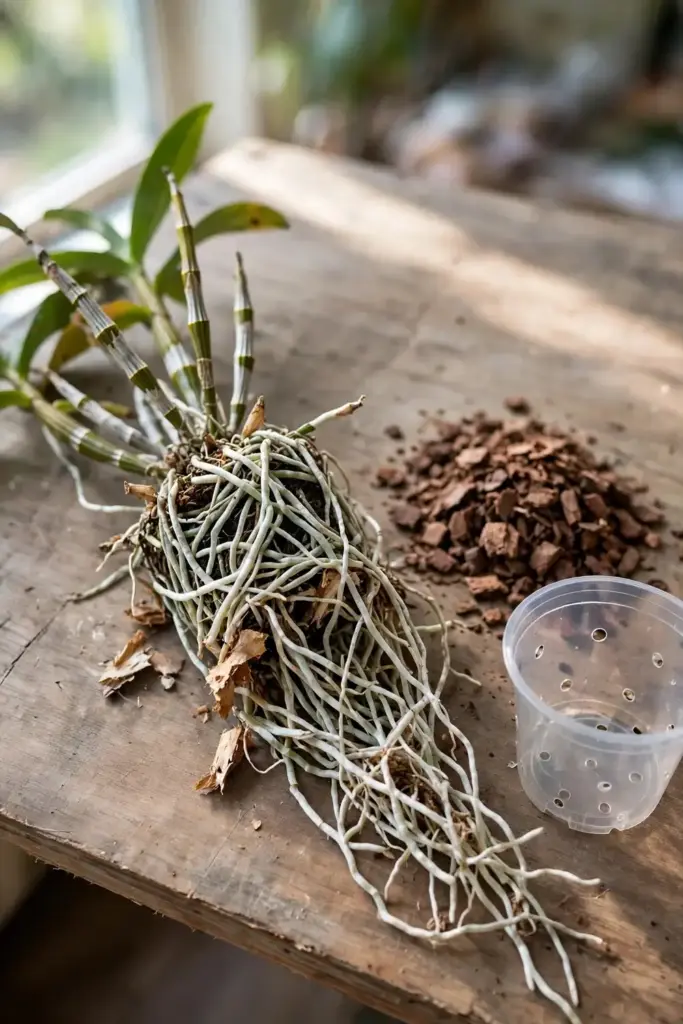
Repot every two to three years, or when the bark breaks down into mush, whichever comes first. The best window is spring, right after flowering finishes and before new growth starts. Slide the plant out, shake off the old mix, and trim only roots that are mushy or papery; firm white or green roots stay. Settle the plant into fresh fine bark at the same depth, staking tall canes so they stand upright. Then hold off: do not water the fresh media for about three days, a pause that lets any root nicks heal instead of rotting, as nursery growers practice. Resume the normal soak-and-dry rhythm after that pause.
10. Feed It Every 2 Weeks Through the Growing Season
Fertilize only while the plant actively grows, from spring through early fall. Use a balanced orchid fertilizer, such as a 20-20-20 formula, at half the label strength every two weeks. The American Orchid Society’s culture notes for the Section Dendrobium group describe heavy feeding during the growth flush, then no fertilizer once growths mature and the rest begins. Reduce feeding in fall and stop entirely during a nobile winter rest, since fertilizer without growth burns roots and can push leafy keikis instead of flower buds. Once a month, water with plain water only to flush accumulated salts from the mix. Choose a urea-free orchid fertilizer if you can find one, since bark-based mixes host the microbes that convert urea slowly, and the plant prefers nitrate and ammoniacal nitrogen it can take up directly. Pale new growth that stays yellow-green despite good light often asks for feeding, while blackened root tips and white salt crusts on the bark surface warn of overfeeding. When in doubt, feed at quarter strength weekly instead of half strength biweekly; the total nutrition matches, and the gentler doses suit the fine roots.
11. Give Nobile a Cool, Dry Winter Rest From October to February
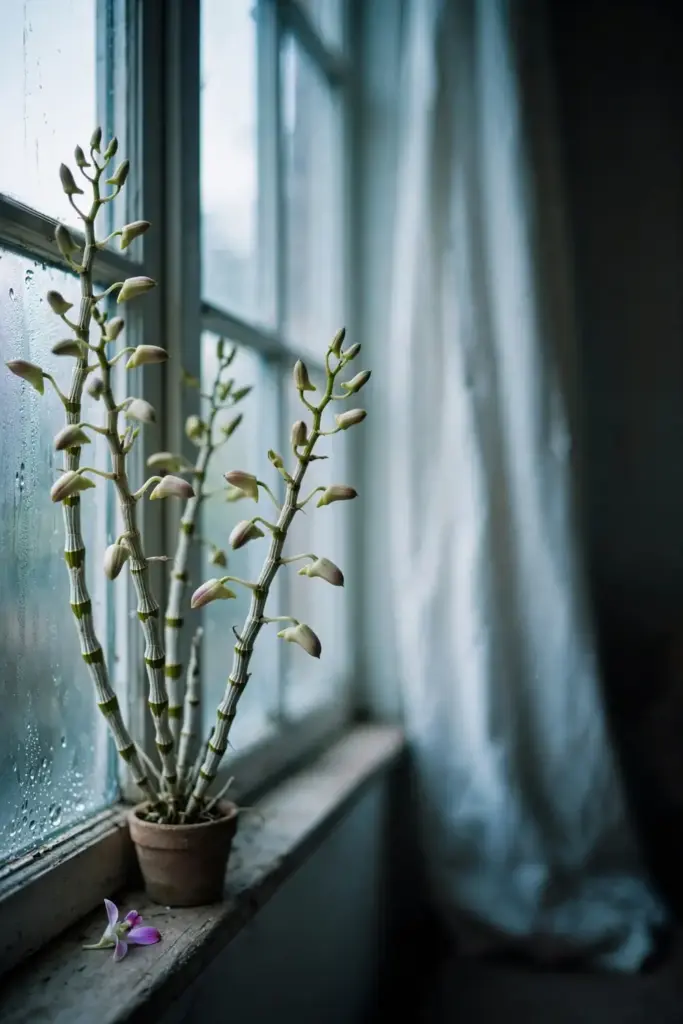
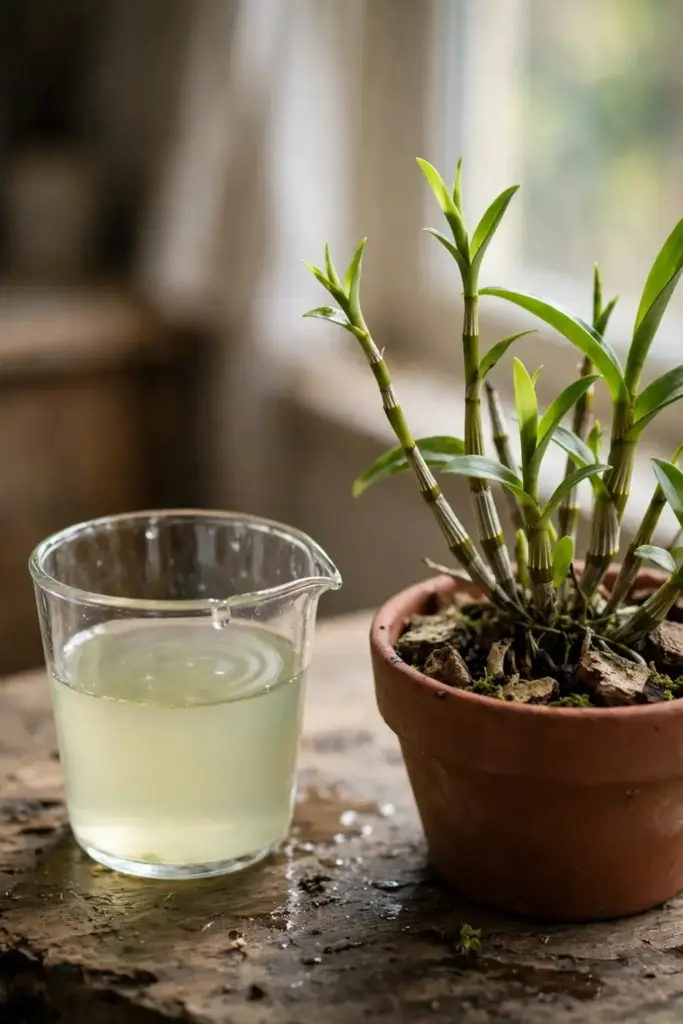
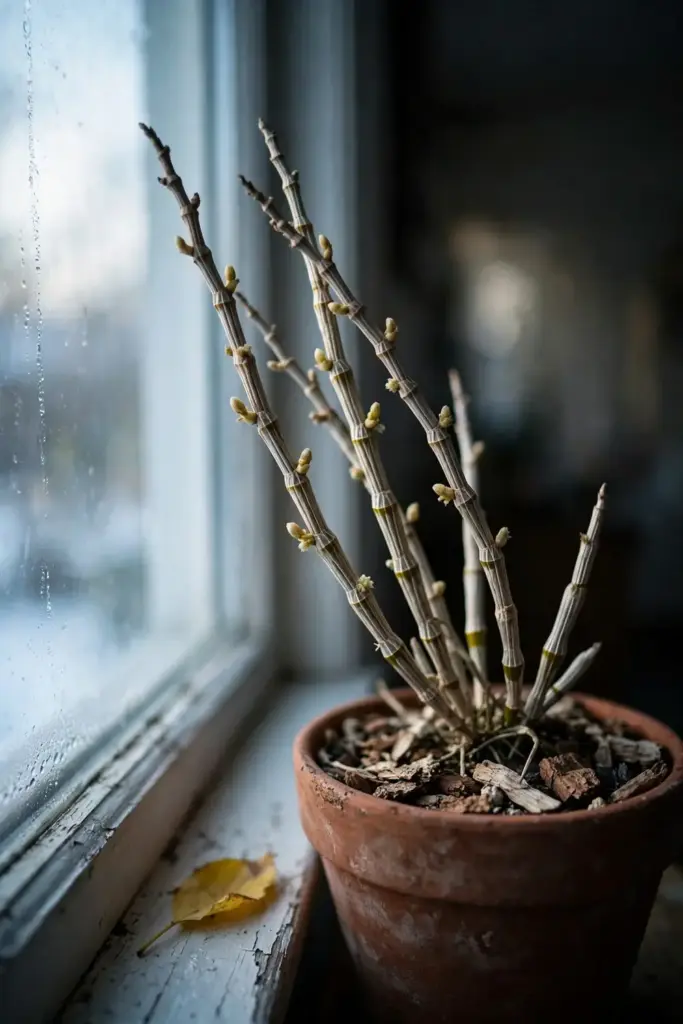
This is the step that decides whether a nobile blooms. From roughly October through February, move nobile types to the brightest cool spot you have, drop night temperatures to 50 to 60°F, and cut watering to almost nothing. Water just enough to keep the canes from shriveling. Give no fertilizer at all. The dry, cool rest tells the plant that the dry season has arrived, and buds form on the leafless canes in response. OrchidWeb’s nobile guide describes exactly this rhythm: outdoors in bright shade through summer, indoors to a south window before frost, then the cool dry rest until buds show. When buds are clearly formed, resume normal watering and raise nights toward 60 to 64°F. Phalaenopsis types skip this section entirely: keep watering and feeding them steadily through winter.
12. Care for It After the Flowers Fade
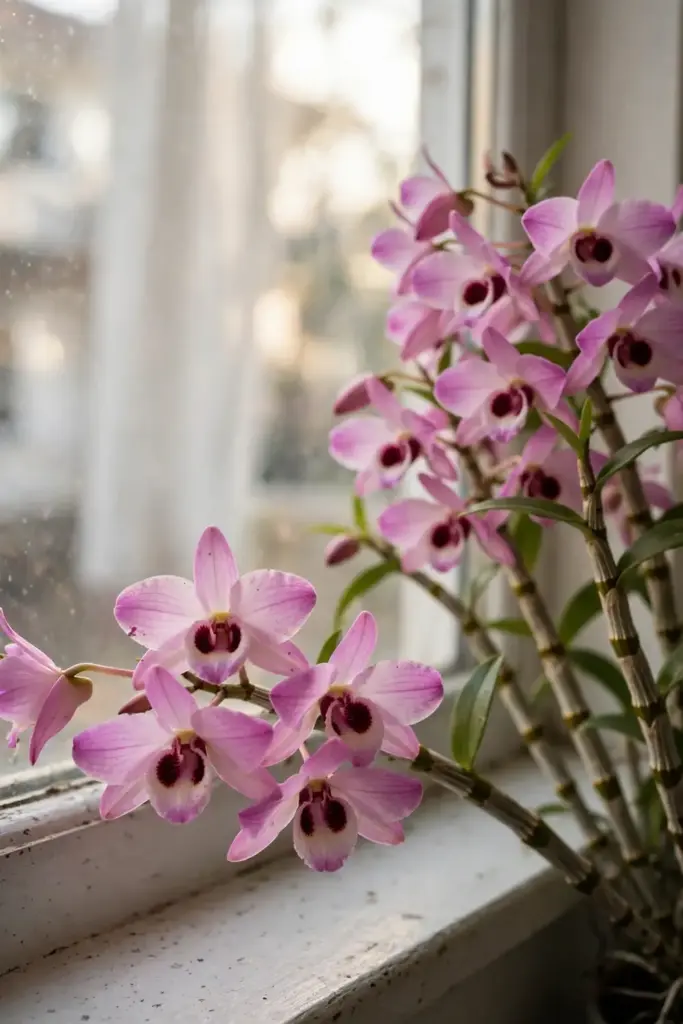
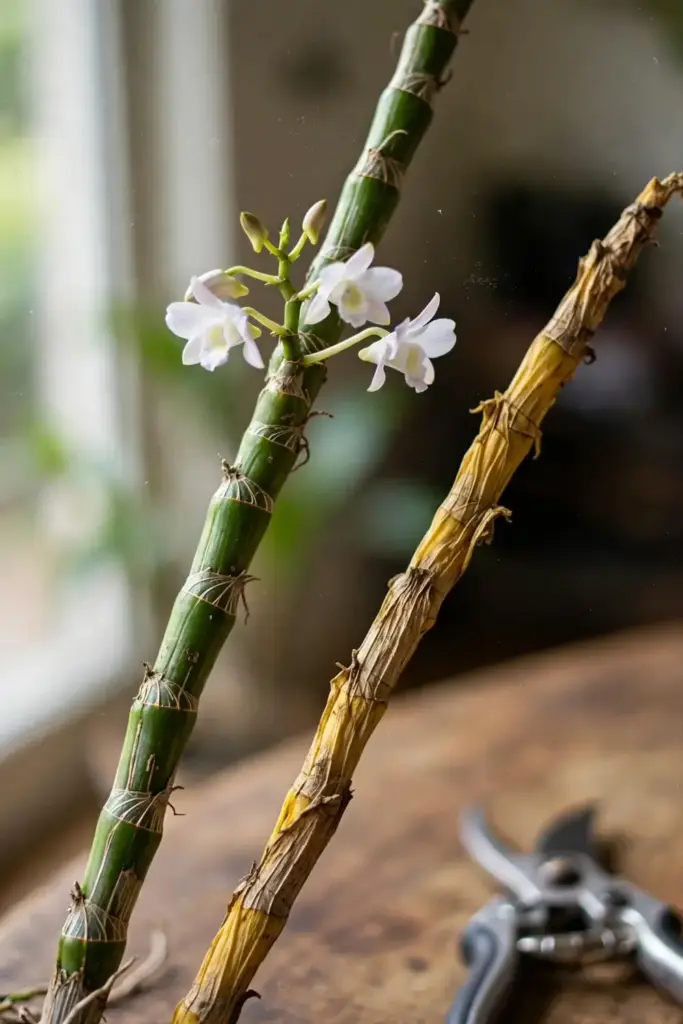
When the last flower wilts, cut the spent flower spike off close to the cane. Leave the cane itself alone. This is the rule beginners break most: a living cane, even a leafless one, stores energy and often produces more flowers in later years. OrchidWeb notes that properly cultured nobile plants can carry 50 to 100 flowers per cane across seasons. Only remove a cane when it is fully spent: woody, shriveled, yellowed, and with at least three healthy canes plus one fully leafed cane remaining on the plant. Cut the dead cane at the base with a sterilized blade. After flowering, a nobile enters its growth phase: resume feeding and normal watering as new shoots rise from the base in spring.
13. Turn Keikis Into Free New Plants
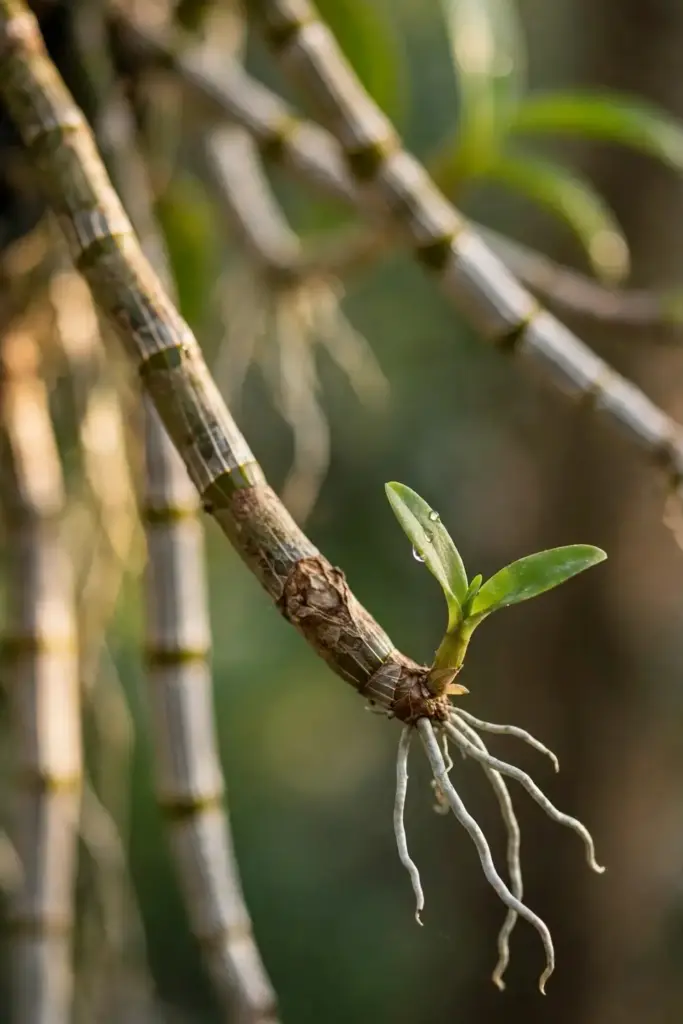
Keikis are baby plantlets that sprout from nodes along a cane, complete with tiny leaves and aerial roots. They appear most often on warm, well-fed plants, and a keiki is a free new dendrobium. Leave it attached until it grows several roots a few inches long and at least two or three leaves of its own. Then twist or cut it gently from the mother cane and pot it in fine bark in a small pot. Mist the little plant lightly for its first weeks while its roots adapt to the mix. Cane cuttings work too: sections of firm, healthy cane laid on moist sphagnum moss sprout buds from dormant eyes, a method the American Orchid Society documents for dendrobiums. Keep the moss barely damp, not wet, and enclose the tray in a clear cover to hold humidity while the buds wake. New shoots appear over several weeks. Once a shoot grows its own roots a few inches long, pot it up like a keiki. Division suits overgrown plants: when a dendrobium fills its pot with six or more canes, unpot it in spring and separate the clump so each division keeps at least three healthy canes with active new growth. Dust cut surfaces with cinnamon or let them air-dry before repotting. Learning to multiply your plant this way is part of learning how to grow dendrobium orchid specimens for the long term, since a mature clump divided every few years stays vigorous indefinitely. Never propagate from seed at home. Seeds need a sterile lab, and the packets sold online do not deliver plants.
14. Watch for Scale, Mealybugs, and Mites
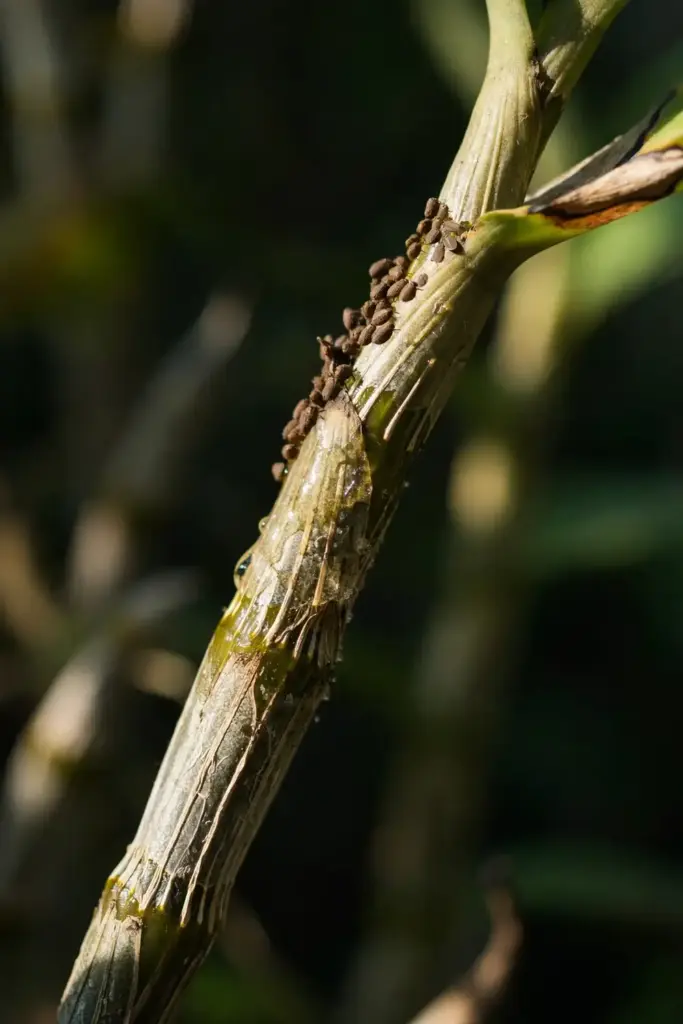
Check leaf joints, cane bases, and new growth monthly for the three usual suspects. Scale insects look like small brown bumps that do not move. Mealybugs show as white cottony clusters in crevices. Spider mites leave fine webbing and stippled, silvery leaves, and they love the dry air of heated winter rooms. Treat small outbreaks by dabbing pests with rubbing alcohol on a cotton swab, then follow with insecticidal soap, repeating weekly until no live pests remain for two weeks. Isolate the plant while treating so pests do not walk to neighboring pots. Viral infections are the serious threat: streaked, distorted flowers or mottled leaves with no pest explanation can signal an orchid virus, which has no cure. Discard a virused plant rather than risking the collection, and sterilize tools between plants as a habit.
15. Avoid These 5 Common Mistakes
Mistake 1: Cutting living canes. The fix: cut only the spent flower spike. Living canes, bare or leafed, feed future blooms.
Mistake 2: Watering a nobile through its winter rest. The fix: from October to February, water only enough to prevent shriveling. Constant winter water rots roots and suppresses buds.
Mistake 3: Potting in regular potting soil. The fix: repot into fine bark mix immediately. Soil suffocates epiphytic roots within weeks.
Mistake 4: Buying “dendrobium seeds” online. The fix: buy a potted plant or a keiki. Seed packets cannot grow dendrobiums outside a lab.
Mistake 5: Giving a nobile phalaenopsis-type care. The fix: check the cane shape and tag, then apply the right winter from the table in section 1. Opposite winters are the whole game.
16. Troubleshoot the Warning Signs
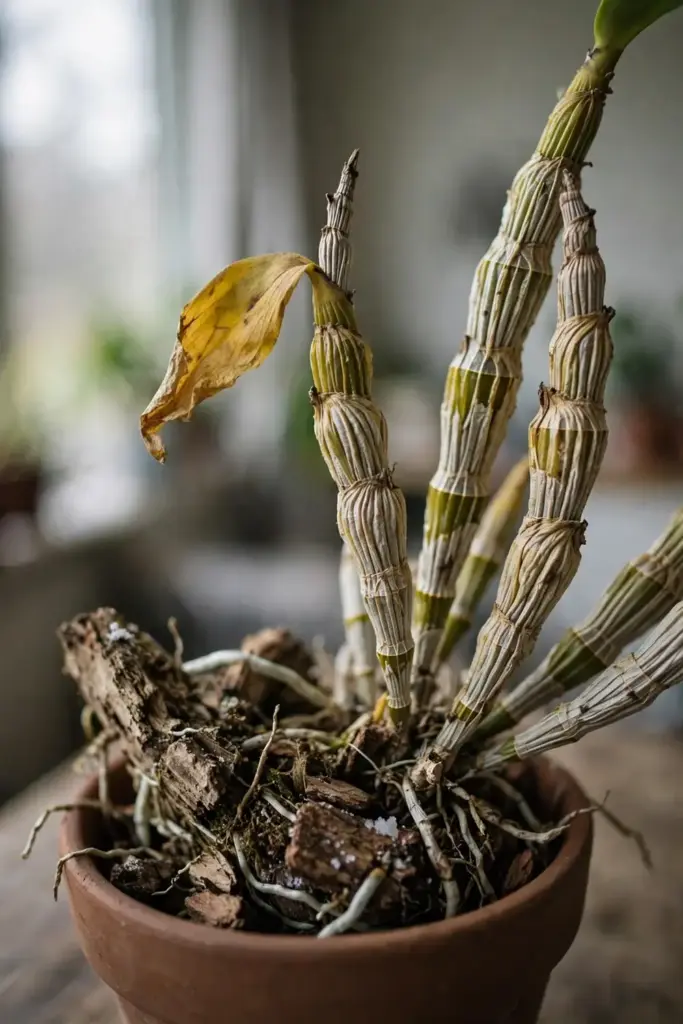
Yellow leaves on a nobile in fall are normal; the plant sheds foliage before blooming. Yellow leaves in spring or summer point to overwatering or too much direct sun, so check the roots and pull the plant back from the glass. Buds that yellow and drop before opening usually mean a cold draft, a heating vent, or a sudden move; keep the plant still and the temperature steady once buds form. Wrinkled, accordion-like canes signal underwatering or dead roots: soak the pot for 15 minutes, then inspect the root mass and repot if the bark has collapsed. No blooms on a mature nobile almost always traces to a skipped winter rest or too little light; restore the cool dry period next fall and move the plant brighter. Black, spreading spots on leaves suggest bacterial infection: cut the affected tissue with a sterilized blade, improve air flow, and keep water off the foliage. New growth that stalls mid-season often traces to salt buildup in old bark; flush the pot thoroughly with plain water and resume the monthly flushing habit. A plant that leans hard toward the window is chasing light: rotate the pot a quarter turn each week for even growth, and consider whether the spot is bright enough overall.
17. Frequently Asked Questions
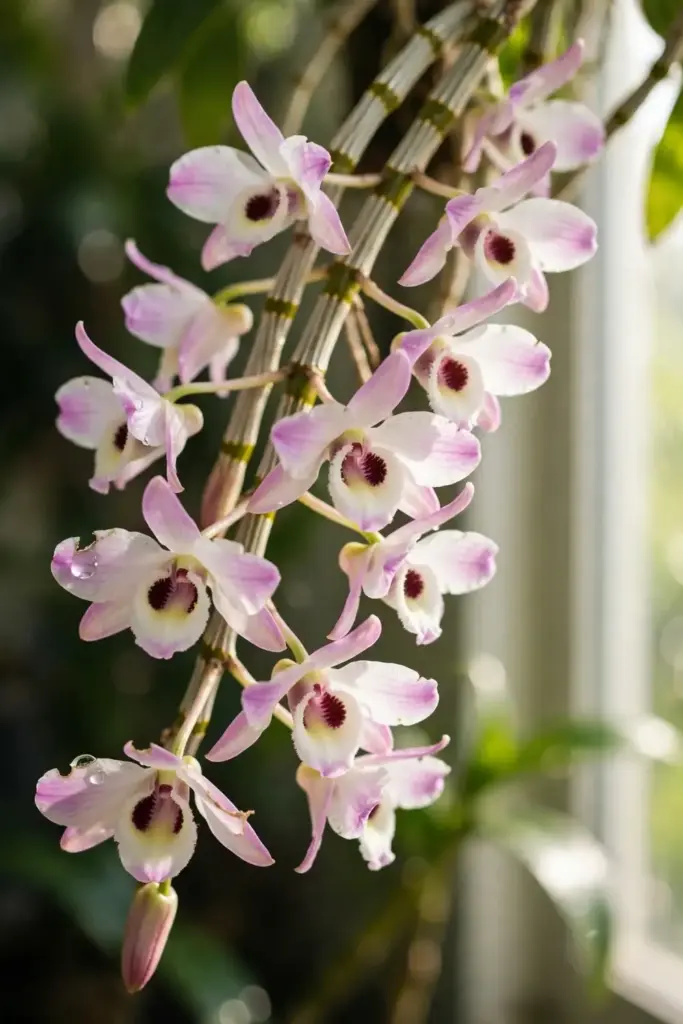
Nobile-type flowers typically last six to eight weeks on the plant, among the longest displays of any indoor orchid, according to OrchidWeb’s nobile care guide. Cool room temperatures stretch the show, while heat and drafts shorten it. Once a flower fades, snip the spike but keep the cane, since the same cane often reblooms in later seasons.
Yes. Dendrobiums adapt well to permanent indoor life if the light is strong enough. An east or south window, or a grow light run 12 to 14 hours daily, covers their needs. Nobile types still need their cool, dry winter rest indoors, so move them to your coolest bright room from October to February and cut watering nearly to zero.
Keikis instead of buds usually means the plant stayed too warm and too wet when it wanted a rest. High nitrogen feeding late in the season pushes the same response. Next fall, give a nobile its cool, dry rest with no fertilizer. The keikis themselves are a bonus: pot them up once their roots reach a few inches.
No, not while they are firm. Leafless canes store water and energy and frequently flower again. Remove a cane only when it turns woody, shriveled, and yellow with at least three healthy canes remaining, cutting it at the base with a sterilized blade. Cutting living canes is the fastest way to shrink future bloom counts.
Match the type to its winter. For nobile types, the trigger is a cool, dry rest: nights of 50 to 60°F and almost no water from October to February, plus strong light. For phalaenopsis types, the trigger is maturity and steady warmth: keep feeding and watering, and ensure 12 to 14 hours of bright light daily. A 10-degree day-to-night temperature drop helps both types set buds.
No. Shi hu names the dried stems of specific Dendrobium species used in traditional Chinese practice, such as Dendrobium nobile and Dendrobium officinale. A store-bought nobile hybrid was bred for flowers, not for stem material, and the two are not interchangeable. Grow your plant for its blooms and leave medicinal questions to qualified practitioners.
18. Where to Go From Here
You now know how to grow dendrobium orchid plants indoors by type, not by guesswork: identify nobile versus phalaenopsis type, give bright indirect light and a 10-degree night drop, water the epiphyte way, rest the nobile cool and dry, and never cut a living cane. Start this week by checking your plant’s tag and cane shape against the table in section 1, then set its winter plan before fall arrives. A dendrobium that blooms on schedule earns its place among the most rewarding indoor plants you can grow, returning 50 to 100 flowers per cane, year after year, from a plant that asks for remarkably little once its rhythm is understood.