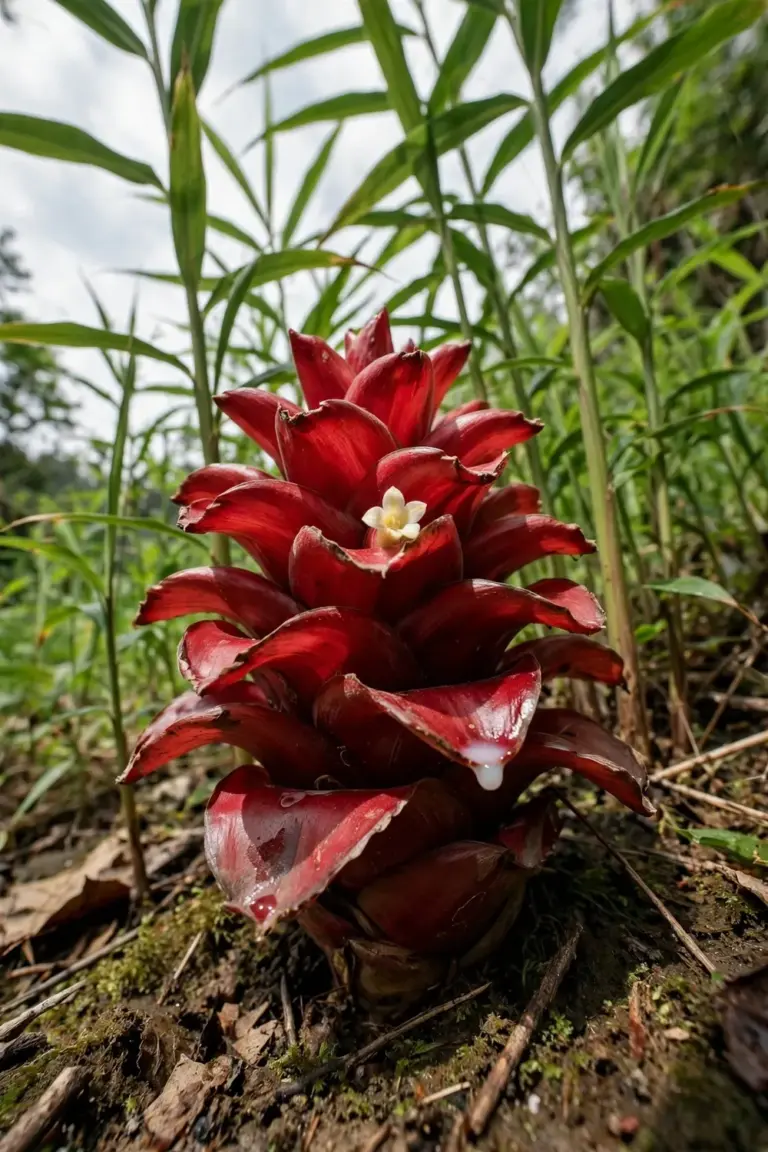

Plant 20 bulbils this spring and you can dig your first nagaimo tubers before the first frost. Chinese yam is Dioscorea polystachya, the hardy yam of northern China and Japan, where cooks know it as nagaimo and herbalists as shan yao. This guide shows how to grow Chinese yam from bulbils, the clone-your-vine shortcut that skips the seed lottery entirely. The whole method runs 22 moves: identity check, containment decision, propagation, trellis, planting, one season of care, and the deep dig.
One warning belongs up front because it decides everything else. This vine naturalizes. North Carolina State Extension lists it as invasive in several states, with escaped populations spreading from Louisiana to Vermont, and the Missouri Department of Conservation has recorded it escaping into southeastern forests. Grow it in a pot, a raised bed with a root barrier, or a bed you patrol monthly. Never plant it near woods or let bulbils scatter.
What Chinese Yam Actually Is
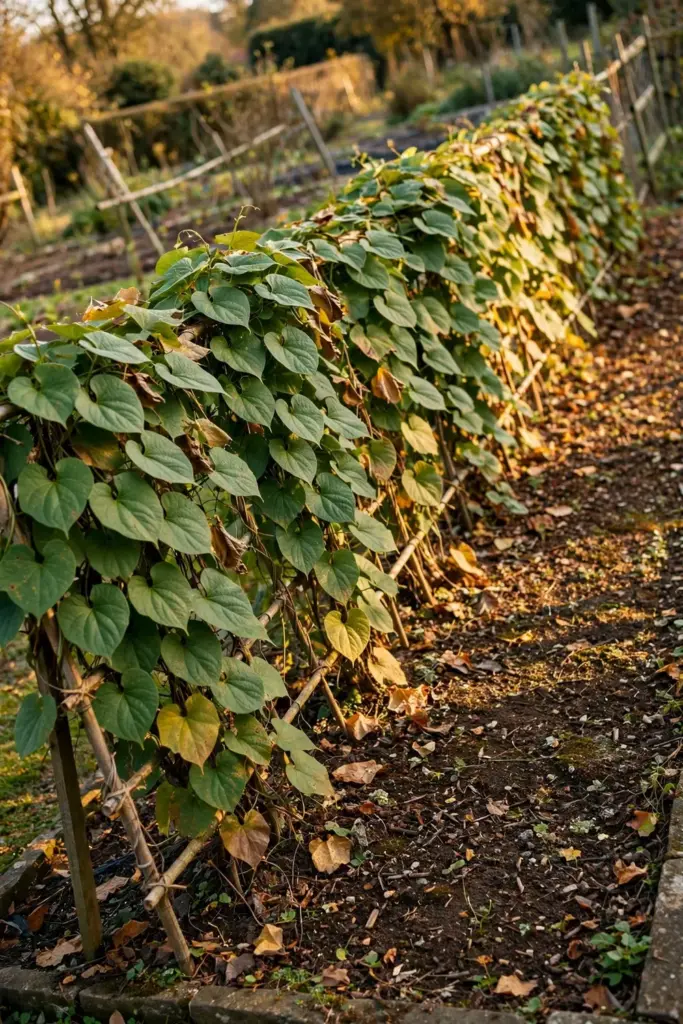
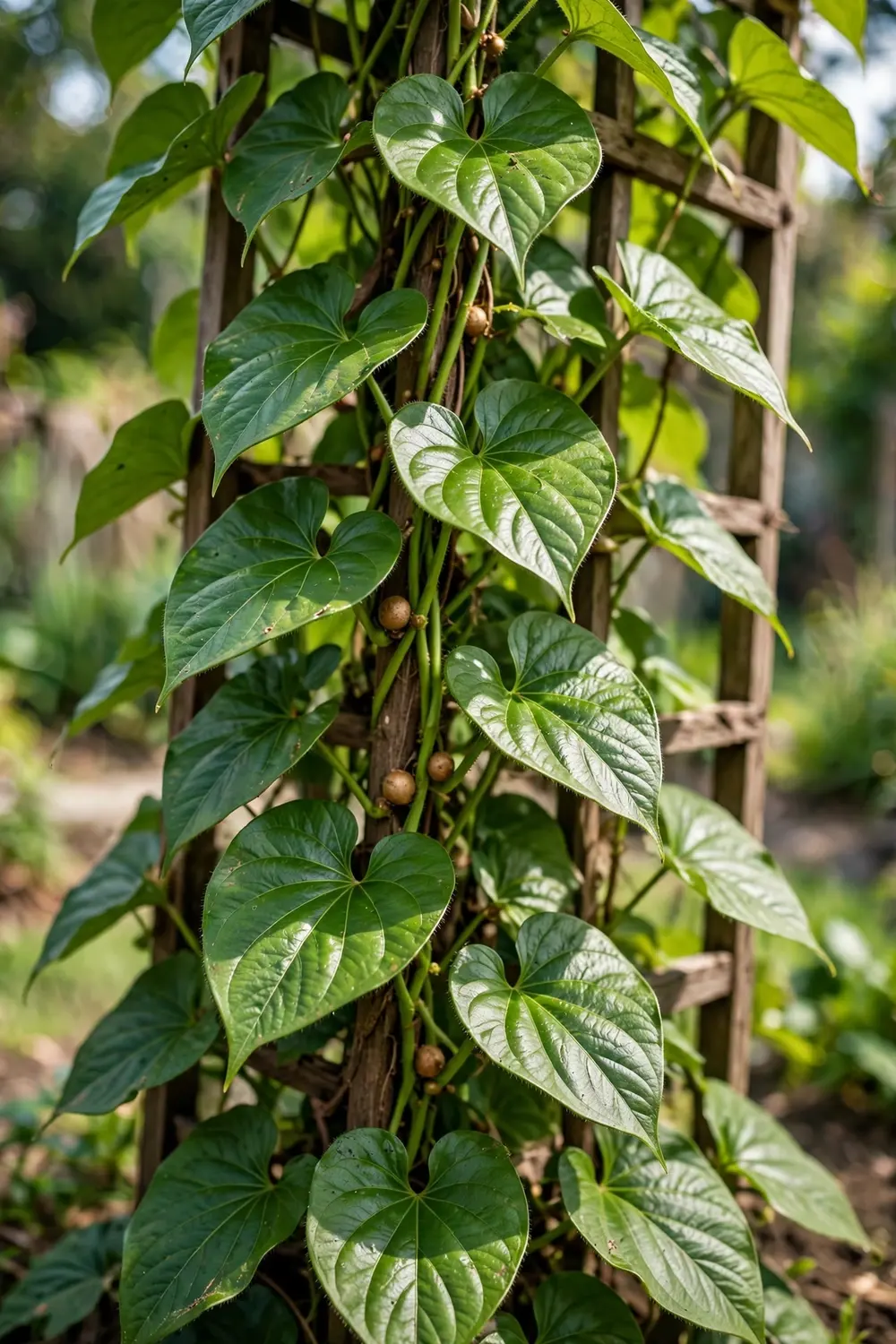
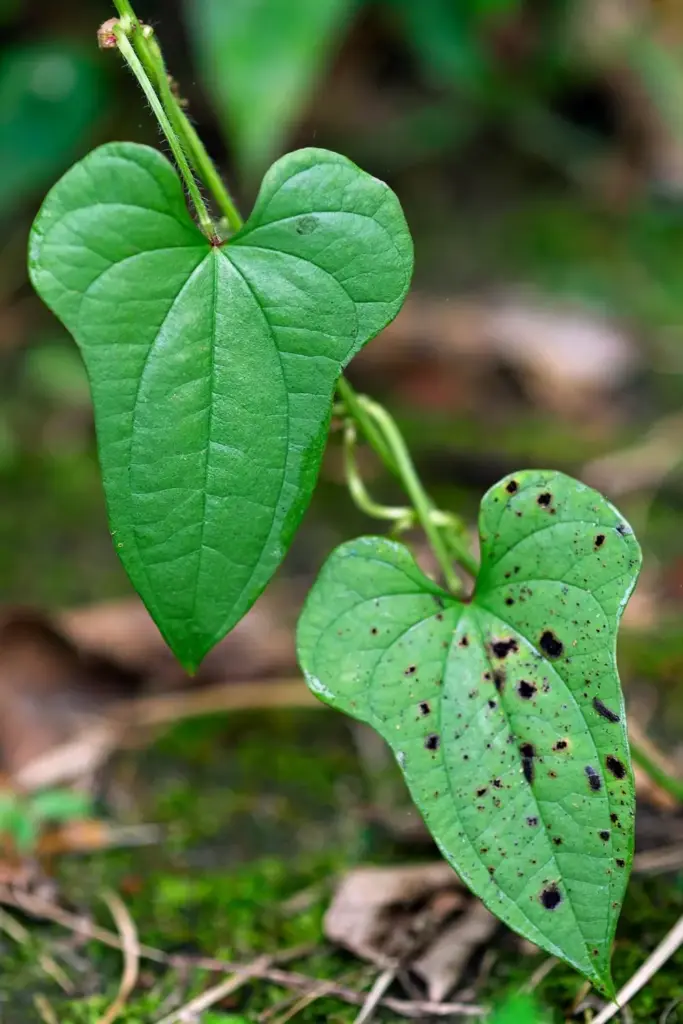
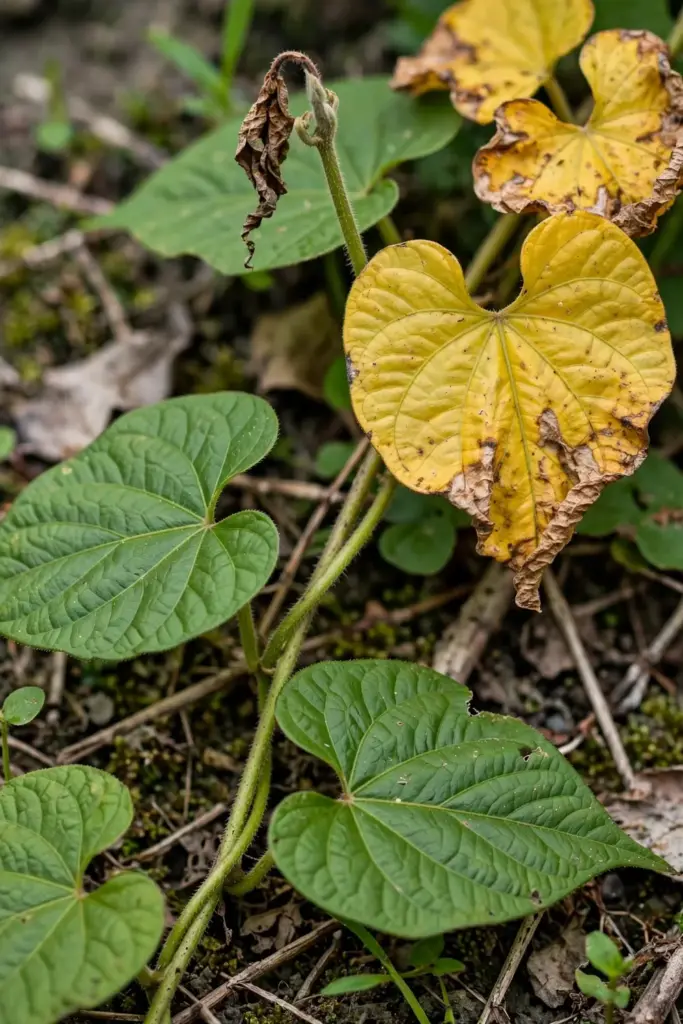
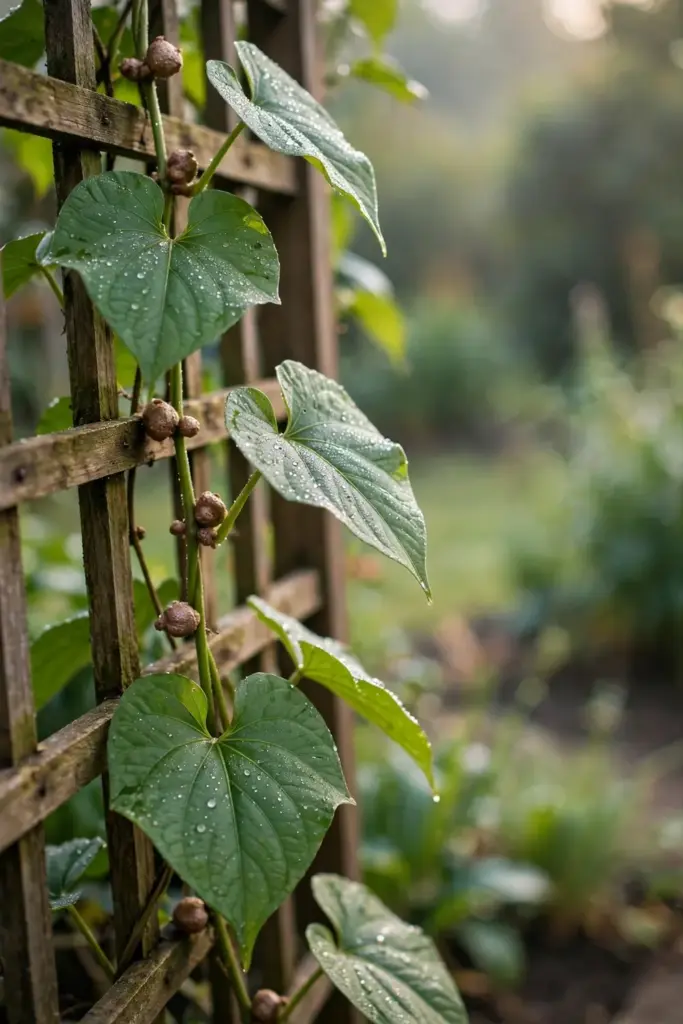
Chinese yam is Dioscorea polystachya, a twining perennial vine in the yam family. It is also sold under its older names Dioscorea opposita and Dioscorea batatas, which are the same plant. The vine climbs 11 feet or more by twining, carries glossy heart-shaped leaves 3 to 6 inches long, and produces two harvests in one: small round bulbils in the leaf axils from June through September, and one long vertical tuber underground that reaches 2 to 3 feet deep. The flowers are small, white, and cinnamon-scented in midsummer.
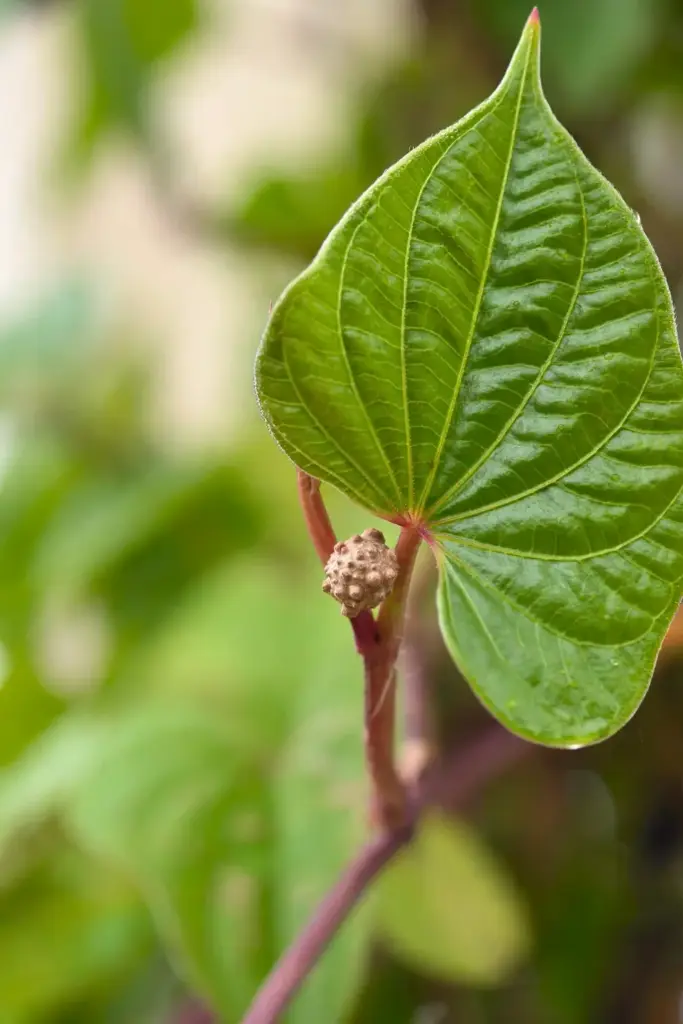
Three look-alikes cause most of the confusion, and getting them right matters. Dioscorea bulbifera, the air potato, also drops bulbils from its leaf axils, but its bulbils are not casual food and it is a far more aggressive invader. Dioscorea alata, the water yam, grows a fatter, shallower tuber and needs a longer tropical season. Only D. polystachya is the true nagaimo, the frost-tolerant yam hardy in USDA zones 5 through 9. When you buy starting material, check the Latin name on the label. Common names lie. Latin names do not.
The plant is not new to Western gardens. It was introduced as early as the 19th century for culinary and cultural uses, which is why old garden books list it under Dioscorea batatas. That long history cuts both ways. Gardeners have had generations to learn its habits, and the plant has had generations to escape where it was not watched. The modern advice is simple: enjoy a plant with two centuries of kitchen history behind it, and give it the containment a proven naturalizer deserves.
The Honest Truth Before You Plant
Two realities shape every decision here, so face them now. First, the tuber grows straight down, 2 to 3 feet, and Wisconsin’s invasive-species program notes specimens reaching 3 feet with the ability to resprout from any piece left behind. Harvest day is real digging work, not a casual pull. Sandy, stone-free soil and a raised bed turn a backbreaking job into a manageable one. Second, every bulbil that falls is a new plant. The vine spreads by seed, tubers, and those small aerial tubers in the leaf axils. A monthly patrol that picks up fallen bulbils is the price of growing this plant responsibly. Skip the patrol and the vine will remind you why extension services write factsheets about it.
Chinese Yam at a Glance
| Fact | Detail |
|---|---|
| Botanical name | Dioscorea polystachya (syn. D. opposita, D. batatas) |
| Common names | Chinese yam, nagaimo, shan yao, cinnamon vine |
| Hardiness | USDA zones 5a through 9b |
| Vine length | 11 feet or more, twining |
| Light | Full sun to partial shade |
| Soil | Deep, loose, high in organic matter, well drained |
| Tuber depth | 2 to 3 feet straight down |
| Season | One full growing season, harvest after first frost |
| Starting material | Bulbils, tuber pieces, or seed |
Bulbil vs Tuber Piece vs Seed: Pick Your Start
| Method | Time to harvest | Cost | Reliability | Best for |
|---|---|---|---|---|
| Bulbils | One season for small tubers, two for full size | Free from your own vine | High, exact clone of parent | Beginners and container growers |
| Tuber pieces | One season for full-size tubers | Cost of a market tuber | High if the piece is firm | Growers who want a big first harvest |
| Seed | Two to three seasons | Cheapest | Low, slow and variable | Breeders and the patient |
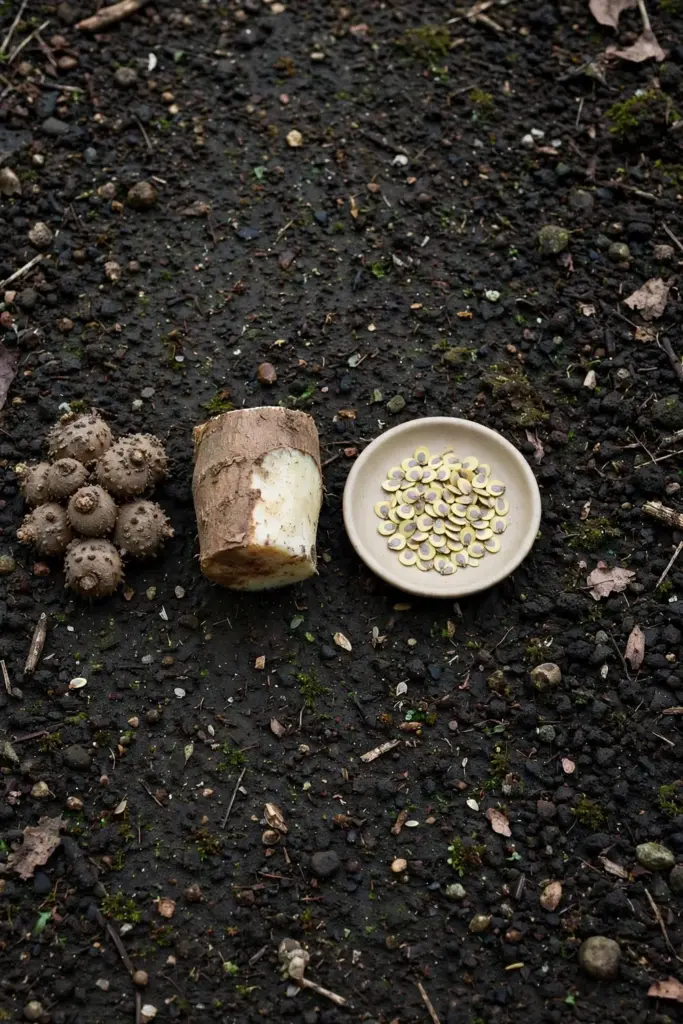
Bulbils win for almost every home grower. They are clones, so the vine you harvest from is the vine you already know. They cost nothing once you have one plant. And they are the tidiest starting material to handle. Tuber pieces give a bigger first-year crop but demand a large, healthy mother tuber. Seed is the slowest lane and the least predictable. This guide uses bulbils as the main method and notes where tuber pieces differ.
Step 1: Collect Bulbils Before the First Frost
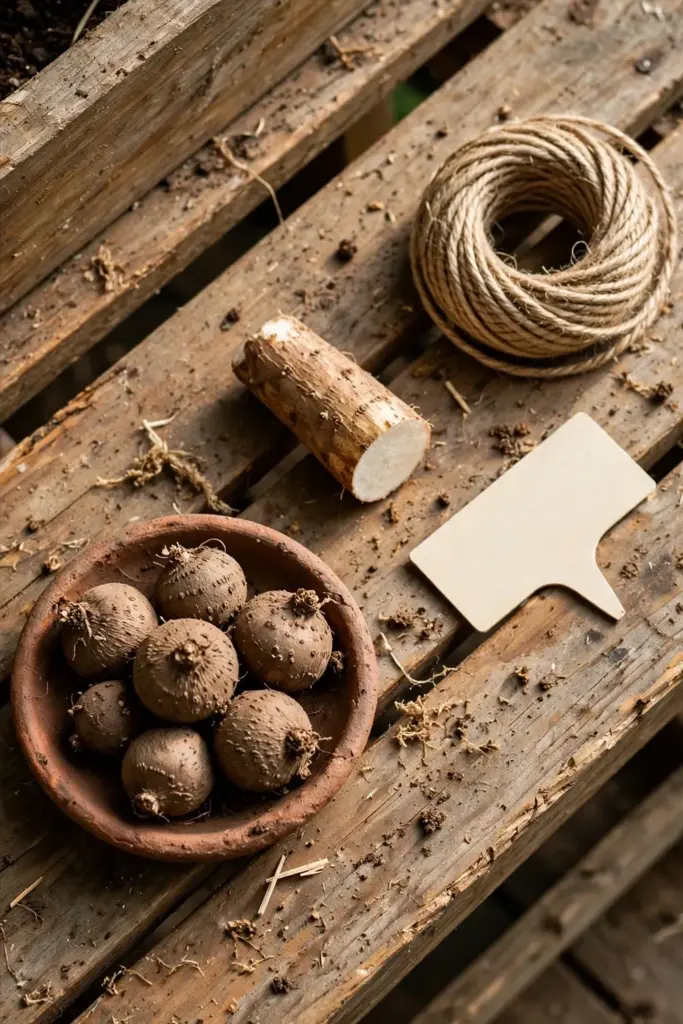
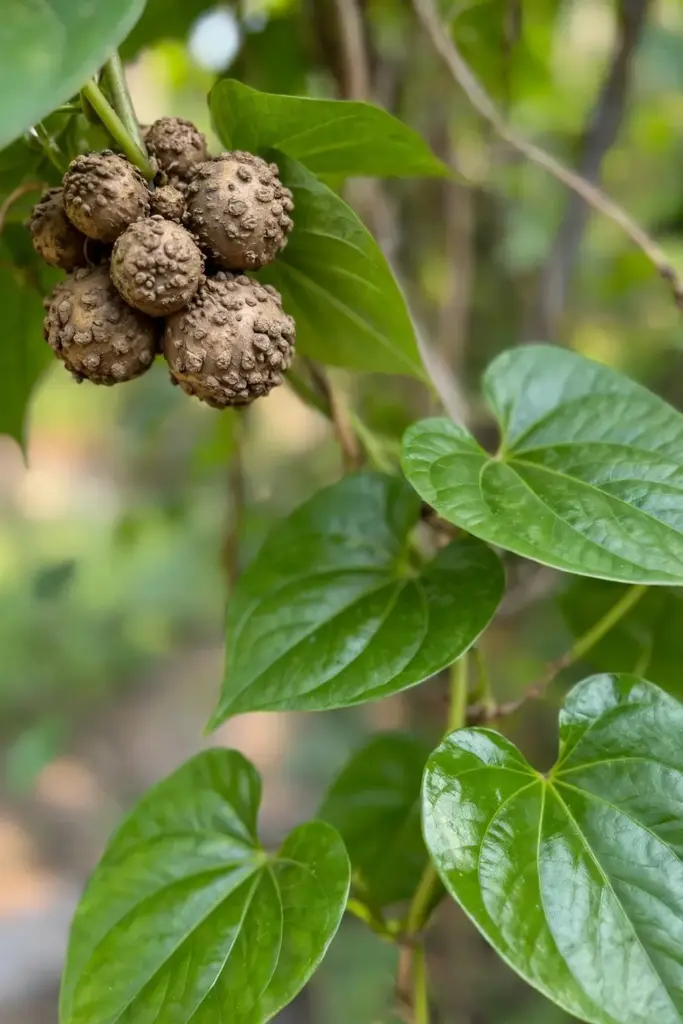
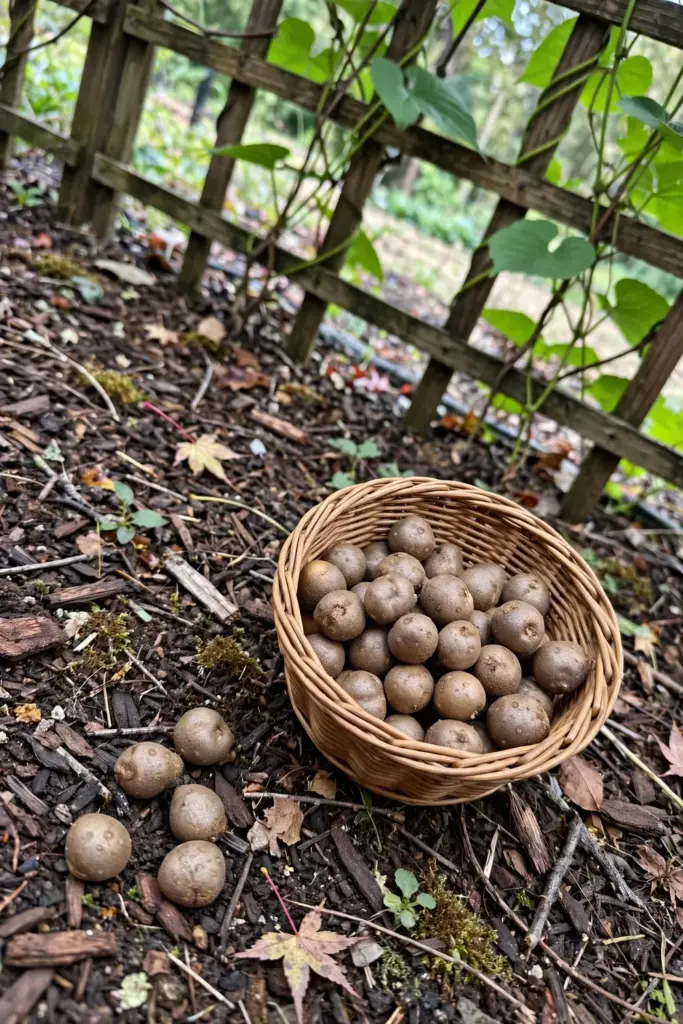
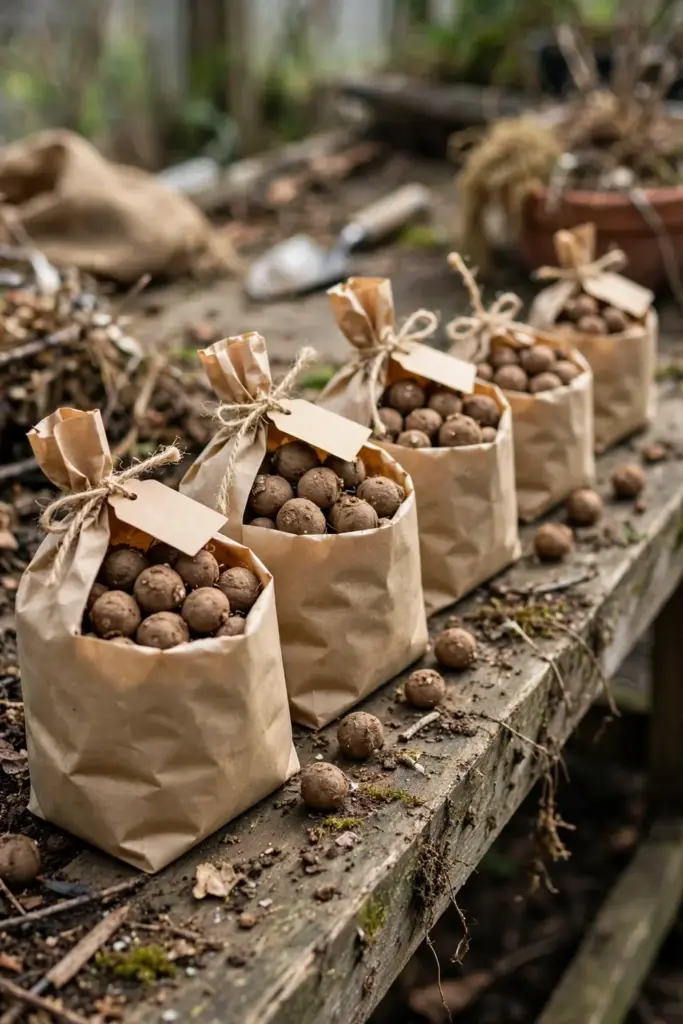
Watch the leaf axils from late summer on. The bulbils start pea-sized and swell to just under 2 centimeters, warty and round, each sitting where the leaf stalk meets the vine. Wisconsin’s invasive-species factsheet records them forming from June through September, and they can sprout within two weeks of forming if they touch soil. Collect them while they are still firmly attached and the skin is unblemished. Twist, do not yank. A mature vine drops dozens in a season, so one plant supplies next year’s whole bed.
Step 2: Store Bulbils Dry Until Spring
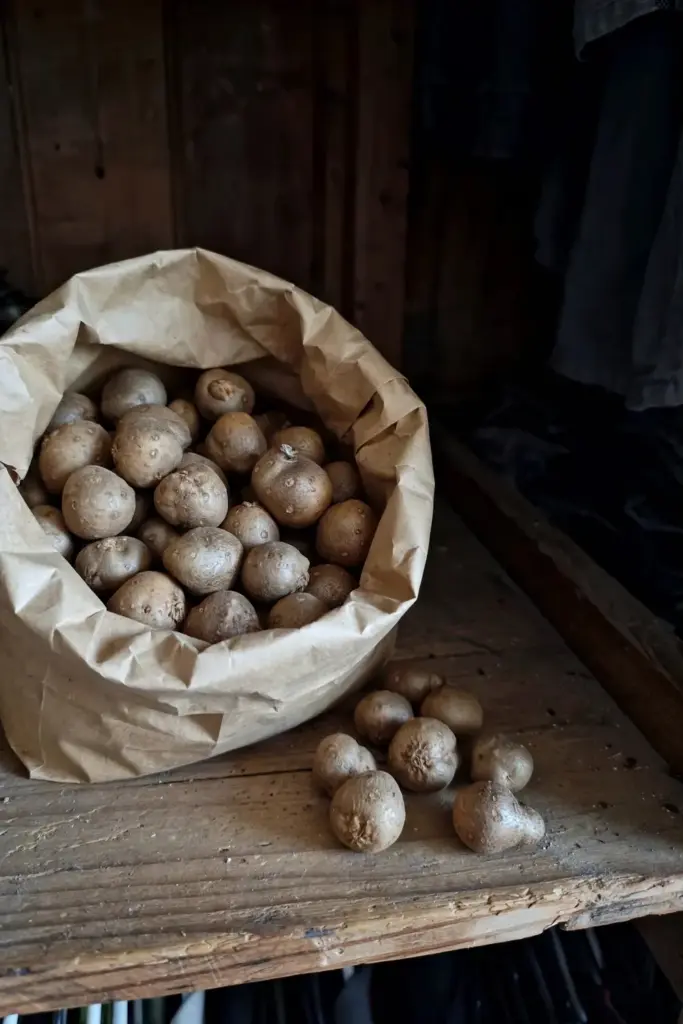
Spread the harvest in a single layer on a tray and let the skins cure for a week in a cool, shaded spot with moving air. Then move them into a paper bag or a cardboard box lined with dry peat, and store the box in a cool, dry place like an unheated closet or garage shelf. Check monthly and discard any that soften or mold. Bulbils are living tissue with a thin skin. Warmth wakes them early and damp wakes the rot. A refrigerator vegetable drawer works if the bag stays dry, but a cool closet does the job for most growers.
Step 3: Choose a Site in Zones 5 Through 9
Chinese yam is the most cold-tolerant of the edible yams, hardy from zone 5a to zone 9b according to North Carolina State Extension. Pick a spot with full sun to partial shade. Six or more hours of direct sun grows the biggest tubers, but the vine tolerates afternoon shade in hot climates, and a little shade in zones 8 and 9 actually reduces water stress in high summer. Avoid frost pockets at the bottom of slopes, since late spring frosts nip young shoots even though established plants are hardy. A south-facing wall gives extra warmth in marginal zone 5 gardens and adds a sturdy anchor for the trellis.
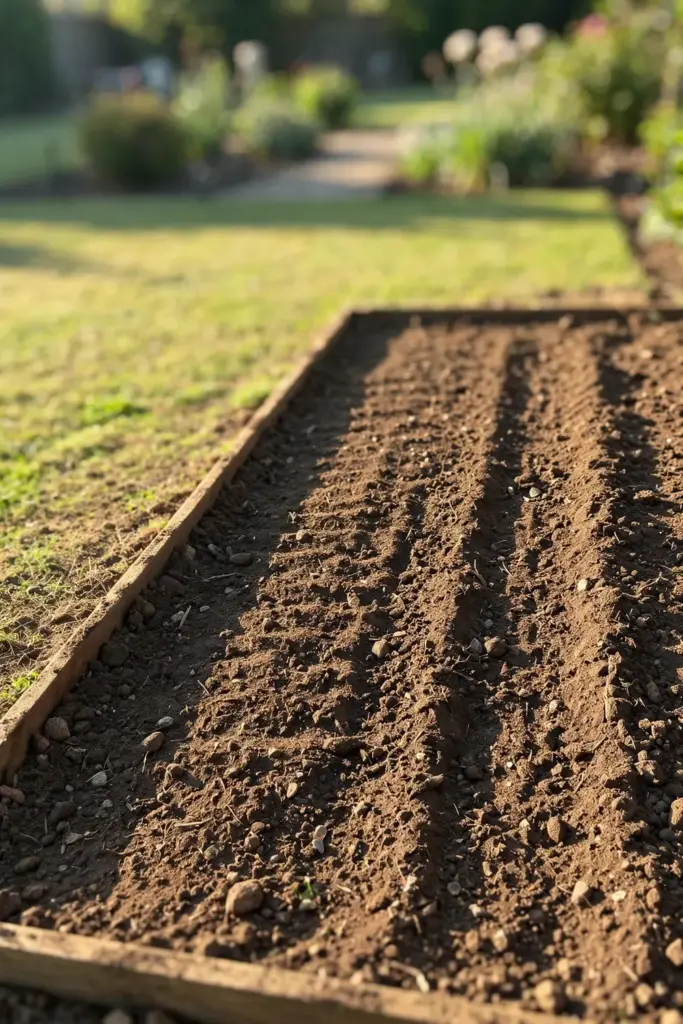
Keep the bed away from woodland edges, fence lines you cannot reach, and any ground where fallen bulbils could wash into wild areas. A site you walk past weekly is a site you will patrol. Convenience is a containment strategy.
Step 4: Build the Trellis Before You Plant
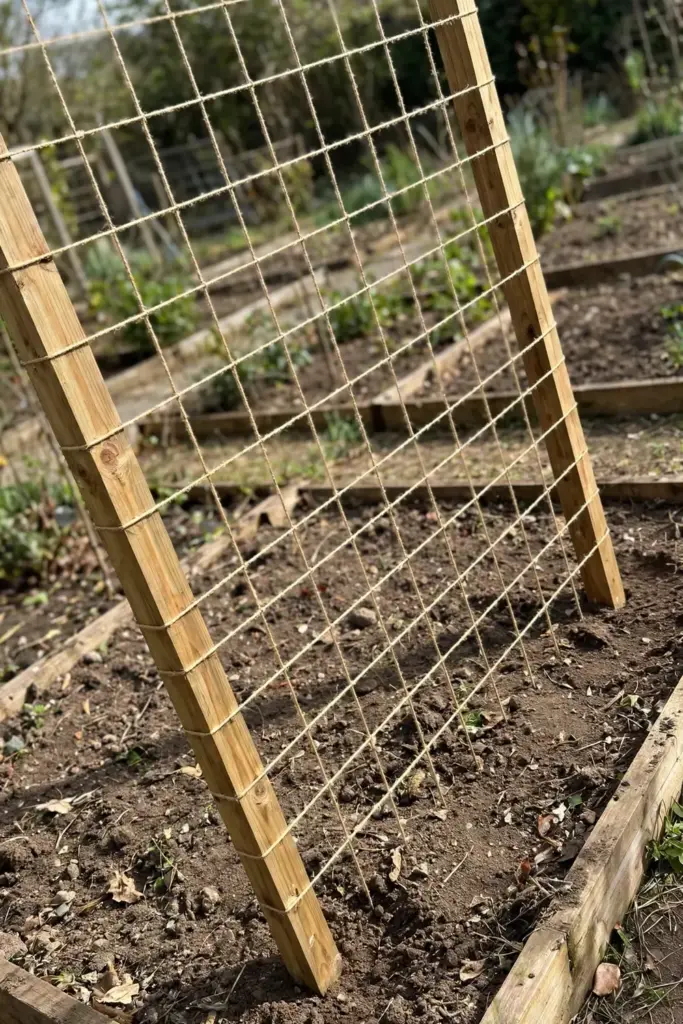
The vine starts climbing within days of sprouting and does not wait for you to finish the support. Sink two 8-foot posts 2 feet deep, 6 feet apart, and string garden twine or wire between them in a grid. The vine twines on its own and needs no tying. A cattle panel arched between two beds works even better and holds the weight of a full-season vine. Build it before planting day. Every grower who trellises late ends up untangling a knotted vine from the ground, and a stressed vine makes a smaller tuber. For design ideas, the spring garden trellis ideas collection shows structures strong enough for heavy vines.
Step 5: Dig the Bed 24 Inches Deep
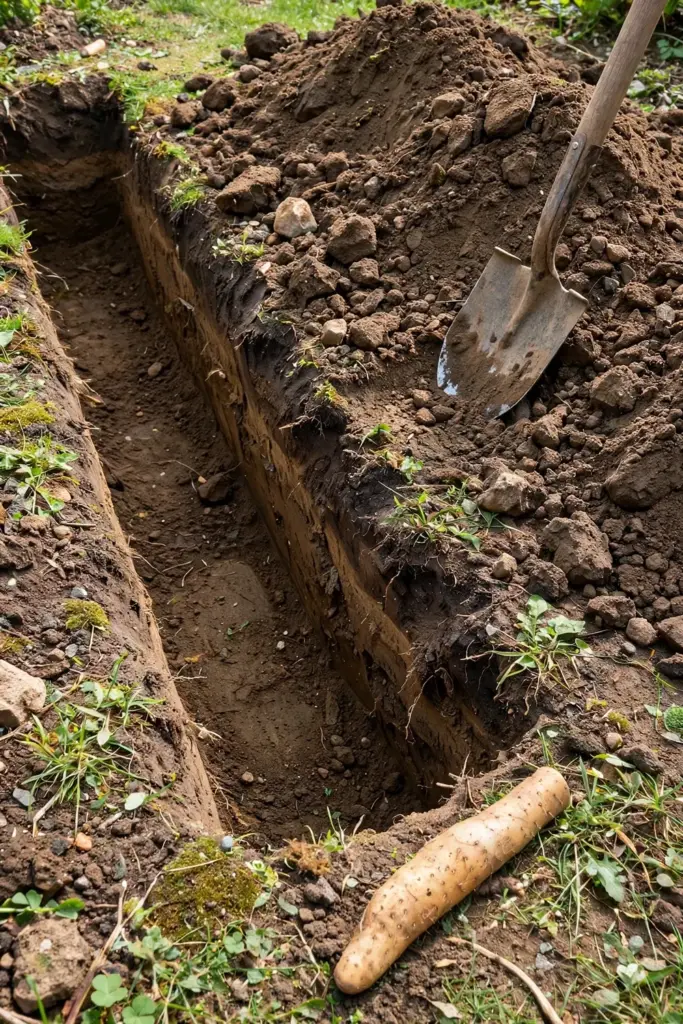
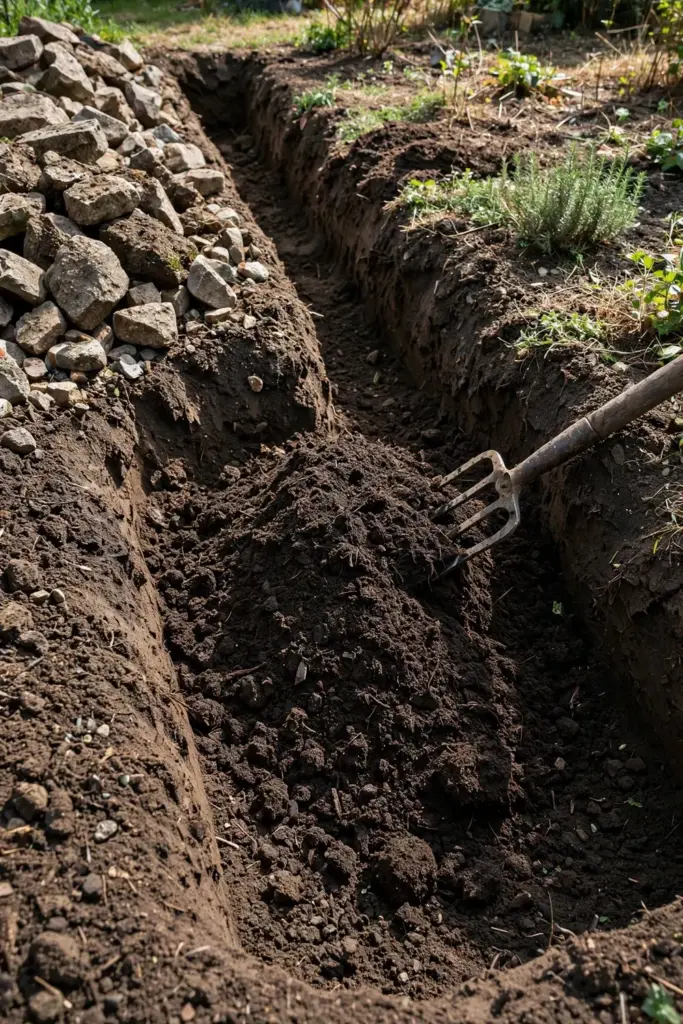
This step decides your harvest more than any other. The tuber drives straight down 2 to 3 feet, so it needs soil it can push through. Dig the bed 24 inches deep and remove every stone larger than a marble. Fork in 4 inches of finished compost. The soil should be loose enough that you can push your whole hand in without force. Heavy clay is the enemy here. In clay ground, skip the in-ground bed and use the raised-bed method in Step 9 instead. A stone or a hardpan layer bends the tuber sideways and gives you a forked, broken harvest.
Step 6: Plant Bulbils After the Last Frost
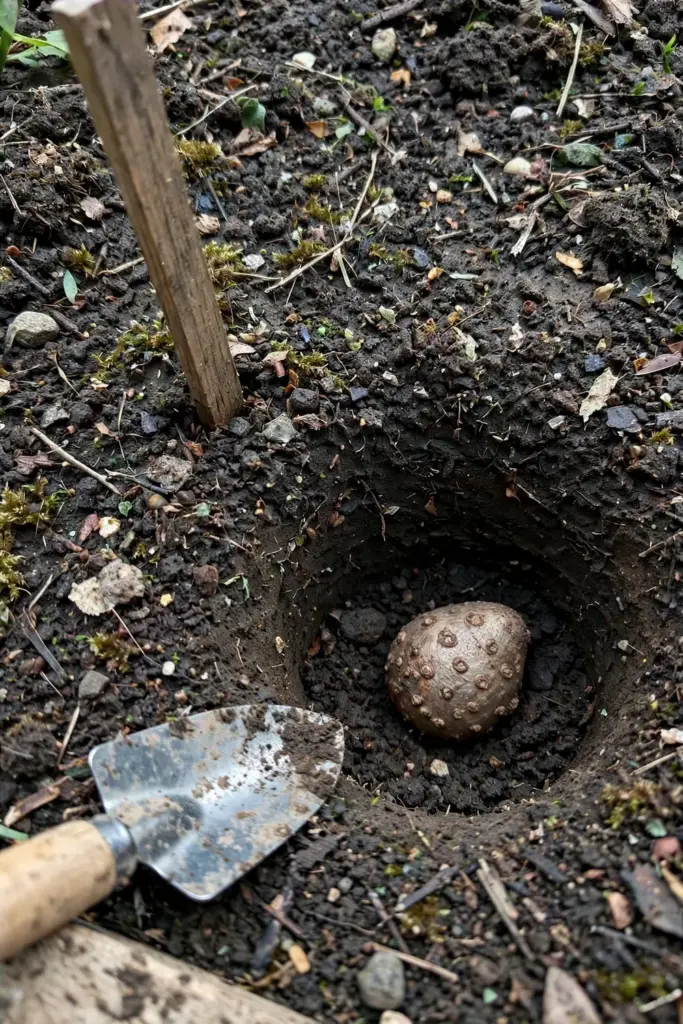
Wait until soil temperatures hold above 60 degrees and all frost danger has passed. Set each bulbil 2 inches deep with the sprout eye facing up, 6 inches apart along the trellis line. Water the bed well once, then mulch with 3 inches of straw. Tuber pieces go in the same way but 4 inches deep and 12 inches apart, with the cut face callused for two days before planting. Mark every planting spot with a labeled stake. Sprouts can take 3 to 4 weeks to appear, and an unmarked bed invites accidental digging.
Step 7: Train the First Shoots
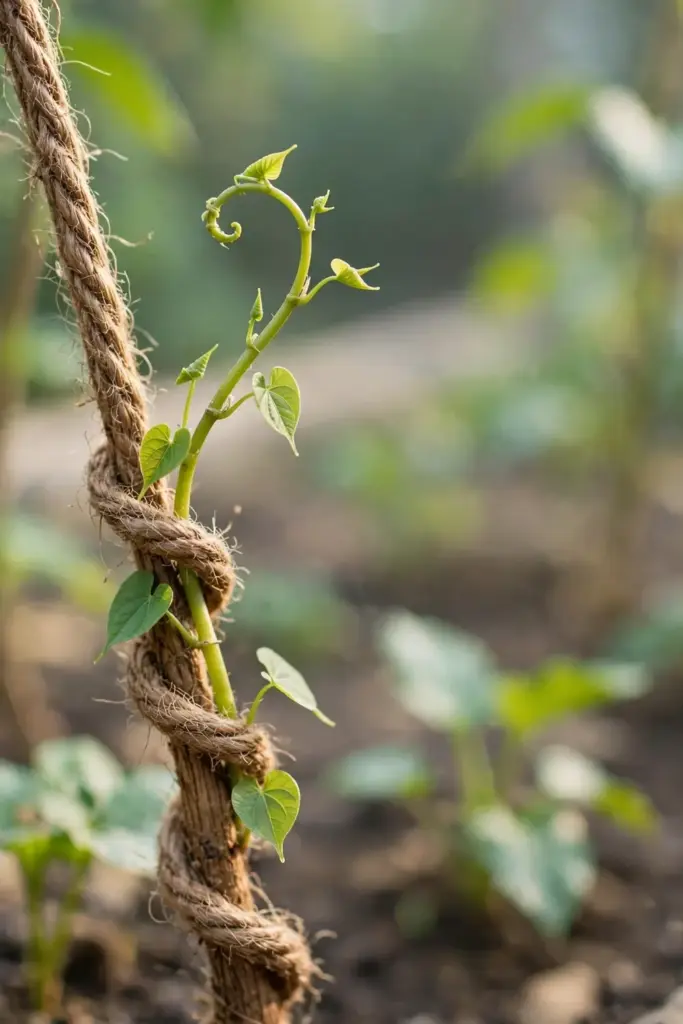
When shoots reach 6 inches, wind each one gently around the nearest twine in the direction it wants to go. Chinese yam twines on its own, so you are only giving it a starting direction, not tying it. Check back in three days, since a shoot that misses the twine will grab its neighbor instead. Thin to the strongest shoot per planting spot once they reach a foot tall. Extra shoots compete for the same tuber. One strong vine per spot grows one strong tuber.
Step 8: Water Deeply and Steadily
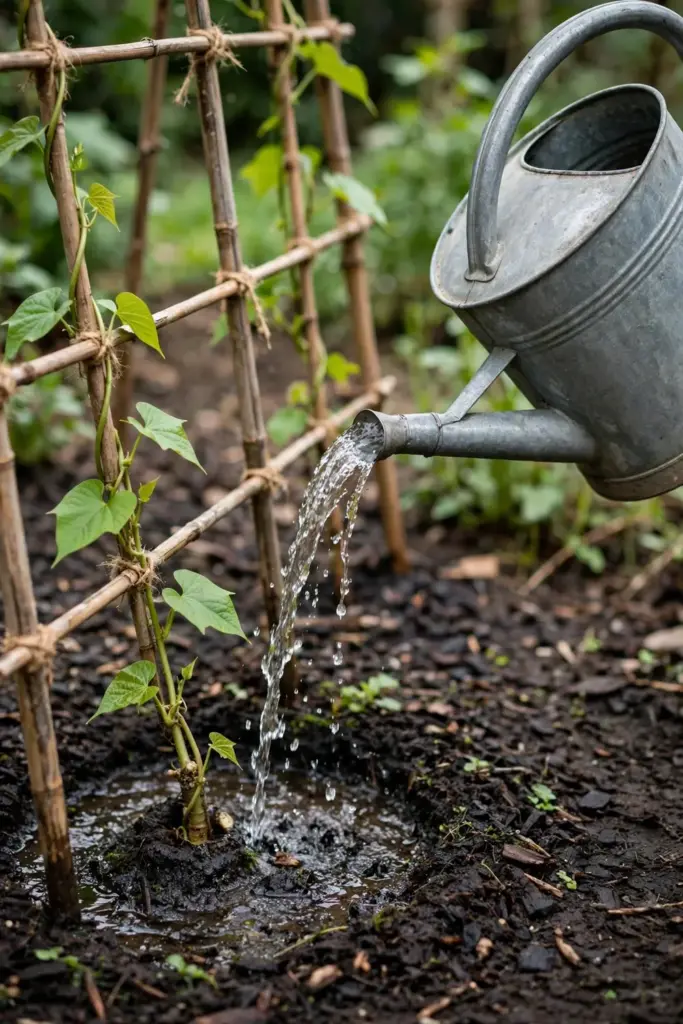
Give the bed about 1 inch of water per week, delivered in one or two deep soakings rather than daily sprinkles. Deep watering matches the tuber’s deep growth habit and trains roots downward. Mulch holds the moisture between waterings. Cut back in late summer when the leaves start to yellow. A dry finish tells the vine to move its energy into the tuber instead of new top growth.
Step 9: Feed Lightly, Twice
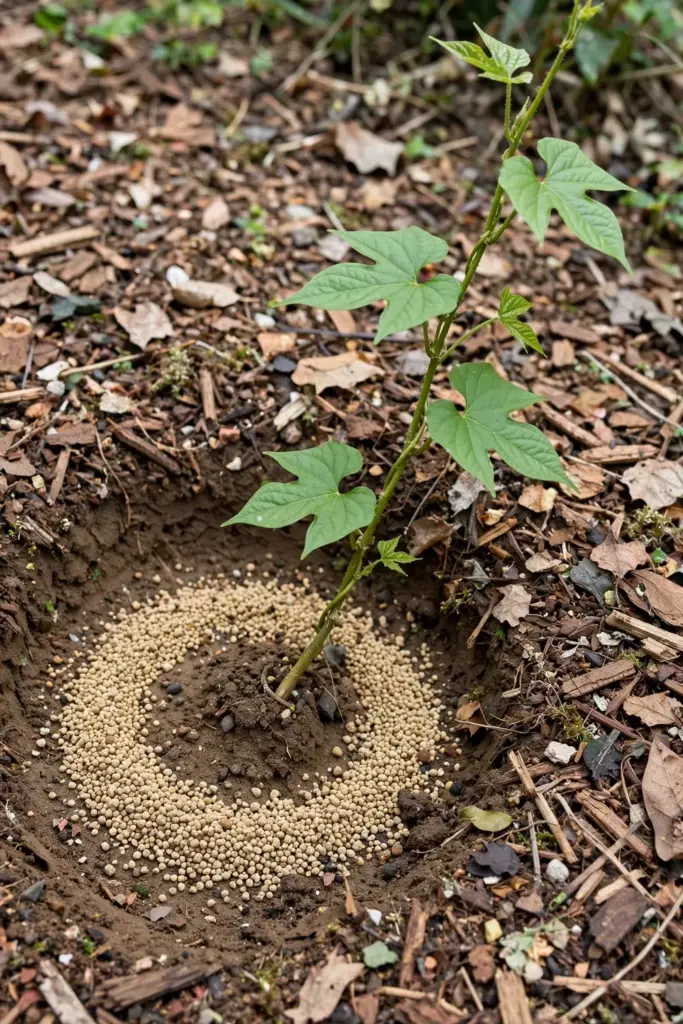
Work a balanced granular fertilizer into the bed at planting time, following the package rate for root vegetables. Side-dress once more in midsummer when the vine is climbing hard. That is enough. Heavy nitrogen grows a spectacular vine and a disappointing tuber. If your soil is already rich from the compost in Step 5, the midsummer feeding can be half strength. Pale leaves with dark veins in midsummer usually mean the soil pH has drifted, not that the plant is starving.
Step 10: Grow It in Containers to Contain It
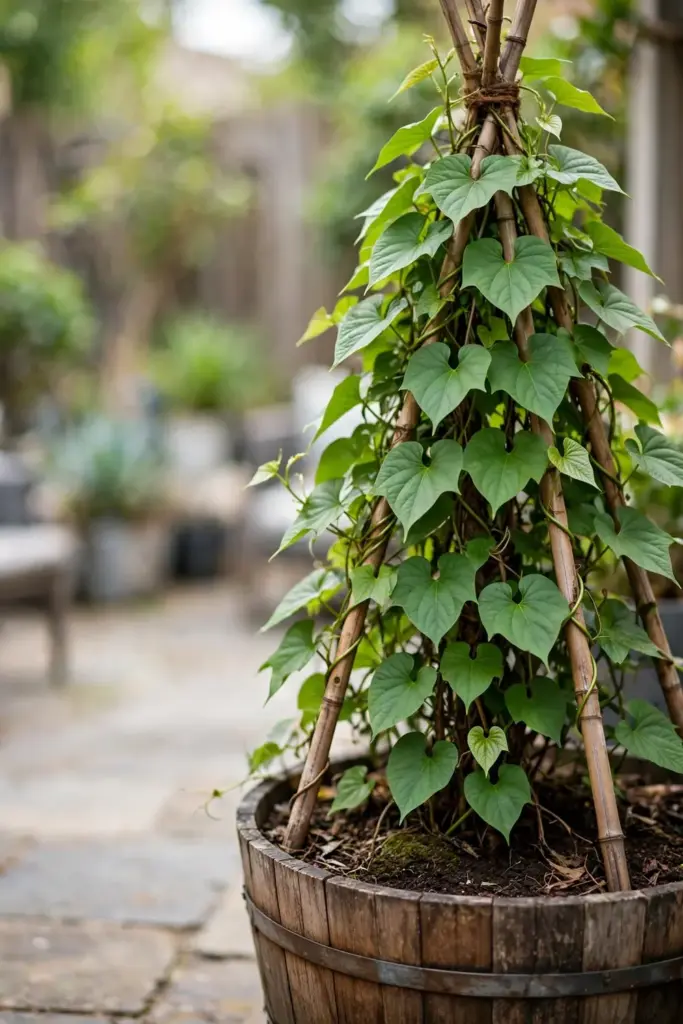
A 20-gallon pot is the smallest container worth using, and a half whiskey barrel is better. Fill it with a loose mix of potting soil and compost, plant three bulbils 2 inches deep, and set a 6-foot bamboo teepee in the pot. Containers solve two problems at once: the tuber cannot dive deeper than the pot, and no bulbil escapes into the ground. Water more often than in-ground beds, since pots dry fast, and feed monthly with half-strength liquid fertilizer. Expect smaller tubers than in-ground plants. That is the trade for total containment, and for many growers it is the right trade. The creative container garden ideas guide has pot setups that suit big vines.
Step 11: Patrol for Escapees Monthly
From midsummer on, walk the bed once a month and pick up every fallen bulbil. Check the ground under the trellis, the mulch surface, and anywhere rain could have washed them. One missed bulbil becomes next year’s volunteer vine. This is also when you deadhead any flowers you do not need, since the plant can also spread by seed. North Carolina State Extension notes it spreads by seed, tubers, and those small aerial tubers in the leaf axils, so the patrol covers all three routes. Ten minutes a month keeps a garden plant from becoming a neighborhood problem.
Step 12: Watch for Pests and Diseases
Chinese yam has few serious enemies in the home garden. North Carolina State Extension reports no significant insect or disease problems for this species in the United States, though yams in general can see fungal leaf spots, nematodes, and mealybugs. Good air circulation from proper trellis spacing prevents most leaf issues. If leaves yellow with dark spots in wet weather, thin the vine for airflow and avoid overhead watering. Slugs may chew young shoots in spring. A ring of diatomaceous earth around each planting spot stops them without chemicals.
Harvesting the Deep Tubers
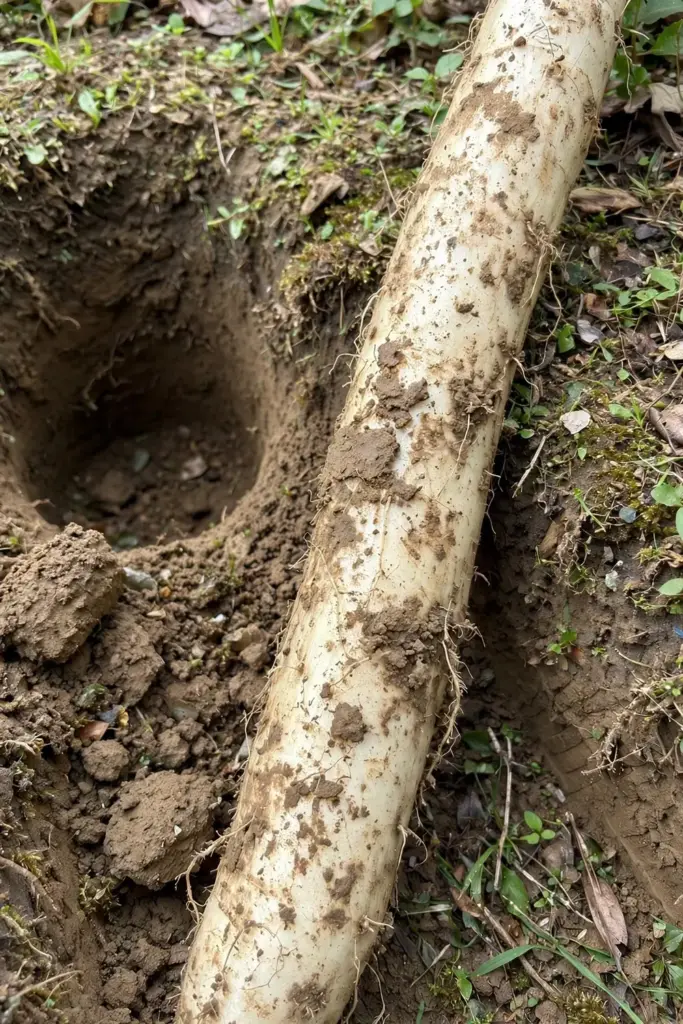
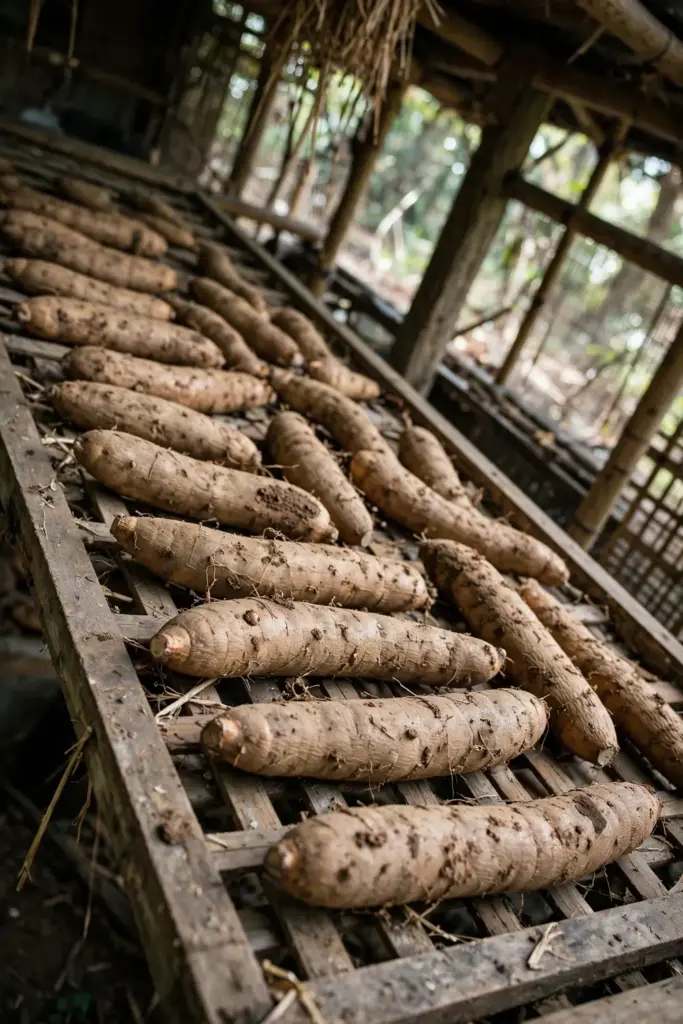
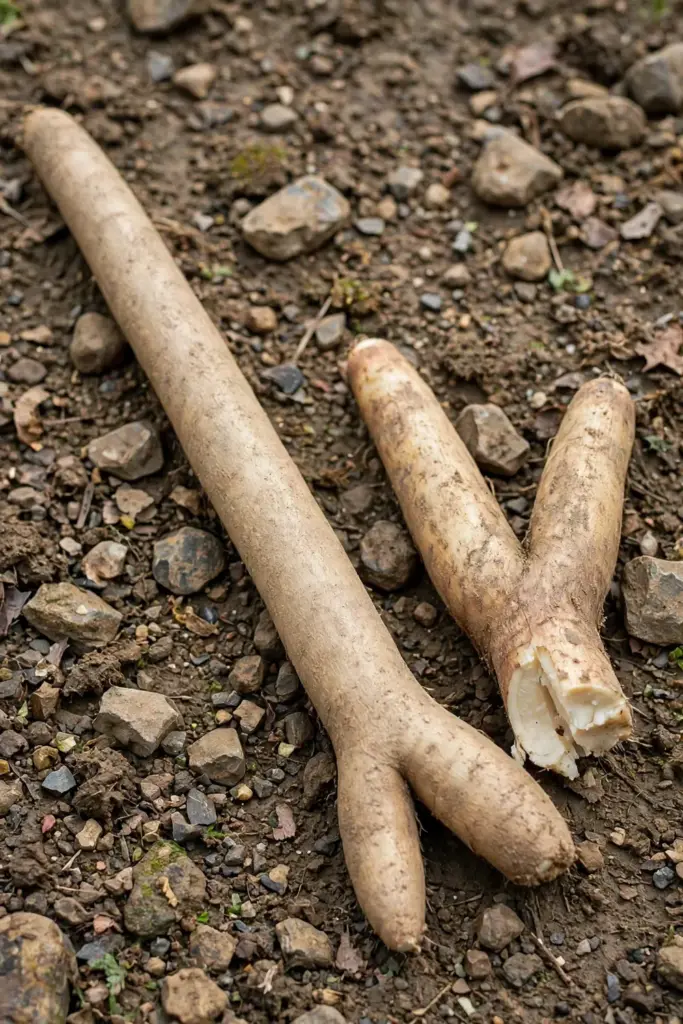
Wait for the first light frost to kill the vines, or cut them down yourself in late fall once the leaves yellow fully. The tuber keeps sizing up until the top dies, so patience pays. A vine cut down green in September gives up weeks of bulking. Start digging 18 inches to the side of the planting stake and work inward with a long spading fork, loosening soil in layers rather than prying. The tuber grows straight down and snaps if you lever against it, and a snapped tuber is a shorter-storing tuber. When you feel resistance, switch to hand digging and follow the tuber down with your fingers, clearing soil away from the sides before you pull. Expect 2 to 3 feet of depth. In the deep-dug bed from Step 5, the whole tuber usually slides out intact. In heavier soil, accept that the tip may break. Broken tips still cook fine. They just do not store as long.
Step 13: Cure and Store the Harvest
Brush off loose soil but do not wash the tubers. Spread them in a single layer in a cool, shaded, well-ventilated spot for a week to cure the skins. Then store them in a cool, dry place, an unheated pantry shelf or garage corner, in boxes or paper bags, not plastic. Well-cured tubers keep for several months. Check monthly and use any that soften first. One safety note from North Carolina State Extension: the raw tuber contains calcium oxalate crystals that irritate skin and mouths, so wear gloves when handling fresh-dug tubers and cook the yam before eating. The irritation usually passes in minutes, but it is unpleasant enough to plan around.
Using Nagaimo in the Kitchen
Peel the tuber under running water to manage the slippery texture and the calcium oxalate itch. Japanese cooks grate it raw into tororo, a foamy topping for rice and noodles, but cooking is the safer lane for beginners and the one this guide recommends. Simmer slices in soup, where the yam thickens the broth slightly and turns creamy at the edges. Cut batons for stir-fry with ginger and greens, giving them a hard sear first so they keep their shape. Roast chunks at high heat until the edges crisp and the centers go custardy.

The flavor is mild enough to disappear into a dish, which is a strength, not a weakness. Season boldly. Nagaimo pairs well with dashi, soy, sesame oil, and chili. It also plays nicely with Western roasts: toss chunks with olive oil, salt, and rosemary alongside potatoes and they hold their own. Store cut pieces wrapped in the refrigerator and use within a few days, since the cut surface oxidizes and the texture softens. This is food writing, not medical advice. Eat it because it tastes good, in normal food amounts.
Step 14: Close the Loop and Save Next Year’s Bulbils
A Chinese yam planting is a perennial system, not a one-season project. While you dig this year’s tubers, collect this year’s bulbils for next spring. The two harvests happen weeks apart: bulbils ripen from late summer into fall, and the tuber harvest follows the first frost. Work the bulbil collection into your monthly patrol so nothing escapes, and store the keepers using the method in Step 2.
Leave one tuber piece in the ground if you want the bed to return on its own. Chinese yam is a perennial, and a tuber left undisturbed resprouts the following spring. This is convenient and it is also exactly how the plant escapes cultivation, so only do it in a contained bed you patrol. In containers, lift everything, keep the best bulbils, and replant fresh each spring for the tidiest results.
Label everything. A paper bag of bulbils looks identical to a paper bag of air potato bulbils by March, and the two plants demand very different handling. Write the species, the source vine, and the collection date on every bag. Good labeling is the difference between a confident planting and a spring of doubt.
7 Common Mistakes and How to Fix Them
Planting near the woods. Bulbils roll and wash. Fix it by moving the bed to open ground you patrol, or switching to containers.
Skipping the trellis. A ground-trailing vine makes bulbils everywhere and a stunted tuber. Fix it by building the support before planting day, every time.
Rocky soil. Stones fork and snap the tuber. Fix it by digging 24 inches deep and sieving out stones, or by growing in a raised bed filled with loose mix. The spring raised bed gardening guide covers deep-fill methods that suit root crops.
Harvesting too early. Digging in midsummer gives you a thin, watery tuber. Fix it by waiting until the vine dies back after frost.
Letting bulbils scatter. Every fallen bulbil is a future vine, possibly in your neighbor’s yard. Fix it with the monthly patrol from Step 11.
Overwatering in fall. Wet soil in cool weather rots tubers. Fix it by tapering water once leaves yellow.
Handling raw tubers barehanded. Calcium oxalate crystals irritate skin, and the itch lingers. Fix it with gloves, and cook the yam before eating.
Troubleshooting Chinese Yam Problems
No sprouts after a month. The bulbils may have dried out in storage or the soil is still cold. Dig one up gently. A firm bulbil with a swelling eye just needs warmth. A soft or moldy one is dead. Replant with fresh material and wait for soil above 60 degrees.
Vine grows but no bulbils form. Young first-year vines sometimes skip bulbil production and put everything into the tuber. This is normal. The underground crop is still coming. Bulbils usually appear from the second season on.
Leaves yellow in midsummer. Check water first, then drainage. Soggy roots yellow fast. If water is right, the vine may be finishing early in a hot climate. Let it die back naturally and harvest on schedule.
Tuber forks or breaks. Stones or a hardpan layer forced it sideways. Next season, dig deeper and sieve the soil, or switch to the container method. Forked tubers eat just as well.
Volunteer vines appear nearby. Missed bulbils sprouted. Pull volunteers while small, getting the whole bulbil, and restart the monthly patrol. This is the most common way gardeners learn how to grow Chinese yam responsibly, by cleaning up the first escape.
Frequently Asked Questions
It can be, and several states list it as invasive. It spreads by seed, by tuber fragments that resprout, and by bulbils that drop from the leaf axils and root where they land. Escaped populations have been recorded in southeastern forests. Grow it in containers or patrolled beds, collect every bulbil, and never plant it near woodland. Responsible growing is the whole game with this species.
They are close relatives and the names overlap in markets. True Chinese yam is Dioscorea polystachya, the hardy species from northern China, hardy in zones 5 through 9. Japanese mountain yam sold as yamaimo is usually the same species grown in Japan. What matters is the Latin name on the label and the hardiness. If a seller cannot give you the species, buy from one who can.
One full growing season, roughly 6 to 7 months from spring planting to fall harvest. Plant bulbils after the last frost and dig after the first frost kills the vines, since the tuber keeps sizing up until the top dies and late harvests run bigger. First-year tubers from bulbils run smaller than second-year ones. That is the honest trade for free starting material, and most growers find the second-year crop worth the wait.
Yes, and pots are the best containment method. Use a 20-gallon pot or larger, plant three bulbils 2 inches deep, and give the vine a 6-foot teepee. Water and feed more often than in-ground plants. Expect smaller tubers than a deep-dug bed produces. For growers near woods or in states where the plant is listed invasive, containers are not just an option. They are the responsible choice.
The bulbils of Dioscorea polystachya are edible when cooked, like the tuber. Do not confuse them with the bulbils of air potato (Dioscorea bulbifera), which are a different plant with a different safety profile. When in doubt about which vine dropped the bulbil, do not eat it. Cook all yam bulbils before eating, and wear gloves while handling them raw.
Raw nagaimo is crisp, slippery, and very mild, with a texture somewhere between jicama and okra. Cooked, it turns tender and lightly sweet with a creamy bite. It absorbs the flavor of whatever it simmers with, which is why it suits soups and stir-fries. Peel it under running water to handle the slipperiness, and cook it before eating to avoid the calcium oxalate itch.
Where to Go From Here
Start with bulbils, one trellis, and a bed you can patrol. That is the whole commitment for year one. The vine will teach you its rhythm: fast spring climb, summer bulbil drop, fall dieback, and the deep dig that makes the work worthwhile. Once you know how to grow Chinese yam in your own soil, the method scales to a row of trellises or shrinks to a single patio pot. For bed-building skills that transfer to every root crop you will ever grow, the soil health and pest resistance guide is the natural next read. Grow it contained, harvest it deep, and cook it well.