
Pick the hakea that already grows near you, give it full sun and sharp drainage, and feed it low phosphorus or nothing at all. That is growing hakea in Australia in one sentence. Hakea is a genus of some 150 species of plants endemic to Australia, and the garden species share one rule: wet feet and standard fertilizer kill them faster than neglect. I have learned that the hakea I leave unwatered through summer outlives the one I water on a schedule.
The rest of this page is 12 moves, from naming the genus to fixing the failures that kill hakeas in their first year.
1. Learn What a Hakea Is Before You Buy One
Hakea is a genus of shrubs and small trees in the Proteaceae family, and every garden species in it carries thick woody fruit that stays on the plant. The genus holds some 150 species of plants endemic to Australia, and the Australian Plants Society notes that hakeas differ from grevilleas because grevillea fruit is thin, leathery, and drops off once the seed disperses, while hakea fruit persists until fire or the death of the plant, according to the Australian Plants Society hakea guide. That woody fruit is the fastest way to tell a hakea from its grevillea cousin in a nursery row.
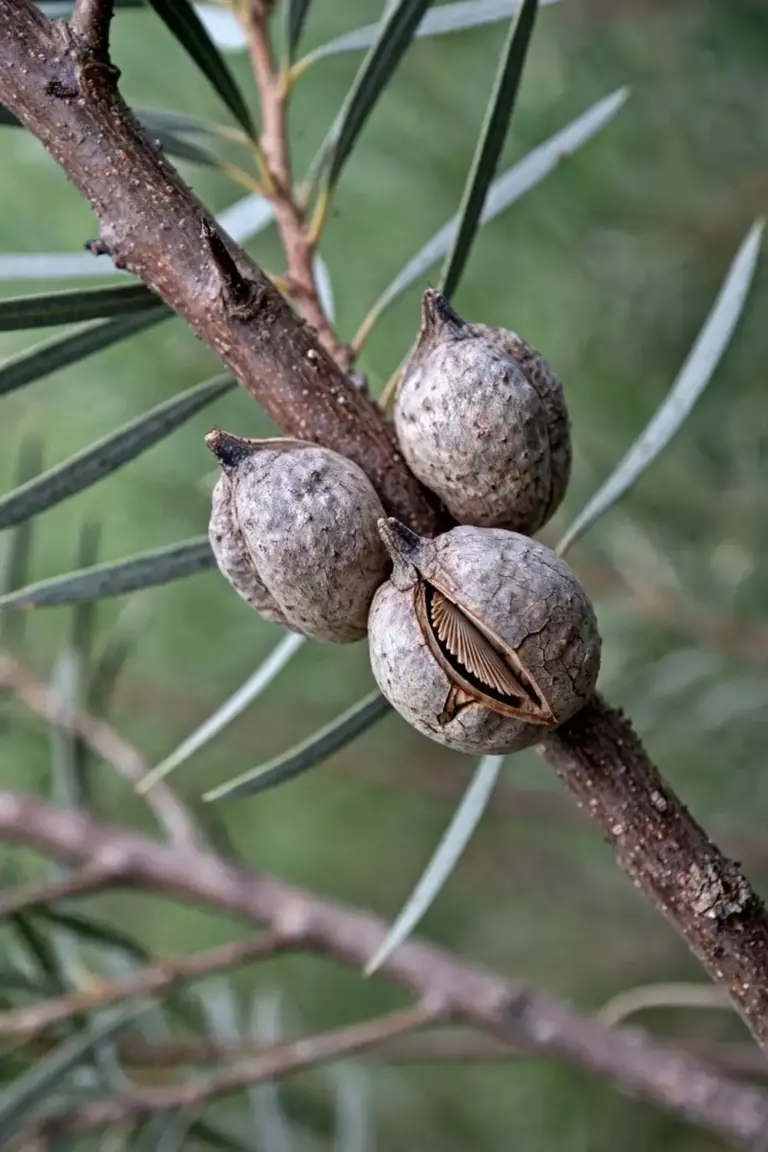
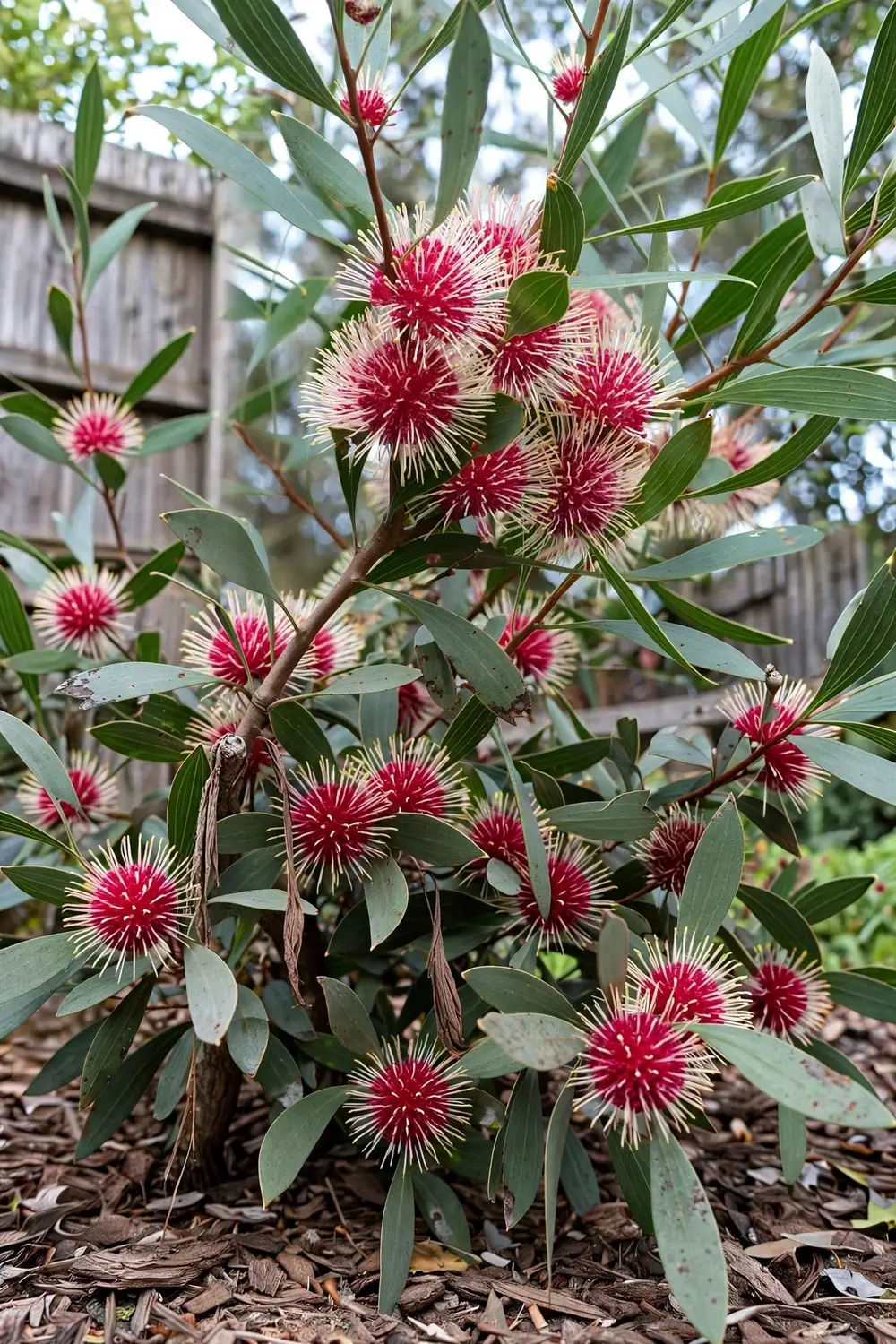
Hakea leaves vary more than grevillea leaves do. Some species carry flat leaves. Others carry needle leaves. Some carry both shapes on one plant. The flowers cluster in leaf axils as spider-like heads, round pincushions, or long cylindrical racemes. Every hakea flower feeds nectar to honeyeaters and insects. The fruit holds two winged seeds and opens after heat or after the plant dies. Buy the plant for its leaf shape and flower form, not for a generic “hakea” label. The label hides 150 different plants.
2. Choose by Job First, Then by Climate
Choose the job first. Screen, feature, small garden, pot, or bird habitat. Then match a species to your climate. The table below gives seven proven picks. Heights come from the Aussie Green Thumb species guides and the Australian Plants Society species pages. Treat each height as the size the plant reaches in good garden soil, not a promise.
| Species | Job | Height | Climate | Notes |
|---|---|---|---|---|
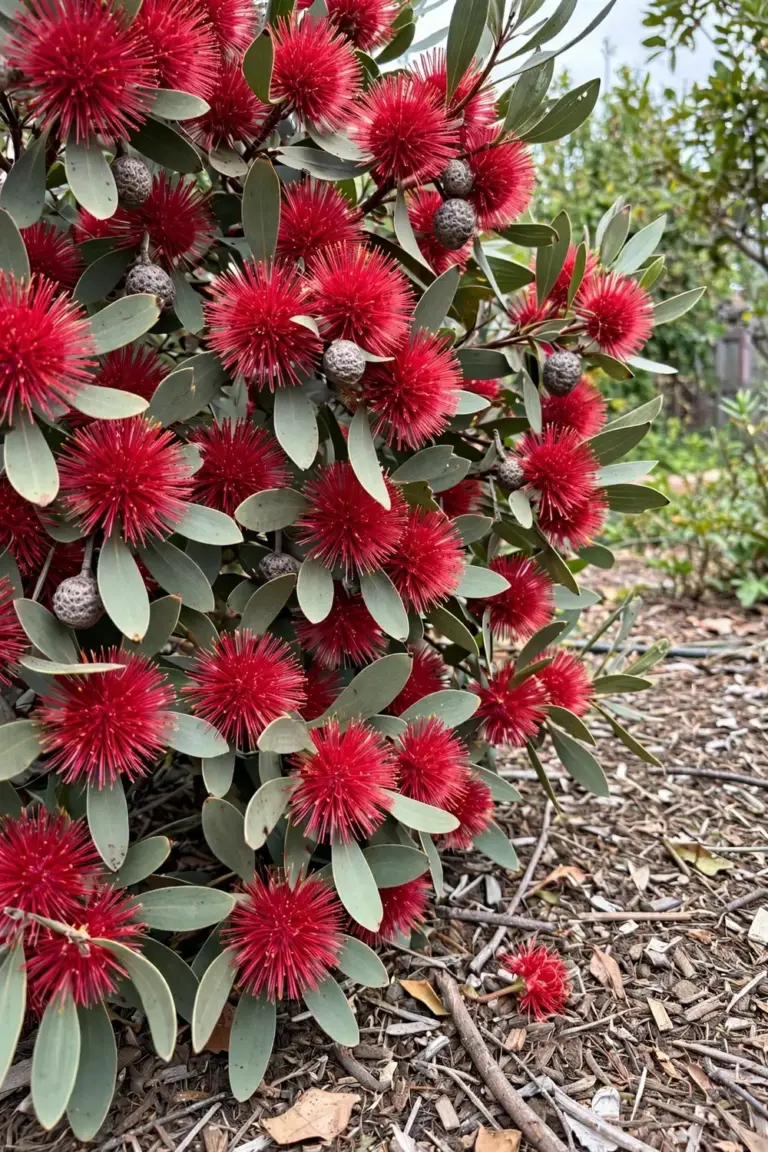
| Hakea laurina (pincushion hakea) | Feature, screen | 2 to 6 m | Mediterranean, temperate | Red pincushion winter flowers. The best-known garden hakea. |
| Hakea sericea (silky hakea) | Screen, barrier | To 5 m | Temperate, coastal | Prickly needle leaves. Self-seeds freely. Check local advice first. |
| Hakea salicifolia (willow-leaf hakea) | Screen, east coast | 3 to 5 m | Temperate, humid-tolerant | Willow-like leaves. One of the safer picks for humid summers. |
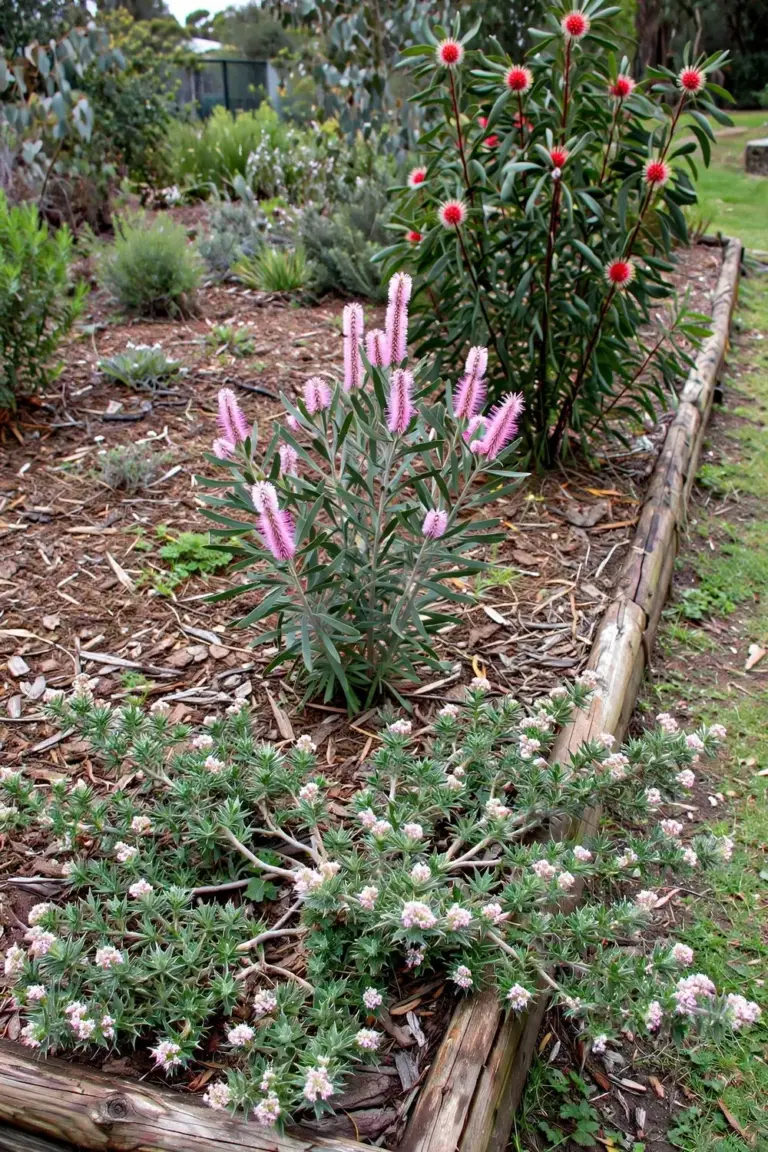
| Hakea bucculenta (red pokers) | Feature | 2 to 4 m | Mediterranean, temperate | Long red flower spikes. Needs dry feet. |
| Hakea ‘Burrendong Beauty’ | Small garden, feature | 1 to 2 m | Mediterranean, temperate | Hybrid with pink-red flowers. Does not tolerate harsh pruning. |
| Hakea multilineata (grass-leaf hakea) | Screen, hedge | 2 to 4 m | Temperate, east coast | Pink racemes. Grafted forms cope better with humidity. |
| Hakea myrtoides | Pot, groundcover | To 0.5 m | Mediterranean, temperate | Low and spreading. The pot pick for small spaces. |
One pick per job beats a mixed row of impulse buys. A screen needs one species at one spacing. A feature needs room to spread. A pot needs one dwarf species. Buy the species that fits the job and the climate together, because a plant that fights your climate never earns its place.
3. Match Your Climate Before You Buy
Hakea grows best in a Mediterranean climate with dry summers and wet winters. Perth, Adelaide, Melbourne, and southern New South Wales suit most garden species. Temperate gardens with care suit many species too. The climate test comes first. A hakea that suits Perth can fail in Brisbane.
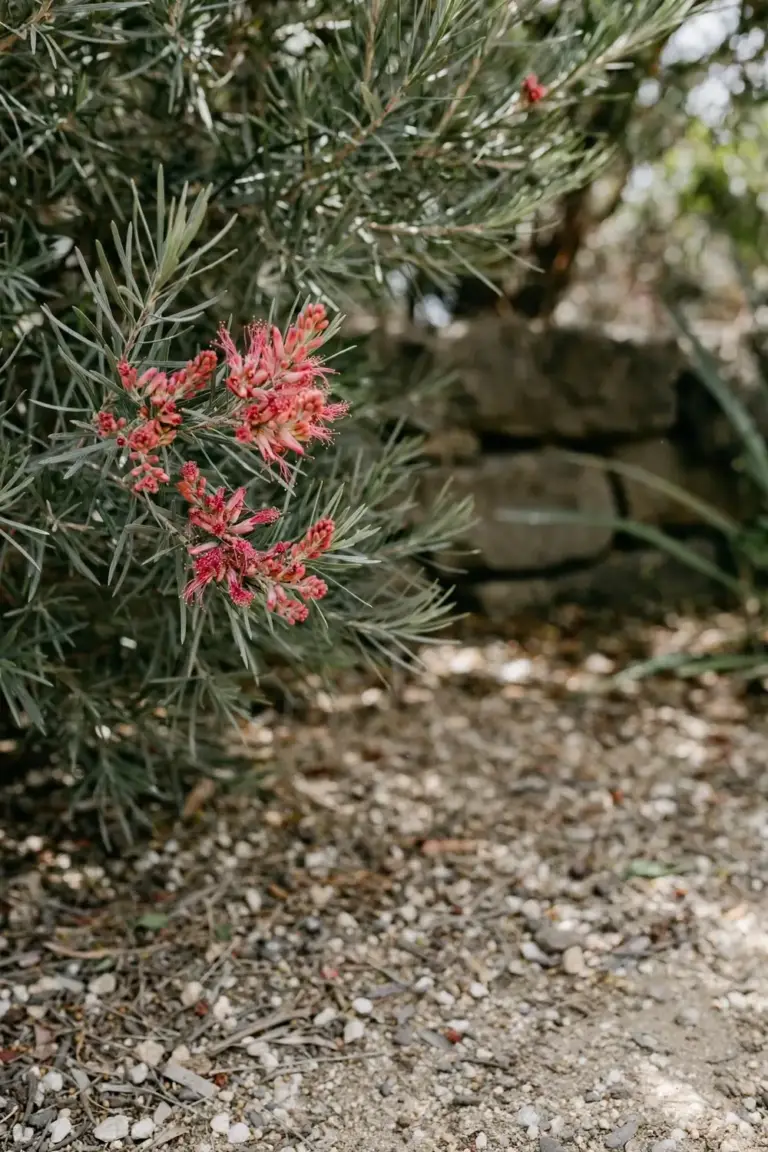
Humid subtropical and tropical coasts are the wrong home for most hakeas. Western Australian species struggle in areas of high summer humidity and rainfall, including the eastern coastal strip, and the same genus guide that records this failure also rates hakea as the hardiest genus of the Australian Proteaceae, which means the genus tolerates humidity better than western banksias and grevilleas but still dislikes it, according to the genus cultivation notes. Humid air plus wet soil invites root rot. Root rot kills hakeas. The plant rarely recovers once the roots turn dark and soft.
Gardeners in humid zones have three honest options. Pick a humid-tolerant species such as Hakea salicifolia. Buy a grafted form of a showy species such as Hakea multilineata, where the grafted rootstock copes better with humidity. Or skip hakea and plant a humid-tolerant native instead. The third option is not failure. A dead hakea in a humid bed teaches nothing. A thriving plant in the right climate teaches plenty.
4. Give Every Hakea Full Sun and Sharp Drainage
Hakea needs full sun. Six hours of direct sun each day is the floor. Shade cuts flowering and stretches growth. A plant in shade grows leggy, flowers sparsely, and stays wet longer after rain. Morning sun plus afternoon shade suits only the most heat-stressed inland sites. Everywhere else, plant in open sun.
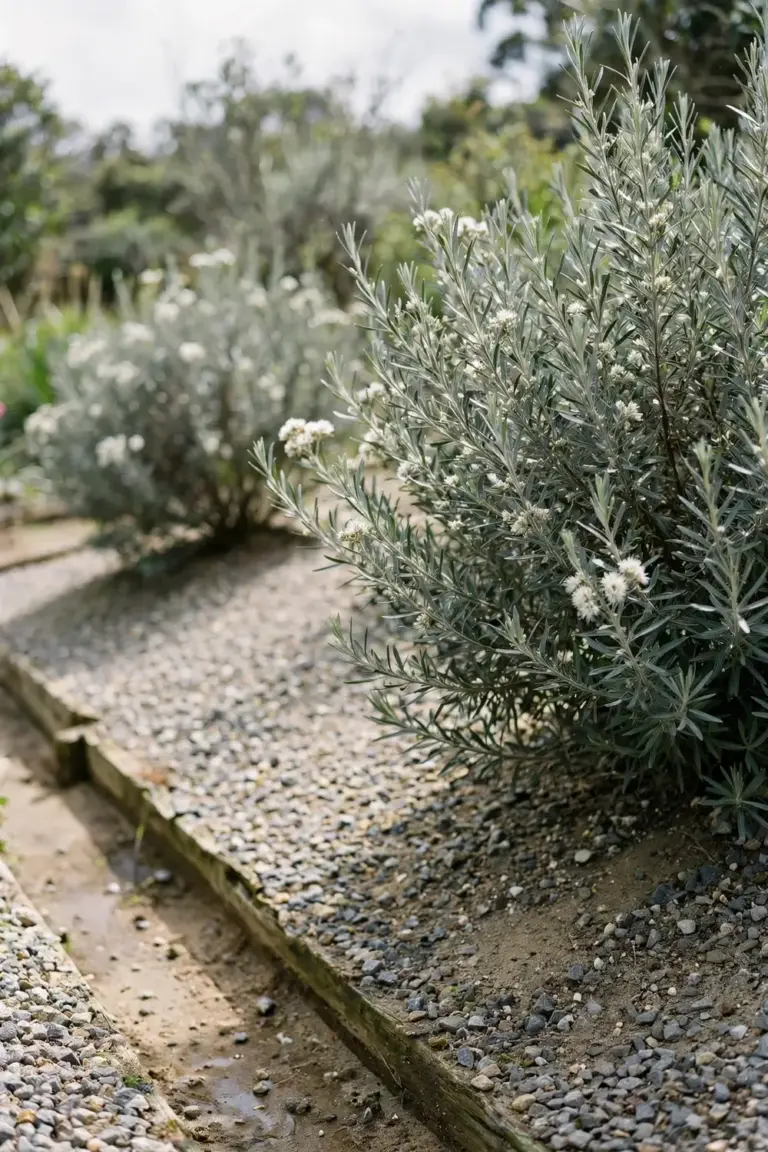
Drainage decides survival. Hakea roots demand oxygen. Waterlogged soil suffocates them and invites Phytophthora root rot. Dig the hole twice as wide as the pot and no deeper. Break up the base with a fork. Backfill with the same soil you dug out, mixed with coarse gravel or crushed rock if your soil is heavy. Never plant a hakea in a hollow where water pools. Never pile mulch against the stem. A mulch ring that touches the stem traps moisture and rots the collar.
Sandy and gravelly soils suit hakeas best. Loam works when it drains freely. Clay needs work before planting. The next section covers the clay fix. Test drainage with a bucket of water in the empty hole. Water that drains within minutes means the site works. Water that stands for hours means the site needs a mound or a different plant.
5. Plant on a Mound in Clay and Stake Young Plants
Plant in autumn or early spring in most of Australia. Autumn planting gives roots a full cool season to establish before summer heat. Spring planting suits cold districts where winter frosts are harsh. Avoid planting in the heat of summer. A young hakea in a hot week needs water every day, and daily water in hot soil is the fastest route to root rot.
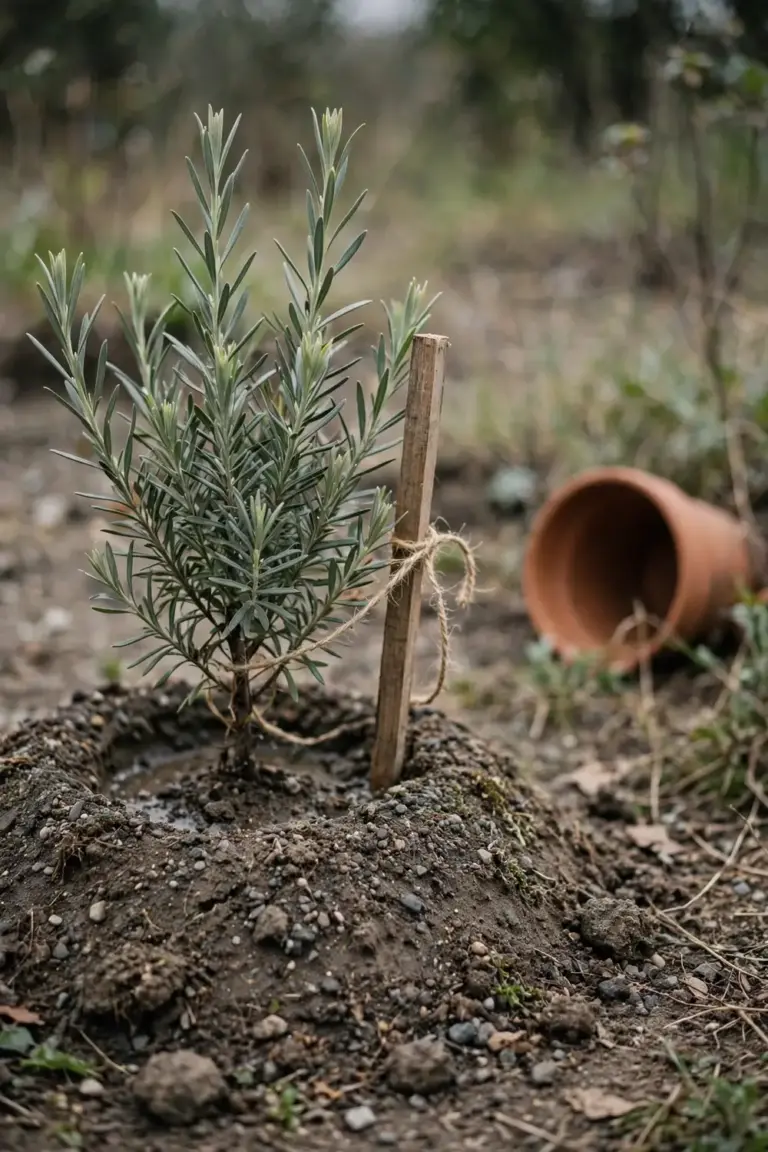
Build a mound on clay. Raised beds 300 to 600 mm high give hakeas a drained root zone on shallow clay soils, and the same cultivation notes that set that range warn that hakeas resent continually wet soils. Build the mound from free-draining garden soil mixed with gravel. Plant into the mound, not into a pit in the clay. A pit in clay becomes a bathtub. A mound sheds water.
Stake young plants. Hakeas carry shallow roots and top-heavy canopies, and a young plant in wind can lean or snap. Drive one stake on the windward side. Tie loosely with a soft tie that allows movement. Remove the stake after the first year. A plant that sways gently grows a stronger trunk than a plant lashed rigid. Water the plant in well at planting. Then leave it alone until the soil dries.
6. Water Deep at Planting, Then Back Off
Watering a hakea follows one rule. Water deeply at planting, then water only while the soil dries between drinks. Young plants need water through their first dry season. Established plants need almost none. A hakea that receives regular garden watering grows soft, flowers less, and rots at the roots. The plant evolved on ancient nutrient-poor soils with dry summers. Treat it like a plant from a dry place, because that is what it is.
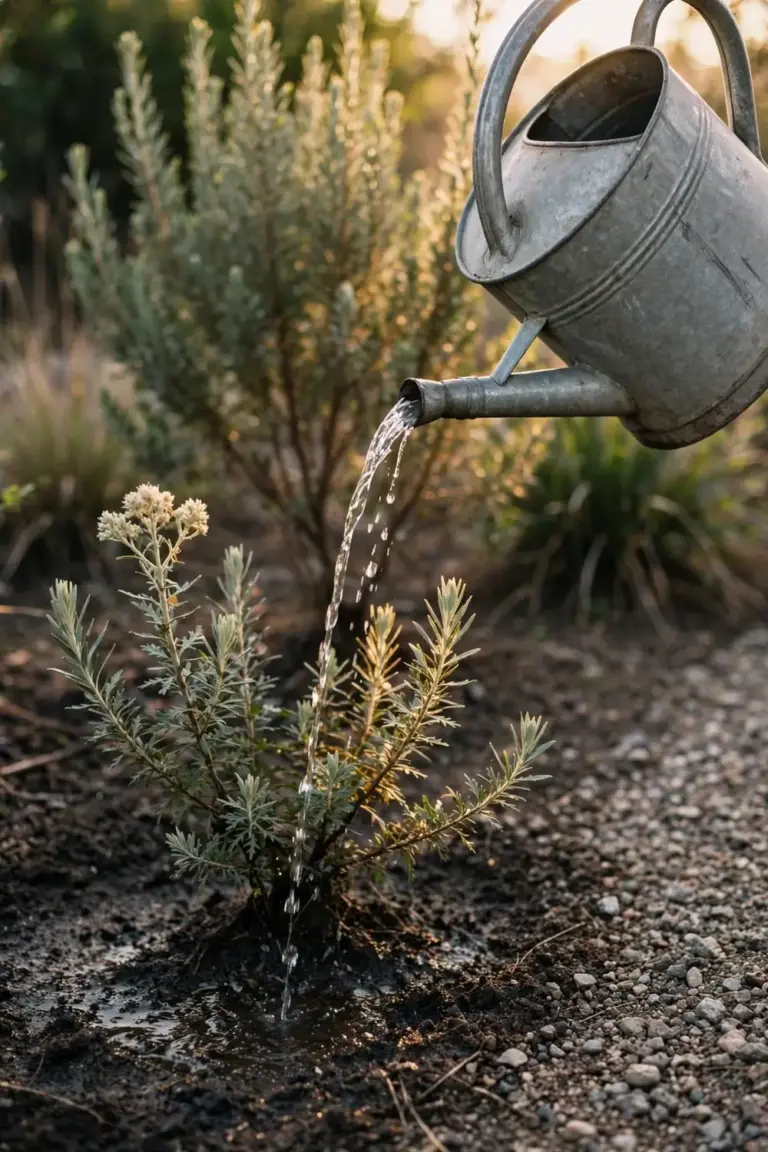
Check soil moisture with a finger. Push a finger 5 cm into the soil near the plant. Dry soil at that depth means water. Damp soil means wait. Water slowly at the base until the soil is wet 20 cm down. Never spray the foliage in humid weather. Wet leaves in still humid air invite fungal problems. Morning watering beats evening watering. Morning water dries off the leaves before nightfall.
An underwatered hakea shows dull leaves, limp new tips, and dropping flower buds. The fix is one deep soak, then a return to the dry-between-drinks rhythm. A hakea that wilts every afternoon in summer usually sits in a pot that is too small or a bed that drains too fast. Repot a wilting potted plant into a pot one size larger. Mulch a fast-draining bed with a 5 cm ring of coarse bark, kept clear of the stem. Do not answer wilting with daily watering. Daily water in hot soil rots roots faster than one dry afternoon ever will.
Pots dry faster than garden beds. A pot in full sun can dry out in a day in summer. Check potted hakeas every morning in hot weather. Water when the top 3 cm of mix feels dry. Empty the saucer after watering. A saucer full of water keeps the roots wet and kills the plant. The pot section below covers mix and drainage in detail.
7. Feed Low Phosphorus Once a Year or Skip It
Hakea roots carry proteoid roots. Proteoid roots are dense clusters of fine rootlets that pull nutrients from poor soils with unusual efficiency. That efficiency is the reason standard fertilizer harms hakeas. A dose that a rose shrugs off can poison a hakea. Phosphorus is the danger. Standard fertilizers can kill Proteaceae. Feed low phosphorus only, and never feed a stressed plant.
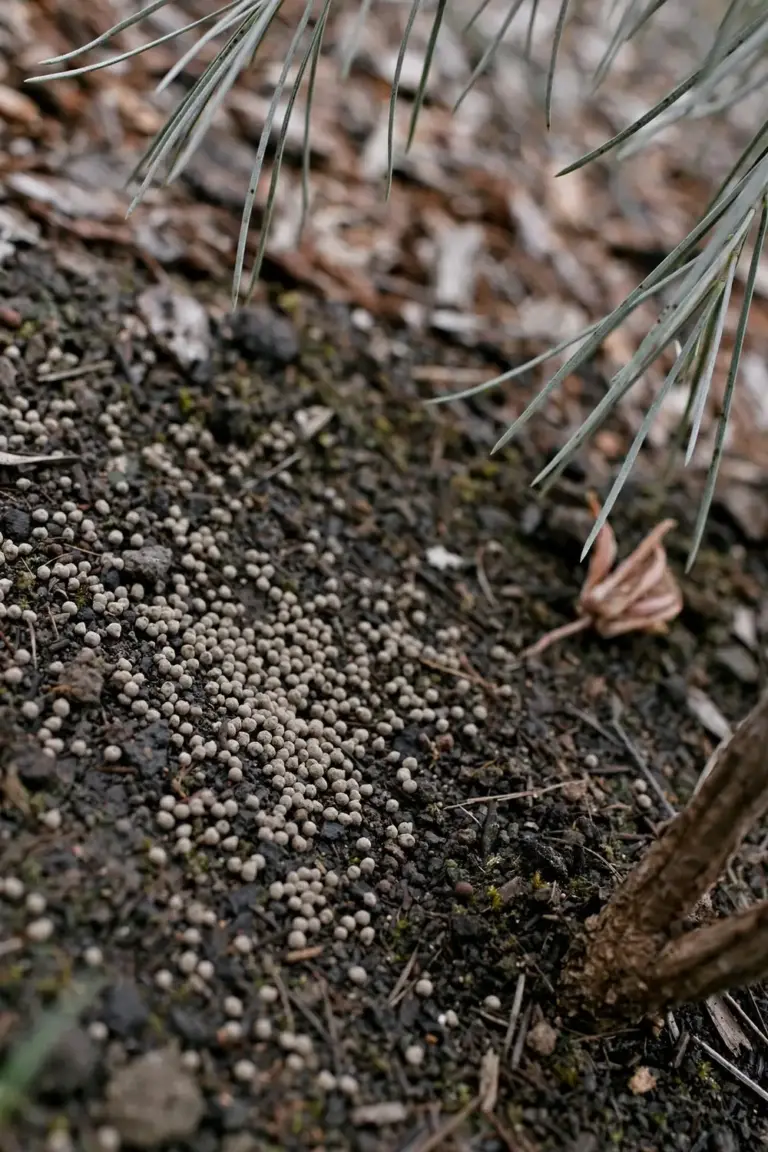
Use a slow-release native fertilizer with a low phosphorus rating, applied once in spring as new growth starts, at half the label rate on young plants. Skip feeding entirely on mature plants in good soil. A hakea in poor sandy soil benefits from one light annual feed, while a hakea in rich loam needs none. The seed starting guide on this site covers the same low-input logic for young natives: feed little, feed late, and watch the plant answer.
Never use poultry manure, blood and bone, or superphosphate near hakeas. Those products carry phosphorus loads that burn proteoid roots. Never fertilize a plant with yellow leaves until you know the cause. Yellow leaves on a hakea usually mean wet roots or a drainage failure, not hunger. Fertilizer on a rotting root system speeds the death. Fix the drainage first. Feed only a healthy plant.
8. Tip Prune After Flowering and Leave Old Wood Alone
Prune a hakea every year, because annual pruning keeps the plant compact and flowering. Cut back the new green growth after flowering finishes. Cut back 10 to 20 cm from the tip to a leaf node, which keeps the plant bushy and encourages the next season of flower buds, according to the Ultimate Backyard pincushion hakea guide. Start pruning while the plant is young. A young plant pruned lightly each year never needs a hard cut. An old plant left unpruned turns straggly and bare inside.
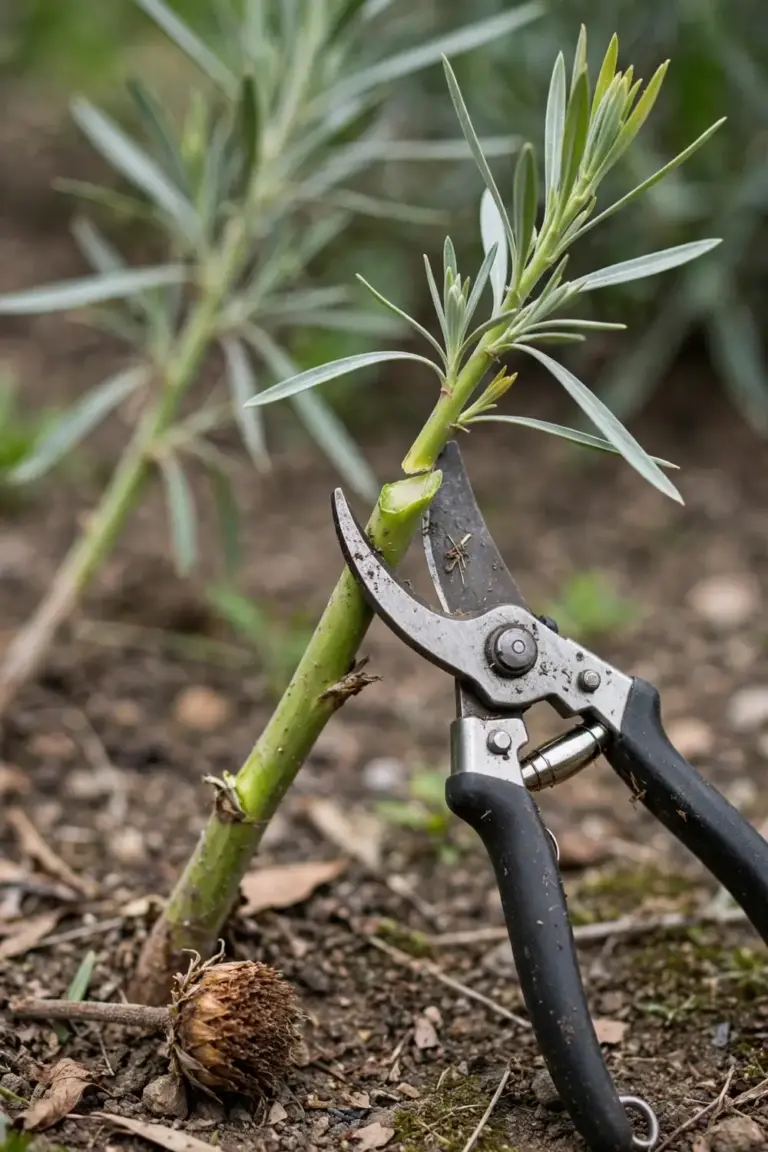
Never cut into thick woody branches, because old wood on most hakeas does not reshoot. A cut into bare old wood leaves a dead stub the plant cannot fill. The rule holds across the genus: tip prune green growth only. Remove spent flower heads at the same time. Clean cuts with sharp secateurs heal faster than torn cuts, so sterilize the blades between plants when you suspect disease.
The genus guide allows one exception. Some hakeas tolerate a harder cut when the plant turns straggly, and about one-third of the plant can come off in an annual prune on those species, but the safe rule stays the same: leave green foliage on every branch you cut. If a branch carries no green leaves, leave it alone. The spring pruning techniques guide on this site covers the same green-wood rule for other woody natives. Timing matters too. Prune after flowering, not before. Pruning before flowering removes the buds you waited a year to see.
9. Grow Hakea in Pots With a Native Mix and Drainage
Pots suit dwarf hakeas. Hakea myrtoides is the natural pot pick. Hakea ‘Burrendong Beauty’ suits a large pot. Large species do not belong in pots. A 6 m tree in a 30 cm pot starves, topples, and dies. Match the plant to the pot. A pot that looks oversized on planting day looks right within a year.
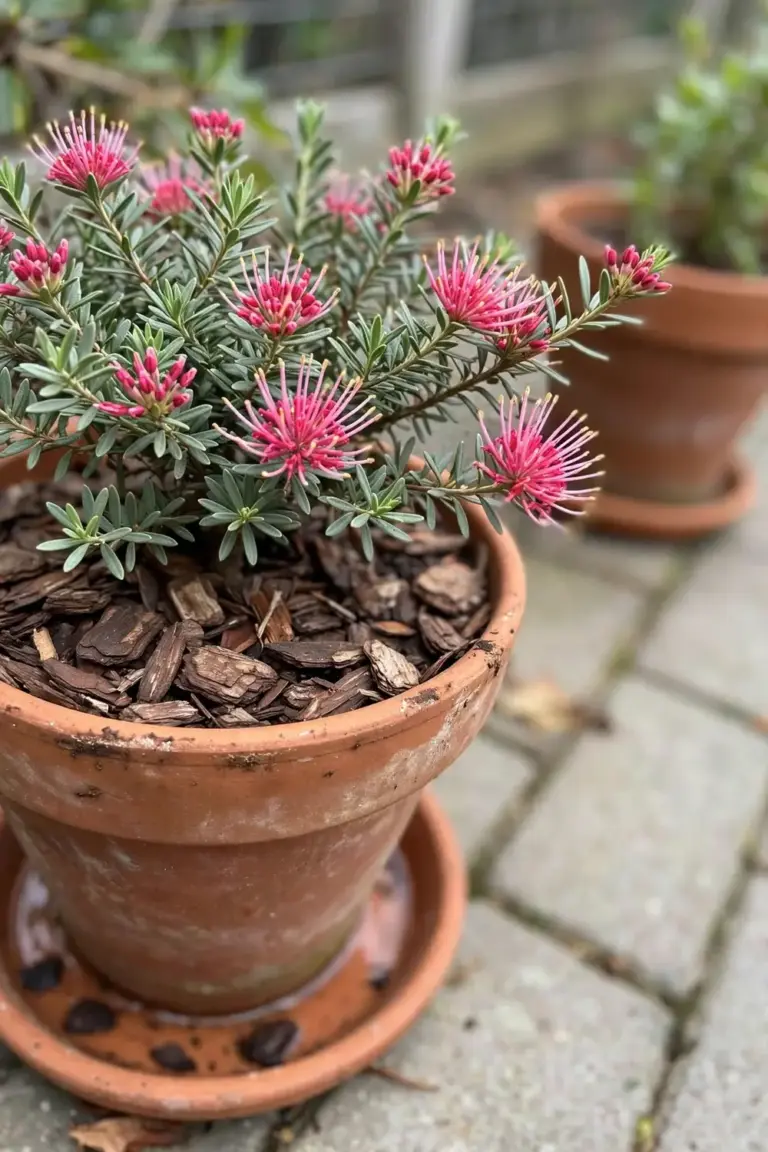
Use a native potting mix with added drainage. Standard potting mix holds too much water for hakeas. Mix native potting mix with coarse perlite or scoria at roughly one part drainage material to three parts mix. Cover the drainage hole with a single piece of broken pot. Never add a layer of gravel at the base. Gravel layers trap water above them. The Australian native plants for containers guide on this site covers pot choice and mix in more detail, and the same free-draining rule applies to hakea.
Water pots more often than garden plants. A pot in full sun can dry out in a day in summer. Check the mix with a finger each morning. Water when the top 3 cm feels dry. Feed once in spring with a slow-release native fertilizer at half the garden rate. Repot every two to three years into a pot one size larger. Root-prune lightly at repotting. Never repot into a pot three sizes larger. A vast pot of wet mix rots the roots.
10. Propagate From Seed for Species and Cuttings for Cultivars
Grow species from seed. Grow named cultivars from cuttings. Seed produces plants that vary. Cuttings produce exact copies of the parent. Hakea ‘Burrendong Beauty’ is a hybrid, so seed from it will not produce the same plant. Cuttings are the only honest way to reproduce a named cultivar. Seed suits species such as Hakea laurina and Hakea sericea. Cuttings suit every cultivar.
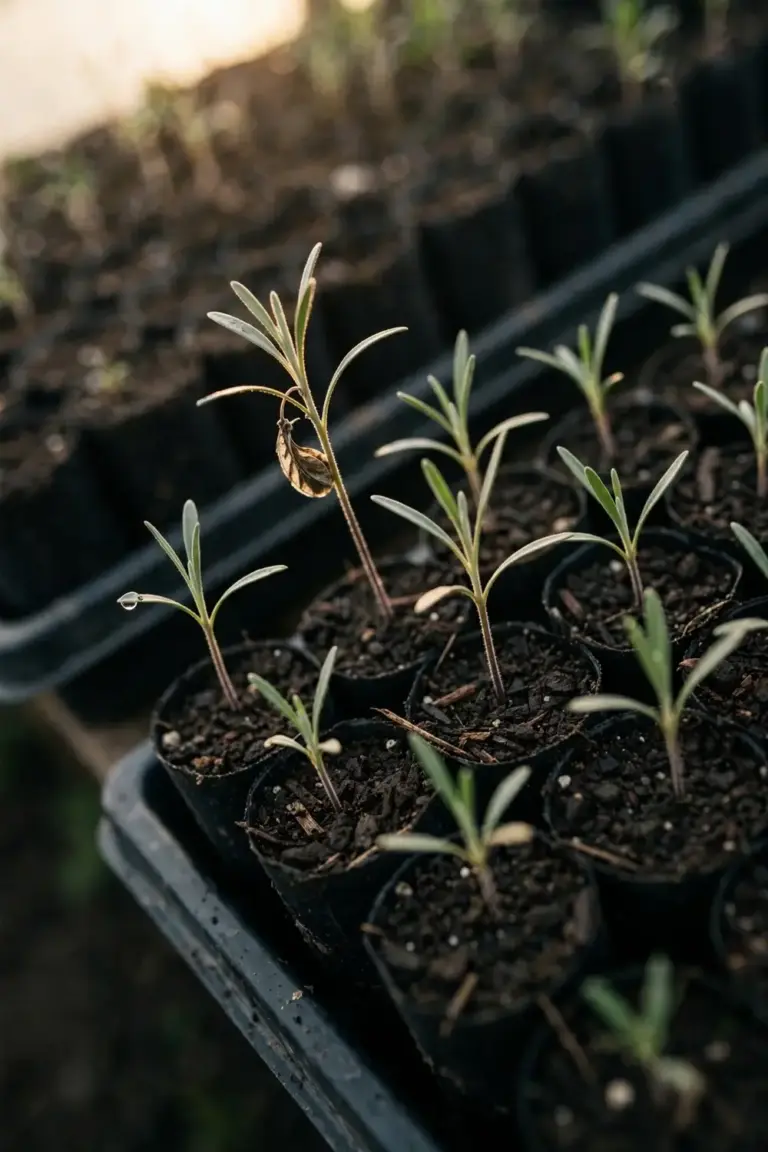
Collect seed from woody follicles. Hakea follicles persist on the plant for years. Heat opens them. A hot oven at low temperature, a fire, or a long hot summer can trigger opening. Wear gloves when handling prickly species such as Hakea sericea. Extract the two winged seeds from each follicle. Sow in a free-draining native seed mix. Cover lightly. Keep damp, not wet. Seedlings appear within weeks in warm weather. Transplant when the seedling fills a small tube.
Take cuttings from semi-hardwood growth in late spring, cutting a piece 75 to 100 mm long from the current season’s growth. Strip the lower two-thirds of leaves, wound the base with a sharp blade, dip it in rooting hormone, and set it in seed mix, which is the method the Aussie Green Thumb pincushion hakea guide gives for Hakea laurina cuttings. Keep the mix moist and the cutting in bright shade. Rooting takes weeks. Pot on once roots fill the tube. Never take cuttings from a stressed or diseased plant. A cutting carries the parent’s problems with it.
11. Check Pests and Root Rot Before They Spread
Hakeas carry few serious pests, which is one of their strengths. Scale insects appear on stressed plants. Sooty mould follows scale honeydew. Caterpillars chew young foliage in spring. None of these usually kill a healthy hakea. Check the plant monthly. Look under leaves and along stems. Treat scale early with horticultural oil at the label rate. Wash sooty mould off with water and a soft cloth. Pick caterpillars off by hand.
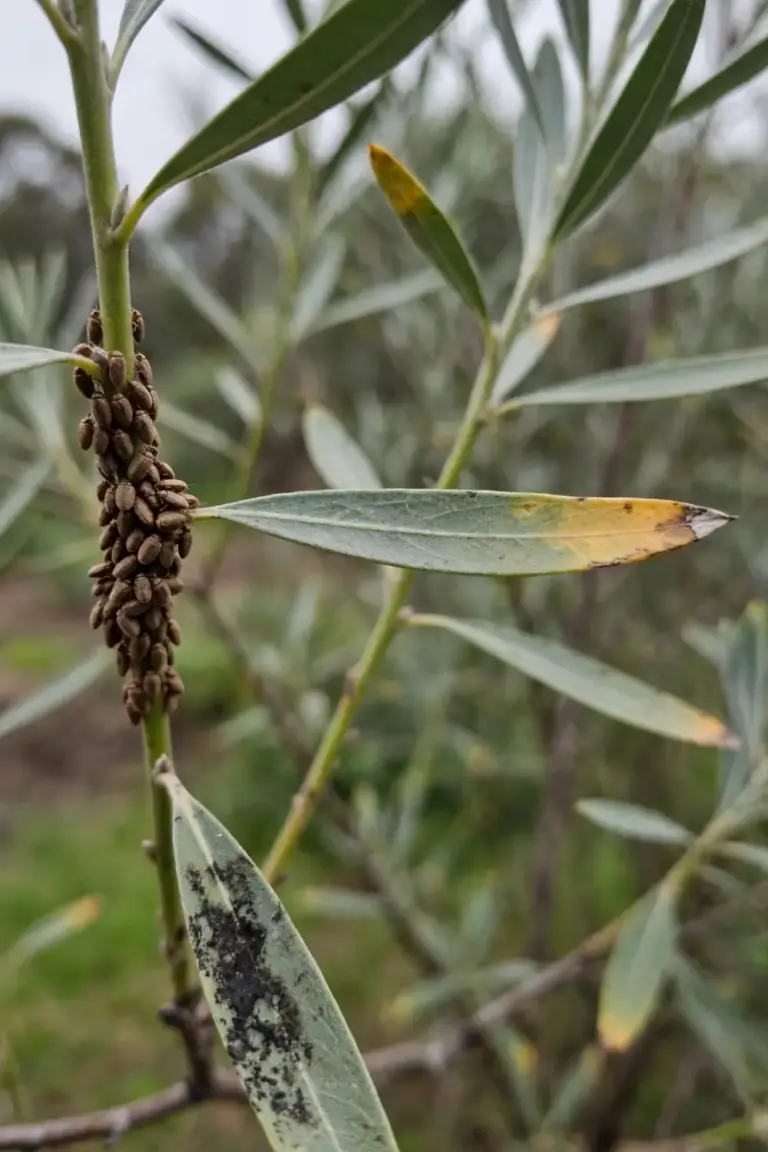
Root rot is the real killer: Phytophthora cinnamomi attacks hakea roots in wet soil. The plant yellows, wilts, and dies from the top down. Collar rot darkens the stem base at soil level. Neither condition has a home-garden cure once established, so prevention is the only control. Sharp drainage, a mulch-free collar, and watering only when the soil dries keep Phytophthora inactive. Remove and destroy a plant that dies of suspected root rot, and do not replant a hakea in the same hole. Plant a resistant species there instead.
Chewed leaves in summer usually mean caterpillars or beetles. Hand-pick chewed foliage at dusk, when the culprits feed. A few holes in leaves need no spray. Spray only when defoliation threatens the plant, and use the gentlest product that fits the pest. A hakea that loses a few leaves to insects keeps growing. A hakea sprayed on a schedule loses its beneficial insects and still gets chewed.
Myrtle rust does not attack hakeas. Myrtle rust is a fungal disease that attacks Myrtaceae, and hakeas sit outside that family, so hakeas are not myrtle rust hosts. That distinction matters. A gardener who blames myrtle rust for hakea leaf spots misdiagnoses the problem. Leaf spots on hakea usually mean water stress, sun scorch, or a minor fungal leaf spot. Remove spotted leaves. Improve airflow. The plant recovers when the stress lifts.
12. Fix the 6 Most Common Hakea Failures
Most hakea deaths trace to six failures. Work through them in order. The first failure on the list causes most deaths.
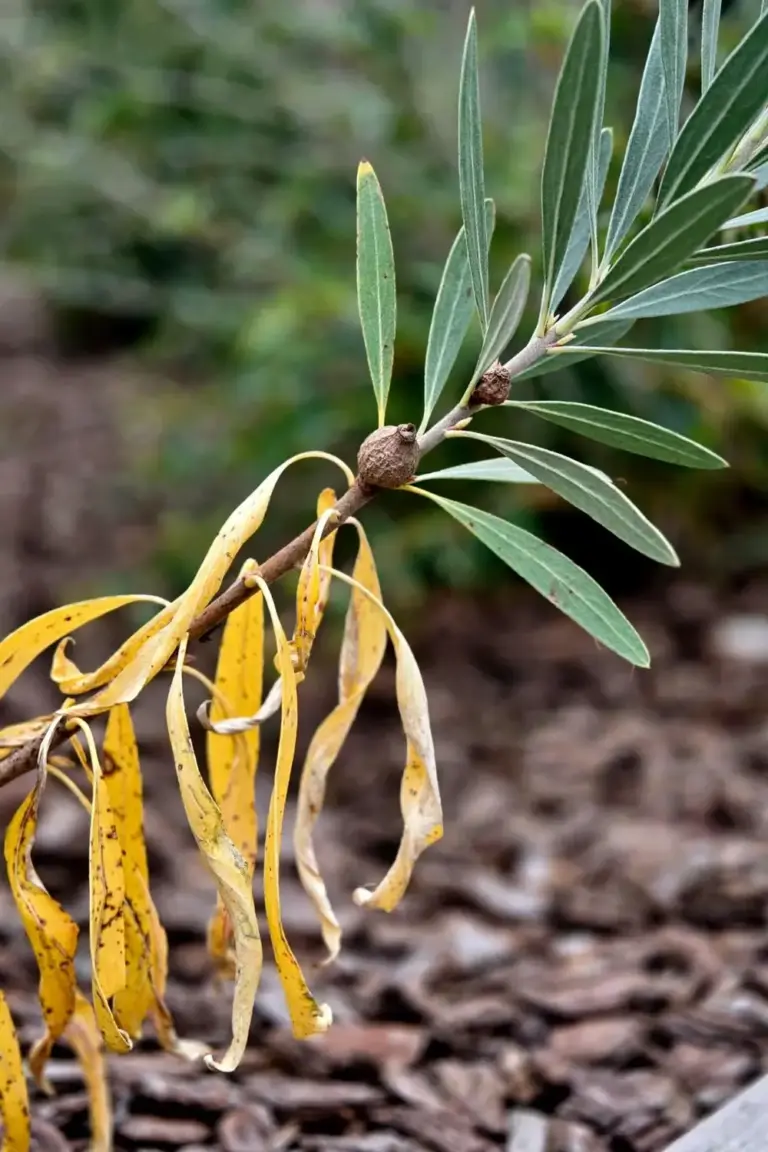
Yellow leaves and wilting. Check drainage first. Push a finger 5 cm into the soil. Wet soil means overwatering or a blocked drain. Stop watering. Improve drainage. Lift a potted plant and check the roots. White roots mean the plant recovers. Brown mushy roots mean root rot has set in.
No flowers. Check sun first: a hakea in shade flowers sparsely or not at all. Move a potted plant into full sun and prune a garden plant for light. Check pruning timing next, because pruning before flowering removes the buds. Prune after flowering only. A young plant in its first two seasons often flowers lightly, and full flowering builds from the third season onward.
Leggy bare growth. Prune lightly each year after flowering. Tip prune green growth. Never cut into bare old wood. A plant that grew leggy from shade needs more sun plus tip pruning, not a hard cut. Hard cuts on bare wood leave dead stubs.
Sudden death after fertilizing. Standard fertilizer is the likely cause. Flush the soil with clean water. Remove visible fertilizer granules. Never feed the plant again until it recovers. Use low-phosphorus native fertilizer only, at half the label rate, once a year.
Self-seeded seedlings everywhere. Hakea sericea self-seeds freely. Pull seedlings while small. Remove spent follicles before they open. Check local advice before planting a vigorous seeder near bushland. The Australian Plants Society notes that silky hakea has become a serious environmental weed in South Africa after introduction as a hedging plant. A plant that seeds freely in your garden can seed freely beyond it.
Leaf spots and blackened tips. Check watering first. Wet foliage in humid weather invites leaf spot. Water at the base. Improve airflow. Remove spotted leaves. Blackened tips after frost mean cold damage. Leave frosted growth until spring, then prune back to green wood. The soil health guide on this site covers the drainage and soil-structure fixes that prevent most of these failures at the root.
Frequently Asked Questions
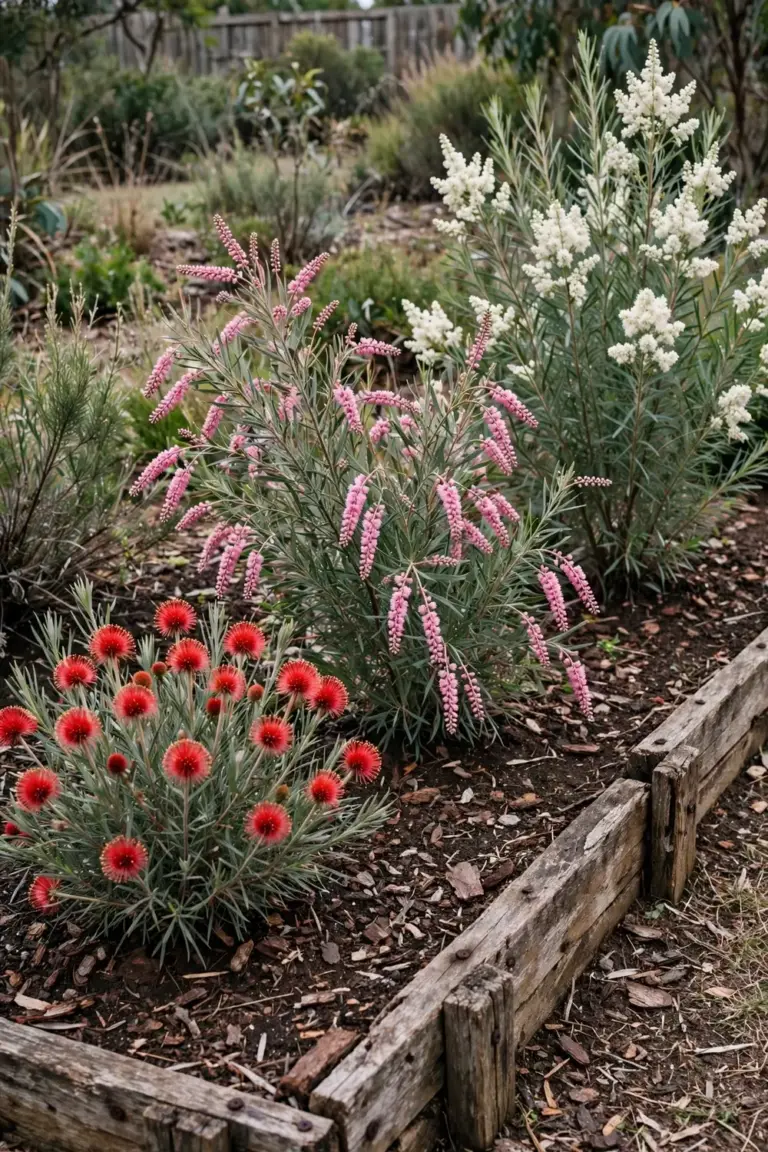
Hakea suits Mediterranean and temperate climates best. Humid subtropical and tropical coasts challenge most species because humid air plus wet soil invites root rot. Pick a humid-tolerant species such as Hakea salicifolia, or buy a grafted form of a showy species. If neither option fits your site, plant a humid-tolerant native instead. A dead hakea teaches nothing.
An established hakea needs almost no supplementary water. Water only when the soil dries 5 cm down. In most Australian gardens, rainfall covers an established hakea. Water a young plant through its first dry season, and water a potted hakea when the top 3 cm of mix dries. Overwatering kills more hakeas than drought ever does.
Standard fertilizer harms hakeas because their proteoid roots absorb nutrients with unusual efficiency. Phosphorus is the danger. Standard products such as poultry manure, blood and bone, and superphosphate carry phosphorus loads that burn proteoid roots. Flush the soil with clean water. Feed only low-phosphorus native fertilizer, at half the label rate, once a year in spring.
Most hakeas do not reshoot from bare old wood, so a hard cut leaves a dead stub. Tip prune green growth after flowering each year instead, removing 10 to 20 cm from each tip. Leave green foliage on every branch. A young plant pruned lightly each year never needs a hard cut. Start early and stay consistent.
Hakea sericea self-seeds freely and has naturalised beyond its native range in parts of south-eastern Australia. It has also become a serious environmental weed in South Africa. Check local advice before planting it near bushland. Pull self-seeded seedlings while small. Remove spent follicles before they open to limit spread.
Plant the Local One and Let It Flower
A hakea rewards the gardener who matches the species to the climate, drains the soil, and then steps back. Pick one species for one job. Plant it in full sun on a mound if your soil is clay. Water it in, stake it for a year, and tip prune it after flowering. Feed low phosphorus or skip feeding entirely. That is the whole method. The flowers will follow.
Walk the plant once a month with secateurs in hand. Pull a seedling, check the collar, and look under a few leaves. A monthly walk catches scale, self-seeders, and drainage failures while each one is still a five-minute fix. The hakea that gets that walk flowers through winter and stands through summer storms. Give it sun, drainage, and restraint, and it will outlast flashier shrubs in the same bed.