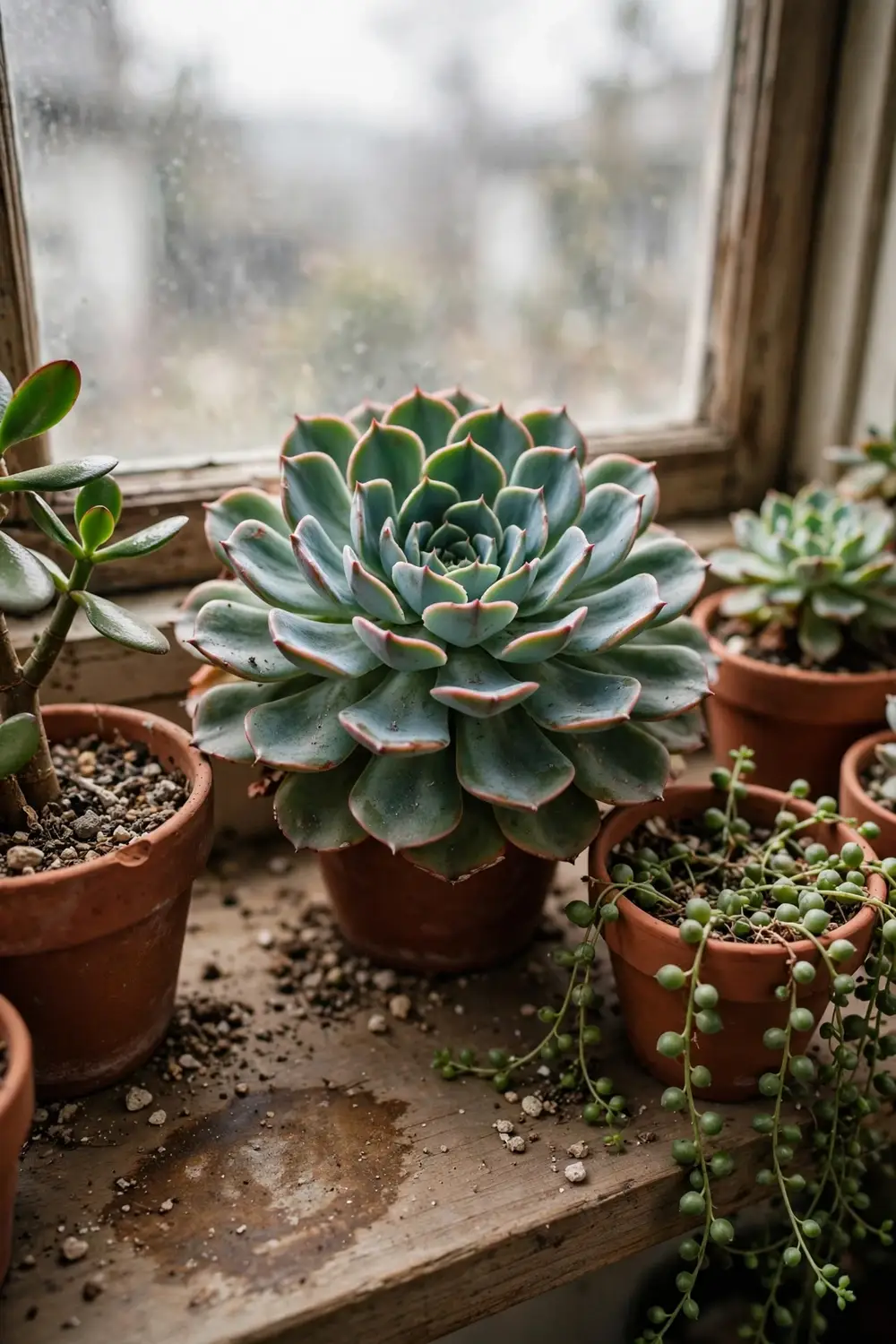

A succulent stores water in its leaves, stems, or roots, then spends that store slowly. That single fact sets every rule here: water only when the soil has dried right through, give sharp drainage, and give 2 to 6 hours of bright light a day. Grow succulents in Australia by matching those three rules to your climate zone. Growing succulents in Australia rewards patience more than effort, and most failures disappear once the mix dries between drinks.
I have learned that the pot I lift to judge dryness tells me more than any watering calendar does. A pot that feels light is ready for water. A pot that still feels heavy is not, whatever the calendar says.
The rest of this page runs from picking a forgiving first plant through light, soil, pots, watering, feeding, climate zones, indoor growing, propagation, pests, Australian natives, and troubleshooting.
1. Start With the Water Tank, Not the Watering Can
A succulent is a plant that stores water in thick, fleshy tissue. The leaves, stems, or roots hold a reserve that the plant draws on between rains. That reserve is the reason succulents survive dry spells that kill thirstier plants. It is also the reason overwatering kills more succulents than drought does. Cacti are succulents with areoles, the small cushions that grow spines, and this guide covers soft succulents, so cacti get one line and no care regime.
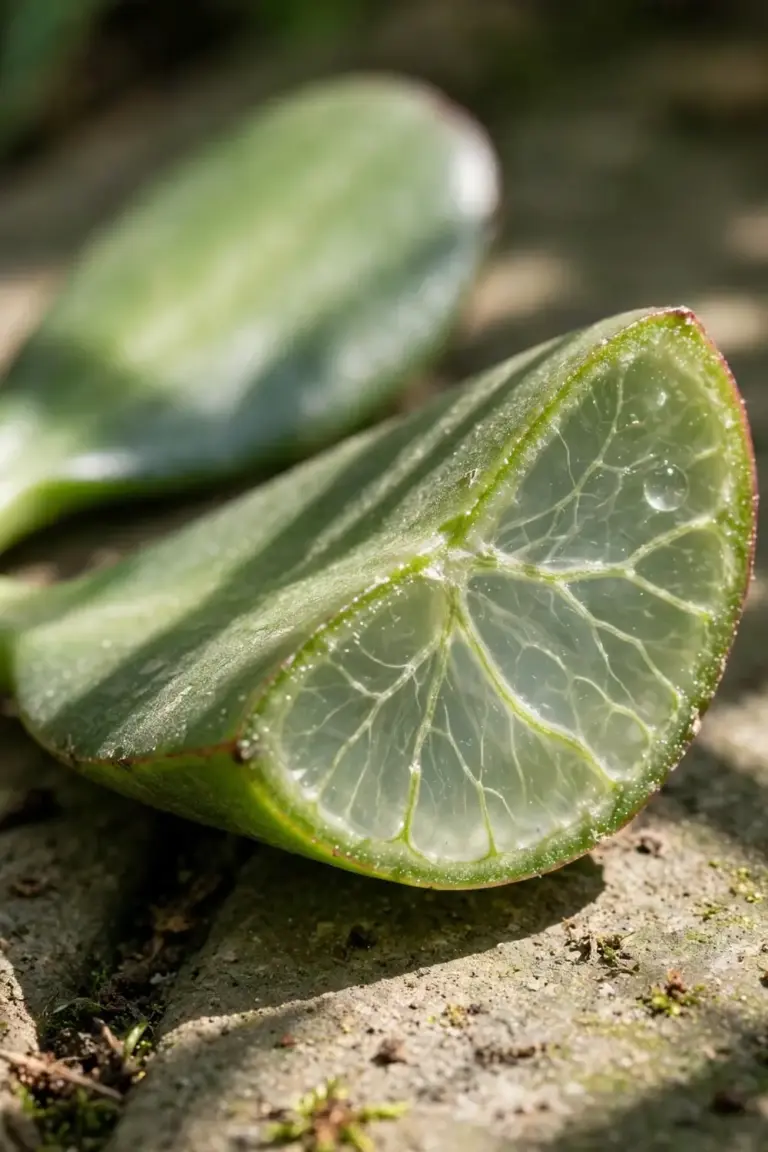
The reserve changes how you read the plant. Wrinkled, slightly soft leaves mean the tank is running low. Translucent, mushy leaves mean the tank overflowed and the roots are rotting. The first state recovers with one deep drink. The second state often does not recover at all, because rot spreads through soft tissue fast.
Treat every succulent as a water tank with a slow leak. Your job is to refill the tank, then let it drain. Water deeply until it runs from the drainage holes, then wait until the soil has dried right through before you water again. The Montana State University Extension succulent guide states this rule plainly: succulents should only be watered when the soil is dry, and over-watering or a poorly draining mix can lead to bacterial or fungal root rot.
2. Pick a Forgiving First Succulent
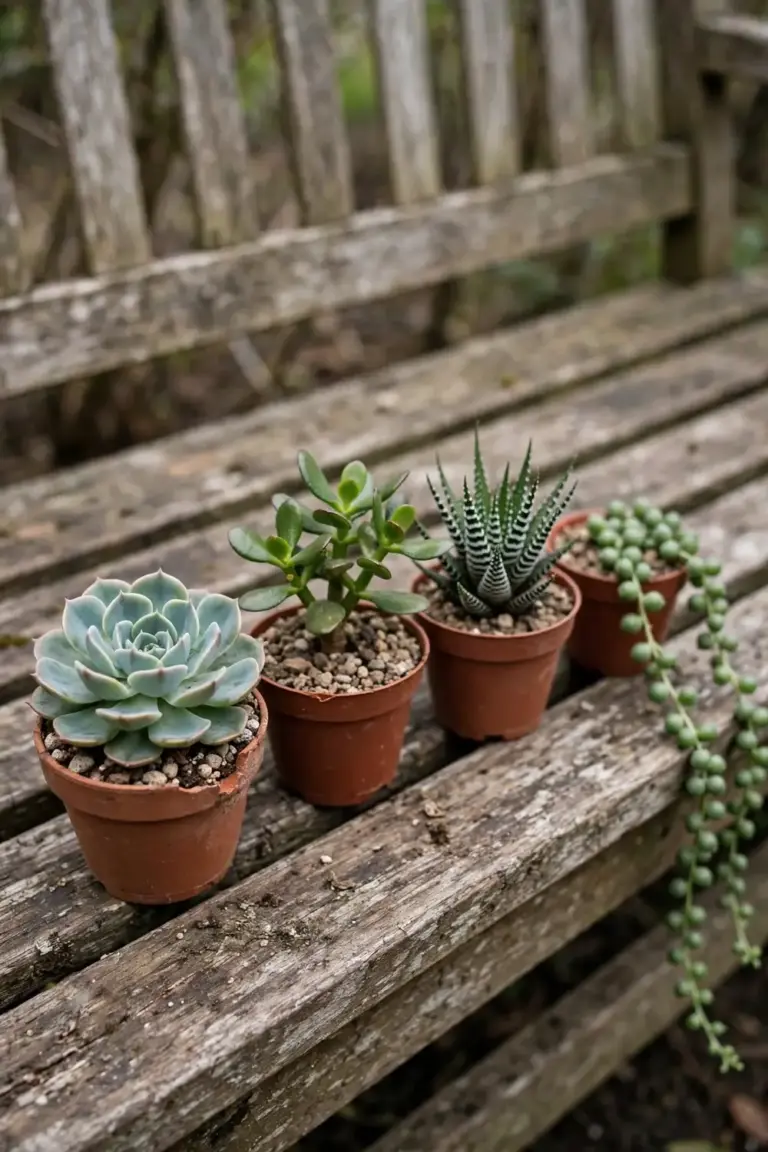
A first succulent should forgive a missed watering and show its needs clearly. Echeveria shows thirst with wrinkling rosette leaves. Jade plant shows it with soft, bending leaves. Zebra haworthia tolerates lower light than most rosette types. String of pearls shows overwatering fast, which teaches the dryness rule early. Aloe vera belongs to its own guide, so this article names it once and moves on: for the full aloe regime, read the site’s guide to growing aloe vera.
| First Succulent | What It Teaches | Light Need | Watch For |
|---|---|---|---|
| Echeveria | Rosette shape, thirst wrinkles | Bright, some direct sun | Stretching toward light |
| Jade plant (Crassula ovata) | Woody stems, slow steady growth | Bright, some direct sun | Soft leaves from overwatering |
| Zebra haworthia (Haworthiopsis fasciata) | Patterned leaves, shade tolerance | Bright indirect light | Brown tips from harsh sun |
| String of pearls (Curio rowleyanus) | Trailing stems, bead leaves | Bright indirect light | Mushy beads from wet soil |
| Aloe vera (Aloe vera) | Thick leaves, offset pups | Bright, some direct sun | See the aloe guide |
Buy one plant first. Learn its rhythm through one full season before you fill a shelf. One plant teaches the dryness rule faster than ten plants watered on a guess.
3. Give Each Succulent the Light Its Shape Was Built For
Light decides shape. A succulent in enough light grows compact, with tight leaves and strong color. A succulent in weak light stretches toward the window, with long pale stems and wide gaps between leaves. That stretching is etiolation, and it does not reverse. New growth can grow compact again once light improves, but the stretched stem stays stretched.
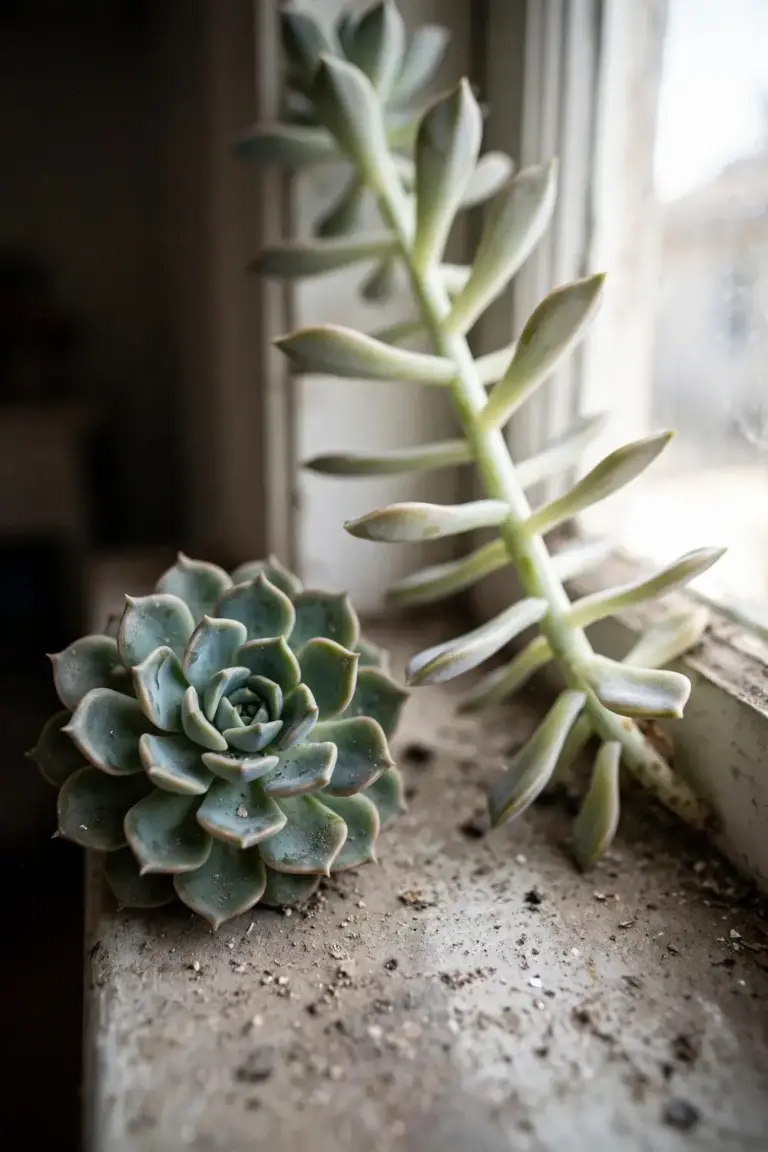
Most succulents want bright light for much of the day. The Montana State University Extension succulent guide puts the range at 2 to 3 hours per day for low-light types and up to 6 hours per day for high-light types. Rosette types such as echeveria sit at the high end. Haworthia and gasteria sit at the low end and scorch in harsh sun.
Move plants into strong sun slowly. A plant that lived indoors burns when it meets full midday sun on day one. Set it in morning sun first, then add an hour of stronger light every few days. The Montana State guide warns against hot, intense sunlight from 11 a.m. to 3 p.m. during acclimation. Shade cloth, a sheer curtain, or a spot that loses direct sun by midday all work.
Indoors, the brightest windowsill wins. A south-facing sill in the southern hemisphere gives the strongest light. An east-facing sill gives gentle morning sun. A north-facing sill suits low-light types. If the only sill is dim, a grow light placed close above the plant for the daylight hours keeps growth compact.
4. Mix Soil That Drains Before the Roots Sit Wet
Succulent roots need air. Ordinary potting mix holds water around the roots for days, and wet roots rot. A succulent mix holds water for hours, then lets it drain away. Drainage is the mix doing its job.
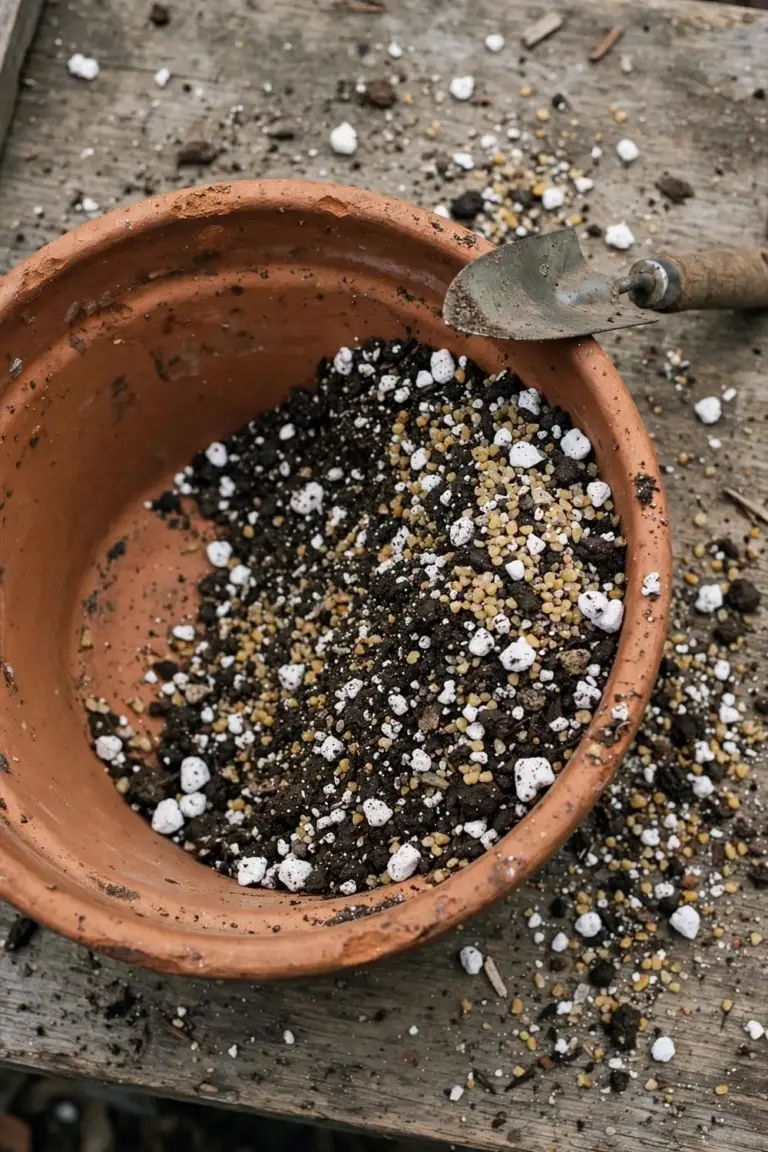
Build the mix from three parts the Montana State guide names: coarse sand, potting mix, and perlite. Combine them until a moist handful falls apart when you let go. That squeeze test is the Montana State guide’s own check: a mix that drains well falls apart, while a mix that drains poorly stays clumped. If the handful holds together like wet clay, add more perlite and coarse sand.
Never use fine beach sand. Fine sand packs tight and blocks air. Coarse sand, grit, pumice, or scoria all work. Perlite adds air pockets. Bark fines add structure but break down over time, so refresh the mix when you repot.
Repot when the plant outgrows its pot or the mix stays wet for days. Tip the plant out, shake off the old mix, and check the roots. White or tan roots are healthy. Brown, mushy roots are rotten. Cut rotten roots back to firm tissue with clean scissors, let the cut dry for a day, then pot into fresh mix. For a broader look at what goes into a good mix, the site’s guide to soil health covers structure, organic matter, and drainage in depth.
5. Choose Pots With Drainage Holes and Room to Dry
A pot without a drainage hole is a bucket. Water pools at the bottom, roots sit wet, and rot follows. Every succulent pot needs a drainage hole. No hole means no pot for a succulent, however good the pot looks.
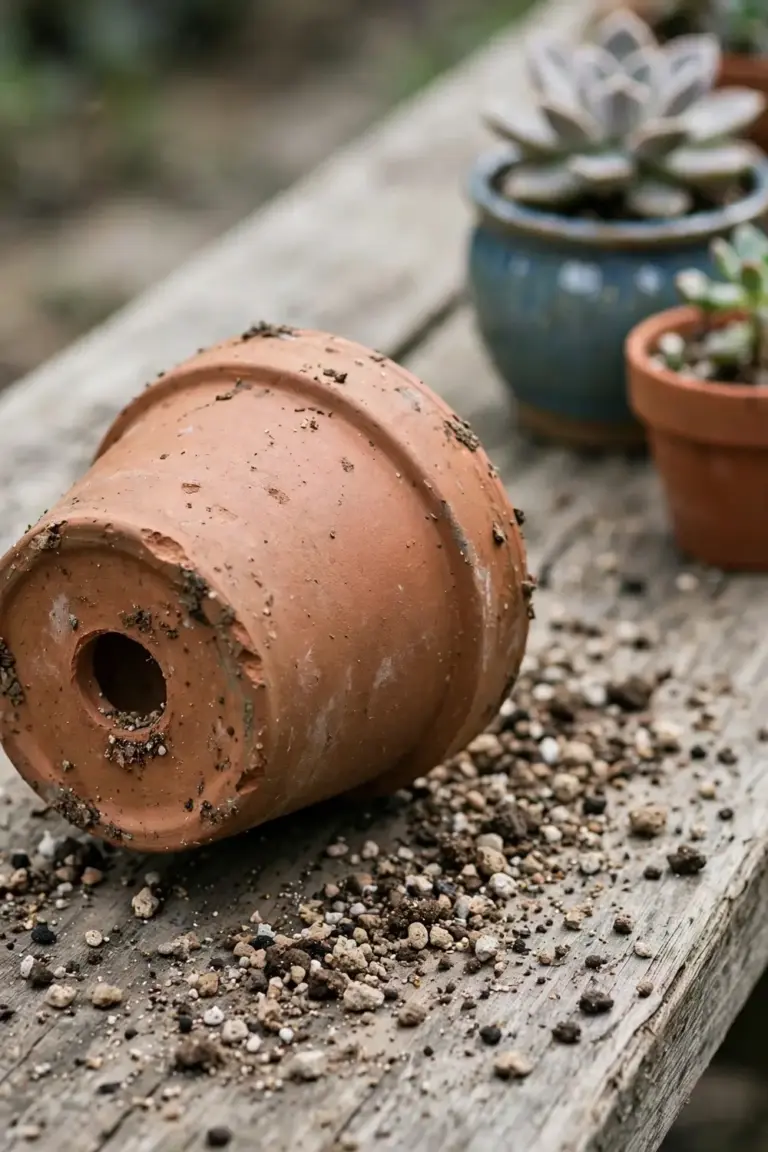
Terracotta dries fastest. The clay walls breathe and pull moisture from the mix, which suits wet climates and heavy-handed waterers. Glazed ceramic holds moisture longer, which suits dry climates and careful waterers. Plastic holds moisture longest and suits hot, dry spots where terracotta dries in a day. Match the pot material to your climate and your watering habit.
Size the pot to the plant. A pot far larger than the root ball holds a large mass of wet mix that the small roots cannot drink. That wet mass rots the plant. Choose a pot one size up from the current root ball, with about 2 cm of mix around the roots. Shallow bowls suit shallow-rooted rosettes. Deep pots suit tap-rooted types.
Ground planting works in warm, dry zones with free-draining soil. Raise the bed, add grit to the soil, and keep the crown above the surrounding soil level so water runs away from the stem. In wet or cold zones, pots win, because you can move the plant under cover before a storm or a frost.
Repot when roots circle the pot, when water runs straight through without wetting the mix, or when the mix stays wet for days after watering. Each sign means the mix has broken down or the roots have filled the space. Fresh mix and one size up restores drainage, and the plant grows again.
6. Water by Dryness, Never by Calendar
Soak and dry is the whole watering method. Soak the mix until water runs from the drainage holes. Wait until the mix has dried right through. Soak again. The gap between drinks changes with the season, the pot, and the weather, which is why a calendar fails.
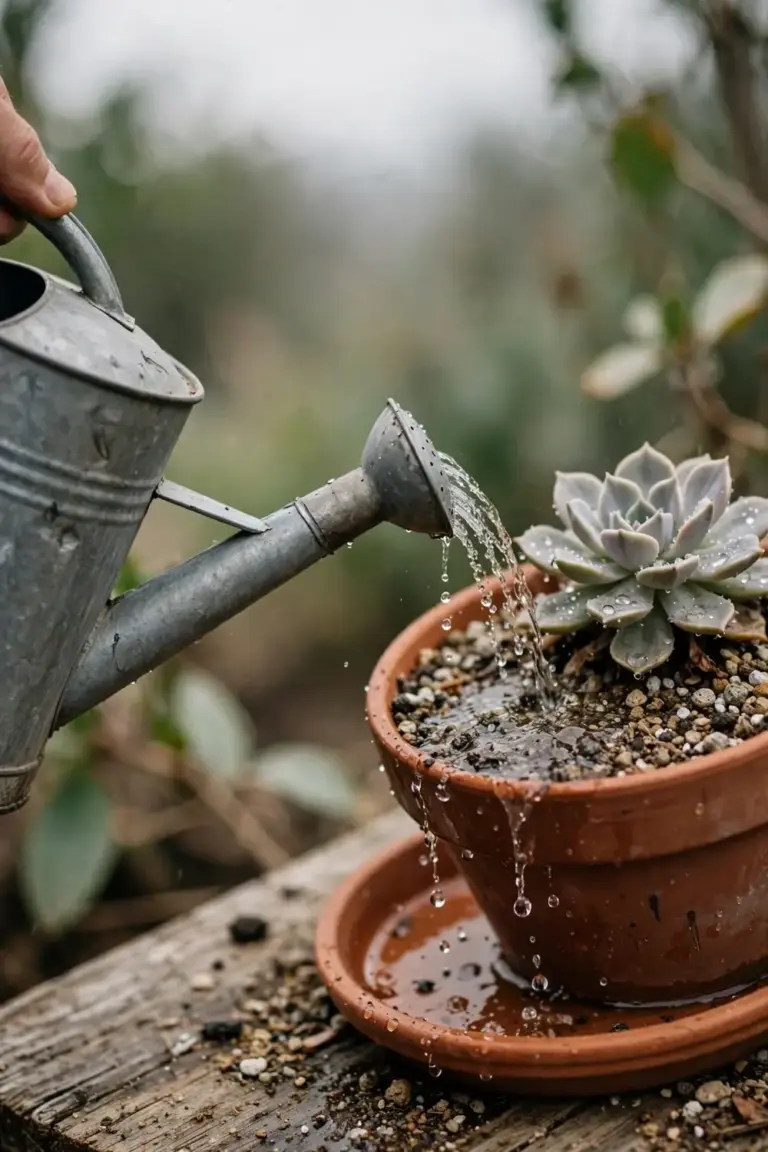
Check dryness with a finger or a wooden skewer. Push a finger 5 cm into the mix. Dry mix means water, while damp mix means you wait another few days. Lift the pot as well: a dry pot feels light in the hand, and a wet pot feels heavy. Use both checks until the lift test becomes habit.
Season changes the gap. Growth runs in spring and autumn for most succulents, and the plant drinks more then. Summer heat can push some types into dormancy, when the plant drinks little. Winter slows growth for most types, and the Montana State guide states that dormant succulents need only enough water to keep from shriveling. Watering a dormant plant on a summer schedule rots it.
A pot on a windy balcony dries in days, while the same pot in a still courtyard stays damp for a fortnight, and a terracotta pot dries faster than a glazed pot holding the same plant. Read the pot and the weather, not the calendar.
Water the soil, not the leaves. Water sitting in a rosette crown rots the crown. Water sitting on hairy leaves invites mold. Use a long-spout watering can or a squeeze bottle aimed at the mix. Empty the saucer after watering so the pot never sits in a puddle.
7. Feed Lightly, Once or Twice in the Growing Season
Succulents need little fertilizer. Rich feeding pushes soft, weak growth that pests love and that rots fast. A light feed in the growing season is enough.
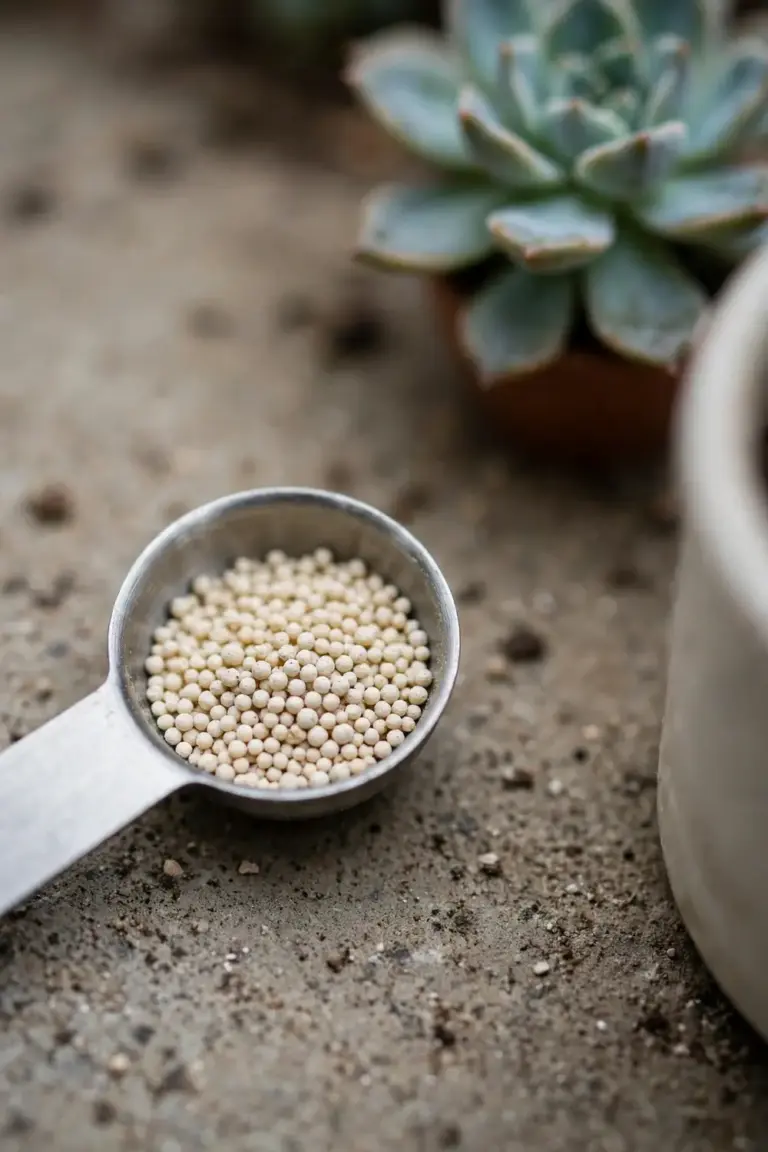
The Montana State guide recommends a low-nitrogen fertilizer once or twice in spring and summer, while the plant grows actively. Dilute to half the label rate. Feed only a plant that is growing and only into moist mix, never into dry mix. Never feed a dormant plant, a stressed plant, or a plant with rot. Fertilizer on a rotting plant feeds the rot.
Skip the fertilizer entirely if the plant grows well without it. A succulent in fresh mix already has some nutrients. Repotting into fresh mix every year or two often replaces the need for feeding. The pot, the light, and the watering rhythm matter far more than the fertilizer bottle.
8. Match Your Climate Zone Before You Plant Outdoors
Australia has no single succulent climate. The same plant thrives outdoors in one zone and rots in another. Match the plant to your zone before you plant it in the ground.
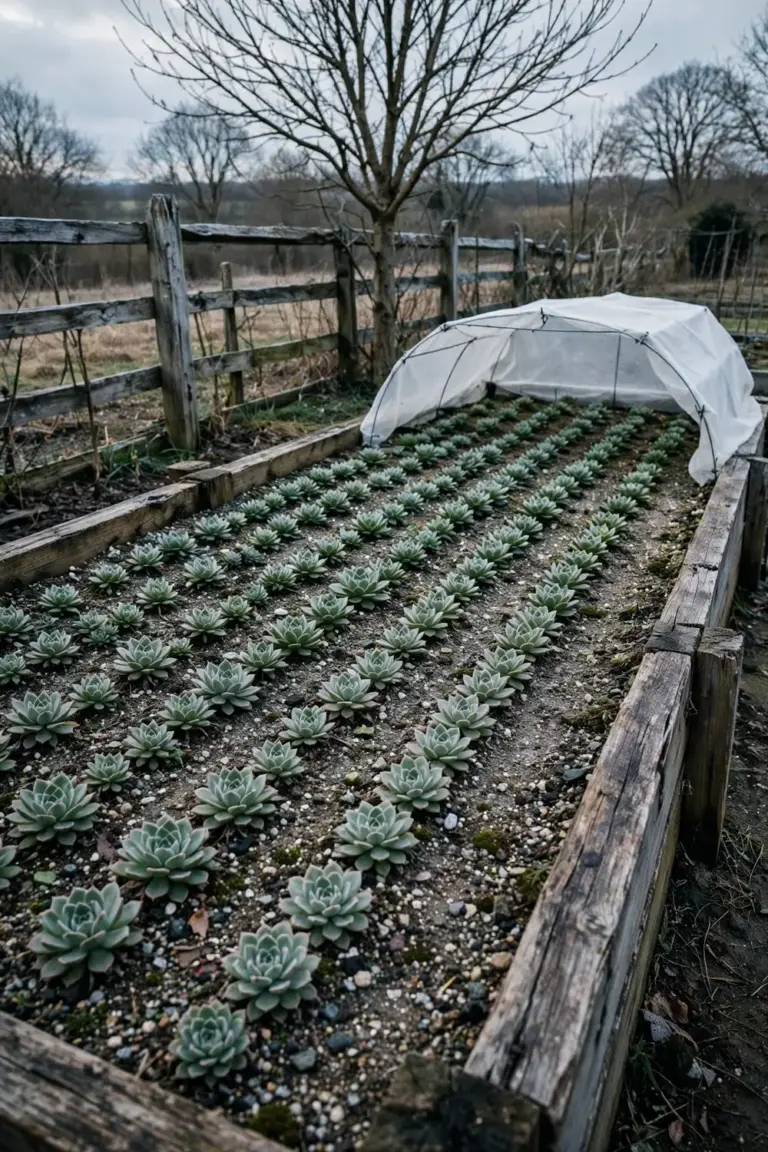
| Climate Zone | Outdoor Growing | Key Risk | Move |
|---|---|---|---|
| Arid and semi-arid interior | Year-round outdoors in gritty soil | Rare frost nights | Cover on frost nights |
| Temperate (VIC, TAS, ACT, southern NSW) | Outdoors in spring to autumn | Winter frost and wet soil | Pots under cover in winter |
| Subtropical (southeast QLD, northern NSW, Perth) | Year-round outdoors with drainage | Summer downpours | Raised beds, terracotta pots |
| Tropical (north QLD, NT, northern WA) | Outdoors with airflow and shade | Humidity and summer rain | Raised beds, airflow, shade cloth |
Arid and semi-arid zones suit most succulents outdoors, with frost cover on cold nights. Temperate zones suit succulents outdoors from spring to autumn, with pots moved under cover for winter. Subtropical zones suit succulents outdoors year-round if drainage is sharp and pots are terracotta. Tropical zones are the hardest: humidity and summer rain keep the mix wet, so raised beds, airflow, and shade cloth matter more than any other factor.
Frost kills soft succulents. A single frost night can turn a rosette to mush. Check the forecast from late autumn onward. Move pots under a veranda, a carport, or a frost cloth before the first frost. Ground plants need a frost cloth pegged over a frame, not draped flat on the leaves.
9. Grow Succulents Indoors on a Bright Windowsill
Indoors, light is the limiting factor. A succulent on a dim shelf stretches, pales, and rots from slow drying. A succulent on a bright sill stays compact and dries on schedule.
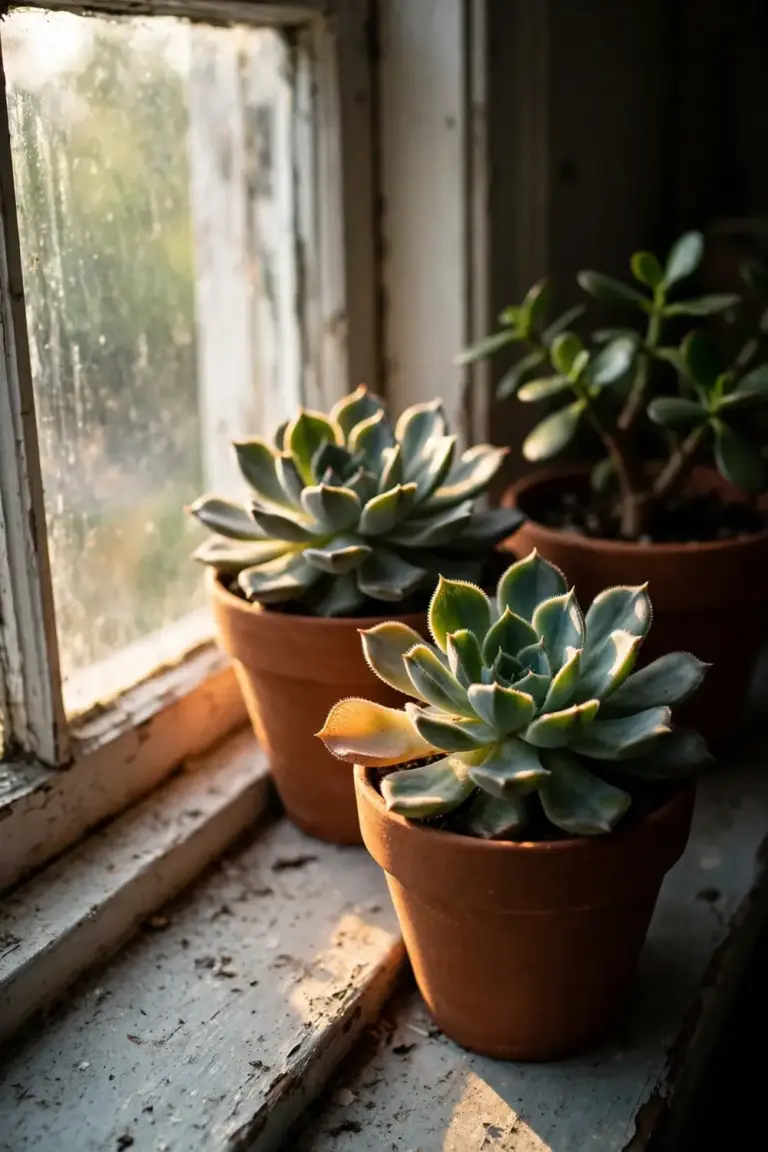
Place the plant on the brightest sill available. Rotate the pot a quarter turn each week so all sides get light and the plant grows straight. Wipe dust from the leaves so light reaches the tissue. Dust sounds trivial. A dusty leaf photosynthesizes less, and a plant that photosynthesizes less grows weaker.
Indoor air dries the mix slowly in winter. Heating dries the air, which helps, but short winter days slow growth and slow drying. Cut watering back in winter. The Montana State guide notes that dormant succulents need only enough water to keep from shriveling, and that watering during dormancy can be deadly for succulents that spend winter outdoors. Indoors, the same rule holds: little water, bright light, cool nights.
Grow lights close the gap on dim sills. Place a full-spectrum LED light 15 to 30 cm above the plant and run it for the daylight hours. Keep the light close, because light strength falls fast with distance. A light on the ceiling does nothing for a plant on the desk.
10. Propagate New Plants From One Leaf, Cutting, or Offset
Succulents propagate easily, which is why one plant becomes ten. Leaf cuttings, stem cuttings, and offsets each work, and the method follows the plant in front of you. A rosette plant gives leaves. A leggy plant gives stems. A clumping plant gives offsets.
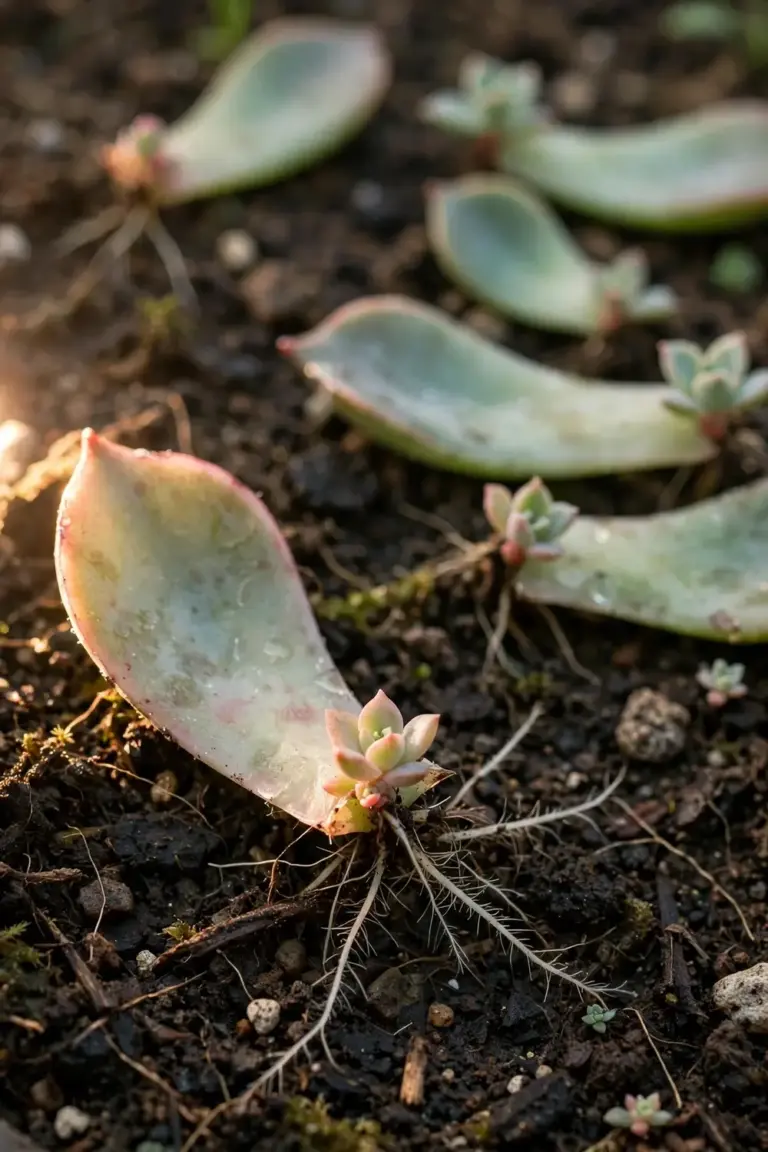
Leaf cuttings work for echeveria, graptopetalum, sedum, crassula, and kalanchoe. Take the whole leaf cleanly from the stem. The Iowa State University Extension propagation guide states the rule: the entire leaf plus the cells that attach it to the stem must come away, because those cells hold the meristem tissue that makes new growth. Partial leaf pieces will not root. Lay the leaf flat on slightly damp, well-drained mix, with the stem end resting on the surface and not buried. Keep the surface damp, not wet. New roots and rosettes form in several weeks.
Stem cuttings work for leggy plants and for jade plant. Cut a stem section with clean scissors, then let the cut end dry until a callus forms. A callused cut resists rot. An uncallused cut placed straight into damp mix rots. Set the callused cutting shallowly in dry mix, then water lightly once roots form.
Offsets are the fastest method. Many succulents push out pups at the base. Wait until the pup has its own roots, then separate it with a clean cut and pot it alone. A pup without roots can still root if you let the cut callus first, but it takes longer.
Beheading rescues a stretched plant. Cut the rosette head off the stretched stem, let it callus, then set it on dry mix. The head roots into a new plant. The old stem often sprouts new offsets. One stretched plant becomes two or more plants.
11. Check Mealybugs, Rot, and Sunburn Before They Spread
Three problems cause most succulent losses: mealybugs, rot, and sunburn, and catching each early means the plant recovers. Check leaf joints weekly, sniff the crown when you water, and look at sun-facing leaves after a heatwave.
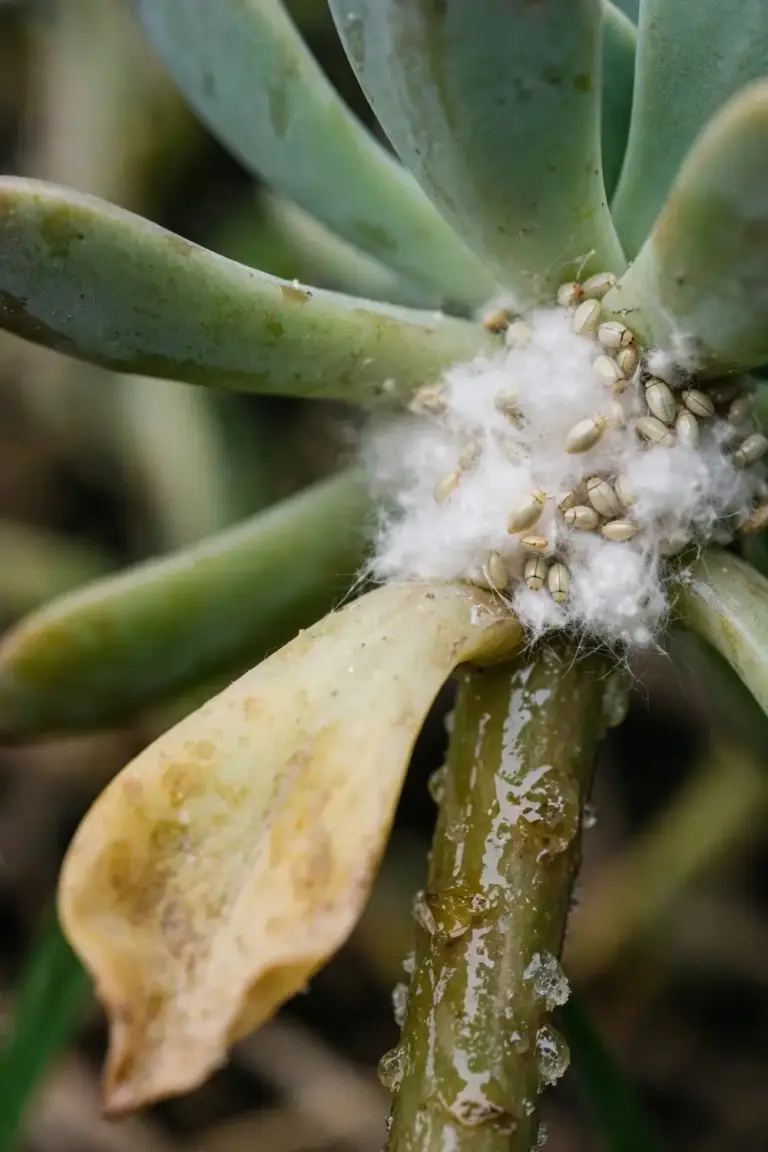
Mealybugs look like tiny white cotton tufts in leaf joints and stem crevices. The Mississippi State University Extension mealybug guide describes them as oval, flattened insects covered with white powdery material, with piercing-sucking mouthparts that produce honeydew, which supports sooty mold. Females stay wingless and produce cottony egg sacs holding hundreds of eggs. Dab visible mealybugs with a cotton swab dipped in rubbing alcohol. Repeat weekly until no mealybugs remain. For a larger outbreak, the same guide notes that horticultural oil or neem oil controls mealybugs with thorough coverage. Isolate an infested plant so the crawlers cannot walk to the next pot.
Rot shows as translucent, mushy tissue and a sour smell. Cut all mushy tissue back to firm, healthy tissue with clean scissors. Let the cut dry and callus before repotting into fresh, dry mix. If rot has reached the crown, take a healthy leaf or stem cutting for propagation, because the mother plant may not survive.
Sunburn shows as bleached, brown, or crispy patches on leaves that faced strong sun. Move the plant to bright indirect light. The damaged patches stay scarred. New growth grows clean.
12. Grow Australian Natives and Skip the Weedy Imports
Australia has its own succulents, and pigface is the best known of them. The Australian National Botanic Gardens pigface page records 6 native Carpobrotus species in Australia, chiefly coastal, with trailing stems to 2 m long, thick fleshy leaves 3.5 to 10 cm long, and deep pink-purple daisy-like flowers from October to January. Pigface grows on coastal dunes in New South Wales, Queensland, and Victoria, where it binds sand and paves the way for later plants.
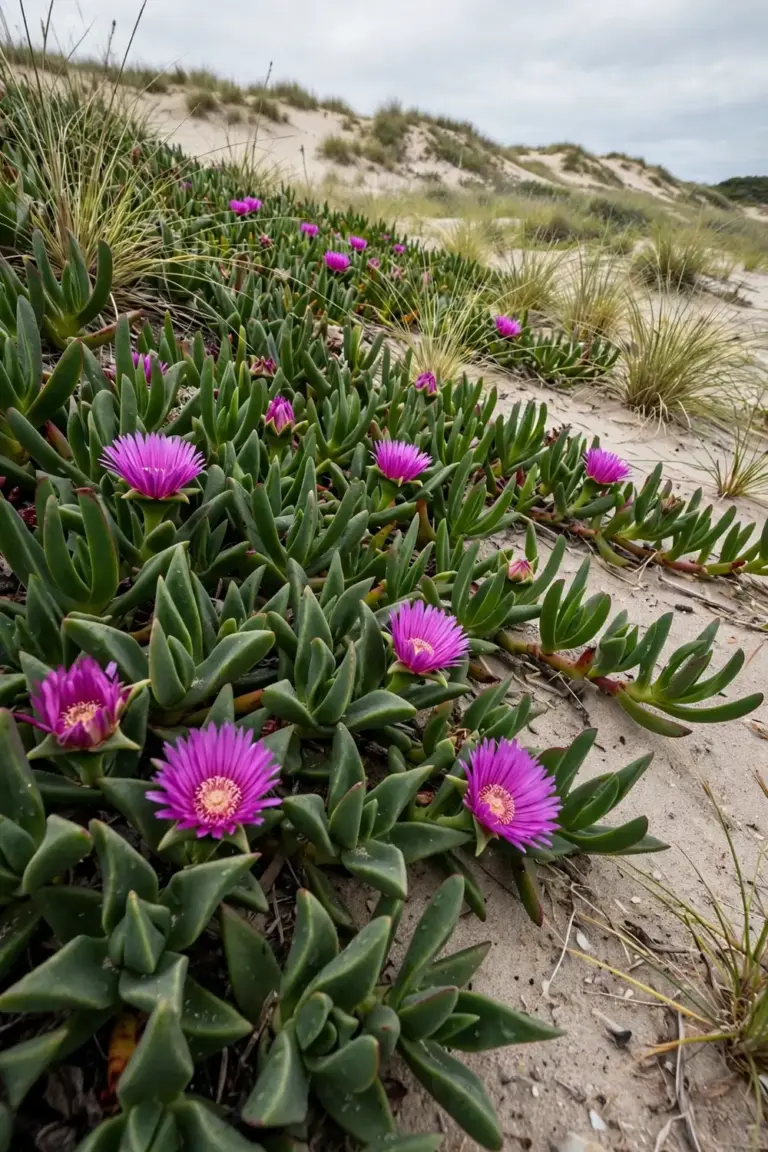
Name the natives correctly. Pigface is not one species. Carpobrotus rossii grows in the south. Carpobrotus glaucescens grows on the east coast. Disphyma crassifolium, the round-leaf pigface, belongs to a different genus entirely, so the name pigface covers more than one plant. Garden centres often stock South African Carpobrotus species instead, and some of those are environmental weeds in Australia. Ask for the Australian species by its full botanical name before you buy.
Other native succulents include Calandrinia species and samphire. Both suit coastal and saline soils where exotic succulents struggle, and both follow the same rules as every succulent: sharp drainage, bright light, and water only when dry. Calandrinia brings bright flowers on wiry stems. Samphire brings fleshy, jointed stems that tolerate salt.
Never plant a weedy Carpobrotus near bushland, dunes, or waterways. A plant that escapes a garden bed can smother native groundcover. If you already grow one, keep it in a pot, cut off spent flowers before they seed, and bin the trimmings with household waste, not green waste. For container growing with natives, the site’s guide to Australian native plants in containers covers pot choice and mix for native species.
13. Fix Etiolation, Rot, Sunburn, and Leaf Drop Fast
Troubleshooting starts with the symptom. Match the symptom to the cause, then act once.
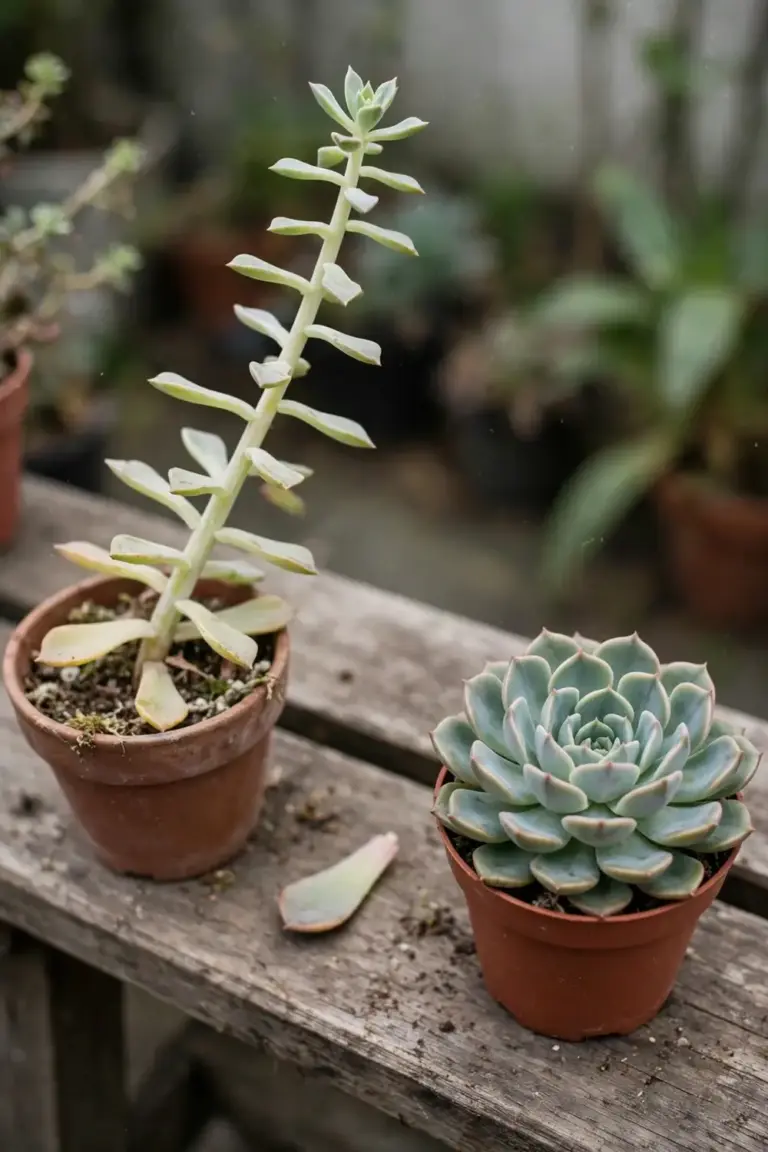
Etiolation means the plant stretches toward light, with long pale stems and wide gaps between leaves. Move the plant to brighter light slowly. Behead the stretched rosette if you want a compact plant again, and propagate the leaves from the stretched stem.
Rot means translucent, mushy tissue. Unpot the plant, cut all mushy tissue back to firm tissue, let the cuts callus, and repot into fresh dry mix. Water only after a week. If the crown is mushy, propagate from a healthy leaf or stem.
Sunburn means bleached or brown patches on sun-facing leaves. Move the plant to bright indirect light. The patches stay scarred. New growth grows clean once light levels suit the plant.
Leaf drop has several causes. A few lower leaves dropping as the plant grows is normal. Many leaves dropping at once points to overwatering, cold, or a sudden move. Check the mix first. Wet mix means overwatering. Dry mix with dropping leaves after a cold night means cold damage. Dry mix with dropping leaves after a move means shock, and the plant settles once it adjusts.
Succulent FAQ: Questions Australian Gardeners Ask
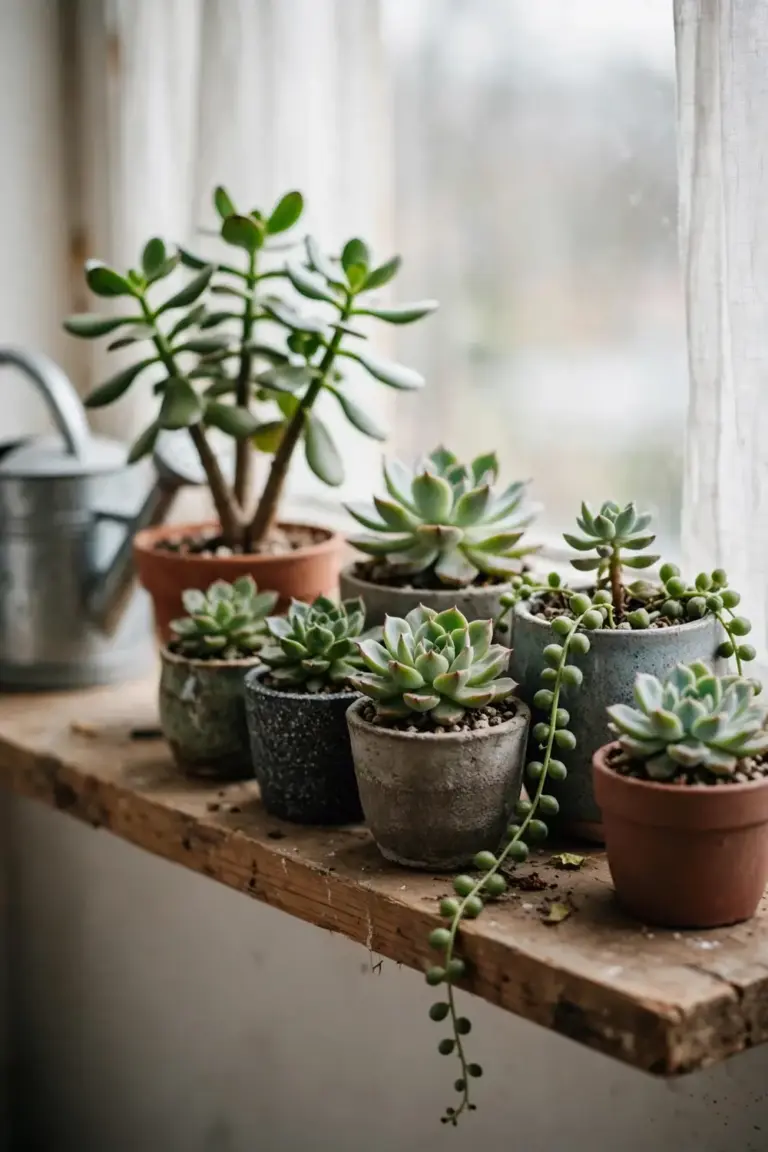
Water only when the mix has dried right through. That gap runs about one to two weeks in warm weather and three to four weeks or longer in winter, depending on the pot, the mix, and the light. Check dryness with a finger 5 cm into the mix and by lifting the pot. A light pot is ready. A heavy pot is not.
Most succulents need bright light, and many want some direct sun. Rosette types want several hours of direct sun. Haworthia and gasteria want bright indirect light and scorch in harsh sun. Acclimate any plant to stronger light over days, and keep new plants out of the 11 a.m. to 3 p.m. blast until they adjust.
Stretching means weak light. The plant grows long stems and wide gaps between leaves as it reaches for the window. Move the plant to a brighter sill or under a grow light. The stretched stem stays stretched, but new growth grows compact. Behead the rosette and propagate the leaves if you want a tidy plant again.
Most soft succulents cannot survive frost. One frost night can turn a rosette to mush. Move pots under cover before the first frost. Cover ground plants with frost cloth on a frame. Hardy types such as some Sempervivum tolerate cold, but most garden-center succulents do not. Check the label for your plant.
A few lower leaves dropping is normal growth. Many leaves dropping at once signals overwatering, cold, or shock. Check the mix first. Wet mix means overwatering, so stop watering and let the plant dry. Dry mix after a cold night means cold damage. Dry mix after a move means shock, and the plant settles once it adjusts.
Start With One Pot and a Dry Week
One succulent, one pot with a drainage hole, one gritty mix, and one dry week between drinks. That is the whole method. Give the plant bright light, move it slowly into stronger sun, and let the mix dry right through before you water again. The plant stores water for you. Your job is to let it.
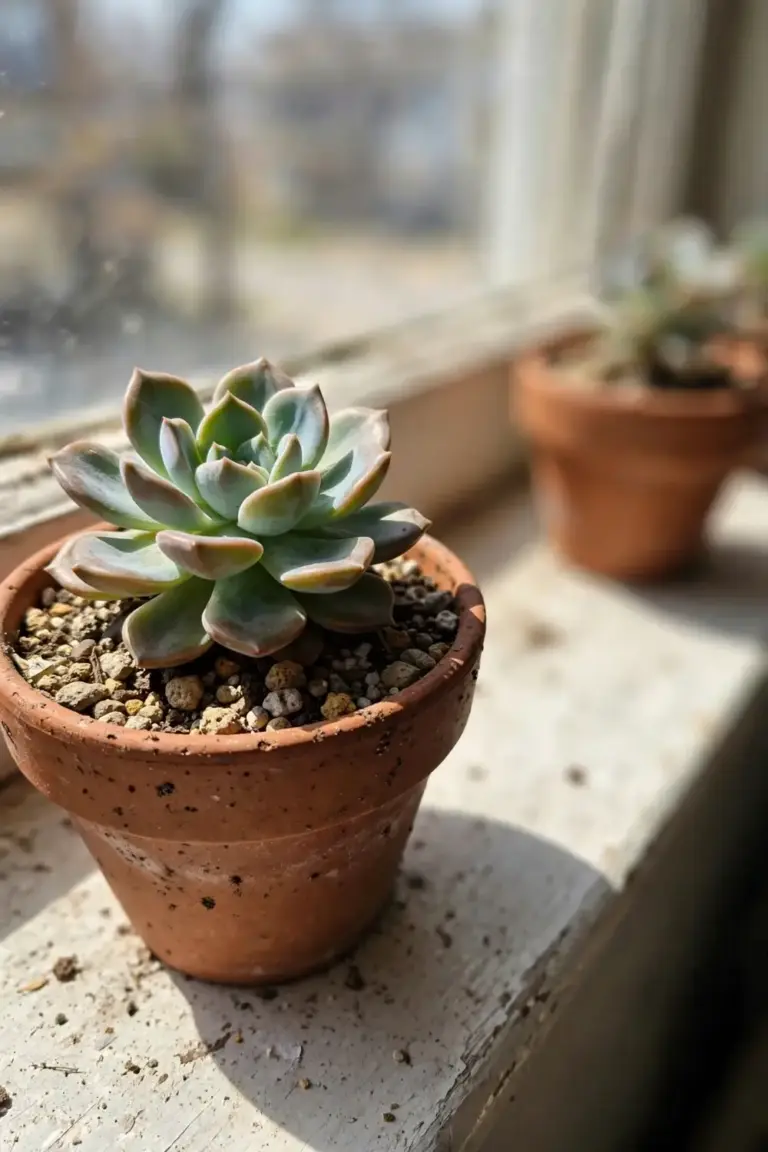
When the first plant thrives for a full season, add a second type that wants different light. A haworthia on a dim sill and an echeveria on a sunny sill teach more than ten plants crowded onto one shelf. Grow the collection slowly, and each plant gets the light and the dry week it needs.