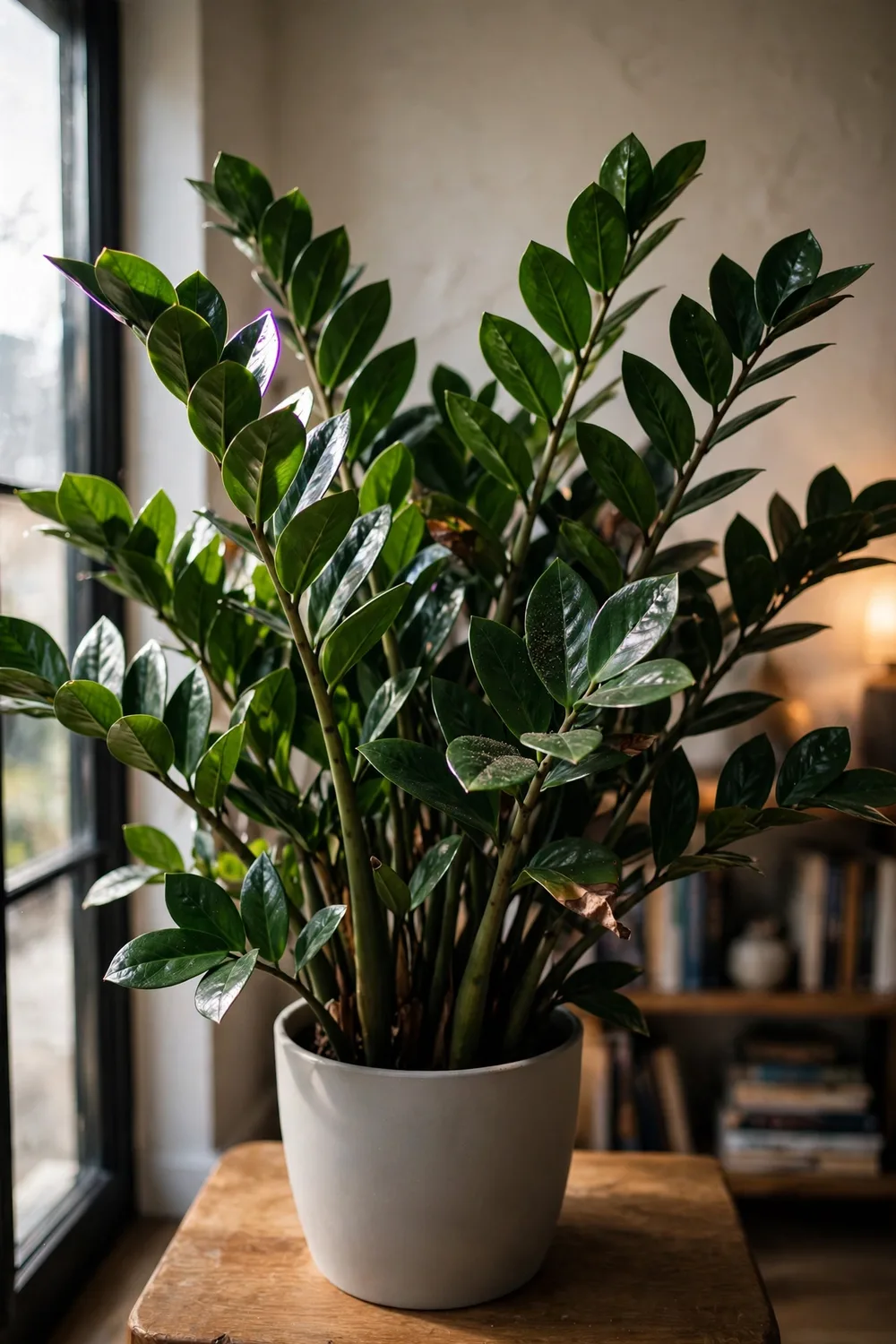

Water it 1 to 2 times a month. Give it bright indirect light. That is how to grow ZZ plant the honest way: the plant grows steadily for years on that alone. A ZZ plant (Zamioculcas zamiifolia) stores water in thick underground rhizomes, so drought is easy for it and overwatering is the danger. One fact runs the whole plant. Everything below obeys it.
The catch is the reputation. Sellers call the ZZ plant the low-light champion, and it does survive dark offices. It does not thrive there. In low light it grows leggy, pale, and slow, while the same plant in bright indirect light fills out with glossy upright stems. In my experience, the moment I treated the dark-corner spot as a waiting room instead of a permanent home, the plant grew visibly stronger leaves. Treat low light as survival and bright indirect as thriving, and your ZZ plant will repay you.
1. Understand the ZZ Plant’s Honest Light Truth
A ZZ plant survives low light but thrives in bright indirect light. The dark office corner keeps it alive. The spot a few feet from a bright window makes it grow. This distinction is the honest frame every ZZ guide should open with, because the plant’s drought-tough rhizomes create a false sense of total indestructibility. Low light is tolerated. Bright indirect light is what produces the dense, glossy stems that made the plant famous.
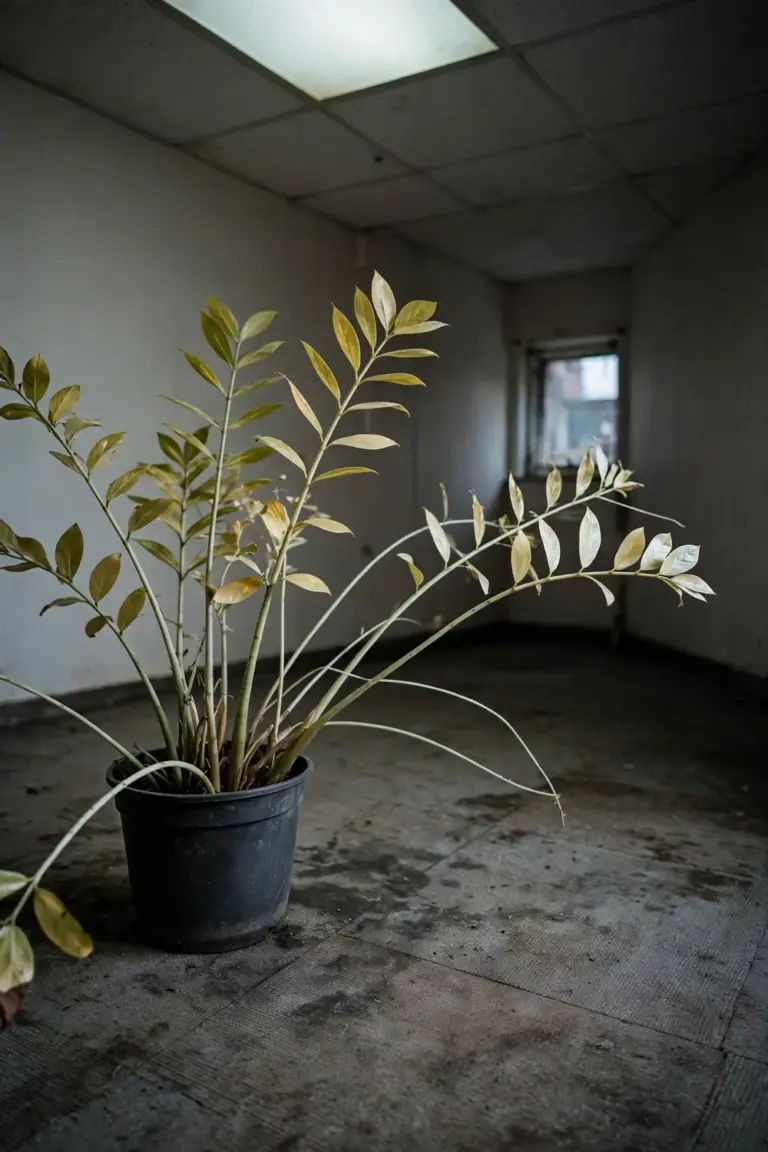
Zamioculcas zamiifolia is a member of the Araceae family, the aroid family that also holds monsteras and peace lilies. It is not a cycad and not a palm, though its pinnate leaflets mimic both. The botanical name nods to the zamia cycad, a lookalike that shares nothing but the silhouette. Clemson University’s extension factsheet describes leaves that grow upright to 4 feet from water-storing rhizomes, and the plant’s native ground is the arid open woodland of eastern Africa, from Kenya to South Africa. That habitat explains the whole plant. The rhizomes bank water for long dry spells. The thick waxy leaflets hold moisture. The growth habit is slow because the plant evolved for scarcity, not speed.
| Care snapshot | What works |
|---|---|
| Light | Bright indirect; tolerates low light |
| Water | 1 to 2 times per month, after full dry-out |
| Potting mix | Coarse and gritty: 50% peat or coir, 25% perlite, 25% sand |
| Feed | Once or twice in the growing season |
| Temperature | Room temperature; cold drafts cause damage below 60°F |
| Pets | Not pet safe |
2. Aim for Bright Indirect Light Every Time You Can
Bright indirect light is the target for every ZZ plant you own. Place the pot near an east-facing window or a few feet back from a brighter south or west window with a sheer curtain. North-facing windows work in the northern hemisphere as gentle all-day light. A few hours of soft morning sun toughen the leaves. Harsh afternoon sun burns them, and the scorched leaflets never recover their gloss.
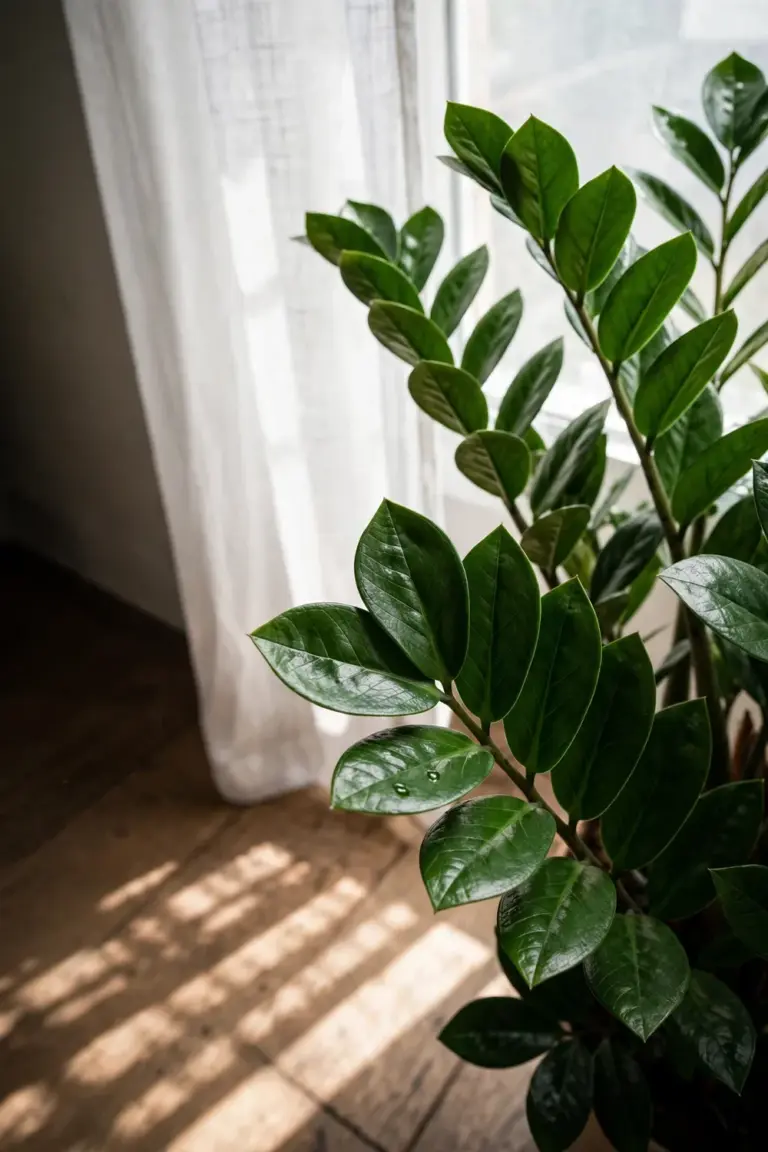
Fluorescent office lighting keeps a ZZ plant alive, which is where the low-light legend comes from. Survival is not the same as growth. In deep shade the stems stretch toward the light, the leaflets space out, and new growth slows to a crawl. Give a struggling plant two weeks in brighter indirect light and the next flush of stems stands visibly more upright. When you move a plant from shade to brightness, step it up over a week so the leaflets adjust without stress.
3. Water Only After the Pot Dries Out Completely
Water a ZZ plant 1 to 2 times per month, and only after the potting medium has dried all the way through. Clemson’s extension guide states the rule plainly. The thick rhizomes hold weeks of water, and a ZZ plant dies from too much water long before it dies from too little.
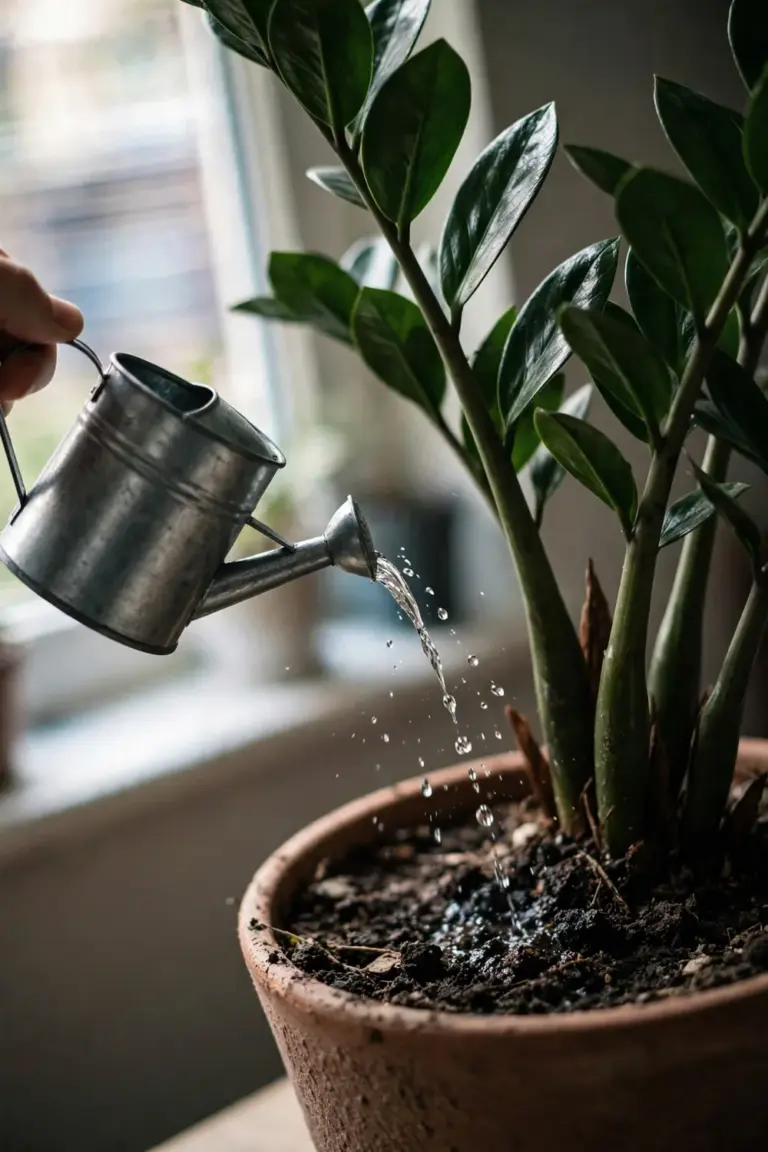
Test dryness with a finger or a wooden chopstick pushed to the bottom of the pot. Dry soil means water; any lingering dampness means wait. When you water, soak the whole pot until water runs from the drainage holes, then empty the saucer and never let the pot sit in standing water. In winter, stretch the interval further, because the resting plant uses almost no water. Yellow leaves are the classic signal of overwatering, not thirst. Thirsty rhizomes announce themselves differently: wrinkled, pinched stems.
4. Mix a Gritty Potting Medium With the 50-25-25 Recipe
A coarse, well-draining potting mix keeps rhizomes dry between waterings. Clemson University’s extension factsheet publishes an exact recipe: 50% peat moss or coir-based potting soil, 25% perlite, and 25% sand. The peat or coir holds nutrients, the perlite opens air pockets, and the sand adds weight and drainage. Mix the three in a bucket before potting so the proportions stay honest.
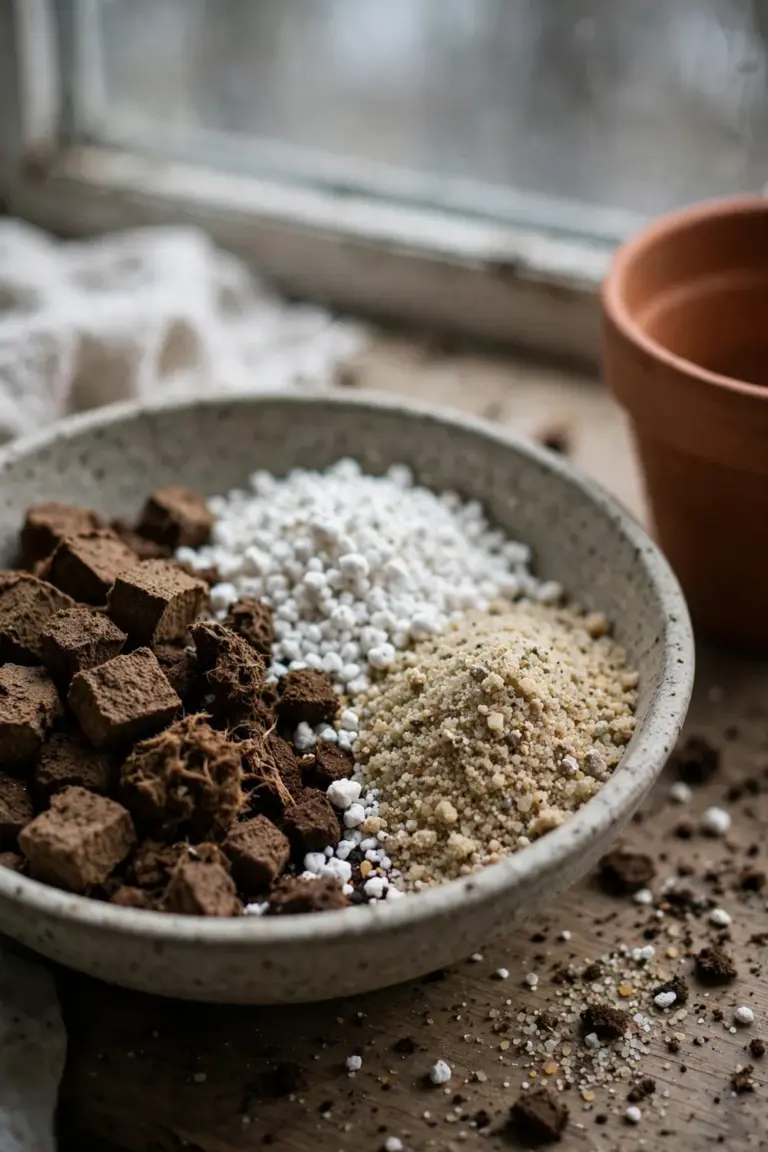
Ordinary garden soil suffocates ZZ rhizomes. It packs down, holds water against the roots for days, and starts the rot cycle that kills more ZZ plants than every other cause combined. A bagged cactus or succulent mix also works if it is genuinely gritty. If the bag feels like fine powder with a few white specks, add extra perlite by hand. Gritty medium is the cheapest insurance this plant has.
5. Choose a Pot With Real Drainage
Every ZZ pot needs a drainage hole. The hole is not optional decoration. Excess water must exit the pot within minutes of watering, because rhizomes rot in standing water even inside a gritty mix. Terracotta pots breathe through their walls and dry the medium faster, which suits heavy-handed waterers. Plastic pots hold moisture longer, which suits forgetful waterers.
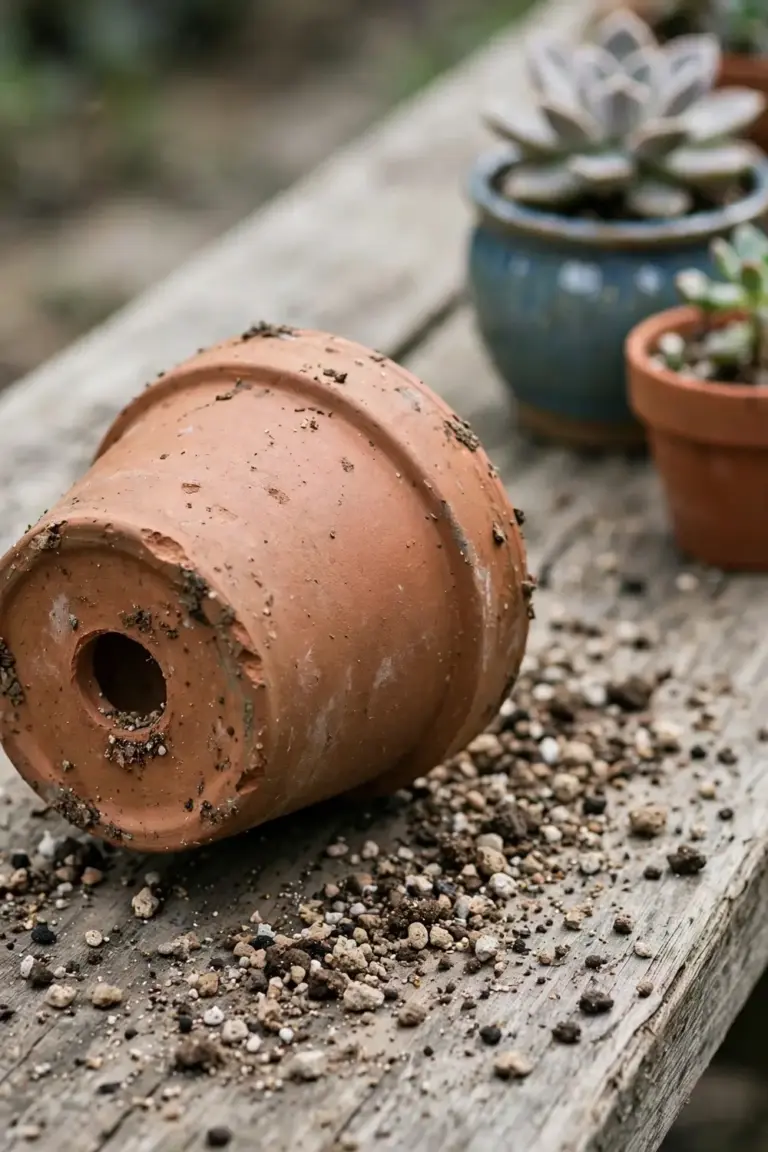
Skip the gravel layer at the bottom. Gravel raises the wet zone instead of draining it. Pot size matters too. ZZ rhizomes prefer a snug fit. A pot two sizes too large holds a volume of damp medium that never dries around a small rhizome cluster, and rot follows. Choose a pot that fits the root ball with a thumb’s width of space around it, then let the plant fill it.
6. Feed Lightly Once or Twice in the Growing Season
Feed a ZZ plant once or twice during the growing season with a balanced houseplant fertilizer, per Clemson’s care guidance. That is the whole annual feeding program. A plant that grows this slowly cannot use much fertilizer. Leftover fertilizer salts accumulate in the potting medium and burn the roots.
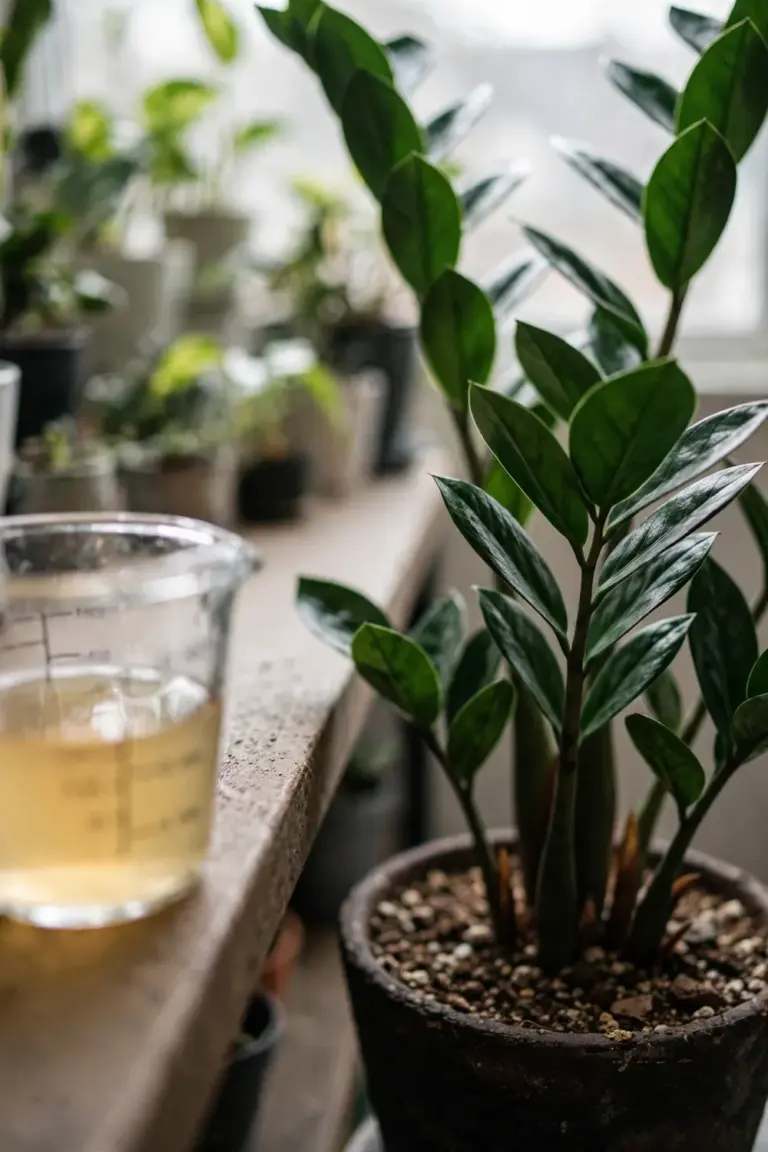
Apply at half the label rate in spring or early summer, when new stems are pushing up. Stop feeding in autumn and winter. A yellow-leafed plant in January wants less water, not more food. Overfeeding shows up as brown leaflet tips and a crust of white salt on the soil surface. When in doubt, skip the feeding entirely. An unfed ZZ plant grows slowly. An overfed one gets damaged.
7. Keep It Warm and Let the Southern Hemisphere Find Its North-Facing Window
Keep a ZZ plant above 60°F and away from cold drafts. Cold is the one weather enemy this plant cannot bluff its way through. Clemson’s extension notes flag the plant as sensitive to cold, so the 60°F line is the floor to defend. Ordinary room temperature suits the plant perfectly. What harms it is specific: a cold draft from an exterior door in winter, a windowsill behind closed curtains on a freezing night, a blast from an air conditioner.
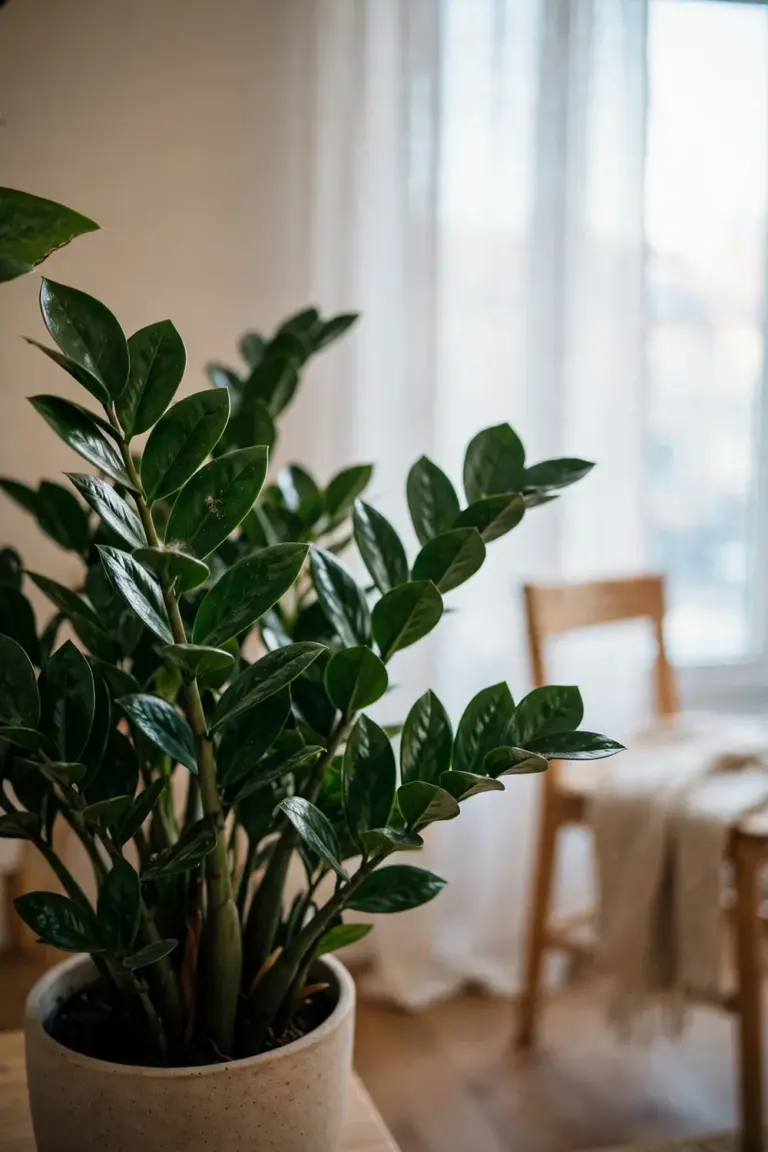
For growers in the southern hemisphere, light geometry flips. In Australia and New Zealand, north-facing windows collect the strongest daylight, while south-facing ones stay dim. The honest-frame rule still applies. Place the plant near a bright north-facing window for thriving growth. A south-facing spot keeps it alive at low light. Never expose the plant to frost. One growers’ guide notes that ‘Raven’ suffers below 5°C (41°F), even earlier than the standard form, so it stays strictly indoors wherever winter nights turn sharp.
8. Repot Only When the Rhizomes Run Out of Room
Repot a ZZ plant every 2 to 3 years, and only when the rhizomes demand it. That interval comes from growers’ seasonal care guides, and the plant’s own behavior confirms it. The sign is unmistakable: rhizomes press visibly against the pot wall, the pot bulges or deforms, or the plant lifts itself out of the medium. A snug pot is not a problem. Rhizomes that fill their pot are not under stress. Rhizomes surrounded by a big volume of fresh damp medium are, for the rot reason above.
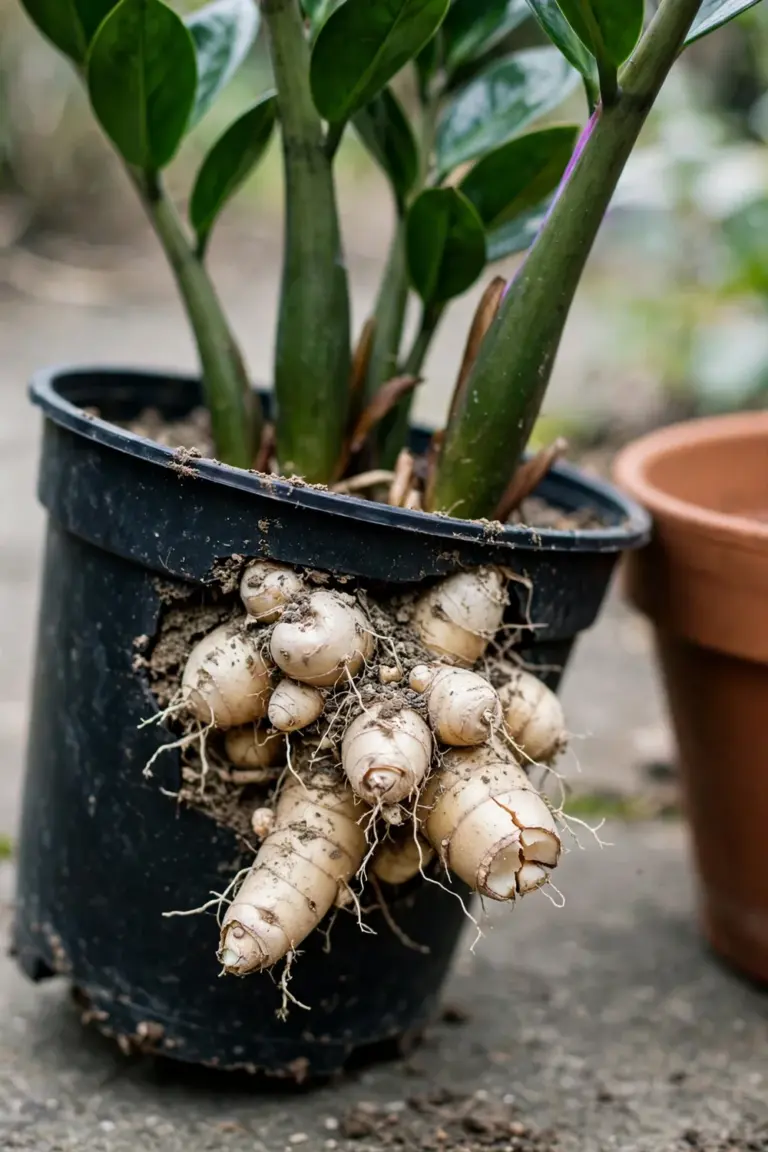
Repot in spring, one pot size up and no further. Shake off the old medium gently and inspect the rhizomes. Healthy rhizomes look like pale firm potatoes. Brown, soft, or foul-smelling tissue is rot. Cut every rotten piece back to clean firm flesh with sterilized shears, let the cuts dry for a day, then repot into dry fresh medium and wait two weeks before watering. Handle with gloves, because the sap can irritate skin.
9. Divide the Rhizomes to Double Your Plant
Division is the fastest and most reliable way to propagate a ZZ plant. One mature plant becomes two or three independent plants in under an hour. Unpot the plant in spring and find the natural breaks between rhizome clusters. Each division needs at least one healthy rhizome and a few stems with leaves. Pull or cut the clusters apart with a clean knife.
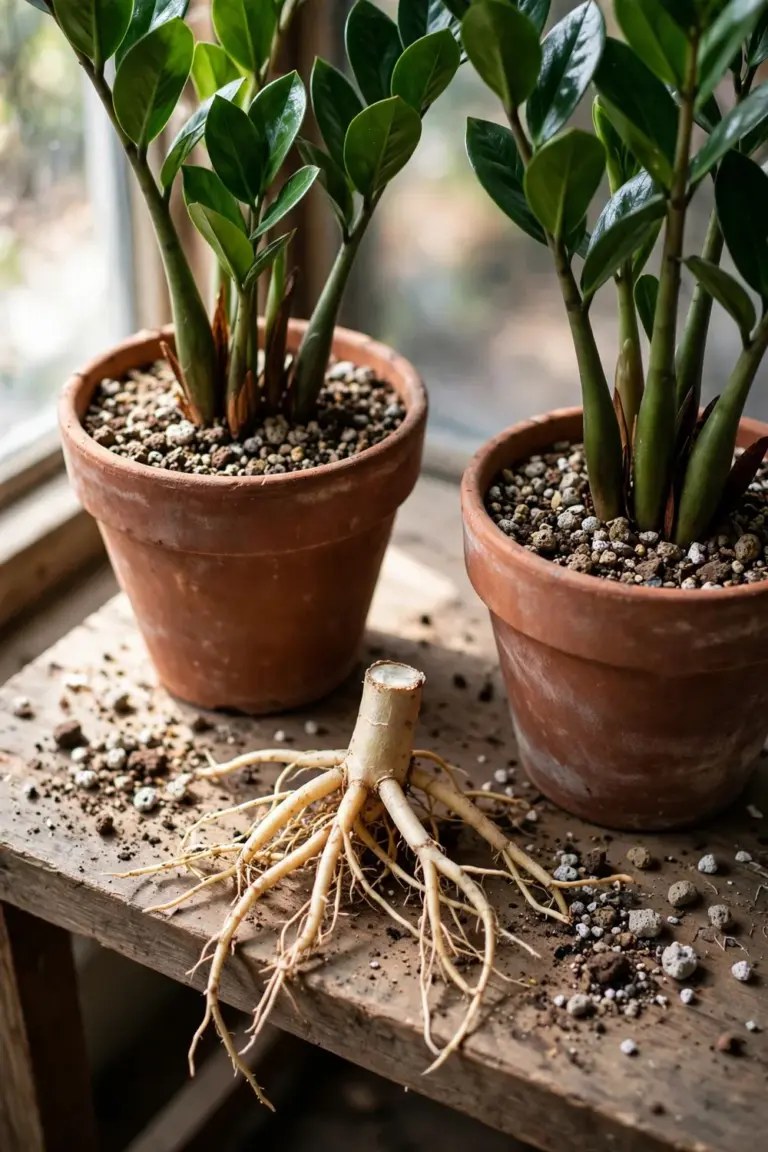
Pot each division in the 50-25-25 gritty mix, water once, and then treat it like a new plant: no water until the medium dries fully. New divisions sulk for a few weeks. Expect no growth while the cut roots heal. Then the first new stem emerges, usually within the season. Division works because every rhizome already stores its own water and food. Nothing about the method is delicate, which is why nurseries prefer it over every other technique.
10. Root New Plants From Leaf Cuttings
Leaf cuttings propagate ZZ plants for free, but the honest timeline is long. Take a single leaflet with its tiny stem joint intact, or a whole leaf with several leaflets, and push the cut end a centimeter into moist gritty mix or a glass of water. The cutting forms a small rhizome first, then roots, then a stem. That first visible stem can take many months, and a full small plant can take a year or more.
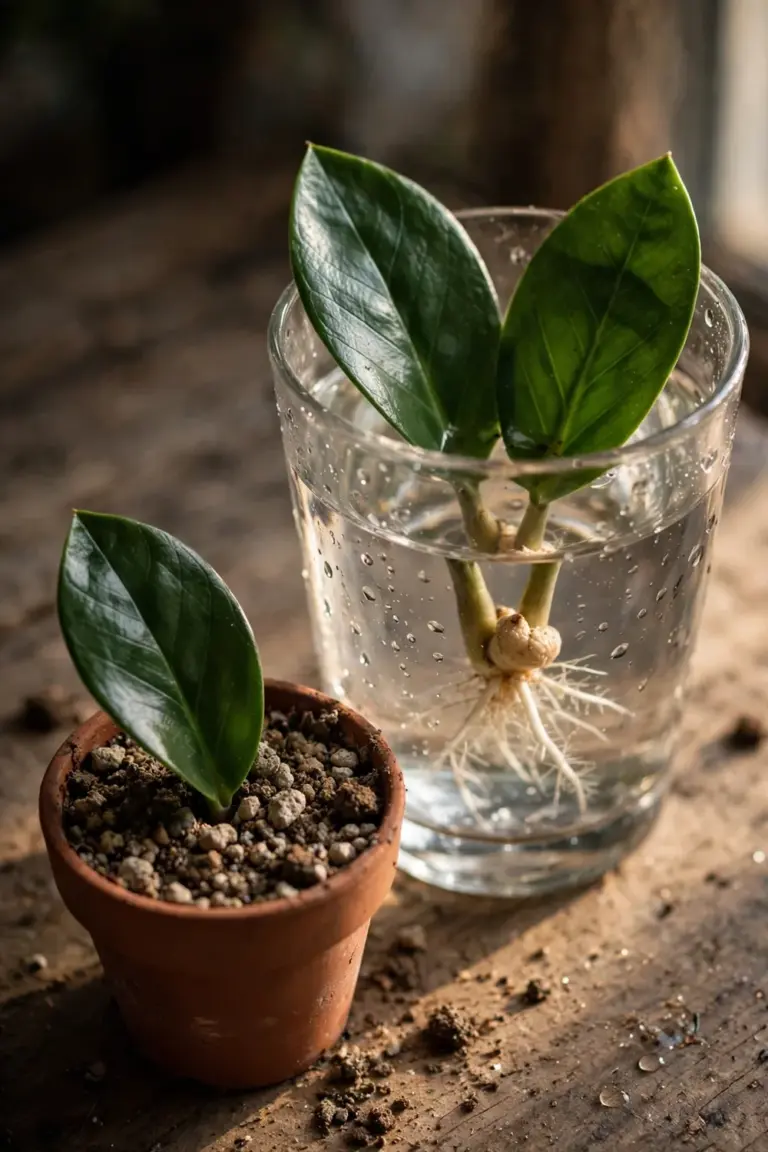
Change water cuttings weekly to prevent slime. Move soil cuttings only when a gentle tug resists, which signals roots. Warmth and bright indirect light speed the process slightly. A leaflet without its stem joint will not root, so cut cleanly with sharp shears. Leaf propagation is a patience project, not a fast multiplication method. For a second plant this year, divide instead.
11. Meet ‘Raven’, the Black-Leaved ZZ Cultivar
‘Raven’ is the black-leaved ZZ cultivar, and its care matches the standard green form exactly. New ‘Raven’ leaves emerge bright lime green and darken to a deep purple-black as they mature, so young growth that looks green is normal and not a defect. The color shift gives the plant its raven name. It was named Best New Plant at the 2018 Tropical Plant Industry Exhibition and reached mainstream garden centers in the United States in 2019, according to one detailed ‘Raven’ guide. That is recent history for such a popular plant.
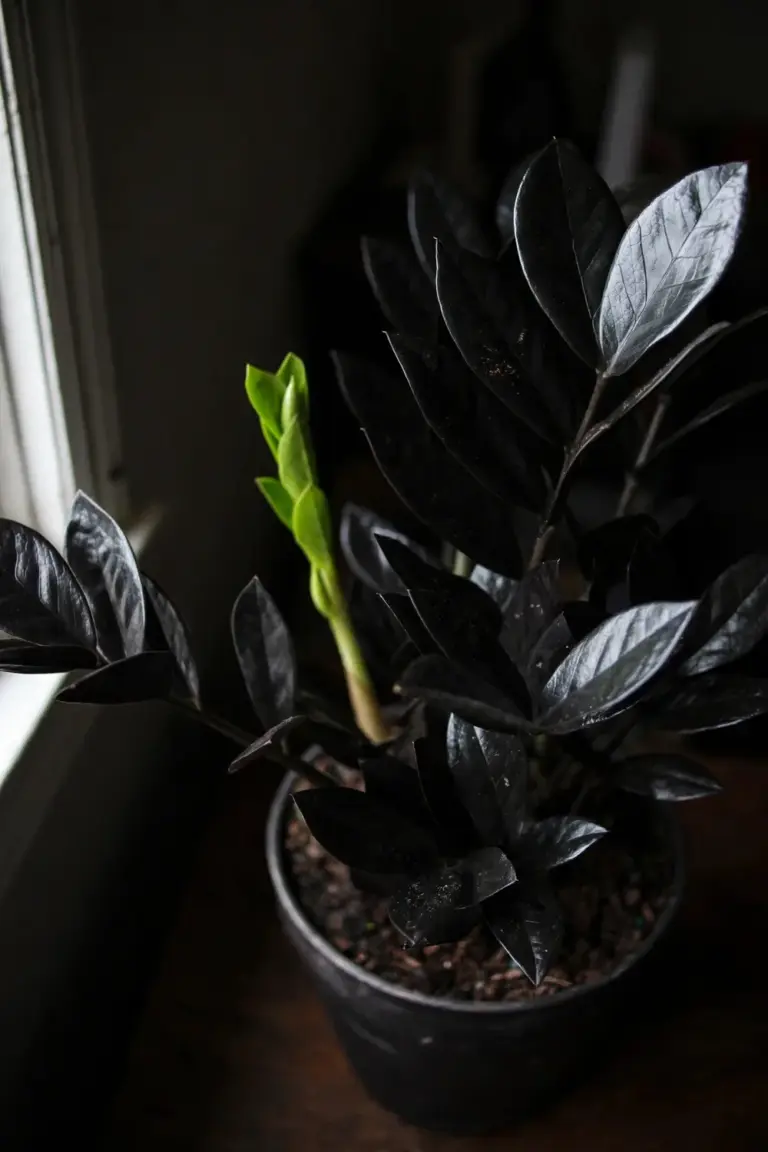
Give ‘Raven’ the same bright indirect light, the same dry-between-waterings rule, and the same gritty mix. Brighter light deepens the black tones; deep shade keeps the leaves duller and slower. Cold hits ‘Raven’ harder than the green form, so keep it warm. Variegated and compact forms like ‘Zenzi’ and ‘Chameleon’ exist too, with mottled or yellow-flushed new leaves. If the black form hooked you and you want another unusual ZZ, the Chameleon ZZ care guide covers its yellow-green new growth. Every cultivar shares the same rhizome logic, so master one plant and you can grow them all.
12. Diagnose Yellow Leaves, Wrinkled Stems, and Mushy Bases
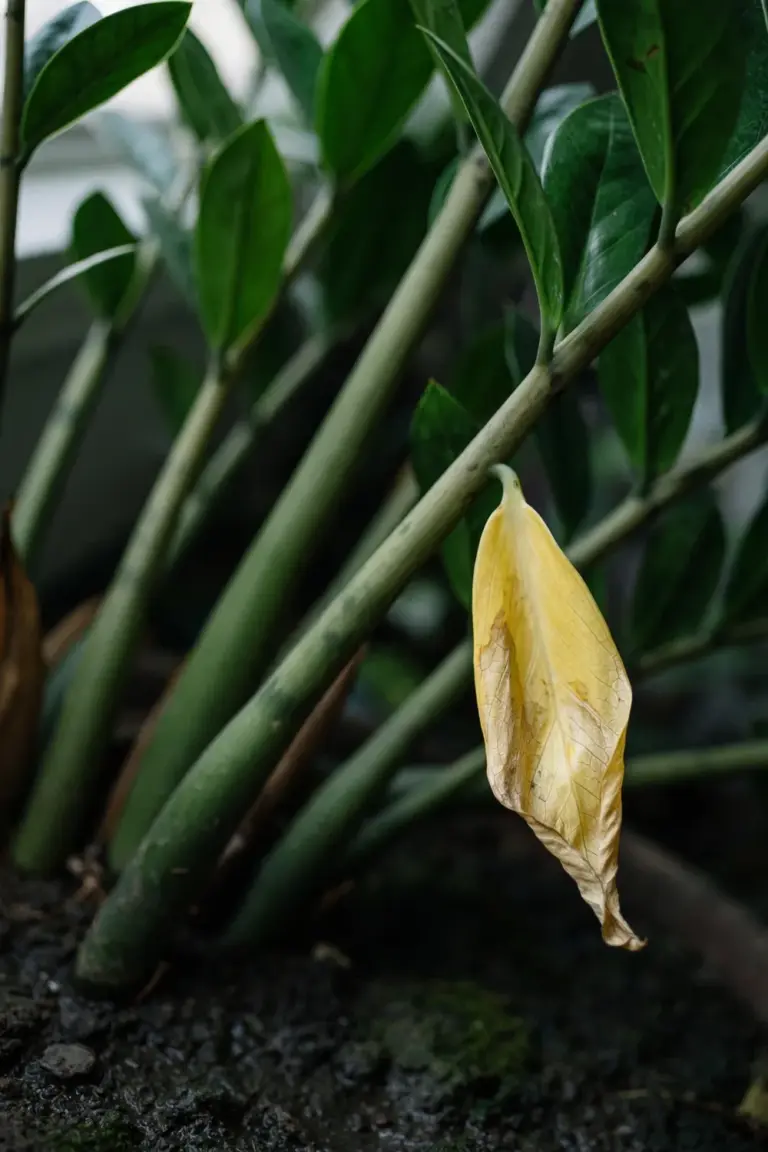
Yellow leaves mean overwatering in almost every case. A ZZ plant with yellowing lower leaflets and damp medium is drowning. Stop watering immediately, check the rhizomes, and repot into dry medium if any tissue feels soft. A single yellow stem on an otherwise dry plant can be natural aging. Cut it at the base and move on.
Wrinkled stems mean genuine thirst. The rhizomes have spent their stored water and the stems pucker like a raisin. Water deeply once and the stems plump back within days. This is the only watering problem that a drink fixes. Mushy stems at the base mean rot, the advanced stage. Cut away every soft brown piece to firm tissue, dust the cuts with cinnamon or let them callus, and restart in dry mix. Lean or floppy stems mean weak light. Move the plant closer to a bright window and the new growth stands upright.
13. Prevent Rhizome Rot, the Number One Killer
Rhizome rot kills more ZZ plants than every other problem combined, and it starts invisibly. Overwatering softens the rhizomes weeks before the leaves turn yellow. By the time the stems go mushy, the rot is advanced. Prevention beats rescue every time, so build the defense into your routine.
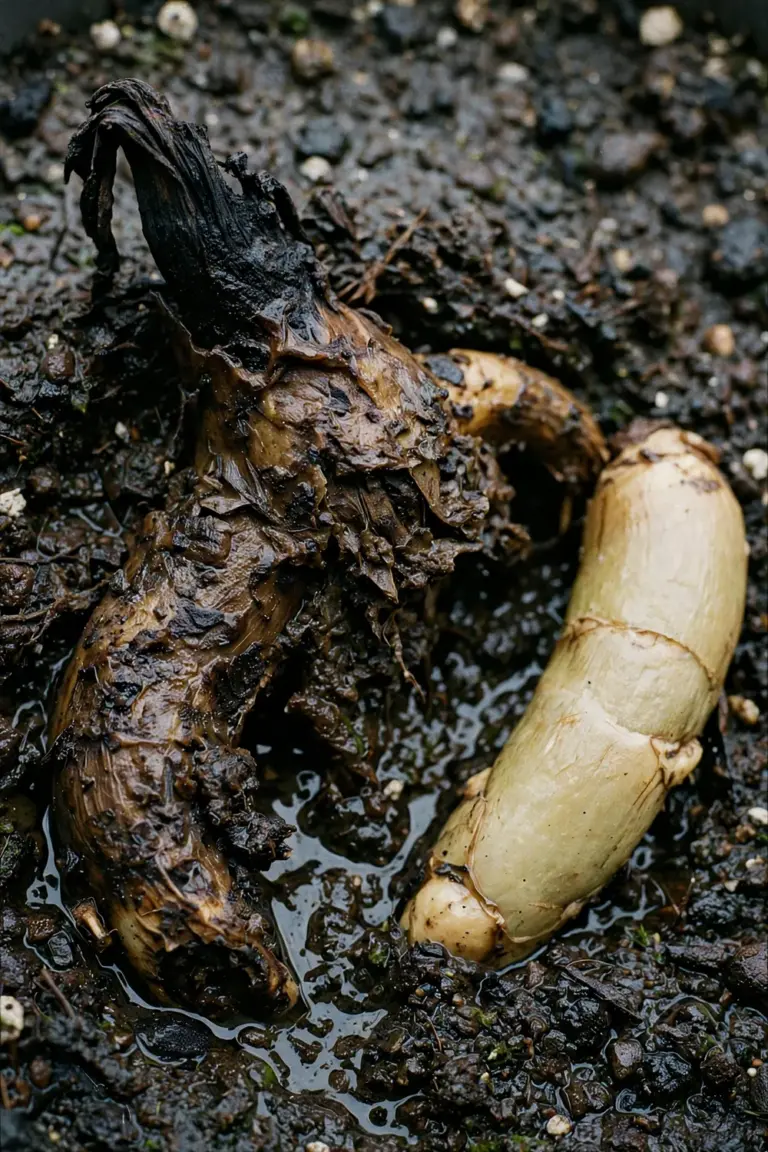
Let the medium dry completely between waterings, every time, without exceptions. The gritty 50-25-25 mix releases water fast. Confirm the drainage holes exist, keep the saucers empty, and keep the pot snug so damp medium never surrounds more volume than the rhizomes can drink. These four habits remove the conditions rot needs. Drought costs one good watering to fix. Weeks of wet feet rarely get fixed at all.
14. Keep ZZ Plants Away From Pets and Sap Off Skin
ZZ plants are not pet safe. Clemson’s extension factsheet labels the plant NOT Pet Safe, and the University of Connecticut’s houseplant toxicity list includes Zamioculcas among varieties considered toxic. Chewing leaves or stems can cause mouth irritation, drooling, and vomiting in cats and dogs. The plant’s calcium oxalate crystals act on contact, so the reaction is immediate local irritation rather than slow systemic poisoning. Severity is usually mild, but a curious pet deserves no exposure.
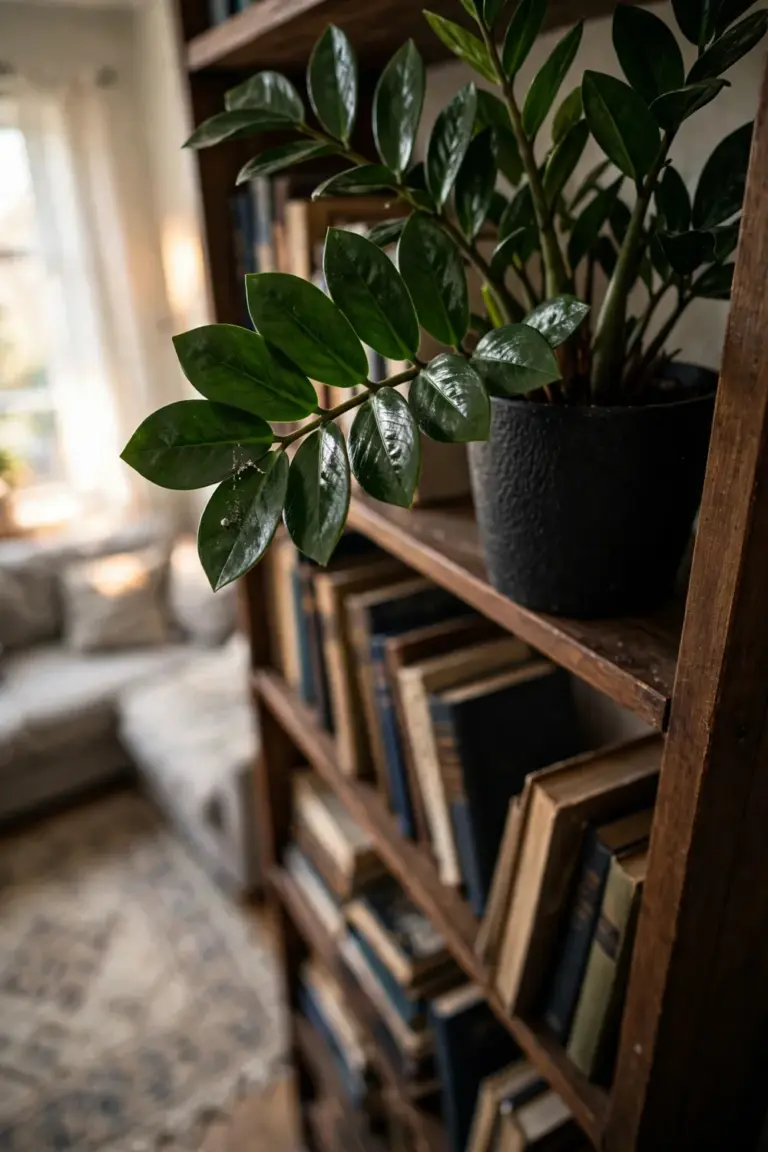
Place the plant where pets cannot reach it: a high shelf, a closed room, a hanging planter. The sap also irritates human skin in sensitive people, so wear gloves when dividing rhizomes or pruning, and wash tools afterward. None of this makes the plant dangerous to grow. It makes placement a conscious choice. Know where the plant sits before the cat finds it.
Frequently Asked Questions
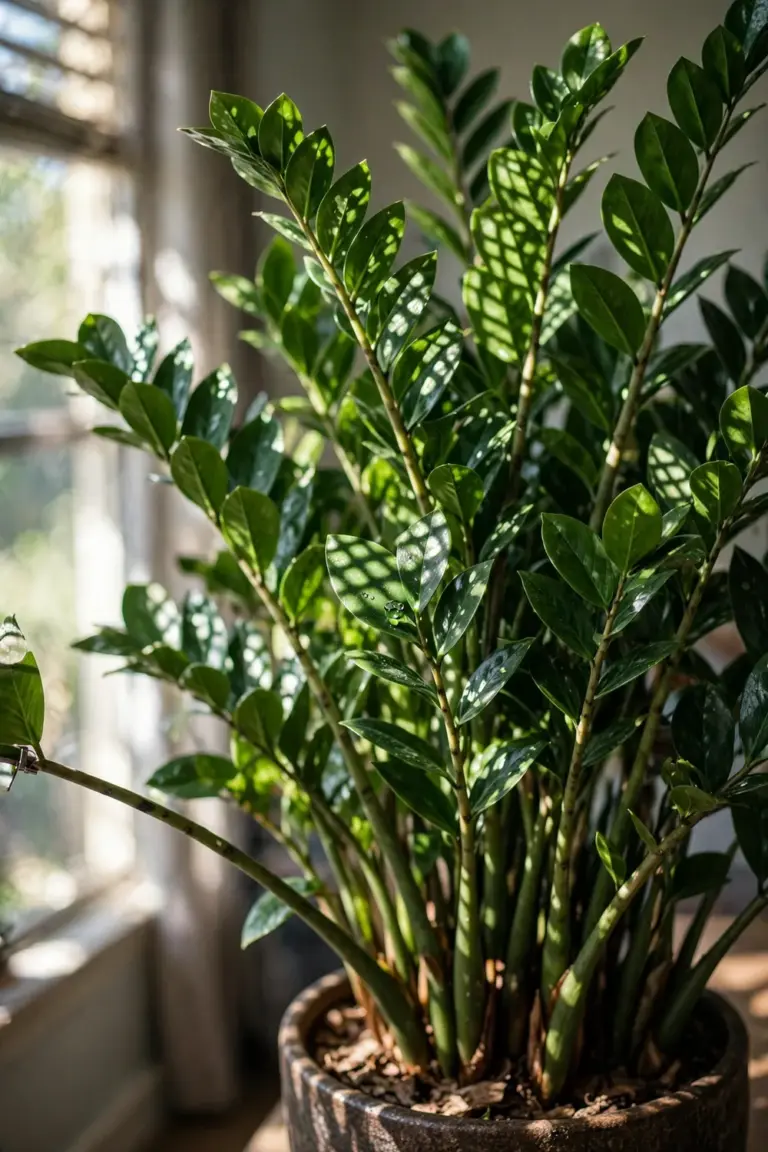
A ZZ plant survives a dark office but never thrives in one. The plant tolerates low light and even fluorescent lighting, so a windowless room will not kill it. Expect slow growth, stretched stems, and pale leaves. Move it to bright indirect light for a few weeks each season and it recovers its dense upright form.
A ZZ plant grows slowly by design. Indoors, expect a few new stems per growing season rather than continuous flushes. Bright indirect light and the correct watering rhythm produce the fastest growth this species offers. Low light slows it further. Patience is part of the plant, not a problem to fix.
New ‘Raven’ leaves always emerge bright lime green and darken to near-black over several weeks of maturity. This color shift is the cultivar’s signature trait, not a defect. Brighter indirect light deepens the final black tone. If the plant sits in dim light, the leaves may stay a duller bronze-green.
No. The ZZ plant is toxic to cats and dogs, and Clemson University’s extension guide marks it NOT pet safe. Chewing the leaves or stems causes mouth irritation, drooling, and vomiting. The calcium oxalate crystals act on contact, so symptoms appear quickly. Keep the plant out of reach of pets and wear gloves when handling broken stems.
Misting a ZZ plant does nothing useful. The plant tolerates ordinary dry household air and draws its water from the rhizomes, not the leaves. Misting leaves them wet, which invites fungal problems without benefit. Skip the spray bottle. Dust the leaflets with a damp cloth instead, which keeps them glossy and photosynthesizing.
A ZZ plant can summer outdoors only where nights stay warm and frost never threatens. Place it in bright shade, never direct sun, and bring it back inside once nights approach 60°F. Cold damage below that line is the plant’s one hard limit. In most climates it lives indoors year-round and prefers it.
Set Up Your First 90 Days With a ZZ Plant
Your first 90 days set the pattern for the next decade. Give the plant bright indirect light from day one, pot it in the gritty 50-25-25 mix with a real drainage hole, and water it only after the medium dries out completely. Feed once in spring if you remember, and forget it if you do not. Skip the misting, skip the repotting urge, skip the weekly watering schedule other plants need.
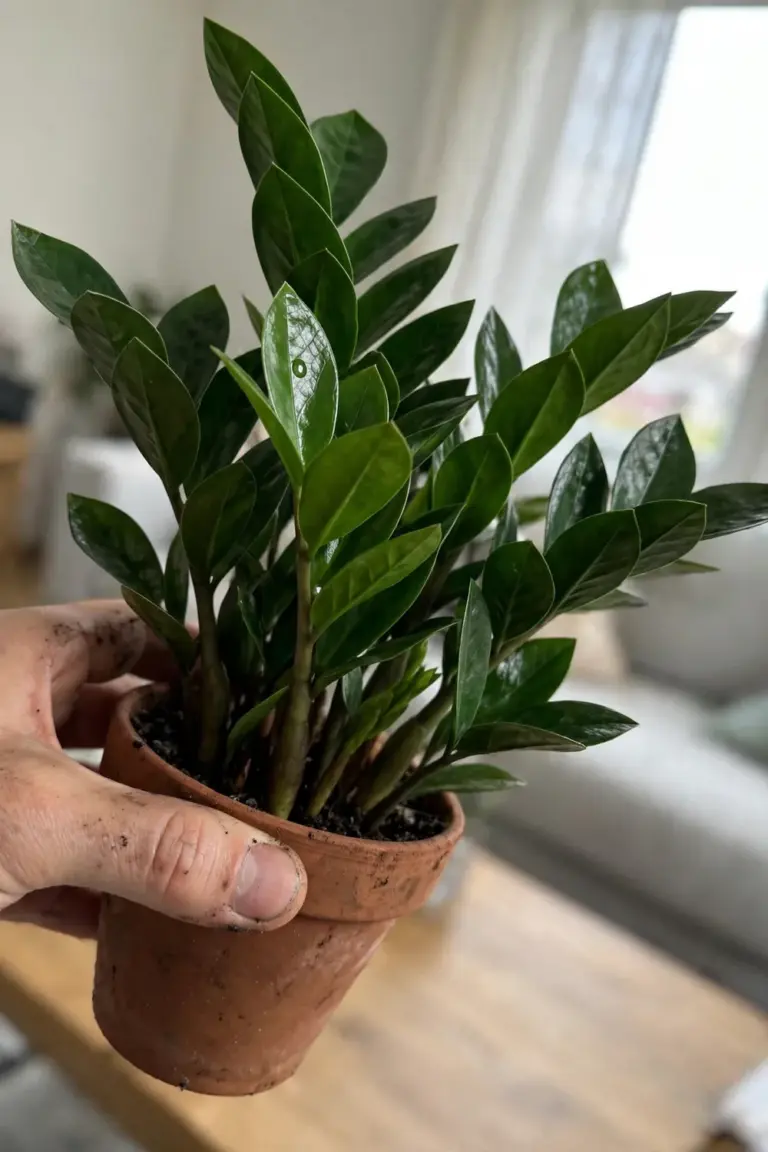
Watch one thing above all: the watering interval. If the leaves yellow, you watered too soon. If the stems wrinkle, you waited long enough to learn the plant’s rhythm. The ZZ plant rewards neglect done correctly. And if you catch the indoor-plant bug, a dracaena lemon lime makes a fine low-light companion, and its care overlaps enough that the same habits carry over. Master the rhizome rule and the ZZ plant becomes the easiest plant in your home.