
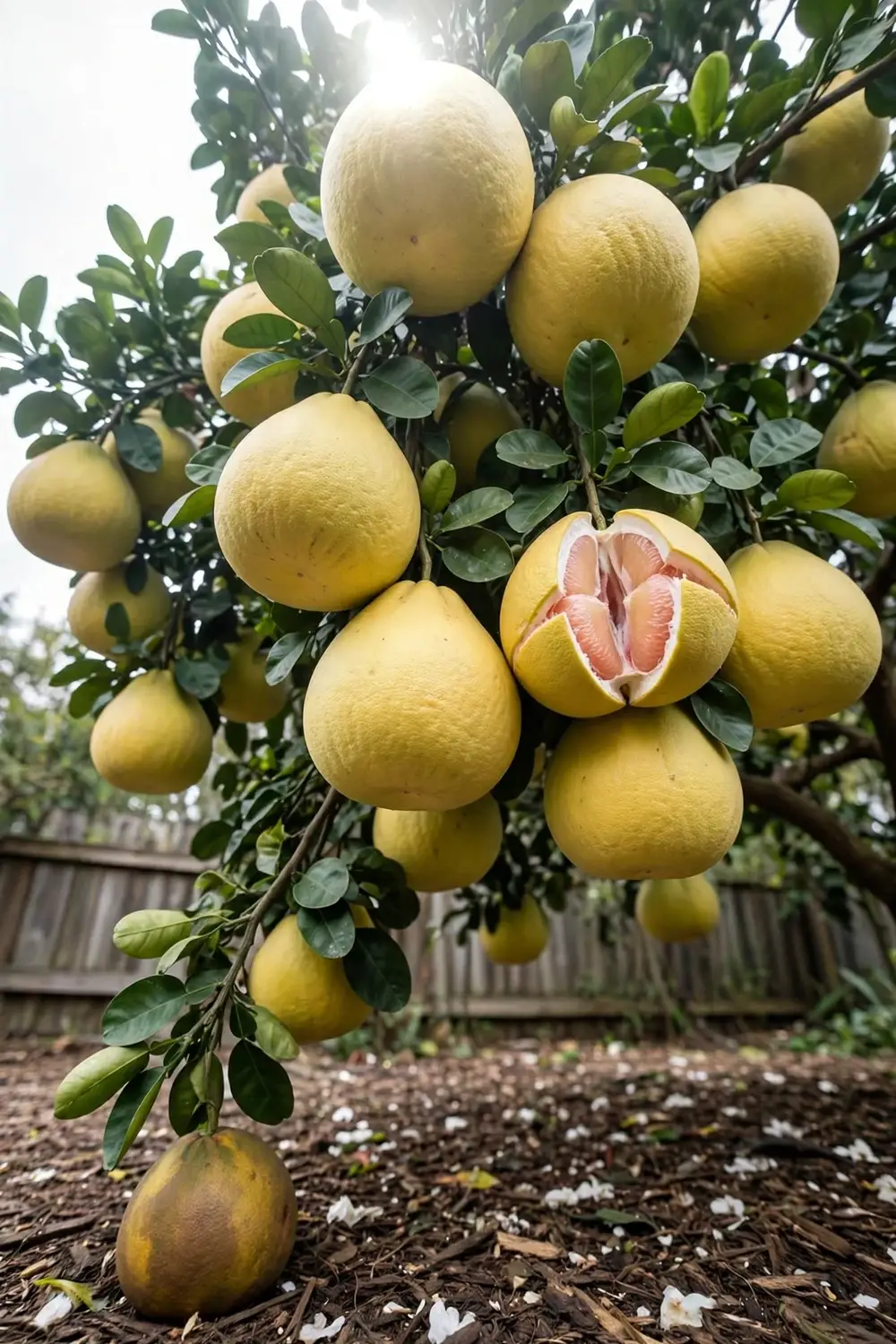

Yes, you can grow a pomelo from seed. A seed-grown pomelo tree takes 5 to 8 years or more to bear fruit, while a grafted tree usually fruits in 3 to 4 years. Pomelo (Citrus maxima) is the largest citrus fruit in the world, with fruits that reach 4 to 12 inches across, and it thrives in zones 9 to 11 where winter temperatures stay above 23°F.
This guide walks through 18 steps, from picking fresh seeds to harvesting your first winter crop. You will learn how pomelo seeds germinate, when a grafted tree is the smarter buy, which varieties suit home gardens, and how to keep a tree alive in a cold climate with a large pot. I have learned the hard part of a pomelo is never the growing. It is the waiting.
If you have already tried growing tangerines from seed, the early steps will feel familiar. Pomelo follows the same citrus rhythm: warm germination, patient seedling years, and a payoff that arrives on a branch heavy enough to need support.
| Quick Spec | Detail |
|---|---|
| Botanical name | Citrus maxima (also sold as pummelo) |
| Fruit size | 4–12 inches across, the largest citrus fruit |
| Hardiness zones | 9–11 (9–12 in mild microclimates) |
| Freeze limit | No survival below 23°F (−5°C) |
| Sun | Full sun, 6–8 hours daily |
| Soil | Well-draining loam, pH 5.5–7.0, enriched with compost |
| Spacing | 15–20 feet between trees |
| Germination | 2–4 weeks at 75–85°F |
| Time to fruit | Grafted: 3–4 years; seed-grown: 5–8+ years |
| Mature yield | 50–75 fruits per year |
| Harvest season | Winter |
| Lifespan | 50–150 years |
1. Confirm Your Climate Beats the 23°F Freeze Line
Pomelo is a tropical and subtropical tree. It grows outdoors year-round in zones 9 to 11, and gardeners in zone 12 microclimates can push it further. The hard limit is cold: pomelo does not survive below 23°F (−5°C), so one hard freeze can kill a young tree to the ground. Nature & Garden’s pomelo and grapefruit guide states this freeze threshold plainly and recommends pot culture wherever winters freeze.
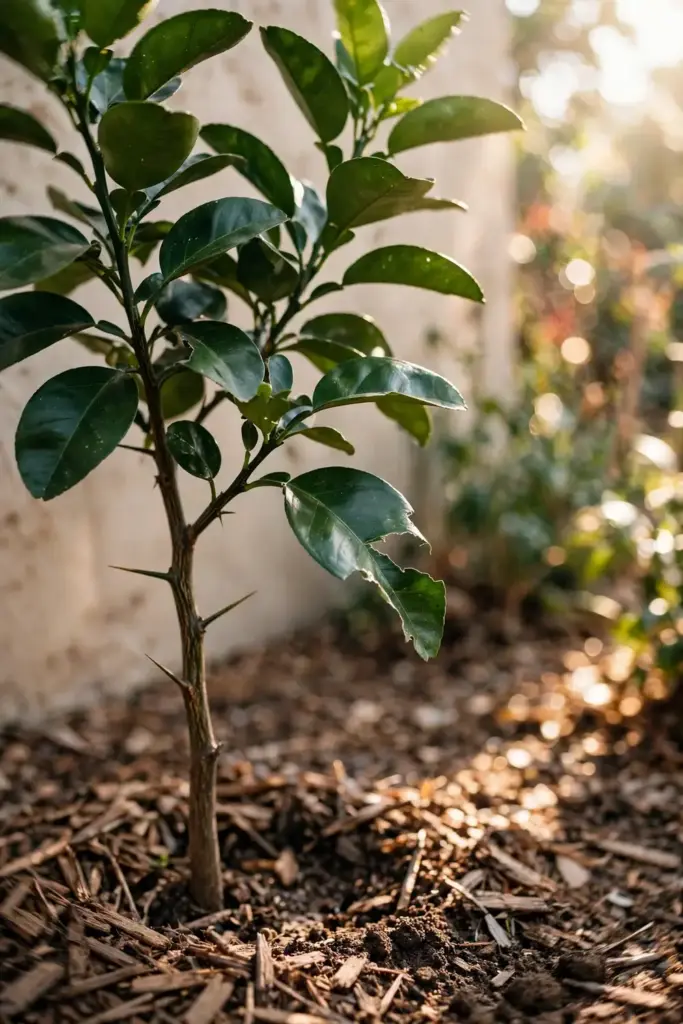
Check your coldest winter nights, not your averages. If your zone dips into the low 20s even once every few years, plan for a large pot from day one. A potted pomelo can live on a sunny patio in summer and move into a bright room or greenhouse for winter. Cold-climate growers should also pick a sheltered planting spot if they plant in the ground: against a south-facing wall, away from wind tunnels, and clear of low frost pockets where cold air pools overnight.
Microclimates matter more than zone maps suggest. Urban courtyards, walled gardens, and spots near the thermal mass of a house can run several degrees warmer than the official zone. Still, do not gamble a tree on hope. If your record low flirts with 23°F, the pot is the safe choice, and the container section later shows exactly how to manage it.
2. Match the Right Pomelo Variety to Your Goal
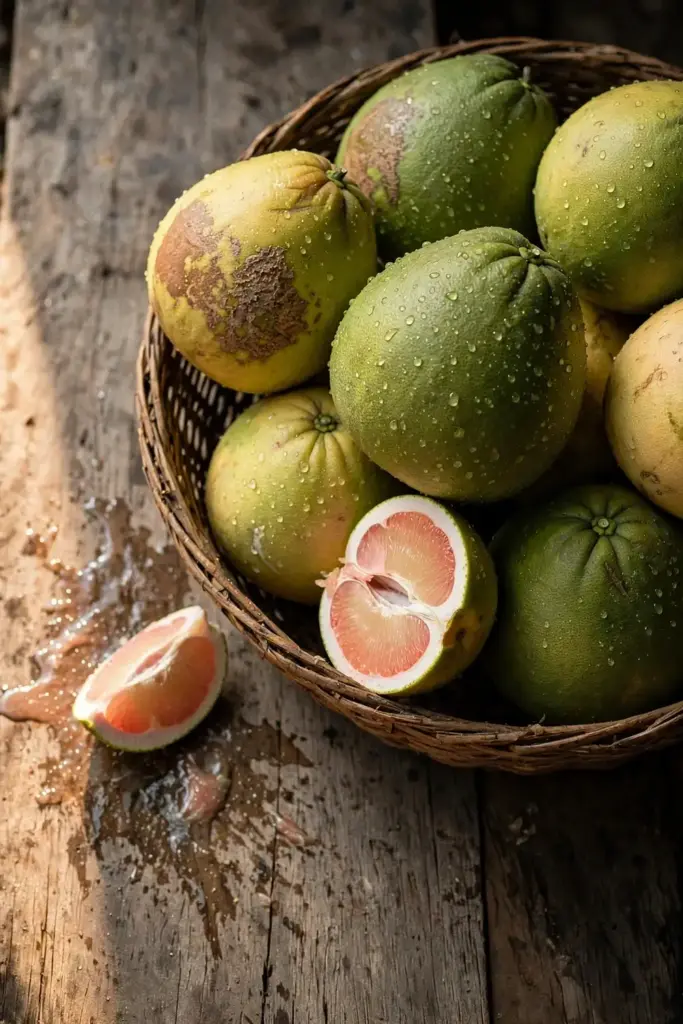
Most home gardeners buy whatever pomelo the nursery stocks, then wonder why the fruit is sour or seedy. Variety choice decides sweetness, seed count, and fruit size. These four are the most widely planted for eating fresh.
| Variety | Flesh | Seeds | Flavor profile | Best for |
|---|---|---|---|---|
| Chinese pomelo | Pale yellow to pink | Many | Sweet-tart, classic | Traditional flavor, large fruit |
| Thong Dee | Pink to red | Few | Sweet, rich | Fresh eating, market favorite |
| Honey pomelo | Pale, semi-transparent | Few to none | Sweet, mild | Beginners who want easy eating |
| Chandler | Pink | Many | Sweet-tart, aromatic | Hybrid vigor, heavy crops |
Thong Dee and Honey are the friendliest picks for a home garden because they combine sweetness with fewer seeds. Chinese pomelo is the old standard, widely grown and reliable, but its seeds are part of the experience. Chandler, a well-known hybrid, tends to crop heavily once established.
One botanical point worth knowing: pomelo is not the same as grapefruit. Grapefruit is a cross between pomelo and sweet orange, while pomelo (Citrus maxima) is the original species and the parent. Pomelo fruit runs larger, with thicker skin and a milder, less bitter bite than most grapefruits.
3. Choose Fresh Seeds Over Stored Ones
Pomelo seeds lose viability fast. Use seeds from a ripe, freshly eaten fruit, and sow them within days. Old, dried-out seeds germinate poorly or not at all, and no amount of soaking revives a dead embryo.
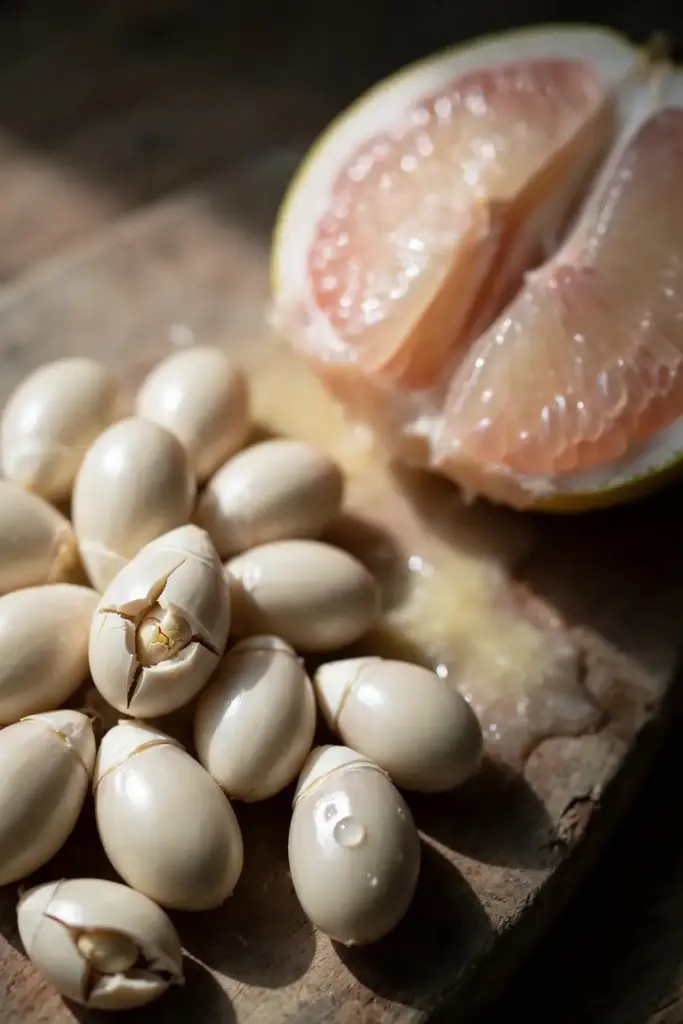
Pick a fruit that is heavy for its size with fragrant, unblemished skin. Cut it open, pull out the plumpest seeds, and rinse off every trace of pulp and juice. Pulp left on the seed invites mold during germination, and mold is the most common reason a batch fails before it starts. Discard any seed that is shriveled, cracked, or dark.
Here is the citrus twist that makes pomelo special. Some pomelo seeds are polyembryonic, meaning one seed can sprout several seedlings, and the extra embryos are nucellar clones of the mother tree. In plain terms: a seedling from a nucellar embryo can grow true to type, unlike most fruit seeds. You cannot tell by looking which sprout is the clone, so keep the strongest seedling and treat the rest as bonus plants or rootstock material.
4. Soak and Sow Pomelo Seeds in 7 Steps
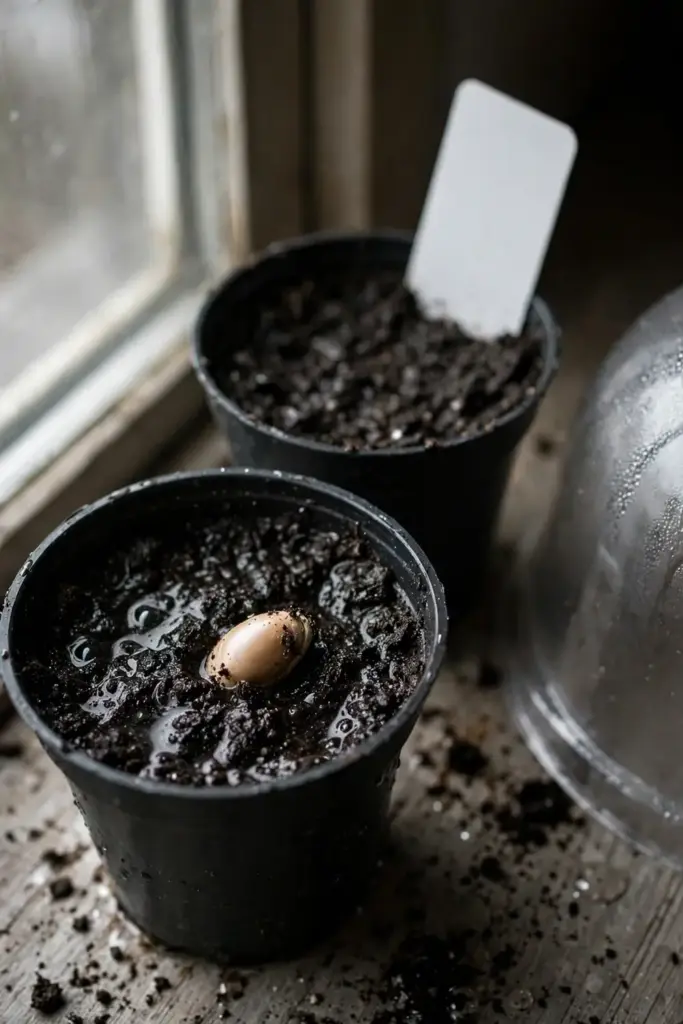
Sow in spring, when warmth and light are on your side. Gather a seed tray or small pots, a citrus or seed-starting mix, and a clear humidity cover or plastic bag.
| Step | Action | Timing |
|---|---|---|
| 1 | Rinse seeds clean of all pulp | Day 0 |
| 2 | Soak in room-temperature water | 12–24 hours |
| 3 | Fill pots with moist citrus/seed-starting mix | Day 1 |
| 4 | Sow seeds ½–1 inch deep, one per pot | Day 1 |
| 5 | Cover with a humidity dome or plastic bag | Day 1 |
| 6 | Hold at 75–85°F in bright, indirect light | 2–4 weeks |
| 7 | Remove the cover when sprouts appear | At emergence |
Soak the cleaned seeds for 12 to 24 hours, a step seed suppliers recommend to soften the coat and speed water uptake. Sow each seed ½ to 1 inch deep in moist mix, then cover the pot to hold humidity. Warmth is the trigger: keep the pots at 75 to 85°F, which is why a heat mat or the top of a refrigerator works better than a cold windowsill. Expect sprouts in 2 to 4 weeks.
Give bright, indirect light from the start. Direct midday sun can cook a covered pot, so use a bright windowsill or a few inches under a grow light. Vent the cover daily for a few minutes to exchange air and check moisture. The mix should feel like a wrung-out sponge. Soggy mix rots seeds; dry mix stalls them.
If you are new to starting seeds indoors, the seed starting guide walks through trays, lights, and humidity domes in detail. The equipment is the same; only the seed is bigger.
5. Raise Strong Seedlings Through Their First Year
A pomelo seedling spends its first year building roots, not height. Treat it like a long project and it will reward you with a sturdy trunk and a full canopy later. Keep seedlings in bright light for at least 6 hours a day, and move them outdoors gradually once nights stay above 50°F.
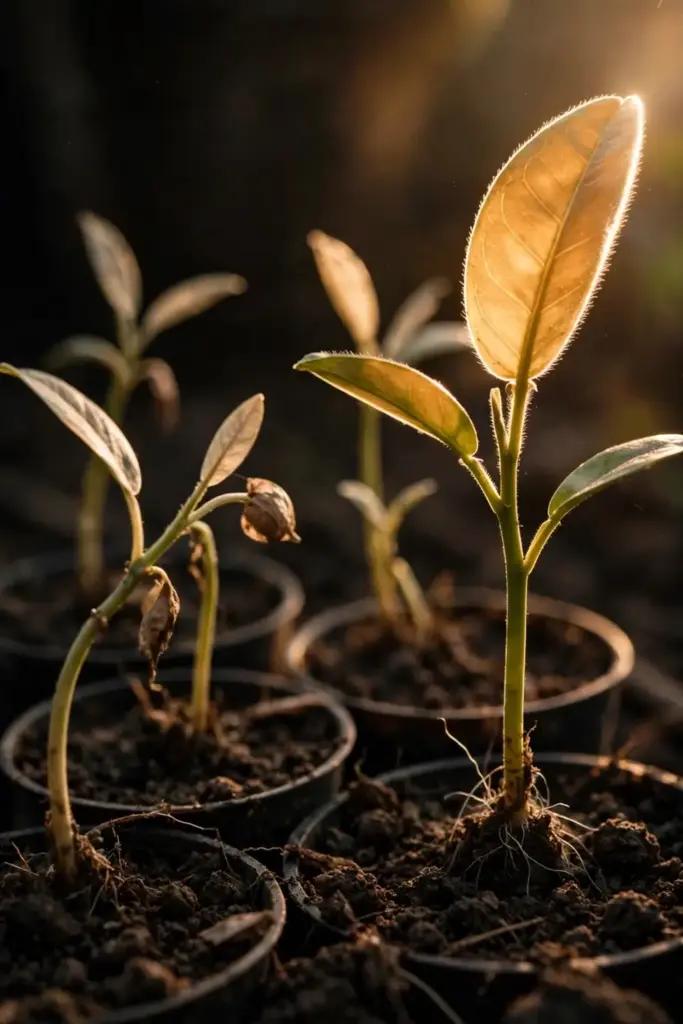
Water when the top inch of mix feels dry. Seedlings drown faster than they dry out, so pots must have drainage holes and the mix must drain freely. Feed lightly after the first true leaves appear: a diluted balanced liquid fertilizer every 4 to 6 weeks through the growing season is enough. Heavy feeding burns young roots.
Repot when roots circle the bottom of the pot, usually once or twice in the first year. Move up only one pot size at a time; a small seedling in a huge pot sits in wet soil it cannot drink. By the end of year one, a healthy seedling stands 12 to 24 inches tall with a woody stem. That is normal progress, not slow progress. Citrus grows in flushes, with bursts of new leaves followed by rest, so expect uneven growth through the seasons.
6. Decide Between a Seedling and a Grafted Tree
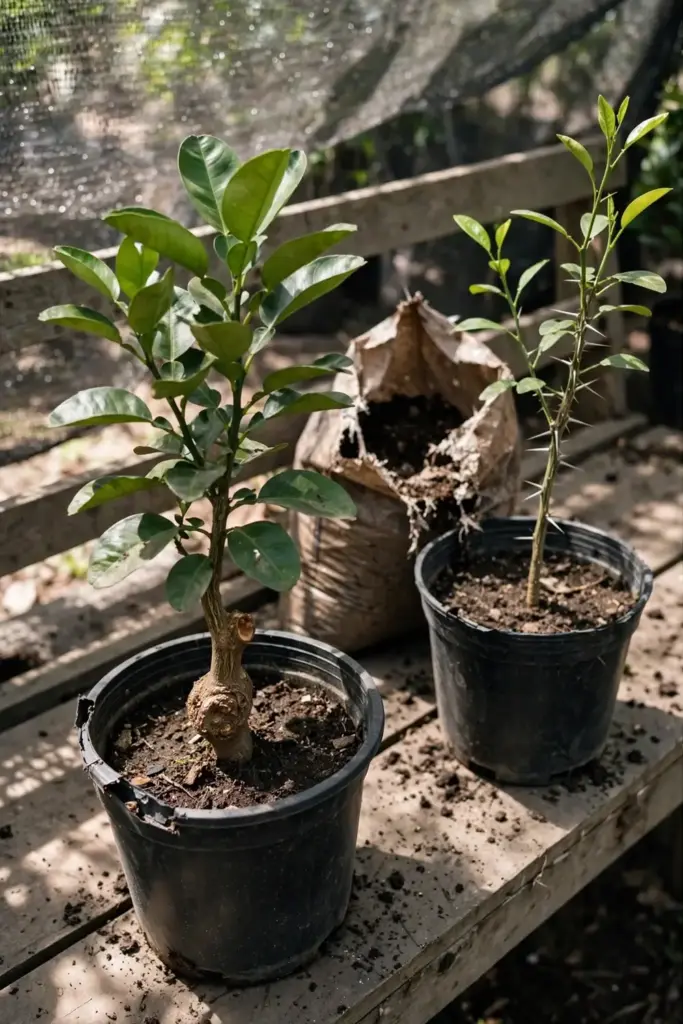
This is the decision that shapes your whole timeline. A seedling costs almost nothing and can live over a century, but it makes you wait. A grafted tree costs more and fruits years sooner, with fruit identical to the named variety. Neither choice is wrong. They serve different gardeners.
| Factor | Seed-grown tree | Grafted tree |
|---|---|---|
| Time to first fruit | 5–8+ years | 3–4 years |
| Fruit true to type | Sometimes (nucellar clones) | Always (named variety) |
| Upfront cost | Near zero | Nursery price |
| Tree vigor and size | Full size, up to 25 feet | Depends on rootstock; dwarfing stocks available |
| Thorns | Often long, sharp spines on juvenile wood | Fewer, milder |
| Best for | Patient growers, rootstock, experimentation | Anyone who wants fruit this decade |
The honest math: if your goal is eating pomelos, buy a grafted tree. Commercial growers agree. Pomelo propagated by seed is considered inferior for orchards because seedlings are not uniform and take a long time to produce. If your goal is the experiment itself, or you want free rootstock for future grafting, seeds are a fine start.
A middle path exists. Grow a seedling for a year or two, then graft a bud of Thong Dee or Honey onto it. You get the free root system and the named variety on top. Air-layering a branch of a tree you like is another shortcut: roots form in 2 to 3 months, and the new plant fruits sooner than any seedling. Gardeners who have weighed this choice for other fruits will recognize the pattern from growing mango from seed or grafted stock, where the same trade-off applies.
7. Site Your Tree with 15–20 Feet of Elbow Room
A mature pomelo reaches about 25 feet tall with a broad, dense canopy, so give it room from the start. Space trees 15 to 20 feet apart, and keep the same distance from buildings, walls, and power lines. A tree crammed against a house loses airflow, invites disease, and becomes a pruning nightmare.
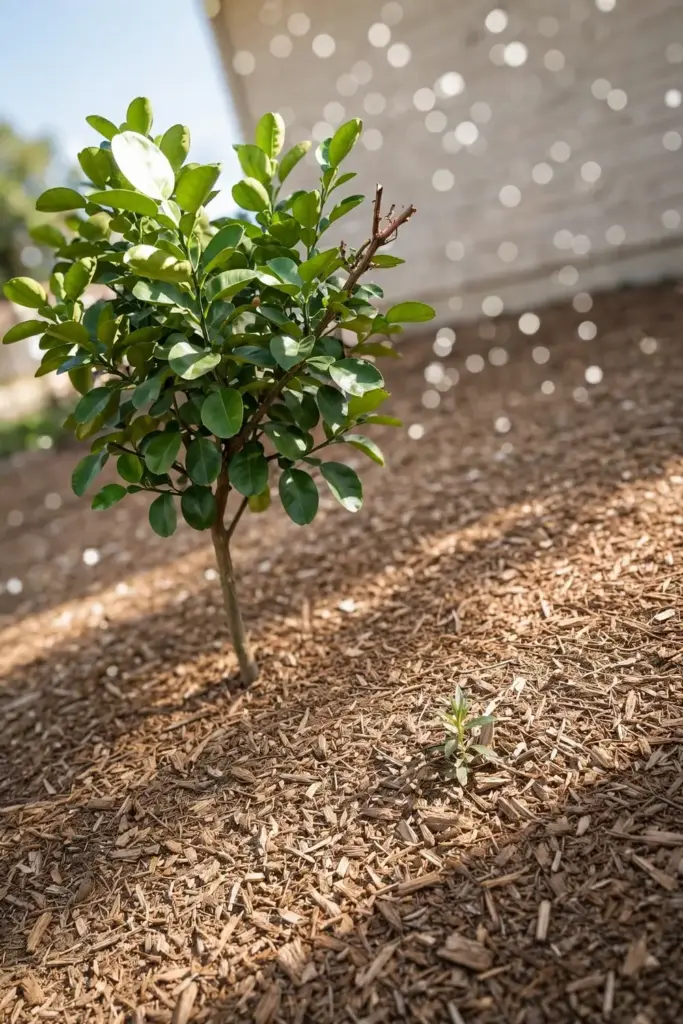
Pick the sunniest spot you have. Six to 8 hours of direct sun daily is the target, and morning sun is especially valuable because it dries dew off the leaves, which cuts fungal pressure. Shelter from strong wind matters too, since wind shreds the large leaves, snaps young branches, and can strip a heavy crop clean off the tree in a single storm.
Soil flexibility is one of pomelo’s strengths. It grows in clay, loam, or sand as long as drainage is good. Aim for a slightly acidic to neutral pH of 5.5 to 7.0, and work generous compost into the planting area to feed the soil biology. For a full walkthrough of building garden soil that drains well and holds nutrients, see the soil health guide. Mulch the root zone with 3 to 4 inches of wood chips or straw, pulled a few inches back from the trunk, to hold moisture and smother weeds.
8. Plant with the Graft Union Above the Soil
Plant in spring, after the last frost, so the tree gets a full warm season to establish. Dig a hole twice as wide as the root ball but no deeper. A hole that is too deep lets the tree settle below grade, and a buried trunk invites crown rot.
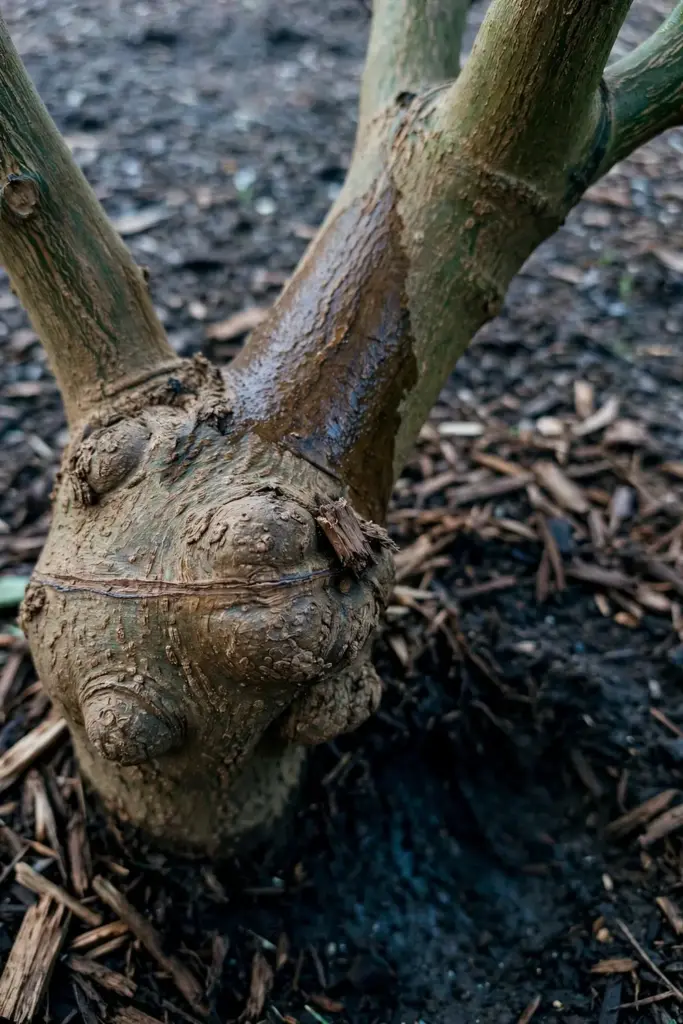
Set the tree so the top of the root ball sits level with, or a finger’s width above, the surrounding soil. For a grafted tree, the graft union (the knobby scar where variety meets rootstock) must stay 2 to 4 inches above the soil line. If soil or mulch buries the union, the variety can root on its own and you lose the rootstock’s benefits, including any dwarfing or disease resistance.
Backfill with the native soil you dug out, mixed with compost. Firm it gently to remove air pockets, then water deeply to settle everything around the roots. Finish with mulch, keeping it clear of the trunk. Stake a young tree loosely for its first year in windy spots, and remove the stake once the trunk stiffens so the tree learns to stand on its own.
9. Water Deep 1–2 Times a Week, Never Shallow Daily
Pomelo wants deep, infrequent watering that pushes roots downward. Water deeply 1 to 2 times per week, enough to moisten the root zone a foot or more down. Shallow daily sprinkles keep roots near the surface, where heat and drought hit hardest.
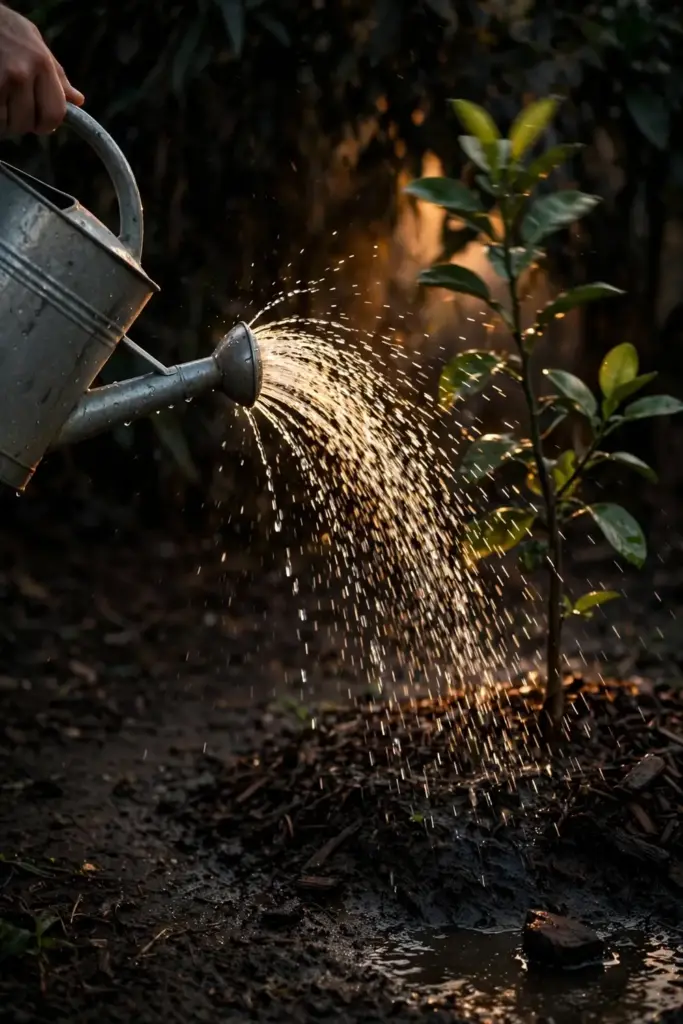
The finger test never lies. Push a finger 2 inches into the soil near the drip line. Dry at that depth means water; damp means wait. Newly planted trees need more frequent checks through their first summer, while established trees tolerate longer intervals. Mulch stretches every watering further by shading the soil and slowing evaporation.
Timing matters most during fruit development. Consistent moisture while fruits are sizing up gives you larger, juicier pomelos, and this is the season to be most careful about watering. Letting the tree swing between drought and flood during fruiting causes fruit drop and split rinds. In winter, when growth slows, cut back and let the top few inches dry between waterings. Soggy winter soil is the fastest route to root rot in citrus.
10. Feed with Citrus Fertilizer Every 6–8 Weeks
Pomelo is a hungry tree. Feed with a balanced citrus fertilizer every 6 to 8 weeks during the growing season, following the label rate for the tree’s size. A formula with a higher middle number, such as 10-30-20, supports flowering and fruiting once the tree is old enough to bloom. Young, non-bearing trees do better with a nitrogen-leaning feed that pushes leafy growth first.
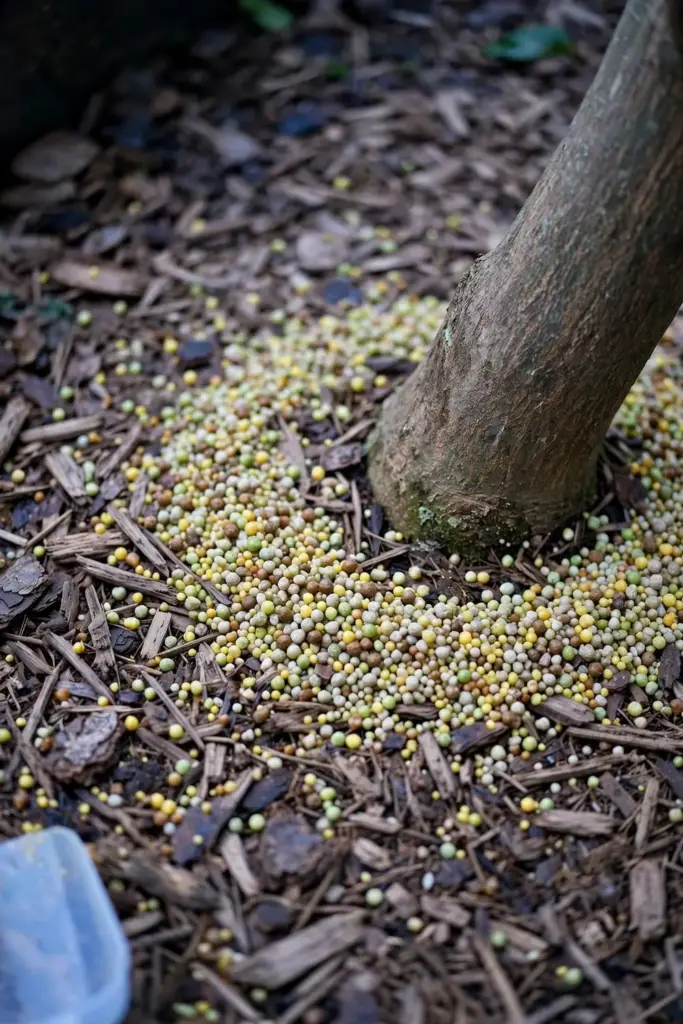
Start feeding in early spring as new growth emerges, and stop by late summer. Late feeding triggers soft new growth that a cold snap can damage. In warm climates with year-round growth, spread smaller doses across more months instead of stopping entirely.
Watch the leaves; they report hunger before the fruit does. Uniform yellowing of older leaves points to nitrogen shortage. Yellow leaves with green veins signal iron or zinc deficiency, common in alkaline soils where these nutrients lock up. A foliar spray of micronutrients corrects the symptom fast, but lowering soil pH toward the 5.5 to 7.0 range fixes the cause. Organic matter helps both ways: compost, aged manure, and mulch feed the tree slowly while improving the soil that feeds it.
11. Prune Dead, Damaged, and Crossing Wood Each Year
Pomelo needs less pruning than most fruit trees. The annual job is simple: remove dead, damaged, and crossing branches, and open the canopy enough for light and air to reach the interior. Prune in late winter or early spring, before the spring flush.
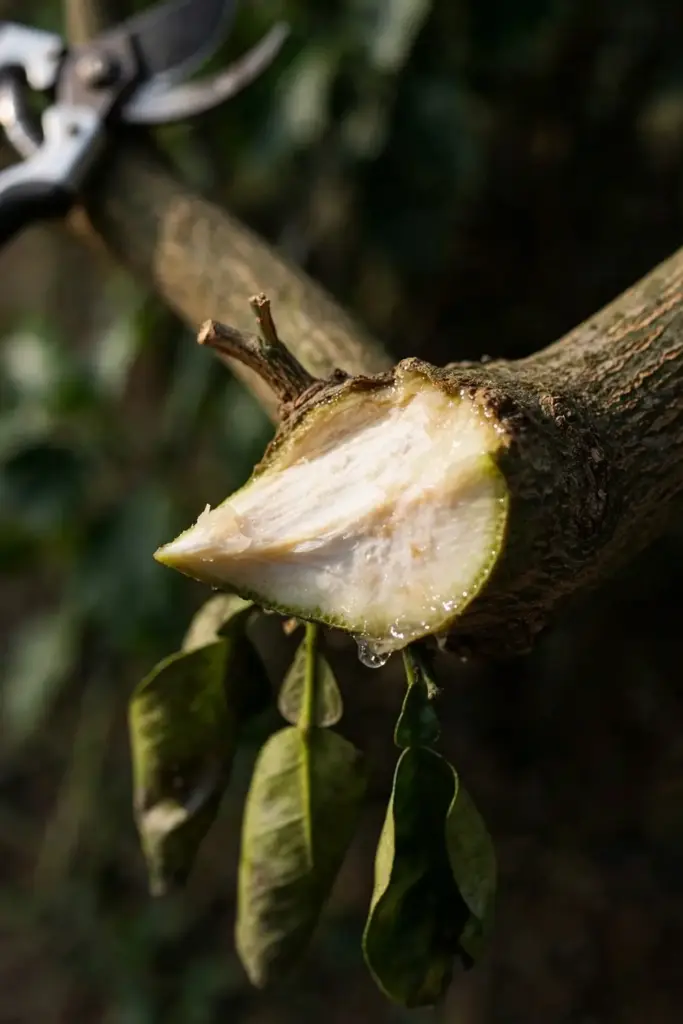
Cut dead wood back to healthy tissue, and remove crossing branches that rub each other raw. Rub wounds invite disease. Thin crowded clusters so each remaining branch has space and light. For young trees, the first structural pruning shapes the future: keep 3 to 4 well-spaced scaffold branches and remove competing leaders.
Heavy fruit is pomelo’s signature problem. A branch loaded with 4-pound fruits can snap in a windstorm, so prune with weight in mind. Shorten overly long limbs, and plan to prop or thin the crop on branches that sag. Disinfect your tools between trees with rubbing alcohol or a bleach solution to avoid spreading disease. If you want a deeper refresher on timing and technique, the spring pruning techniques guide covers the fundamentals that apply to all fruit trees.
12. Let Self-Pollination Do Its Work
Pomelo flowers are self-fertile, so a single tree sets fruit without a partner. Bees and other pollinators still help by moving pollen between flowers, and a tree with good pollinator traffic typically sets a heavier crop. Planting flowers nearby or keeping the garden spray-free during bloom supports the insects that support your harvest.
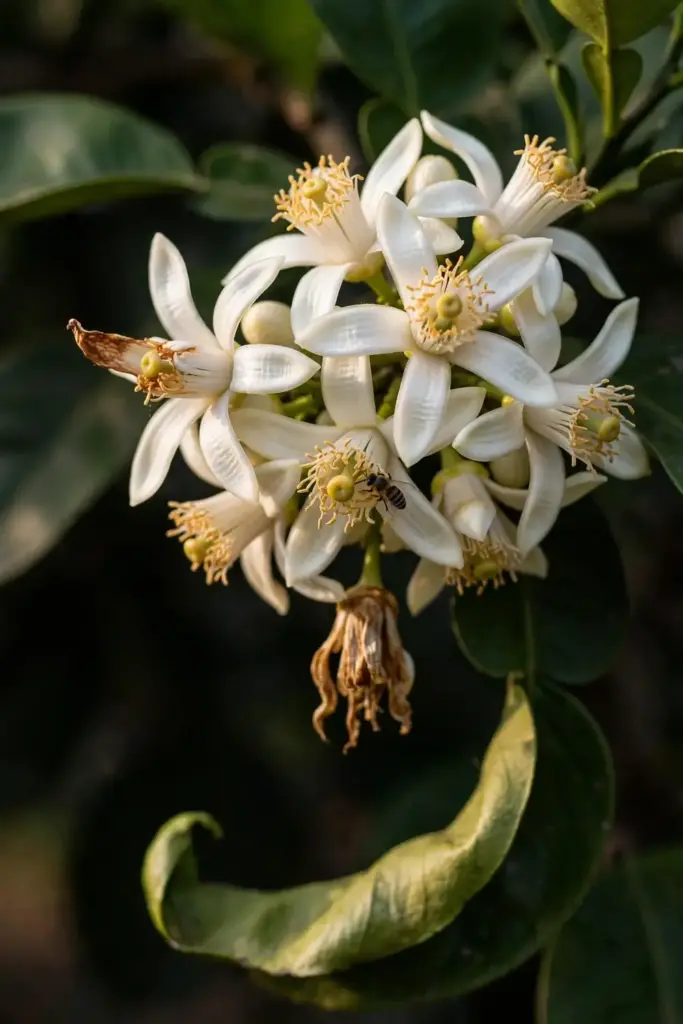
Do not panic if young flowers drop. A young tree sheds most of its first blooms because it cannot support fruit yet; this is the tree budgeting its energy, not a failure. Fruit that does set takes 6 to 8 months from flower to ripe harvest, one of the longest ripening windows in citrus. That slow pace is why pomelos picked in winter started as spring blossoms.
One caution from extension literature: planting several pomelo varieties side by side can produce seedy fruit in varieties that would otherwise stay low-seeded. If you prize seedless Honey-type fruit, give each variety some distance or accept the seeds as the price of company.
13. Watch for Aphids, Scale, and Citrus Pests
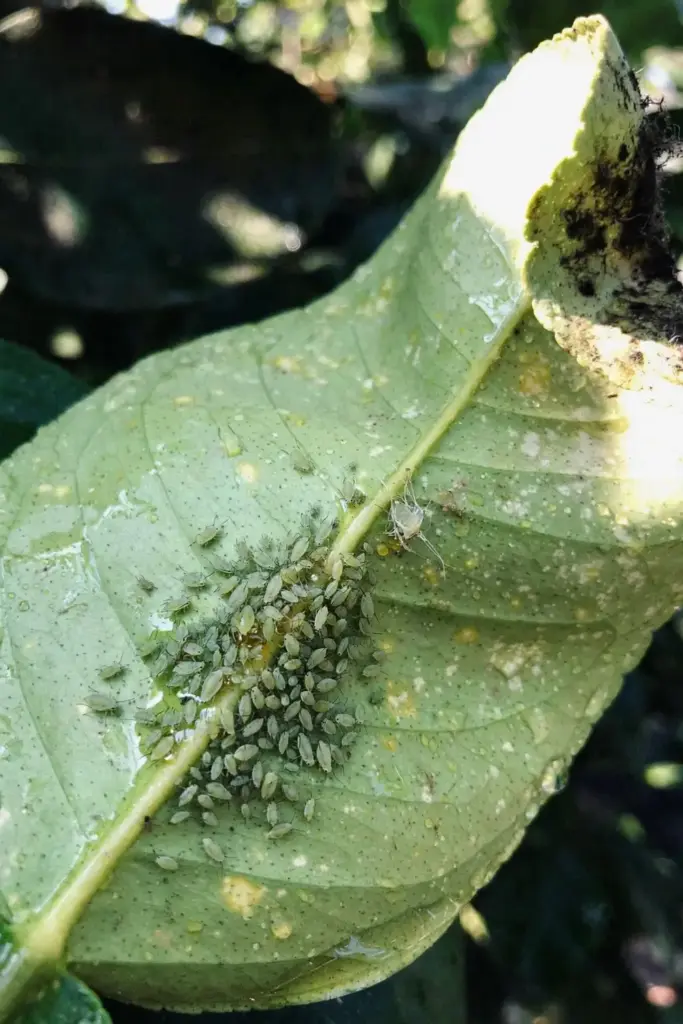
Most homegrown pomelos stay remarkably healthy, but a few pests show up regularly. Check the undersides of leaves and the tips of new growth every couple of weeks through the growing season. Early catches stay small problems.
| Pest or disease | Signs | First response |
|---|---|---|
| Aphids | Clusters on new shoots, sticky honeydew | Strong water blast, ladybugs |
| Scale | Bumps on stems and leaves, sooty mold | Horticultural oil, prune badly infested wood |
| Mealybugs | White cottony masses in leaf joints | Alcohol swab, horticultural oil |
| Citrus leafminer | Silvery winding trails in young leaves | Prune affected flush; healthy trees outgrow it |
| Spider mites | Speckled, bronzed leaves in hot dry weather | Water spray, predatory mites |
| Root rot / Phytophthora | Wilting despite wet soil, dark trunk base | Improve drainage, never overwater |
| Sooty mold | Black film on leaves | Treat the honeydew-producing insects above it |
Gardening Know How’s pomelo care guide lists the same lineup, from aphids and whiteflies to brown rot and chlorosis, and notes that most homegrown trees never need a spray schedule. Keep the area under the tree free of fallen fruit, weeds, and debris, since that litter harbors both pests and fungal spores. Good airflow from proper spacing and pruning does more for disease prevention than any bottle.
14. Grow a Dwarf Pomelo in a Large Pot Indoors
No warm zone? No problem, with the right pot. Choose a dwarf or naturally compact variety on dwarfing rootstock, and plant it in the largest pot you can move: 20 gallons or more, with drainage holes. Citrus hates wet feet, and a big pot buffers both water and temperature swings.
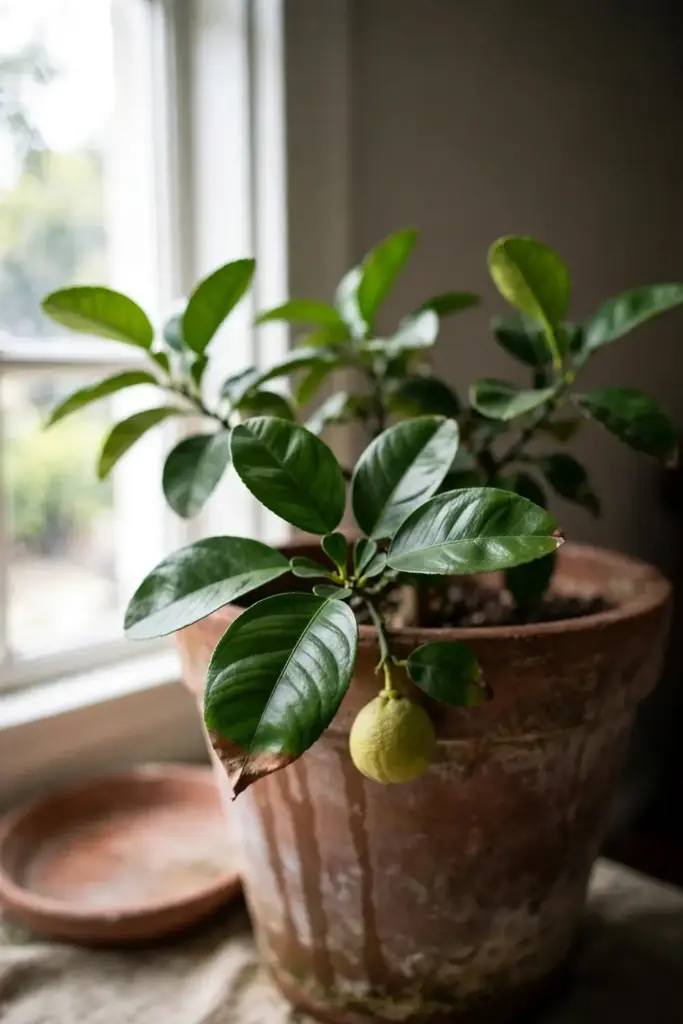
Use a fast-draining citrus or cactus mix, not garden soil. Place the pot in full sun outdoors from spring through fall, then move it inside before nights drop near freezing. Indoors, give it your brightest window plus a grow light if you have one; 6 or more hours of strong light keeps it growing instead of sulking. Keep indoor air from getting bone dry in winter, since heated rooms stress citrus leaves.
Water thoroughly, then let the top 2 inches dry before watering again. Feed with a liquid citrus fertilizer every few weeks during the growing season, and cut back in winter when growth slows. Repot into fresh mix every 2 to 3 years. Expect a slower pace than in-ground trees, and celebrate the first indoor fruit all the more. Gardeners who keep lemons in containers follow the same rhythm, and the two trees make good patio companions.
15. Push Bigger, Sweeter Fruit with These 5 Levers
Once your tree blooms reliably, these five practices separate an average crop from a memorable one. None of them require special equipment.
- Thin the young fruit. A tree that sets 200 fruitlets cannot ripen them all well. Remove the smallest and any clustered fruits early, leaving one strong fruit per cluster. Fewer fruits means larger, sweeter survivors.
- Keep water steady through sizing. The fruiting season is when irrigation matters most. Even moisture from bloom through harvest prevents drop and builds juice.
- Feed for fruit, not leaves. Shift to a bloom-and-fruit formula with higher phosphorus and potassium once flowering starts. Excess nitrogen at fruiting time grows leaves at the fruit’s expense.
- Give potassium a boost. Citrus research links adequate potassium to better fruit size and sugar content. If your fertilizer is light on potassium, a supplemental dose during fruit development helps.
- Leave fruit on the tree. Pomelos do not ripen further once picked. Fruit left hanging gains sweetness and weight, so harvest each fruit at its peak rather than stripping the tree at once.
Epsom salt (magnesium sulfate) gets mentioned in grower videos for sweeter fruit. Use it only if a soil test or leaf symptoms point to magnesium deficiency. Blanket dosing without a deficiency wastes money and can unbalance other nutrients.
16. Harvest in Winter When the Skin Turns Pale Yellow
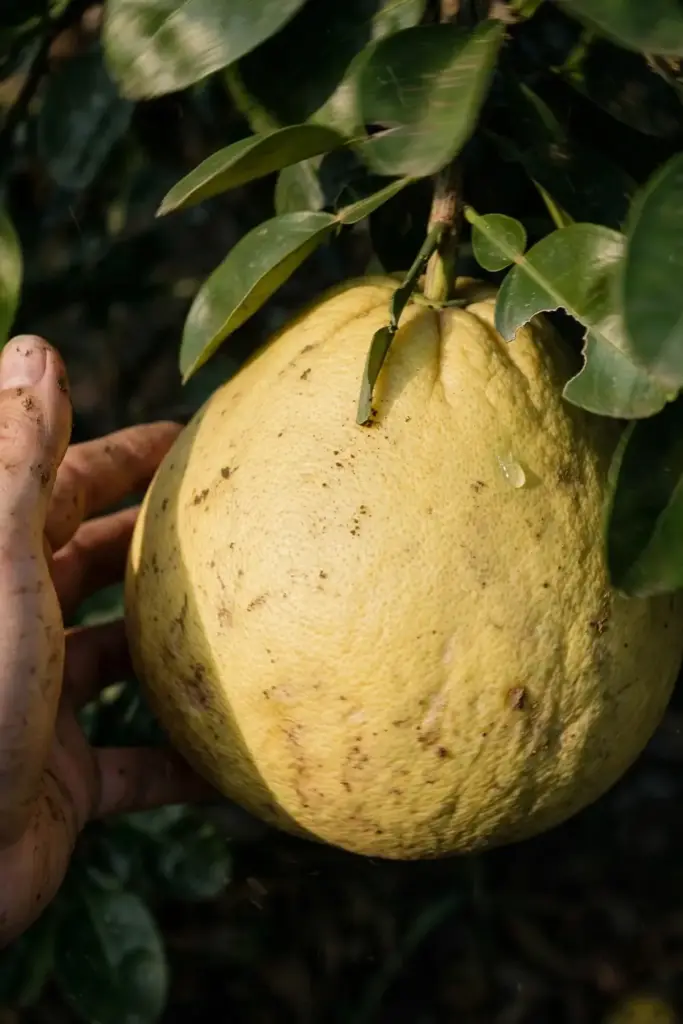
Pomelo harvest lands in winter, roughly 6 to 8 months after spring bloom. Ripe fruit feels heavy for its size, smells fragrant at the stem end, and the skin shifts from deep green to pale yellow or golden. Color alone can mislead, so always check weight and aroma together.
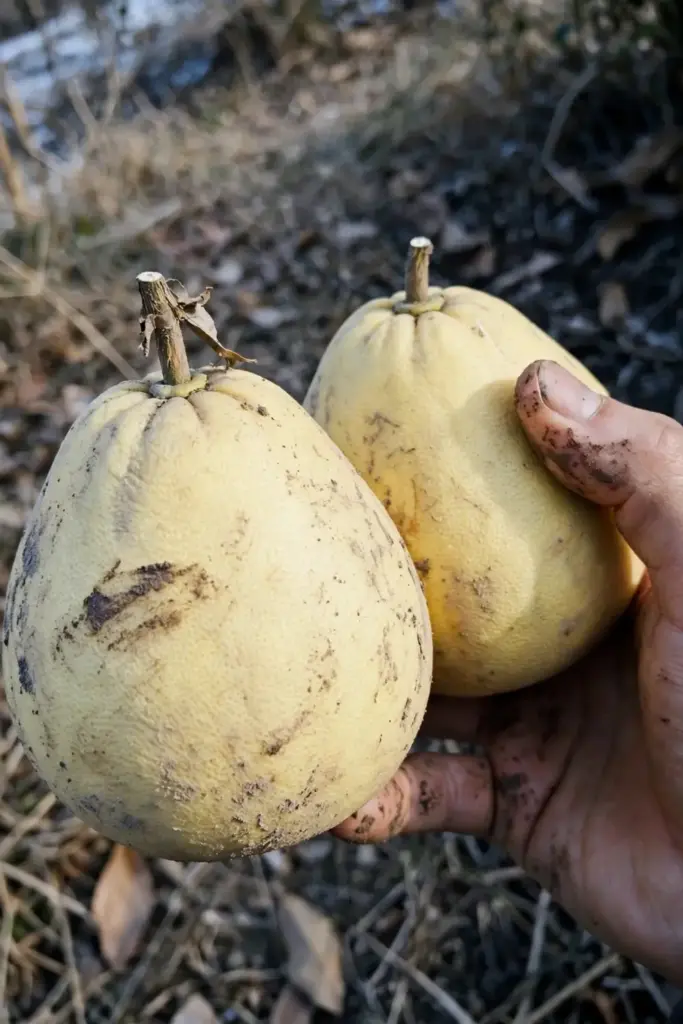
Test one fruit before committing. Cut it open and taste. If it is sweet and juicy, harvest the rest at the same stage over the coming weeks; there is no need to pick everything at once. Use pruning shears or a sharp knife and leave a short stub of stem. Pulling or twisting can tear the branch and damage next year’s buds.
A curiosity worth answering: pomelos do not grow fruit on their trunks. They flower and fruit on branches, like other citrus. What looks like trunk fruiting in some photos is usually a low branch hugging the trunk. Store harvested pomelos in a cool spot, where thick-skinned fruit keeps for weeks. A mature tree in good health produces 50 to 75 fruits a year, enough to share generously.
17. Note the Pomelo Drug-Interaction Warning
This is the safety note every pomelo article should carry. Pomelo contains some of the same compounds as grapefruit (furanocoumarins) that can interfere with how the body processes certain prescription medications, including some cholesterol, blood pressure, and allergy drugs. The effect varies by medication and by how much fruit you eat.
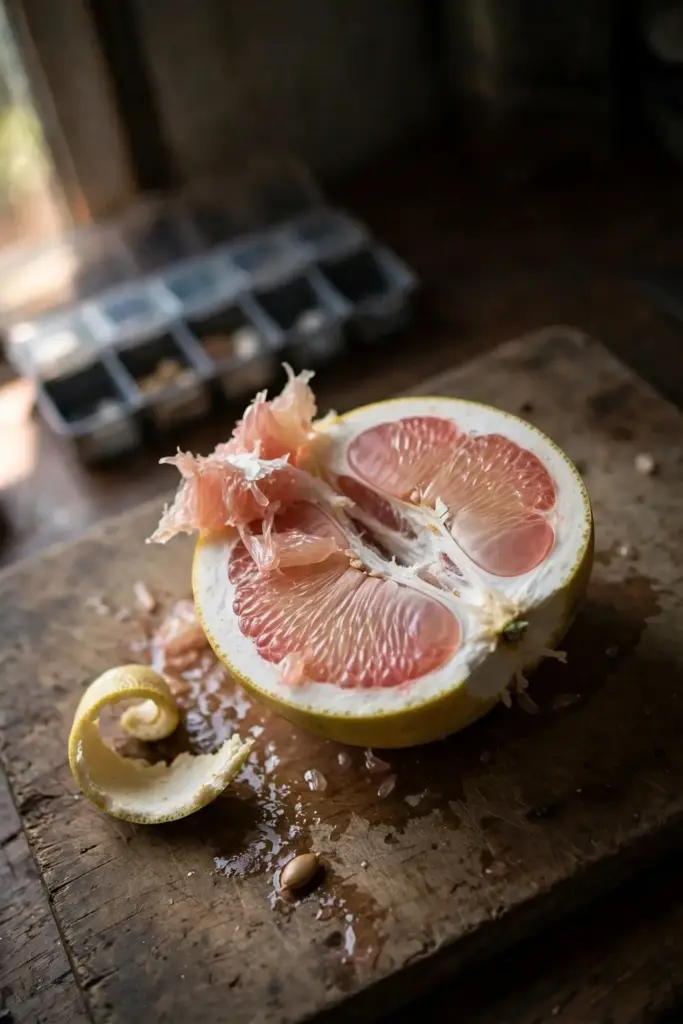
This is not a reason to avoid growing pomelos. It is a reason to check. If you take daily prescription medication, ask your doctor or pharmacist whether pomelo and grapefruit are safe with your prescriptions before making the fruit a regular part of your diet. Bring the question up once, get a clear answer, and enjoy your harvest with confidence.
Children, pregnant readers, and anyone managing a health condition should follow the same rule: a quick check with a healthcare professional beats guessing. Keep this note in mind when you share fruit with neighbors too, since a basket of homegrown pomelos is a gift people actually eat.
18. Why Your Pomelo Has No Fruit Yet
No fruit is the most common pomelo complaint, and the cause is usually time, not trouble. Run through this checklist before you worry.
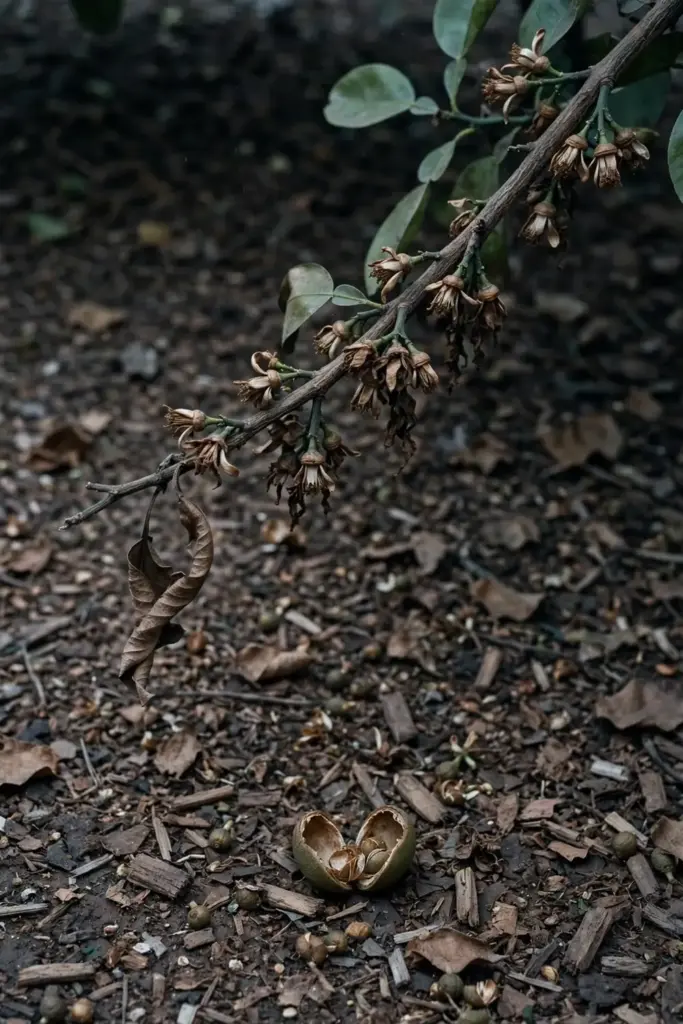
The tree is young. A seed-grown tree needs 5 to 8 years or more; even grafted trees need 3 to 4. If your tree is younger than its type’s timeline, the answer is patience, and the fix is good care while you wait.
It needs more sun or warmth. Fewer than 6 hours of sun, or a site that stays cool, stalls blooming. Potted trees moved indoors too early in fall can also skip a bloom cycle.
Nitrogen is too high. Heavy nitrogen feeding grows spectacular leaves and no flowers. Switch to a bloom formula and hold the nitrogen once the tree reaches bearing age.
Water swings during bloom. Drought stress at flowering causes blossom drop. Keep moisture even from bud break through fruit set.
It flowered, then dropped everything. Young trees abort their first crops. Some drop is normal every year; a tree keeps only what it can ripen. If an older tree drops everything two years running, check for root problems, severe underwatering, or nutrient deficiency.
Your First Pomelo Harvest Is Worth the Wait
A pomelo tree asks for years and gives back decades. Plant it in sun and drainage, feed it like the hungry citrus it is, protect it from hard freezes, and thin the crop so the remaining fruit can swell to their full size. Whether you start from a fresh seed or bring home a grafted Thong Dee, the routine is the same: steady water, steady food, and respect for the tree’s slow calendar.
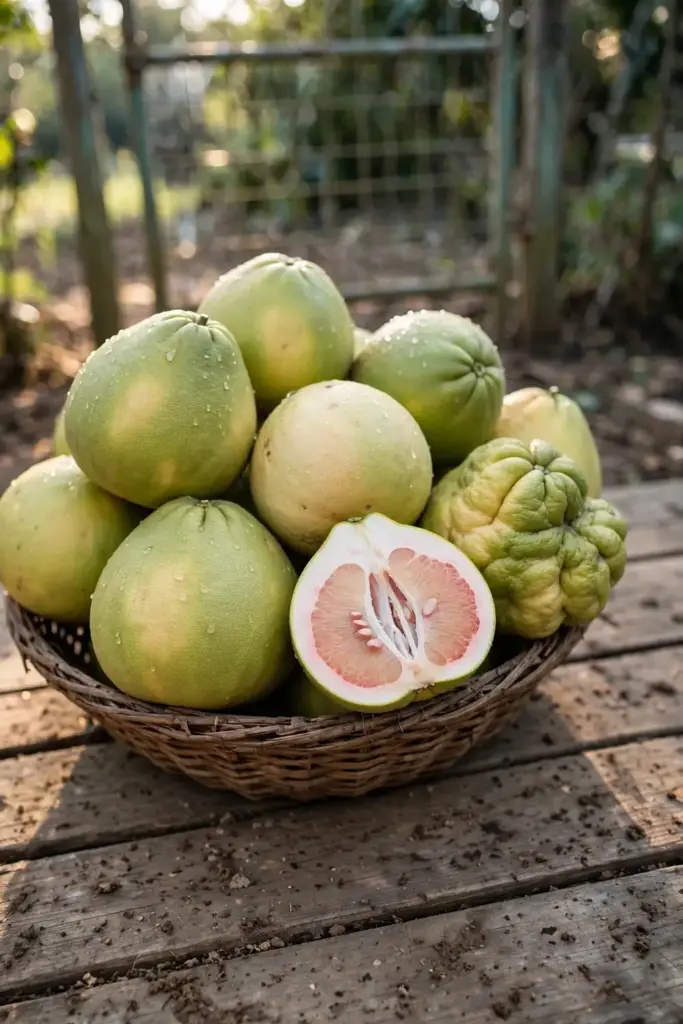
For gardeners building a broader tropical corner, growing guavas pairs naturally with citrus care, and the two fruits ripen in complementary seasons. Start your pomelo this spring. In a few winters, you will be the neighbor handing out the biggest citrus anyone has ever held.
Frequently Asked Questions About Growing Pomelo
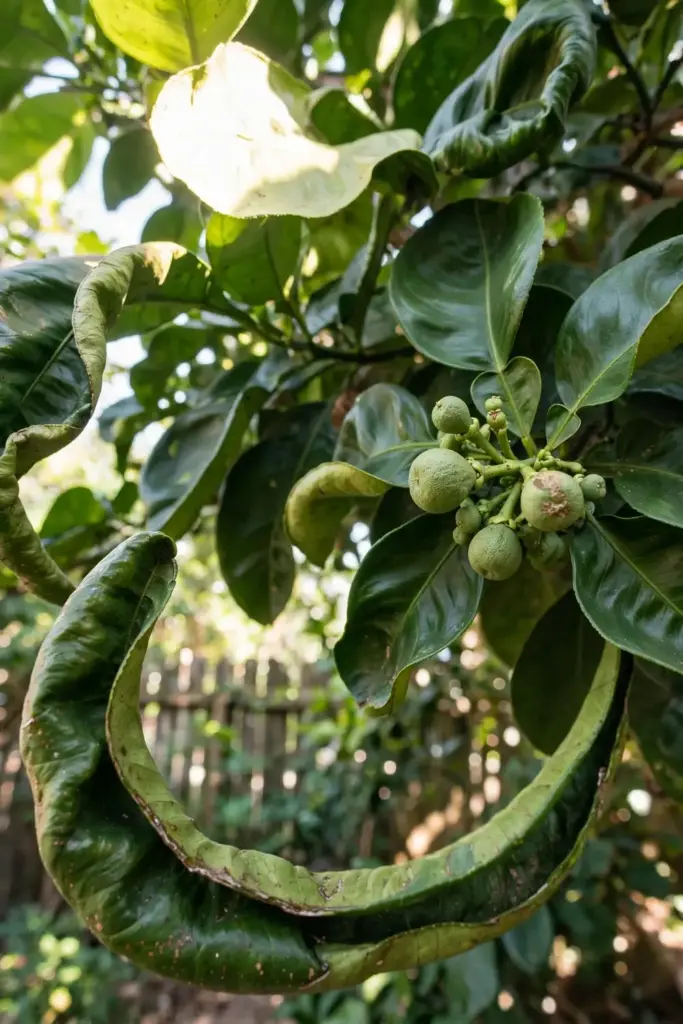
A grafted pomelo tree usually bears its first fruit in 3 to 4 years. A tree grown from seed takes 5 to 8 years or longer, because seedlings must pass through a juvenile phase before they can flower. Some seed-grown trees surprise their owners earlier, especially nucellar seedlings that behave like the parent, but 5 to 8 years is the honest planning number.
No, pomelos are among the more forgiving citrus trees. They tolerate clay, loam, or sand as long as drainage is good, need only basic pruning, and suffer fewer pest problems than many fruits. The two real demands are warmth (no survival below 23°F) and patience (years to first fruit). Meet those two, and the tree largely takes care of itself.
Pomelo contains furanocoumarins, the same compounds in grapefruit that can interfere with certain prescription drugs, including some cholesterol, blood pressure, and allergy medications. The interaction can raise or lower drug levels in the body. If you take daily medication, ask your doctor or pharmacist whether pomelo is safe for you before eating it regularly.
No. Pomelos flower and fruit on branches, like all citrus. The trunk-fruiting habit (cauliflory) belongs to trees like jaboticaba and cacao, not pomelo. Photos that seem to show trunk fruit are usually low branches growing tight against the trunk. Expect your crop on the outer canopy branches, where flowers get sun and pollinators.
Grapefruit is a hybrid cross between pomelo and sweet orange, while pomelo (Citrus maxima) is the original species. Pomelo fruit is larger, with thicker skin and a milder, sweeter, less bitter flavor than most grapefruits. If you like grapefruit’s refreshment without its bite, pomelo is the fruit to grow.
Yes, with a dwarf variety on dwarfing rootstock and a pot of 20 gallons or more. Keep it outdoors in full sun through the warm months, move it inside before freezing nights, and give it your brightest window plus supplemental light in winter. Potted trees fruit on a slower schedule than in-ground trees, but they do fruit.








