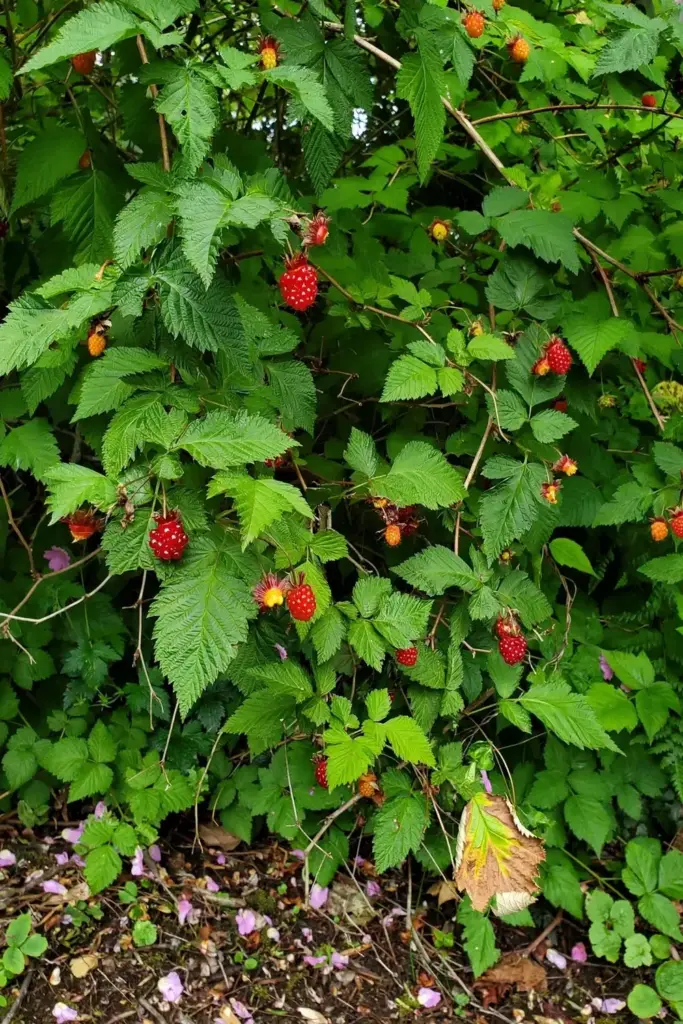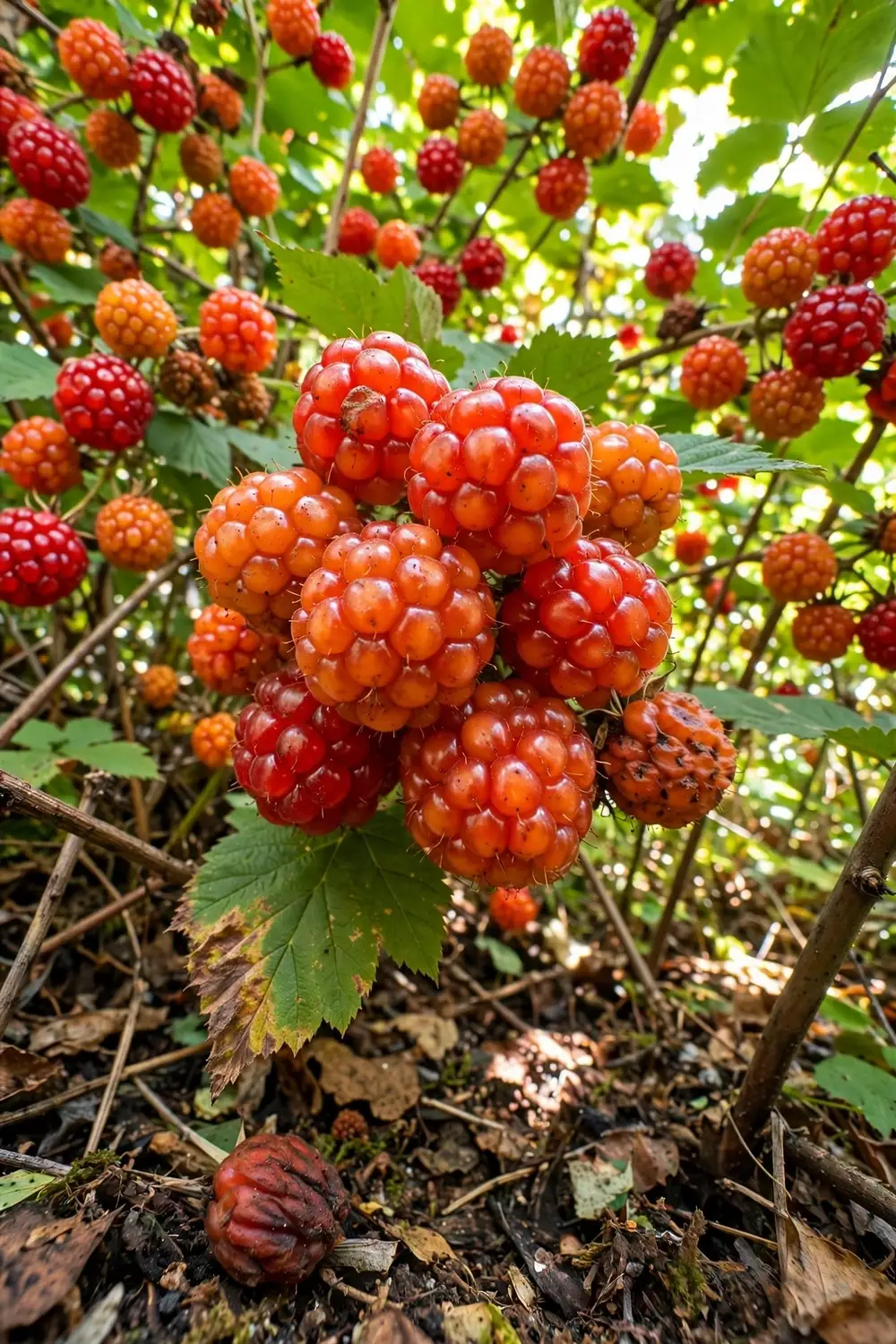

Yes, you can grow salmonberries at home, and an established plant fruits within 1 year. Salmonberry (Rubus spectabilis) is a Pacific Northwest native berry shrub that thrives in wet, partial shade where most fruit crops give up. It grows easily from dormant cane cuttings taken in fall or winter, or from seed given one cold winter of stratification.
I would never tuck one into a small mixed bed, because the rhizome reports I keep reading describe runners surfacing 20 feet from the parent plant. That habit is the whole story of this berry: it succeeds in places other fruit fails, then tries to take over. This guide walks you through every step, from telling it apart from raspberries to keeping the thicket where you put it. If shade is the reason you are reading, the guide to fruits that grow in shade puts this berry in its wider context.
The native range runs from Alaska south to northwestern California, along the coast and up into the Cascades. That coastal ancestry explains everything about its preferences: moisture, cool roots, and tolerance for light that would starve a raspberry. Outside the Pacific Northwest it can still work, but you will need the honest expectations in the climate section below.
Salmonberry at a Glance
| Fact | Detail |
|---|---|
| Botanical identity | Salmonberry, Rubus spectabilis, Rose family |
| Common names | Salmonberry, salmon berry |
| Growth habit | Deciduous rhizomatous shrub, suckering |
| Mature size | 6 to 8 feet tall, similar spread |
| Hardiness zones | 4 to 9 (some sources say 5 to 9) |
| Light | Partial to full shade, tolerates sun with moisture |
| Soil | Moist, rich, pH 5.0 to 7.0 |
| Best propagation | Dormant cane cuttings in fall or winter |
| First fruit | About 1 year from an established plant |
| Harvest season | June through August |
| Pollination | Self-fertile |
| Spacing | 3 to 6 feet |
| Lifespan | 20 years under ideal conditions (nursery estimate) |
1. Salmonberry vs Raspberry: Know Which Berry You Are Growing
Salmonberry is often described as “similar to raspberries,” and that shorthand causes real planting mistakes. Both are Rubus species in the Rose family, and both make aggregate berries that pull away from the receptacle. The resemblance ends at the genus. Salmonberries evolved for wet coastal shade, while most garden raspberries demand full sun and well-drained soil. Plant one like the other and you will get a miserable patch.
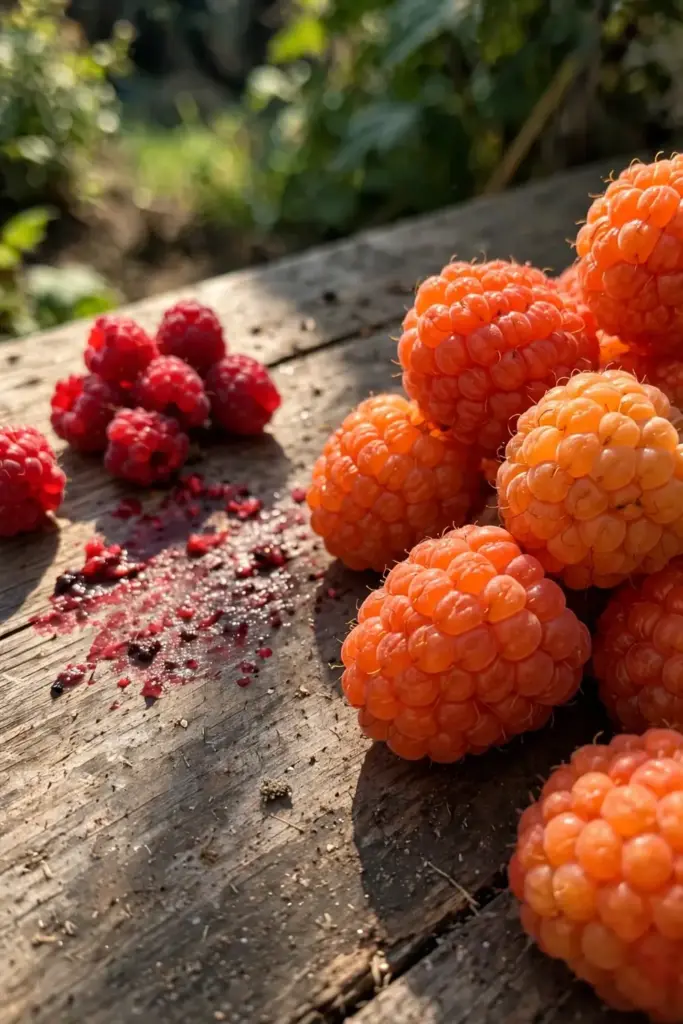
The fruit itself differs. Raspberries are sweet and firm; salmonberries are mild, juicy, and unpredictable, ranging from honeyed to sharp depending on color form, ripeness, and site. The flowers tell them apart even earlier: salmonberry opens large magenta-pink blooms in early spring, a full show weeks before raspberries leaf out. Those early flowers feed returning Rufous hummingbirds, a role no raspberry plays.
| Trait | Salmonberry (Rubus spectabilis) | Garden raspberry (Rubus idaeus) |
|---|---|---|
| Best light | Partial to full shade | Full sun |
| Soil moisture | Moist, even wet | Well drained, never soggy |
| Growth habit | Rhizomatous, spreads by underground runners | Cane clumps, limited spread |
| Flavor | Mild, sweet to tart, varies | Consistently sweet |
| Fruit color | Yellow-orange to deep red | Red, gold, black, purple |
| Flowers | Large magenta-pink, early spring | Small white, summer |
| Wildlife value | Top native wildlife food | Minor |
2. Match Your Climate to Zones 4 to 9, Honestly
Gardening Know How and the USDA plant guide both list salmonberry for zones 4 to 9, while PlotMyGarden gives 5 to 9. The honest reading is that zones 4 and 5 work when the plant has snow cover and steady moisture; the nursery source lists zone 5 conservatively, and the discrepancy reflects how the plant handles exposed winter cold with dry wind. In zones 4 to 5, plant on the sheltered side of a structure and mulch heavily, and expect slower establishment.
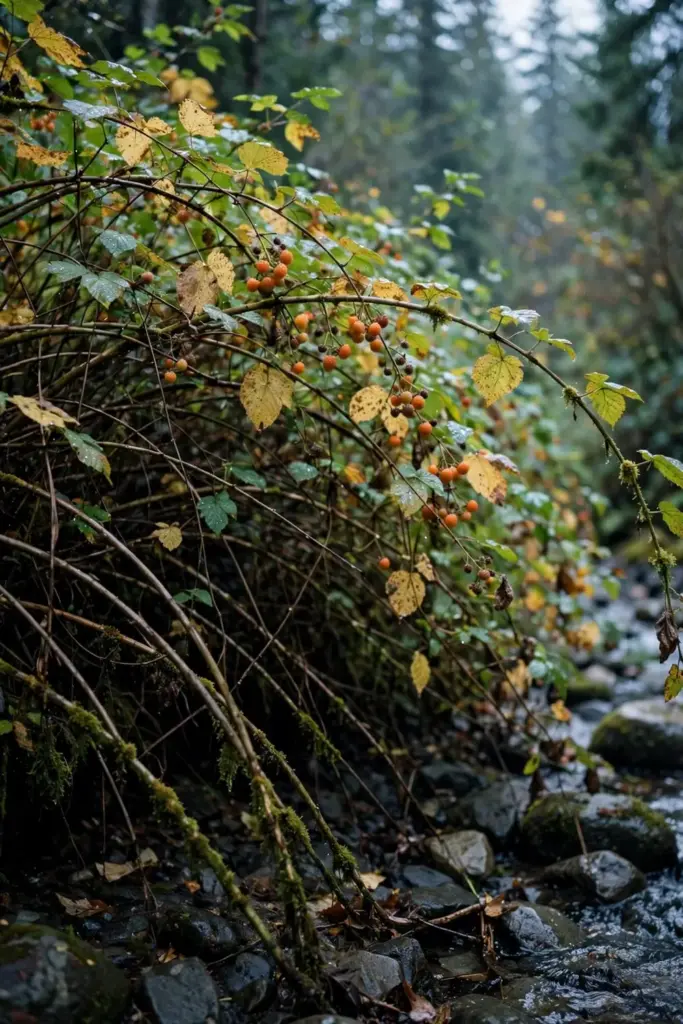
East Coast growers face a different challenge than cold. A 2026 GrowingFruit thread asks about growing salmonberry outside the Pacific Northwest, and the consensus is mixed: the plant dislikes the combination of summer humidity, heat, and winter freeze-thaw without snow. If you garden in New England or the upper Midwest, give it afternoon shade, deep mulch, and consistent water, and treat it as an experiment rather than a sure crop.
Where the plant thrives, it thrives hard. In its native range it colonizes streambanks, wetlands, and clearings below about 1,400 meters elevation, forming dense thickets. That vigor is why you must plan containment before you plant. Cold is rarely the enemy; dryness and confinement are.
3. Learn the Gold and Red Forms Before You Buy
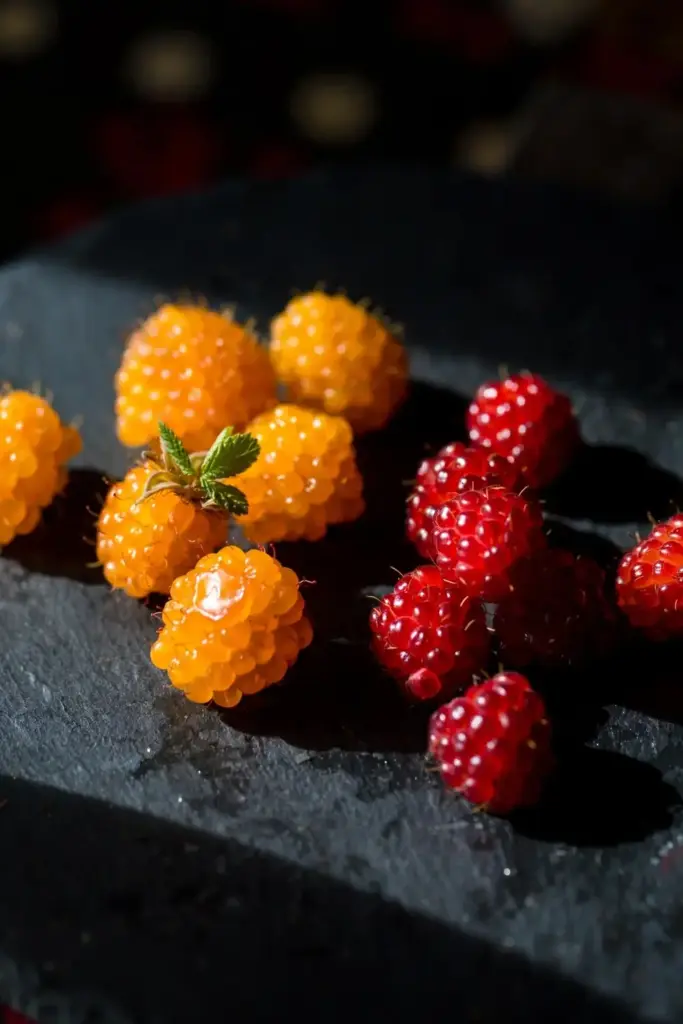
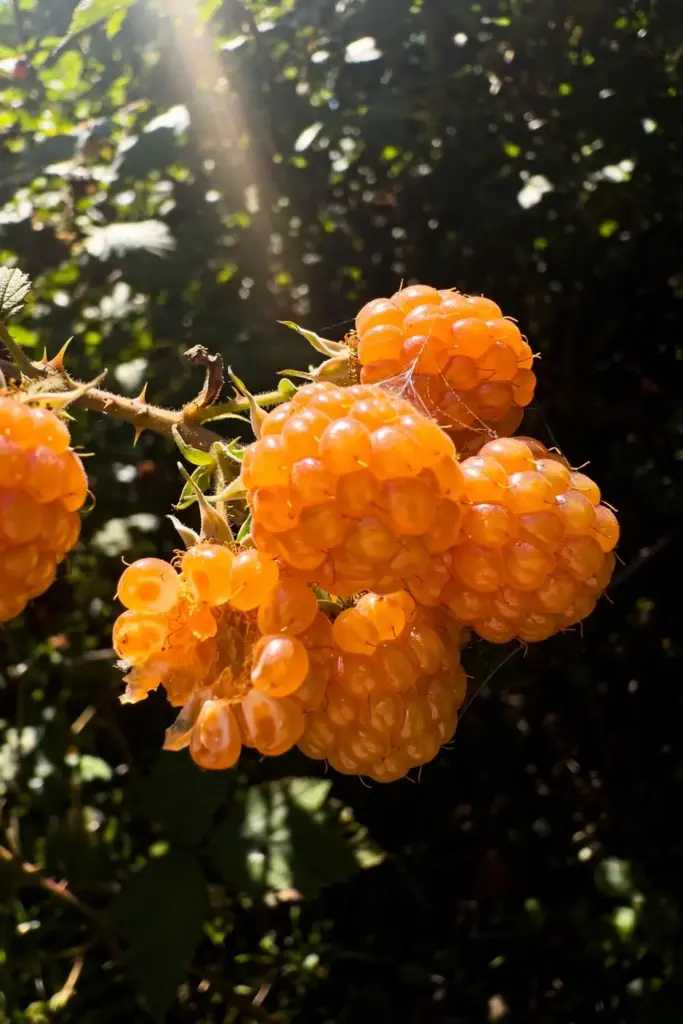
Salmonberries come in two natural color forms, and knowing which you have sets your flavor expectations. The golden-orange form, sometimes called the yellow salmonberry, tends to taste milder and sweeter. The red form runs more tart and variable, from pleasant to sharp. Neither is a named cultivar in most nursery stock; nurseries sell seedling plants whose fruit color is a surprise until the first crop.
The ornamental trade has one named selection worth knowing. ‘Olympic Double’, discovered near Washington’s Duckabush River in 1961, carries double pink flowers and is grown for the spring display rather than the crop. A second double form turned up in British Columbia. These doubles belong in a native ornamental planting, not a fruit patch.
Buy from native plant nurseries rather than general garden centers when you can. Pacific Northwest natives like Sparrowhawk and Raintree have sold the species for years, and regional specialists ship the right form for your area. Wild transplants are tempting but risky: small offshoots under four feet tall transplant easily, yet digging them from wild land may be illegal, and you can carry diseases into your garden.
4. Buy Nursery Plants or Save Fresh Seed
The easiest start is a nursery plant, as Gardening Know How recommends. A one-gallon plant in the ground this year can fruit next summer, which beats every other method on the calendar. Look for healthy, actively growing stock with no leaf spots or cane dieback. Fall planting suits the Pacific Northwest, while spring planting works better where winters are severe.
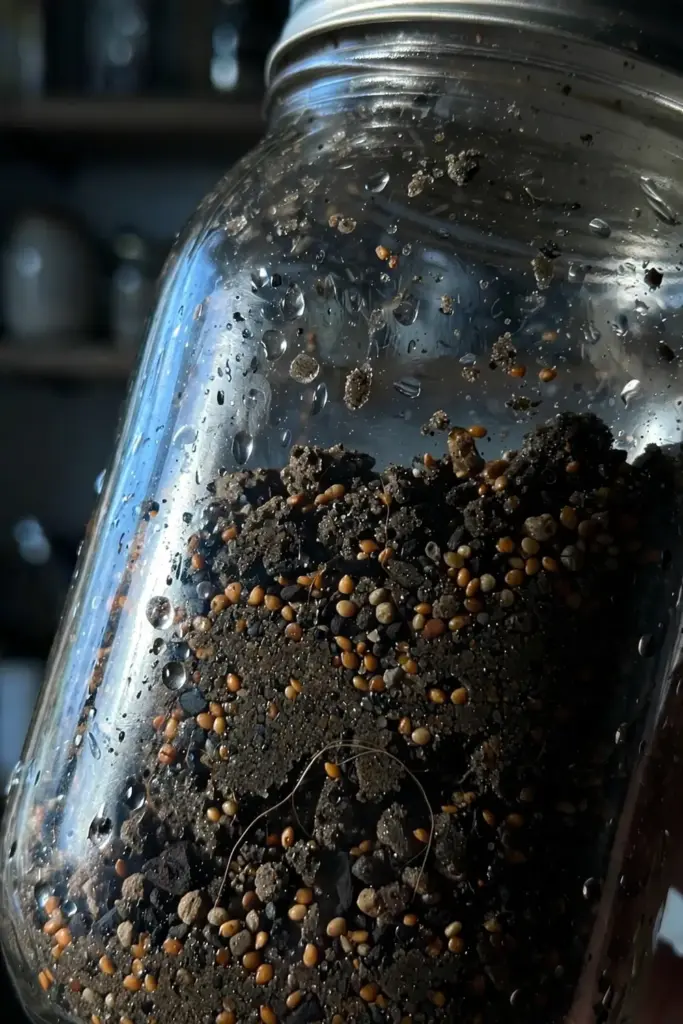
Seeds are the slow, uncertain route. The berries are easy to find in season: pick fully ripe, soft fruit, the kind that falls apart in your hand. Mash the berries and rinse the pulp away from the seeds in a bowl of water, pouring off the floating debris. Viable seeds sink. Use them fresh, because stored seed loses vigor and the stratification clock needs to start soon anyway.
Expect a numbers game with seed. Plantura calls seed propagation “laborious and not particularly promising,” and the plant guide confirms the seeds need real winter cold to break dormancy. One seed-grown plant is an experiment; a dozen is a strategy. The cuttings section below gives the faster, more reliable alternative that most growers should choose.
5. Cold Stratification: Breaking Seed Dormancy
Salmonberry seed sleeps until winter tells it to wake up. The USDA salmonberry plant guide specifies cold stratification at 36 to 41°F to break seed dormancy, which is ordinary refrigerator temperature. Mix the cleaned seeds into barely damp sand or peat moss in a sealed bag, label it with the date, and refrigerate for 90 to 120 days. Check monthly and remoisten if the mix dries out.
The natural method works too, and it suits the plant’s own rhythm. Sow the seed directly in the ground in fall, in shallow drills, covered lightly with soil and mulched over winter, exactly as the plant guide describes. Nature provides the cold, the moisture, and the timing. Germination follows in spring, typically patchy, which is why you sow thickly.
Do not freeze the seeds. Freezing kills the embryo; sustained refrigerator cold is what the dormancy chemistry expects. If your climate gives reliable freezing winters, the outdoor sowing method avoids the fridge entirely and often gives better stands. Growers in mild-winter regions should use the refrigerator method, since their winters may not deliver enough chill hours.
6. Germination, Step by Step
Start stratification 90 to 120 days before your last frost date, so the seeds come out of the fridge as spring soil warms. Fill a tray or pots with a fine, moist seed-starting mix and press the seeds just under the surface, about one-eighth inch deep. Light helps germination in many Rubus species, so do not bury them deep.
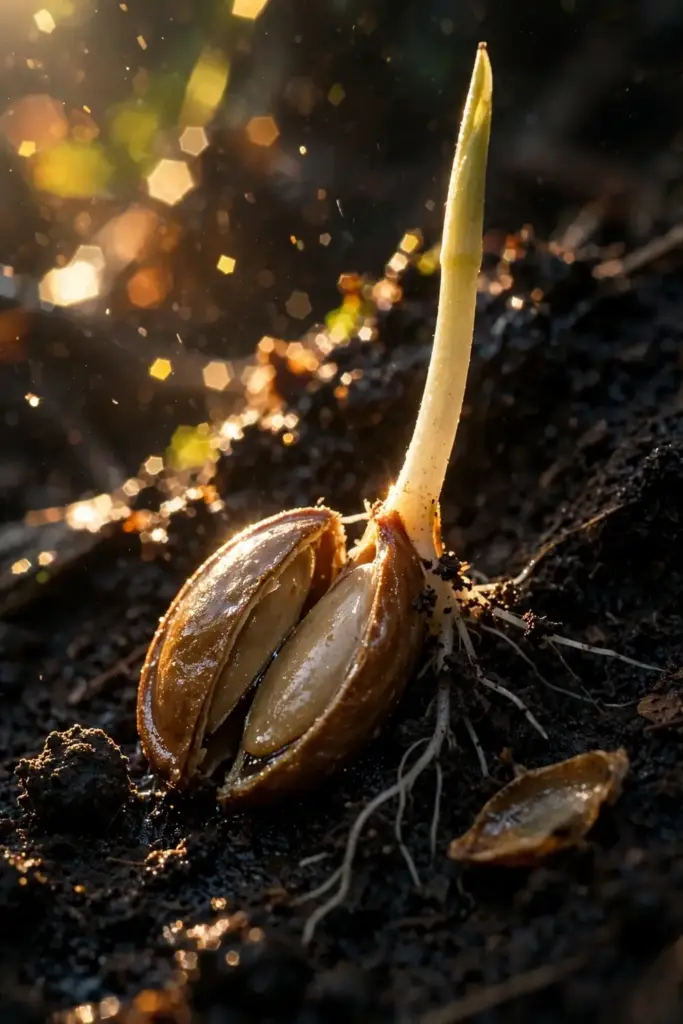
Keep the mix consistently moist but never waterlogged, and hold the temperature around 65 to 70°F. Bottom heat helps but is not required. Expect the first sprouts in two to four weeks, with stragglers continuing for several weeks more. Patchy germination is normal for this species, not a sign of failure.
For a step-by-step seed-starting setup, the seed starting guide covers trays, lights, and hardening off in detail. One useful trick from a British Columbia nursery grower: mash ripe berries directly into soil in fall and let winter do the stratification, which skips the fridge entirely and often beats indoor sowings.
7. Seedling Care: From Sprout to Transplant
Salmonberry seedlings start small and fragile. Give them bright indirect light or a grow light for 14 hours a day, and keep the soil evenly moist. They dislike drying out even briefly, which mirrors the adult plant’s thirst. A light feeding of diluted balanced fertilizer at quarter strength, once the second set of true leaves appears, keeps growth steady.
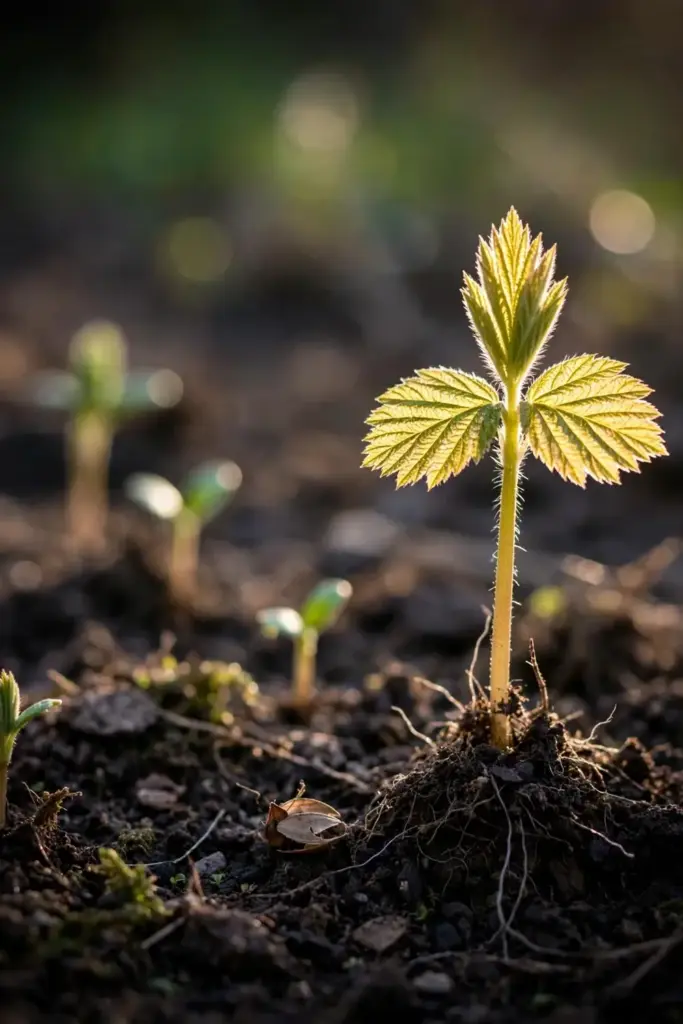
Harden the seedlings off over ten to fourteen days before they go outside, exposing them to gradually longer periods of outdoor shade and wind. Transplant when they are 4 to 6 inches tall and the soil has warmed. Disturb the roots as little as possible, and water each seedling in deeply.
Expect a slow first year. Seedlings put their energy into roots and a modest cane, and they will not fruit until the second or third year. This is the price of the seed route. If a one-year timeline to fruit matters to you, buy a nursery plant or root a cutting instead.
8. The Cutting Path: Dormant Cane Cuttings
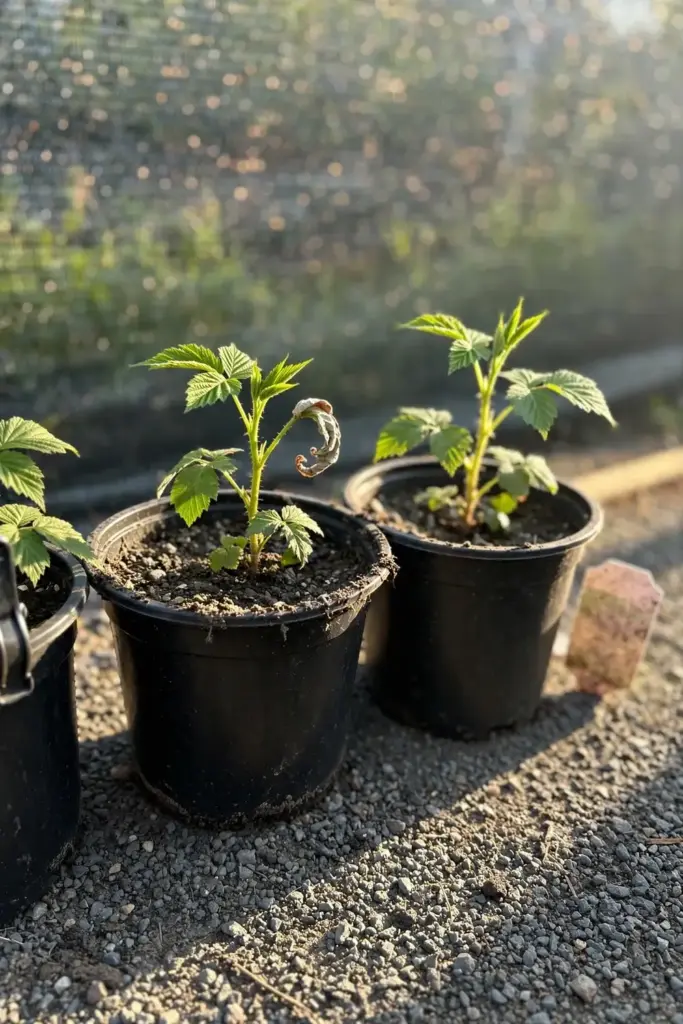
Cuttings are the fastest, most reliable way to multiply salmonberry, and they preserve the fruit quality of the parent plant. Take 4 to 8 inch sections of dormant, healthy canes in fall or winter, each with several buds, as the Copilot growing summary recommends. Plantura’s salmonberry growing guide refines the method: cut healthy, straight canes into 4 to 8 inch pieces with four buds each in October, as the plants enter dormancy, and set them vertically in potting soil with two buds buried.
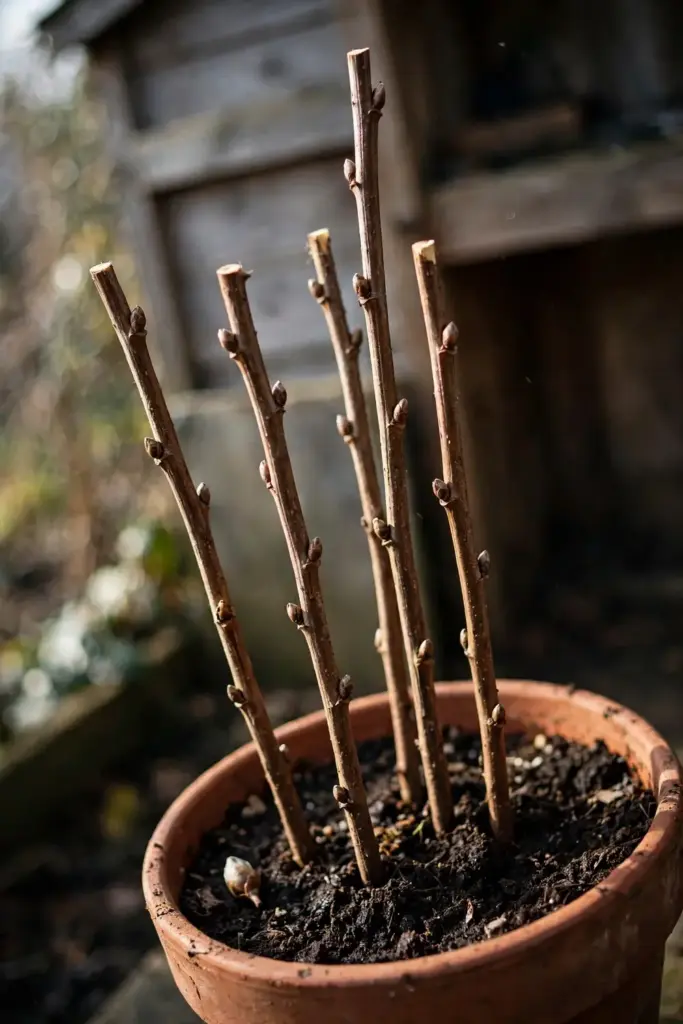
For hardwood cuttings from thicker stock, jungle-growth sources specify pieces 1 to 2.5 cm in diameter and at least 45 cm long with three or more nodes. Store them over winter in damp sawdust or peat moss to promote callusing and prevent drying out. Rooting hormone on the base improves the strike rate, though the species roots readily without it.
Set the cuttings in a sheltered, shaded spot and leave them undisturbed until the following autumn, per Plantura’s advice. Roots form in spring while the cutting looks dead above ground. Disturb them early and you kill the new plant. Patience pays: a rooted cutting planted out in its second fall fruits the following summer, a full year ahead of seedlings.
| Method | Time to plant | Time to first fruit | Keeps parent quality | Difficulty |
|---|---|---|---|---|
| Nursery plant | Immediate | About 1 year | Yes | Easy |
| Dormant cutting | Fall or winter | 2 years | Yes | Easy to moderate |
| Stratified seed | Spring after 90 to 120 days cold | 2 to 3 years | No, variable | Moderate to hard |
9. Choose the Site: Wet Shade Is the Point
This is the section that makes the whole article work. Salmonberry wants the spot in your yard that defeats other fruit: the damp, partly shaded corner by the fence, the low area near a downspout, the north side of the house. Full to partial shade is ideal, and the plant tolerates a sunnier spot only if the soil stays consistently moist. The Native Plant Salvage Foundation notes it as an indicator of moist soils, and adds that when you find it thriving in full sun, there is almost certainly a moisture source in the ground.
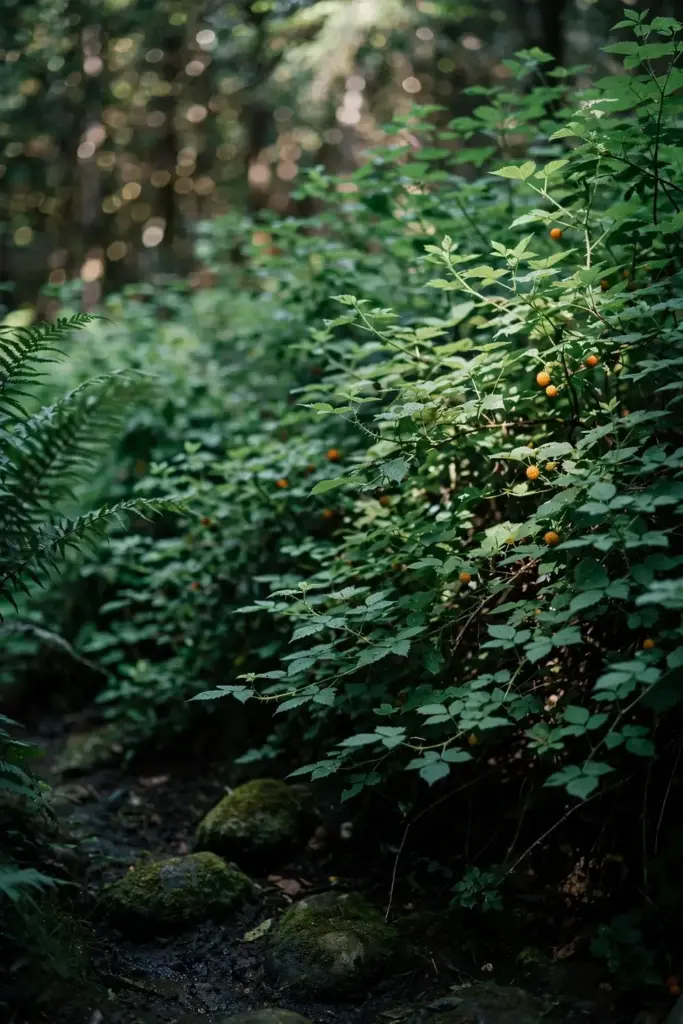
Good drainage in the conventional sense is the wrong goal. The soil should be rich and moisture-retentive, a loam improved with compost, and the pH can sit anywhere from 5.0 to 7.0. Avoid spots that bake dry in summer unless you commit to irrigation. A streamside, a rain garden edge, or the shade of a large tree all suit it.
Keep it away from vegetable beds, young orchards, and anything you intend to keep tidy. The runners travel far underground, and the plant guide warns that salmonberry may become invasive once established. Site selection is your first and cheapest form of containment, and the containment section builds on this choice.
10. Spacing: Give It Room to Run
Space salmonberry plants 3 to 6 feet apart, following the Copilot growing summary. The tighter end suits a planned thicket where you want quick coverage for erosion control or a wildlife hedge. The wider end suits home fruit production, where air movement between canes keeps disease pressure down and gives you picking room.
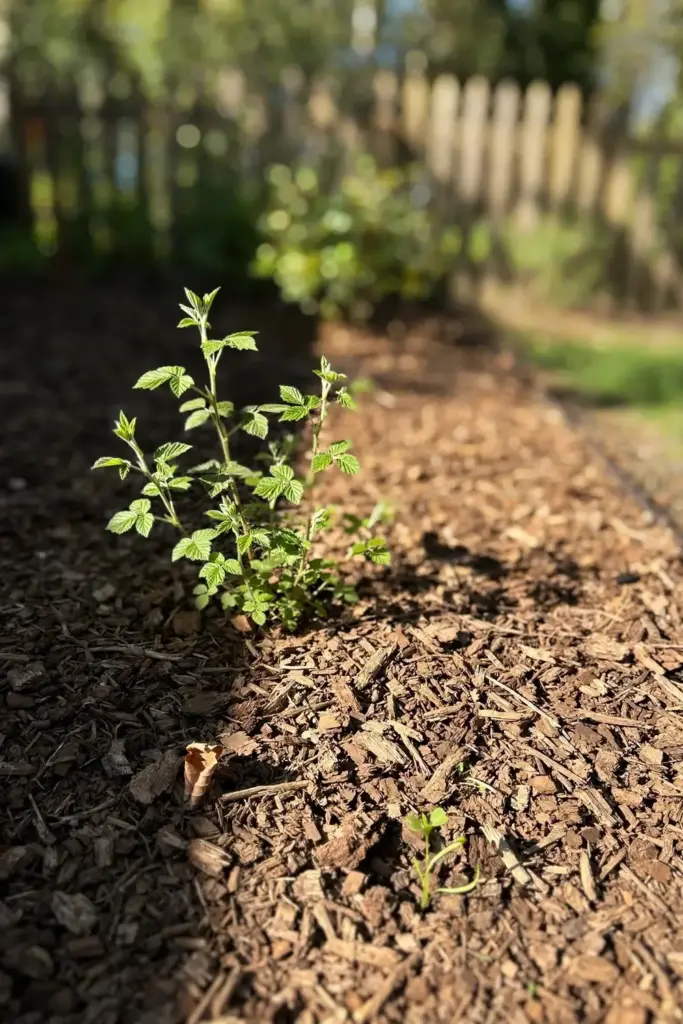
Think in clumps, not rows. The plant’s natural form is a loose thicket, and fighting that form costs you the vigor you planted it for. A cluster of three to five plants makes a good starter patch. Mature plants reach 6 to 8 feet tall with a similar spread, and individual canes arch and layer themselves outward.
Plan for expansion from day one. Every salmonberry patch grows wider than you plant it, because new canes emerge from rhizomes several feet from the parent. If you have a fixed boundary, install the root barrier described in the containment section before you plant, not after the first escape. A little extra spacing now saves you a digging project later.
11. Planting: Bare-Root and Potted Starts
Plant bare-root starts in late fall or early spring, while the plants are dormant. Dig a hole wide enough to spread the roots without bending them, set the crown at the same depth it grew at the nursery, and backfill with native soil mixed with compost. Water deeply to settle the soil and eliminate air pockets.
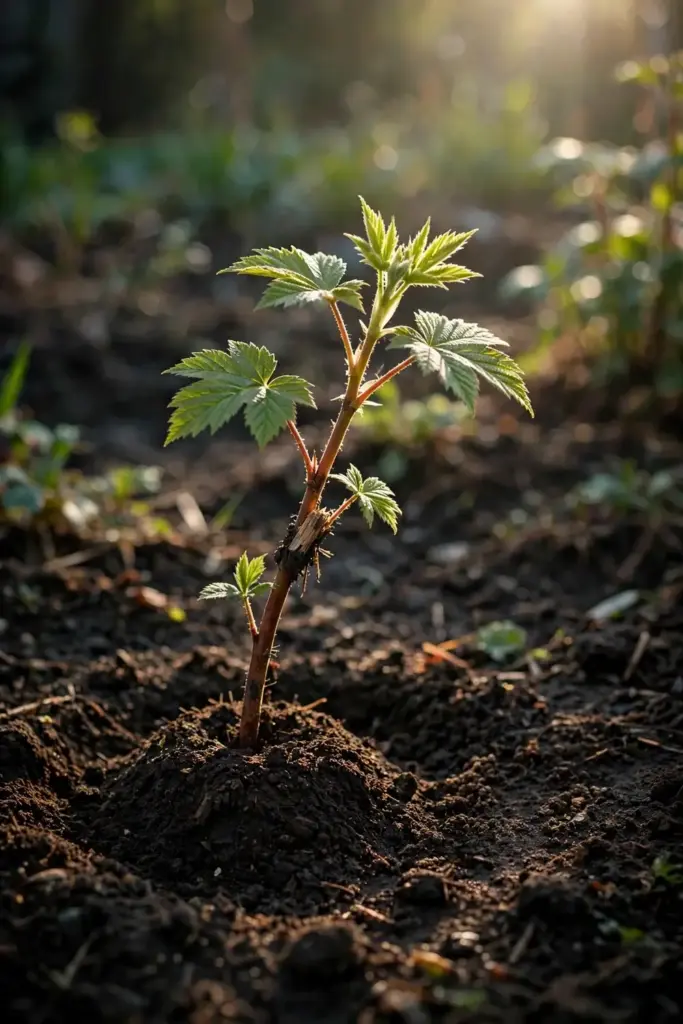
Potted starts are more forgiving on timing. Plant them any time the ground is workable, from spring through early fall, giving them at least six weeks before hard frost. Tease out circling roots, plant at the same depth as the pot, and water thoroughly. The plant guide notes that salmonberry is easily grown from layering, basal sprouting, and rhizomes, so even a rough start usually recovers.
Mulch immediately after planting with 4 to 6 inches of wood chips or shredded bark, keeping the mulch a few inches from the canes themselves. This is not optional decoration: the mulch conserves the soil moisture the plant depends on and suppresses the weeds that compete with young canes. For soil preparation fundamentals, the soil health guide covers compost, mulch, and building moisture-retentive ground.
12. Watering and Mulch: One Inch a Week
Water is the non-negotiable input for salmonberry. The rule is about 1 inch per week, and Gardening Know How advises weekly irrigation during dry weather, especially while berries are setting and ripening. In hot summers with prolonged heat and low rainfall, Plantura says to water daily, in the evening or early morning, matching the water to the soil: sandy soils need the can more often than loam or clay.
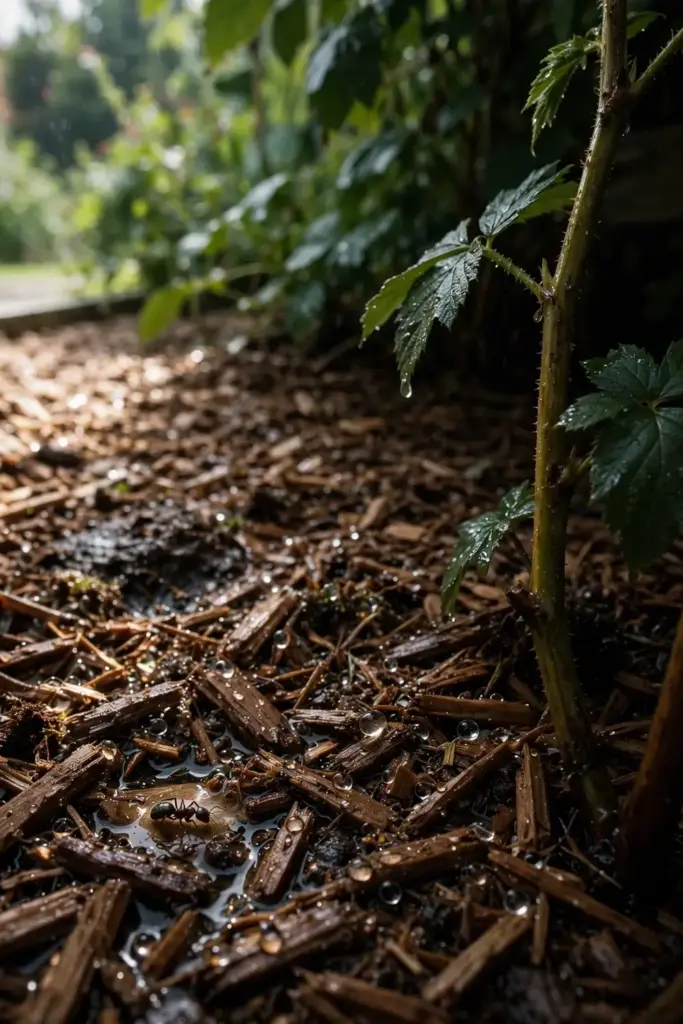
New plantings need the most attention. Keep the root zone consistently moist for the first full growing season, never letting it dry out completely. An established thicket tolerates short dry spells, as Plantura notes, but the berries shrink and the canes stress. If your summer brings drought, plan on irrigation; this is not a plant-and-forget shrub for dry climates.
Refresh the mulch every spring. Gardening Know How recommends mulching with shredded bark, straw, dry grass clippings, or compost, which doubles as the annual feeding window. A deep organic mulch layer keeps roots cool, holds moisture through heat waves, and slowly feeds the soil biology. Pull the mulch back from the cane bases by a few inches to prevent crown rot.
13. Fertilizing: Light Feeding Only
Salmonberry is a light feeder, and rich native soil often needs no fertilizer at all. When you mulch with compost each spring, as Gardening Know How recommends, that single application usually supplies everything the plant wants. Add a light scattering of balanced general-purpose fertilizer at the same time if growth looks pale or the canes seem thin.
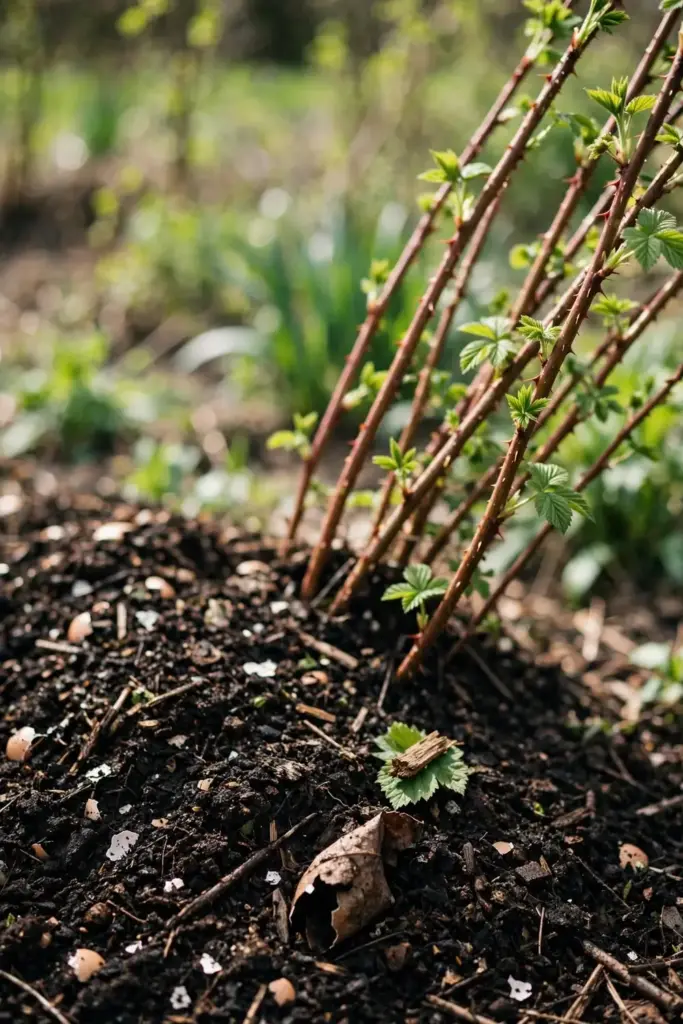
Do not overfeed. Heavy nitrogen pushes soft, leafy growth that flops, shades the interior, and invites aphids. The plant evolved in forest soils fed by leaf litter, not in fertilized rows. If your soil is already rich loam, skip the fertilizer entirely and let the mulch do the work.
Watch the leaves for clues. Yellowing between the veins on new growth can signal iron chlorosis in alkaline soils, though the plant tolerates pH up to 7.0. Stunted, pale canes in poor soil respond to a top-dressing of composted manure. In most gardens, the annual mulch-and-compost routine from the watering section covers nutrition completely.
14. Pruning: Old Canes Out Every Late Winter
Prune salmonberry in late winter, before the buds break, which is the timing nursery sources agree on. Like raspberries, salmonberry fruits on second-year canes, so the job is simple: cut out the canes that fruited last summer, right down to the base. They are spent and will not fruit again.
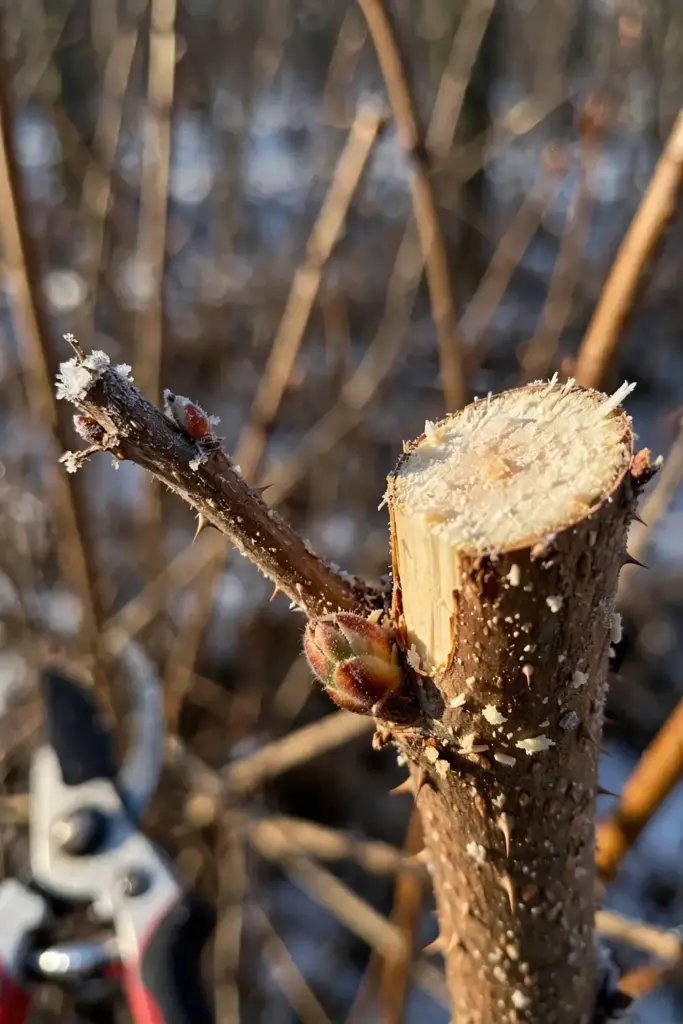
Thin the new canes at the same time. Leave the strongest 6 to 10 canes per plant, spaced so light and air reach the interior. Remove any that cross, rub, or grow outward into paths. The plant responds to thinning with stronger remaining canes and larger berries, the same logic that governs all cane fruit.
The spring pruning guide covers tool sanitation and cut technique in detail. Clean your loppers between plants with alcohol or a bleach solution, especially if any cane shows canker or dieback. Wear gloves and long sleeves: the prickles are milder than blackberry thorns but still unpleasant, as Gardening Know How warns.
15. Containment: Root Barriers, Siting, and Removal
This is the section that saves gardens. Salmonberry spreads by rhizomes, underground stems that send up new canes far from the parent. A Facebook grower in the Backyard Habitats group reported runners surfacing 20 feet away, and the USDA plant guide states plainly that the shrub may become invasive once established. In parts of northwestern Europe, including Ireland and Great Britain, it has escaped cultivation and become a management problem. Treat containment as part of planting, not an afterthought.
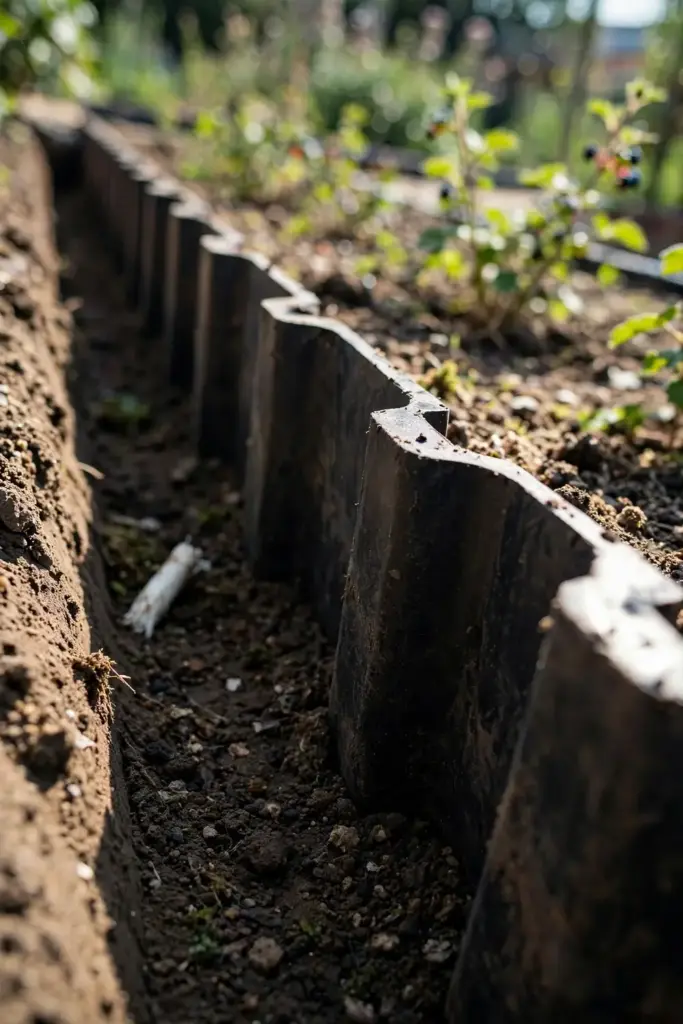
Install a root barrier before you plant. Bury rigid HDPE barrier or sheet metal 18 to 24 inches deep around the planting area, leaving 2 inches above the soil line so rhizomes cannot hop over the top. This is the same technique used for running bamboo, and it is the only reliable physical control. Plantura confirms the principle directly: root barriers prevent the underground spread.
Site selection is the second line of defense. Give the patch a bounded space, such as between a driveway and a fence, where escape routes are limited. Mowing a perimeter strip catches young suckers before they establish. If a plant has already escaped, dig out the runners with their crowns; cutting the tops only triggers regrowth. For large infestations, Irish land managers cut all stems between September and February and dig out the root crowns, allowing them to dry on site.
16. Pollination and the Magenta Flowers
Salmonberry is self-fertile, so a single plant sets fruit without a partner. The large magenta-pink flowers open in early spring, among the first blooms of the year, and bees work them eagerly. No pollinator variety, no bloom-timing chart, and no hand-pollination ritual are needed, which makes this one of the lowest-fuss fruit shrubs you can plant.
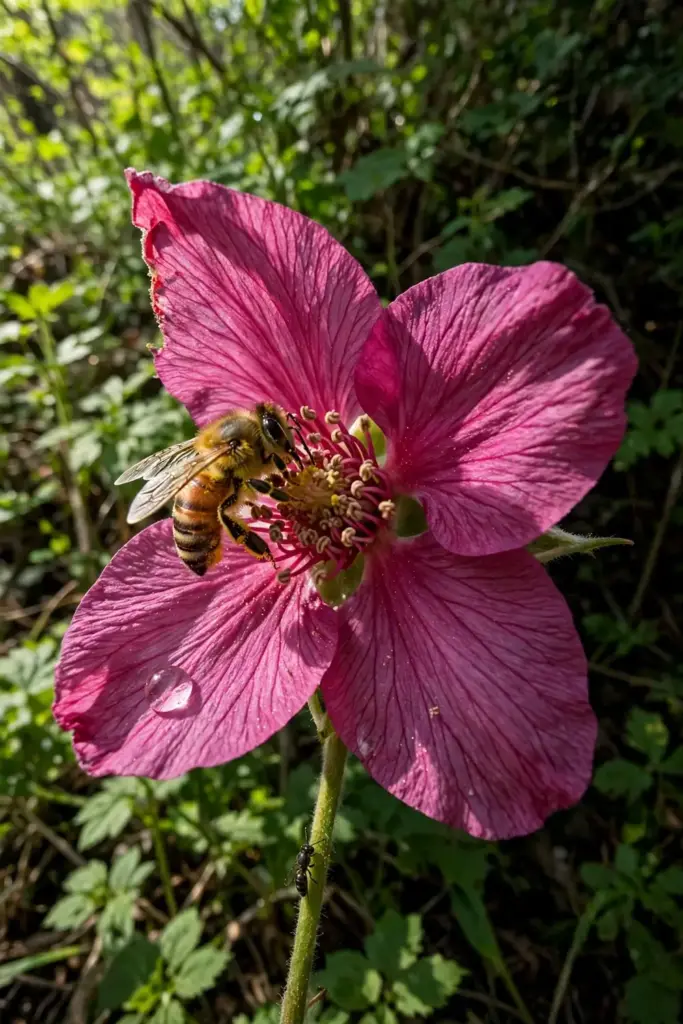
The flowers earn their keep beyond the crop. Gardening Know How notes that the showy blooms are favored by Rufous hummingbirds migrating north at that time, along with bees and other early pollinators. A salmonberry patch doubles as an early-season pollinator planting, feeding insects when little else blooms. This is a genuine advantage over raspberries, which flower later and offer less to early wildlife.
Frost can nip the earliest flowers in cold years, reducing the crop. In frost-prone sites, the later-blooming canes still carry the season, because flowering stretches over several weeks. If a late freeze takes the first flush, do not prune in panic; the plant compensates.
17. Wildlife: Hummingbirds Love This Shrub
If you garden for wildlife, salmonberry is one of the highest-value native shrubs you can plant. The USDA rates it as a top wildlife food: the early flowers feed hummingbirds and native bees, the summer berries feed songbirds and mammals, and the dense thicket shelters nesting birds. The Native Plant Salvage Foundation calls it “a super plant for wildlife, naturescapes, and revegetation projects.”
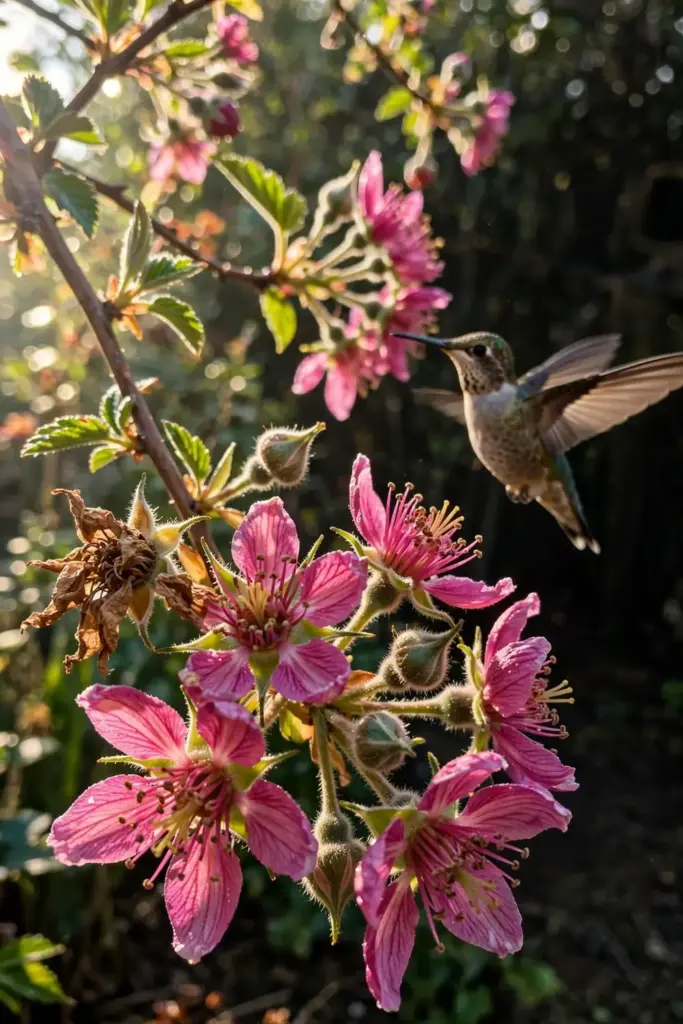
Plant it where wildlife can use it without conflict. A back-corner thicket, a rain garden edge, or a slope you want stabilized all work. The berries ripen before most garden fruit, so birds get an early meal and leave your later crops alone. Thorny thickets give fledglings cover from cats and hawks.
The traditional human uses run deep too. Indigenous peoples of the Pacific coast ate the berries fresh, often with salmon or oolichan grease, and used the young shoots as a spring vegetable. The fruit’s high moisture content meant it was eaten fresh rather than dried. Growing it connects your garden to a food tradition thousands of years old.
18. Containers: Honest Limits for a Running Shrub
Can you grow salmonberry in a pot? Technically yes, with honest limits. Use a container of at least 15 to 20 gallons, filled with a moisture-retentive mix rich in compost, and plan to water daily in summer. Containers need good drainage and sun, which is correct but understated: the pot dries faster than any garden soil, and this plant punishes dry roots.
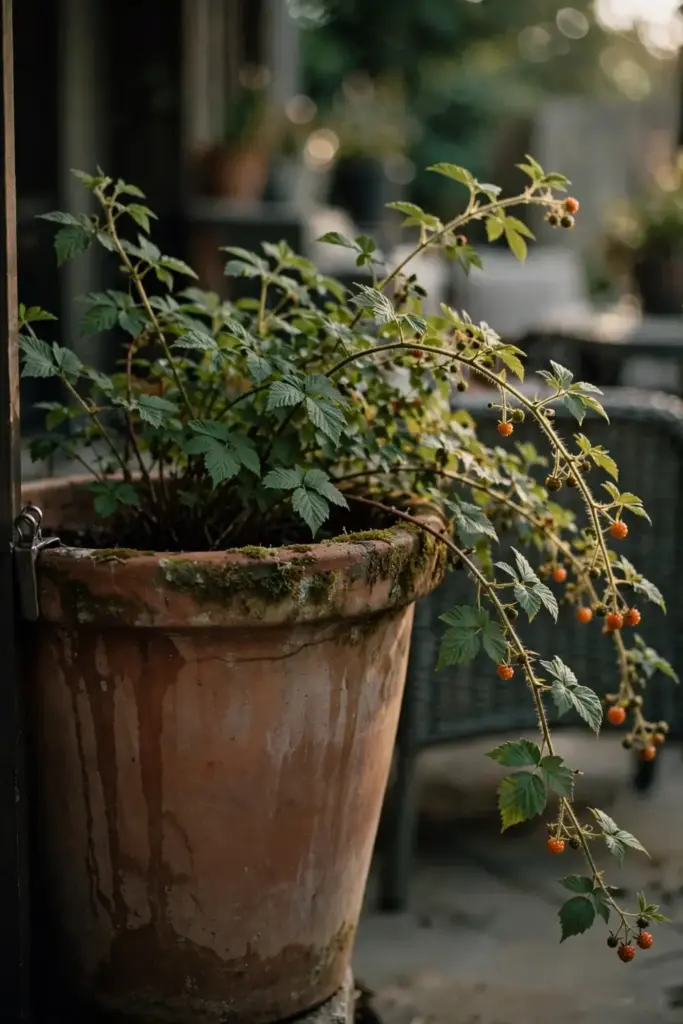
Expect a smaller, shorter-lived plant in a container. The rhizomes circle the pot instead of running, which contains the spread but also constrains the root system the plant wants. Fruit production will be modest, a handful of berries rather than a bowlful. Treat the container as a trial or a patio ornamental, not a production patch.
Overwintering matters in cold zones. In zones 4 and 5, move the pot against a sheltered wall and mulch the top heavily, or sink the whole pot into the ground for winter. Roots in containers experience colder temperatures than roots in the ground. A plant hardy in the ground at zone 4 may need zone 5 protection in a pot.
19. Harvest: June Through August
Berries ripen from June through August, depending on your climate and the color form. Pick when the fruit is fully colored, soft, and pulls away from the core easily, leaving the white receptacle behind like a raspberry does. Underripe berries are bland and seedy; overripe ones collapse in your hand. Taste as you go.
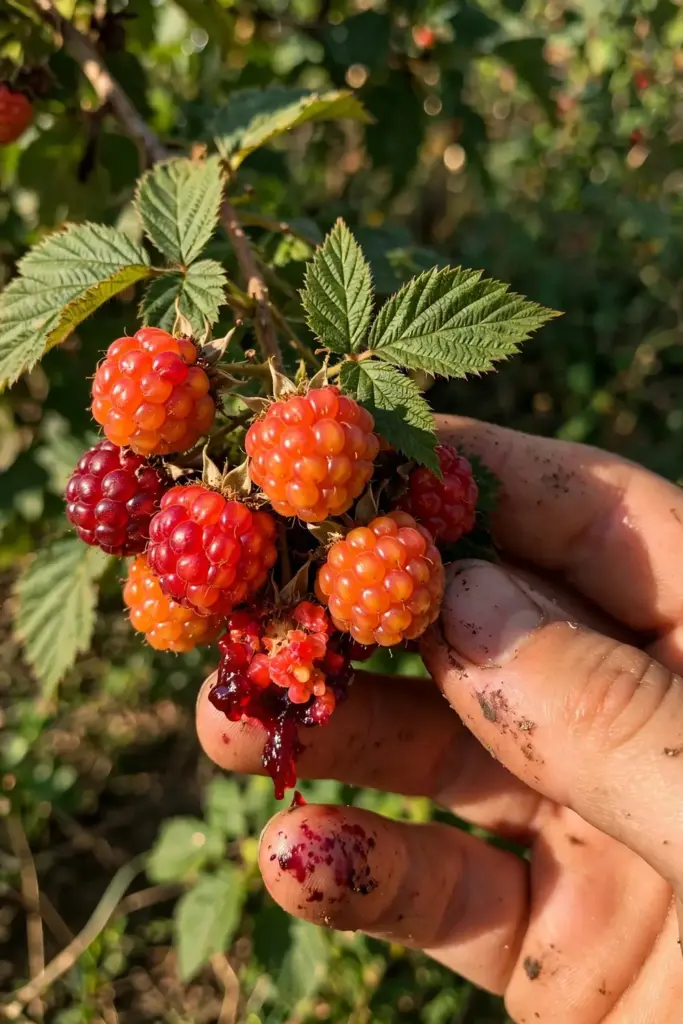
Set honest flavor expectations. Salmonberries are mild, juicy, and variable: the best taste like a gentle raspberry with honey notes, while others are watery or sharp. The foraging community debates this endlessly, with some tasters calling them mediocre fresh. They shine in processing: jam, jelly, wine, and sauces concentrate the flavor that fresh eating only hints at.
Harvest wears gloves and long sleeves, because the prickles snag. Pick in the cool of the morning, and refrigerate the berries promptly; their high moisture content means they spoil fast. For the biggest crops, plant the gold form, which growers report as the sweetest, and give the patch the water it wants through the ripening weeks.
20. Troubleshooting: No Flowers, No Fruit
A salmonberry that grows vigorously but never flowers is almost always too young, too shaded, or too comfortable. Seed-grown plants can take two to three years to bloom. A plant in deep, dry shade puts its energy into survival canes. And a plant that gets heavy nitrogen and constant water sometimes grows leaves at the expense of flowers. Cut the fertilizer, thin the canes for light, and wait a season.
No fruit on flowering canes points to pollination weather or frost. Cold, wet springs keep bees home during the early bloom, and a late freeze can kill the flowers outright. The plant usually compensates with later blooms, so a blank year after a bad spring is normal. Persistent failure across years suggests the site is wrong: too dry, too dark, or too exposed.
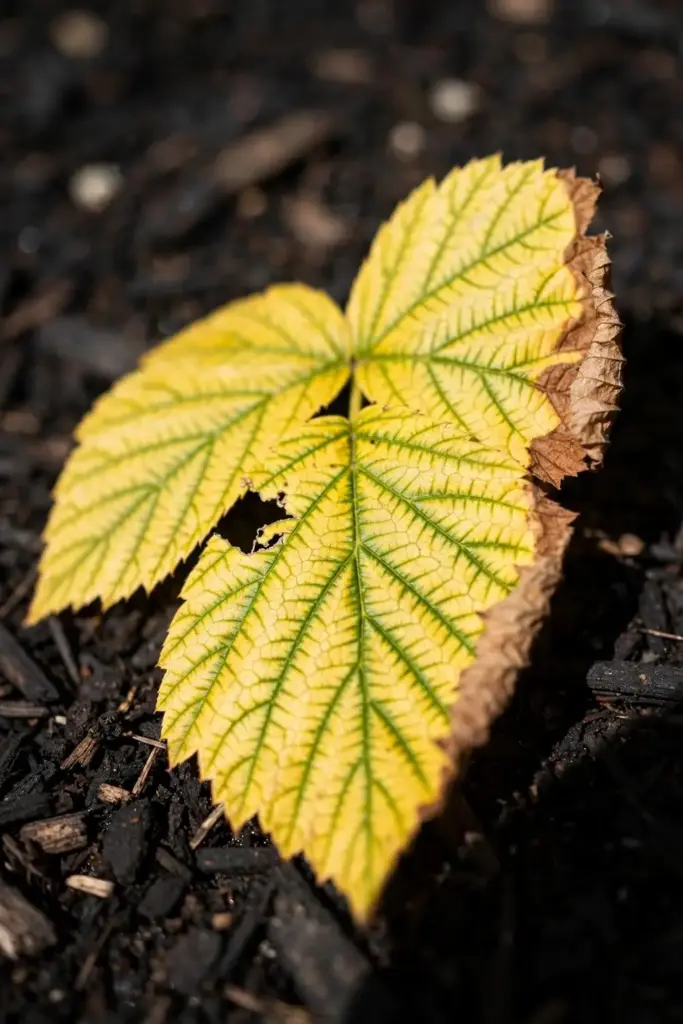
Yellowing leaves with green veins signal iron chlorosis in alkaline soil; the plant prefers pH 5.0 to 7.0 and struggles above it. Top-dress with compost and consider an acidifying mulch like pine needles. Cane dieback from the tips usually means drought stress or winter injury; cut back to healthy wood in late winter and improve watering.
Frequently Asked Questions
Yes, within their preferred conditions. Salmonberry is one of the easiest native fruit shrubs for wet, partly shaded sites in zones 4 to 9. Buy a nursery plant for the simplest start, give it moist soil and mulch, and it largely takes care of itself. The work comes from containment, not from coddling: plan the root barrier before you plant.
Aggressively. Salmonberry spreads by underground rhizomes that send up new canes many feet from the parent plant; growers report runners surfacing 20 feet away. It forms dense thickets and is considered invasive in parts of northwestern Europe. Install an 18 to 24 inch deep root barrier at planting time, or site the patch where spread is acceptable.
Yes. Salmonberries are safe to eat raw and were a traditional fresh food for Pacific coast Indigenous peoples. Flavor varies widely: golden-orange berries tend to be milder and sweeter, while red ones can be tart or sharp. Eat them fully ripe for the best flavor, and try them as jam or jelly if fresh eating disappoints.
Flowers open in early spring, among the first blooms of the year, feeding returning hummingbirds and bees. Fruit ripens from June through August, depending on climate and variety. The harvest window is generous because berries ripen progressively along the canes rather than all at once.
About one year from an established nursery plant, according to nursery growing data. Dormant cuttings root in their first year and typically fruit in their second summer. Seed-grown plants are slowest, usually needing two to three years. For the fastest crop, plant a one-gallon nursery start in fall or spring.
You can, with limits. Use a 15 to 20 gallon container with moisture-retentive compost-rich soil, and expect to water daily in summer. Container plants stay smaller and fruit lightly compared to ground plantings, and roots need winter protection in zones 4 and 5. Treat pots as a trial or patio ornamental, not a production patch.
Plant It Where Nothing Else Fruits
Salmonberry earns its place in the garden that defeats other fruit. Give it the wet, partly shaded corner, contain the runners with a real barrier, prune out the spent canes each late winter, and harvest from June through August. Few shrubs feed hummingbirds in April, stabilize a slope, and fill a jam jar in July. Plant it for the spot other berries refuse, and it will reward you for about twenty years.