
You can grow santol (Sandoricum koetjape) from seed in as little as 10 to 21 days to germination, but the honest timeline to your first fruit is 5 to 7 years, and the fruit may turn out sour. A grafted Bangkok sweet tree cuts that wait to 3 to 4 years and guarantees sweet fruit. This guide walks you through both routes, step by step, so you choose the right one before you spend a single season on the wrong one.
Every numbered section below answers one question directly, then shows the work. The two decisions that matter most sit up front: how fast your seeds must go into soil, and whether to plant a seed or buy a grafted tree. Get those right and the rest is maintenance, much like the tropical papaya growing cycle, which also rewards growers who commit early to the right starting material.
Santol Growing Specs at a Glance
| Spec | Number |
|---|---|
| Latin name | Sandoricum koetjape (also called cotton fruit) |
| USDA zones | 10 to 12 |
| Frost tolerance | None; protect below 32°F (0°C); avoid going below 16°C for prolonged cold |
| Sun | Full sun, 6 to 8 hours daily |
| Soil pH | 5.5 to 7.5, sweet spot 5.5 to 6.5 |
| Spacing | 25 to 30 ft apart |
| Seed depth | 0.5 in (1 to 2 cm) |
| Germination | 10 to 21 days (3 to 6 weeks) at 25 to 32°C |
| Nursery time | 6 to 12 months, transplant at 50 to 80 cm tall |
| Grafted tree to fruit | 3 to 4 years |
| Seedling to fruit | 5 to 7 years |
| Mature tree height | 15 to 25 m, pruned to 5 to 8 m |
| Pollination | Self-fertile |
1. Check Your Climate Before You Spend a Season on Santol
Santol is a strict tropical tree, and climate is a go or no-go gate. The Useful Tropical Plants database places santol in the hot, wet tropical lowlands, unable to grow above 1,000 m in Java, and it prefers the cold season no lower than about 16°C. Top Tropicals lists it at USDA zones 10 to 11 and flags it as frost sensitive, with protection required from freezing. PlotMyGarden narrows the workable range to zones 10 to 12.
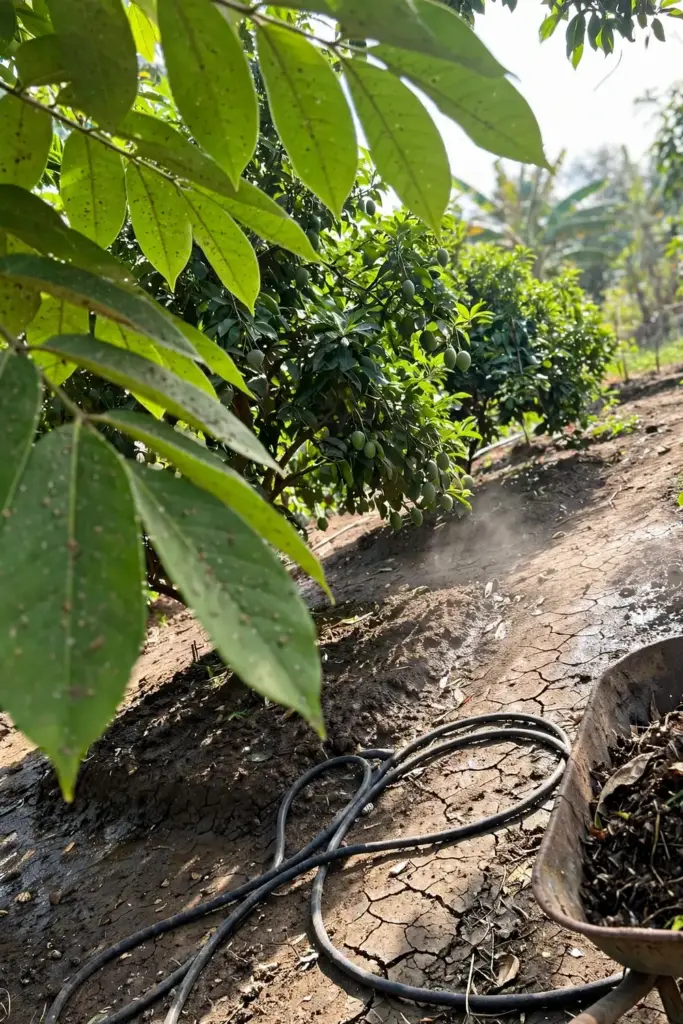
What does that mean in practice? If your winters never see frost, santol grows in the ground all year. If you get occasional light frosts, large trees can survive them but young trees need cover or a warm wall, and prolonged cold below 16°C stops growth. Cool-climate readers outside zones 10 to 12 should stop here: a santol in a cold greenhouse is a novelty, not a fruit tree. For the climate you do have, humidity helps; santol wants moist tropical air, especially while young.
2. Follow the 48-Hour Fresh-Seed Rule
Santol seeds are recalcitrant. That is the botanical way of saying they die if they dry out. Viability fades fast once the seed leaves the fruit, so the clock starts the moment you open the fruit. Sow within 48 hours of cleaning for the best germination. A seed kept on a shelf for two weeks may still sprout, but the odds drop every day it sits.
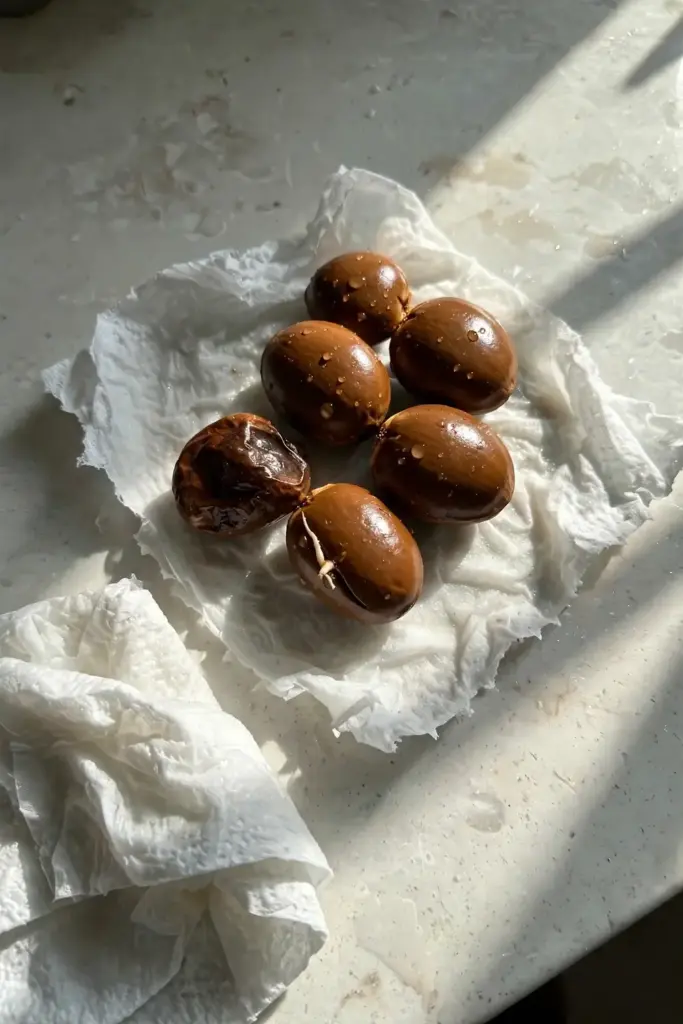
This single rule explains most santol germination failures. People buy dried seeds online, sow them, get nothing, and blame the method. The method was fine. The seed was dead. If you cannot sow immediately, keep the cleaned seeds in barely damp vermiculite or a sealed bag with a moist paper towel in a warm spot, never in the refrigerator and never left to air-dry. Buy or collect seeds only from a source that ships them in a moist medium.
3. Select and Clean Seeds From a Ripe Fruit
Pick your mother fruit carefully, because the seed carries the genetics of the tree. Choose a fully ripe fruit from a tree whose fruit you have actually tasted. Sweet fruit on the mother tree improves your odds, but a seedling never inherits sweetness as a guarantee. Cut the fruit open and scoop out the 3 to 5 brown seeds. The general seed-starting routine covers trays, moisture, and warmth, but santol skips the stratification step other fruits need.
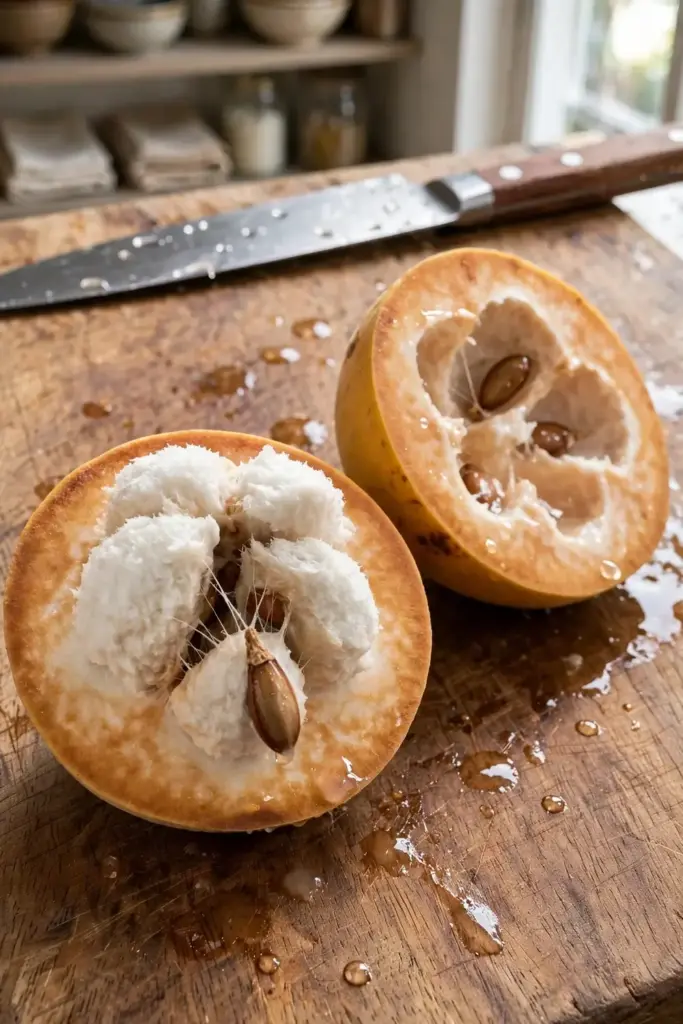
Wash every trace of pulp off the seeds. Santol pulp ferments quickly, and the sticky residue invites mold in the seed tray. Rinse under running water and rub each seed clean with your fingers. Do not scarify and do not soak; santol has no hard dormancy to break, and the botanical database Useful Tropical Plants describes cultivation of the species without any special seed pretreatment.
4. Germinate Santol Seeds in 10 to 21 Days
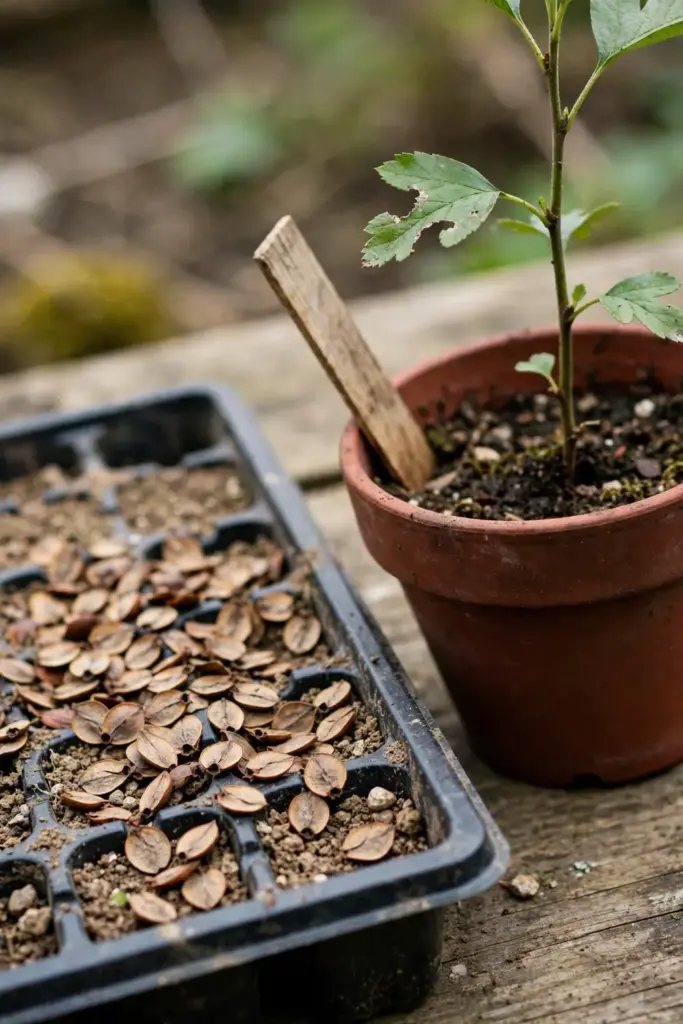
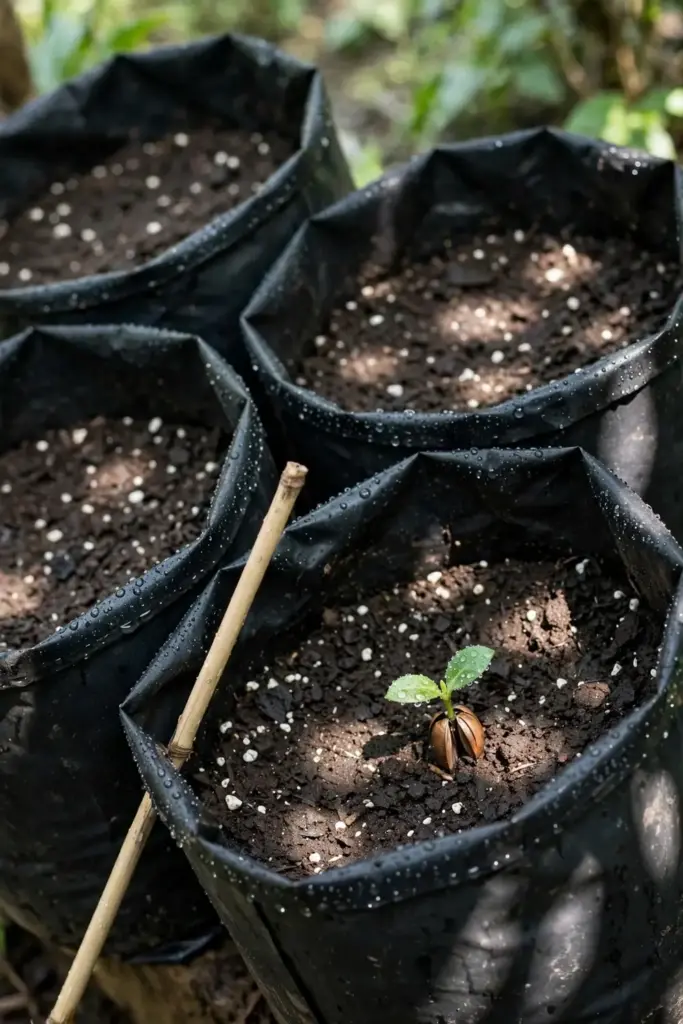
Fill nursery bags or deep pots with a loose, well-draining mix: two parts garden soil, one part compost, one part coarse sand or perlite. Santol seedlings make a taproot early, so use bags at least 8 inches deep rather than shallow trays. Poke one seed per bag, about 0.5 in (1 to 2 cm) deep, and water thoroughly.
| Step | Action | Time |
|---|---|---|
| 1 | Sow fresh cleaned seeds 1 to 2 cm deep in deep nursery bags | Day 0 |
| 2 | Keep soil moist and warm at 25 to 32°C, dappled shade | Days 1 to 21 |
| 3 | Watch for the first sprout | Days 10 to 21 (up to 6 weeks) |
| 4 | Move sprouts to bright indirect light | At emergence |
| 5 | Water daily in heat, never waterlogged | Ongoing |
Keep the bags warm, between 25 and 32°C, and moist but not soggy. Partial shade beats full sun for the first weeks; direct hot sun bakes small bags. Growers at Urban Goes Green report seedlings emerging in 10 to 21 days, while Raychis notes the slower end of the range at 3 to 6 weeks when temperatures run cooler. Do not dig up a seed that has not sprouted at day 14. Give it the full six weeks before you declare it dead.
5. Raise Seedlings in the Nursery for 6 to 12 Months
The seedling phase is slow and unglamorous, and it rewards patience. Keep young plants in dappled shade for the first 3 months, then step them into brighter light as they toughen. Water regularly; a seedling that wilts and recovers repeatedly grows a weak root system. Feed lightly every 6 to 8 weeks with a half-strength balanced fertilizer once the first true leaves are fully open.
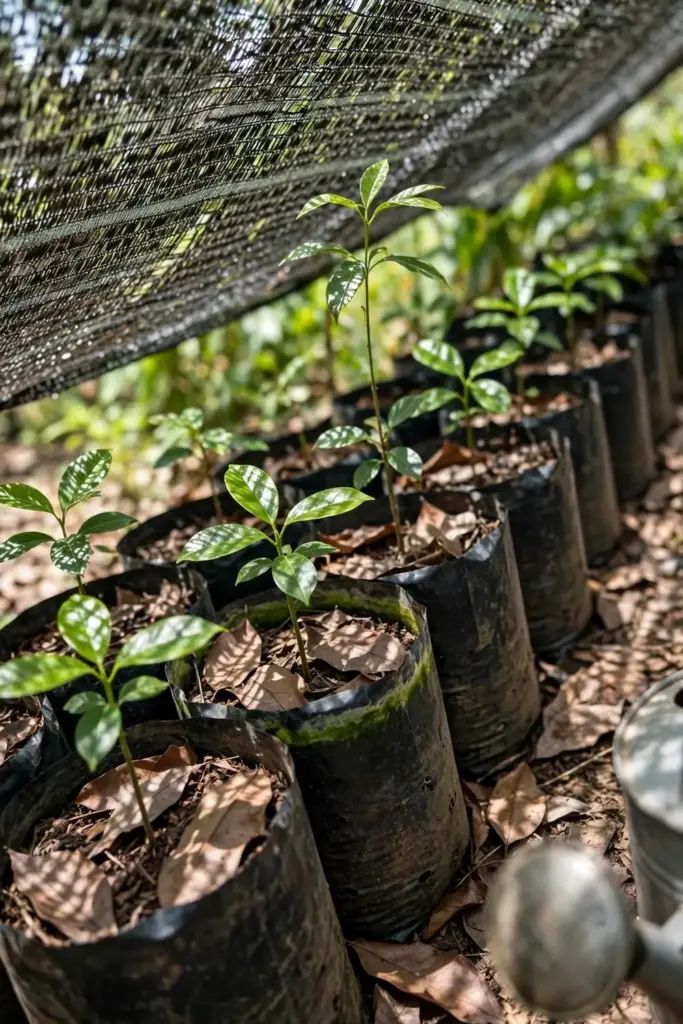
Transplant to the ground when the seedling stands 50 to 80 cm tall, usually after 6 to 12 months in the nursery. A seedling planted out too small gets outcompeted by weeds and dried out by wind; one kept in the bag too long becomes root-bound and never catches up. This nursery year is also when you make the biggest decision of the whole project, covered next. If you raised ten seedlings, keep the four strongest and give the rest away.
6. Decide: Grafted Bangkok Sweet or Seed-Grown Seedling
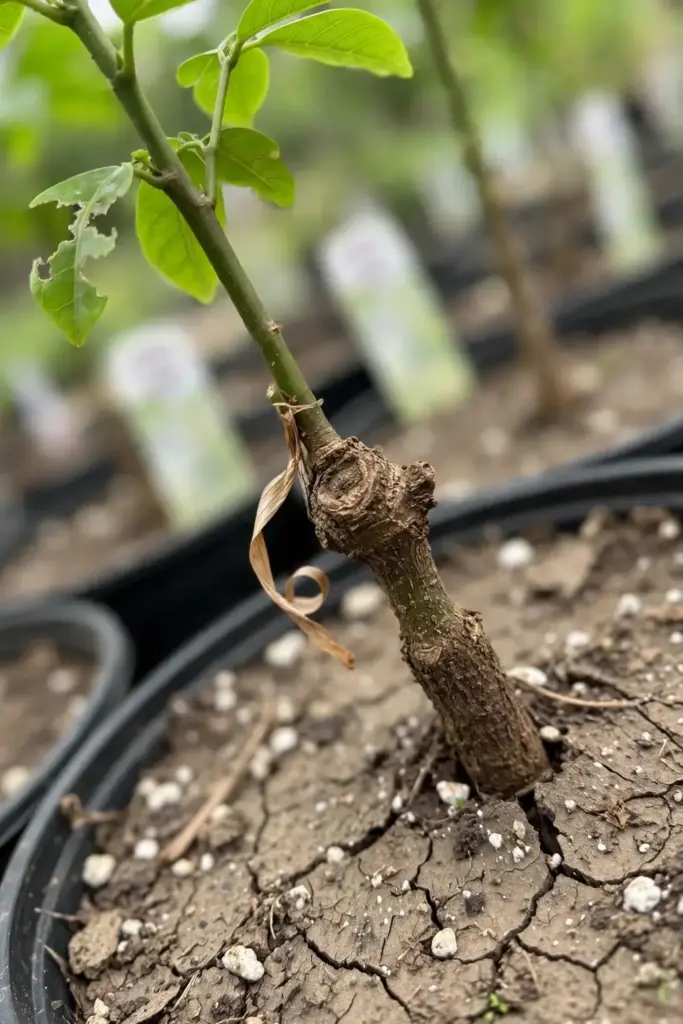
This is the centerpiece decision, and it is the one most growing guides bury. A seed? Easy to sprout. Slow to fruit. Unpredictable in flavor. A grafted Bangkok sweet tree costs more up front, yet it fruits sooner with guaranteed sweet fruit. Here is the honest comparison.
| Option | Years to fruit | Fruit quality | Cost and effort |
|---|---|---|---|
| Grafted Bangkok sweet tree | 3 to 4 years | Reliably sweet; the variety is proven | Buy from a nursery; higher upfront cost |
| Seed-grown seedling | 5 to 7 years | Variable; may be sweet, may be sour | Nearly free; just time |
| Top-worked sour tree | Fruit on existing wood | Sweet, once the graft takes | Grafting skill or a hired grafter |
If fruit is the goal, buy the grafted tree. Every serious source says the same thing: Urban Goes Green recommends a grafted Bangkok sweet santol for assured sweet fruit and faster fruiting, Raychis advises buying grafted if fruit is the aim since seedlings take five to seven years and vary, and the TFNet santol profile notes that seeds are not recommended because grafting became standard practice in cultivation. Seeds make sense when you want rootstocks for grafting, when grafted trees are unavailable in your country, or when you enjoy the long game. I have learned that the cheapest way to get sweet santol is to pay for the graft once rather than feed a sour seedling for seven years.
7. Understand the Sweet vs Sour Variety Lottery
Santol fruit exists on a spectrum from honey-sweet to sharply acidic, and the variety you plant decides where your harvest lands. The known sweet choice is the grafted Bangkok type, sold by nurseries as “Bangkok sweet” or “sweet santol.” It is selected, propagated by grafting, and consistent tree to tree.
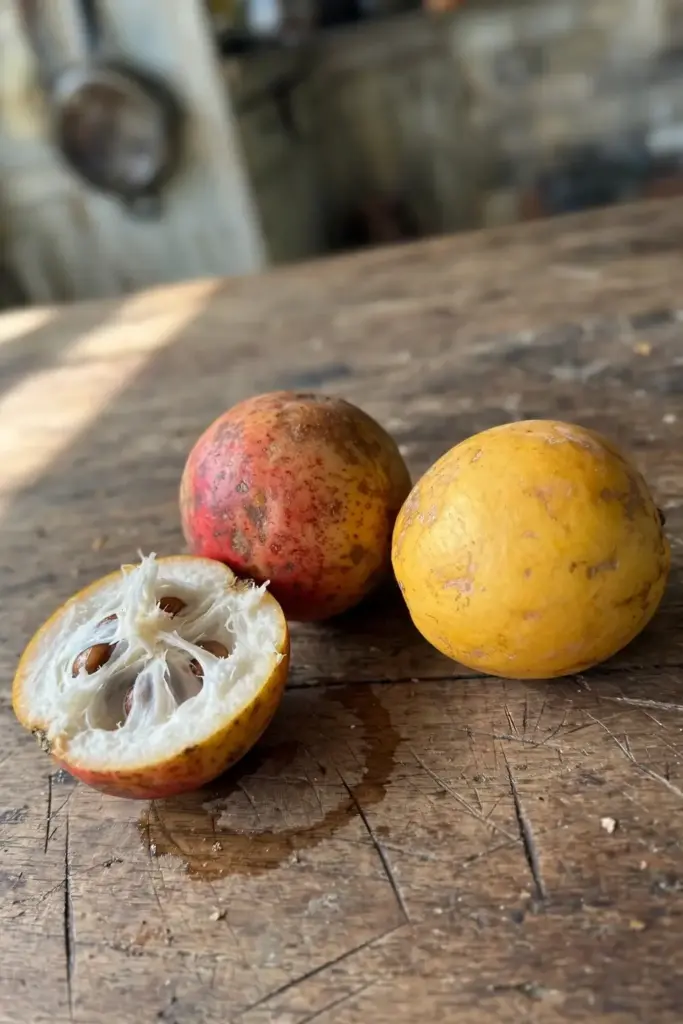
Seedlings are the lottery. A seed from a sweet fruit can still produce a sour tree, because the seedling is a genetic remix of its parents. The Facebook group Hawaii Tropical Fruit Growers is full of this exact frustration, including the thread “How to make a sour santol tree bear sweet fruits?” which exists precisely because so many seed-grown trees disappoint. Sour fruit is not wasted, though; it is eaten with salt and chili across Southeast Asia, cooked into curries, and processed into jam and candy. But if your goal is dessert fruit, do not gamble on seeds. Buy the grafted sweet type.
8. Choose the Planting Site and Spacing
Top Tropicals lists santol at USDA zones 10 to 11, calling it frost sensitive and recommending protection from freezing, full sun, and regular watering. Give santol full sun, 6 to 8 hours of direct light daily, and room to become the large tree it wants to be. For the soil itself, the Permaculture Plants database describes fertile well-drained loam or sandy loam with 2 to 5 percent organic matter, pH 5.5 to 7.5, with the sweet spot near 5.5 to 6.5. Deep soil matters; santol sends down a strong taproot and dislikes compacted layers. If your soil is heavy clay or poor sand, the soil-building approach in this soil health guide will pay back across the tree’s whole life. Compost, organic matter, and patience turn dead dirt into the living soil santol wants.
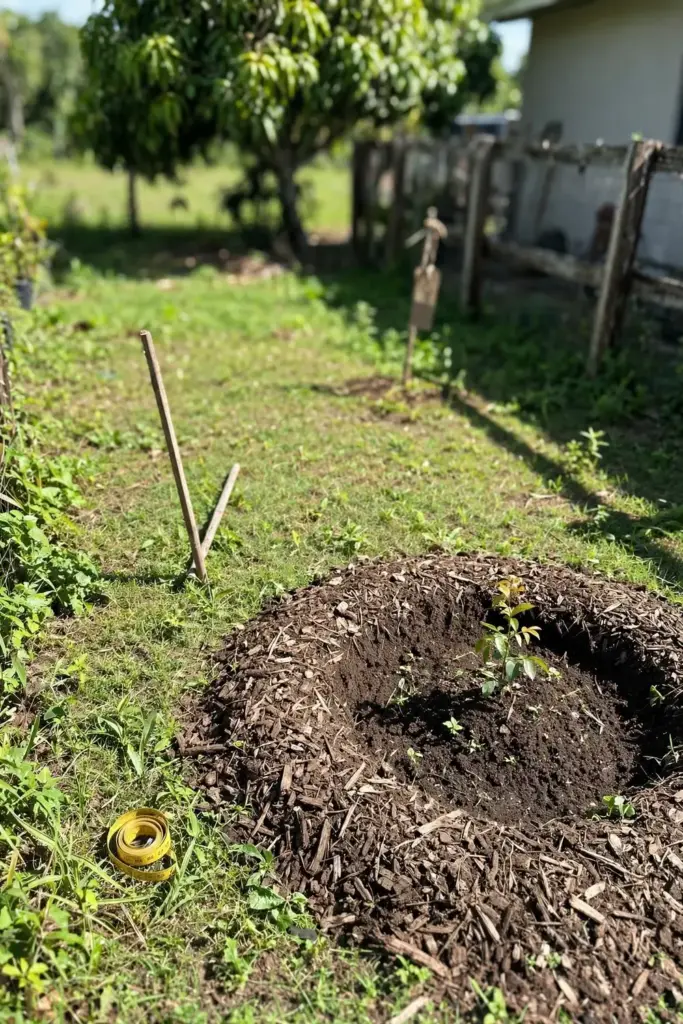
Space trees 25 to 30 ft apart. That sounds like a lot for a sapling, but a mature unpruned santol reaches 15 to 25 m, and even a pruned tree needs air circulation to keep fungal problems down. Keep the tree at least 20 ft from buildings, walls, and septic systems; the roots are vigorous. Avoid low spots where water stands after rain, because waterlogged soil rots the roots. Planting on a slight mound, 6 to 12 inches high, is cheap insurance in heavy clay.
9. Plant in the Rainy Season for a Strong Start
Time your transplanting with the start of the rainy season, the pattern santol evolved with. Urban Goes Green’s planting guide times ground transplanting to June through August, the rainy months. Plant in the rainy season so the young tree establishes on free, consistent water. In regions without a defined rainy season, plant in the warmest reliably wet months and commit to watering.
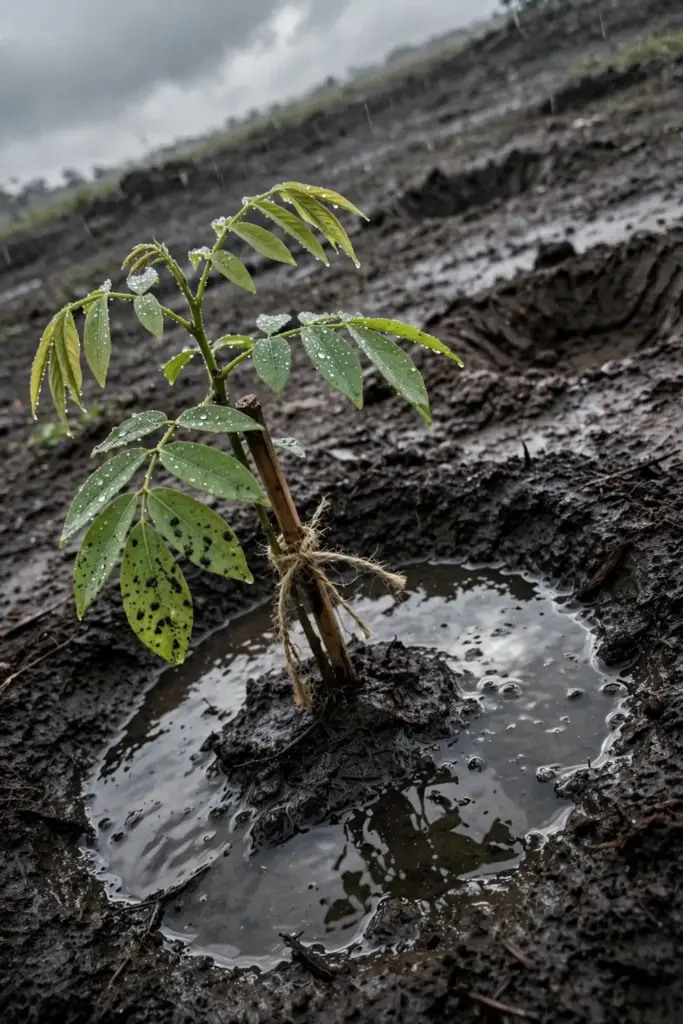
Dig a hole twice as wide as the nursery bag and no deeper than the root ball. Santol must sit at exactly the depth it grew in the bag; burying the trunk invites rot, and planting high exposes roots. Backfill with the original soil mixed with a bucket of compost, firm it gently, and build a shallow watering basin around the tree. Water deeply immediately, then mulch 3 to 4 inches deep with straw or wood chips, keeping the mulch a hand’s width away from the trunk.
10. Water Young Trees Deeply, Then Back Off
Water is a two-phase story. Young trees need regular water until established; the PlotMyGarden santol guide advises watering young trees regularly, then reducing to deep irrigation once or twice per week once the tree is established. Mature santol is fairly drought-tolerant, but the same guide notes it produces better fruit with consistent moisture, so “drought-tolerant” means the tree survives, not that the fruit stays sweet and full.
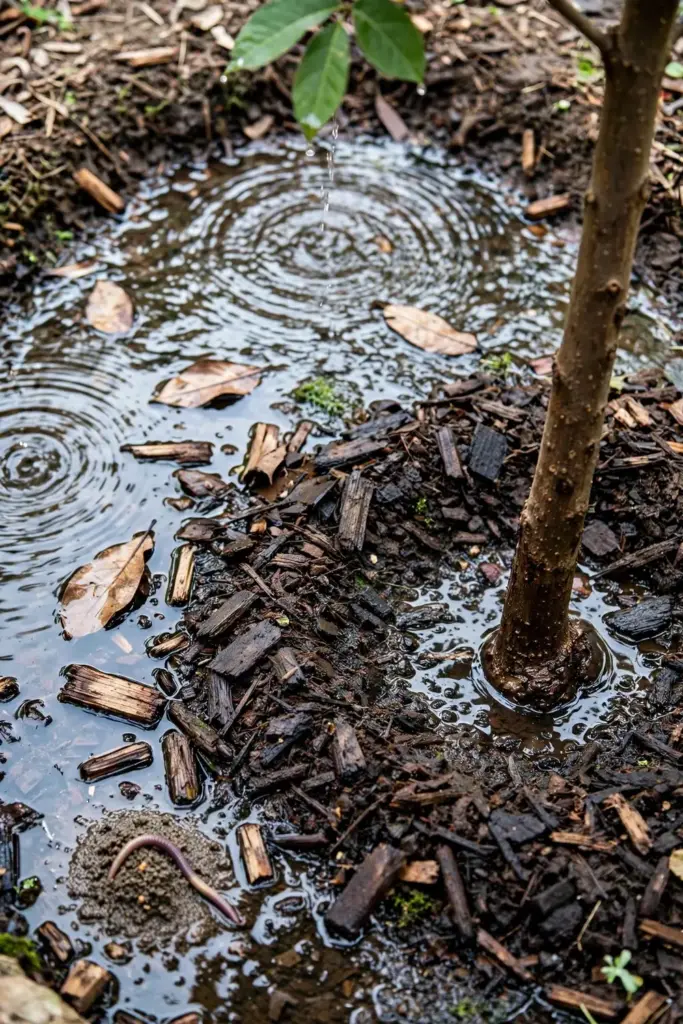
Raychis gives the practical rhythm: water twice weekly during active growth and less in winter. In practice, that means deep soakings that wet the top 12 to 18 inches of soil, then letting the surface dry before the next round. One useful trick: withhold water before flowering to encourage a stronger bloom, then resume normal watering as fruit sets. If your leaves droop in the afternoon heat but recover by morning, that is normal. If they stay wilted at dawn, water immediately.
11. Feed Santol 3 to 4 Times a Year
Santol is a hungry tree when it is building canopy and fruit. Urban Goes Green and PlotMyGarden recommend a balanced 14-14-14 fertilizer 3 to 4 times a year, with more potassium during fruiting. Grower guides land in the same place: fertilize 3 to 4 times a year with a balanced feed, more potassium in fruiting, plus mulch and compost. Some sources simplify it to twice yearly with 10-10-10 or 14-14-14 plus compost.
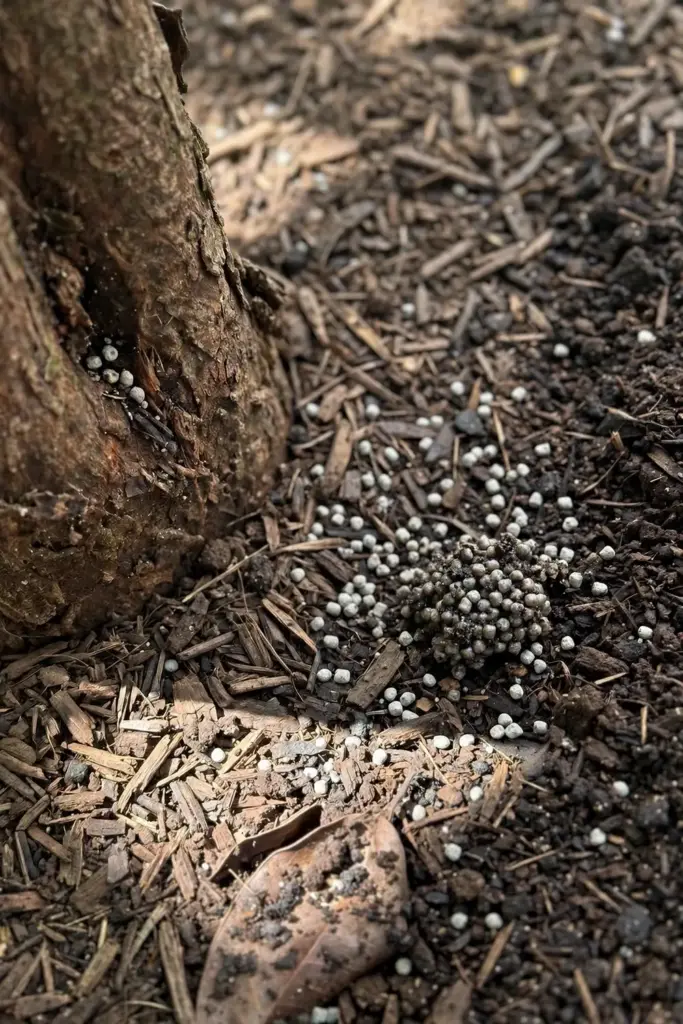
Combine the two: feed a balanced granular fertilizer in early spring, early summer, and early fall, and add a potassium-heavy feed or wood ash as fruit develops. Top-dress with 2 to 3 inches of compost under the mulch once or twice a year; the organic matter feeds the soil life that feeds the tree. Young trees get half the adult rate. Stop fertilizing 6 to 8 weeks before your coldest month so soft new growth is not exposed to chill.
12. Prune Hard Every Year and Keep the Tree at 5 to 8 Meters
Left alone, santol becomes a 15 to 25 m giant with fruit you can only harvest with a very long pole and a ladder. The pruning guidance is blunt: prune annually after harvest and keep the tree at 5 to 8 m. That height keeps every branch reachable with a long-handled picker, which is the difference between harvesting fruit and watching it rot in the canopy.
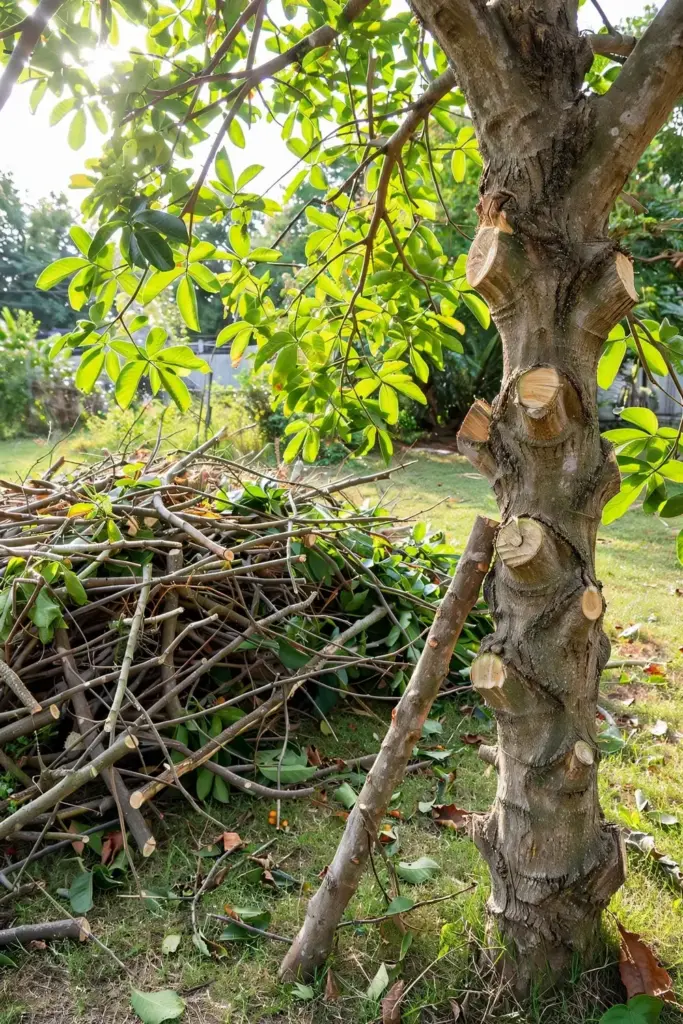
Prune right after the harvest season ends. Remove dead and crossing wood first, then head back the tallest leaders to an outward-facing branch. Thin the interior so light and air reach the middle of the canopy; a dense, dark interior grows leaves but ripens little fruit. Santol wood is somewhat brittle, so avoid leaving long, weak limbs that snap under a fruit load or in wind. For clean cuts and timing, the fruit-tree pruning method in the spring pruning techniques article applies directly to santol.
13. Fight Fruit Flies With Traps and Net Bags
Fruit flies are the number one pest of santol, and they ruin fruit from the inside. Traps and net bags are the practical standard for a two-layer defense. Hang protein-bait or pheromone traps in the canopy starting as fruit begins to color; the traps pull male flies out of the breeding cycle. For the fruit you actually plan to eat, slip net or paper bags over individual fruits once they reach full size but before they ripen.
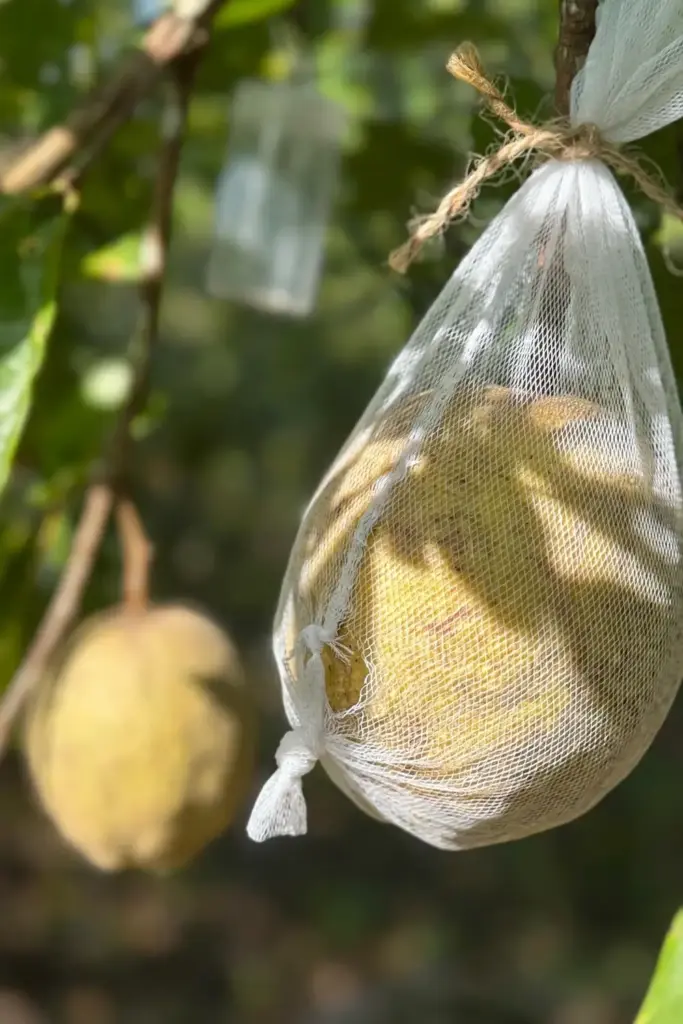
Check bagged fruit weekly. A bag that traps moisture against the skin invites rot, so use breathable mesh bags rather than plastic. Clear fallen fruit from under the tree every few days; fallen fruit is a fruit-fly nursery. Healthy trees also shrug off minor leaf pests, so the spray program most home growers need is: none. Traps plus bags plus sanitation covers the real threat.
14. Top-Work a Sour Tree Instead of Cutting It Down
If you already own a seed-grown tree that fruits sour, do not chainsaw it. Top-work it. That means grafting sweet Bangkok scions onto the established sour tree, turning the old tree’s root system and trunk into the engine for sweet fruit. This is the answer to the question every santol grower asks: “How to make a sour santol tree bear sweet fruits?”
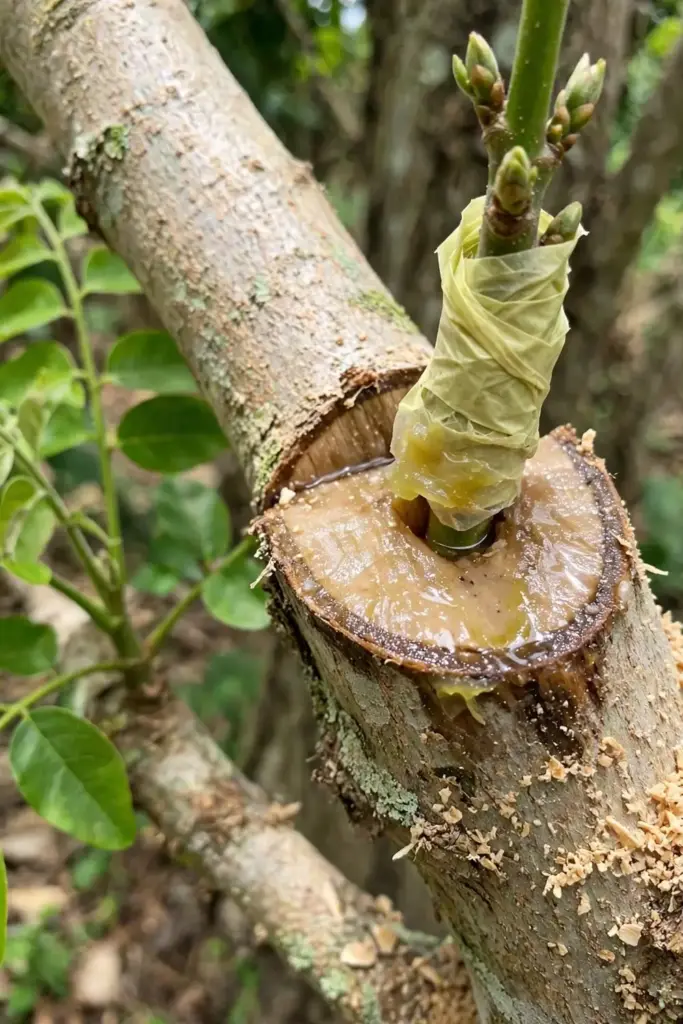
The method: in the warm growing season, cut back 2 to 4 major limbs to stubs and graft sweet scions onto them using cleft or bark grafts, the same techniques covered in the esdemgarden santol propagation guide alongside air-layering, inarching, and budding onto rootstocks. Keep a few nurse branches with leaves so the tree keeps feeding its roots while the grafts take. Expect the grafts to fruit 2 to 3 years after a successful take, which still beats starting over from a seedling. One grafted limb can serve as your scion source for the rest of the tree the following year.
15. Harvest When the Skin Turns Yellowish-Brown
Ripe santol tells you it is ready. The three signs: the skin turns yellowish-brown, the fruit gives slightly under thumb pressure, and it carries a fragrant, sweet aroma at the stem end. Pick on all three signs, not color alone; an unripe santol picked early stays sour and starchy.
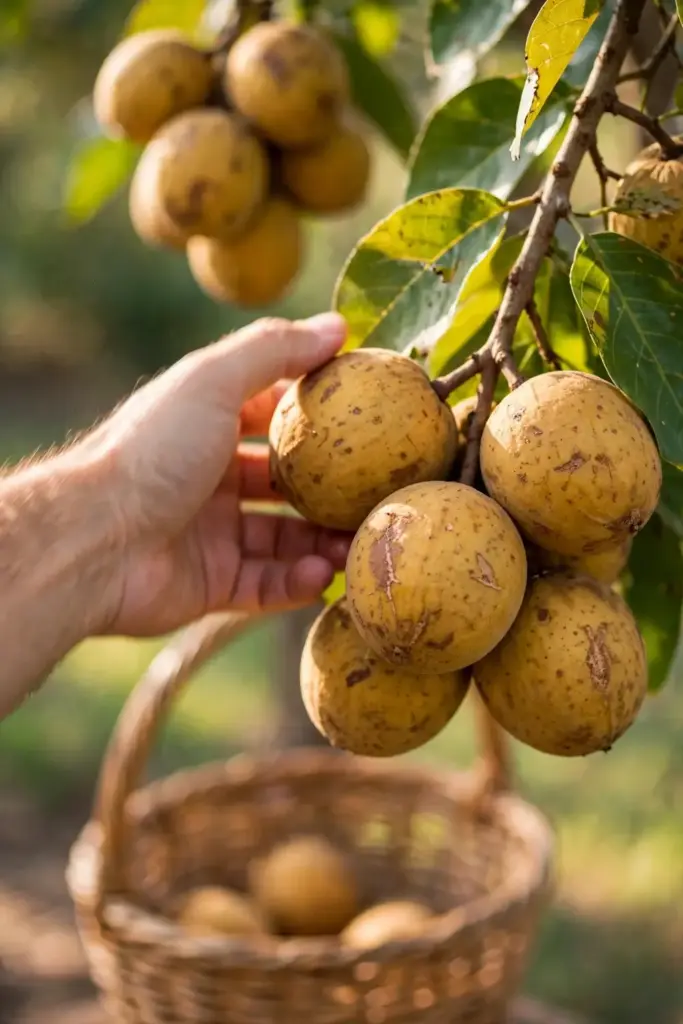
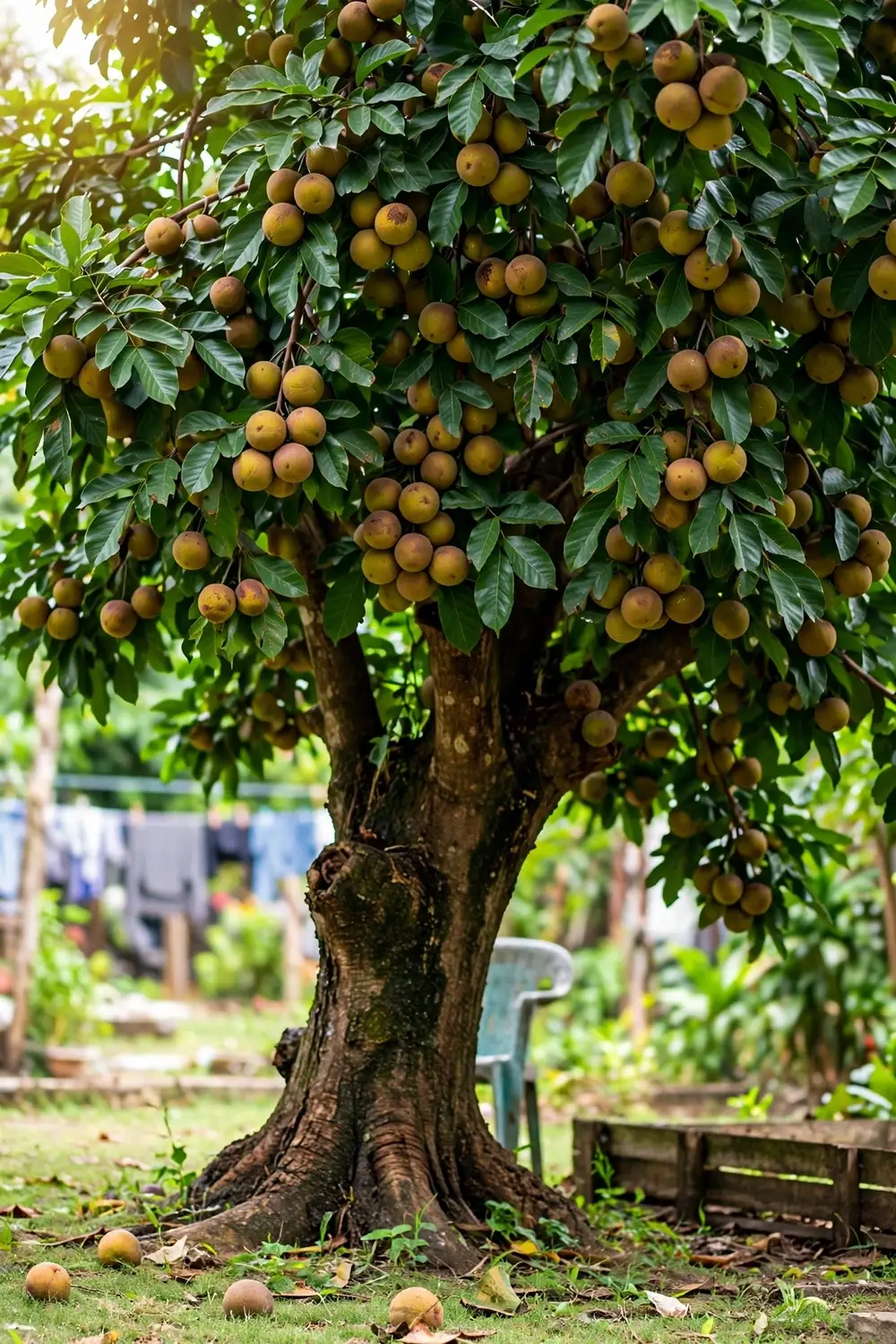
Harvest with a long-handled fruit picker to avoid bruising, because bruised santol spoils within days. Handle the fruit gently and keep it out of direct sun after picking. Fresh santol keeps about a week at room temperature and two to three weeks refrigerated. Eat the pulp fresh by sucking it off the seeds, and cook the tart rind into curries and preserves, which is how much of Southeast Asia uses the sour types.
16. Do Not Swallow the Seeds
This safety warning is worth stating plainly: do not swallow the seeds because of intestinal blockage risk. Santol seeds are large, smooth, and slippery, and the traditional way of eating the fruit is to suck the pulp off the seed and spit the seed out. Children and careless adults sometimes swallow them, and a swallowed seed can lodge in the intestine and require medical attention.
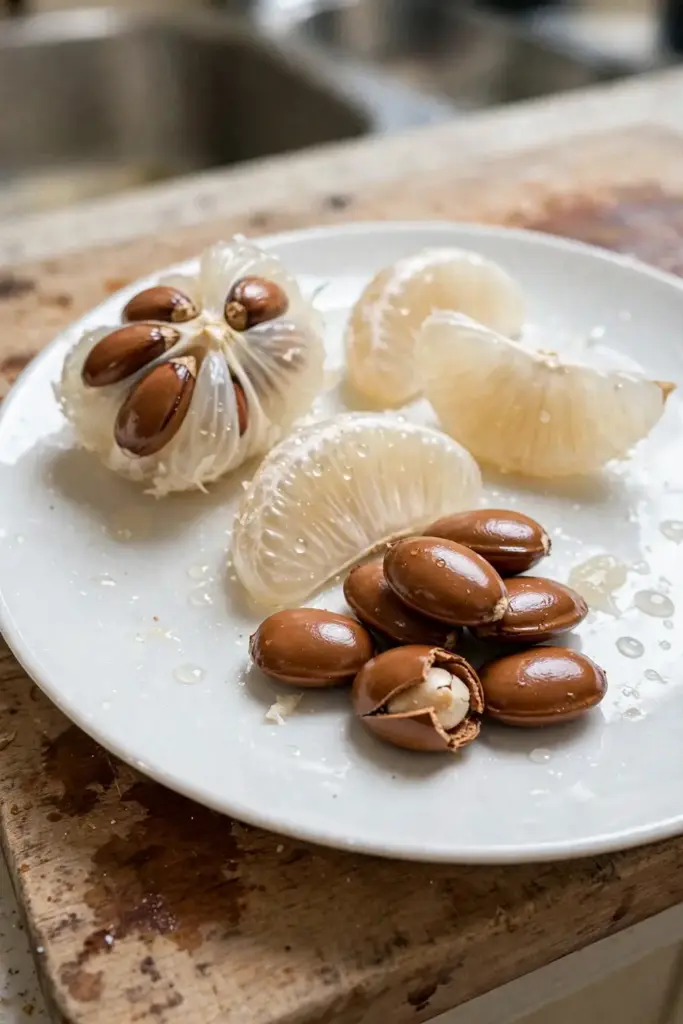
Make the rule explicit in your household: chew the pulp, spit the seed. Cut the fruit into segments for small children so the seeds are visible and removable before eating. Raychis puts it memorably in their growing guide: santol has “seeds that have put people in hospital.” Respect the fruit, enjoy it properly, and keep the seeds out of stomachs and into nursery bags.
17. Answer the Season Question Honestly
“When is santol in season?” depends on where the tree grows, because santol fruits on the rainy-season cycle of its locality. Top Tropicals notes that fruits mature in mid summer, which matches the Southeast Asian and Floridian pattern where flowering follows the dry-to-wet transition and fruit ripens through the wet months. In the Philippines, Thailand, and Malaysia, the main harvest falls in the rainy season months.
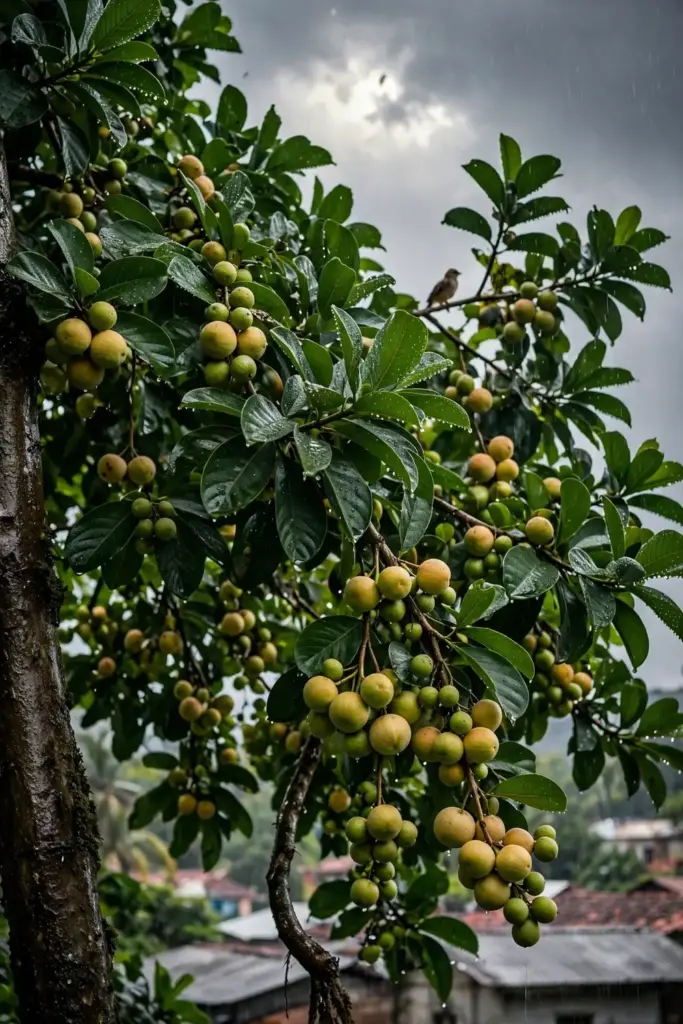
Do not expect a fixed month the way apples have October. Your tree’s season is set by your local rain and temperature pattern: flowering after the dry spell, fruit developing through the rains, harvest as the wet season matures. A young tree may also fruit lightly out of season in its first bearing years before it settles into a rhythm. Watch your own tree for two seasons and you will know its calendar better than any article can tell you.
18. Grow Santol in Pots Only as a Short-Term Plan
The PASF query “how to grow santol fruits in pots” deserves an honest answer: you cannot grow a fruiting santol tree in a pot long-term. This is a tree that reaches 15 to 25 m with a taproot that wants deep soil. No container, however large, holds a mature santol.
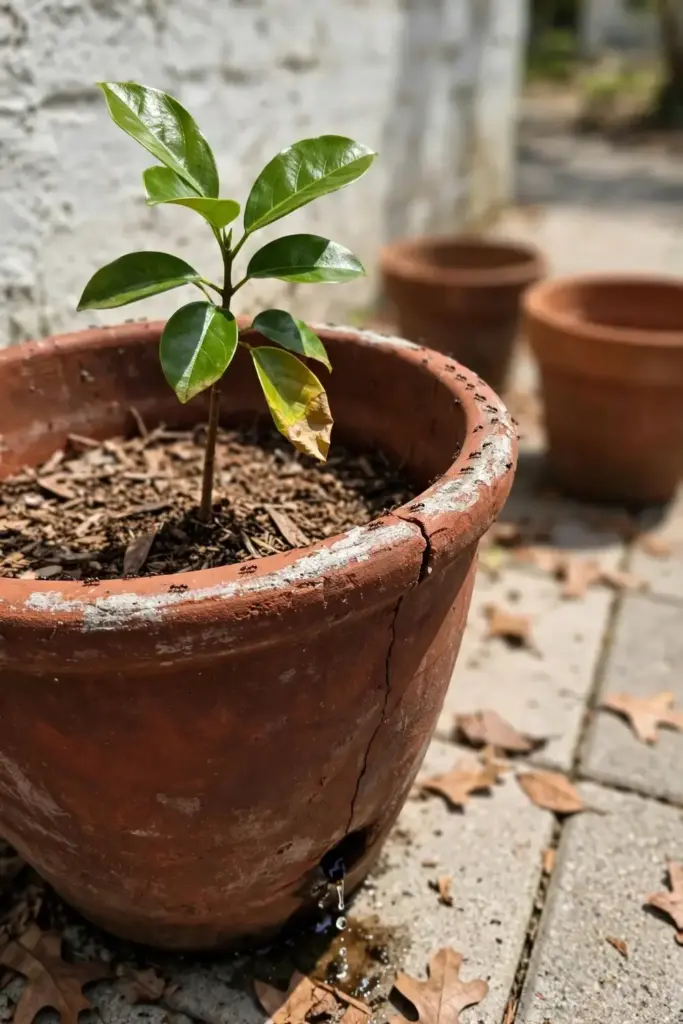
What a pot can do is buy you time. A seedling grows happily in a 5 to 10 gallon pot for its first year or two, which is useful if you are raising rootstocks, waiting for the rainy season, or renting. Use a deep pot, a rich well-draining mix, full sun, and regular water and feeding. A grafted dwarf on a vigorous rootstock in a half-barrel might fruit lightly for a few years, but treat that as an experiment, not a plan. For real harvests, the tree needs the ground. Plan the planting site from day one, even while the seedling sits in its pot.
Frequently Asked Questions
A grafted Bangkok sweet tree typically bears its first fruit in 3 to 4 years. A seed-grown tree takes 5 to 7 years, and some seedlings take closer to a decade. The countdown starts from planting a grafted tree or from germination for a seedling. Good water, regular feeding, and annual pruning. That trio keeps the tree on the faster end of its range.
Yes, and it is easy to sprout. Santol seeds germinate in 10 to 21 days at 25 to 32°C if sown fresh, because the seeds are recalcitrant and lose viability fast. The catch is the 5 to 7 year wait for fruit and the sweet-or-sour lottery of seedling genetics. Grow from seed for rootstocks or fun; buy grafted for reliable sweet fruit.
There is no single month. Santol fruits on the rainy-season cycle of its locality, typically maturing through the wet months, which Top Tropicals describes as mid summer in the regions it covers. Flowering follows the dry-to-wet transition. Watch your own tree for two seasons to learn its personal calendar.
Top-work it. Graft sweet Bangkok scions onto the established sour tree’s limbs in the warm growing season, keeping some leafy nurse branches while the grafts take. The grafted limbs typically fruit in 2 to 3 years with sweet fruit. This beats cutting the tree down and starting over by several years.
Yes. Sow Exotic lists santol as self-fertile, so a single tree sets fruit without a pollination partner. Bees and other insects still improve fruit set, so avoid spraying insecticide during bloom. One tree in a yard is enough for a full harvest.
No. Never swallow santol seeds. They are large and slippery, and swallowed seeds can cause intestinal blockage requiring medical attention. Suck the pulp off each seed and spit the seed out. Cut fruit into segments for children so seeds can be removed before eating.
Your First Sweet Santol Harvest Is Worth the Long Game
Santol rewards the grower who chooses well at the start. Fresh seeds sown within 48 hours, a grafted Bangkok sweet tree if fruit is the goal, full sun, deep soil, water twice weekly, feed three to four times a year, prune hard every year, bag the fruit against flies. Do that and year three or four brings the first yellowish-brown, fragrant fruit. The tree will outlive you; plant it like it matters.
While you wait, tropical neighbors keep the garden productive: mango fruits on a shorter clock, and guava bears quickly from seed and tolerates the same warm, humid conditions.