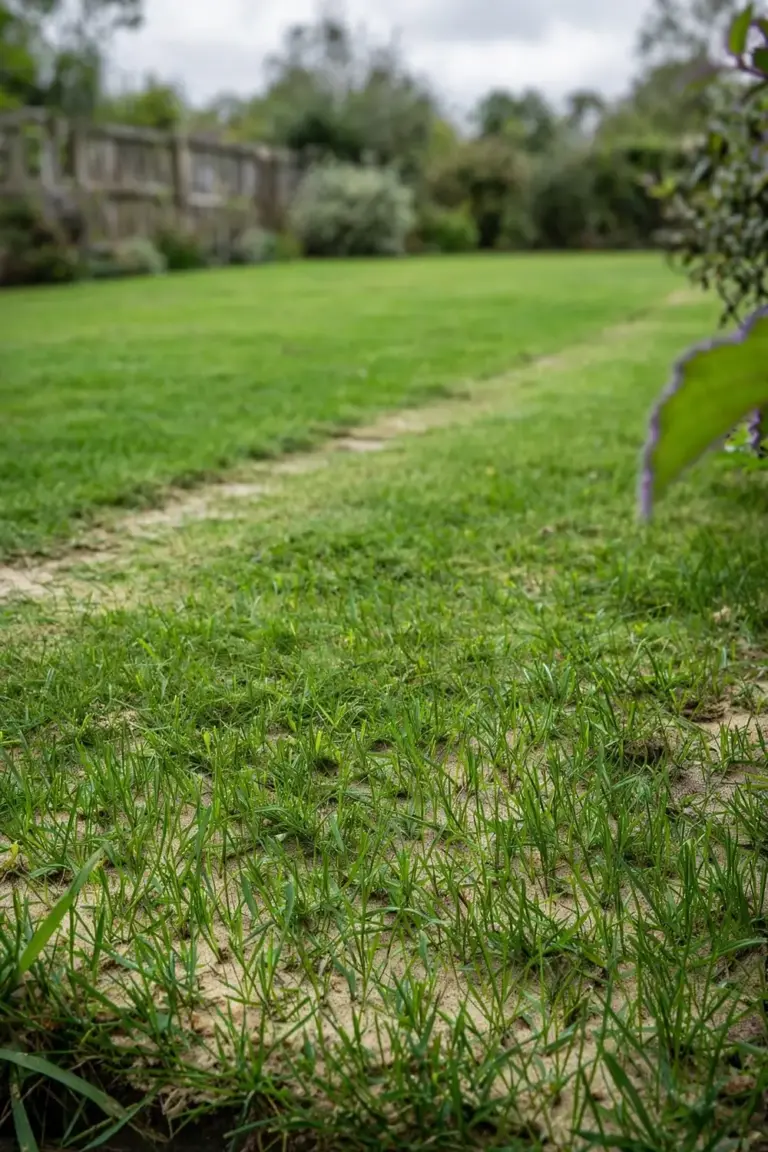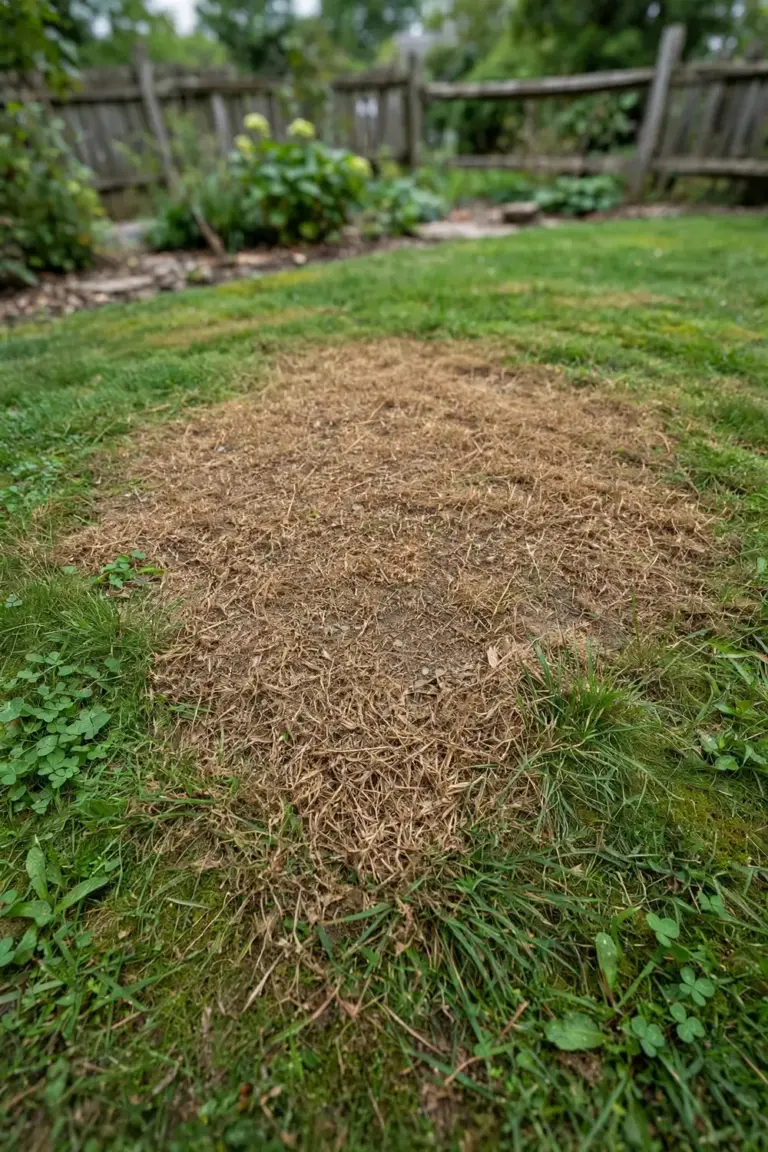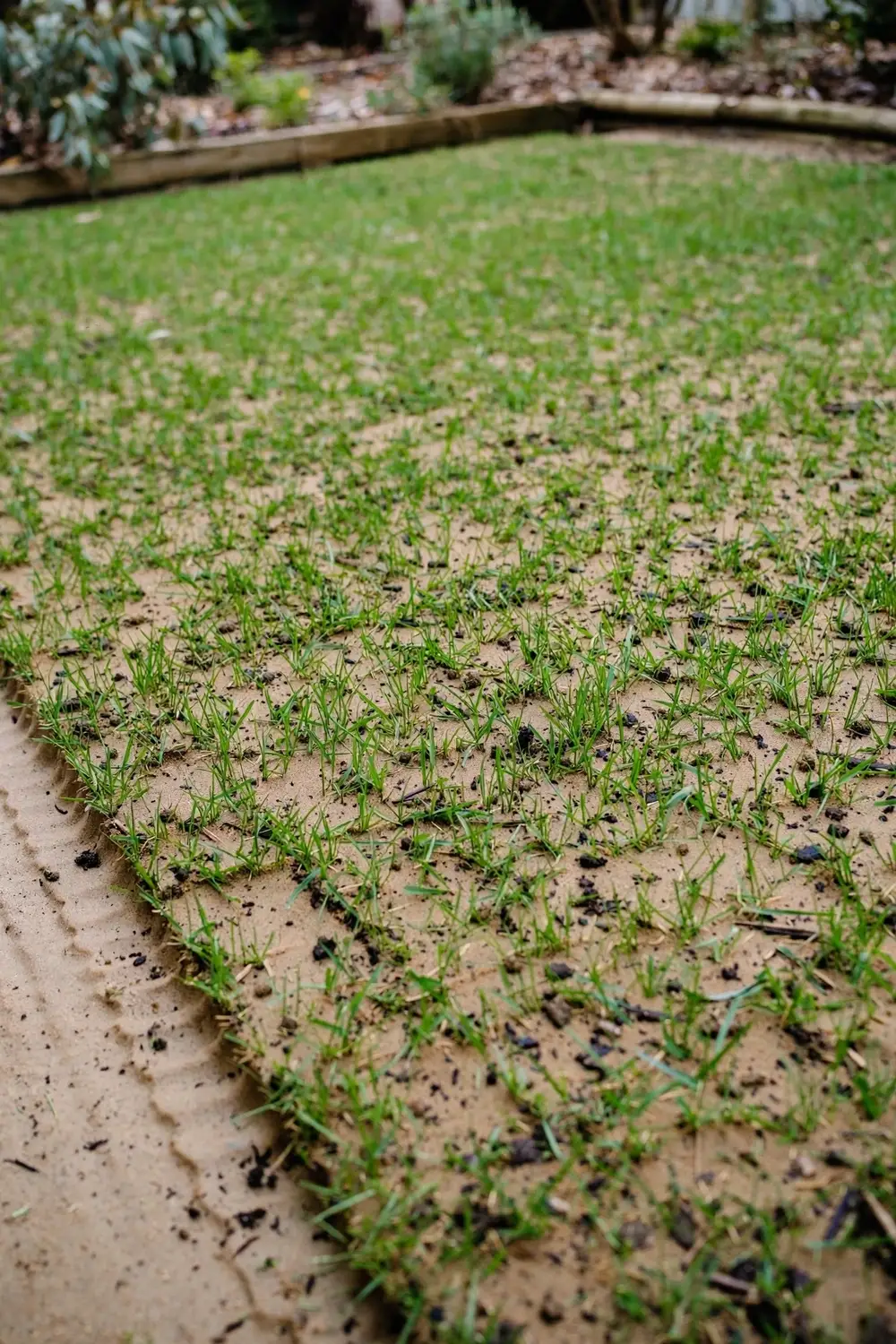

Squeeze a handful of damp soil before you buy any mix. Top dressing lawns in Australia starts with that squeeze, because the soil in your hand decides the mix in the bag. The test takes 30 seconds, and it beats any label. A sandy soil wants compost in the mix. A clay soil wants a coarse, open mix. The wrong mix seals the surface or starves the lawn, and no amount of raking fixes that after the fact.
I have learned that the mix I choose after a squeeze test beats the mix I choose from the bag label.
The rest of this page is 9 moves, from the squeeze test to the spread. It picks the mix by soil, by job, and by turf type, then works out how much to buy and when to spread it.
1. Squeeze Your Soil Before You Buy Any Mix
The squeeze test names your soil in 30 seconds. It decides the mix before price or brand enters the picture.

Take a handful of soil from 5 cm down, where the roots live. Wet it until it holds together. Squeeze it in your fist, then open your hand.
Sand falls apart the moment you open your hand, leaving loose grains with no ball at all. Loam holds a loose ball that crumbles when you poke it, damp but not sticky. Clay holds together and smears into a ribbon between thumb and finger, smooth and stubborn.
Test two or three spots, because a front lawn and a back lawn can sit on different soil, and one bag rarely suits both. A soil test adds numbers the squeeze test cannot give, such as pH and nutrient levels. The squeeze test names texture. A lab test names chemistry.
Sand in your hand points to a compost-rich mix. Loam points to a sandy loam with compost. Clay points to a coarse, open mix with compost worked through it. Write the result down before you drive to the supplier. Memory shifts. The squeeze does not.
The squeeze test reads water behavior as well as texture. Sand drains fast and holds little. A compost-rich mix slows that drain and gives roots time to drink. Clay holds water too long and seals when it dries. A coarse, open mix keeps air and water moving through the top layer. Loam sits between the two extremes, and a sandy loam with compost suits it for most lawns.
The test fails on bone-dry soil and on soaking soil. Dry soil crumbles no matter what it is, and soaked soil smears no matter what it is, so both readings lie. Wet the handful until it holds together, then squeeze. If the soil will not wet at all, it may be water-repellent. The WA section later in this page covers that case.
2. Pick the Mix by the Job, Not by the Bag
The job picks the mix. Leveling wants sand, because sand fills hollows and stays put under the mower. Feeding wants compost, because compost carries the organic matter and nutrients a tired soil lacks. One bag cannot do both jobs well.
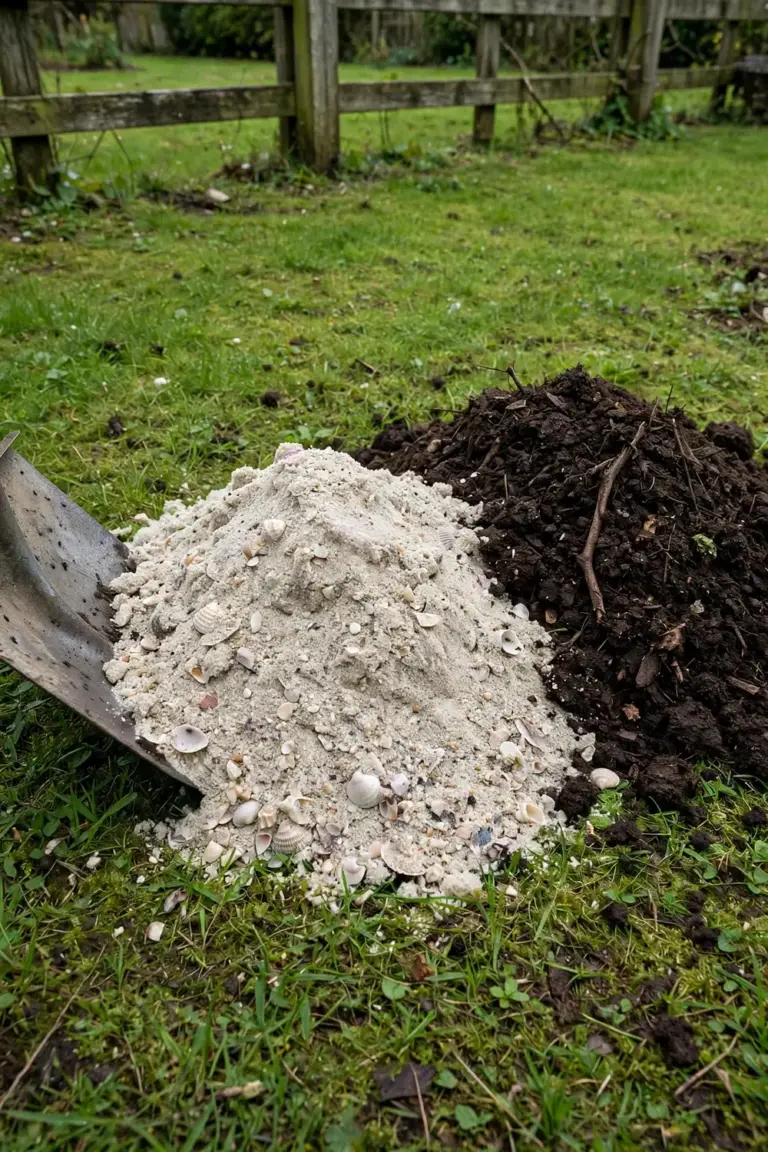
A bag labeled “top dressing mix” tells you what is inside. It does not tell you what your lawn needs. Read the contents, then match them to the job below. Every job below runs at one depth cap: 10 mm per pass, from BC Sands’ top dressing guide.
Lawn Solutions Australia splits the choice the same way: washed or screened river sand for levels, and a sandy loam mix of 80% sand and 20% loam for the soil profile.
| Job | What the Mix Must Do | Mix to Buy | Depth per Pass |
|---|---|---|---|
| Level low spots and bumps | Fill hollows and stay put under the mower | Washed or screened river sand | 10 mm max |
| Feed tired soil | Add organic matter and nutrients | Sandy loam with compost, compost-heavy | 10 mm max |
| Repair thin, patchy turf | Hold moisture and feed new growth | Sandy loam, 80% sand and 20% loam | 10 mm max |
| Help a lawn through dry spells | Hold water in the root zone | Compost-rich sandy loam | 10 mm max |
A drought job deserves one more note. Compost holds water in the root zone and feeds the microbes that break down thatch. River Sands notes that compost-rich top dressing encourages deep root systems that withstand dry spells. That is why the drought row carries the most compost.
A bagged mix lists its contents on the label. Check the label against the job row. If the label does not state the contents, put the bag back. Look for three things on the label: the ingredients by proportion, the word “screened”, and a weed-free claim. A label that lists only “premium blend” tells you nothing. A label that lists sand, loam, and compost tells you what you bought.
Bagged mix suits a small lawn. Bulk mix suits a large one. A 25-square-metre lawn takes a few bags. A 200-square-metre lawn takes tonnes, and bulk delivery costs less per cubic metre than bags. The mix is the same either way. The decision is haulage, not horticulture.
Compost quality decides whether the feed job works. Mature compost smells like soil and crumbles in the hand. Raw compost smells sharp and still shows shreds of its source material, and it steals nitrogen from the lawn while it finishes breaking down, which starves the grass it was meant to feed. Buy compost that has finished the job already. Smell it first.
Screened mix means the supplier passed the mix through a screen that drops stones, sticks, and lumps. The screen size sets the largest particle in the bag. A screened mix spreads evenly and rakes in without dragging. An unscreened mix leaves stones on the surface and lumps that the mower finds later.
3. Match the Mix to Your Turf Type
Turf type sets how hard you can work and how thick you can go. Buffalo and zoysia forgive little. Couch and kikuyu forgive more.
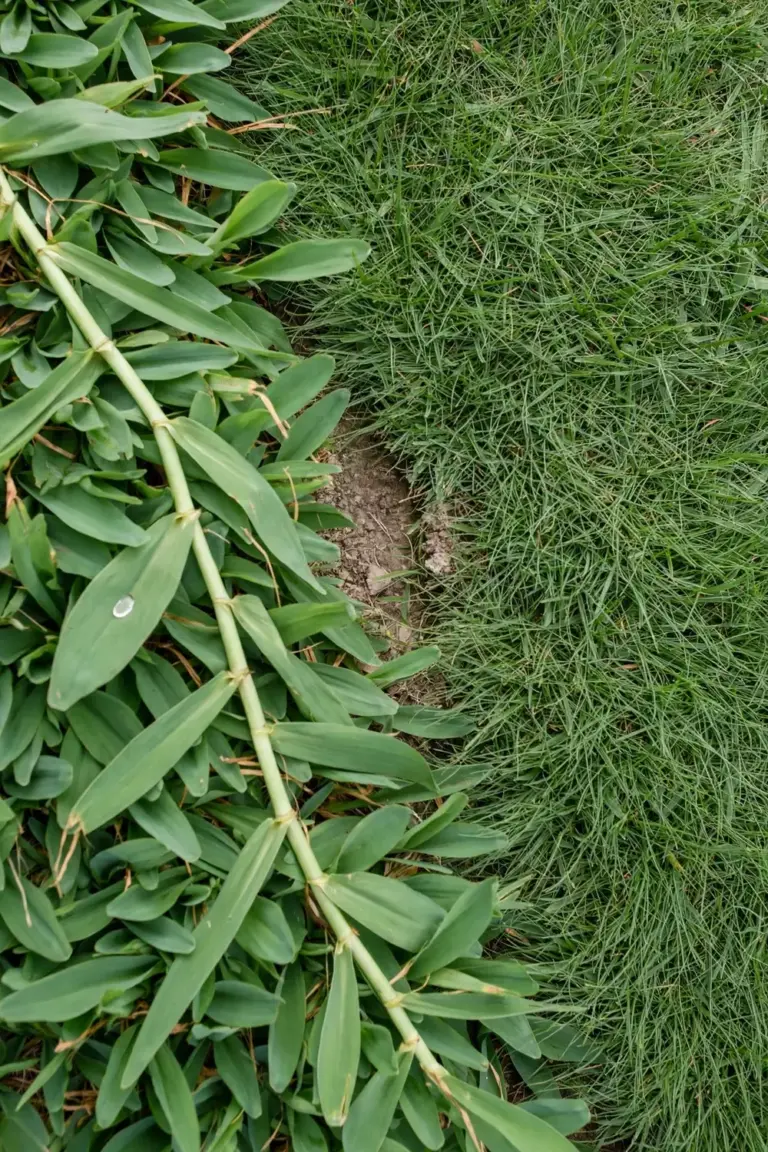
Australian buffalo is Stenotaphrum secundatum, a warm-season runner grass. It is not American buffalograss. Buffalo grows by above-ground runners. Damage the runners and the lawn has no underground backup. Couch and kikuyu grow by rhizomes under the soil as well as runners above it, so they repair from below. Zoysia grows slowly and repairs slowly. Fescue and ryegrass grow in bunches and never knit sideways the way warm-season grasses do.
| Turf | How It Repairs | Mix | Working Notes |
|---|---|---|---|
| Buffalo | Above-ground runners | 80/20 sandy loam for profile; washed river sand for levels | Light passes only; keep runners intact |
| Couch | Rhizomes plus runners | 80/20 sandy loam; washed river sand for levels | Tolerates heavier work; recovers fast |
| Kikuyu | Rhizomes plus runners | 80/20 sandy loam; washed river sand for levels | Tolerates heavier work; watch it invade beds |
| Zoysia | Slow rhizomes | 80/20 sandy loam; washed river sand for levels | Light passes; give it time |
| Fescue | Bunch type, no sideways knit | Compost-rich sandy loam | Autumn window; thin passes |
| Ryegrass | Bunch type, no sideways knit | Compost-rich sandy loam | Autumn window; thin passes |
A lawn with two turf types takes the gentler row. Buffalo mixed with couch gets buffalo treatment. The fragile grass sets the limit.
Couch builds thatch fast when it grows hard. A dressing after a light dethatch puts the mix where the soil life can work on the thatch layer. Kikuyu outgrows most mistakes, and its vigor is the reason it escapes into beds. Keep the dressing off the beds, or the kikuyu follows it there. Zoysia rewards patience. It fills slowly after a dressing, and a second pass too soon buries the slow new growth.
Fescue and ryegrass take dressing differently again. A bunch grass never creeps across a bare patch, so a dressing on a thin fescue lawn feeds the plants that stand there and nothing else. Bare patches in a fescue lawn want seed with the dressing, not dressing alone. The dressing holds the seed against the soil and keeps it damp while it germinates.
New turf takes a light dressing at the joins. Fresh rolls dry out at the edges first, and a fine layer of mix where the rolls meet holds moisture against the roots. Seasol’s turf guide recommends a fine layer of top dress mix where rolls join to stop the edges drying out. Keep the layer thin and keep the leaf tips showing, the same as on an established lawn.
4. Work Out How Much Mix Your Lawn Needs
Area times depth gives volume. At 10 mm, one square metre takes 10 litres of mix.

Measure the lawn in metres. Multiply length by width for area. Multiply area by 0.01 for cubic metres at 10 mm. A 100-square-metre lawn needs 1 cubic metre, which weighs about 1.5 tonnes.
A 50-square-metre lawn at 10 mm needs 0.5 cubic metres, 750 kg. Order a little extra for hollows. A bagged mix lists its coverage on the label, so check the bag before you buy.
| Lawn Area | Mix at 10 mm | Approx. Weight |
|---|---|---|
| 25 m² | 0.25 m³ | 375 kg |
| 50 m² | 0.5 m³ | 750 kg |
| 100 m² | 1 m³ | 1.5 tonnes |
| 200 m² | 2 m³ | 3 tonnes |
Deep hollows need more than one pass. Fill to the cap, let the lawn grow through, then dress again. Lifting turf and packing soil underneath fixes a deep hollow faster than burying the lawn.
An odd-shaped lawn needs one extra step. Split it into rectangles on paper, work out each rectangle’s area, and add the areas together. A curved edge gets a rough rectangle drawn around it. The total runs a little high, which is the right direction. Running short halfway through a dressing is worse than ordering a little extra.
5. Match the Mix Texture to the Soil Underneath
The mix must match the soil it sits on. A finer mix over a coarser soil seals the surface into a crust.
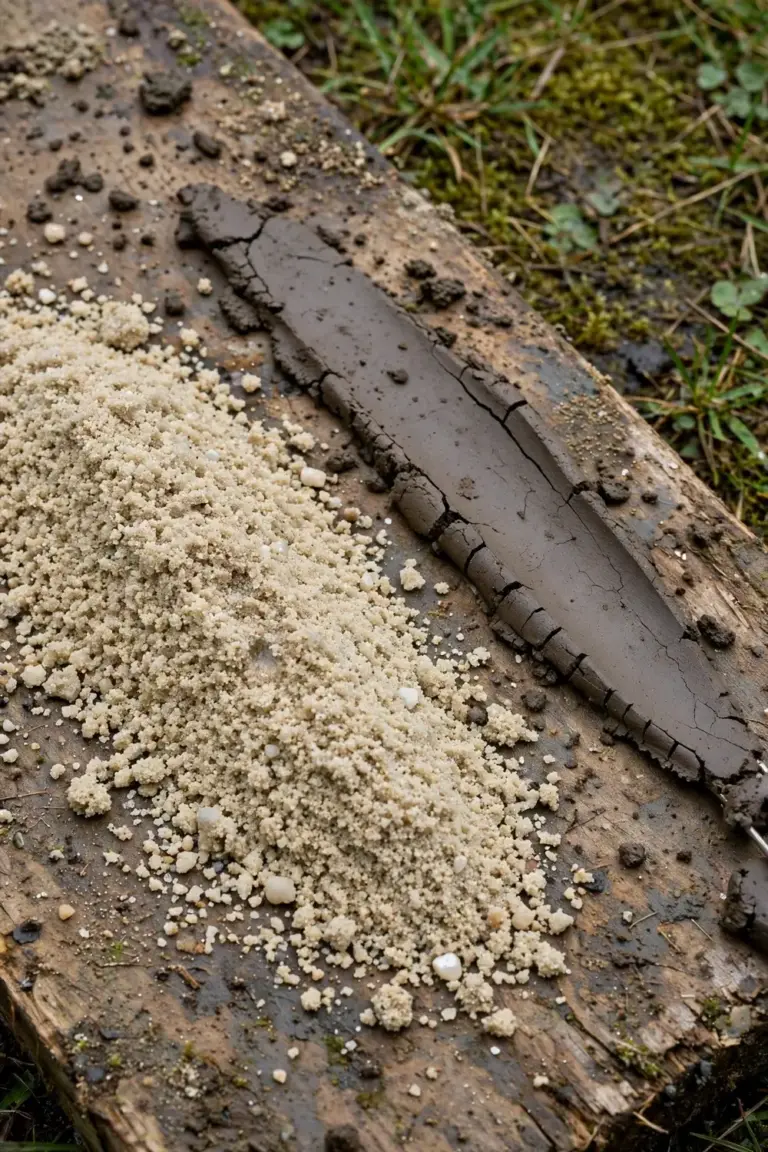
The University of Missouri Extension sets the rule plainly: the top dressing texture should be similar to or coarser than the soil underneath. That 10 mm cap sits inside the 6 to 13 mm band the same publication gives for a single pass.
A Wattletree horticultural fact sheet states the same rule from the other side: never spread a finer-textured soil over a coarser one, or a crust layer forms on the surface. The fact sheet’s warning case is a sandy lawn dressed with fine sand or compost. The fine layer caps the coarse soil.
Clay soil takes a coarse mix with fine components worked through it, not straight fine sand. The coarse grains keep the layer open. The compost feeds the soil life.
Sandy soil takes a mix similar to or coarser than itself, with compost for water holding. Fine sand over coarse sand is the classic crust case.
Squeeze the bagged mix too. A mix that ribbons like clay carries too much clay for a lawn dressing. A mix that falls apart like dry sand is mostly sand, and it will feed nothing. A good dressing mix holds a loose ball that crumbles when poked, the same as loam. The squeeze test works on the product as well as on the ground.
A crust changes how the lawn drinks. Water sheets off a crusted surface and runs to the lowest corner. Roots below the crust stay dry while the surface looks wet. The lawn thins in patches, and the patches follow the crust. Fixing a crust starts with coring, which punches holes through the layer. A compost-rich dressing after coring feeds the soil life that breaks the crust down over time. One pass will not fix a sealed surface. Two thin passes across two growing seasons will.
Texture matching fixes the surface. The long game is building soil health underneath, so each dressing lands on better soil than the last.
6. Dodge the 6 Mistakes That Ruin a Top Dressing
Six mistakes ruin more lawns than any bad mix. Every one of them is avoidable.

Wrong sand. Brickie’s sand is mortar sand. It carries a higher clay and fines content, which makes it sticky and slow to drain. Spread it on a lawn and it packs tight and seals the surface. Washed river sand stays open. Daisy’s Garden Supplies notes that brickie’s sand holds more clay and fines than washed sands, and All Turf Solutions notes that washed sand compacts less hard because it carries less clay and silt.
Too thick. A pass that buries the leaf smothers the lawn. The lawn cannot photosynthesize under a blanket of mix. Keep every pass thin enough that leaf tips show through.
Spread too thick already? Rake the excess off before it settles. A leaf rake lifts a fresh dressing without tearing the lawn. Work the rest down with a broom until the leaf tips show. Water it in, then leave it alone. A lawn that got one thick pass usually recovers if the leaf tips come back into the light the same day.
Burying the crown. The crown sits at the soil surface, and burying it rots the plant from the base up. Missouri Extension sets the limit: at least three-fourths of the grass plant must stay exposed to sunlight after top dressing.
Wrong season. A dormant lawn cannot grow through a dressing. Lawn Solutions Australia advises against top dressing in winter, when the lawn grows too slowly to repair itself. For cool-season grasses, Missouri Extension warns against top dressing in summer heat.
Manure-rich mix. Fresh manure burns. A manure-rich mix spread in summer scalds the leaf and the crown. Use only fully composted manure, and keep the mix balanced with sand and loam. The Wattletree fact sheet’s own mix uses composted chicken manure, never fresh.
Unscreened fill. Unscreened fill carries weed seeds, sticks, and stones. It also carries unknown texture. Screened mix costs more. It is the only mix with a known texture and no weed seeds.
7. Read WA Sandy Soils Before You Spread Anything
Western Australian sand turns water-repellent. A dressing that ignores that fact beads water off the surface instead of soaking in.

Soil Quality Australia reports that sandy soils with less than 5% clay are very susceptible to becoming water repellent, and that soils in Western Australia’s coastal sand-plain regions carry the greatest risk. Waxy residues from plant matter coat the sand grains and stop water soaking in.
On a Perth sand lawn, the dressing has two jobs: feed the soil and keep water moving. A compost-rich sandy loam does both. Compost adds water-holding organic matter and feeds the microbes that break down the waxy coatings over time. Plain sand adds neither. It drains fast and carries no food, so a Perth lawn dressed with straight sand stays hungry and thirsty.
Test for repellence before you dress. Pour a cup of water on a bare patch and watch. Water that beads and sits on the surface means the sand repels it. Water that soaks in within seconds means the patch wets normally. Dress the repellent patches with the compost-rich mix, not with straight sand.
The texture-matching rule from the earlier section bites hardest here, because WA sand is about as coarse as lawn soil gets. Fine sand or fine compost spread over coarse WA sand caps the surface within one season. The mix must be similar to or coarser than the sand underneath, with compost for food and water holding.
A soil wetting agent helps water soak into hydrophobic sand. Apply it as its label directs, then water it in until it foams. Perth’s water authority notes that sandy soils turn hydrophobic and that a wetting agent helps water soak in. The wetting agent treats the symptom. Compost and time treat the cause.
8. Time the Job to Your Grass Type
Warm-season grasses take their dressing in late spring to early summer. Cool-season grasses take theirs in autumn.
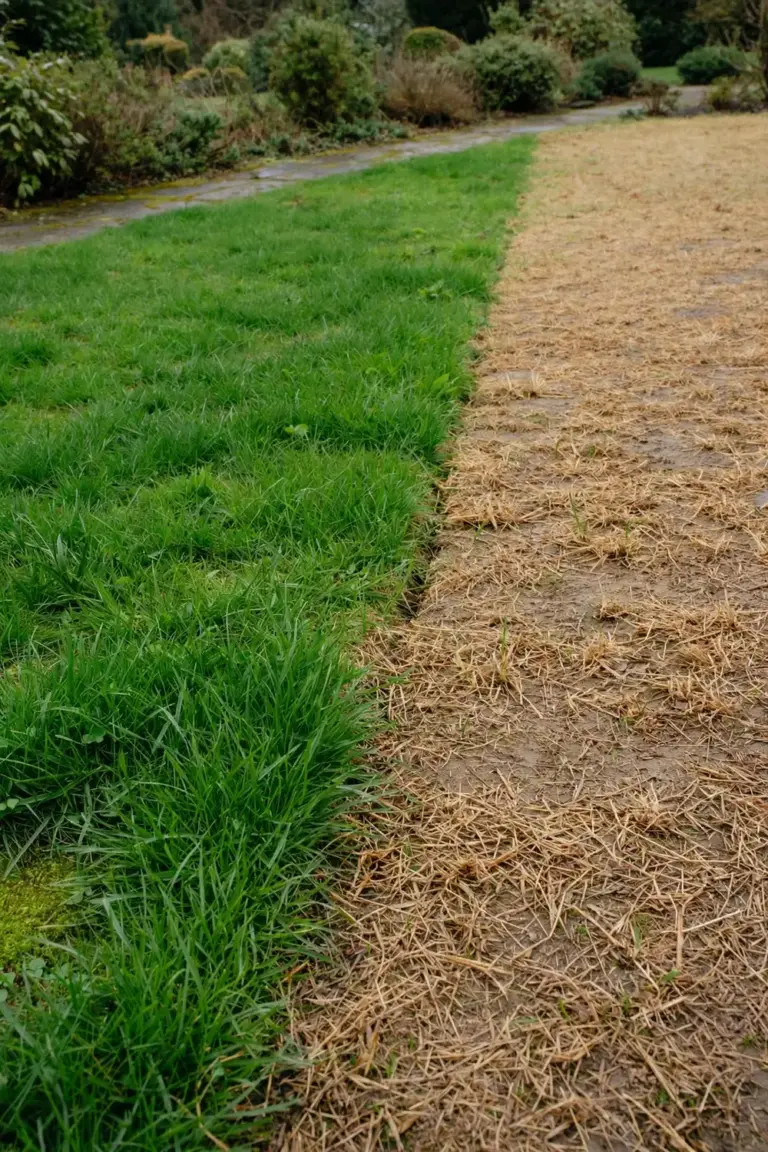
Buffalo, couch, kikuyu, and zoysia grow hard from late spring through summer. Dress them when they grow, so they push through the mix in days. The Turf Farm puts the warm-season window at late spring to early summer.
Fescue and ryegrass grow strongest in autumn. Missouri Extension’s cool-season calendar places the heavy work in early fall, and top dressing follows coring and dethatching in that same window.
| Grass Group | Window | Why |
|---|---|---|
| Warm-season (buffalo, couch, kikuyu, zoysia) | Late spring to early summer | Grass grows fast and pushes through the mix |
| Cool-season (fescue, ryegrass) | Autumn | Grass grows strongly before winter dormancy |
Spring brings a stack of lawn jobs. Line this one up with a spring lawn care tips guide so the feed, the mow, and the dressing land in the right order.
Read the lawn, not the calendar, for the exact day. Warm-season grass that still needs a jumper in the morning is not ready. Warm-season grass that grows between mows is ready, and the dressing will vanish into it within days. Cool-season grass that slows in summer heat is not ready. Cool-season grass that picks up speed as nights cool is ready. The windows in the table are the season. The lawn’s growth is the signal that matters, and it beats any calendar date.
Regional windows shift with climate. Brisbane warms early, so the warm-season window opens sooner there. Melbourne cools early, so the cool-season window opens sooner there. Perth’s sand dries fast, so a dressing there wants rain or irrigation behind it. The table holds across regions. The lawn’s growth still gives the day.
9. Top Dress Your Lawn in Australia With a Thin, Even Layer
Mow low, spread thin, rake it in, and water it. The whole job is four moves.
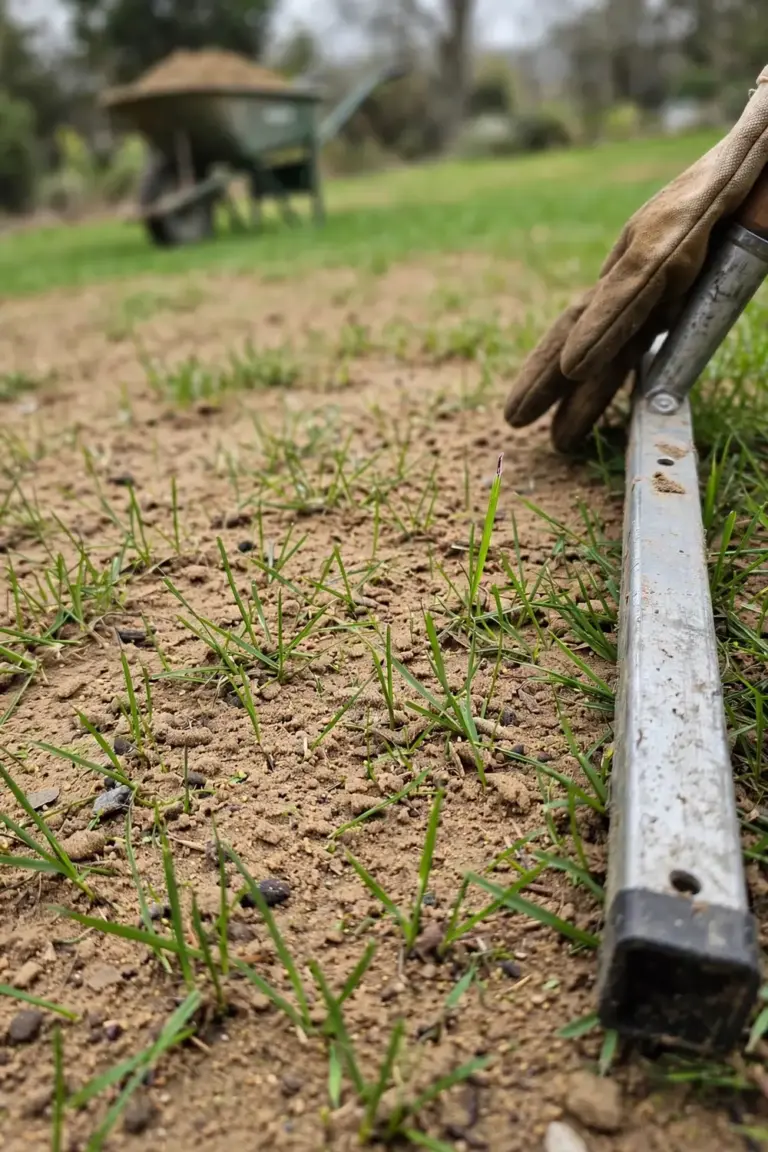
Mow the lawn low first and catch the clippings. Spread the mix in small piles across the lawn, then drag it level with the back of a rake or a leveling bar. Work it down until leaf tips show through. Water it in so the mix settles against the soil.
Core the lawn first if the soil is compacted. Cores open channels the mix falls into. Skip coring on soft soil that already takes water without puddling.
Spread with a shovel, flicking small loads across the lawn instead of dumping piles. Drag a leveling bar, a drag mat, or the back of a rake across the mix to pull it level. Work in two directions so the low spots fill and the high spots stay clean. Stop when leaf tips show through everywhere.
Feed after the mix settles. A light feed helps the lawn grow through the dressing. Spring feeding follows fertilizing a lawn in spring.
Deep hollows take two thin passes, not one thick one. Dress, let the lawn grow through, then dress again. Hold the first mow until the grass pushes through the mix, then cut high and catch the clippings so they do not mat over the dressing.
Check the lawn a week after dressing. Heavy rain can wash mix into the low spots and leave the high spots bare. A quick second drag with the rake evens it out while the mix is still loose. After a week the mix settles, and raking after that point tears the new growth instead of leveling the dressing.
Frequently Asked Questions
Straight sand suits leveling only. It adds no nutrients and no organic matter. A lawn that needs feeding wants compost in the mix, because compost carries the food sand cannot. Sand over clay without loam or compost can seal the surface. Match the mix to the job, not to the cheapest bag.
Once a year suits most home lawns. Dress in the growing season for your grass type: late spring to early summer for warm-season turf, autumn for cool-season turf. A lawn with deep hollows may need a second thin pass after the first grows through. Skip the year if the lawn already grows well.
No. A dormant lawn cannot grow through a dressing, so the mix sits on top and smothers the leaf. Wait for active growth: late spring for warm-season grasses, autumn for cool-season grasses. A winter dressing also washes off in heavy rain before the lawn can use it.
Buffalo takes a sandy loam mix for soil improvement, and washed or screened river sand for leveling. Keep passes light. Buffalo repairs from above-ground runners, so heavy work that damages the runners sets the lawn back. Thin passes protect the runners and keep the lawn growing.
Aerate first only if the soil is compacted. Cores open channels that the mix falls into, which puts the dressing where the roots live. Soft soil that already takes water needs no coring. A garden fork opens a small lawn. A hired corer suits a large one.
Where to Go From Here
Three decisions pick the mix: the squeeze test, the job, and the turf type. Run the squeeze test first. Pick the mix from the job table, check it against the turf table, and work out the volume before you order. A thin pass at the right time beats a thick pass at the wrong one.