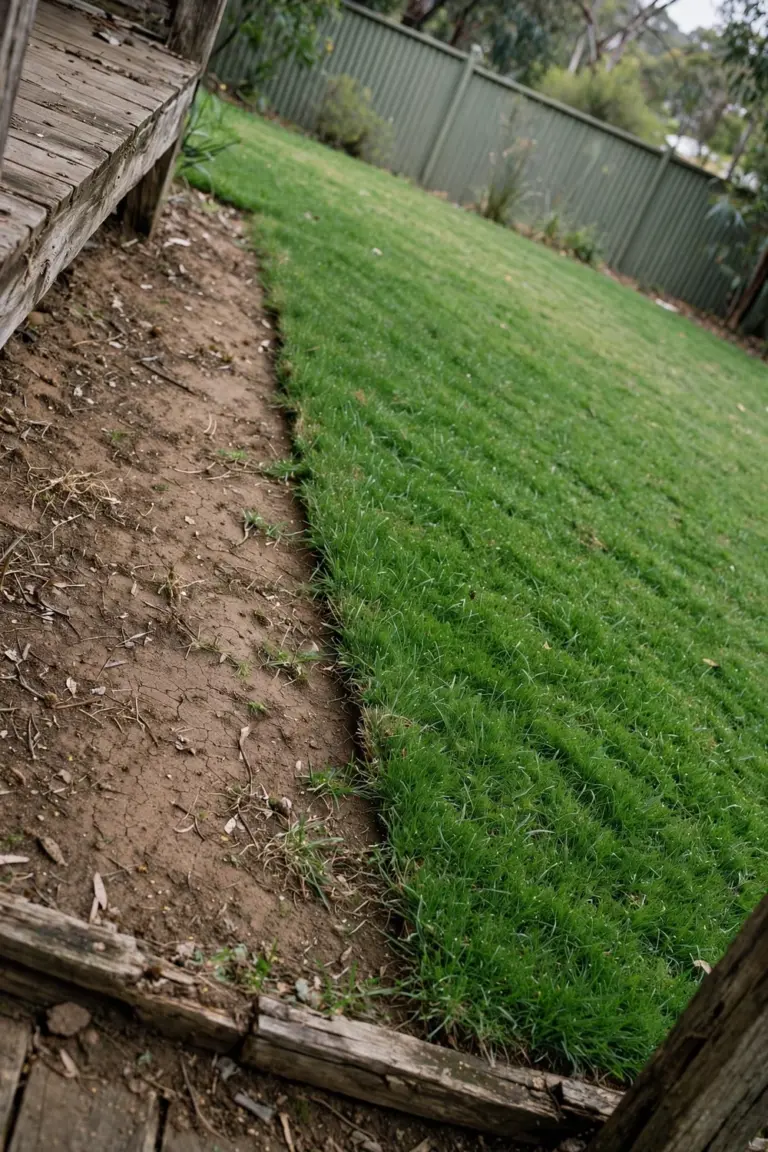

Step on one bindii burr in bare feet and you remember it for the rest of summer. That prickle is the seed case of bindii in Australian lawns, a flat winter weed under 2 cm tall you can still kill before it hardens. Spray or pull it in June and July, before the burrs form, and thicken the turf so next year brings grass instead of spines.
Bindii is Soliva sessilis, a low rosette weed that hides in the lawn all winter and sets its spiny seed in spring. I have learned that the winter spray I almost skipped saves bare feet in summer. Ten moves follow, from naming the weed to locking it out for good.
1. Name the Weed Before You Touch It
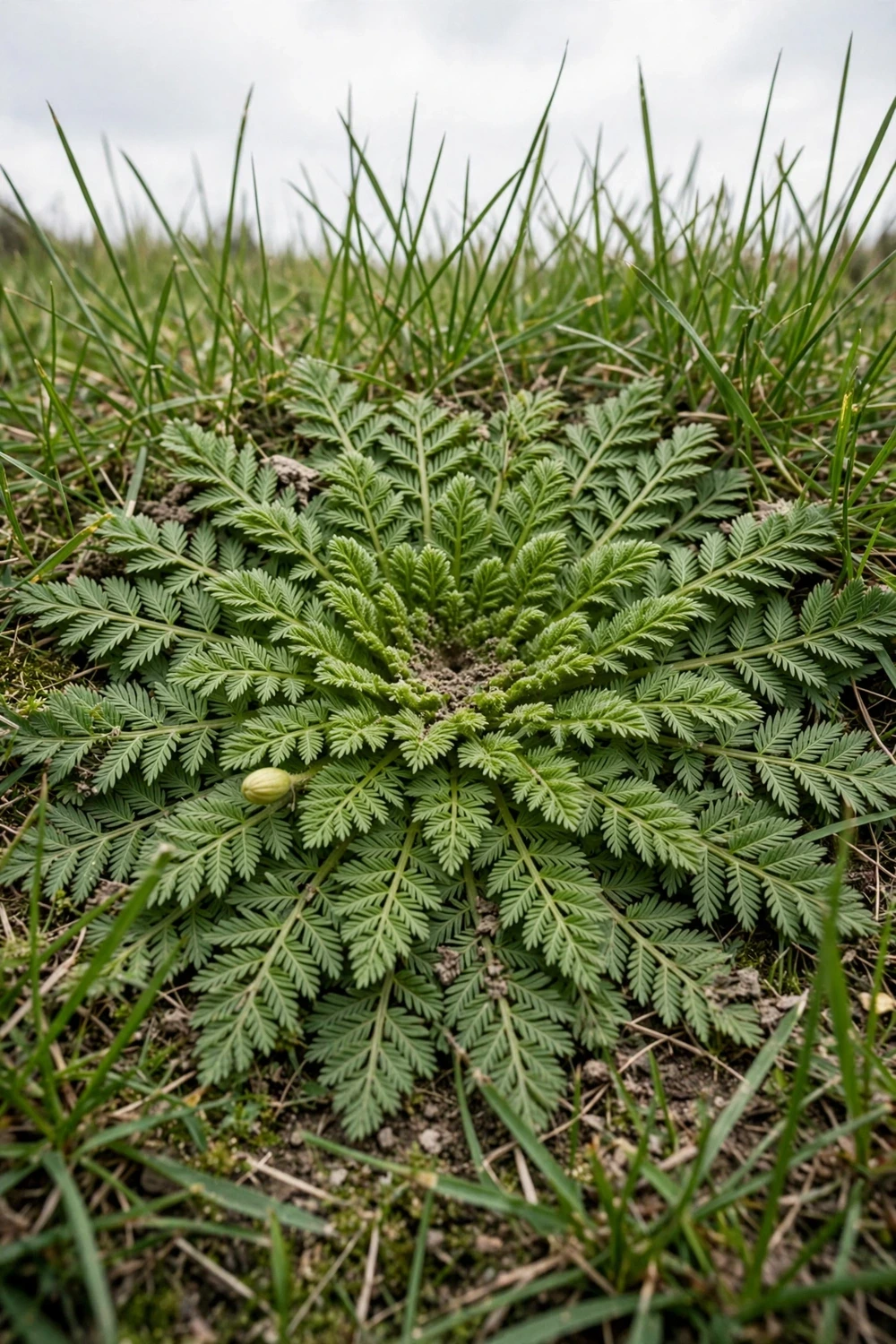
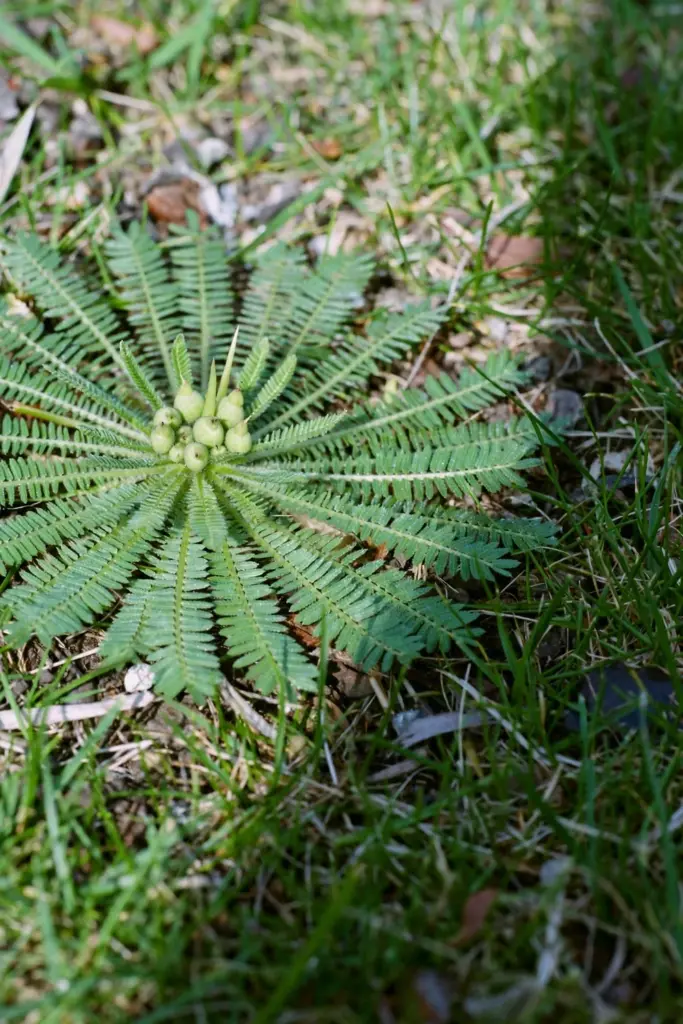
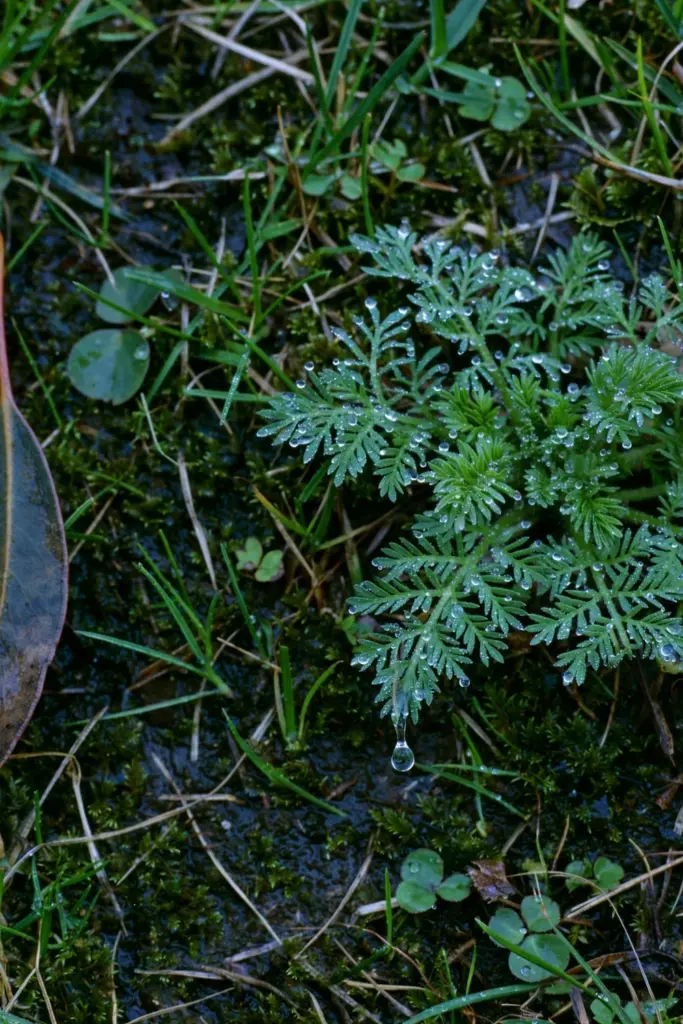
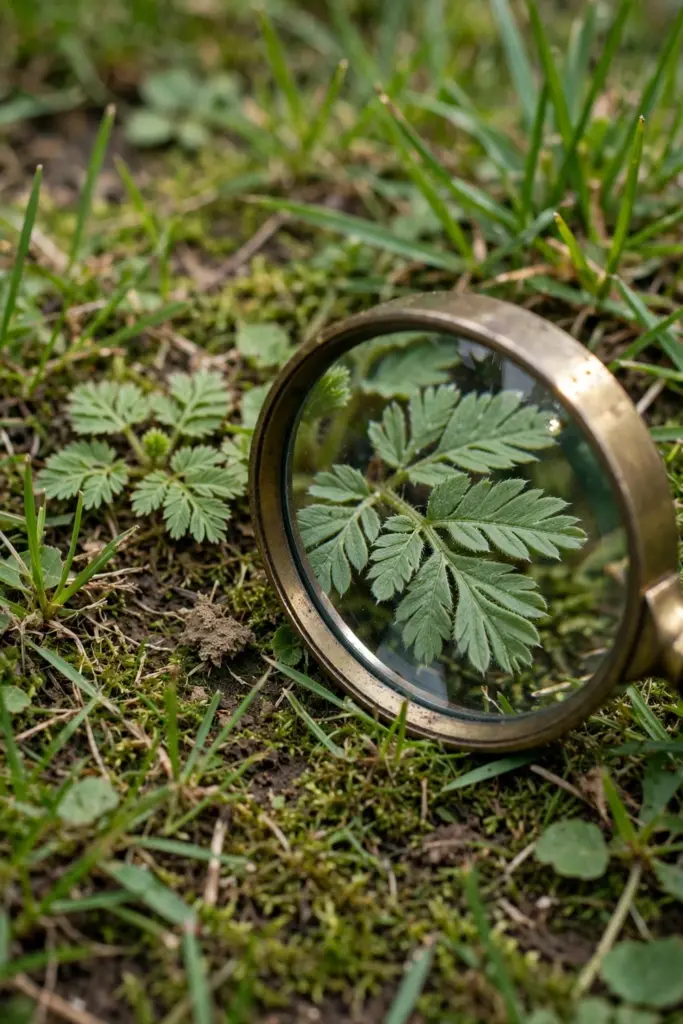
Bindii is Soliva sessilis, a prostrate winter annual that grows flat against the ground and rarely rises more than 1 to 2 cm above the turf canopy, according to Fernland’s bindii identification guide. The plant spreads outward from a central point in a rosette of finely divided, fern-like leaves. Its root is a shallow taproot, and the plant forms dense, low mats that stay hard to spot until the seed heads develop.
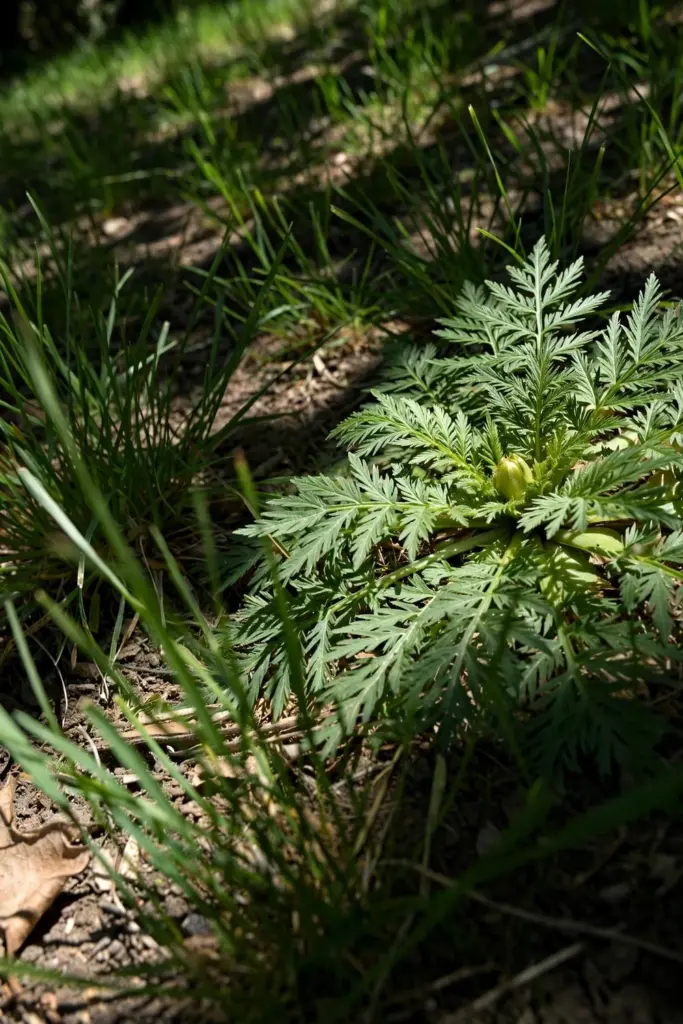
The flowers give bindii away if you look close. They are small and greenish-yellow, and they sit tight against the crown of the plant at the base of the leaf rosette, largely hidden within the foliage. Those flowers mature into the seed cases that cause the injury. Each case carries a hard, sharp spine. The spine, not the foliage, is what pierces bare feet, paws, and knees.
Bindii is a South American native, now well established across southern and temperate Australia. It turns up in couch, kikuyu, and buffalo lawns, on sportsfields, in parks, and anywhere the turf is thin. Other names for the same plant include jo-jo, Onehunga weed, lawn burrweed, and field burrweed. Soliva pterosperma is an older scientific name for the same species, listed as a synonym in the Virginia Tech weed identification profile. One name, one plant, one job: find it in winter and remove it before spring.
A mature rosette spans about 4 cm across and carries fine hairs, per Bioweed’s identification notes. A flat rosette in the lawn in June is almost always bindii or a close cousin. Do not wait for proof by pain. Get down at turf level, part the grass with your fingers, and look for the fern-like leaves. A hand lens helps. If the rosette matches, you found your weed three months before it can hurt anyone.
2. Tell Bindii Apart From 3 Lookalikes
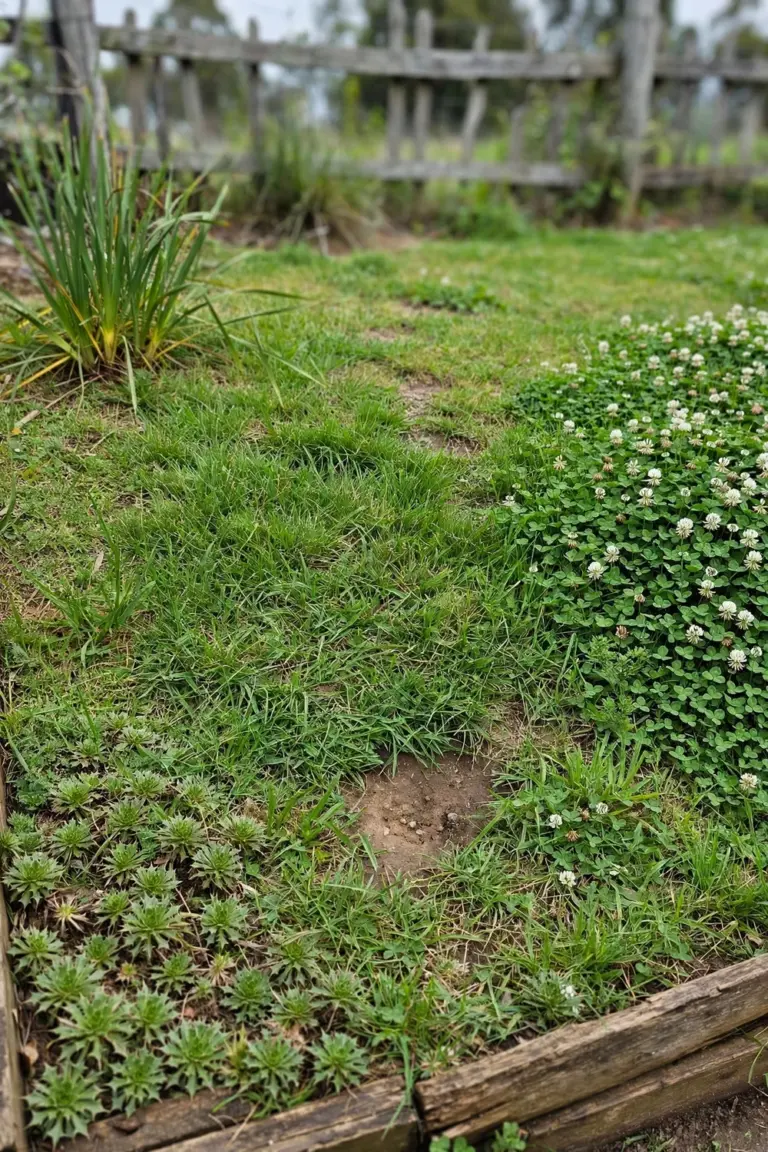
Three lawn weeds fool people into treating the wrong plant. Clover spreads with round, three-lobed leaves and white flower heads, and it creeps on runners across the surface. Oxalis carries heart-shaped leaflets that fold at night, with small yellow or pink flowers on thin stalks. Cudweed forms a flat rosette too, but its leaves feel woolly and gray-green, with a pale, hairy underside.
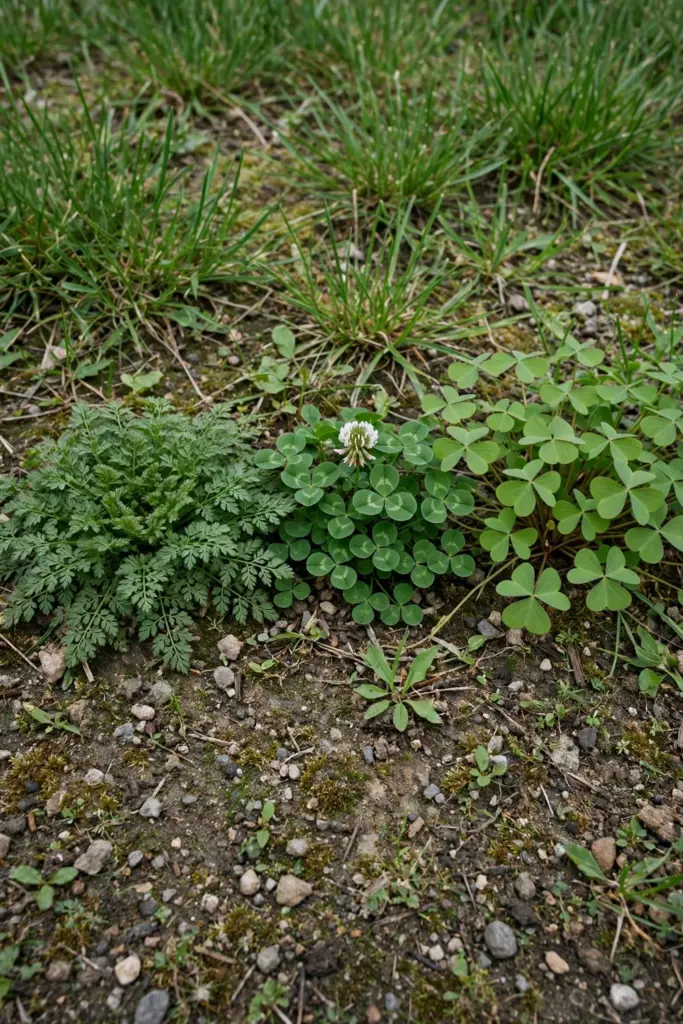
Bindii differs from all three in one visible trait: the leaves are finely divided like a tiny fern or a carrot top. Clover leaves are smooth and rounded. Oxalis leaflets are heart-shaped and undivided. Cudweed leaves are broad and woolly. Hold a leaf up to the light. If it looks like a miniature fern frond, you hold bindii.
Growth habit separates them further. Bindii hugs the soil and stays under 2 cm tall. Clover lifts its flower heads above the turf on short stalks. Oxalis sends up flower stalks that stand clear of the rosette. Cudweed stays flat but looks dusty gray from a distance, while bindii stays bright to mid-green. Color plus leaf shape settles most cases without a reference book.
Bindii vs Caltrop: Two Different Prickles
Caltrop (Tribulus terrestris) is a different plant with a similar reputation, and the two get mixed up in garden advice. Caltrop is a summer annual that sprawls across hot, bare ground and produces large, hard, woody burrs with stout spines. Its burrs can puncture bicycle tires. Lawn bindii is a winter annual with small, flat seed cases that stay in the turf. The seasons differ, the burrs differ, and the control timing differs. If your prickles are large woody capsules that appear in summer heat, you face caltrop, not lawn bindii. This page covers lawn bindii only.
3. Read the Season: Germination to Burrs
Bindii runs a strict annual calendar, and the calendar decides everything. The plant germinates with the autumn rains, grows through winter, sets seed in spring, and dies in late spring or summer. The parent plant dies, but the spiny seed bank it leaves behind in the thatch and soil waits for the next autumn. Fernland describes exactly this cycle: germination with autumn rains, growth through winter, seed set in spring, and death in late spring or summer, leaving a bank of spiny seed behind.
The table below turns that cycle into a working plan. Read it once, then act on the winter row.
| Season | What You See | What To Do |
|---|---|---|
| Autumn (March to May) | Tiny soft rosettes appear as soil cools and rains arrive | Start looking; hand-pull small patches while plants are young |
| Winter (June to July) | Rosettes grow, no flowers yet | Prime treatment window: spray or pull now |
| Spring (August to October) | Flowers appear, then burrs harden into prickles | Last chance: treat before burrs harden |
| Summer (November to February) | Plant cooks off in heat; burrs stay in thatch as live seed | Too late for this season; prevent next year |
Winter is the only window where treatment stops the prickles. By the time you feel burrs underfoot, the season is already lost, and the work shifts to damage control plus prevention for next year. Mississippi State University Extension puts the rule bluntly for the same species: once the spiny burs form, control options are futile, because the dried burs remain a hazard even on dead plants, according to Mississippi State University Extension. That sentence is the whole article in one line. Treat in winter.
Bindii is evergreen in mild winters in the sense that the rosette stays green and alive through the cold months. It does not die back in winter and regrow. It germinates across a long autumn window, so new seedlings can keep emerging after your first treatment. That long emergence window is why repeat applications matter, and why one spray rarely finishes the job. A lawn treated once in June can still show fresh rosettes in August, because seed that lay dormant through the first spray germinates on later rain.
4. Pull Small Patches by Hand
Hand-pulling works when the infestation is small and the plants are young. Work after rain, when the ground is soft and the taproot lets go without snapping. Slide a weeding knife or a dinner fork under the central crown, pinch the taproot, and lever the whole plant out. The crown is the anchor. If the crown stays in the soil, the plant can regrow.
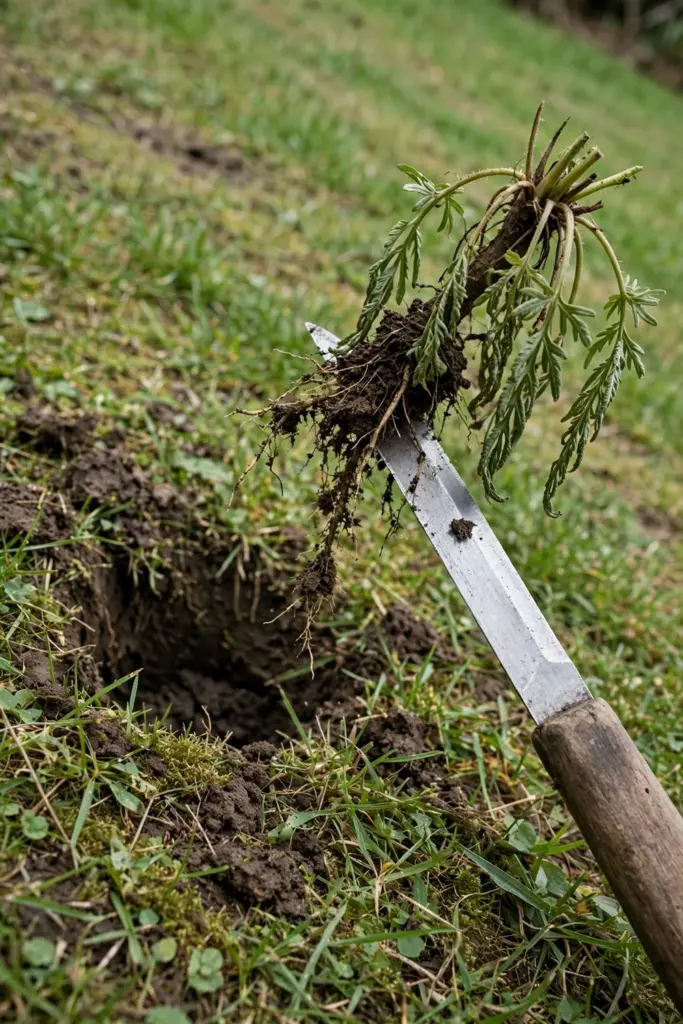
Take the whole plant, roots and all. Shake off loose soil at the spot, then drop the plant into a bag or a bin. Do not compost bindii with seed heads on it. Compost heat in a home pile does not reliably kill weed seed, and the seed bank is the problem you are trying to shrink. Bin the plants. Wash your gloves and tools after, and check the patch a week later for seedlings you missed.
Hand-pulling suits a few rosettes in a small lawn, a nature strip, or a garden bed edge. It fails on a lawn-wide infestation. A lawn covered in rosettes needs spray, because pulling hundreds of plants by hand takes days and leaves the seed bank untouched. Use your hands where they win: small patches, young plants, moist soil, winter timing. Test the soil first. Push a finger into the ground beside the rosette. If the top 3 cm crumble dry, water the patch and wait an hour before pulling. Dry soil snaps taproots and leaves crowns behind.
A second pass catches late germinants. New seedlings emerge across the autumn and winter window, so one pull never clears a patch completely. Walk the lawn again two to three weeks after the first pull. Pull what is new. Two passes in winter beat one pass in spring, because spring plants are already building burrs.
5. Spray the Right Active for Your Grass Type
A selective broadleaf herbicide kills bindii without killing the lawn, but only if the active suits your grass type. Get the grass-type split right. Get it wrong and you damage the lawn you meant to protect.
| Grass Type | Safe Active | Never Use |
|---|---|---|
| Couch and kikuyu | Dicamba products | Non-selective herbicide broadcast over the lawn |
| Buffalo | Bromoxynil products | Dicamba products |
Products containing dicamba control bindii and other broadleaf weeds like clover in couch and kikuyu lawns, but dicamba is not suitable for buffalo grass, according to Bunnings’ bindii guide. Buffalo lawns need products containing bromoxynil instead. That split comes from the label, not from preference. Buffalo is a soft-leaf grass that reacts badly to dicamba. Couch and kikuyu tolerate it.
Couch and Kikuyu Lawns
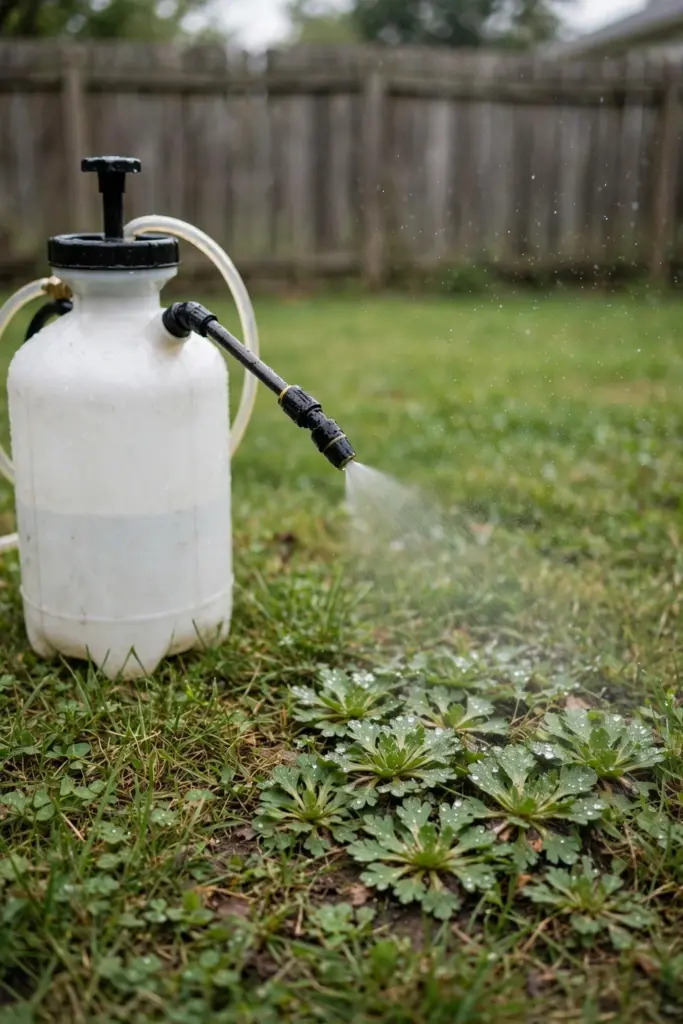
Dicamba-based selective herbicides are the standard choice for couch and kikuyu. Apply on a calm day when the lawn is actively growing and the weeds are young. Young bindii absorbs spray faster than old, hardened plants. Spray the whole patch, not single plants, because seedlings hide between the visible rosettes. Follow the label for mixing rates, and keep pets and children off the lawn until the spray has dried.
Expect visible die-off in 7 to 10 days, with repeat applications needed for severe infestations, per Bunnings’ bindii guide. Bindii does not vanish overnight. Leaves yellow first, then the rosette collapses. If green rosettes remain after two weeks, spray again. Repeat every two to three weeks until new emergents stop appearing, per Pestrol’s label guidance. The repeat schedule exists because the seed bank keeps sending up new seedlings across the winter window.
Buffalo Lawns
Buffalo lawns need bromoxynil-based products, and the label must name buffalo as a safe grass. Do not use a dicamba product on buffalo and hope the rate saves you. Dicamba damages buffalo at label rates. Buy a product that lists buffalo on the label, mix to the label rate, and test a small area first if you have a soft-leaf buffalo cultivar. Some soft-leaf buffalo types show extra sensitivity to herbicide use.
Buffalo-safe products still follow the same timing rules. Spray in winter on young plants, before flowers and burrs. Keep pets and children off until dry. Do not spray in wind, and do not spray if rain is expected within the label’s rain-free window. A spray that washes off in an hour did nothing except wet the lawn.
6. Treat in Winter, Before the Burrs Harden
Winter is the prime window. June and July rosettes are growing, with no flowers yet, and a spray or pull now stops the prickles before they exist. Early-to-late winter, after leaves have formed but before flowers and seeds appear, is the best time to control bindii, per Bunnings’ bindii guide. Every other section of this page serves this one rule.
Spring is the last chance, not the prime window. Some guides call spring the best time, but the weight of Australian sources puts winter first. A spring spray can still work if the plants have not yet hardened their burrs. The margin is thin. Once flowers open, the clock runs fast. Treat a flowering patch at once, and accept that some burrs may already be set.
Summer is too late for this season. The plant cooks off in the heat, and the burrs stay in the thatch as live seed. No spray removes burrs that already exist. Summer work is damage control plus prevention: rake up prickles, keep shoes on, and set up the autumn program that stops next year’s crop. A summer spray wastes product on dead plants.
Mark the window on your calendar. The first week of June is a good trigger in most southern and temperate parts of Australia. Walk the lawn, find the rosettes, and treat them that week. Then walk again in July. Two winter treatments, a month apart, catch both the early and the late germinants.
7. Try Iron Sulphate When You Want to Skip Herbicide
Iron sulphate is the main non-herbicide option for bindii, and it suits gardeners who want to avoid synthetic herbicides. Coolabah Turf gives a home recipe of 2 tablespoons of iron sulphate in 4.5 liters of water, sprayed over the affected areas. Lawn Solutions Australia gives the same 2-tablespoon recipe and reports that bindii dies within 24 hours while lawns tolerate the iron dose. A second recipe from myhomeTURF uses 40 mL of iron sulphate in 4.5 liters of water. The two recipes differ, so treat them as two published options rather than one exact dose.
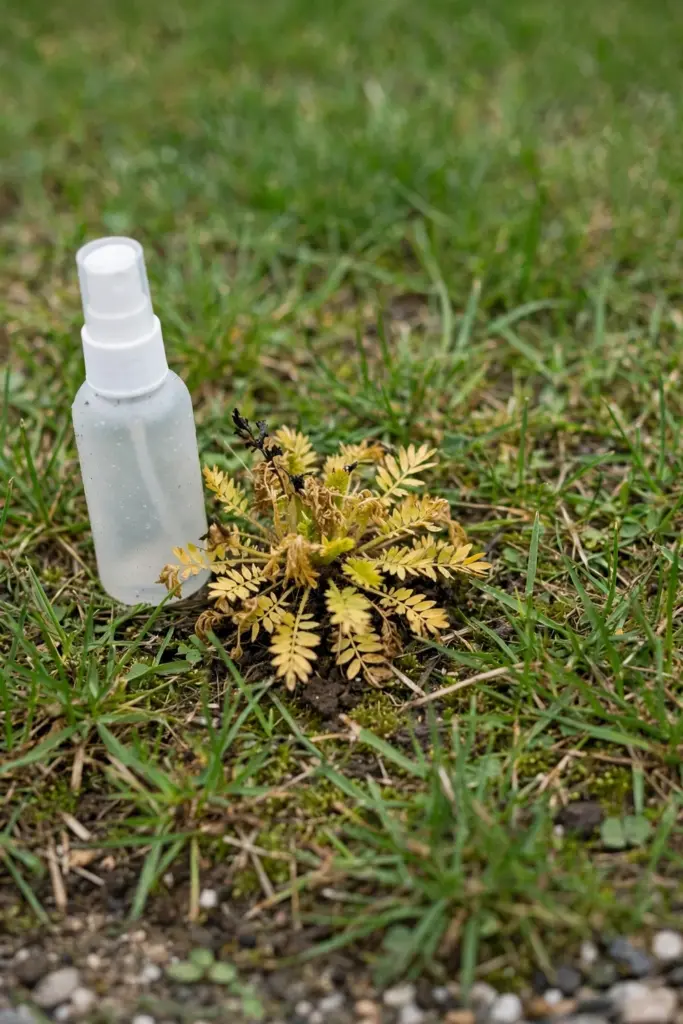
Iron sulphate works best as a spot treatment on young plants, and it also helps when plants are already flowering. Coolabah Turf notes it as the fallback when bindii is already flowering and selective spray timing is tight. The iron burns the bindii foliage while the lawn tolerates the dose. Spray on a calm, dry day, and keep the mix off concrete, pavers, and light-colored stone, because iron stains.
Know its limits. Iron sulphate will not help if the seeds have already dropped. It kills the plant in front of you. It leaves the seed bank behind it. A lawn sprayed with iron sulphate in spring can still sprout bindii next autumn from seed already in the soil. Pair it with the prevention section below, or the burrs return.
Iron sulphate also feeds the lawn at the recipe rate, which is a small bonus. The lawn greens up while the bindii collapses. Do not exceed the recipe. More iron does not mean faster results, and heavy doses scorch turf.
8. Handle a Lawn That Already Has Prickles
A lawn full of hardened burrs needs damage control, not a miracle spray. Start with shoes. Keep shoes on outdoors until the burrs are gone. Mow low with the catcher on to pick up as many burrs as the blades reach. Empty the catcher into the bin, not onto the compost. The catcher pass removes burrs from the surface, but it does not remove the seed bank in the thatch.
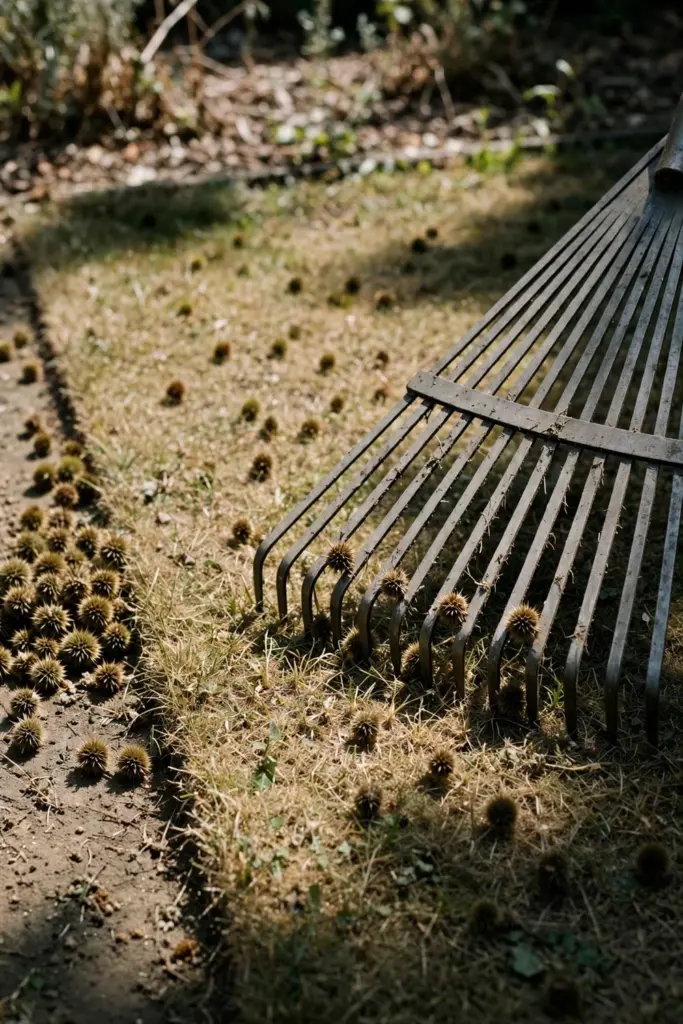
Rake the lawn to bring prickles to the surface, then pick them up. A stiff rake drags burrs out of the thatch where the mower misses them, and the right tool matters here: a proper lawn rake pulls burrs free without tearing up healthy turf. Duct tape pressed onto the turf lifts burrs from small areas, such as a play patch or a path. Work in sections. A full lawn takes several sessions, and that is normal.
Pets and Prickles
Prickles carry no poison. They still hurt. Check paws after every outing while burrs are present, and look for limping, licking, or a paw held off the ground. Dogs may limp on a sore paw. Pull visible burrs with tweezers, and check between the toes, where burrs tangle in fur. Grooming swallows burrs too, so brush pets outdoors and bin the fur. A paw that swells, stays sore, or shows infection needs a vet.
This season’s prickles cannot be un-made. Accept that. Do the damage control. Set up the autumn program. The burrs in the thatch now become next year’s seedlings unless the lawn thickens enough to crowd them out. That is the real fix. It starts in the next section.
9. Thicken the Lawn So Bindii Stays Out
A dense lawn is the defence that lasts. Bindii invades bare patches, thin turf, and scalped areas. It struggles in a thick, actively growing sward that shades the soil and starves seedlings of light. Fernland states the mechanism plainly: dense, actively growing turf competes against seedling establishment in autumn, and control before spring seed set reduces the following season’s population. Every prevention step below serves that one mechanism.
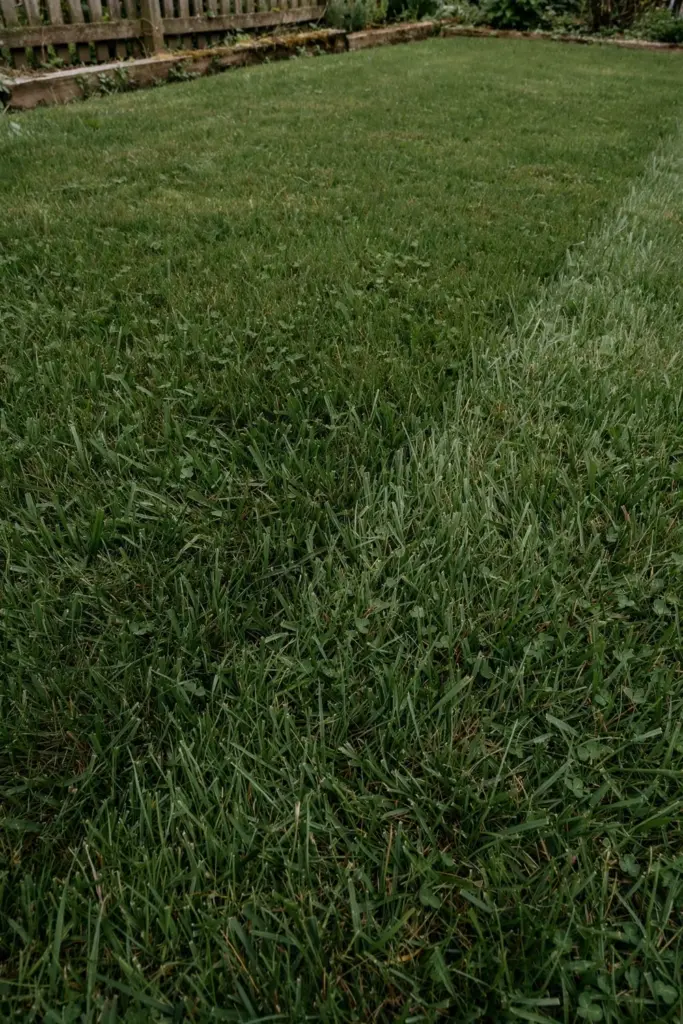
Feed the lawn on schedule. A fed lawn grows dense and closes gaps. Time feeding to the lawn’s active growth period, and follow the guidance in best time to fertilize lawn in spring for the spring feed. Do not feed a dormant lawn and expect growth. Feed when the grass can use it.
Water deep and infrequent through the growing season so roots grow down. Shallow daily watering grows shallow roots and a thin sward. Deep watering grows a lawn that holds its density through dry spells. A lawn that thins in summer opens the gaps bindii fills in autumn.
Mow at the right height and never scalp. Scalping strips the canopy, lets light hit the soil, and hands bindii the opening it needs. Raise the mower height in winter and keep the lawn longer through the cold months. Longer winter grass shades the soil and slows seedling growth. Collect the clippings when you mow a bindii patch, or you spread seed across the lawn with the mower.
Repair bare patches promptly. Bare soil is an invitation. Sow or patch the gap, keep it watered, and close it before autumn germination. Overseed thin areas in early autumn, before the germination window opens, so new grass is already competing when bindii seed wakes. Soil health underpins all of this: a lawn on compacted, starved soil thins no matter how often you mow. Aerate compacted soil, because bindii flourishes in hard, compacted ground. Topdress thin areas with a sandy mix to improve the surface, and follow the seasonal rhythm in spring lawn care tips to keep the lawn dense year-round.
10. Skip the Methods That Make It Worse
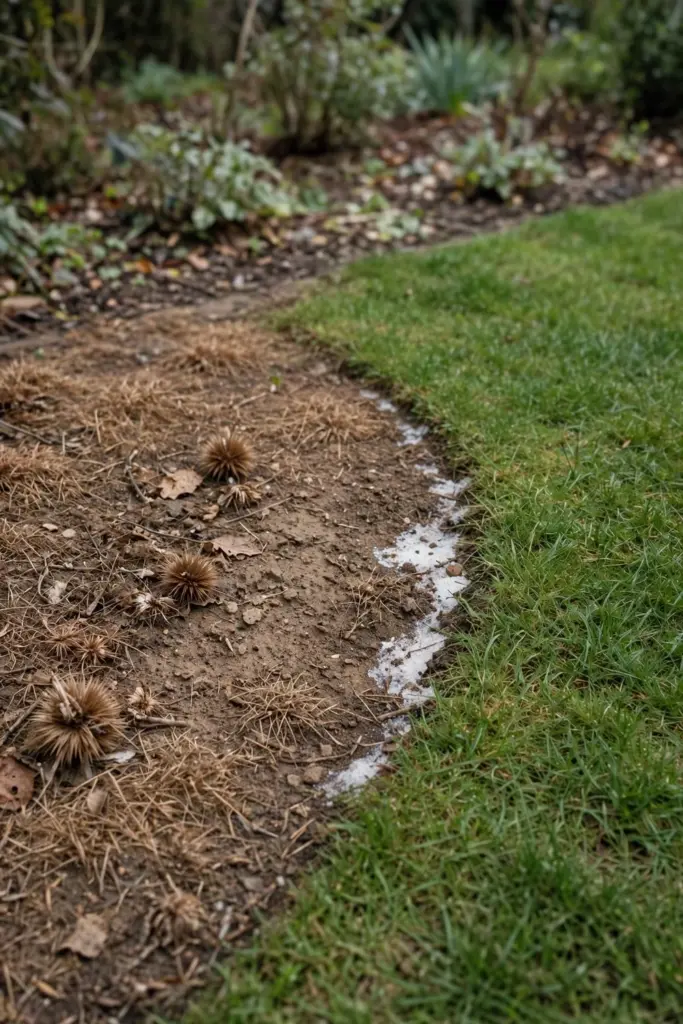
Vinegar and salt kill bindii, but they harm nearby plants and stay in the soil. Do not use them on a lawn. The salt lingers and damages the grass you want to keep. A dead patch of lawn salted by a home remedy becomes the next bare patch bindii colonizes.
Glyphosate kills bindii, but it is non-selective. A broadcast glyphosate spray kills the lawn along with the weed. Use glyphosate only as a spot treatment painted onto individual weeds in paths or garden beds, never sprayed across turf. If the weed sits in the lawn, a selective herbicide is the tool, not glyphosate.
Corn meal gluten does not work as a pre-emergent for bindii. Studies show little or no germination reduction, and the high nitrogen in corn meal feeds the existing weeds. Skip it. Mowing does not control bindii either. The plant sits too low to mow without scalping, and scalping encourages spread by opening the canopy. A mower set low enough to cut bindii cuts the lawn down to the crown and hands the weed its opening.
Do not spray after the burrs have hardened and expect results. A dead bindii plant with hard burrs still leaves prickles in the thatch. Do not spray in wind, and do not spray when rain is due within the label window. Drift hits garden beds, and rain washes the product off before it works. The label carries the rate, the rain-free window, and the grass-type list, and it is the authority for your product. Read it before every spray, even if you have used the same product for years, because formulations and label rates change.
Frequently Asked Questions
Yes, you can stop this season’s prickles with one winter treatment, but the seed bank takes longer. Treat in winter before burrs form, then repeat as new seedlings emerge. Expect two to three seasons of winter treatment before the seed bank runs down. A thick lawn speeds the process by crowding out seedlings. One spray is a start, not a cure.
Bindii carries no poison. Its burrs still hurt. Burrs lodge in paws, tangle in fur, and pierce bare feet. Dogs may limp, lick a sore paw, or swallow burrs while grooming. Check paws after outings. Remove burrs with tweezers. Children should wear shoes on a lawn with burrs. A paw that swells, stays sore, or shows infection needs a vet.
Mowing does not kill bindii. The plant grows flat against the ground, below normal mowing height, so a standard cut misses it. Mowing low enough to hit bindii scalps the lawn and opens the canopy, which helps bindii spread. Mow at the right height for your grass type, collect clippings from infested patches, and use spray or hand-pulling for the weed itself.
Winter is the prime window, from June to July in most southern and temperate regions. Spray after the rosettes have formed but before flowers and burrs appear. Spring is the last chance before burrs harden. Summer is too late for the current season, because the burrs already exist. Mark the first week of June and treat then.
No. Dicamba products control bindii in couch and kikuyu lawns, but dicamba is not suitable for buffalo grass. Buffalo lawns need bromoxynil-based products, and the label must name buffalo as a safe grass. Check the label for your grass type before you spray anything. Using the wrong active damages the lawn you meant to protect.
Walk Barefoot Again Next Summer
Bindii loses when you treat it in winter and thicken the lawn behind the treatment. Walk the lawn in the first week of June, find the rosettes, and pull or spray them before they flower. Repeat a month later for late germinants. Feed, water, and mow for density through the growing season, and close every bare patch before autumn. Next summer, the lawn earns back its barefoot test, one winter at a time.