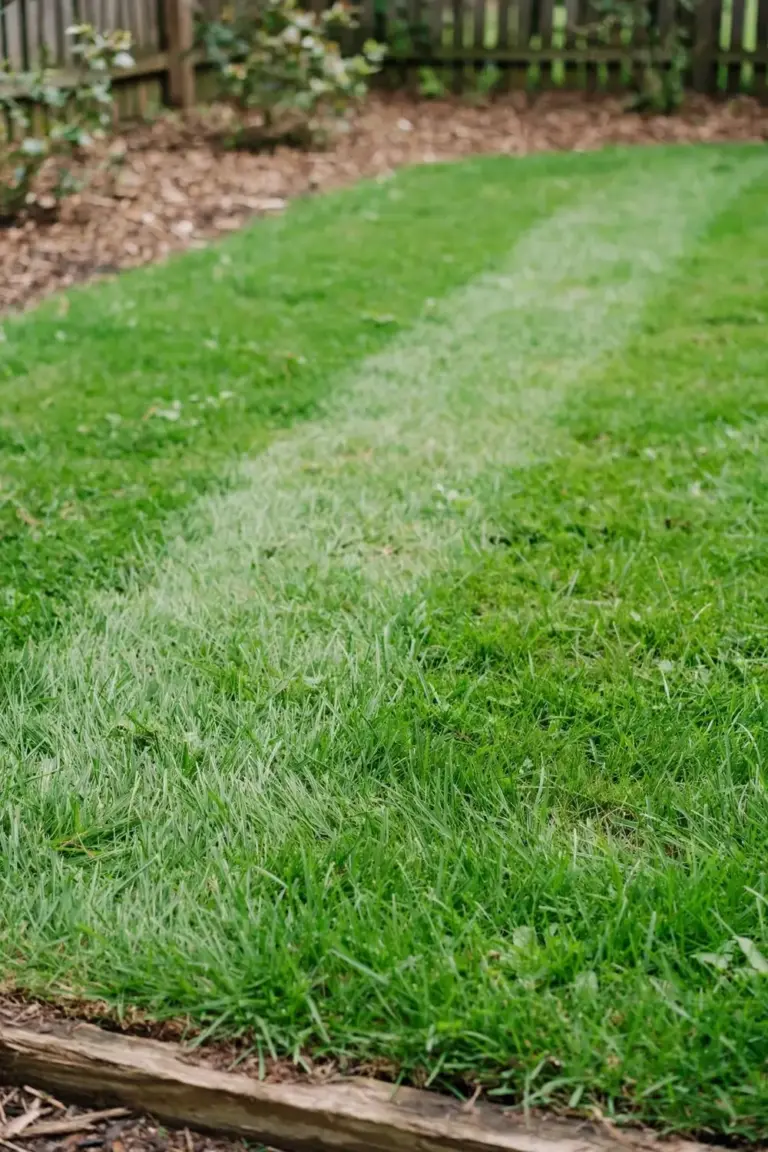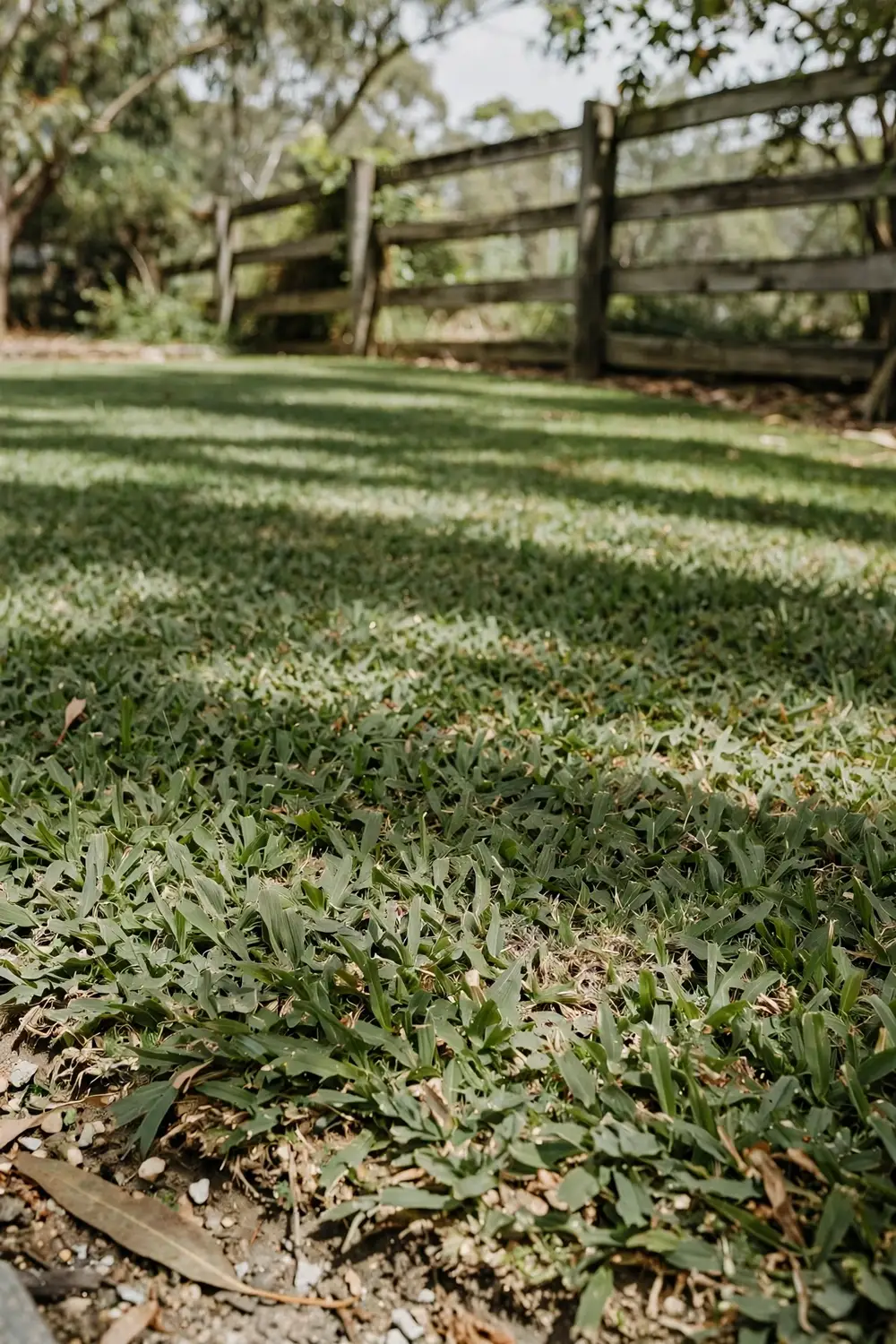

Count the hours of direct sun on your lawn for 3 days before you buy turf. Buffalo leads Australian shade lawns, and it thrives on 3 to 4 hours of direct sun a day. That is the best turf for shaded areas in Australia for most yards, and the rest of this page is 8 moves, from the shade test to the point where turf will not work.
I count the hours of direct sun on my lawn for three days before I choose a turf, because one bright morning tells me nothing about a shaded yard. Shade changes with the season. A patch that gets 4 hours of sun in summer can drop to 2 hours in winter, and that drop decides whether turf survives. Measure first. Buy second.
1. Measure Your Shade Before You Buy Turf
Measure your shade before you buy turf. Stand in the yard at 9 a.m., noon, and 3 p.m. for 3 days and note which patches sit in direct sun. A patch needs direct sun, not bright shade, to count. Dappled light through leaves counts as partial credit, not full sun.
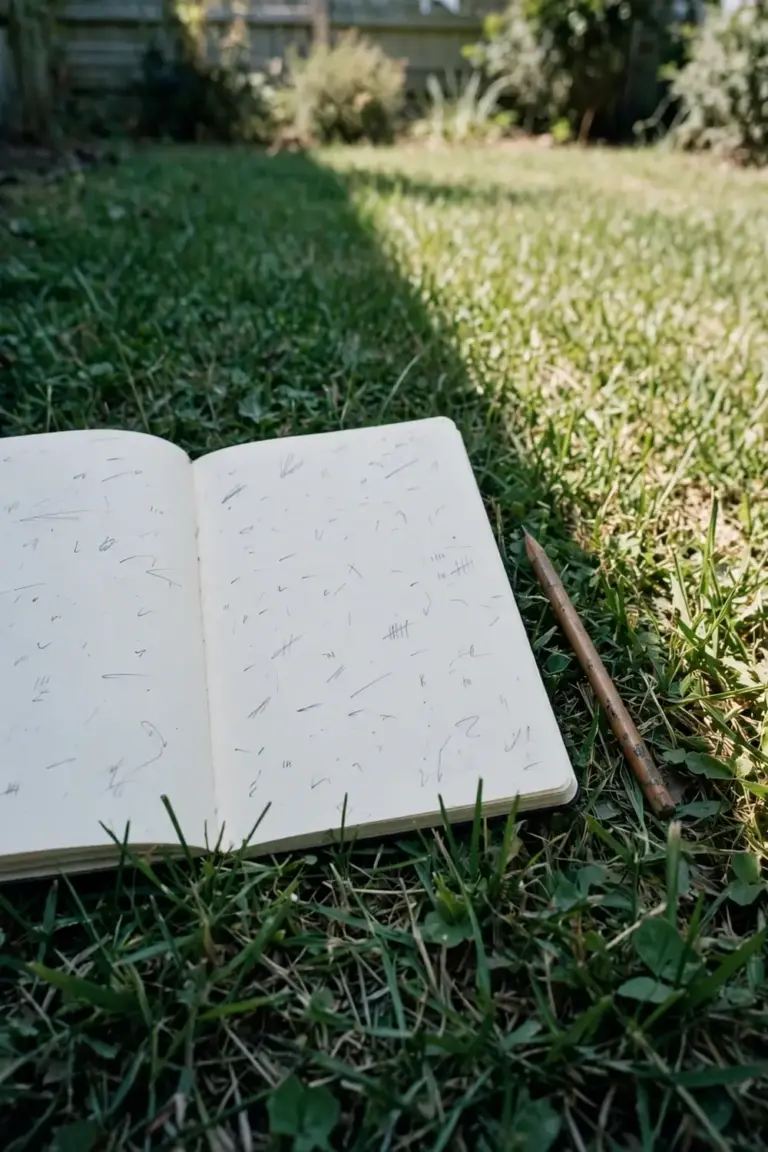
Write the numbers in a small table with one row per day and one column per check time. Note the date on each row, because a July reading and a January reading describe different yards. Three days of notes beat one guess, and the pattern matters more than any single day. A yard with 3 hours of direct sun takes buffalo, 5 hours takes zoysia or TifTuf, and under 3 hours takes no turf at all. The closing section of this page covers that case.
Shade comes in three kinds. Building shade stays put all day and no pruning fixes it. Tree shade shifts with the sun and pruning opens it up. Fence shade moves with the season and shrinks in summer. Name the kind before you pick a turf, because only tree shade responds to a saw.
Check the yard twice a year. Sun angles shift between summer and winter, and a fence that throws no shadow in December can shade half the lawn in June. A patch that passes the shade test in summer can fail it in winter. Test in the cool months if the lawn must look good year round. Winter sun is the binding constraint, not summer sun. A phone on a fence post records the shadow line across a morning, and one morning of footage settles arguments about which patch gets sun.
| Shade Test | What to Record | Turf It Points To |
|---|---|---|
| Direct sun hours | Hours of sun on the patch, 3-day count | 3 to 4 hours: buffalo or Sir Grange; 4 to 5 hours: zoysia; 5 to 6 hours: TifTuf or kikuyu |
| Shade kind | Building, tree, or fence | Tree shade: prune first; building shade: pick the toughest turf |
| Traffic | Feet, dogs, and play on the patch | High traffic narrows the list to buffalo and TifTuf |
| Winter sun | Hours of sun in the cool months | Winter drop below 3 hours rules turf out |
2. Pick Buffalo First for Australian Shade Lawns
Pick buffalo first for Australian shade lawns. Buffalo is the most shade-tolerant warm-season turf sold in Australia. It thrives on 3 to 4 hours of direct sunlight each day, the figure Lawn Solutions Australia gives for Sir Walter DNA Certified Buffalo. Lilydale Instant Lawn agrees on 3 to 4 hours and adds that Sir Walter thrives in a maximum of 75% shade.
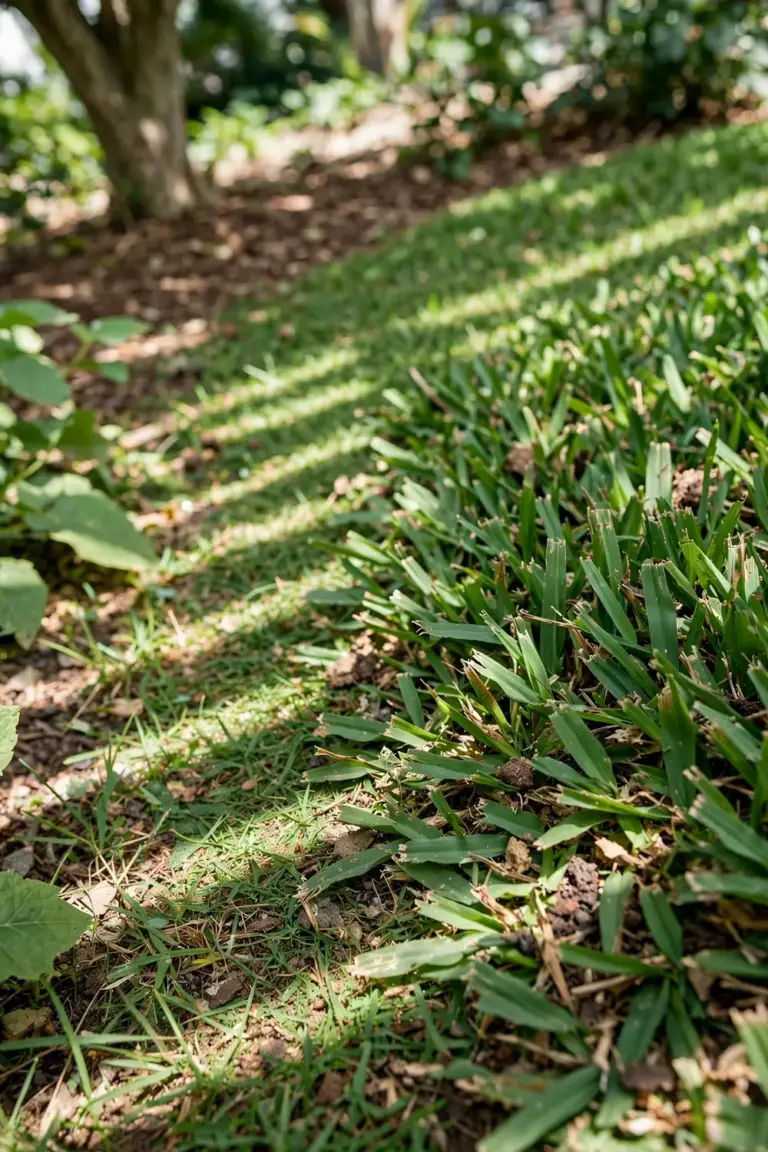
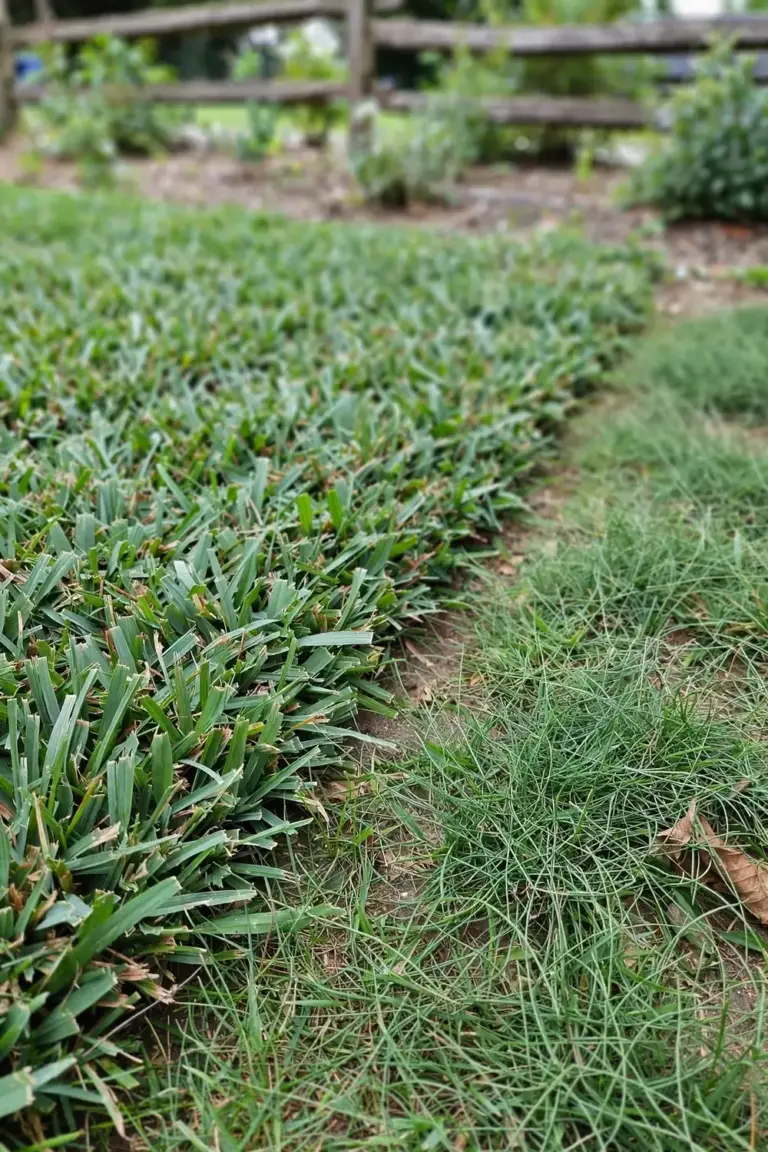
Buffalo earns the top spot through leaf shape. Its broad leaf catches more light per square centimeter than a fine-leaf turf, so it photosynthesizes on less sun. Lawn Solutions Australia states the mechanism plainly: grass converts sunlight into sugar through photosynthesis, and without enough sunlight the lawn thins out and dies. A broad leaf buys more sugar per hour of sun.
Shade tolerance drops as traffic rises. Harden Park Lawns puts buffalo at 70% shade in low-traffic areas, 60% shade in moderate-traffic areas, and 50% shade in high-traffic areas, all at a mowing height of 60 mm or more. The same page adds that buffalo needs at least 3 hours of direct sunlight each day. Keep traffic low in the shadiest patch. Move the swing set to the sunny patch.
Two shade figures for Sir Walter circulate, and both carry attribution. Harden Park Lawns puts buffalo at a maximum of 70% shade in low-traffic areas. Lilydale Instant Lawn puts Sir Walter at a maximum of 75% shade. The gap is small, both sources agree on 3 to 4 hours of direct sun, and that range is the number to plan on. Treat the Harden Park Lawns figure of 70% as the working shade ceiling.
Winter shade deserves its own check. Buffalo keeps its shade tolerance through winter as long as sun returns to 3 hours for low-traffic areas and 4 hours for moderate-traffic areas, per Harden Park Lawns. A patch that holds 3 hours of sun in summer and drops to 1 hour in winter will thin in the cold months even though the turf is right. Test the patch in June before you blame the turf in August.
3. Pick Zoysia Second for Shade With a Fine Leaf
Pick zoysia second for shade with a fine leaf. Zoysia sits one step behind buffalo for shade, and the best zoysia for shade is Sir Grange. Lilydale Instant Lawn gives Sir Grange 3 to 4 hours of direct sunlight per day, and Lawn Solutions Australia gives a minimum of 4 hours of direct sunlight per day once Sir Grange is established.
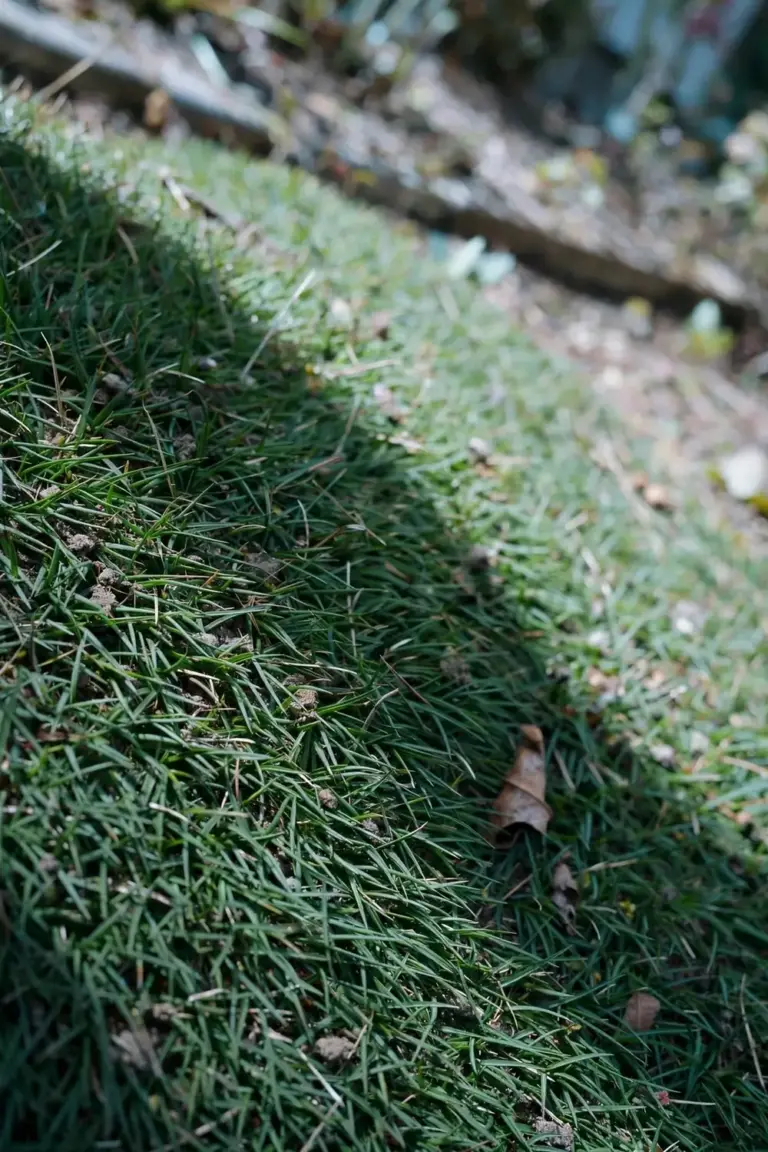
Zoysia earns its place through slow growth. A slow-growing turf needs fewer inputs, including sunlight, so it holds color on light that starves a fast grower. Lawn Solutions Australia states that slow growth habit directly. The trade is repair speed. Zoysia stolons and rhizomes grow slowly, so a worn patch fills in slowly. Keep feet off shaded zoysia while it establishes.
Establishment patience decides zoysia lawns. A newly laid zoysia lawn looks thin for months while runners spread. Water it through the first summer and keep traffic off it until the runners knit. A zoysia lawn that gets played on in its first season thins in the worn spots, and the thin spots invite weeds. The lawn that looks patchy in month 3 can look dense in month 12 if it gets left alone.
Generic zoysia needs more sun than Sir Grange. Harden Park Lawns puts zoysia at 55% shade in low-traffic areas and 40% shade in high-traffic areas at a 60 mm mowing height, which the page equates to 4 to 5 hours of sun per day. Buy the named cultivar, not the genus. Sir Grange at 3 to 4 hours beats generic zoysia at 4 to 5 hours by a full hour of sun.
Sir Grange has one hard limit. Lilydale Instant Lawn states that Sir Grange is purely decorative and cannot withstand any traffic. That rules it out for a play lawn, a dog run, or a path. Use Sir Grange for a shaded front lawn that eyes cross and feet do not.
4. Plant Tall Fescue for the Cool South
Plant tall fescue for the cool south. Tall fescue is a cool-season turf, and it covers the southern states where warm-season turf slows down in winter. Melbourne, Adelaide, Canberra, and Hobart sit in its range. Sydney straddles the line, and Brisbane and Darwin sit outside it.
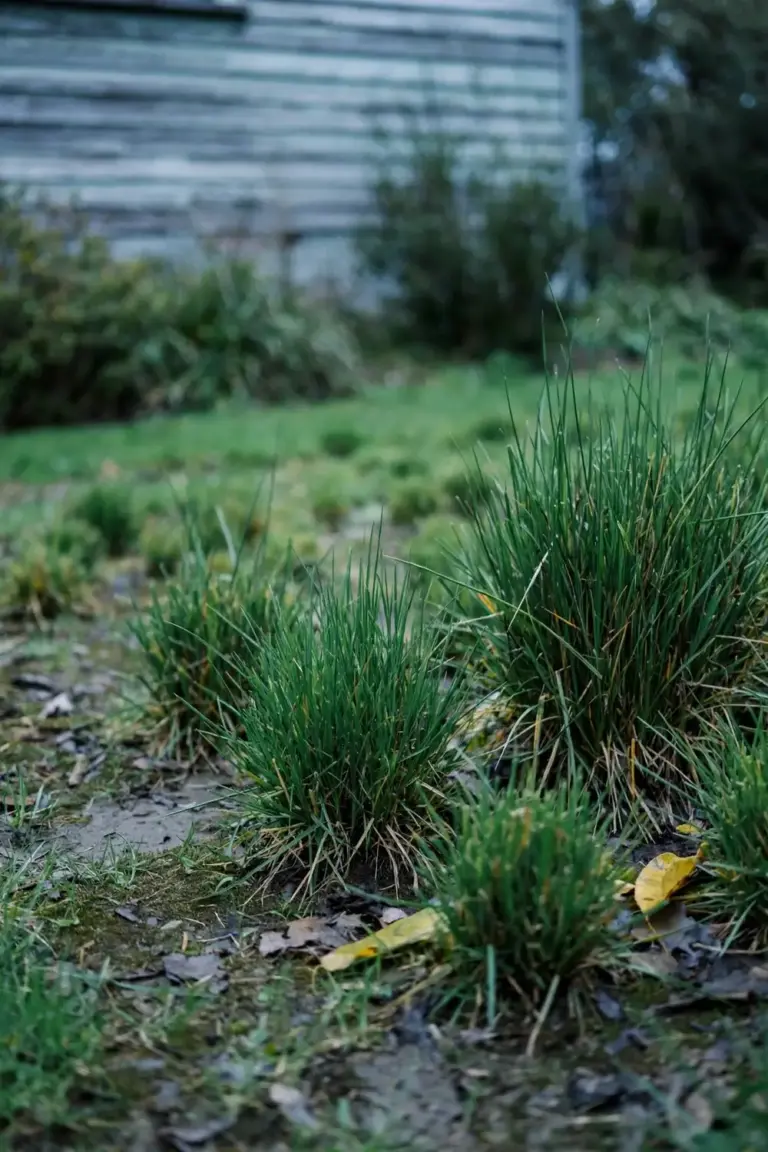
Shade-tolerant fescues survive on little sun. NC State Extension states that shade-tolerant fescues can survive under 4 hours of sunlight. That figure comes from North Carolina, not Australia, and it describes the species, not a local cultivar. Use it as a species-level floor. An Australian fescue blend still needs a local supplier’s sun figure before you buy.
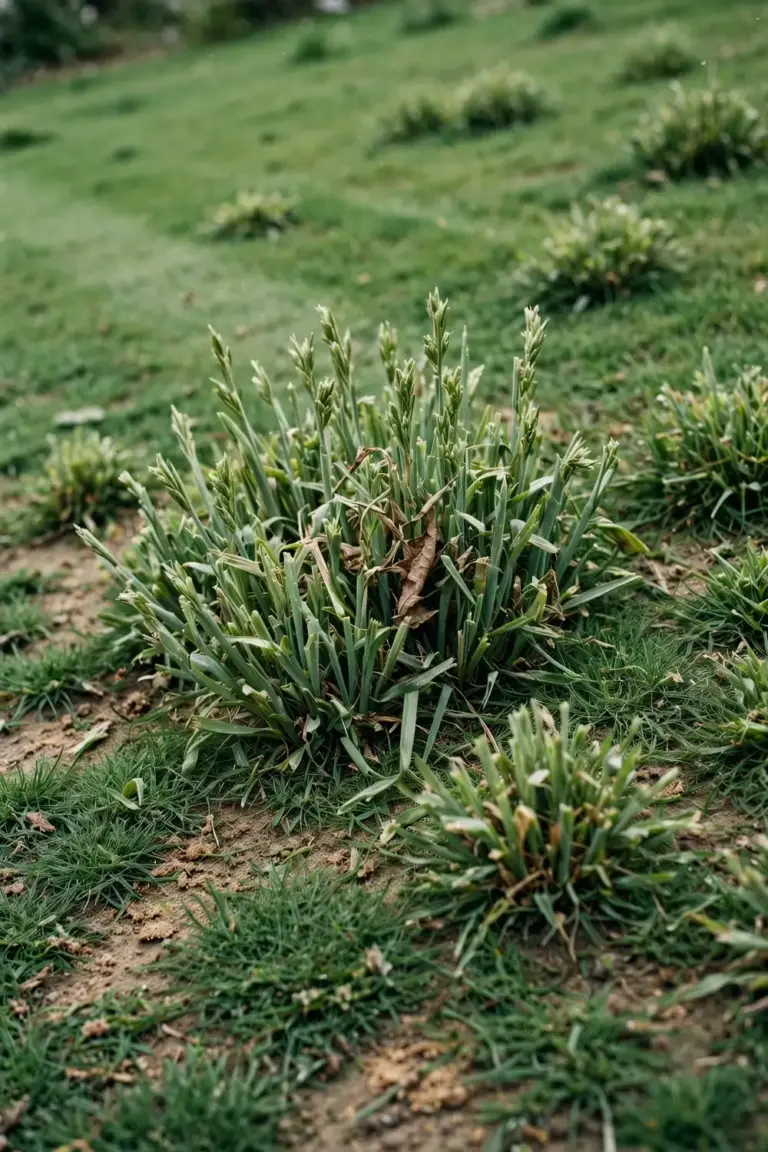
Fescue behaves differently from buffalo and zoysia. It grows in clumps, not runners, so it does not creep across a bare patch. A thin fescue lawn needs overseeding, not patience. NC State Extension recommends aerating and overseeding shady lawns each fall to fill in areas that thinned due to shade. In Australia that fall window is March to May, not September.
Fescue also hates close mowing and heavy wear. NC State Extension advises mowing shady lawns infrequently, leaving the grass as tall as possible, and avoiding foot traffic in shady lawns. Keep the mower high. Keep feet off the patch while it recovers.
Fescue and buffalo split Australia by winter. Buffalo browns off in cold winters and greens up again in spring, while fescue stays green through a cool winter and struggles through a hot summer. A Melbourne lawn that must look green in July suits fescue. A Brisbane lawn that must survive January heat suits buffalo. Pick the turf that matches your worst season, not your best one.
Overseed thin fescue in autumn. March to May is the Australian fall window, and it matches the northern-hemisphere September advice once the seasons flip. NC State Extension recommends aerating and overseeding shady lawns each fall to fill in areas that thinned due to shade. Scratch the seed into the soil, keep it damp for two weeks, and keep feet off the patch until the seedlings tiller. A fescue lawn that gets overseeded every autumn holds density that a never-overseeded lawn loses.
5. Skip Couch and Kikuyu in Real Shade
Skip couch and kikuyu in real shade. Couch and kikuyu are sun grasses, and shade starves them. Harden Park Lawns puts couch, kikuyu, and Queensland blue couch at 15% shade tolerance, rising to 20 to 25% shade when mowed at 60 to 75 mm high. A patch with 15% shade, the Harden Park Lawns tolerance for couch, gets sun most of the day. That is a sunny patch with a little shade, not a shaded patch.
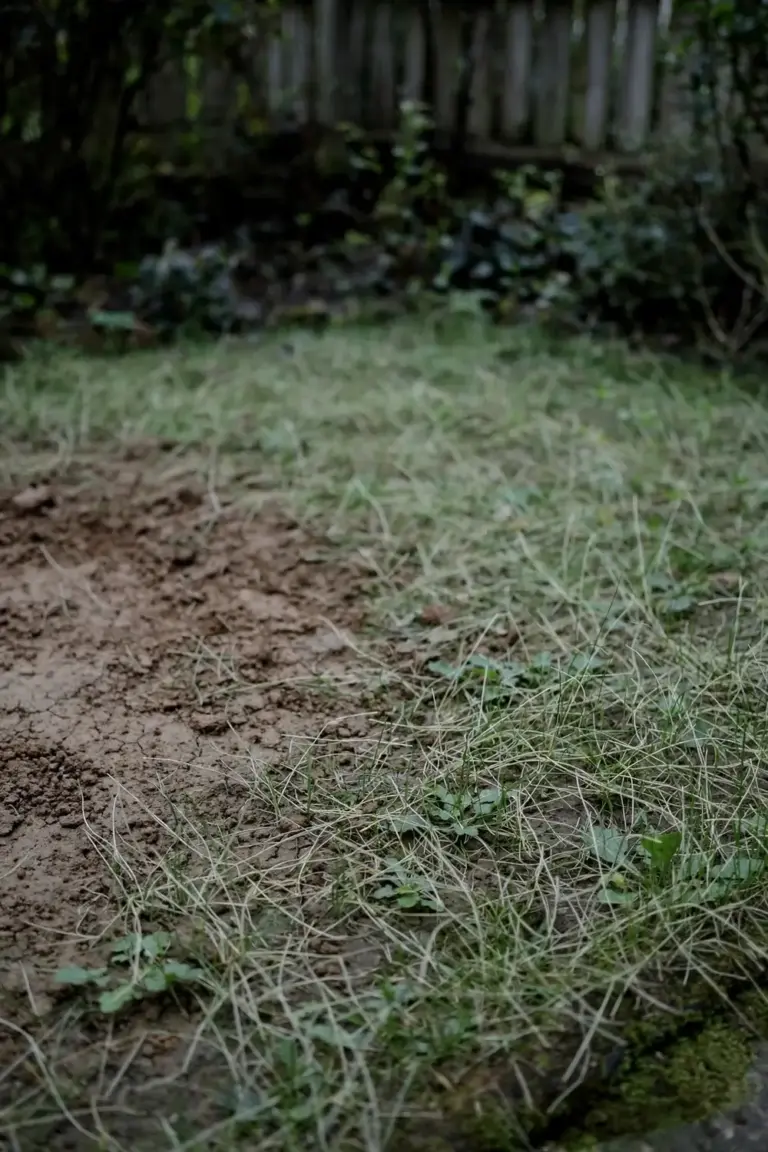
Kikuyu needs hours, not percentages, to make sense. Lawn Solutions Australia gives Eureka Kikuyu at least 5 to 6 hours of direct sunlight to thrive. A patch under a house eave or a south fence rarely reaches 5 hours. Plant kikuyu there and it thins within a season.
TifTuf sits between kikuyu and zoysia for shade. Lawn Solutions Australia gives TifTuf Hybrid Bermuda at least 5 hours of direct sunlight, and Lilydale Instant Lawn gives TifTuf 5 to 6 hours. TifTuf suits a patch with morning sun and afternoon shade, not a patch under a tree all day. Its strength is wear tolerance, not shade tolerance.
The failure mode is slow and easy to misread. A couch lawn in shade thins at the edges first, then weeds move into the gaps. The weeds are not the problem. The shade is the problem. Spraying the weeds without fixing the light buys one season, then the weeds return.
6. Match Turf to Traffic and Mow High in Shade
Match turf to traffic and mow high in shade. Shade and traffic multiply. A turf that holds at 70% shade on a quiet patch can fail at 50% shade on a path, per the Harden Park Lawns buffalo figures: 70% shade in low traffic, 60% in moderate traffic, 50% in high traffic. The same drop applies in principle to every turf on this page.
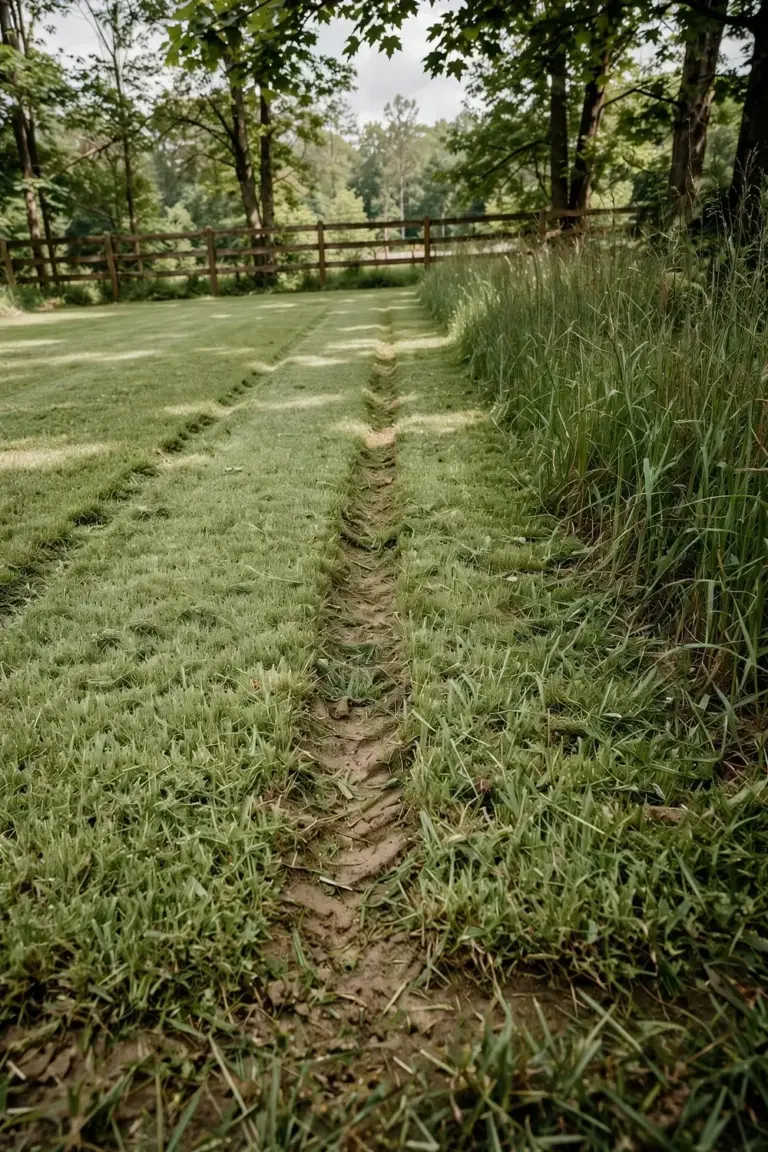
Mow high in shade. A taller blade carries more leaf area, and more leaf area catches more light. Harden Park Lawns ties every shade figure on its page to a mowing height of 60 mm or more for buffalo and zoysia, and 60 to 75 mm for couch and kikuyu. Set the mower to 60 mm in shaded patches. Leave the clippings where they fall.
Traffic rules by turf:
| Turf | Shade Ceiling | Traffic | Mow Height in Shade |
|---|---|---|---|
| Buffalo (Sir Walter) | 70% low traffic, 50% high traffic | Handles family traffic | 60 mm or more |
| Zoysia (Sir Grange) | 3 to 4 hours sun once established | No traffic | 60 mm |
| Zoysia (generic) | 55% low traffic, 40% high traffic | Light traffic only | 60 mm |
| Tall fescue | Under 4 hours sun | Avoid traffic in shade | As tall as possible |
| TifTuf Bermuda | 5 to 6 hours sun | Handles heavy traffic | Standard height |
| Couch / kikuyu | 15% shade, 20 to 25% at high mow | Handles heavy traffic in sun | 60 to 75 mm |
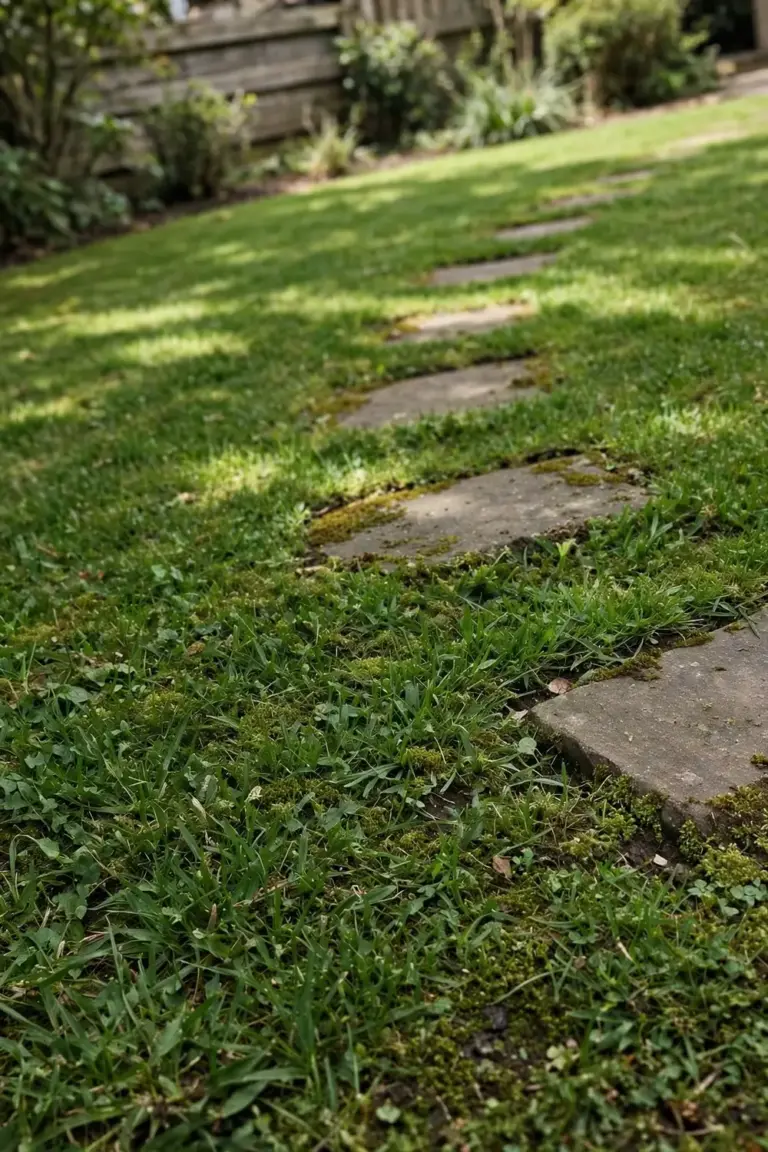
Move traffic off the shadiest patch. Lay a stepping-stone path through it. Shift the dog run to the sunny side. A turf that never gets walked on holds twice as long in shade as one that gets walked on daily. Stepping stones carry the feet and let the turf rest between them. Space the stones at a natural stride so walkers use them instead of cutting across the turf.
Mower settings matter in shade. Set the mower to 60 mm and leave it there for shaded patches. A single-height mow across the whole lawn is simpler, and the sunny patches tolerate 60 mm without complaint. Catch clippings on a shaded patch only if the layer smothers the turf. Otherwise leave them. Clippings return a little nitrogen and cost nothing.
Wear shows first as a pale path, then as bare soil. A pale path still recovers if traffic stops. Bare soil needs re-turfing or conversion to a path. Check the shadiest patch monthly in the growing season and reroute traffic at the pale-path stage. Waiting until bare soil appears costs a full re-turf. Rain makes wear worse, because wet turf tears instead of springing back. Keep feet and paws off a shaded patch for a day after heavy rain. The turf recovers faster dry than trampled wet.
7. Fix Light and Soil Before You Blame the Turf
Fix light and soil before you blame the turf. A new turf in an unchanged yard fails the same way the old turf did. Open the light first, then fix the soil, then lay turf.
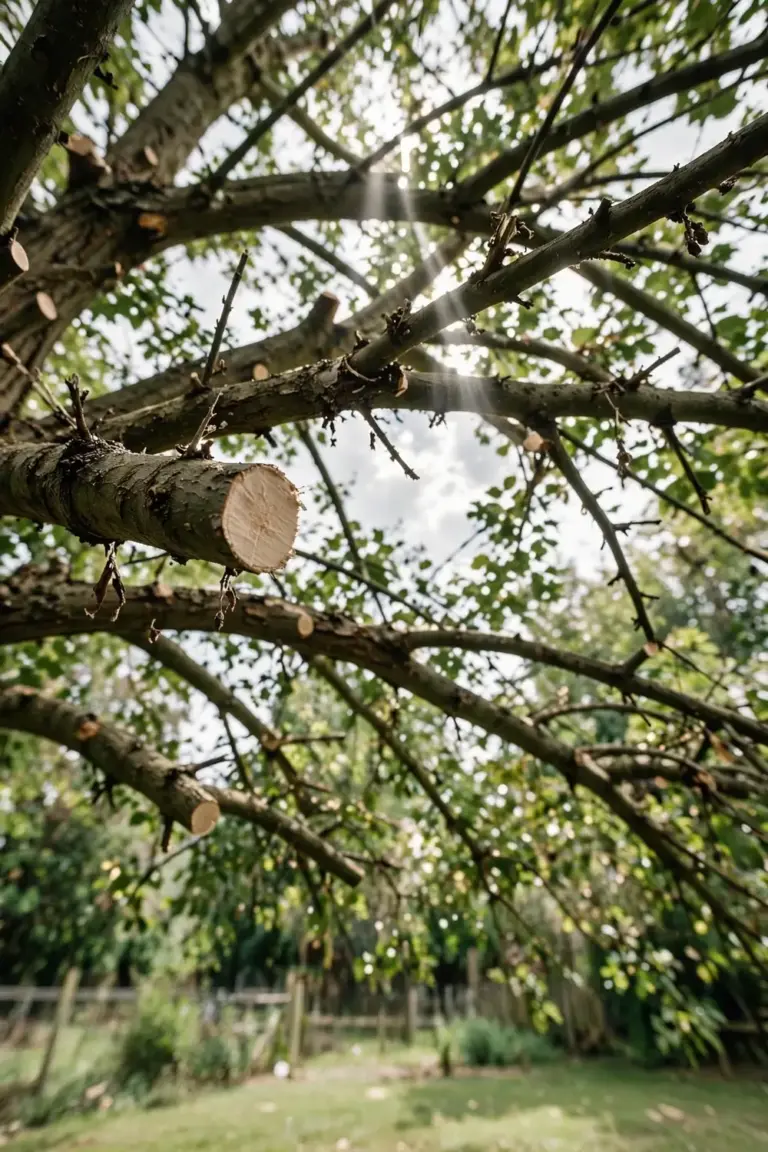
Prune the canopy. Thin overhanging branches so filtered light reaches the lawn. Lawn Solutions Australia recommends pruning back trees, bushes, and other foliage around the lawn to increase the sunlight the lawn receives. Cut one branch at a time and recheck the light. A crown lift of 1 to 2 m often buys an extra hour of sun. Hire an arborist for high branches. NC State Extension lists hiring an arborist to trim trees to allow more light to reach the grass among its shade fixes. A homeowner with a handsaw handles low branches. Anything above head height or near power lines belongs to a professional. One arborist visit every few years costs less than re-turfing a shaded lawn every spring.
Aerate compacted soil. Shade slows growth, and compacted soil slows roots further. A garden fork driven 10 cm deep and rocked back opens air channels in a small patch. A hollow-tine aerator suits a full lawn. Aerate in spring, when the turf grows fastest.
Water shaded turf less often and more deeply. Shade holds moisture longer than sun, so a shaded patch stays wet after rain. Water in the morning, and let the top 2 to 3 cm dry between waterings. NC State Extension advises irrigating shady lawns during drought with 2.5 cm of water per week. Soggy soil in shade breeds moss and disease faster than in sun.
Feed shaded turf lightly. Shade slows growth, so shaded turf eats less fertilizer than sunny turf. A spring feed timed to growth suits most lawns; the site’s best time to fertilize lawn in spring guide covers the timing. Skip the heavy summer feed on a shaded patch. The turf cannot use it, and the weeds can.
Test the soil before you feed a shaded patch. NC State Extension advises a soil test to determine how much lime is needed to adjust the pH and what fertilizer would best suit the lawn. Shade leaves pH alone. A shaded lawn that already struggles cannot absorb a wrong-rate feed. A soil test costs less than a bag of fertilizer and stops the guesswork. Feed shady lawns in fall and spring, the two seasons NC State Extension names, and skip the summer feed on a patch that grows slowly. The site’s soil health guide covers the longer soil-building job that a single test starts.
8. Know When Turf Will Not Work
Know when turf will not work. No turf grows in full shade. Per the NC State Extension floor for turfgrass, a patch with under 3 hours of direct sun, or under 50% open sky, will thin no matter which turf you lay. NC State Extension gives the floor as less than 4 hours of sunlight daily or less than 50% open sunlight. Australian buffalo stretches the floor to 3 hours. Below 3 hours, stop buying turf.
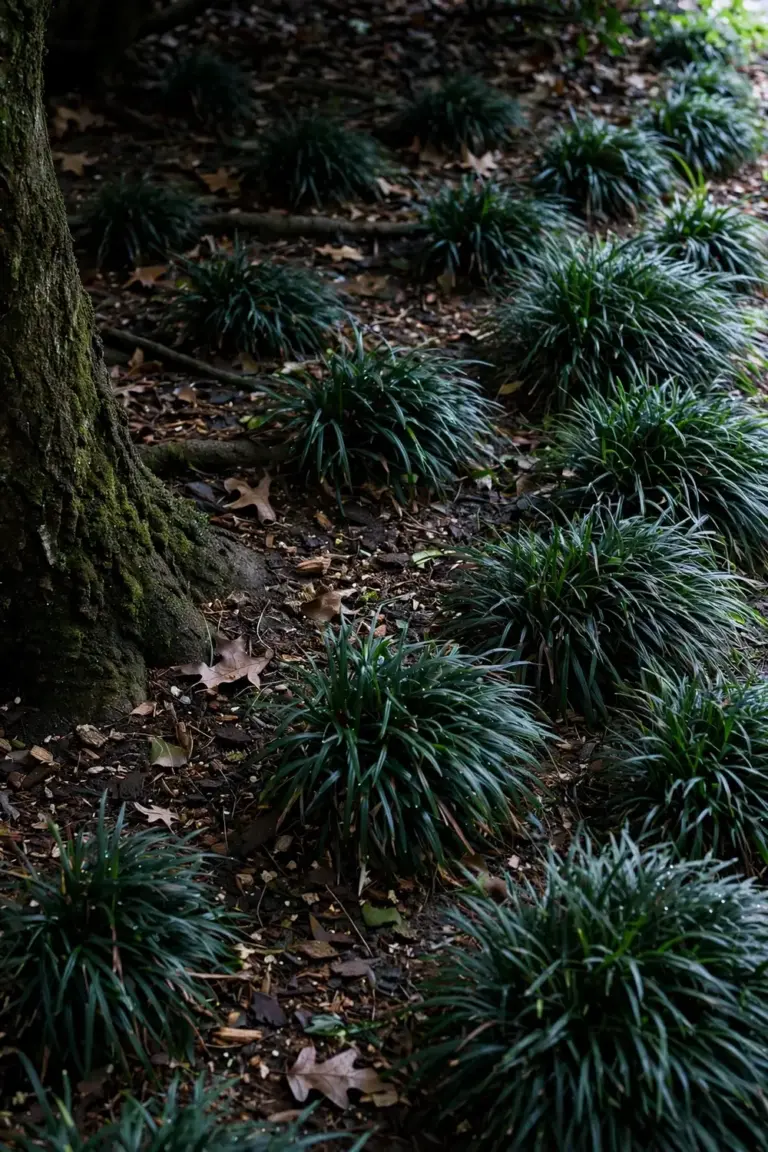
Switch to groundcover in deep shade. NC State Extension lists the alternatives: mulch tree root zones, shade groundcovers such as mondo grass, moss lawns, and native shade shrubs. Mondo grass reads as a lawn from a distance and needs no mowing. Native violet spreads through deep shade where turf dies. Both beat a mud patch.
Mulch the tree root zone. NC State Extension states that trees are healthier when the critical root zone is mulched with 5.1 to 7.6 cm of mulch out to the dripline of the tree canopy. Mulch under a tree does three jobs: it holds moisture, it stops mower damage to surface roots, and it ends the losing fight for turf under the canopy. The site’s what is mulching guide covers mulch types and depth.
Check tree roots before you blame the turf. Tree roots drink water and eat nutrients in the top soil where turf roots feed. A thinning patch in a ring around a tree trunk often means root competition, not shade alone. Mulch the ring and move on. No turf wins a fight with a mature tree’s roots.
Convert a failed patch in one weekend. Strip the dead turf with a flat spade, spread mulch 5.1 to 7.6 cm deep, then set stepping stones or plant groundcover into the mulch. The job takes an afternoon for a small patch and ends the cycle of re-turfing the same bare spot every spring. Moss moving into a bare patch tells you the patch stays damp and dark, and moss itself works as a lawn where turf will not. Leave the moss if you like the look. It needs no mowing and no feeding.
A shaded patch that stays bare after two seasons of turf is a message, not a failure. Convert it. A mulch bed with shade plants, a stepping-stone path, or a seating area uses the shade instead of fighting it. The best lawn decision is sometimes no lawn.
Frequently Asked Questions
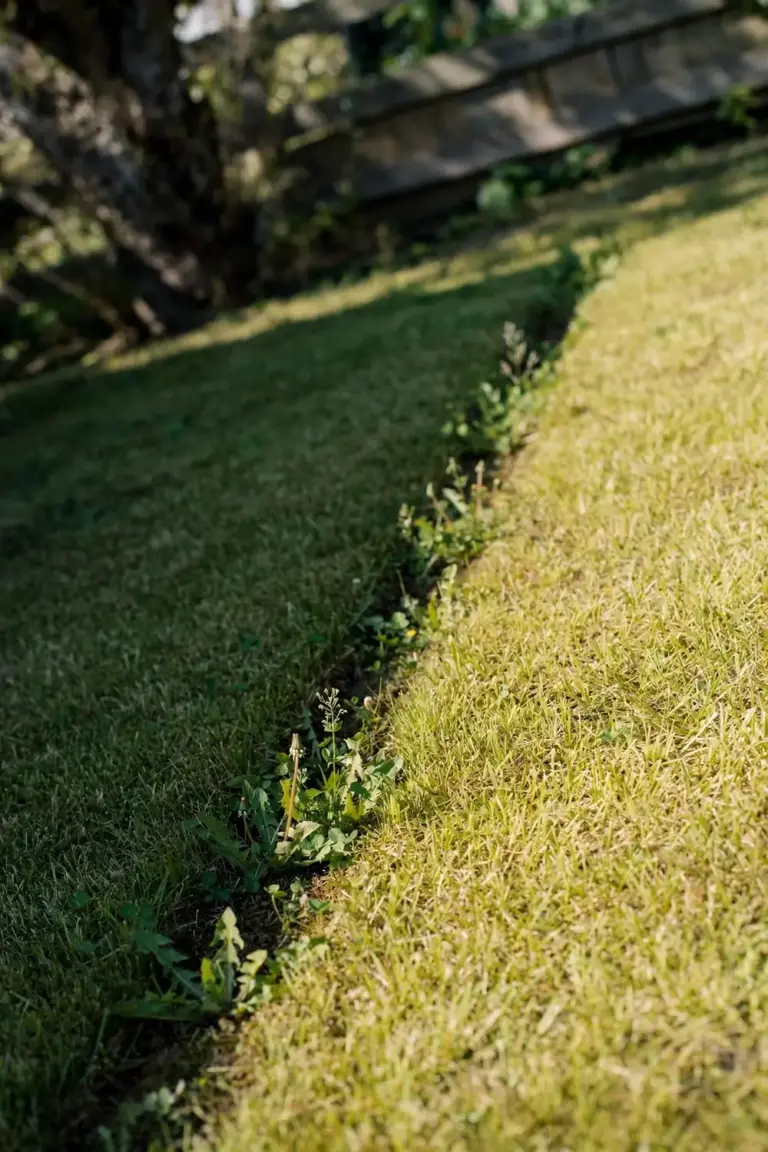
Buffalo needs 3 to 4 hours of direct sunlight each day. Lawn Solutions Australia and Lilydale Instant Lawn both give that figure for Sir Walter DNA Certified Buffalo. Harden Park Lawns adds that buffalo needs at least 3 hours of direct sun and tolerates 70% shade in low-traffic areas at a 60 mm mowing height. Below 3 hours, pick groundcover instead of turf.
Buffalo handles the deepest shade of any warm-season turf sold in Australia. Lilydale Instant Lawn puts Sir Walter DNA Certified Buffalo at 3 to 4 hours of direct sun and a maximum of 75% shade. Sir Grange Zoysia runs second at 3 to 4 hours once established, but it takes no traffic. Tall fescue covers the cool south under 4 hours.
Buffalo wins in shade. Buffalo thrives on 3 to 4 hours of direct sun and handles family traffic. Sir Grange Zoysia matches buffalo on sun hours once established, but it takes no traffic at all. Generic zoysia needs 4 to 5 hours. Pick buffalo for a lived-in lawn. Pick Sir Grange for a shaded front lawn that feet never cross.
Couch grows in light shade only. Harden Park Lawns puts couch at 15% shade tolerance, rising to 20 to 25% shade when mowed at 60 to 75 mm high. That is a patch with sun most of the day, not a shaded patch. A patch under a tree or beside a south fence needs buffalo, zoysia, or fescue. Mowing high helps couch at the margin. It does not turn a sun grass into a shade grass.
Plant groundcover or mulch the patch. NC State Extension lists mulch, moss lawns, mondo grass, and native shade shrubs as the alternatives where turf will not grow. Mondo grass reads as a lawn and needs no mowing. Native violet spreads through deep shade. Mulch the tree root zone 5.1 to 7.6 cm deep out to the dripline. A mulch bed with shade plants beats a mud patch every season.
Pick the Turf That Matches Your Shade
Pick the turf that matches your shade. Count the sun hours first. Buffalo takes 3 to 4 hours. Sir Grange takes 3 to 4 hours once established and no traffic. Tall fescue takes under 4 hours in the cool south. Couch and kikuyu need 5 to 6 hours. Mow high, keep traffic off the shadiest patch, and convert the patch to groundcover when the sun drops below 3 hours. Recheck the shade every winter, because a fence or a growing tree shifts the numbers year by year. The spring lawn care tips guide covers the seasonal routine once the turf is in.