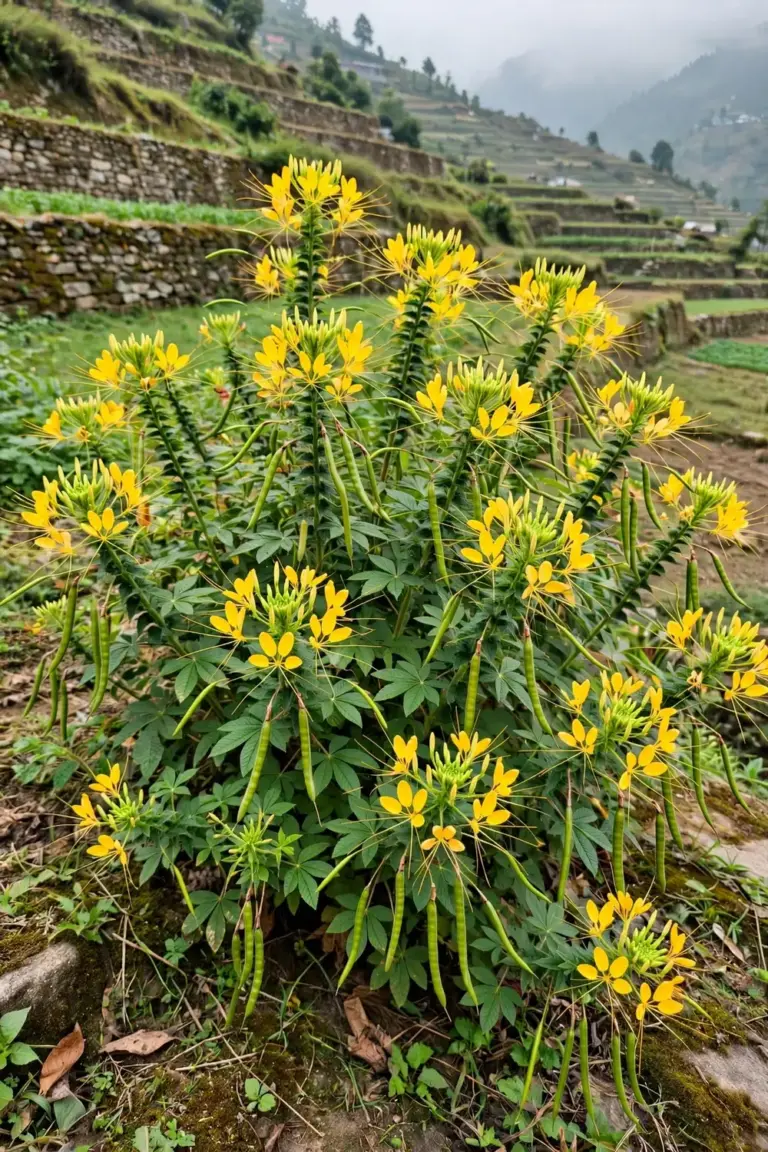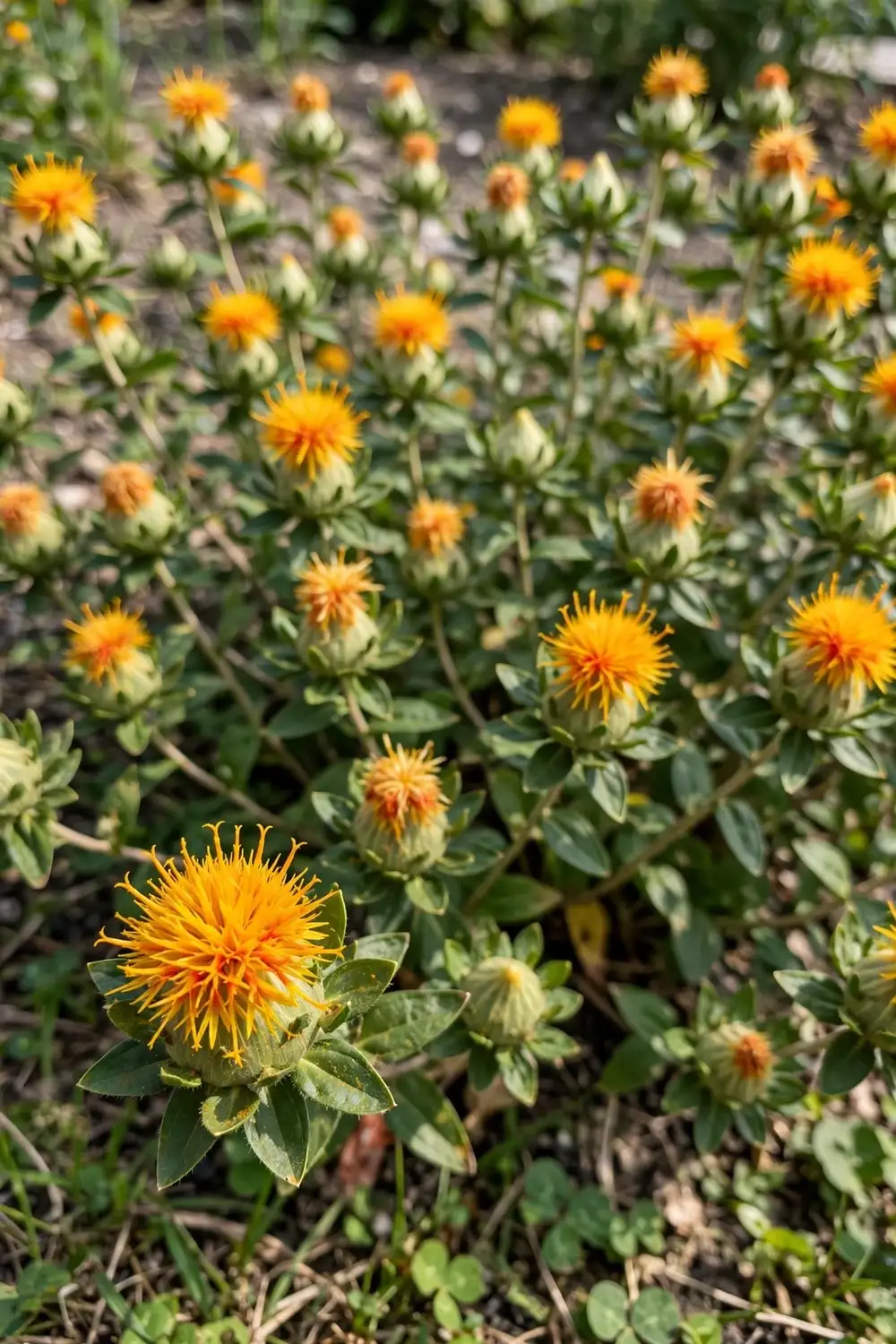

Learning how to grow safflower starts with a simple promise: direct sow the seeds 1/4 inch deep in full sun, and this thistle-like annual handles the rest. Germination takes 7 to 14 days. The hard part is not the growing. It is knowing what you planted, because safflower is constantly confused with saffron, and the two plants share almost nothing except an orange color.
Safflower is Carthamus tinctorius, known in traditional Chinese medicine as Hong Hua. It is a tough, drought-tolerant annual that was among the first plants cultivated by humans, in Mesopotamia as early as 2500 BCE, with ancient Egyptians using it as a dye. Gardeners grow it for three reasons: bright dye petals that yield both yellow and pink-red color, seed heads that feed birds and press into oil, and flowers that dry into a budget-friendly saffron substitute for the kitchen.
This guide shows how to grow safflower with the exact-match from-seed method, honest numbers, the safflower-vs-saffron disambiguation table no competitor page one owns, and a full natural-dye lane (grow, harvest petals, extract yellow first and red second). Expect germination in 7 to 14 days, first blooms around 75 days from seed, and a plant that stands 18 to 24 inches tall at maturity.
1. Safflower vs Saffron: The Disambiguation Table
Clear this up before you buy seeds. Safflower and saffron are different plants, different prices, and different products.
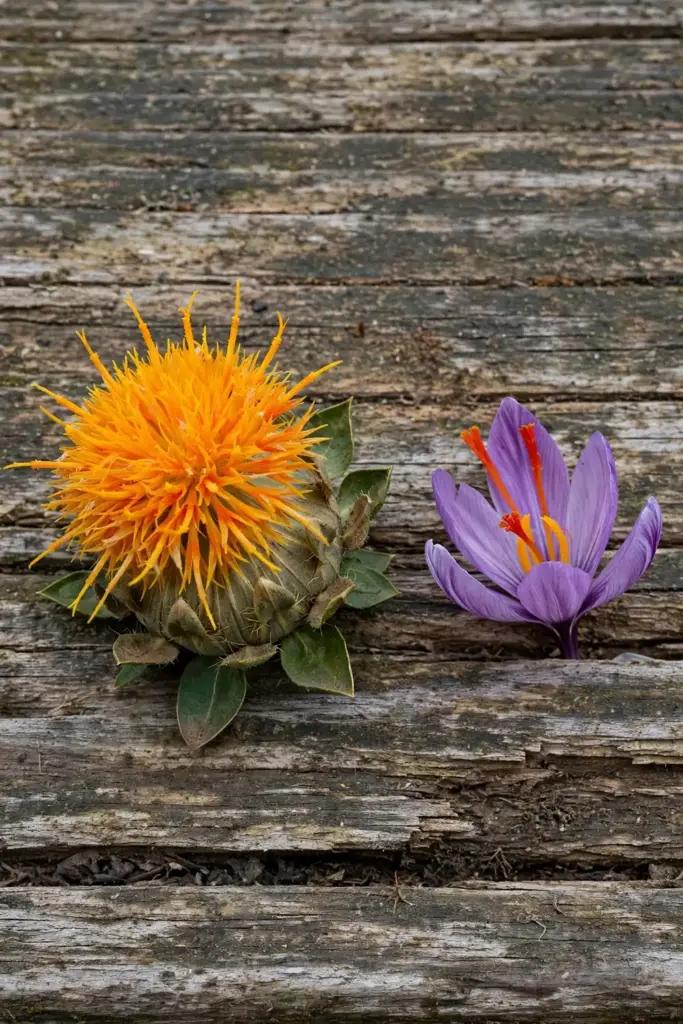
| Feature | Safflower | Saffron |
|---|---|---|
| Latin name | Carthamus tinctorius | Crocus sativus |
| Plant type | Thistle-like annual, 18 to 24 inches tall | Bulbous perennial crocus, a few inches tall |
| What is harvested | Whole flower petals (dye, tea, spice) | Three red stigmas per flower (spice only) |
| Color source | Safflor yellow A and carthamin (red) | Crocin and safranal |
| Price class | Ordinary seed packets | The most expensive spice by weight |
| Grow difficulty | Easy annual, direct sow | Fussy corms, hand-harvested stigmas |
Safflower petals are sometimes sold as “American saffron” or used as a saffron substitute in cooking. They add color to rice and tea. They do not add saffron’s flavor or aroma. Buy them for what they are: an affordable dye and color plant, not a saffron replacement.
2. What Growing Safflower Takes: The Honest Summary
Safflower is one of the easiest annuals a home gardener can grow. It wants full sun, well-drained soil, and a direct sowing in spring. The taproot goes deep and resents transplanting, so indoor starts are the backup plan, not the main plan. Soil at 40°F is the cited minimum for direct seeding, though warmer soil speeds germination.
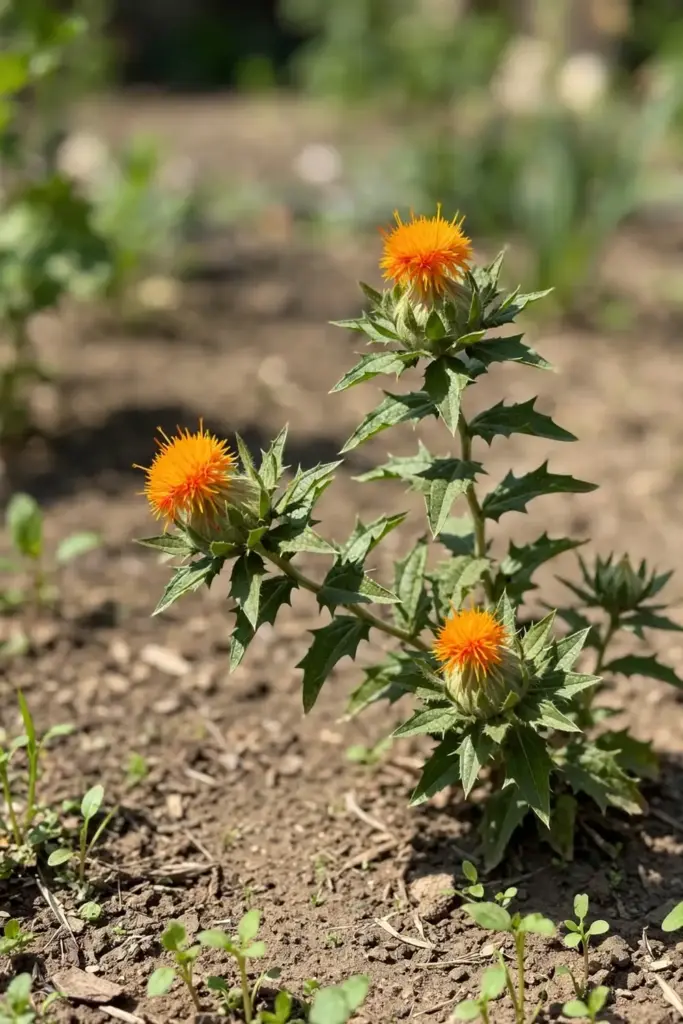
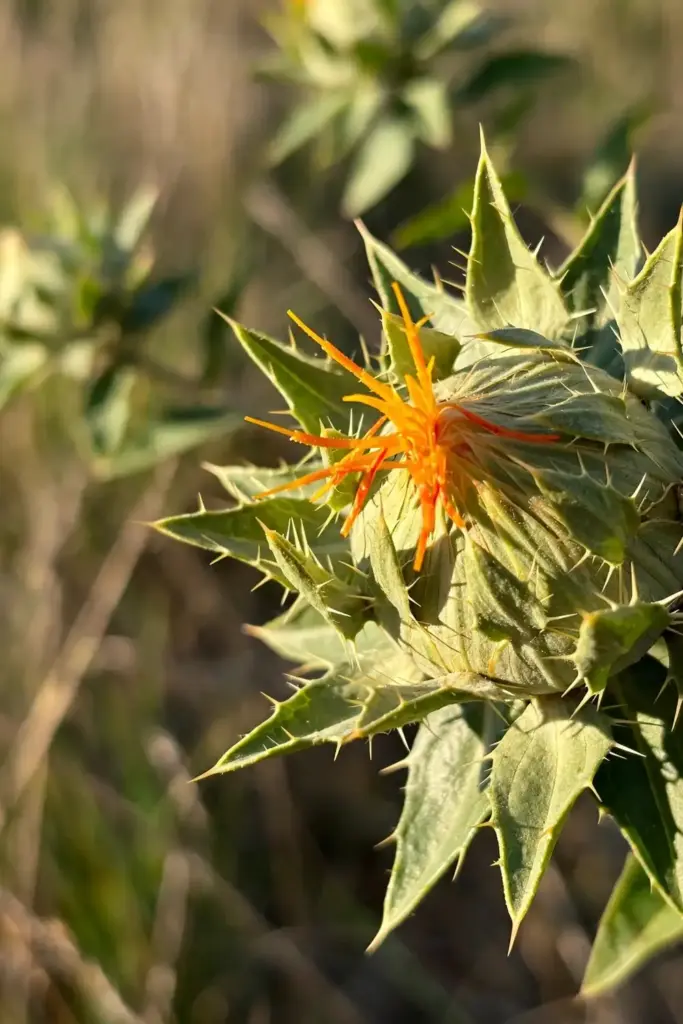
The honest catch is the harvest, not the growing, because mature plants are spiny. The stiff, serrated bracts around the flower heads are sharp enough that every dye grower wears gloves at harvest. Farm & Folk, who grew it in an arid high-desert garden, note that the plant is beautiful but vicious to handle.
Plan on 75 days from seed to first bloom in decent conditions. Each plant produces multiple flower heads over several weeks, and you pick petals continuously while letting later heads go to seed. That is the whole season: sow once, pick petals for dye and tea, then let the heads dry for seed.
3. Where and When to Plant Safflower
Safflower is a warm-season annual with a long taproot and a preference for heat. Give it the sunniest bed you have, at least 6 hours of direct sun, and soil that drains freely. It tolerates poor-to-average soil and actually dislikes rich, heavily fertilized beds, which push leafy growth at the expense of flowers.
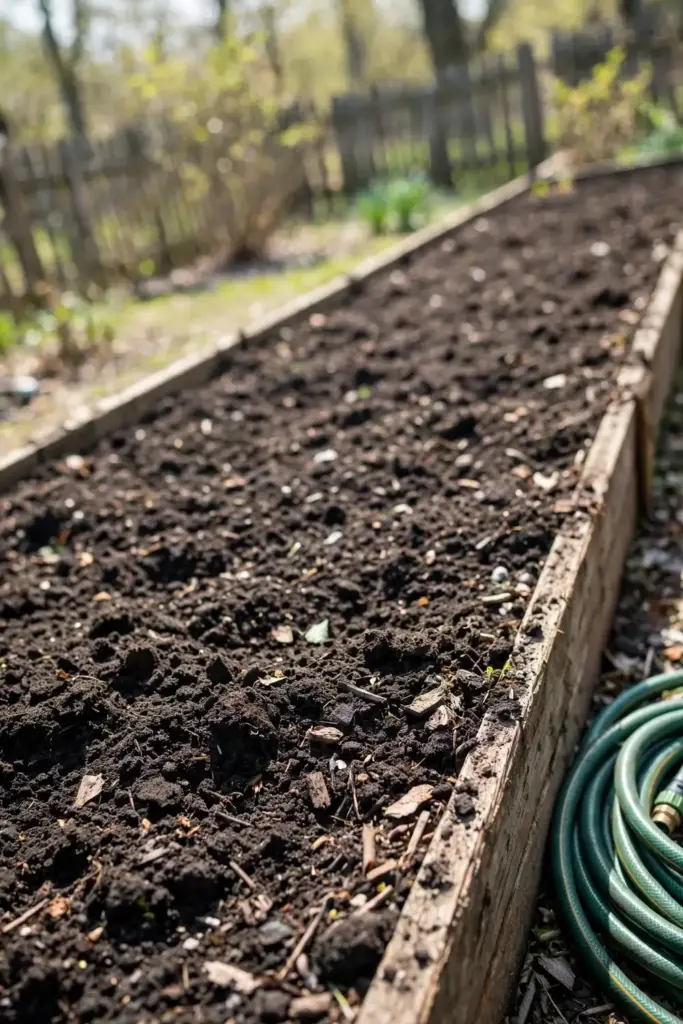
Sow in early to late spring, after the danger of hard frost has passed. Most home growers wait until soil feels warm to the hand, since cold wet soil slows everything down. Germination runs 7 to 14 days in decent conditions.
Safflower suits USDA zones across most of the United States as a summer annual, and it handles drought once established. Its deep taproot is the reason the plant survives on modest rainfall once established. In a rainy climate, the enemy is wet feet, not drought. Pick the bed that dries fastest after rain.
4. Seed Selection and Viability
Buy safflower seed from a reputable seed seller, not from a spice jar. Culinary safflower petals are a different product, and birdseed mixes sometimes contain safflower seed, but germination rates on birdseed are unreliable.
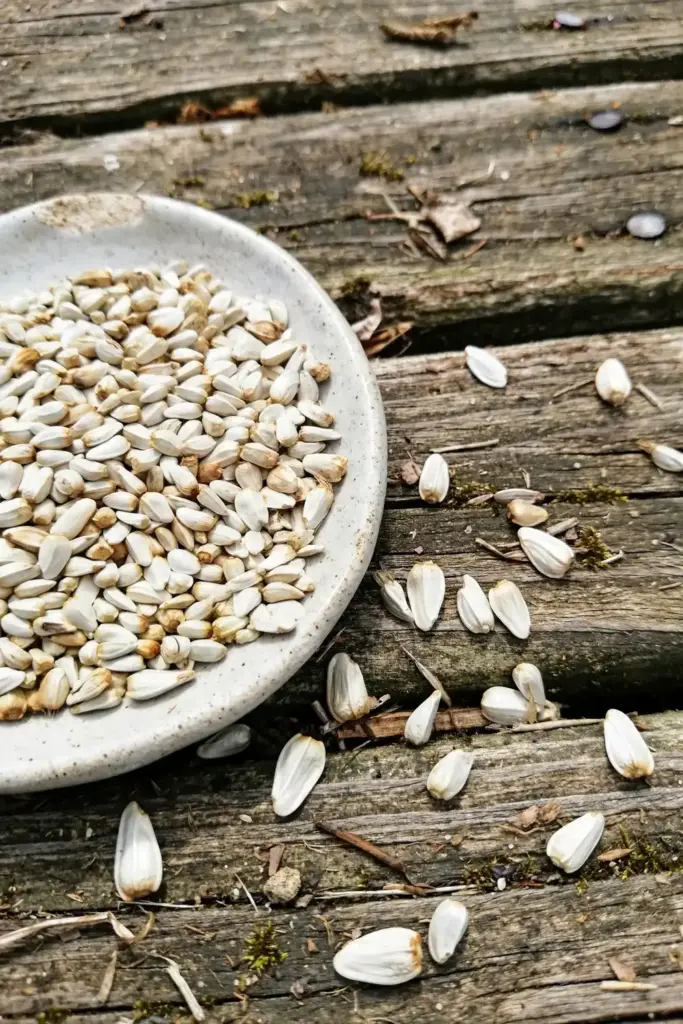
Look for packets labeled Carthamus tinctorius. Some sellers market ornamental mixes with extra-orange blooms; for dye work, the classic orange-flowered types give the strongest red. Standard annual flower seed is viable for 2 to 3 years if stored cool and dry, and safflower follows the same rule. A quick germination test on a damp paper towel tells you where a leftover packet stands: sow 10 seeds, count the sprouts after 10 days.
One seed packet sows a generous bed. At 6 to 12 inches spacing, a single packet plants a row 10 to 20 feet long, which is more than enough for a home dye garden.
5. Direct Sowing Step by Step
Direct sowing is the main method because the taproot hates transplanting. Farm & Folk state it plainly: direct seed rather than transplant. Every step below follows that rule.
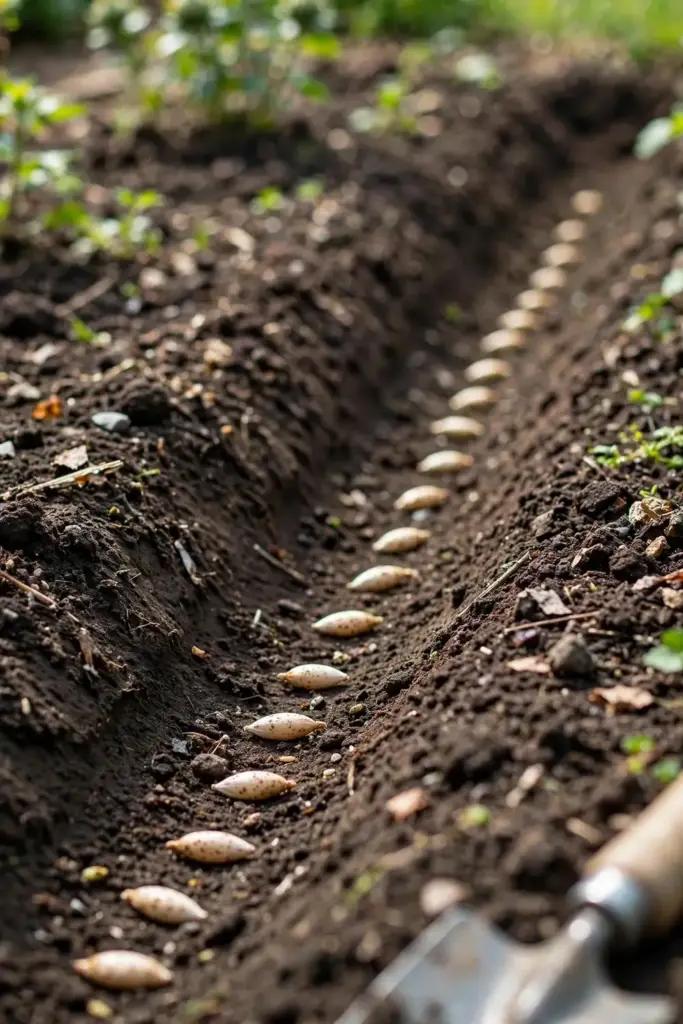
Step 1: Prepare a sunny bed with loose, well-drained soil. Loosen the top 6 to 8 inches and rake it level. Skip heavy compost; average soil is fine.
Step 2: Wait for the right window. Sow after frost danger, when soil has warmed. Early to late spring covers most climates.
Step 3: Sow 1/4 inch deep, the number every source agrees on. Gardenista’s safflower growing guide and Farm & Folk’s dye-cultivation series both cite 1/4 inch, with up to 1/2 inch allowed in loose sandy soil.
Step 4: Space seeds 6 to 12 inches apart in rows. Or sow in groups of 2 to 4 seeds every 10 to 12 inches and thin later; Farm & Folk thins to 9 inches once seedlings reach a few inches tall.
Step 5: Water gently. Keep the bed evenly moist until germination, which takes 7 to 14 days. Then back off; established safflower prefers to be a little dry.
Step 6: Thin on time. Crowded seedlings compete and produce fewer, smaller heads. Thin to final spacing when seedlings are 3 to 4 inches tall.
The indoor-start alternative exists but stays in second place. Seed sellers cite starting indoors 8 to 10 weeks before the last frost as the alternative, in deep cells or soil blocks that move with the root ball intact. Gardenista’s guide covers the indoor-start option for gardeners with short springs. If you must start indoors, use the deepest containers you have and transplant before roots circle. For most gardeners, direct sowing in spring is simpler and more reliable.
6. Soil and Feeding
Safflower wants well-drained, loamy or sandy soil and tolerates lean ground. Gardenista’s safflower guide makes the same point: poor-to-average, well-drained soil, and no rich soil or heavy fertilizer. This is a plant that evolved for dry country, and pampering it backfires.
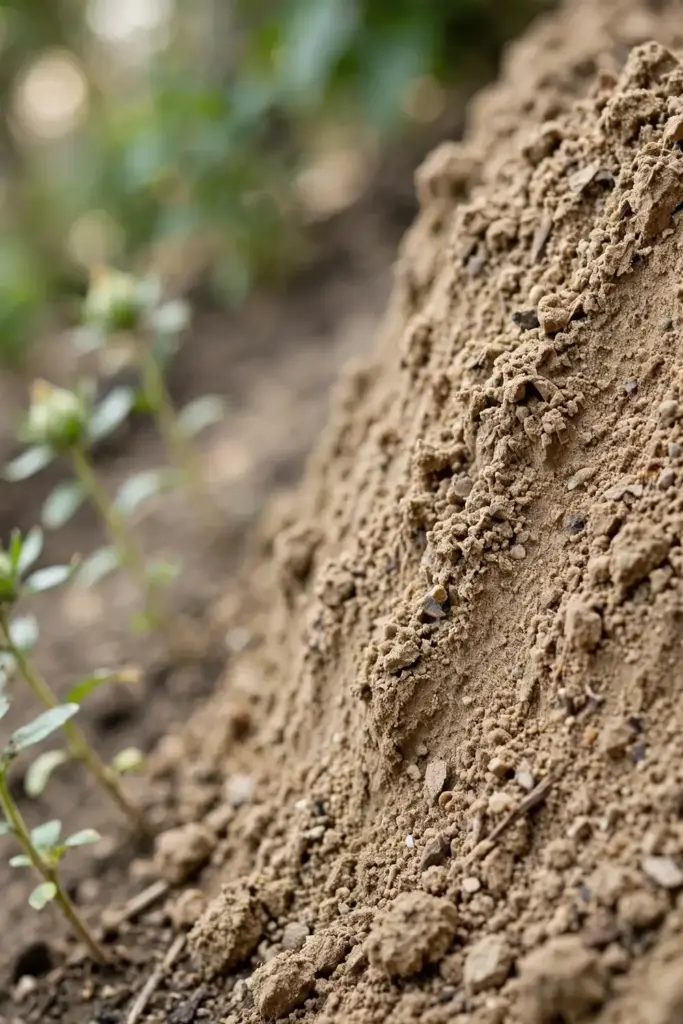
If your soil is heavy clay, work in coarse sand or fine gravel and plant on a slight mound so water drains away from the crown. A soil test helps here; safflower is not picky about pH but performs best near neutral. For a refresher on building the kind of living, well-drained soil this plant likes, the soil health and pest resistance guide covers the foundation work that pays off for every annual in the bed.
Feed lightly or not at all. A modest side-dressing of balanced fertilizer at planting is plenty in poor soil. Skip the extra nitrogen. Overfed safflower grows tall, flops over, and blooms late.
7. Watering
Water to establish, then let the taproot do its job. Keep the seedbed evenly moist through germination and the first few weeks, then taper off. Mature safflower is genuinely drought tolerant and prefers deep, infrequent watering over daily sprinkles.
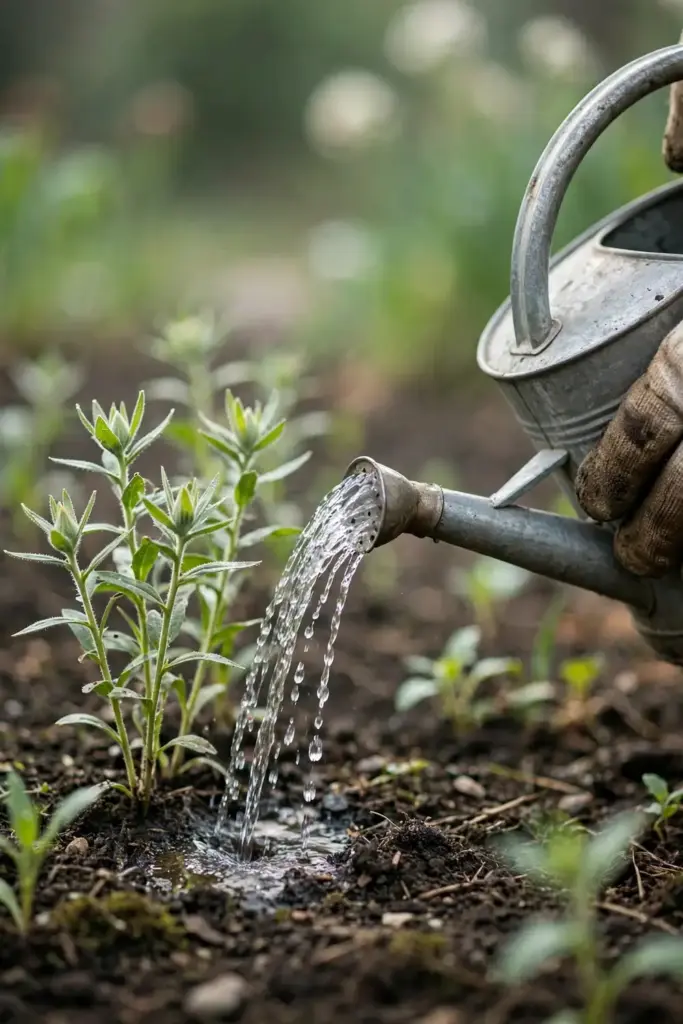
In most temperate gardens, rainfall covers the plant after establishment. Water only during extended dry spells, and water at the base to keep foliage dry. Soggy soil invites the root rots that are this plant’s main weakness, so the watering rule is simple: when in doubt, skip it.
Container growers water more often, since pots dry fast, but the same principle holds. Let the top inch of mix dry between waterings.
8. Pests and Diseases
Safflower’s pest list is short, which is part of its charm. Aphids sometimes colonize the buds; a strong jet of water dislodges them, and lady beetles usually follow. Grasshoppers chew leaves in dry regions but rarely kill established plants. Birds are the real harvest pest: finches and sparrows love the ripening seed heads, and the people-also-ask results on Google confirm gardeners notice. Net the heads you intend to save for seed, or share the earliest heads and protect the rest.
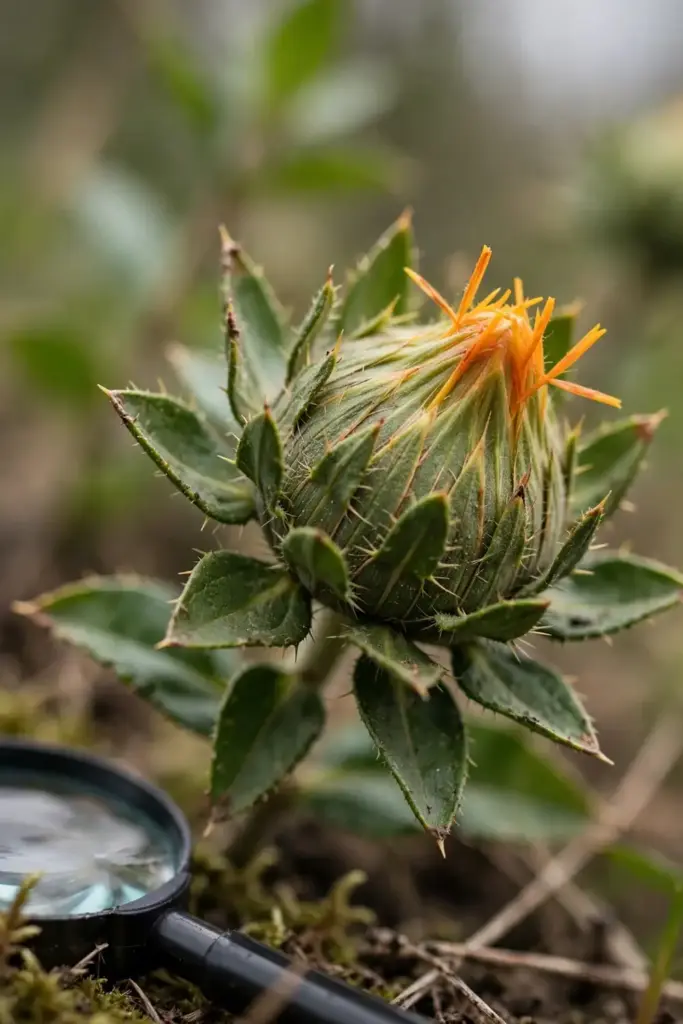
Disease pressure stays low in dry air and well-drained soil. The risks rise with wet weather: Alternaria leaf spot shows as dark spots with yellow halos, and root rots follow waterlogged soil. Prevention beats treatment. Space plants for airflow, water at the base, and rotate the bed so safflower does not follow itself or close relatives year after year.
9. Flowers and Petal Harvest for Dye and Tea
First blooms open about 75 days after sowing, and each plant keeps producing heads for weeks. The flowers open yellow-orange and deepen to a rich orange-red as they mature. This is the harvest window that matters for every use below.
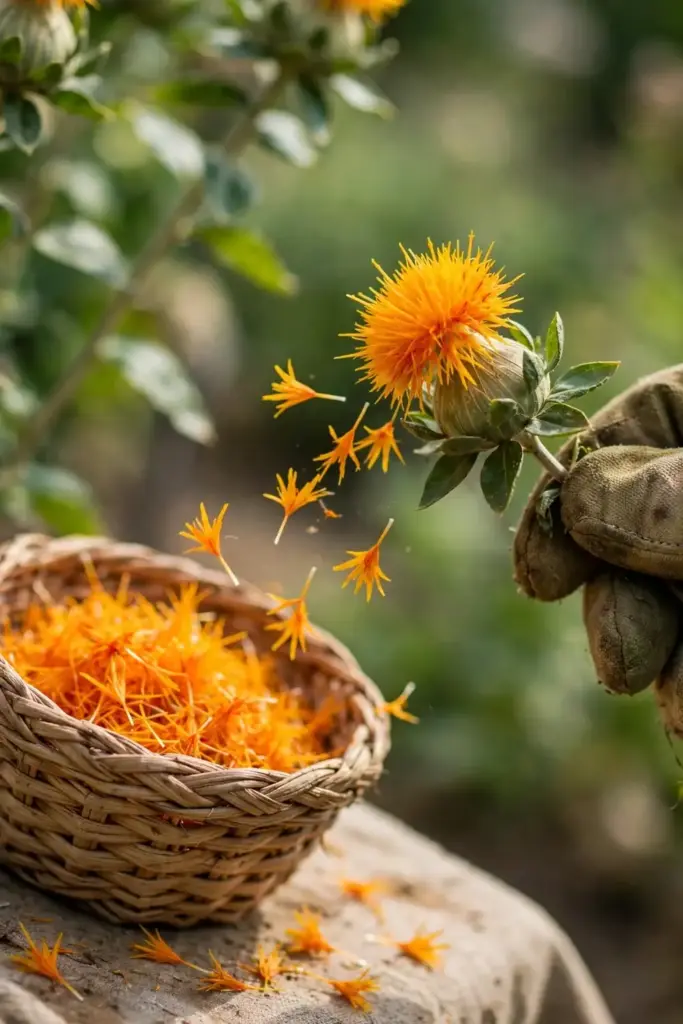
Pick petals for dye and tea when the heads are fully open and vividly colored, ideally in the morning after dew dries. Pull the petals gently from the head; the bracts are spiny, so wear gloves. Start picking at first bloom and harvest about weekly through the season. That rhythm comes straight from Farm & Folk’s dye-cultivation series.
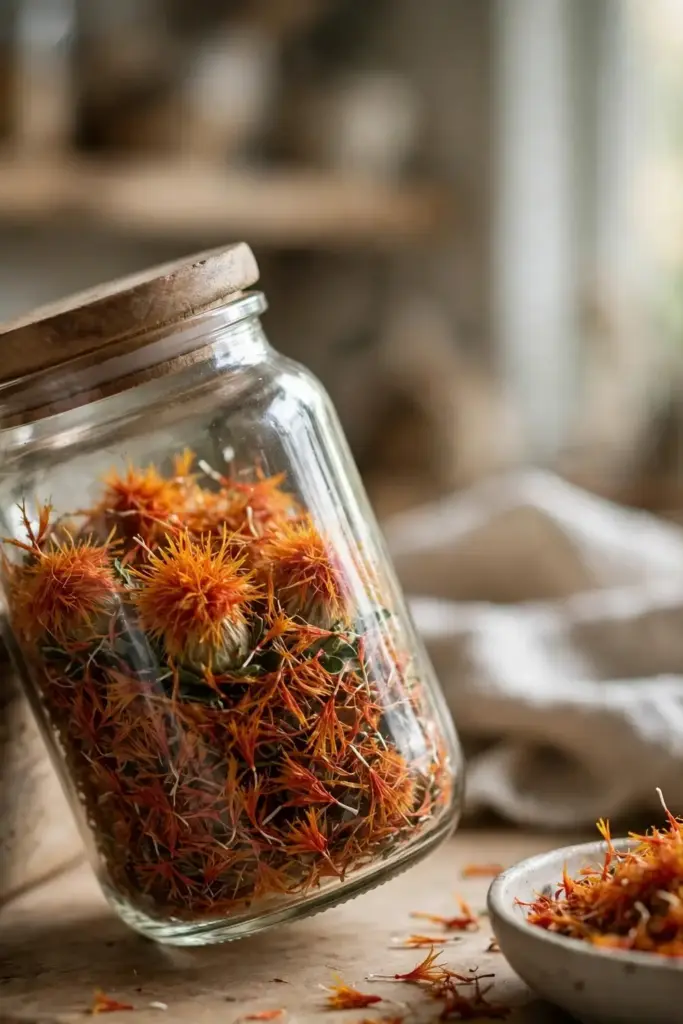
Dry petals promptly in a single layer, out of direct sun, with good airflow. They are ready when they feel papery and crumble. Store dried petals in a sealed jar away from light. Fresh petals can be used immediately, but dye recipes measure by dry weight, and one dyer’s trial found 11 grams of fresh petals dried down to 5 grams, so fresh harvests need about double the quantity.
For tea and kitchen use, the framing stays conservative. Safflower petals are a traditional color ingredient and a mild herbal tea, and Hong Hua has a long record in traditional Chinese medicine. Treat petals as a culinary color and a gentle tea, not as medicine. The scout research flags a pregnancy caution for safflower preparations, so anyone pregnant, nursing, or on medication should check with a clinician before using safflower tea regularly. If you grow herbs for the teapot, the green tea herbs guide covers the true tea plant and its relatives.
10. The Dye Lane: Yellow First, Red Second
This is the lane that makes safflower special, and it is highly contestable: page one on every engine is small dye blogs and sellers, with no giant authority and no growit.wiki/ presence. The extraction framing is consistent everywhere and becomes the centerpiece of this section.
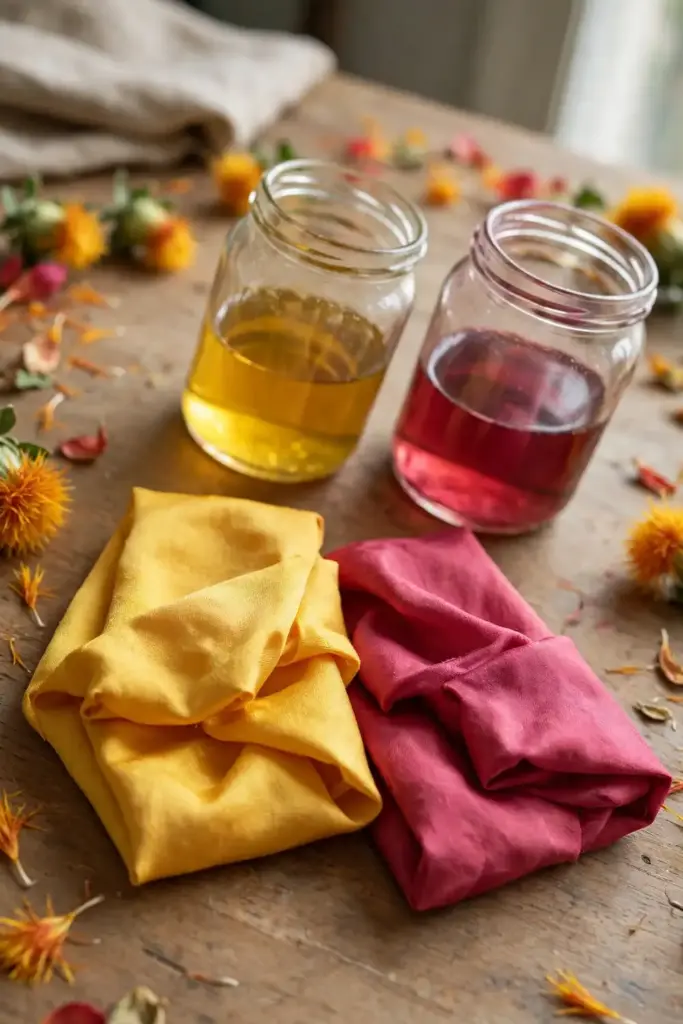
Safflower petals hold two dyes. The yellow dyes (safflor yellow A and related compounds) wash out first in cold water. The red dye, carthamin, needs an alkaline bath to release. Every reliable dye source describes the same sequence.
Yellow extraction. Soak the petals in cold water, ideally overnight. Botanical Colors’ safflower instructions describe an overnight soak to pull the yellow, repeated with fresh cold water until the water runs clear. The yellow can dye mordanted fiber on its own, though it fades faster than the red.
Red extraction. After the yellow is washed out, move the petals to an alkaline bath around pH 11 to release the carthamin, then fix the color with a vinegar bath around pH 6. Elka Sustainable Textiles documents both dyes in detail: the yellow is water soluble and quick to fade, while the red carthamin is the prize and needs the high-pH step.
How much petal. Dye recipes measure dyestuff as a percentage of the weight of fiber (WOF). Safflower recipes call for 100 to 200 percent WOF, which means the petals weigh one to two times as much as the dry fiber being dyed. At 100 percent WOF you need a lot of petals even for a small item, and WOF is figured on dry petal weight. This is why dye gardeners plant safflower in quantity: a dozen plants will not dye a sweater.
Fiber notes. No mordant is strictly required for the safflower pink on cellulose fibers, though some dyers mordant out of curiosity. Protein fibers like wool take both colors. Expect the red to be beautiful but not the most lightfast dye in the cabinet; wild dye suppliers describe it honestly as a good red with modest lightfastness.
The quick summary table:
| Step | What happens | Key detail |
|---|---|---|
| Pick | Harvest open, vivid heads weekly | Wear gloves; bracts are spiny |
| Dry | Single layer, shade, airflow | Store sealed, away from light |
| Yellow out | Cold-water soak, repeat until clear | Overnight soak per Botanical Colors |
| Red out | Alkaline bath near pH 11 | Carthamin releases here |
| Fix | Vinegar bath near pH 6 | Sets the pink-red |
| Measure | 100 to 200 percent WOF, dry weight | Fresh petals need double |
11. Seed Harvest for Oil and Birdseed
If dye petals are the first harvest, seed is the second. Stop picking petals from your chosen seed heads 30 days before your expected first frost, and let those heads mature fully on the plant. Dye-growing guides give this timing explicitly, and it protects the seed crop.
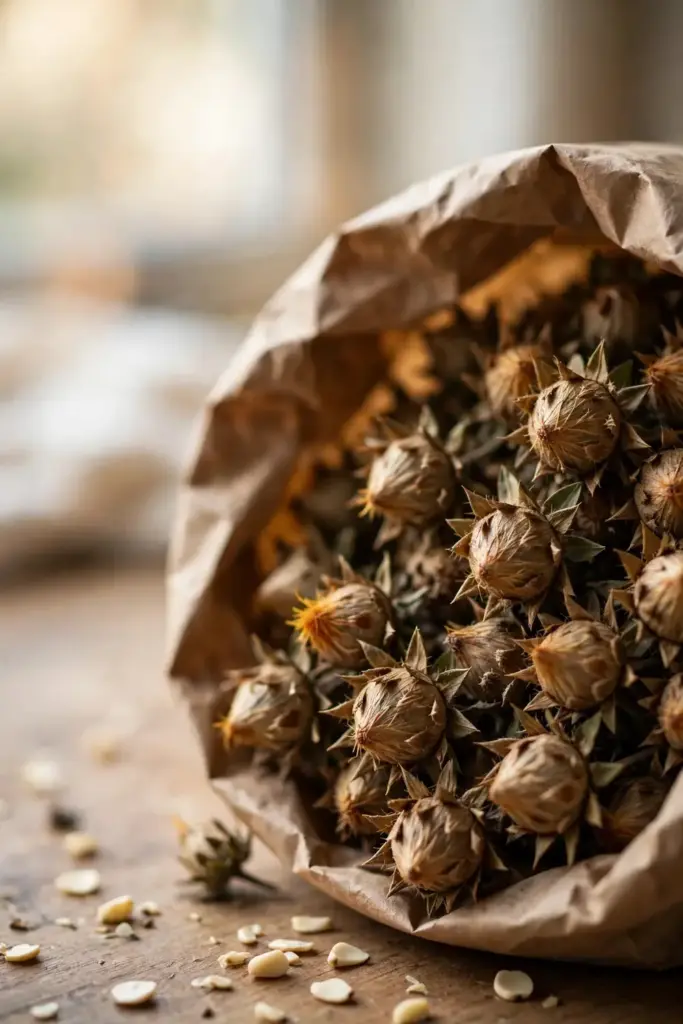
A head is ready when it turns brown and dry and the seeds rattle slightly. Cut the heads with a few inches of stem, wearing gloves, and finish drying them in a paper bag in a warm, airy spot. Rub or thresh the heads over a bucket to release the seeds, then winnow away the chaff.
Safflower seed has two home uses. Crushed seed presses into a light cooking oil, though home pressing is a project for the well-equipped. The simpler use is birdseed: cardinals, chickadees, and titmice relish safflower seed, and one of Google’s people-also-ask questions is literally which birds will not eat it (starlings and grackles tend to pass it by, which is why some feeders prefer it). Save seed for next spring in a sealed jar in a cool, dry place; it stays viable 2 to 3 years.
12. Growing Safflower in Containers
Safflower grows in pots, but the taproot sets the terms. Choose the deepest container you can manage, at least 12 inches deep and wide, with drainage holes. A standard 5-gallon bucket with holes drilled in the bottom works; a shallow window box does not.
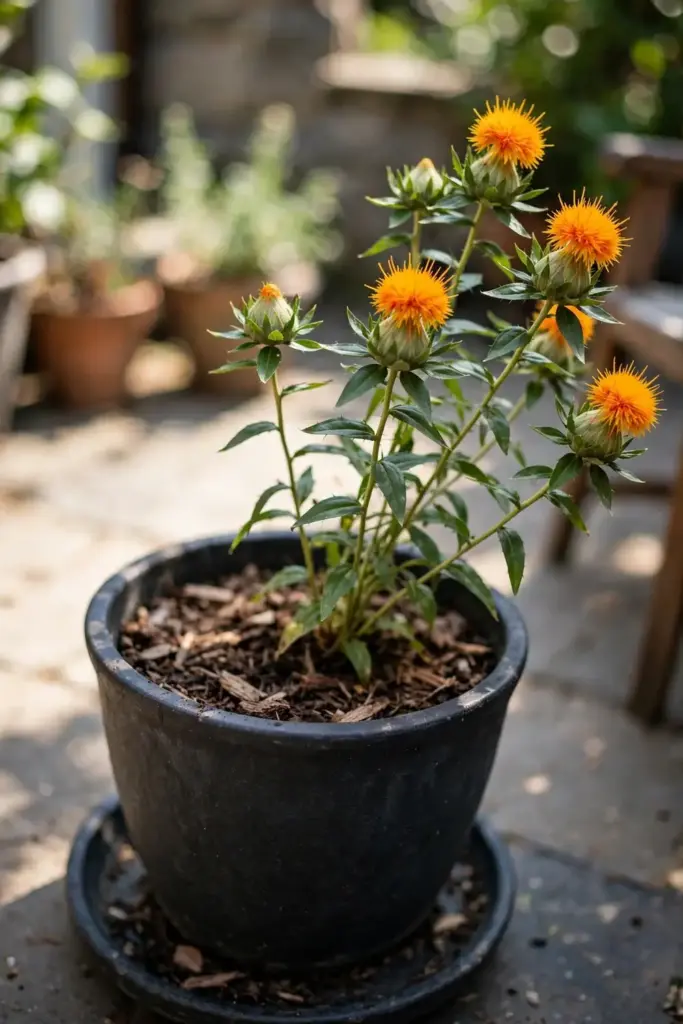
Fill with a lean, fast-draining mix: two parts potting soil to one part coarse sand or perlite. Sow 2 to 3 seeds 1/4 inch deep per pot and thin to the single strongest seedling. One plant per pot. Crowding in a container produces spindly stems and few heads, so be ruthless at thinning time.
Water when the top inch dries out. Pots dry faster than garden beds, so expect to water more often during heat. Feed once, lightly, at mid-season if growth looks pale. Set pots in the sunniest spot available and turn them occasionally so stems grow straight. Harvest petals and seed exactly as described above, gloves and all.
13. Hong Hua: The TCM Name
In traditional Chinese medicine, safflower petals are Hong Hua, one of the classic herbs for moving circulation in the traditional framework. The name shows up on materia medica pages and in formula references across the English-language TCM web. This article treats Hong Hua as an entity note, not a medical claim: the petals you grow are the same botanical material, Carthamus tinctorius, that the tradition names.
Two cautions travel with the name. First, the pregnancy caution flagged in the scout research applies to concentrated safflower preparations; culinary-color amounts in food are a different matter, but regular medicinal-strength use deserves a clinician’s input. Second, buy seed for growing and petals for dyeing from garden and dye suppliers, not from TCM pharmacies, where products are processed for a different purpose. Keep the lanes separate: grow it, dye with it, cook with it lightly, and leave the medicine to professionals.
14. Common Mistakes
Transplanting seedlings. The taproot resents disturbance, and moved seedlings sulk or die. Direct sow is the method. If you start indoors, transplant only with the root ball fully intact, and only as a backup plan.
Sowing too deep. The agreed depth is 1/4 inch. Seeds buried an inch deep in heavy soil rot before they emerge. In loose sandy soil, 1/2 inch is the maximum.
Rich soil and heavy feeding. Safflower in compost-heavy, nitrogen-rich beds grows tall and leafy, flops, and blooms late. Lean soil grows better flowers.
Skipping the thinning. Unthinned seedlings compete into spindly stems with small heads. Thin to 6 to 12 inches when seedlings are a few inches tall. Those five minutes of thinning pay off more than any other job in the season.
Harvesting petals barehanded. The bracts are genuinely spiny. Every dye grower wears gloves. Keep a dedicated pair with your dye supplies.
Confusing it with saffron at seed-buying time. “American saffron” on a seed packet means safflower, Carthamus tinctorius. If the price looks like ordinary flower seed, it is safflower. Real saffron comes as corms at a very different price.
Letting seed heads get wet. Mature heads left through rainy weather mold on the plant. Cut seed heads as soon as they are brown and dry, and finish them under cover.
15. Troubleshooting
Seeds never came up. The usual causes are sowing too deep, cold wet soil, or old seed. Re-sow at 1/4 inch once soil warms, and test leftover seed on a damp paper towel first.
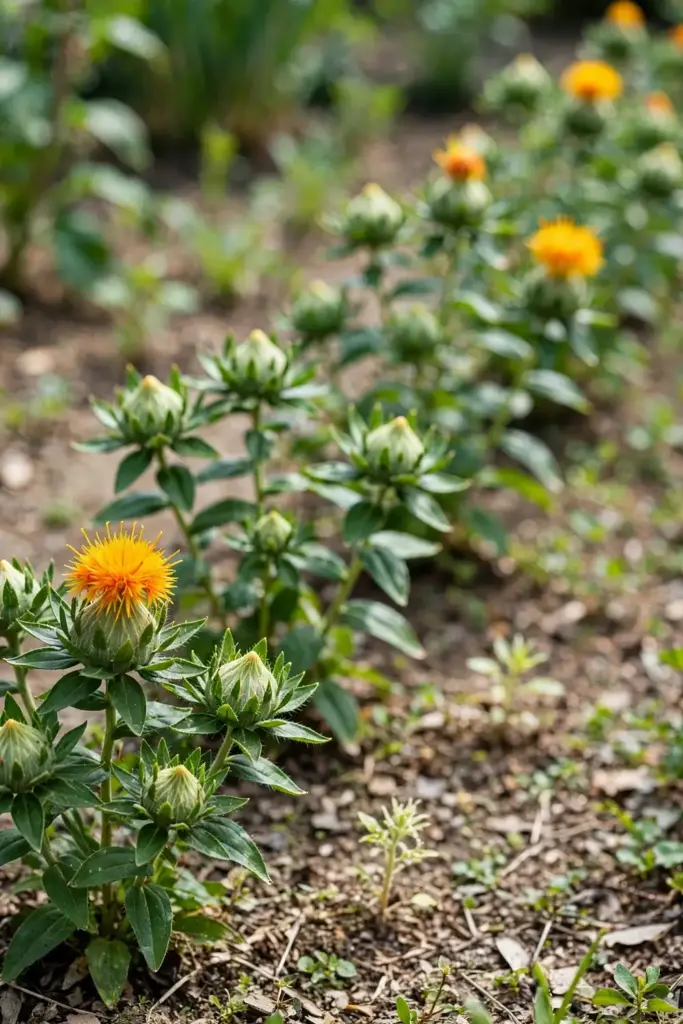
Seedlings are leggy and pale. Too little light or too much crowding. Thin hard, and make sure the bed gets full sun. Leggy indoor starts rarely recover; direct sow the next round.
Plants grow tall but will not bloom. Excess nitrogen is the prime suspect, followed by too much shade. Hold the fertilizer, and site the next planting in the sunniest bed.
Buds form but blast before opening. Heat stress at flowering or inconsistent water during bud set can cause it. Mulch lightly to even out soil moisture, and water deeply during dry spells while buds form.
Leaves show dark spots with yellow halos. Likely Alternaria leaf spot, worse in wet weather. Improve airflow, water at the base, keep foliage dry, and rotate the bed next year. Remove badly affected leaves; do not compost them.
Birds strip the seed heads. Net the heads you want to keep, using mesh fine enough to exclude finches. Alternatively, cut heads a touch early and finish drying indoors in paper bags.
Dye bath gives only yellow, no red. The red carthamin needs the alkaline step. Make sure the yellow is fully washed out first with repeated cold soaks, then move to the high-pH bath. Skipping straight to alkaline water muddies both colors.
16. Frequently Asked Questions
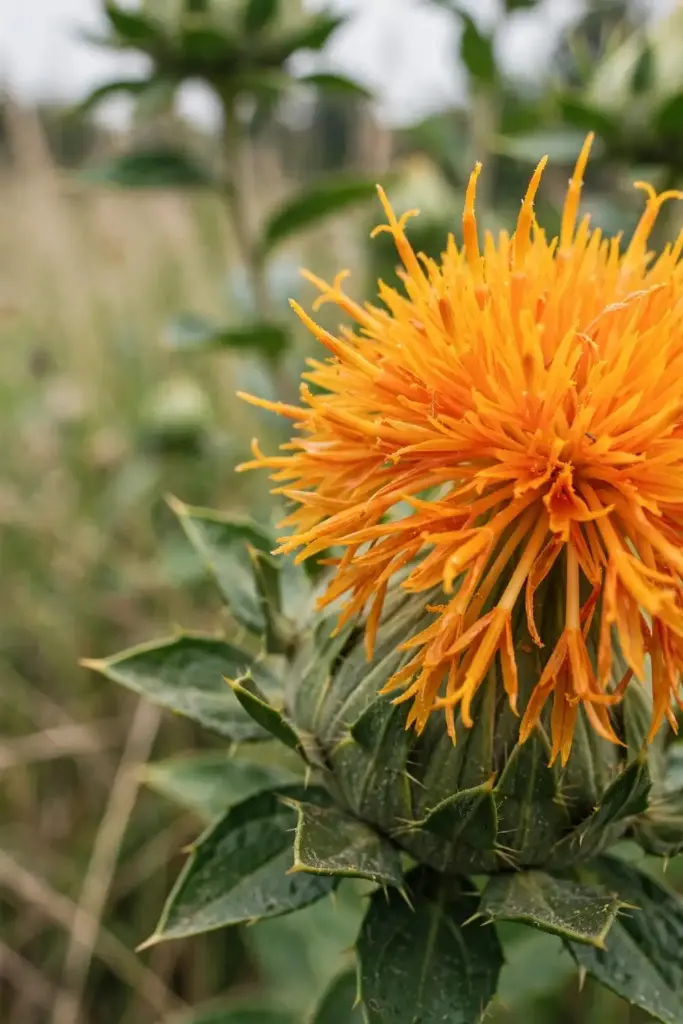
No. Safflower is Carthamus tinctorius, a thistle-like annual grown for dye petals, while saffron is Crocus sativus, a small crocus grown for its three red stigmas per flower. Safflower petals are sometimes sold as “American saffron” and used as a color substitute in cooking, but they do not taste like saffron. The plants, prices, and products are entirely different.
Yes, with a deep container. The taproot needs at least 12 inches of depth, so use a 5-gallon bucket with drainage holes or a similarly deep pot, filled with a lean, fast-draining mix. Sow 2 to 3 seeds 1/4 inch deep and thin to one strong plant per pot. Water when the top inch dries, give full sun, and harvest petals and seed as usual.
Expect germination in 7 to 14 days and first blooms about 75 days after sowing in decent conditions. Plants reach 18 to 24 inches tall and keep producing flower heads for several weeks. Petal harvest runs through the whole bloom season. Seed heads mature in late summer to early fall, so stop picking dye petals from seed heads 30 days before first frost.
No, safflower is a true annual. It completes its life in one season and dies with hard frost. It can self-sow if you let heads shatter in the bed, and volunteers often appear the next spring where seed fell. If you want a planned planting rather than volunteers, save dry seed heads and sow fresh each spring at 1/4 inch deep.
The name comes from the kitchen, not the garden. Dried safflower petals color rice and broths a saffron-like golden orange at a fraction of the price, so spice sellers historically marketed them as a saffron substitute or “American saffron.” The petals add color only, not saffron’s distinctive flavor and aroma. Growers should buy it for dye and color, not as a saffron replacement.
The petals, harvested from fully open, vividly colored flower heads. Pick weekly through the bloom season, wearing gloves against the spiny bracts, and dry the petals in a single layer out of direct sun. Cold-water soaks extract the yellow dyes first; an alkaline bath near pH 11 then releases the red carthamin, fixed with a vinegar bath near pH 6. Recipes call for 100 to 200 percent weight of fiber in dry petals, measured on dry weight.
17. Where to Go From Here
Once you know how to grow safflower, the season is simple: sow once in spring, pick petals all summer for the dyepot and the teacup, and let the last heads dry for seed. It is that straightforward. The plant asks for sun, drainage, and a direct sowing at 1/4 inch, and it pays back in two harvests from the same stems.
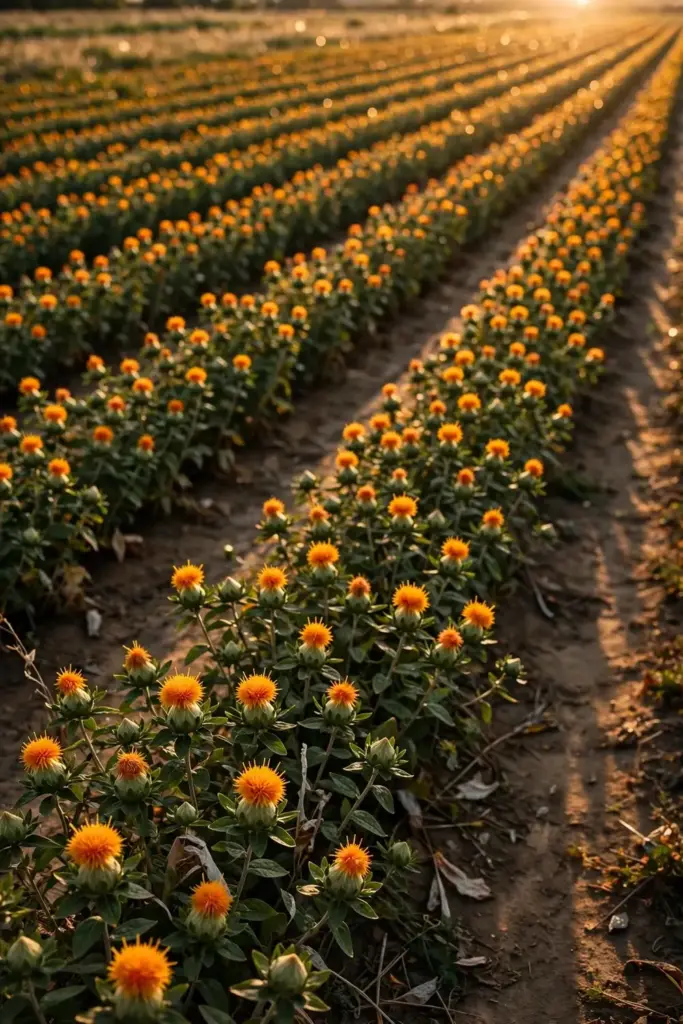
If the dye lane hooked you, plant in quantity next year; a serious dye project eats petals by the bucket. If the kitchen angle appealed, try the petals as a rice colorant before anything fancier. And if you are building out the fall garden around it, the fall herbs to plant guide picks up where the summer annuals leave off. For the indoor-start backup method, the seed starting guide covers the deep-cell technique that keeps taproots intact.