
Pull the weed, name its group, then pick the removal that spares the Couch. Weeds in Couch lawns do their damage through 9 repeat offenders, and 3 groups sort them: broadleaf, grassy, and sedge. Name the group first and the removal follows. Guess the group and the spray does nothing, or kills the lawn with the weed.
I have learned that the weed I pull before it seeds never comes back the next season. That is the whole method in one line: identify early, remove before seed, then thicken the Couch so the next weed finds no room.
The rest of this page is 9 weed entries, from bindii to cudweed, then the herbicide rules, the thickening plan, and the call-a-pro line. Each weed entry gives the marks that name it and the removal that fits it.
Identify the Weed Group First: Broadleaf, Grassy, or Sedge
Name the group before you reach for any tool. The group decides the removal, and the wrong group means the wrong treatment. A broadleaf spray on winter grass does nothing. A grass killer on clover misses the target. A hand-pull on nutgrass leaves the bulbs behind and the weed returns.
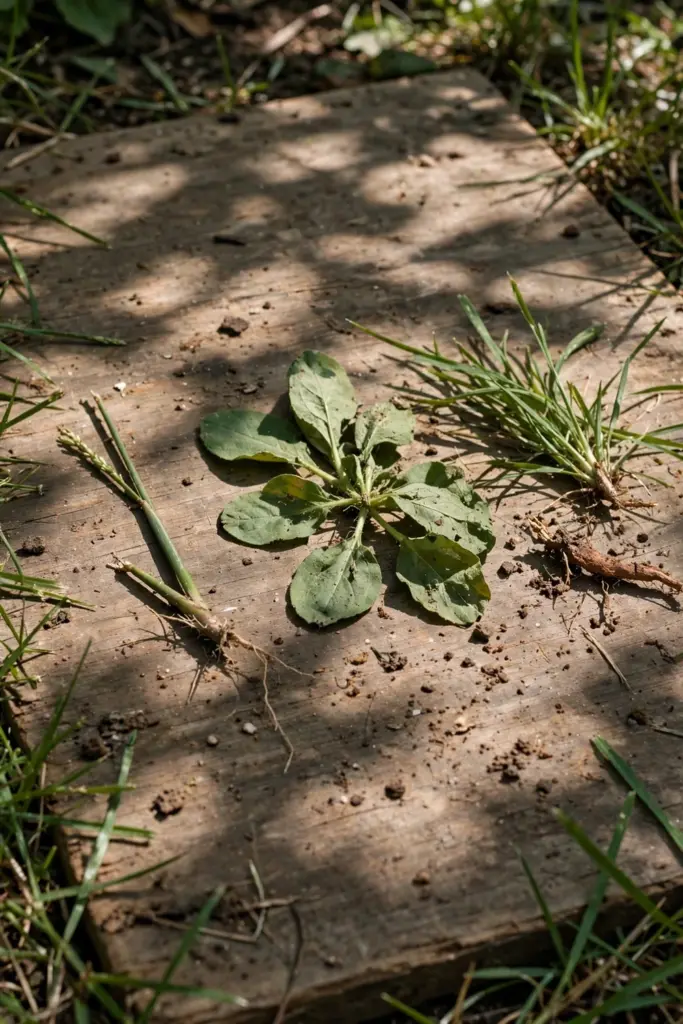
Broadleaf weeds carry wide leaves. Nothing grass-like about them. Bindii, clover, creeping oxalis, and cudweed sit in this group, and a selective broadleaf herbicide kills them while sparing the Couch at label rates. Hand-pulling works on small patches when you lift the full root system.
Grassy weeds carry grass-like leaves and fool the eye. Winter grass, paspalum, onion weed, and summer grass sit in this group. A broadleaf spray cannot touch them. Hand-pulling works when the weed has no deep roots or runners. Pre-emergent herbicide stops them before germination. Work one patch at a time. Kneel, pick the worst weed, and run the stem test. Then match the row in the table below. Speed comes later. Accuracy first. Check the lawn after rain. Weeds stand taller than Couch when the soil is wet, and the stem test works best on a fresh stem.
Sedges carry triangular solid stems. Roll the stem between your fingers and feel three flat sides. Nutgrass is the sedge here, and it is the one weed you must never hand-pull. The stem test settles the group in seconds. Round means grass. Triangular means sedge.
1. Bindii: Treat It in Winter Before the Prickles Form
Bindii is a broadleaf winter annual, and its prickles arrive after the flower. The plant sits low, spreads flat, and carries carrot-like leaves through winter. A single flower rises in spring, then hardens into a prickly seed pod with three spines. Bare feet find that pod all summer. The lawn bindii is Soliva sessilis. Caltrop is Tribulus, a different plant with a similar prickle, and the two need different treatment.
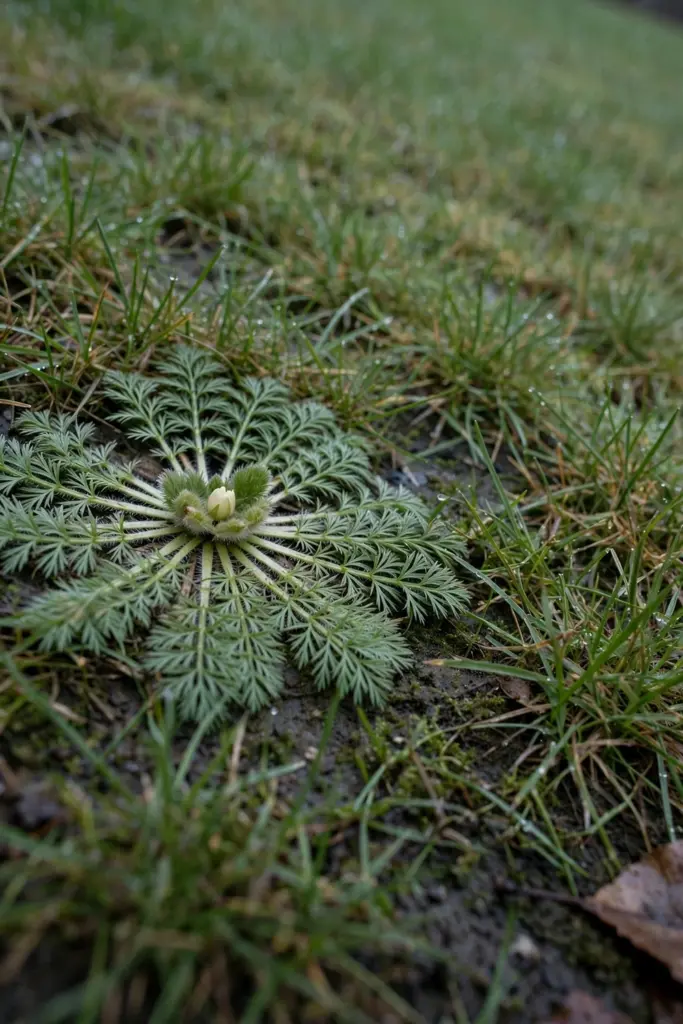
Treat bindii while it is juvenile in winter, before it seeds. Hand-pull small patches and lift the full root. Spray larger patches with a selective broadleaf herbicide while the plant is young and actively growing. Dicamba M mixes at 100 ml in 15 L of water per 150 square metres, and the label bars mowing for 2 days before or after spraying and bars spraying when rain is likely within 4 hours. A repeat application may be needed. Once the pods form, the season is lost. Pull the pods, bin them, and mark the patch for next winter. Bindii pods survive in the soil through summer. One missed plant seeds the patch for next winter. A bare patch left after bindii clears is an open door for the next weed, so feed the Couch around it and let the runners close the gap. Bindii sits flat where clover stands taller. The carrot-like leaves give it away before the flower appears.
2. Pull Clover Out of a Thick Couch, Not Out of Thin Air
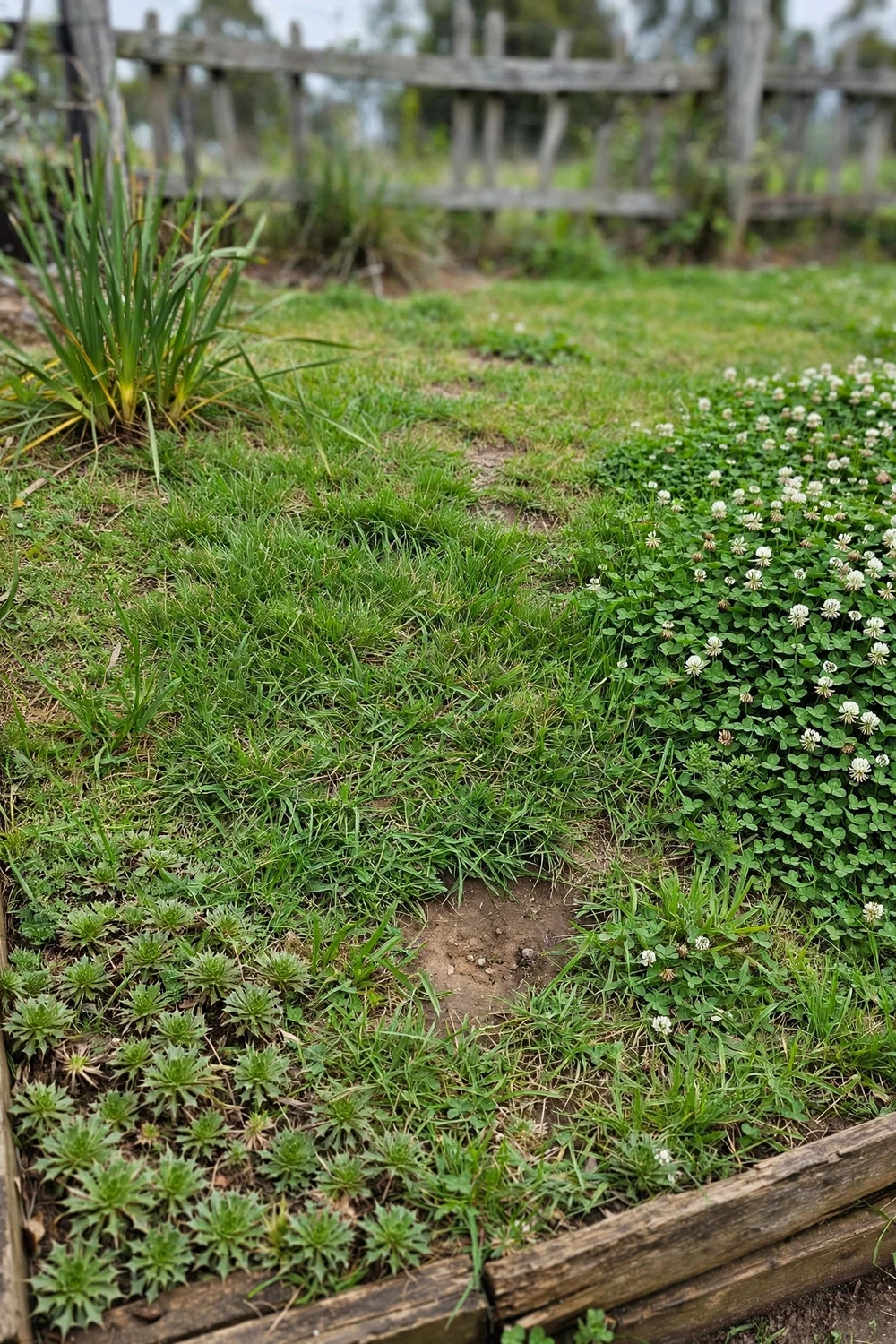
White clover is a broadleaf perennial that spreads by stolons along the soil surface. Each leaf carries three oval leaflets on a creeping stem. White flower heads rise above the lawn in spring and summer. A thin Couch lets clover run. A dense Couch starves it of light.
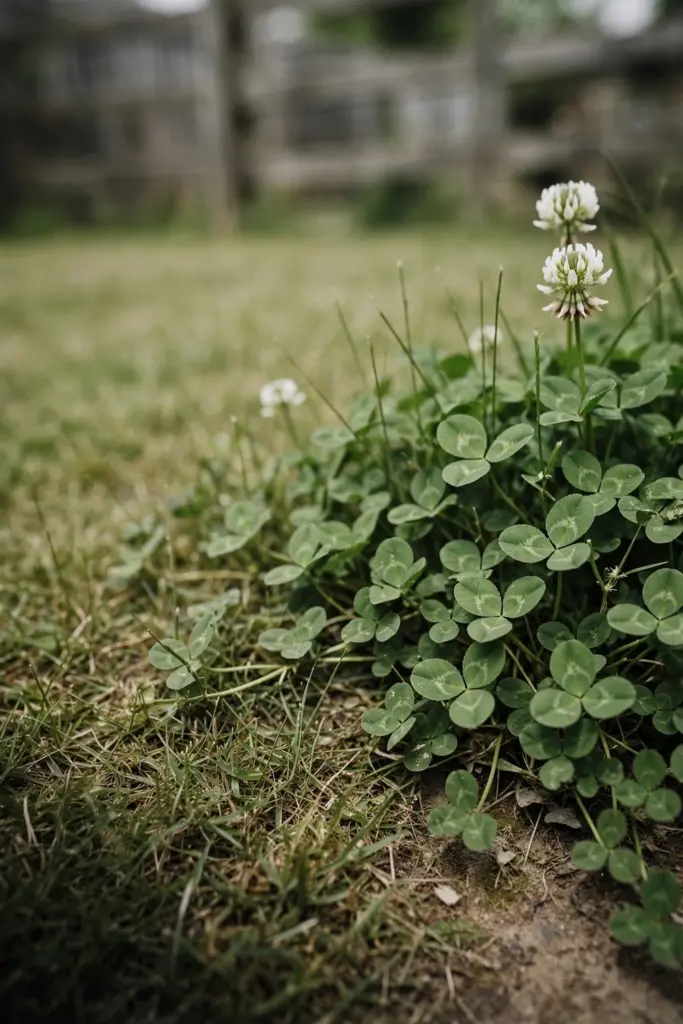
Hand-pull small patches and chase every stolon. A stolon left in the soil roots again. Spray spread patches with a selective broadleaf herbicide registered for Couch, at label rates. Then feed the Couch through the growing season so it thickens and crowds the clover out. Clover thrives where the lawn is thin and nitrogen is short. Fix the lawn and the clover loses its opening. Clover also tells you something useful. A lawn that grows clover freely is a lawn with room in the canopy. Close the canopy and the signal fades. Tell clover from oxalis by the leaflet shape. Clover leaflets are oval. Oxalis leaflets are heart-shaped.
3. Starve Creeping Oxalis of Light and Roots
Creeping oxalis looks like clover until you look close: heart-shaped leaflets, not oval, plus tiny yellow flowers 3 to 4 mm across. The plant creeps along the soil surface and roots from its leaves. Underground rhizomes link the colony, bulbils wait in the soil, and ripe pods eject seed across the patch.
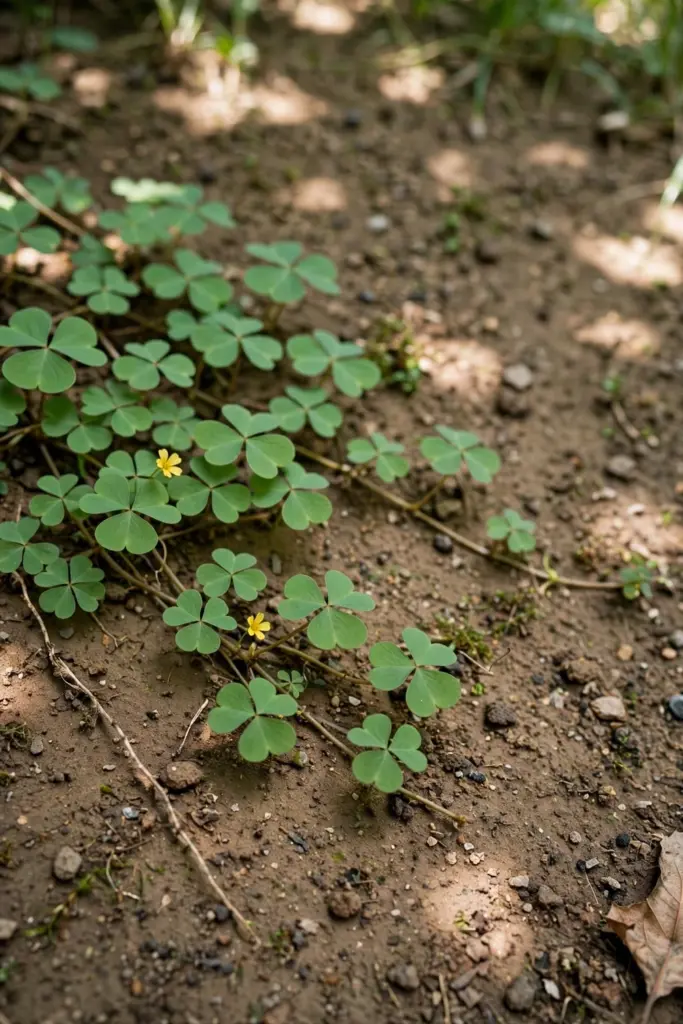
Hand-pulling rarely finishes oxalis. Every rhizome fragment and bulbil left behind regrows. Spray with a selective broadleaf herbicide registered for Couch, and add a surfactant. The glossy leaves shed spray without one. Repeat applications may be needed across the season. Thick Couch and a full canopy slow oxalis down, but the spray does the clearing. Check the patch a fortnight after spraying. New leaves mean the rhizomes survived. Spray again while the regrowth is young. Oxalis seeds fire from ripe pods, and one ripe pod restocks the whole patch, so pull the pods before they burst and bag them.
4. Hand-Pull Winter Grass Before It Seeds
Winter grass is a grassy annual that germinates in autumn and dies in summer. It grows in tufts with soft, drooping green leaves. Triangular seed heads rise above the lawn in winter and spring. Wind spreads the seed, and one seeded plant restocks the patch for next year.
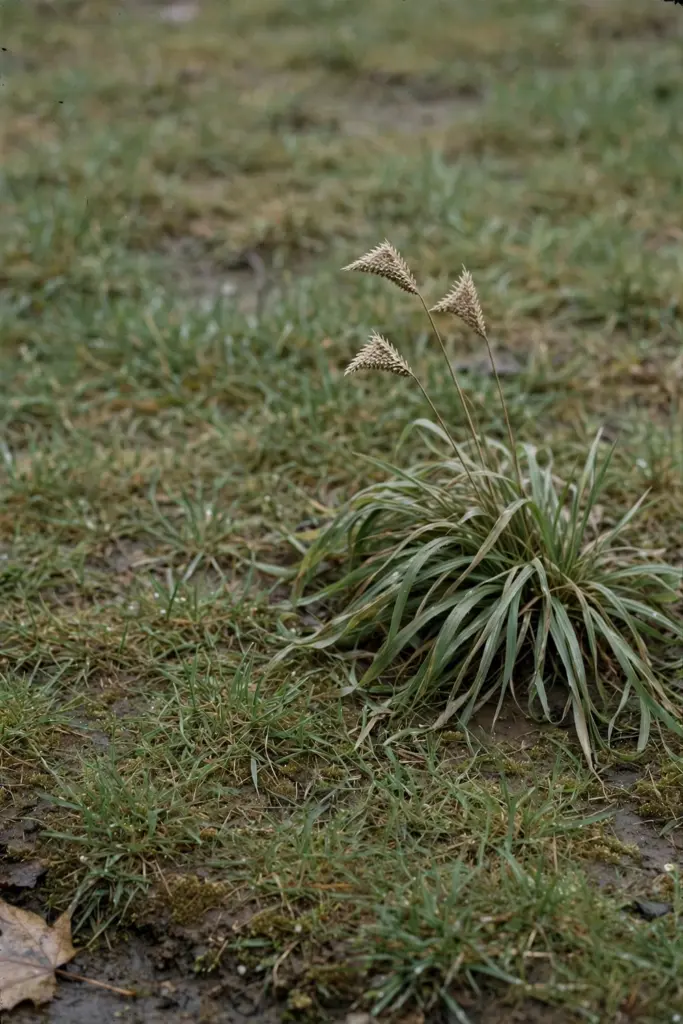
Hand-pull small patches. Winter grass carries no deep roots and no runners, so it lifts clean. Work after rain, when the soil is soft. Treat large patches with a post-emergent selective herbicide, then follow with a pre-emergent before the next germination window. A prodiamine pre-emergent such as Onset 10GR goes down in late summer or early autumn, before emergence, and needs at least 6 mm of rain or irrigation within 7 days to activate. Repeat the program across seasons. Check the label first, since some winter-grass herbicides are unsafe on kikuyu and fescue. One seeded winter grass plant restocks the patch. Pull it before the seed heads open. Tell winter grass from ryegrass by the seed head: winter grass carries a triangular seed head on a soft tuft, while ryegrass stands taller and coarser and dies back when summer heat arrives. Tell winter grass from Couch seedlings by the roots. Couch seedlings grip the soil with runners. Winter grass lifts with a gentle tug. No runners at all.
5. Leave Nutgrass Bulbs Alone and Spray the Leaves
Nutgrass is a sedge, and it fools every lawn owner who treats it like grass. Glossy green leaves and reddish-brown seed heads rise on triangular stems. Roll the stem and feel three flat sides. Underground bulbs and tubers link the colony, and hand-pulling snaps the top while leaving the bulbs behind. The weed returns from the bulbs within weeks. It grows fastest where the lawn stays wet and thin, along paths and low spots where water pools after rain.
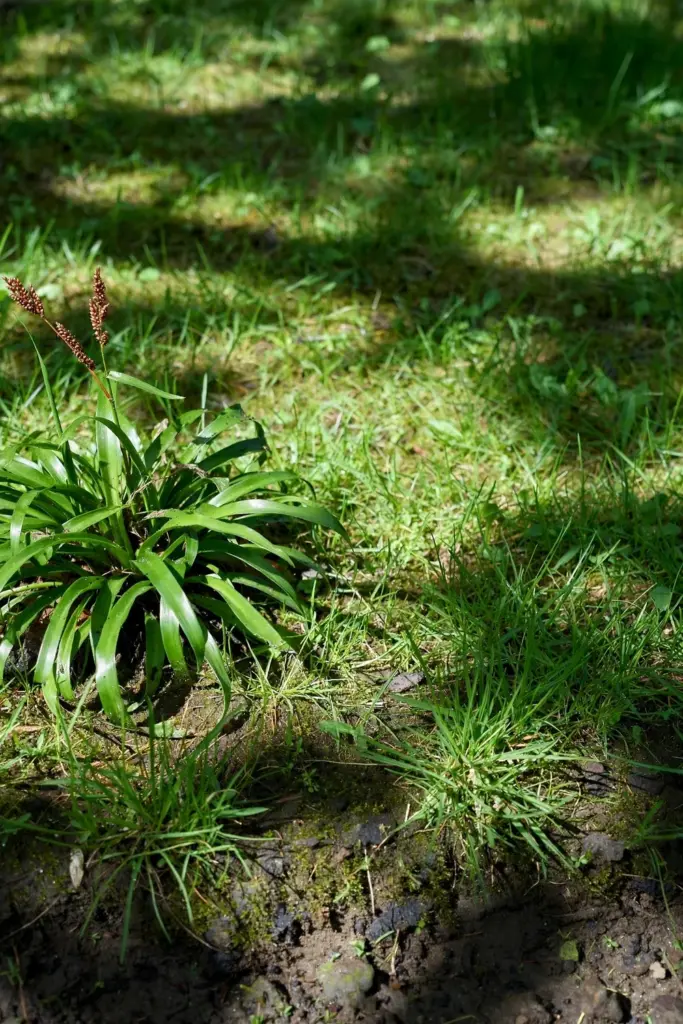
Spray the leaves and let the herbicide travel down to the tubers. Halosulfuron-methyl is the selective active for nutgrass in turf, and the label mixes 1.3 g per 100 square metres for spot treatment. Apply when new leaf growth passes 5 cm and the weed is actively growing. Delay mowing for 2 days after treatment, and skip spraying when heavy rain is expected within 48 hours. Follow-up treatments may be needed for a heavy infestation. Fix the drainage too. Nutgrass loves wet soil, and a lawn that stays soggy invites it back. A nutgrass patch that shrinks after spraying is working. A patch that holds its ground needs a second pass once new growth appears. Nutgrass patches spread outward from a center. Mark the edge with a stick. The patch should shrink after each spray. If it grows, the drainage needs work first.
6. Dig Paspalum Out While the Patch Is Small
Paspalum is a grassy perennial that blends with the lawn until its seed heads give it away. Its leaves are broader than Couch leaves and slightly folded at the base, with a purple tinge low down. Tufts stand coarse against the fine Couch carpet. In spring and summer the plant throws up spike-shaped seed heads on tall stems. Underground rhizomes spread the colony sideways. Paspalum stands out when it produces its seed heads, and hand removal works for small infestations while herbicides suit larger ones.
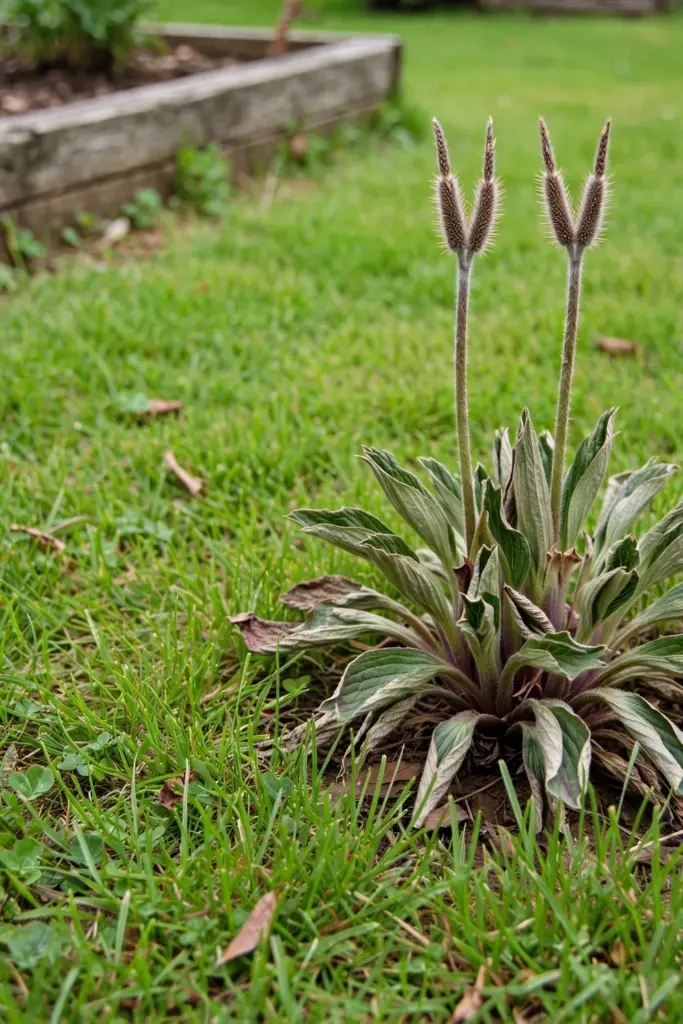
Dig small patches out with the full root system. A rhizome fragment left in the soil regrows. Treat larger patches with a herbicide registered for Couch, or lay a pre-emergent with prodiamine before germination. A paspalum patch across a large area is a job for a pro. Mow the lawn at the right height and feed it through summer, and the Couch closes the gaps paspalum needs. Paspalum seed heads are the alarm. Walk the lawn in spring and summer and pull any tuft that throws up a spike head before the seed drops. Tell paspalum from summer grass by the leaf. Paspalum leaves run broad and folded, with a purple tinge low down, and the plant grows in coarse tufts. Summer grass leaves run narrower, and the plant sprawls flat on stolons. Both spread by seed, so both get pulled before the heads open.
7. Spot-Treat Onion Weed Before It Flowers
Onion weed is a grassy weed with long strappy leaves. Crush a leaf and it smells like onion. White flowers rise on tall stems in spring, and bulbs sit underground splitting into offsets. One bulb becomes a clump within a season.
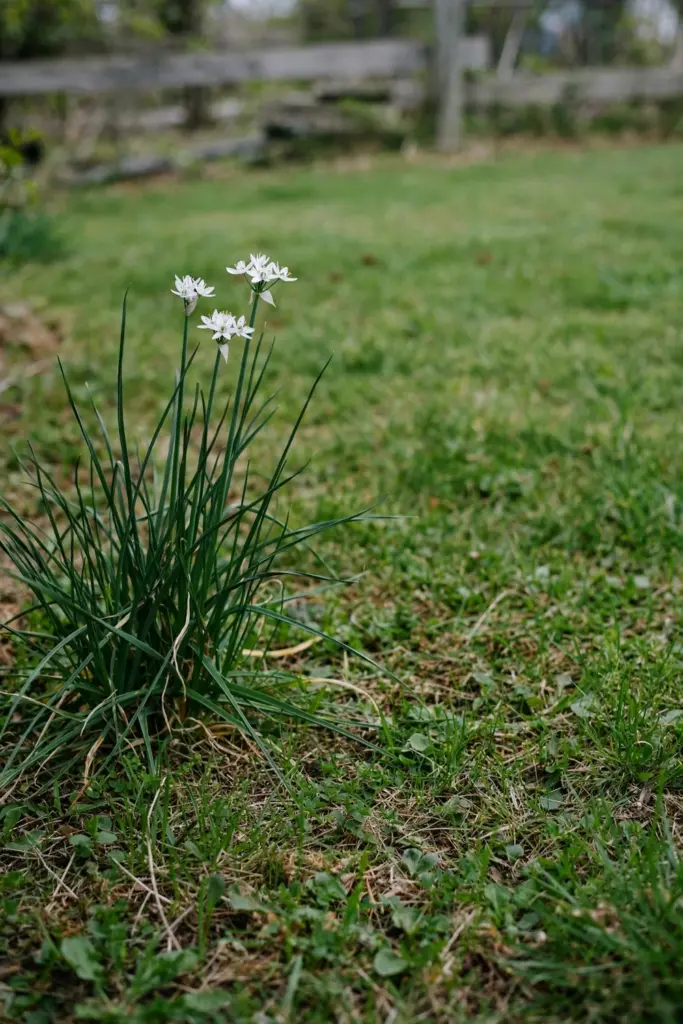
Dig small clumps out with every bulb. A bulb left behind regrows. Spot-treat larger patches with a non-selective herbicide, applied with a brush or a shielded sprayer so none reaches the Couch. A broadleaf selective spray cannot touch onion weed. Treat before flowering, and bin the bulbs. Composted bulbs survive and return. Onion weed clumps sit proud of the lawn in spring, so a weekly walk finds them fast. Pull the clump, check the hole for offsets, and fill the gap with Couch runners. Onion weed bulbs split underground, so a clump left one season becomes three. Dig the whole clump in spring, before the flowers open.
8. Catch Summer Grass Early or Block It Before Germination
Summer grass is a grassy annual. Fast growth, stolons, autumn seed. It shoots up in warm weather, spreads sideways, and seeds in autumn. A thin, open lawn with a low mowing height and light, frequent watering gives it the opening it wants. Once established, it is hard to shift.
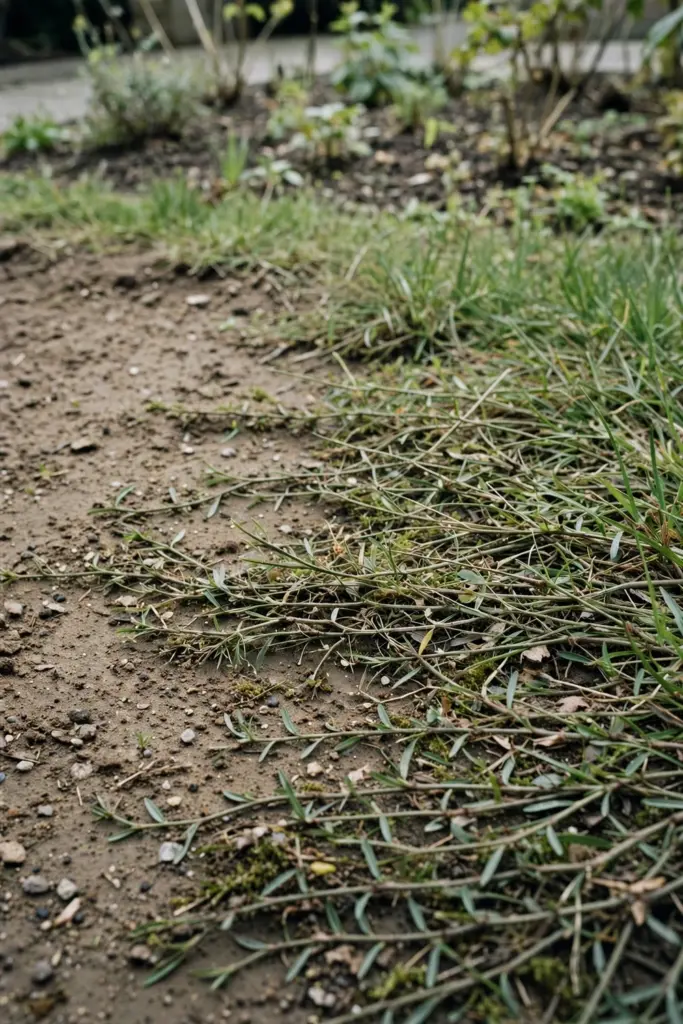
Hand-pull summer grass while it is young and the patch is small. Lift the stolons with the plant. A stolon left on the soil roots again. Lay a pre-emergent before germination for a lawn with a history of summer grass. A prodiamine pre-emergent covers summer grass before it emerges. Mow at the right height, water deep and infrequent, and feed the Couch so it closes the canopy. A dense Couch is the cheapest summer-grass control there is. Summer grass seeds in autumn, so a patch left through summer restocks itself. Pull it in January, not April.
9. Spray Cudweed Once and Add a Surfactant
Cudweed is a broadleaf winter annual that grows as a flat rosette. The leaf tops shine light green and glossy. The undersides carry white fur. The plant stays low and spreads across thin patches of lawn through winter and spring.
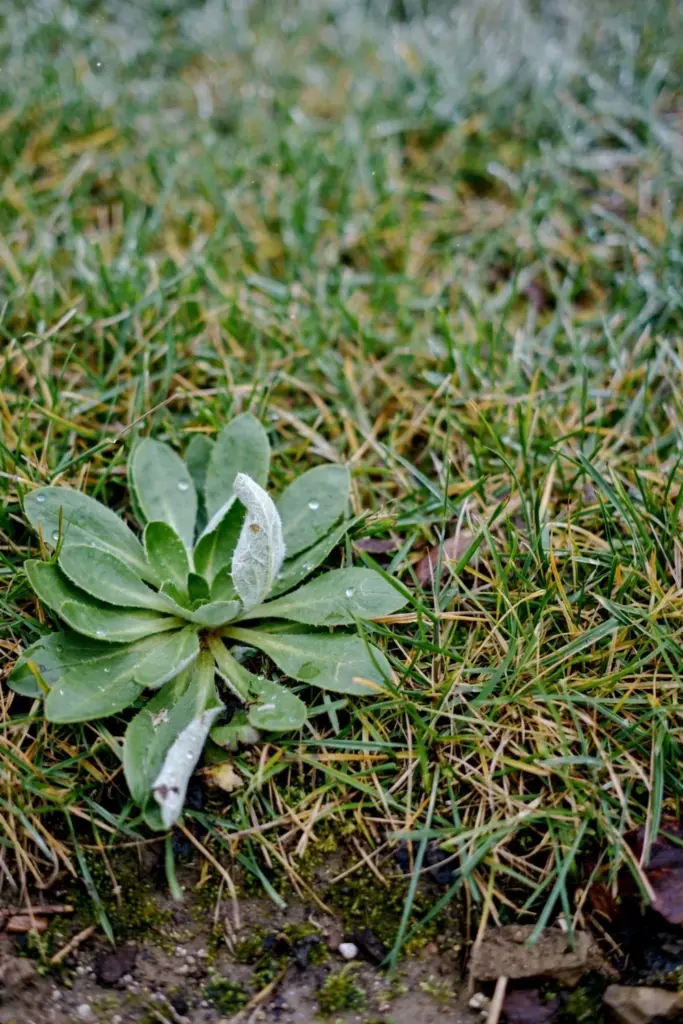
Hand-pull small rosettes with the full root. Spray larger patches with a selective broadleaf herbicide registered for Couch. Add a surfactant. The glossy leaf tops shed spray without one. One well-timed spray in winter clears most patches. A repeat pass may be needed where the rosettes are thick. Thicken the Couch behind the spray so cudweed finds no bare soil next winter. Cudweed hides in thin patches. Feed those patches and the rosettes lose their foothold. Tell cudweed from bindii by the leaf underside. Cudweed carries white fur underneath. Bindii leaves stay green on both sides and run feathery like carrot tops. Both grow as winter rosettes, and both clear with the same spray.
Match the Herbicide Type to the Weeds in Your Couch Lawn
Pick the herbicide type by the group you named in the first step. The table below pairs each weed with its group, its ID mark, and its removal. Read the group first, then the row.
| Weed | Group | ID Mark | Removal |
|---|---|---|---|
| Bindii | Broadleaf | Low flat plant, carrot-like leaves, prickly pod | Hand-pull small, selective broadleaf spray in winter |
| White clover | Broadleaf | Three oval leaflets, stolons, white flower heads | Hand-pull stolons, selective broadleaf spray, thicken lawn |
| Creeping oxalis | Broadleaf | Heart-shaped leaflets, tiny yellow flowers, rhizomes | Selective spray plus surfactant, repeat as needed |
| Winter grass | Grassy | Tufted, soft drooping leaves, triangular seed heads | Hand-pull small, post-emergent plus pre-emergent |
| Nutgrass | Sedge | Triangular stem, glossy leaves, reddish-brown seed heads | Halosulfuron-methyl spray, never hand-pull |
| Paspalum | Grassy | Broad folded leaves, purple base, spike seed heads | Dig out small, herbicide or pre-emergent for large |
| Onion weed | Grassy | Strappy leaves, onion smell, white spring flowers | Dig bulbs out, spot non-selective treatment |
| Summer grass | Grassy | Fast growth, stolons, autumn seeding | Hand-pull early, pre-emergent before germination |
| Cudweed | Broadleaf | Flat rosette, glossy top, white furry underside | Hand-pull small, selective spray plus surfactant |
| Annual ryegrass | Grassy | Autumn germination, dies in summer heat | Licensed applicator only, or wait for summer heat |
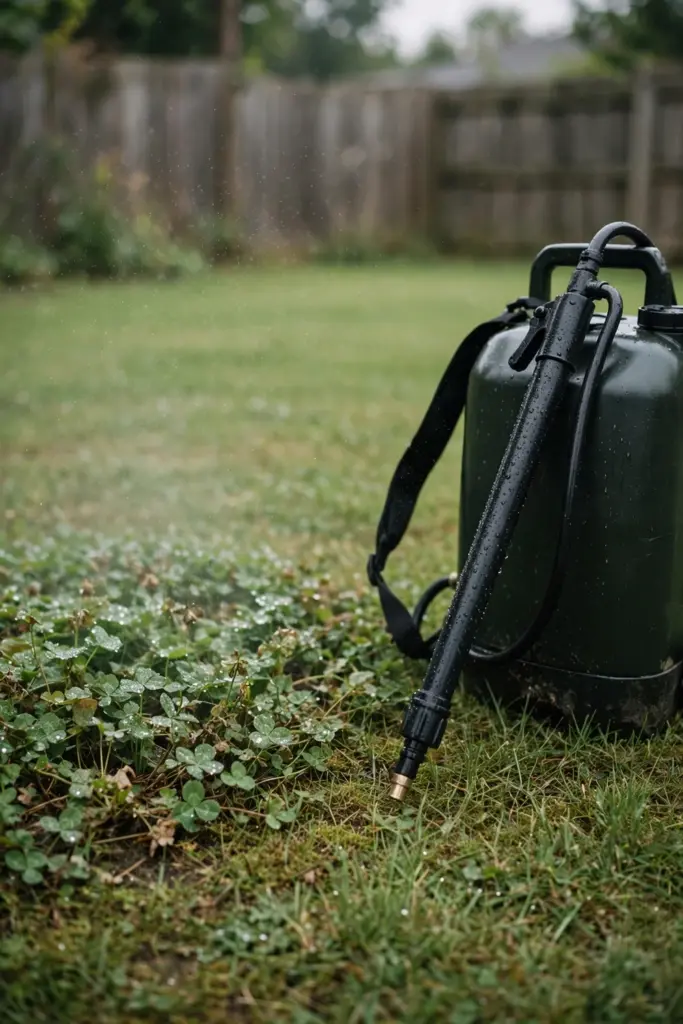
Three herbicide types cover the table. A selective herbicide kills the weed group and spares the Couch at label rates. Bow & Arrow and Dicamba M are selective broadleaf herbicides. Dicamba M suits Couch and kikuyu but not Buffalo. A non-selective herbicide kills everything it touches. Glyphosate is the common one. Use it only as a spot treatment with a brush or a shielded sprayer, never broadcast across the lawn. A pre-emergent herbicide stops germination. It works before the weed emerges. It does nothing to weeds already growing.
Label rules decide every spray. Check the label for your grass type and your weed before you mix. Do not mow for 2 days before or after a Dicamba M spray. Keep pets and children off the treated area until the spray has dried. Skip spraying when rain is likely within 4 hours of a Dicamba M application or within 48 hours of a halosulfuron application. Skip spraying stressed, newly seeded, or newly laid lawns. Test a small area first when the label advises it. The label is the authority, and the product name is not a guarantee. Buy the smallest pack that covers the job. A half-used bottle on the shelf tempts a second spray at the wrong rate. Mix only what the patch needs, and rinse the sprayer after use. Triple-rinse the tank, run clean water through the nozzle, and store the sprayer dry. A sprayer that still holds residue from the last job poisons the next one.
Thicken the Couch So Weeds Find No Room
A dense Couch is the best weed control here, because a full canopy shades weed seed and starves seedlings of light. A thin Couch hands weeds bare soil and sunlight. Every removal above buys time. Thickening holds the ground.
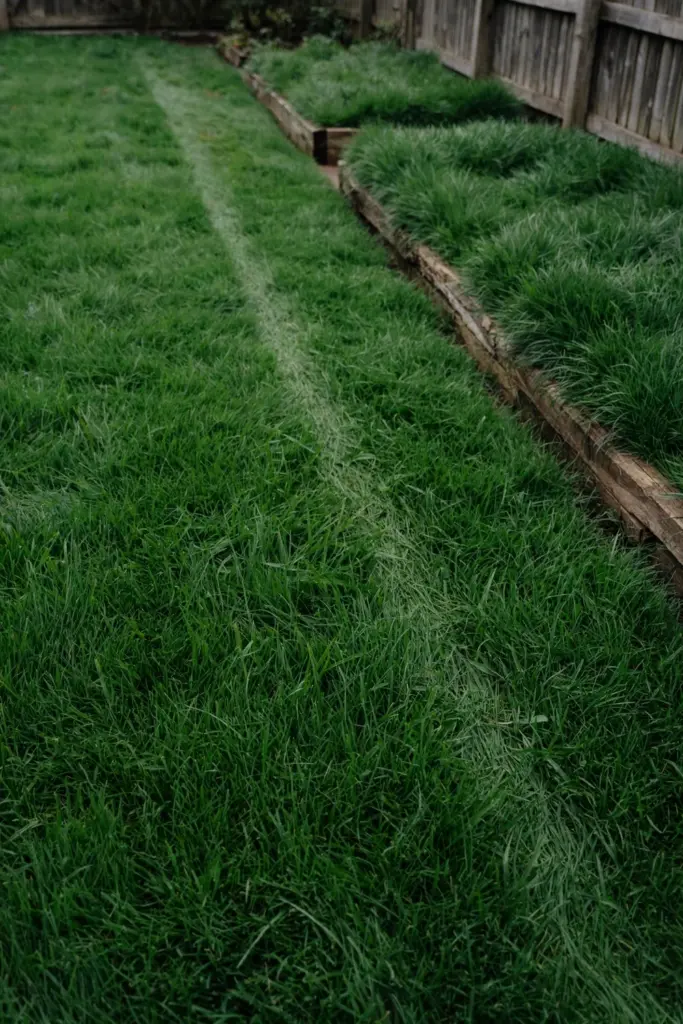
Mow at the right height for Couch. Couch scalps when cut too low, and a scalped lawn opens bare patches that weeds colonise first. Raise the cutting height one notch when the lawn looks thin. The extra leaf shades the soil, feeds the roots, and closes the canopy faster. A lawn that never scalps rarely grows bindii, and a lawn mowed too low grows it every winter. Feed the lawn through the growing season. Soil health grows the dense Couch that crowds weeds out. Time the feeding with the best time to fertilize your lawn in spring and the spring lawn care tips guide. Water deep and infrequent. Light, frequent watering suits summer grass and nutgrass more than it suits Couch.
Pull weeds before they seed. One seeded plant restocks the patch. Bin weeds with seed heads. Compost bin options suit garden waste, but weed seed heads go in the bin, not the compost. Compost heat rarely kills every seed, and the compost spreads the weed back across the lawn. Decompact the lawn once a year. A fork pushed into the soil should slide in without force. Hard soil starves Couch roots and hands weeds the advantage. Aerate in spring, then feed.
| Season | What Happens | What to Do |
|---|---|---|
| Autumn | Winter grass germinates, bindii stays juvenile | Lay pre-emergent, treat bindii now |
| Winter | Bindii, cudweed, and winter grass stay active | Spray or pull before seeding |
| Spring | Onion weed flowers, clover spreads | Dig onion weed bulbs, spray clover patches |
| Summer | Bindii pods harden, summer grass runs | Bin bindii pods, hand-pull summer grass early |
Know When to Call a Pro
Some weed jobs belong to a licensed applicator. Call one when the weed mix is unknown, when dead areas cover a large part of the lawn, when paspalum covers a large area, or when a wrong spray has damaged the lawn. A pro carries the licence, the calibration, and the product range for jobs a homeowner sprayer cannot cover.
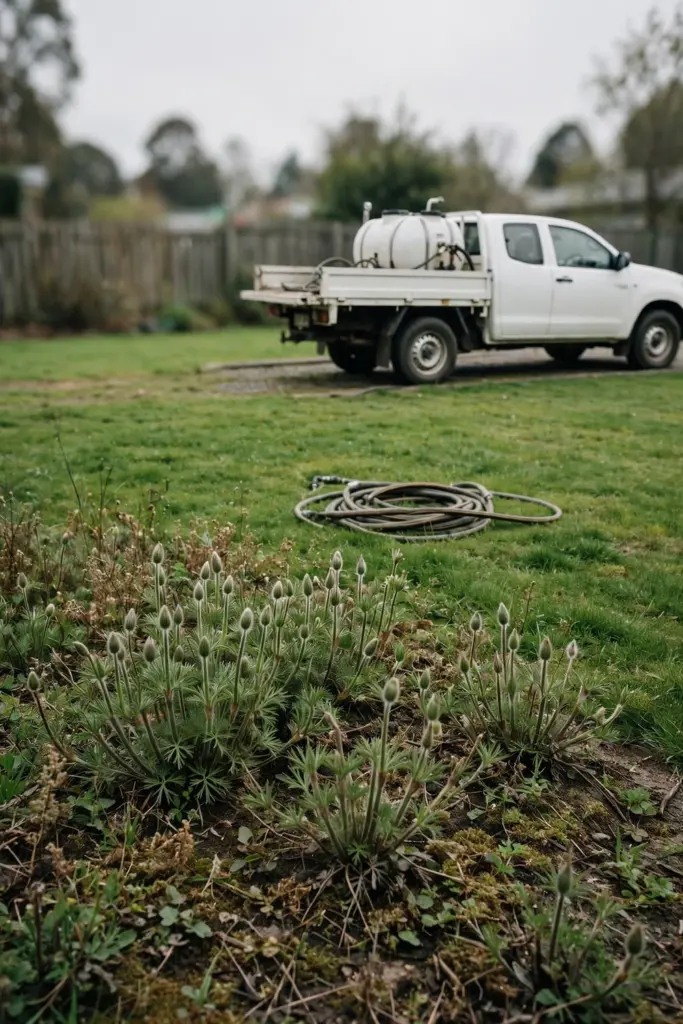
Annual ryegrass sits in this category. It germinates in autumn and winter and dies in summer heat. The herbicides that control it in turf, such as Tribute, Monument, and Destiny, are licensed-applicator-only products. A homeowner does not buy or apply them. Wait for summer heat to clear ryegrass, or call a licensed applicator. A pro starts with the same triage. Expect questions about the grass type, the weed mix, and the last spray. Bring a photo of the weed and the label of anything already sprayed. The visit goes faster with both in hand. A pro visit costs less than a ruined lawn. One wrong spray across a Couch lawn can strip the canopy and hand every weed an open bed. Pay for the licence when the job needs it.
Couch itself turns weed when its runners invade garden beds. Smother the runners with landscape fabric or thick cardboard, or paint glyphosate on with a weeding brush. Keep the spray off the lawn. The lawn is Couch country. The beds are not.
Frequently Asked Questions
Yes, when the label lists Couch as a tolerant turf and names your weed. Dicamba M and Bow & Arrow are selective broadleaf herbicides registered for Couch. Spray young, actively growing weeds at label rates. Skip spraying stressed, newly seeded, or newly laid lawns. Check the label for your grass type first, since Dicamba M suits Couch and kikuyu but not Buffalo.
Hand-pulling snaps the top and leaves the bulbs and tubers behind. Those bulbs sprout again within weeks. Nutgrass is a sedge with an underground storage system, so pulling the leaves never finishes the plant. Spray the leaves with halosulfuron-methyl and let the herbicide travel down to the tubers. Fix wet soil too, since nutgrass loves soggy ground. Digging works for one plant in a bed, not for a lawn full of tubers.
Treat bindii in winter while it is juvenile, before it flowers and sets its prickly pods. Hand-pull small patches with the full root, or spray larger patches with a selective broadleaf herbicide. Once the pods harden in the warmer months, the season is lost. Pull the pods, bin them, and mark the patch for next winter.
No. A pre-emergent stops germination and does nothing to weeds already above the soil. Spray emerged weeds with the matching post-emergent, or pull them by hand. Lay the pre-emergent before the next germination window. A prodiamine pre-emergent covers winter grass, summer grass, and crabgrass before they emerge. Timing decides the result.
Yes, as a spot treatment only. Glyphosate kills everything it touches, including Couch. Apply it with a brush or a shielded sprayer, on a calm day, and keep it off the lawn. Never broadcast glyphosate across the lawn. Use it for onion weed patches, bed invaders, and weeds a selective spray cannot touch. Wear gloves and eye protection when you handle it.
Walk the Lawn Weekly and Pull One Weed at a Time
Name the group, remove before seed, and thicken the Couch behind every removal. That rhythm clears most Couch weed problems within a season. Walk the lawn once a week while it grows. Pull one weed at a time while it is small, and spray the patches that hand-pulling cannot finish at label rates on a calm day. Bin the seed heads and feed the Couch. The lawn that stays dense stays clean. Start with the worst patch. Name the weed, pull it before seed, and feed the Couch around the gap. Next week, take the next patch. The lawn changes one patch at a time, and the weekly walk keeps it that way. A clean Couch lawn is not a lawn with no weeds. It is a lawn where weeds never get to seed.